Rights of a Consumer


Every year 15th of March is celebrated as National Consumer Rights Day marking the day when Bill for Consumer Rights were moved in the US Congress. The Consumers International (CI), recognizes eight rights, which in a logical order reads:

1. Basic Needs
2. Safety
3. Information
4. Choice
5. Representation
6. Redress
7. Consumer Education and
8. Healthy Environment.

However the Consumer Protection Act (COPRA) in 1986 in India recognises only six of these eight rights:

1. The right to be protected against marketing of goods and services which are hazardous to life and property i.e. Right to Safety:
The Consumer Protection Act 1986 defines this right as the ‘right to be protected against marketing of goods and services which are hazardous to life and property’. The right are significant in areas of healthcare, food processing and pharmaceuticals and spans across any domain that could have impact on consumers health or well being. Violation of this right is mostly in medical malpractice lawsuits in India. Every year in India not less than millions of Citizen are killed or severely hurt by unscrupulous practices by hospitals, doctors, pharmacies and the automobile industry yet the Indian Government due to its callousness fails to acknowledge this fact or make an attempt at maintaining statistic of these mishaps. The Government need to have world class product testing facilities to test drugs, cars, food, and any other consumable that could potentially be life threatening.

In developed countries such as the United States, stalwart agencies oversee the safety of consumer product. The Food and Drug Administration (FDA) for food and drugs, the National Highway Traffic Safety Administration (NHTSA) for automobiles and the Consumer Product Safety Commission (CPSC) for all other consumer products, just to name a few. This right requires each product that could potentially endanger our lives to be marketed only after sufficient and complete independent verification and validation.

2. The right to be informed about the quality, quantity, potency, purity, standard and price of goods or services, as the case may be, so as to protect the consumer against unfair trade practices:
This consumer right is defined as the ‘the right to be informed about the quality, quantity, potency, purity, standard and price of goods or services, as the case may be so as to protect the consumer against unfair trade practices’ in the Consumer Protection Act of 1986. In the Indian market place, consumers get consumer information through two popular, yet unreliable means, namely advertising and word of mouth. Due to this, the consumers in India seldom have accurate and complete information to assess the true value, suitability, safety or reliability of any product. Mostly we find out hidden costs, lack of suitability, safety hazards and quality problems only after we have purchased the product. Another right again trumpeted by our government on paper, this right should ideally ensure that all consumable products are labelled in a standard manner which contains the cost, the ingredients, quantity, and instructions on how to safely consume the product. Unfortunately, even the medicines in India do not follow a standard labelling convention. Unit price publishing standards need to be established for consumer market places where costs are shown in standard units such as per kilogram, or per litre. We, as consumers, should be informed in a precise yet accurate manner of the costs involved when availing a loan. For benefit to the society from this right, advertisers should be held against the product standards in the advertisements, pharmaceuticals need to disclose potential side effects about their drugs, and manufacturers should be required to publish reports from independent product testing laboratories regarding the comparison of the quality of their products with competitive products, just to name a few.

3. The right to be assured, wherever possible, of access to a variety of goods and services at competitive prices:
Consumer Protection Act, 1986 defines this right as ‘the right to be assured, wherever possible, to have access to a variety of goods and services at competitive prices’. Competition, invariably, is the best regulator of a market place. Existence of oligopolies, cartels and monopolies are counterproductive to consumerism. Our natural resources, telecommunications, liquor industry, airlines have all been controlled by a mafia at some point. Coming from a socialistic background, tolerance of monopolistic market forces are ingrained in the blood of Indian Consumers. It is not very often we can say we are going to switch the power company, when we have a blackout at home! Interestingly, even micro markets such as the fish vendors in particular cities have known to collude to drain the bargaining power of the consumers. In any size, any form, or any span, collusion of companies selling a similar type of product is unethical, less illegal. India has about 20 years more of stride to empower our citizens fully in this right.

4. The right to be heard and to be assured that consumers’ interests will receive due consideration at appropriate forums: According to the Consumer Protection Act 1986, ‘the right to be heard and to be assured that consumer’s interests will receive due consideration at appropriate forums’ is referred to as the right to be heard. This right is supposed to empower Indian consumers to fearlessly voice their complaints and concerns against products and companies to ensure their issues are handled efficiently and expeditiously. However, to date the Government of India has not created a single outlet for the consumers to be heard or their opinions to be voiced. If a consumer makes an allegation about a product, the onus is on the dealer, manufacturer or supplying company to disprove that the allegation is false. In other words, the consumer is heard, and the burden of proof rests with the company. Feeble attempts have been made by the government to empower our citizens with this right.

5. The right to seek redressal against unfair trade practices or restrictive trade practices or unscrupulous exploitation of consumers:
The right ‘to seek redressal against unfair trade practices or restrictive trade practices or unscrupulous exploitation of consumers’ is defined as the right to redressal in the Consumer Protection Act 1986. The Indian Government has been slightly more successful with respect to this right. Consumer courts such as District Consumer Disputes Redressal Forums at the district level, State Consumer Disputes Redressal Commissions and National Consumer Disputes Redressal Commissions have been established through the consumer protection act. Each of these consumer grievance redressal agencies has fiduciary and geographical jurisdictions to address consumer cases between consumers and businesses. Consumer cases less than 20 lakhs are heard in the district consumer forum, between 20 lakhs and one crore are heard in the state consumer court and cases more than one crore are heard in the national consumer court. On paper these sound nice; but hold on before you rejoice. Once started as the guardians of consumer protection and consumer rights in India, these courts have today been rendered ineffective due to bureaucratic sabotages, callousness of the government, clogged cases and decadent infrastructure. Very few of the district forums have officials appointed in a timely manner, and most of them are non-operational due to lack of funding and infrastructure. Estimates put the open legal cases in India at 20-30 million, which will approximately take 320 years to close. With the legal system in this manner compromised, consumer cases that form mere civil litigations will be pushed down the bottom of the priority list.

6. The right to consumer education:
The right of each Indian citizen to be educated on matters related to consumer protection and about his/her rights is the last right given by the Consumer Protection Act 1986. This right simply ensures that the consumers in India have access to informational programs and materials that would enable them to make better purchasing decisions. Consumer education may mean both formal education through school and college curriculums and also consumer awareness campaigns run by both governmental and non governmental agencies (NGO). Consumer NGOs, with little support from the Indian government, primarily undertake the ardent task of ensuring this consumer right around the country.
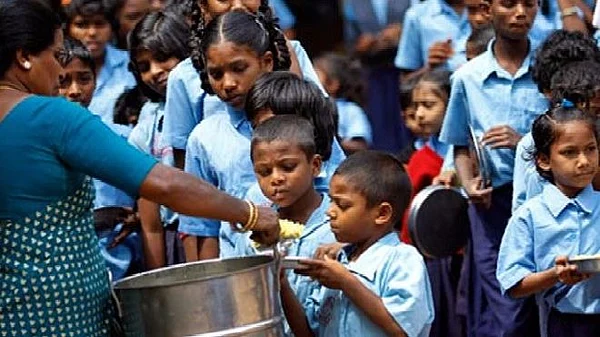

Boon of the Mid-Day Meal

The very concept of Mid-Day Meal scheme was introduced on the year of 2000 by Akshaya Patra Foundation and was later passed as a mandate by Supreme Court of India on the year 2001. The sole purpose of the scheme is to provide wholesome freshly cooked hot lunch to all the students in the government and government aided schools in India. Usually the meal should be a whole mix of carbohydrates, proteins and various vegetables as per the bodily requirements of the children. The goal of such a scheme was to encourage the parents to send their wards to schools, to increase the school attendance and to do away with the norm of child labour, to prevent the child from being hungry at the time of attending the classes and thus to avoid malnutrition, and finally to improve the socialisation among the castes and last but not the least, to promote women empowerment.

The ultimate goal – to provide at least one of the three daily meals required for the proper growth of the children.

The scheme was institutionalized by the designated states and the schools and things were going fine until the pandemic hit the world. During the month of March, the lockdown was declared by the nation and there rose comprehensions among the low wage workers. They were worried about one of the most important thing on earth – what will happen to our mid-day meal and how can we arrange food for our children? The reason being the mid-day meal was one of the main reason as to why their parents sent their wards to school and they were worried about how to relinquish their daily requirements. But, like a godsend, the Government of India declared that even though the schools will be closed owing to the social distancing, the schools will still have to arrange the benefit of mid-day meal or any other substitute of equal value to the children and their families. Not only that, the Government also passed that if and when necessary, required assistance will be rolled out for the underprivileged.

Mid Day Meal: Latest news updates on Mid Day Meal - The Quint
Mid-Day Meal Scheme

The Government of India rolled out various schemes under which various states had to provide the mid-day meal scheme to the students. Some of such initiative are:

  • West Bengal – Ensured the distribution of the meals to their wards’ home amidst the curfew.
  • Odisha – Facilitation of Public Distribution System (PDS).
  • Chhattisgarh – Provision of mid-day meal to the parents of the children for about 40 days, with the difference in quantity by the primary and higher secondary school.
  • Kerala – Delivery of meal supplies to homes of their children.
  • Bihar – Transfer of the monetary amount of the mid-day meal, as a substitute of the food, to the accounts of their parents.
  • Maharashtra – Provision of the meals only to rural children.
  • Assam – Provision of mid-day meals to about 40 lakhs students.

Each and every state has taken the initiative to make sure that the meal reaches their students at times of distress. There also exists an underlying fear among the administration that if the meal is stooped, then it will automatically lead to the un-enrolment of the students whose attendance is already irregular and this will definitely push up the levels of illiteracy and unemployment.

States are putting in continuous efforts to make this journey smooth for the students. For instance, West Bengal has announced the decision to provide masks, sanitizer, as well as basic protein items such as pulses, soya bean which will be handed to the parents. They are going an extra length by providing stationery items to those students affected by Amphan.

It is very responsible on the part of Government of India to ensure the provision of mid-day meal and this help will definitely go a long way to build the future of India.

Source: https://timesofindia.indiatimes.com/india/bengal-government-to-add-mask-soap-to-mid-day-meal-items-in-covid-19-time/articleshow/76328492.cms

https://www.biharedpolcenter.org/post/covid-19-how-are-states-ensuring-midday-meals

Lok Adalat/People’s Court


Lok Adalat is one of the alternative dispute redressal mechanisms, it is a forum where disputes/cases pending in the court of law or at pre-litigation stage are settled/ compromised amicably. Lok Adalats have been given statutory status under the Legal Services Authorities Act, 1987. Under the said Act, the award (decision) made by the Lok Adalats is deemed to be a decree of a civil court and is final and binding on all parties and no appeal against such an award lies before any court of law. If the parties are not satisfied with the award of the Lok Adalat though there is no provision for an appeal against such an award, but they are free to initiate litigation by approaching the court of appropriate jurisdiction by filing a case by following the required procedure, in exercise of their right to litigate.

There is no court fee payable when a matter is filed in a Lok Adalat. If a matter pending in the court of law is referred to the Lok Adalat and is settled subsequently, the court fee originally paid in the court on the complaints/petition is also refunded back to the parties. The persons deciding the cases in the Lok Adalats are called the Members of the Lok Adalats, they have the role of statutory conciliators only and do not have any judicial role; therefore they can only persuade the parties to come to a conclusion for settling the dispute outside the court in the Lok Adalat and shall not pressurize or coerce any of the parties to compromise or settle cases or matters either directly or indirectly. The Lok Adalat shall not decide the matter so referred at its own instance, instead the same would be decided on the basis of the compromise or settlement between the parties. The members shall assist the parties in an independent and impartial manner in their attempt to reach amicable settlement of their dispute.

Nature of Cases to be Referred to Lok Adalat

1. Any case pending before any court.

2. Any dispute which has not been brought before any court and is likely to be filed before the court.

Provided that any matter relating to an offence not compoundable under the law shall not be settled in Lok Adalat.

Which Lok Adalat to be Approached

As per section 18(1) of the Act, a Lok Adalat shall have jurisdiction to determine and to arrive at a compromise or settlement between the parties to a dispute in respect of –

(1) Any case pending before; or

(2) Any matter which is falling within the jurisdiction of, and is not brought before, any court for which the Lok Adalat is organised.

Provided that the Lok Adalat shall have no jurisdiction in respect of matters relating to divorce or matters relating to an offence not compoundable under any law.

How to Get the Case Referred to the Lok Adalat for Settlement

(A) Case pending before the court.

(B) Any dispute at pre-litigative stage.

The State Legal Services Authority or District Legal Services Authority as the case may be on receipt of an application from any one of the parties at a pre-litigation stage may refer such matter to the Lok Adalat for amicable settlement of the dispute for which notice would then be issued to the other party.

Levels and Composition of Lok Adalats:

At the State Authority Level –

The Member Secretary of the State Legal Services Authority organizing the Lok Adalat would constitute benches of the Lok Adalat, each bench comprising of a sitting or retired judge of the High Court or a sitting or retired judicial officer and any one or both of- a member from the legal profession; a social worker engaged in the upliftment of the weaker sections and interested in the implementation of legal services schemes or programmes.

At High Court Level –

The Secretary of the High Court Legal Services Committee would constitute benches of the Lok Adalat, each bench comprising of a sitting or retired judge of the High Court and any one or both of- a member from the legal profession; a social worker engaged in the upliftment of the weaker sections and interested in the implementation of legal services schemes or programmes.

At District Level –

The Secretary of the District Legal Services Authority organizing the Lok Adalat would constitute benches of the Lok Adalat, each bench comprising of a sitting or retired judicial officer and any one or both of either a member from the legal profession; and/or a social worker engaged in the upliftment of the weaker sections and interested in the implementation of legal services schemes or programmes or a person engaged in para-legal activities of the area, preferably a woman.

At Taluk Level –

The Secretary of the Taluk Legal Services Committee organizing the Lok Adalat would constitute benches of the Lok Adalat, each bench comprising of a sitting or retired judicial officer and any one or both of either a member from the legal profession; and/or a social worker engaged in the upliftment of the weaker sections and interested in the implementation of legal services schemes or programmes or a person engaged in para-legal activities of the area, preferably a woman.

National Lok Adalat

National Level Lok Adalats are held for at regular intervals where on a single day Lok Adalats are held throughout the country, in all the courts right from the Supreme Court till the Taluk Levels wherein cases are disposed off in huge numbers. From February 2015, National Lok Adalats are being held on a specific subject matter every month.

Permanent Lok Adalat

The other type of Lok Adalat is the Permanent Lok Adalat, organized under Section 22-B of The Legal Services Authorities Act, 1987. Permanent Lok Adalats have been set up as permanent bodies with a Chairman and two members for providing compulsory pre-litigative mechanism for conciliation and settlement of cases relating to Public Utility Services like transport, postal, telegraph etc. Here, even if the parties fail to reach to a settlement, the Permanent Lok Adalat gets jurisdiction to decide the dispute, provided, the dispute does not relate to any offence. Further, the Award of the Permanent Lok Adalat is final and binding on all the parties. The jurisdiction of the Permanent Lok Adalats is upto Rs. Ten Lakhs. Here if the parties fail to reach to a settlement, the Permanent Lok Adalat has the jurisdiction to decide the case. The award of the Permanent Lok Adalat is final and binding upon the parties. The Lok Adalat may conduct the proceedings in such a manner as it considers appropriate, taking into account the circumstances of the case, wishes of the parties like requests to hear oral statements, speedy settlement of dispute etc.

Mobile Lok Adalats are also organized in various parts of the country which travel from one location to another to resolve disputes in order to facilitate the resolution of disputes through this mechanism.

As on 30.09.2015, more than 15.14 lakhs Lok Adalats have been organized in the country since its inception. More than 8.25 crore cases have been settled by this mechanism so far.

TIPS TO FIND YOUR PASSION

Some people are born understanding their passions, but others have to work to find them— and it is overwhelming to consider how to begin. The first step is to start. Below are five tips to help you on your journey to finding work and hobbies you are truly passionate about:

1. WHAT DO YOU DO WELL?

This question helps you uncover that unique talent that sets you apart from others. Perhaps you’re good at public speaking or motivating others. Or maybe you’re good at finding computer bugs or supporting your friends through tough times. Whether you have a hard or soft skill, knowing what you do well will put you on your way to using your talent in your purpose.

2.   WHAT DO THE PEOPLE AROUND YOU SAY ABOUT YOUR SKILLS?

Unfortunately, it can be hard to recognize your own talent. When something comes naturally, it doesn’t always seem special. To get some help, ask your family or friends what they think you’re good at doing. This question gets to the heart of recognition “Most of us are not self-aware,” says Maxwell. “We all have blind spots, but you can ask others to help you identify your talents. “Ask several people, suggests Maxwell. When you start to hear certain talents over again, you’ve identified an area of strength.

3.   IF YOU COULD DO OR BE ANYTHING, WHAT WOULD YOU DO OR BE?

This question taps into your internal desires, and can help you identify your purpose. A good way to answer this question is to consider those things you like to do in your free time or the projects at work you volunteer for or seek out. You can also think about the spots in the day when time seems to fly—what are you doing when you get lost or immersed in a project?

These things should also align with your talent, and it’s important to not confuse purpose with passion, says Maxwell. “Sometimes your passion is something you’re not any good at,” he says. “If you’re passionate about something you’re not good at, you can make it a hobby, not a career.”

4.  WHAT GIVES YOU RESULTS WHEN YOU DO SOMETHING?

Your purpose will give you a return, and this question helps you identify the things you do that generate results. For example, if your talent is sales, you likely hit your goals every month. Or if you are good at innovative thinking, you might share ideas at work that prompt new projects. Pay attention to the tasks you do that get you accolades and awards.

Strengths and purpose are more than knowledge, says Maxwell. “Knowledge is overrated,” he says. “I can ask Siri, and she’ll tell me what I need to know. But what value is something if you know it but don’t use it? The result of knowing or learning is action application.”

5.   HOW CAN YOU GET BETTER?

Once you identify your uniqueness, you need to fine-tune and work harder at it to set yourself apart. While having talent helps make you special, developing it further can make you strong. “Your growth potential is connected to your strengths,” says Maxwell. “In your weak areas, your growth potential is low, but when you’re working to improve your strength, you have a higher capacity.”

Mark Twain once said the two greatest days in a person’s life are the day they’re born and the day they discover why. Deep? Definitely. But let’s be honest: the first day is a somewhat passive experience. The second day, however, can feel like a lot of pressure. While some of us can quickly identify our purpose (in our careers, or otherwise), others may struggle to answer the question “Why am I here?”

No one has ever been successful doing something that they didn’t like, and no one has ever been successful doing something they can’t do well, says Maxwell. “I see millions of people every day doing something they don’t like doing and wondering why they’re not a success,” he says. “Success is knowing your purpose in life and having a growth plan to help you reach your maximum potential.”


The New Consumer Protection Act,2019 in India is an upper hand and an added advantage for the consumers in manifold ways

The Consumers can now cheer as the Consumer Protection Act, 2019 has recently replaced the three decade old Consumer Protection Act, 1986. The Consumer Protection Act, 2019 which came into effect on Monday (July 20) has replaced the earlier Consumer Protection Act, 1986.

The new Act as per the Experts say that “it gives more power to the consumers”. It seeks to revamp the process of administration and settlement of consumer disputes, with strict penalties, including jail term for adulteration and misleading ads by firms.

On July 20, 2020 certain provisions of the Consumer Protection Act, 2019 came into force as notified by the Central Government. Following the the key features of the relevant provisions:-

Key features of the Consumer Protection Act, 2019 which came into effect on July 20, 2020:-

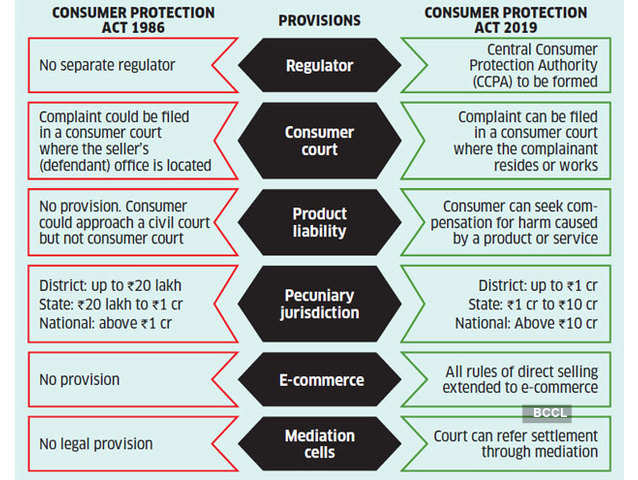
1) Consumers can now institute a complaint from where they reside or work for gain.

2) The original pecuniary jurisdiction of the District Commissions has increased upto ₹1 crore from ₹20 lakh earlier.

3) The Pecuniary jurisdiction of State Commissions has been increased from ₹1 crore to Rs. 10 crore.

4) The National Commission can hear cases above ₹10 crore when compared to above ₹1 crore earlier.

5) While the provisions relating to e-commerce are not yet notified, a section relating to electronic service provider (covering software services, electronic payments) is notified.

6) The opposite party needs to deposit 50% of the amount ordered by the District Commission before filing an appeal before the State Commission. Earlier, the ceiling was a maximum of ₹25,000, which has been removed.

7) The limitation period for filing of appeals to the State Commission has been increased from 30 days to 45 days.

8) The Parties can be allowed to settle the disputes through mediation.

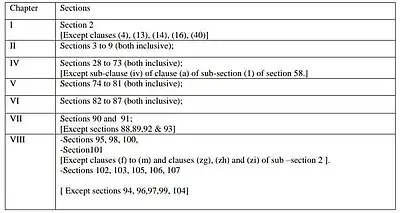
Following are the Sections which came into force:

Consumer Protection Act 2019- Sections to come into force from July 20,2020

Above mentioned provisions pertain to the Consumer Protection Councils, Consumer Disputes Redressal Forum, Mediation, Product Liability, punishment for manufacturing, selling, distributing etc spurious good or products which contain adulterant.

As per the rules, the e-commerce players will have to display the total ‘price’ of goods and services offered for sale along with break-up of other charges. Only a few certain miscellaneous provisions with regards and respect to the powers of the Central and State Government to make the rules and regulations have also been enforced.

On misleading advertisements there is provision for jail term and fine for manufacturers. There is no provision for jail for celebrities but they could be banned for endorsing products if it is found to be misleading.

For the first time there will be an exclusive law dealing with Product Liability. A manufacturer or product service provider or product seller will now be responsible to compensate for an injury or damage caused by the defective product or deficiency in services.

The Act has also defined an “e-commerce” as the buying or selling of goods or services including the digital products over digital or electronic networks. The existing definition of e-commerce has been adopted from India’s FDI Guidelines on e-commerce.

The definition of ‘e-commerce Entity’ as provided under the FDI Guidelines includes inventory and market place models.

There is also a provision for class action law suit for ensuring that rights of consumers are not infringed upon. The authority will have power to impose a penalty on a manufacturer or an endorser of up to 10 lakh rupees and imprisonment for up to two years for a false or misleading advertisement.

WEBSITES REFERRED

1)https://consumeraffairs.nic.in/acts-and-rules/consumer-protection

2)https://www.barandbench.com/news/law-policy/provisions-under-consumer-protection-act-2019-to-come-into-force-on-july-20-2020-centre-notifies

3)https://www.google.com/amp/s/www.thehindu.com/news/national/tamil-nadu/new-consumer-protection-act-gives-more-power-to-consumers-experts-say/article32135908.ece/amp/

4)https://www.google.com/amp/s/www.livemint.com/news/india/consumer-protection-act-rules-for-e-retailers-to-be-effective-by-this-weekend/amp-11595291549084.html

5)https://www.google.com/amp/s/zeenews.india.com/economy/new-consumer-protection-act-2019-comes-into-force-today-know-how-it-will-benefit-you-2297012.html/amp

6)https://www.google.com/amp/s/m.economictimes.com/wealth/spend/heres-how-consumers-will-benefit-under-the-new-consumer-protection-act/amp_articleshow/70711304.cms

7)https://www.google.com/search?q=consumer+protection+act%2C2019&tbm=isch&ved=2ahUKEwjOhv7-sN7qAhVIH3IKHTOCBfMQ2-cCegQIABAC&oq=Consumer&gs_lcp=ChJtb2JpbGUtZ3dzLXdpei1pbWcQARgAMgQIIxAnMgUIABCxAzIFCAAQsQMyBQgAELEDMgUIABCxAzoHCCMQ6gIQJzoCCAA6BwgAELEDEEM6BAgAEENQ0xRYzipg1jBoAnAAeACAAZABiAGHCJIBAzAuOJgBAKABAbABBcABAQ&sclient=mobile-gws-wiz-img&ei=e-QWX47dJsi-yAOzhJaYDw&bih=682&biw=393&prmd=ivn#imgrc=eILduqMFjleJaM

8)https://www.vecteezy.com/free-vector/consumer

9)https://www.google.com/amp/s/www.livelaw.in/amp/news-updates/most-provisions-of-consumer-protection-act-to-come-into-force-160003

How to identify a ‘Convent’ educated person?

A Convent educated person means someone who has studied among a community of nuns or sisters, and who are devoted and have a religious bend towards life. Most of the convent schools are divided into two basic categories – Methodists and Catholics. Methodists are the one devout follower of Jesus Christ and they believe that faith in Jesus Christ is necessary for salvation. In contrast, Catholics are the ones who believe that men can be ordained and they firmly believe that the Catholic Church was founded by Jesus Christ which is necessary for salvation.

Not delving further into the history of the origin of such schools, I would like to diversify towards some practices and behaviour which can provide an insight about the nature of a ‘Convent’ raised person. Most of these quirks are those which I have acquired over the years through experiences, considering the fact that I am a convent educated too. Below are some of the most notable illustrations:

  • Morning Prayer in Church. Convent schools cannot think of starting a day without a short, about 15 minutes prayer in the Church. Usually the prayer consists of a student or a teacher reading a verse or gospels, followed by singing from the hymnal and then saying the prayer and then taking a pledge. Such schools have a strong fascination for church and every celebration starts from within a church.
  • Nuns roaming on the campus. It is very normal for the students to see white-robbed nuns, with rosary beads either in their hands or wrapped around the neck, strolling on the campus. Usually they tend to be very strict, but at the same time they are the most helpful person on the earth.
  • Wearing short skirts, preferably at or above the knee level. Any convent educated person feel very comfortable wearing such western culture dress because they have spent almost one-third of their life wearing such kind of dresses. So the norm is that most convent educated students have to wear such knee length skirts as per the rules mentioned in the diary, shoes should be polished without any signs of shabbiness.
  • Extremely disciplined and punctual. Convent schools follow this idea of being present without any delay. In fact if you have any such friend and you ask them to meet at 6 PM, you will see them standing there, maybe at 5:59 PM. In fact, convent schools did not allow any student to leave the campus even during the lunch break and one more thing, it was mandatory for the students to bring their School Diary every day, otherwise they will be punished.
  • Moral Science class. It was one of the most exciting classes because usually the teachers used to say some fantastic stories and then used to illustrate the moral of the story. And another perspective is that, it was a scoring class and also a break from the monotony of all the other heavy classes.
  • School Fests. One very big attraction of convent schools is the mandatory organisation of fests and conclaves, both inter-school and intra-school. And it is fun because we get to meet the students of other schools which is a very big thing considering the nuns always used to be on us.
  • Grammar Nazi. One word of advice – Do not ever mispronounce or say a grammatically incorrect statement. Convent educated person tends to be a very big Grammar Nazi throughout one’s life.
  • Mandatory English. It’s very frightening for a student if he or she is being overheard of speaking in any language other than English, by any teacher or nun. Yes, it is mandatory for us to speak in English to survive a day in school.
  • Music. A day in a Convent School is not complete without a musical lesson, of any form. Most important thing is the Christmas Carol, which usually comprised of musical carols and singing songs from our beloved hymn books.

So these are some, but not exhaustive lists of quirks which one can easily be observed in a Convent educated person. The thing is we are not weird, but we seem to have a different take and perspective on this world.

Amen…

Source:

https://www.indiatoday.in/education-today/featurephilia/story/convent-school-education-322890-2016-05-11

Self

Kendriya Vidyalaya Sangathan 2020 admissions begins, 20 July 2020

Vaishali Singh (Cheenu Singh Rathore)

Kendriya Vidyalaya Sangathan (KVS) has started the online registration process of the admission in Class 1st for academic session 2020-21 on it’s official website kvsangathan.nic.in Check the procedure down below to apply, it contains the direct link, important instructions, lists of the documents and everything which is required for the admission.

  • Step 1: Visit the official website at kvsangathan.nic.in
  • Step 2: Click on the admission link
  • Step 3: Now, read though the details and documents required for the admission process
  • Step 4: Click on the registration link
  • Step 5: Upload all the documents and click on submit
  • Step 6: Now, download all the documents and keep a copy This is how you can apply.

The online registration for Class 1 will close on August 7 at 7pm. The registration for class 2 onwards has also started on July 20 and will close on July 25 at 4 pm if vacancies exist (in offline mode).

The first provisionally selected students list for class 1 will be released on August 11th 2020, the second list will be out on August 24th 2020 while the third list will be out on August 26th 2020 (if seats remain vacant).

Declaration of provisional select list of candidates as per priority service category for unreserved seats, if any (keeping the left over reserved seats blocked) will be done from August 27th 2020 to  August 29th 2020.

The registration for class II onwards (Except Class 11th) will take place from July 20th 2020 to July 25th 2020 (Offline mode). 

Declaration of list of Class II onwards will be done at July 29th 2020 at 4:00 PM. Admission for class 2 onwards students will take place from July 30th 2020 to August 7th 2020.

For KV students: Registration for admission in Class 11th will be done within a week of class 10th result declaration.

Admission list for class 11th will be declared within 1 week of registration.

Non-KV students availability of vacancies, display of admission list & admissions in Class 11th registration will be done after the admission of KV students in Class 10th.

According to the official schedule, last date of admission for all classes including class 11th is September 15 2020.

Note:

  1. If any of the dates happen to be a public holiday the next working day will be treated as opening/closing date.
  2. The studies of Class 1 will commence from 15th September 2020 either online or regular depending upon improvement in COVID-19 situation.
  3. Presently around 198 Kendriya Vidyalaya across the country are being used as Isolation Centre or Quarantine Center by Central/State Government due to pandemic COVID-19. These KVs will be functional for regular classes only after lifting of lockdown.

Source: embibe

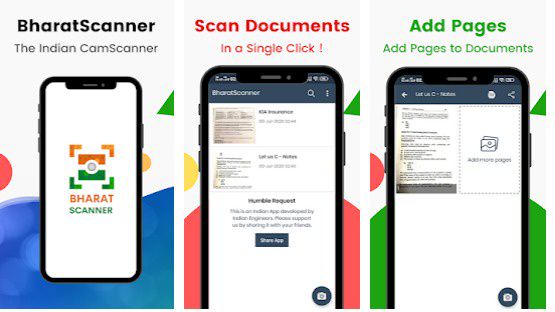
Indian option of CamScanner launched with name BharatScanner.

The BharatScanner mobile app, an Indian alternative to cam scanners, has been launched. In this app, users have got the facility from scanning documents to creating PDFs. The special thing is that this app is completely free and users will not have to pay a separate charge to use any feature.

Rating of 4.4 points found on Google Play Store

Bharat Scanner app is available on Google Play Store for users. This app has downloaded more than 10 thousand users so far and it has got a rating of 4.4 points on the Google Play-Store. At the same time, this app size is 36 MB. .

Features of BharatScanner .

Some current features of BharatScanner are as follows: .

  • Users can scan documents easily.
  • Filters have been supported in this app.
  • Users can keep their documents as PDF.
  • Users have got the facility to share documents in this app on mail and Whatsapp.

Indian government imposes ban on Chinese mobile app .

Under Section 69A of the Information Technology Act, the Government of India decided to block 59 apps as these apps were a threat to India’s sovereignty and integrity, defense of India, security of the state and public order. The government had received many complaints about these apps from various sources, including about the misuse of many mobile apps. These apps were stealing data from both iPhone and Android users.

  • लॉन्च हुआ CamScanner का भारतीय विकल्प Bharat Scanner, जानें इसकी खासियतें

Ban on these Chinese apps

Tiktok, CamScanner, Shareit, Kwai, UC Browser, Baidu Map, Shein, Clash of Kings, DU Battery Saver, Helo, Likee, YouCam makeup, Mi Community, CM Browers, Virus Cleaner, APUS Browser, ROMWE, Club Factory, Newsdog these 59 apps are banned, including BeutryPlus, WeChat, UC News, QQ Mail.

Government concerned over return of large number of Indian students from US due F1 visa issues.

The US order of July 7 stating that F1 visas will not be renewed for students if they are attending only online- lectures in the US is a concerning mater for India since the highest number of foreign students in the US are from India. The US government has announced those F-1 and M-1 (non-academic and vocational students) visa holders attending only online classes will not be allowed to remain in the US.

US Noted India's Concerns Regarding F-1 Visa Issue: Centre

India on Thursday said it has reported its concerns to the US govt about the new rule on F1 visa and urged to keep in mind the role education have played in the developing relationship between the two countries.

The concerns were expressed during the virtual foreign office consultations between Foreign Secretary Harsh Vardhan Shringla and US political affairs secretary David Hale on Tuesday. Ministry of External Affairs’ spokesperson Anurag Srivastava said that the US government has looked into the concern regarding the new rule.

During virtual meeting, Srivastava said that India is concerned about the possibility of the return of a large number of Indian students studying in the US due to new rules in visa.

The Immigration and Customs Enforcement (ICE), an agency of the US Department of Homeland Security (DHS) on Monday said that the foreign students pursuing courses in the US must return to their country if their institutes are conducting only online course due to covid-19 pandemic.

‘WILL’ under Indian Law


Meaning:

A Will is a solemn document by which a dead man entrusts to the living to the carrying out of his wishes. Section 2(h) of Indian Succession Act, 1925 provides that Will means the legal declaration of the intention of a person with respect to his property, which he desires to take effect after his death Will has been defined in Corpus Juris Secundum as A ‘Will’ is the legal declaration of a man’s intention, which he wills to be performed after his death, or an instrument by which a person makes a disposition of his property to take effect after his death.

Essential Features of a Will

A Will can be made at any time in the life of a person. A Will can be changed a number of times and there are no legal restrictions as to the number of times it can be changed. It can be withdrawn at anytime during the lifetime of the person making the Will. A Will has to be attested by two or more witnesses, each of who should have seen the testator signing the Will.
The essential features are:

1.     Legal declaration: The documents purporting to be a Will or a testament must be legal, i.e. in conformity with the law and must be executed by a person legally competent to make it. Further the declaration of intention must be with respect to the testator’s property It is a legal document, which has a binding force upon the family.

2. Disposition of property: In a Will, the testator bequeaths or leaves his property to the person or people he chooses to leave his assets/belongings. A Hindu person by way of his Will can bequeath all his property. However, a member of an undivided family cannot bequeath his coparcenery interest in the family property

3. Takes effect after death: The Will is enforceable only after the death of the testator

Under section 18 of the Registration Act the registration of a Will is not compulsory. Also, the SC in Narain Singh v. Kamla Devi has held that mere non-registration of the Will an inference cannot be drawn against the genuines of the Will. However it is advisable to register it as it provides strong legal evidence about the validity of the Will. Once a Will is registered, it is placed in the safe custody of the Registrar and therefore cannot be tampered with, destroyed, mutilated or stolen. It is to be released only to the testator himself or, after his death, to an authorized person who produces the Death Certificate

Since a testamentary disposition always speaks from the grave of the testator, the required standard of proof is very high. The initial burden of proof is always on the person who propounds the Will.

Kinds of Wills

Ø Conditional Wills: A Will maybe made to take effect on happening of a condition. In Rajeshwar v. Sukhdeo the operation of the Will was postponed till after the death of the testator’s wife. However if it is ambiguous whether the testator intended to make a Will conditional, the language of the documents as well as the circumstances are to be taken into consideration.


Ø Joint Wills: Two or more persons can make a joint Will. If the joint Will is joint and is intended to take effect after the death of both, it will not be admitted to probate during the life time of either and are revocable at any time by either during the joint lives or after the death of the survivor.


Ø Mutual Wills: Two or more persons may agree to make mutual Wills i.e. to confer on each other reciprocal benefits. In mutual Wills the testators confer benefit on each other but if the legatees and testators are distinct, it is not a mutual Will. Mutual Wills are also known as reciprocal Wills and its revocation is possible during the lifetime of either testator. But if a testator has obtained benefit then the claim against his property will lie. Where joint Will is a single document containing the Wills of two persons, mutual Wills are separate Wills of two persons.


Ø Privileged Wills: Privileged Wills are a special category of Wills and other general Wills are known as unprivileged Wills. S.65 of ISA provides that a Will made by a soldier or a airman or a mariner, when he is in actual service and is engaged in actual warfare, would be a privileged Will. S.66 provides for the mode of making and rules for executing privileged Wills. Ss. 65 and 66 are special provisions applicable to privileged Wills whereas other sections relating to Wills are general provisions which will be supplementary to Sections 65 and 66 in case of privileged Wills.


Who Can Make A Will
S.59 of Indian Succession Act provides that every person who is of sound mind and is not a minor can make a Will.

Execution of a Will

On the death of the testator, an executor of the Will (executor is the legal representative for all purposes of a deceased person and all the property of a testator vests in him. Whereas a trustee becomes a legal owner of the trust and his office and the property are blended together) or an heir of the deceased testator can apply for probate. The court will ask the other heirs of the deceased if they have any objections to the Will. If there are no objections, the court grants probate. A probate is a copy of a Will, certified by the court. A probate is to be treated as conclusive evidence of the genuineness of a Will. It is only after this that the Will comes into effect.

Signature of The Testator

S.63(a) of ISA provides that the testator shall sign or affix his mark. If the testator is unable to write his signature then he may execute the Will by a mark and by doing so his hand maybe guided by another person. In another words a thumb impression has been held as valid.

Attestation of Will:Attesting means signing a document for the purpose of testifying the signature of the executants. Therefore an attesting witness signing before the executants has put his mark on the Will, cannot be said to be a valid attestation. It is necessary that both the witnesses must sign in the presence of the testator but it is not necessary that the testator have to sign in their presence. Further it is not necessary that both the witnesses have to sign at the same time. It is also not necessary that the attesting witnesses should know the contents of the Will.

E-learning – Pros & Challenges

The global COVID-19 pandemic has triggered new ways of conducting the teaching-learning process online. For some this has been a small move but for others, this is a completely new way of education. Most nations have already initiated e-learning in their schools. Many schools in India have also adapted to the new normal of e-learning with varying degrees of success. Many progressive schools had already done a lot for the adoption of technology in their schools, which helped in quickly transitioning to a completely online delivery of teaching during the current crisis and with significant success. A recent survey conducted by us showed that more than 92% of students and parents were happy with the online delivery of lessons.

With the advent of Covid19, e-learning seems to be one of the safest and easiest ways to impart education for acquiring new skills, explore new career options, or for that matter new hobby development. E-learning is now applicable not only to learn academics but also to conduct extra-curricular activities for students, informative online sessions, online conferences, and webinars. The demand for e-learning has risen significantly and will continue doing so as society starts adapting to ‘social distancing’ post this pandemic. 

Information and communication tools (ICT), Web2.0 applications, and the impact these resources are having on education are rapidly creating new challenges for instructor and learners faced with learning online. Teaching and learning in an e-learning environment happens differently than in the traditional classroom and can present new challenges to instructors and learners participating in this online learning environment. There is a need in e-learning to identify the challenges and consider best practice solutions to ensure instructor and learner success in this new learning environment.

As with most teaching methods, e-learning also has its positives and negatives. Understanding these will help in creating strategies for more efficient delivery of the lessons and measuring its effectiveness.

Here are some, and in no way exhaustive, key pros and cons – 

Advantages:

  • Efficiency – E-learning offers a very efficient way to deliver lessons. Use of videos, sharing of resource links, serving assessment tests can all be done at the click of a button. Additionally, the lectures can be recorded and shared for reference with a wide range of audiences. It also allows for a much larger set of children to be taught. 
  • Affordability – E-learning is far more affordable as compared to physical learning. E-learning primarily eliminates 2 major cost points – real estate and transportation. The course or study material is all available online and you can access it as many times as you want.
  • Less absenteeism – There are fewer chances of students missing out on classes, as they can access easily anytime from the comfort of their home. 
  • Increased Access & Reach – E-learning can happen in any place, as long as there is a device and connectivity. A physical class requires the student to come to school but in this mode, the student can access lessons sitting anywhere in the world. 
  • Encourages shy kids – We have seen that many children who are usually withdrawn in a class environment, open up in the online classes. They are far more forthcoming with their questions and participation. This could be because of a comfortable home environment. 

Challenges:

  • Not appropriate for all – It is a well-known fact that students have a dominant learning style. Some a visual, some auditory, some kinesthetic, etc. E-learning which requires a child to sit in front of a device and understand the lesson, may not be suited to all learning styles.  
  • Focus Deficit – Some students tend to lose focus for a longer period during virtual lectures. Boredom occurs easily as there is a lack of face to face interaction. It becomes imperative for the teachers to keep their online sessions crisp and interactive enough to help students grasp everything.
  • Technology issues – While internet penetration has grown over the past 12 months in India, the current infrastructure, especially in smaller towns, can pose a problem. Any break in the data connectivity can cause a lack of continuity in the learning for the child, which can be detrimental. Additionally, if a child is technophobic, he may face difficulties in learning. 
  • Lack of social interaction – Human beings learn a lot by simply being around other human beings. Unfortunately, e-learning takes away all physical interactions that students and teachers might have on the school premises. It’s always better for students to be around other students to talk or discuss ideas, which is an essential part of learning. Peer learning certainly takes a hit. 
  • Teacher training – E-learning demands the teachers to be technology-friendly, which, unfortunately, is not the case always. Teachers need to invest more time in aligning themselves with the latest technology updates to ensure they can conduct their online classes seamlessly. 
  • Manage Screen time – health hazards of staring at a screen continuously for hours 

While all modes of learning have their benefits and drawbacks, after the current crisis, it is clear that some form of blended learning will evolve with e-learning forming a crucial part of the overall teaching-learning process.

e-Learning : Solutions

In order to understand the challenges associated with an e-learning environment it is important to define what the term e-learning means. Clark and Mayer help define e-learning as instruction delivered by any technological mode intended to promote learning (2011). Teaching and learning in an e-learning environment happens differently than in the traditional classroom and can present new challenges to instructors and learners participating in this online learning environment. Technology-assisted learning tools is quickly changing the face of education, transitioning the classroom only learning environment to an online only or blended online learning experience.

The possible challenges instructors and learners face in an e-learning environment must be considered in order to ensure learner success. Therefore, there are two roles in e-learning that must be considered when discussing ways to improve these challenges. The first is the instructor’s role and the second, the student’s role. Both roles include a transition away from traditional teacher-student relationships, roles, and responsibilities, to virtual space roles. However, it is the instructor’s primary roles within the learning environment, which will help overcome challenges, support, and sustain student success.

The New Digital Divide

In education, the digital divide is most commonly defined as the gap between those students who have, do not have, and know how to use the internet and the information technologies that are currently transforming education (Bernard, 2011; Hall, 2013). According to Warschauer (2003), the “digital divide is marked not only by physical access to computers and connectivity but also by access to the additional resources that allow people to use technology well” (p. 6). Due to the affordability of many information technologies today the current meaning of digital divide is changing from having access, to knowing how to use the technologies (Bernard, 2011). In this way the digital divide still acts as a challenge for education and more specifically e-learning environments. In education the digital divide has, most recently, become more about closing the gap between using the resources appropriately to obtain quality educational outcomes than not having access to the technology (Warschauer, 2003; Bernard, 2011). The quality of learning outcomes, and more importantly the successful use of the expected technology resources, all hinge on the amount of experience and comfort level each learner has with these specific resource technologies (Warschauer, 2003).

One solution to this challenge is for the instructor to implement a learning environment that encourages collaboration. Providing learners with the opportunity to collaborate, share, and create will increase the learner’s use of various technologies, enhance their e-learning experience, and support self-directed and ongoing learning (Clark & Mayer, 2011; Li & Irby, 2008). During this time the instructor must consider the learner’s technological incompetence’s and accept various ability levels; willing to allow learners choice with the expected performance objectives given it results in the appropriate learning outcomes (Bernard, 2011). The learner should ask questions, seek additional information from credible sources, reflect often, and interact with other learners in academic discourse related to the online learning objectives. Having an online community where learners can collaborate in a safe and respected learning environment will help close the gap of the new digital divide, and in doing so helps to create a culture of digital natives conducive to effective e-learning (Warschauer, 2003; Li & Irby, 2008; Clark & Mayer, 2011).

Student Motivation

Although student motivation can only truly happen intrinsically, creating the right online environment where students want to learn and feel successful is the primary the responsibility of the instructor or course designer. According to Martin, in today’s online environments there is a lack of teacher presence, face-to-face (f2f) interaction, and tech support (2009). The most well planned and explicitly laid out online instructional environment is not enough to sustain learner interest or support intrinsic motivation. On the other hand learners new to an online learning environment typically lack the level of metacognition awareness, time management skills, and self-directed learning needed to be successful (Martin, 2009).

To promote student motivation the primary role falls to the teacher to anticipate and prevent motivational challenges unique to e-learning. One way this can be done is by increasing f2f interactions through a variety of technological modes (Martin, 2009). Online learning does not have to be isolated to merely email communication and web based only classroom interactions. Learners often have anxiety about learning online and need to feel connected, reassured, and safe to contribute in their new learning environments (Terry & Leppa, 2009; Hastie, Hung, Chen, & Kinshuk (2010). E-learning environments often lack a variety of communication options creating an unwelcoming online learning atmosphere (Terry & Leppa, 2009; Martin, 2009; Hastie et al., 2010), which only the instructor can control. To help alleviate student anxiety e-mentors should provide various and alternative ways of interacting and communicate through the use of such applications like Skype, chat forums, or discussion boards.

Course Design

Insufficient time spent on course development and design can be a huge contributing factor to poorly developed online learning experiences and a major challenge for e-learning instructors. According to Leanna Archambault (2010), the amount of time needed to design and implement a well design lesson, online, is an important consideration. Archambault indicated that instructors reported an increase in the amount of time they spent creating e-learning courses because of new content, new technologies, and new ways of engaging online learners.

One way to overcome the challenge of time developing an online course is for instructors to collaborate often within their e-learning professional communities. Collaborating with other instructors should be spent sharing, developing, and creating (Terry & Leppa, 2009; Hastie et al., 2010). This collaboration and discourse helps minimize the time spent planning and designing. A way to overcome the challenge of a well-developed overall course design should be addressed with the learner in mind and should include these overall course characteristics: (a) opportunities for learners to collaborate, (b) a well-established protocol for communicating, (c) clear performance expectations, and (d) opportunities for learners to chose the mode in which assignments are created and presented (Hastie et al., 2010).  In order for instructors and learners to be successful these characteristics are essential to the overall course design and e-learning environment.

Conclusion

With so many different ways to define e-learning and the educational approaches that can be taken in these learning environments, it is the conclusion of this author that e-learning is an innovative approach to learning. It is a holistic way of teaching and learning that meets the needs of today’s digital natives.  It is an environment made up of collaboration, choice, and an array of technological resources that supports a successful online learning experience. However, in order for learners to be successful in this learning environment the challenges to e-learning must be overcome with support and a best practice solutions. Instructors and learners must embrace the shift away from traditional classroom practices to an e-learning approach to education. Despite the fact that today’s learners are digital natives, the use of technology for e-learning can be overwhelming and provide student motivation challenges however, with the proper supports from instructors, learners can be successful within these e-learning environments. Finally, and probably the most important challenge for the instructor is to focus on the overall elements of a well-developed course. Developing a purposeful and well-defined online course, which supports the instructor and learner, means devoting the appropriate time and embedding the applicable course elements into the e-learning environment.

What is Ethnographic study?

Ethnographic study is a field study technique, where the researcher gets completely immersed in the lifestyle of the area or situation they are studying. It is nothing but a detailed study of a particular cultural group. The study was originally developed by anthropologists in order to study a society, group or culture in detail. Ethnographic research is also known as qualitative research. Ethnography proposes a study through direct natural observations of users in a natural environment rather than in a science laboratory. The main purpose of this study is to understand what is happening naturally in a particular setting. It provides the researcher an idea how the selected subjects view the outside world and how they interact with everything that surrounds them. Researcher collects data from a natural setting which includes a wide variety of variables. No attempt is made to regulate or control the variables in the selected setting as this can destroy or alter the phenomenon being studied. The length of the study is depended on the topic of the research which is being conducted. It can range from a couple of hours of observations to a several set of months.

The word ‘ethnography’ derived from the Greek words; ‘ethnos’ and ‘graphein’. Ethnos stands for people and graphein called writing. That is why ethnography is also called as ‘culture writing’. This study is one of the most distinctive features of anthropology (Scientific study of human, human behavior and societies in the past and present. Socio cultural anthropologists who conduct ethnographies are named as ethnographers. The important instrument used to gather information is the researcher itself. 

While conducting the study, these researchers live in that particular culture. They get engaged in the daily lifestyle of the people to be studied and observe the culture in detail. Information can be collected observations, interviews, questionnaires and document analysis. Thus, validity of this study is completely depended on the skill and quality of the researchers. Ethnographic studies can be expensive and time consuming at times as the researchers are stepping out from the comfortable laboratories to the field of process. One of the main benefits of ethnographic study is that, it helps to identify and analyze unexpected problems and issues. This is because, the researcher is completely immersed in the lives of people and their culture which is to be studied. Malinowski’s six years’ field work among the native people of Trobriand Island, published in 1922, Margaret Mead’s coming of age in Samoa were some of the famous ethnographic studies ever. Many journals publish ethnographic studies on a wide variety of topics. The Journal of Royal Anthropological Institute is one of the oldest among them, which has been publishing anthropological works since more than 150 years.

DEFINING NEW MEDIA

It is an irrefutable fact that the media that is used for communication have undergone myriads of changes and its ability in improvement never tends to end. The world has witnessed drastic changes in the development of media over the years. According to these drastic changes, the media can be categorized as traditional and new media. Traditional media also refers to the old media that incorporates linear model of communication. Even though this media is meant for a mass audience, it leaves less chance for interaction and feedback. New media are the ones that try to fix the drawbacks of traditional media.

            Digital media, online media, social media are some of the terms that are associated with New media. Basically these are the channels that uses internet to disseminate information and ideas. Digital media comprises of photos, videos, audios, text, graphs, charts, pictographs, animations, and links. Thus it can also be referred as ‘multimedia’. This wide variety of tools help in essential and effective communication. It began to establish when the text were put on to the internet instead of piled on paper as it was previously. Images were also taking its place soon after the text. Thus, the growth of new media happened in a short period of time. Today, it provides everything that a person needs to know. The information is transmitted virtually in these media. It seems magical to realize that the new media needs no physical effort to pass or transmit the information from one place to another. Everything is possible through the virtual world. It also incorporates multidimensional flow of communication. Unlike television or radio, new media not only provides required information but also give the users a chance to respond. New media provides free flow of information where a person is free to express his opinions or ideas. The only thing he/she needs is accessibility to internet. But there is a slight difference between digital and new media when it is observed deeply. Even though all these terms are similar in nature, the definition of new media can be explained in a different way. New media refers to the digital media where any individual has the freedom to access and edit the content. Thus new media can be called as an extension of digital media where any person can act as creator or a part of the content. Wikipedia can be considered as an example for new media. It is a famous website which is edited by common internet users.

            New media thus give the opportunity to not just access information digitally but also to actively participate in the content. It allows anyone, irrespective of their levels of education, to be the creator of digital content. Many social media such as youTube, Instagram, Facebook etc. can be considered as new media because they give the power to create content and edit the already existing content. New media do not include television programs, films, or paper based publications until they contain technologies that enable digital interactivity. One of the main benefits of new media is that, it is very much cost effective. Unlike traditional media, it doesn’t require much time and money for the production. Media like television radio and newspaper includes production, distribution, circulation which all are expensive. But in new media everything is done virtually. Another advantage of new media is the immediacy. With the improvement in technologies, people don’t have to wait to access the information he/she requires. It also help the people to find the data easily without any delay. The users can simply type the keywords about the topic that he/she wants to read. Unlike television and radio, the new media provides links and hyperlinks which help the users to know more about that particular content. Thus finding related articles has been way too simple in new media.

It is true that new media has changed the way a person receives the information. In the past decades, television, radio, newspapers were the only media used for receiving content. The number of channels were limited. Sharing information was also considered as a difficult task. Only the people who were experts in the media field were the main source of information. People do not participate in the creation of the programs. But today, the whole concept has been changed. With the arrival of new media, everyone became worthy to create and share information and ideas. People don’t even need to be educated about the topic. They are free to create content and share information on internet whether it is true or not. This freedom has badly affected the credibility of people on new media. Information perceived from new media are less likely to believe by the users compared to the traditional media since there is no control in the flow of communication in new media.

ICSE, ISC exam result 2020 to be announced tomorrow at 3 PM. All you need to know

ICSE, ISC Exam 2020 Result to be Declared Tomorrow at 3 PM | All You Need to Know

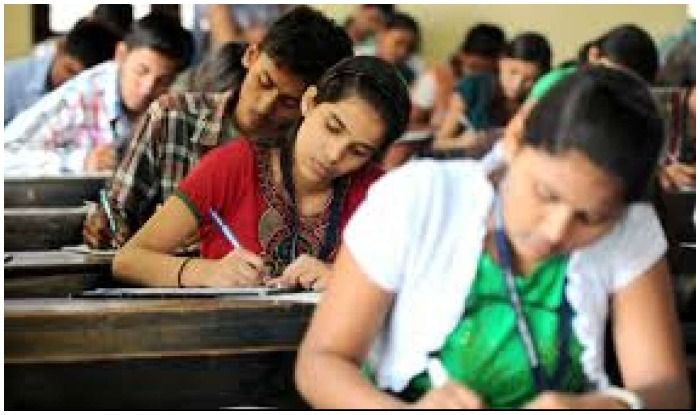
ICSE, ISC Exam 2020 Result: The Council for the Indian School Certificate Examination (CISCE) on Thursday said that ICSE (class 10) and ICS (class 12) exams results will be declared tomorrow at 3 PM, on the official website ‘cisce.org’ and ‘results.cisce.org. All students who have appeared for the exams are advised to keep an eye on the website and check their results.

To check the results once they are out, follow this steps:

step 1-Visit the official website at https://www.cisce.org/

step 2-Go on the ‘Careers’ portal on the homepage.

Step 3: Now, click on the relevent exam link.

Step 4: Enter all the details asked including your roll number, click submit

Step 5: You result will now appear on the screen.

Step 6: Download and take a print-out for a future reference.

Icse result 2020, icse board result 2020, isc result 2020, isc board result 2020

To get results on SMS, students can send their Unique id to 09248082883 in this format: ‘ICSE/ISC (Unique ID)’.

Earlier in the day, the CISCE board reduced 25 per cent syllabus from this year’s curriculum in view of the coronavirus pandemic.

According to the latest notification issued by the ICSE Board, the decision to reduce the syllabi will be applicable for Class 9 to Class 12 students and has been taken to reduce the burden amid limited teaching via online classes. The CISCE stated that the reduced syllabus aims to cope with the loss of instructional hours due to the difficulties faced in the academia in the lockdown situation.

THE CONSUMER PROTECTION ACT, 2019

A consumer is a person who avails services and purchases goods for their own use and not for reselling those goods. Consumer Protection is the act of safeguarding the rights of the buyers/consumers of those goods and services. It provides protection to the consumers from frauds and damaged goods. It also helps the consumers to file complaints and make the process of the trail fast.

Consumer Protection Act to be implemented from July 20; here's how ...

For safeguarding the rights of the consumer, the Consumer Protection Act 1986 was introduced. The act aims to provide easy and fast compensation to consumer grievances. This act also encourages the consumers to stand up and fearlessly speak up against the damaged goods and flawed services. This act deals with all the goods and services of public, private, or cooperative sectors, except those which are exempted by the central government.

The act provides certain rights and responsibilities of the consumers. The Rights of the Consumers are –Right to Safety, Right to Choose, Right to be Informed, Right to Consumer Education, Right to be Heard, Right to Seek Compensation. The Responsibilities of the Consumer are – Responsibility to be Aware, Responsibility to Think Independently, Responsibility to Speak Out, Responsibility to Complain, Responsibility to be an Ethical Consumer.

Under this act, every district has at least a consumer court or a consumer redressal forum. Above the district forums, there are state commissions. At the topmost level is the National Consumer Disputes Redressal Commission in New Delhi. These consumer courts are given a wide range of powers to enforce their orders. The courts have the power to decide the matter in the absence of the defaulter. These forums can issue warrants and use the police to produce the defaulter and to impose its decision. The defaulter can be sentenced to a maximum of 3 years of imprisonment and fined for the amount of Rs 10,000.

CONSUMER PROTECTION ACT 2019

The Consumer Protection Act 2019 is a replacement for the Consumer Protection Act 1986. The Consumer Protection Bill 2019 was introduced in the Lok Sabha on 8 July 2019 by the Minister of Consumer Affairs, Food and Public Distribution, Ram Vilas Paswan. The bill was passed by Lok Sabha on 30 July 2019 and was later passed in Rajya Sabha on 6 August 2019.

The aim of the act is to ensure that the rights of the consumers are secured by the establishment of the authorities for effective and speedy settlement of the consumer’s disputes. It provides strict penalties, including jail term for adulteration and misleading advertisements by firms.

KEY PROVISIONS OF THE ACT

1. This act proposes the establishment of the Central Consumer Protection Authority. This authority will have the power to regulate cases related to unfair trade practices, misleading advertisements, and violation of consumer rights. They also have the power to penalise the violators, order them to refund for the damage, or to withdraw their services.
2. It has established a simpler way for dispute resolution, has provisions for mediation and e-filing of cases. It also allows the consumer to file their complaints in the nearest commission from their residence. There also no need to hire lawyers to represent the cases of the consumers.
3. In case of misleading advertisements, there is a provision for jail term and fine for manufacturers. The celebrities, who are found to endorse the brands that provide misleading advertisements, will be banned from products endorsements.
4. It is for the first time that a law dealing with Product Liability. The manufacturer or the product service provider or the product seller shall now be held responsible to compensate for the injury or damage caused by the damaged goods and flawed services.
5. The act also deals with businesses that are owned by the public and private sectors. It also deals with businesses that provide services and goods either offline or online.

PENALTIES UNDER THE CONSUMER PROTECTION ACT, 2019

For the offence committed for the first time, the defaulter is penalised with an imprisonment of 6 months or fine upto Rs 1 lakh, in case the consumer does not suffer any injury. In case the consumer is injured, the term for the imprisonment is upto 7 years and the fine is upto Rs 5 lakh. In case of the death of the consumer, the defaulter has to pay a minimum of Rs 10 lakh as a fine and has to face imprisonment for 7 years which can be extended to life imprisonment.

In case of misleading advertisements, the manufacturer or the endorser of the brand is penalised for the fine of upto Rs 10 lakh and imprisonment for upto 2 years.

In case of repeated offence, the defaulter may be fined for the amount of Rs 50 lakh and imprisonment of upto 5 years.