Indian Education System

Education plays an important role in the development of an individual and making him a knowledgeable citizen. It is the education that makes an individual self-reliant, helps to suppress the social evils and contribute towards the development of the society and nation as a whole. Education helps in unravelling the mystery of nature. It enables us to understand and improve the working of our society. It creates conditions for a better life. Education brings out the capabilities to fight injustice happening in society. Every individual has the right to education. 

Indian Education is one of the largest and complex education systems in the world along with China. India is committed to providing basic education to its citizens, the framework of which is defined in the National Policy of Education. Elementary education is now compulsory in India. At the time of Independence, only 14% of India’s population was literate. Now after so many decades since Independence, the number of literates has increased by fivefold.

History of Education System

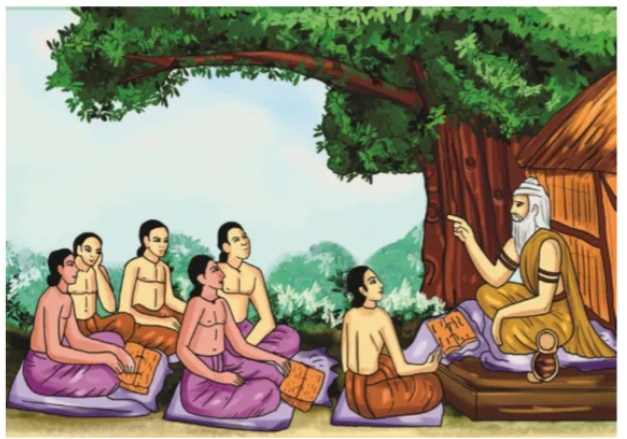
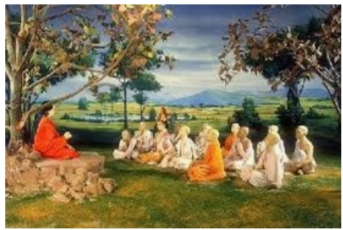
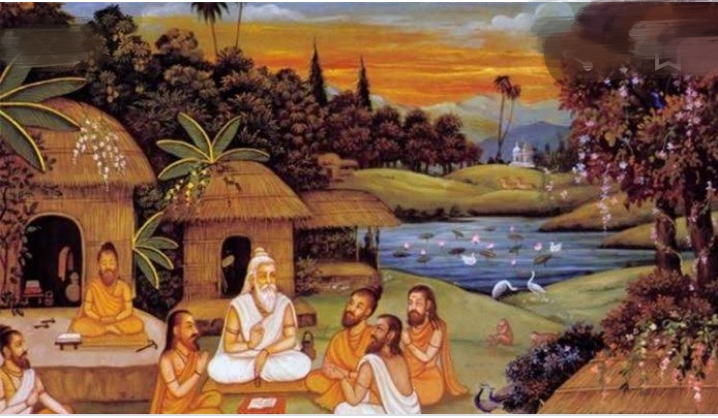
The history of Indian education system comes from the times of Ramayana and Mahabharata. The historic Indian education system is also called the Gurukula system. There were gurus then who are now known as teachers and shishyas who are called students now. The gurus and the shishyas lived together under one roof in Gurukula until the completion of their education. The shishyas were expected to help the guru in all the daily chores as part of their learning. The children belonging to higher strata of the society were taught all the subjects from Sanskrit to Holy Scriptures and mathematics to metaphysics by the gurus. The Gurukulas during those times focused on the practical aspects of life. The students were taught in the open classroom in the surrounding area of nature. This early system of education in India continued for many years until the modern education system came into the picture in the nineteenth century.

In the early 19th century, during the British period, the modern education system was brought into our country by Lord Thomas Babington Macaulay. The basic strength of this modernized education system was the examinations and a well-defined curriculum, which gave importance to subjects like science and mathematics and subjects like philosophy, metaphysics were given a back seat. The brick and mortar classrooms replaced the open classrooms in the Gurukulas. The essence of the guru shishya bond was taken over by a more formal relationship between the teacher and the student. To understand the progress of any student, examinations were conducted at frequent intervals. The focus of the education system shifted from learning to memorizing of the concepts to score good marks in the examinations.

Problems of Indian Education System

Over a period of time, it has been observed that there are many loopholes in the system of education in India. Instead of understanding the concepts, students started cramming and memorizing the lessons. Knowledge is given a backseat and scoring in high rankings takes importance. The modern parents have tuned their mindsets accordingly and their goal is to ensure that their children score good marks instead of acquiring knowledge right from the primary level. 

Private schools and colleges have been rapidly increasing in the country but the results produced by them are far beyond satisfactory. It has also been observed that the quality of teachers deteriorated with the passing of time. Our examination system is responsible for the wide skill gap. India is producing lakhs of engineers and professionals every year but only a fraction of this number is actually getting employed. This is because the Indian examination system focuses more on scoring good percentages rather than the actual continuous comprehensive evaluation. 

Research and development, which should be the cornerstone of our system, are given the least importance. The private schools and colleges focus on the admission of more students and are least interested in the quality of their education. This is the major reason why the faculties and the teachers lack skills and specialization. This is quite evident from the fact that a single professor is assigned to teach multiple subjects. 

How Can We Improve the Indian Education System?

First and most importantly we should improve the grading system. Rote learning should be discouraged completely. Teachers and faculties should focus more on the analytical skills of the students and grade them accordingly. There should be more focus on comprehensive evaluation instead of scoring only good marks. Workshops must be organized for teachers on a regular basis to keep them updated about the latest developments in the sector of education. At the same time, the curriculum should be reframed according to the present needs of education in India. 

The payroll structure of the teachers and the faculties especially in the government institutions should be improved. This step will help in motivating the teachers to develop their skills and they will take a keen interest in grooming or shaping up a student’s life and career. The government and other entities who are associated with the education sector, need to understand the importance of quality of education. Education should be a holistic process that must focus on the overall development of the physical, emotional, social and cognitive skills of a child. It needs to be a slow and cyclic process and must take place gradually to help the child develop into an autonomous, independent and knowledgeable individual.

Conclusion

An educated individual is an individual who should be able to contribute towards the betterment of the economic and social development of the society as well as the country. The true goal of education must exceed awarding the degrees and certificates to the students. Education is not a tool to earn livelihood but it is a way to liberate the mind and soul of an individual. 
Andhra Pradesh college gets permission to offer engineering in Telugu

The All India Council for Technical Education (AICTE) gave its consent for the NRI Institute of Technology, a private autonomous engineering college in Krishna district, to introduce the programme in Telugu.

It is the only institution in Andhra Pradesh and Telangana to get the permission for BTech Telugu medium with a 60-student intake into the computer science engineering stream.

In all, the AICTE allowed 14 engineering colleges across the country to offer the engineering programmes in Hindi, Tamil, Telugu and other native languages from the 2021-22 academic year.

The move is expected to provide a level playing field for the students, particularly from the rural and tribal areas who have studied in their native languages since childhood.

One of the major recommendations of the National Education Policy 2020 is to promote regional languages in education.

While the NEET exam is currently being conducted in 11 languages, the Union Ministry of Education is holding the JEE (Main) in 13 languages.

Speaking to TOI, principal, NRI Institute of Technology, Dr C Naga Bhaskar, said that the AICTE has chosen the 14 autonomous and NAAC- and NBA-accredited colleges to give permission to offer engineering courses in native languages.

Students to have option of Telugu, Eng for exams

“The move would definitely improve the grasp, creativity, and comprehension levels of the students. Several advanced countries like Japan, Germany and China impart education in their mother tongue. Students would be given the option of writing exams in Telugu or English. The Board of Studies of our college will finalise the syllabus and other components of the programme,” said Dr Bhaskar.

Dr Bhaskar said that it is generally believed that the English medium students would be in an advantageous position compared to their Telugu counterparts. “But, several exams like NEET, JEE and UPSP are currently being conducted in various regional languages. It may be further extended to exams like the engineering services examination in the coming years. This would give an impetus to professional education in local languages,” said Dr Bhaskar.

In a recent Facebook post titled ‘Engineering courses in mother language – A step in the right direction’, posted in 11 Indian languages Vice-President M Venkaiah Naidu lauded the move of 14 engineering colleges across eight states to offer engineering courses in regional language. “It is my desire to see the day when all vocational and professional courses like engineering, medicine and law are taught in mother languages,” said the Vice-President in the post.

A Reliable Learning Via Robotics and machines….

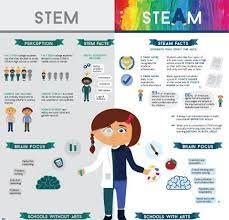
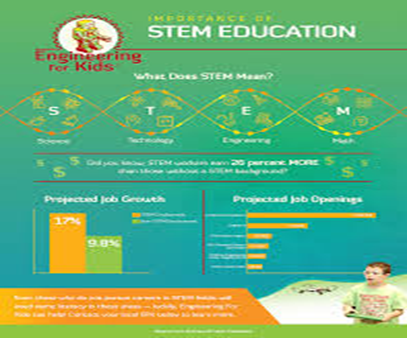
                                    IMPORTANCE OF STEM EDUCATION FOR AN ENHANCED LEARNING

  • Definition Of Stem

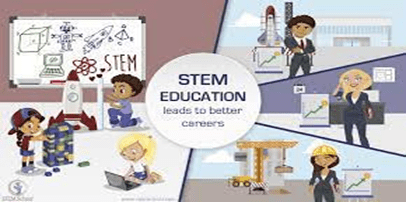
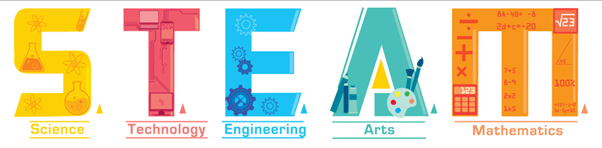
STEM is an artificial intelligence related to Science, Technology, Engineering and mathematics but it is a vast concept of more than these. It integrates and builds an advanced system of education taking into account every individual’s attention. STEM kind of learning needs to be paid attention as it has an improved technology with enclosing subjects that teaches moral values and discipline in inter-relating one another.

The main motive is to build advanced geniuses in the teenage able to tackle subject and real-time oriented issues. This tech unites with pupils making them to be well-versed and multi-talented in all occasions.

  • Benefits of STEM related education

This kind of learning is focused on building higher order of thinking among students by connecting them a classroom experience to the modern world. A future model is built under campuses for upgrading their problem-solving ability, thinking skill, communication skills and creativity to sort out various critical circumstances in reality.

Generally, focuses on practical experience with real-time applications that gradually builds the skills ability level and shaping them to utilize a sense od outstanding creativity in a competitive world of 21st century.

The students brought up from this kind of teaching can tackle the reality as well as social media/virtual world simultaneously with their brilliance and social skills that comprises of curiosity, social skills, leadership, management and acceptance of up and downs in life.

In a specific period of life people will undergo circumstances where they become puzzled to take decision as choices will cause effects on their career which has to be made wisely. At that stage without realizing they randomly choose a false decision making them fall in a pit, which will be realized on later times by the same individual after which nothing can be undone.

This system basically concentrates on those kinds of cases so the growing kids can be exclusively intelligence while handling such experiences. This AI creates a similar kind illusion to make them think and decide their choices accordingly so they can adopt to changes or select a decision more preciously.

  • Differences from normal learning and AI integrated learning

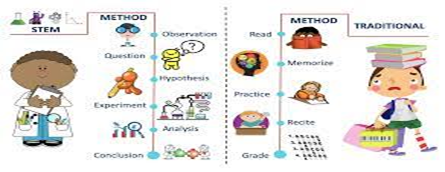
In a standard learning taught by faculties they can give you their knowledge ask them to explore it on your way but mostly pupils memorize concepts that will be totally vanished in this type of system where a machine will broaden every word and concept of subject and explaining the facts deeper by triggering your anxiety to grasp the entire knowledge.

They also become as Book-worms instead of knowing the working behind every concept thus it becomes like mugging/memorizing and vomiting/producing in exam papers just for marks rather than knowledge or skill developed education.

STEM education is the path of future learning making upcoming generation as innovative ones.

These AI models create crucial real-time happenings thus testing their initial level of thinking and providing solutions to the same. By doing this they actually promote their working of brain at a younger age which we call as maturity and experience at small ages.

It is also a known to contribute steps towards economic growth by this deep level thinking knowledge (innovation) which is unique in every kid. That is why each one is special but as they discover their innovative skill it becomes too late for individuals so by enhancing them to bring up their key skills so they are ready to face out life and unavoidable circumstances.

  • Ways to spread an idea to enlarge the importance about it to the Society

There are various ways through which you can advertise and spread the initiative taken by you. The only thing you require is an account in media platforms that will enroll your ads in various random posts that people may be searching for.

 The only purpose of using social media is because the reach is tremendous while compared manually or just by recommendations. You need to focus on how you can market them by discussing their features and how it helps in the improvement of a teenager.

By adding relevant pictures or short clips of the same, people can get to know about the functionalities and capabilities of the system and the working.

Awareness can also be made and posters shall be published to keep a track of viewers and connect with them mutually to improve a knowledge of better learning among several institutions in exploring the skills of a teenager in their adolescent ages that support them vitally.

The base of any product to be recognized is how you explain and elaborate the advantages and benefits that grasps attention to every single student in a whole crowd or in a classroom.

If you are self-motivated to prove and provide minute specifications for the useful machine integrated model (AI/STEM education) it can be an added information for users so they support and promote in various different ways.

  • Social Media Channels

The enlarged platform of these trending applications has several unique features under each portal those are different from one another. From audience till owners of some companies have adopted to this virtual world that helps growing merchants to develop and stand tall of their product.

The only difficulty is not all the things are encouraged in these sites, if you want a product to be wide-spread then its uniqueness and features must grab the reader/visitor’s attention in such a way so they start marketing your brand as an affiliate or recommend your goods in some required places.

 You as a producer can share things that will be helpful for any individual before trying it out. Social platforms like helps you to enrich with the fruitfulness of customers especially YouTube. There are millions of people from various continents utilizing this open platform for various entertainment.

From this article you can get to know some ideas and the importance of the STEM education as an effective way of building up the mental thinking ability by teaching them in a provoking way that enhances of building an IQ that is an advanced level for teenagers to think in a multi-tasking way.

Education

Education is a very powerful medium to grow in life and perceive something important. In a human’s life, education benefits a lot in decreasing the difficulties of a hard life. The expertise obtained through the education era encourages everybody regarding their life.Education is a way to enter into several doors for possibilities to obtain more real prospects in life to improve career growth. Government is also arranging various programs to educate everyone about education and its benefits in our life especially in rural areas. Education delivers knowledge of equality among everyone in society and encourages the growth and improvement of the nation.

In this modern technology-based era, education performs a supreme role in our life. And in this era, there are so many methods to boost the level of education. The complete criteria of education have now been modernized. And education makes a big impact on anyone’s life.

To say Education is important is an understatement. Education is a weapon to improve one’s life. It is probably the most important tool to change one’s life. Education for a child begins at home. It is a lifelong process that ends with death. Education certainly determines the quality of an individual’s life. Education improves one’s knowledge, skills and develops the personality and attitude. Most noteworthy, Education affects the chances of employment for people. A highly educated individual is probably very likely to get a good job. In this essay on importance of education, we will tell you about the value of education in life and society.

Importance of Education in Life

First of all, Education teaches the ability to read and write. Reading and writing is the first step in Education. Most information is done by writing. Hence, the lack of writing skill means missing out on a lot of information. Consequently, Education makes people literate.

Above all, Education is extremely important for employment. It certainly is a great opportunity to make a decent living. This is due to the skills of a high paying job that Education provides. Uneducated people are probably at a huge disadvantage when it comes to jobs. It seems like many poor people improve their lives with the help of Education.

Better Communication is yet another role in Education. Education improves and refines the speech of a person. Furthermore, individuals also improve other means of communication with Education.

Education makes an individual a better user of technology. Education certainly provides the technical skills necessary for using technology. Hence, without Education, it would probably be difficult to handle modern machines.

People become more mature with the help of Education. Sophistication enters the life of educated people. Above all, Education teaches the value of discipline to individuals. Educated people also realize the value of time much more. To educated people, time is equal to money.

Finally, Educations enables individuals to express their views efficiently. Educated individuals can explain their opinions in a clear manner. Hence, educated people are quite likely to convince people to their point of view.

Importance of Education in Society

First of all, Education helps in spreading knowledge in society. This is perhaps the most noteworthy aspect of Education. There is a quick propagation of knowledge in an educated society. Furthermore, there is a transfer of knowledge from generation to another by Education.

Education helps in the development and innovation of technology. Most noteworthy, the more the education, the more technology will spread. Important developments in war equipment, medicine, computers, take place due to Education.

Conclusion

Education is a ray of light in the darkness. It certainly is a hope for a good life. Education is a basic right of every Human on this Planet. To deny this right is evil. Uneducated youth is the worst thing for Humanity. Above all, the governments of all countries must ensure to spread Education.

Photo by Max Fischer on Pexels.com

CBSE vs ICSE

When it comes to education there many boards such CBSE, ICSE, CISCE, NIOS, and etc. But the best two boards are CBSE and ICSE, these are widely accepted in all over the country. In this blog we are going to compare the two boards with their difficultly level, syllabus, preferred language, acceptance, competitive edge, grading system and at last the conclusion.

Introduction

CBSE stands for Central Board of Secondary education, CBSE is a national level board of education controlled by union government of India. It was founded on 3rd November, 1962. There are 21,271 CBSE affiliated schools in India and 220 schools in foreign countries. ICSE stands for Indian Certificate of Secondary Education, It was founded on 3rd November, 1958. ICSE is a exam conducted by Council for the Indian School Certificate Examination(CISCE), a private board of secondary education. There are 2,341 ICSE affiliated schools in India.

Syllabus

CBSE syllabus focuses on more theoretical knowledge, whereas ICSE focuses more on practical knowledge. CBSE majorly focuses on Mathematics and Science. ICSE gives equal importance to all subjects including Arts, Humanities, mathematics, science, languages, and etc. CBSE offers only fewer subjects to study, whereas ICSE offers a wide range of subjects like Hindi, Telugu, Tamil, Malayalam, etc. ICSE syllabus is comparatively more than CBSE syllabus.

Difficulty level

ICSE syllabus is more difficult than CBSE, this is because the length of ICSE syllabus is more than CBSE, they have more concepts, more internal assignments, and more practicals.

Mode of language

ICSE gives more important to English, and the mode of language in ICSE is English, it gives there students the leverage to appear standard exams like TOEFL(Test of English as a Foreign Language) and IELTS(International English Language Testing System). Whereas CBSE does not prefer any particular language.

Acceptance

CBSE board is widely accepted than ICSE in India. Whereas in Foreign countries ICSE is more accepted. Students with ICSE board get advantage in Foreign countries.

Grading system

CBSE uses alphabetical grading system like A1, A2, B1, etc. ICSE uses scores for grading system like 8.5, 9.2 etc.

Competitive Edge

CBSE syllabus is helpful for students who are aspiring to crack national examinations like JEE Main, JEE Advanced, Neet etc. Whereas ICSE syllabus help to crack standard examinations like GRE, SAT, TOEFL and IELTS.

Conclusion

Both boards are comparatively good. Both have its own advantages and disadvantages. If you want your child to study in Foreign in future than ICSE might be the best option for you. ICSE help the student in the development of personality traits, communication skills, hone there skills etc. Where as CBSE, help students achieve there dreams like cracking UPSC, NEET, JEE. Also CBSE is widely recognized in all over India. Parents who work in a profession in which there lot of traveling, then CBSE is the best option for them because CBSE schools are widely available as compared to ICSE schools. You can get admission of your child in any CBSE school without any hesitation.

That’s all from my side. I hope you like. I am not discrimination any board, all these are my opinions. Thank you.

Importance of NCERT Books

The National Council of Education Research and Training (NCERT) attribute towards developing the valuable content for the CBSE students.
The NCERT books published on the principle of child-centred system .The books inculcating creativity and treat children as participants in learning ,not as receivers of a fixed body of knowledge.The NCERT books enhance this endeavour by giving higher priority and space oppurtunities for contemplation and wondering.

Why to use NCERT books ??
Syllabus designed of the NCERT books tried to address the problem of curriculum burden by reorientating knowledge at different stages.

Especially designed for CBSE students
The NCERT books are especially designed in curriculum with CBSE students .NCERT books are the best choice for CBSE students .
All the answers to the tricky questions asked in CBSE exams could easily be answered by using these NCERT books. There will not be a single question which would be beyond the scope of NCERT books.

Easy to understand language
The best advantage of using NCERT books is that ,its quite easy to understand .The NCERT books are written in very simple and easy to understand language. The NCERT books are very simple to understand.

NCERT books especially adhere to CBSE syllabus
CBSE students should use NCERT books as they are strictly adhere to CBSE syllabus .Each and every single topic of CBSE syllabus is covered in NCERT books.

Important question
NCERT books contains all the important question at the end of the books.The questions are very helpful in scoring handsome marks in the Exams .Even if you touch them at the last minute of examination ,you can score good marks in exams .

CONCLUSION
The NCERT books are very helpful for CBSE students .The CBSE board itself suggest the students to use it .Its quite logistics to use NCERT books for CBSE exams .

TEACHER’S DAY

Celebrating Teacher’s day at school is one of the finest memories from the school days. With no doubt, we can say everyone will agree with it.

Teachers’ Day is celebrated to honour the memory of India’s first Vice President and to commemorate the importance of teachers in our lives.

The idea of celebrating Teachers’ Day took root in many countries during the 19th century; in most cases, they celebrate a local educator or an important milestone in education.

Why We Celebrate Teachers Day On 5th September?
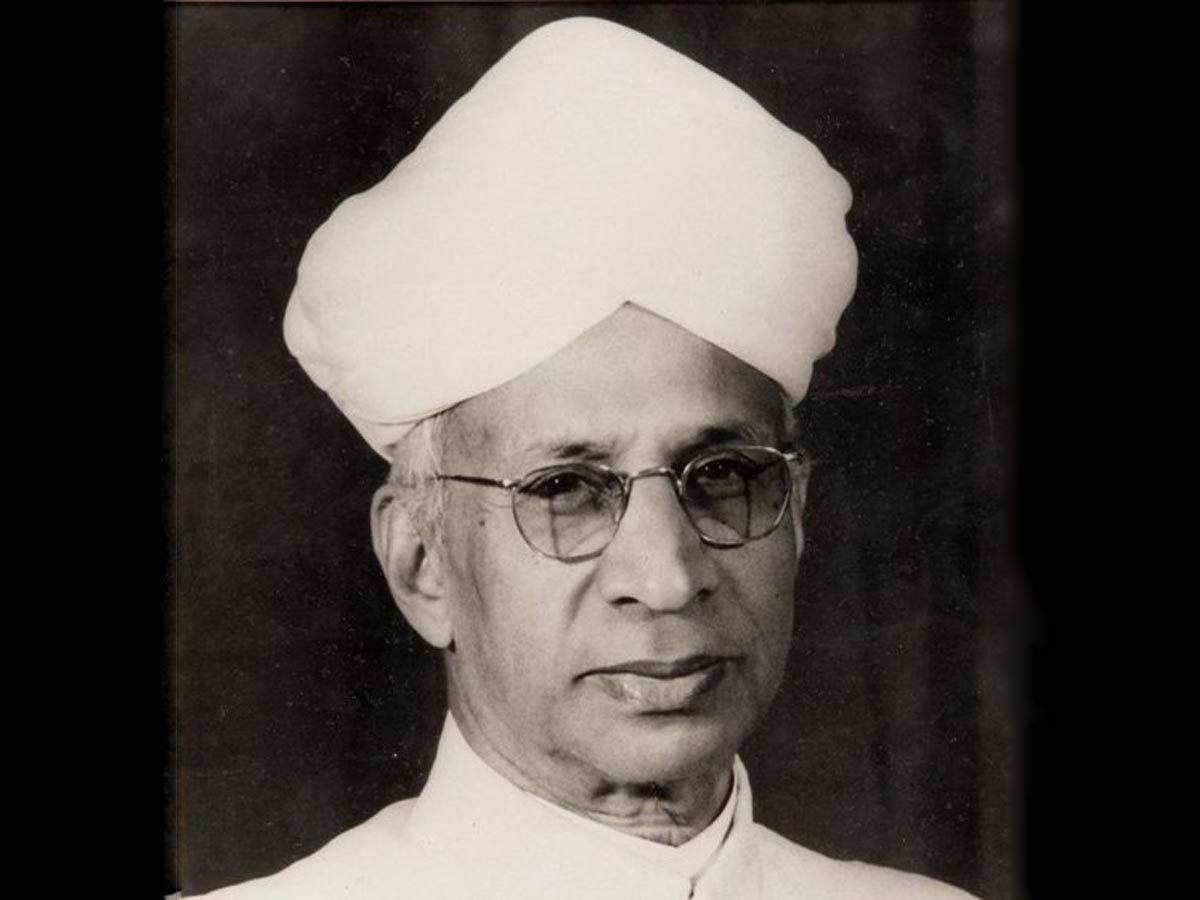
5th September is the birth anniversary of a great teacher Dr Sarvepalli Radhakrishnan, who was a staunch believer of education and was a well-known diplomat, scholar, the President of India and above all, a teacher.

Sarvepalli Radhakrishnan ( 5 September 1888 – 17 April 1975) was an Indian academic, professor, philosopher, and politician who served as the first Vice President of India (1952–1962) and the second President of India (1962–1967).

What is education according to Radhakrishnan?
Education, according to Sarvepalli Radhakrishnan, is acquiring of knowledge beyond what is academic and professional. Education is the assimilation of values and ideas for character building and preparing to face life’s challenges.
A life of joy and happiness is possible only on the basis of knowledge and science.”

Our School Classroom ‘Scene’

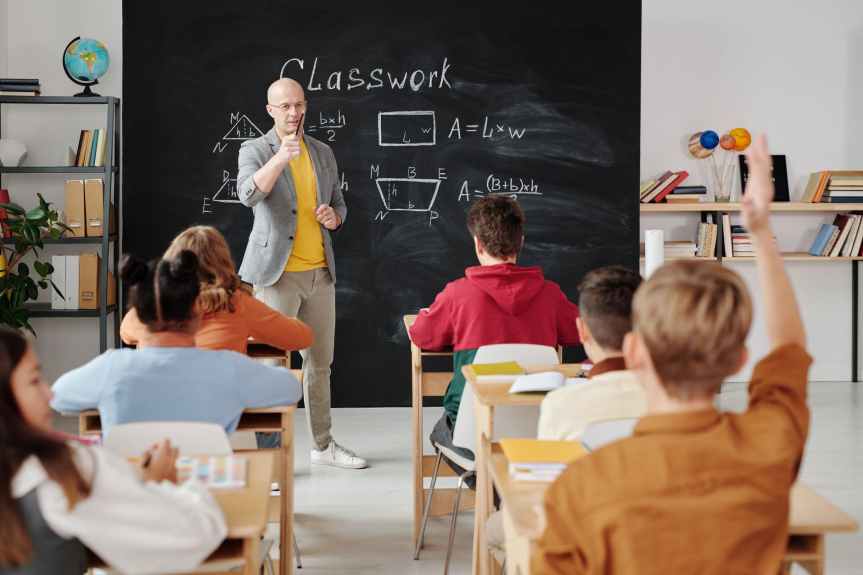
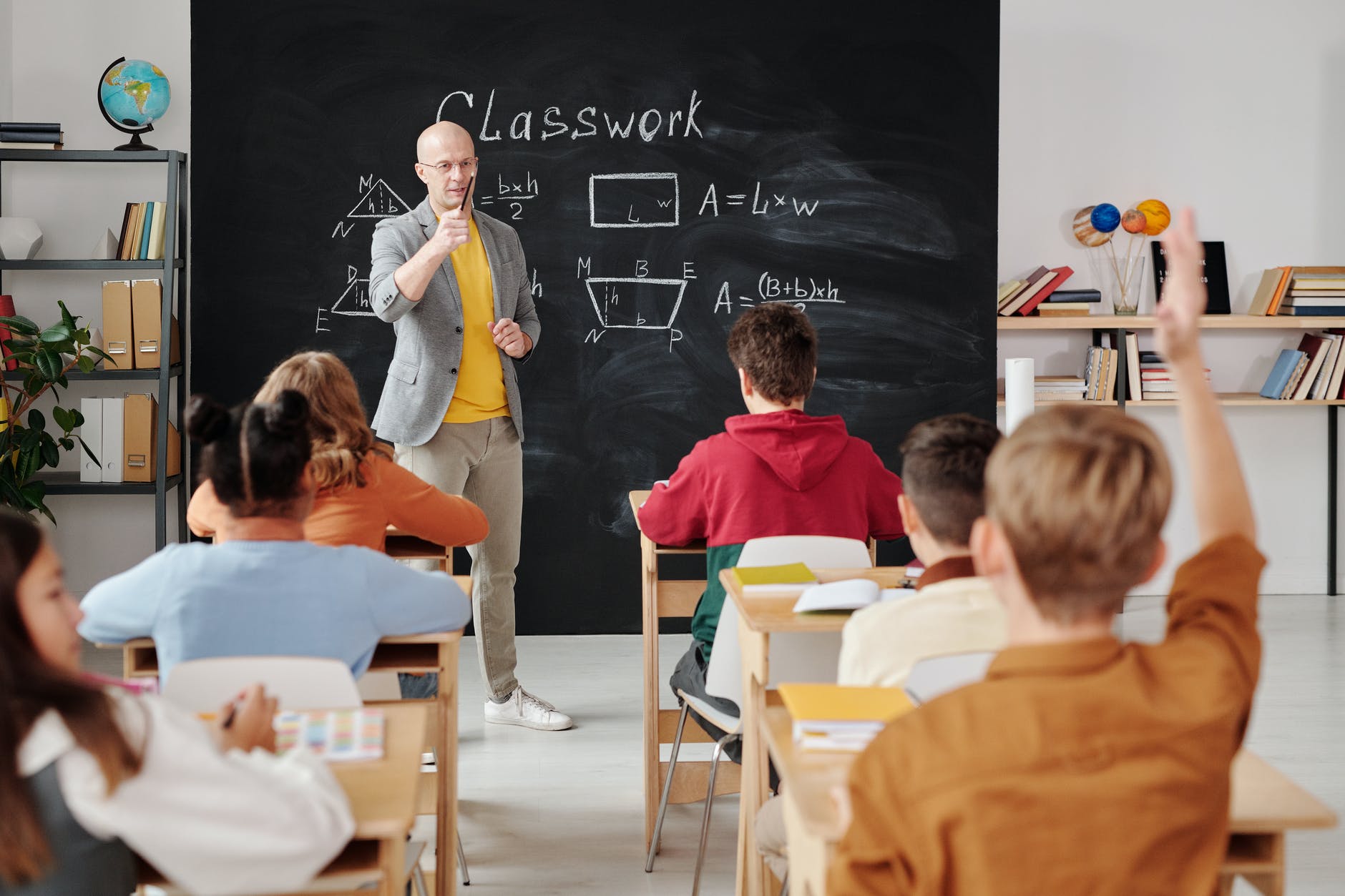
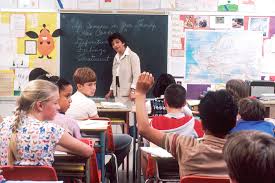
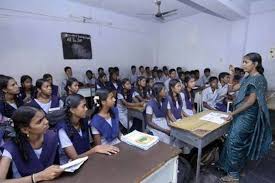
The picture presents before us the familiar sight of a teacher teaching in the classroom. The first bench is paying attention to her. The second bench is busy having fun and so is the third bench. This is my classroom, and that is my class teacher, Mrs Aarti Mishra. She teaches us History and indeed, we are all ears when we listen to her, but some of my classmates do not respect her presence the way they should. Madam tries her best to get them involved in the classroom activities but they usually ignore her. Madam is tremendously talented and goes out of her way to make the class interesting, but more often than not, some students miss out on the solid content that they can learn from her. Ours is a small school where the facilities are limited. For example, we do not have internet in our school, and very few computers. Under these circumstances, the work involved in getting printouts and interesting literature from the Net from a cyber café speaks volumes about our teacher’s dedication.

History can be a very interesting subject when the teacher transforms the classroom into a storehouse of unknown and intriguing facts from the past. This is what Mishra Madam does. The most charming thing about Madam is that she never loses her temper, be it when the backbenchers in the class misbehave or when the Principal simply walks into the classroom ,and starts pulling up students for their indiscipline interrupting an interesting class being given by our teacher. We wish he had the courtesy of respecting the teacher’s presence in the class. But everything changed on that fateful day.

I remember the day clearly. Mishra Madam lost her temper a spoiled brat in our class continuously disturbed the class by whispering, laughing etc. She went and gave the menace a slap on his face and asked him to leave the class. The next day the boy’s influential father came and created a huge scene in front of the classroom. The Principal supported the father instead of our teacher. What was amazing was that the man was abusing the dignity of our school and teacher in public, and he was being allowed to get away with it! Madam left the school premises that very day, never to come back again. Our Principal was nothing more than a servile flatterer. As a peace offering he invited the man to be Chief Guest at our annual function that year. We lost a fantastic teacher, but the school gained a generous ‘friend’ who donated lavishly towards the ‘infrastructural’ development of our school.

At the end of the session, we met Madam Mishra at a neighbourhood library. She smiled cheerfully and welcomed us when we rushed towards her to explain how much we missed her and her wonderful classes. I told her that I wanted to be a teacher like her. She smiled and replied that India is no longer the land where a teacher is treated like God and teaching a religion. She added that my desire to be a teacher would make me swim against the tide. She walked with a pat of encouragement, but to this day I remember her away as a lady who stood apart as a teacher and a human being.
My school is big and has a lot of classrooms. Each classroom is different and special in its own way. For example, we have special classrooms for art, music, history and geography, chemistry, physics and biology, and history and geography. In addition to all this, we have a cabinet of Informational material and gyms.

The largest of all the classrooms for art. It is spacious and transparent and has large windows to make it anything more natural light and walls are white. Benches are placed on the circle so that all of us are sitting next to each other. In the middle of hundreds of teachers of art, as well as her easel, when it from time to time some paint or a draft to show us. On the walls of our work with classes. On Saturdays in the classroom and held an art section in which talented students are leaving and those who love to draw.

Right next to the classrooms for art’s classrooms for music. There is no dock, but only chairs with pads for writing. On the board are drawn lines and it reminds of our sheet music. In the classroom, we also have a grand piano, for which the teacher sits and plays while we sing. There are two speakers, as well as a tape recorder, through which our teacher let various compositions. On the walls are portraits of great artists, such as Mozart, Beethoven, and Vivaldi. Before or after hours, members of the choir of our school here hold their rehearsals with the teacher

In addition to this special classroom, each class has its own, but they are all quite similar. In each of the walls, bright blue curtains are white, almost translucent. Large neon lights, huge green blackboard with chalk and sponges, chair of the teacher and the bench where we sit two by two. In our classroom, we have always Serbian, math and English, and sometimes other items, especially when they are on the wrong control tasks if they have special classrooms occupied.
And finally, a favorite place of all the students, room for a physical in which we play volleyball, basketball or football, gymnastics train, and sometimes table tennis.

Education in the present

Education is very important in every individual’s life as it is very important for the living. The person who is educated will be well treated by the society and will you have good potential wherever he or she goes. Education as the extra energy to the individual’s life and a moles the individuals character into a good one. It is very important to be educated as the competition in the world is comparatively very high.

Online classes are the greatest and the biggest task to all the students. It is so difficult for all the students to understand the topics in a detailed manner. Even though the students try their level best to understand the topics during the online class, it is only the 50% of learning but the topics are not understood properly but the students and face lots of difficulties.

It is also equal difficult to conduct exams to all mine because it’s exams are connected through online then there is a chance formal practices. Basically, students commit malpractices during exams in a view to get good marks but not about the knowledge. So,many of the students commit malpractices.

Ways to improve the education system

* skill – based learning :

As of now , the education system is such that everyone is forced to study science and math. If this system can be revamped to identify the strengths of a student, then they can be given appropriate training in the chosen field. This will ensure that the child shines in that particular field.

* Rural Education :

As the sad thing about the Indian education system is the fact that its focus is only on urban clusters. There are hardly any decent centres of learning in the rural areas. This is especially true in terms of higher education. If a country has to actually develop, urban and rural development have to go hand in hand.

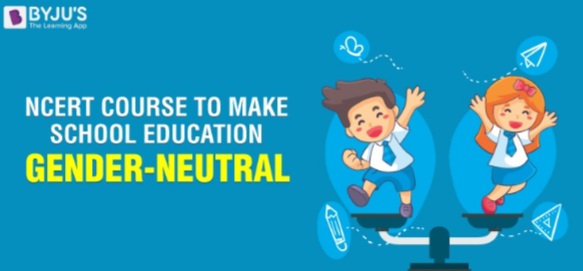
* Gender Neutral Education :

The education system has always favoured men over the fairer sex. The major change that must be brought about is to involve women in the same. Particularly subjects that are now considered to be the strength of men alone ( like carpentry, engineering, etc). Should be made more accessible to women. Pioneer women in these fileds should be given due encouragement and appreciation.

* Teacher Training :

India has a very good quality of dedicated teachers. However, the sad fact here is the fact that after they join this service, they receive little or no training. In such a situation, giving them periodic training will not just ensure that they are updated with the changing times, but will also improve the entire education scene of the country by leaps and bounds.

* Infrastructure :

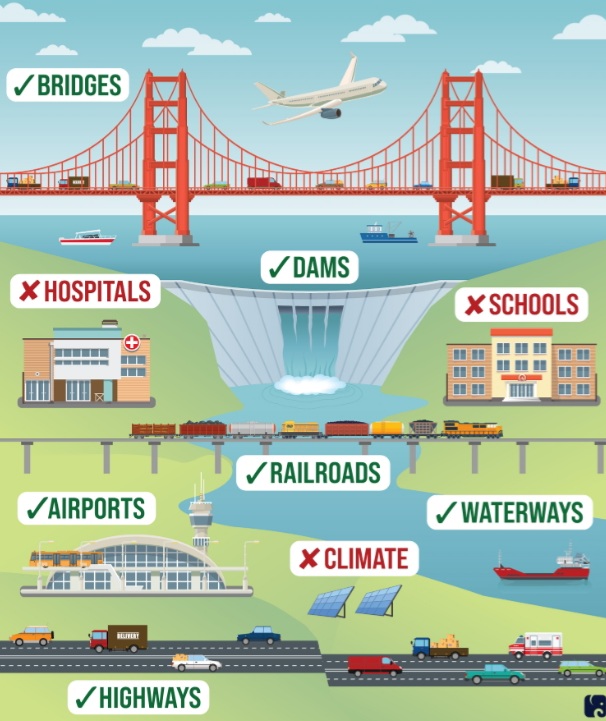
As in every other sector, the indian education sector is one that suffers from the acute death of infrastructure. Most of the government schools do not even have proper chairs, tables, restrooms, let alone a playground, libraries and laboratories. Thus ,the first step in revamping the education scene in the country should begin with improving the infrastructure so that the students are given an evironment where they can learn to the best of their abilities.

* subsidising professional courses :

It is a sad reality that many meritorious students are not able to afford professional corses because of the sheer expense involved in the same. This is all the way truer in case of students from the general category who do not have access to many scholarships. In such a situation subsidising the cost professional education will ensure that the same is within the reach of deserving students from the lower and lower middle class strata of the Indian society.

* Basic computing In Rural Areas :

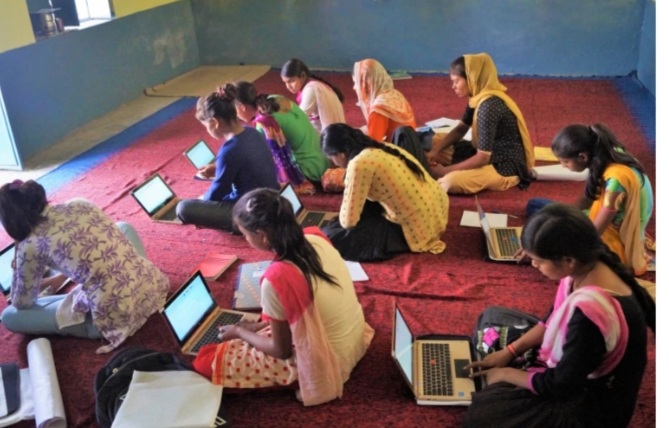
On one hand , India is a land of IT giants; on the other, rural India is completely digitally ill- equipped, in a sitiation like this, the first change that the education system must bring forward is to start free computing classes for skill development in rural areas. Only then will rural Indian move in the same pace as that of the urban Digital India and the country embark on the journey of development.

* Make sports compulsory :

One of the main reasons for the alarming rise in suicide amongst students in the country is the fact that they cannot handle stress. That in turn is because they are subjected to too much mental pressure. By making sports compusory it can be ensured that all the students indulge in some sort of some physical activity. This will lead to their mind performance better and enable them to grasp their theory lessons well.

* Educate parents :

Most of the times it is seen that the children’s woes centre atound that of their parents. In the Indian scenerio, parents are the ones who force their wards into a career they do not like. As a result students do not excel and upon failing to meet their parents expectations, they suffer from a number of mental health issues. To prevent such a thing from happening, the first step that must be taken is to educate the parents about the different carrer options that are available to the students and the possible scope of future in them.

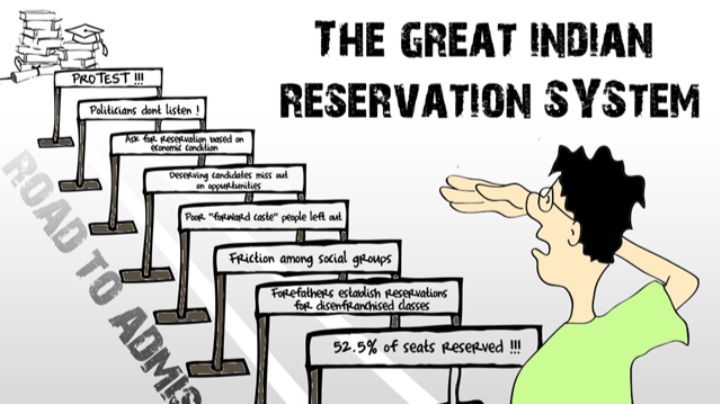
* Remove The Reservation system :

The reservation system in India has been so obsessed with providing the best of opportunities to the reserved that it misses out on many opportunities for the ones who actually deserve the same. This results in not just personal loss for certain people but also brain drain for the entire country and fosters a massive loss to the nation’s economy.

Today’s education system may be good to score marks, but fails to retain the knowledge once students have completed their examinations. This leads to young minds being stifled at an age when they should be asking questions, learning and gaining knowledge, and developing a thirst for more knowledge.

Parliamentary Privileges

Introduction

India is called the world’s largest democratic country. The power to make law exists with the Indian Parliament. The members of lower house of Parliament are elected from the direct election while the members of upper house are elected from the Legislative Assembly of States and Union territories by means of single transferable vote through proportional representation. The concept of parliamentary privilege in the Constitution of India has been taken from British Constitution. Parliamentary privileges are special rights, immunities, exceptions enjoyed by the members of the two houses of Parliament and their committees. The main motive of these privileges is to uphold the supremacy of the offence of the office of the Parliament and its members.

Who Enjoys Parliamentary Privileges

These rights are mainly for the members of both houses of Parliament. Apart from this, these rights are also given to those individuals who speak and participate in any committee of the Parliament, which includes the Attorney General of India and the Union Ministers. President, even if he is a part of Parliament, does not have parliamentary privileges.

Breach of Parliamentary Privileges

If any person or officer violates the individual or collective privileges of a Member of Parliament, such as, disrespect, abuse, attack, etc., such acts are comsidered as breach of Parliamentary Privileges which is punishable by the house.

Thus, the above facts make it clear that Parliamentary Privileges in India have been enforced so that the respect of the Parliament and its members can be ensured.

But it is observed that after winning the elections, these representatives do not respect the public while on the other hand they expect that the public should give them due respect. Apart from this, you may have noticed that the Parliamentarians are often seen misbehaving with the officials and the general public. This is called the misuse of parliamentary privileges.

Therefore, it is the need of the hour that if the government wants to maintain the dignity of the democracy then it should make appropriate changes in the parliamentary privileges because nobody can be superior to the general public.

Conclusion

The privileges are conferred on the members for smooth functioning of the Parliament. But, these rights should always be in conformity with the fundamental rights because they are our representatives and work for our welfare. If the privileges are not in accordance with the fundamental rights then the essence of democracy for the protection of the rights of the citizen will be lost. It is the duty of the Parliament not to violate any other rights which are guaranteed by constitution. The members should also use their privileges wisely and not misuse them. They should always keep in mind that the powers do not make them corrupt. The Parliament cannot adopt every privilege that is present in the house of commons but should adopt only those privileges that accordingly suits our Indian democracy.

Educated Unemployment

When we talk about development, education is the major factor and has a direct or indirect influence on other factors as well. “Our education system rests on the pillars of accessibility, affordability and quality,” quotes our Late ex- President Pranab Mukherjee.

Unemployment is a phenomenon that occurs when a person who is actively searching for employment is unable to find work. A widespread phenomenon which came into existence is educated unemployment or graduate unemployment. A college graduate actively is not able to seek job due to lack of opportunity is termed as graduate unemployment.

 In recent times this problem has come to assume a frightening level. A variety of factors including a large population and the defects in the educational system as well as the inability to provide a diversified and vibrant economy can be considered to be the prime reasons for the problem of educated unemployment.

In India, present scenario is that parents are putting lots of money for their child education and dreams their child as a person with successful career and same is the dream of child But reality turns to frustration out of unemployment.

The root of the unemployment begins at the systematic and policy making level. The policies making and their implementation should be incompatibility to the citizens of the state. The people of the nation should be the beneficiaries of these policies, but the case differs at the grass root level. The people in rural areas, which are approx 70% of our total population, have no or least access to such policies. One the causes of graduate unemployment are the quality of education which passes after three to four year of college, employers look for people who have learned how to learn, and have gained substantial communication skills as well as critical thinking abilities. Graduates are not meeting employer’s needs.

“An educated mind with an empty stomach and ample of time doing nothing but cursing the system, is more harmful for an individual or the society than any other problem.”

India is a country having 1.21 billion population and 66% of this population are under the age of 35 (Census 2011). Due to the increased education level in the recent years, the modern youth is well-educated and possess a good degree like B.Tech, B.E., MBA, MBBS, Ph.D. etc. Hence, a major workforce of our country is seeking for a well-paid job in their respective fields. But due to limited access to skill based education and drop in the financial market; it’s hard for them to get a desired job and this entire scenario creates “Educated Unemployment”.

The problem arises when a degree holder is not getting a skilled job due to not being skilled during their degree course. Due to this problem India lacks in skilled labour. According to a survey,“90% of the educated youth is unemployable due to lack of skills i.e. 60% due to lack of communication skills, 25% due to lack of analytical skills, 5% due to lack of knowledge in their respective field”.

Consequences of educated unemployment:

“One year of unemployment reduces the life expectancy by five years”, states a report.

Frustration, anxiety, stress, depression are the common behaviors of an educated unemployed. They are filled up with the rage against the society that has made them develop low self-esteem and fell like they are not among the productive members of the society. To take revenge against the system they indulge in wrong ways of earning money like robbery, chain snatching, rapes, violence, kidnapping, and murders etc. Studies tell that due to the higher rates of educated employment crime rates are drastically increasing day by day. Terrorism, drug trafficking, anti-social groups are the other hazardous outcomes of educated unemployment.

How to solve the problem of educated unemployment:

If we talk about reforms and solution of the unemployment plight about India, multiple technical and vocational institutions should be the establishment in the country and the significance of vocational courses to be instilled in the mind of people and efforts to break the taboo about their job insecurity. A campaign to present and promote more educational fields except engineering and medical should be recited to the people in the rural areas. The higher education like post graduation and PHD courses should be promoted to divide the job opportunity. Pradhan Mantri Kaushal Vikas Yojana,  Swarnajayanti Gram Swarozgar Yojana, Mahatma Gandhi national rural employment guarantee act and several other should be promoted and implemented efficiently throughout the country.

Conclusion:

Economy and employment are the backbones of any state, the regular reforms and policy making should always be considered for the enshrouded growth. With the population which I possess, carrying youngsters as liabilities whereas they should be the support and help the nation go further ahead is an enormous devastating thought.

Environmental pollution

“Humankind has not woven the web of life. We are but one thread within it. Whatever we do to the web, we do to ourselves. All things are bound together. All things connect.”

~ Chief Seattle

What is environmental pollution ?

Is it degrading our lifestyle ?

How can we improve our environment ?

Let’s get through the topic .

Introduction

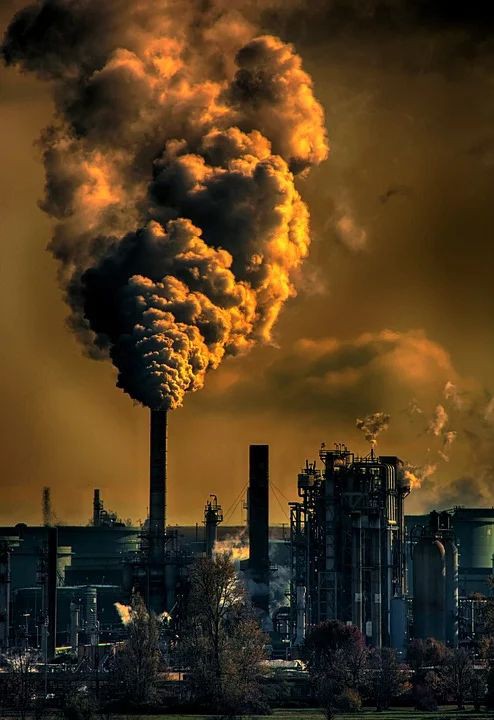
One of the greatest problems that the world is facing today is that of environmental pollution, which is causing grave and irreparable damage to the natural world and human society with about 40% of deaths worldwide being caused by water, air and soil pollution and coupled with human overpopulation has contributed to the malnutrition of 3.7 billion people worldwide, making them more susceptible to disease.

Environmental pollution is defined as “the contamination of the physical and biological components of the earth/atmosphere system to such an extent that normal environmental processes are adversely affected.”

From: Environmental Management, 2017

We all are well known about the word Environmental pollution . It is not some kind of new phenomenon , yet it is a greatest problem facing by our society . Still , people are avoiding the topic to its utmost.

Environmental pollution is one of the most serious global challenges. Wild-type organisms have a slower degradation rate of hazardous materials.

Both developed and developing nations share this burden together, though awareness and stricter laws in developed countries have contributed to a larger extent in protecting their environment.

Reasons behind environmental pollution

  • The Burning of Fossil Fuels. Industrial Emission.
  • Indoor Air Pollution.
  • Wildfires.
  • Microbial Decaying Process.
  • Transportation.
  • Open Burning of Garbage Waste.
  • Construction and Demolition.
  • Urbanization and industrialization. Since the era of industrial revolution, man has continued to introduce hazardous materials into the environment at an alarming rate.Mining and exploration.
  • Agricultural activities.
  • Particulate matter.
  • Plastics.
  • Energy production.
  • Deforestation.
  • Mining.
  • Over population.
  • Increase in global average temperature.

Effects of environmental pollution

Environmental pollution is an incurable disease . It can only be prevented.

Barry commoner

1. Effects on Humans. The effects of environmental pollution on humans are mainly physical, but can also turn into neuro-affections in the long term. The best-known troubles to us are respiratory, in the form of allergies, asthma, irritation of the eyes and nasal passages, or other forms of respiratory infections. Other rarer diseases include hepatitis, typhoid affections, diarrhea, and hormonal disruptions.

2. Effects on Animals . Environmental pollution mainly affects animals by causing harm to their living environment, making it toxic for them to live in.

3. Effects on plants . As for animals, plants, and especially trees, can be destroyed by acid rains (and this will also have a negative impact on animals as well, as their natural environment will be modified), ozone in the lower atmosphere block the plant respiration, and harmful pollutants can be absorbed from the water or soil.

Solutions for environmental pollution.

  • Evironment planning.
  • Shifting to eco-friendly transportation.
  • Air pollution must involve moving away from fossil fuels, replace them with sustainable fuels .
  • Solar power .
  • Wind power.
  • Go green.
  • Storage facilities for solid waste.
  • Environmental friendly products.
  • Policies implimentation for environmental pollution.
  • We also need to work on electromagnetic radiation (ER) reduction.
  • Awareness through mass media.
  • More green parks and areas.
  • Environmental education, etc,.

“We say we love flowers, yet we pluck them. We say we love trees, yet we cut them down. And people still wonder why some are afraid when told they are loved.”

~ Paul Morley

Link

Ancient Education System In India

During ancient education, students live away from their parents, their education comprises of subjects like physical education, mental education, politics, economics, etc. They were shaped in a way that they can live in any condition considering how difficult the situation will be? 

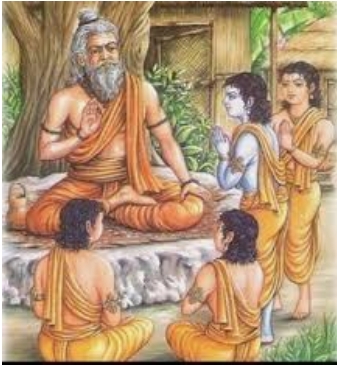
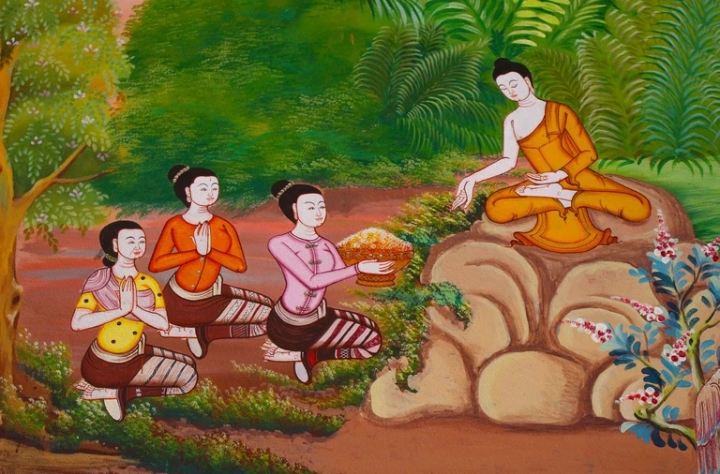
During the early period education was imparted by the teacher (Guru/Acharya) to the pupils who gathered around him and came to live in his house as members of his family. This was known as Gurukula system of eduation. The family of Guru functioned as a demostic school or an Ashram. During that period, the gurus and their shishyas (pupils) lived together helping each other in day-to-day life.

In ancient India, both formal and informal education existed. Indigenous education was imparted at home, in temples, patashalas, and gurukulas. Teaching was oral and students remembered and meditated upon what was taught in the Gurukulas. There were people in homes, villages and temples who guided young children in imbibing pious ways of life.

The medium of language during the Vedic system was Sanskrit. During those times the education was of Vedas, Brahmanas, Upnishads, and Dharmasutras. From the Rigveda onwards, our ancient education started with the objective of developing the students not only in the outer body but also on the inner body. The ancient education focused on imparting ethics like humility, truthfulness, discipline, self-reliance, and respecting all creations to the students. The education was mostly imparted in ashrams, gurukuls, temples, houses. Sometimes pujaris of the temples used to teach students. The education system of ancient India has some special features and uniqueness which was not found in any other ancient education system of the other countries. The education was mostly given in forests under the blue sky, which keeps the student’s mind fresh and alive.

The main objective of education was to equip the students with a good quality of education. The education mostly focused on the enrichment of culture, character, and personality, development, and cultivation of noble ideals. The objective was gaining the mental, physical, and intellectual personality of students, to make the students future-ready and survive in any situation.

In the Vedic system, a child started his education at the age of five. To mark this commencement, the Vidyarambhaceremony, which included worshiping Goddess Saraswati and learning alphabets for the first time, was conducted. Leaving home and starting to live with a teacher required the child to conduct another ceremony called Upanayana. Boys practiced this ceremony at different ages according to their castes (only children of the Brahmin, Kshatriya and Vaishya did so).

Education for women was quite important in ancient India. They were trained in housekeeping, as well as in dancing and music. Girls also had to conduct the Upanayana ceremony. Educated women were divided into two classes – Sadyodwahas, those who pursued their education just until they got married, and Brahmavadinis, those who never married and continued studying throughout their lives. Vedasand Vedangas were taught to women, too, but were limited to religious songs and poems necessary for rituals. Some notable Vedic and Upanishad women scholars were Apala, Indrani, Ghosha, Lopamudra, Gargi and Maitreyi.

Mastering one Veda took 12 years. Thus, depending on how many subjects the student wanted to learn, the study period varied accordingly. The education could go on for as long as 48 years.

In order to earn a livelihood, men needed to know an art form. As per the ancient Indian education system, there were about 64 art forms, including dance, music, jewel making, sculpture, agriculture, and medical sciences. To acquire vocational training in a particular art form, men were required to work as trainees under a master to gain expertise. They were taught without any cost, and food and boarding were also taken care of by the master.

Just as we have world renowned universities today, there were popular educational institutions here during the ancient times as well. Four of these institutions were quite prominent and known for different specializations. The University of Nalanda was famous for its Catholic and cosmopolitan character and its department of logic. Takshasila University, in an area what is now modern-day Pakistan, was well-known across the world for its medical school and was the chief learning centre in 6th century BC. What Nalanda University was to east India, Vallabhi was to west India. It was also a famous study center that specialized in subjects like law, medicine and economics, and had students attending from all parts of the country. Vikramshila was yet another esteemed institution, best known for Tantric Buddhism.

Jee mains 2021 exam date announced; Registration process begins for April/may session.

The most crucial engineering and medical entrance exams JEE Main and NEET UG have also been postponed due to the coronavirus outbreak.The February and March sessions of engineering entrance exam JEE Main 2021 were held while the April and May exams were postponed.

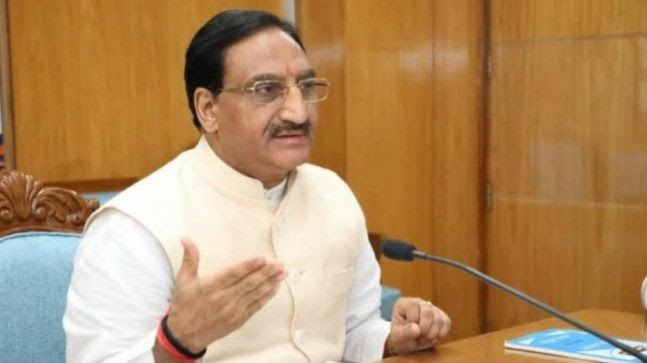
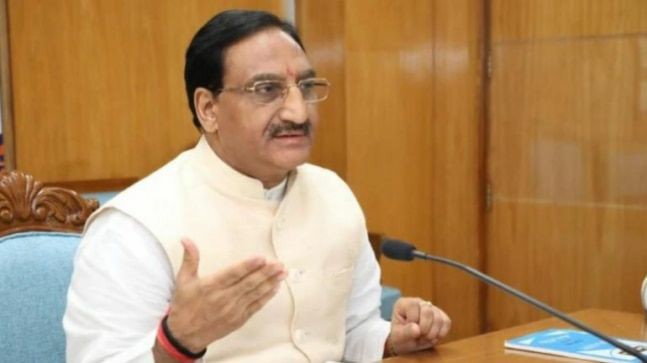
Education Minister Ramesh Pokhriyal has announced the exam schedule for JEE Main (April / May) sessions 2021 today. The minister made the announcement through a live session. The third session of JEE Main 2021 (April session) will be conducted from July 20-25. The fourth and last session of JEE Main 2021 (May session) will be conducted from July 27-August 2.Candidates can apply at jeemain.nta.nic.in. Those who wish to apply for the April session will be able to apply from tonight to July 8. JEE Main (May) session registrations will be open from July 9-12. Candidates will also be able to change their exam centres. Even to ensure social distancing amid the pandemic, the NTA has also increased the number of test centres for JEE Main (April and May) sessions. Earlier, the total number of test centres was 660. The test centres have now been increased to 828.

Social media reaction

Just within two hours of date announcement , the news started Trending over various social media plateform. On twitter the #jeemains2021reached in top ten trend within two hours only. Most of the people are making memes on the surprising announcement of exam date , while some are demanding for postponement of the exam .

What about jee advanced date announcement?

In this context, one thing has to be noted that the JEE Advanced 2021 Exam which was scheduled to take place July 3, 2021, also had to be postponed due to the COVID-19 situation in the country. However, recently, on June 25, 2021, IIT Kharagpur, the organising institute for JEE Advanced 2021 Exam has released the information brochure and list of documents that will be required for JEE Advanced 2021 Exam on the official website of JEE Advanced at jeeadv.ac.in. On the website, it is also mentioned that a new date for JEE Advanced 2021 Exam will be announced soon.

for more detail vist the link 👇

https://youtu.be/6x4aP17GXoE

https://www.dnaindia.com/education/report-nta-jee-main-2021-neet-2021-entrance-exam-dates-application-form-ntanicin-cbse-class-12-board-exam-2021-result-date-latest-updates-2898900

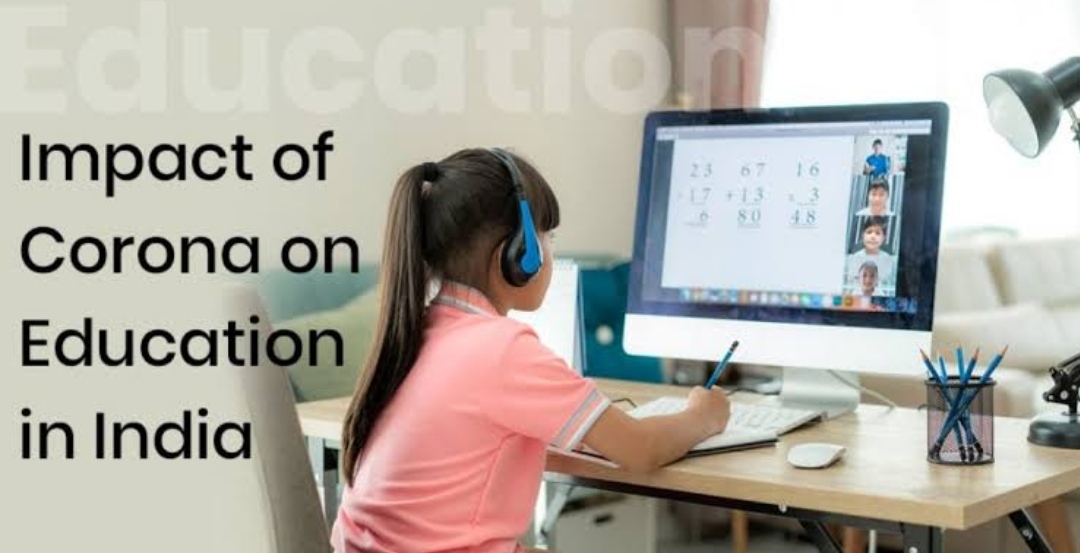
IMPACT OF COVID-19 ON EDUCATION IN INDIA

India is the one of best and largest place for education systems in the world.

India is the country with over 1,000 universities and 50,000 colleges and institutions. The impact of covid 19 is observed in every sector around the world. The education sectors of India as well as world are badly affected by this.

Due to this pandemic, around 32 crore learners stopped to move schools/ colleges, all educational institutions are halted in India. COVID-19 made all the institutions to grow and opt for platforms , techniques, that are not used before. All the classes suspended and all the examinations, entrance tests are postponed.

This pandemic completely destroyed all the schedules of every student. COVID-19 Impact on education is also leads a great damage on country economy at present and in future.

COVID-19 has created many opportunities and challenges for educational institutions to strengthen their technological knowledge and infrastructure.

The lockdown made the entire education online, the teachers are teaching and assigning works through online by using some apps like zoom, Google meet, teams, YouTube, Facebook, skype .,etc.

India is not fully equipped to make education reach every corner of the country through online process. The students those who are not having access to internet will suffer a lot due to the present choice of digital platforms.

Universities and the government of India are relentlessly trying to come up with a solution to this problem.