Fast Food Chains

Origin

The term Fast Food was considered by Merriam Webster in the 1951 dictionary. Fast Food chains are a specific type of quick service and self-service restaurants with bare minimum seating arrangements. People generally takeaway or orders food from them.

The ultimacy of takeaways

The devotion of Fast-Food Chains or to call them Quick Service Restaurants not border restricted but worldwide. Be it “not in home-food-mood” or morning office rush, fast food chains have proved to have descended from the heavenly abode just to assist humans in their crisis times. These restaurants produce in bulk the food items and keep it warm, fresh, and ready to get picked.

Pocketwatchers and Watchkeepers

The affordable rates and not so short fast-food variety A list of these Quick Service Restaurants is the main centre of attraction. These reasonable and instantly fast-food providing places captivates the major group of the population of The United States I.e. The Youth, both college and office goers.

Specific in Specials

These fast-food chains are both vegetarians and nonvegetarians friendly. Both Arby’s Meat and Burger King’s Whopper is equally respectable among fast-food lovers. McDonalds and Pizza Hut are among the top priority list of pizza lovers. Not to deny the reign of KFC in the hearts of non-vegetarians.

Fed-up of dining-in

The vast working-class singles when fed up of Hotel’s boring Dine-ins, step towards these fast-food chains for quick home deliveries at the comfort of their homes and enjoy their meal along with home theatres.

Boon For Time Lacking Mothers

With the ingrained notion assigning cooking to Moms, although which seems to having started fading away, students find it easy to pick up from takeaways on their way to schools. With serving burgers, pizzas, fries, shakes, beverages, fish, salads, chicken nuggets and much more, these fast-food chains have acquired both- Customers and controversies regarding being healthy. Say whatever to attack but the incredibility of these quick servers cannot be overlooked.

UPSC: 2021 & General

Exam & The Conducting Body

Civil Services Exam or CSE is a national level exam adorned with the title of “Most Difficult Exam to Crack”. It is conducted by UPSC – Union Public Service Commission and sometimes referred as just UPSC exam. UPSC CSE fills for 24 services ranging between 700-1400 annually. The top most All India service is that of an IAS officer and since most aspirants aim for this top post, it is simply known as IAS exam too. Although UPSC conducts several government exams every year in a variety of streams but only CSE gets the prestige of being this difficult for the level of position it bestows upon the officers. UPSC CSE or UPSC is a three-level exam which are: Preliminary (Two objective papers), Mains (Total nine papers) and a personality test (Interview). One sits for a total of 32 hours of examination to qualify the exam. On an average, the number of students that pass the first stage of exam is 11 to 12 times more than the number of vacancies. This demonstrates the competition & hype of UPSC among students. And this all hype is not inexplicable for the later highly respectful, well paying government job which the aspirants fancy for at the end of their struggle.

Examination News & Notifications

Such is the popularity and reputation of UPSC CSE exam that the news sources are not limited. There are n number of websites, portals, newspapers, coaching institutes’ sites, YouTube Channels, and several other offline & online sources that provide the news and notifications of UPSC exam without any cost. The official website of UPSC is https://upsc.gov.in/ . UPSC Aspirants and other interested students can visit the above given official website regularly to keep a check on the latest updates and notifications regarding the exam. The first notification regarding UPSC 2021 was issued on the official website on 4th march, 2021 along with the release of application form for the same.  The notification also informed the aspirants to fill the CSE 2021 application form by 23rd of March,2021 latest. Later, another notification was issued stating some changes in the exam dates caused due to novel Coronavirus. It is also given accompanying the updated schedule that even this date sheet can be subject to alterations in future if required. Keeping this in mind, students are advised to visit the official website regularly to not miss any news or announcements in future regarding the exam.

Examination Dates

Earlier the date for CSE exam phase 1 i.e., Preliminary exam was 27th of June, 2021. It seems COVID-19 like all other fields, affected UPSC CSE dates this year too and hence the date for the Preliminary exam that was scheduled to be conducted on June 27th will now be conducted on Oct. 10, 2021. Also, the Mains exam of UPSC Civil Services Exam will be held on the dates 7th, 8th, 9th, 15th & 16th of January, 2022. Apart from the form filling dates, UPSC has announced form withdrawal dates. Candidates who have filled the form can withdraw the form between 31st March, 2021 to 6th of April, 2021.

Application Fee

If we talk about the fees of the exam, it can be concluded that the fees asked for form filling in UPSC CSE exam is not as much as compared to other competitive exams, reasons being the conducting body and the difficulty level of the exam. The General Category, OBC & EWS belonging male candidates are required to pay a sum of Rs. 100 for Preliminary exam and Rs. 200 for the Mains exam. It must be clear that all category females, Persons with Benchmark Disabilities (PwBD) and SC/ST Candidates are exempted to pay fees at any phase of the examination.

Eligibility Criteria

For an UPSC aspirant, given below is the eligibility criteria based on various factors that make her/him eligible to appear in the most prestigious and India’s toughest government exam:

1.    Nationality

  • A person willing to sit for UPSC exam with the intention of getting into Indian Administrative Service or Indian Police Service must be a citizen of India.
  • Apart from IAS & IPS all other services require the candidate to be:
    • An Indian citizen.
      • A subject of Bhutan or a citizen of Nepal.
      • A refugee from Tibet who is living for permanent purpose in India before Jan. 1st, 1962.
      • A person of Indian Origin with a desire for permanent settlement in India from, Pakistan, Myanmar, Kenya, Tanzania, Uganda, Sri Lanka, Vietnam, Ethiopia, Malawi, Zaire & Zambia.

2.    Educational Qualifications

  • A candidate must have earned a graduation degree in any discipline from any open/private/central/deemed/state University.
  • A graduation degree from any foreign university that is recognized by Indian Association of Universities.
  • Graduation degree can be completed on a regular mode or through distance education.
  • A special recognition by the Govt, of India for a qualification as equivalent as above-mentioned graduation degree.

3.    Age

  • A person (male/female) is eligible to sit for the exam with a minimum age of 21 years as calculated on 1st of August, in the respective year of exam.
  • Age limits vary for different categories. The different upper age limits:
    •  For General category & EWS is 32 years.
      • For OBCs is 35 years.
      • For SCs/STs/PwDs is 37 years.
      • For Defence Services Personnel disabled in operations during hostilities, it is 40 years.

4.    Attempts

  • The number of attempts allowed to candidates (male/female) vary for different categories, which is as follows:
    • 6 attempts for General Category.
      • 9 attempts for OBCs.
      • Unlimited number of attempts for SCs/STs.

Vacancies

The vacancies for posts to be filled by UPSC through CSE exam is not fixed. The number of vacant positions is released by the Commission prior to the exam every year which vary in number. The vacant positions vary from minimum 700 to maximum 1500 approximately. Past data shows this sharp variation with exact number of vacancies. For instance, year 2018 saw a total vacancy of 759 and in 2014 vacancies were as much as 1364. This variation occurs every year. The number of vacant posts released by UPSC this year, i.e., 2021 is 712 which shows a decrease of 84 vacancies as in 2020, which was 796.

Salary

The salary offered by The Government of India to officers chosen through UPSC varies from post to post and service to service. The tag of government job and such a reputation that comes with the job, generally overshadow the salary question. For instance, the salary range of two top most services are given below:

  • For the top service like IAS, the salary range is 56,000 to 2,50,000 INR.
  • IPS officer’s salary ranges between 39,000 to 2,12,000 INR.

This trend of such large difference between the ranges of salaries is due to difference in posts, rank & no. of years in the service completed by the candidate.

Exam Pattern

As stated above, the UPSC conducts the Civil Services Exam in three stages. A detailed brief of the three stages is as follows:

A.    Preliminary or Prelims:

The first stage of this grand marathon kickstarts with Prelims exam. Prelims consists of two objective exams- General Studies I & General Studies II (CSAT). Both the papers involve negative marking. GS I is of 200 marks containing 100 MCQs, whereas GS II is of 200 marks containing 80 questions. One who clears both, qualifies for the second stage which is Mains exam.

B.    Mains:

The second stage has nine subjective type papers which are conducted approximately for a week.  The nine papers can be detailed as:

  1. Paper A – Compulsory Indian Language – 300 marks.
  2. Paper B – English – 300 marks.
  3. Paper I – Essay – 250 marks (till last)
  4. Paper II – General Studies I
  5. Paper III – General Studies II
  6. Paper IV – General Studies III
  7. Paper V – General Studies IV
  8. Paper VI – Optional I
  9. Paper VII – Optional II

All the nine papers mentioned above are of 3 hours each.

C.    Personality Test

The final stage of UPSC CSE exam is personality test or Interview of 275 marks.

Admit Card

Admit Card is the candidature document that students need to carry to the exam hall at the chosen exam center. Any student found without the admit card is not allowed to sit for the UPSC CSE. Admit card contain the name, picture, roll number and things allowed and not allowed to be carried on the day of the examination. Students can download the admit cards from the official website of UPSC https://www.upsc.gov.in/ . Generally, UPSC releases the admit cards for CSE exam four weeks prior to the exam scheduled to be held so that students get plenty of time in their hands to download & print the admit cards and also some might want to visit the exam center before the exam to avoid any kind of errors on the day of exam.

Result

Like every other information, UPSC releases the results of the exams conducted by it on the official website https://www.upsc.gov.in/ . Students can check the results by following the below given procedure:

  • Visit the official website of UPSC https://www.upsc.gov.in/ .
  • Scroll down to find the tag “FINAL RESULT”.
  • Look for the result link you are looking for.
  • Enter the roll no. and tap for search result.
  • Download and save the print for future requirements.

The marksheets of the students who haven’t qualified the last stage will be uploaded on the website within fifteen days of announcement of final result and will appear on the website for approximately 30 days. This is to help students to evaluate their weak subjects and to understand that where have they lost points.

How to Apply

Aspirants can visit the official website https://www.upsc.gov.in/ and fill out the forms.

Gambling laws in India

Introduction

Gambling is defined as betting, gaming, or participating in an activity that is based on luck not on the skills to win a huge amount of money or any other prize by wagering some amount of money. To control gambling across the country legislation was passed in the year 1867, the Public Gaming Act of 1867, and is the most important legislation that regulates gambling in India.

Under the gambling legislation, the meaning of the act of wagering or betting for money or money worth is understood in the 2006 “jay video games and electrical v. State of Gujarat’’  case.

So here we discussed about the gambling, why it has become a more sensible topic in India and other countries, how it has come in scenario where their strict laws are must needed, why gaming skills are excluded from gambling or why Indian law classifies the games into two broad categories i.e. game of chance and game of skills. What are those games where gambling is not a big deal?

Legality

As per the status of the legality of Gambling in India, there is no unified law regarding any activities of gambling as it comes under the State list of the 7th schedule of the Constitution. So the gambling is a state subject, so the state has only the rights to regulate the law for the gambling activities in their respective territory. The state legislatures, under the Constitution of India, have been entrusted with significant regulatory flexibility to form state-specific gambling laws. 

The Gambling Act is the central enactment that has been adopted by certain states in India and other states have enacted their own legislation to regulate and govern gambling activities within their territory. So some states have allowed or some have banned gambling in their state. For example, casinos are banned in the other states except for Sikkim, Goa and Daman.

 As per Section 12 of the Public Gaming Act 1867, any game of mere skill will not be treated as gambling, but games of chances will be treated as gambling. 

The Public Gambling Act of 1867 is a central law that prohibits running or being in charge of a public gambling house. The penalty for breach of this law is a fine of Rs. 200 or imprisonment of up to 3 months. Additionally, this Act prohibits visiting gambling houses. A fine of Rs.100 or imprisonment of up to one month is the penalty. 

There is always a doubt regarding which games are covered under gambling because poker in India has very unclear significance in Indian law because it could never figure out whether it is a game of skills or a game of chance. It’s very interesting that games, such as wagering on cricket, are prohibited and while Rummy is permitted as observed by the court under  Mahalakshmi  Cultural Association v. The Director, Inspector General of Police, State of Tamil Nadu in 2012. Gone are the times of Matka betting and the preferences in India. These days, you can just wager on a couple of sports, that too in some states. As of now, betting on horse racing, online poker in states like Goa and Sikkim, online rummy, lottery, and a couple of gambling clubs are legal in India in accordance with the case of K .R Lakshmanan v. state of Tamil Nadu in 1996. 

Not only wagering on games is illegal, visiting or working in those places is also unlawful or illegal under section 4 of the  Public Gaming Act. It is likewise unlawful to visit such a place. The main problem is that the exact meaning of betting is not adequate in the legislation. As per the Act, it states Gaming as betting or wagering of money on a game which is a game of chance and not of skill except Horse Racing.

Laws on online-based betting

In the Public Gaming Act of,1867 there were no provisions related to online-based betting. There is in addition to this Act another act that could be considered to identify with web-based wagering and gaming i.e. The Information Technology Act of 2000. From this Act, it is very easy to identify the offences with online gambling and gives the government ability to check and search if required. However, this Act also does not mention online-based gambling like Public Gaming Act, 1867 does. 

The laws for online gambling are enacted by several states also like Sikkim. The state of Sikkim enacted the Sikkim Online Gambling (Regulation) Act,2008, which was passed on 28th  June 2008 by the Sikkim Legislative Assembly with the object of controlling and regulating through electronic and non-electronic ways in online gaming. And imposes Tax also on online gaming within its territory.

Game of chance or game of skills

Gambling is understood both under its traditional form as well as modern avatar. The traditional gambling is understood in the context of physical space, brick and mortar format, whereas modern gambling consists of computers connected offline or online, mobile phones, internet, etc. the Gambling legislations exclude the “game of skills” from the statute of gambling and hence doesn’t attract the penal provisions.

A game of chance is a game where the result is leveraged by a random number creator in which the participant may choose to bet money for that result. While in a game of skill, A person bet on the result which comes out of the skills of person or person requires them to have a degree of mental expertise to succeed, for example, Betting on Horse racing. However, in games like Poker and Rummy, many times the courts got confused about whether these are Game of Chance or Game of Skill. 

Penalties

Under the Public Gaming Act,1867 any person is found playing games for money, wager, stake or something else with cards, dice, counters, shall be liable to imprisonment for any term not exceeding one month and fine not exceeding one hundred rupees. As per the section 45 of the Indian Penal code 1860.  

Any person found in such gaming rooms during any gaming or playing there shall be presumed, until proven, to have been there for gaming purposes.  

Conclusion

Whereas there are various legislations in India, even every state has its own legislation for gambling as legal and regulated in the most appropriate ways. There is a need for a section or portion which would provide which type of gambling is legal and which is not. Apart from this, there is a need for central laws for online Gambling, we see that few States like Goa, Sikkim, and Nagaland are the only states that permit online gambling. Also, such a type of thing showed that there are no possible ways to stop or curb. At least something could be done to regulate this.

The Government, being a welfare State, acts in a manner to promote the economic and social well-being of its citizens, and therefore, it is necessary for the State to protect the sensitive sections of the society. About gambling, they can at least form a committee to survey the need for gambling and improvisation on the current legislation based on that survey. Thus, there is a need for aggressiveness to be taken from the side of the executives as well as the parliament to provide such norms which would codify the system of gambling in India. 

Project Pegasus: Unfolding The Cyber Spy

Project Pegasus has been in news for quite some time. Project Pegasus is an investigation about the Software Pegasus, in which 16 Media Institutes participated to expose the truth behind Pegasus. India is also one of the country whose name came out during the investigation. So What is Pegasus?

Pegasus is a spying software developed by an Israeli Technology Firm, NSO. According to NSO, the software is used to hack into the phones of their target and keep an eye on their every step. The data collected through this process can be sold to the government of a country and not to any individual or firm.

Pegasus recently became a hot topic not only in India but all around the world. It is not the first time Pegasus has came in news. But why is it highlighted now in India along with the whole world?  

Pegasus came in news after an investigation was done by 16 Media institutions from all around the world. This was initiated by a Not Profit Organisation from Paris along with Amnesty International. The project is called Project Pegasus.

Pegasus is known to infect the phone and can capture every single thing around the subject. It takes control over the phone and collects data about every single thing done by the subject. This software can be really useful to track down criminals and can be helpful to stop them. But is it really used for that?

The investigation in Project Pegasus revealed something else. The investigation revealed OVER 50,000 names that were either being tracked or were people of interest for any future assignment. In India, a list of 300 people was released. The list contains names of more than 40 journalists, 3 opposition Leaders, and two serving ministers. Former and Current Head of Security Organisation is also on this list. It is also said that the phone that was registered in the name of a serving Judge of the Supreme Court is also on the list.

 There has been no statement by the Indian Government on the issue and this can problematic. It is yet not clear if all the numbers in the list are hacked or not. It is concerning regarding privacy and the fundamentals of democracy.

It can be clearly termed as misuse of power and can have a bad effect on citizens. it is really important to take strict actions against it.

Contract of Bailment and Pledge

Bailment and Pledge are two distinct types of contracts that are frequently misunderstood. Every bailment is a pledge, but not every pledge is a bailment. Bailment refers to the transfer of goods from one person to another for a specific purpose. Pledge, on the other hand, refers to the delivery of goods as security for the payment of a debt or the fulfilment of a promise. As a result, bailment and pledge are two distinct contracts. A pledge is a type of bailment.

Bailment

What Is Contract Of Bailment And Who Are Bailee And Bailor ?

A bailment is a type of special contract defined in Section 148 of the Indian Contract Act of 1872. It derives from the French word “bailer,” which means “to deliver”. Bailment’s etymological meaning is “handing over” or “change of possession of goods.” By bailment, we mean the delivery of goods from one person to another for a specific purpose with the agreement that they will reimburse the goods upon completion of the purpose or dispose of them as directed by the bailor. The person who delivers the goods is referred to as the bailor. And the person to whom the goods are given is referred to as the Bailee. And the property that has been bailed is known as Bailed Property.

Essentials of Bailment

  • There shall be a contract between the parties for the delivery of goods,
  • The goods shall be delivered for a special purpose only,
  • Bailment can only be done for movable goods and not for immovable goods or money,
  • There shall be a transfer of possession of goods,
  • Ownership is not transferred to Bailee, therefore Bailor remains the owner,
  • Bailee is duty bound to deliver the same goods back and not any other goods.
  • Exception: The money deposited in the bank shall not account to bailment as the money returned by the bank would not be the same identical notes. And it is one of the essentials of the bailment that same goods are to be delivered back.

Rights of a Bailor

As such Indian Contract Act, 1872 does not provide for Rights of a Bailor. But Rights of a Bailor is same as Duties of the Bailee i.e. Rights of Bailor = Duties of Bailee. So the rights of bailor are:

  • Enforcement of Bailee’s Duty:Since Right of the bailor is same as the right of the Bailee, therefore on the fulfilment of all duties of Bailee the bailor’s right is accomplished. For example, it is the duty of the Bailee to give the accretions and it is the right of bailor to demand the same.
  • Right to claim damages: If the Bailee fails to take care of the goods, the bailor has the right to claim damages for such loss. (Section 151)
  • Right to Termination the Contract: If the Bailee does not comply with the terms of the contract and acts in a negligent manner in such case the bailor has the right to rescind the contract. (Section 153)
  • Right to claim compensation: If the Bailee uses the goods for an unauthorized purpose or mixes the goods which cause loss of goods in such case bailor has the right to claim compensation.
  • Right to demand the return of goods: It is the duty of the Bailee to return the goods and the bailor has the right to demand the same.

Rights of a Bailee

  • Right to recover expenses: In the contract of Bailment, the Bailee incurs expenses to ensure the safety of goods. The Bailee has the right to recover such expenses from the bailor. (Section 158)
  • Right to remuneration: When the goods are bailed to the Bailee he is entitled to receive certain remuneration for services that he has rendered. But in case of gratuitous bailment, the Bailee is not awarded any remuneration.
  • Right to recover compensation: At times a situation arises wherein bailor did not have the capacity to contract for bailment. Such a contract causing loss to the Bailee, therefore the Bailee has the right to recover such compensation from the bailor. (Section 168)
  • Right to Lien: Bailee has the right over Lien. By this, we mean that if the bailor fails to make payment of remuneration or does not pay the amount due, the Bailee has the right to keep the goods bailed in his possession till the time debtor dues are cleared. Lien is of two types: particular lien and general lien. (Section 170-171)
  • Right to suit against a wrongdoer: After the goods have been bailed and any third party deprives the Bailee of use of such goods, then the Bailee or bailor can bring an action against the third party. (Section 180)

Pledge

What is Contract Management? | EcoSys

Pledges are a type of bailment. Pledge, also known as pawn, is defined in Section 172 of the Indian Contract Act of 1892. By pledge, we mean the bailment of goods as security for the repayment of a debt or advance loan, or the performance of an obligation or promise. Pledger or Pawnor is the person who pledges the goods as security, and Pledgee or Pawnee is the person in whose favour the goods are pledged.

Essentials of Pledge

Because a pledge is a subset of a bailment, all of the essentials of a bailment are also essentials of a pledge. Aside from that, the pledge’s other requirements are as follows:

  • There shall be a bailment for security against payment or performance of the promise,
  • The subject matter of pledge is goods,
  • Goods pledged for shall be in existence,
  • There shall be the delivery of goods from pledger to pledgee,
  • There is no transfer of ownership in case of the pledge.
  • Exception: In exception circumstances pledgee has the right to sell the movable goods or property that are been pledged.

Rights of Pawnor

The Pawnor has the Right to Redeem under Section 177 of the Indian Contract Act of 1872. This means that the Pawnor can redeem the goods or property pledged from the Pawnee before the Pawnee makes the actual sale upon repayment of the debt or performance of the promise. The right to redemption is lost once the Pawnee sells the property in accordance with his rights under Section 176 of the Indian Contract Act of 1872.

Rights of a Pawnee

The rights of the Pawnee as per Indian Contract Act, 1872 are:

  • Right to keep the items: If the Pawnor fails to pay a debt or fails to perform as promised, the Pawnee has the right to keep the goods given as security. Furthermore, Pawnee can keep items for non-payment of debt interest or non-payment of expenditures incurred. However, Pawnee cannot keep things for any other debt or commitment than the one specified in the contract. (Sections 173–174)
  • Right to recover extraordinary expenses: The expenses incurred by Pawnee on the preservation of goods pledged can be recovered from Pawnor. (Section 175)
  • The right of suit to procure debt and sale of pledged goods: On the failure to make repayment to Pawnee of the debt, the Pawnee has two right: either to initiate suit proceedings against him or sell the goods. In the former case, the Pawnee retains the goods with himself as collateral security and initiate the court proceedings. He need not provide any notice of such proceedings to the Pawnor. And in the latter case, the Pawnee can sell the goods after giving due notice of sale to the Pawnor. If the amount received from the sale of goods is less than the amount due then the rest amount can be recovered from Pawnor. And if the Pawnee gets more amount than the due amount then such surplus is to be given back to Pawnor. (Section 176)

Difference between Bailment and Pledge

BasisBailmentPledge
MeaningTransfer of goods from one person to another for a specific purpose is known as the bailment.Transfer of goods from one person to another as security for repayment of debt is known as the pledge.
Defined InIt is defined under section 148 of the Indian Contract Act, 1872.It is defined under section 172 of the Indian Contract Act, 1872.
PartiesThe person who delivers the bailed goods is known as Bailor and the person receiving such goods is known as Bailee.The person who delivers the pledged goods is known as Pledger or Pawnor and the person receiving such goods is known as Pledgee or Pawnee.
ConsiderationThe consideration may or may not be present.Consideration is always there.
Right to SellBailee has no right to sell the goods bailed.Pledgee or Pawnee has the right to sell the goods.
Use of GoodsBailee can use the goods only for a specific purpose only and not otherwise.Pledgee or Pawnee cannot use the goods pledged.
PurposeThe purpose of bailed goods is for safekeeping or repairs etc.The purpose of pledged goods is to act as security for repayment of debt or performance of the promise.

Illustrations

Illustration 1: Mr. A delivers his watch to Mr. B for repair. In this situation, Mr. A is the bailor, Mr. B is the bailee, and the commodities bailed are the watch.

Illustration 2: Harry bailed his bike to David so he could ride to college by himself. David put it to use for racing. David is now responsible for illegal usage of the bailed bike.

Illustration 3: Mr. X entrusted his cat to Mr. Y for a few days. During that time, the cat gave birth to kittens. Mr. Y is now likely to return the cat with the accretions.

Difference Between Fundamental Rights And Directive Principles Of State Policy

Introduction

With 448 Articles, 25 Parts, and 12 Schedules, the Indian Constitution is the world’s longest. It is the ultimate law of the land and controls a variety of sectors, some of which are essential and necessary for the nation’s functioning. The various portions of the Constitution have a specific title under which various legislation pertaining to that subject are listed. Parts III and IV, the Fundamental Rights and the Directive Principles of State Policy, are the most visible and discussed sections of the Indian Constitution. Whereas the Fundamental Rights are the rights that all citizens have, the Directive Principles are the mandates that the State must bear in mind when making laws and regulations. Each has a specific function to play, and each is fully described.

However, there may be times when both of these elements are at odds with one another. A circumstance may call for one to be picked over the other, i.e. one to take precedence over the other. In such a scenario, not only is it difficult to select between the two, but the worth of the one not chosen is reduced. It is sometimes stated that Basic Rights, since they are essential, will take precedence over Directive Principles; nevertheless, it is also contended that Directive Principles are fundamental in the sense that they provide the foundation for the operation of the State. To determine their real nature and activities, it is necessary to thoroughly analyse both components and comprehend the points of distinction between the two.

The Fundamental Rights

Fundamental Rights - Nature, Scope and importance

Individuals’ rights are extremely essential. Rights aid in the formation of personality by providing a person with plausible claims that may be enforced against the State if any of his basic convictions are infringed. The Fundamental Rights envisioned in Part III of the Indian Constitution are the fundamental rights guaranteed to every citizen of the nation, regardless of caste, creed, gender, religion, place of birth, and so on. Articles 12 to 35 of the constitution mention six essential rights:

  1. The Right to Equality, which promotes citizen equality and forbids discrimination on certain grounds.
  2. The Right to Freedom, which enumerates numerous liberties like as freedom of expression, freedom of profession, and so on.
  3. The Right to Religious Freedom, because India is a melting pot of religious groupings, it is critical to protect the interests of religious minorities.
  4. The prohibition against forced labour, child labour, and other kinds of human exploitation is known as the Right Against Exploitation.
  5. Cultural and Educational Rights, because India is a diverse nation with so many cultures and beliefs, so it is essential to preserve the culture of every group.
  6. The Rights to Constitutional Remedies, under which a person can approach the courts of the country if he/she feels that his/her Fundamental Rights have been violated.

These rights further branch out and give us various other fundamental rights, such as the Right to Privacy, the Right to Education, the Right to Life and Personal Liberty etc.

Although the rights are fundamental in nature, they can be taken away in certain situations, for example, if there is a situation of emergency under Articles 358 and 359 of the Constitution. Even then, the Right to Life and Personal Liberty cannot be taken away by the State.

The Directive Principles of State Policy

Articles 36 through 51 of the Constitution include the Directive Principles of State Policy. They were derived from the Irish Constitution, which was derived from the Spanish Constitution. The Directive Principles are rules that the government must follow while developing legislation for the country. They fulfil the notion of a Welfare State, which can only be realised if these Principles are followed in the manner that they are stated. Article 37 of Part IV indicates that, while these principles are not enforceable in any court of law, they are important to the country’s governance and the government has a duty to adopt them when drafting legislation.

Directive Principles of State Policy - (Articles 36-51) - DPSP

In contrast to Fundamental Rights, the Directive Principles are not classified in the Indian Constitution. However, for a better understanding, they are typically divided into three categories: socialist principles, Gandhian principles, and liberal-intellectual ideas.

  1. Articles 38 to 39A, Articles 41 to 43A, and Article 47 are composed of socialistic principles, and they lay down the framework for the development of a democratic socialist state.
  2. Articles 40, 43, 43B, and 46 to 48 include Gandhian principles, which promote the ideology of Mahatma Gandhi during the movement for Independence.
  3. Articles 44, 45, and 48 to 51 are inclined towards the ideas of liberalism and intellectualism. The Uniform Civil Code is also covered under these Articles.

The Directive Principles do advocate for the protection of certain rights, such as the right to equal compensation for equal labour, as well as equality and justice, but they are more rules than rights. They may be classified as the responsibilities of those in charge of governing the country.

Points of Difference Between Fundamental Rights And Directive Principles Of State Policy

Apart from the fact that the Fundamental Rights and the Directive Principles of State Policy represent distinct things and are found in various portions and articles of the Constitution, they are fundamentally different in terms of their aims and execution. The following are the relationships between fundamental rights and state policy directive principles:

  1. The Fundamental Rights are open to all Indian people, they represent an individualised attitude. They are the fundamental rights of every individual citizen in the country, and if violated, they can be enforced against another individual or the State. The Directive Principles have a more social stance. They exist for the benefit of the country’s whole population rather than for the benefit of individuals. They have a group mentality.
  2. The scope of Fundamental Rights is essentially limited, because granting limitless rights to the citizens may result in anarchy. They are to be read strictly. But the scope of Directive Principles is limitless. They can be read and interpreted extensively and can give birth to more principles.
  3. Fundamental Rights are negative in nature, which means that they are prohibitions on the State. The State is required from doing certain things that would lead to the violation of an individual’s Fundamental Rights. They are legally enforceable in a court of law of the country. This also implies that Fundamental Rights are of such a nature that they can be violated. Directive Principles, on the other hand, do not possess the characteristic of being violated. They exist as a basis for the laws that are formulated for the country and this implies that they cannot be legally enforced in a court of law of the country. This renders the Directive Principles positive in nature, i.e. the State is obliged to do certain things for the welfare of the country.
  4. Because India is a democratic country, democratic features may be seen in its laws. Both the Fundamental Rights and the Directive Principles promote the concept of democracy, although they do it in distinct ways. Fundamental Rights spread political democracy, whereas Directive Principles spread social and economic democracy. It is simply due to the fact that the goals of both parties are dissimilar. Furthermore, Fundamental Rights represent individual wellbeing, whereas Directive Principles represent societal and economic benefit.
  5. Adequate legislation is necessary for the execution of Directive Principles. The Directive Principles can only be realised via law. They cannot be implemented automatically and in the language in which they are enshrined in the Constitution. Fundamental Rights, on the other hand, are already enforceable. They do not require any legislation to be enacted. However, this does not mean that there are no consequences for violations of Fundamental Rights. Directive Principles are subject to legal and political sanctions, but Fundamental Rights are also subject to legal consequences.
  6. If a legislation violates the Fundamental Rights, a court might declare that law illegal and void. However, the courts lack the authority to declare any statute that violates a Directive Principle illegal or void. A legislation, on the other hand, can be supported by a court if it gives effect to a Directive Principle.
  7. The Fundamental Rights were given a place of honour by the drafters of the Constitution. They are the fundamental rights granted to all citizens. The Directive Principles are granted permanent status in the Constitution since they serve as the foundation for the country’s legislative activities.
  8. Violation of the Fundamental Rights results in punishment, as per the Indian Penal Code, 1860. These rights can be enforced against the State or against any individual(s). There is no punishment for the violation of Directive Principles.
  9. Fundamental Rights can be suspended during a period of emergency, except the Fundamental Right to Life and Personal Liberty, which cannot be suspended even in an emergency. Directive Principles can never be suspended or restricted, under any circumstance.
  10. The Constitution of India was formulated at a time when a lot of countries had their own constitutions. Thus, many parts of our Constitution have been borrowed from other constitutions. While the Directive Principles have been borrowed from the Irish Constitution, the Fundamental Rights have been borrowed from the Constitution of the United States of America.

Conclusion

The differences between the Fundamental Rights and the Directive Principles of State Policy suggest that the aims and objectives of both are different but somewhat similar. Each part of the Constitution compliments another, and so do they. It is necessary to understand the importance of each and apply/use them accordingly. Fundamental Rights are rights in the sense that they are available to the people, and Directive Principles act as duties upon the State, which the State is required to fulfil, even though the Directive Principles incorporate some elements of social and economic rights. Together, they aim at promoting the principles of democracy and welfarism, which can be achieved only when both the parts go hand in hand, without any conflict.

Impact of Social Media on Youth

In today’s society, we are all witnessing how social media is evolving on a daily basis. The majority of individuals on the planet use social media. This is very popular among the younger generation. Even if you look at statistics, you will find the same scenario. Every day, the popularity of social media grows. The effects of social media on youngsters are also seen in other aspects of our life.

Social Media Trivia: Brush Up Your Knowledge

Here are some statistics that were done on social media.

  • The average time spent by the people per day on the social network is 1.72 hours.
  • For the teenagers, the numbers are much higher which is up to 27 hours per week.
Impact of Social Networking Sites on the Youth | The Knowledge Review

In today’s society, social media has become an integral part of many young people’s lives. Many young people continue to engage in social media without stopping to consider the influence of social media on youth. The consequences might be beneficial or bad, but they are usually detrimental if they are not linked with a commercial or professional purpose.

It is a major issue for the majority of people in today’s society because what is more important?

Is it more essential to be concerned about “Facebook” friends than those with whom we meet face to face in our everyday lives? What is the long-term influence of social media on today’s youth?

There are many advantages to using sites such as Twitter, Facebook, Pinterest, LinkedIn, Tumblr, Google +, Gaming sites, Instagram, and blogs, but there are also many disadvantages. If we want to make sound decisions, we must go deep within ourselves and conduct extensive study on the subject.

Positive Impact of Social Media on Youth

  • It keeps connected to their friends when they are not able to see each other always when they want to.
  • Social media keeps you updates about the important things that are going across the globe currently or maybe in your locality. It is a great benefit to know about everything just by the simple click of your finger.
  • The youths have the perfect place to express themselves in such a way in which they won’t be allowed to do in public. This is something which makes the youth feel better about them and they hold some position in society.
  • It helps you in developing social skills and the best part is that a number of friendships can begin from the social website. Youths generally like make new friends and know about others as much as they can. All of this is possible with the social media platform.
  • One more interesting impact of social media on youth is that it feels fun to interact with peers rather than talking to them face to face.

Negative Impact of Social Media on Youth

  • People in today’s age place such a high value on social media that it has become their top priority. They like being on social networking sites and neglect all of the things that should come first for them, such as family, sports, and school.
  • We can only see the virtual aspect of a person on social media sites. This implies that we can only see the aspect that they want us to see. Many people strive to present themselves to others as someone they are not.
  • Young people have a bad tendency of bullying their classmates, which is understandable to some extent. However, when it comes to cyberbullying, it has a significant impact on the other peer because it may appear on anyone’s newsfeed and quickly go viral. Such factors can sometimes lead to despair and suicide ideation.
  • Some young people are extremely susceptible to influence. They may feel the urge to modify their physical appearance and compare themselves to everyone they see on social media.
  • Social media provides a powerful temptation. It might become an addiction for the young and cause them to get distracted.

Positive Impact of Social Media on Youth in different Sectors

Educational Aspects

  • Social media allows teachers to quickly interact and connect with students and others.
  • Students have free and simple access to internet sites where they may obtain all of the information.
  • Grades have improved, and the rate of absentees has decreased.
  • According to a poll, around 59 percent of schools confess that their students use social media for instructional purposes. In addition, 50 percent of them utilise social media to discuss school tasks.

Political Aspects

  • The participation of the voters has increased. The users of the platform of Facebook have admitted that they get the inspiration to vote in an election when they see online their friends have voted too. A survey reported that those who visited Facebook more than two times in a single day were more likely to attend a political meeting or rally- 43% more people said that they are sure to vote.
  • Social media gives birth to the idea of change in politics. Social networking gives the social movement cheap as well as a quick method for distributing the information and make the people come together.

News/ Awareness

  • Around 30% of the people of America get their news from online. The information in the social networking sites spreads much faster than any other forms of media.
  • More than 50% of people in the world nowadays get the breaking news from a social media platform
  • The social networking sites provide the benefits academic research to the people along with the online access. This helps the people to get access to the resources that were unavailable before
  • The people who use the platforms of social media get empowered and informed to change their communities and themselves.

Social Aspects

  • With the help of social media, people can communicate with friends and this enhanced communication online strengthens the relationship between them. Survey says around 52% of the teens that remain online say social media have helped them with their friendships and around 88% of the people say that staying online has helped them stay in touch with the friends they don’t see regularly.
  • As said earlier, young people always have this tendency to make new friends. Around 57% of the teens that remain online say that they make new friends on social media.

Jobs for the Youth

  • Social media is one of the best ways for marketing products, connecting with people and find business opportunities.
  • It helps the employers to get the employees and those who are in search of new jobs. Around 87% of the job recruiters have found their employers through LinkedIn, around 30% through Facebook and 15% through Twitter.
  • The social media sites are the reasons for creating thousands of job opportunities for the people and they have brought new avenues of income.

Negative Impact of Social Media on Youth in different Sectors

Work/School

  • Social media helps the students to cheat on school assignments and for those who work can get some idea about their work.
  • If social media is used on a light scale, it will help the students to improve their grades. However, for those students who are heavy users, their grades tend to fall incredibly. A study shows that students who are using Facebook have an average GPA of 3.06 while those who don’t use Facebook have an average GPA of 3.82.
  • On average of 106 minutes in every 90 minutes that is spent on Facebook college students drop their grades to12.
  • The social media platform affects the productivity of the employees to .51%. These workers are generally between the age of 25-34 and check their social media during work.

Lacking Privacy

  • One thing that is seen common among the young people is they often get too open in the public and share their personal information. Most of the people don’t read the privacy policies and are unaware that their information that the information is read by the insurance companies, advertisers and the IRS.
  • They expose themselves to the governmental and corporate intrusions. The justice department of the US gather hundreds of pieces of information from the social networks and email every year.

Cyber Bullying

  • One of the very prime negative impact of social media on youth as some of the negative minded individuals use it for bullying someone.
  • People use it for sending intimidating messages to others that sometimes create trauma for the others as well.
  • Misinformation or false propaganda is another negative impact of social media on youth.

Harmful Effects of Junk Food

The term “junk” refers to something that should be discarded due to its negative consequences. Despite its negative consequences and low nutritional value, it is quite popular among the urban population. Junk food’s huge appeal is purely due to its flavour. Because the flavour is addicting, individuals consume it on a daily basis without recognising that these forms of junk food are destroying their health. We shall examine the impact of junk food and strategies to reduce it in this essay about the detrimental consequences of junk food in English.

13 Disadvantages Of Junk Foods - Boldsky.com

Below is a long article on the negative effects of junk food and a short essay on the bad effects of junk food to help you grasp the topic. You can compose an essay on this topic after going over the issues mentioned in the following essays and rephrasing them in your own words.

Short Harmful Effects of Junk Food Essay

In this short essay on harmful effects of junk food, a brief account of the impact of junk food on our health and how important it is to avoid junk food are discussed.

We are all aware that how we treat our bodies reflects the state of our minds and the way we live our lives. The food we eat has a direct impact on our mental state, therefore when we eat good and nutritious foods, we are happier, more happy, and more positive in life. Despite this, we do not take care of our bodies and eat junk food that damages them. Unfortunately, nowadays, children want everything to be provided promptly, and fast food meets this goal admirably.

Junk and fast food manufacturing is at an all-time high. The increased demand has resulted in an increase in supply. It contains very few nutrients and has little nutritional value. It’s oily, greasy, and high in fats and carbohydrates. Obesity and high blood pressure have increased as a result of the high calorie intake. It has also made the digestive system and appetite worse. When this is paired with today’s comfortable and sluggish lifestyle. It also leads to children’s insufficient growth and development. They are also more vulnerable to mental health disorders such as depression at a young age. Such intake has only negative consequences. When the world is trying to normalize conversations about such problems we should also be doing our bit in taking care of our health and life.

Long Harmful Effects of Junk Food Essay

It is critical to care for one’s body since it is our vehicle, the most crucial instrument that allows us to navigate through life and accomplish our everyday tasks. When we treat our bodies well, they respond with the same enthusiasm and resolve that we demand.

The first and most essential method to take care of our bodies is to exercise or work out in any manner, whether it’s yoga, pilates, functional training, or weight training. All of this will help us stay in shape. Even if we work out every day, we will not achieve our fitness goals if we do not eat correctly. The most essential trigger for living a healthy life is a decent diet.

A healthy diet comprises a decent mix of calories, fats, proteins, fibres, and nutritionally dense foods. All of these nutritional qualities may be found in foods such as green leafy vegetables, fruits, and rice for carbs. It is beneficial to both the body and the psyche.

Fast meals such as french fries, fried foods such as churros, pastries, pizzas, cookies, sweets, burgers, and chips are examples of junk foods. All of this has a high salt level, as well as cheese, sugar, and oils with little nutritious benefit. It is not a healthy source of nourishment and does not benefit our bodies in any manner.

It only satisfies our taste buds because all junk foods taste good. But we must realize, in order to satisfy the cravings of our tongue we are ruining our body and depriving it of a healthy lifestyle. This short-term fulfillment of mere cravings can have long-term impacts on our health, with life-threatening diseases that will leave a lasting negative impact on our bodies. It results in the following:-

  1. On the Brain and Mental Health – the sodium content in junk food leads to headaches which will help lose focus and motivation even for mundane tasks. The risk of depression and other mental illnesses increases with increased consumption of processed foods.
  2. On the Respiratory System – due to heavy and oily foods the children are consuming these days and leading a lazy lifestyle they are at high risks of shortness of breath and according to the studies it is also found that such children also suffer from asthma even to their adult and old age.
  3. On the Cardiovascular System – Cholesterol consumption blocks the blood flow to and from the heart because of the deposition of fats and leads to blood pressure-related issues. There is also the risk of premature heart diseases like heart failure, arrhythmia, etc. A weak heart results in many other bodily diseases due to improper and inadequate supply of blood to others.
  4. On the Digestive Tract – When such processed food is consumed it is very difficult to digest because our bodies are not designed to do so. When digestion is slowed, the metabolism also becomes slower and it results in weight gain and obesity. Other such problems are food poisoning, acid reflux, constipation, and indigestion and in severe cases may also lead to kidney failure.
  5. On the Skin – Processed food contains very high levels of sugar eventually leading to obesity. In such conditions, the blood sugar level also sees a spike and this causes the outbreak of acne in the skin and face.

Curbing the intake of Junk food:- It is important to have healthy food due to the aforementioned reasons but surely one is attracted to junk food regardless. In such a case we must reduce the intake of junk and processed foods and have it less often rather than making it a habit. Incorporating healthy food will allow you to have an active lifestyle and lead a fulfilling life. It will keep the heart in check, and energy levels will always soar high which is the optimal way of living.

Conclusion

Being mindful of your own health and the potentially negative effects that junk foods may have on our bodies can be quite beneficial. This insight will assist one in making healthier choices. A healthy workout is incomplete without a balanced meal, therefore it is critical to attend to the body’s demands while also satisfying your desires and taste preferences. Long-term consequences endure a lifetime and rob you of your childhood and youth, therefore it is never too late to begin a healthy diet for a better living.

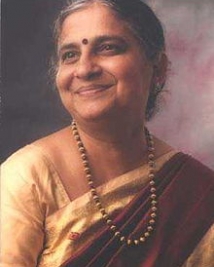
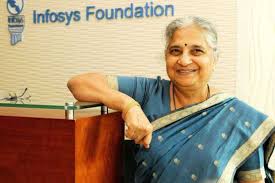
Sudha Murthy – Amazing Tales of and from this Iconic Women!

Sudha Murty, originally called Sudha Kulkarni was born on 19 August 1950 in Shiggaon, Haveri in Karnataka, India.. She is an Indian engineering teacher, author and a social worker. She is the chairperson of the Infosys Foundation.

Education and Career

Sudha Murthy has completed a Bachelor in Engineering degree in Electrical and Electronics Engineering from the B.V.B. College of Engineering & Technology (now, KLE Technological University), standing first in her class and receiving a gold medal from then Chief Minister of Karnataka. She has also completed Masters in Engineering degree in Computer Science from the Indian Institute of Science, standing first in her class and receiving a gold medal from the Indian Institute of Engineers.

Achievements unlocked by her: She became the first female engineer hired at India’s largest auto manufacturer TATA Engineering and Locomotive Company (TELCO). She was granted a special interview after she wrote a postcard to the company’s Chairman complaining of the “men only” gender bias at TELCO. She later joined Walchand Group of Industries at Pune as Senior Systems Analyst.

n 1996, she started Infosys Foundation & to date has been the Trustee of Infosys Foundation. She is a Visiting Professor at the PG Center of Bangalore University and also taught at Christ University. The H.R. Kadim Diwan Building housing the Computer Science & Engineering (CSE) department at IIT Kanpur and the Narayan Rao Melgiri Memorial National Law Library at NLSIU, has been inaugurated by the Infosys Foundation.

Literary Works:

She has written and published many books. In which, two are travelogues, two technical books, six novels, and three educative books.

  • Wise and Otherwise
  • The Mother I Never Knew
  • Three Thousand Stitches
  • The Daughter from a Wishing Tree
  • The Bird with Golden Wings: Stories of Wit and Magic
  • How I Taught My Grandmother to Read and Other Stories
  • The Old Man And His God: Discovering the Spirit of India
  • Dollar Bahu
  • Mahashweta
  • House of Cards
  • AND SO MANY MORE. IN KANNADA LANGUAGE AS WELL!!

Social Work:

She is a member of the public health care initiatives of the Gates Foundation. Murty’s Infosys Foundation is a public charitable trust founded in 1996 and Murthy is one of the trustees. Through Foundation she has built 2,300 houses in the flood-affected areas and has aided healthcare, education, empowerment of women, public hygiene, art and culture, and poverty alleviation at the grassroots level, setting up of 70,000 libraries so far. She is also helping out rural areas by building 16,000 public toilets in Bengaluru. The foundation has even conducted relief work during national natural disasters like the tsunami in Tamil Nadu and Andaman, earthquake in Kutch – Gujarat, hurricane and floods in Orissa, Andhra Pradesh and drought in Karnataka and Maharashtra. She frequently initiates literary festivals and participates in television discussions on women’s issues.

Awards:

  • The Government of Karnataka awarded her the prestigious literary award, the ‘Attimabbe Award’ –for her literary work for the year 2011–12.
  • Sudha Murthy was awarded the Padma Shri, the fourth highest civilian award in India, for social work by the Government of India in 2006.
  • Gold Medals and Cash Reward for coming first in MTech of all the branches of Engineering, highest marks in SSLC, University exams, and B.E. exams.
  • Honorary LL.D (Doctor of Laws) degrees for their contributions to promote formal legal education and scholarship in India.

  • ‘Karnataka Rajyotsava’ State Award for literature and social work in 2000.
  • R.K. Narayana’s Award for Literature in 2006.
  • The Attimabbe Award from the government of Karnataka for excellence in Kannada literature in 2011.

Custody of Children to Grandparents

Custody is included within the notion of Guardianship, and it happens as a result of the parents’ divorce. Divorce may be harmful to both parents and children, and children are often subjected to significant emotional trauma as a result of their parents’ divorce. The question of custody comes after the divorce is finalised, and it is a pertinent subject that must be resolved by the court. Custody refers to the privilege granted by the court to either of the parents in favour of the kid who is under the age of eighteen. The parent who is given the custodial right has to look after the financial, emotional, medical, and all other necessary needs of the child.

Custody of Children to Grandparents

Types of Custody in India

Physical Custody-

The kid will be under the guardianship of one of the parents in this custody, and the other parent will have the ability to visit the child from time to time. This is the most common type of custody, and it ensures that the kid receives all of the advantages of the family as well as the finest possible upbringing. Both parents’ love and devotion are intended for the kid.

Joint Custody- 

In this custody, both parents are allowed the right to keep their kid with them, but only in turn. Joint custody is one of the greatest alternatives to the post-divorce custody struggle. No parent feels deprived under this custody arrangement since both parents have the opportunity to be with the kid and have a major role in their upbringing. The major advantage of this custody arrangement is that the kid receives the love, care, and attention of both parents equally, and both parents have the right to make decisions about the child’s future.

Third-Party Custody-

In this custody, neither of the parents gets the custodial right. This is because the court believes that both parents are incapable of parenting a child and that granting the child’s rights to any of them would be detrimental to the child. In such cases, a third party is appointed and the custody of the child is given in his favor for the benefit of the child. This is mainly done in cases when both the parents re-marry after divorce then the custody of the child is given to grandparents. 

Sole Custody-

In this case, the custody of the child is given to either mother or father and the other parent has no right over the child. This is usually done because of the abusive or immoral nature of the non-custodial parent. Under such cases, the court passes an order that non-custodian parents will not be granted the right to visit or meet the child once in a while.

Custody of Children to Grandparents

In some circumstances, the court may give grandparents custody of the kid. When giving custody of a child, the court takes various factors into account. The minor’s well-being takes precedence over a specific party’s legal rights. If the youngster is mature enough to choose who he wants to live with, the court will take it into account while deciding on final custody. The court must consider the following Acid test while determining custodial rights:

  • Education, health, and maintenance of the child are the relevant factors while determining the custody of the child.
  • The priority of the custody of the child is given to their biological parents. However, if they do not promote the welfare of the child, custody can be granted to the grandparents.
  • Financial stability cannot be the sole ground for deciding the custody of the child, the welfare of the child is of paramount consideration. 
  • The child’s moral and ethical well-being, as well as its bodily well-being, must be considered by the Court.
  • Love of the parents towards their children cannot be a ground for deciding the custody in their favor. 
  • The physical and mental conditions of the parents along with their professional life are taken into consideration while deciding the custody. In such cases in which both the parents are professionally working and are not able to look after the child properly, custody will be granted to the grandparents. 
  • The wish of the child with whom he/she wants to stay is of utmost importance while deciding the custody.
  • The ‘character’ of the proposed guardian is one of the issues that must be examined by a court of law.
  • When dealing with custody disputes, a court is not bound by legislation, rigorous standards of evidence or process, or precedents. When choosing a competent guardian for a minor, the most important factor should be the child’s welfare and well-being.
  • Custody disputes cannot be determined only based on papers, oral evidence, or precedents; the human touch is the most important factor for the minor’s wellbeing, since the other materials may be generated by the parties themselves or on the advice of counsel to fit their needs.

In Jai Prakash Khadria v. Shyan Sunder Agarwalla and Anr, the appellant was the child’s maternal grandfather, while the respondent was the child’s paternal grandparents. Because the kid’s school was close to their house, the court gave paternal grandparents custody of the youngster. The paternal grandpa became overly close to the youngster and gave all of his property to him. The court also argued that because the maternal grandfather was living alone and there was no one at his house to care for the kid, custody would be given to the paternal grandparents.

Conclusion 

Child custody is one of the most sensitive and difficult problems that arises following a parent’s divorce. Custody of the kid is always granted to the person considered by the court to be the best alternative for the child. The welfare of the children is the most important consideration when determining custody. Courts will award custody of the kid to the party who can demonstrate that the child’s best interests are served by them. In some instances, if the court deems it appropriate, custody of the children might be assigned to grandparents.

Terrorism

Terrorism is a criminal act that seeks to instil terror in ordinary people. It is a danger to mankind. It covers anybody or any organisation who spreads violence, such as riots, burglaries, rapes, kidnappings, fights, bombs, and so on. Terrorism is a cowardly act. Terrorism is also unrelated to religion. A terrorist is a terrorist, regardless of whether he or she is Hindu or Muslim.

Types of Terrorism

Terrorism is classified into two types: political terrorism, which causes widespread alarm, and criminal terrorism, which involves abduction for ransom money. Political terrorism is even more dangerous than criminal terrorism since it is carried out by well-trained individuals. As a result, it becomes difficult for law enforcement organisations to apprehend them in a timely manner.

Terrorism spreads at both the national and international levels. Regional terrorism is the most violent type of terrorism. Because terrorists believe that dying as a terrorist is precious and holy, they are prepared to go to any length. All of these terrorist organisations are formed for a variety of reasons.

Causes of Terrorism

There are several major causes of terrorism, including rapid population growth, politics, social and economic problems, dissatisfaction with the country’s system, a lack of education, corruption, racism, economic inequality, and linguistic differences. Terrorism is used as a weapon to show and justify one’s point of view. The most well-known riots are those between Hindus and Muslims, although there is a distinction between caste and terrorism.

The Effects Of Terrorism

Terrorism instils fear in individuals, and as a result, people in the country feel insecure. Terrorist attacks damage millions of products, take the lives of thousands of innocent people, and slaughter animals. After witnessing a terrorist attack, disbelief in mankind grows, giving rise to another terrorist. There are several forms of terrorism in various areas of the country and throughout the world.

Today, terrorism is not just a concern in India, but also in our neighbouring nation, and governments all over the world are working hard to combat it. The September 11, 2001, terrorist attack on the World Trade Center is widely regarded as the world’s biggest. Osama bin Laden attacked the world’s tallest skyscraper, resulting in millions of injuries and the deaths of thousands of people.

Terrorist Attacks in India

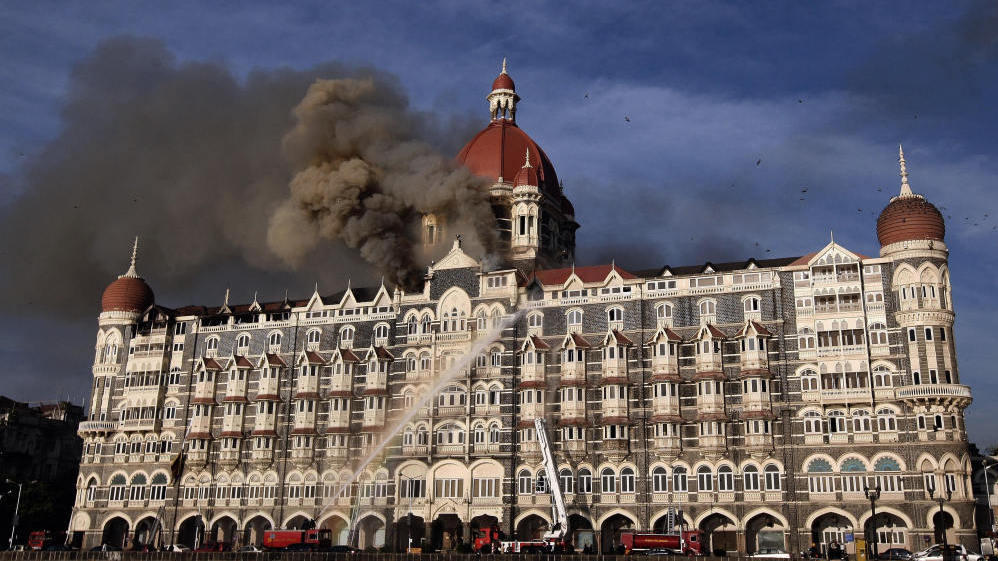
India has suffered several terrorist attacks which created fear among the public and caused huge destruction. Here are some of the major terrorist attacks that hit India in the last few years: 1991 – Punjab Killings, 1993 – Bombay Bomb Blasts, RSS Bombing in Chennai, 2000 – Church Bombing, Red Fort Terrorist Attack,2001- Indian Parliament Attack, 2002 – Mumbai Bus Bombing, Attack on Akshardham Temple, 2003 – Mumbai Bombing, 2004 – Dhemaji School Bombing in Assam,2005 – Delhi Bombings, Indian Institute of Science Shooting, 2006 – Varanasi Bombings, Mumbai Train Bombings, Malegaon Bombings, 2007 – Samjhauta Express Bombings, Mecca Masjid Bombing, Hyderabad Bombing, Ajmer Dargah Bombing, 2008 – Jaipur Bombings, Bangalore Serial Blasts, Ahmedabad Bombings, Delhi Bombings, Mumbai Attacks, 2010 – Pune Bombing, Varanasi Bombing.

The recent ones include 2011 – Mumbai Bombing, Delhi Bombing, 2012 – Pune Bombing, 2013 – Hyderabad Blasts, Srinagar Attack, Bodh Gaya Bombings, Patna Bombings, 2014 – Chhattisgarh Attack, Jharkhand Blast, Chennai Train Bombing, Assam Violence, Church Street Bomb Blast, Bangalore, 2015 –  Jammu Attack, Gurdaspur Attack, Pathankot Attack, 2016 – Uri Attack, Baramulla Attack, 2017 – Bhopal Ujjain Passenger Train Bombing, Amarnath Yatra Attack, 2018 Sukma Attack, 2019- Pulwama attack.

Agencies fighting Terrorism in India

To combat terrorism in India, many police, intelligence, and military institutions have created specific agencies. In India, major anti-terrorism agencies include the Anti-Terrorism Squad (ATS), the Research and Analysis Wing (RAW), and the National Investigation Agency (NIA).

Conclusion

Terrorism has evolved into a worldwide concern that must be addressed at the outset. Terrorism cannot be handled only by law enforcement forces. People all across the world will need to band together to combat the rising menace of terrorism.

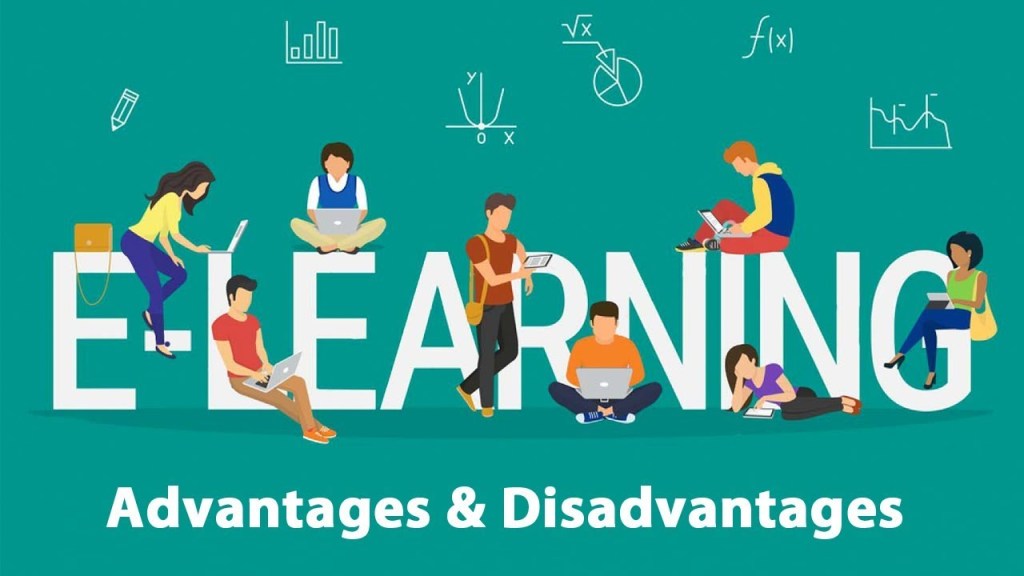
Advantages And Disadvantages Of Online Learning

Online learning, like other educational techniques, offers advantages and disadvantages. Decoding and comprehending these positives and negatives will assist institutes in developing ways for more effective class delivery, guaranteeing a continuous learning journey for students.

Discover Everything You Need To Know (Good And Bad) About  Online Education

The term “new normal” has become one of the most commonly used expressions in the aftermath of the epidemic. The growing usage of online learning resources is the new normal in education. The COVID-19 epidemic has prompted new methods of learning. Educational institutions all around the world are turning to online learning platforms to help them continue the process of educating pupils. The new normal is a changed vision of education, with online learning at its heart. Digital learning has now emerged as an essential resource for students and schools all around the world. For many educational institutions, this is a whole new method of teaching that they have had to adapt to. Online learning is currently used not only to study academics, but also to learn extracurricular activities for students. The demand for online learning has increased substantially in recent months and will continue to do so in the future.

As with most teaching methods, online learning also has its own set of positives and negatives. Decoding and understanding these positives and negatives will help institutes in creating strategies for more efficiently delivering the lessons, ensuring an uninterrupted learning journey for students.

What Are The Advantages Of Online Learning?

1. Efficiency :- Online learning allows teachers to provide courses to students in a more efficient manner. Online learning includes a variety of materials such as videos, PDFs, and podcasts, which teachers may use into their lesson plans. Teachers may become more efficient instructors by expanding the lesson plan beyond standard textbooks to include internet resources.

2. Accessibility Of Time And Place :- Another advantage of online education is that it allows students to attend classes from any location of their choice. It also allows schools to reach out to a more extensive network of students, instead of being restricted by geographical boundaries. Additionally, online lectures can be recorded, archived, and shared for future reference. This allows students to access the learning material at a time of their comfort. Thus, online learning offers students the accessibility of time and place in education.

3. Affordability :- Another advantage of online learning is that it saves money. When compared to traditional schooling, online education is considerably more inexpensive. This is due to the fact that online learning reduces the costs of student transportation, food, and, most significantly, real estate. Furthermore, all course or study materials are available online, resulting in a paperless learning environment that is both more cheap and environmentally friendly.

4. Improved Student Attendance :- Since online classes can be taken from home or location of choice, there are fewer chances of students missing out on lessons.

5. Suits A Variety Of Learning Styles :- Every kid has a unique learning experience and learning style. Some pupils like to study visually, while others prefer to learn through audio. Similarly, some kids flourish in the classroom, while others prefer to learn alone and are easily distracted by large groups. With its variety of options and resources, the online learning system may be customized in a variety of ways. It is the most effective method for creating a perfect learning environment tailored to the needs of each learner.

What Are The Disadvantages Of Online Learning?

Disadvantages of Online Learning - YouTube

1. Inability To Focus On Screens :- One of the most difficult aspects of online learning for many students is the inability to focus on a screen for extended periods of time. With online learning, pupils are more likely to be quickly sidetracked by social media or other sites. As a result, it is critical for professors to maintain their online lessons concise, engaging, and interactive in order to keep students focused on the subject.

2. Technology Issues :- Another significant issue with online classes is access to the internet. While internet coverage has increased by leaps and bounds in recent years, a continuous connection with adequate speed remains a challenge in smaller cities and villages. There may be a loss of consistency in learning for the child if pupils or teachers do not have a continuous internet connection. This is harmful to the educational process.

3. Sense Of Isolation :- Being in the company of their peers may teach students a lot. However, there are little physical encounters between students and professors in an online class. This frequently leads to a sense of isolation among the kids. In this case, it is critical that the school provide for other modes of communication between students, classmates, and teachers. This includes online chats, emails, and video conferencing, which allow for face-to-face connection and reduces feelings of isolation.

4. Teacher Training :- Online learning necessitates that teachers have a fundamental grasp of how to use digital forms of learning. However, this is not always the case. Teachers may have a very rudimentary grasp of technology. They may not even have the required resources and tools to conduct online lessons at times. To address this, it is critical for schools to spend in training instructors on the most recent technological advancements so that they can conduct their online lessons smoothly.

5. Manage Screen Time :- Many parents are concerned about the health risks of their children spending so much time looking at a screen. One of the most serious issues and drawbacks of online learning is the rise in screen time. Students may acquire improper posture and other physical issues as a result of sitting slumped in front of a screen. A excellent approach would be to offer kids frequent pauses from the computer in order to rejuvenate their minds and bodies.


Book Review – Norwegian Wood

Amazon.in: Buy Norwegian Wood Book Online at Low Prices in India | Norwegian  Wood Reviews & Ratings

Norwegian Wood by Haruki Murakami is a coming-of-age story of Toru Watanabe, set in the late 1960s in Tokyo during the main character’s early student life. Toru narrates the story himself. Having lost his close friend, Kizuki, to suicide, Toru moves out of his hometown in Kobe and to Tokyo to study theater, which he clearly isn’t really interested in. Their lives in those days have a background context of a weak student revolution which fizzles out too soon, only to reveal the hypocrisy of the people leading it.

Here in Tokyo, Toru once accidentally bumps into Naoko, his deceased friend’s girlfriend. Naoko, if not more, is clearly as affected by Kizuki’s death as Toru (only to know later that Kizuki isn’t the only close one Naoko has lost to suicide). Naoko is broken and in dire need of someone’s emotional support in order to heal. And here comes ToruToru & Naoko share a bond, albeit a sad one, a bond strengthened by the death of the third partner of their group. They spend multiple Sundays together, wandering through the streets of Tokyo and, as one may expect, Toru falls for her. Unfortunately, that is where things take the melancholic path further down hill.

Naoko ends up in an institution called Ami Hostel up the hills, an hour from the city of Kyoto. Ami Hostel is a sophisticated version of (to put it subtly) a mental hospital. It’s secluded, clean, peaceful, and more of a community living where the lines between doctors & patients are blurred. While back in Tokyo, Toru finds Midori Kobayashi, his ‘History of Drama’ classmate. Midori, despite her own multiple problems — family, boyfriend, her family bookstore — to name a few, helps Toru to live through his lonely days, while he still yearns for Naoko to reach out to him. Toru is equally attracted to both Naoko and Midori. The story progresses as he sways back and forth and spends time with Naoko and Midori alternatively. While in his mind he is always rooting for Naoko to come back to his life, he doesn’t allow him to register that fact that he loves & misses Midori equally well. Naoko is troubled deeply & doesn’t want to come back to Toru until she is in a much better shape while Midori hates the fact that Toru always prioritizes Naoko over her, even though Midori Toru have never discussed Naoko even once. This is a tough choice Toru has to make and a journey he’ll have to take in his mind moving from Naoko to Midori or vice versa. What choice does he make? Do read the book to find out.

The two women in Toru’s life couldn’t have been more contradictory — One doesn’t speak much, the other doesn’t stop at all. One goes all out in showing affection for Toru while the other never confesses even though Toru keeps asking for it. Both have seen death, grief and loss, up close and personal, but one gets accustomed to it, jokes about it while the other gets crushed by it.

In the end, Toru has to make a choice between Naoko and Midori. Before he decides, you would have definitely made up yours. It’s not a grey area anymore. Norwegian Wood is a love story, with some ecstatic, arousing moments and with some dark, melancholic, heart wrenching ones as well — just like life, as one may say.

Bottom line, we will lose the people we love, friends and lovers will fall out of our lives, and there will be mistakes we make in our lives or watch others make towards other people we won’t be able to rewrite, because that’s the power of time. It can only go forward, not back. The characters interacting with each other are nostalgic; they recount the times that made them to be the person they are today. The lessons from this book aren’t any easy pills to swallow, so if you’re intending for a happy-go-lucky read, then I’d probably request you to skip Norwegian Wood.

Domestic Violence

Domestic violence is defined as violence and abuse that occurs in a domestic environment, such as cohabitation or marriage. Domestic violence is defined as any type of behaviour that attempts to acquire authority and control over the victim, not simply physical abuse. It may afflict people from many areas of life and is usually directed at a partner, spouse, or close family member. We will discuss the causes and repercussions of domestic violence in an essay.

Causes of Domestic Violence

Domestic violence frequently targets women and children. Domestic abuse is a heinous crime that kills many people. Illiteracy and economic reliance on males are two of the most prevalent causes of domestic violence. This dilemma is exacerbated by a male-dominated culture. Furthermore, dowry is one of the major causes of violence against newlywed wives. Physically abusing women and making obscene statements is widespread in many areas of the world.

Furthermore, children are frequently victims of this cruel behaviour. It is critical to identify society’s double standards and hypocrisy. Frequently, the abuser is either insane or in need of psychiatric counselling. Domestic violence, on the other hand, is the result of a series of reckless behaviours displayed by a segment of society. It is also crucial to highlight that the abuser is not the only one who is accountable; those who allow this to happen and behave as quiet bystanders are equally to blame.

Types of Domestic Violence

Domestic abuse has a variety of negative consequences that vary depending on the type of domestic violence that occurs. It might be physical, emotional, sexual, or pecuniary in nature. A physical abuser employs physical force that injures or endangers the victim’s life. Hitting, punching, choking, slapping, and other forms of violence are included. Furthermore, the abuser refuses the victim medical attention. There is also emotional abuse, in which the perpetrator threatens and intimidates the victim. It also entails damaging their self-esteem.

It involves threatening someone with danger or disgrace in public. Emotional abuse can also include continuous name-calling and criticism. Then there’s sexual abuse, in which the perpetrator uses force to get undesired sexual intercourse. If your spouse does not consent, it is considered sexual abuse since it is coerced. Finally, there is economic abuse, in which the abuser has power over the victim’s money and economic resources.

They use this to impose control over them and make them completely reliant on them. Economic abuse occurs when your partner needs to beg you for money. The victim’s self-esteem suffers as a result.

Why is domestic violence an issue?

Domestic violence has a significant influence on people’s overall health and well-being. It is due to the fact that it causes bodily harm, anxiety, and despair. Furthermore, it affects social skills and increases the probability that they may engage in health-harming behaviours such as self-harm or drug addiction.

How does domestic violence affect a woman?

Domestic abuse has a negative impact on women’s health. It has severe ramifications for their mental and physical health, including reproductive and sexual health. It also covers injuries, gynaecological issues, despair, suicide, and other issues.

Conclusion

To summarise, domestic violence can take various forms, including physical aggressiveness such as kicking and biting, as well as sexual or emotional abuse. It is critical to recognise the indicators of domestic violence and report the abuser if it occurs around or to you.

Telangana: Forester finds new waterfall in Asifabad

A new waterfall plunging about 60 meters has come to light in the forests of Tiryani mandal, a remote area in Kumaram Bheem Asifabad forest division, Telangana after a forester on foot patrol on a new route made the chance discovery. 

The waterfall, which is now named Bison Waterfall, was discovered in Ginnedhari forest range by the forester a few days ago and is about 2km from the popular Gundala waterfalls.

Ginnedhari forest range officer (FRO) Thodishetty Pranay said he spotted the waterfall while perambulating in the forest. “While I was patrolling the area I happened to take a new route to see what lies ahead. After trekking for about 5km, I was surprised to discover this natural wonder that cascades down from around 60 meters.”

The FRO said even the tribal population in the area said they were unaware of the spot when he enquired with them.

“We decided to name it Bison Waterfall after noticing a huge rock adjacent to it resembling the head of a bison. There is also a deep gorge suitable for adventure tourism and can be added to the adventure tourism circuit of Asifabad forest division by taking some precautions to ensure there is no negative impact on local environment,” said Pranay.

The forest areas of Kumaram Bheem Asifabad district are primarily known for the presence of tiger population, some rare species of birds among other flora and fauna.