Postdoc Candidate Required for the project “Climate Citizenship”

Daily writing prompt
Do you believe in fate/destiny?

Vacancy

Postdoc Candidate for the project “Climate Citizenship”

Vacancy number15478Job typeAcademic staffHours (in fte)0,8External/ internalExternalLocationLeidenPlaced on18 February 2025Closing date31 March 2025 38 more days to apply

Apply now

Leiden University’s Institute of Cultural Anthropology and Development Sociology (CADS) is looking for

Postdoc Candidate for the project “Climate Citizenship” (2 years, 0.8 fte)

We welcome applications for a Postdoc position in the project “Climate Citizenship: Infrastructures, Environments, and Democracy in the Era of Climate Change,” funded by a European Research Council Starting Grant (ERC-StG). The project is led by Principal Investigator Dr. Andrew Littlejohn and hosted by Leiden University’s Institute of Cultural Anthropology and Development Sociology.

Climate Citizenship explores how adapting environments to climate change through new forms of nature-based infrastructure reshapes people’s relationships with each other and the state. Examples range from green roofs and vertical gardens to urban parks, flood plains and more ambitious efforts to transform landscapes. The project treats these infrastructures as social and political as well as environmental experiments. It asks: when and how do they stimulate behavioural change, create new alliances between stakeholders, or transform the division of rights and responsibilities within a society?

The case studies will employ an “ecographic” approach combining quantitative data from the ecological and material sciences with qualitative data gathered through ethnographic methods such as participant observation. As a Postdoc, you will help to develop this approach. You will visit scientists researching and/or working on green infrastructure projects in Japan, the Netherlands, and the United States and interview them on their methods. You will then analyse what kinds of data and techniques the PhD researchers will need familiarity with, and where in the process of gathering ecological data ethnographic methods and insights can be interpolated.

What you will do

  • Conduct interviews and observations with scientists in the Tokyo Bay area (Japan), the Rhine-Meuse-Scheldt Delta (the Netherlands), and Louisiana Delta (the United States);
  • Assist the PI in developing an “ecographic” approach and an ecographic protocol for the PhD candidates;
  • Write a peer-reviewed journal article with the PI on ecographic methods and their potential;
  • Contribute to fine-tuning the research agendas of the PhD candidates through evaluating their proposals and participating in regular team meetings (online where necessary).


You will be part of a team also comprising two PhD candidates and the PI. The entire team is expected to reside in the Netherlands and work from Leiden for the duration of the project, except during fieldwork.

What you bring

  • PhD in Science and Technology Studies, Cultural Anthropology, or another relevant social science (if your PhD is not in Science and Technology Studies, you must have demonstrated expertise in the social study of science or interdisciplinary research methods);
  • Demonstrated passion for developing interdisciplinary and transdisciplinary research projects and approaches;
  • Experience with independently coordinating and conducting ethnographic research, and ideally, some experience with quantitative and/or ecological research methods;
  • Excellent research and writing skills as demonstrated by a track record of scholarly publications commensurate with your career stage;
  • Excellent command of English (speaking and writing);
  • Independent work attitude and demonstrable ability to work in a team.


Where you will work
The Faculty of Social and Behavioural Sciences consists of five institutes: Centre for Science and Technology Studies, Cultural Anthropology and Development Sociology, Education and Child Studies, Political Science, and Psychology. The faculty has approximately 7000 students and 1000 staff members. Within the institutes, not only education is provided but also groundbreaking research is conducted that pushes the boundaries of our understanding of human behaviour and societal structures. What makes our faculty unique is the diversity of research topics, the various styles of teaching, and the way professional support is organized; this provides you with the opportunity to explore and develop your interests and expertise. Visit our website for an impression: Welcome to the Leiden Faculty of Social and Behavioural Sciences – Leiden University.

Leiden University’s Institute of Cultural Anthropology and Development Sociology (CADS)
Leiden University’s Institute of Cultural Anthropology and Development Sociology concentrates on ‘global vulnerability and social resilience’. The institute has three main themes: diversity, sustainability, and digitalisation. CADS is dedicated to making a real-world impact, not just studying change, but also working with communities to promote positive change through education and research. We use a unique approach that blends qualitative, quantitative, audiovisual, and digital methods based on ethnographic fieldwork.

With our unique blend of interdisciplinary interests, comparative regional studies, and social science research methods, we emphasize our role in the extensive collaborative network within Leiden University. In both our research and education, we engage in extensive interdisciplinary and international networks.

What we offer
Our goal is to work together to create a transparent and inclusive work environment in which everyone feels welcome and appreciated. Our organisation is always evolving, and we need your ideas for improvement and innovation to take us further. We want to devote attention to your personal development.

You can expect an enjoyable job within the socially relevant world of education and research. The University’s challenging and international work environment is located just steps away from Leiden’s lively city centre or the bustling city centre of The Hague. We also want to work with you to devote attention to your health and vitality, for example with the fun activities we organise through Healthy University.

We also offer:

  • A 0,8 fte employment contract, initially for a period of 1 year, with the possibility of extension for a second year after a positive evaluation. This contract falls under the Collective Labour Agreements (CLA) of Dutch Universities;
  • A salary of a minimum of € 4,060 and a maximum of € 5,331 gross per month, based on a full-time appointment (38 hours) (scale 10.4-10.12); with increments based on the CLA.
  • A holiday allowance (8%), an end-of-year bonus (8,3%), and an attractive pension scheme at ABP;
  • Our individual choices model gives you some freedom to assemble your own set of terms and conditions.
  • Candidates from outside the Netherlands may be eligible for a substantial tax break.

More here: https://www.universiteitleiden.nl/en/working-at/job-application-procedure-and-employment-conditions

What we find important
Promoting an inclusive community is central to Leiden University’s values and vision. Leiden University aims to be an inclusive community in which all students and staff members feel valued and respected and are able to develop to their full potential. Diversity in experiences and perspectives enriches our teaching and strengthens our research. High-quality education and research mean inclusive education and research.

Want to apply or find out more?
If you want to apply straight away, click the application button.
If you would like more information about what the job entails, please contact: Dr. Andrew Littlejohn, Assistant Professor at a.l.littlejohn@fsw.leidenuniv.nl

You can apply until March 31, 2025; applications will be processed immediately.
Online interviews will be held with shortlisted candidates in April-May 2025. The intended starting date is August 2025.

To apply, please submit:

  • A cover letter explaining your motivation for working in the climate citizenship project (maximum 2 pages);
  • Curriculum vitae (CV), including publications (maximum 2 pages);
  • A short research proposal (maximum 500 words) in which you outline your approach to the role described above;
  • A copy of either a representative publication or your PhD thesis;
  • Names and contact details of two referees.

To help us get to know each other better, we follow a number of steps in the application procedure. For more information, see:
https://www.universiteitleiden.nl/werken-bij/sollicitatieprocedure-en-arbeidsvoorwaarden

  • A pre-employment screening (references, diplomas, certificate of good conduct (VOG) may be part of the selection procedure.
  • Acquisition in response to this vacancy is not appreciated. If you nevertheless choose to send us CVs, no rights can be derived from this. -Hybrid

55th IFFI’s Closing Film ‘Dry Season’ is a Tale of Humanity, Sustainability, and Generational bonds

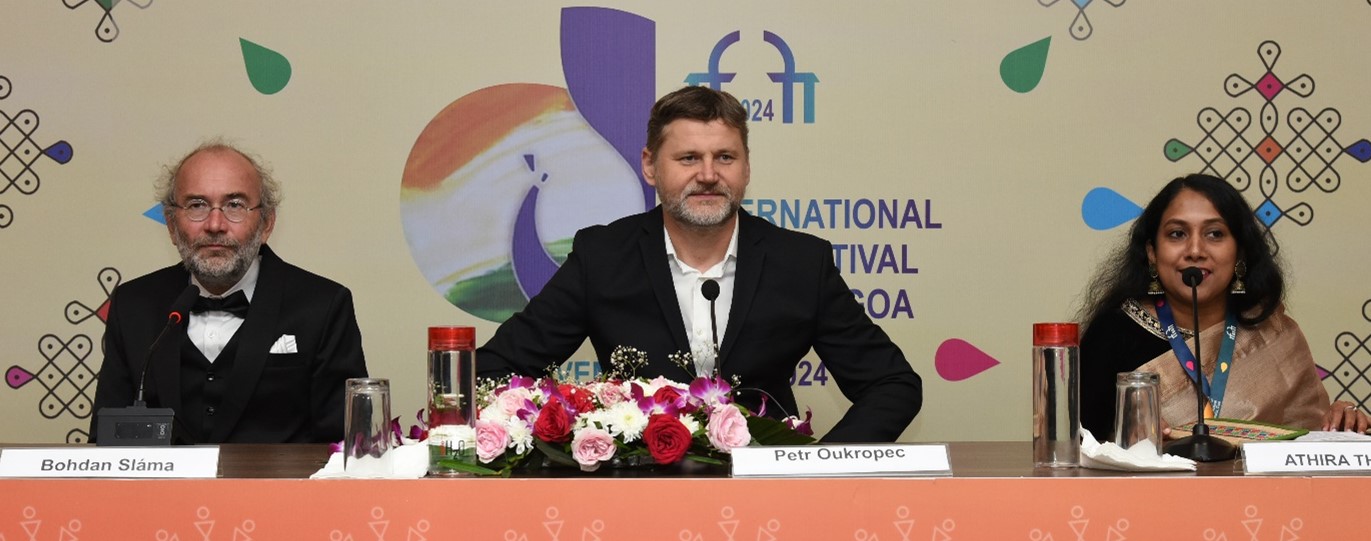
The Press Conference for the much-anticipated closing film ‘Dry Season’ (originally titled Sukho), directed by the acclaimed Bohdan Sláma and produced by Petr Oukropec, was held as part of the 55th International Film Festival of India (IFFI) in Goa. Organized by the Press Information Bureau, the event highlighted the film’s poignant exploration of environmental and generational challenges.

Set amidst verdant fields, the story follows Josef, a fifty-year-old farmer striving for an alternative lifestyle with his wife Eva and their three children. Josef’s clash with Viktor, a profit-driven agribusiness owner, intensifies as a dry summer leaves the village without drinking water, sparking tensions between their families, complicated further by Viktor’s strained bond with his returning son.

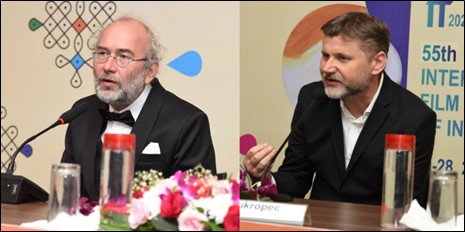
Director Bohdan Sláma reflected on the universal bond between humans and the environment, underlining the need to protect natural resources as a reflection of safeguarding the human spirit. He spoke about the meticulous journey of crafting the screenplay, which took three years and underwent 11 revisions, and expressed gratitude for the collaborative efforts of the cast and producers that enriched the filmmaking process.

Producer Petr Oukropec shared the complexities of financing and creating art-house cinema in smaller nations, emphasizing the significance of international collaborations. He lauded the film’s relevance, resonating with global audiences by addressing themes of sustainability, family, and generational divides.

The filmmakers urged younger audiences to take ownership of their future, as the narrative serves as a mirror to pressing contemporary issues. Concluding the session, Bohdan Sláma expressed hope that Dry Season would spark meaningful conversations, not just in India but across the world, reminding audiences of the delicate balance between humanity and nature.

Watch the Press Conference here:

* * *

PIB IFFI CAST AND CREW | Rajith/Supriya/Ashwani/Darshana | IFFI 55 – 114
‘Reviewing Films: From Critiquing to Reading Cinema’ 

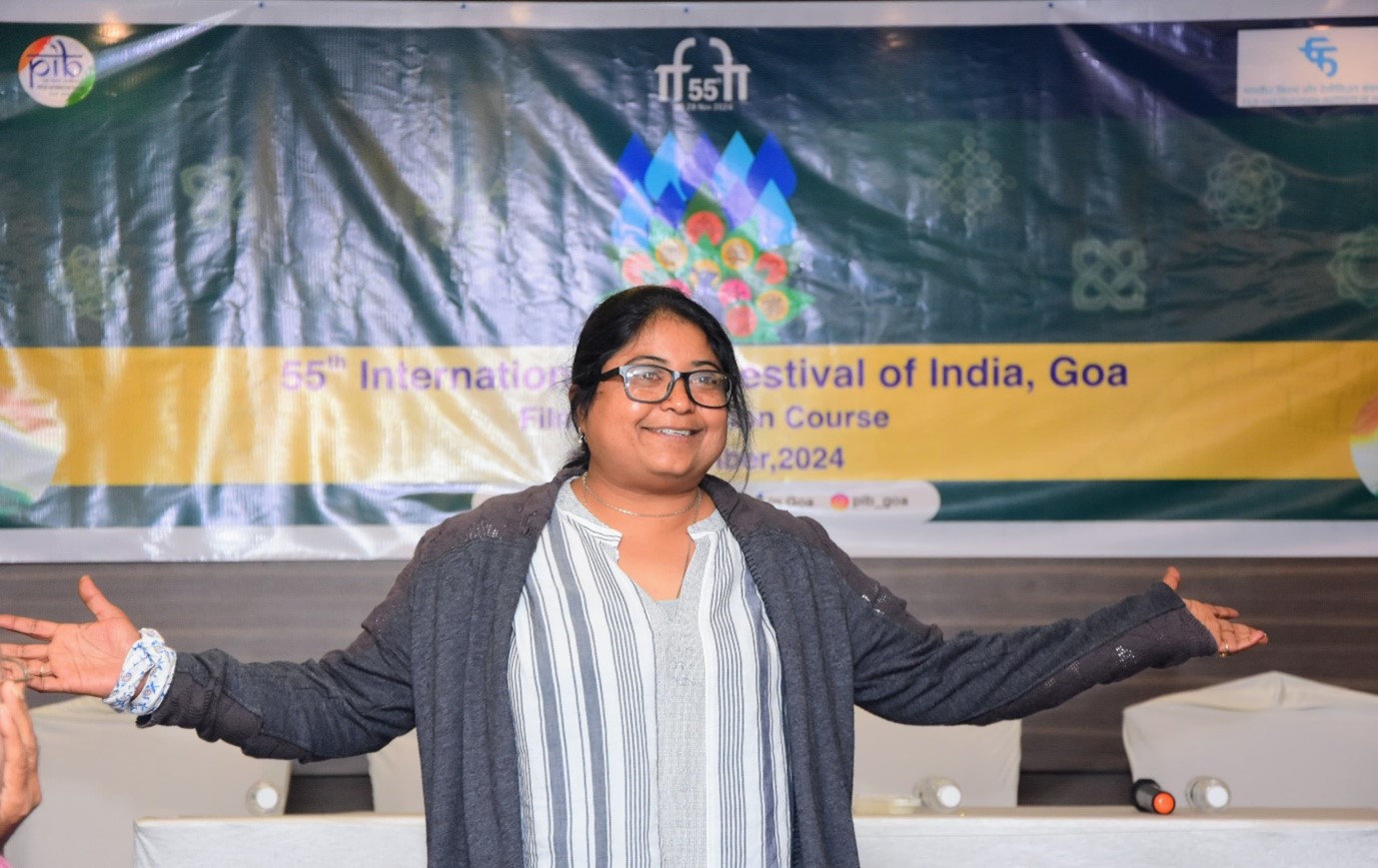
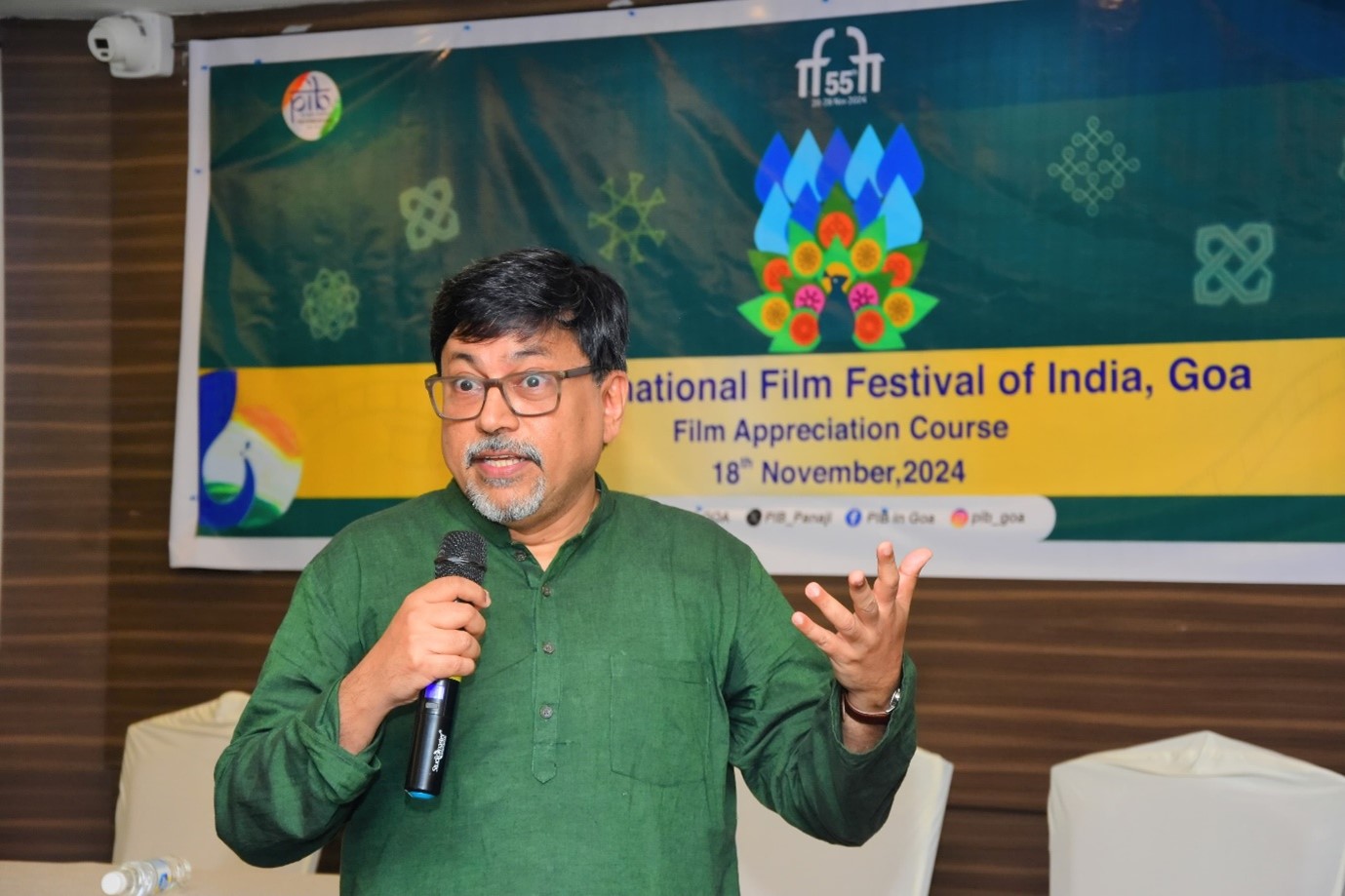
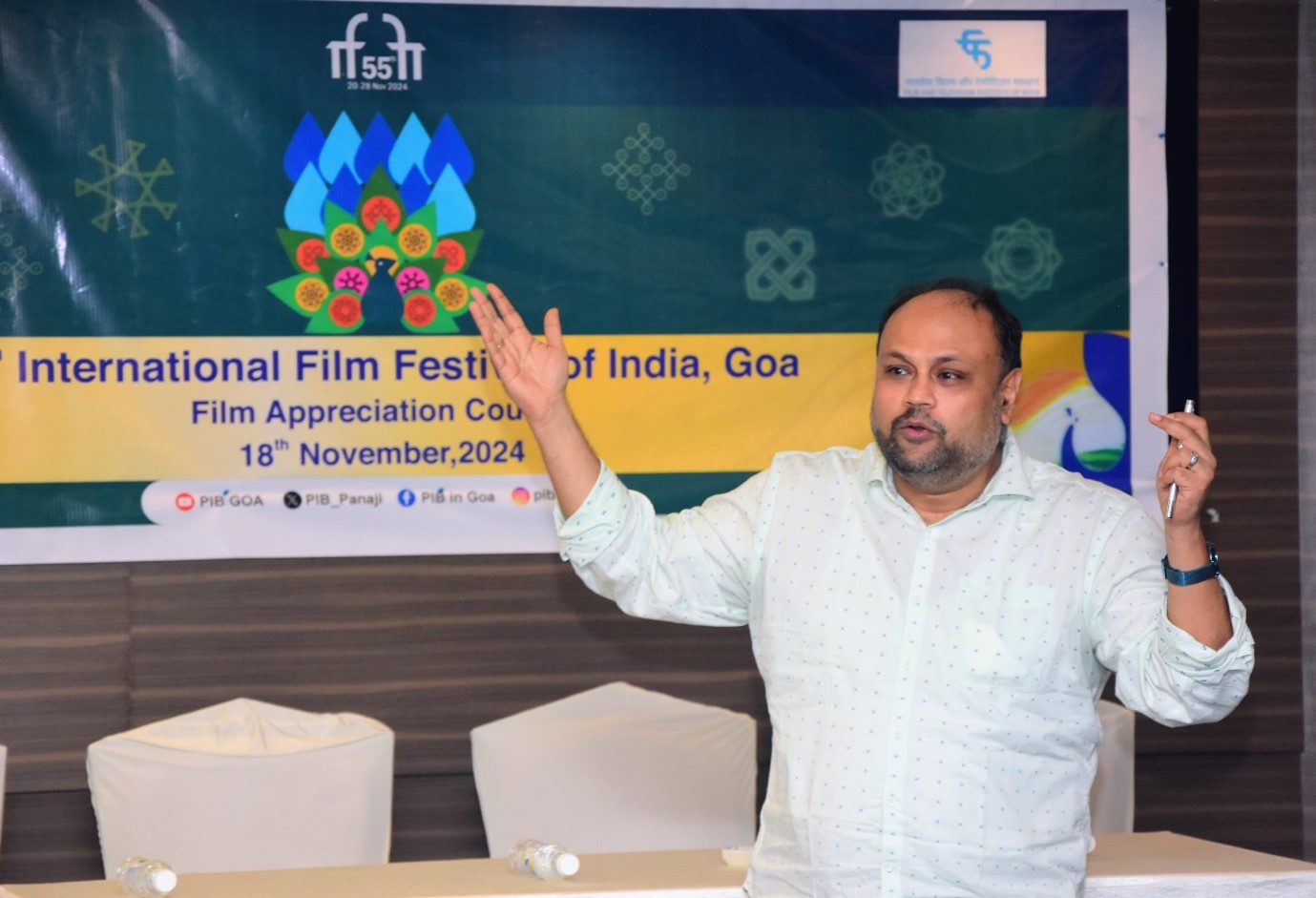
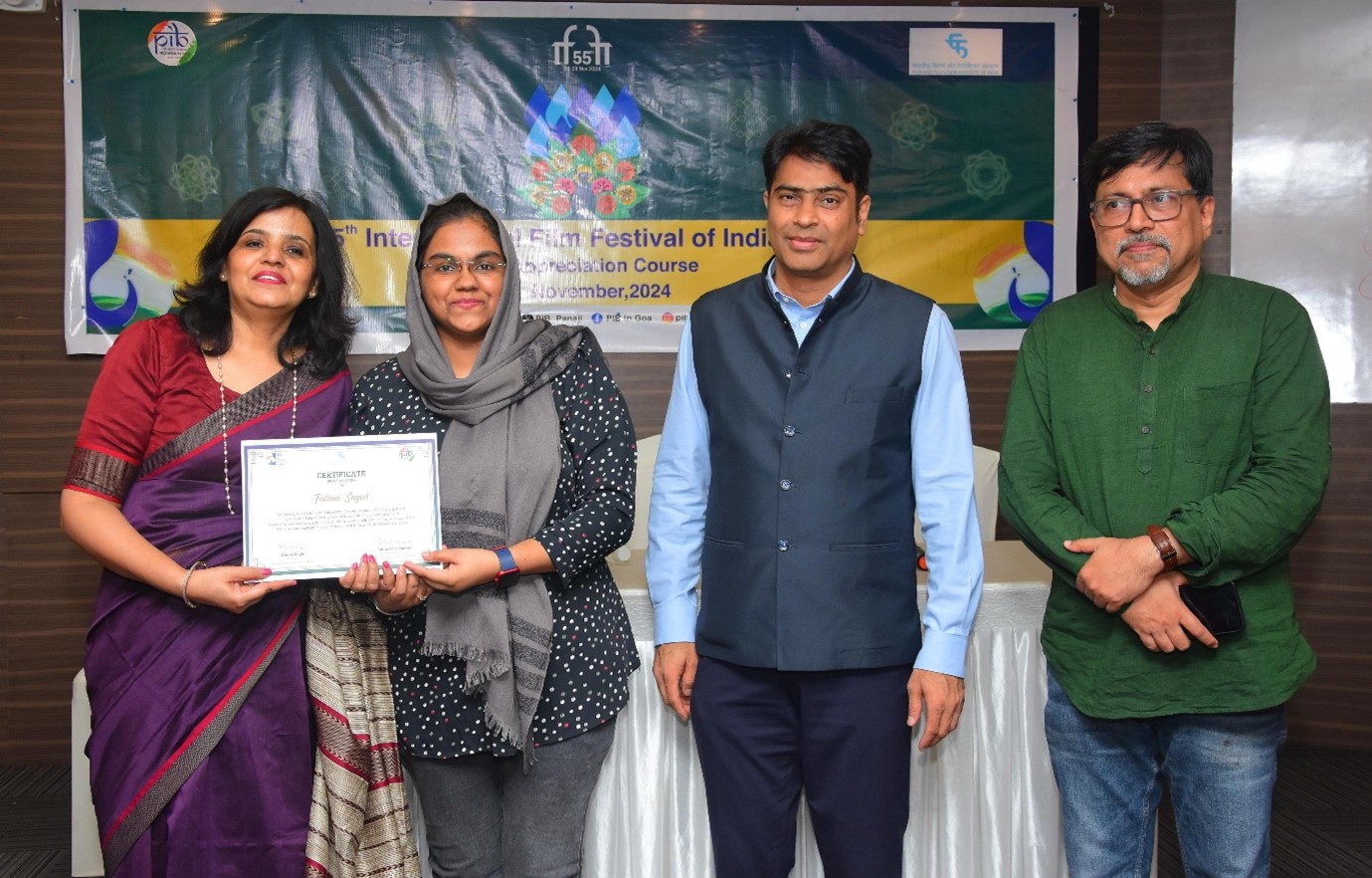
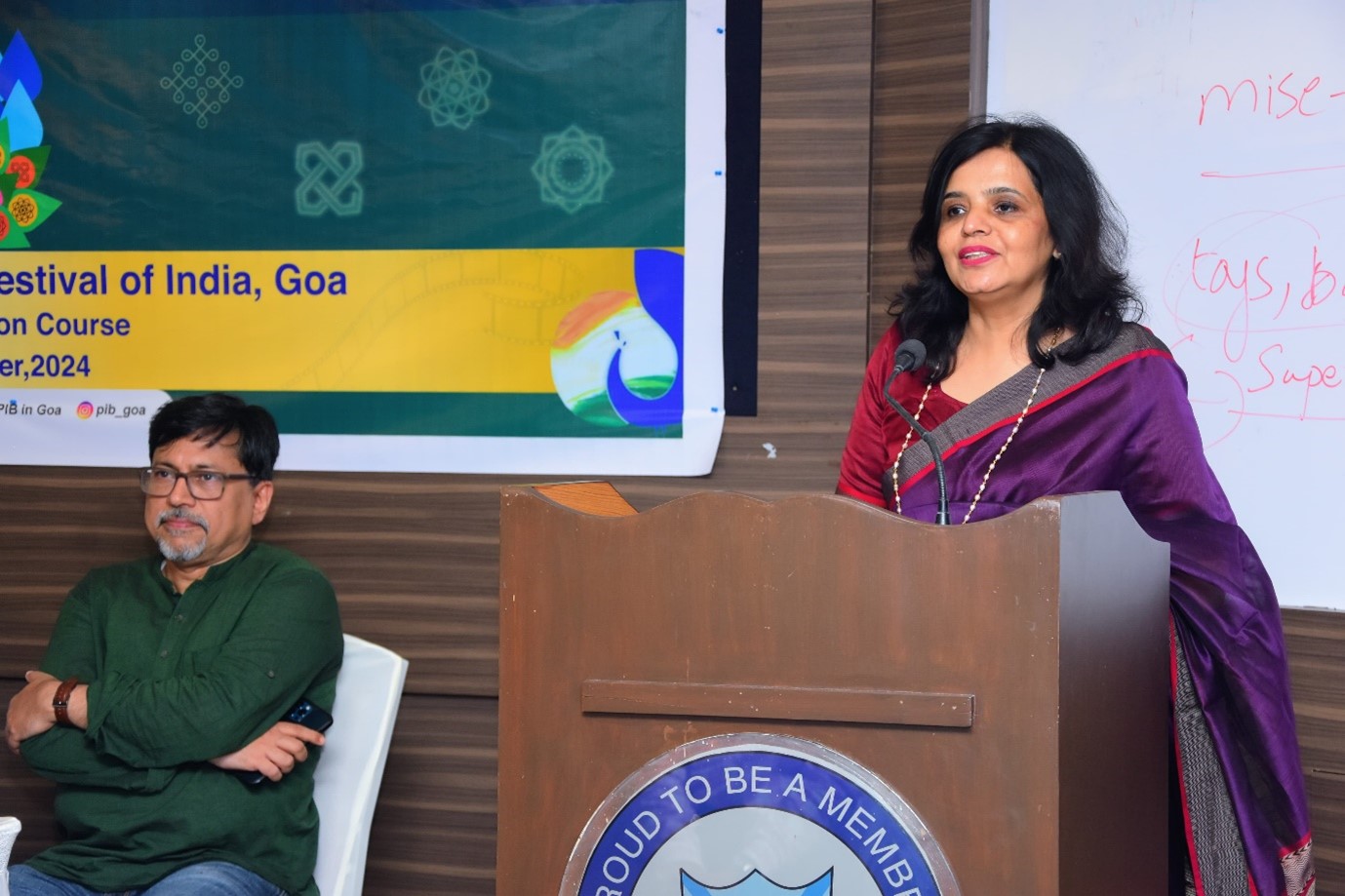
The Press Information Bureau (PIB), Ministry of Information & Broadcasting, in collaboration with the Film and Television Institute of India (FTII), Pune, organised an engaging Film Appreciation Course on ‘Reviewing Films: From Critiquing to Reading Cinema’ for media delegates on the sidelines of the 55th International Film Festival of India (IFFI) in Goa. The course was organized exclusively for IFFI media delegates focused on exploring the various aspects of the art and craft of films and the importance of learning to read the films in an informed manner. The course was led by industry experts such as Dr. Indranil Bhattacharya, Prof. Amlan Chakraborty, and Ms. Malini Desai from FTII, Pune.

The participants were introduced to ‘Principles of Film Analysis,’ by Prof. Dr. Indranil Bhattacharya. This was followed by a session on ‘Editing as an Artistic Tool’ led by Prof. Amlan Chakraborty. In another engaging session, Prof. Malini Desai explored the significance of ‘Lighting as a Dramatic Tool.’   

Prof. Amlan Chakraborty also highlighted the importance of film appreciation, stating that “Film appreciation is not just about admiration but about understanding. Every film is designed to impact its audience. Some films stay with you, and you need to ask why.” He illustrated the deeper sociological meanings embedded within films illustrating the example of India’s official entry for Oscars 2025, Lapata Ladies.

Later, Prof. Bhattacharya conducted a special session focused on the analysis of short films, offering participants valuable insights into the structure and storytelling techniques of short-form cinema.

Managing Director, NFDC Shri Pritul Kumar thanked the Media for their active participation and stressed the significant role played by media in promoting films. Speaking about the importance of understanding films, he mentioned, “the Film Appreciation Course will be really helpful in delving deep into the world of films which will enrich the media in understanding and writing about them.”

Director General West Zone, M/o I&B. Ms. Smita Vats Sharma while addressing the participants informed that “the course was open to media across India, including both Goan and all-India representatives as Media plays a critical role in the celebration of cinema and taking the films across the country and the world, and hence this course has been timed during IFFI to facilitate our media professionals.” She also thanked FTII for their invaluable support in making this possible.

Joint Director, PIB Mumbai, Sayyid Rabeehashmi emphasized the need to not only celebrate films but also delve into their intricate details.

Speaking about the significance of such initiatives, Prof. Malini Desai emphasized, “Media plays an essential role in exchanging ideas and helping the world understand the art of cinema. And as filmmakers we are also communicating our perspectives to the audience. This interaction between media and filmmakers – both of whom are into ‘communication’ greatly enriched our understanding about each others’ perspective.”

Appreciating the initiative, journalist and participant, Ms. Harshita from Screen Grafia who has been covering IFFI since 1999, said that “this is a great initiative by the Ministry to educate film journalists. It will expand their knowledge about films. I hope this course is repeated in future editions too.”

Shri Satyendar Mohan, a Veteran Journalist who has been attending IFFI since four decades expressed that “I’ve been attending IFFI since 1983. This session was very informative and educational. It will help journalists appreciate films on a much deeper level, adding immense value to the 55th IFFI.”

The event concluded with a Valedictory Session. Certificates were distributed to more than 30 media delegates who attended the session, acknowledging their efforts in advancing their understanding of film appreciation.

* * *

Loneliness – Not a depression

We feel happy when we are surrounded by our loved one and that makes us comfortable around them and sometimes we get used to that comfort zone. Imagine being get used to it and suddenly they’re not near you or with you. You’ll not feel yourself and you get lonely all by yourself. This can make you to think different things and there may be multiple thoughts. As it is said “An idol mind is the devil’s workshop”.

Especially in these pandemic times there have been many cases of suicide due to depression and loneliness. Inspite of the death due to covid, people have died unable to control their emotions. This made us to think if loneliness is more dangerous than the disease. Recently there was a case where a 45 year old man and 42 year Old women lived in a village. They don’t have any child and lived all by themselves. Recently her husband was suffering from Covid and the wife couldn’t take that thinking what will she do when he died. Thinking about all the loneliness that’s gonna happen future the wife died committing suicide. However husband lived but after knowing about his Wife death he drank poison and died.

This made me devoted for their love but made me sad for their death. They could’ve waited but loneliness made them to do the drastic step. Not every loneliness can lead to death but some can change a person’s life. Loneliness is not a dangerous thing but a life changing thing where one can analyse themselves. If you don’t have anyone to talk, it is better to talk to yourself rather than depend on someone. Loneliness can make a person self-independent and self- survivor. It can improve a individual skill where one can explore and develop their talents. Everything doesn’t come easy to everyone. One has to struggle to get things done.

Yes! This lockdown and pandemic can be tough and separate everyone from their loved one but it doesn’t mean that you have to feel lonely. May be it is time to explore yourself and develop your skills.

As Darwin said, “Survival of the fittest”.

Media and entertainment industry to make a matchless mark

 Union Minister of Commerce and Industry, Textiles and Consumer Affairs, Food and Public Distribution, Shri Piyush Goyal said that the media and entertainment industry will make a mark that will be matchless in the Amrit Kaal poised to be the defining moments for India. During his address at the FICCI Frames 2023, the Minister lauded the industry for its commitment to take Indian cinema on the global map.

The Minister said that the government under the visionary leadership of the Prime Minister, Shri Narendra Modi is supportive to all the efforts by the media and entertainment industry to expand the frontiers of the sector globally and reach the remotest corners of the world. Shri Goyal said that the media and entertainment industry can disseminate the message to the world that India is on the pathway to become a developed nation by 2047. He also said that India as the fastest growing economy of the world along with an unparalleled talent and skill base at a very competitive price offers unmatched opportunities for economic development and business growth to the world.

The Minister appreciated the industry for efficiently adopting modern technologies and cited the example of widespread use of smartphones as cameras. Shri Goyal said that the media and entertainment industry will grow by leaps and bounds with the emergence of digital platforms. Shri Piyush Goyal lauded the Indian VFX companies involved in Hollywood movies like Avatar. He said that startups are contributing to the growth of this sector significantly.

The Minister noted that the media and entertainment industry can showcase to the world, the New India of today and boost the economy, helping the country reach a new audience, influencing opinions, and spreading positivity. He said that this positivity encourages people, government and businesses to be more aspirational and look at the future with greater hope demanding better lifestyles and better business opportunities.

Shri Goyal said that the media and entertainment industry are the cultural ambassadors of India and have given a unique identity to India. He highlighted that the media and entertainment industry has a huge potential to connect people, businesses and nations leading to a better understanding and appreciation of different cultures and conditions across the world.

The Minister said that the world is also appreciating Indian art and culture and the recent Oscar Awards for the ‘Naatu-Naatu’ song and the ‘Elephant Whisperers’ showcase this global appreciation. Shri Goyal said that these Awards helped India convey a social message that sustainability is at the core of Indian culture and tradition. He said that the message of Naari Shakti was also effectively conveyed as the Awards highlighted that Indian women of substance are defining the New India. Shri Goyal said that these achievements are boosting the morale of billions of people.

Shri Piyush Goyal noted that the theme ‘inspire, innovate and immerse’, is relevant to the current times as it reflects the vibrancy demonstrated by the media and entertainment industry. He said that the theme also resonates with the belief that creativity can indeed enhance commerce. He said that the industry acts as a key pillar of India’s cultural identity and cultural heritage. The Minister noted that FICCI Frames has now become an established platform in the media and entertainment sector showcasing to the world what India truly represents.

The Minister said that every artist can dream and every dreamer can succeed in New India and urged the media and entertainment industry to build an industry which entertains, empowers, enlightens and inspires the whole nation, in this journey of progress and prosperity.

***

Use of METAVERSE in various technologies

The concept of a “metaverse” has been around for some time, but it has recently gained significant attention due to advancements in technology. The metaverse refers to a virtual world where users can interact with each other and with digital objects in a three-dimensional environment.


Source –
https://www.weforum.org/

One of the primary technologies driving the development of the metaverse is virtual reality (VR). VR technology has come a long way in recent years, with companies like Oculus, HTC, and Sony offering high-quality VR headsets. These devices allow users to enter a fully immersive virtual world, where they can interact with digital objects and other users.

Another technology that is important to the development of the metaverse is blockchain. Blockchain technology allows for secure and decentralized transactions, which is important for the creation of virtual economies within the metaverse. Blockchain-based currencies, such as Bitcoin and Ethereum, are already being used in some virtual worlds, and this trend is expected to continue as the metaverse becomes more popular.

Artificial intelligence (AI) is another technology that will be essential to the development of the metaverse. AI can be used to create intelligent agents that can interact with users in a natural way, enhancing the user experience. AI can also be used to create realistic virtual environments and characters.

The development of the metaverse will also require advancements in networking and cloud computing. As the metaverse becomes more popular, it will require massive amounts of computing power and bandwidth to support the large number of users and the complex virtual environments.

One potential use of the metaverse is in education. Virtual classrooms could be created where students can interact with each other and with digital objects in a way that is not possible in traditional classrooms. This could lead to more engaging and effective learning experiences.

The metaverse could also have significant implications for entertainment. Virtual concerts and sporting events could be held in the metaverse, allowing users from all over the world to attend. Virtual reality films and television shows could also be created, offering a new form of immersive storytelling.

Another potential use of the metaverse is in healthcare. Virtual reality therapy is already being used to treat a variety of conditions, and the metaverse could expand the use of this technology. Virtual support groups could also be created, allowing people to connect with others who are going through similar experiences.

Which is the most favourite beach destination for Indians?see report.

A new search report from US-based vacation rental firm Airbnb reveals that for domestic travellers, Kerala is a more popular beach destination than Goa, apart from the hills of Himachal Pradesh and Uttarakhand, as well as the North-Eastern regions.

Under these categories, Airbnb saw over 375 percent increase in searches for Kerala from Q3 2021 to Q3 2022, followed by Goa (almost 275 percent increase in searches) and Pondicherry (over 200 percent increase).

The report, which compared search data from Q3 2021 to Q3 2022, also stated that hill stations of Uttarakhand witnessed over 100 percent increase in searches, while Himachal Pradesh saw over 50 percent rise in the same period.

More importantly, the North Eastern region has proved to be a trending destination among travellers. Airbnb’s search data showed an increase of over 450 percent in searches for stays in Meghalaya, over 400 percent increase in searches for Assam, and almost 300 percent increase in searches for Nagaland from Q3 2021 to Q-3 2022.

How to Blow Up a Pipeline

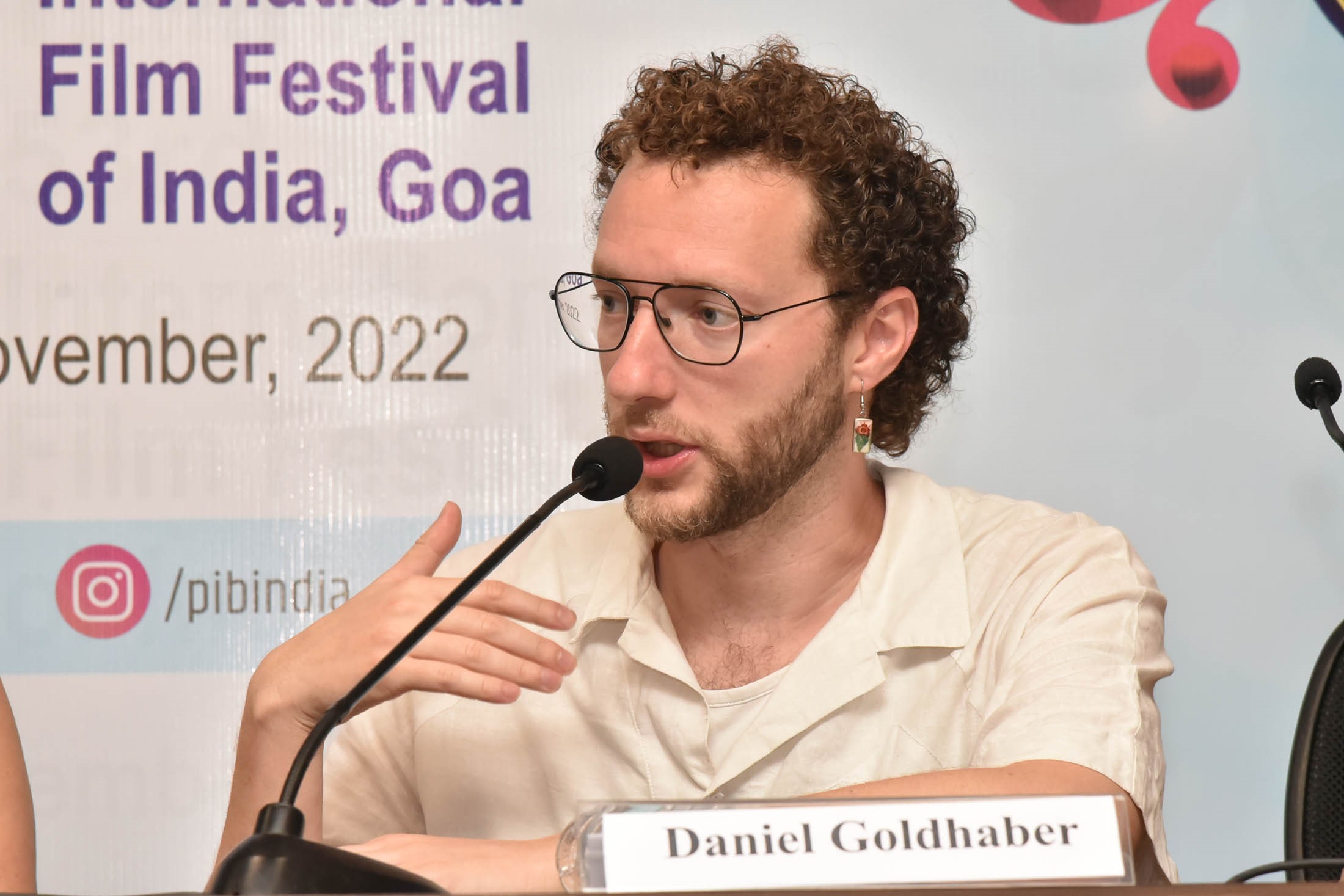
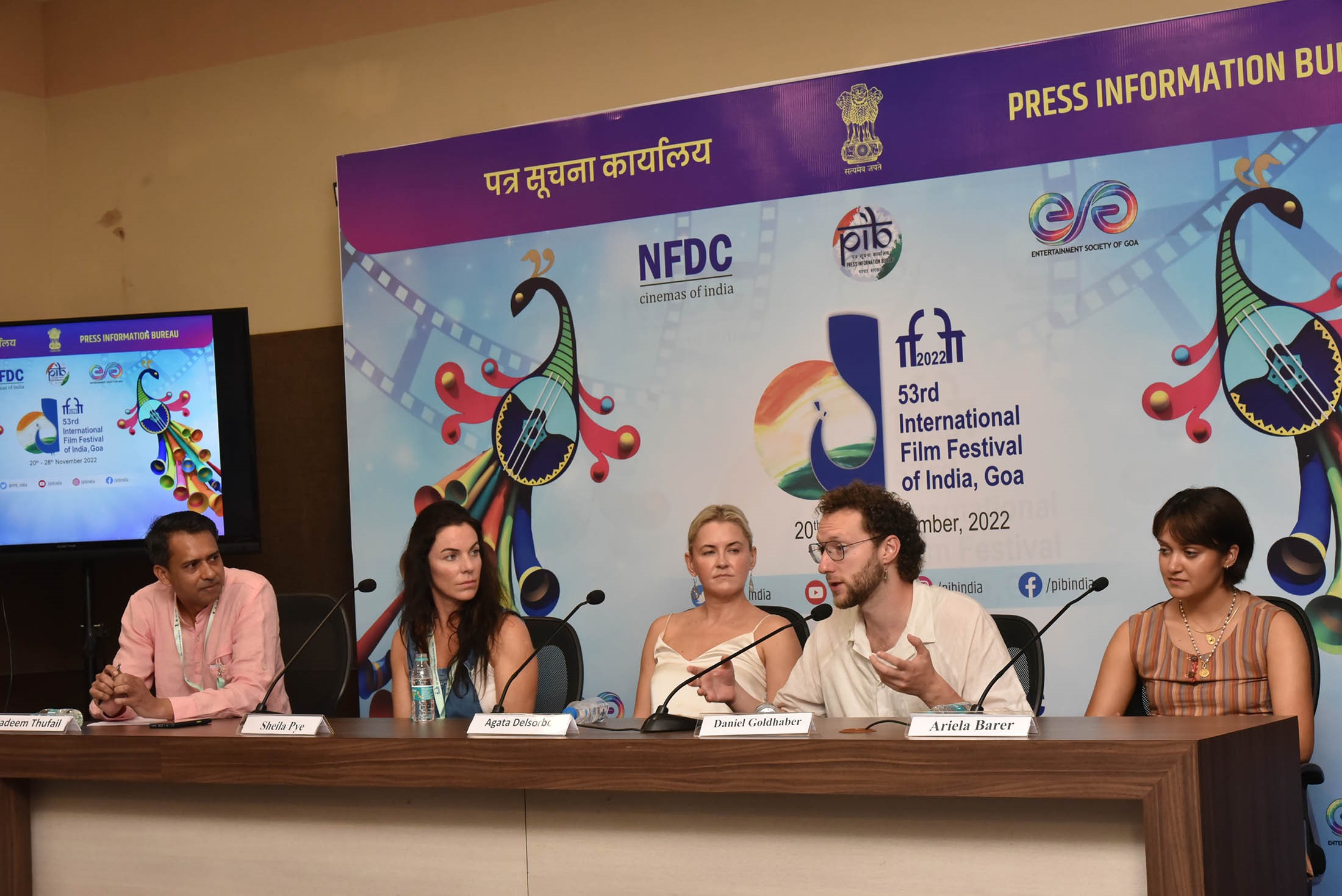
 There is no magic bullet or immediate remedy to tackle climate change.  Only the right kind of conversations and interventions are the key.  Through ‘How to Blow Up a Pipeline’ we are trying to provoke the right conversation on this burning issue, said Director of the movie Daniel Goldhaber.

While interacting with the media and festival delegates at the ‘Table Talk’ session by PIB on the side-lines of the 53rd International Film Festival of India in Goa, Daniel Goldhaber resolutely expressed that the film neither intends to support nor explore environment extremism. “We are trying to understand why some are being pushed to engage in environmental extremism. It also tries to be frank about the consequences of such extreme acts,” he added.  The film had its Asian Premiere at IFFI53.

 Asserting that conversations on climatic changes and tactics to face the same are very limited, Daniel added, “Such conversations are predominantly led by corporations and countries profiting from the impact of climate change.”

Emphasizing that climatic issue is an ocean we haven’t really explored, Daniel opined that the consequences of climatic change are not being felt immediately by those countries which cause the reason, but in other places in another place of the planet. “There is a massive responsibility on us to deal with that,” he added.

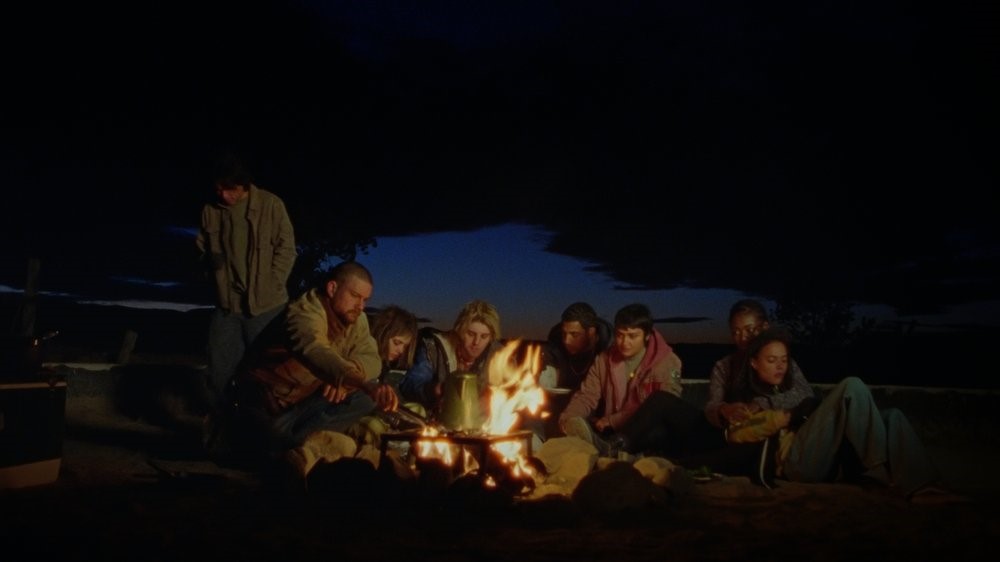
How to Blow Up a Pipeline’- A taut and timely thriller portrays the story of a crew of young environmental activists who with their radical resolve dares to execute a mission to sabotage an oil pipeline. They engage in the act as a reciprocation to the deeds meted out by the system resulting in climate crisis.

The movie is an adaptation of Andreas Malm’s 2021 book, How to Blow Up a Pipeline- Learning to fight in a world of fire’. According to Daniel, the book basically tries to advocate that every social justice movement in the global history in the last decades has had at least some component of property destruction and sabotage. “By making a movie on the book, we wanted to see what would happen if we dramatize the theme though it is fundamentally different from the book, he added.

Narrating the reason for making a movie on a subject, which is the defining issues of our times, Daniel Goldhaber said he had always been looking for a story on climate activism since he is so accustomed to the subject. “My parents are climate scientists. I have been brought up in an environment knowing climatic changes and the activisms associated with it.”

Sharing his joy over the screening of his movie in IFFI53, Daniel said the film is an American film, completely based on an American concept adapted from an European book, but it is always great to get the movie propagated at Asian as well as other countries since the issue is universal.


About the movie

Synopsis: A crew of young environmental activists execute a daring mission to sabotage an oil pipeline in this taut and timely thriller that is part high-stakes heist, part radical exploration of the climate crisis.

Daniel Goldhaber is a director, writer and producer based in Los Angeles and New York.He graduated from Harvard University where he studied Visual and Environmental Studies. Goldhaber’s first feature was ‘Cam’ (2018). Goldhaber was named as one of Filmmaker

‘How to Blow Up a Pipeline’ premiered in the Platform Section of Toronto International Film Festival.

* * *

Powerhouse behind Good American and SKIMS

Joining as a guest in season 14 of Shark tank, Emma Grede is a self-made businesswomen and the first black women to hold an investor position on the popular ABC show, Shark Tank.

In 2008, she established the marketing firm ITB Worldwide for fashion and entertainment.

She is also known for brands such as SKIMS, Good American and Safely.

She is also the chairwoman of the Fifteen Percent Pledge, a campaign that calls on stores to provide Black-owned firms 15% of their shelf space.

The Kardashian clan

Grede is a close business partner with the Kardashian-Jenner family, being the co-founder and CEO of Good American, a size-inclusive clothing line, in 2016 with Khloe Kardashian.

She is a founding partner and the chief product officer of shapewear company SKIMS, owned by Kim Kardashian where her husband is the CEO.

Along with Kris Jenner, she also co-founded the plant-based cleaning company Safely.

History and the start of the career

Born and raised in East London, England by a single mother, she started a side job when she was 12 years old and used her savings to purchase fashion magazines.

She attended the London College of Fashion to study business and left after landing an internship at Gucci.

Post that she quickly drew the attention of Inca Productions, one of Europe’s top producers of fashion shows and events.

Emma oversaw the department that handled sponsorship and endorsement deals after beginning as a producer.

She helped Inca establish the field of “designer collaborations,” which are partnerships between high fashion and consumer brands.

She did this by working with some of today’s top designers, including Alexander McQueen, Christopher Kane, Vivienne Westwood, and Zac Posen, as well as companies like Chivas, Mercedes-Benz, and Sky.

itb

Emma was appointed managing director of the newly established Independent Talent Group and Saturday Group joint venture, ITB, which represents brands’ interests in the entertainment industry, in 2008.

She was appointed CEO of ITB Group when the company bought the licensing firm Brand 360 in 2010.

She is currently the chairman of the business, which has offices in London, New York, and Los Angeles and serves customers like H&M, Calvin Klein, and Net-a-Porter.

ITB Group is active in the fields of artist representation, brand development, and entertainment marketing.

Good American and beyond

As a co-founder she established the Good American company in 2016 with Khloe Kardashian .

It is a US-based luxury clothing brand that supports the idea of a healthy physique and offers a wide range of sizes.

Sales of upwards of $1 million on the first day of the brand’s launch in October 2016 made it the largest apparel launch in history, further demonstrating a void in the market before Good American’s entry.

Instead of the straight body found in the traditional fashion establishment, Good American has been created to serve to a curvier, sexier, and stronger type of woman.

The company backs the nonprofit Step Up, which assists young women in reaching their full potential.

Soon after collaborating with Khloe’s sister and celebrity Kim Kardashian, they launched SKIMS, a all-women type shapewear affordable by the masses.

Recently she also collaborated with Kris Jenner herself for the plant based cleaning company Safely.

Emma Grede with her husband Jens Grede and four children, Grey, Lola, and twins Lake and Rafferty

Today, due to accumulating massive amount of success with so many brands, Forbes declared Emma Grede as one of the top 100 in America’s self-made woman.

Currently she has a net worth of $360 million and is happily married to Swedish entrepreneur Jens Grede. the couple reside in Los angles with their four kids.

Powerhouse behind Good American and SKIMS

Joining as a guest in season 14 of Shark tank, Emma Grede is a self-made businesswomen and the first black women to hold an investor position on the popular ABC show, Shark Tank.

In 2008, she established the marketing firm ITB Worldwide for fashion and entertainment.

She is also known for brands such as SKIMS, Good American and Safely.

She is also the chairwoman of the Fifteen Percent Pledge, a campaign that calls on stores to provide Black-owned firms 15% of their shelf space.

The Kardashian clan

Grede is a close business partner with the Kardashian-Jenner family, being the co-founder and CEO of Good American, a size-inclusive clothing line, in 2016 with Khloe Kardashian.

She is a founding partner and the chief product officer of shapewear company SKIMS, owned by Kim Kardashian where her husband is the CEO.

Along with Kris Jenner, she also co-founded the plant-based cleaning company Safely.

History and the start of the career

Born and raised in East London, England by a single mother, she started a side job when she was 12 years old and used her savings to purchase fashion magazines.

She attended the London College of Fashion to study business and left after landing an internship at Gucci.

Post that she quickly drew the attention of Inca Productions, one of Europe’s top producers of fashion shows and events.

Emma oversaw the department that handled sponsorship and endorsement deals after beginning as a producer.

She helped Inca establish the field of “designer collaborations,” which are partnerships between high fashion and consumer brands.

She did this by working with some of today’s top designers, including Alexander McQueen, Christopher Kane, Vivienne Westwood, and Zac Posen, as well as companies like Chivas, Mercedes-Benz, and Sky.

itb

Emma was appointed managing director of the newly established Independent Talent Group and Saturday Group joint venture, ITB, which represents brands’ interests in the entertainment industry, in 2008.

She was appointed CEO of ITB Group when the company bought the licensing firm Brand 360 in 2010.

She is currently the chairman of the business, which has offices in London, New York, and Los Angeles and serves customers like H&M, Calvin Klein, and Net-a-Porter.

ITB Group is active in the fields of artist representation, brand development, and entertainment marketing.

Good American and beyond

As a co-founder she established the Good American company in 2016 with Khloe Kardashian .

It is a US-based luxury clothing brand that supports the idea of a healthy physique and offers a wide range of sizes.

Sales of upwards of $1 million on the first day of the brand’s launch in October 2016 made it the largest apparel launch in history, further demonstrating a void in the market before Good American’s entry.

Instead of the straight body found in the traditional fashion establishment, Good American has been created to serve to a curvier, sexier, and stronger type of woman.

The company backs the nonprofit Step Up, which assists young women in reaching their full potential.

Soon after collaborating with Khloe’s sister and celebrity Kim Kardashian, they launched SKIMS, a all-women type shapewear affordable by the masses.

Recently she also collaborated with Kris Jenner herself for the plant based cleaning company Safely.

Emma Grede with her husband Jens Grede and four children, Grey, Lola, and twins Lake and Rafferty

Today, due to accumulating massive amount of success with so many brands, Forbes declared Emma Grede as one of the top 100 in America’s self-made woman.

Currently she has a net worth of $360 million and is happily married to Swedish entrepreneur Jens Grede. the couple reside in Los angles with their four kids.

Web series is the new favorite entertainment source among Indian youth.

The OTT platforms and web series are getting increasingly popular among the youth especially during the COVID -19 lockdown and also post pandemic too. Many research points out that the OTT platforms are a much more customized medium than television and the youth can more relate to the content of the new breed of web series. The recent breed of Indian web series is causing a paradigm shift from traditional television viewing among millennials. It’s a further shift of a traditional audience of a film from 70mm theatre screen and 40 inches television to ultimately in 6 inches mobile screen.

A web series is a series of scripted or non-scripted online videos, generally in episodic form, released on the Internet and part of the web television medium”.  To put it simply, a web series is a series of video episodes that are released over time to tell a story, over the internet.

A survey conducted by Adamas University stated that.

Netflix is the most popular platform with 62.8% followed by Amazon Prime with 53.1% and Hotstar (51.3%). However, MX Player and Hoichoi are not far behind. Some not so popular names include TVF, Addatimes, Popcorn, Viu, Zee5, etc. Voot is being watched by 21% of the respondents.

The survey also found out that the comedy genre was preferred by 82% of the respondents whereas as many as 75% said they also like romance genre. The other popular genres which the audience desired are action, crime, and drama. A small portion of the audience said they should bring out more content based on sci-fi and horror stories. So, we also have viewership for and space for such content and it also provides a scope for profits. But, the comedy and romance genre dominates. So, while making web series, the producers can focus on diverse content to attract a larger audience.

Some of the most popular among the respondents are Sacred games, Byomkesh, Kota factory, Little things, Girl in the City, Mirzapur, Stories by Tagore, A Family man, Ghost stories, etc. So, we can say that the youth are not only consuming international content but also Indian content.

Censorship of Indian Films

N kavya

In India, films are censored by the Central Board of Film Certification (CBFC), a statutory censorship and classification body under the Ministry of Information and Broadcasting, Government of India. Films should be certified by the board to be publicly exhibited it in India, including films shown on television.

History -:

Film censorship, the control of the content and presentation of a film, has been a part of the film industry for almost as long as it has been around. The activists of current society continue to broaden the First Amendment rights for the film industry allowing the art to be restricted to a certain limit.[24] Britain established film censorship in 1912 and the United States followed a decade later. Other early efforts of censoring the film industry include the Hays Code of 1922 and the Motion Picture Production Code of 1930.

The Film Fraternity – :

Films are considered a great medium of communication with people. With the development and progress of society and also with the progress in the field of science and technology, films have undergone a sea change and by adopting all the available technologies, have been able to reach the masses and are also significantly contributing to the social and cultural development of the country. In this way, the films are equated with the Press as Press is also considered a great medium of communication.

The Constitution-:

Article 19(1) of the Indian constitution ensures the right to freedom of speech and expression for all. Hence, this right is also applicable to moviemakers as well as writers. Article 19(2) specifies that freedom of expression should not threaten the sovereignty and integrity of the Nation. Censor Board was established based on this principle.

Central Board of Film Certification (CBFC) -:

A motion film is certified by CBFC, the regulatory authority in India, under Sections 5A and B of the Cinematograph Act, 1952. CBFC certifies and differentiates movies as ‘U (Unrestricted Public Exhibition)’, ‘U/A (Parental Guidance for children below the age of 12 years)’, A (Restricted to adults), and S (Restricted to any special class of persons).

NECESSITY OF CENSORSHIP -:

1. Influences the young -:
Nowadays, most movies have unrealistic scenes. Violent scenes that motivate young viewers to copy the tasks their heroes perform on screen may cost them their lives. movies that claim that the consumption of drugs is injurious to health are promoting the use of drugs as young minds grow curious to try them in real life. It is better if such scenes are censored. Children are also watching ‘A’ certified movies, filled with full of violence. The accessibility to movies has increased considerably. So there is a need to remove scenes of too much violence and vulgarity.

2. Tackles the unacceptable -:
If a part of a movie contains scenes or language that cannot be accepted by people of all religions, then there will be calls to ban the movie and a riot may break out. So, to avoid them, the government has set up a board that will censor those unacceptable parts. If there is no censorship, there are dangers that movies that hurt the sentiments of certain sections will be out in public. This can lead to violence and threatens public order.

3. Keeps children safe -:
Censoring certain parts of movies helps keep children away from hearing and seeing inappropriate things. Nowadays, children are addicted to watching TV. When a movie is shown on TV — and most movies are these days — children are exposed to it. Inappropriate scenes or a string of wrong words can teach them all the wrong things and have a bad influence. As a society, we have a responsibility to protect children from being exposed to dangerous content.

4. Maintains harmony -:
Scenes that make a travesty of history or create friction amongst people should be completely removed. The case of the movie, Padmaavat, which was released in January 2018, is the perfect example of the need of censoring movies to maintain communal harmony.

DISADVANTAGES OF CENSORSHIP -:

1. An art -:
The arts do not influence people’s thoughts and feelings, let alone their actions unless they connect with something already present in those people’s personalities or experiences. People choose what art they will look at, what movies they will watch, what games they will play, or what sites they will visit, because of who they already are. Cinema, like other art forms, is a medium for expression. Filmmakers translate their vision onto the big screen through months or years of hard work. Thus, to snip off portions that are undesirable in a movie is unfair.

2. Obstructs creativity -:
Censoring parts of movies obstructs their creative flow and nullifies the effect of the narrative. It is always up to us if we want to watch a movie or not. Censoring parts of it means breaking the million thoughts and ideas that go into building that movie. Documentaries, which are meant to expose truths, are also undergoing many cuts. Filmmakers spend a lot of money and time making movies. If parts of the movie are cut in the name of censorship, they will be discouraged to make more movies.

3. Essence lost-:
Be it a plot or sub-plot, every part of a movie is crucial. So, with a part missing, the entire essence of the movie is lost. It’s time to leave movies in the hands of the movie’s crew and not the certification board. People have the mental ability to decide what to watch and what not to watch. Government has no right to decide what people are allowed to watch.

Is censorship a necessary evil?

Censorship can be considered a necessary evil, but that doesn’t negate the freedom of speech and expression completely. The chief problem is that it seems that Censor Board doesn’t look into alternative options before banning a movie and fails to take into account a lot of mitigating factors involved in the making of the movies. While public interest needs to be protected, the private interest of the parties involved cutely be forgotten.

Loss of time and money :

Right from the script to music, to production and advertising, a lot of effort and money has gone into the movies which when banned enormously impacts the economic status of people involved, which in turn comes under the ambit of their fundamental right of livelihood. This repeated pattern of Board or Government banning or halting the release of movies, thereby consequently an appeal being filed to High Courts and Supreme Court where the ban is lifted is getting quite tedious.

Conclusion :

The Certification Board must take a balanced approach while reviewing movies and must take into account that the harmony between freedom of expression and a sense of security and peace in society is maintained. In a perfect world, censorship would not be necessary. Children wouldn’t be exposed to movies inappropriate for their age and every person would have the mental stability to recognize the boundary between movies and reality. But we don’t live in a perfect world – so while we can’t always monitor what our children watch, or predict what could inspire violent behavior, we can take steps to protect the unguarded things in society through classification and censorship.

Korean wave in India.

The  Korean wave has certainly seen a significant  rise in India during the pandemic, and K-Drama and K-Pop are seeing massive demand from fans and new followers as well. In response to the growing popularity of the Korean wave in the country, many  online and offline events are held to show people  what they are consuming online. And these extend not only  to K-Drama and K-Pop, but also  to food, beauty and culture in general.
Korean singer PSY’s 2012 viral hit “Gangnam Style” may have started the Korean wave in India, but it certainly wasn’t the origin. The existence of K-POP in India dates back to the late 90’s when in Northeastern part  in Manipur Bollywood films were not allowed to watch because law imposed by the Separatist group Revolutionary Peoples Front to make Manipur independent.Not so much offered, the locals turned to Korean content and it got it’s popularity from their on.

Increasing demand for Korean content is fueling competition between India’s Amazon Prime Video and Netflix. Amazon Prime Video is the first company to launch Parasite and Minari in the country. Hotstar, MX Player, Viki and Viu are also involved in the Korean wave effect. Discovery + launched the “Star vs Food” series featuring the Korea Tourism Organization (KTO) and K-POP idols to introduce Korean food to India. Some prominent dramas are: Crash Landing on You, Squid Games, Descendants of the Sun and many more more , the reason of these Korean content popularity is that as an audiance, Indian’s  find Korean content relatable to them.

According to Hyun Woo, Kross Komix co-founder, president and CEO Thomas Kim predicts that South Korea’s webtoon, or digital comics, will be the next big thing.Kross Komics is India’s only webtoon platform  launched in December 2019. In just about 1.5 years of operation, the app has been downloaded more than 4.5 million times, about half of which are women. “With the numerous webtoons in the romance / romantic comedy category and the world’s best-selling stories, this new format of content has become a very interesting alternative to the dramas and movies”.

“In 2020, the blockade caused by Covid-19 is said to be one of the reason to the popularity and acceptance of Korean culture in India through dramas available on multiple video streaming platforms and the different Korean music band whose craze is extraordinary. South Korea’s food exports hit a record high,  boosted by social media posts from Asian celebrities and the popularity of the movie like “Parasite” and drama like”Crash Landing on You”. The widespread  of k-pop, k-movies, and k-drama has evolved into a  fan culture, especially among the  urban youth of the country. Following k-pop music and movies, K-Food and cooking have undergone a major makeover to reach the larger Indian market. K-cuisine is all the rage, especially on social media, in the form of food challenges like Mukbang, “said Hwang Il-young, director of the Korean Culture Center India .

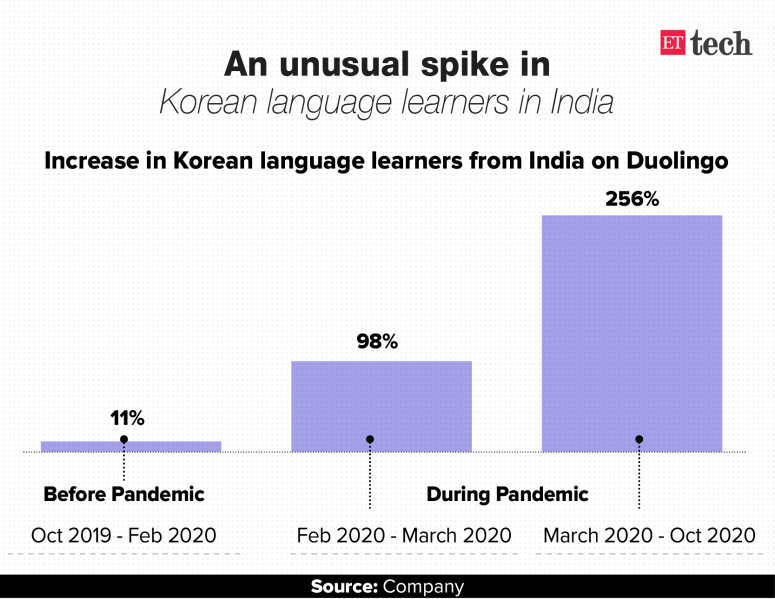
The Korean wave,  the growing global popularity of  Korean culture, swept India a few years ago, but  exploded during a pandemic. Supported by the OTT platform, which has a large investment in Korean programs, the number of people who started watching K-Drama and listening to K-Pop has skyrocketed. Recently, the language learning app Duolingo surveyed 1,013 people in 10  cities in India and found that Korean is  the fastest growing language in India. It was the 7th most popular language for Indians in 2020, but it has risen to the 5th in 2021 and will  continue to rise. Duolingo’s 2021 audio report attributed this primarily to the release of Squid Game in 2021.

The 4 phases in Bollywood Cinema

Photo by Tima Miroshnichenko on Pexels.com

Bollywood, or the Hindi film industry of India which produces almost 1000 films every year is the world’s largest film industry. From the time the first Indian sound film, Alam Ara was produced in 1931 till the present decade, this industry has a remarkably rich history of producing a variety of movies, showcasing different spheres of Indian life, in myriad themes, be it comedy, romance, thriller, horror or drama. However, there has been a changing trend in the representation of Indian films through the years. The way movies were made in the 1950s is completely different from the way it is done in the twenty first century.
In this presentation I would like to share the changes that the Indian film industry has seen over the decades.

In order to understand the trends better let us divide it into 4 phases!
The first phase would consist of the movies made from the 1940s till the early 1960s. This phase is called the “Golden Era of the India cinema” where critically acclaimed movies like Awaara(1951), Shree 420(1955) and Mother India(1957) to name a few were made. These movies revolved around the common man, who faced various struggles in life, which the audience could relate to and would finally come out as a man with the right morals. These stories showed the protagonist to be poor who even though wavered from his path (mainly due to greed and success) would finally realize his mistakes and be a better person in the end and overcome his troubles in a just manner.

The second phase is the phase from late 1960s to the early 1980s. This phase saw a distinctive shift in the general storyline of the movies. Movies like Aradhana( 1969) , Anand (1970) , Bobby (1973) and Sholay(1975) mark this period.  These movies were more action based and romantic in nature. Violence became an integral part of the movies, and a lot of emphasis was given on villains, who were basically underworld mafias. The image of the “angry young man” was introduced here, a brooding hero who was very good at delivering his punches and kicks, would destroy the villains and win the lady’s heart in the end. A lot of films during this time revolved around this basic theme.

The third phase is from the late 1980s till early 2000s. This phase saw the most diverse shifts in the movie-making procedure in India. Advanced technology was introduced in the country. The first Indian sci-fi movie Mr. India was released in 1987 which was a runaway hit. Romance was still the main theme. Romance films have been popular with the masses in India. The target audience in the romance genre is youth. As urban populations grew in the 80s, the number of youth-centric romantic comedies increased considerably.The new wave of romance movies had situational comedy that became a hit with audiences. 
A lot of movies were shot abroad in this phase. Some of the best Bollywood romance movies and romantic comedies from late 1980s to early 2000s are – Qayamat Se Qayamat Tak- 1988, Andaz Apna Apna- 1994  Dilwale Dulhania Le Jayenge- 1995, Jab we met (2007) , Dostana(2008) and others.

The last and the ongoing phase started in late 2000s. This phase introduced a lot of technical advancements in the ways movies are made. From Koi Mil Gaya(2003) Ra.One(2011) to Mission Mangal (2019) movies put a greater emphasis on the visual effects rather than the story. A lot of movies have been shot abroad, with only the mention of India.

15 mindblowing facts about hit netflix show Stranger Things

Photo by David Gomes on Pexels.com

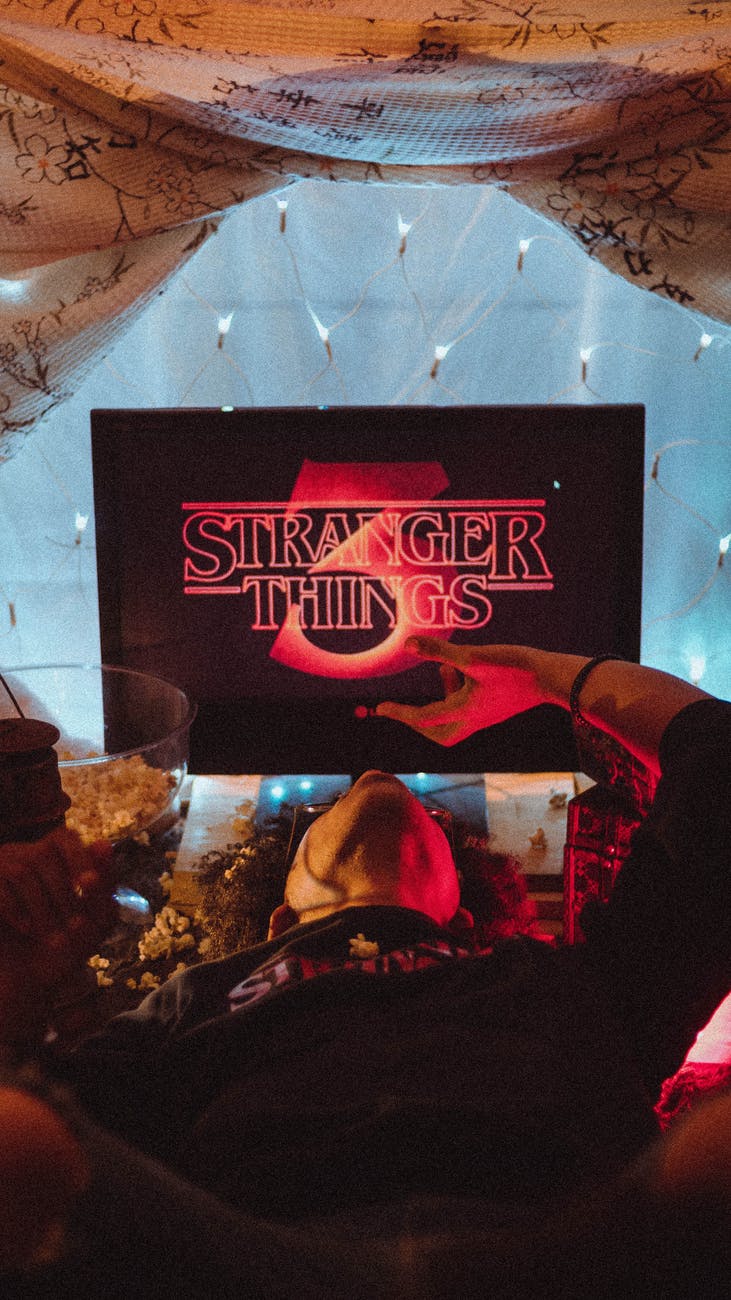
Stranger Things just broke the record for the biggest Premiere with it’s new sStranger Things just broke the record for the biggest Premiere with it’s new season and here are some mindblowing facts about the hit Netflix show –
1) Dacre Montgomery had to lose his abs to play the role of Billy for a more realistic 80s type of body.
2) Millie Bobby Brown’s first kiss ever happened on the show.
3) Charlie, who playes Jonathan Byers was detained at LAX in 2017 after they allegedly found traces of drugs on him. It even caused him to miss the Stranger Things Season 2 premiere.
4) Sadie Sink almost didn’t get her role for the reason that she was taller than the other boy leads. But the boys soon hit puberty and caught up with her height and we now love her as Max on the show.
5) Millie is deaf in one ear
6) Jonathan Byers and Nancy Wheeler are a couple in real life. Charlie Heaton and Natalia Dyer are very private about their relationship.
7) Charlie, who plays Jonathan Byers is a father. He has a son with his ex, a 41 years old Japanese drummer named Akiko Matsuura.
8) Gaten Matarazzo has the same medical condition as his character Dustin. He was born with a rare congenital disorder that affects the development of bones and teeth.
9) Stranger Things was rejected more than 15 times before Netflix said yes! The Duffer brothers said that some executives found it strange that a show would feature children as leads and adults as audience.
10) Millie almost quit acting before she got her role as Eleven
11) Over 1000 kids auditioned for the main role. 906 boys and  307 girls read scenes for the Pilot episode just to get lead roles.
12) Winona Ryder had to be convinced to accept her role as Joyce Byers. The Duffer brothers talked to Winona for 4 and a half hours and the next day she joined the project.
13) Maya Hawke, who plays Robin is a child of huge actors Uma Thurman and Ethan Hawke.
14) Almost all of the main cast members play music. Millie sings very well and sometimes even raps. Charlie, Joe, Gaten and Finn all played in bands. Caleb has two singles out. Dacre writes beat poetry music and Maya performs Indie songs.
15) David Harbor, who plays Eleven’s step dad, once fulfilled his fan’s request to take senior photos with her after she tweeted him her wish.
eason and here are some mindblowing facts about the hit Netflix show –
1) Dacre Montgomery had to lose his abs to play the role of Billy for a more realistic 80s type of body.
2) Millie Bobby Brown’s first kiss ever happened on the show.
3) Charlie, who playes Jonathan Byers was detained at LAX in 2017 after they allegedly found traces of drugs on him. It even caused him to miss the Stranger Things Season 2 premiere.
4) Sadie Sink almost didn’t get her role for the reason that she was taller than the other boy leads. But the boys soon hit puberty and caught up with her height and we now love her as Max on the show.
5) Millie is deaf in one ear
6) Jonathan Byers and Nancy Wheeler are a couple in real life. Charlie Heaton and Natalia Dyer are very private about their relationship.
7) Charlie, who plays Jonathan Byers is a father. He has a son with his ex, a 41 years old Japanese drummer named Akiko Matsuura.
8) Gaten Matarazzo has the same medical condition as his character Dustin. He was born with a rare congenital disorder that affects the development of bones and teeth.
9) Stranger Things was rejected more than 15 times before Netflix said yes! The Duffer brothers said that some executives found it strange that a show would feature children as leads and adults as audience.
10) Millie almost quit acting before she got her role as Eleven
11) Over 1000 kids auditioned for the main role. 906 boys and  307 girls read scenes for the Pilot episode just to get lead roles.
12) Winona Ryder had to be convinced to accept her role as Joyce Byers. The Duffer brothers talked to Winona for 4 and a half hours and the next day she joined the project.
13) Maya Hawke, who plays Robin is a child of huge actors Uma Thurman and Ethan Hawke.
14) Almost all of the main cast members play music. Millie sings very well and sometimes even raps. Charlie, Joe, Gaten and Finn all played in bands. Caleb has two singles out. Dacre writes beat poetry music and Maya performs Indie songs.
15) David Harbor, who plays Eleven’s step dad, once fulfilled his fan’s request to take senior photos with her after she tweeted him her wish.