SUSTAINABLE DEVELOPMENT

Sustainable Development has been the buzzword for a while now. People are constantly asking what it looks like and how to implement it. There have been many differing opinions on what sustainable development actually is, however some key principles remain:

  • The concept of sustainable development is about making sure that you live in a world where people are able to stay self-sufficient and thrive indefinitely.
  • Sustainable development does not need to take the form of major changes, but rather building upon what we already have.
  • A major component of any successful Sustainable Development project is social-justice based thinking.

The Principles of a Sustainable Development Project:

A sustainable development project is one that will allow you to reach the following principles:
-Managing resources efficiently.
-Responsible consumption.
-Treating others with respect and dignity.
These four principles are what make up an overall healthy and productive society. The management of resources, responsible consumption, and treating others with respect and dignity can be applied to almost anything we do; whether it is being environmentally conscious, being respectful of your parents, or being a good soccer player. The real issue here is that these principles go hand in hand. If we constantly abuse a resource and consume in a way that hurts the environment, we are not being respectful of the Earth. If we are being very selfish in our consumption, then we are not being respectful of our fellow human beings. Lastly, if we do not treat people with respect and dignity, then they will not be treated with respect and dignity by their neighbors.

These four principles allow us to have a healthy society. This can be seen clearly in the following quote by E. F. Schumacher: “The great first commandment is to love the Earth and that means loving it enough to take care of it for the sake of future generations”.

The way we approach development affects everyone. The decisions that we make also impacts the society, and has very real consequences for people’s lives. Poor planning of communities, for example, reduces the quality of life for the people who live in them.

Sustainable development provides an approach to making better decisions on the issues that affect all of our lives. By incorporating health plans into the planning of new communities, for instance, we can ensure that residents have easy access to healthcare and other facilities.

Sustainable development should provide a solution in terms of meeting basic human
needs, integrating environmental development and protection, achieving equality,
ensuring social self-determination and cultural diversity, and maintaining ecological
integrity. Although the concept of sustainable development has undergone certain
changes during the past, its fundamental principles and goals have contributed to a
more conscious behaviour adapted to the limitations of the environment. This is the
reason of adopting the concept in different areas of human activities. Numerous international organizations have been involved in implementation of the concept, while
it has found positive implementation locally, but it did not produce significant results
on a global scale. This fact proves environmental problems which, 30 years after the
introduction of the concept, are still ongoing. Contemporary understanding of the
concept of sustainable development is considered through the United Nations Millennium Development Goals focused on a complex global situation, such as population
growth, hunger and poverty, wars and political instability, and further degradation
of the environment. There is a huge gap between developed and underdeveloped country and many of the countries are not even close to sustainable development. Fundamental constraints of the implementation of the concept of sustainable development are the degree of socio-economic development that many countries have not yet achieved, associated with a lack of financial resources and technology, but also the diversity of political and economic goals on a global scale.

Source: https://www.unesco.org/en/education/sustainable-development
Human skills for the future of work

“Becoming is better than being.” – Carol Dweck

Empathy Mindset
  • Listening: Ask questions to understand.
  • Appreciation: Show sincere appreciation and celebration of others’ contributions.
  • Self-Awareness: Part of feeling what others feel is also about understanding your own biases and limiting beliefs.
  • Judgment: When people seek advice or share a problem, they are not looking for your criticism. 
  • Presence: Time is one of our most valuable assets, so be there fully.
Emotional Intelligence

Being aware of how your behaviour affects others is at the heart of emotional intelligence.
This means building self-awareness, self-management, social awareness, and relationship management.

Effective Communication

Consider the following principles:

  • Intention: Know what you want to say and be clear about your objective. 
  • Organization: Take the time to organize your thoughts and straightforwardly deliver them.
  • Framing: “I think, I feel” is much more effective than starting with “you,” which puts people on the defensive.
  • Affirmation:  Asking if the information makes sense may reveal a potential problem. 
Curiosity + Instigation

Curiosity is a natural part of any creative cycle. It paves the way for “possibility thinking,” rather than business as usual. 
Instigation is an invitation to challenge quick fixes, lacklustre solutions and mediocrity. 

Strategic Analysis and Analytical Thinking

Strategic analysis helps to identify complex problems by providing a top-level view into the interconnected web of what can often seem like isolated issues.
Analytical thinking enables people to suspend emotional decision making and instead look logically at evidence-based research and tests.

Complex Problem Solving

To get into problem-solving mode, you need to understand the true problem at hand, identify challenges in the way, resist simple solutions, identify constraints and pathways to feasibility, and, above all, make sure you’re open to experimentation. 

Conflict Resolution

Among the most effective skills to learn to resolve conflict are mastering deep listening, mediation and facilitation. 
Giving people the benefit of the doubt and leading with curiosity are also powerful tools. 

Negotiation and Persuasion

They are not required just for the sales team. You need to be clear about what you want and what you’re willing to let go of to get it.

Leadership

A great leader will understand that it’s not enough to build a culture, it needs to be protected and maintained. 
A great leader also needs to make difficult decisions and hold everyone, including themselves, accountable.

Reference

https://creativecloud.adobe.com/discover/article/ten-human-skills-for-the-future-of-work

The Flaws In Our Education System

Historically, the concept of education involved the sharing of knowledge and values between people. This form of education ensured that valuable knowledge was promulgated within a society, from one society to another, and from generation to generation. It focused on the importance of culture and taught skills needed to positively contribute to society through hands-on learning and observation. Children were given the freedom to explore on their own because this supported their natural ways of learning. Moreover, it bolstered unity as the teachers were always members of the same community that they were teaching. We would not be aware of countless facets of history, such as the Egyptian civilization, the Mesopotamian civilization, and the Hunter-gatherer culture if this form of education did not exist.   

So how did it all go wrong? 

The popularisation of the standardised education system as we know it today, in which children are corralled into classes based on their age and study in institutions known as schools, can be traced back to the Industrial Revolution. Nowadays, it is suitably referred to as the “one shoe fits all approach to education” and the “factory model of education”. However, if we consider the prevailing socio-economic conditions of that time, creating a standardised education system was ineluctable and economically beneficial. 

Schools were tasked with transforming their attendees from students to efficient workers who would eventually increase the quantity and quality of the labour force. The need to encourage unique skills and individuality did not exist as students would grow up to do monotonous and regulated work. As Alvin Toffler put it “the whole idea of assembling masses of students (raw material) to be processed by teachers (workers) in a centrally located school (factory) was a stroke of industrial genius”. At the time, it was thought that the best to produce efficient workers was through the teaching of certain subjects that curricula makers deemed “crucial” using the same method and pace for all students. Students were compelled to utilize rote learning and take graded exams that decided their “intelligence” and potential in life.   

The egregious problem arises when we notice that schools continue to espouse this myopic view on education even after over a hundred years. A hundred years ago, things like the radio, jet engines, helicopters, credit cards, car seat belts, personal computers, smartphones, and the internet did not exist. In a world that undergoes major transformations constantly, how can we be satisfied with this archaic and pernicious education system in the 21st century? 

In today’s world of modernity, complexity, fastidiousness, globalization, and innovation, the flaws of our education system are more conspicuous than ever. No two students are the same. This monolithic and iniquitous system neglects the fact that students have different skill-sets, they learn at different paces, they come from different backgrounds, and wish to pursue different careers in their lives. Undoubtedly, there are numerous instances in which students benefit from and even thrive in the current education system. There are also countless children that long to go to school but don’t have the opportunities or resources to do so. However, there are too many instances in which students, despite arduous effort, struggle in and are lobotomized by this sclerotic education system. They are made to feel inadequate. They are made to believe that they are “slow” and will always flounder.    

Students acquiescently regurgitate vast amounts of information on exams with minimal innovation. These exams, more often than not, test the memorization skills of students, rather than serve as a platform on which they can showcase their understanding of a concept. Students who do well in these exams have the hubristic belief that they are “winners” because society says so and those who don’t do well are humiliated and considered “losers” by society. While it is understood that learning requires the amassing and retention of information, any information that is not understood becomes an undigested burden. The misconception that good grades are the only path to success causes unnecessary pressure on students. 

The strictures imposed by this education system curtails creativity and originally. Concurrently, it encourages conformity, rigidity, and conventionality. It assiduously ignores essential modern-day lessons, such as financial literacy, life skills, mental health, critical thinking, empathy, collaboration, and countless others. This results in students feeling disconcerted when they face the precarious reality of after-school life. It provides students with a series of conclusions, rather than a way of thinking. 

To truly change this standardised educational system, we have to abandon the ostensible idea that it is still a product of logical necessity or scientific insight. The hunter-gatherers adapted their education system to their needs. The education system was modified to cater to the needs of the industrial revolution. Likewise, our education system must change too so that students can truly be prepared for the future. This will certainly alleviate any antipathy held by students towards education and will make education and learning synonymous again. 

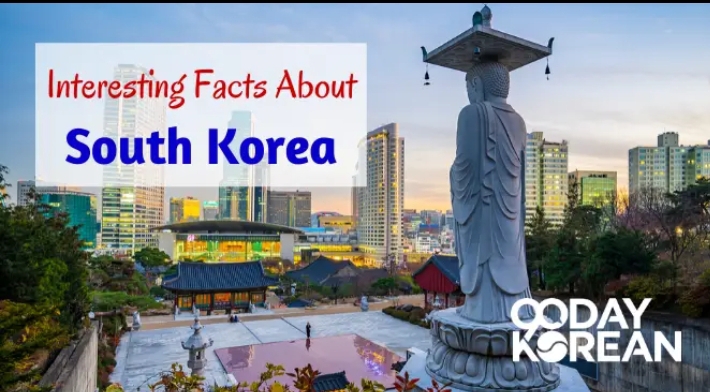
5 Interesting things you should know about South Korea

South Korea is like a dream country for all youngsters out there!! because of “K-pop” and specially “BTS”, every teenager girl wants to move South Korea. So here are the 5 most interesting things you should know about South Korea before moving.

1. Koreans never smell bad

Korean people lack a gene which produces smelly odour due to sweat. Hence they don’t smell bad at all even if they are sweat a sea. Don’t you think it’s amazing, after working all day, you are sweating like a sea but you won’t smell bad at all!!

2. Shutter sound while taking picture

You can’t turn off the shutter sound while taking picture. If you bought a smartphone from South Korea no matter what you do or how much you try but, you can’t turn off the shutter sound while taking pictures. This is for safety reasons, if someone is taking your picture secretly or without your permission then, this shutter sound will help you to know that someone is clicking your picture.

3. Your age

In Korea you are 1 or 2 years older that your actual present age. Koreans consider a year in the womb as counting towards their age, so everyone is one year old at birth. Everyone gets one year added to their Korean age on New Year’s Day.

Formula for calculating your Korean age = Current year + 1 – Birth year

4. Safety light spots

Whenever you feel unsafe while walking alone on streets of South korea don’t panic, you just have to stand on safety light spot positions which are under cctv observation 24/7 then, no one will dare to do anything to you. These safety light spots will monitor you continuously so no one can harm you and you will be safe until you call someone for help. Don’t you think this is the most coolest thing in South Korea!!

5. Don’t wear any cleavage-baring tops

Even if there are tops or blouses with cleavage, women take extra precaution generally when sitting, bending, and bowing. But in Korea if you wore a top with cleavage, you will have to face a negative comments because it’s consider sexual or too revealing.
For girls, don’t wear low cut shirts or expose your shoulders. This is considered very provocative. But wearing short skirts consider as cute.

Promise For The Future: ‘RENEWABLE ENERGY’.

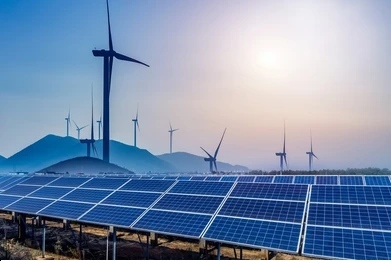
SOLAR POWER:

With energy consumption being the buzzword in developing economies around the world, fears of an energy crisis looming ahead are not totally unfounded. The non-renewable nature of fossil fuels makes complete dependence on these for future energy needs a very dicey affair. Renewable energy sources are the best bet in the scenario. And what can be a better renewable resource than the sun?

In a country like India, if the abundant amount of sunlight available is harnessed properly it could mean an end to the energy crisis. It is the most abundant source of energy. The average global solar radiation is around 5 kilowatt hours (KWH) per square meter per day with the sunshine hours ranging between 2300-4300 per year. India is in the sunny belt of the world. The country receives solar energy equivalent to more than 5000 trillion KWH per year, which is far more than its total annual energy consumption.

Besides, it is a renewable and clean energy source. Taking both environmental and economic cost, solar energy works cheaper than fossil fuel resources. Once we master techniques to harness solar energy, it can be a vital source of power on all planets. Solar energy could be a viable source of power generation for the next 1000 crore years. There are many technologies available for conversion of solar energy into solar power. For instance, solar photovoltaic (SPV) technology, photo galvanic cells, solar steam generators (solar concentrating power), solar tower or solar chimney, radio micrometers and thermopile are some of them.

ELECTRIC MOTORS:

Imagining a future where clean air is no longer a dream and our cities are not smog filled concrete jungles, could well become a reality in the coming years if the world begins to increasingly adopt the use of cleaner options like alternate-fuel vehicles . The rise in economic activity and the burgeoning population have led to a tremendous demand in the transport sector, especially in urban India. By 2025, India’s urban population is expected to grow five fold to a staggering 200 million while pollution is expected to grow seven times. With this tremendous growth has emerged a very critical issue of keeping air and noise pollution in urban areas under control.

If we can have three lakh electric vehicles (EVs) on the roads by 220 including three wheelers, cars and scooters, we would have reduced pollution by 16 lakh metric tones, saved ? 3700 crores in foreign exchange earnings and substantially reduced healthcare costs. Small electric buses, three wheelers and electric scooters are ideal for city mobility in India but it could take between 5-10 years before they become viable for commercial use.

Image Source – google.

The electric vehicle uses electric energy which is stored in batteries that feed the electric motor. Driving an electric vehicle is easier and more relaxing than a traditional one because it has no speed-gear and functioning noise. It is enough to turn the key and press the acceleration pedal; you need only two driving pedals- accelerator and brake.

The need to reduce air pollution along with the availability of new advanced clean alternative to internal batteries have allowed EVs to reappear as a combustion vehicles. Electric drive systems are virtually non-polluting and extremely energy efficient. While internal combustion vehicles can convert about 20% of the chemical energy in gasoline into useful work, 75% or more of the energy from a battery has productive power in an electric vehicle.

Electric motors can also provide power at almost any engine speed. While internal combustion engines must be revved up to high rpm to achieve maximum power electric motors provide nearly peak power even at low speeds. this gives electric vehicles strong acceleration performance from a stop.

The emergence of newer batteries has driven the cost and performance EVs. There are several major types of automotive batteries available and under development, from advanced lead acid batteries like those that start our internal combustion engines to lithium polymer bateries. Although recharging could be a consideration, home recharging systems are available giving EVs an added advantage.

Apart from being environment-and -user friendly, there are several other reasons for alternate fuel cars to flourish in India. Firstly, electricity for EVs can be produced from various sources for which India has natural resources and does not need to depend on the import of oil. Although EVs will not replace LPG, CNG or petrol and diesel for intercity use, the infrastructure required for EVs in the form of electricity distribution infrastructure is already available in all our cities and minimum costs are required to install additional capacity.

EVs are zero polluting, easy to handle and have low maintenance costs. EVs will not degrade with time and they are always zero polluting unlike conventional vehicles where the pollution increases with engine degradation, poor maintenance and adulterated fuel.. India also has the maximum market potential for EVs owing to an established auto component infrastructure, low manufacturing and R&D cost, mechanical hardware availability, high urban congestion and the presence of domestic market. The industry could significantly gain from rising exports by 2010, and with appropriate government support, could transform the landscape of urban India by reducing pollution, improving public health, creating employment opportunities and impacting society.

In order to do that, a holistic approach involving the government, public and auto majors is needed to promote EVs in India. Appropriate government policies during the next five years and adequate support from business houses and institutions. for instance, purchasing a fixed percentage of vehicles for their fleets and offering subsidies and tax exemptions, will go a long in promoting the industry in India. Finally, people have to become more informed about these technologies. The media must play its role in educating the public about alternate fuel vehicles and their advantages.

Want to be a CYBORG….?

Cyborg can be defined as an organism that has enhanced ability due to the integrated of some artificial components or technology. The concept of a man-machine mixture was widespread in science fiction before World War II. As early as 1843, Edgar Allan Poe described a man with extensive prostheses in the short story “The Man That Was Used Up”. In 1911, Jean de La Hire introduced the Nyctalope, a science fiction hero who was perhaps the first literary cyborg.

Actual cyborgization attempts :
Yuval Noah Harari, a professor at the Hebrew University of Jerusalem said- “ Humans may upgrade themselves to become cyber within the next 200 years merging man and machine to potentially live”. Although many technology companies have announced the plans to fuse machines and humans. The fact is the transformation has already begun. Here are some fascinating example from mankind who are already famous for being part human, part cyborg.

Jens Neumann
He’s the first person to have a completely artificial vision system, Neumann’s electronic eye is connected directly to visual cortex through brain implants enabling him to see lines and shapes. Latest reports say his vision has since then been restored.

Neil Harbisson
The world’s first ‘eye-borg’ to perceive colour as a sound on a musical scale, has an antenna attach it to his skull that converts light waves into sound waves, making it possible for the otherwise colour-blind cyborg artiste to conduct colour concerts, among other things. Also he co-founded the Cyborg foundation to help humans become cyborgs and different cyborg rights.  

Oscar Pistorius
Often called ‘The blade runner’ Pistorius created history as the first double amputee to compete against able body runner at international level in 2007. Since ‘the fastest man on no legs’ has competed at World Championships in Athletics 2011, which he won; Summer Olympics 2012 for able-bodied and won a gold medal at the Summer Para Olympics 2012.

Kevin Warwick
A cybernetics professor at University of Reading (UK ), he is one of the world’s foremost aspiring cyborgs, famous for experimenting with implants, including installing a microchip in his arm which allows him to operate select electrical gadgets.

Jesse Sullivan & Claudia Mitchell
Sullivan is equipped with bionic arm, which is connected through nerve-muscle grafting. But that’s not the real achievement. Sullivan can control the limb with his mind and experience warmth, coolness and the pressure of his grip. Claudia, the world’s first woman cyborg after getting outfitted with bionic limb.

Animal cyborgs

The US-based company Backyard Brains released what they refer to as the “world’s first commercially available cyborg” called the RoboRoach. The project started as a senior design project for a University of Michigan biomedical engineering student in 2010, and was launched as an available beta product on 25 February 2011.

The RoboRoach was officially released into production via a TED talk at the TED Global Conference; and via the crowdsourcing website Kickstarter in 2013, the kit allows students to use micro stimulation to momentarily control the movements of a walking cockroach (left and right) using a Bluetooth-enabled smartphone as the controller. Several animal welfare organizations including the RSPCA and PETA have expressed concerns about the ethics and welfare of animals in this project. In the late 2010s, scientists created cyborg jellyfish using a microelectronic prosthetic that propels the animal to swim almost three times faster while using just twice the metabolic energy of their unmodified peers. The prosthetics can be removed without harming the jellyfish.

BIOTECHNOLOGY- FUTURE OF THE MODERN WORLD

Biotechnology branch of biology deals with the the techniques of using living organism or enzymes to produce useful product for human welfare.

European federation of biotechnology (EFB) has has given a defination of biotechnology from both traditional and modern molecular biotechnology point of view. The definition given by EFB is as follows :

The integration of natural science and organisms,cells,parts thereof, and molecular analogues for products and services”

Engineer Karl Ereky first coined the term ‘biotechnology‘ in 1919, meaning the production of products from raw materials with the aid of living organisms 

Humans have used biotechnology since the dawn of civilization. Egyptians used yeasts to bake leavened bread, the Chinese developed fermentation techniques for brewing and cheese making, and the Aztecs used Spirulina algae to make cakes. Today, when most people think of biotechnology, they probably think of recombinant DNA. Although much of modern biotechnology does deal with manipulating DNA, classical biotechnology began long before we even knew about genes or chromosomes. What began as recipes for production of food now includes technology to enhance everything from farming to pharmaceuticals.

principles of biotechnology.

Traditional biotechnology

Traditional biotechnology refers to ancient ways of using living organisms to make new products or modify existing ones. An example of traditional biotechnology is what human beings have been doing for centuries: cloning plants. Each time a little branch is cut off from a plant and placed in soil to grow a new plant, cloning occurs. Over the past 30 years, biologists have increasingly applied the methods of physics, chemistry and mathematics in order to gain  precise knowledge.

Modern biotechnology

Modern biotechnology we are not only doing the physical manipulation at the visual level but also at the molecular level. In modern molecular biotechnology, we select the desired characteristic at the molecular level and add it to the organism’s genetic makeup. Whereas traditional biotechnology exploits  the potential of processes performed by living organisms, such as fermentation, modern biotechnology manipulates the genes of organisms and inserts them into other organisms to acquire the desired trait. 

However, both traditional and modern biotechnology share the same foundation:  the use of living organisms to enhance crops, fuels, medical treatments and other tools to help humans.

Among many, the two core techniques that enabled birth of modern biotechnology are:

1. Genetic engineering : Techniques to alter the chemistry of genetic material (DNA and RNA),to introduce these into host organisms and thus change the phenotype (physical character) of the host organisms.

2.Chemical engineering : Maintance of sterile microbial contamination free ambience in chemical engineering processes to enable growth of only the desired microbe/ eukaryotic cell in large quantities for the manufacturing of biotechnological products like antibiotics, vaccines, enzymes, etc.

Stanley Cohen and Herbert Boyer in 1972 isolated the first recombinant DNA and the antibiotic resistance gene by cutting out a piece of DNA from a plasmid( autonomously replicating circular extra- chromosomal DNA) which was responsible for conferring antibiotic resistance.

The cutting of DNA at specific locations became possible with the discovery of the so- called ‘molecular scissors’ – Restriction enzymes

Biotechnology is the emerging field nowadays and in coming future it will be the important part For the development of the country. By manipulating genes we can produce more and more useful products for the human welfare.

EDUCATIONAL OPPORTUNITIES AFTER BBA

Master of Business Administration (MBA)

MBA is the most popular choice for a graduate in management domain. The course takes the graduate one step further in the management stream and builds on the basic principles that he/she was taught during graduation. A graduate can choose to go for a particular sector or industry after MBA by choosing the correct MBA specialization as per his/her interest and requirements.

Fee Structure

The average course fee for MBA in India is around Rs. 5,00,000.

May extend beyond Rs. 15,00,000 in the top colleges with a national and international reputation

What attracts students?

i) Excellent returns

ii) Pathway to some of the most well-paying jobs available in the private sector

A New Study Suggests You May Want To Rethink That MBA

Bachelor of Legislative Law (LLB)

Many students may decide to go for an LLB after BBA. Having a degree in law along with the management skills can work in the favor of a student and help them earn more money, take up cases in their chosen specialization or switch fields completely. LLB gives graduate a wide range of career options and provides a great alternative skill set to rely on.

Fee Structure

The average course fee for LLB in India ranges between Rs. 2.5-4 LPA.

What attracts students?

•Excellent returns •Range of Salary offered by Law firms range from 25-30 LPA.

•Offers a package ranging between 5-10 LPA to 18-20 LPA for Freshers

Bachelor of Education (B. Ed.)

Students who like teaching and see their future in teaching line can purse higher education by pursuing B. Ed. courses.

Qualification Requirements

 Graduation from a recognized institute

Drawbacks of joining B. Ed after Graduation

• Only eligible to apply for teaching in class I-VIII

• Not eligible to apply for teaching in Higher Secondary Schools or Colleges

Must hold Master Degree to become eligible for teaching in Higher Secondary Schools or Colleges

CLIMATE CHANGE AND PLANT SCIENCE

When prevention of climate change is uncertain, preparation is necessary .

CLIMATE CHANGE

Climate change continues to cause unusual and unpredictable weather around the world.
Longer drought, flooding, major stroke, snowfall, temperature extreme will increase earth’s temp upto 3-4 ‘C.

Rising CO² level and warmer earth means plant will grow bigger (more surface area of leaves) and thus plant consume more water.
Thus, we face water scarcity.

Smog contain Ozone particles and causes various problems – asthma, heart disease, skin cancer etc.

Plant sciences is the study of plants in all their forms and interactions using a scientific approach.

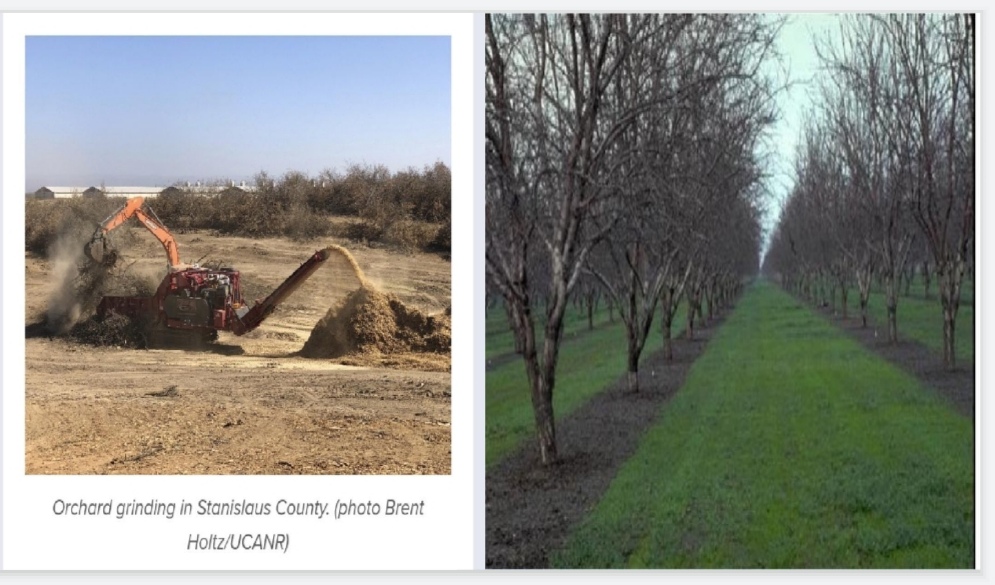
California’s Almond Orchard:-

In the past, for removing and disposing of the old trees we burn them in the field. But now Old trees are ground, chipped and turned back into soil before New almond tress are planted.
It help almond orchard to be more sustainable and resilient to drought and also increasing carbon content in soil.

Whole orchard recycling result compare to burned treatment :
1) Sequester 5 tons of carbon per hectare.
2) Increase water-use efficiency by 20 percent.
3) Increase crop yields by 19 percent.

scientists from the BBSRC managed to breed a new fast-growing broccoli that no longer relies on a period of cold weather to flower, and goes from seed to harvest in only 8-10 weeks. This discovery is especially relevant for broccoli, as it is flower buds that we eat.

Many terrestrial, freshwater, and marine species have shifted their geographic ranges, seasonal activities, migration patterns, abundances, and species interactions in response to ongo­ing climate change.

Increased carbon dioxide tends to suppress photo-respiration in plants. 

  • C⁴ plant adapt better for high CO² Concentration and photorespiration. 
  • It make 4 C sugar (OAA) thus fix more CO² and produce high amount of energy. 
  • It suited for hot dry climate.
  • C4 plants include such low-latitude crops as maize, sorghum, sugar-cane, and millet, plus many pasture and forage grasses. 
  •  Better adapt for photo oxidation. Prevent photooxidation due to kranz anatomy.

THE CLIMATE CRISIS HAS ALREADY BEEN SOLVED. WE ALREADY HAVE A FACTS AND SOLUTIONS . ALL WE HAVE TO DO IS WAKE-UP AND CHANGE                     – Greta Thunburg

UNLOCK 4

India on Saturday issued fresh guidelines of lock down in ‘Unlock 4’, allowing opening up of more activities in areas outside the containment zones, marking gradual opening of the country and economy amid coronavirus disease (Covid-19) outbreak. Many features of this unlock down had changed or improved than previous ones. New guidelines had make many shut down industry to give a new start. According to MHA the new guidelines are based on feedback received from states and UTs and extensive consultations held with related central ministries and departments.

Here is the list of institutions which are free to have a start-

  • Metro trains will be allowed to resume services in a graded manner from September 7.
  • Open air theaters will be allowed to open from September 21.
  • Social, academic, sports, entertainment, political, cultural and religious functions and gatherings will be allowed with a maximum of 100 people from September 21. Face masks and social distancing are however mandatory in all such gatherings.
  • No restrictions on inter-state and intra-state movement of people and goods. No separate permission or e-permits will be required.
  • Schools and educational institutions will remain shut till September 30 and online classes will continue. However students of classes 9 to 12 may be permitted to visit their schools, outside containment zones only, to take teachers’ guidance. This will require a written consent of their parents.
  • 50 per cent of teaching and non-teaching staff can be called to schools at a time for online teaching.
  • Skill or entrepreneurship training will be allowed in institutes registered with the government.
  • Research scholars and post-graduate students of technical and professional programmers who need laboratory practicals will be permitted by the government.
  • Movie theaters, swimming pools, entertainment parks will remain shut.
  • International air travel of passengers will remain banned, except for those allowed by the centre.
  • Only essential services will be allowed in containment zones. Lock down will continue in the containment zones till September 30.

This is a huge step taken by centre to create an environment of safety and spirit to fight this virus. The wait for vaccine is still not known but one thing which we all can do is to follow these guidelines to keep our self and others safe.

Don’t let the desire of a successful future destroy your present

Vaishali Singh ( Cheenu Singh Rathore)

This four lettered word “LIFE” is the synonym of living and nothing else, don’t waste it about thinking over the things which have either happened in the past or more likely have not even happened yet, this is a constantly changing world, everything is temporary in this world even you and me, we are perishable, then what are you doing why are you wasting your life over thinking of the things which are just confined within your mind doors, they are not reality they just exist within in your mind most of the problems you have in your life have originated from overthinking, be in now and enjoy this moment, live this moment because this moment is life, don’t take it too seriously, don’t put too much pressure on your mind, don’t let the desire of a successful future destroy your present, if you think that a sad present can give you a beautiful life then you’re wrong because life is now and if you can’t make yourself happy being in this moment then how can you expect it from yourself that attaining a certain goals will make you happy? If something doesn’t satisfy you today then how can you think that it will give you a beautiful and peaceful life, most of the people destroy their life either thinking about their past or caring about their uncertain future, we human being have only 5 senses, we can never analyse what’s going to happen in the future the only thing which is in our hand is to take actions but we can never predict the result of our actions and most of times the way we perceive our future is not exactly how it turns out to be, now the current scenario of world is a good example of the uncertainty of life, no one knew that this would happened in the beginning of 2020 all of us had a tons and tons of plans for our new year but our plans got failed they turned out to be something called “LOCK DOWN” we are at our home today, probably many of us had a lot of plans and wishes with our family, or friends but today it’s not safe to step out of our homes unnecessarily, this is life man, this is the reality and nothing can change the fact no matter how many plans you make, no matter how much time you waste in figuring out your life, at the end you will have even more questions than before. So live your life instead of worrying.

Key to being Financially Independent in India

We all work right from graduating till retirement for five days a week -sometimes six days – only to spend what we have earned. In the midst of this daily hustle, how much time do we actually devote to plan for financial independence? Hardly any! Is financial independence a plan only for retirement? The answer is NO.

Photo by RODNAE Productions on Pexels.com

The first step towards financial independence is to not procrastinate it. A single drop of penny today will contribute to an ocean of financial resource. Then comes the below mentioned road map to a start of a great solo journey of life.

  • Financial planning – First, define clear and realistic financial goals like child’s education or a comfortable retired life. It is critical to factor in inflation while drawing up your financial plan. If you are planning your child’s education, you should be aware that a professional degree that costs Rs.4 lakhs today, is likely to cost around Rs.20 lakhs, 10 years from now.
  • Personal research – While a qualified financial planner can give you investment advice, the importance of doing your own research cannot be undermined. You can rely on credible websites to understand the pros and cons of each financial instrument.
  • Personalized financial plan – A common mistake is to opt for a particular plan simply because others are doing so. An investment plan must be customized according to personal factors such as your risk appetite, financial goals and life-stage needs.
  • Adequate time horizon – It is necessary to align the investment plan and the expected time frame for getting returns out of it. It is irrational to expect immediate returns from long term products like insurance, PPF etc.
  • Risk diversification – A smart investor would always ensure that the risk is distributed over a variety of instruments. A high risk instrument such as, an equity should ideally be balanced with a stable one such as bonds. Your investment portfolio should be a judicious mix of equity, debt, life insurance, real estate etc.
  • Planning for unforeseen events – Along with the current assessment of your future needs, risk of unexpected events must also be factored in. As a woman, it is crucial to be financially prepared to deal with unfortunate events like death, divorce etc.
  • Regularly track your investment – It is common to become complacent and expect the returns to flow in, once the investments are done. However, it is every investor`s responsibility to keep a tab on the performance of their portfolio.
  • Proper paperwork – There have been several instances where an investor is unable to claim returns from a bona fide investment simply because of misplaced or wrongly-filled documents. Proper documentation is a must to safeguard your investments. Also, ensure that someone other than yourself is fully aware of all your investments.
  • Securing your future: As a working member of the family, it is crucial for you to have adequate insurance to ensure that in your absence, your family does not go through any financial stress. Investing in a simple term insurance plan will ensure financial continuity.
  • Plan and execute – Last, but most important is to begin planning for all your financial needs from an early stage. The cost of postponement will weigh heavily on you in the later years when investing will become a compulsion rather than a choice.

In this world of instant gratification, have patience and watch as your pot fills with money one sweat and hard work at a time. Kudos to being financially independent!

FUTURE OF ILO

INTRODUCTION

The International Labour Organization (ILO) is a United Nations agency responsible for dealing with employment-related matters crosswise the world, including employment standards and problems of exploitation. The ILO records grievances against organisations that intrude upon established rules but does not sanction or disincentives organisations or governments. As we know, today and in future human resource will be in needed for carrying out activities for economic and social integration of the world. The ILO is a specified agency of the United Nations (UN) dedicated to improve labour conditions and living ideals throughout the world. ILO’s multilateral structure is exclusively placed to meet demands for the democratisation of labour and their work.

KNOWING ABOUT ILO

International Labour Organization (ILO) came into existence on April 11, 1919. The ILO’s first constitution was developed by the Commission on International Labour Legislation of the Peace Conference in 1919 and produced as a part of the Treaty of Versailles (that terminated the First World War, to reveal the belief that universal and eternal peace can be accomplished only if it is built on social justice), as an allied agency of the League of Nations. The ILO became the first associated exceptional agency of the United Nations in 1946 to deal with the economic and social difficulties confronted by the world in the early 20th century. In acknowledgement of its activities, the ILO was awarded the Nobel Prize for Peace in 1969. The ILO has 187 member states and has its headquarters in Geneva, Switzerland. It was formed to promote social advancement and to overcome social and economic clashes of interests with the help of discussion and cooperation. In contrast to the revolutionary movements of that time, it brought together governments, employers and workers at an international level to search for common rules, policies and behaviours from which all could benefit. The ILO was built on the belief that peace and justice go conjointly. Not in the sense that war is all the time a result of injustice, but rather that social justice is a crucial foundation for peace.  It sets international labour ideals, advances rights at work and promotes courteous employment chances, the enhancement of social protection and the firming up of dialogue on work-related matters. Decent work is recognized as a global aim, fostering inclusive development with equality, with a coherent combination of social and economic priorities, to lead to opportunities for both women and men to achieve decent and successful work under conditions of democracy, prosperity, protection and dignity.

The Constitution laid the framework for the Organization, defined its goals and objectives as well as its comprehensive structure and also established certain “methods and principles for controlling workplace conditions that all industrial communities should strive to implement to the degree that their particular circumstances allow which are of “limited, urgent and special importance.” The elements of the ILO incorporate the turn of events and advancement of principles for national enactment to ensure and improve working conditions and standard of life. The ILO likewise gives specialized help with social strategy and organization and in workforce preparing; encourages agreeable associations and country ventures; incorporates work measurements and behaviours research on the social issues of global rivalry, joblessness and underemployment, work and modern relations, and innovative change (including robotisation); and assists with ensuring the privileges of universal vagrants and composed work.

FUTURE OF ILO

In its primary 10 years span the ILO was mainly concerned with legislative and research attempts, with describing and endorsing proper minutest standards of labour legislation for approval by member states, and with placing for alliance among workers, employers, government delegates, and ILO specialized staff. During the global economic depression of the 1930s the ILO pursued ways to fight widespread unemployment. With the post-war breakup of the European colonial empires and the extension of ILO association to include under-developed and developing countries, the ILO focused itself to new issues, including the social problems created by the liberalization of international trade, the problematic situation of child labour, and the relationship between working situations and the environment. The ILO has international public servants and technical-assistance specialists working in states throughout the world.

As the most established association in the UN framework, moving toward its 100th commemoration in 2019, the ILO faces extraordinary challenges and strains. Before the fiscal slump or economic depression, the worldwide economy has examined the bar of an administrative system which was formulated in 1919. The association’s architect just confer it with offsetting social advancement with the limitations of an interconnected open economy, yet speculated for the most part on instruments of influence to guarantee this would occur.

International labour standards are legal processes drawn up by constituents of the ILO (governments, employers, and workers) which encompass fundamental principles and labour rights. These are either agreements that are legally binding international treaties and can be ratified only by the member states, or guidelines and offer non-binding guidance. In certain cases, a convention sets out the underlying principle to be implemented by ratifying nations, while a related guideline reinforces the convention by offering a more detailed plan of action on how it should be enforced. Recommendations may also be independent, meaning they are not related to any convention. Conventions and recommendations are created by the representatives of governments, employers and workers and are taken up at the ILO’s yearly International Labour Conference. If a standard is adopted, it is mandatory for the member state to send it to its expert authority (normally parliament) for consideration under the ILO Constitution. This means consideration for ratification, in the case of conventions. When ratified, a convention is normally applied in that country after one year from the date of ratification. Ratifying countries are obliged to apply the convention in their national law and practice and to report at regular intervals on its implementation. Unless the nation breaks the convention they ratified, proceedings for redress and prosecution may be launched (ILO, 2009).

CONCLUSION

ILO go hand in hand with peace and social justice. This organization will always be important to deal with mankind and societal issues. For over 100 years, the ILO has been the only international organisation with the constitutional order to bring labour, capital and the state together to endorse decent work.

The ILO was questionably the most successful in the organisation’s olden times, starting with a convention approving the lengthy sought-after 48-hour working week and a further 66 international labour standards settled before the flare-up of the Second World War. Whether the standards and employment rights related to working age, maternity protection, occupational safety, reimbursement in the event of an accident, illness insurance, holiday pay, old age insurance, the advantageous effects for workers’ health and happiness was irrefutable. Health and wealth go in accord.

REFERENCES

https://www.britannica.com/topic/International-Labour-Organization

https://theconversation.com/the-international-labour-organization

https://www.ilo.org/

Life hacks to be Successful!

Treat Failure Like a Scientist

When a scientist runs an experiment, there are all sorts of results that could happen. Some results are positive and some are negative, but all of them are data points. Each result is a piece of data that can ultimately lead to an answer.

And that’s exactly how a scientist treats failure: as another data point.

This is much different than how society often talks about failure. For most of us, failure feels like an indication of who we are as a person.

Failing a test means you’re not smart enough. Failing to get fit means you’re undesirable. Failing in business means you don’t have what it takes. Failing at art means you’re not creative. And so on.

But for the scientist, a negative result is not an indication that they are a bad scientist. In fact, it’s quite the opposite. Proving a hypothesis wrong is often just as useful as proving it right because you learned something along the way.

Your failures are simply data points that can help lead you to the right answer.

Failure Is the Cost You Pay to Be Right

None of this is to say that you should seek to make mistakes or that failing is fun. Obviously, you’ll try to do things the right way. And failing on something that is important to you is never fun.

But failure will always be part of your growth for one simple reason…

If you’re focused on building a new habit or learning a new skill or mastering a craft  of any type, then you’re basically experimenting in one way or another. And if you run enough experiments, then sometimes you’re going to get a negative result.

It happens to every scientist and it will happen to you and me as well. ‘ Failure is simply a cost you have to pay on the way to being right.’

Treat failure like a scientist. Your failures are not you. Your successes are not you. They are simply data points that help guide the next experiment.

To Boost Happiness, Stack the Pain

Here is an example…

On a normal day, you might have something annoying or painful to do (like paying the bills). And you also might have something good happen to you (like a friend sending you a thoughtful email).

If you read the email on your lunch break and then pay the bills when you get home from work, you will remember your day as going from a good experience to a bad experience. That’s the opposite of what you want.

However, if you decide to stack the pain early in your day — for example, if you pay your bills in the morning before you go to work and then read the email from your friend on your lunch break — you will remember your day as going from bad to good. As a result, you’ll feel happier because your brain likes it when experiences improve as time goes on.

Stacking the Pain for the Long-Term

It’s easy to worry about making the right choices with your life. However, if you choose to pursue things where the pain of the experience is largely in the beginning — like building a business, losing weight, or creating art — then you will tend to look back on those experiences fondly because they improve over time.

By comparison, doing things like trying to beat the stock market or become a professional gambler are very inconsistent. They can provide big wins, but they can also provide big losses at any time. The pain isn’t necessarily in the beginning. Because of this, these experiences are less likely to make you happy over the long-run.

­­

Future of Cinema Post Covid-19

The 1999 and 2008 crises were certainly high impact, but neither was as global as the 2020 correction that was felt in every nation due to the first simultaneous worldwide lockdown.

The ongoing COVID-19 crisis has led to large-scale anxieties about the future of the arts. Many livelihoods rely upon the performing and visual arts. It is just not the fraternity of artistes but their support staff, co-workers and an entire ecosystem that is sustained through their practice. We are the largest film-making nation in the world. The film industry offers jobs to several thousands.The lockdown will be eventually relaxed at some point as can be seen in different parts of the world but many are of the opinion that this pandemic will significantly impact our film-viewing behavior and other economic decisions around it. We might stay away from film theatres to avoid large gatherings. This could also indicate a shift towards viewing films on online platforms which have already made a dent during the lockdown.

Netflix, Amazon Prime, etc., have witnessed a record surge in subscriptions during the lockdown. This doesn’t mean that everybody has suddenly turned a film lover, but that these platforms offer a plethora of entertainment options for people locked inside their homes. The content and range of programmes on these portals is also far superior to what is available on regular television. There are films and TV series which are especially commissioned by and released exclusively on these platforms.

For over two months now, cinemas across India—around 10,000 single-screen ones and 3,000 multiplexes—have remained shut as most of the country is under lockdown to curtail the spread of coronavirus. This shutdown is estimated to have cost the Indian film industry over $130 million (Rs984 crore) in box office revenue. Meanwhile, even as the government has started a partial withdrawal of the lockdown, reopening cinema halls isn’t high on its agenda. And even if the government allows theatres to reopen, experts believe, not many people will take the risk of going to the movies.

Wooing audiences again

The “movie theatre experience”—complete with surround sound, visual effects, flavoured popcorns and colas, and even recliners in some cases—has thrived in India despite the touch competition from OTT segment in recent years. But this time, the fight is harder as cinema owners need to deal with consumers’ psyche, which is hard to change, experts said.

To begin with, there’s a need to create an environment that feels hygienic and safe. For instance, cinema hall operators must try to remove all human contact by making it mandatory for customers to book tickets online. “Cine-goers could be encouraged to book their snacks online to avoid crowds at food stands,” suggested Neeraj Roy, founder and CEO of Mumbai-based Hungama Digital Media.In line with cinemas in the US, which are opening up with “social distancing seating,” Indian theatres are bracing for less than half the occupancy. On May 20, the Multiplex Association of India put out a plan detailing measures they were willing to take, including deep cleaning of halls at regular intervals, use of body temperature detectors, making masks compulsory while watching movies, and grilling health check-ups of staff.

These steps will need higher spending by cinema hall owners, who will eventually need to charge customers more. This might become a major roadblock to attracting crowds as thousands of Indians are faced with pay cuts and job losses, which leaves less scope for discretionary spending and instills caution against reckless expenditure. Cinema owners have also been struggling to convince producers to stall releases instead of taking the OTT route. “We were hoping that the producers would accede to our request to hold back their film’s release till cinemas reopen,” said Kamal Gianchandani, CEO of one of India’s leading multiplex chains, PVR. “That said, this is not the first time films are being premiered on streaming platforms. Cinema exhibition has regularly faced competition from new emerging distribution platforms.”

Bypassing the censors

Also, you could bypass many of the problems of censor certification if you release films on these platforms. Amidst the ongoing pandemic, many film festivals are moving online. Britain’s most famous socialist filmmaker, Ken Loach, has made some of his best films available for free on YouTube. Other film streaming platforms are making foreign and documentary cinema available at a nominal fee for a limited time span. With increased awareness about films, will we go back to theatres and settle for the same content that mainstream cinema peddles after the lockdown?

However, there is also a grave danger. Access to these platforms is largely limited to an urban demography that can afford an Internet connection, along with the subscription fees which also determines the class character of its potential viewers. If this were to become the norm, it would exclude a large majority of the film-viewing population. That will be a denial of cinema to those who have been its utmost supporters.