FATF

Financial Action Task Force (FATF)

• Global money laundering and terrorist financing
watchdog.

• Established by the 1989 G-7 Summit held in Paris.

• An inter-governmental body- sets international
standards to prevent illegal activities and the harm they cause.

• Works to generate the necessary political will- for
national legislative and regulatory reforms.

• Commitment by more than 200 countries and jurisdictions- to implement FATFRecommendations/FATF Standards.

• Also works to stop funding for weapons of mass destruction.
• Monitors countries to ensure they implement the
Standards effectively.

• Membership: 37 member jurisdictions and 2 regional organisations- including India. Jurisdictions under increased monitoring .

• Work with FATF to counter money laundering, terrorist financing, and proliferation financing.

• Committed to resolve the identified strategic deficiencies within agreed timeframes.

• Referred to as the “grey list”.

• Those failing to address these issues after a specific time- listed under ‘black list’.

 Greylisted countries- Pakistan, Mauritius, Myanmar, Syria etc.
 Blacklisted countries- North Korea and Iran.
Implications of being greylisted/black listed:
 Squeeze the country’s economy- harder to meet its foreign financing needs.
 Future borrowings from international organisations (IMF)- would be difficult.
 Downgrade the country’s debt ratings- difficult to tap into the international bond
markets
 Discourage foreign investors and companies to
do business in the country.

Twitter Facebook going to be banned! Why and from when?

It seems the two big social media giants, Facebook and Twitter are soon going to be banned: A group of news reports are estimating that the two big social media giants which are Facebook and Twitter may face a ban in India if they will be failed to comply with the new intermediary guidelines made for social media platforms.

The Ministry of Electronics and Information Technology gave a three-month deadline to the big organisations to accept the guidelines given to them by Ministry till May 25, but till now only Koo the Indian social media platform similar to Twitter, none have accepted them. As per an official of government ,if any of these social media platform will fail to accept these Guidelines they might risk losing status as social media platforms. The government can also take action against them as per the law of the land for not following the rules.

The rules will be effective from May 26. Although whatever happens, but Indian users will still be able to use these social media platforms. It is being estimated by some experts that it is not likely that government would strictly enforce all provisions unless it would be seriously required as social media platforms will always have an option to move to court and challenge the government. Also the government wouldn’t wish that social media platforms move to court as they might fear being embarrassed in court as the guidelines sound unconstitutional.

Besides, the Centre was also expected to issue a set of FAQs to explain about these guidelines that how they are being implemented. However, those have not been released till and there is also a huge possibility of the deadline being extended to give more time to the Ministry of Electronics and IT department to figure out the nuances. Also there are extremely low possibilities that government would impose a ban on these US companies because of the dominance of US government in world.

The government had also set 50 lakh registered users as the threshold for defining ”significant social media intermediary”, which means that large players like Twitter, Facebook and Google would have to comply with additional norms. When the government announced these guidelines in February it said that the rules will be implemented instantly, although the significant social media platforms(having large no. of users) will have an extra time of three months for complying these guidelines. These significant social media platforms will be also required to publish a monthly compliance report revealing the details of complaints received and action taken by them. They will also be required to have a physical contact address in India published on its website as well as on it’s mobile app.

Basically the new guidelines were meant to make social media platforms (Facebook, Twitter Instagram, Whatsapp) responsible for the content it is having. For example- Social media companies will have to remove posts related to nudity within 24 hours only. However they won’t be asked to disclose the content of any message. Also the users will be informed and explained the cause in case social media platforms remove any content of users on their own. They will be required to give a valid explanation behind that.

Delhi Police visited Twitter India office amid the Toolkit Controversy

Delhi Police visited Twitter India amid the Congress toolkit controversy: A team of Delhi Police visited Twitter India office in Delhi, Gurugram regarding the earlier response of notices given to them. The team raided Twitter ‘s offices in Lado Sarai and Gurugram.

The Police took this action two days after the central government raised an objection on marking “manipulated media” on tweet of a spokeperson of their when he tweeted something related to Congress toolkit. Sambit Patra, a spokeperson of Bhartiya Janta Party tweeted “Friends look at the #CongressToolKit in extending help to the needy during the Pandemic! More of a PR exercise with the help of “Friendly Journalists” & “Influencers” than a soulful endeavour. Read for yourselves the agenda of the Congress


After the toolkit controversy, some spokeperson of Bhartiya Janta Party started criticizing Congress for the content of toolkit which was primarily to defame Modi and defame India. BJP claims that Congress was circulating the toolkit to others as a guide or an advisory that how others should defame prime minister Narendra Modi. The viral toolkit was asking Congress supporters for defaming India and Modi by using the terms “Indian strain” and “Modi Strain“. The toolkit was also suggesting to keep blaming Kumbh Mela as the main spreader of Corona. It urged Congress supporters to keep spreading the term super spreader Kumbh.

As per some sources, the government has asked this social media giant to remove “manipulated media” tag from the post, claiming that it is not acceptable to pass any kind of judgement in the matter which is still under investigation. Twitter labelled the tweet of Sambit Patra as manipulated media and also continued that this may label Tweets that include media (videos, audio, and images) that have been deceptively altered or fabricated on May 21.

As per the government, the raiding of Twitter offices by Delhi Police was required as Police wants to ensure that who was the right person to serve notice to, as replies by MD of Twitter were ambiguous. Delhi Police PRO Chimnoy Biswal also agreed and said that “it appears that Twitter has some information that is not known to the police. This information is relevant to the inquiry“.

He further added, “it appears that Twitter has some information which is not known to us on the basis of which they have classified it (Patra’s tweet) as such. This information is relevant to the inquiry. The Special Cell, which is conducting the inquiry, wants to find out the truth. Twitter, which has claimed to know the underlying truth, should clarify

However Congress is declining these allegations and is claiming that the toolkit which is said to be prepared by Congress is fake. It is blaming the opposite parties saying that they are trying to defame us. This is also a major reason of the controversy as it is appearing that Twitter is supporting the stand of Congress even before the investigation is completed. A lot of Congress supporters also lodged many fir complaints against few politicians of BJP including BJP chief JP Nadda, Smriti Irani and general secretary of BJP. A unit of Congress student’s wing NSUI also lodged complaint against Sambit Patra and few other BJP officials.

Realism in the International System

Realism is a school of thought that explains international relation in terms of power. The exercise of power by States towards is called politics. Politics is the distinction between politics within a state and politics outside a state, because the state is assumed to have sovereignty, that is the government having structure, rule of law and a hierarchy. Realism can be understood as a body of theories and related arguments about how the world works.

One of the principles of how realism works on the aspect of international arena is groupism, where human beings need groups to survive because individuals are weak The most important human group are nation-states and nationalism are the source of ingroup cohesion. Secondly, egoism, people are self-interested as it is rooted in the human nature. Power centralism, politics is all about power and it is the fundamental feature. Realist assumes that international relation can be best explained by the choices of states operating as autonomous actors rationally pursuing their own interest in an international system of sovereign states without a central authority.

Another proposition is that a nation can only advance its interests against the interests of other nations;this implies that the international environment is inherently unstable.Whatever order may exists breaks down when nations compete for the same resources,for example, and war may follow. In such an environment,the realists argue, a nation has only itself to depend on.Structural realism or neorealism is a theory that deals with the importance of power in the stance of international relation, this was outlined by Kenneth waltz who was a believer of defensive realism described in his book that the world is in anarchy that there is no sovereign and basically every state is dependent on themselves called self-help.

Another important theoretical preposition about international relation is balance of power in which state will keep dangerous concentration of power by building up their own capabilities both internally and external balancing. Political realism works to find out how power is shared across the different countries and how the international system works.Its main focus is on power. It can be in domestic as well as international system. In domestic system it talks about politicians while in the international system it talks about nation states descriptive political realism commonly holds that the international community is characterized by anarchy, since there is no overriding world government that enforces a common code of rules realist tend to see military force as the most important element of national power. They believe that international system exists in a state of anarchy.

Alliance play a key role in the balance of power. Building up one’s own capabilities against rival is a form of power balancing but forming an alliance against a threatening state is more effective. During the cold war, the united states surrounded Soviet Union with military and political alliances to prevent soviet territorial expansion. Alliances can shift rapidly, with major effects on power relations. The world’s main alliance, including NATO face uncertain roles in the changing world order.In order to understand the foreign policy, the neoclassical realism plays an important role to understand the working of international system.

FREE TRADE AGREEMENTS

A free trade agreement(FTA) or treaty is a multinational agreement according to international law to form a free-trade area between the cooperating states. FTAs, a form of trade pacts, determine the tariffs and duties that countries impose on imports and exports with the goal of reducing or eliminating trade barriers, thus encouraging international trade.  Such agreements usually “center on a chapter providing for preferential tariff treatment”, but they also often “include clauses on trade facilitation and rule-making in areas such as investment, intellectual property, government procurement, technical standards and sanitary and phytosanitary issues”.

Important distinctions exist between customs unions and free-trade areas. Both types of trading bloc have internal arrangements which parties conclude in order to liberalize and facilitate trade among themselves. The crucial difference between customs unions and free-trade areas is their approach to third parties. While a customs union requires all parties to establish and maintain identical external tariffs with regard to trade with non-parties, parties to a free-trade area are not subject to such a requirement. Instead, they may establish and maintain whatever tariff regime applying to imports from non-parties as they deem necessary.  In a free-trade area without harmonized external tariffs, to eliminate the risk of trade deflection, parties will adopt a system of preferential rules of origin.

The General Agreement on Tariffs and Trade (GATT 1994) originally defined free-trade agreements to include only trade in goods.  An agreement with a similar purpose, i.e., to enhance liberalization of trade in services, is named under Article V of the General Agreement on Trade in Service (GATS) as an “economic integration agreement”.  However, in practice, the term is now widely used to refer to agreements covering not only goods but also services and even investment.

Misuse of FTA is to be controlled by Government of India :

The customs department will be keeping a close eye on imports of items such as mobiles, white goods, set-top boxes, agarbattis, cameras and other electronic products under a new verification mechanism that kicks in from September 21 to plug misuse of free trade agreements. Sources in the finance ministry said the new measures for administration of Rules of Origin under FTAs coming into force are expected to help curb the misuse of FTAs. The new mechanism requires importers to exercise due diligence before importing goods to ensure they satisfy the origin criterion for eligibility of duty concession under the FTA and declare this to the customs authorities.

Finance Minister Nirmala Sitharaman in the Budget this year had announced that undue claims of benefits under FTAs have posed a threat to the domestic industry and such imports require stringent checks. A new provision was introduced during the Budget session in February this year in the Customs Act for strict verification of rules of origin of imports under FTAs to ensure that FTA benefits are taken correctly. The rules for implementation of this provision were issued last month.

While India’s exports to FTA partner countries remain almost flat, imports rose rapidly. The trade deficit widened. In case of Asian countries, the merchandise trade gap has risen from $5 billion 2010, when the Asian FTA was implemented, to more than $22 billion now. This steep increase in trade deficit has become a serious cause of concern for the country.

85% of the parents of this state are in favor of the school opening from September, the education department told the plan.

The biggest question among the Corona virus epidemic is about the opening of schools and colleges. Some people are in favor of opening the school and many are against it. Meanwhile, a survey has revealed shocking results. The survey has been conducted by the Education Department of the state Haryana adjacent to Delhi.

In this survey of Haryana Education Department, it has been found that about 85% of the students of class 10th and 12th in the state are in favor of opening school from September 2020. Despite the dangers of the Corona epidemic, these parents are ready to send their children to school.

The survey was conducted online by the state school education department. In this, parents of a total of 76,019 students of class 10th and 12th of various government schools of the state attended. It included a few schools from all the 22 districts of the state.

What questions were asked from parents
These four questions were asked by the education department to all parents –

  • Should schools be opened by September 2020?
  • Are parents ready to send their children to school from September 2020?
  • Have any of your family members conducted the Kovid test?
  • Have any of your family members been found to be Kovid positive? … so how will the schools be opened now.

An Education Department official said that ‘most of the students of 10th-12th students are in favor of opening of schools. Therefore, the department has decided to run trial run by opening two schools in different districts first. Government Senior Secondary School in Karnal and Government High School in Sonepat will be opened for four days. Dates will be revealed soon. ‘ In these four days, every movement of the school will be recorded on cameras. How students come to school, how they enter, how classes attend, or not touch each other, how they get out of school .. All these things will be recorded. Classes will be held in small groups instead of classrooms. After the trial, a team of seven members of the education department, including health and hygiene experts, will watch these video recordings to see if all the rules are being followed. If there is a shortage, teachers will be asked to remove it the very next day. These recordings will be shown to every teacher before school opens. The education department is preparing to open schools for class 10th and 12th from September 21.

Students have to submit written consent of their parents for this. An official of the Directorate of School Education has told that the ‘School Management Committee will conduct a survey from the parents of all the students from class 9th to 12th. If 60 percent or more of the parents are in favor of opening the school, it will be recorded in the school register. However, all these things are still in the planning stage.

Hunger Games of the government…

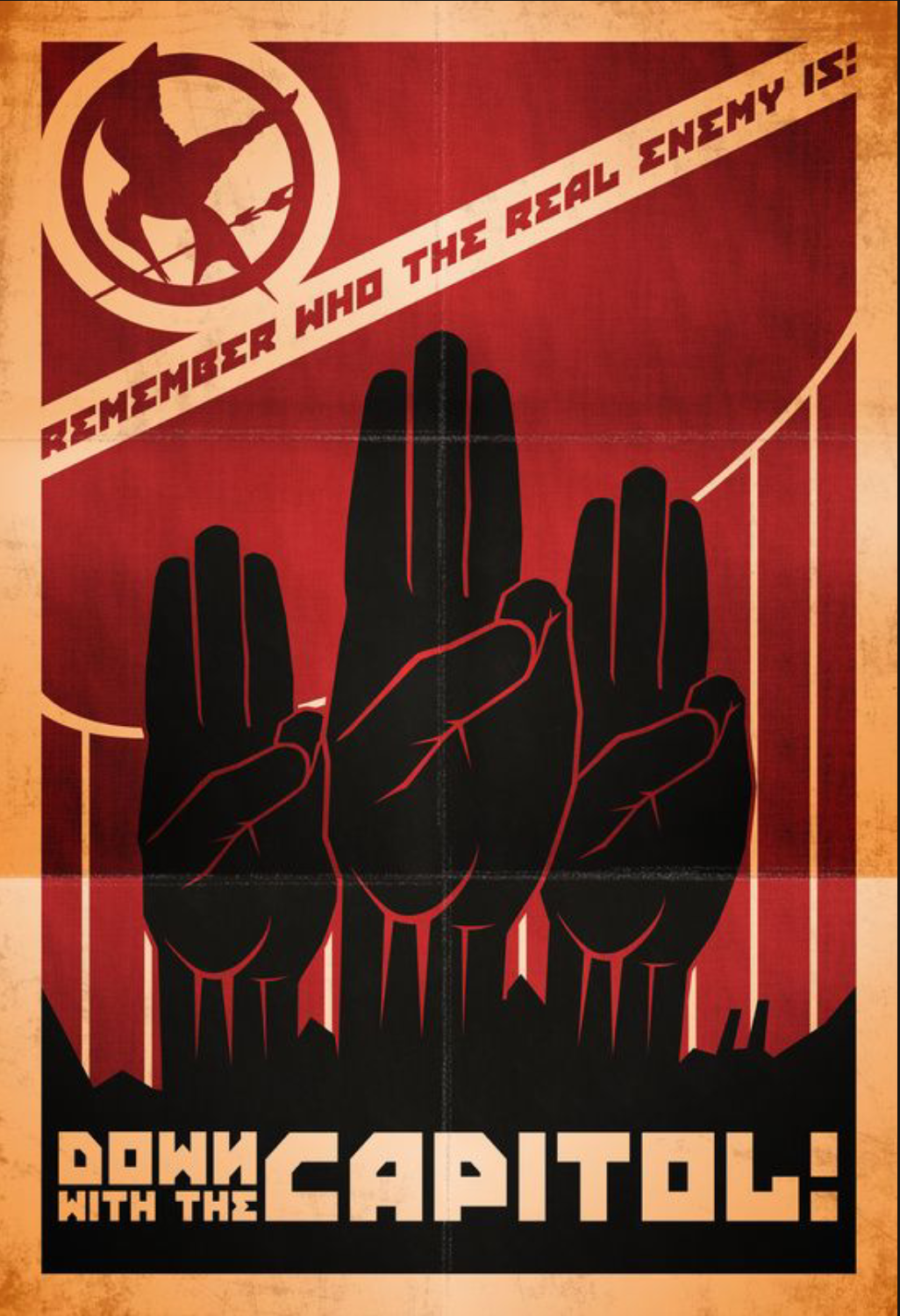
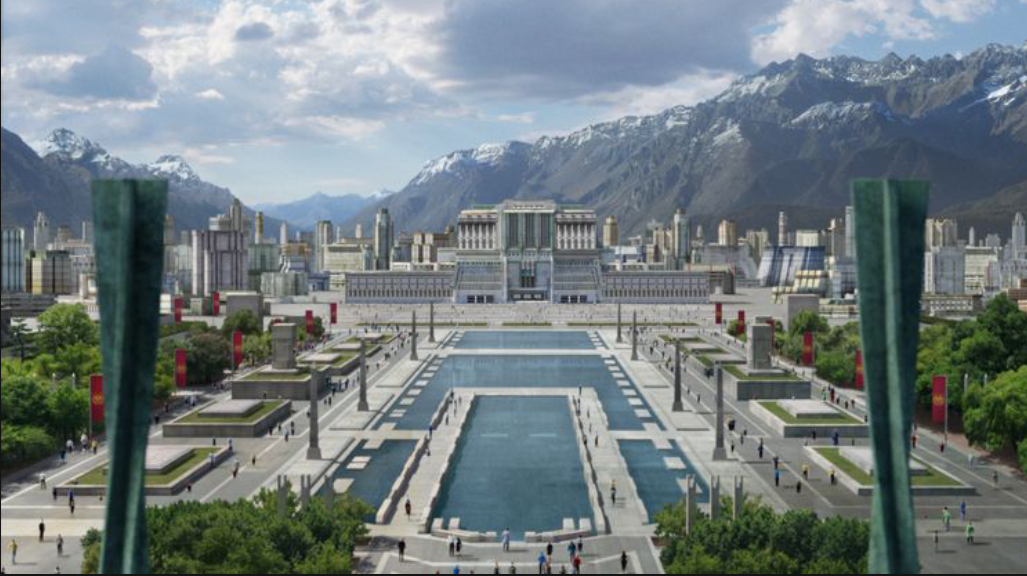
The government holds too much power. This is very well portrayed in the Hunger Games a book trilogy written by American author Suzanne Collins later made into a science fiction dystopian film series. The story is basically how the government has too much power over the lives of common man, how and why it is so wrong. The story is takes place in the fictional country that goes by the name of Panem. It consists of 12 districts that have been assigned various disciplines under which the people of the district work. Naming a few, district 3 specializes in technology, district 11 in agriculture, district 12 in coal mining. District 12 being the smallest and the poorest. All these districts are forced to produce the assigned goods and no have no freedom. The Capitol is the government who enjoy all the riches and luxury while the other districts starve to death. The Capitol, for the sole purpose of entertainment, organises this game annually where two teenagers- a male and a female are forced to participate, locked in an area and have to fight each other to death. The one who survives is declared the winner.

On the big screen we may find it interesting but more interestingly the series is the best depiction of communism. We know that our government always wants to suppress us and gain full control over our lives. Hence this book or the movie series is a good way to give us some lesson in an entertaining manner.

The government’s control over the goods production in a district and no freedom of their own reminds us of the real world example of North and South Korea. Everyone is aware of the situation here. People in North Korea have no freedom it is only the governmental control over their lives and henceforth people are starving. On the contrary, South Korea is thriving. Former Soviet Union couldn’t find a permanent position due to the same reasons. It had too much control over the people and the people suffered. A government cannot work without the cooperation of its people. History holds records of how such controlling government led to their own decline. Panem government violates its people’s basic rights resulting in poverty and starvation and later a rebellion.

The Hunger Games also shows how the upper class lives in luxury in contrast to the middle class lives. It shows how the people of district 1 enjoy all the facilities and live a posh life. They do not have to wait in lines for hours to manage some food for the family. This demonstrates real life situation where the rich are getting richer and the poor even poorer. The government might show us false hope but it is the lower class people who are the fools. The horrors of communism in this book/movie is a good way to let the younger generation realise the truth about the world. Also teach us lessons to be smarter.

Thank you for reading. Have a nice day!

EXISTENCE OR EXAMINATION

Amidst this deadly Covid-19 pandemic India is gearing up for conducting competitive examinations (JEE/NEET and final year examination) The commission has announced the dates for several competitive exams to be conducted in September and October. The real question is not if the students are prepared, but is India prepared for this? Despite imposing complete lock-down, especially in Maharashtra, the Covid-19 cases are increasing day by day and now the supreme court has given a verdict that exams should be conducted.This is totally unfair.There are lakhs of students who will appear for writing exams. It is not only putting students and teachers under risk but also their families. Is this worth taking the risk? Putting life under jeopardy to write exams.

The health minister is talking about taking precautions, but before that, what about people who have already been tested COVID positive? Many people are dying not because of the virus but because of a lack of proper health care facilities and treatment. No one can blame the people for raising their suspicion. With a public health care system is in a hodgepodge, many people are looking with doubt at the country’s attempts to battle with the pandemic. The lack of these stocks has decreased the Indian health care base, also, leading to an accelerated rise in COVID-19 crises in the country. At this time when even very advanced countries are striving to deal with this pandemic and due to a dense population, India’s incapacitated health care foundation is in many ways disadvantaged to deal with this pandemic. Today the record surged to 83,883 fresh corona-virus cases in the last 24 hours taking India’s COVID tally past the 38-lakh mark and Maharashtra continues to be the state hit hardest by the pandemic and followed by Delhi, Karnataka, Andhra Pradesh, and Tamil Nadu making India top 3rd Country affected and just some numbers behind Brazil.

The government should look for another solution or option other than making students appear for the examination in centers. What is the technology for then? Competitive exams should be conducted online with certain protocols. In that way, students will not lose their one year and they will be safe, and yes even though there can be certain technical problems in conducting exams online, but this is the better option rather than going to colleges. Offline exams may act as a great threat to health since the crowd of students in huge numbers at the examination center will make them prone to getting in contact with a corona positive person. The thermal screening of all persons entering the examination hall is no remedy. Another option is to cancel the final term exams while using the average of the marks secured in earlier terms as a substitute for the final semester examination scores. The government should realize that the situation can go out of control anytime, which is evident with the day to day spike in COVID cases despite lock down and on top of that now lakhs of students have to go and write exams. The government should reconsider this decision of giving priority to examination over life.

Cashless Economy – Boon and Bane ?

What is a Cashless Economy ?

In a cashless economy most of the transaction will be done by digital means like e banking, debit and credit cards, PoS (point of sales) machines, digital wallets etc. In simpler words no liquid money or paper currency will be used by the people in a given country. In a cashless economy the third party will be in possession of your money. He will allow you to transact that money whenever it is needed. If it is not needed then the third party can use that money. Third party can be a government or any other public or private sector bank.

Positive Impact on Society

We are seeing the impact of cashless economy on the society when it comes to crime rates. According to Union defense minister after demonetization the crime rates in Mumbai has dropped to half. Not just Mumbai but Delhi is seeing a substantial decline in crimes related to financial motive. Bank robbery, burglary, extortion etc are declining because of demonetization.

Attack on Parallel Economy

This is one of the most important reasons why a cashless society is must. People who hoard money under their bed (also known as black money), people who launder money bypassing banking channels, terrorist who need money to finance their terror etc will run out of business now. Size of Parallel economy will reduce substantially.

Financial Inclusion

Digital economy will help to enhance our current banking system. There will be increased access to credit for people who did not fall in any banking network. Financial inclusion will automatically reduce poverty.

Increase the Tax Net

All the transactions that are done can be monitored and traced back to a given individual. If officials from tax department smell something fishy then they can trace the money transaction back to the individual. Hence it will be really difficult for someone to evade tax. Increasing tax net is very important for any government.

Boost in Consumption

There would be no incentive for people keeping money in the bank. So they would love to spend on things that they like. It will help to boost consumption that is really good for any economy. More jobs will be created and income level of people will rise.

Security and Convenience

Last but not the least is security and convenience. You don’t have to carry a wallet with money in it. You just use your mobile phone or credit card for transaction. It is very hassle free and already going on in urban areas of the country.

Security – Cyber Attack, Fraud and Power Outages

Cashless economy can be a nightmare when it comes to security. All your transactions will be done digitally. You will be prone to cyber attacks like hacking. Hackers can hack your sensitive information like password, credit card number etc and leave your account with no money. Even your personal computer is compromised. You can save yourself from fraud but it is very difficult to save from a cyber attack. Finally if there is a power outage especially in India which is very regular then entire system will be affected for long time.

Have to Trust Government or Third party

As I said earlier there is no money in your hand. All the money is digital so either they are in control of banks or government or any other third party. You have to trust government or bank blindly because everything is under their possession. This is could be scary because if tomorrow something happens you will be left with no hard cash.

Reduced Liquidity means Bad for Certain Sectors

There are certain sectors which depend upon high level of transaction. Sectors like Real Estate, jewelry, retail industry, restaurants and eating joints, cement and other SME will be affected badly because of cashless society. It means a lot people who are employed by these sectors are also going to be affected.

Really Bad for Poor

This is the real point and will be debating this in great details in following paragraph. Here I just want to say cashless economy is really going to hurt poor.

Money is probably the most significant invention in the history of economics which has now by and large fully replaced the barter system of trade across the world. However, nowadays, many developed societies in the world have now moved a step further by moving on to the cashless economy. In the developing countries like India, the cashless system has started making the inroads but it is far less in use than that of the developed counterparts.

During the pre-demonetization, the cash to GDP ratio in the country was between 12-13% of the GDP which fell to 7.3% during the demonetization. It was less than that of US where cash GDP ratio is at 7.8%. Though Reserve Bank of India (RBI) has started replenishing the cash into the economy but many experts believe that cash-GDP will not raise to the pre-demonetization level as government is giving a push to the cashless economy.

As India moves towards a cashless economy, following advantages are expected to accrue :

  • The electronic payment will help the entrepreneur to increase their customer base and breach the geographical limitations.
  • It is not necessary to be physically present to conduct cashless transaction. There is also no limitation on timing of transaction as it can be done at any time and from anywhere.
  • Carrying high amount of cash is always a security hazard. For other modes like credit/ debit cards, in the event of loss or robbery, one can block the card. It may also reduce pick pocketing and highway robbery.
  • Increasing share of cashless will improve government revenue as online transaction lead a trail of events which can be traced to find out tax evasion if any.
  • Since the cashless transactions are more visible, it will help in curbing the clack money.
  • If subsidy or wages for the welfare schemes like MNREGA are paid online through bank transfer instead of cash, it would also help in plugging the leakages and help in ensuring that subsidies are better targeted.
  • As the people increasingly started using cashless transactions, it will help in increasing the tax base. It will be easy for the public as well to explain the tax authorities their past expenditure.
  • Being cashless also inculcates budget discipline.
  • It will also be easy to ward off the borrowers if you are cashless.
  • Cashless transactions do away with the need of change. One can pay in exact amount even in fraction of rupee or paisa through card payment or online transaction.
  • Problem of counterfeit currency will also be reduced in online transactions.
  • One can also trace the funding of terror activities as online transactions leave a trail.
  • There is high cost of printing currency notes. Switching to cashless transactions will decrease this cost.

However, being cashless has its share of disadvantages too :

  • The biggest fear is the risk of identity theft. One can also become a victim of phishing trap.
  • In case of loss or theft of card, getting another card is time consuming process.
  • Since mobile phone had become an important element of cashless economy, loss of phone may become a double whammy as many financial details can be retrieved from it.
  • If we take into account the proportion of non-tech-savvy population, the practical implementation of cashless economy will take enormous efforts.

Despite its drawbacks, the cashless system is indeed an improvement over the traditional cash based system. However, none of the advanced economy has fully replaced the cash as it is practically not possible but reducing the amount of cash and increasing the cashless transactions will definitely improve the transparency in business transactions and therefore is good for the country and economy.

Patents in India

What is a patent ?

A patent is a legal document that is granted by the government of the state or the country, depending on the national rules. It gives an inventor of a particular thing, the exclusive right to make, use and sell his or her creation for a specified period of time. 

The basic idea of this system is to encourage the inventors to safeguard their own creations. Books, movies, and some artworks cannot be patented. However, one can protect these assets under the law of copyright. The law of patent is one branch of the larger legal field known as intellectual property, which also includes trademark and copyright law.

Patent is a form of intellectual property rights (IPR) which apart from patents also includes trademarks, copyrights, geographical indicators etc. A patent is an exclusive right granted for an innovation, which is a product or a process that provides, in general, a new way of doing something, or offers a new technical solution to a problem.

Objective of patent is to grant the innovator of the product or process some benefits where invention/innovation cannot be commercially made, used, distributed or sold without the patent owner’s consent. These patent rights are usually enforced in a court, which, in most systems, holds the authority to stop patent infringement. In India, patents are governed by Indian Patents Act 1970 which initially provided for the process patents only and not for product patents for food, chemicals and drugs.

Suppose if product has been developed by an inventor, then he can file patent for the process through which that product has been developed and not for that product itself. In the case of inventions being claimed relating to food, medicine, drugs or chemical substances, only patents relating to the methods or processes of manufacturer of such substances were provided. Thus patent act of 1970 emphasized public interest over monopoly rights. However, under World Trade Organization (WTO), Trade Related Intellectual Property Rights (TRIPS) agreement provides for product patent for 20 years. After the expiry of 20 years, anyone can manufacture that product. All WTO members had to comply with TRIPS agreement before 2005 because of which Indian parliament passed Patent Amendment Act 2005 which brought product patent regime in India. Important features of 2005 Amendment Act and extension of product patent protection to all fields of technology including drugs, foods and chemicals were granted.   

Exemptions under 2005 Act are –  

• Frivolous claims contrary to natural laws

• Anything contrary to law or morality or injurious to public health

• Mere arrangement or rearrangement of duplication of known devices.

• A method of agriculture or horticulture

• Inventions related to atomic energy  

Further, act also empowers the government to import, make or use for its own purpose. It also empowers import of drugs for public health distribution. It also empowers the government to revoke the patent which is found mischievous to state or prejudices to public. State can also acquire a patent to meet national requirements. Patents act is supposed to have most important bearing on the pharmaceutical industry. Drug manufacturing MNCs incur huge cost in the form of R&D for development of new drugs. In order to recover that cost, they sought patent and sell these drugs at exorbitant prices. After the term of patent (20years) is over, every company is free to manufacture those drugs and price of these drugs reduces drastically as new companies don’t engage in the R&D and its cost is reduced. Such drugs whose patent is expired are called as Generic medicines and Indian pharmaceutical companies produce these generic medicines at mush less cost than their western counterparts.  

Under the 1997 patent act, Indian companies could produce these drugs even before expiry of 20 years through different process but after 2005 amendment; they have to comply with the product patent. Therefore, it may have an adverse impact on price of medicines in India as they have to comply with TRIPS. Bolar Provision facilitates production and marketing of patented product immediately after the expiry of term of patent by permitting preparatory action by non patent companies during the term of the patent. According to this provision, despite the patent rights, research and tests for regulatory approval does not constitute infringement of patent. There have been few apprehensions in various quarters particularly for health sector regarding its impact on drug prices as it may rule out the availability of low cost drugs. However, it is said that 97 percent drugs manufactured in India are off patents and will remain unaffected.  

Further, legislation has strong provision for the outright acquisition of patents to meet national requirements. Besides, there is also Drug Price Control Order administered by National Pharmaceutical Price Authority. There are also adequate safeguards to protect the interest of domestic industry and common man from any increase in the prices of drugs. Although there are adequate safeguards are assured by the government, but some impact on prices cannot be ruled out which will further alienate the poor from the health due to rising cost of medicines. Since it is also nor immoral on part of the companies conducting extensive research on the development of life saving drugs, treatment can be assured to all the persons through universalization of Health Insurance which may be partially public funded.    Just like government had imposed cess on petrol and diesel to recover the cost of High development, some cess can also be imposed to recover the cost of universal health programme. In 2009-10, as many as 34287 patents were filed out which only 6168 patents were granted. Moreover, only 17 percent of these patents were granted to Indian while rests were granted to the foreigners. In 2010-11, of the total 7,486 patents granted, Indians could claim only 1,272. On the other hand, foreigners walked away with 6,214 patents. In the world, Japan is credited with maximum number of patents.

Indian Postal Service

The Department of Posts (DOP),trading as India Post, is a government-operated postal system in India, which is a subsidiary of the Ministry of Communications. Generally called “the Post Office” in India, it is the most widely distributed postal system in the world. Founded in 1854 by Lord Dalhousie who laid the foundation for the modern Indian postal service. Dalhousie introduced uniform postage rates (universal service) and helped to pass the India Post Office Act 1854 which significantly improved upon 1837 Post Office act which had introduced regular post offices in India. It created the position Director General of Post for the whole country.

It is involved in delivering mail (post), remitting money by money orders, accepting deposits under Small Savings Schemes, providing life insurance coverage under Postal Life Insurance (PLI) and Rural Postal Life Insurance (RPLI) and providing retail services like bill collection, sale of forms, etc. The DoP also acts as an agent for Government of India in discharging other services for citizens such as old age pension payments and Mahatma Gandhi National Rural Employment Guarantee Scheme (MGNREGS) wage disbursement. With 155,015 post offices, India Post has the most widely distributed postal network in the world.

The country has been divided into 23 postal circles, each circle headed by a Chief Postmaster General. Each circle is divided into regions, headed by a Postmaster General and comprising field units known as Divisions. These divisions are further divided into subdivisions. In addition to the 23 circles, there is a base circle to provide postal services to the Armed Forces of India headed by a director-general. One of the highest post offices in the world is in Hikkim, Himachal Pradesh operated by India Post at a height of 14,567 ft (4,440 m).

Many a times we use essential services of an organization without knowing details of source. MBA Aspirants are expected to have curiosity to know even the known but unknown organization like Indian Postal service.   

The Indian Postal Service, known as India Post, was founded in 1774 and today, it has over 100,000 post offices all over the country. In fact, India has the largest postal network in the world, with close to 90% of the post offices located in rural areas. The Indian Postal Service comes under the Department of Posts, which is a part of the Ministry of Communications and Information Technology.

India Post offers both retail and financial services to over one billion people in India. Apart from providing bill mail, direct mail and retail mail services, India Post also provides the e-Payment service through which organizations can collect their bills and other payments from customers across the country.   

India Post has changed the way people look at post offices – in the past, a post office was simply a place for people to post letters; however, today, India Post has partnerships with other organizations such as the Indian Railways and HDFC Bank to provide other services too. Now, people can book train tickets at selected post offices through the India Post Passenger Reservation System and purchase foreign currency and travelers cheques with the India Post Forex Service. Gone are the days when organizations would only provide a service or two. To stay ahead of the competition and to provide better service to the public, both government organizations and private companies are diversifying their services, and India Post is no stranger to this business model.   

Some of the popular financial services offered by India Post are the Post Office Savings Schemes and the Postal Life Insurance. In fact, the Post Office savings bank is the oldest and the largest banking system in the country, providing services to both rural and urban dwellers.   

Financial services at India Post are offered as an agency service for the Ministry of Finance and they have helped millions of people nationwide. India Post keeps up with the trends in the industry and has come up with remittance schemes to help people living in India to transfer money to their family and friends abroad and vice-versa.   

The business of Indian Postal Service is growing by leaps and bounds, which is why the organization is keen on establishing the “Post Bank of India”, an independent entity with complete focus on financial products and services. With the advent of technology, many people, especially those in urban areas, have started sending electronic mails, which not only saves time but also money. This is one of the reasons why majority of the post offices are located in rural parts of India. However, this does not mean that the demand for postal services in India is decreasing.   

In fact, with the diversification of services, the Indian Postal Service has managed to increase its customer base and enhance its revenue significantly. Today, the Indian Postal Service employs over 450,000 people and generates revenue of over Rs 70,000 million on an annual basis. With greater investments in IT infrastructure and diversification of its product portfolio, the Indian Postal Service will be able to cross the Rs 100,000 million mark in a few years.

Boon of the Mid-Day Meal

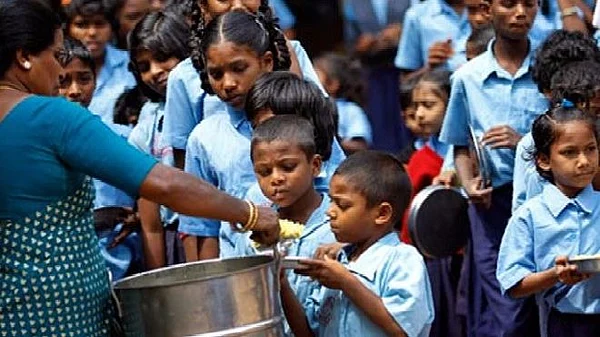
The very concept of Mid-Day Meal scheme was introduced on the year of 2000 by Akshaya Patra Foundation and was later passed as a mandate by Supreme Court of India on the year 2001. The sole purpose of the scheme is to provide wholesome freshly cooked hot lunch to all the students in the government and government aided schools in India. Usually the meal should be a whole mix of carbohydrates, proteins and various vegetables as per the bodily requirements of the children. The goal of such a scheme was to encourage the parents to send their wards to schools, to increase the school attendance and to do away with the norm of child labour, to prevent the child from being hungry at the time of attending the classes and thus to avoid malnutrition, and finally to improve the socialisation among the castes and last but not the least, to promote women empowerment.

The ultimate goal – to provide at least one of the three daily meals required for the proper growth of the children.

The scheme was institutionalized by the designated states and the schools and things were going fine until the pandemic hit the world. During the month of March, the lockdown was declared by the nation and there rose comprehensions among the low wage workers. They were worried about one of the most important thing on earth – what will happen to our mid-day meal and how can we arrange food for our children? The reason being the mid-day meal was one of the main reason as to why their parents sent their wards to school and they were worried about how to relinquish their daily requirements. But, like a godsend, the Government of India declared that even though the schools will be closed owing to the social distancing, the schools will still have to arrange the benefit of mid-day meal or any other substitute of equal value to the children and their families. Not only that, the Government also passed that if and when necessary, required assistance will be rolled out for the underprivileged.

Mid Day Meal: Latest news updates on Mid Day Meal - The Quint
Mid-Day Meal Scheme

The Government of India rolled out various schemes under which various states had to provide the mid-day meal scheme to the students. Some of such initiative are:

  • West Bengal – Ensured the distribution of the meals to their wards’ home amidst the curfew.
  • Odisha – Facilitation of Public Distribution System (PDS).
  • Chhattisgarh – Provision of mid-day meal to the parents of the children for about 40 days, with the difference in quantity by the primary and higher secondary school.
  • Kerala – Delivery of meal supplies to homes of their children.
  • Bihar – Transfer of the monetary amount of the mid-day meal, as a substitute of the food, to the accounts of their parents.
  • Maharashtra – Provision of the meals only to rural children.
  • Assam – Provision of mid-day meals to about 40 lakhs students.

Each and every state has taken the initiative to make sure that the meal reaches their students at times of distress. There also exists an underlying fear among the administration that if the meal is stooped, then it will automatically lead to the un-enrolment of the students whose attendance is already irregular and this will definitely push up the levels of illiteracy and unemployment.

States are putting in continuous efforts to make this journey smooth for the students. For instance, West Bengal has announced the decision to provide masks, sanitizer, as well as basic protein items such as pulses, soya bean which will be handed to the parents. They are going an extra length by providing stationery items to those students affected by Amphan.

It is very responsible on the part of Government of India to ensure the provision of mid-day meal and this help will definitely go a long way to build the future of India.

Source: https://timesofindia.indiatimes.com/india/bengal-government-to-add-mask-soap-to-mid-day-meal-items-in-covid-19-time/articleshow/76328492.cms

https://www.biharedpolcenter.org/post/covid-19-how-are-states-ensuring-midday-meals

Knowing about the Government schemes launched during COVID-19

June 2020 has seen two important government initiatives for the every-day earners for food in news. They are the Garib Kalyan Rojgar Yojana and the PM Street Vendor’s Atmanirbhar Nidhi.

First on the list is the Garib Kalyan Rojgar Yojana.  It is a central government initiative taken amidst the pandemic circumstances. The Abhiyaan was launched by the Prime Minister in June from Telihar in Bihar. As so the title suggests, the objective of the Abhiyaan is to secure, empower lives by providing livelihood opportunities. The scheme is specifically launched for that population of the country whose areas or villages have witnessed the return of a large number of migrant workers after the citizens were no longer employed following the lockdown announced for the devastating Covid-19.

This campaign is sought to be one of the components of Rs 1.70 lakh crore package under Pradhan Mantri Garib Kalyan Yojana which was set to help the poor fight against Corona Virus Pandemic.

The Campaign is nothing but a massive employment -cum- rural public works in which the public works are to be undertaken with an aim of generating a resource envelope of minimum Rs 50,000 crores. The campaign would involve 125 days of work. The public works will supposedly include rural housing for the poor along with the provision of providing drinking water through the already established Jal Jeevan mission. The infrastructure of Panchayat Bhavans, rural mandis, community toilets, rural roads, etc. are sought to be developed.

The initiative is hoped to cover 116 districts in 6 states – Uttar Pradesh, Bihar, Rajasthan, Madhya Pradesh, Odisha and Jharkhand. There are 27 aspirational districts hoped to be covered under this initiative. The mentioned are estimated to hopefully cover about 2/3 of the unemployed migrant workers. A major emphasis has also been put to the rural infrastructure. The initiative will have 25 different types of public works which is specifically to create infrastructure and importantly boost livelihood opportunities in the areas.

High speed and cheap internet are also part of the maintenances to be provided in every rural household. Thus, there shall be laying of fibre cable.

The campaign however would require a Multi-Ministerial Effort between different Departments of the Government with Ministry of Rural Development as the nodal Ministry along with the other ministries such as Panchayati Raj, Mines, Road and transport etc.

Second on the news was the PM Svanidhi. The initiative PM Street Vendor’s Atmanirbhar Nidhi was launched by the Ministry of Housing and Urban Affairs. It is launched with the aim of introducing a special micro-credit facility Scheme which would provide affordable loans to the street vendors, who recently went on losses or no business at all since the wake of the COVID-19 crisis. This scheme will thus enable the street vendors to resume work and earn their livelihoods.

The beneficiaries will include over 50 lakh people which would include the vendors, hawkers, etc. who work to supply fruits, vegetables, ready-to-eat street foods etc in the markets. It would also include the business of service providers like barber shops, laundry services etc.

The scheme shall be available for beneficiaries belonging to only those States and Union Territories which have notified been under the Rules and Scheme provided under Street Vendors Protection of Livelihood and Regulation of Street Vending Act in 2014.

The vendors or the hawkers can avail a loan (working capital) of up to Rs. 10,000 which is subject to be repayable in monthly instalments within the tenure of one year. On timely and the early repayment of the loan, credit limit was claimed to be raised and interest subsidy to be given at the rate of 7% per annum which ultimately shall be credited through Direct Benefit Transfer on a quarterly basis. 108 cities were selected, and the loan disbursement was planned to commence in July, 2020.  The eligible lenders were rated as the bank such as Regional Rural Banks, Small Finance Banks, Non-Banking Finance Companies, Micro Finance Institutions established in some States and Union territories.

The Small Industries Development Bank of India (SIDBI) is an implementation agency. It was developed to manage the credit guarantee approved to the lending institutions through Credit Guarantee Fund Trust for Micro and Small Enterprises.The SIDBI was developed through an Integrated PM SVANidhi portal. The Portal was developed to integrate  credit management and PAiSA portal of MoHUA to administer the interest subsidies automatically.

The New Normal

­In these times of COVID-19, the big challenge for most of us is how to protect ourselves and our families from the virus and how to hold on to our jobs. For policymakers that translates into beating the pandemic without doing irreversible damage to the economy in the process.

With over 4 million cases and some 250,000 victims of the virus to date globally, and the expected loss of the equivalent of 305 million jobs worldwide by mid-year, the stakes have never been higher. Governments continue to “follow the science” in the search for the best solutions while foregoing the obvious benefits of much greater international cooperation in building the needed global response to the global challenge.

This is moreover a global crisis, and vision has not yet focused on the new realities in other leading powers and major economies. If we try to take an unflinching measure of the impact globally, we can see both good news and bad news—although the two are by no means equally balanced.

But with the fight against COVID-19 still to be won, it has become commonplace that what awaits us after victory is a “new normal” in the way society is organized and the way we will work.

The bad news, on the other hand, lies in the nature of the virus itself and in its implications for human life and socioeconomic arrangements. Covid-19 is an extremely contagious virus with high lethality for those exposed to it, and it can be transmitted by asymptomatic “super spreaders.” Further, since this disease is zoonotic (contracted from another species) and novel (our species has no preexisting immunity), the pandemic will roam the world in search of human quarry until an effective vaccine is invented and mass-produced—or until so many people are infected that herd immunity is conferred.

The potential downside of this crisis looks dire enough for affluent societies: even with excellent economic management, they may be in for gruesome recessions, both painful and prolonged. But the situation for the populations of low-income countries—and for least-developed, fragile states—could prove positively catastrophic. Not only are governments in these locales much less capable of responding to pandemics, but malnourished and health-compromised people are much more likely to succumb to them. Even apart from the humanitarian disasters that may result directly from raging outbreaks in poor countries, terrible indirect consequences may also lie in wait for these vulnerable societies. The collapse of economic activity, including demand for commodities, such as minerals and energy, will mean that export earnings and international remittances to poor countries are set to crash in the months ahead and remain low for an indefinite period. Entirely apart from contagion and lockdowns, this can only mean an unavoidable explosion of desperate need—and under governments least equipped to deal with this. While we can hope for the best, the worst could be much, much worse than most observers currently imagine.

This is hardly reassuring.

We are still very much in the “fog of war” phase of the calamity. The novel coronavirus and its worldwide carnage have come as a strategic surprise to thought leaders and political decision-makers alike. Indeed, it appears to be the intellectual equivalent of an unexpected asteroid strike for almost all who must cope in these unfamiliar new surroundings. Few had seriously considered the contingency that the world economy might be shaken to its foundations by a communicable disease. And even now that this has happened, many remain trapped in the mental coordinates of a world that no longer exists.

Because nobody seems able to say what the new normal will be. Because the message is that it will be dictated by the constraints imposed by the pandemic rather than our choices and preferences. And because we’ve heard it before. The mantra which provided the mood music of the crash of 2008-2009 was that once the vaccine to the virus of financial excess had been developed and applied, the global economy would be safer, fairer, and more sustainable. But that didn’t happen. The old normal was restored with a vengeance and those on the lower echelons of labor markets found themselves even further behind.

So May 1, the International Day of Labor is the right occasion to look more closely at this new normal, and start on the task of making it a better normal, not so much for those who already have much, but for those who so obviously have too little.

This pandemic has laid bare in the cruelest way, the extraordinary precariousness and injustices of our world of work. It is the decimation of livelihoods in the informal economy – where six out of 10 workers make a living – which has ignited the warnings from our colleagues in the World Food Program, of the coming pandemic of hunger.

It is the gaping holes in the social protection systems of even the richest countries, which have left millions in situations of deprivation. It is the failure to guarantee workplace safety that condemns nearly 3 million to die each year because of the work they do.

And it is the unchecked dynamic of growing inequality which means that if, in medical terms, the virus does not discriminate between its victims in its social and economic impact, it discriminates brutally against the poorest and the powerless.

The only thing that should surprise us in all this is that we are surprised. Before the pandemic, the manifest deficits in decent work were mostly played out in individual episodes of quiet desperation. It has taken the calamity of COVID-19 to aggregate them into the collective social cataclysm the world faces today. But we always knew: we simply chose not to care. By and large, policy choices by commission or omission accentuated rather than alleviated the problem.

Fifty-two years ago, Martin Luther King, in a speech to striking sanitation workers on the eve of his assassination reminded the world that there is dignity in all labor. Today, the virus has similarly highlighted the always essential and sometimes heroic role of the working heroes of this pandemic. People who are usually invisible, unconsidered, undervalued, even ignored. Health and care workers, cleaners, supermarket cashiers, transport staff – too often numbered among the ranks of the working poor and the insecure.

Today the denial of dignity to these, and to millions of others, stand as a symbol of past policy failures and our future responsibilities.

On May Day next year we trust that the pressing emergency of COVID-19 will be behind us. But we will have before us the task of building a future of work which tackles the injustices that the pandemic has highlighted, together with the permanent and no longer postponable challenges of climate, digital and demographic transition.

This is what defines the better normal that has to be the lasting legacy of the global health emergency of 2020.


Fake News-a false alarm

What will happen if one morning we wake up and check our phone which will leave us bewildered with a notification of the demise of some famous personality and after few hours of feeling sad you realize that it was a fake news, that someone made a fool out of you. Think about that personality who will read the news of his own demise , such a strange thing right? The new digital era with modern technology has unleashed many unwanted and false practices which is affecting the individuals interpret daily developments. Now this thing leaves me in a state that whether I should watch news or read news articles or just leave everything and be unaware about the facts happening around me. Let me share some of the instances where I felt that fake news is becoming a threat to people. During this time of COVID-19, where the world is suffering from a painful time , people are still spreading fake news. They are giving false information about the number of corona cases rising in India and how the nation is in a dreadful situation with fear and suffrage. https://www.firstpost.com/tag/fake-news Second incident is from CBSE where the people were spreading rumors about the board examination of 10th&12th class. Students were confused with the dates and whether the examination will take place or not, this situation was no less than a terror for them because they were not sure with the dates and evaluation. But now the things have been settled and CBSE has warned against the fake news. https://scroll.in/announcements/958428/cbse-warns-against-fake-news-regarding-2020-board-exams There are many more examples which has threatened people and made a disbelief in media, where the people are in no state whether to believe the media or not. One of the major reasons why fake news is such a threat is the increasing difficulty for readers to identify the legitimacy of wake news websites. People are trusting blindly on everything , they are not checking the facts or they are not able to make a difference between a fabricated news or a real piece of news article. The fabricated news is creating a negative impact on the people and making the situation much more worse and entangled. This is a growing debate on how to address these issues without undermining the benefits of digital media. We should be aware about every digital platform before using it. Government should take preventive measures to combat this problem and come up with a solution so that people can actually rely on real news. Government should promote news literacy and strong professional journalism in the society.The media should work really hard in developing a real piece of news without fabricating it. Tech companies should come up with apps or other tools that can identify fake news in seconds and individuals should follow some guidelines or check the facts before believing in a news article. I will conclude this article with a quote of Abraham Lincoln “Don’t believe everything you read on the internet just because there’s a picture with a quote next to it.”