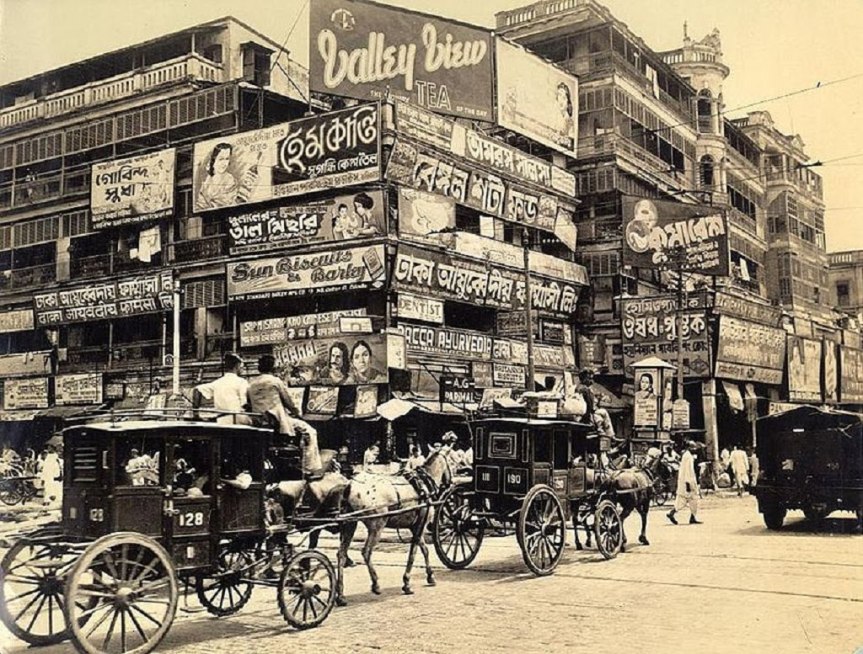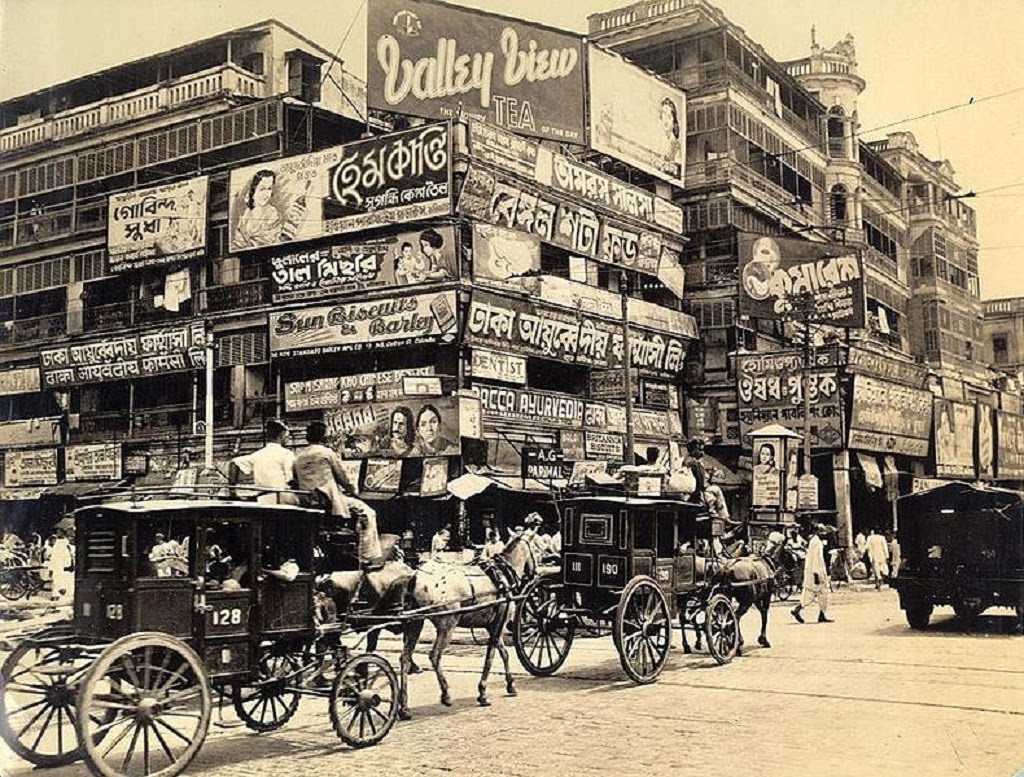

Looking Back to Past: Vintage Kolkata in Photos

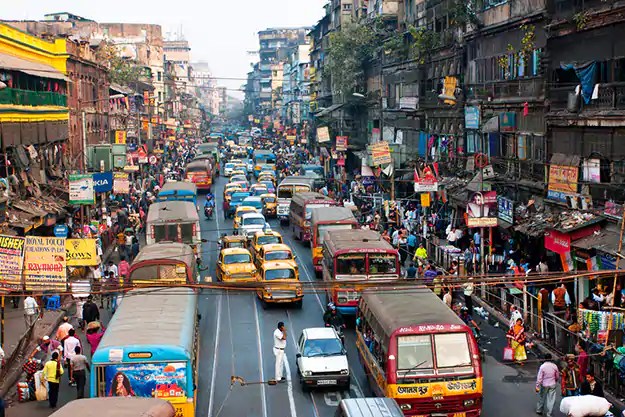
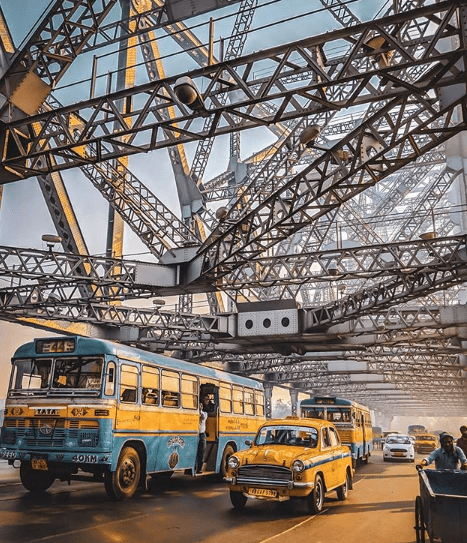
A busy street of Today’s Kolkata

Introduction

Kolkata, also fondly know as “The City of Joy”, never ceases to amaze generations with its breathtaking beauty, not only with its metro city status of today’s India, but also in the days of past. In today’s editorial, we’re going to take glance at glimpses of Vintage Kolkata from the past.

Brief History and Importance

Kolkata’s recorded history began in 1690 with the arrival of the English East India Company, which was consolidating its trade business in Bengal. Job Charnock, an administrator who worked for the company, was formerly credited as the founder of the city; In response to a public petition, the Calcutta High Court  ruled in 2003 that the city does not have a founder. The area occupied by the present-day city encompassed three villagesKalikataGobindapur  and Sutanuti

Kolkata , also known as Calcutta (official name until 2001) is the capital of the Indian state of West Bengal. Located on the eastern bank of the Hooghly river, the city is approximately 80 kilometres (50 mi) west of the border with Bangladesh. It is the primary business, commercial, and financial hub of Eastern India  and the main port of communication for North-East India .According to the 2011 Indian census, Kolkata is the 7th most populous  city in India, with a population of 45 lakh (4.5 million) residents within the city limits, and a population of over 1.41 crore  (14.1 million) residents in the Kolkata Metropolitan Area. The Port of Kolkata  is India’s oldest operating port and its sole major riverine port. Kolkata is regarded as the Cultural Capital of India.

Vintage Kolkata Album

Here we take a look at the vintage snaps of Kolkata’s most iconic places

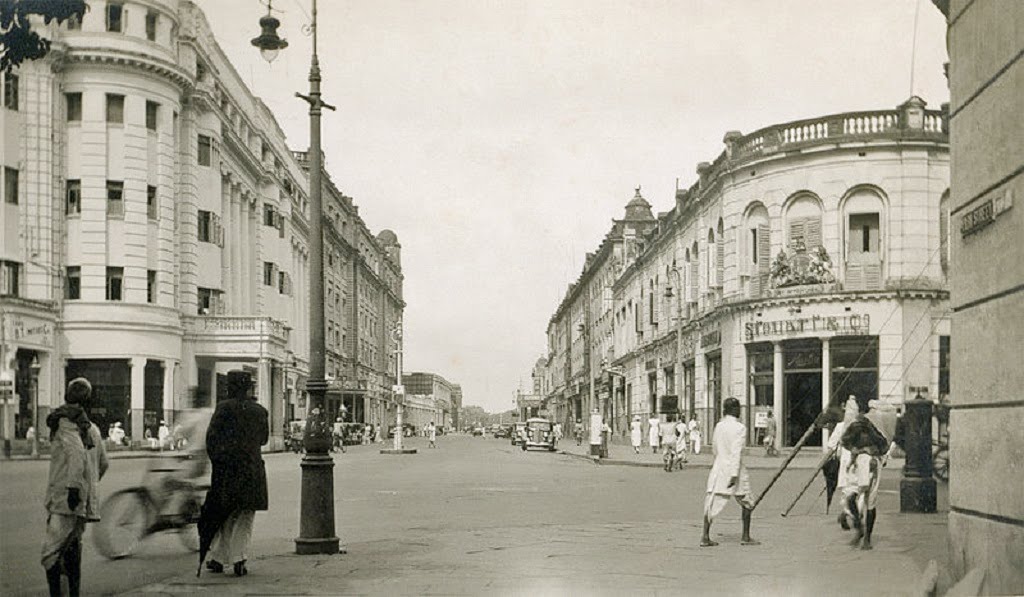
Crossing of Harrison Street, Strand Road and Burra Bazaar Area
Park Street
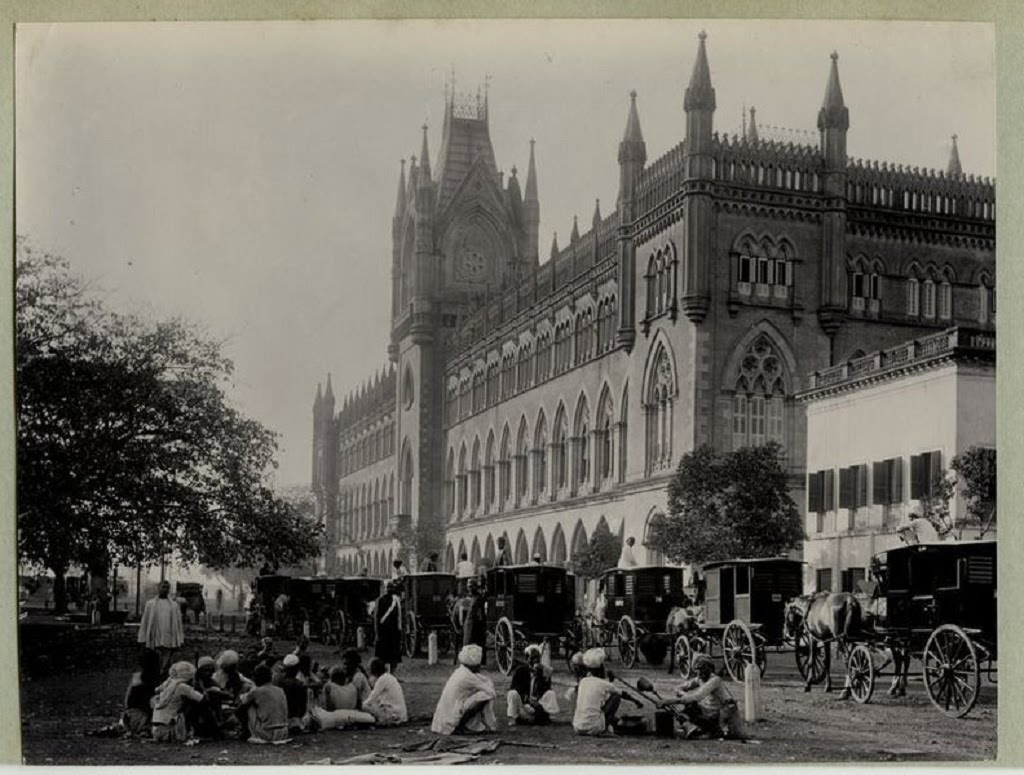
Calcutta High Court
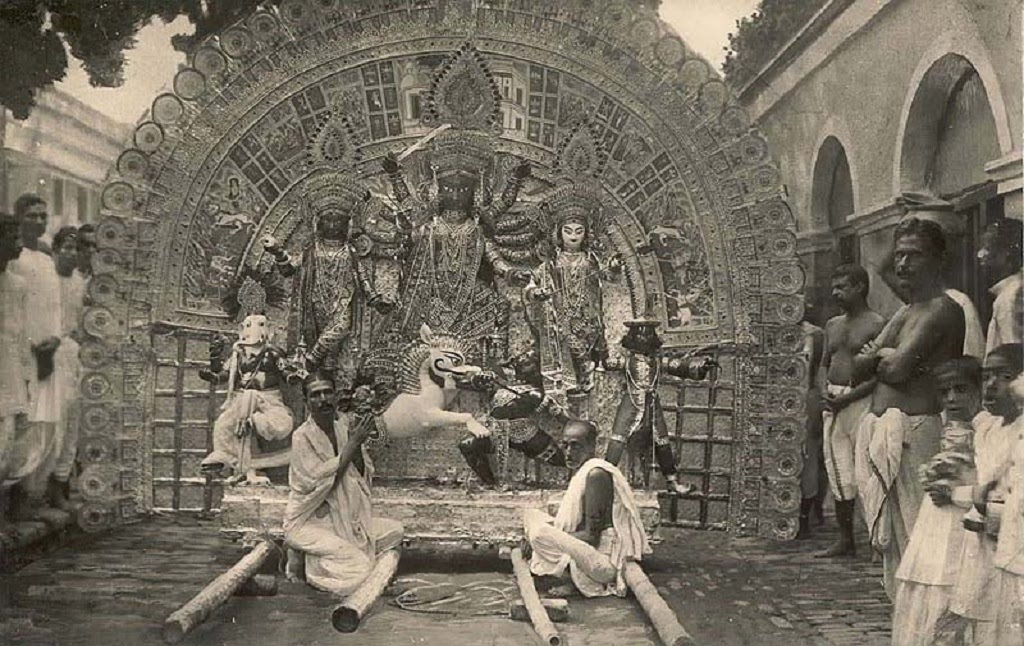
Traditional Goddess Durga Idol
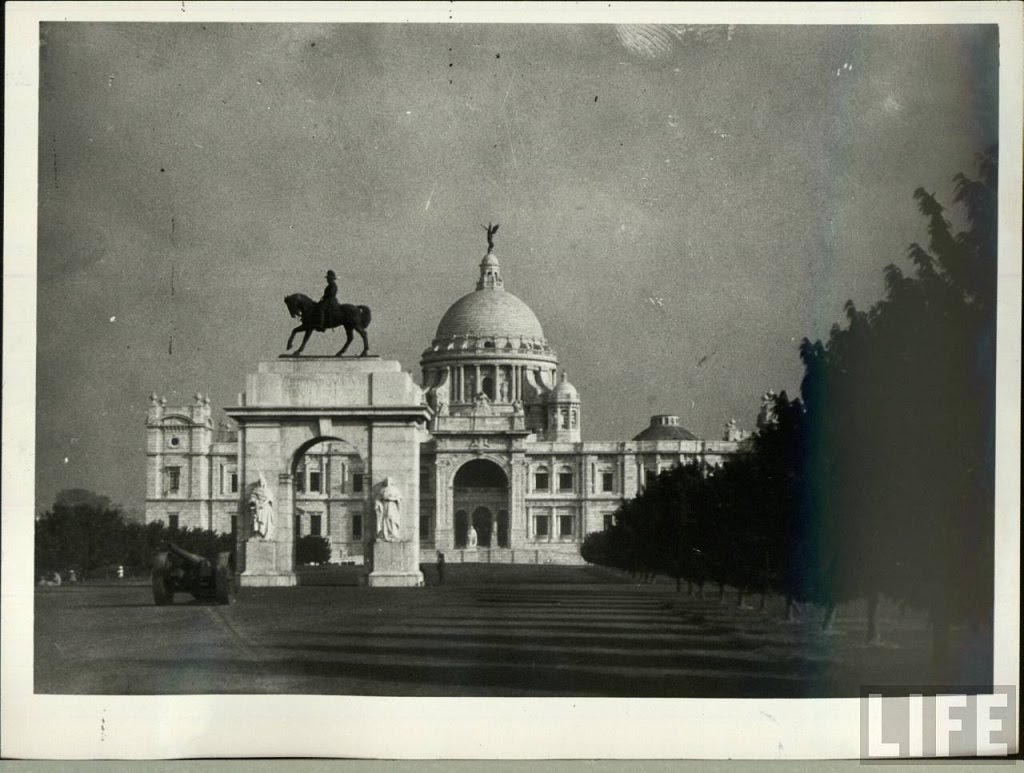
Victoria Memorial Hall
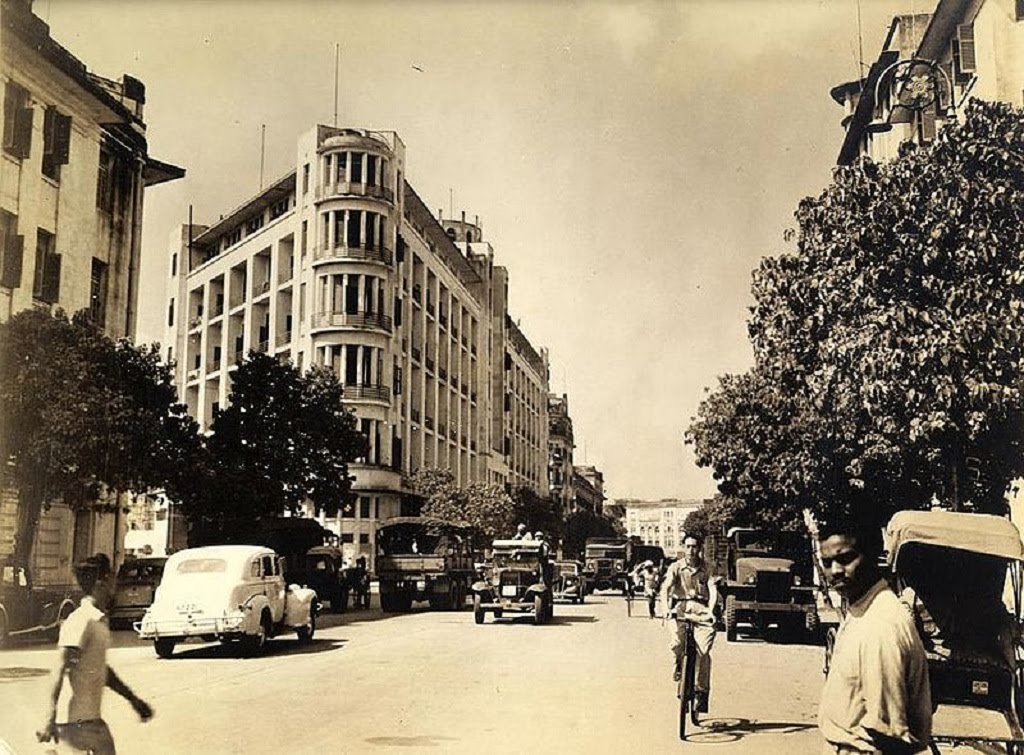
The Hindustan Building on Central Avenue once served as the office of US Army
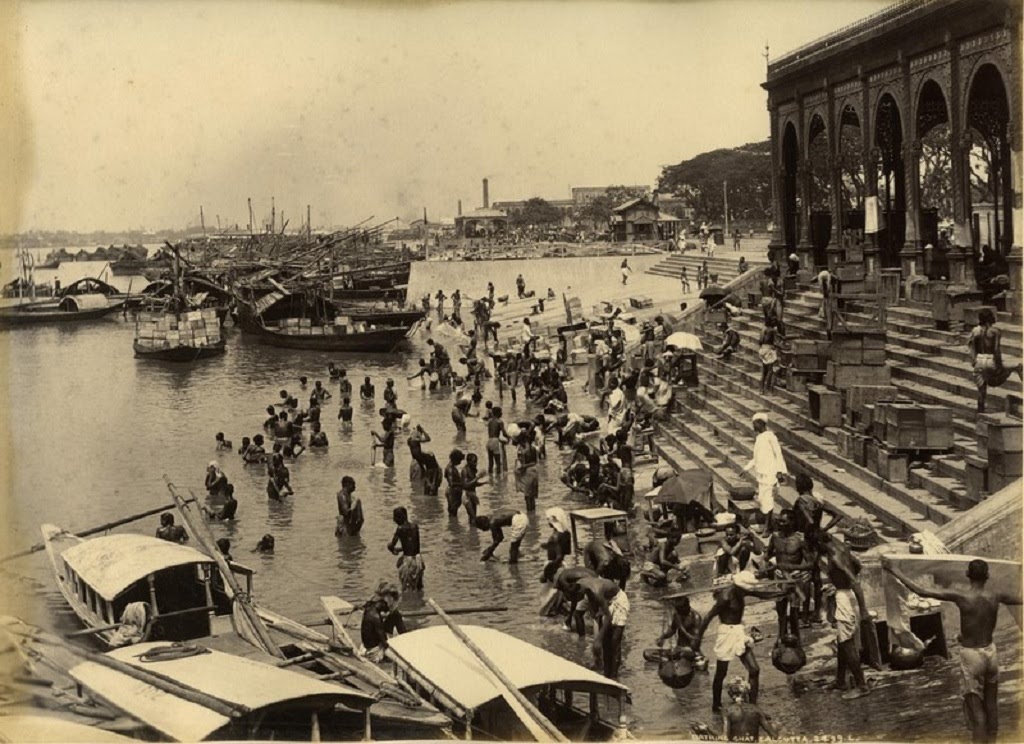
The Bathing Ghat of Hooghly River
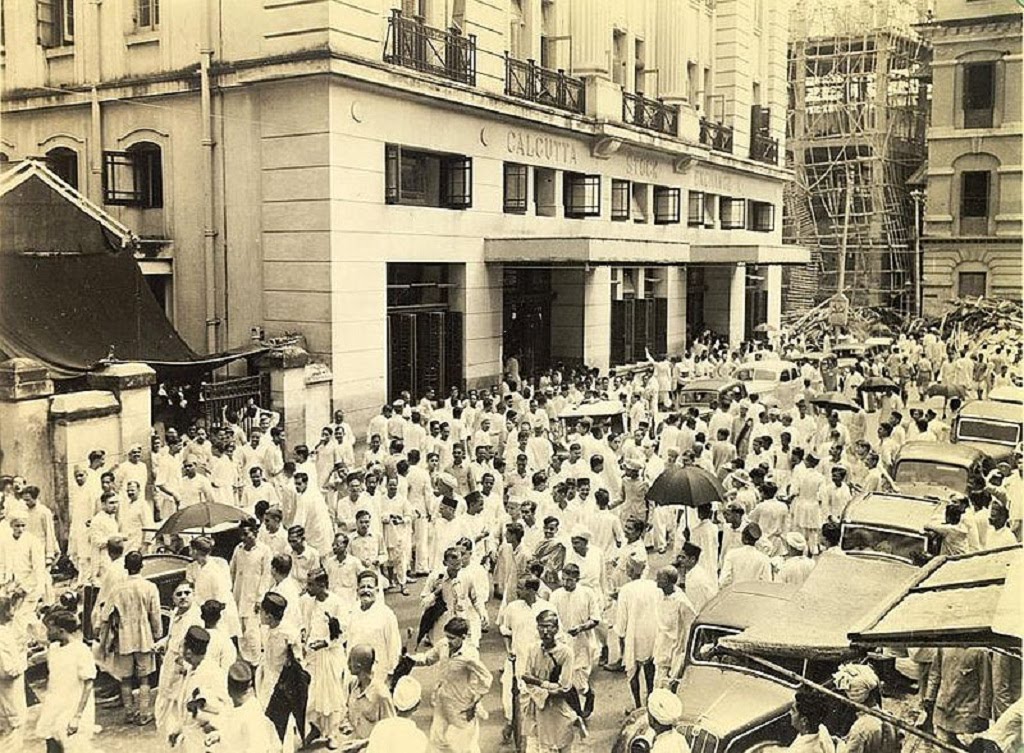
Hustle in front of Calcutta Stock Exchange
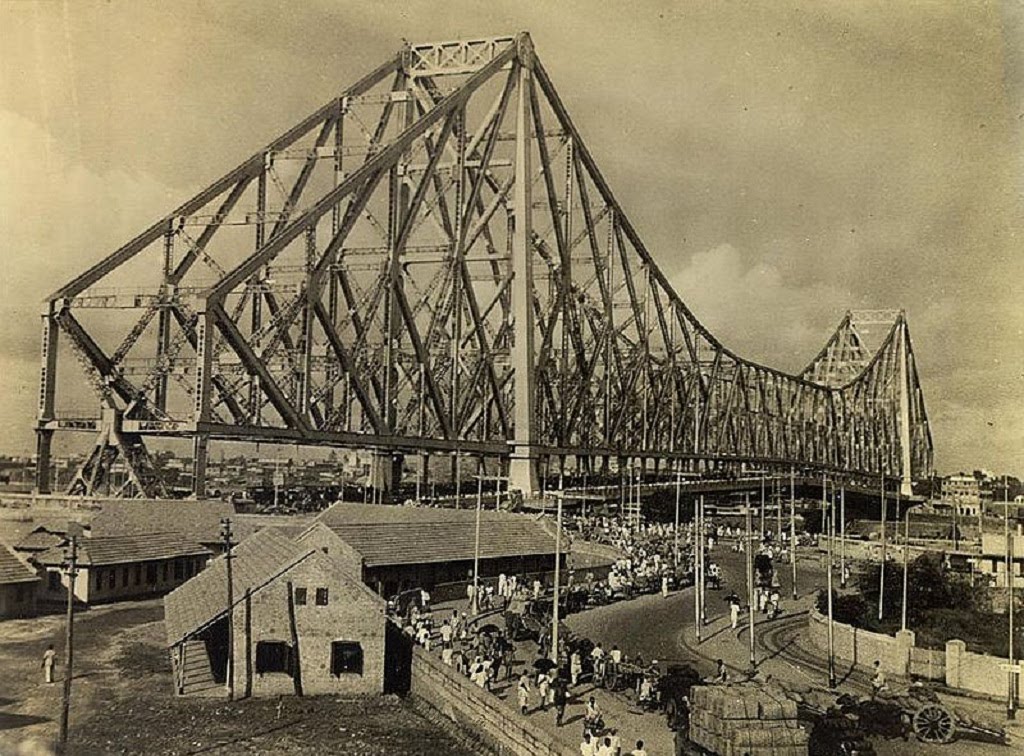
Early days of Howrah Bridge
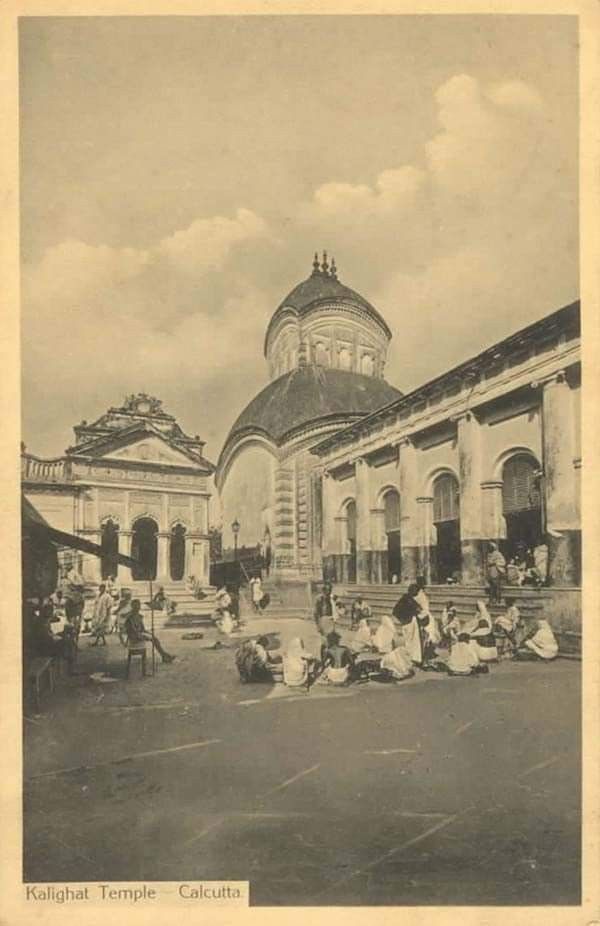
The auspicious Kalighat Temple of Goddess Kali
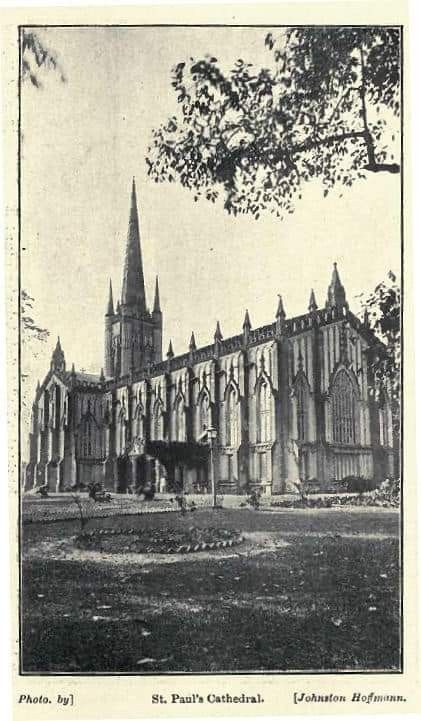
St. Paul’s Cathedral Church
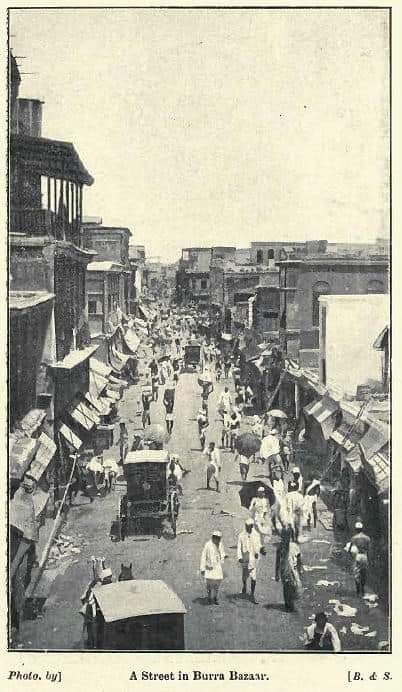
Burra Bazaar Area
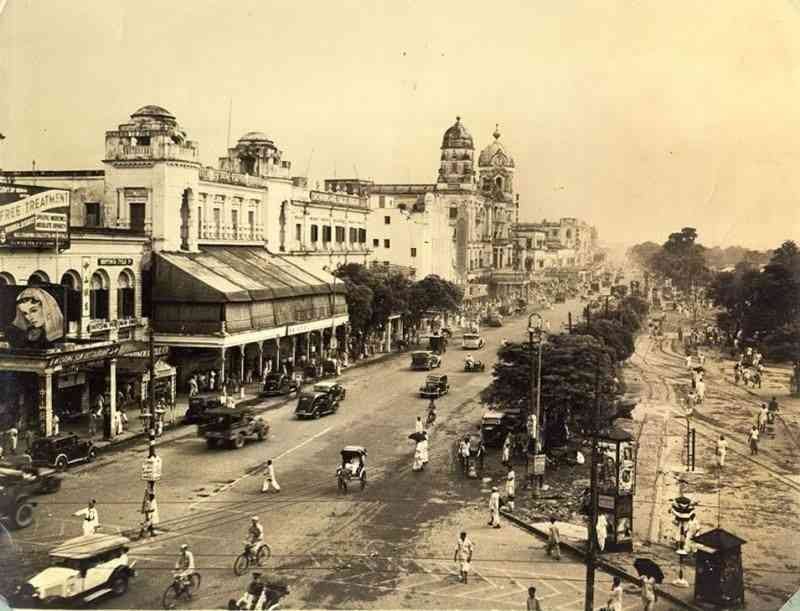
Esplanade Area
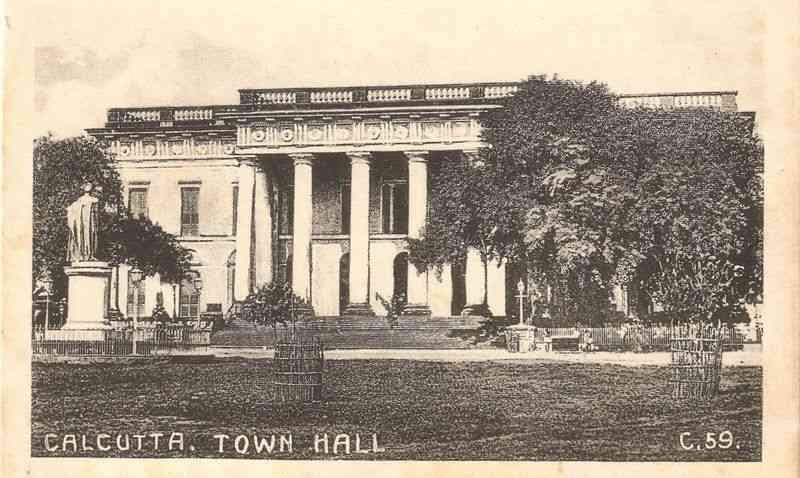
Calcutta Town Hall

Conclusion

Though the time has changed, and history has taken many turns but the essence of Kolkata, has remained the same over ages. The Government has come forward to preserve the heritages of Kolkata, that have made the Bengal and Bengalis proud through decades. People are hopeful that this tradition follows down with the upcoming generations by passing love and the celebration of the beauty of Kolkata.

Water Crisis in India: The Present and The Future

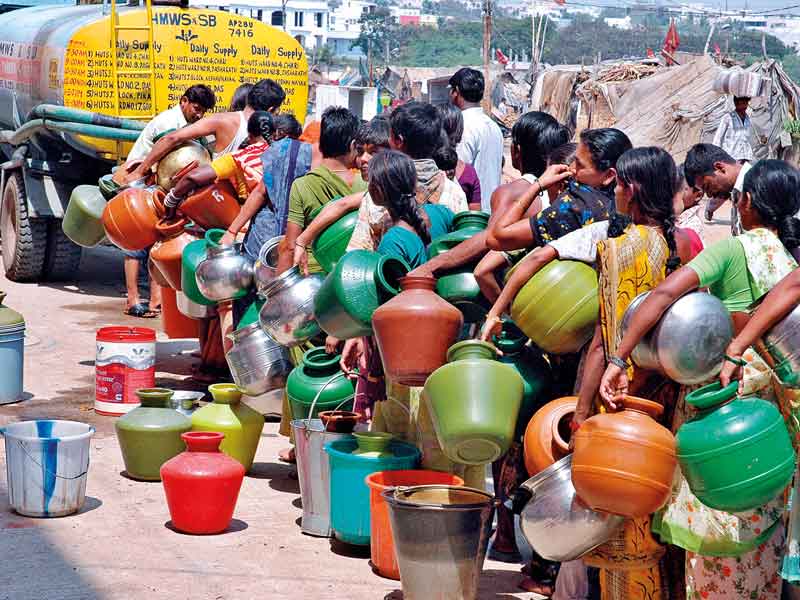
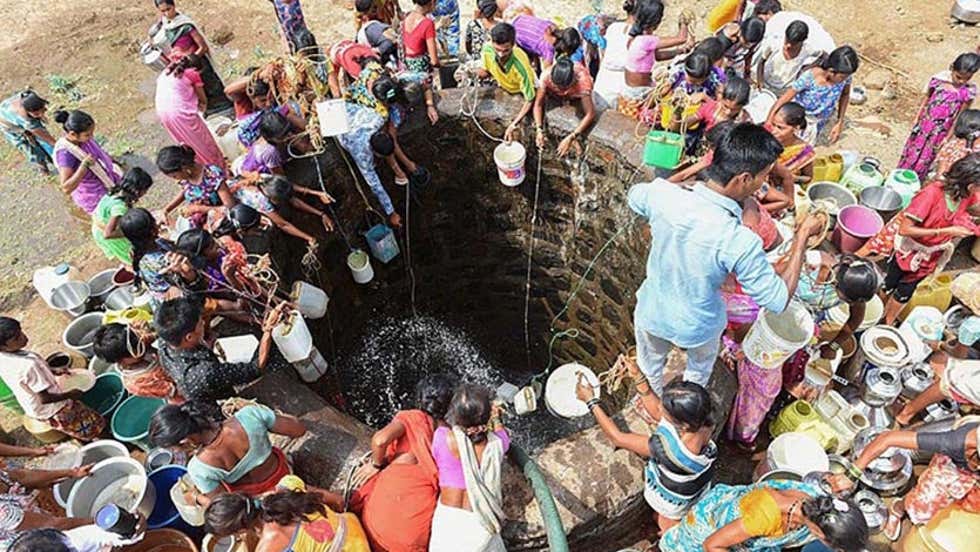
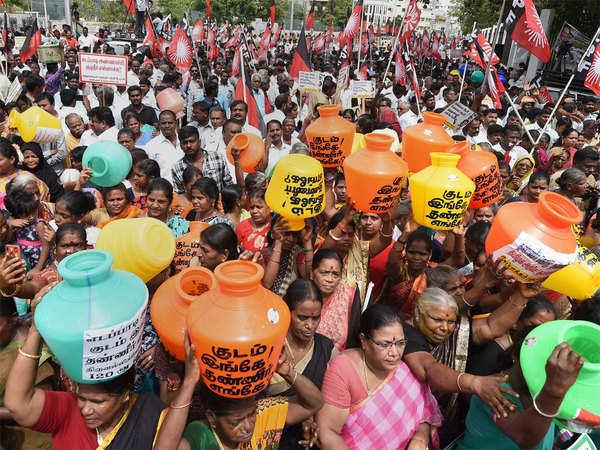
Queue for daily water collection

Introduction

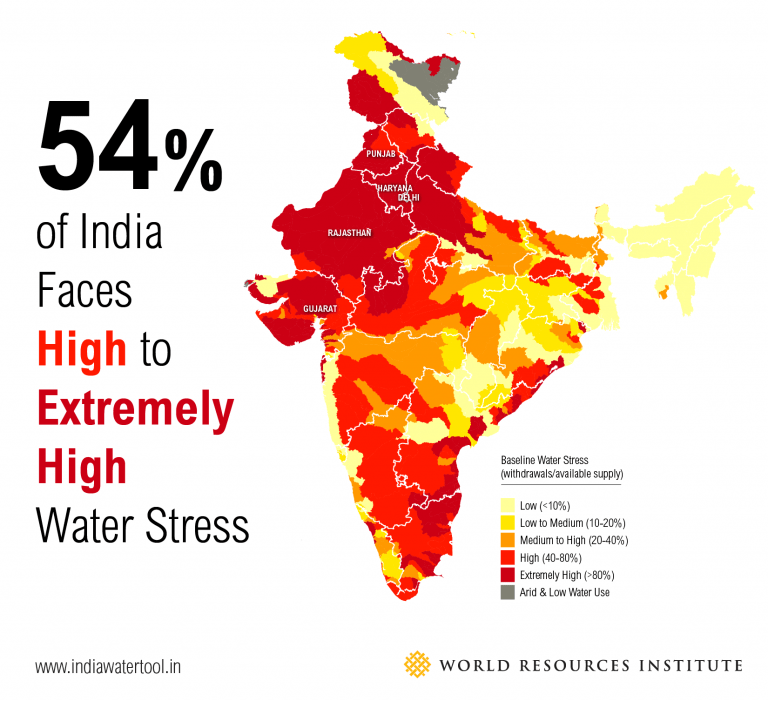
Water is the most essential element of life and livelihood. And India is having a hard time, coping up with the severe crisis of water. India constitutes 16 per cent of the world’s population, but the country has only four per cent of the world’s freshwater resources. With the changing weather patterns and recurring droughts, India is now declared as “water stressed”.

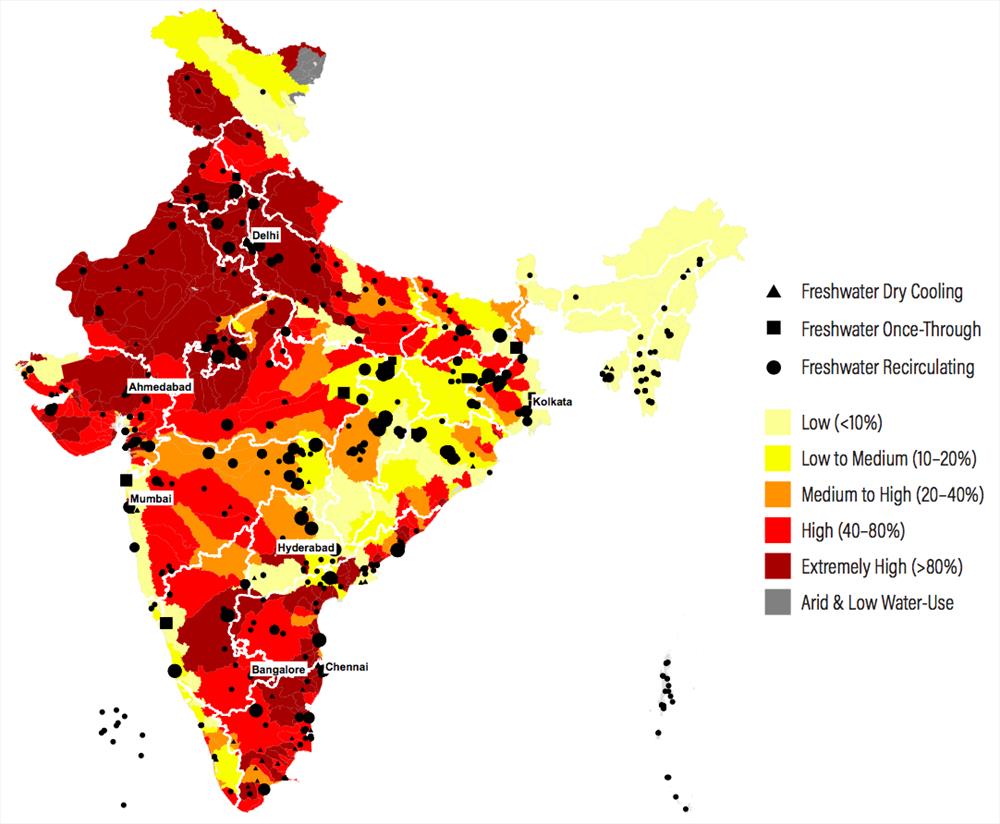
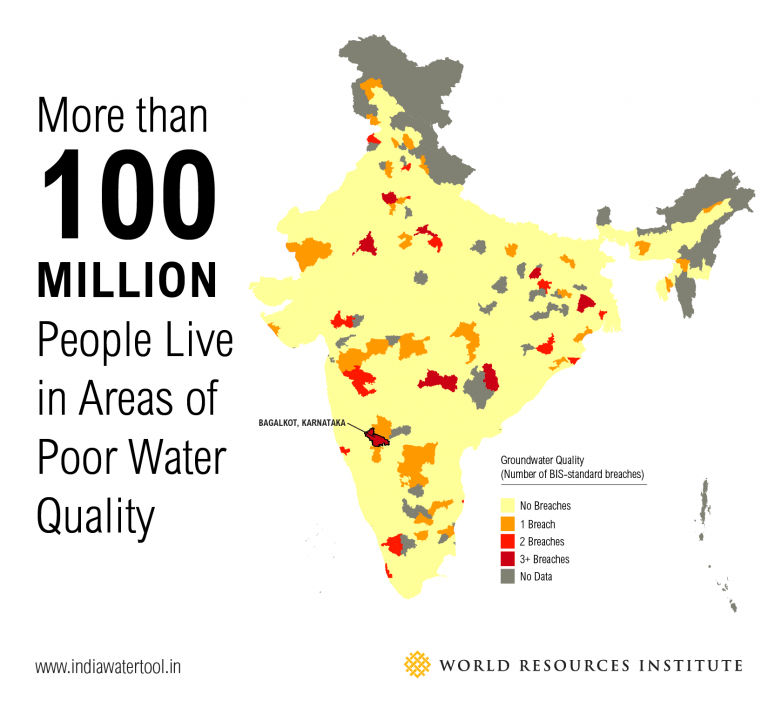
Statistical representation of India‘s Water Crisis

Background

Archaeological researchers had assumed the fall of Great Indus Civilisation was due to a catastrophic water scarcity caused either by shifting rivers or by drastic climate change that forced people to abandon city settlements. And history seems to repeat for present day India again. According to a NITI Aayog report in 2018, about 600 million people, or nearly half of India’s population, are facing extreme scarcity of water. The three-fourths of India’s rural households do not have stable running water supply and rely on sources that can cause serious health risks. The report also stated that India has become the world’s largest extractor of groundwater, accounting for 25% of the total. Moreover, 70% of the water sources were labelled as contaminated .And the conclusion of the report was ‘India is suffering from its worst water crisis in its history.’ It also pointed out 21 Indian cities to be run out of groundwater by 2020.

Reasons behind Water Crisis in India

1. Climate Change : The North-East monsoon is responsible for 10%-20% rainfall of the total rainfall in India, while the South-West monsoon provides approximately 80% of rainfall. In 2018, the North-East monsoon decreased by 44% and the South-West monsoon was deficient by 10%, causing the total rainfall in the area to decrease by 36 percent in comparison to the 50-year average. Because of the lower rainfall, water levels in reservoirs across the country decreased and led to extreme shortages of water in many major cities of India

. 2. Ground Water Extraction: Groundwater meets more than half of the country’s need of water supply and nearly 89% of the groundwater extracted in India is used for irrigation purposes. The traditional techniques of irrigation are also to blame for the water crisis as they result in a majority of water loss and evaporation during the irrigation process.

3. Pollutions in Our Rivers: Due to the lack of long term water management plans, most of the country’s rivers either run dry or have remained polluted over decades. The national river of Ganges is also the one that is most severely polluted, which is mainly resulted from untreated sewage of densely populated cities, industrial waste as well as due to religious ceremonies in and around the river.

4. Wastage of Unmanaged Water : According to the Central Water Commission, even though climate change has resulted in a reduction in rainfall and lack in underground water reservoirs, the country still receives enough rainfall to meet the needs of over 1 billion people. However, India only catches only 8 percent of its annual rainfall due to poor rainwater harvesting. Also for lacking the treatment of wastewater reuse, approximately 80% of domestic wastewater is drained out as waste and ends up flowing into salt water bodies.

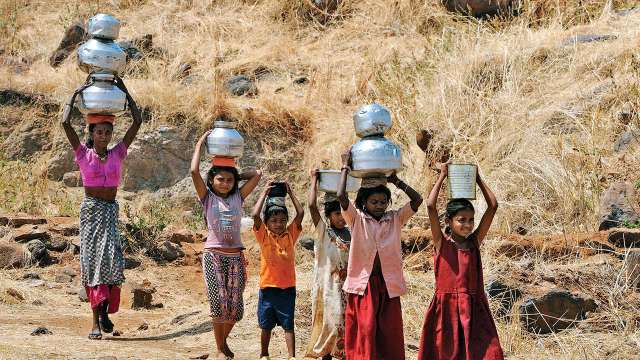
Struggle for daily water collection in water-stressed areas of India

Effects of Water Crisis in India: Where We Stand Today

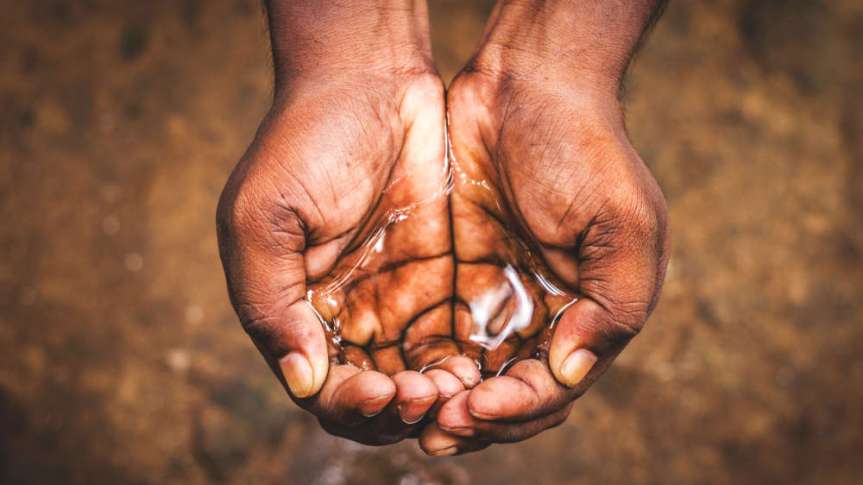
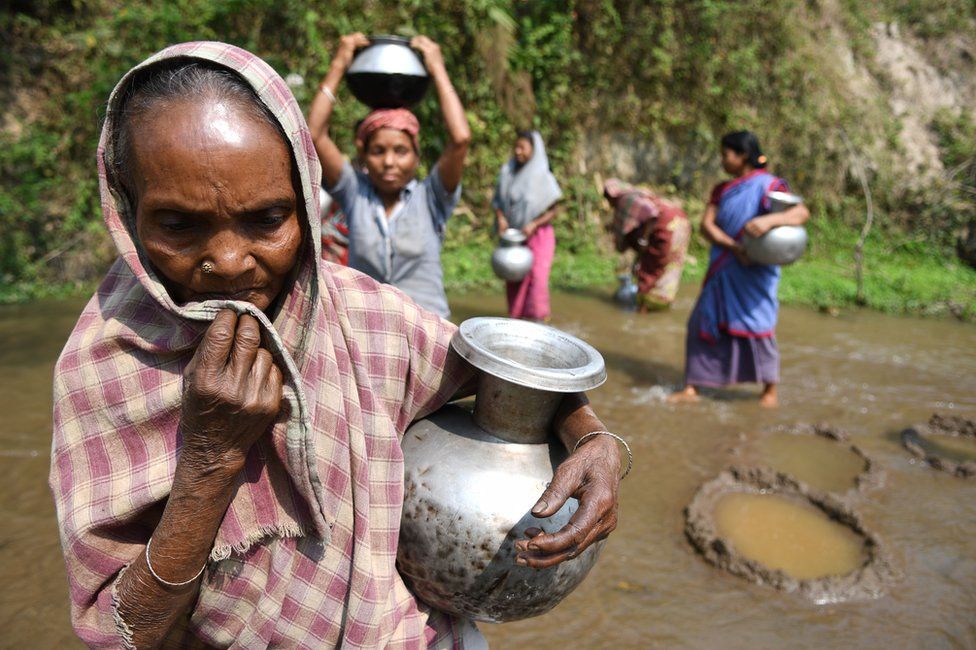
As many as 256 of 700 districts have reported ‘critical’ or ‘over exploited’ groundwater levels, according to a data from the Central Ground Water Board (2017). Fetching water in India has been perceived as a women’s job for centuries, especially in the rural areas. As groundwater resources come under increasing pressure due to over-reliance and unsustainable consumption, wells, ponds drying out fast, escalating the water crisis and placing even greater burden of accessing water on women. A rural woman in Rajasthan walks over 2.5 kilometres to reach a water source, according to a report by the National Commission for Women. Moreover, according to a non-profit named Water, women around the world spend a collective 200 million hours fetching water for their family. In addition to the time spent collecting water, millions may also spend significant amounts of time finding a place to go to relieve themselves. This makes up an additional 266 million hours lost each day. The acute crisis has even led to polygamy in one drought-prone village of Maharashtra. This involves having more than one spouse to collect water. The arrangement is termed as ‘water wives’.

The struggle for women

The Solution to the Crisis: Future Stands

Children also becoming victims of Water Crisis

The Government has taken up the most important role to eradicate the crisis by forming the Ministry of Jal Shakti and launching “Jal Jeevan mission”- Rural in 2019 to promote “Har Ghar Jal” by 2024. Goa and Telengana have achieved the first two Indian states to reach “Har Ghar Jal“, while Andaman & Nicobar Islands and Puducherry became first Indian Union Territories to reach the milestone. In 2021, “Jal Jeevan mission”-Urban was launched to complement the project. “Jal Shakti Abhiyan-Catch the rain” is also introduced to capture and reuse of rain water at the grassroot level as a Jan Andolan. Along with this, for the cleaning and filtration of Ganges river “Namami Gange” had been rolled out as a national flagship mission. Coastal Reservoirs, Desalination of sea water and improved irrigation techniques are now been adopted to address the crisis.

Conclusion

Along with time, active participation from every layer of society in solving the water crisis of India is being witnessed. The youth has come forward with an appealing message to properly addresses the crisis and solve the drawbacks together. Now, the emerging awareness spreading among masses India can hope for a better future to handle the crisis more effectively.

Hand-Rickshaw Pullers of Kolkata: The Legacies Left Behind

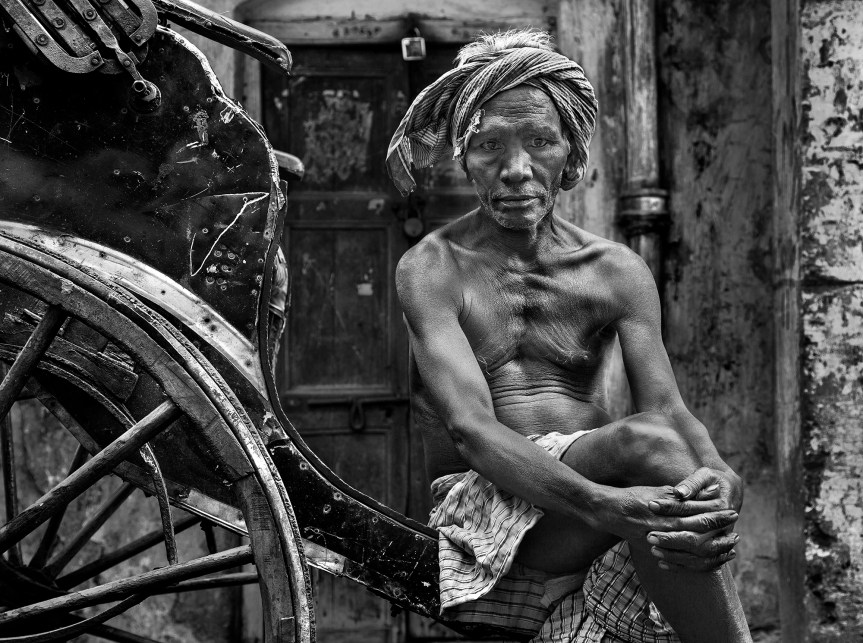
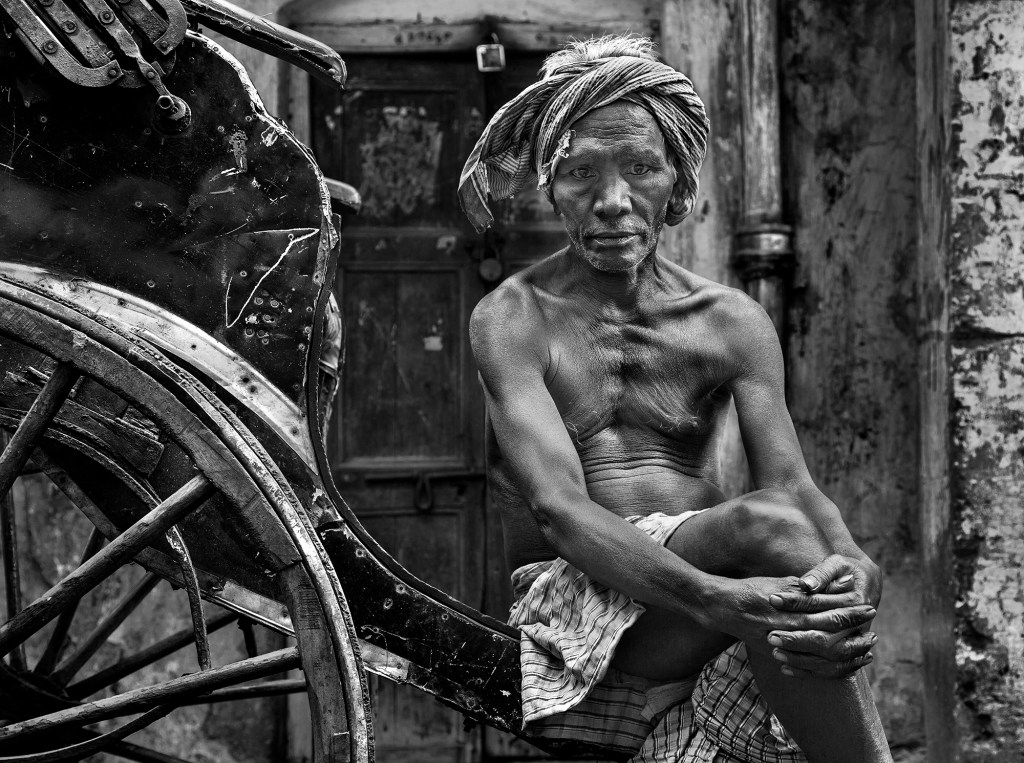
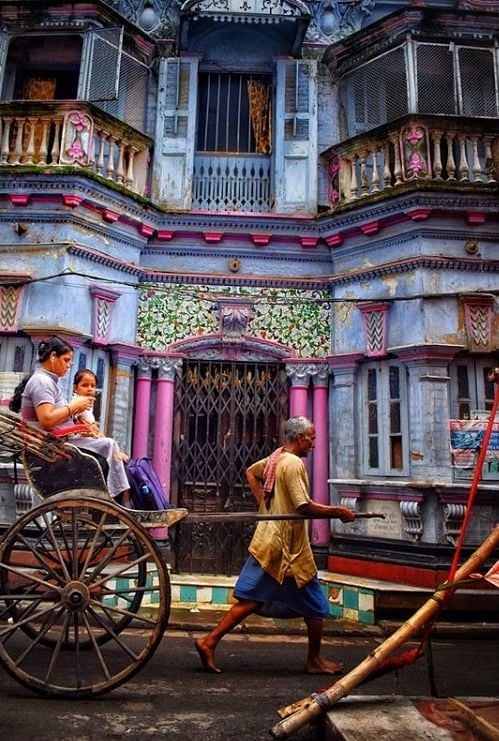
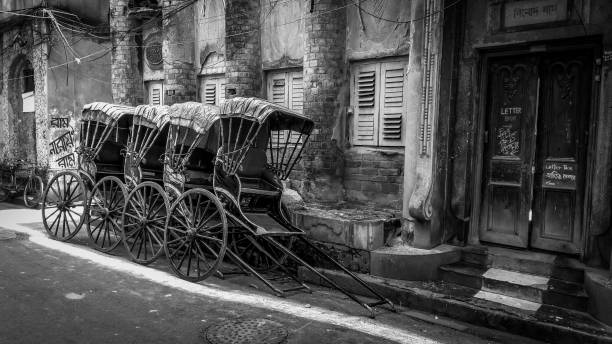
Hand-Rickshaw puller of Kolkata

Introduction

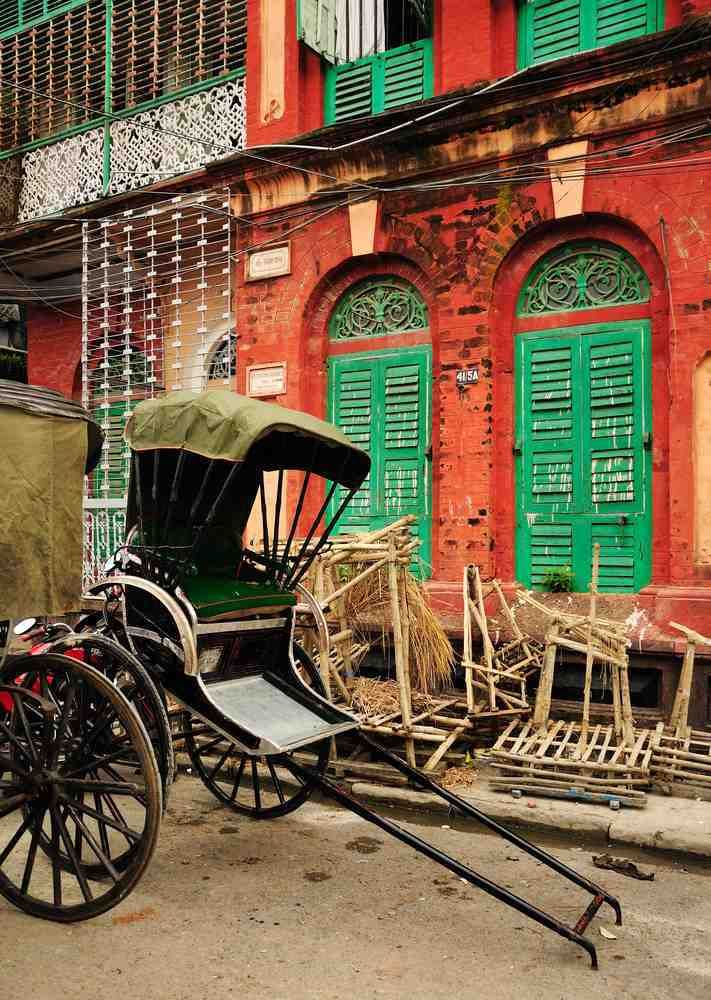
Kolkata is a city that is an amalgamation of the old and new. A city that is being modernised everyday but still manages to hold on to the old charm vibe. It is the only city in India to have various modes of transportation, dating back to the British era. The first city in India to construct a metro rail, it is now the only city in the world that continues to operate licensed hand-pulled rickshaws (called tana rickshawin Bengali) as a mode of public transport. One can still see the tram cars and hand-pulled rickshaws plying on the narrow bylanes of Kolkata.

Hand Rickshaw in Kolkata

Histrionic Background

The word ‘rickshaw’ originates from the Japanese word ‘Jin-riki-sha’ (jin meaning human, riki meaning power, and sha meaning vehicle; which translates to human-powered vehicle). The hand-pulled rickshaw was invented in Japan in 1869 and was introduced in China by 1874. Unlike previous modes of transport, like kago, sedan chairs, etc. which needed two persons to carry, the rickshaw had the significant advantage of being driven by a single person. The following decades witnessed a boom of hand-pulled rickshaws in Japan, China, Singapore, India, Indonesia and Malaysia. They served as cheap means of transportation and provided employment to millions of poor working-class families living in cities. 

The British were the dominant colonial power in Asia and the usage of a human to pull another human definitely served in reinforcing the master-slave power hierarchy. Post World War II, colonialism declined in Asia and the hand-pulled rickshaw faded out of use from erstwhile British colonies. Strangely, the legacy of rickshaws continued in Calcutta long after the British Empire was gone (1947), and long after the communist government in China banned (1949) the use of rickshaws. Not only did it survive in Calcutta but the tenacious hand-pulled rickshaw has become an icon of the metropolis

A Hand-Rickshaw in an alley of Kolkata City

A Staple to Kolkata’s Culture

Kolkata’s hand-pulled rickshaws are mentioned in many literary books and featured in films of different languages. It plays the protagonist in Rudyard Kipling’s ‘The Phantom Rickshaw’. The story is set in Shimla of the 1980s. Greg Vore, an international travel photographer, researched on the life, role and history of hand-pulled rickshaws in Kolkata and Bangladesh. Bimal Roy’s classic Do Bigha Zamin (released in 1953) tells the story of a farmer who becomes a rickshaw wallah in the then Calcutta.

Present Situation of Rickshaw: How They Are Doing

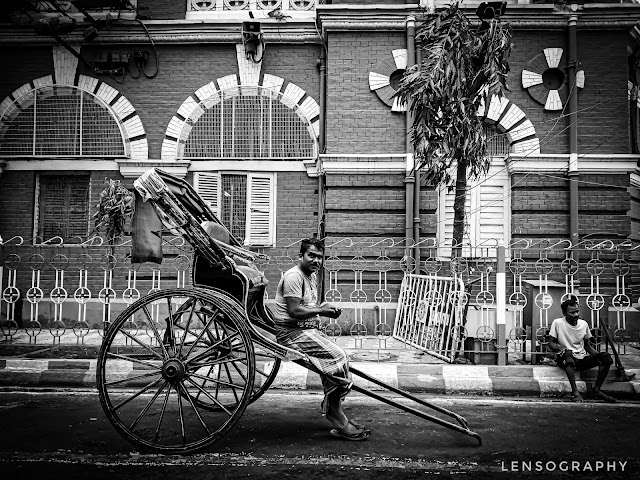
The hand-pulled rickshaw survives due to a number of socio-economic reasons peculiar to Kolkata. Firstly, pulling a rickshaw does not require skill; it requires hard physical labour. Unemployed and unskilled labourers find employment as rickshaw pullers in Kolkata. They do not undergo any training or require a driver’s license to operate. Most rickshaw pullers do not even know the names of the roads they ply their trade on, nor do they understand the various traffic symbols. This is because they are mostly illiterate and speak Hindi instead of the local Bengali. Many rickshaw pullers do not even own the vehicles themselves, but rent them from sardars (rickshaw owners) who own khatals (rickshaw garages). This arrangement evolved because many rickshaw pullers are either too poor or seasonal migrants, plying the rickshaws only for a few months when their fields back home lie fallow. 

Leisure between the fare trips

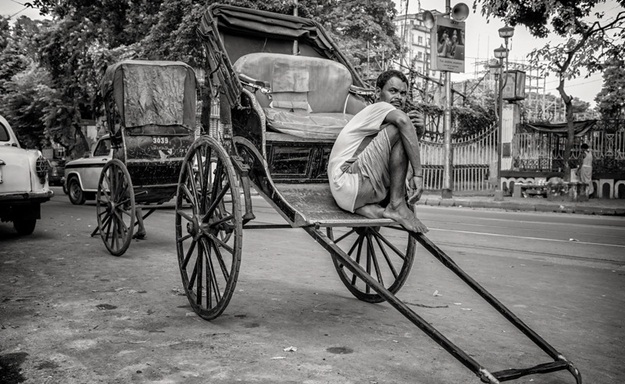
Today, due to declining popularity and availability of other modes of transport, rickshaw pullers earn a meagre amount and mostly live on the streets, saving every rupee to send to their families. Added to this are costs for food and rent paid to sardars, after which they are left with very little money for themselves. Many turn to alcohol and suffer from various diseases and medical problems associated with old age and the physical stress of the job.

Kolkata does currently have 18,000 rickshaw pullers and 6000 rickshaws, though not all of them are licensed by the municipality

Queued up for passengers

The “Ban” for Rickshaws: The Efforts to Demolish The Rickshaw Transportation

Kolkata has faced much flak due to the existence of this colonial relic. In 2006, the state government tried permanently banning these rickshaws by the passing of the Calcutta Hackney-Carriage (Amendment) Bill, but it was never implemented. Nothing has changed after the change of government in 2011, though promises were made about replacing the licensed hand-pulled rickshaws with electric or cycle rickshaws. If these rickshaws need to be permanently removed from the streets, a justifiable solution needs to be worked out to ensure proper rehabilitation for all the people directly and indirectly attached to the trade.

On the streets of Kolkata

The Positive Side: Why Hand-pulled Rickshaws Are Relevant To Kolkata

The narrowed urban planning of Kolkata has also played a part in the continuance of this mode of transportation. Due to poor drainage, streets in low-lying areas get flooded frequently. During heavy monsoons, the hand-pulled rickshaw is the only form of transport which can navigate flooded streets. Its non-reliance on fossil fuels makes it less expensive and non-polluting, and its compact size allows easy navigation through the narrow lanes of Kolkata

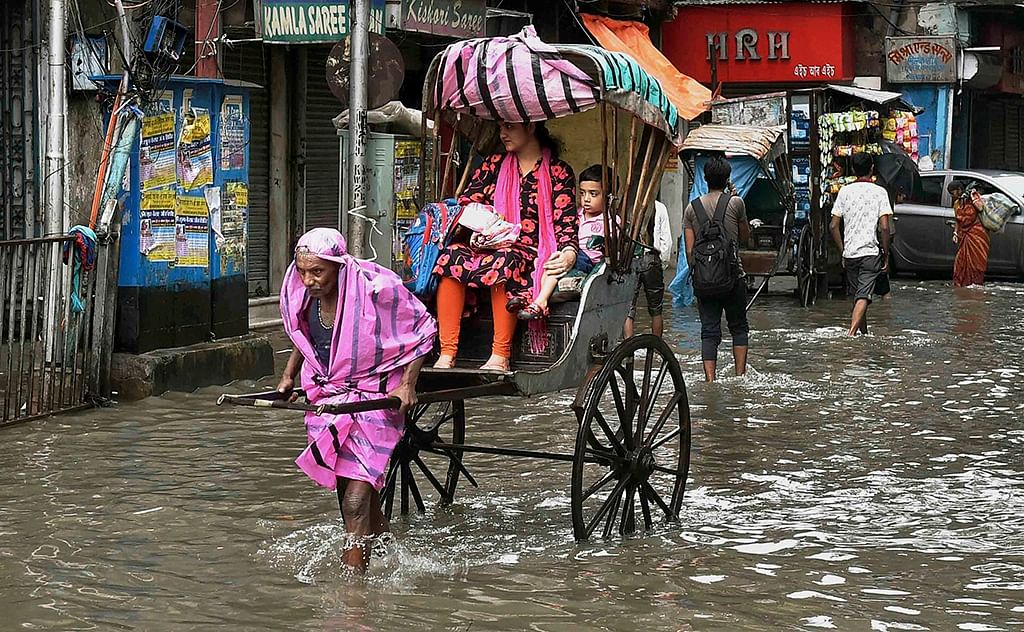
Carrying passengers in flooded road

Conclusion

Hand-pulled Rickshaws are the legacies of Kolkata’s British colonial past. The demolition of these mannual carts and their replacement with electric mode of carrier carts, would slightly dim the spirit the of the old city. But with time’s stand, it is on the behalf of saving the human labour in a more cost-effective and eco-friendlier way. Although, Kolkata will always cherish its beautiful past garnered with these wooden carts, that served the city and its citizens for ages.

Khadi: The Sustainable Fashion of India

Khadi, India‘s own versatile clothing material for ages

Introduction

Khadi, also known as Khaddar ,which started as a symbol of the Swadeshi Movement led by Mahatma Gandhi 100 years ago, is now a fashion statement in India and is gradually getting popular across the globe. Not only as an affordable and comfortable fabric for daily-wears, but also Khadi is now being considered as a Style Statement for its sustainability and eco-friendliness.

Khadi production

Nature of The Khadi Material

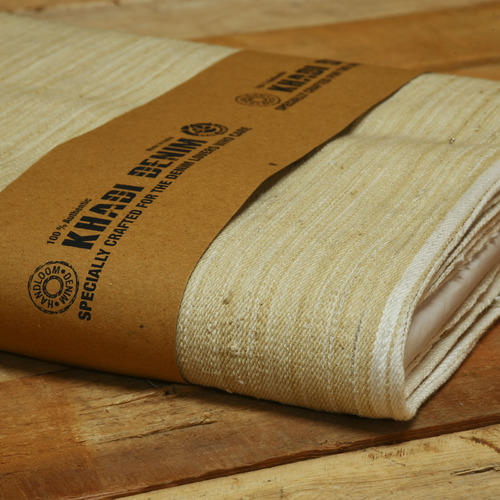
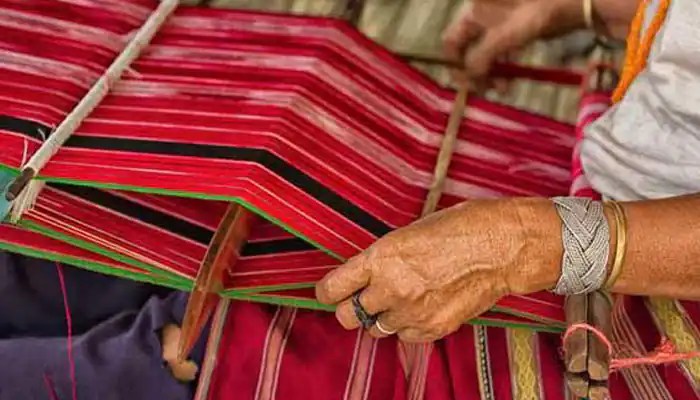
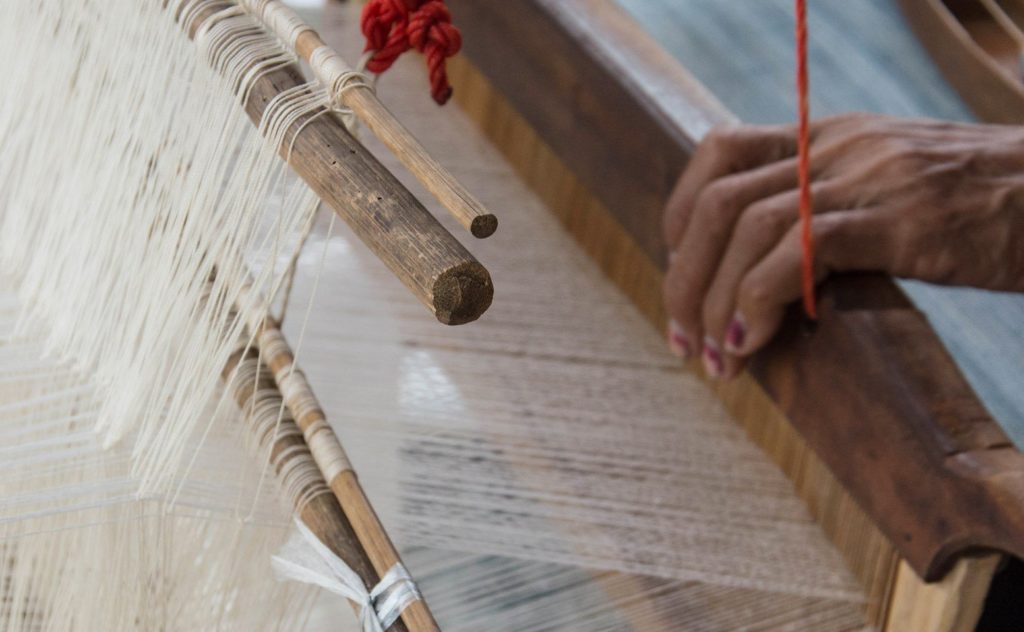
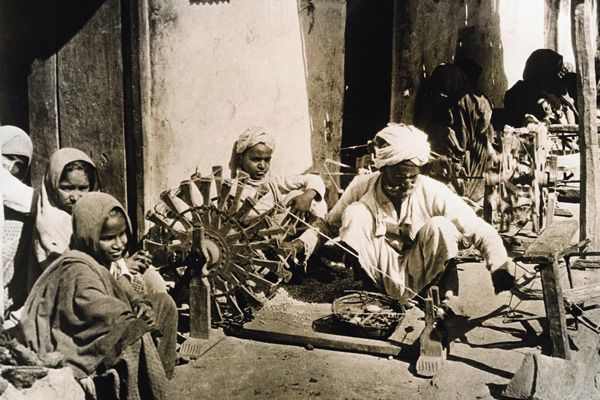
Khadi is a textile fabric made by hand-spun and hand-woven cotton, silk, wool or a mixture of these fibres. It is a traditional way of textile manufacturing and is generally produced by rural artisans. The method of manual spinning and weaving makes the fabric structure somewhat rugged and imparts a unique appearance and makes it soft and comfortable to wear. The spinning is carried out on a traditional wooden frame called charkha, while the weaving is done on a handloom. The specific fabric construction helps in circulation of air within the threads and imparts unique property of keeping the wearer warm in winter as well as cool in summer.

Weaving of Khadi

History of Khadi : Role in India’s Freedom Movement

India has an ancient heritage of cloth making based on the availability of natural fibrous raw material such as -agricultural cotton owing to the clement climatic conditions and fertile land, varieties of silk from different sericulture and wool from domestically reared sheep. The textile coloration was carried out using abundantly available natural dyes, derived from various plant and animal extracts. Such flourishing textile base was one of the major attractions for the Western world. After mechanised industrialisation, the situation changed and the basic raw material was exported from India, converted into mill-processed finished cloth and the imported fabric was brought back. This led to the demolition of traditional textile manufacturing in India and eventually the art and craft of fabric making diminished.

During the initial phase of the freedom movement, national leaders like Dadabhai Naoroji and Lokmanya Tilak initiated the Swadeshi Movement to promote Indian-made products. However, it was Mahatma Gandhi who in 1918 brought the focus of India’s freedom struggle to khadi by promoting that as a Swadeshi symbol.

Under the leadership of Mahatma Gandhi, khadi-making regained momentum and became a symbol of revolution and resistance. It also provided employment to the vast rural population of India and achieved distinct identity as a common man’s cloth. As everybody could wear the same form of clothing without any distinctions of class, creed or religion, they could demonstrate solidarity in freedom struggle. Wearing khadi became a matter of national pride and united the population of India by surpassing the divisive system of the region, language, religion, caste, age and gender. It reflected our country’s legacy of sustainable living and self-reliance. The Indian national flag is also made from khadi material.

Khadi making with Charkha, during India‘s Freedom Movement

Government Initiatives After India’s Independence

The Khadi and Village Industries Commission (KVIC) is the Indian government body that promotes khadi, whose production and sale comes under the small scale industry sector. KVIC was created by a parliament act after which many KVIC outlets were opened across the country. These shops sell khadi fabrics and apparel. Every year between October to January, all Khadi Gramodyog Bhavans offer discounts on their products. KVIC also organises exhibitions and trade fairs in the country and abroad to promote khadi.

An estimated 15 lakh people are now engaged in producing over 12 crore metres of khadi. KVIC is taking further steps to enhance its production as the market demand for such products is much more than the supply. A new programme is expected to establish the ‘Khadi Mark’ and a logo to indicate the genuineness of the product. The financial support provided and the political will exerted by the present government and the special emphasis from Prime Minister Narendra Modi has helped boost employment in the manufacturing and promotion of khadi products. Leading film artists, sports personalities and fashion designers have come forward to promote this unique ‘Made in India’ fabric in the global arena.

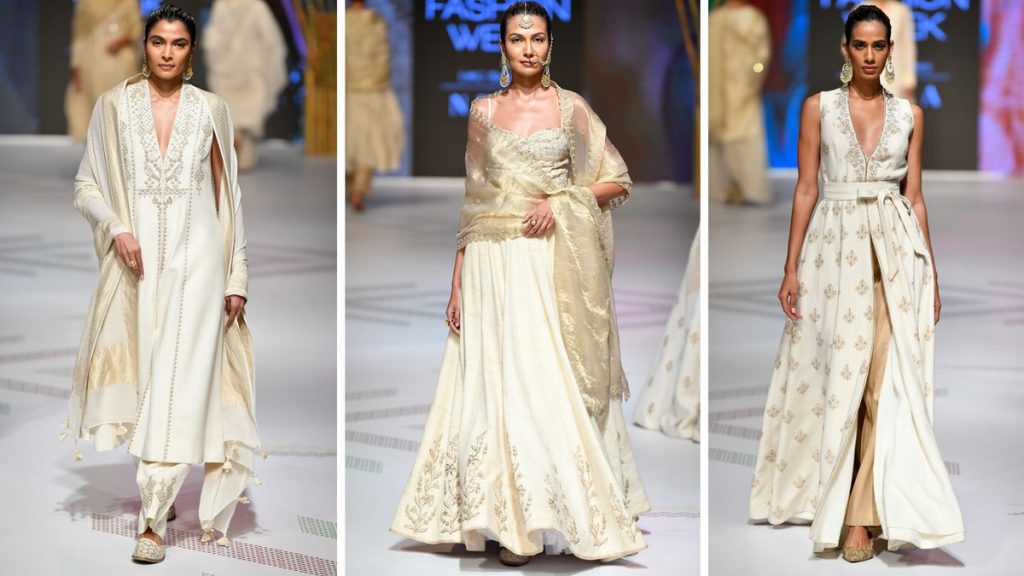
Khadi used in sustainable fashion

Contribution of Khadi in World Fashion

Considering khadi‘s eco-friendly and natural origin, it has become a focal point of global fashion owing to growing consumer awareness and the consistent demand for sustainability. Fashion designers have acknowledged the aesthetic appeal and comfort attributes of khadi and experimented it in blending with many other stuff to synergistically enhance the fashion appeal and outlook of products. Khadi is now used in denims, jackets, shirts, dress material, stoles, home furnishings and apparel accessories like handbags. Khadi, once considered as the fabric for political leaders and the rural folk, has entered the wardrobe of the fashion-conscious urban population. Wearing khadi now symbolises affluence as it offers a distinguished look. The ecological aspect and ethnic looks of khadi have caught the fancy of global brands and leading fashion designers have started including khadi material in their collections.

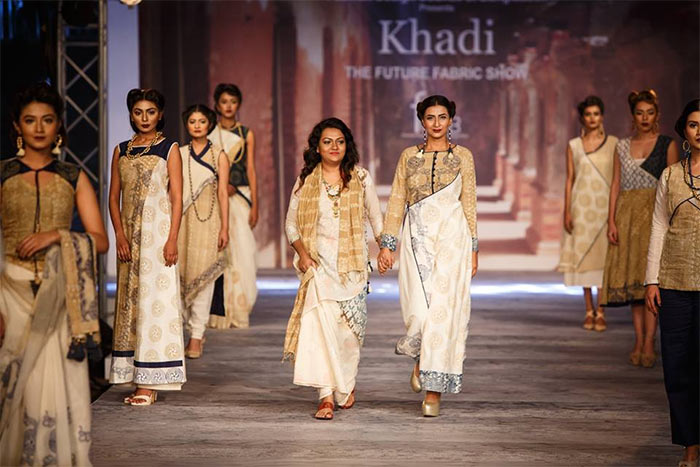
Global acceptance of the Khadi in fashion

Conclusion

Incorporating Khadi in our daily life may also pave the way for a simple spiritual living exuded by our clothing and home décor items. Khadi being such a versatile fabric can be easily incorporated, by changing the warp and weft, in a home decor and clothing lines. This will make us come closer to nature and add a touch of earthiness in our lifestyle.

Howrah Bridge: The Living Heritage of Kolkata

An everyday view of Howrah Bridge

Introduction

Howrah Bridge is an architectural marvel and a well-known Kolkata landmark. It has served as a backdrop for numerous movies since the 1950s, including a 1958 film named after the bridge. One can walk across the bridge and admire its unique construction or glide underneath while on a boat ride along the Hooghly River. With a central span of 1,500 feet (457 meters) between its two towers, this enormous steel structure is one of the longest cantilever bridges of its type in the world. Howrah Bridge extends across the Hooghly River, connecting the city of Howrah to Kolkata.

Historic Background

The construction of the Howrah Bridge  was first proposed in 1862. The Government of Bengal wanted to build a bridge over the Hooghly River. They asked the Chief Engineer of the East India Railway Company to study the feasibility of the idea and come up with a proposal. But for several reasons, his proposal never materialised.

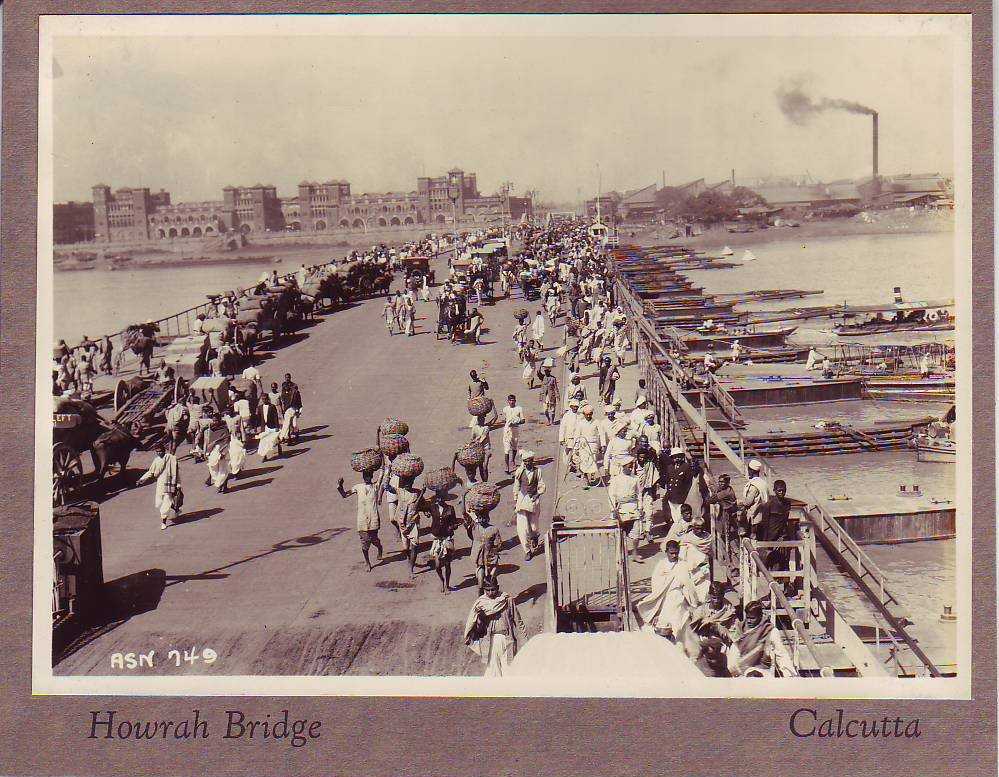
Later in the 1800s, a pontoon bridge or floating bridge was built between Howrah and Kolkata. But it wasn’t strong enough to handle the huge traffic between the two cities or to weather the frequent storms in the area. So the Bengal government continued to look for alternatives and, several decades later, the new bridge was finally commissioned. The contract to build it was awarded to a company called The Braithwaite Burn and Jessop Construction Company.The design of the Howrah bridge was made by Rendel, Palmer and Tritton and the bridge was constructed by Cleveland Bridge & Engineering Company. The construction of bridge was started on 1936 and ended in 1942. It was opened for the public transport on 3 Feb 1943. It was renamed as Rabindra Setu in June 1965 after the first Indian Nobel laureate Rabindranath Tagore.

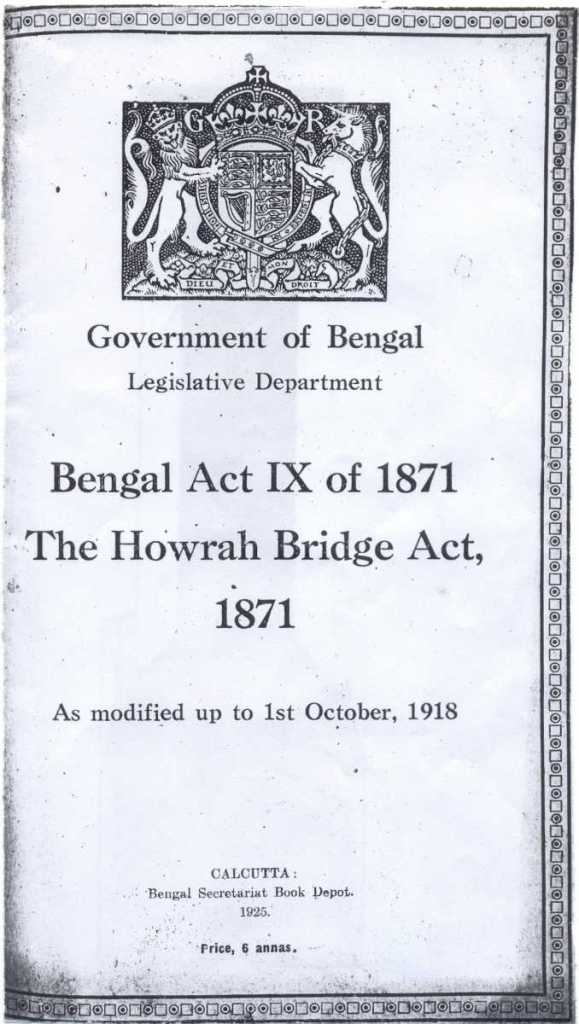
The Act for the construction of Howrah Bridge

Key Structure of The Bridge

The Howrah Bridge is a suspension-type balanced Cantilever Bridge. It has a central span of 1500ft between the main towers. The anchor and cantilever arms are 325ft and 468ft long, respectively.The suspended span has a length of 564ft. The main towers are 280ft-high above the monoliths and 76ft apart at the top. The bridge deck measures 71ft in width and features two footpaths of 15ft on either side.The super-structure is built up with riveted sections made of a combination of high tensile and mild steel. The bridge deck descends from panel points placed in the middle of the towers, which are located in the lower chord of the main trusses through hungers.The bridge deck consists of a 71ft carriageway and a 15ft pathway projected on both sides of the trusses and supported by a fascia girder.The carriageway outside the tower is backed on the ground by an anchor arm. The deck system includes cross girders suspended between pairs of hungers by a pinned connection. Six rows of longitudinal stringer girders are arranged between cross girders and floor beams support transversally on top of the stringers.These joints support a continuous pressed steel troughing system surfaced with concrete. Two main expansion joints are placed at the interfaces in the middle of the suspended span and the cantilever arms.Eight articulation joints exist at the cantilever arms and suspended portions and separate the bridge into segments by a vertical pin connection to allow the deck’s rotational movements. The bridge deck features a longitudinal ruling gradient at each end.The main tower is based on single monoliths with 21 chambers. The minimum vertical clearance for the carriageway is 5.8m and 8.8m for the river traffic.

The early days of Howrah Bridge

Specialities of The Bridge: What Made It A Heritage

Constructed without nuts and bolts, the Howrah Bridge was formed by riveting the entire steel structure. The bridge officially opened in 1943 when it was the world’s third longest cantilever bridge. Today, it is the sixth longest bridge of its type in the world. The Howrah Bridge is also thought to be the world’s busiest cantilever bridge.

In 1946, in a census carried out, it said that the bridge saw a daily traffic of 27400 vehicles and 12100 pedestrians. In fact ages ago the bridge had also carried trams that left from Howrah station terminus. However, it seemed like the bridge could not take the weight of the heavy weight and hence running trams on the bridge was discontinued. Currently, the bridge can bear the weight of 60,000 vehicles only but it still carried almost 90000 vehicles daily. The bridge also has a separate foot path for pedestrians to walk.While the bridge remains one of the key attractions in the city, the Howrah Railway Station at its Howrah end is another site of much historical significance as the country’s oldest railway station. At the Kolkata end, the bridge ends right by the stunning and colourful Mallick Ghat flower market, one of the city’s most vibrant markets.

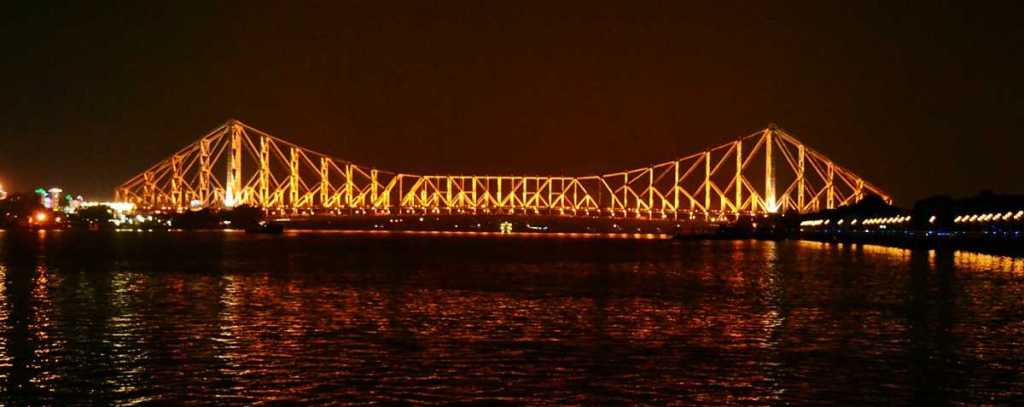
Night View of Howrah Bridge

Cultural Significance of The Bridge

Since the beginning of its journey, the bridge has been featured in numerous Bengali Hindi even International films, such as Do Bigha Zamin (1953), Bari Theke Paliye(1958), Parash Pathar(1958), Howrah Bridge(1958), Neel Akasher Neechey (1959), China Town(1962 ) and Amar Prem  (1971), Teen Devian(1965), Calcutta 71 1972), Padatik (1973), Richard Attenborough’s 1982 Academy Award winning film Gandhi, Paar(1984), Ram Teri Ganga Maili (1985) , Nicolas Klotz’s The Bengali Night(1988), Rolland Joffé’s  City of Joy  (1992), Florian Gallenberger’s  Shadows of Time (2004), Yuva(2004),  Parineeta (2005) and the list goes on.

Recent Renovations of The Bridge

The articulation joints at deck level were renovated in 2008, and the bridge was illuminated in colours of gold and magenta in November 2006.Bridge operator Kolkata Port Trust (KPT) invested Rs35M in the project for laying 13km of cable, 700 lights, a new control tower and a sub-station. Around Rs27.3m was spent on the maintenance of the bridge in 2005.The pylons, the steel-lattice inner structure, the under-deck and the pathway were fixed with white and the upper structure with blue LEDs. Painted in June 2005, the bridge required more than 26,500l of aluminium paint to cover 23,500t of steel, occupying a surface area of 2.2mm².Prime Minister Shri Narendra Modi launched the interactive light and sound show of the bridge in January 2020. The new Rabindra Setu decorative lighting features 650 power-efficient LEDs and spotlight fittings for programmable multi-colour lighting, including a music-syncing show.

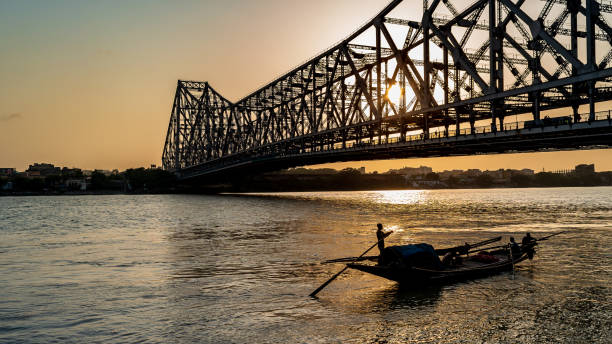
Silhouette of Howrah Bridge at the time of Sunrise. Howrah Bridge is a bridge with a suspended span over the Hooghly River in West Bengal.

Conclusion

The surprising fact about this bridge is that, despite being such a heritage, it has suffered a lot of damage. And the damage is not only because of trams plying heavy load, but it is also because of human spit and bird excreta.The corrosion on the bridge is because of prolonged chemical reaction that has occurred because of continuous bird droppings. Calcutta Port Trust is currently in charge for the maintenance of the bridge. Along with the authority, the citizens should also be responsible for protecting the living heritage of our country.

Dhakai Muslin: The Exclusive Bengal Silk from The Past

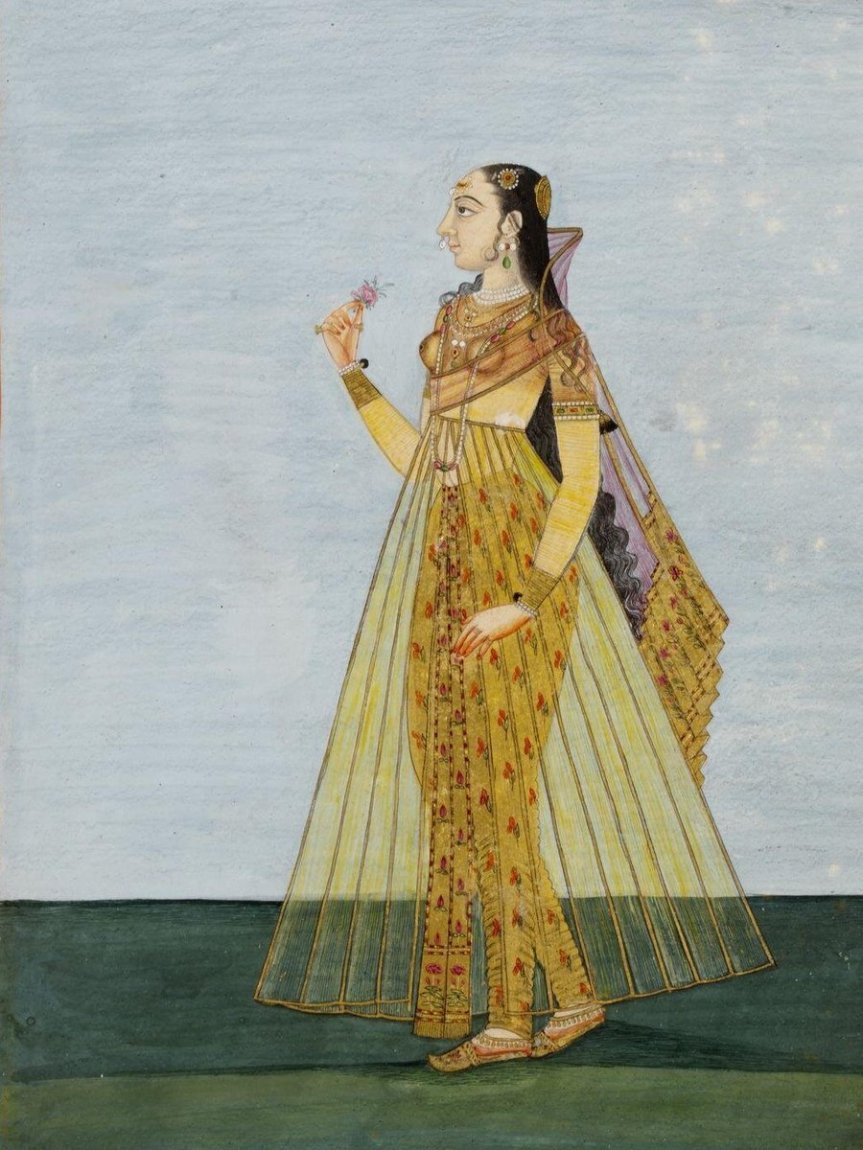
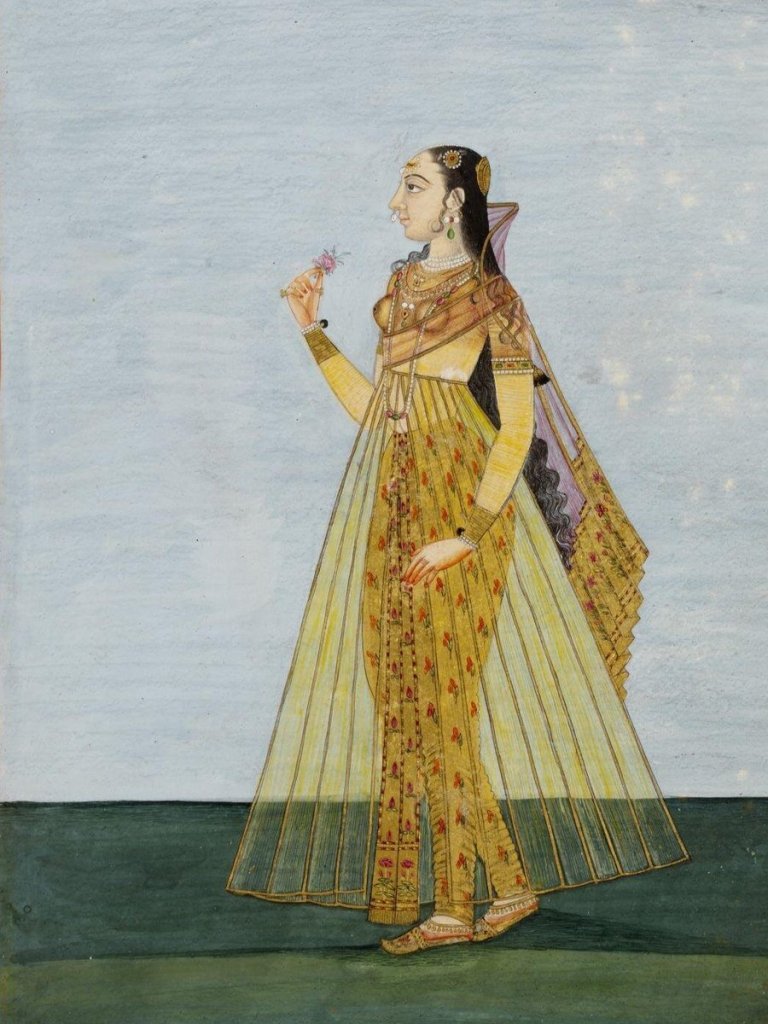
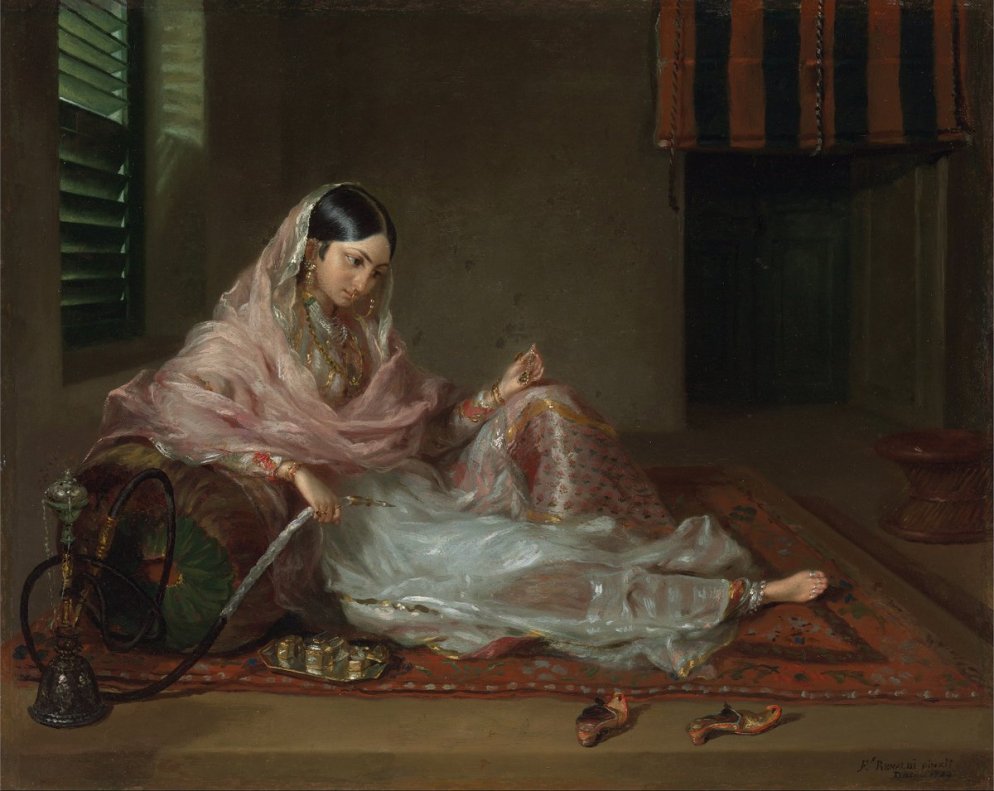
A portrait illustrating how Transparent Muslins were

Introduction

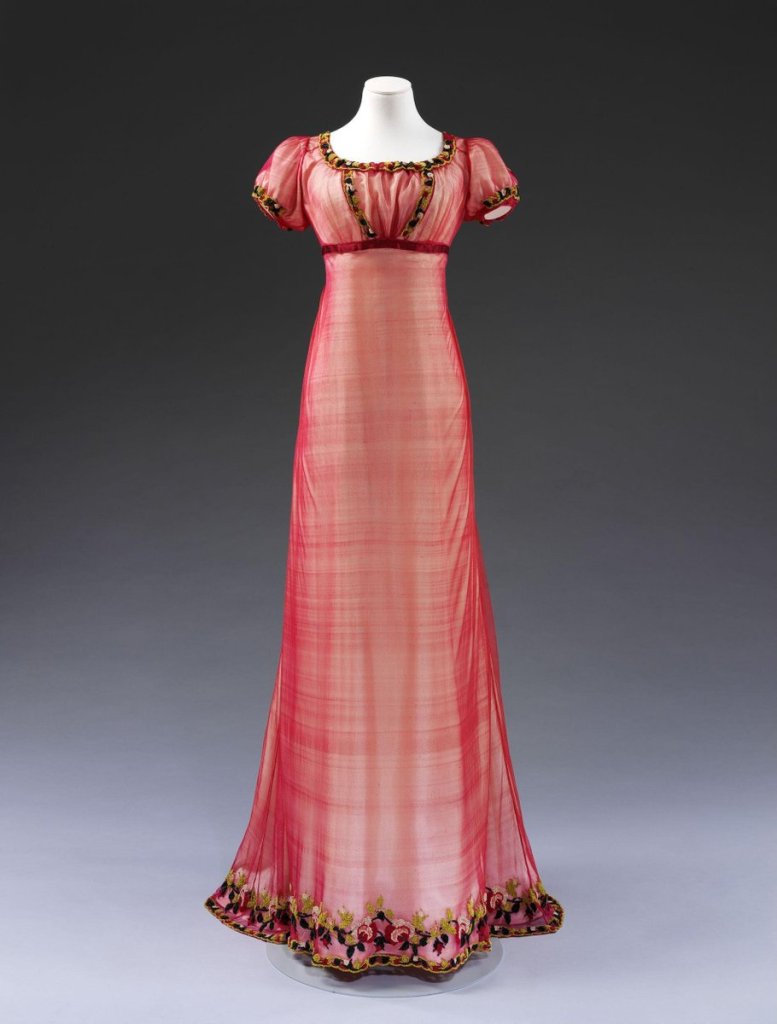
Muslin today has come to mean almost any lightweight, gauzy, mostly inexpensive, machine-milled cotton cloth. The word has lost all connection to the handwoven fabric that once came exclusively from Bengal. Cotton, stated the historian Fernand Braudel, was first used by the ancient civilizations on the Indus, while the art of weaving itself has been traced back to much earlier times. This head start perhaps was why ancient India became proficient in making cotton textiles. They became a staple export commodity to the Roman Empire, and they expanded in volume in the Middle Ages with the growth of the “maritime Silk Road” in the Indian Ocean.

Historic Background

Muslin a brand name of pre-colonial Bengal textile, especially of Dhaka origins. Muslin was manufactured in the city of Dhaka and in some surrounding stations, by local skill with locally produced cotton and attained world-wide fame as the Dhaka Muslin. The origin of the word Muslin is obscure; some say that the word was derived from Mosul, an old trade centre in Iraq, while others think that Muslin was connected with Musulipattam, sometime headquarters of European trading companies in southern India. Muslin is not a Persian word, nor Sanskrit, nor Bengali, so it is very likely that the name Muslin was given by the Europeans to cotton cloth imported by them from Mosul, and through Mosul from other eastern countries, and when they saw the fine cotton goods of Dhaka, they gave the same name to Dhaka fabrics. That the name Muslin was given by the Europeans admits of little doubt, because not only Dhaka cotton textiles, but cotton goods imported by the Europeans from other parts of India like Gujrat, Golconda, etc were also called Muslin.

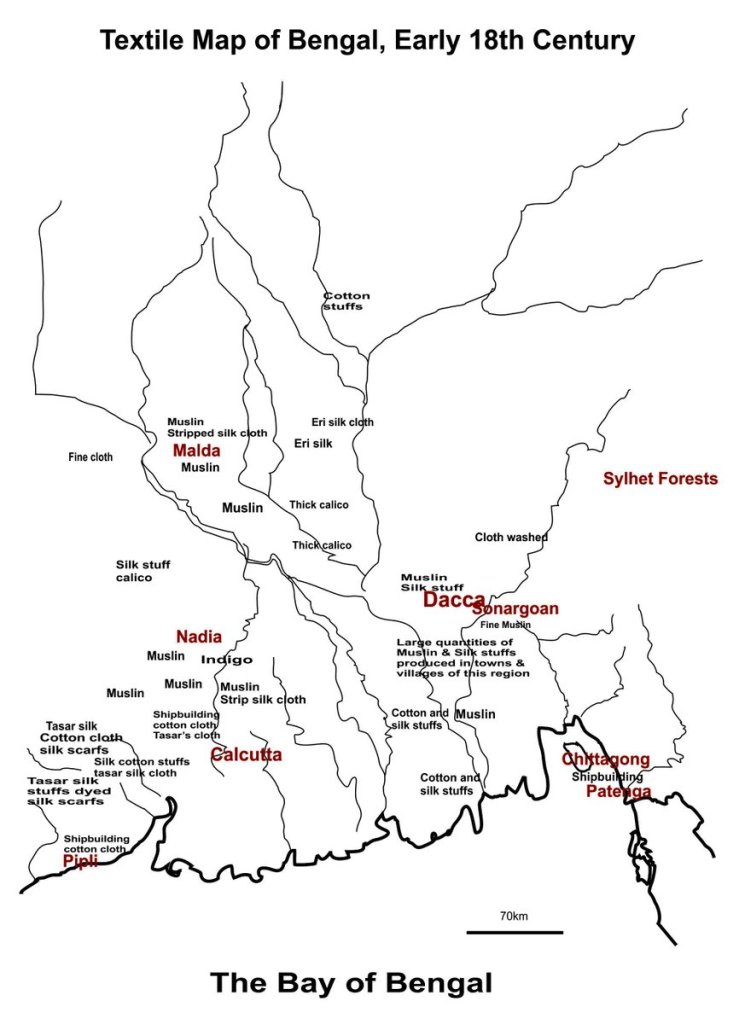
The route connecting the Hubs of Muslin Industry in Bengal

How Muslins Were Made

The textile industry of Bengal is very old. Bengal cotton fabrics were exported to the Roman and the Chinese empires and they are mentioned in Ptolemy’s Geography and the Periplus of the Erythraean Sea, and by the ancient Chinese travellers. But Dhaka Muslin became famous and attracted foreign and transmarine buyers after the establishment of the Mughal capital at Dhaka. The Muslin industry of Dhaka received patronage from the Mughal emperors and the Mughal nobility. A huge quantity of the finest sort of Muslin was procured for the use of the Mughal emperors, provincial governors and high officers and nobles. In the great 1851 Exhibition of London, Dhaka Muslin occupied a prominent place, attracted a large number of visitors and the British Press spoke very highly of the marvelous Muslin fabrics of Dhaka. Weavers in Dhaka, Bangladesh, used to make this incredibly fine cloth using a method called the discontinuous weft technique. This technique required the weaver to work two layers of weft – one as fine as spider’s silk to hold the cloth together and the other forming the pattern. Each pattern motif was worked individually, using fine bamboo sticks to interlace the pattern threads with the warp threads.

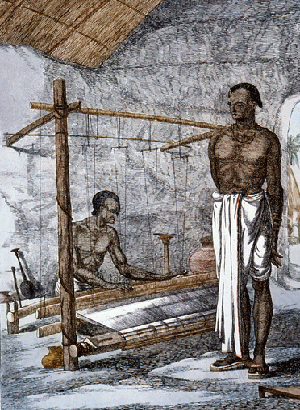
Weaving of Muslins under the supervision of royal official( Painting, in 1800s)

Types And Variations

The finest sort of Muslin was made of phuti cotton, which was grown in certain localities on the banks of the Brahmaputra and his branches. The other kinds of cotton called bairait and desee were inferior and were produced in different parts of Dhaka and neighbouring areas; they were used for manufacturing slightly inferior and coarse clothes.The productions of Dhaka weavers consisted of fabrics of varying quality, ranging from the finest texture used by the highly aristocratic people, the emperor, viziers, nawabs and so on, down to the coarse thick wrapper used by the poor people. Muslins were designated by names denoting either fineness or transparency of texture, or the place of manufacture or the uses to which they were applied as articles of dress. Names thus derived were Malmal (the finest sort), Jhuna (used by native dancers), Rang (of transparent and net-like texture), Abirawan (fancifully compared with running water), Khasa (special quality, fine or elegant), Shabnam (morning dew) Alaballee (very fine), Tanzib (adorning the body), Nayansukh (pleasing to the eye), Buddankhas (a special sort of cloth), Seerbund (used for turbans), Kumees (used for making shirts), Doorea (striped), Charkona (chequered cloth), Jamdanee (figured cloth). The finest sort of Muslin was called Malmal, sometimes mentioned as Malmal Shahi or Malmal Khas by foreign travellers. It was costly, and the weavers spent a long time, sometimes six months, to make a piece of this sort. It was used by emperors, nawabs etc. Muslins procured for emperors were called Malbus Khas and those procured for nawabs were called Sarkar-i-Ala. The Mughal government appointed an officer, Darogah or Darogah-i-Malbus Khas to supervise the manufacture of Muslins meant for the emperor or a nawab.

A real Muslin dress exported to England from colonized India

Areas of Production

Weaving was prevalent in the Dhaka district in almost every village, but some places became famous for manufacturing superior quality of Muslins. These places were Dhaka, Sonargaon , Dhamrai, Teetbady, Junglebary and Bajitpur.

Why It Was So Exclusive

The finest of Muslins were honoured with evocative names conjured up by imperial poets, such as “baft-hawa”, literally “woven air”. These high-end muslins were said to be as light and soft as the wind. According to one traveller, they were so fluid you could pull a bolt – a length of 300ft, or 91m, through the centre of a ring. Another wrote that you could fit a piece of 60ft, or 18m, into a pocket match-box. Dhaka muslin was also more than a little transparent.

Muslins were adored by the elites

How The Industry Was Lost

Unfortunately, during the period of the East India Company, European manufacturers all but destroyed the industry by flooding the market with factory produced muslin equivalents. Through a combination of punitive taxes on locally produced textiles and the dissolution of local and influential patrons, Jamdani muslin became uneconomical to produce and the skills were almost lost.

Conclusion

Thankfully, there are organisations in Bangladesh today that are encouraging local weavers to continue to practice their craft. Coupled with the UNESCO listing of Jamdani muslin on its Representative List of the Intangible Cultural Heritage of Humanity, there is more impetus to continuing production, albeit on a very small scale. With the proliferation of mass produced and synthetic fabrics on the market today, it is important that these historical techniques aren’t lost forever. No factory can ever emulate the quality arising out of a skilled artisan. Their skills are part of our textile heritage and it’s wonderful they are being recognised and preserved.

Dhakis of West Bengal: Where They Come From and Where They Go

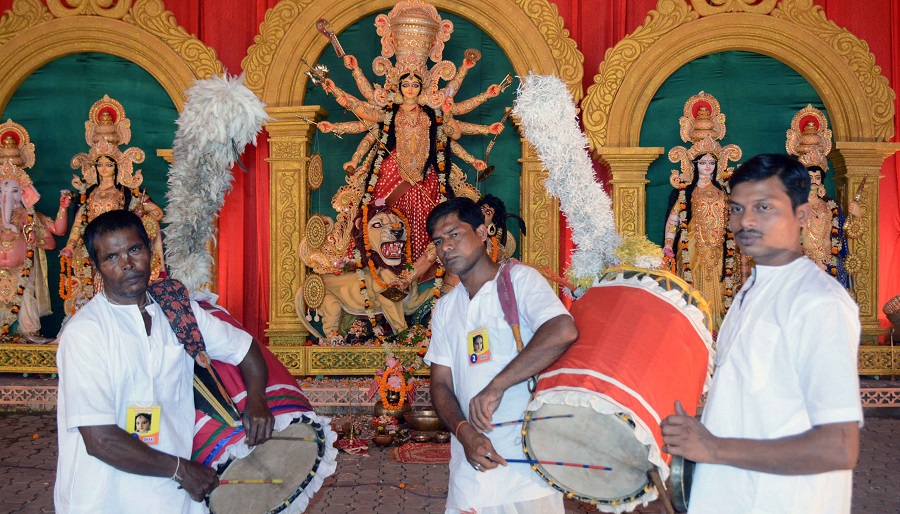
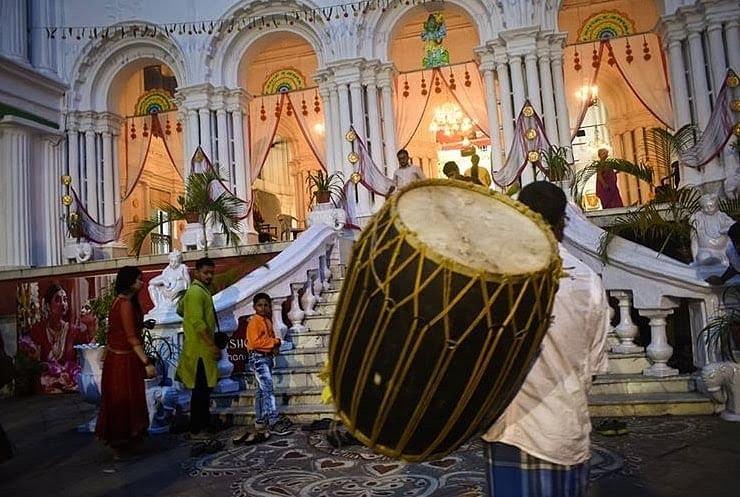
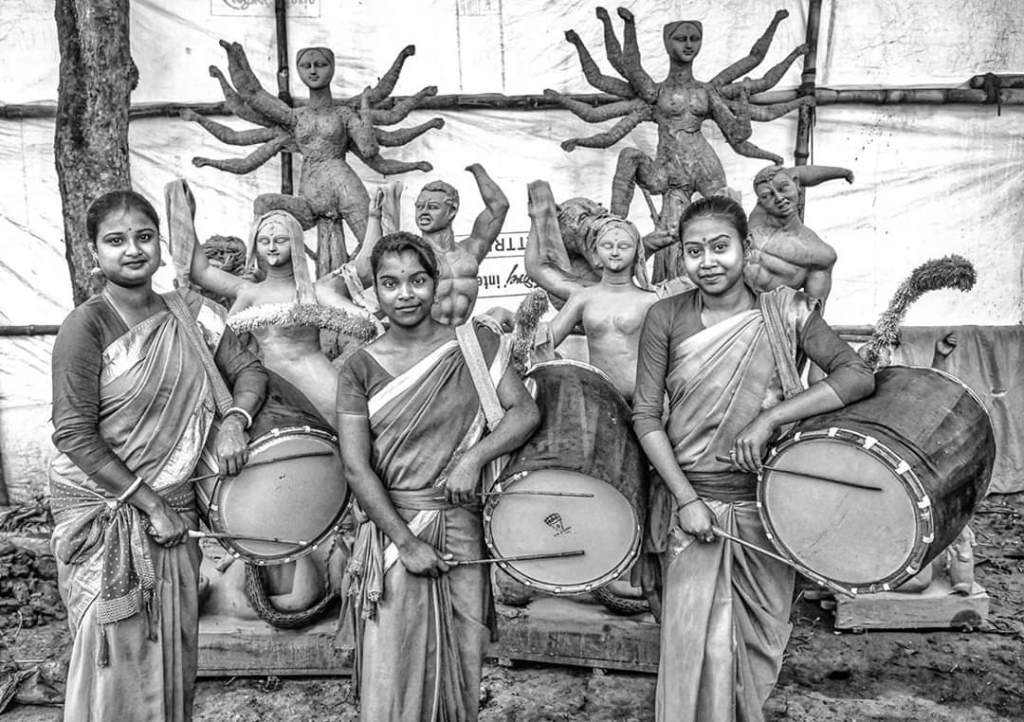
Dhakis playing dhaks in a Durga Puja pandal

Introduction

India is a country of rich cultural diversity and the essence of festivity for each Indian state is unique on its own. The main festival of the Indian state of West Bengal is Durga Puja, which is held during the auspicious Aashwin Durga Navtras in the months of September-October. During the festival the Mother Goddess is welcomed to her home on Earth with 9 long days of celebrations and joy. As a ritual of the festivity both her arrival and departure are rung by hundreds of thousands of “Dhaks” played by the professional drummers, locally called as “Dhakis”.

Dhak at a Puja Bari

What “Dhaks” Are: How They Are Made

The word “Dhak” comes from the Austric word “Dhaka” included in the Sanskrit language. The word later became a part of the Bengali script. The dhak is a big membranophone instrument that originally belongs to South Asia. The dhak has become an integral aspect of the widely loved Bengali festival of Durga Puja, other Bengali rituals and festivities. It would have no festive aura if not for the maddening rhythm of the dhak. The dhak is beaten with two sticks loudly to infuse the frenzied beats into the listeners. These beats are enough to raise the spirits and conjure up the feel of the Durga Puja. Without the instrument, the heavily celebrated festival would have felt sombre.

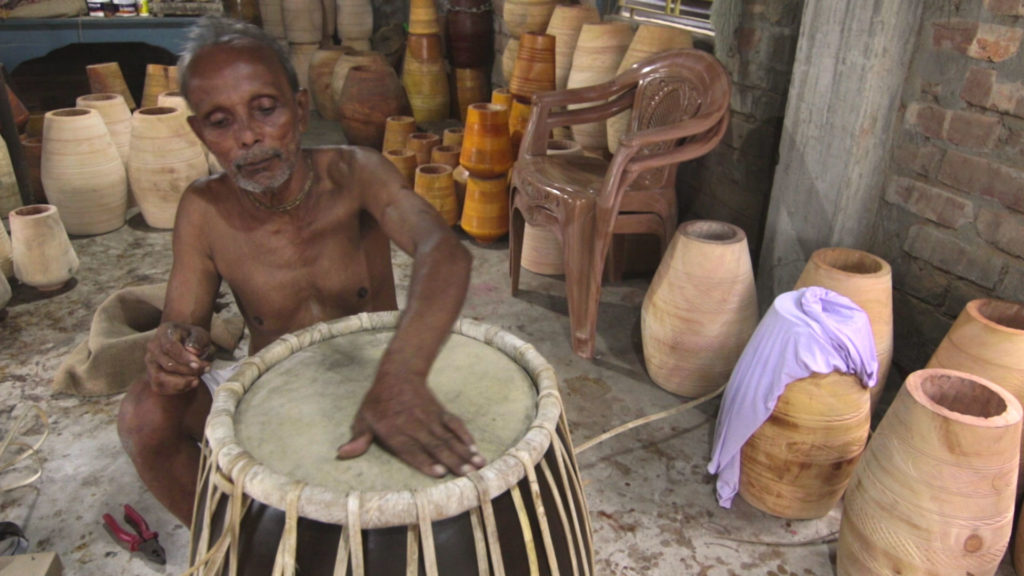
The sound of the dhak depends on a lot of factors like the shape. The shape varies from almost cylindrical to barrel-like. On one hand, the outer portion of the wood is shaved off and carved to create the barrel shaped instrument. On the other hand, the inner side of it is made to be absolutely hollow.The two ends of the dhak are wrapped up with goat skin on the top and calf skin at the bottom. It is said that using these two types of hides bring out the perfect sound texture of the dhak. The manner of stretching the skin over the mouth of the dhak and lacing it is also an important factor in the kind of sound that will be produced. The more the strings on the side of the dhak are pulled the higher the pitch of the dhak gets. The two sticks that are used to beat the dhak are carefully chiseled and formed out of thin cane or bamboo. Because of the drying session of the wooden structure and the intricate handwork and decoration, it takes around one month to reach the perfection in making the instrument.

Making of Dhaks

Who “Dhakis” Are: The Heritage follows

‘‘Dhakis’’ are integral to almost all festivities in Bengal but the art of playing the huge barrel-shaped membranophone instrument is considered as a staple of Bengal’s most celebrated Durga Puja. Most of the ‘dhakis’ or men who play the ‘dhak’ hail from humble rural backgrounds of Murshidabad, Hooghly, Malda, Bankura and Purulia districts of the state. Just like playing any other instrument that is highly associated with a centuries-old cultural heritage, the art of playing dhak, or the business of dhakis are often found to be ancestral and moving in the families since ages. The art of playing such instrument is considered as a living witness, bearing the tradition of the state of West Bengal. The art of playing dhak is passed on from one generation to the next though this art is gradually dying out and losing its focus. One of the reasons for this is the uncertain informal nature of this profession. They still teach the children to play the dhak is to preserve the culture and heritage.

Each part of Durga Puja rituals has a different and unique tune and beat of the dhak right from the arrival of the idols till their immersion. It is played when the idol enters the pandal and even when it exits the pandal on the last day of puja, Dashami. In fact, it is the deafening sound of the dhak that fills the air of immense celebration during the ‘Sandhya Arati’ on Ashtami. This ceremony is absolutely incomplete without the beats of the dhak. Along with that, the ‘Dhunuchi Nach’ is also an essential part where the dhak provides the musical rhythm to which people dance with the ‘dhunuchi’. Another popular tradition is the ‘Dhaker Lorai’ or ‘Fight between Dhaks’ where the grandeur is revealed the best when dhakis play in groups. It is usually a fascinating experience for the audience to see the feathered drums being played by the dhakis dancing to the music produced. Finally, on Dashami, the majestic beats of the dhak helps lift the air of sadness and gloom during the vermilion ritual and ultimately, the immersion.

Female artists too have now taken up the responsibility to revive the age old art of playing the dhak. In such a male-dominated profession where carrying the dhak is a major issue, women have proved themselves to be no less than their male counterparts. Teams of women dhakis are finding fame and getting established slowly in their fields.

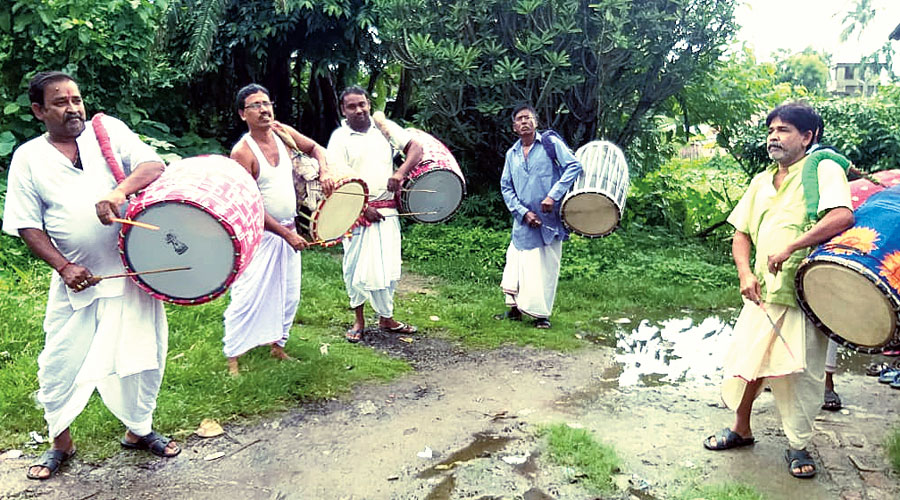
Dhakis of Bengal

COVID-19 and The Livelihood of Dhakis

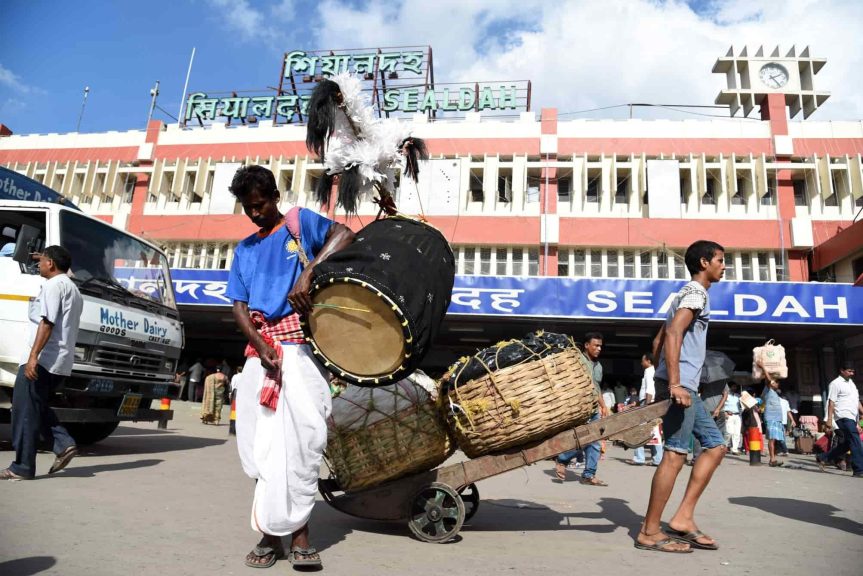
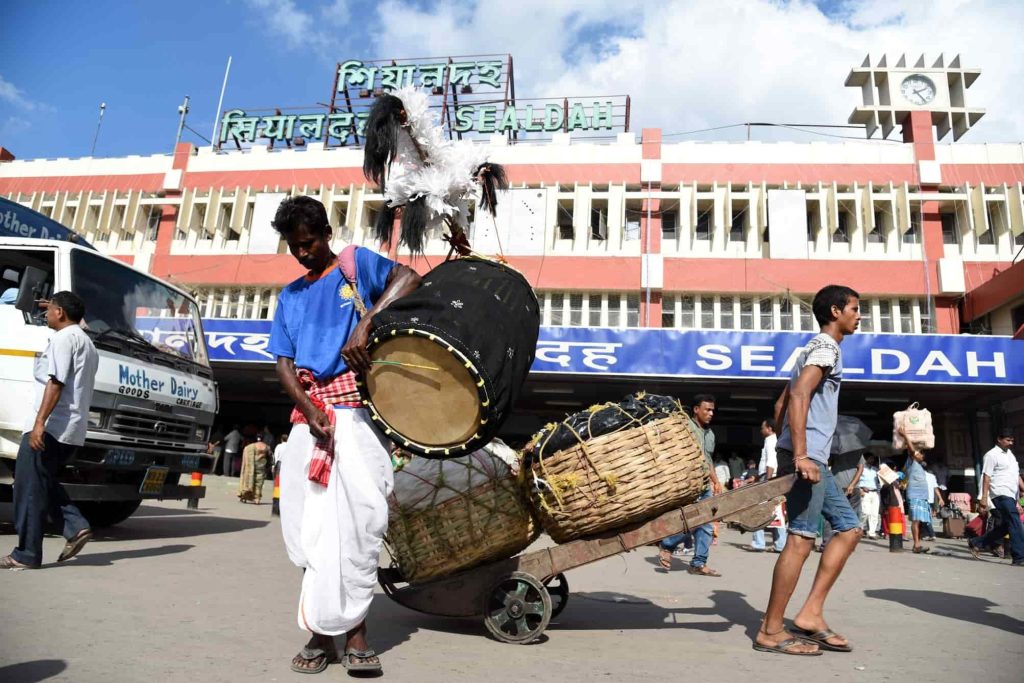
The Impact The drop in the number of Durga Pujas in and outside Bengal amid the novel coronavirus outbreak has taken the rhythm out of the lives of many dhakis (traditional drummers) who look forward to this festive season as their main source of earnings in the year. Every year, the dhakis from different districts and villages of Bengal use to appear at Sealdah station premises before Durga puja. The dhakis used to play the drums in front of Sealdah station every year before puja. From there, various puja committees used to take them in the puja pandals to play the ‘dhak’. But for the past two years the situation is very different, as Puja Committees and Organizers are tight in budget and have to follow a lot of restrictions . Moreover, thousands of dhakis from Bengal districts like East Burdwan, Birbhum, Purulia, Bankura and Hooghly would in other years travel to states such as Assam, Maharashtra, Delhi, Uttar Pradesh to perform at Durga Puja pandals and get higher pay than what they would have got in their home state. But, COVID-19 has restricted that option too for these drummers in past years.

Dhakis at Sealdah station, Kolkata

Where Are They At Now: How We Can Help

Acknowledging the fact that, playing dhak couldn’t be considered as a stable profession and is more inclined to be an occasional source of performing art and earning money, most of the dhakis are often associated with other rural jobs like farming, weaving, fishing to support their livelihood. During Pandemic, the dhakis hope that though they could not travel outside Bengal, they were still lucky if they got calls from Bengal puja organisers. When budgets are low, organisers play recorded beats of the dhaki in pandals. However, several organisers in Bengal have decided to go ahead with dhakis to add the traditional fervour to festivities with the state government offering a dole of Rs 50,000 to each puja committee.

A group of Women Dhakis in front of Goddess Durga idols

Conclusion

Just like of everyday’s, MachhBhaat, Bengal ’s essence of festivity is incomplete without the rhythmic beats of Dhaks. Along with everyone one of us, they are also looking forward for a better situation in the upcoming years, while we can celebrate together the joys of life without fearing for the safety of our health . With the constant effort of the Government and the citizens together , hope we are going to reach that phase very soon.

Child Marriage in India: The Problem and The Cure

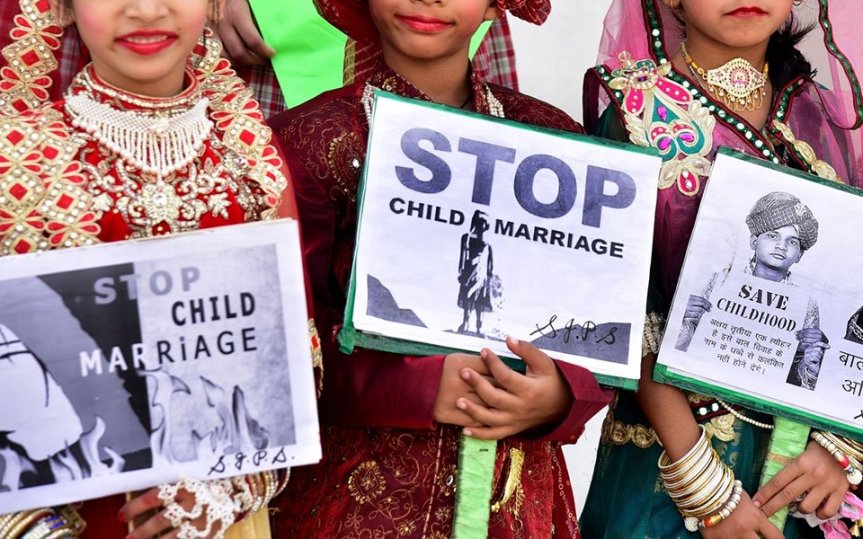
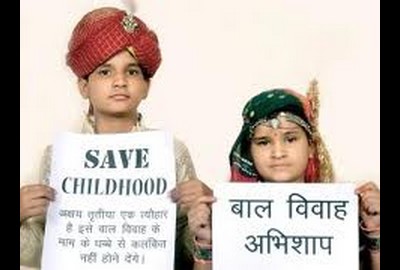
Child Marriage in India

Introduction

Our country India has always been known to the world for its diverse cultural enrichments. But, the legacies from our past beliefs also bore with it some evil practices to the society that we are still dealing with. And one of those practices is the child marriage. The seeds of the problem are still buried so deep in the society and the mind of its people, that it stands alone as a huge socio-cultural challenge till today.

Historic Background

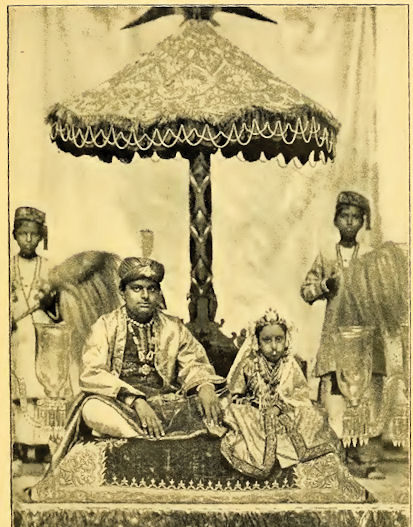
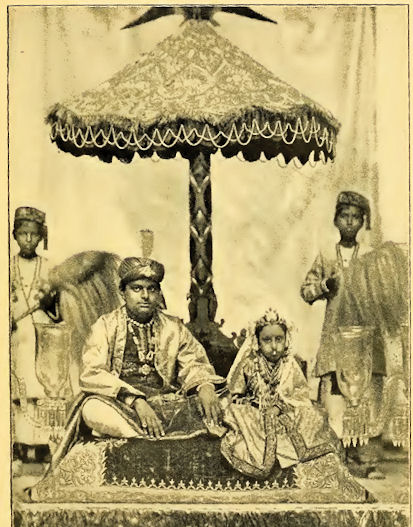
The Vedic history of India dated back to from 200 BC to 700 AD, scribes the marriage as a freedom of choosing desired partner for both men and women. But, with the formation of Government and political modification due to multiple invasions in Medieval India, the women lost their rights to education and choosing their partner and rather were subjected to obey rules and the code of behaviour. Though, age at which the girl was to be married differed and it was rare for girls younger than 12 to be married in antiquity however it became increasingly common for girls as young as six or eight to be married as young brides or “Valika Vadhu”. The parents decided on the marriages of their children at a very early age although the daughter stayed with her parents until she attained the age of puberty. Reaching to which she was bid off to her in-laws through ‘Gehna’ ceremony, in Rajasthan. While in Bengal, this practice was known as ‘Koulinya Pratha’ where a girl child was often married off to an old ‘Kulin Brahmin’ which later on led her to be ‘Sati’ after his husband’s death.

Laws against Child Marriage

The Child Marriage problem in India was first addressed during the British Era. The Child Marriage Restraint act was established in 1929 and come to force in 1930, which defined the minimum ages of marriage for men and women as 18 and 14 years respectively. However, after India’s independence, the minimum age of marriage for women was increased to 15 years. In 1978, the ages of both men and women were revised again to 21 and 18 years. In 2006, the Prohibition of Child Marriage Act came in force, though it was Inapplicable to the Muslim community. Recently in December 2021, Union Cabinet approved to raise the minimum age of marriage for women to 21 years.

The plea is getting stronger.

The Situation in Current Times and the Consequences

Though there are active laws against Child Marriage, but this practice is still ghostly being performed in various parts of India. According to a survey by UNICEF in 1998, the Child Marriage rate in India is 47%, while by UN reports it to be 30% in 2005. Jharkhand has been found to hold the highest rate while Kerala possess the lowest rate in India. Rural Child Marriage cases were found 3 times higher than Urban ares in India in 2009. The consequences of the evil practice, leave many young women shattered for their entire life. Child Marriages have reported a large number of non-consensual marital rapes, physical abuse and domestic violence, low rates of women literary, deaths during childbirth and post natal problems of both underage mothers and newborns.

Our Take: Fighting for a Social Cause

In this modern Era, India is emerging fast as an United country, with largely powered new age youths. And the present generation can give a tremendous change from the society. The situation is already getting better with more to children and giving equal opportunity to both in order to eradicate the practice completely citizens showing their responsibility male and female children. Bachao,Beti Padhao” movement The Government’s “Beti has stirred up the thoughts of young Indian people With many small initiatives, in every state, for a better future. the idea of going along with everyone with equal opportunities are being accepted by Indian parents for marrying their sons and daughters age. The priorities are being given to qualify for a good education and career build up at a matured before getting married.
The youths’ take is most important.

Conclusion

The citizens are the pillars of society and the future lies on the hand responsibility to work together to effort gets counted when we should try our best to improve of every citizen. It is our make our society even better and free from any evil practices. Every work together for a larger cause. more for a better India. The progress so far is appreciable and we

आज़ादी के खातिर – त्रिलोक कुमार

खून खौल जाता है
जब देश का कोई अपमान करे,

खून खौल जाता है
जब वीरो का कोई न  सम्मान करे,

बहुतो ने आज़ादी के खातिर
अपना लघु बहाया है

कितनो ने फासी को चूमा
कितनो ने गोली खाया है,

तब जाके हमने ये चैन के निंद पाया है
हम कदर करे उन वीरो का
हम सम्मान करे उन वीरो का
जिन्होंने सर्वस्य गवा के हमे ये समान दिलाया है,

तब जाके हैं कही अपना गर्व से सिर उठाया है
हमे अलख जागआना है

राष्ट्र प्रेम दिखलाना है
उन महान वीरो का बलिदान न व्यर्थ हो
दुश्मन चाहे कोई हो अपने प्रहार न पस्त हो,

भारत मा के वीर सिपाही हम करते आपका सम्मान 
आपने बढ़ाया है हम सबका मान

कुछ सपने देखे थे वीरो ने
ऐयसे राष्ट्र बनाना है

कोई न हो दुश्मन सबको अपनआ बतलाना है
कुछ भ्रस्ट लोगो ने मिलके सपने को अपमान किया
हम लोगो ने भी मिलके उनको है नकार दिया।।।

खून खौल जाता है
जब देश का कोई अपमान करे,

खून खौल जाता है
जब वीरो का कोई अपमान करे

कवि – श्री त्रिलोक कुमार


Shashi Tharoor and his ideology on British rule in India

An author, politician and former International civil servant, Shashi Tharoor, once said – ” India matters to me and i would like to matter to India.”
He is currently a third-term Lok Sabha MP representing the Thiruvananthapuram constituency. People mostly regard him as “Oxford dictionary”, because of his impeccable knowledge of English Literature. Shashi Tharoor, in his book named An Era of Darkness: The British empire in India that was published in the year 2016 talked about colonization and the
disastrous effects it had on Indians. In his book, he explained about the evils of British rule and how it affected us Indians, deeply explaining how we were being trampled upon by the Britishers and treated as animals without any freedom. Tharoor wrote in details how the Britishers looted India off of it’s rich resources, culture and wealth. In one of the most famous lines from the book, he writes:

“They (the British) basked in the Indian sun and yearned for their cold and fog-ridden homeland; they sent the money they had taken off the perspiring brow of the Indian worker to England; and whatever little they did for India, they ensured India paid for it in excess. And at the end of it all, they went home to enjoy their retirements in damp little cottages with Indian names, their alien rest cushioned by generous pensions supplied by Indian taxpayers.” Tharoor has remarked that every single thing or development that occured in British India such as establisment of Railways, parliamentary democracy, rule of law and others were simply done for their own benefits and luxury and not for Indians or for India’s progress and betterment. Tharoor explains that though some British legacies proves to be useful today, however they were just mere side effects that came along with colonial authoritarianism.
Tharoor genuinely believes that after 200 years of immense brutality and injustice to Indians, Britain owes an apology to India and Indians. Some of the most outrageous events in history of India took place under British reign. For instance, according to recent studies, the Bengal Famine of 1943 that costed millions of lives was caused not only by drought but also by the complete failure of the policy of British India under the Ministry of Winston Churchill, who is remembered as the man who caused the Bengal famine. Furthermore, the horrendous Jallianwala Bagh massacre was a heinous crime committed under British Raj. Today, Indian society is divided along lines of caste, creed, religion and culture but it is little known fact that the Colonial Government ignited such divides and pitted one community against the other. Shashi Tharoor did a marvellous job with the book and made us realise what we had forgotten with passage of time.

Government Budgeting

Description of the budget

The word ‘budget’ is derived from the French word, Bougette, which means a leather wallet or purse.Therefore, the term modern budget refers to a document that contains estimates of revenue and expenditure of a country, usually for one year.

Types of Budget

Budgets can be categorized based on the following principles:

  1. Combined time.
  2. Number of budget’s tabled in the legislature.
  3. The overall finance budget’s position is presented in the budget.
  4. An approved policy on the takeover of revenue and expenditure in the budget.
Division of receipts and expenses in the budget.

Based on these principles budget’s can be:(Annual budget’s or long-term budget’s.

  1. One or more budget’s.
  2. Excess budget’s, deficits or estimates.
  3. Budget or revenue budget.
  4. Departmental budget or operating budget.

A brief description of the different types is as follows
1. ANNUAL or long-term budget’s

Generally, Government budget’s are for one year that is, for one year. In India, England and many other commonwealth countries the financial year, starts on April 1 and ends on March 31, but in the U.S.A., Australia, Sweden and Italy the dates are 1st July and 30th June. Some countries adopt a planned economic policy and meet the requirements for long-term planning, using a long-term budget, that is, preparing a budget for three years or more. Such a budget is a long-term plan rather than a long-term budget because what is offered is a financial plan over the years to fund the program.These countries spread the use of program costs over many years. The legislature approves the plan and estimates its costs, but that does not equal the actual voting of all-time shares. Every year, the national budget will include expenditure on a plan for that year, to be approved by the legislature.
2. One or more budget’s
When the estimates of all Government functions are allocated to a single budget, it is known as a single budget. The advantage of a single budget is that it reflects the financpractisetion of the Government as a whole.But if there are separate budget-related budget’s passed by the legislature, it is called a mass budget. In India, we have two budget’s — one for the railway line and one for the rest of the departments. The practice of having a separate train budget began in 1921. In England, there is one budget.

3. Extra income, deficit or limited budget

A budget is a surplus if the estimated income exceeds the estimated cost/expense But if the expected revenue falls below the expected cost, it becomes a budget deficit. According to economists, a deficit budget is a sign of global development. A limited budget is when the expected revenue is equal to the expected cost/expense. Budgets are often in short supply.

4. Income or budget of income

A budget is one in which the estimates of various items of income and expenditure include amounts to be acquired or used in one year,.In revenue and expenditure budget’s, accumulated in one financial year,, are planned for that financial year, regardless of whether the revenue is available or expenses incurred in that financial year,. In India, Britain and the U.S.A., counts are calculated, in France and other continents, counting income.

5. Departmental or operational budget

The current practice is to have a departmental budget, that is, the revenue and expenses of one department are organized under it. It does not provide any information about the work or activity that has been budgeted for. The operating budget is another where the total cost of a particular project is compiled under the head of a specific program.It is organized into activities, programs, activities and projects, for example, in the case of collaboration (employment), it will be divided into programs such as higher education, Secondary and Higher Education. Each program will be divided into activities, for example, teacher training is a task. The project is the final unit of division of labor.It symbolizes work as a major project, such as the construction of a school building. The A.R.C. proposed the adoption of a budget for all the departments and agencies of the Central and provincial governments that have managed development programs.

REFERENCE

Essay on Budget: Top 4 Essays | Government | Public Administration

Stand-up Comedians

Laugh has always been a therapy that people rely on when they do not feel their own self or are having a tough day. Although there are a number of shows and movies that could give a hearty laugh but a new culture or profession has been gaining fans in India today and that is Stand-up Comedy. A number of individuals have become popular especially among the young generation. Their popularity has hit the sky with the fact that many of them are approached for brand works. This new coming of a community of the comedians there are certain faces that have become everyday names in the Indian households like Zakir Khan, Tanmay Bhatt, Munawar Faruqi, Sumukhi Suresh, Aishwarya Mohanraj, Urooj Ashfaq, Kenny Sebastian, Abish Mathew, Samay Raina, Kunal Kamra, Anubhav Singh Bassi, Harsh Gujral, Adar Malik, Kanan Gill, Prashasti Singh, Sumera Sheikh, Rohan Joshi and many others.

Though it has been mainly seen as the instrument for some good laughter and for relieving the stress but with emergence of new platforms everyday many stand up comedian have turned into YouTubers furthering their interest in the field.  With over a million subscribers on the YouTube, they have been able to get a fan base beyond their live shows. People with an internet connection have been able to get access to their craft and become not just their fan but someone they adore. Stand-up comedy in India has been giving rise to a new culture where the ever increasing popularity of these comedians inspires young generation to follow their footsteps. Not only they have made a name for themselves as Stand up comedians but some have even been able to get themselves into the acting industry, for instance, Kanan Gill has starred in Sonakshi Sinha’s NOOR, Adar Malik has done a YouTube Series and some advertisement commercial, Sumukhi Suresh has her own web series on Amazon titled Pushpavalli (two seasons).

The popularity although seems easy does not really come at a low cost, the struggle behind the fame remains hidden. With a number of male stand-up comedians making a mark in the hearts of the people it has become difficult for the female stand- up comedians to get what they deserve. Their gender has played a role for making them less successful while putting in the equal hard work. Although not a lot of people agree with the view that women are less funny or lack sense of humour but still we come across typical, misogynistic, sexist individuals who does not want or accept comedy as a profession for females for the reason it being surely an easy task as being just about their beauty and not jokes. As the pandemic hit the world and there was a wave of depression and misery and sadness, it was comedy that came to the rescue of the world. It was the laughs that people wanted to bring them out of their sorrows and stand- up comedians happily took on the responsibility on their shoulders, to make the world a happy place in the tiring times of the pandemic. Although there was break even for them for their losses but they bounced back and saved the world.

The Scrupulously Portrayed Erudition of Online Gambling

Prologue=

Gambling is the act of betting money on various platforms with the intention of earning more than the bet. This act is basically judging the chances of winning of a particular team or happening of an event so as to bet on that probability and make money out of it. A lot of people bet for the easy money that gambling brings in for them, while other might do it just for fun, and still others are just addicted to it after a certain period. Online gambling is the on the web, technological and virtual gambling that is fast gaining fans in the contemporary world.

Annals=

The way people betted was not always online, it was face to face in the old times where people betted with real cash to a bookie. With the improvement in the know-how of the internet, the upgrading of the gambling to the virtual space was an obvious result. It is agreed that it was in 1990s that civilians became aware of the detail that internet could be used for betting and not too late in 1996-1997 many online spaces and portals with the intention of promoting virtual betting came in existence, and since then, the fan following of this has been on a rise.

Legality=

Online gambling is a subject under the governance of the state law in India. It is not therefore illegal but there is no such act or provision relating only to it. Therefore, it is many-a-times dealt with Information Technology Act, of 2000. Various states have their own laws regarding gambling-

  • Nagaland- The Nagaland Prohibition of Gambling, Prohibition and Regulation of Online Games of Skills Act, 2015
  • Sikkim- Sikkim Online Gambling Regulation Act, 2008
  • Kerala- Kerala Gaming Act, 1960
  • West Bengal- West Bengal Gambling and Prize Distribution Act, 1957
  • Rajasthan- Rajasthan Public Gambling Ordinance, 1949

Winding Up=

In the day and age where it is becoming difficult to earn a living with rising unemployment and continuous price rise, gambling can prove to be a major source of income. Although there are reservations among some sections of the society regarding the act of betting but with expertise and experience in any field it is not knotty to earn a living through online gambling. The illegality leads to hideous betting thereby depriving government of its taxes. Legality is thus, a necessity.

Shri Jawaharlal Nehru : The First Prime Minister Of India

Pt. Jawaharlal Nehru was born in Allahabad on November 14, 1889. He received his early education at home under private tutors. At the age of fifteen, he went to England and after two years at Harrow, joined Cambridge University where he took his tripos in Natural Sciences. He was later called to the Bar from Inner Temple. He returned to India in 1912 and plunged straight into politics. Even as a student, he had been interested in the struggle of all nations who suffered under foreign domination. He took keen interest in the Sinn Fein Movement in Ireland. In India, he was inevitably drawn into the struggle for independence.

In 1912, he attended the Bankipore Congress as a delegate, and became Secretary of the Home Rule League, Allahabad in 1919. In 1916 he had his first meeting with Mahatma Gandhi and felt immensely inspired by him. He organised the first Kisan March in Pratapgarh District of Uttar Pradesh in 1920. He was twice imprisoned in connection with the Non-Cooperation Movement of 1920-22.

Pt. Nehru became the General Secretary of the All India Congress Committee in September 1923. He toured Italy, Switzerland, England, Belgium, Germany and Russia in 1926. In Belgium, he attended the Congress of Oppressed Nationalities in Brussels as an official delegate of the Indian National Congress. He also attended the tenth anniversary celebrations of the October Socialist Revolution in Moscow in 1927. Earlier, in 1926, at the Madras Congress, Nehru had been instrumental in committing the Congress to the goal of Independence. While leading a procession against the Simon commission, he was lathi-charged in Lucknow in 1928. On August 29, 1928 he attended the All-Party Congress and was one of the signatories to the Nehru Report on Indian Constitutional Reform, named after his father Shri Motilal Nehru. The same year, he also founded the ‘Independence for India League’, which advocated complete severance of the British connection with India, and became its General Secretary.

In 1929, Pt. Nehru was elected President of the Lahore Session of the Indian National Congress, where complete independence for the country was adopted as the goal. He was imprisoned several times during 1930-35 in connection with the Salt Satyagraha and other movements launched by the Congress. He completed his ‘Autobiography’ in Almora Jail on February 14, 1935. After release, he flew to Switzerland to see his ailing wife and visited London in February-March, 1936. He also visited Spain in July 1938, when the country was in the throws of Civil War. Just before the court-break of the Second World War, he visited China too.

On October 31, 1940 Pt. Nehru was arrested for offering individual Satyagraha to protest against India’s forced participation in war. He was released along with the other leaders in December 1941. On August 7, 1942 Pt. Nehru moved the historic ‘Quit India’ resolution at the A.I.C.C. session in Bombay. On August 8,1942 he was arrested along with other leaders and taken to Ahmednagar Fort. This was his longest and also his last detention. In all, he suffered imprisonment nine times. After his release in January 1945, he organized legal defence for those officers and men of the INA charged with treason. In March 1946, Pt. Nehru toured South East Asia. He was elected President of the Congress for the fourth time on July 6, 1946 and again for three more terms from 1951 to 1954.

History And Early Life

Nehru was born on Nov. 14, 1889, at Allahabad, India. His name Jawaharlal mea»s “red jewel,” a name he once said he found “odious.” His father, Motilal Nehru, was a wealthy lawyer from the state of Kashmir. Both he and Nehru’s mother, Swarup Bani Nehru, were Brahmans, the highest caste in India. Jawaharlal had two younger sisters: Swarup, born in 1900, and Krishna, born in 1907. They grew up in a palatial home called Anand Bhawan, meaning Abode of Happiness.

India was a part of the British Empire, and many of Motilal’s friends were English. Until Nehru was 15, he was educated at home by British tutors. He also studied the Hindi and Sanskrit languages with a Brahman teacher who, according to Nehru, managed to impart “extraordinarily little.” The only one of his tutors who impressed the boy was a French-Irish philosopher named Ferdinand T. Brooks. Brooks imbued Jawaharlal with an enthusiasm for reading and for science.

He introduced the youth to theosophy, a mystical system of thought that claims to explain the universe on the basis of direct revelations. The doctrine fascinated Nehru, and at the age of 13 he joined the theosophical society. But his interest in theosophy soon waned.

Student in England. In 1905, Nehru’s father took him to England to enroll at Harrow, a leading English public school. Nehru’s housemaster, the Bev. Edgar Stogdon, remembered him later as “a very nice boy, quiet and very refined. He was not demonstrative but one felt there was great strength of character. I should doubt if he told many boys what his opinions were. . . .”

Jawaharlal entered Trinity College at Cambridge University in 1907. There he studied chemistry, geology, and botany. He displayed little intellectual interest or ambition. He attended meetings of a debating society, but seldom found courage to speak himself. Nonetheless, the society’s political discussions stirred his interest in the growing Indian nationalist movement. He also became sensitive to discrimination against Indians. After completing his studies at Cambridge University, Nehru studied law in London, where he passed his bar examination in 1912.

REFERENCES : 8sa.net, pmindia.gov.in

Realism

Realism has been the most important approach of international relations over the years. It has been the dominant way of explaining international behaviour. Realism emphasizes relations among nations, as they have been and as they are. It is not concerned with the ideal world. It is the international interpretation of human behaviour. Individuals are essentially selfish, and they seek power to serve their interests and to prevail over others. As Morgenthau wrote in the 20th century, power is the control of men over the minds and actions of other men. And, there is constant strife leading to conflicts and clashes between individuals having divergent interests and seeking to acquire power. Thus, there is an ever-present struggle for power in the society. The same is the tone of nations that are guided by the same considerations as individuals.

Political Realism

Realism, or political realism, as an approach of international relations has evolved over the centuries. Prominent among its earlier advocates were Indian scholar Kautilya, Chinese strategist Sun Tzu, and Greek scholar Thucydides. Much later, Italian scholar Nicolo Machiavelli and English philosopher Thomas Hobbes also contributed to the evolution of realism. Their ideas may be called classical realism, though Morgenthau is now considered the principal classical realist. However, according to the view expressed by Robert Jackson and George Sorensen (1999) and many others, Morgenthau’s theory may be described as neo-classical realism. But, Morgenthau was the most systematic advocate of realism. However, British Professor E.H. Carr, who wrote The Twenty Years’ Crisis (1919-39) had prepared the ground on which Morgenthau developed his theory of realism.

Carr criticized democracies like the UK and France for their failure in defeating the designs of dictators. He blamed the democratic countries for failing to recognize the power realities in the world. Carr divided the scholars of international relations into two groups. These were ‘utopians’, or ‘idealists’, and the ‘realists’. He described the utopians as optimists- children of enlightenment and liberalism. The liberals held the view that reason and morality could structure international behaviour of the states towards peace. Wilson and (his) League of Nations were cited as main examples of utopians. Carr, who himself was a a realist, described realists as pessimists, or children of darkness, who emphasize power and national interest. Commenting on Carr’s views on power, Michael G Roskin and Nicholas O Berry wrote, ‘This does not necessarily mean perpetual war, for if statesmen are clever and willing to build and apply power, both economic and military, they can make the aggressors back down…’

Political realism is a significant theory in the field of international relations that seeks to explain state behavior under a set of specific and rigid assumptions. At its core, political realism is guided by three S’s: statismsurvival, and self-help.

Statism asserts that states are the only entity on the international stage that matter and that they are unitary (acting alone) and rational (acting in its best interests) actors. Survival identifies the state’s primary goal is to survive in an international system characterized by anarchy. The final S, self-help, conveys the assumption that states cannot trust others in their pursuit of survival and must secure their security.

Political realism is further delineated into sub-theoretical frameworks, including:

  • Classical realism
  • Liberal realism
  • Neorealism
  • Neoclassical realism

While each sub-framework has its own nuance within the broader political realist theory, all forms of political realism fundamentally believe world politics is a field of conflict among states pursuing power.

Structural Realism

Structural realism, also referred to as neorealism in the academic community, is a major branch of political realism derived from classical realism. While the latter incorporates analysis of human behavior within state decision-making, structural realism focuses predominantly on the anarchic structure of the international system. In other words, structural realists see global conflict as inevitable because there is no supranational body that could prevent or mediate conflict between individual states. Therefore, structural realists assume that states must always be preparing for conflict because war could break out at any time.

Structural realists believe that understanding the international system is guided by the three S’s of political realism. However, they do incorporate analysis of inter-relationships between distinct state entities, particularly regarding power relationships. A key concept in structural realism is polarity, the balance of power within the international system. Today, international theorists often describe the world as unipolar, with the United States acting as the sole superpower endowed with the ability to dominate international relations via their economic, political, and military supremacy.

REFERENCES : International Relations By V.N. Khanna