Basketball in India

Basketball is a team sport in which two teams, most commonly of five players each, opposing one another on a rectangular court, compete with the primary objective of shooting a basketball (approximately 9.4 inches (24 cm) in diameter) through the defender’s hoop (a basket 18 inches (46 cm) in diameter mounted 10 feet (3.048 m) high to a backboard at each end of the court) while preventing the opposing team from shooting through their own hoop. A field goal is worth two points, unless made from behind the three-point line, when it is worth three. After a foul, timed play stops and the player fouled or designated to shoot a technical foul is given one, two or three one-point free throws. The team with the most points at the end of the game wins, but if regulation play expires with the score tied, an additional period of play (overtime) is mandated.

The five players on each side fall into five playing positions. The tallest player is usually the center, the second-tallest and strongest is the power forward, a slightly shorter but more agile player is the small forward, and the shortest players or the best ball handlers are the shooting guard and the point guard, who implements the coach’s game plan by managing the execution of offensive and defensive plays (player positioning). Informally, players may play three-on-three, two-on-two, and one-on-one.Invented in 1891 by Canadian-American gym teacher James Naismith in Springfield, Massachusetts, United States, basketball has evolved to become one of the world’s most popular and widely viewed sports.

Bball in India

In India, basketball is a popular sport, with a multi-tiered professional club league system, as well as men’s and women’s national teams.In India, the game of basketball started its journey in 1930 when it was played for the first time. The first Indian National Championship for men was conducted in 1934 in New Delhi. The Basketball Federation of India (BFI), which controls the game in India was formed in 1950. Throughout history, Indians learned to appreciate the game because of its fast scoring and intense activity from the beginning until the end.Basketball in India is played in most of the high schools, colleges and universities. There is considerable patronage for the game among the younger generation. Basketball in India is played by both men and women of all ages and ability. Many government institutions have professional basketball teams, who work for the institution and play for them. For example, ONGC in Uttarakhand, Indian Overaseas Bank in Tamil Nadu, Indian Bank in Karnataka, Mahanagar Telephone Nigam Limited in New Delhi, Indian Railways, and Kerala State Electricity Board in Trivandrum play for their respective institution and state.

There are many championships for senior, junior, and youth levels for boys and girls.Being one of the earliest countries to adopt basketball, India has so far produced numerous talented basketball players, who have earned recognition in the international arena. Indian basketball players have also won several trophies for their country. Basketball in India is mainly being run and managed by a large number of national and state level associations, spread all over India. These basketball associations are working with a common view of popularizing the game in all parts of the country. Apart from that, developing the overall infrastructure for the game and uncovering new talent from the grass route level are some of the other principal objectives of the Indian basketball associations.

Professional leagues

List of major Basketball Tournaments in India:

  1. UBA Pro League
  2. National Championship
  3. Federation Cup
  4. ISBL and ICBL (Indian School Basketball League and Indian College Basketball League)

PEGASUS LEAK IN INDIA

Pegasus is a spyware program developed by the Israeli business NSO Group that may gather data from mobile phones. Stating simply, It is a type of malware that infects iPhones and Android smartphones, allowing its users to extract texts, images, and emails, as well as record calls and covertly activate microphones.

 Pegasus was found to be spying on roughly 50,000 phone numbers throughout the world, according to a worldwide investigation. Out of which 300 of them being confirmed Indian numbers. According to an investigation into a large data breach, authoritarian regimes have targeted human rights activists, journalists, and attorneys all around the world using hacking tools provided by the Israeli spy business NSO Group. In India, the phone numbers include of  the legal community, businesspeople, government officials, scientists and acitivists. According to THE WIRE, Over 40 journalists, three major opposition figures, one constitutional authority, two serving ministers in the Narendra Modi government, current and former heads and officials of security organizations, and scores of businesspeople are among those in the database and their names would be soon released in the upcoming days. Newspapers like, The Guardian and The Washington Post, among others, released important facts showing the extent of what they dubbed “global surveillance operations” using Pegasus. The NSA whistleblower Edward Snowden tweeted on Sunday that this “spill” might be “the tale of the year.” 

So basically, all we have to know is how Pegasus operates and how does it actually work. So after it is installed, it may collect data from emails, text messages such as SMS, WhatsApp conversations, phone records, contact lists, and GPS data and send it to the attacker. It can also activate a microphone, call recorder, and camera to give the attacker with surveillance capabilities. Forensic examinations on certain phones linked to the target numbers found unmistakable indications of Pegasus malware targeting and this task made simpler by the fact that the device was an Apple iPhone. 

However, The Israeli firm that distributes Pegasus, NSO Group, disputed the claims, claiming that it only sells its spyware to “vetted countries.” Representatives claimed the business was “considering a defamation action” after allegations that it sold malware to intelligence, military, and law-enforcement organizations in 40 nations. On the other hand, the government of India also denied any involvement in the hacking, claiming that “the claims about government monitoring on individual people have no solid basis or truth linked with it whatsoever.” They also released a statement which states that in the past, similar accusations were made regarding the Indian State’s use of Pegasus on WhatsApp. In the Supreme Court, all parties, including WhatsApp, explicitly rejected the reports. They also said that this press release looks to be a similar fishing expedition, based on speculation and exaggeration in order to discredit India’s democracy and institutions.

Nevertheless, Pegasus was reportedly used to target journalists and human rights activists in India by Facebook-owned WhatsApp in 2019, according to a few sources. This information was revealed in a lawsuit filed in a US court in San Francisco by WhatsApp.

Central Vista Project

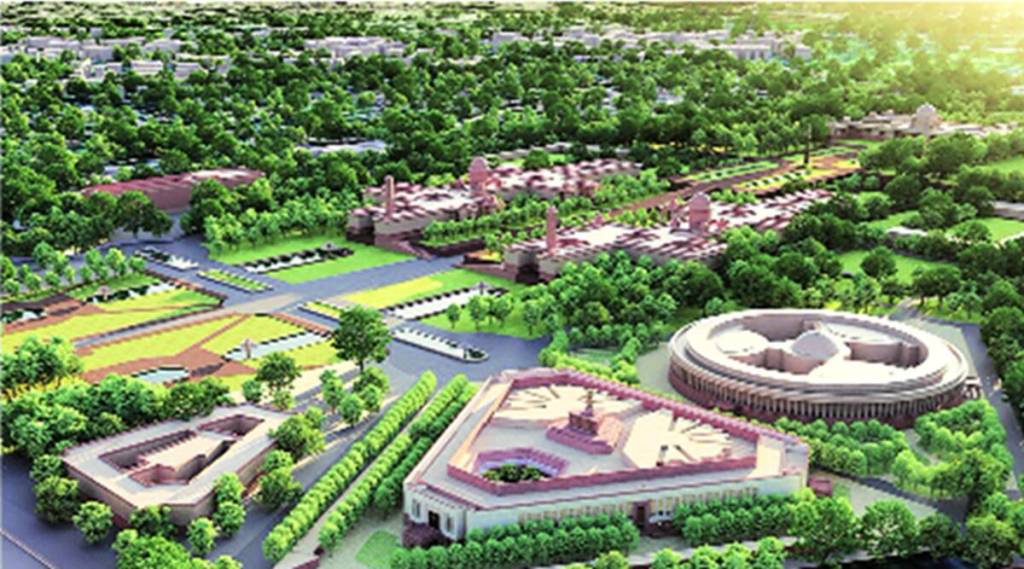
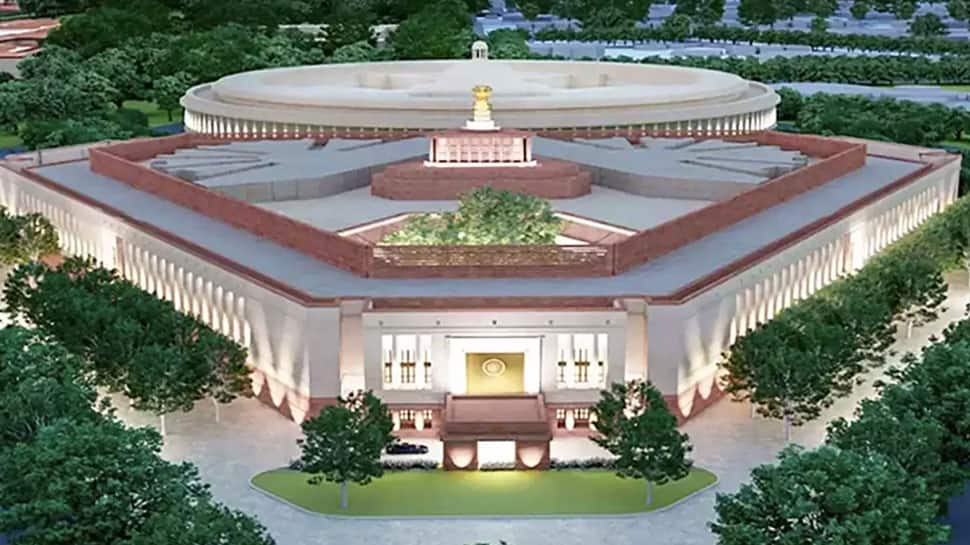
Central vista project is an ambitious initiative by the Narendra Modi-led NDA government at the Centre to reconstruct a 3.2-kilometer stretch known as the Central Vista in the heart of Lutyens Delhi, which was erected by the British in the 1930s. In 2019, The national government proposed this renovation project to give India’s “power corridor” a new identity. The Union Ministry of Housing and Urban Affairs is in charge of the project, which is expected to be finished by 2024 and its estimated cost is more than Rs. 20,000 crore. The main vision of this project is to symbolize India’s commitment to confront the tough challenges that have afflicted it for decades and it is relentlessly focused on modernizing in order to satisfy the needs and ambitions of its inhabitants. Tradition is respected, but it is not held captive by it. The project is environmentally conscious yet not paralyzed by it. 

This project which intends to renovate and enlarge India’s Parliament, Prime Minister’s home, and numerous other official buildings at a cost of Rs 20,000 crore, has been dubbed a sign of indifference and highlighted as an example of the administration’s misdirected priorities during the Covid-19 epidemic. The criticism to central vista project can be seen in various instances as follows:-

On July 12, a Maharashtra-based organization held a public gathering in the capital to protest the project, claiming that the country “needs hospitals, not a new Prime Minister’s home.” The Central Public Works Department restricted photography and video recording at the building site in May, when the project was attracting criticism for continuing despite the devastating second wave of Covid-19, allowing for even more severe criticism. 

Due to many criticisms and reacting to opposition’s objections the central government released a document busting all the myths related to this ongoing project to bring a reality amongst citizens of India.

According to the report and defining the current activity at the project site, the central ministry stated that suspending it at this point would result in the government incurring responsibilities under existing contracts and jeopardizing the interests of the employees. Inflation is also a major concern if the project is delayed. The government also stated that environmental sustainability is at the heart of the Central Vista project, dispelling the misconception that it will harm the environment. No heritage structures, including India Gate, Parliament, the North and South Blocks, the National Archives, and others, would be demolished, according to the administration. The center has also   rejected claims that the Prime Minister’s new home will cost Rs 13,450 crore. The estimate covers a number of projects, including ten structures, according to the ministry, which also stated that the construction work for the Prime Minister’s house has yet to be bid and that the government has given no approval. The major criticism of continuing the work amid covid 19 was also dismissed by the government by citing that the work comes under  Essential Services Act.  On May 31, the Delhi High Court also dismissed a petition challenging the Central Vista Redevelopment project’s ongoing construction operations, calling the Public Interest Litigation (PIL) a “illegal motivation” to halt the work.

China’s 5 Year Plan (2021-2025): Proposed Dam on River Brahmaputra

The five-year plans are a sequence of economic and social development initiatives furnished by the CCP (Chinese Communist Party) since 1949. The five-year plans were inspired by the five-year plans from the USSR and the focus was on launching new schemes, reforms and setting new growth targets.

Since the 11th five-year plan (2006-2010), the Chinese government has mentioned it as ‘Guidelines’ instead of plans. Currently China is on its 14th five-year plan/ guidelines. Unlike the previous five year plans, there is no specific GDP growth target and instead, the government announced that growth would be kept in “reasonable range” and an annual target would be set based on the specific conditions each year. The focus of the current plan is on self-sufficiency as the country had to endure difficulty after the United States had restricted China’s major chip makers from using American technology. Other areas of focus will be on the above 7 percent growth in the research and development spending. The government will also try to raise the urban residents to 65 percent of the population while maintaining green development and increasing the life expectancy by 1 year. Infrastructure will also be an area of priority with a focus on high-quality development of the belt and road initiative.

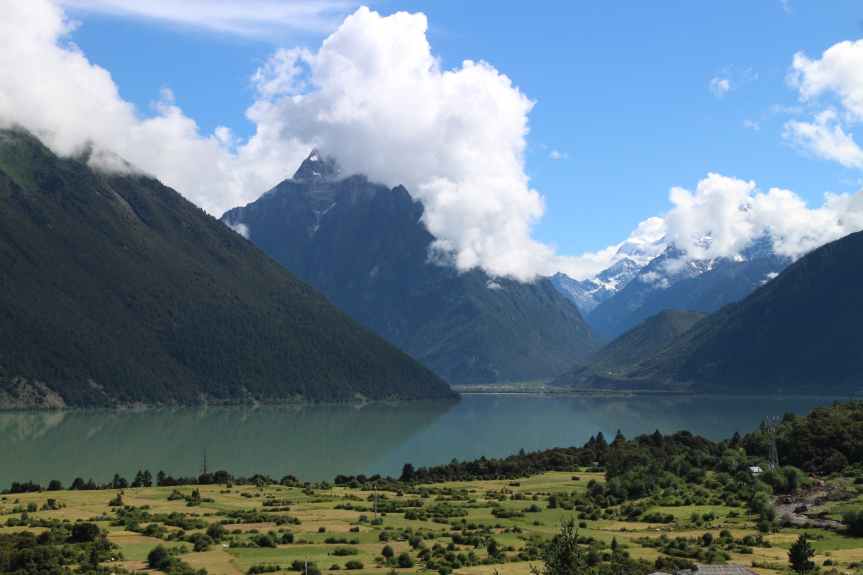
One of the biggest infrastructure projects of the 14th The five-year plan (2021-2025) has been officially approved to build a series of dams in the lower reaches of the Yarlung Zangbo River, as the Brahmaputra is known in Tibet before it flows into India.

The proposed dam would be in Medog, Tibet region will have a maximum possible capacity of 60 gigawatts and could potentially produce 300 billion kWh annually. The location is an area called ‘the great bend’ also known as ‘Yarlung Tsangpo Grand Canyon’ where the river goes through a very drastic U-turn and then the river descents from an elevation of 3000 meters to around 800 meters. Due to the drastic elevation change, the river flow is quite strong and is also an ideal location to build the dam.

The location of the dam could be a strategically risky move by china as it is very close to the Indian border but the other issue is that this proposed dam can undermine the water security of India. India relies heavily on the Brahmaputra River for agriculture and various other purposes.  Due to this, the proposed Dibang Dam by India in downstream (Arunachal Pradesh) might be the solution to offset the effect of the Chinese proposed dam. Although the majority of the catchment area of Brahmaputra is on the Indian side there is still the issue of water flow from the upstream as Assam usually suffers from floods in the rainy season and any additional water flow from the Chinese dam would make the situation worse. The problem will not only affect India but also Bangladesh due to its low-lying land and flood-prone region. Problem is that the region is ecologically diverse and sensitive and any kind of development in this region will negatively affect the ecology of this region. Due to turbulent tectonic plates, there are high chances of landslides and earthquakes as well. India will have to be vigilant and develop its strategy according to the developments on the Chinese side.

References:

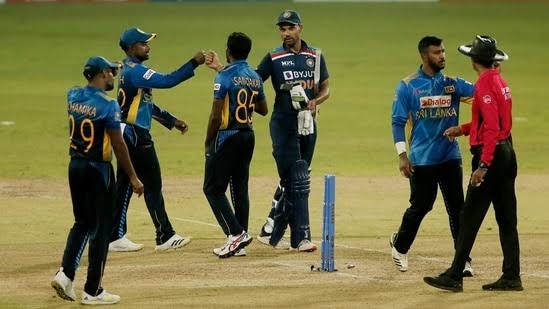
India beats Sri Lanka by 7 wickets in the 1st Odi : Dhawan, Shaw,Kishan steal the show.

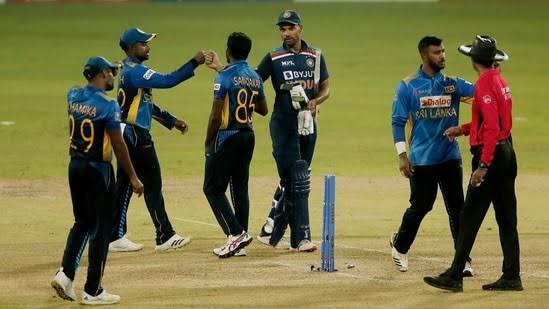
India defeated sri lanka in their first match of the odi series played in Colombo. Indian outplayed the inexperienced Sri-lankan in every aspects of the game.

Sril Lanka won the toss and opted to bat first and things were going there way until chahal stricked and removed Fernando.
Contributions from bhanuka 27 of 44, rajpaksa 24 of 22, Dhananjay de Silva 14(27), assalanka 38(65), Shanaka 39 (50),
Chanika karunatana and chameera scored 40 runs in last 3 overs to get teams total to 263.

Bhubaneshwar kumar looked off colour today and went wicketless with figure 9-63-0,Deepak chahar took 2 wickets and looked in great touch. Spin duo of kulcha shared 4 wickets between them. While Pandya brothers shared 1 wickets each and   Kurnal Pandya was most economical with figure 10-1-26-1.

Chasing down the target of 263, P shaw and captain Dhawan came to crease. P shaw smacked the Lankans all over the ground and was progressing towards half century before falling to de selva at long-off at 43(24).


Then, debutant Ishan kishan came and smacked the lankans all over the ground and scored half century. And he edged one delivery to the wicketkeeper and scored 59(42).

Next,Manish Pandey came to crease and with captain he stitched a partnership of 74. Throughout his innings of 26(40),he looked uncomfortable and except few strokes,he was in a hurry to finish the innings.Then,another debutant surya Kumar Yadav joined captain in middle and finished the game. Dhawan carried his bat with an unbeaten 86*(95) and sky scored quickfire 31*(20).

Dhananjay de selva bagged 2 wickets and lakshan Sandakan took 1 wicket. india leads the series 1 -0 , Lankan side will be looking to bounce back while indian side will be looking to continue their winning streak.

The Traffic in Bengaluru

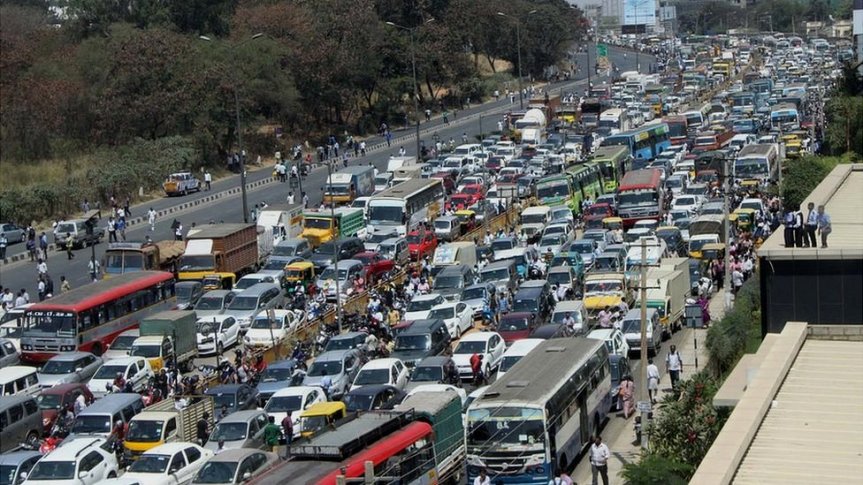
We know that India in general suffers from traffic jams in many different parts of the country. This is essentially due to the population density and thereby, the vehicle density that is prevalent in the country. With so many people using automobiles, there is bound to be traffic and packed roads especially in high populated metropolitan cities. When speaking of traffic in India, people often talk about Mumbai as being the city with the worst traffic. This is understandable as Mumbai is the most highly populated city in India. It is also India’s financial hub and gets a lot of tourism. However, there is one other city that gives strong competition to Mumbai, and which many claim is definitely the city with the worst traffic in India. It is so bad that it can even content to be the city with the worst traffic in the world. That city is Bengaluru. Bengaluru sees constant bad traffic on a day-to-day basis, and every single person that comes from the city can testify on how bad the condition really is. But why is this so?

Why is it so bad?

On average, it is estimated that a Bangalore citizen spends about 10 days in traffic. This is an unimaginable amount for a lot of us from outside Bangalore, who might experience traffic here and there but nothing compared to Bangalore. Furthermore, the average speed travelled on Bangalore roads is only 11 km/h, and it is estimated that it could decrease to 8 km/h if no measures are taken to curb traffic. The unusual thing here is that the speed is low not only with traffic but also without it. This is because the roads in Bangalore, and in generally in India, are multi-purpose public goods serving a wide variety of uses other than motorized transport that slow down travel (hawkers, stalls, parked vehicles, etc.).

The generally agreed reason behind the traffic is that it is because of the rapid and unplanned growth of the city. Bangalore’s traffic advisor M.N. Sreehari himself has said that Bangalore suddenly went from a sleepy village, to a town, to a city. These unforeseen and unplanned changes in the city left it unprepared to deal with the traffic.

Bangalore is often described as the Silicon Valley of India as it is home to the IT industry. Since the early 1990s, with the advent of globalization and privatization, global technology firms began opening offices in Bangalore and a large number of support industries have grown around it, bringing with them a huge influx of people from all over India. Many Indians and NRIs started moving to Bangalore to try building their start-ups, which Bangalore is known for today.

Hence, Bangalore’s population grew from 5.6 million in 2001 to 8.7 million in 2011. Today, it is estimated to have reached 11.5 million. So, the population has grown exponentially, but the infrastructure and roads have not been able to keep up the pace.

Apart from this, even the general road layout is to be blamed for the traffic. Rather than having a grid pattern which promotes the flow of traffic, Bangalore has a star pattern which causes a lot of interceptions and jams. Bangalore used to have grid like roads, but it gradually became more star shaped because of unplanned change and development. Also, the roads themselves are mostly in bad conditions and full of potholes. Potholes are one of the reasons for traffic congestion and road accidents. There is also illegal construction on these roads which narrow them down, causing more jamming.

Furthermore, the public transport like buses carry only about 45% of the city’s traffic and the metro system is still underdeveloped. This means that most people are dependent on their private transport. The city has 6.6 million private vehicles, including one million cars. Every day, another million vehicles enter from outside the city, clogging its already choked streets. Adding to this problem is the fact that one-third of the city roads are taken away by parking and encroachments.

Conclusion

Bengaluru’s traffic is undeniably bad, and measures need to be taken to curb traffic jams and congestion in the city. The traffic has had wide ranging effects on pollution and on the health of people, not to mention it is an immense waste of a person’s time. Even companies in Bengaluru have started pulling out of the city to move to tier 2 and tier 3 cities because the traffic is simply bad for business. It is the statutory and constitutional duty of civic bodies to maintain roads and footpaths. If the administration takes steps to solve the traffic issue in the city, Bengaluru will become a much more popular city and gain a better reputation.

Our Nation! Our Identity!!

Ever wondered what is common between you and a person in a different state having different background and ideologies?

It is “INDIA”. It is our country and a sense of patriotism and brotherhood which unites two people in two different parts of India having different background and ideologies. It is this Pride of being an INDIAN which keeps us together and fills our heart with Pride when we hear the name of our country “INDIA”.

India is one of the oldest civilizations in the world with a kaleidoscopic variety and rich cultural heritage. It has achieved all-round socio-economic progress since Independence. As the 7th largest country in the world, India stands apart from the rest of Asia, marked off as it is by mountains and the sea, which give the country a distinct geographical entity. Bounded by the Great Himalayas in the north, it stretches southwards and at the Tropic of Cancer, tapers off into the Indian Ocean between the Bay of Bengal on the east and the Arabian Sea on the west.

Here the National Identity Elements of our country INDIA

National Flag

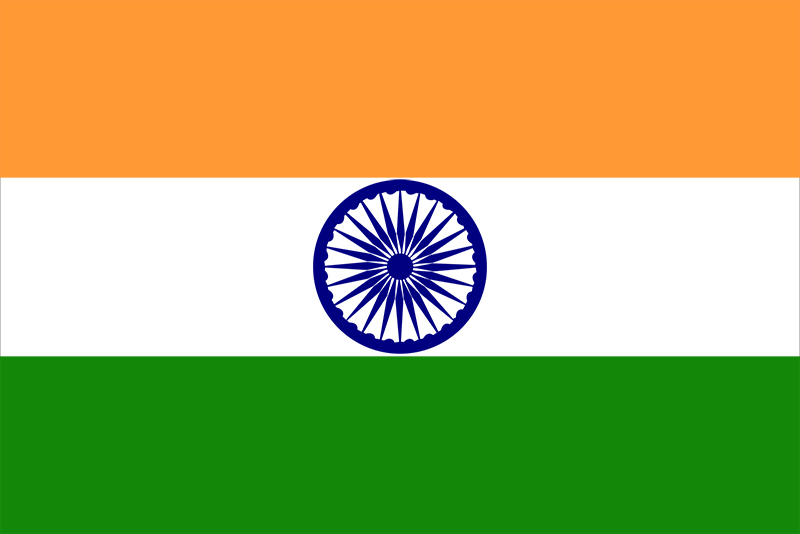
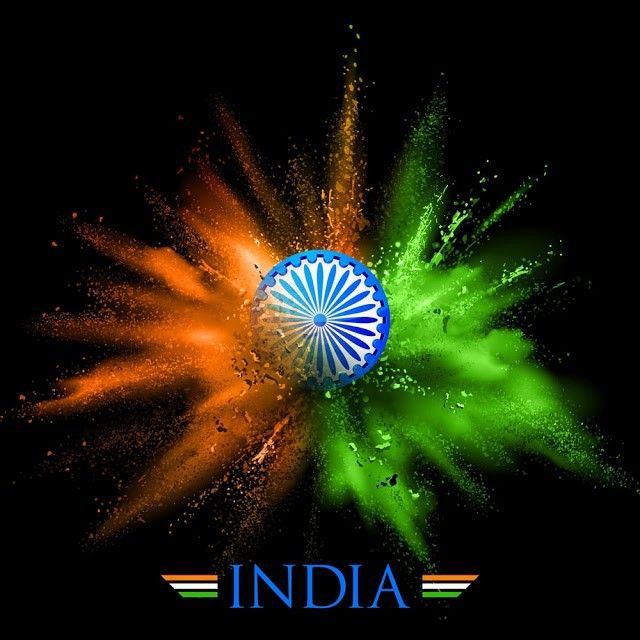
The National Flag is a horizontal tricolour of India saffron (kesaria) at the top, white in the middle and India green at the bottom in equal proportion. The ratio of width of the flag to its length is two to three. In the centre of the white band is a navy-blue wheel which represents the chakra.

The top saffron colour, indicates the strength and courage of the country. The white middle band indicates peace and truth with Dharma Chakra. The green shows the fertility, growth and auspiciousness of the land.

Its design is that of the wheel which appears on the abacus of the Sarnath Lion Capital of Ashoka. Its diameter approximates to the width of the white band and it has 24 spokes. The design of the National Flag was adopted by the Constituent Assembly of India on 22 July 1947.

National Bird

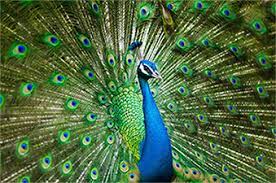
The Indian peacock, Pavo cristatus, the national bird of India, is a colourful, with a fan-shaped crest of feathers, a white patch under the eye and a long, slender neck. A bird with a glistening blue breast and neck and a spectacular bronze-green tail of around 200 elongated feathers. The elaborate courtship dance of the bird, fanning out the tail and preening its feathers is a gorgeous sight.

National Flower

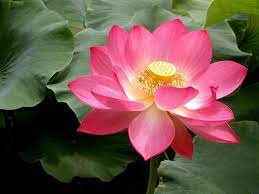
Lotus (Nelumbo Nucifera Gaertn) is the National Flower of India. It is a sacred flower and occupies a unique position in the art and mythology of ancient India and has been an auspicious symbol of Indian culture since time immemorial.

India is rich in flora. Currently available data places India in the tenth position in the world and fourth in Asia in plant diversity. From about 70 per cent geographical area surveyed so far, 47,000 species of plants have been described by the Botanical Survey of India (BSI).

National Tree

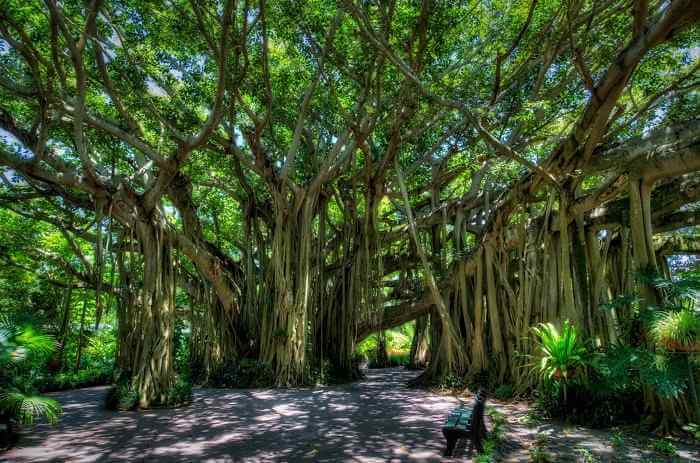
Indian fig tree, Ficus bengalensis, whose branches root themselves like new trees over a large area. The roots then give rise to more trunks and branches. Because of this characteristic and its longevity, this tree is considered immortal and is an integral part of the myths and legends of India. Even today, the banyan tree is the focal point of village life and the village council meets under the shade of this tree.

National Anthem

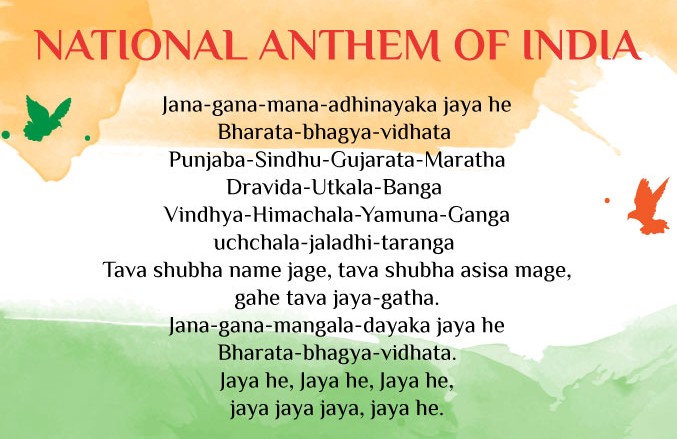
The “National Anthem of India” is played or song on various occasions. It represents the rich cultural heritage, geography, History, the courage and bravery of Indians.

Jana-gana-mana-adhinayaka jaya he
Bharata-bhagya-vidhata
Punjaba-Sindhu-Gujarata-Maratha
Dravida-Utkala-Banga
Vindhya-Himachala-Yamuna-Ganga
uchchala-jaladhi-taranga
Tava shubha name jage, tava shubha asisa mage,
gahe tava jaya-gatha.
Jana-gana-mangala-dayaka jaya he
Bharata-bhagya-vidhata.
Jaya he, Jaya he, Jaya he,
jaya jaya jaya, jaya he.

State Emblem

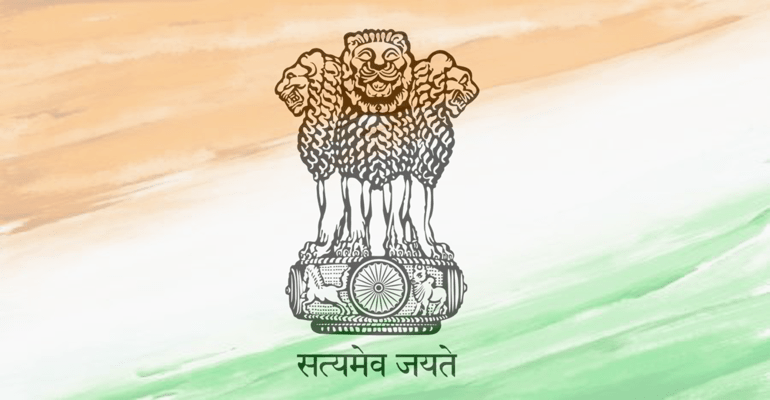
The state emblem is an adaptation from the Sarnath Lion Capital of Ashoka. In the original, there are four lions, standing back to back, mounted on an abacus with a frieze carrying sculptures in high relief of an elephant, a galloping horse, a bull and a lion separated by intervening wheels over a bell-shaped lotus. Carved out of a single block of polished sandstone, the Capital is crowned by the Wheel of the Law (Dharma Chakra)

In the state emblem, adopted by the Government of India on 26 January 1950, only three lions are visible, the fourth being hidden from view. The wheel appears in relief in the centre of the abacus with a bull on right and a horse on left and the outlines of other wheels on extreme right and left. The bell-shaped lotus has been omitted. The words Satyameva Jayate from Mundaka Upanishad, meaning ‘Truth Alone Triumphs‘, are inscribed below the abacus in Devanagari script.

National Animal

The magnificent tiger, Panthera tigris is a striped animal. It has a thick yellow coat of fur with dark stripes. The combination of grace, strength, agility and enormous power has earned the tiger its pride of place as the national animal of India. Out of eight races of the species known, the Indian race, the Royal Bengal Tiger, is found throughout the country except in the north-western region and also in the neighbouring countries, Nepal, Bhutan and Bangladesh.

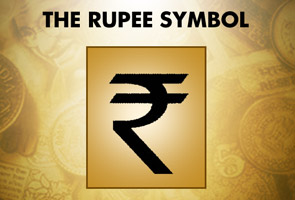
Currency Symbol

The symbol of Indian Rupee typifies India’s international identity for money transactions and economic strength. The Indian Rupee sign is an allegory of Indian ethos. The symbol is an amalgam of Devanagari “Ra” and the Roman Capital “R” with two parallel horizontal stripes running at the top representing the national flag and also the “equal to” sign. The Indian Rupee sign was adopted by the Government of India on 15th July, 2010.

The symbol, conceptualised and designed by Udaya Kumar, a post graduate in Design from Indian Institute of Technology Bombay.

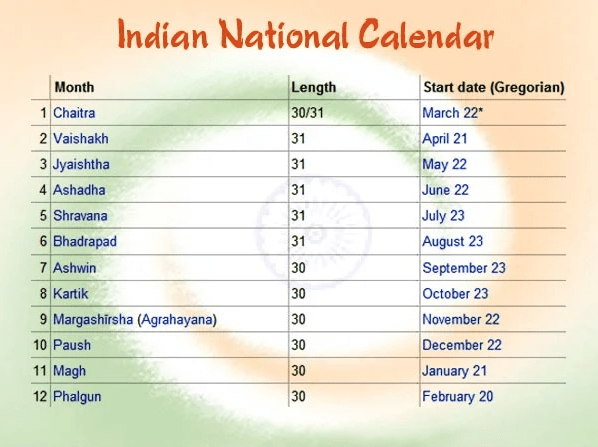
National Calendar

The national calendar based on the Saka Era, with Chaitra as its first month and a normal year of 365 days was adopted from 22 March 1957 along with the Gregorian calendar for the following official purposes:

  1. Gazette of India.
  2. News broadcast by All India Radio.
  3. Calendars issued by the Government of India.
  4. Government communications addressed to the members of the public.

Dates of the national calendar have a permanent correspondence with dates of the Gregorian calendar, 1 Chaitra falling on 22 March normally and on 21 March in leap year.

The National Symbols of India fill a sense of pride in our heart! It is very important that we give atmost respect to our National Identity Symbols! Jai Hind

References:

Know India – This is an official website of India, used and can be used to get authentic information.

Wikipedia

https://www.india.gov.in/

Is Media still Working On its ethics and norms.

As the UP Election are on the way all the political parties are on their way to lure the public towards them to getthe votes and to win the elections. Therefore a lot interviews and rallies have started taken place. India has just came out of the second wave of Covid-19 and somehow there were many political rallies lead to the boost in cases at some places.

Sadly the same thing is happening again and the rallies and political gatherings have started again. No one knows what can be the result of all this but as there are a chances of having a third wave of Covid-19 around October it is not something that leaders should be focusing on.

Among all this the role of media has became limited to promoting the government and several products only. The major news channels are not talking about the problems that may arise as the result of the actions taken by Government. Upon having a chance to interview they only end up asking silly questions like a 5 year old fro, prime minister and from chief minister as well.

The role of media is to ask questions on behalf of the public but it seems to do everything except that only.

what do you think about current media and what do you think about the government. please share your thoughts in the comments below.

Kadambini Ganguly: India’s First Female Doctor.

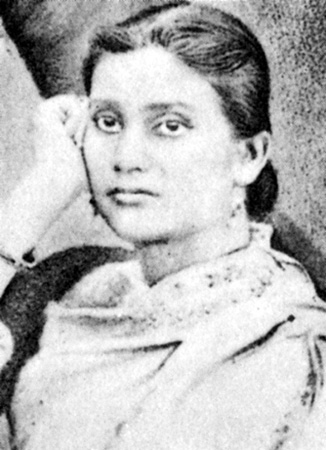
160 years ago, on this day, July 18, Kadambini Ganguly was born in a Bengali family in Bhagalpur, Bihar. As a child, she was rebellious with regard to sexism and patriarchy and was very hard-working as a student.

Picture of Dr. Kadambini Ganguly.

During her childhood, she had witnessed that in her area many women used to die without treatment as women could not get proper treatment because all doctors were males and Indian social culture didn’t approve a male doctor treating a female patient. From here, she dreamt of becoming a doctor during her childhood.

However, things didn’t happen according to her. She was married off at young age and thus she thought her dreams would go down the gutter. But it was then her husband who supported her in every walk of her life. She did her schooling partly at Banga Mahila Vidyalaya and partly at Bethune School. In 1878, she became the first female to pass the University of Calcutta entrance examination.

Within few years, she became one of the first few female graduates in the country alongside Chandramukhi Basu. When she wanted to study medicine, she was denied admission by University of Calcutta as the university wasn’t allowing female students back then. Dwarkanath Ganguly, Kadambini Ganguly’s husband challenged this patriarchal rule and in 1883 Kadambini Ganguly was the first female to take admission in Calcutta Medical College.

Kadambini Ganguly received a scholarship of two years and in 1886 she was awarded the GBMC award and thus making her the first female to have a degree in Western Medicine in the whole of South Asia.

It is also important to note that during that time people didn’t approve a female getting education and as a result she received strong opposition regarding her academical choices from conservatives even from her neighbourhood and relatives.

Bangabashi, a magazine of that time that was run by the then conservatives also called her a “whore” and this obviously didn’t go well with the Ganguly couple. Dwarkanath Ganguly legally filed a court case against the magazine and this resulted in 6 months jail term for the editor of the magazine.

Kadambini Ganguly also went abroad for her studies and got her further education in Edinburgh College of Medicines for Women. She quickly earned three different diploma degrees. Soon, she became popular in entire South Asia and Europe. Her name became so popular that the then King of Nepal invited her to treat his ailing mother.

Kadambini Ganguly had even advocated for social change in India and especially for women. It was due to her efforts that Bethune College in Kolkata added the Fine Arts course in their college. She was also one of the six female delegates to fifth session in Indian National Congress and even organised Women’s Conference in 1906 in Calcutta.

Authors of that time described Kadambini Ganguly as one of the “greatest” and the “most accomplished woman” of her time. And truly, all of us agree to it. Because of courageous women like her, so many women in the world must have got inspired to achieve their dreams. Kadambini Ganguly will always remain immortal in all her hearts.

The case of magahi betel leaf (paan)

Magahi betel leaf (Paan) is an variety of betel grown in south Bihar region and mostly in Aurangabad, Gaya and Nalanda districts. This paan, is about 3.5 to 9.5 inches in size. It’s non-fibrous, sweeter, tastier and the soft.it got GI tagged in 2018 alongwith Jardalu mango and katarni rice

Magahi paan was popular even during ancient times. It is claimed that prince Vijai Mal was fond of Magahi paan and it is mentioned in the 1884 book of GA Grierson, an Irish administrator and linguist in British India. Several other references had been cited in the journal to establish Magahi paan being an exclusive produce of Magadh region

Magahi paan is sown during March-May each year, with leaves plucked during January-March. Each plant can give 40-60 leaves, yielding 500 dholis per year per katha .Every year, farmers have to sow new plants. When everything goes well, farmers can earn Rs 70,000-1,00,000 from one katha of land.

Problems encountered by betel leaf (paan) farmers

There is lack of insurance or MSP facility to the farmers. it is highly susceptible to bad weather conditions and is classified as  horticulture, not agriculture product. Money is paid in installments by the buyer and  Sometimes money is paid after one and a half years to the farmers.

Number of paan farmers is on the decline because of lack of any state help to ease their high cost of production, as the plant requires an artificial conservatory to grow.

Future ahead

A tie up between Agricultural and Processed Food Products Export Development Authority (APEDA) and Bihar Agricultural University (sabaur) is currently under process. Plan is to export GI tagged products Makhana, Jardalu Mango, Shear Rice, Litchi and Magahi Pan.

Let’s hope the things gets better and government policies should be made and implemented in a way keeping the problems faced by farmers and their needs at centre. Then, only these betel growing farmers will get benefitted from those government benefits.

Religion in India

Being a part of a mixed economy , where politics tend to exploit the peace between different religions and so on …….. .

“India was the motherland of our race, and Sanskrit the mother of Europe’s languages: she was the mother of our philosophy; mother, through the Arabs, of much of our mathematics; mother, through the Buddha, of the ideals embodied in Christianity; mother, through the village community, of self-government and democracy. Mother India is in many ways the mother of us all.”

Will Durant, American historian

And now you want to know why I am being so dramatic over such things . Well , if you want to know than start reading the editorial .

Introduction

Indians say it is important to respect all religions, but major religious groups see little in common and want to live separately

More than 70 years after India became free from colonial rule, Indians generally feel their country has lived up to one of its post-independence ideals: a society where followers of many religions can live and practice freely.

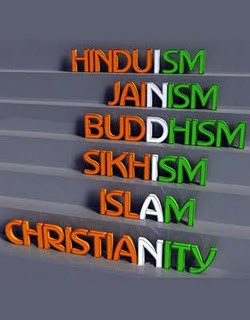
Religion has historically influenced Indian society on a political, cultural and economic level. There is a sense of pride associated with the country’s rich religious history as the traditions of Hinduism, Buddhism, Sikhism and Jainism all emerged out of India. Moreover, while a majority of people in India identify as Hindu (79.8%), the medley of religions that exist within the country continually impact contemporary society.

Census

The 2011 Indian census indicated that 79.8% of Indians identified as Hindu, 14.2% identified as Muslim and 2.3% identified as Christian. A further 1.7% of the population identified as Sikh, 0.7% identified as Buddhist and 0.37% identified as Jain. Due to the massive population size of India, religious minorities still represent a significant number of people. For example, although only 0.37% of India may identify with Jainism, that still equates to over 4 million people. While not all religions in India can be discussed in detail, the following provides an overview of the major religions in the country as well as sizable religions that originated in India.

Social beliefs

“India has two million gods and worships them all. In religion all other countries are paupers; India is the only millionaire.”

Mark Twain

Karma, Acceptance and Personal Choice . Many Indians tend to have a sense of acceptance towards one’s life position or a belief that, due to actions in one’s past life, good or bad personal circumstances are deserved. This attitude partly stems from religious ideas such as ‘karma’ (the idea that one’s actions will affect their current or future life) and ‘samsara’ (the cycle of rebirth).

The interplay of these social, cultural and religious factors allows people to be accepting of life events and trajectories. However, this is not to be interpreted as Indians being unwilling to take responsibility for life circumstances. Many often contemplate how their actions may impact their future and make decisions accordingly. Some of India’s youth are challenging a fatalistic perspective by asserting their free will to choose their vocation, spouse and other life factors. Indeed, as social mobility becomes more common, there is a growing belief that one can change their circumstances.

It’s Role

Religion plays a major role in the Indian way of life. Rituals, worship, and other religious activities are very prominent in an individual’s daily life; it is also a principal organizer of social life. The degree of religiosity varies amongst individuals; in recent decades, religious orthodoxy and observances have become less common in Indian society, particularly amongst young urban-dwellers. As of the politics , they play with religion , people’s belief and with their trust .

Link :

BOBBY (1973): The Game Changer of Teenage Romance.

Why is the movie considered as Hindi Cinema’s first teenage love story?

1970s ‘India’ witnessed lots of socio-economic happenings like unemployment, poverty and corruption and so were the plots of most of the movies of that era based on classism, social injustice, divide between rich and poor and so on. Although the genre “love story” was mostly ignored, the film “Bobby” in 1973 came out as an exception. Directed by Raj Kapoor and produced and distributed by R.K. Films with Rishi Kapoor and Dimple Kapadia in lead roles, the film is altogether a masterpiece. Not only is it considered as a benchmark of Hindi Romantic Cinema but it also completely redefined the genre, thus breaking the earlier notions of typical family drama love stories.

Film Poster of Bobby (1973).

The movie begins with six year old Raj, son of a rich business person who is sent to boarding school leaving behind his governess, Mrs Braganza in grief. After completing his studies in boarding school, Raj (played by Rishi Kapoor) returns for his 18th Birthday party where his eyes are stunned seeing a girl in a white gown, who’s apparently his governess’ granddaughter, Bobby Braganza (played by Dimple Kapadia). The next day, Raj visits Mrs.Braganza’s home, who’s in a better economic condition than before and gets to meet Bobby. The two subsequently develop a friendship and liking towards each other. Not very long before they had their first break up following a misunderstanding at Raj’s friend’s party which they sort out later during Bobby’s Kashmir school trip.

Slowly, both of their parents come to know about their affair and Braganzas are invited to Raj’s home for a dinner party by his father. However seeing the social condition of Braganzas, Raj’s father brutally mocks them leading Braganzas shattered. He doesn’t stop at that and visits Braganza’s residence to again insult them by providing them money to get rid of the Raj and Bobby’s relationship. He then fixes Raj’s marriage with another rich businessperson’s disabled daughter without telling Raj. Raj, however, runs away and this time Raj’s family along with police accuse Bobby’s father with ‘kidnapping’. Both Raj and Bobby’s family chase the couple and with no option left Raj and Bobby decide to jump in the river but are rescued by each other’s dad. The film has a “happy ending” with unification of two families.

How this film brought a change in the genre and why it remains a trendsetter?

It is probably Bobby, which introduced teenage romance in Hindi Cinema. Before this film, love story in the context of Hindi Cinema was only restricted to a grown up adult man and woman mostly in their late 20s who fall in love and marry or how typical Indian families indulge in arrange marriage and how the couple start loving each other after marriage. Bobby was one of the first Hindi films which showed teenage romance in a very entertaining and engaging way. There is an entire song in the movie titled “Hum tum ek kamre me band” (English: We both are locked in a room) where it is shown how the young couple (Bobby and Raj) accidentally get locked in a room, which proves that the movie was way ahead of its time. The film is also known for its exquisite closets varying from fairy tale gowns to dreamy jackets. Shot in spectacular locations of Goa, Mumbai and Kashmir, it was all soothing and added more to its glory.

The film was specifically made for the youth and Bobby being the debut film of both Dimple Kapadia and Rishi Kapoor added more to its freshness. The film had so much of impact on youth that during that time 14-15 year olds used to rebel against their parents to find true love and eventually the film became “template” for teen romances in India. The audience and Indian public were so fascinated with the movie’s character Bobby that many girls born in India during that time were named “Bobby”. Interestingly, this movie’s plot was replicated consequently in several other romantic Hindi films for over three decades.

The typical “happy ending” stories as mentioned earlier also became a trend ever since. Almost every popular love story in Hindi Cinema had a similar plot thereafter and that too in a proper sequence- first romance of a teen couple from different economic classes, followed by severe family restrictions and finally the climax- either happy or mournful. These narrative elements like family restrictions and classism became genre conventions ever since the release of Bobby.

Investing lesson of Peter Lynch


Peter Lynch is one of the most successful and top value investor of all time. He was a legendary fund manager who gave 29% returns to their investors for 13 years in a row. He wrote books on value investing , where he shared his investment lessons which he learned and used during his journey as an investor. He is one of the greatest value investor of all time. He is a firm believer that an average investor can also pick winning stocks as Wall Street professional with right research, patience , steady discipline and common sense.


Some of his investment principles are –

1. Invest in what you already know – “The worst thing you can do is invest in companies you know nothing about. Unfortunately buying stocks on ignorance is still a popular American pastime.” -Peter Lynch
People can perform well by investing in what they already know. For instance if a doctor wants to invest in banking sector (about which he know nothing) , he will not have that great return as compared to if he will invest in pharmaceutical companies ( as he already knew about drugs, healthcare sector and their companies)
“Invest in what you know. It leaves out the role of serious fundamental stock research. People buy a stock and they know nothing about it. That’s gambling and it’s not good.” -Peter Lynch
So, it’s better to choose the company whose products/services are either used by you or you are familier of the products/services of that company in some way or other. These knowledge will lead you to invest in better stocks .
2. Invest in companies not in stocks – “Look for small companies that are already profitable and have proven that their concept can be replicated. • Be suspicious of companies with growth rates of 50 to 100 percent a year”-Peter Lynch

Behind every stock there is a company. If companies will perform well, the stocks automatically will perform well. So, it’s important to know about the company, it’s business model. Choose a company whose fundamentals are strong. A company whose business model is so easy to understand that anyone can understand and run that company.

“Go for a business that any idiot can run – because sooner or later any idiot probably is going to be running it” -Peter Lynch

Know a companies management, it’s fundamentals and then ask yourself , “are you able to understand the mission and vision of the company? “ or “If you’ll be given the responsibility to run this company, will you be able to run the company? “
If the answers to the above questions are a YES then it’ll be great to invest in that company.
So always remember that you have to invest in a company and not in a single stock.


“Behind every stock is a company. Find out what it’s doing.” -Peter Lynch

“Never invest in a company without understanding its finances. The biggest losses in stocks come from companies with poor balance sheets.”

3. Don’t take unnecessary risks. Take calculated risks – You don’t have to take risks which you can’t bear. Only take calculated risks.
Let’s say, you have $10 dollar, maybe if you will lost this, you won’t regret. But what if you lost $100 or $1000! Always buy stocks of the amount if you lose won’t regret. You are not required to put all your money in market and risk all that money. Instead put only that amount which if you lose won’t make you regret of investing.
Also, invest only the amount you will not need ever back in your life
4. Peter Lynch said that the most important thing that keep in mind while investing is : know why you own it.

“ You have to know what you own ,and why are you own it .” -Petrr Lynch

It sounds simple but it is not . He said when I asked most people they just don’t know why they own a stock . 80% of investors have no answer to this question .

They maybe hear some tip from anywhere and put their money at risk and when they lose it they blame institutions .
First you have to know the reason . Why you should invest in this company ,research about that company . Check their balance sheets . Without proper research you are not investing you are just gambling . Read and know as much as you can about the company. And remember to buy the company and not just a stock.

“If you’re prepared to invest in a company, then you ought to be able to explain why in simple language that a fifth grader could understand, and quickly enough so the fifth grader won’t get bored.” – Peter Lynch

5. Invest for long time- Lynch used to hold stocks for long period of time. He used to sell the stocks when the fundamentals of any company gets changed. This is his advice for all investors out there to not go behind short term profits but invest for a long period of time.
He even conducted many studies to understand the power of compounding.

“People who succeed in the stock market also accept periodic losses, setbacks, and unexpected occurrences. Calamitous drops do not scare them out of the game.”


Some more investment lessons by Peter Lynch :

• “Never invest in any idea you can’t illustrate with a crayon .”

• “The trick is not to learn to trust your gut feelings, but rather to discipline yourself to ignore them. Stand by your stocks as long as the fundamental story of the company hasn’t changed”

• “Whenever you invest in any company, you’re looking for its market cap to rise. This can’t happen unless buyers are paying higher prices for the shares, making your investment more valuable.”


• “There’s no shame in losing money on a stock. Everybody does it. What is shameful is to hold on to a stock, or worse, to buy more of it when the fundamentals are deteriorating.”

• “Never invest in any company before you’ve done the homework on the company’s earnings prospects, financial condition, competitive position, etc”

• “Big companies have small moves, small companies have big moves.”

• “Good management, a strong balance sheet, and a sensible plan of action will overcome many obstacles, but when you’ve got weak management, a weak balance sheet, and a misguided plan of action, the greatest industry in the world won’t bail you out.”

• “In the long run, a portfolio of well chosen stocks and/or equity mutual funds will always outperform a portfolio of bonds or a money-market account. In the long run, a portfolio of poorly chosen stocks won’t outperform the money left under the mattress.”


This is how he succeed in the world of investment. You can learn from him and help yourself to reach the level you want in investment.


Thank you.

TEACHER’S DAY

Celebrating Teacher’s day at school is one of the finest memories from the school days. With no doubt, we can say everyone will agree with it.

Teachers’ Day is celebrated to honour the memory of India’s first Vice President and to commemorate the importance of teachers in our lives.

The idea of celebrating Teachers’ Day took root in many countries during the 19th century; in most cases, they celebrate a local educator or an important milestone in education.

Why We Celebrate Teachers Day On 5th September?
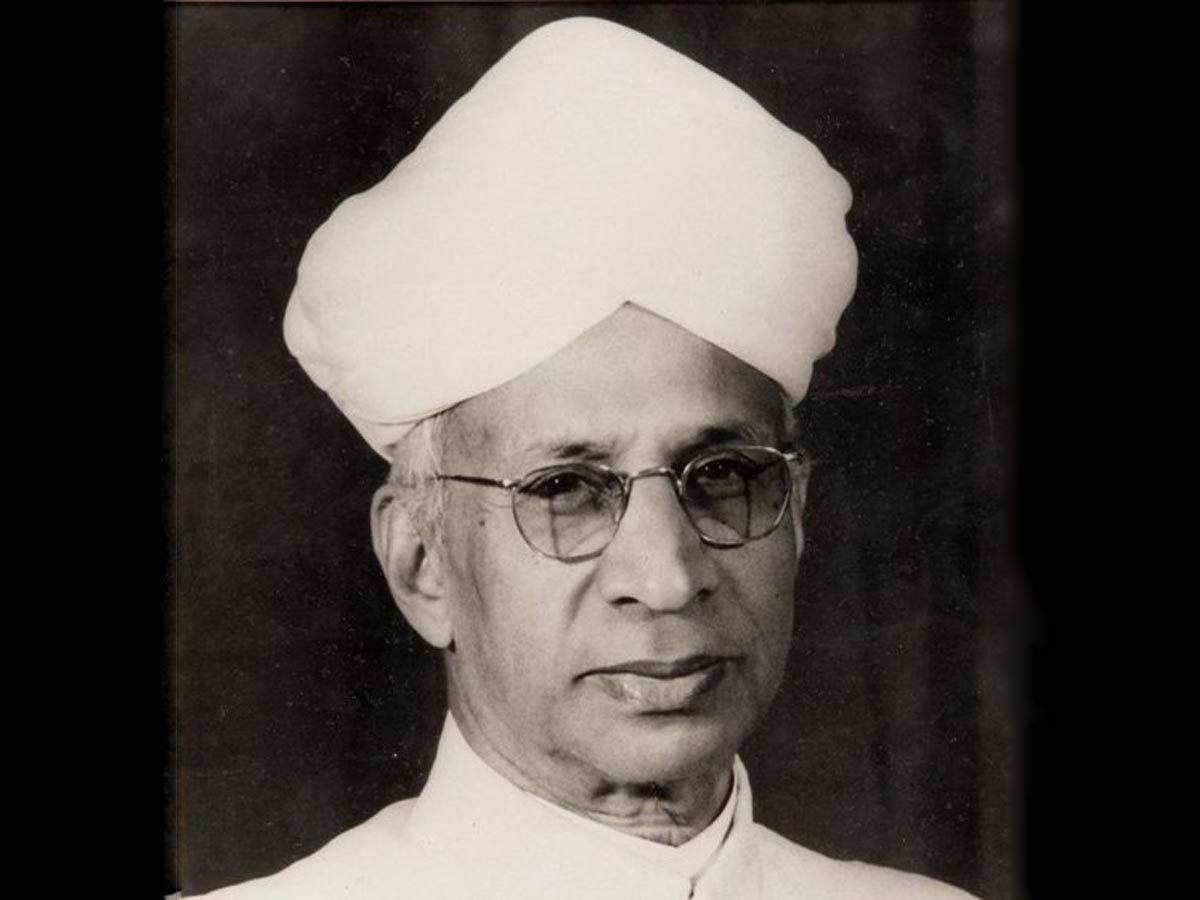
5th September is the birth anniversary of a great teacher Dr Sarvepalli Radhakrishnan, who was a staunch believer of education and was a well-known diplomat, scholar, the President of India and above all, a teacher.

Sarvepalli Radhakrishnan ( 5 September 1888 – 17 April 1975) was an Indian academic, professor, philosopher, and politician who served as the first Vice President of India (1952–1962) and the second President of India (1962–1967).

What is education according to Radhakrishnan?
Education, according to Sarvepalli Radhakrishnan, is acquiring of knowledge beyond what is academic and professional. Education is the assimilation of values and ideas for character building and preparing to face life’s challenges.

A life of joy and happiness is possible only on the basis of knowledge and science.”

Why plastic bags should get banned?

Plastic bags are harming our environment. Plastics are non biodegradable product which means that they will not degrade in the soil for thousands and thousands of years. Plastic harms our environment in all the ways it can.

How plastic degrades our environment?

Land pollution from plastics…

Firstly, let’s talk about land pollution so if we throw plastic bags on for example, soil, it will not degrade easily and it will degrade may be after thousand years but the chemicals which are used to make the plastic bag degrade the fertility of the soil. Plastic bags are made from poisonous chemicals and if we will throw it in soil firstly it will degrade the fertility of the soil and secondly it will make the crop poisonous and if we will eat that food crops that will grow on such soil we can even die so it deplete the fertility of soil and at the same time makes our food poisonous. Please ,Please ,Please never throw plastic bags on soil or some land area where crops are grown. This way it causes land pollution.

How plastics causes animals death?

Sometimes animals eat plastic bags which causes them to choke. We should never throw plastic bags in garbages because in our country especially in India cows and many other animals like dogs eat from garbages and if by mistake they eat plastic it will let them to die so please never throw garbage inside plastic bags.

Water pollution from plastics…

Plastic bags also causes water pollution. Let’s see how. So when plastics are thrown inside water, the Marine animals which used to live inside the water bodies , by mistake eat that plastic or even a part of the plastic bag which made them to die. The plastic bags are made from poisonous chemicals so please remember never to throw plastic bags anywhere.

In these above-mentioned ways and many more ways plastics destroys our environment.

Measures taken against plastics by different countries…

Some Countries banned plastic totally while some other countries levied taxes on it. But a country is made by its countrymen and we are the country man of India and it is our national duty to stop using plastic bags and save our environment. In our country today also people are using plastic bags even after knowing that they are not good for our environment and causes so many problems.

Why still using plastic bags?

The question is why we are not stopping ourselves from using the plastic bags even if we know that it causes harmful effects on environment. So, there are a lot of reasons behind it. Let’s discuss them one by one.

The first reason is that we are used to it. We habitual of using plastic bags.

The second reason is that it is very convenient to use plastic bags. Plastic bags are lightweight and are very small in size so it becomes very easy for us to carry them . On the other hand cloth or jute bags are not lightweight and are big also, which makes them inconvenient or less convenient than plastic bags.

The third reason is that plastic bags are very cheap. So it’s easy to buy them.

So there are many more reasons but these are the main reasons which make plastic bags very common in use.

Conclusion

We should today take the oath that we have to never use plastic bags and this is not a rule that you have to follow against your will but this is your duty to never never never use plastic bags because it’s our Earth we can make it a better place to live for everybody else.We always want to change our society and the world. But let me tell you very clearly that you can’t.

You can just change yourself and you know what that will make the world change.

“If you can change yourself, you can change the world and if you can’t change yourself ,you will never be able to change the world.”

Thankyou so much for reading.