Corporate engagement with society, also termed corporate social responsibility (CSR), has become a commonly used term in contemporary society and refers to one process by which an organization expresses and develops its ‘corporate culture’ and social consciousness.
CSR has been receiving lots of attention from various backgrounds of researchers worldwide, it has attracted a great deal of attention over the past decade and according to some researchers, has gathered great momentum over the past number of years and is now regarded to be at its most prevalent. Therefore business leaders, government officials, and academics are focusing more and more attention on the concept of “corporate social responsibility”.
Almost all corporate websites/ policies/reports talk about their endeavors for CSR, which has become a way of ensuring that the organization is fulfilling all the obligations towards society and thus is eligible for the license to operate. It assures that the organization can grow on sustainable basis. There are also societal pressures with respect to social issues such as human rights and the environment on the corporations and CSR is widely regarded as the response of corporations to this pressure and according to Bénabou & Tirole (2009), responding to such pressure, business leaders, governments and academics are now also emphasizing the notion of CSR.
In CSR, the central issue is the appropriate role of business that overlaps, almost completely, with its reference area and now business organizations have waked up to the need for being committed towards CSR because the role of businesses in society is no longer focused on creating wealth alone but is also focused on acting responsibly towards stakeholders.
Everyone agrees that firms should obey the law. But beyond full compliance with environmental regulations do firms have additional moral or social responsibilities to voluntarily commit resources to environmental protection. To be specific, why companies do CSR? For this, it is answered that CSR is situations where the firm goes beyond compliance and engages in “actions that appear to further some social good, beyond the interests of the firm and that which is required by law” and it is also due to various reasons such as to attract new investors, part of branding strategy, an obligation from the government and the lists go on. However, CSR does not mean just taking part in charitable activities and events; it means holding the responsibility to develop the society by envisioning future plans for socio-economic justice and be conscious about their responsibility for the welfare of society around them. Therefore, according to Zu & Song (2008), a large number of companies appear increasingly engaged in a serious effort to define and integrate CSR into all aspects of their businesses.
Corporate executives have also encountered demands from multiple stakeholder groups to devote resources to CSR. This may be partially due to the pressure generated by a union of ethics-oriented campaigners including NGOs, anti-capitalism activists, labor unions, and news media; and partially due to the demand for doing so by their customers, employees, suppliers, communities, governments, and even stockholders. Ismail (2011) stated that CSR is supported by the case whereby the government alone is definitely cannot afford to have a sole responsibility in improving the lives of their people as it exceeds their capabilities. If the government is unable to fulfill the increasing demand of their people thus this is where the corporations should support the government. However, those who opposed this statement saw the situation as unfair to the business corporations, such as Friedman’s (1970) famous statement that ‘the only responsibility of a business is to maximize shareholders’ wealth’. But according to Krishnan & Balachandran, companies are beginning to realize the fact that in order to gain strategic initiative and to ensure continued existence, business practices may have to be molded from the normal practice of solely focusing on profits to factor in public goodwill and responsible business etiquettes.
An examination of some of the factors, which have led to the development of the concept of CSR, would be ideal starting ground for the conceptual development of suitable corporate business practices for emerging markets. Krishnan & Balachandran also expressed that in the last twenty years, there has been a sea change in the nature of the triangular relationship between companies, the state and the society.
No longer can firms continue to act as independent entities regardless of the interest of the general public. The evolution of the relationship between companies and society has been one of slow transformation from a philanthropic coexistence to one where the mutual interest of all the stakeholders is gaining paramount importance. Bénabou & Tirole (2009) asserted that CSR is somewhat of a “catch-all” phrase for an array of different concepts.
“Public interest Litigation”, in simple words, means, litigation filed in a court of law, for the protection of “Public Interest”, such as pollution, Terrorism, Road safety, constructional hazards etc.
Article 32 of the Indian Constitution contains the tool which directly joins the public with the judiciary. Public Interest Litigation is not defined in any statute or in any act. It has been interpreted by judges to consider the intent of public at large.
Public Interest Litigation means a legal action initiated in a court of law for the enforcement of public interest or general interest in which the public or class of the community have pecuniary interest or some interest by which their legal rights or liabilities are affected.
In the case of People‟s Union for Democratic Rights v. Union of India, it was held that “Public Interest Litigation which is a strategic arm of the legal aid movement and which is intended to bring justice within the reach of the poor masses, who constitute the low visibility area of humanity, is a totally different kind of litigation from the ordinary traditional litigation which is essentially of an adversary character where there is a dispute between two parties, one making a claim or seeing relief against the other and that other opposing such claim or relief. Public interest litigation is brought before the court not for the purpose of enforcing the right of one individual against another as happens in the case of ordinary litigation, but it is intended to promote and vindicate public interest which demands that violations of constitutional or legal rights of large numbers of people who are poor, ignorant or in a socially or economically disadvantaged position should not go unnoticed and un-redressed. That would be destructive of the Rule of Law which forms one of the essential elements of public interest in any democratic form of government. The Rule of Law does not mean that the protection of the law must be available only to a fortunate few or that the law should be allowed to be prostituted by the vested interests for protecting and upholding the status quo under the guise of enforcement of their civil and political rights. The poor too have civil and political rights and the Rule of Law is meant for them also, though today it exists only on paper and not in reality.”
Development ofPublic Interest Litigation:
A new era of the PIL movement was heralded by Justice P.N. Bhagawati in the case of S.P. Gupta v. Union of India. In this case it was held that “any member of the public or social action group acting bonafide” can invoke the Writ Jurisdiction of the High Courts or the Supreme Court seeking redressal against violation of a legal or constitutional rights of persons who due to social or economic or any other disability cannot approach the Court. By this judgment PIL became a potent weapon for the enforcement of “public duties” where executed in action or misdeed resulted in public injury. And as a result any citizen of India or any consumer groups or social action groups can now approach the apex court of the country seeking legal remedies in all cases where the interests of general public or a section of public are at stake.
It can be evidently seen that the development of public interest litigation has been extremely significant development in the history of the Indian jurisprudence. The decisions of the Supreme Court in the 1970’s loosened the strict locus standi requirements to permit filing of petitions on behalf of marginalized and deprived sections of the society by public spirited individuals, institutions and/or bodies. The higher Courts exercised wide powers given to them under Articles 32 and 226 of the Constitution. The sort of remedies sought from the courts in the public interest litigation goes beyond award of remedies to the affected individuals and groups. In suitable cases, the courts have also given guidelines and directions. The courts have monitored implementation of legislation and even formulated guidelines in absence of legislation.
1. In Public Interest Litigation (PIL) vigilant citizens of the country can find an inexpensive legal remedy because there is only a nominal fixed court fee involved in this.
2. Further, through the so-called PIL, the litigants can focus attention on and achieve results pertaining to larger public issues, especially in the fields of human rights, consumer welfare and environment.
Demerits of Public Interest Litigation:
1. The genuine causes and cases of public interest have in fact receded to the background and irresponsible PIL activists all over the country have started to play a major but not a constructive role in the arena of litigation. Of late, many of the PIL activists in the country have found the PIL as a handy tool of harassment since frivolous cases could be filed without investment of heavy court fees as required in private civil litigation and deals could then be negotiated with the victims of stay orders obtained in the so-called PILs.
2. The framers of Indian constitution did not incorporate a strict doctrine of separation of powers but envisaged a system of checks and balances. Policy making and implementation of policy are conventionally regarding as the exclusive domain of the executive and the legislature. Vishaka v State of Rajasthan which was a PIL concerning sexual harassment of women at work place. The court declared that till the legislature enacted a law consistent with the convention on the Elimination of All Forms of Discrimination Against Women which India was a signatory, the guidelines set out by the court would be enforceable.
3. The flexibility of procedure that is a character of PIL has given rise to another set of problems. It gives an opportunity to opposite parties to ascertain the precise allegation and respond specific issues.
4. The credibility of PIL process is now adversely affected by the criticism that the judiciary is overstepping the boundaries pf its jurisdiction and that it is unable to supervise the effective implementation of its orders. It has also been increasingly felt that PIL is being misused by the people agitating for private grievance in the grab of public interest and seeking publicity rather than espousing public cause.
Landmark Judgements:
1.Peoples Union for Democratic Rights v. Union of India (A.I.R. 1982, S C 1473)-The court now permits Public Interest Litigation or Social Interest Litigation at the instance of “Public spirited citizens” for the enforcement of constitutional & legal rights of any person or group of persons who because of their socially or economically disadvantaged position are unable to approach court for relief. Public interest litigation is a part of the process of participate justice and standing in civil litigation of that pattern must have liberal reception at the judicial door steps.
2. In the Judges Transfer Case – AIR 1982, SC 149: Court held Public Interest Litigation can be filed by any member of public having sufficient interest for public injury arising from violation of legal rights so as to get judicial redress. This is absolutely necessary for maintaining Rule of law and accelerating the balance between law and justice. It is a settled law that when a person approaches the court of equity in exercise of extraordinary jurisdiction, he should approach the court not only with clean hands but with clean mind, heart and with clean objectives.
3. Shiram Food & Fertilizer case AIR (1986) 2 SCC 176 SC: Public Interest Litigation directed the Co. Manufacturing hazardous & lethal chemical and gases posing danger to life and health of workmen & to take all necessary safety measures before re-opening the plant.
4. In the case of M.C Mehta V. Union of India (1988) 1 SCC 471 – In Public Interest Litigation brought against Ganga water pollution so as to prevent any further pollution of Ganga water. Supreme court held that petitioner although not a riparian owner is entitled to move the court for the enforcement of statutory provisions, as he is the person interested in protecting the lives of the people who make use of Ganga water.
The right to Information Act 2005 which came fully into effect on12th October 2005 is one of the most significant legislation enacted by the Parliament in India. It is a major step towards more accountable and transparent government. RTI has been enacted to provide for setting out the practical regime of right to information for citizens to secure access to information under the control of public authorities in order to promote transparency and accountability. The Act will certainly lead to end the culture of governmental secrecy andfulfil its potential as a truly great democracy.
Objective of the Act:
1. To promote transparency and functioning of the government. accountability in the
2. To set up a practical regime for giving citizens access to Information that is under the control of public authorities.
3. To empower the citizens as the law will promote the participation of the citizens in official decisions that directly affect their lives.
4. The effective implementation of RTI Act will build public trust in the government functioning.
5. It will lead to effective and efficient records management technique that is needed to facilitate the provision of information in response to public interest.
What is Right to Information?
Government information is national resource. Neither the particular government of the day nor public officials create information for their own benefits. Government and officials are trustees of this information for the people. The RTI act enables the citizens to obtain access under the law to documents that may otherwise be available only at the discretion of government.
The RTI Act 2005 provides effective access to information for citizens of India, which is under the control of public authorities. This overrides the ―official Secrets Acts and similar laws and rules.
The Act primarily envisages setting out a practical regime of right to information for citizens to secure access to information under the control of public authorities, in order to promote transparency and accountability in the working of every public authority.
Right to Information means the right to information accessible under this Act which is held by or under the control of any public authority and includes the right to: –
(i)Inspection of work, documents, records.
(ii)Taking notes, extracts, or certified copies of documents or records.
(iii)Taking certified samples of material.
(iv)Obtaining information in the form of diskettes, floppies, tapes, video cassettes or in any other electronic mode or through printouts where such information is shared in a computer or in any other device.
Every information held by or under the control of a public authority is accessible to a citizen, unless information is exempt from disclosure.
What is Accessible under the Law?
Information means any material in any form, including records, documents, memos, e-mail, opinions, advices, press releases, circulars, orders, log books, contacts, reports, papers, samples, models, data material held in any electronic form and information relating to any private body which can be accessed by a public authority under any law for the time being in force.
Features of the RTI Act:
ØThe Act extends to the whole of India except Jammu & Kashmir.
ØAll citizens shall have the right to information, subject to provisions of the Act. The RTI empowers the citizens to ask any question or seek any information from government authorities be it Central, State or Local governments.
ØIt shall apply to Public Authorities which means any authority or body or institution of self-government established or constituted by or under the Constitution; by any law made by the appropriate Government or, any other body owned, controlled or substantially financed directly or indirectly by the appropriate Government, and includes non-government organisation substantially financed by the government.
ØThe Act lays down the machinery for the grant of access to information. The Public Authorities are required to designate Public Information Officer and Assistant Public Information Officer with in the hundred days of enactment to accept the request forms and provide information. The Public Information Officers/Assistant Public Information Officers will be responsible to deal with the requests for information and also to assist persons seeking information.
ØThe Act envisages creation of an independent non-judicial machinery viz, Central Information Commission, State Information Commission. Legal Framework of exercise of powers by the Commission is defined in the Act.
ØThe Act also provides the two- tier Appellate forum. First appeal is to be made to the departmental officer senior to the Public Information Officer. The second appeal is to be made to State Commission.
ØFee will be payable by the applicant depending on the nature of information sought.
ØTime limit has been prescribes for the compliance of information depending upon the information requirements.
ØCertain categories of information have been exempted from the disclosure under Section 8and 9 of the Act like conduct of International Relations, security of the State, trade and commercial secrets, intelligence agency etc.
ØCentral Information Commission and the State Information Commissions monitor the implementation of the Act and prepare an Annual report to be laid before the Parliament / State legislatures.
‘Intellect’ refers to the creations of the mind. Intellectual Property is a type of intangible property and includes inventions, literary and artistic works, symbols, names and paintings.
Intellectual Property Rights (IPRs) are the Rights granted to the creators of Intellectual Property (IP) by the Government. The nature of IPR is territorial. In any country an IP has to seek protection separately under the relevant laws.
Mechanisms which are Special in nature have been kept in place for various territories in order to provide protection to different types of IPRs. It confers an exclusive right to the inventor/ creator or assignee to fully utilize the invention/ creation for a given period of time.
It’s been established that the intellectual labor associated with the innovation should be given due importance so that public good emanates from it.
This is a strong tool, to protect investments, time, money, effort invested by the inventor/creator of an IP, since it grants the inventor/creator an exclusive right for a certain period of time for use of his invention/creation.
Hence it aids in the economic development of a country by promoting healthy competition and encouraging industrial development which shall also aid in the growth of the economy.
WHAT IS AN INTELLECTUAL PROPERTY?
Intellectual Property(IP) refers to creations of the mind; inventions; literary and artistic works; and symbols, names and images used in commerce.
IP is divided into two categories: 1) Industrial Property:- includes patents for inventions,trademarks, industrial designs and geographical indications. 2) Copyright:- covers literary works (such as novels,poems and plays), films, music, artistic works (e.g., drawings, paintings, photographs and sculptures) and architectural design.
In Intellectual property(IP), there are Rights which relates to the rights of performing artists in their performances, producers of phonograms in their recordings, and broadcasters in their radio and television programs are included.
WHAT ARE INTELLECTUAL PROPERTY RIGHTS?
So what do you mean by intellectual property rights? IP rights like any other property right allow creators, or owners, of patents, trademarks or copyrighted works to benefit from their own work or investment in a creation.
These rights are outlined in Article 27 of the UDHR which provides for the right to benefit from the protection of moral and material interests resulting from authorship of scientific, literary or artistic productions.
The importance of intellectual property was first recognized in the Paris Convention for the Protection of Industrial Property (1883) and the Berne Convention for the Protection of Literary and Artistic Works (1886). Both treaties are administered by the World Intellectual Property Organization (WIPO).
There are various pros which are more compelling than the cons.
1) The progress and well-being of humanity rest on its capacity to create and invent new works in the areas of technology and culture.
2) The legal protection of new creations and this encourages the commitment of additional resources for further innovation.
And Lastly the third pros is that the 3) Promotion and protection of intellectual property spurs economic growth, creates new jobs and industries, and enhances the quality and enjoyment of life.
An efficient and equitable intellectual property system can help all countries to realize intellectual property’s potential as a catalyst for economic development and social and cultural well-being. The intellectual property system helps strike a balance between the interests of innovators and the public interest, providing an environment in which creativity and invention can flourish.
INTELLECTUAL PROPERTY HOLDERS IN A QUANDARY DUE TO COVID-19 PANDEMIC
While experts are in a combat mode and the race is on to discover the cure for COVID-19, the claim of intellectual property rights for exclusive use of the cure poses a dilemma as it is not considered the most rational thing to do at the moment.
Carlos Correa addressed to organizations like WHO, WTO and WIPO via an open letter to seek support for WTO countries that invoke the ‘security exception’ contained in Article 73 of the Agreement on Trade Related Intellectual Property Rights (TRIPS) Agreement, to take ‘actions it considers necessary for the protection of its essential ‘security interests’ in the wake of COVID-19 threat.
It has been suggested that invocation of exception under Article 73 will be warranted to procure medical products and devices or to use the technologies to manufacture them as necessary to take cue of the present public health emergency.
By suspending the enforcement of any Intellectual Property right as given under Article 73(b) of TRIPS Agreement, an obstacle for the procurement or local manufacturing of the medical equipments shall be necessary in order to protect the population of the world will be outlasted.
The question which is raised due to the above is regarding IP rights which are aimed to aid the public by promoting technological advancement in return of providing the inventor an exclusive right over the invention, though for a limited time. Though the IP rights are at a standstill due to the outbreak the IP Registry offices all over have limited their functioning.
TYPES OF INTELLECTUAL PROPERTY
Trade Mark: –
A trademark is used in order to identify a business entity and it also differentiates the goods made or services offered by a company or an individual. Names, Words, Logos, Colors, Packaging, Sounds (audible), Signs (visual) or any combination thereof are considered and can be filed as trademarks.
A trademark must be Unique and Distinctive in nature and must also avoid adjectives for eg efficient and Names of person or places (E.g. India). Even Obscene words, Religious or Government words or symbols (E.g. OM) and Common Shapes (Square) should be avoided.
The Trade mark means a mark used in relation to goods for the purpose of indicating a connection in the course of trade between the goods and some person having the right as proprietor to use that mark.
The function of a trade mark is to give an indication to the purchaser or a possible purchaser as to the manufacture or quality of the goods, to give an indication to the trade source from which the goods come or the trade hands through which they pass on their way to the market.
The Trade Marks Act, 1999 is an act which provides for the registration and better protection of trademarks for goods and services and for the prevention of the use of fraudulent marks. A trade mark is valid for a period of 10 years.
Case Name: The Coca-Cola Company v. Bisleri International Pvt. Ltd Case Citation: Manu/DE/2698/2009
Copyright: –
Copyright is an exclusive legal right granted to the creators of an intellectual work. The owner of a Copyright has rights to reproduce, translate, adapt, perform, distribute and must be publicly allowed to display the work, etc.
Registration is not mandatory since copyright comes into existence as soon as the intellectual work is created but it is recommended to register a copyright for better enforceability, since registered copyrights have more evidentiary value in court.
(a) Types of Works covered under Copyright:-
(1) Literary including Software – Books, Essay, Compilations, Computer Programs.
(2) Artistic – Drawing, Painting, Logo, Map, Chart, Plan, Photographs, Work of Architecture.
(3) Dramatic – Screenplay, Drama.
(4) Musical – Musical Notations.
(5) Sound Recording – Compact Disc.
(6) Cinematograph Films – Visual Recording which includes sound recording.
(b) Duration of Copyright:-
(1) Literary, Dramatic, Musical or Artistic Works – Lifetime of the author + 60 years from the death of the author.
(2) Anonymous & Pseudonymous Works – 60 years from the year the work was first published.
(3) Works of Public Undertakings & Government Works – 60 years from the year the work was first published.
(4) Works of International Organizations – 60 years from the year the work was first published.
(5) Sound Recording – 60 years from the year in which the recording was published.
(6) Cinematograph Films – 60 years from the year in which the film was published.
Case Name:- Indian Performing Rights Society Ltd. v. Eastern India Motion Picture Association Case Citation: – 1977 SCR (3) 206
Designs: – The Design Act, 2000 states that it protects the aesthetic and ornamental features of an object. As per the Act a 2D or 3D pattern of a handicraft, a product, or even an industrial commodity.
The Unique Selling Point (USP), protects the looks and feels of the product and it prevents the duplication of the product. An industrial design helps in drawing a customer’s attention and helps in increasing the commercial value of an article.
Case Name:-Cello Household Products v. M/S Modware India and anr Case Citation:- Notice of Motion (L) No. 209/2017 in Suit (L) No. 48/2017
Patents On the 4th December, 2018, The Ministry of Commerce and Industry released the draft (rules amendment) for Patents Act 1970. These rules are mainly amended with respect to international applications, patent opposition and a few form related extensions. The Central Government proposes to make these amendments in exercise of the powers conferred by section 159 of the Patents Act, 1970.In order to align with TRIPS, inventions which are not patentable have been included even, wider rights of patentee is incorporated. Uniform period of protection is 20years. Case Name: Bajaj Auto Limited v.TVS Motor Company Limited. Case Citation: JT 2009 (12) SC 103
5. Integrated Circuits
Semiconductor Integrated Circuits Layout Design (SICLD) Act 2000 states the meaning of Semi conductor Integrated Circuit as, a product having transistors and other circuitry elements designed to perform an electronic circuitry function. There are 2 types of designs as per the act:-
(i) Layout Design – A layout of transistors and other circuitry elements including lead wires which connects semiconductor integrated circuits.
(ii) Layout-Design Registry (SICLDR) is the office where the applications on Layout-Designs of integrated circuits are filed for registration. The jurisdiction of this Registry is whole of India. The Registry, as per the guidelines laid down in the Semiconductor Integrated Circuits Layout Design (SICLD) Act 2000 and the Semiconductor Integrated Circuits Layout-Design (SICLD) Rules 2001, examines the layout-designs of the Integrated Circuits and issues the Registration Certificate to the original layout-designs of the Semiconductor Integrated Circuits.
Case Name: Sunil Alag v. Union of India and Others Case Citation: W.P. (C) 8152/2013
6. Biological Diversity
The Biological Diversity Act 2002 was enacted to realize the objectives enshrined in the United Nations Convention on Biological Diversity (CBD) 1992 which was passed by the Lok Sabha on 2nd December 2002 and by the Rajya Sabha on 11th December 2002.
It recognizes the sovereign rights of states to use their own Biological Resources due to the scarcity and also to conserve it. The Act provides for a mechanism for equal sharing of benefits arising out of the use of traditional biological resources and knowledge. It is a federal legislation enacted by the Parliament of India for preservation of biological diversity in India.
Case Name: Environment Support Group vs National Biodiversity Authority Case Citation: W.P. No.41532 / 2012
7. Plant Varieties and Farmers
Protection of Plant Varieties and Farmer’s Rights Act of 2001(PPV & FR Act, 2001) confers right to breeders, researchers and farmers over their plant varieties. Reaching legislation with regards to establishing rights for farmers to save, use, exchange and sell farm saved seed.
The Act establishes nine rights for farmers of which the most important in this regard are the right to “seed” and the right to “compensation” for crop failure (Art. 39). Not only does the 2001 Act protect the rights of framers to save, use, exchange and sell farm- saved seed, it also seeks to ensure that these seeds are of good quality, or at least that farmers are adequately informed about the quality of seed they buy.
In addition, safeguards are provided against innocent infringement by farmers. Farmers who unknowingly violate the rights of a breeder are not to be punished if they can prove that they were not aware of the existence of such a breeder’s right (Art 42).
Case Name:- Monsanto Technology LLC & Ors Vs. Nuziveedu Seeds Ltd & OrsHigh Court of Delhi Case Citation: CS (Comm) 132/2016
The Geographical Indication of Goods:- The Geographical Indications of Goods (Registration and Protection) Act, 1999 states Geographical Indication as it is primarily an agricultural or food product, natural or a manufactured product (handicrafts, Handloom textiles or industrial goods) originating from a definite geographical territory. A product is considered to be manufactured in a territory if any one of the activities of either the production or of processing or preparation of the goods takes place there. It promotes the producers prosperity of goods which have been produced in the geographical territory.
It helps the producer community to differentiate its products from other competing products that are present in the market and generate goodwill around its products. Hence, it acts as a signaling device by helping consumers to identify genuine quality products.
Case Name:- Tea Board Vs ITC Limited on 20 April, 2011 Case Citation:- GA No. 3137 of 2010 CS No. 250 of 2010
It has been suggested that invocation of exception under Article 73 will be warranted to procure medical products and devices or to use the technologies to manufacture them as necessary to take cue of the present public health emergency.
CONCUSION
The above overview clearly depicts that India has adopted and adhered to the latest IPR Regime and it has forayed into the global trade competition with a double edged sword.
Malnutrition is one of the world’s highly overlooked issues. Many still believe that malnutrition is restricted to the African continent, which is the biggest myth this article will bust. If the first image that pops into your mind when you think of malnutrition is a scrawny African kid, this is the article to educate you about our world.
Malnutrition, as the name suggests, is the deficiency of the required nutrients in one’s body. A properly balanced diet should constitute sufficient energy/calorie requirements and also meet our diverse nutritional requirements. Our biology tells us more about our ailments than our body weight and structure.
Another myth associated with malnutrition is that only those without timely meals are malnourished. Malnourishment exists in three main forms: under-nourished, over-nourished, and targeted nourishment.
Under-Nourished: A person who is not consuming a timely balanced diet
Over-Nourished: A person consuming more nutrients than needed, they are over-nourished, or obese
Targeted Under-Nourishment: A person consuming timely food, but lacking a balanced food intake
Malnourishment is less about how much you eat and more about what you eat. To further bust the myth, Africa might be the continent with the highest malnourished population, but the country with the highest malnourished population is, Yemen.
The Double-Burden of Malnourishment is a crisis that almost all countries are facing, trying to end under-nourishment while tackling an increasingly obese population.
Food Security is the availability of food and one’s access to it. Food insecurity is when there’s an infrequent availability and one’s eating habits are disrupted as a result of lack of money and other resources.
9.2% of the world was severely affected by food insecurity, and 1-in-4 are moderately affected by food insecurity in 2018.
As a result of this, many people fail to avail of the basic requirement, food.
Over 1 billion people were undernourished in 1990, 795 million as of 2014. The number soon reaching 821 million by 2017.
Contrary to popular belief, India is one of the highest-ranking countries in the world worst affected by malnutrition amongst children. About 30% of Indian children are underweight, almost twice than in Sub-Saharan Africa.
Over 5% of the Indian population is morbidly obese. Processed, sugar-free, and other un-healthy options have substituted our diets. Organic options have become a thing of luxury. The National capital surpasses every other state and union territory with 45.5% men and 49.8% women obese population (Transgender data not given). While Madhya Pradesh and Rajasthan exceed in the undernourished population.
Fad Diets promising quick weight shedding are part of the problem. While you may shed the “few extra pounds,” they leave you with a malnourished body. Omitting fats from our diets does us more harm than good. Take, for instance, potatoes and sugars, high in starch and carbohydrates, are still vital for our body.
Each year, enough food is produced to feed more than 12 billion people. The world population is 7 billion!
A country as a whole very rarely struggles with food insecurity. It is a group or even a marginalized community that struggles with finding proper access. Haddad in their article, “Lifting the Curse: Overcoming Persistent Undernutrition in India” wrote, “A poor capacity to deliver the right services at the right time to the right populations, an inability to respond to citizens’ needs and weak accountability are all features of weak nutrition governance.” While government officials claim that it is a challenge for every country to provide people with access to healthy food.
While it is debatable as to how much the government does or can do, many factors come into play. To name a few, the socio-economic status, region, religion, and relationships.
One strong link to malnutrition in India is domestic violence. Domestic violence brings with it emotional and physical abuse. The dual-abuse affects one’s oxidative stress, hemoglobin blood levels, and produce anemic malnutrition.
Another link is that of religion, scientific studies prove that in India, Hindus and Muslims tend to be more malnourished than those from Christian, Sikh or Jain backgrounds.
Each type of malnutrition brings with it many diseases and high mortality rates. Visible signs of malnutrition and dehydration are most common include, including moon face, dry eyes, periorbital edema, glossitis, enamel mottling, dull-sparse-brittle hair, alopecia, thin and soft nail plates, muscles wasting, calcium-vitamin D-vitamin C deficiencies, and more.
With the ongoing pandemic and the related lockdown, many families have lost their source of income. People are struggling to choose between food and rent. The malnutrition rates have been higher in the last few months than last year. UNICEF’s plan to achieve Zero Hunger by 2030 seems unlikely.
A bare reading of the definition of lynching states,
“To punish (a person) without legal process or authority, especially by hanging, for a perceived offense or as an act of bigotry”
One clear understanding from the above-mentioned definition is that there is no place for Mob lynching in a civilized land and especially in the world’s largest democracy.
The drafters of the Indian Constitution knew that laws in the country could be twisted to challenge the Fundamental Rights which were assured to the citizens and that’s exactly why The Right to Constitutional Remedies, that is, a process to seek justice through courts, was included in it.
Also going to through the epics, it holds no substantial, memorable or any quoted reference to this stated vicious practice.
Thus, in today’s world, Lynching stands as an exception.
The biggest irony and misfortune of our country is that everything and anything is politicized for insignificant political interests and vote bank. The same is true with most inhuman and abominable activity of mob lynching.
Early political context has been witnessed in the Kherlanji massacre in 2006. It was when four people were lynched over a land dispute at Kherlanji in Maharashtra. A mob of at least 50 villagers captured Bhaiyyalal Bhotmange’s house, and lynched four members of his family. Bhotmange’s wife and their daughter were marched naked in the village and sexually abused before being brutally murdered. The attack was after these women filed a police complaint against 15 villages who thrashed a relative. And despite such chaos, there were efforts to normalise the lynching later saying it was a casteist outrage against Dalits by the politically dominant Kumbi caste.
The next lynching that shocked the nation happened in Dimapur in 2015. A mob of least 7,000 to 8,000 infuriated people broke into Dimapur Central Jail, dragged Syed Farid Khan accused in a rape case out, marched him naked, stoned him, thrashed him, dragged him for over seven kilometres. There were attempts of tying a rope to his waist from a motorcycle. Ultimately, killing him and displaying his body on a clock tower. The brutal punishment was for the rape on a superficial level but what the mob thought was that they were lynching a Bangladeshi migrant. Khan, originally from Assam, had been living in for over Dimapur eight years. What is conflicting in this case is that the medical reports about the rape initially said the woman, who filed the complaint, was raped and then denying the same. Khan’s family claimed he was framed and said that the woman invited Khan to a hotel, forced him to drink and demanded Rs 2,00,000 from him. Ironically, this horrific mob violence executed was quoted by many as an example of serving justice.
Not much time later, Dadri lynching was witnessed. A 52-year-old Muslim man, Mohammad Akhlaq and his son, were attacked by a village mob with sticks and bricks, accusing them of stealing and slaughtering a cow calf and storing and consuming beef. The son was severely injured in the attack. Akhlaq was beaten till he died. This incident in Uttar Pradesh’s Bisara village near Dadri, was the first case of a Muslim lynched by a Hindu mob in the name of cow and beef. A primary inquiry by the Uttar Pradesh Veterinary Department said the meat recovered from Akhlaq’s refrigerator was not beef but of “goat progeny”. After a year in Mathura’s forensic department, the report said that the meat was of a cow or its progeny. And not much to surprise, the report was said to be politically motivated to normalise the lynching saying the mob was “emotionally charged” since cow slaughter is an extremely emotional issue for Hindus.
India is a multi-religious, multi-cultural, multi-ethnic, multi-dimensional and diverse country where people belonging to various faiths and religious denominations live together in peace and tranquillity. In such a diverse country, mob lynching in the name of protecting cow has the potential of leading to communal disharmony which may lead to national disintegration when national integration is badly required for peace, economic development and societal upliftment of the country.
Even since, Government imposed a ban on the sale and purchase of cattle for slaughter at animal markets across India, under Prevention of Cruelty to Animals statutes in 2017, it flashed a new wave of cow vigilante throughout the country. Though the SC suspended the ban on the sale of cattle in its judgment in 2017, giving relief to the multi dollar beef and leather industries and several states where beef is one among the primary foods, there was a rise in attacks on Muslims accusing them as beef eaters. Several innocent Muslims were murdered in such mob attack.
Law and order is a state subject and therefore all State Governments should deal with this inhuman activity strictly to maintain the rule of law and its supremacy. No one should be allowed to tinker with the law and the law violators and unruly mobs that resort to mob lynching should be put behind bars and severe punishment should be given to them so that this issue will be curbed and the country is saved from disturbance and violence. The primitive mindset and mob lynching are alien to our culture and should as such be discouraged and the secular democracy saved for the welfare of its citizens without any distinction of caste, creed, color or sex. Otherwise we will stoop to the 18th century which will take us back to the days of ignorance and illiteracy.
The government, though, has taken initiatives as it has asked States to appoint a nodal officer in each district to prevent the incidents of mob lynching. It has also asked to set up a special task force to procure intelligence reports about the people who are likely to commit such crimes or who are involved in spreading hate speeches, provocative statements and fake news.
Two high-level committees have also been constituted by the Centre to suggest ways to deal with incidents of mob lynching. One of the committees is being headed by Union Home Minister and the other by Union Home Secretary. The move came a week after the SC asked the Centre to enact a law to deal with incidents of lynching and take action on mob violence. The government respecting the directions of the Apex Court on the issue of mob lynching has issued an advisory to the State governments urging them to take effective measures to prevent such incidents, and also take severe actions as per the law.
Mob lynching should be dealt with an iron hand as it has the ramification of disturbing communal amity and peace in the diverse society and as such should not be tolerated and no one should be allowed to take law into his or her hands. It cannot be associated with any particular religion as it is a criminal activity and the criminal mindset does not come into people of any specific community. Thus to associate it with majority community is unjustified. But the majority community has the moral responsibility to protect and safeguard the minorities and supplement the efforts of the Government in this regard otherwise we cannot claim to build a new India where everyone irrespective of religion and faith will be safe and sound. We can rebuild new India only when there will be peace and the sectarian and communal violence will be things of yesteryears.
Thus, mob lynching should be condemned, discouraged and curbed if we have to build a strong and new India as a big economic power.
Concept of Disability: Disabilities is an umbrella term, covering impairments, activity limitations, and participation restrictions. An impairment is a problem in body function or structure; an activity limitation is a difficulty encountered by an individual in executing a task or action; while a participation restriction is a problem experienced by an individual in involvement in life situations. Disability is thus not just a health problem. It is a complex phenomenon, reflecting the interaction between features of a person’s body and features of the society in which he or she lives.
Disability is a contested concept, with different meanings for different communities. It may be used to refer to physical or mental attributes that some institutions, particularly medicine, view as needing to be fixed. It may refer to limitations imposed on people by the constraints of an albeit society. Or the term may serve to refer to the identity of people with disabilities. It can be said that it is an impairment that may be cognitive, developmental, intellectual, mental, physical, sensory, or some combination of these. It substantially affects a person’s life activities and may be present from birth or occur during a person’s lifetime.
Legal Rights of The Disabled In India:
The Constitution of India applies uniformly to every legal citizen of India, whether they are healthy or disabled in any way (physically or mentally). The Constitution of India secures to the citizens including the disabled, a right of justice, liberty of thought, expression, belief, faith and worship, equality of status and of opportunity and for the promotion of fraternity. The right to Education is available to all citizens including the disabled. The Constitution directs the State to provide free and compulsory education for all children until they attain the age of 14 years. The health laws of India have many provisions for the disabled. Some of the acts which make provision for the health of the citizens including the disabled may be seen in the Mental Act, 1987. Various laws relating to the marriage enacted by the Government for different communities apply equally to the disabled. There are certain circumstances that will disable a person from undertaking a marriage.
They are:
·When the either party is a lunatic;
·When the parties are unable to give a valid consent because of the unsound mind;
·When the parties are within the degree of prohibited relationship.
Under the Succession Act, 1956 which applies to Hindus it has been specifically provided that physical disability or physical deformity would not remove a person from inheriting ancestral property. The rights of the disabled have not been spelt out so well in the labour legislations but provisions which cater to the disabled in their relationship with the employer are contained in delegated legislations such as rules, regulations and standing orders.
Constitutional aspects:- The Constitution of India has guaranteed full protection to the rights of disabled people. The Preamble of the Constitution contains the concept of social justice and equality of status and opportunity to all the people of India. Article 14 & 16 of the Constitution which guarantee equality of opportunity to all citizen of India. Article 38 of the Constitution which subsides within Directive Principles of State Policy, requires the State to promote the welfare of the people by securing a social order in which social, economic and political justice can inform to all institutions of national life and the State is required to make efforts to eliminate inequalities in status, facilities and opportunities amongst individuals.
Various Statutory legislations In India:
1)Persons with disabilities (PWD) (equal opportunities, protection of rights and full participation) Act, 1995: The Persons with Disabilities (Equal Opportunities, Protection of Rights and Full Participation) Act, 1995 had come into enforcement on February 7, 1996. It is an important step which ensures equal opportunities for the people with disabilities and their full participation in the nation building. The Act provides for both the preventive and promotional aspects of rehabilitation like education, employment and vocational training, reservation, research and manpower development, creation of barrier- free environment, rehabilitation of persons with disability, unemployment allowance for the disabled, special insurance scheme for the disabled employees and establishment of homes for persons with severe disability etc.
2)The Mental Health Act, 1987: The Mental Health Act,1987 was enacted to regulate admissions to psychiatric hospitals and  psychiatric nursing homes of mentally ill-persons who do not have sufficient understanding to seek treatment on a voluntary basis and to protect the rights of such persons while being detained, to protect society from the presence of mentally ill persons who have become or might become a danger or nuisance to others among other provisions.
3) The Rehabilitation Council of India Act, 1992: It was passed to regulate the man power development programmes in the field of education of persons with special needs. The main objectives are to regulate the training policies and programmes in the field of rehabilitation of people with disabilities, to standardize training courses for rehabilitation professionals and also for ensuring the establishment of rehabilitation centres.
4) The Workmen’s Compensation Act, 1923: If any injury or accident is caused to the workman in the course of work or employment then his employer has to pay compensation. As per Section 4 of the above Act, where permanent total disablement results from the injury, an amount equal to 60% of the monthly wages of the injured workman multiplied by the relevant factor or amount of twenty thousand rupees whichever is more.
5) Employee’s State Insurance Act, 1948: Periodical payment shall be made to an insured person suffering from disablement as a result of an employment injury sustained as an employee under this Act and certified to be eligible for such payments by an authority specified in this behalf by the regulations. In India, the disabled citizens have the same rights as other citizens to a descent standard of living and economic security, right to work, education, employment and also right to access and communication.
Decided cases in India: In Javed Abidi v. Union of India – The Supreme Court bearing in mind the discomfort and harassment suffering by a person of locomotors disability would face while travelling by train particularly to far off places, issued direction to the Indian Airlines to grant persons suffering from locomotors disability to the extent of 80%.
In Chandan Kumar Banik v. State of West Bengal – The Supreme Court has given the order to provide respite to mentally challenged inmates of a hospital in Hooghly district who were being kept chained by the hospital authority to control their unruly and violent behavior.
In National Federation of Blind v. Union Public Service commission – The Supreme Court held that, the UPSC may be directed to allow blind person for appearing the examinations for Indian Administrative and allied services.
In Govt. of NCT of Delhi v. Bharat Lal Meena – The Delhi High Court held that people with disabilities can be appointed as physical education teachers provided they have passed the qualifying examination and undergone the requisite training.
Conclusion:
Disability refers to the disadvantage or restriction of activity caused by the way society is organized which takes little or no account of people who have physical, sensory or mental impairments. As a result such people are excluded and prevented from participating effectively on equal terms in mainstream society. Disability is an unfortunate part of human life which can effect not only the natural way of living but also despair component strength and power.
Social media is creating a sense of competence in people’s mind, and this competition is making people ungrounded, it’s becoming the major reason of mental crisis these days, amidst this pandemic COVID- 19 outbreak people are not engaged in more productive tasks and in order to utilize their energy and satisfy the curiosity of exploring life they prefer to log in to the social media applications and wasting all their time scrolling their mobile phone’s screens endlessly, but have you thought of the consequences of using of these useless mobile applications which are distracting you from doing the necessary tasks and making you lazy and feel unproductive. The way social media is affecting your mindset is horrible, the moment you wake up, you take up your cell phone, and keep checking the notifications you’ve received overnight, which is highly unhealthy for your mental health, social media is making you more like a robot and your cell phones are becoming your masters, you just keep following the notifications you receive whole the day, the over usage of social media affects your sub conscious mind and your sub conscious plays the major role in shaping up your thoughts and mindset, which is directly proportional to the actions you take to acheive your dreams, but it’s over usage tires your brain and reduces your chances of executing the important work tasks. So, this is how your cell phones are becoming the reason behind your failure, but you’ve probably heard that every coin has two faces similarly it’s up to you that how you use something whether it’s your cell phone, the internet access you have or your social media account, if you use it to fulfil your purpose, to acknowledge yourself, to educate yourself, to fulfill your dreams then it can play the role of BOON in your life but if you use that same cell phone, that same social media just for passing the time, reading the memes, reacting on the posts endlessly, watching the comedy videos, in simple words, (seeking the temporary pleasure) instead of utilising your time in executing the important tasks, then it can become the BANE of your life. You won’t realise it today, you will notice the outcomes of your actions overtime and only then when you’ll notice your actions keenly. Now, while reading this blog post a question would definitely arise in your mind and that is, what can you do to prevent your life from getting controlled by the social media, the answer is very simple it’s impossible to change your life overnight, but the continuous efforts you put overtime can help you to change your life for better, now you have to make a proper schedule and would have to set a goal for yourself that will keep you motivated, just uninstall the unnecessary applications and data from your mobile phone, and start working on the path of your dreams right away.
Andreas Kaplan and Michael Haenlein describe social media as “a group of Internet-based applications that build on the ideological and technological foundations of Web 2.0 and that allow the creation and exchange of user-generated content”.
Social Media contains two words. The first one is “Social” which means interaction, sharing and so on. Another word is “Media” where to say that social media is a medium for publication.
Social media contains a lot of tools and applications which let the users express their opinion, publish articles, sharing videos and so on easily.
Social Media Influence:
According to Sir Andrew Likierman, London Business School Dean, “social media has completely disrupted the way businesses assess their performance”. This statement is completely true because social media is no longer an option but is a must, especially companies that dealing straightly with customers. Some business can completely avoid thinking about social media like wholesalers because they are just dealing with another business. Since social media became more powerful, organization are facing difficulties to measure their performance. They must have specific strategy for social media or even companies could have one special unit that handle feedbacks and responses from user. Any negative feedbacks should grab attention and they have to discuss on how to react with any negative comments. Any negative response from customers will be there on net forever. No way to remove that and because of that, companies that avoid think about social media will lose some customers.
Customers are now become more particular about with whom and from where they are buying products or services. They willing to make online search before making any purchase decision especially for expensive items. Since internet is now more conveniently searchable through smart phones, customer can make search in just a minute. That’s why companies must have social media presence and put some attention to manage customer response and try to convince them that the business is reputable and trusted.
Social media providing big opportunity to organization to build better relationship with clients and providing real one to one communication. They have no better advertising then “word of mouth”. Satisfied customers surely will share to their friends in their social network about their experiences with the particular company. If one person shares their experience to his 400 Facebook friends, and that friends spread that news to their friends, the information moves extremely fast. If a video uploaded in YouTube with attracting title like “Think Twice before you eat XXX”, this video surely will grab thousands or even millions of social medial users. With “Share” function available almost in any site, in just a second we can share anything to social media community.
One of the main reasons that we must use social media is because our competition is using that daily as marketing strategy. Another big reason why a business should use social media because their customers and future customers are using it. A lot of people have at least one social media account like Facebook, YouTube and so on. A business should present their brand where customers are. Traditionally we can see people open shops at crowd places like in shopping mall and so on. The same case here where a business should present in crowd place like social media. Millions of people using that every day.
Some Fail Stories of Businesses When Using Social Media:
In 2012, giant car manufacturer Toyota launched Camry Effect Campaign on Twitter to promote Camry. They had created number of Twitter account. This campaign was designed for directly communicating with users but what happen is, big number of users start to accuse Toyota for their bombarding and spamming marketing then with many unsolicited messages. As response Toyota suspended their accounts. Until now this campaign is well known as fails campaign. The main problem with this campaign is, not because Toyota Spamming but the content of the messages that they send out were not attracting. They also were sending same messages content over and over. They were only sending promotional messages which did not help to build relationship with users.
Advantage of Social Media for Business:
The advertising cost is much more cheaper then traditional advertising and promotional activities. Social media also gives full value for every penny they spend. Traditional advertising only shows the brand to the customer but with social media company can build long term relationship through “Like” function and can get their email address for sending future emails.
Future customer able to find our brand through many channels like sharing activities, news, search engine search result and so on which gives company free advertising. Social media can bring huge amount of traffic to their content especially when that content is grabbing their attention. This is what we can call free traffic or free customers.
Social media allows customers to express their experiences to others. A satisfied customer surely will bring another new customer through sharing experience activity. Companies will improve their products and services to customers.
Disadvantage of Social Media for Business:
A successful online presence especially in social media, a company needs an experienced team which can improve companies’ reputation. Social media becomes unique and able to drive a lot of sales when they engage with their customers. This mean they have to reply messages, comments and so on. Pushing sales without engaging with customers or not responding to negative feedback will damage the companies’ reputation. Organization also must produce new contents and always find out ways to overcome to any negative feedback.
Wrong online presence strategy will damage the companies’ reputation and put them at a viral social disadvantages. Any mistake they companies make in front of thousand of fans or social media members will result in big reputation impact. So, companies must be careful when performing social media campaign.
Using social media marketing and advertising campaign could be more time consuming because companies would have to watch out every activity in the social media.
Conclusion:
Social media gives deep impact to the business world. Today from small companies to big giant companies. Social media landscape is big and the system and technology are continuously growing and changing everyday. Companies who are using and present in social media are enjoying big benefits. Social media is no longer an option but is a must especially companies that dealing straightly with customers. Social media promises a lot of opportunities and challenges, so organization must prepare themselves for facing it.
New Delhi: A 25 year old man was allegedly stabbed to death by a juvenile and his two friends after the victim warned them to not to do bike stunts in West Delhi’s Raghubir Nagar, police said on Monday.
The victim has been identified as Manish, a resident of Raghubir Nagar. He worked as a private car driver.
Police said that the three people involved in the murder are teenagers (aged 17), they have been arrested in connection with the incident. They said that the incident took place on July 8.
The entire incident was captured in CCTV cameras. In one footage, the main accused appeared to be stabbing the victim several times on the busy streets of Raghubir Nagar with his friends. “Even when one of his friends tried to take him away, he again ran to stab the man” said the police officer. Deputy commissioner of Police (west) Deepak Purohit said that a case of murder has been registered at Khyala police station.
The three teenagers who escaped were identified with the help of CCTV footage and local intelligence and later apprehended. Police said that the weapon used in the crime has also been recovered.
” On 8 July, we received information from DDU Hospital about the admission of an unknown person, who was declared dead. our staff rushed to the hospital and found that the person was suffering from multiple stab wounds. Later, he was identified as Manish.” The officer said.
The victim sustained 28 stab wounds including severe injuries to his chest and torso, other minor wounds on his arms and legs, the police added.
While doing the investigation, it was revealed that the main accused engaged in bike racing and stunts. He rode his bike at high speed and often passed through the streets of Raghubir Nagar, where the victim lived.
The victim objected to the bike stunts and racing. He also warned the accused against riding on the streets of Raghubir Nagar again, the DCP said,
Even after that, the victim rode through the same street again following which the duo got into a fight.
In order the teach the victim a lesson, the juvenile arranged for two knives on July 8, came along with his two friends, and when they found Manish roaming on the streets alone, executed the assault.
In order to achieve the objectives of the United Nations Convention on the Rights of the Child as ratified by India on 11 December 1992, the Juvenile Justice Act has been promulgated. The procedural guarantees applicable to children in conflict with the law are specified in this law. The current law addresses the problems of the existing law, such as delays in adoption processes, the high number of pending cases, the accountability of institutions, and so on. The law also addresses the growing number of crimes committed by children aged 16 to 18 in recent years and by children in conflict with the law. Since January 15, 2016, the Juvenile Justice (Care and Protection of Children) Act, 2015 has come into force. It repeals the Juvenile Justice (Care and Protection of Children) Act, 2000.
Who is a juvenile as recognised by law?
In the Indian context, a juvenile or child is any person who is below the age of 18 years. However, the Indian Penal Code specifies that a child cannot be charged for any crime until he has attained seven years of age.
The Historical Evolution of Juvenile Justice Act in India
The United Nations Minimum Rules for Administration of Juvenile Justice of 1985 ratified by the United Nations Member States in Beijing in 1985, also known as the Beijing Rules, set out the rules, general principles and rules governing investigation and prosecution, adjudication, delivery, noninstitutional treatment and institutional treatment. Two essential concepts are explained in these principles. They are-
Diversion– If children are treated in the criminal justice system, stigmatizing criminality increases the authority of the child, whose authority has been established from Rule 11 of the Criminal Code. Therefore, these principles aim at minimizing the contact of minors with the criminal justice system. To divert the child from the system, the second part of the rule legitimizes police officers, prosecutors and other authorities. This is why juvenile court judges do not wear the black coat and other judicial officials also try not to be as formal and put the child or minor at ease.
Detention– A deliberate sentence imposed on minors but imposed for the shortest possible period and called “detention as a last resort”.
Juvenile Justice Act, 1986
Following the adoption of the United Nations Minimum Rules for Administration of Juvenile Justice of 1985, the term “minor” used in international law was coined for the first time. With the adoption of the Juvenile Justice Act of 1986, this change in terminology had a considerable effect on domestic law.
Before 1979, while Lakshadweep, Arunachal Pradesh, Tripura, Chandigarh and Sikkim had the Children’s Act but they did not apply it. In the case of Assam and Himachal Pradesh, although the laws have been enforced, no institution has been created to deal with the same thing and Nagaland does not even have a separate law for children. The Children’s Acts have been applied in 236 of the 334 districts in the case of other Indian states. In the mid-1980s, out of 444 districts, the number of children’s laws was increased to four hundred and forty-two.
As from October 2, 1987, the Juvenile Justice Act 1986 was applied by notification in all areas where it was extended. The need is for uniform laws over time for juvenile justice throughout the country and for the need to implement uniform laws that are fulfilled by the Juvenile Justice Act of 1986. In addition, there are States with no law in the area of justice of the sixteen, as well as uniformity at the national level. The Juvenile Justice Act, 1987 is nothing more than a full copy of the Children’s Act, 1960 which makes only minor and valueless changes here and there.
Juvenile Justice Act of 2000
The Indian legislator made a sincere effort in adopting the 2000 Act to inculcate the principles set out in the UN Conventions, such as the CRC, the Beijing Rules and the 1990 Rules. minors were promulgated to deal with offences committed by minors in a manner supposed to be different from the law applicable to adults according to the Supreme Court of India. The rehabilitation of the minor is the main concern of the Juvenile Justice Act, 2000 and not the adversarial procedure to which the courts are generally accustomed. A complete change in the mentality of those with the power to do so is necessary for its implementation, without which it will be almost impossible to achieve its goals.
Juvenile Justice Act of 2015
The increase in the number of crimes (including rapes) committed by juveniles (aged 16 to 18) was the main reason to introduce the new legislation. More retributive than reforming, the new law raised several questions. The new law is considered retributive because it contains provisions for teenagers who commit a heinous crime (punishable by 7 years or more) must be tried as adults but in the juvenile court. The child found guilty of the heinous crime is sent to a safe place until the age of 21, after which he is transferred to prison. The children’s court ensures it. This means that the benefit of a child is not granted to the minor when found guilty of committing a heinous crime. Many protesters criticized the new law on minors for being unconstitutional. The Court noted that in Rule 4 of the United Nations Standard Minimum Rules for the Administration of Juvenile Justice, in the case of Pratap Singh v. the State of Jharkhand, one had to give all its importance to the moral and psychological elements even when responsible for a crime. Many activists have raised another problem, namely that the 2015 law violates the spirit of article 21 (A), which states that a person can not be sentenced to a harsher sentence than that which would have been applied to him or her. by the law of the country. Under the new law, if a sentenced minor reaches the age of 21 but has not completed his entire sentence, he can be sent to prison if deemed appropriate. This new law undermines the spirit of Article 20(1).
What is the Institutional Care provided for the juveniles?
Rule 3 of the Juvenile Justice (Care and Protection of Children) Rules of 2007 states that “the institutionalization of a juvenile must be a measure of last resort after a reasonable inquiry and this also for the minimum possible duration.”
Observation Homes
Section 8 of the Juvenile Justice Act of 2000provides that the state government may establish and operate observation houses in each district or group of districts. A minor is temporarily received in these homes. For the duration of any investigation into them under the Juvenile Justice (Care and Protection of Children) Act 2000, minors are detained in observation houses. Minors are kept for a few weeks in the observation houses for the social study of minors.
Special Homes
Section 9 of the Juvenile Justice Act of 2000, states the state government may establish and maintain special homes in each district or group of districts. When the offence committed by a minor is proven and condemned by the competent authority, it is placed in the special home established by the state governments. In the special home, minors are treated for a long time or until their age ceases. Children’s Home Section 34 of the Juvenile Justice Act of 2000 states “The state government may establish and maintain children’s homes in each district or group of districts.” The children’s home is a home where children in need of care and protection are placed on the order of a competent authority.
Shelter Homes
According to Section 37 of the Juvenile Justice Act of 2000, Shelters Homes as for children in need of urgent support. Shelter homes provide children with space where they can play and engage in creative activities. Children are engaged in music, dance, theatre, yoga and meditation, computers, indoor and outdoor games, etc, to spend their time productively. These creative activities are designed to encourage meaningful participation and interaction among peer groups.
What is the Non-Institutional Care provided for the juveniles?
Section 40 in The Juvenile Justice (Care and Protection of Children) Act, 2000 talks about the process of rehabilitation and social reintegration. The rehabilitation and social reintegration of a child must begin during his stay in a children’s home or special home monitoring organization.
Foster Care
Foster care is one of the non-institutional measures used for the temporary placement of children in accordance with Section 42 of the Juvenile Justice Act of 2000. Homeless, abandoned, neglected and deprived children benefit from a foster family. He replaces parents with others to provide care outside their own home. The child is placed in foster care when natural parents are faced with problems such as sentencing, life-threatening illnesses and being abroad. The actual parents pay the corresponding price.
Adoption
Restoring family care for children deprived of their real family life Adoption is another non-institutional measure. Section 2(2) of the Juvenile Justice Act of 2015 defines adoption as the process by which the adopted child is permanently separated from his biological parents and becomes the legal child of his adoptive parents with all rights, privileges and responsibilities that are attached to a biological child.
Sponsorship
Another type of non-institutional measure called the Sponsorship Program provides additional assistance to families, children’s homes and special homes to meet the medical, nutritional, educational and other needs of children. Sponsorship is given to improve their quality of life. There are many types of sponsorship programs for children, such as individual-to-individual sponsorship, group sponsorship or community sponsorship.
After-care Organisations
The juveniles are taken care of in the organization of the aftercare, which is a transition home, after leaving the special homes and the children’s home. Minors in conflict with the law and children in need of care and protection, both categories are placed in aftercare organizations. Monitoring organizations allow minors to lead an honest and industrious life. Follow-up agencies are committed to the primary goal of enabling children and youth to adapt to society. In child care agencies, children and adolescents are motivated to stay in the wider society of their lives in institutional homes.
The increasing rates of juvenile crime in India in very concerning issue and need to be focused upon. Although government has laid various legislation and rules to stop the incidents of juvenile crimes but the present laws on juveniles is not creating a deterrent effect on the juveniles and thus the results are not fruitful and legislative intent is not accomplishing.
Today, the Internet is one of the most powerful tools throughout the world. The Internet is a collection of various services and resources. The Internet or the World Wide Web is indeed a wonderful and amazing addition in our lives. The Internet can be known as a kind of global meeting place where people from all parts of the world can come together. It is a service available on the computer, through which everything under the sun is now at the fingertips of anyone who has access to the Internet. A human brain to our eyes appears approximately six inches in size only but inside this little bowl hidden an ocean of ideas and thoughts. Internet is not that little word as is generally understood but actually it is the name of whole computer world’s universe which is carrying with it sea of knowledge and information that deals with each and every topic that exists on the face of the earth.
Today, Internet is providing everyone peculiar knowledge and information that one needs. The internet has allowed our world to become a globally connected network that advances knowledge everyday.
The last few years in the society have seen incredible changes technologically and culturally. Life has become increasingly easier as machines designed to improve living standards proliferated. Computers have brought so much information home that many students do all their research from the comfort of their desktop. Socially the changes have been just as great, though perhaps not always for the better. Overall, people are feeling less connected to one another than ever before.
Many sociologists subscribe to the belief that the internet, in-home computer usage and widespread availability of virtual access, are transforming modern social and economic life. Problematic to these issues, however, is whether the changes have been beneficial or detrimental.
If people were to use the Internet primarily for entertainment and information, the Internet’s social effects might resemble those of television. However, research has shown that interpersonal communication is the dominant use of the Internet at home. That people use the Internet mainly for interpersonal communication, however, does not imply that their social interactions and relationships on the Internet are the same as their traditional social interactions and relationships, or that their social uses of the Internet will have effects comparable to traditional social means of communication
ADVANTAGES OF THE INTERNET:
In fact, the advantages out-weigh the disadvantages. The most common thing the Internet is used for is research. Children and students are among the top people who use the Internet for research. Today, it is almost required that students use the Internet for research. Thirty percent of teachers give assignments requiring research from the Internet. In the classroom, sixty-six percent of teachers use the Internet to teach. The Internet has become one of the biggest sources for research. Almost everyday, research on medical issues becomes easier to locate. Web sites have become available for people to research diseases and talk to doctors online at sites.
Another popular thing to do on the Internet is to check out the news. Almost all local news can be obtained through the Internet. Shopping online has also become a huge success and is considered a great advantage of the Internet. No matter what people are shopping for, it can be found on the Internet. People do not even have to leave their homes. A few companies have collected millions of dollars using the Internet for selling. Clothing is probably one of the most bought items online. Almost every major clothing store has its on Web site. Just one click of the mouse on the items they want to purchase and the items are delivered to their front door.
DISADVANTAGES OF THE INTERNET:
Despite all of these advantages of the Internet, there are numerous disadvantages. Many fear the Internet because of its disadvantages. They claim to not use the Internet because they are afraid of the possible consequences or are simply not interested. People who have yet connected to the Internet claim they are not missing anything. Today technological society must realize, it is up to them to protect themselves on the Internet.
Children using the Internet have become a big concern. When children are online, they can easily be lured into something dangerous. When children talk to others online, they do not realize they could actually be talking to a harmful person. Most parents do not realize the dangers involved when their children log onto the Internet.
Another major disadvantage of the Internet is privacy. Electronic messages sent over the Internet can be easily snooped and tracked, revealing who is talking to whom and what they are talking about. People should become aware that the collection, selling, or sharing of the information they provide online increases the chances that their information will fall into the wrong hands. Consequently, they will become a victim of identity theft, one of the worst privacy violations with potentially devastating financial consequences. When giving personal information on the Internet, people should make sure the Web site is protected with a recognizable security symbol. On the other hand, this does not mean they are fully protected because anyone may obtain user information.
Today, not only are humans getting viruses, but computers are also. Computers are mainly getting these viruses from the Internet.
Children are one of the vulnerable groups in the society. Child labour is socio-economic phenomenon. This phenomenon is trapped in vicious circle by poverty, illiteracy, unemployment, demographic expansion, deep social prejudices and above all the government interest are commonly consider as the most prominent causative factors for large scale employment children.
As per the Child and Adolescent Labour (Prohibition and Regulation) Act, 1986, amended in 2016 (“CLPR Act”), a “Child” is defined as any person below the age of 14, and the CLPR Act prohibits employment of a Child in any employment including as a domestic help. It is a cognizable criminal offence to employ a Child for any work. Children between age of 14 and 18 are defined as “Adolescent” and the law allows Adolescent to be employed except in the listed hazardous occupation and processes which include mining, inflammable substance and explosives related work and any other hazardous process as per the Factories Act, 1948.
Indian constitution provides many provisions to the child, prohibited child labour and it also mention the rights of the child. They are,
The Article 15 : The state shall not discriminate against any citizen on grounds only of race, religion, caste, sex and place of birth.
Article 23: prohibition of employment children from factories
Article 39: certain principles of policy to be followed by state that are referring to the secure of children that the health and strength of workers, men and women and the tender age of age children are not abused and that citizens are not forced by economic necessity to enter evacuation and unsuited their age and strength.
Article 45: provision for early childhood care and education to the children below the age of six years.
Article 21-A: right education the state shall provide free and compulsory education to all children age of six to 14 year.
Article 24 of Indian Constitution says Prohibition of employment of children in factories, etc. which means child below the age fourteen years should not be employed in work in any factory or mine or engaged in any other hazardous employment.
Child Labour Technical Advisory Committee
The Central Government may, if it thinks it to be necessary can constitute an advisory committee i.e. the Child Labour Technical Advisory Committee by giving notification about it in the Official Gazette. It is the duty of the Committee to advise the Central Government if there’s a need to add occupations or processes to the Schedule. The Central Government appoints the members of the Committee but the Committee should not exceed more than 10 members. The Committee shall also consist of a Chairman. There isn’t any limitation on the number of meetings Committee shall have. The Committee shall meet whenever they feel necessary and the meetings shall be regulated according to the procedure which shall be decided by them. The Committee may itself constitute one or more sub-committees if they feel a need to do so. The Chairman and other members of the Committee are entitled to an allowance.
THE CHILD LABOUR (PROHIBITION AND REGULATION)AMENDMENT ACT, 2016
Objectives of the Act
Prohibit the engagement of children in all occupations and to prohibit the engagement of adolescents in hazardous occupations and processes and thematters connected therewith or incidental thereto
Under the Child Labour (Prohibition and Regulation) Amendment Act, 2016, children younger than 14 years can now work in family enterprises and farms after school hours and during holidays. Children working as artists in the audio-visual entertainment industry, including advertisement, films, television serials or any such other entertainment or sports activities, except the circus, have also been granted exemption, provided the work does not affect their school education. Besides, the Act provides banning employment of children between 15-18 years in hazardous works, in sync with the Right to Children to Free and Compulsory Education Act 2009.
The Bill enhances the punishment for employing any child in an occupation. It also includes penalty for employing an adolescent in a hazardous occupation.
The penalty for employing a child was increased to imprisonment between 6 months and two years (from 3 months-one year) or a fine of Rs 20,000 to Rs 50,000 (from Rs 10,000-20,000) or both.
The penalty for employing an adolescent in hazardous occupation is imprisonment between 6 months and two years or a fine of Rs 20,000 to Rs 50,000 or both. anyone repeats offences like employing child or employing adolescents in hazardous occupations mentions in this act under section 3A, they shall be punishable with imprisonment for a term which shall not be less than one year but which may extend to three years.
[section 2] of The Child Labour (Prohibition & Regulation) Act, 1986 defines, ‘child’ means a person who has not completed his 14 years of age.
[section 2 (i)] (i ) “adolescent” means a person who has completed his fourteenth year of age but has not completed his eighteenth year;
[section 3] No child shall be employed or permitted to work in any occupation or process (The Child Labour (Prohibition and Regulation) Amendment Bill, 2012 ) under this section, no child shall be employed are permitted to work in any establishment, occupation or process. Which means child should not be employed are permitted to work anywhere. but according to the [section 3 (2)] child is permitted to work at their own family business and audio & visual industry. provided that such work should not hamper or effect School education of a child.
[section 3 (2)] According to the new amendment, child is allowed to work at certain places mentioned below. (a) helps his family or family enterprise, which is other than any hazardous occupations or processes set forth in the Schedule, after his school hours or during vacations;
(b) works as an artist in an audio-visual entertainment industry, including advertisement, films, television serials or any such other entertainment or sports activities except the circus, subject to such conditions and safety measures, as may be prescribed: Provided that no such work under this clause shall effect the school education of the child.
Explanation.— For the purposes of this section, the expression,
(a) ‘‘family’’ in relation to a child, means his mother, father, brother,sister and father’s sister and brother and mother’s sister and brother; (b) ‘‘family enterprise’’ means any work, profession, manufacture or business which is performed by the members of the family with the engagement of other persons;
(c) ‘‘artist’’ means a child who performs or practices any work as a hobby or profession directly involving him as an actor, singer, sports person or in such other activity as may be prescribed relating to the entertainment or sports activities falling under clause (b) of sub-section (2).section 3A] No adolescent shall be employed or permitted to work in any of the hazardous occupations or processes set forth in the Schedule:
THE SCHEDULE
(1) Mines. (2) Inflammable substances or explosives. (3) Hazardous process.
Explanation.— For the purposes of this Schedule, “hazardous process” has the meaning assigned to it in clause (cb) of the Factories Act, 1948.’ (cb) “hazardous process” means any process or activity in relation to an industry specified in the First Schedule where, unless special care is taken, raw materials used therein or the intermediate or finished products, bye-products, wastes, or effluents thereof would- (i) cause material impairment to the health of the persons engaged in or connected therewith, or (ii) result in the pollution of the general environment:
[section 7] Hours and period of work (adolescent only)
(1) No adolescent shall be required or permitted to work in any establishment in excess of such number of hours, as may be prescribed for such establishment or class of establishments.
(2) The period of work on each day shall be so fixed that no period shall exceed three hours and that no adolescent shall work for more than three hours before he has had an interval for rest for at least one hour.
(3) The period of work of a adolescent shall be so arranged that inclusive of his interval for rest, under sub-section (2), it shall not be spread over more than six hours, including the time spent in waiting for work on any day.
(4) No adolescent shall be permitted or required to work between 7 p.m. and 8 a.m.
(5) No adolescent shall be required or permitted to work overtime.
(6) No adolescent shall be required or permitted to work in, any establishment on any day on which he has already been working in another establishment.
[section 8] Weekly holidays (adolescent only) Every adolescent employed in establishment should be allowed to have a holiday for a whole day once in a week.
[section 9] Notice to Inspector Every employer who employed adolescent at his establishment should intimate to the inspector appointed by the government within 30 days from date of employment of child.
[Section 10]. DISPUTES AS TO AGE. (adolescent) – If any question arises between an Inspector and an occupier as to the age of any adolescent who is employed or is permitted to work by him in an establishment, the question shall, in the absence of a certificate as to the age of such child granted by the prescribed medical authority, be referred by the Inspector for decision to the prescribed medical authority.
[section 11] Maintenance of register any establishment where adolescent is employed or permitted to work, a register should be maintained by the owner of establishment and should be made available all the times during working hours for inspection by Inspector appointed by the government for this purpose. The register should contain following details
Name of the child
date of birth of the child
number of working hours and internal for rest to child
nature of work dealing child
any other particulars
Section 13 ] Healthy and Safety (adolescent )
Appropriate government is having power make rules on the following matters for the health and safety of the children employed or permitted to work in any establishment or class of establishments.
(a) cleanliness in the place of work and its freedom from nuisance; (b) disposal of wastes and effluents; (c) ventilation and temperature; (d) dust and fume; (e) artificial humidification; (f) lighting;
(g) drinking water; (h) latrine and urinals; (i) spittoons; (j) fencing of machinery; (k) work at or near machinery in motion; (l) employment of children on dangerous machines; (m) instructions, training and supervision in relation to employment of children on dangerous machines; (n) device for cutting off power; (o) self-acting machines; (p) easing of new machinery; (q) floor, stairs and means of access; (r) pits, sumps, openings in floors, etc.; (s) excessive weights; (t) protection of eyes; (u) explosive or inflammable dust, gas, etc.; (v) precautions in case of fire; maintenance of buildings; and (x) safety of buildings and machinery
Constitution of Child and Adolescent Labour Rehabilitation Fund
Section 14B. (1) The appropriate Government shall constitute a Fund in every district or for two or more districts to be called the Child and Adolescent Labour Rehabilitation Fund to which the amount of the fine realized from the employer of the child and adolescent, within the jurisdiction of such district or districts, shall be credited.
(2) The appropriate Government shall credit an amount of Rs. 15000/- to the Fund for each child or adolescent for whom the fine amount has been credited under sub-section (1).
(3) The amount credited to the Fund under sub-sections (1) and (2) shall be deposited in such banks or invested in such manner, as the appropriate Government may decide.
(4) The amount deposited or invested, as the case may be under sub-section (3), and the interest accrued on it, shall be paid to the child or adolescent in whose favour such amount is credited, in such manner as may be prescribed.
Explanation:—
For the purposes of appropriate Government, the Central Government shall include the Administrator or the Lieutenant Governor of a Union territory under article 239A of the Constitution.
Rehabilitation of child or adolescent 14C. The child or adolescent, who is employed in contravention of the provisions of this Act and rescued, shall be rehabilitated in accordance with the laws for the time being in force.
Fails to pay
Section 14D (2) If the accused fails to pay such amount for composition of the offence, then, the proceedings shall be continued against such person in accordance with the provisions of this Act.
Inspite of all the measures taken by the government, child labour still prevails in the society. Let us hope for a better future where child labour will be eradicated completely.
A pie chart showing major countries and their population percentage with the world
India with a population count of almost 1.35 Billion stands second in the entire planet after China. There are certain nations with similar ‘people per sq. Km’ ratios, one such example is of Japan and it has done remarkably great in terms of its wonderfully boosted economy. Can India do the same? Well, so far it has come up good with rising potential. The only question arises, could it come up to those expectations, because a lot has to done if India seeks to turn its massive population into its favour. If India looks to change its economy towards higher standards alike Japan, Indian citizens need to follow those strict discipline like the Japanese. More indigenous business setups has to be established to make India self-reliant and for this its humongous population with majority of youth (60 Cr. Plus) has to work much more seriously. A combined effort of its huge population would do wonders for India, it’s just that India needs to realise this before it’s too late to recover.
The main impact the growing population has is on the economic growth as a modest increase in national income under economic development is being eaten up by the increase in population. As a result, the per capita income of the country does not grow which in turn results in a poor standard of living. So, the overall development of the country and rise in per capita income are directly linked to population.
There is a similar scare mongering about too high a population density of Indian cities. According to them, cities are better with a lesser number of people so that they have less crowded roads, large expansive houses and lesser number of riders on commuter trains. But aren’t the advocates of sparsely populated cities arguing against their own economic well-being. Cities are vast and teeming with people not because city-dwellers like it that way but because economy and business demands it.
The rate of population growth depends on the difference between the birth rate and the death rate. Thus, the population growth experienced in India can largely be explained by variations in birth and death rates.
In 1900, India’s population count was roughly 24 Cr. In 1950-51, India’s population was 36 Cr. In 2001 it jumped to 100 Cr. This population begun soaring in the 1950s and saw the highest decadal growth of 24.8 per cent in the 1960s and 24.7 per cent in the 1970s. Since the 1980s, decadal growth has been falling and the 1990s saw a significant fall. In fact, India’s total fertility rate – a measure of the number of children born to a woman during her lifetime – was down from 5.9 in 1951 to 2.3 in 2011. The fertility rate due to the population policies and other measures has been falling but even then it is much higher compared to other countries. This means that the birth rate has been falling, but with rapid progress in medical sciences, the death rate has fallen which has ensured that the population grows.
Other reasons that have contributed to high birth rates are early marriages, lack of awareness, poverty and illiteracy, and illegal migration.
A recent report by the UN predicts that India’s population could surpass that of China by around 2024. And this is despite the fact that the country has one of the oldest family planning programmes in the world, dating back to 1951.
In the year 2017, the government of India launched Mission Parivar Vikas as a part of its national family planning initiative. It marks the first attempt at the government level to deal with family planning as a social issue rather than just a health issue, to be dealt with at a health centre. The initiative incorporates a component called ‘Saas Bahu Sammelans’ aimed at improving communication between mothers-in-law and daughters-in-law. It would not be right to say that the programs initiated by the government to rein in population growth have not been successful. A fertility rate of about 2.1 is a benchmark figure for ensuring a broadly stable population.
The growth should be stabilised by raising awareness among all the citizens on India, specifically in the rural regions of India because this isn’t just the government’s task from planning committee. This concerns each individual of India and to the world as well. Where we have reached so far could not be undone, this is obvious but what we could definitely do is make good use of it. Let’s engage, educate and expand the minds of Indians, specifically the Youth.
Cardboard boxes that have been used for generations and thrived in the age of e-commerce continue to flourish or could the cardboard box be facing a new challenger? Cardboard boxes are a very big deal within the U.S. The United States is the Saudi Arabia of trees. Someone’s going to make the first box and that’s almost inevitably a mill generally in the Southeast United States. China certainly doesn’t have trees and India the extent they do have trees they’re not necessarily the right types of trees and shouldn’t be dedicated towards making boxes for us. The box business grew rapidly up through 1999 when the U.S. coordinated box market had its peak shipment. Starting in the early 2000s the U.S. corrugated box market faced multiple economic obstacles.
The great recession dragged on box demand and even after the recession demand continued to slow for commodity like soda and for the boxes that transport them. The move to digital devices also coincided with a drop in demand for copy paper and newsprint. But box makers found a grace in e-commerce sales and Amazon sale specifically which were growing at mostly integer rates within the recession and post-recession years. Those e-commerce sales have become a significant market for the containerboard industry. In 2018 told a U.S. e-commerce sales were estimated to be $512 billion almost 50 percent higher than in 2015. Amazon captured 48 percent of those sales. Most estimates are that e-commerce accounts for about 10 percent of the U.S. box market. Amazon accounts for close to 5 percent of U.S. box demand. By our estimates they are clearly the single largest box user in the US. International Paper with a third of the market I think does closer to 50 percent of all the amazon boxes evidently they got a bit more share than perhaps some of the smaller players.
Amazon said they deal with most of the big box makers across the U.S. according to analysts. Those manufacturers include International Paper, WestRock, Packaging Corporation of America and Georgia-Pacific. Some investors were turning to these companies as a way to invest in the e-commerce giant without having to purchase Amazon’s pricey stock. People didn’t really start talking about buying International Paper or WestRock as a secondary investment in Amazon till about the last five years. Despite the boost from e-commerce sales the box business still isn’t growing all that much. And since 2018 their stocks have mostly underperformed the S&P 500. In 2018, 69 percent of International Papers total revenue came from the box business and that sales volume has been mostly flat for the past five years. Although the big producers sold less boxes in 2018 than in 2000, industry consolidation has dramatically narrowed the fields.
The handful of big players remaining are based in Memphis, Tennessee, Atlanta, Georgia and Lake Forest, Illinois. Analysts have told CNBC that substantial industry mergers have made it easier to collectively hike prices and those price increases have helped drive revenue. There are portions of the business that are in indisputable secular decline but if you’re in the brown part of the business, making these boxes, that’s been some very welcome growth. But those extra boxes piling up on people’s doorsteps have led to a backlash from disgruntled customers who are sick of receiving golf ball sized products in supersized boxes. It used to be that you’d order a toothbrush and it would come in three giant boxes and you’d say to yourself, what is this? Well, Amazon is trying to rectify that by using fewer boxes and using other types of packaging where appropriate. With e-commerce packaging underfire Amazon decided to change the way they do shipping. In 2008, Amazon introduced the Frustration Free Packaging program. It aims to reduce the extra packaging created when retail packaged products are placed inside Amazon boxes to be shipped. Instead, products certified in the program that are roughly the size of a blender or larger need to be packaged in their own ready to ship boxes. And those boxes also need to be made of 100 percent recyclable materials. For customers that means that the packaging is easy to recycle and the box is easy to open without all the excess packaging materials.
Amazon offered vendors an incentive of a dollar per shipment to modify their packaging. And starting August 1st 2019 Amazon is charging a $1.99 penalty for each product shipped that needs to be reboxed. And basically the point of this deadline is for Amazon to get out of the business of packaging. They want their vendors to send them boxes that Amazon doesn’t have to touch or rebox. Over the last two years we have invented two different kinds of flexible mailers. One is the blue and white all plastic mailer. We’ve recently launched in the last six, eight months a paper padded mailer that’s actually fully recyclable with the paper stream. Amazon said they made about 10 million shipments using the paper padded mailer and depending on the month the plastic mailer is used about 20 to 30 percent of the time. So really when we come down to deciding if the product is of the size it can go on a mailer, it’s not likely to be damaged by going in the mailer, the mailer is always the better fitting option and frankly is easier for the customer to choose to recycle than breaking down a corrugate box. We’re driving in that direction for many different reasons. But those plastic mailers generally are not accepted in municipal recycling programs and you’ll need to bring them to a store that accepts plastic bags. The latest stats from the EPA show that corrugated boxes were recycled at a rate of 92 percent in 2015 while plastic bags, sacks and wraps were recycled at a rate of 13 percent in 2015.
When you think about what is the greatest pain point for the consumer after having it get there safely arrive on time people are concerned about receiving something that is plastic or made a poly because of the environmental concerns. Some waste management companies say plastic packaging also causes problems for the recycling systems. Plastic mailers get caught in the recycling machinery slowing down the process and raising the costs for recyclers and sometimes contaminating entire bundles. Until Scotty on the Enterprise can beam the products from the warehouse to your living room I think Amazon’s going to be good for the corrugated business. I think there’s going to be noise I think you’re going to have challenges from time to time where people say, “Should we try and the plastic pouch?”, in the long run plastic is going to be on the wrong side of history. Because Amazon is a market leader in the U.S. e-commerce sector any move away from cardboard to plastic mailers could signal a shift for the entire industry. The corrugated box could be about to undergo a major facelift. We’re seeing some major trends among consumers and what they’re expecting from e-commerce and the first one is actually this desire for increased engagement with the package. In 2015, Amazon partnered with Universal Pictures and Illumination Entertainment to ship orders in bright yellow delivery boxes featuring cartoon characters from the movie Minions. The boxes promoting the movie and a special Amazon U.R.L. dedicated to shopping for merchandise from the film.




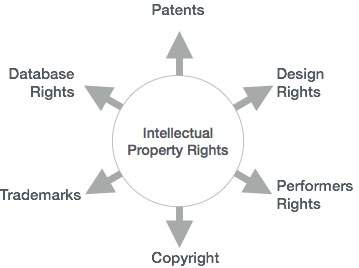








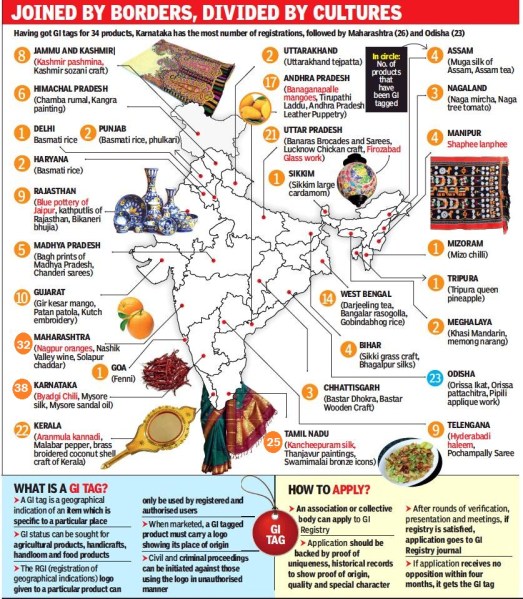
 maintenance of buildings; and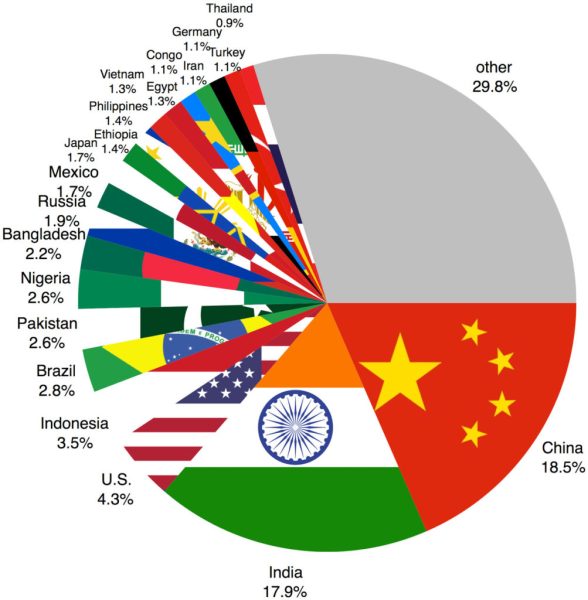



 Eduindex
You must be logged in to post a comment.