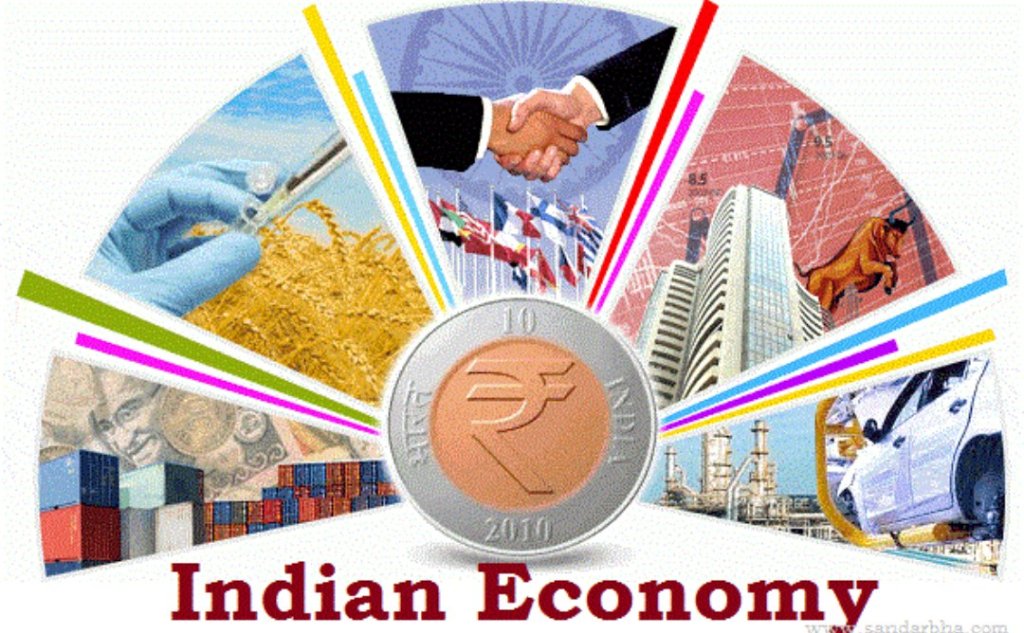
Indian economy at the time of Independence was in crucial state. This situation occurred due to the British Colonialism. After independence the Government changed plan for economic growth. The area of attention was shifted from agriculture to industry.
The growth of public enterprise generate employment and reduce poverty. In 1991, a revolution came into place in terms of liberalization, privatization and globalization that shaped the face of Indian economy. The Indian have the lowest per capital income and also the lowest consumption in the world.
The low income level consequent into low saving and thus small or no investment which end with low capital formation. Therefore, the dangerous cycle of poverty running in the country. The First Five Year Plan stated that the Indian economy remained more or less stagnant during colonial regime, because the basic conditions of economy was continuously remain the same.
The impact of modern industrialism in the later half of the 19th century was emerged through import of machine made goods from abroad that impact adversely on the traditional pattern of economic life, however unable to create the spark for Development. The conditioning of state led to decline of productivity especially those engaged in agriculture, the adverse effects. The consequence was a continuously increasing of employment. Hence, there could be no economic progress.
At the time of Independence 80% of population living in rural areas were engaged in agriculture for subsistence purposes; using traditional low productive technique for agriculture. The underdevelopment of Indian economy is reflected in it’s unbalanced occupational structure. Illiteracy was 84% , Communicable disease were widespread due to the absence of a good public health services, mortality rate was very high.
Agricultural activity contributed nearly 50% to Indian’s National Income. Mines, factories and small craftsmen work contributed only one – sixth, even lower than the numbers for trade, transport and communication. After independence, the government concern in the sphere of economic policy was to control persistent and severe inflationary pressure and to alleviate shortage of essential food items, which was increased by the partition of the country.
The industrial Policy Resolution of 1948 stamped as fundamental departure from earlier policy of laissez faire. Finally, the concept of planning Development programme under the auspices of the central government, was accepted and the planning commission was set up in March 1950 to make an assessment of the material capital and human resources of the country and to formulate a plan for the most effective and balanced utilisation of the countries resources.
India embarked upon the programme of planned economic development of the country with the formulation of first year plan that covered the period of 1951 – 1956. The second plan that followed was form 1956 – 1961 and third plan from 1961 to 1966. The other plans followed there after. The Eleventh Five Year Plan has been launched from 2007 – 2012; Twelfth Five year Plan was started from 2013 – 2014.
Source: Deccanherald
The first five year plan provided an inclusive general analysis the nature of the country’s Developmental problem and various options for mobilising resources and achieving Development with more equal distribution. There was special emphasis on the role of mass mobilization of idle rural labour and land reform. The plan optimistically project that saving and investment as a proportion of National Income would rise from an estimated 5 – 6% in the early 1950 to 20% by 1968 – 69.
S Chakravarti had mentioned some shortcomings of Indian economy. Such as
• The basis cause of development was seen as being an acute deficiency of material capital, which prevented the introduction of more productive technologies.
• The limitation on the speed of capital accumulation was seen to lie in the low capacity to save.
• It was assumed that domestic capacity to save and raised by means of suitable fiscal and monetary policies. There were structural limitations preventing conversion of saving into productive investment.
• The inequality in income distribution was considered to a bad thing, a precipitate transformation of the ownership of productive assets was held to be detrimental to the maximization of production and savings.
• Agriculture was subject to secular diminishing returns, industrialization would allow surplus labour currently under employed in agriculture to be more productively employed in industry.
The district is the geographical unit where the complete instrument of administration can be traced. It is the cutting edge level of administration that policies are transformed into action. The success or failure of policies are dependent on the efficiency of District Administration.
It is impossible for union government to manage entire nation in one unit so it is important to distribute the power into different units. Every state is divided into a number of administrative sub centres to needs of the people in the areas comprised in small areas.
According to Willoughby, field administrative organization falls under either of the patterns of areas including territorial, functional or unitary and multiple areas. These areas organized in horizontally , vertically and hierarchically. The office incharge of the area is the head, the head of all other specialized units at that level are his subordinates.
All communication from the field station to the head office and back are routed through him and he has a responsibility for the acts of all other departmental heads. The position is very different in a multiple or functional form of organization, where different division or branches of the headquarters office have their equitable field establishment at different areas and maintain direct contact with them. There is no coordinating or integrating authority at the area level, each service or agency is treated as an independent entity unrelated to other services the line of authority runs direct by from it’s headquarter office.
Luther Gulick described three patterns of field organization as all finger, short Arms long fingers and long Arms short finger. All fingers agencies are controlled by the headquarters office directly. Short arms long fingers patterns, agencies are controlled by the division, they communicate with control field officers in their respective areas.
Long Arms short fingers pattern geographical sub division, to these sub division are located in the central office itself each with an extensive staff and they communicate with the central field office in three respective areas. These districts split into tehsils/Taluks, headed by tehsildars, tehsil lies the pargana/revenue circle under the charge of revenue inspector then primary unit, village official is the patwari or Lekhpal or village accountant.
Constitution of India did not mentioned the term ‘district’ excluding Article 233 mentioned in term of ‘district judge’s. The 73th and 74th Amendment Act of 1992 including the term district at several places under Part IX and IX A dealt with panchayat and muncipalities respectively.
District Administration is the total management of public affairs, within this unit. DA is that portion of Public Administration which functions within the territorial limits of a district as explained by S S khera who is prominent figure in describing District Administration.
District as a unit of administration has a long history from the time of Medieval times. District called Sarkar and headed by Karori faujdar under the direct control of subedar. District administration and the office of district collector existence during the of British East India Company.
After independence the office of the District collector suffered in order to maintain status and authority due to expansion of governmental activities and emerged as Panchayati Raj, replacement of ICS into IAS, influence of pressure Group and Growth of Commissionerate system.
The programme are executed under the supervision direction and leadership of the collector. Development had a top down approach where people brought under the umbrella of one or in other development Programme. District collector’s main responsibility was identification of beneficiary in the development activities. District collector regulate the development.
The task of good District Collector is the ability to work with all people. This requires good human resource management, strategic thinking and financial management. Village Panchayat refer to the councils of the local government of India, look after the administrative affairs of the rural regions. The local government of India are self sufficient and self enabled units that work under the State Government of India. The 73rd and 74th Amendment Act 1992 attach with development of city and village councils in India. Local government have regular elections, fixed five year term and review and augmentation of finance by the State Finance commission.
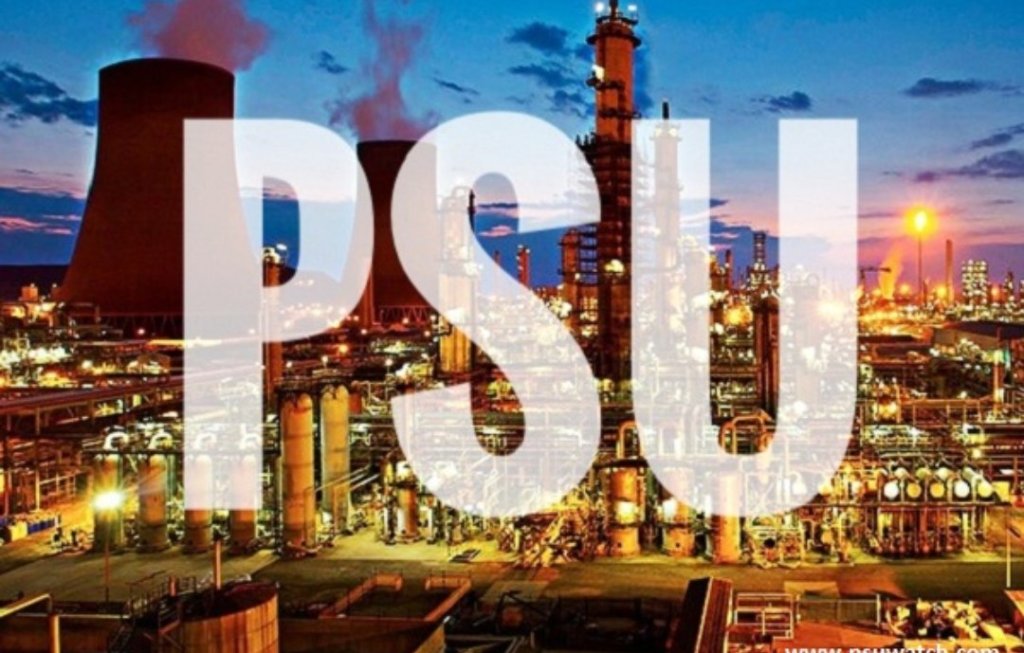
Government regulate the business activities of private enterprises for direct participation in business and set up public enterprises in areas like coal industry, oil industry, steel manufacturing, banking, insurance etc. These units are not owned by Central, State or local Government, managed and controlled by them and are termed as public sector enterprises.
Business activities were occupied to individual and organizations and the government was taking care of essential services such as railways, electricity supply, postal services etc. Private sector did not take interest in areas where investment is high and profit margin is low, such as machine building, infrastructure, oil exploration etc. Industries were also focus in some region that have natural advantages like availability of raw material, skilled labour.
Source: shutterstock
Public sector enterprises defined as any commercial or industrial undertaking owned and managed by the government with a view to maximize social welfare and upholds the Public interest. Public enterprises consist of nationalized private sector enterprises such as banks life insurance of India and enterprise set up by Hindustan, Gas Authority of India limited (GAIL) and State trading Corporation (STC).
During the colonial period, economic activities were limited to essential support facilitate for the maintenance and continued Growth of economy and defense such as railway transport, electricity project, ordinance factories, irrigation works, education and training Institutions.
The public sector to control certain key point in the economy such as the financial institutions for collecting saving of millions of individual and organizations making these available for investment.
By 1980s, besides traditional fields, the major banks and financial institutions, electricity undertakings, shipping, civil aviation, bus services and big enterprises in significance modern industries such as iron and steel, heavy machine building, light engineering, electronic, petroleum and Petro chemical, fertilizers, pharmaceuticals, cotton textiles and cement. The growth of investment in the central undertakings by way of contribution to share capital and long term loans. In addition, the central government had made large investment in departmentally run undertakings.
Characteristics of Public Enterprises
The public enterprises are owned and managed by the central or state Government or local authority. The government may either own the public enterprises or the ownership partly be with the government and with the private industrialists and the public. The control, management and ownership remain primarily with the government e.g, Oil and Natural Gas Corporation Limited (ONGC) and National Thermal Power Corporation (NTPC).
Public enterprises get their capital from government funds and the government has to make provision for their capital in it’s budget. Public enterprises are not move by profit motive. Their major focus on providing services or commodities at reasonable prices. GAIL Gas Authority of India and Indian Oil Corporation make available petroleum on subsidised price to the public.
Public sector enterprises concentrate on providing public utility services like transport, electricity, telecommunication etc. PE are governed by the government and are accountable to the legislature. The government rules and regulations force the Public enterprises to observe excessive formalities in their operations.
Role of Public SectorUndertakingin Public Policy
The public sector enterprises has been important role of achieving economic growth with social justice, generating larger social gains and strengthening country’s economy by removing regional disparities and promoting balanced development in different parts of the country. The impact of public sector undertaking on the regional development.
PSE through useful help and services in the development of human resources in underdeveloped areas. Investment in human capital is considered an essential ingredient of development planning. Such development is only possible if rural demographics ready to cope with modern knowledge and science & technology.
A large number of PSU have been set up in the regions or districts in order to capitalize the rural labour by equipping them with vocational education, technical training and managerial skills. The reason behind it is to transform the unemployed rural people to get self motivated and self inspired employment avenues in local areas economies.
PSU working as a vehicle of communication have taken the new learning to village and acted as agents for introducing changes in existing practices, initiating commercial use of appropriate village technologies in agriculture and allied activities, village artisan and handicrafts and local village industry by inducing use of productivity enhancing equipment and light machinery.
Improvement in economic infrastructure in the areas where policies cannot reach through PSU and active participation of PSU. Constructing and improving connection between village to make accessibility by modern means of transport, electricity for domestic use as well as for commercial and Industrial.
The budget is a vital, principle tool of Financial administration and is most powerful instrument of legislative control. Budget has mentioned important aspects as larger number of Policy questions in the course of making fiscal outputs. The term budget refers to the Financial papers. It has develop in middle ages, which has a feature of Absolute English regime as well as Europe.
The budget was a statement of revenue and expenditure and regarded as business affairs of the king and the state. Revenue was derived from king’s domains. At this time, all governmental expenditure were not subjected to parliamentary control. Full legislative control of main string of the century. Thus, the conception of the budget as the central tool of financial direction and control on monetary standards.
The budget system is the basis of efficient fiscal management. According to W F Willoughby, the real significance of budget system lies in providing for the orderly administration of the Financial affairs of a government. Fiscal management consists continuous chain of operations such as estimates of revenue and expenditure, revenue and appropriation acts, accounts audit and report.
The Public Account Committee states the object of budgeting in the form of “The budgeting is designed to provide for parliamentary control, for Administrative account that the expenditure incurred by the government is in the specific manner by specific authority.
Objectives of Budget
• To structure delegation of operations as well as financial authority and responsiblity, by providing the basis for central control
• To conduct regular periodic reconsideration or revaluation of government purpose and objectives.
• To provide the framework of public account and fiscal accountability.
• To provide the legal basis for the expenditure of Public funds.
• To facilitate a comparative evaluation of different purposes and programmers in relation to each other and their relative cost.
Functions of Budget
The function of government budgeting is to administer the National finance in organized manner. No haphazard and unplanned expenditure and revenue. Financial operations of the government are to be properly planned and implemented through budgeting.
Functions as instrument of execution of the economic Policy of the government. An approved budget gives the administrator, a zest of the financial environment within which has to work out. During budget, the budget supplies data for decision making and acts as a guide to various departments heads for what they have to do. Budget is an instrument to make elected legislators accountable to the people and to the democratic system. It also secure the economic, social and cultural rights of people.
The also Important as review of the past accomplishment contains the figures of the previous financial years. In order to manage or set budgetary expectations reviewed by previous budget. Budget helps in knowing where Public money has been spent in favour of law and how far objectives has achieved.
Fundamentals of Budget
Planning and programming
Research of statistics and global conditions
Control Supervision
Balance Budget
Estimation of one year expenditure
Executive Discretion
Combination of Revenue in one unit
Significance of Budget
The goal of Administration is to attain economy and efficiency and budget plays important role in financial administration. It promotes rational planning effective Policy making and sound Decision Making to give strong foundation for attaining political and social objectives. The budget can help to promote policies and help in redefining the policy structure. Financial allocation of budget identified in physical outputs. Good Budget consider all aspects for financial and economic policies.
Organising the staffing require for creation of budget, all financial department to be included in the budget. To make administration effective need to apply overlapping. Direction with several departments and linkage of communication can strengthen the system. Coordination ensure the avoid of duplication and wastage and increase the effectiveness of implementation of Financial policies.
Reporting budget on widely discussed newspapers and journals for the information to Public for constructing their own opinions. Budget can supplement the efforts of government in supporting the policies for all section of Society. Modern technology helps connect with innovative changes in the areas of leadership, communication, decision making, democratisation of the organization. Above it, it makes possible to introduce and expedite the use of information technology in Financial administration.
The impact of coronavirus pandemic on India has been largely disruptive in terms of economic activity as well as a loss of human lives. Almost all the sectors have been adversely affected as domestic demand and exports sharply plummeted with some notable exceptions where high growth was observed. An attempt is made to analyze the impact and possible solutions for some key sectors.
Food & Agriculture
Since agriculture is the backbone of the country and a part of the government announced essential category, the impact is likely to be low on both primary agricultural production and usage of agro-inputs. Several state governments have already allowed free movement of fruits, vegetables, milk etc. Online food grocery platforms are heavily impacted due to unclear restrictions on movements and stoppage of logistics vehicles. RBI and Finance Minister announced measures will help the industry and the employees in the short term. Insulating the rural food production areas in the coming weeks will hold a great answer to the macro impact of COVID-19 on Indian food sector as well as larger economy.
Aviation & Tourism
The contribution of the Aviation Sector and Tourism to our GDP stands at about 2.4% and 9.2% respectively. The Tourism sector served approximately 43 million people in FY 18-19. Aviation and Tourism were the first industries that were hit significantly by the pandemic. The common consensus seems to be that COVID will hit these industries harder than 9/11 and the Financial Crisis of 2008. These two industries have been dealing with severe cash flow issues since the start of the pandemic and are staring at a potential 38 million lay-offs, which translates to 70 per cent of the total workforce. The impact is going to fall on both, White and Blue collar jobs. According to IATO estimates, these industries may incur losses of about 85 billion Rupees due to travel restrictions. The Pandemic has also brought about a wave of innovation in the fields of contactless boarding and travel technologies.
Telecom
There has been a significant amount of changes in the telecom sector of India even before the Covid-19 due to brief price wars between the service providers. Most essential services and sectors have continued to run during the pandemic thanks to the implementation of the ‘work from home’ due to restrictions. With over 1 billion connections as of 2019, the telecom sector contributes about 6.5 per cent of GDP and employs almost 4 million people. Increased broadband usage had a direct impact and resulted in pressure on the network. Demand has been increased by about 10%. However, the Telco’s are bracing for a sharp drop in adding new subscribers. As a policy recommendation, the government can aid the sector by relaxing the regulatory compliances and provide moratorium for spectrum dues, which can be used for network expansions by the companies.
Pharmaceuticals
The pharmaceutical industry has been on the rise since the start of the Covid-19 pandemic, especially in India, the largest producer of generic drugs globally. With a market size of $55 billion during the beginning of 2020, it has been surging in India, exporting Hydroxychloroquine to the world, esp. to the US, UK, Canada, and the Middle-East.
There has been a recent rise in the prices of raw materials imported from China due to the pandemic. Generic drugs are the most impacted due to heavy reliance on imports, disrupted supply-chain, and labour unavailability in the industry, caused by social distancing. Simultaneously, the pharmaceutical industry is struggling because of the government-imposed bans on the export of critical drugs, equipment, and PPE kits to ensure sufficient quantities for the country. The increasing demand for these drugs, coupled with hindered accessibility is making things harder. Easing the financial stress on the pharmaceutical companies, tax-relaxations, and addressing the labour force shortage could be the differentiating factors in such a desperate time.
Oil and Gas
The Indian Oil & Gas industry is quite significant in the global context – it is the third-largest energy consumer only behind USA and Chine and contributes to 5.2% of the global oil demand. The complete lockdown across the country slowed down the demand of transport fuels (accounting for 2/3rd demand in oil & gas sector) as auto & industrial manufacturing declined and goods & passenger movement (both bulk & personal) fell. Though the crude prices dipped in this period, the government increased the excise and special excise duty to make up for the revenue loss, additionally, road cess was raised too. As a policy recommendation, the government may think of passing on the benefits of decreased crude prices to end consumers at retail outlets to stimulate demand.
Beyond Covid: The new normal
In view of the scale of disruption caused by the pandemic, it is evident that the current downturn is fundamentally different from recessions. The sudden shrinkage in demand & increased unemployment is going to alter the business landscape. Adopting new principles like ‘shift towards localization, cash conservation, supply chain resilience and innovation’ will help businesses in treading a new path in this uncertain environment.
Coronavirus (COVID-19), a virus that grew stealthily has become one of the deadliest viruses that are killing people worldwide. This virus took birth in Wuhan city of China and since then have traveled to more than 160 countries. The World Health Organization (WHO) has declared Coronavirus as a pandemic. It has become a mass scare and is leading to the deaths of thousands of people in numerous countries including China, Italy, Iran, Spain, the US, and many more. In India, this pandemic started on 30 January 2020 by affecting an individual who had a travel history from Wuhan, China.
The world economy is seeing its greatest fall ever. Coronavirus has largely impacted the growth of almost every country and is responsible for the slump in GDP worldwide. Like other countries, India is also impacted by this virus but not largely. Almost every industry sector has seen a fall in their sales and revenue. India’s GDP growth has fallen to 4.7% in the third quarter of 2020.
Inflation and Affected Industry:
China is one of the largest exporters of many raw materials to India. Shutting down of factories has damaged the supply chain resulting in a drastic surge in the prices of raw materials. Some of the other products that have seen a rise in their prices are gold, masks, sanitizers, smartphones, medicines, consumer durables, etc. The aviation sector and automobile companies are the hardest hit among the rest. With no airplane landings or take-offs globally and restricted travel has brought the aviation and travel industry to a halt.
Slump in Share market: Share markets that include Sensex and Nifty are on nose dive since the occurrence of this pandemic (COVID-19). Sensex has declined close to 8000 points in a month. As of 12 March 2020, share market investors have lost approximately Rs. 33 lakh crore rupees in a month. This could be the beginning of a recession that the Indian market will never want to witness. Investors are advised to stay safe and invested in this virus-infected stock market. Few industries that can benefit from novel coronavirus during the time of the market crash are pharmaceuticals, healthcare, and Fast Moving Consumer Goods (FMCG).
Cash flow Issue: Due to this outbreak, almost 80% of Indian companies have witnessed cash flow difficulty and over 50% of companies are facing operations issues. As per the Federation of Indian Chambers of Commerce and Industry (FICCI), 53% of companies are impacted by COVID-19. Slow economic activity is resulting in cash flow problems eventually impacting repayments, interest, taxes, etc.
Coronavirus (COVID-19), a virus that grew stealthily has become one of the deadliest viruses that are killing people worldwide. This virus took birth in Wuhan city of China and since then have traveled to more than 160 countries. The World Health Organization (WHO) has declared Coronavirus as a pandemic. It has become a mass scare and is leading to the deaths of thousands of people in numerous countries including China, Italy, Iran, Spain, the US, and many more. In India, this pandemic started on 30 January 2020 by affecting an individual who had a travel history from Wuhan, China.
The world economy is seeing its greatest fall ever. Coronavirus has largely impacted the growth of almost every country and is responsible for the slump in GDP worldwide. Like other countries, India is also impacted by this virus but not largely. Almost every industry sector has seen a fall in their sales and revenue. India’s GDP growth has fallen to 4.7% in the third quarter of 2020.
Efforts from CII and Govt. of India: Confederation of Indian Industry (CII) has suggested the RBI reduce repo rate up to 50 basis points and also asked for a reduction of 50 basis points on the cash reserve ratio. The government is planning to set up an amount to support MSMEs to overcome the crisis during this phase of shut down, cash flow difficulty, and working capital issues.
Lotus Herbals Tea Tree And CinnamonAnti-Acne Oil-control face Wash controls skin break out and lessens plenitude canvas without deserting any cleft- clogging buildup. It further controls sebum creation, lessens dry patches, and hydrates your skin. The cinnamon in it goes about as a natural constituent that evacuates dead skin cells and enhances blood income to make you look replenished and immature.
The 1991 Indian economic crisis was an economic crisis in India that resulted from poor economic policies and the resulting trade deficits. India’s economic problems started worsening in 1985 as the imports swelled, leaving the country in a twin deficit: the Indian trade balance was in deficit at a time when the government was running on a large fiscal deficit. By the end of 1990, in the run-up to the Gulf War, the dire situation meant that the Indian foreign exchange reserves could have barely financed three weeks’ worth of imports. Meanwhile, the government came close to defaulting on its own financial obligations. By July that year, the low reserves had led to a sharp depreciation of the rupee, which in turn exacerbated the twin deficit problem. The Chandrasekhar sir’s government could not pass the budget in February 1991 after Moody downgraded India’s bond ratings. The ratings further deteriorated due to the unsuccessful passage of the fiscal budget. This made it impossible for the country to seek short term loans and exacerbated the existing economic crisis. The World Bank and IMF also stopped their assistance, leaving the government with no option except to mortgage the country’s gold to avoid defaulting on payments.
In an attempt to seek an economic bailout from the IMF, the Indian government airlifted its national gold reserves.
The crisis, in turn, paved the way for the liberalisation of the Indian economy, since one of the conditions stipulated in the World Bank loan (structural reform), required India to open itself up to participation from foreign entities in its industries, including its state owned enterprises.
Causes of the Crisis :
The crisis was caused by currency overvaluation; the current account deficit, and investor confidence played significant role in the sharp exchange rate depreciation.
The economic crisis was primarily due to the large and growing fiscal imbalances over the 1980s. During the mid-eighties, India started having the balance of payments problems. Precipitated by the Gulf War, India’s oil import bill swelled, exports slumped, credit dried up, and investors took their money out. Large fiscal deficits, over time, had a spillover effect on the trade deficit culminating in an external payments crisis. By the end of the 1980s, India was in serious economic trouble.
The gross fiscal deficit of the government rose from 9.0 percent of Gross Domestic Product (GDP) in 1980-81 to 10.4 percent in 1985-86 and to 12.7 percent in 1990-91. For the centre alone, the gross fiscal deficit rose from 6.1 percent of GDP in 1980-81 to 8.3 percent in 1985-86 and to 8.4 percent in 1990-91. Since these deficits had to be met by borrowings, the internal debt of the government accumulated rapidly, rising from 35 percent of GDP at the end of 1980-81 to 53 percent of GDP at the end of 1990-91. The foreign exchange reserves had dried up to the point that India could barely finance three weeks worth of imports.
In mid-1991, India’s exchange rate was subjected to a severe adjustment. This event began with a slide in the value of the Indian rupee leading up to mid-1991. The authorities at the Reserve Bank of India took partial action, defending the currency by expanding international reserves and slowing the decline in value. However, in mid-1991, with foreign reserves nearly depleted, the Indian government permitted a sharp devaluation that took place in two steps within three days (1 July and 3 July 1991) against major currencies.
Recovery :
With India’s foreign exchange reserves at $1.2 billion in January 1991 and depleted by half by June, barely enough to last for roughly 3 weeks of essential imports, India was only weeks away from defaulting on its external balance of payment obligations.
Government of India’s immediate response was to secure an emergency loan of $2.2 billion from the International Monetary Fund by pledging 67 tons of India’s gold reserves as collateral security. The Reserve Bank of India had to airlift 47 tons of gold to the Bank of England and 20 tons of gold to the Union Bank of Switzerland to raise $600 million. The van transporting the gold to the airport broke down en route due to tyre burst and panic followed . The airlift was done with secrecy as it was done in the midst of the 1991 Indian General elections. National sentiments were outraged and there was public outcry when it was learned that the government had pledged the country’s entire gold reserves against the loan. A chartered plane ferried the precious cargo to London between 21 May and 31 May 1991, jolting the country out of an economic slumber.The Chandra Shekhar government had collapsed a few months after having authorised the airlift. The move helped tide over the balance of payment crisis and kick-started P.V. Narasimha Rao’s economic reform process.
Under Narsimha Rao Sir’s Government :
P. V. Narasimha Rao took over as Prime Minister in June, and roped in Manmohan Singh as Finance Minister. The Narasimha Rao government ushered in several reforms that are collectively termed as liberalisation in the Indian media.
The reforms formally began on 1 July 1991 when RBI devaluated Indian Rupee by 9% and by a further 11% on 3 July. It was done in two doses to test the reaction of the market first by making a smaller depreciation of 9%. There was significant opposition to such reforms, suggesting they were an “interference with India’s autonomy”. Then Prime Minister Rao’s speech a week after he took office highlighted the necessity for reforms, as New York Times reported, “Mr. Rao, who was sworn in as Prime Minister last week, has already sent a signal to the nation—as well as the I.M.F.—that India faced no “soft options” and must open the door to foreign investment, reduce red tape that often cripples initiative, and streamline industrial policy. Mr. Rao made his comments in a speech to the nation Saturday night.” The foreign reserves started picking up with the onset of the liberalisation policies and reached an all-time high US$426.1 billion as on 13 April 2018
Our beloved prime minister announced a mission called Aatmanirbhar Bharat a few days back. A thick package was also announced to achieve this goal. First of all, I honestly feel very happy and proud of this decision. It made me feel like India is taking a step towards the nation which Dr. Abdul Kalam wanted to create. It looks too great on paper. Everything made in India, no foreign support. But is it really practical? Just funding a huge amount to our industrial sector will help? Just take this money and manufacture every single component at the workplace. Is it that easy? Obviously, it is not. We live in a nation and society where education is only about scoring good marks and finally making it to the job of a thick package. The primary level student has the most curious brain. They keep on thinking out of the box. But do they get support? No, they don’t. Even they try to approach their parents or teachers with innovative thoughts and questions, they get ignored. Teachers ask them to focus only on studies calling their ideas foolish. It is the point where we kill an innovation, knowingly or unknowingly. These ignited minds struggle every point in their life. Everybody laughs at them for their ideas, right from school to college to office. They always feel their talent getting spoiled. Now, these people after taking a huge frustration, move abroad to earn and join a firm. These pure super brains go in foreign countries, work hard in the companies, innovative things they always wanted and make that nation’s economy grow. At last, we are only left with a newspaper heading stating ” an Indian origin” person innovated something. We need to begin from the root level before focusing on the manufacturing sector. If we prepare good students, encourage their ideas, make them grow then these students are the only innovators of tomorrow. Innovation should be included in the syllabus of our education system. I don’t mean final year projects here. We all know how students do that and how innovative it is. I’m talking about pure innovation in every standard of the education system. Only putting innovation in the syllabus won’t help. The teachers need to encourage student’s ideas and help them to innovate out of it. Right from the ancient time, our nation has been blessed with many super brains that ever existed. But it happened many times that their talent got spoiled or stolen by the foreigners. So to really make India aatmanirbhar, we first need to improve these little things. Little by little, this mentality will change for sure. One day we all will say with pride looking at things around ” Made In India “. It will be the win for Aatmanirbhar Bharat.
The COVID 19 virus hit our nation at the beginning of this year. More than the pain of disease, people were scared because of the rumours. People leaving away from homes rushed back to their native places. Everything went into lockdown. Shops, industries, hotels, colleges, malls, talkies everything was shut down by the end of March. March passed, April passed and now everybody’s savings were coming to an end. Everybody was asking for unlocking. At this crucial time, what Indian youth was doing? Most of them were stuck in their houses. Those who were in the IT industry were getting used to the new normal of WFH. Those who were working in other industries lost their jobs as the company was at loss. A renowned newspaper said around 12.2 crore Indians lost their jobs during this pandemic. Now as all the sectors were at loss, Indian economy took a big downfall. GDP went down drastically. Industries cut down no.of employees just to survive. So without totally blaming this pandemic, let’s see who lost the job. Unskilled workers, employees who didn’t update themselves with the world, who were working at the higher position but adding very less to company’s value and finally the automation. Humans thought it a smart move to discover robots and AI. But this is the same technology which is simply taking their jobs away. The most basic thing our education system lacks is skills. Our education system never focuses on student’s skills. Right from the school days, students are forced to study in a particular direction. Hobbies and passions are buried in their heart. So these students left without a choice choose a particular stream of education. They go against their heart but still study hard to complete the education they are supposed to. But is this education really valuable? I really don’t think so. Our education system totally focuses on theory and no practical knowledge. Students are kept busy with assignments, exams during the course. These students when passing out, they join an industry where they will need only practical knowledge with very little help of theory knowledge. Companies recruit them testing their theory knowledge assuming they have practical knowledge. But in reality, it’s not true. When a student becomes an employee, he struggles to do the work. During the whole education years, skills were totally ignored but now skills were the need of the hour. But students coming out of such an education system fails to meet the skill requirements but somehow stick to the company. But when such an extraordinary situation like this pandemic happens, these people lose their jobs. This loop won’t end until we bring some serious changes to our education system. We need to include more practical knowledge and less theory portion to make students actually eligible for the industry. India is called as the agriculture-oriented country where most of the people have agriculture as their occupation. But are we counting youth in it? Surely not. Because we have created a pale image of the agriculture industry in front of the youth. During this pandemic, agriculture was the only sector with a positive GDP in India. But still very few youths take agriculture as a career. If this unemployed youth turns into a farmer, use their brain, new technology and ideas in agriculture, just imagine how our agriculture sector will grow in a few years. We need to put forward the glamorous side of agriculture and actually make the nation prominent in the world of agriculture, with our youth driving it.
Hello readers I am the intern of HARYALI organisation and today I want to share the contribution of Modi government to us through the various schemes .The Modi government has started many welfare schemes which include; Beti Bachao-Beti Padhao, Swachchh Bharat Mission, PM Mudra Yojna, Atal Pension Yojna, Smart city scheme, and Make in India etc. Read this article to know the list of important welfare schemes started by Narendra Modi.
Pradhan Mantri Jan Dhan Yojana
The financial inclusion scheme launched in August 2014 aims to provide universal access to banking facilities with at least one basic banking account for every household, and increasing financial literacy, access to credit, insurance and pension.There are 20 crore women Jan Dhan beneficiaries across the country.
Make in India: PM Narendra Modi launched the ‘Make in India’ campaign that will facilitate investment, foster innovation, enhanced protection for intellectual property and build best in manufacturing infrastructure.
‘Make in India’ has identified 25 sectors in manufacturing, infrastructure and service activities and detailed information is being shared through interactive web-portal and professionally developed brochures.
Swachh Bharat Mission: Swachh Bharat Mission was launched in the entire country as a national movement. The campaign aims to achieve the vision of a ‘Clean India’ by 2nd October 2019. The Swachh Bharat Abhiyan is the most significant campaign with regards to sanitation by the Government of India.
Beti Bachao Beti Padhao: The goal of this scheme is to make girls socially and financially self-reliant through education.
Atal Pension Yojna: Atal Pension Yojana is a pension scheme mainly aimed at providing a universal pension scheme for those who are a part of the unorganized sector such as maids, gardeners, delivery boys, etc. This scheme replaced the previous Swavalamban Yojana which wasn’t well-received by the people.
Digital India Mission: The Digital India programme is a flagship programme of the Government of India with a vision to transform India into a digitally empowered society and knowledge economy.
Stand Up India Scheme
Government of India launched the Stand Up India scheme on 5th April, 2016. The Scheme facilitates bank loans between Rs.10 lakh and Rs.1 crore to at least one Scheduled Caste/ Scheduled Tribe borrower and at least one Woman borrower per bank branch for setting up greenfield enterprises. This enterprise may be in manufacturing, services or the trading sector. The scheme which is being implemented through all Scheduled Commercial Banks is to benefit at least 2.5 lakh borrowers. The scheme is operational and the loan is being extended through Scheduled Commercial Banks across the country.
Article by – Shishir Tripathi Intern at Hariyali Foundation In collaboration with Educational News
It is generally said that behind a properly functioning, powerful system there is another support system i.e. the base on which the system is set up. There are many such examples to support the above statement. In case of Computer, it’s the motherboard that serves as the backbone of the system connecting all the major parts in it. Another example is the human body itself, the spinal cord or simply the backbone serves as the medium to support the whole body.
Similarly in case of a Nation, there are different fields and sectors together forming a support system for the nation. Particularly talking about Indian Economy, her it is all about the rural India which forms the backbone of the Indian Economy. It is generally said that a tree can stay straight for years, only if its roots are strong. In the same fashion, a nation will survive and prosper if its roots are so strong.
The condition of Rural India at present is not so good. There is the problem where the system gets stuck. The service sector and the manufacturing sectors are performing at their best level they could operate. Some technological upgradations will work. But what about the agriculture sector which is basically in the rural India.
The condition of farmers in India is not so good. Being an agrarian economy, India has to take a lot of steps for performing at the optimum level in the agricultural sector and other small sectors too which come from Rural India.
There are several problems in the villages of India. The primary problem for the people living in Rural Indian is the problem of proper sanitation and drainage system. In rains, water logging is the main problem in general with almost every village. Under the Swachh Bharat Mission, toilets are built in villages but more attention is needed to be paid there too. Sometimes, the contractors use poor quality material for building the toilets and as a result of which the toilets don’t stand for so long. Secondly, not only toilets, but a proper drainage system should be there for exit of water from the villages to avoid drenching of streets in villages.
Moving ahead towards the agricultural sector that fulfills the requirements of food for the Nation and even exports the agricultural products. Firstly, there should be development of proper irrigation techniques. Promoting inventions in such fields or sectors should be encouraged by the means of advertising so that others could also use those techniques in their fields. Due to unavailability of financial resources, farmers in India depend entirely upon rain and hence are at loss due to uneven rainfall. Big farmers afford techniques like tube wells and other such techniques but the small farmers with no such resources have to entirely depend upon rains.
Also, availability of efficient harvesting techniques at cheaper rates to small farmers will eventually lead to better harvest and proper collection of yield within lesser time too.
When it comes to selling of agricultural products farmers are again at loss because their products even after being of superior quality do not get proper advertising and attractive packaging. Other cheaper products from foreign firms dominate the Indian Market and as a result of which the local products and producers suffer.
When it comes to the matter of Finance, there too Farmers suffer. Banks say farmers are unable to pay the loans back when sudden loss occurs due to floods, fires, pest attacks, etc. Government should encourage the Insurance and other policies covering the crops of different seasons at lesser premiums. Also, from the side of farmers it is generally heard that they didn’t get the loan because of the long documentation process.
A proper mechanism is needed to be developed here again which will help the agriculture sector flourish and also minimizing the loss of banks. Moving further, setting up of small manufacturing units for women there in villages only is again very important for making the core of the Indian Economy. Though, the governments have done a lot in the field of small scale industries in the form of allowing the loan availability through Self Help Groups but still some medications, some alterations in the policies for the local manufacturers should be considered by the government.
A farmer working happily on his farm, a woman working with pride in the small scale industry of her village will succeed the dream of New India in true sense and will bring wholesome prosperity to the Nation.
Women participation in equity markets has surged during the pandemic and experts believe the growing need to share household expenses with rampant pay cuts and lay-offs has brought them to trading.Additionally,women are looking for alternatives to the decreasing bank’s fixed deposit (FD) rates, they added.Interestingly, most of such women are first time investors and a large number of them are housewives.”As retail participation has grown during the lockdown, this has been true for women as well. In line with the overall investors population, women are looking for alternatives to decreasing FD rates,” said Shankar Vailaya – Director, Sharekhan by BNP Paribas.”Lockdown has just been an accelerator allowing women to deepen their capital market knowledge via digital solutions,”Vailaya added.Online brokerage house Upstox said it has witnessed a growth of 32 per cent in account opening by women from April to June 2020, compared to the preceding three months.Of these, 70 percent of women are first time investors. Additionally, more than 35 per cent of the brokerage house’s women customers are housewives.According to Upstox, around 74 per cent of female customers are from Tier 2 and Tier 3 cities like Visakhapatnam, Jaipur, Surat, Ranga Reddy, Nagpur, Nashik, Guntur, among others.Out of the overall number of active female customers, 55 per cent are traders, whereas 45 per cent are investors (those that invest in equity delivery).It has seen a jump in active female customers by 53 per cent from April to June 2020, as compared to preceding three months. Nikhil Kamath, who co-founded Zerodha and True Beacon, said they have added 11 lakh clients since March 1, 2020. Of these, women clients are 1.8 lakh. He further said the average age of such women is 33 years.Tejas Khoday, co-founder and CEO, of FYERS, said in the last four months the stock broking fintech startup acquired over 20,000 new customers, of which 10 per cent were women traders.But, the overall traffic online includes 15 20 per cent women traders. Moreover, they are more inclined to invest than trade.In terms of expectations, Khoday said women want high profits in a very short period of time without too many entry/exits. But this could also be because most of them are first-time investors.
As the restrictions are being lifted in order to aid the degrading economy it needs to be kept in mind that the cases in India are achieving new heights.
Here are some disturbing facts before you think that this month was going to be easy on you.
1) Bill Gates is supremely confident that a new wave of cases will be seen in October – November. This might take a nasty turn as the increased rates could be blamed on protestors and these relaxations
2) China and India are prepared for a war. Both the nations have gathered their arms and ammunitions along with planning their strategies that might come in use anytime soon.
3) The increase in the incidence of earthquakes in the himalayan fault line (5.1 in Manipur recently) indicates there could be big one soon.
4) The economy is moving towards recession and will not recover any soon. This is one of the reasons of the gradual unlock happening.
5) There are possibilities of cyclones in both Eastern and Western front in the cyclone season October.
6) Food shortages most probably will happen sooner than later considering the unusual weather that has led to increase pest attacks. Those migrants who returned home due to covid outbreak thinking to take up farming have lost everything and are burdened with loans.
7) The hospital, tourism, transport industries suffer the most due to lack of mobility of people under such conditions.
8) Small businesses are being whiped out and corporate houses purchasing various businesses.
9) Crime rates are bound to increase along with suicide rates due to unemployment. 45% increase in suicide rates has already been noted.
10) Both center and state are faced with huge shortage of funds with centre refusing to pay GST compensation to states. This might lead to increased taxes.
The list goes on and on. Good days seem like a distant dream.
A Future Contract is a contract between two parties where both agrees to buy or sell the underlying asset at a predetermined price and the specified date in future. It’s also known as a derivative because future contracts derive their value from an underlying asset. The underlying asset in the future contract could be commodities ,stocks, currencies, interest rates and bond. The future contract is a standardized agreements which held at a recognized stock exchange. A futures contract provides both a right and an obligation to buy or sell a standard amount of a commodity, security or currency on a specified future date at a price agreed when the contract is entered into.
There are two types of people who trade whether buy or sell, future contracts: Hedgers and Speculators. In simple words Hedging means reduction of risk. An investor who is looking at reducing his risk is known as a Hedger. A Hedger would typically look at reducing his asset exposure to price volatility and in a derivative market, would usually take up a position that is opposite to the risk he is otherwise exposed to. Speculators are those class of investors who willingly take price risks to profit from price changes in the underlying.
Futures contracts are considered an alternative investment, as they typically do not have any positive correlation with stock market prices. Commodity futures trading offers investors access to another asset class of investments. Futures trading offers advantages such as low trading costs, but carries greater risk associated with higher market volatility. Futures contracts are useful for risk-tolerant investors. Investors get to participate in markets they would otherwise not have access to. Margin requirements for most of the commodities and currencies are well-established in the futures market. Thus, a trader knows how much margin he should put up in a contract.
We are all aware that this pandemic has hit our lives and economies badly. But how bad is it and what’s the truth?
GDP growth rate.
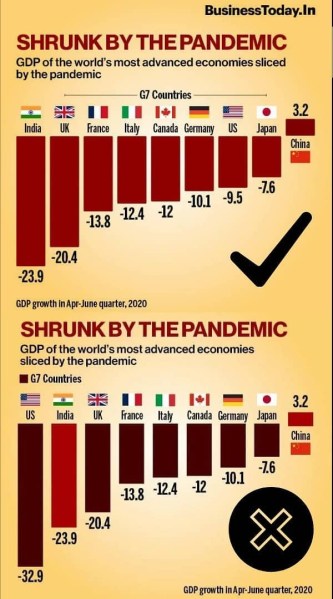
1. India’s GDP is the worst performer.
2 . US is the worst performing economy.
Reality behind these headlines. The ADVANCE gross domestic product showed that in the second quarter of 2020, US GDP declined at an annualised rate of 32.9%.
32.9% is an ‘annualised rate’. This is the fact which is hidden in the media to create a false frenzy.
What is ‘annualised rate’? The US has traditionally reported GDP and some other economic statistics as annual rates. Rather than simply giving a percentage change from one quarter to the next, the government reports, how much GDP would grow or shrink if that rate of change were sustained for a full year. ( Because growth rates are compound on themselves this calculation is abit more complicated than simply multiplying by four. The figures also adjusted for seasonal patterns so they’re more properly described as “seasonally adjusted annuall rates”.
Annualised GDP data can be misleading. When it reports quarterly GDP, the BEA presents the data in several different ways to aid the analysis. Among them are: 1) Growth or contraction from one quarter to the next (which was – 9.5% in the preliminary Q2 GDP report). 2) Growth or contraction in the quarter on an annualised basis (which was -32.9% in preliminary Q2 GDP report).
The latter ‘annualised rate’ projects how much economy would grow or shrink if the rate of change seen in the quarter continued at the same pace for four consecutive quarters with some adjustability for seasonality and compounding effects.
In order for the economy to actually contract as a whole by an annualised rate of -32.9% , the GDP would need to contract in Q3 and Q4 at least by -9.4%.
This pandemic is a big jerk to the economy. The difference in economic activity will be large from one quarter to another, it cannot be considered same across the year.
Hence the comparison made by some news articles is very much misleading and blinding the public. This does not portrait the true picture of the economic condition.










 Eduindex
You must be logged in to post a comment.