Organic Farming in India: The Future of Sustainable Agriculture

Organic Farming Produce

Introduction

The term ‘organic’ was first coined by Northbourne, in 1940, in his book entitled ‘Look to the Land’. In recent years, organic farming as a cultivation process is gaining increasing popularity . Organically grown foods have become one of the best choices for both consumers and farmers. Organically grown foods are part of go green lifestyle.
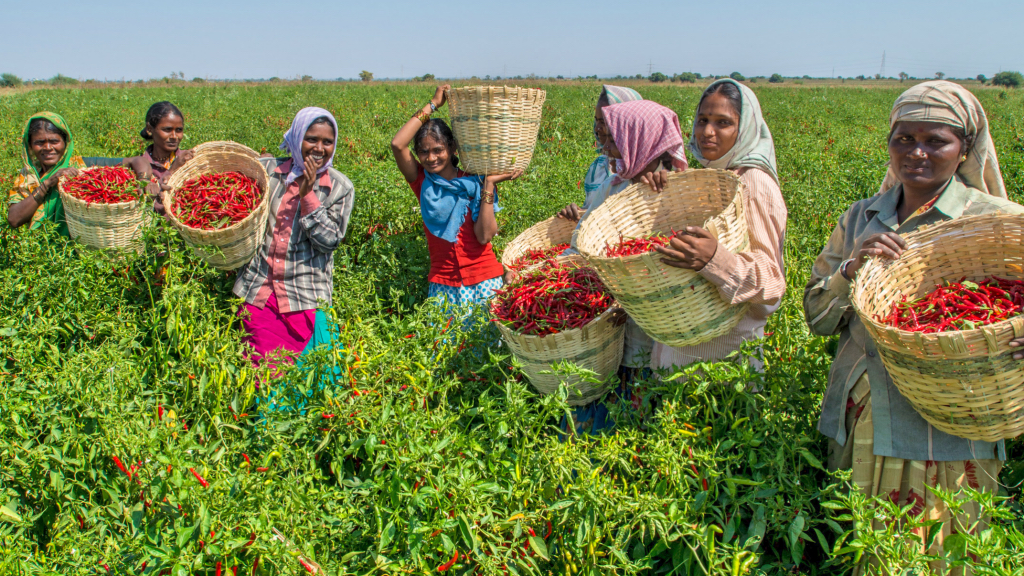
Farmers showing their Organic Harvest

Why Being Preferred These Days: The Importance of Organic Farming

Food quality and safety are two vital factors that have attained constant attention in common people. Growing environmental awareness and several food hazards (e.g. dioxins, bovine spongiform encephalopathy, and bacterial contamination) have substantially decreased the consumer’s trust towards food quality in the last decades. Intensive conventional farming can add contamination to the food chain. For these reasons, consumers are quested for safer and better foods that are produced through more ecologically and authentically by local systems. Organically grown food and food products are believed to meet these demands.
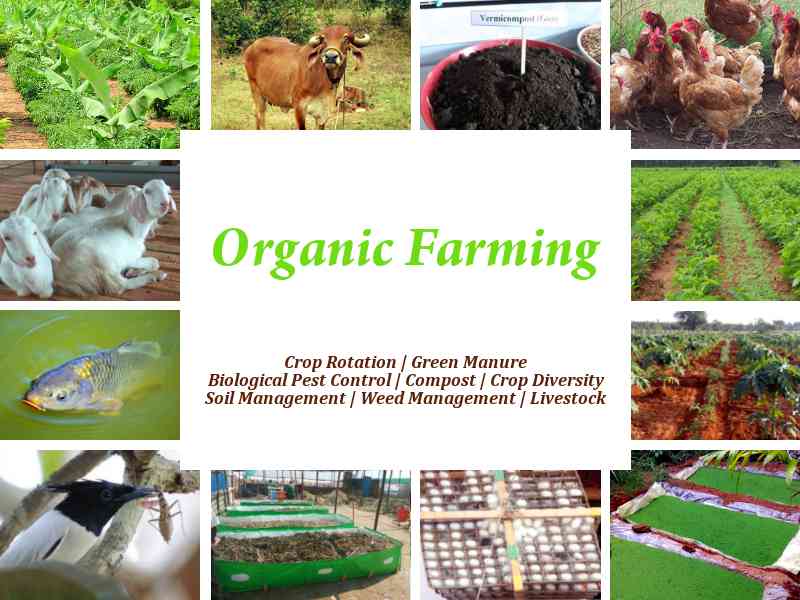
Organic Farming Processes

Organic Farming Process

Organic farming and food processing practices are wide-ranging and necessitate the development of socially, ecologically, and economically sustainable food production system. The International Federation of Organic Agriculture Movements (IFOAM) has suggested the basic four principles of organic farming, i.e. the principle of health, ecology, fairness, and care . The main principles and practices of organic food production are to inspire and enhance biological cycles in the farming system, keep and enhance deep-rooted soil fertility, reduce all types of pollution, evade the application of pesticides and synthetic fertilizers, conserve genetic diversity in food, consider the vast socio-ecological impact of food production, and produce high-quality food in sufficient quantity.

Principles of Organic Farming  

According to the National Organic Programme implemented by USDA Organic Food Production Act (OFPA, 1990), agriculture needs specific prerequisites for both crop cultivation and animal husbandry. To be acceptable as organic, crops should be cultivated in lands without any synthetic pesticides, chemical fertilizers, and herbicides for 3 years before harvesting with enough buffer zone to lower contamination from the adjacent farms. Genetically engineered products, sewage sludge, and ionizing radiation are strictly prohibited. Fertility and nutrient content of soil are managed primarily by farming practices, with crop rotation, and using cover crops that are boosted with animal and plant waste manures. Pests, diseases, and weeds are mainly controlled with the adaptation of physical and biological control systems without using herbicides and synthetic pesticides. Organic livestock should be reared devoid of scheduled application of growth hormones or antibiotics and they should be provided with enough access to the outdoor. Preventive health practices such as routine vaccination, vitamins and minerals supplementation are also needed.
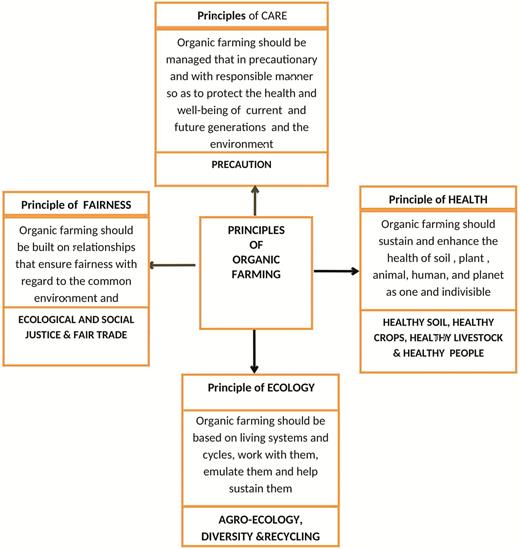
Principles of Organic Farming

Types of Organic Farming

Organic Farming are of two types. Here are the two types of Organic Farming being performed in India.

(a) Pure Organic Farming – pure organic farming, there is avoiding every unnatural chemical. In the process of pure farming, fertilizer and pesticides obtain from natural sources. It is called a pure form of organic farming. Pure organic farming is the best for high productivity. 

(b) Integrated Organic Farming – Integrated organic farming consists of integrated nutrients management and integrated pest management.

Organic Farming in India

Organic farming is in a nascent stage in India. About 2.78 million hectare of farmland was under organic cultivation as of March 2020, according to the Union Ministry of Agriculture and Farmers’ Welfare. This is two per cent of the 140.1 million net sown area in the country. A few states have taken the lead in improving organic farming coverage, as a major part of this area is concentrated only in a handful of states. Madhya Pradesh tops the list with 0.76 million of area under organic cultivation — that is over 27 per cent of India’s total organic cultivation area. The top three states — Madhya Pradesh, Rajasthan and Maharashtra — account for about half the area under organic cultivation. The top 10 states account for about 80 per cent of the total area under organic cultivation. Sikkim is the only Indian state to have become fully organic so far. Even though India has very small organic area under cultivation, in terms of number of organic farmers it is being ranked first. India has over 1.9 million farmers as of March 2020, which is 1.3 per cent of 146 million agricultural landholders.
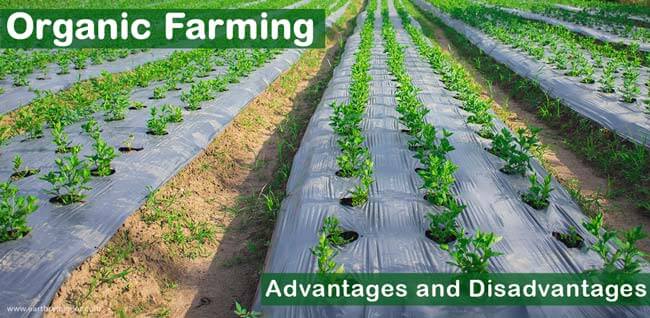
Advantages and Disadvantages of Organic Farming

Advantages of Organic Farming

Organic farming in India is very economical, it uses no expensive fertilizers, pesticides, HYV seeds for the plantation of crops. It has no expenses. 

With the use of cheaper and local inputs, a farmer can earn a good return on investment. This is one of the most important benefits of organic farming in India. 

There is a huge demand for organic products in India and worldwide and can earn more income through export.

Organic products are more nutritional, tasty, and good for health to chemical and fertilizer utilized products. 

Organic farming in India is very environment friendly, it does not use fertilizers and chemicals. 

Disadvantages of Organic Farming

Organic farming in India has fewer choices, and off-season crops are limited.

Organic agricultural products are low in the early years. Farmers find it difficult to accommodate mass production.

The main disadvantage of organic farming is the lack of marketing of the products and Inadequate infrastructure.
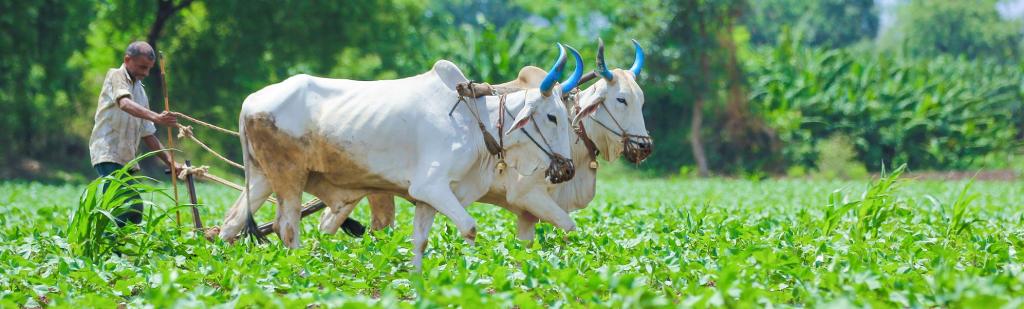
Organic Farming in India

Future of Organic Farming in India

India is an agriculture-based country with 67% of its population and 55% of manpower depending on farming and related activities. Agriculture fulfils the basic needs of India’s fastest-growing population accounted for 30% of total income. Organic farming has been found to be an indigenous practice of India that practised in countless rural and farming communities over the millennium. The arrival of modern techniques and increased burden of population led to a propensity towards conventional farming that involves the use of synthetic fertilizer, chemical pesticides, application of genetic modification techniques, etc.
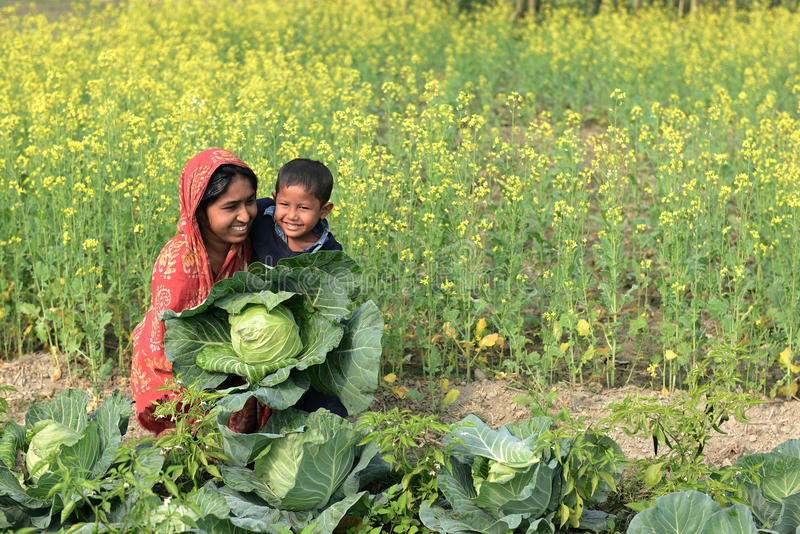
Organic Farming leads to Sustainability and Holistic Growth

Even in developing countries like India, the demand for organically grown produce is more as people are more aware now about the safety and quality of food, and the organic process has a massive influence on soil health, which devoid of chemical pesticides. Organic cultivation has an immense prospect of income generation too. The soil in India is bestowed with various types of naturally available organic nutrient resources that aid in organic farming.
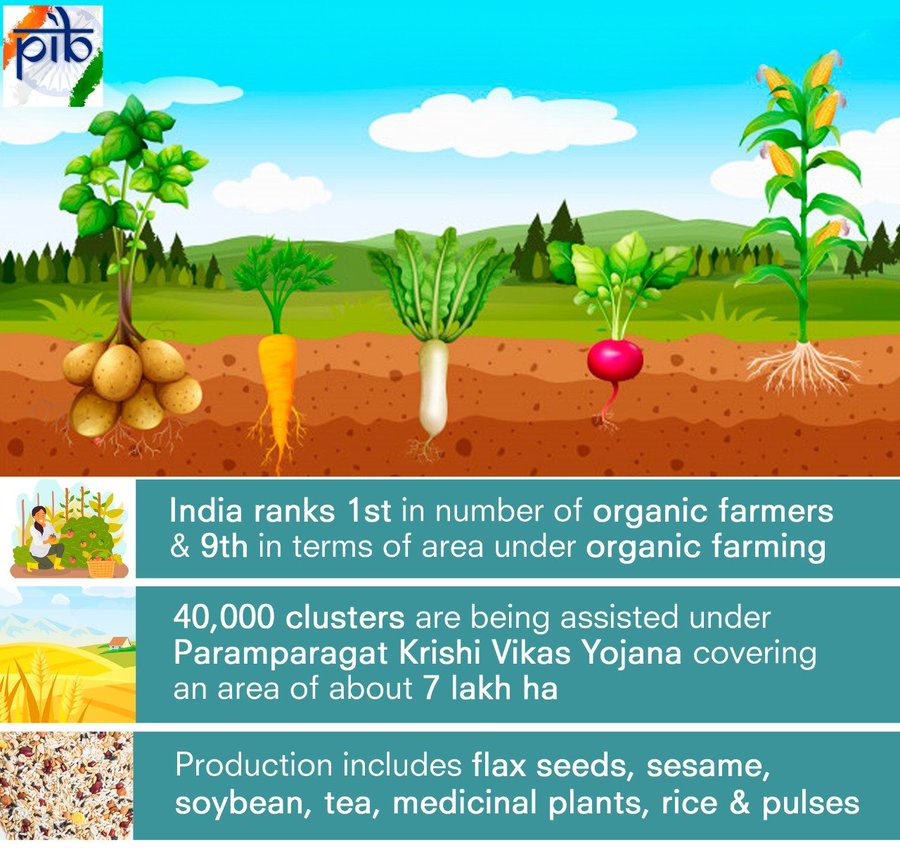
As per data collected from Government of India

Conclusion

India is a country with a concrete traditional farming system, ingenious farmers, extensive drylands, and nominal use of chemical fertilizers and pesticides. Moreover, adequate rainfall in north-east hilly regions of the country where few negligible chemicals are employed for a long period of time, come to fruition as naturally organic lands. Organic farming yields more nutritious and safe food. The popularity of organic food is growing dramatically as consumer seeks the organic foods that are thought to be healthier and safer. Thus, organic food perhaps ensures food safety from farm to plate. The organic farming process is more eco-friendly than conventional farming. Organic farming keeps soil healthy and maintains environment integrity thereby, promoting the health of consumers. Moreover, the organic produce market is now the fastest growing market all over the world including India. Organic agriculture promotes the health of consumers of a nation, the ecological health of a nation, and the economic growth of a nation by income generation holistically. India, at present, is the world’s largest organic producers and with this vision, we can conclude that encouraging organic farming in India can build a nutritionally, ecologically, and economically healthy nation in near future.

Sustainable agriculture in India

Methodology:

  • Introduction
  • Sustainable agriculture in India
  • Need for sustainable agriculture
  • Methods for sustainable agriculture

INDRODUCTION –

Sustainable agriculture simply means doing agriculture efficiently with
the limited resources present without using the future generation
resources.

Sustainability shows the balanced use of resources. The excess usage
of the resources leads to the lack of the resources for the coming
generations. So, it is important to use all the resources in the right
and in the efficient way.

Sustainable agriculture in India

SUSTAINABLE AGRICULTURE IN INDIA –

Sustainable development is the management of the resources which
means the development of all with the help of the resources we have
and to use those in such a way that the resources used will be less but
the work done will be maximum which will save the resources for
future.

India ranks second worldwide in farm outputs. India is known for its
efficiency in agriculture from the Indus Valley Civilization.
Government of India is continuously working for the sustainable
development in the agriculture as most of the people’s occupation in India is farming.

Rashtriya Krishi Vikas Yojana was launched in 2007 for the overall
state agriculture development in India which aimed for the better
coordination and to produce a good quantity of crops with lesser
resources. Krishi megh program was also introduced after the Rashtriya Krishi
Vikas Yojana its main aim was to inculcate the knowledge of doing the
agriculture in an efficient way.

Inculcating education to farmers can change the production quality as
well as the production quantity.

NEED FOR SUSTAINABLE DEVELOPMENT –

Sustainable or we say the correct use of the resource will not only
save the excess usage of the resources but will also protect us from
the ill effects of the over usage of the resources.

Let’s see how

Water – So the excess usage of water in agriculture not only wastes
the water but also highly affects the fertility of the soil. Since due to
the over water in the soil the ground soil loses its grip and the fertile
soil flows away with the flowing water.

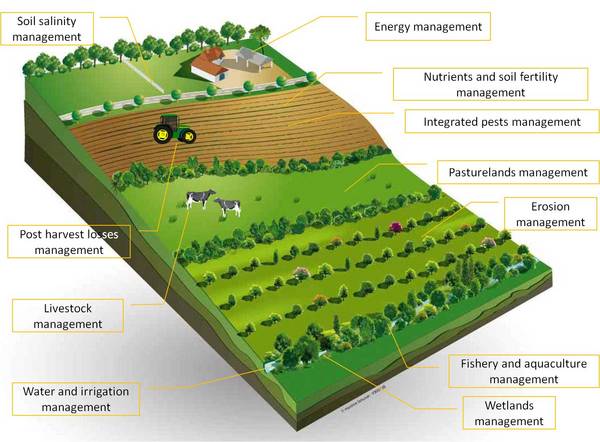
Sustainable agriculture management

Fertilizers – Fertilizers are used for the proper growth of the crops but
its excess usage destroys the crops.

For all this the right education is necessary. Sustainable agriculture helps in the good production of crops.

METHODS FOR SUSTAINABLE AGRICULTURE –

  • Proper usage of fertilizers.
  • Inculcate education of new technologies to farmers by
    organizing webinars.
  • Agroforestry
  • Contour Ploughing
    These are some of the efficient methods which are used and
    must be used for the sustainable agriculture.
  • Drop irrigation

References

Future of Indian agriculture

Agriculture in India is livelihood for a majority of the population and can never be underestimated.
Although its contribution in the gross domestic product (GDP) has reduced to less than 20 per cent and contribution of other sectors increased at a faster rate, agricultural production has grown. This has made us self-sufficient and taken us from being a begging bowl for food after independence to a net exporter of agriculture and allied products.

Total foodgrain production in the country is estimated to be a record 291.95 million tonnes, according to the second advance estimates for 2019-20. This is news to be happy about but as per the estimates of Indian Council for Agricultural Research (ICAR), demand for foodgrain would increase to 345 million tonnes by 2030.

Increasing population, increasing average income and globalisation effects in India will increase demand for quantity, quality and nutritious food, and variety of food. Therefore, pressure on decreasing available cultivable land to produce more quantity, variety and quality of food will keep on increasing.

India is blessed with large arable land with 15 agro-climatic zones as defined by ICAR, having almost all types of weather conditions, soil types and capable of growing a variety of crops. India is the top producer of milk, spices, pulses, tea, cashew and jute, and the second-largest producer of rice, wheat, oilseeds, fruits and vegetables, sugarcane and cotton.

In spite of all these facts, the average productivity of many crops in India is quite low. The country’s population in the next decade is expected to become the largest in the world and providing food for them will be a very prime issue. Farmers are still not able to earn respectable earnings.

Even after over seven decades of planning since the independence, majority of the farmers are still facing problems of poor production and/or poor returns. Major constraints in Indian agriculture are:

According to 2010-11 Agriculture Census, the total number of operational holdings was 138.35 million with average size of 1.15 hectares (ha). Of the total holdings, 85 per cent are in marginal and small farm categories of less than 2 ha (GOI, 2014).
Farming for subsistence which makes scale of economy in question with majority of small holdings.
Low-access of credit and prominent role of unorganised creditors affecting decisions of farmers in purchasing of inputs and selling of outputs
Less use of technology, mechanisation and poor productivity for which first two points are of major concern
Very less value addition as compared to developed countries and negligible primary-level processing at farmers level.
Poor infrastructure for farming making more dependence on weather, marketing and supply chain suitable for high value crops.
Future of agriculture is a very important question for the planners and all other stakeholders. Government and other organisations are trying to address the key challenges of agriculture in India, including small holdings of farmers, primary and secondary processing, supply chain, infrastructure supporting the efficient use of resources and marketing, reducing intermediaries in the market. There is a need for work on cost-effective technologies with environmental protection and on conserving our natural resources.

The reforms towards privatisation, liberalisation and globalisation affected inputs market at a faster pace. Agricultural marketing reforms after 2003 made changes in marketing of agricultural outputs by permitting private investment in developing markets, contract farming and futures trading, etc. These amendments in marketing acts have brought about some changes but the rate is less.

Along with this, the information technology revolution in India, new technologies in agriculture, private investments especially on research and development, government efforts to rejuvenate the cooperative movement to address the problems of small holdings and small produce etc are changing face of agriculture in India.

Many startups in agriculture by highly educated young ones show that they are able to understand the high potential of putting money and efforts in this sector. Cumulative effects of technology over the next decade will change the face of agriculture.

All the constraints in agriculture make the productivity and returns complex but still a high untapped potential is there in India’s agriculture sector.

Advantageous weather and soil conditions, high demand for food, untapped opportunities, various fiscal incentives given by the government for inputs, production infrastructure, availability of cheap credit facilities and for marketing and export promotion are attracting many individuals, big companies, startups and entrepreneurial ventures to do a lot of investments on innovations, inventions, research and development and on other aspects of business.

The efforts are being done to convert all the challenges in agriculture into opportunities and this process is the future of agriculture.

Key trends expected

1. Changing demand due to increase in incomes, globalisation and health consciousness is affecting and going to affect more the production in future. Demand for fruits and vegetables, dairy products, fish and meat is going to increase in future.

2. Researches, technology improvements, protected cultivation of high value greens and other vegetables will be more. There will be more demand of processed and affordable quality products.

3. More competition will be there among private companies giving innovative products, better seeds, fertilisers, plant protection chemicals, customised farm machinery and feed for animals etc in cost effective ways at competitive prices giving more returns on investment by farmers. Use of biotechnology and breeding will be very important in developing eco-friendly and disease resistant, climate resilient, more nutritious and tastier crop varieties.

4. Some technologies will be frequently and widely used in future and some will become common in a short time while some will take time to mature. For producing the same products in other way so as to use resources judiciously and using new resources also like hydroponics, use of plastics and bio-plastics in production. There will be more of vertical and urban farming and there will also be efforts in long term to find new areas for production like barren deserts and seawater.

5. Precision farming with soil testing-based decisions, automation using artificial intelligence will be focused for precise application inputs in agriculture. Sensors and drones will be used for precision, quality, environment in cost effective manner.

Small and marginal farmers will also be using these technologies with the help of private players, government or farmer producer organisations (FPO). Use of GPS technology, drones, robots etc controlled by smart phones etc can make life of farmers easy and exciting with good results. These advanced devices will make agriculture be more profitable, easy and environmentally friendly.

6. Use nano-technology for enhancement of food quality and safety, efficient use of inputs will be in near future. Nano-materials in agriculture will reduce the wastage in use of chemicals, minimise nutrient losses in fertilisation and will be used to increase yield through pest and nutrient management. IFFCO has already done successful tests in nano-fertilisers.

7. India has improved remarkably in its digital connectivity and market access has become very easy. The number of internet users is projected to reach 666.4 million in 2025. Farmers will be behaving more smartly with mobiles in hands and would be able to be more aware and connected with different stake holders. Government will be making wide use of digital technology for generating awareness among farmers, information sharing, government schemes using digital technology for direct transfers of money.

8. There will certainly be more work by government, village communities, agri startups and private players in conserving sharply depleting water resource. Use of digital technology can make revolution in this direction. There will be use of satellites, IoT, drones for better collection of data regarding soil health, crop area and yield which will make cost for insurers less with better estimations and system will be more exact and effective.

9. There will be more of niche marketers in operations, area, and crop specific small equipments which will make operations even at small farms easier and efficient.
Food wastage will be less and better use of waste materials in agriculture will be more. Number of warehouses in private sector will be more and linkages between government and private warehouses will be increasing. This will help in balancing supply with demand and stabilisation of prices of agri-outputs in the market.

10. Retailing in agriculture will largely be digitalised. A study estimates that over 90 per cent of kirana stores across the country will be digitalised by 2025 with modern traceable logistics and transparent supply chain. Many players have already taking kiranastores to the door steps of consumers like Amazon and Jio Mart.

Question arises whether farmers will be able to make use of modern technologies in a country where education, holding size, infrastructure, low level of technology adoption and many other constraints are there.