The Japanese Language and why learning it can be hard

With the sudden increase in the Japanese Economical might after the second world war and its steady cultural impact due to technology, manga and cartoons, people have been more interested in Japanese culture than ever. Japan is still a largely conservative society with modernity picking up steadily despite an ageing population. But assimilating into that society can be hard. The most important reason being the difficulty a non-native shall face in learning their language.

Modern Japanese is a fairly new language – just like modern Italian, French, Mandarin or Hindi. Before the Meiji restoration, every part of Japan had a local language that was similar to but nor exactly the way in which Japanese speak it today. Ancient and Medieval Chinese led to the formation of the script that the Japanese used. The Meiji restoration meant that Japanese as spoken in the court of Kyoto was exported to all provinces and the need for a new script was needed. This led to creation of three scripts in the modern times – the Kanji or the Old Japanese – the one influenced by ancient and medieval Chinese characters. The next are the two modern scripts – Hiragana script that is used to express vernacular terms and words in the vocabulary while the Katakana script is used to write words borrowed from other countries. For example AC and Fridge or refrigerator will be written in Katakana while Fuji, Tokyo etc will be written in Hiragana.

Now, the Japanese language unlike English, Hindi and Arabic is a phonetic language. That means that it does not have standard alphabets with vowels and consonants that then group together to form words but rather sounds that make the alphabets of the language. So, both the Hiragana and Katakana scripts have 72 characters each. And writing or using even these characters has to follow some non-standard rules of phonetics.

Finally, Japanese is a language with a very strict emphasis on seniority. While this exists in most other languages as well – except Roman languages like English, in languages like Hindi and North Indian Bhojpuri, Nepali Hindi, Tamil etc., it is only about the addition of suffixes to the root word or in languages like Urdu, there is no such seniority needed because all the people are addressed in a high degree of respect. Japanese however might have different words that have the same meaning but suit different situations – casual, formal or with elders.

Finally, please don’t say goodbye to a Japanese guy. That is considered rude. The better expressions are see you soon or take care.

Arigatou Gozaimasu! ありがとうございます

Happy Learning!

The International Day of Indigenous people

One of the most tragic instances in history would be that of the holocaust – a word that in itself is a definition of six years of European geopolitics. In Russia, Palestine and China, the expulsion of the White Army, the expulsion of the Arabs and the brutual suppression of cultures across China in the name of cultural revolution respectively bring to picture the way in which states and not just people can sometimes be the enemy of people. However, there have been several such instances in history, most of them hidden because they were carried out by the more ancestors of the ones who ended up being economically and intellectually influential communities.

Cultural Revolution - Wikipedia
A poster calling out for Chinese Cultural Revolution

Human history is a record of forced displacements both internal and external, ethnic cleaning and genocides and murders both to the dismay and sponsored by states. When Captain Cook discovered the down under, it led a massive import of British criminals on the continent. With them came officers, scientists and explorers. The businessmen and civilians searching for more opportunities came in later. The people of the continent – the Australian arboginals, the Maoris from Oceania and many more tribes were reduced to a mere holder of small patches of lands and often no land at all by the British who had a superior military.

When the first Irish and British settlers landed in the new World of America, the red Indians offered them food and shelter which soon became a situation where the Red Indians had to fight for the survival of their lives and their cultures which was systematically and quite institutionally taken away by the New World settlers. Similarly, when the Spanish invaded Latin America, it meant a complete and absolute dissolution of their traditions and a genocide that would annihilate their population to an extent where even after 400 years, they would not attain the same.

The Last Days Of The Incas - HistoryExtra
Machu Pichu stands as a testimony to the Grand Incan Empire in the Andes before the Spanish arrived.

To add to all these miseries are the tales of the Rohingya community from Myanmar, the Tamils in Sri Lanka, the Kashmiri Pandits in Indian state of Jammu and Kashmir, the now diminishing sea faring communities in Philippines and Malaysia and many more. Japanese and Italian unifications were also carried out at the cost of the local traditions, cultures and ways that the communities living there had been practicing for a millennia. In India, the use of English and Hindi have slowly gobbled up on the rich culture of local languages that the communities had. In fact, many communities from the state of Bihar and Uttar Pradesh have completely given up on their languages. Bihar – a state where only 6% people had Hindi as their mother tongue now has a minority of about 20%!!

World loses about 1 language every 15 days!!!

Wikipedia defines Indigenous people as – “Indigenous peoples, also referred to as first peopleaboriginal peoplenative people, or autochthonous people, are culturally distinct ethnic groups who are native to a place which has been colonised and settled by another ethnic group. ” But, a broader definition is the fact that indigenous people are defined by their cultures which is at a steady loss across the globe. The most important thing is to treasure the fragments of their traditions that still remain. Because a rainbow is better a rainbow.

COVID-19 and Indigenous peoples | United Nations For Indigenous Peoples

Happy International Day for the Indigenous communites.

The Hiroshima Day

6th August 1945. Imperial Japan had refused to surrender even though all the other Axis powers had. Hitler and Mussolini were dead – the Second world war in Europe had come to an end as far as conflicts were concerned (A long age of a partitioned Germany and the Nuremberg trials would happen later). Roosevelt had overseen the construction of secret weapon and Truman, who came to power in the April of that year, ordered for its use.

Atomic Bomb Dropped on Hiroshima - HISTORY
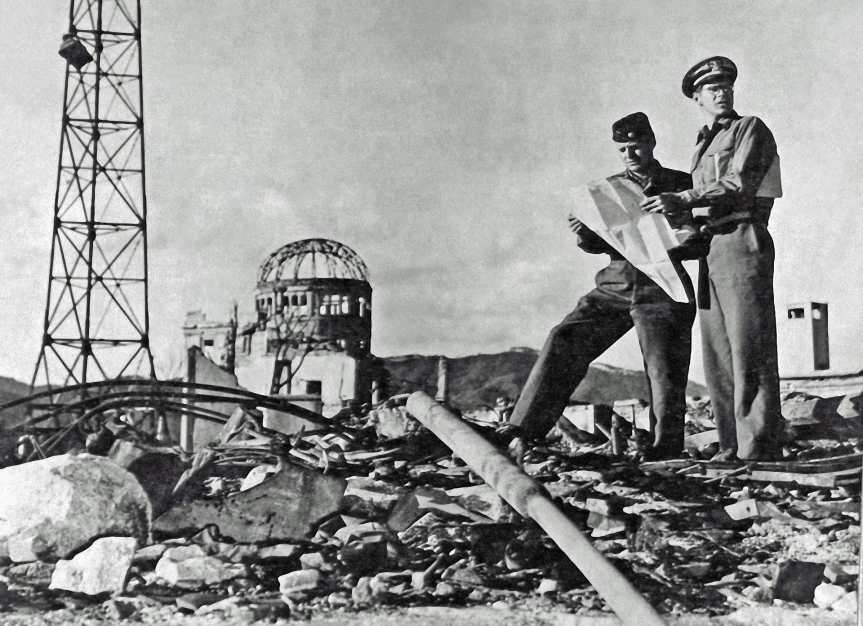
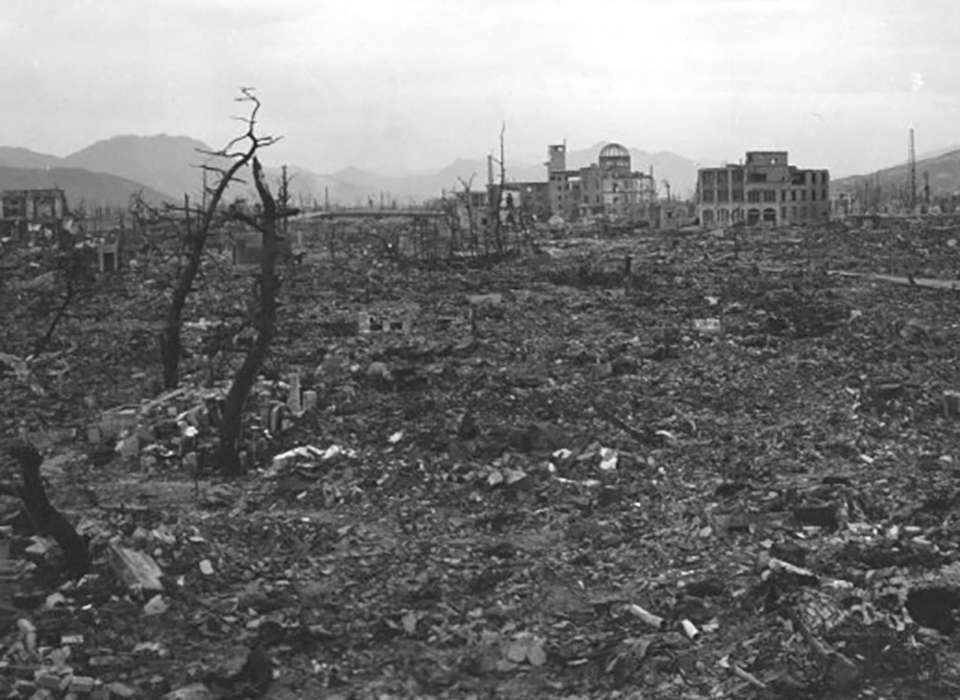
Hiroshima was the first city in history to suffer a nuclear detonation.

The city of Hiroshima was bombed on the 6th of August 1945 – the first ever atomic bomb attack in human history. 3 days later, another Japanese city – Nagasaki was bombed with the nuclear weapon – forcing Japan to surrender unconditionally and bring the second world war to a decisive end in the favour of the Allied forces. But Truman and most Americans shall never know what it is to be bombed with the weapon. Hiroshima and Nagasaki mark the only instances of atomic bombing recorded. The Allied had failed to bring Japan to its knees and sought the Atom bomb as a quick and effective way. But this quick way, which was a joint plan by the US and its allies – as required by the Quebec Agreement killed a 150,000 people – a 120,000 of them being civilians in Hiroshima alone. And this might have been one of the deadliest attacks on a civilian city by any country involved in a conventional warfare – let alone the US that was trying top be the leader of human rights and civilian liberties.

The Most Fearsome Sight: The Atomic Bombing of Hiroshima | The National  WWII Museum | New Orleans
A 120,000 people and 50sq km of area were eradicated in a matter of seconds.

To the Allies, the bomb meant an end to warfare and a sign of American supremacy for the next 5 decades. But to Japan, it meant deaths of 200,000 people in both cities and several decades of nuclear poisoning, radiation induced mutations and cancers that spanned several generations and in some families continue even today.

The University of Texas created a photobook to let the average American – who allegedly yields more pride than sympathy toward the incident – to know of the plight of a nuclear warfare. And people across the world – may it be Chinese, Indian, Pakistani, American, Russian, Israeli or North Korean(if they could read this) would agree that the rhetoric of a nuclear warfare is so blatant in these societies that a bunch of stupid people in the government can lead to a humanitarian and environmental crisis unprecedented in history.

University of Texas photo book aims to show realities of Hiroshima,  Nagasaki blasts to US - The Mainichi
Raditation poisoning killed about 20,000 more people in the later months.

The Hiroshima Day is a reminder of the powers of nature that man has been able to harness and the fact that these powers mean only more responsible behaviour is needed in all of us.

Hiroshima Peace Memorial Park Hiroshima Tickets & Tours - Book Now
The Hiroshima Memorial Park stands as a testimony to those people who bore the brunt of war between two groups who sought nothing but a global supremacy in trade and diplomacy.

What Is Ikigai?

Ikigai (ee-key-guy) is a Japanese notion that combines the words iki, which means “alive” or “life,” and gai, which means “benefit” or “value.” When these phrases are combined, they indicate something which provides your life value, significance, or goal.

The notion of ikigai is claimed to have originated from traditional Japanese medicine’s core health and wellness concepts. According to this medical tradition, one’s physiological well-being is influenced by one’s mental wellbeing and perception of meaning in life

Explanations of ikigai are frequently associated with components of social identity, such as job and family life, but it is also explained as something more. It is the concept of finding meaning in all you are doing in life. Interests, relationships, public service and traveling all contribute to your ikigai.

Ikigai is frequently connected with a Venn diagram depicting the points where the following elements overlap:

  • What you love
  • What you are good at
  • What the world needs
  • What you can be paid for

THE DIFFERENT SPHERES OF IKIGAI

WHAT YOU LOVE

This sphere contains everything we do or encounter in life that offers us the most joy and helps us feel the most lively and satisfied. What matters is that we give ourselves permission to think very carefully as to what we enjoy, without regard for whether we are excellent at it, whether the world needs it, or if we can be paid to do it.

WHAT ARE YOU GOOD AT

This sphere contains whatever you are exceptionally great at, such as abilities you’ve learned, interests you’ve pursued, talents you’ve demonstrated since a young age, and so on. It’s possible that you’re excellent at something. This category includes skills or capabilities, regardless of if you are passionate about them, if the world needs them, or if you can be compensated for them.

WHAT THE WORLD NEEDS

The “world” here could refer to mankind overall, a local group with whom you are in contact, or somewhere in between. Whatever the world requires may be established based on your perceptions or the requirements voiced by others. Outside one’s own needs, this area of ikigai links most directly with other people and doing good for others.

WHAT YOU CAN BE PAID FOR

This domain of the diagram also alludes to the world or society as a whole, because it involves what somebody else is prepared to pay you for. Whether you can get compensated for your interests or skills is determined by circumstances such as the condition of the economy, the demand for your passions/talents, and so on.

A “balance point” in this ikigai diagram would thus include something that you are passionate about, are also skilled at, that perhaps the world really needs currently, and for which you will get paid.

IN PURSUIT OF A PURPOSE

Everybody, according to the Japanese culture, possesses ikigai. It denotes the worth that one discovers in their life or the things which make one feel as though their life is worthwhile. It pertains to both mental and spiritual situations that give one the impression that their existence has meaning.

What particularly appeals to me about ikigai is its interchangeability. It is unique to each individual and recognises that the concept of “happy” is really rather complex. Ikigai, as an idea, can grow alongside you. If one route of purpose is no longer available, you may adapt, shift, and follow other pursuits with purpose. This is accommodated by Ikigai.

Even though the present really doesn’t seem right, if you do not feel genuinely valued in your current condition but have a great desire to strive towards, you will have discovered your ikigai.

We frequently measure ourselves to everyone else, and when people around us appear to be doing better than us, we might feel like losers We soon overlook what we’re aiming for and we reject our current journey. This is where I believe ikigai may truly help. When we follow the concepts of ikigai, we are brought back to ourselves, towards our own purposes, and to the road we are taking to get there. Ikigai is just as much about adjustments, difficulties, and blunders as it is about achieving the “ideal” goal of a contented existence.

The concept in itself is not innovative or revolutionary, but it’s worth remembering.

The Impact Of Haruki Murakami On The World Of Literature

Fish dropping from the sky and human-animal hybrids are only a few of the “common” happenings in Haruki Murakami’s stories. The famous Japanese author has millions of admirers across the globe, with his best-selling novels translated into over 50 languages.

Haruki Murakami’s widespread fame signals the twenty-first century’s progress to a much more interconnected society, one where origin has no bearing on impact and everyone is a descendant of the diverse communities that happened to come before. Murakami’s huge reach stems in large part from the scope of his own preferences and capabilities. He not only has made many western readers acquainted with some of the East’s modern written achievements, but he’s also translated several  works of English authors like Raymond Carver, F. Scott Fitzgerald, and J.D. Salinger to Japanese, giving Japanese readers exposure to some of  these works for the very first time.

Murakami is heavily inspired by Western writers, finding inspiration in authors ranging from Franz Kafka to Kurt Vonnegut. He now admires the novelists Kazuo Ishiguro and Cormac McCarthy. He became particularly captivated to American culture as a young child, devouring any relics he would discover, whether jazz albums, dollar store paperback books, or Hollywood films.

Murakami’s life has been influenced by jazz music. Several of his novels, like Norwegian Wood (from the same Beatles song) as well as Tsukuru Tazaki, depend heavily on the music of Franz Liszt. 

When it pertains to Haruki Murakami, there seems to be an odd synchronicity between his supporters and his detractors. Everybody thinks that he’s often humorous, especially in his dialogue. His protagonists, who are frequently drawn into detective storylines without the need for a “FOR HIRE” notice in their windows, and who doesn’t love a detective? 

Cats, mundane kitchen activities, dingy barrooms, pop and/or classical theme tunes are always be present in the books, set against a surreal, Manichaean danger zone into which the modest yet progressively resilient protagonist must descend in quest as to what he’s missing, most likely to find something else instead. The hero may also stay a bit of time at the bottom of a well or in another dark and solitary place.

His thoughts and emotions will be torn between yearning for an otherworldly, spiritual lady (typically the one who has vanished) and desire towards a feisty, sensual, down-to-earth woman (who may at first just seem more like his sidekick on the journey but may just turn out to be just what he needed all along).  

Murakami has been writing many versions on similar themes for almost 40 years, and he admits about his tendency of reusing certain types of ideas in several interviews. Some people consider his repeats to be a detriment to him. But what divides his detractors is whether they will accommodate his logical leaps and propensity to build dreamworlds which defy consistency and appear to live irrespective of any writer-imposed constraints.

Although the Kyoto-born novelist might not be the first Japanese author to achieve international recognition, Murakami has dramatically changed the perception of Japanese literature throughout the globe, resulting in a high demand for Japanese books to be translated. 

What Is Zen Buddhism?

Zen Buddhism is a Japanese school of philosophy that is said to have evolved from Mahayana Buddhism. It is more centred on meditation and intuition, and it is seen as a lifestyle rather than a fixed form of prayer or religion. 

The term “Zen” is the Japanese rendering of the Chinese word “Ch’an,” which means “meditation.” Around the eighth century, Ch’an arrived in Japan and became known as “Zen.” Though Zen Buddhism made its way to Japan via China, but it’s true home is India. Today, the term “Zen” is more often used in the West.

For many individuals from East Asian cultures, Zen is particularly essential in helping families show their continuing love and respect for their ancestors—departed family members who are in the afterlife awaiting rebirth.

CHARACTERISTICS OF ZEN BUDDHISM

Zen Buddhism is a simple, determined, uncompromising, to-the-point, meditation-based Buddhism that is uninterested in theological subtleties. Zen, which does not rely on scripture, dogma, or ritual, is validated by personal experience and is passed down ineffably from teacher to pupil, hand in hand, via rigorous, intimate practice.

Though Zen accepts – at least in part – the legitimacy of traditional Buddhist scriptures, it has developed its own writings over time. Much of ancient Zen literature is based on legendary stories of the great masters, and is liberally flavoured with Taoism, Confucianism, and Chinese poetry, as well as written in casual language studded with Chinese folk sayings and street slang. 

One of the most key characteristics of Zen Buddhism is Zazen or Zen meditation. Zen meditation’s objective is to control one’s attention. It is also referred to as a technique of “thinking about not thinking.” In zazen, practitioners sit on a cushion in a structured pose with a straight back, eyes half open, and legs crossed onto the opposite thigh in what is known as the full-lotus position.

HOW TO PRACTICE ZEN MEDITATION 

  1. Keeping an eye on one’s breath – During zazen (sitting meditation), meditators should adopt a comfortable position such as the Burmese, half-lotus, or Seiza pose. Sitting on a cushioned mat or cushion is preferable, although sitting in a chair is also fine. The focus of awareness focuses on a specific object of meditation, most commonly the breath and how it travels in and out of the abdominal area. 
  1. Stillness of mind – This type of meditation does not rely on a single point of focus, such as the breath. Meditation students are taught to let thoughts pass through their brains without judgement or rejection. This is known as shikantaza, or “simply sitting” in Japanese. This Zen Buddhist meditation technique is performed without the need of an object of concentration, attachments, or contents.
  1. Intensive group meditation – Committed meditators conduct intensive group meditation on a regular basis in meditation centres or temples. This is known as sesshin in Japanese. During this stage of intense meditation, practitioners dedicate the majority of their time seated. Each class lasts approximately 30 to 50 minutes and is interspersed with walking meditation, brief breaks, and meals. 

Finally, Zen Buddhism provides practitioners with means to mend their minds and hearts while also connecting with the world. Many practitioners nowadays turn to Zen in search of mental clarity and peacefulness through meditation. Zen, like other schools of Buddhism, begins with the recognition that humans suffer, and it offers a remedy to this suffering by realising the interconnection of all creatures and learning to live in accordance with this reality.