Indian Education System

Education plays an important role in the development of an individual and making him a knowledgeable citizen. It is the education that makes an individual self-reliant, helps to suppress the social evils and contribute towards the development of the society and nation as a whole. Education helps in unravelling the mystery of nature. It enables us to understand and improve the working of our society. It creates conditions for a better life. Education brings out the capabilities to fight injustice happening in society. Every individual has the right to education. 

Indian Education is one of the largest and complex education systems in the world along with China. India is committed to providing basic education to its citizens, the framework of which is defined in the National Policy of Education. Elementary education is now compulsory in India. At the time of Independence, only 14% of India’s population was literate. Now after so many decades since Independence, the number of literates has increased by fivefold.

History of Education System

The history of Indian education system comes from the times of Ramayana and Mahabharata. The historic Indian education system is also called the Gurukula system. There were gurus then who are now known as teachers and shishyas who are called students now. The gurus and the shishyas lived together under one roof in Gurukula until the completion of their education. The shishyas were expected to help the guru in all the daily chores as part of their learning. The children belonging to higher strata of the society were taught all the subjects from Sanskrit to Holy Scriptures and mathematics to metaphysics by the gurus. The Gurukulas during those times focused on the practical aspects of life. The students were taught in the open classroom in the surrounding area of nature. This early system of education in India continued for many years until the modern education system came into the picture in the nineteenth century.

In the early 19th century, during the British period, the modern education system was brought into our country by Lord Thomas Babington Macaulay. The basic strength of this modernized education system was the examinations and a well-defined curriculum, which gave importance to subjects like science and mathematics and subjects like philosophy, metaphysics were given a back seat. The brick and mortar classrooms replaced the open classrooms in the Gurukulas. The essence of the guru shishya bond was taken over by a more formal relationship between the teacher and the student. To understand the progress of any student, examinations were conducted at frequent intervals. The focus of the education system shifted from learning to memorizing of the concepts to score good marks in the examinations.

Problems of Indian Education System

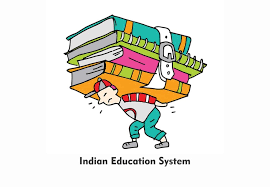
Over a period of time, it has been observed that there are many loopholes in the system of education in India. Instead of understanding the concepts, students started cramming and memorizing the lessons. Knowledge is given a backseat and scoring in high rankings takes importance. The modern parents have tuned their mindsets accordingly and their goal is to ensure that their children score good marks instead of acquiring knowledge right from the primary level. 

Private schools and colleges have been rapidly increasing in the country but the results produced by them are far beyond satisfactory. It has also been observed that the quality of teachers deteriorated with the passing of time. Our examination system is responsible for the wide skill gap. India is producing lakhs of engineers and professionals every year but only a fraction of this number is actually getting employed. This is because the Indian examination system focuses more on scoring good percentages rather than the actual continuous comprehensive evaluation. 

Research and development, which should be the cornerstone of our system, are given the least importance. The private schools and colleges focus on the admission of more students and are least interested in the quality of their education. This is the major reason why the faculties and the teachers lack skills and specialization. This is quite evident from the fact that a single professor is assigned to teach multiple subjects. 

How Can We Improve the Indian Education System?

First and most importantly we should improve the grading system. Rote learning should be discouraged completely. Teachers and faculties should focus more on the analytical skills of the students and grade them accordingly. There should be more focus on comprehensive evaluation instead of scoring only good marks. Workshops must be organized for teachers on a regular basis to keep them updated about the latest developments in the sector of education. At the same time, the curriculum should be reframed according to the present needs of education in India. 

The payroll structure of the teachers and the faculties especially in the government institutions should be improved. This step will help in motivating the teachers to develop their skills and they will take a keen interest in grooming or shaping up a student’s life and career. The government and other entities who are associated with the education sector, need to understand the importance of quality of education. Education should be a holistic process that must focus on the overall development of the physical, emotional, social and cognitive skills of a child. It needs to be a slow and cyclic process and must take place gradually to help the child develop into an autonomous, independent and knowledgeable individual.

Conclusion

An educated individual is an individual who should be able to contribute towards the betterment of the economic and social development of the society as well as the country. The true goal of education must exceed awarding the degrees and certificates to the students. Education is not a tool to earn livelihood but it is a way to liberate the mind and soul of an individual. 

Are online classes worth it?

As you know COVID-19 destroyed the world economy to a great extent and still we are not fully back on our track. The major impact of this can be seen on education as well. All the schools and universities shut down causing the harm to the students. They are forced to complete their education by the means of internet only just by sitting at their homes. Internet no doubt provides us with alot of opportunities and ed-tech is one of them but it also leads to huge destruction of students carrier and their mind. When the virus hitted the economy the teachers started taking the classes online by the way of various available platforms and both the negative as well as the positive impact for the students were observed.

Agree that there are various advantages of online classes that a student can learn on their time just by sitting at their homes but it has a disadvantage in itself because most of the students just join the classes but don’t give due care to the lectures.Some students don’t feel comfortable asking their queries in class so in an online class they can pause videos or return to concepts covered in previous modules. But this opportunity is not taken by most of the students because they are one who are completely ignoring the lectures and doing something else in their home.

Teachers are also facing alot of issues in this as the network issues hits alot while taking the classes. Also video can’t be open by the students who are living in remote areas. If we also look up in the worst ground then there are students who are even not having the proper equipment to attend the classes and also not able to give exams which is the reason of stress and anxiety among them.

We can just pray together that everything comes back on the track very soon so that we can see the happy faces going to schools and universities rather attending classes just by being on their bed.

Education

Education is a very powerful medium to grow in life and perceive something important. In a human’s life, education benefits a lot in decreasing the difficulties of a hard life. The expertise obtained through the education era encourages everybody regarding their life.Education is a way to enter into several doors for possibilities to obtain more real prospects in life to improve career growth. Government is also arranging various programs to educate everyone about education and its benefits in our life especially in rural areas. Education delivers knowledge of equality among everyone in society and encourages the growth and improvement of the nation.

In this modern technology-based era, education performs a supreme role in our life. And in this era, there are so many methods to boost the level of education. The complete criteria of education have now been modernized. And education makes a big impact on anyone’s life.

To say Education is important is an understatement. Education is a weapon to improve one’s life. It is probably the most important tool to change one’s life. Education for a child begins at home. It is a lifelong process that ends with death. Education certainly determines the quality of an individual’s life. Education improves one’s knowledge, skills and develops the personality and attitude. Most noteworthy, Education affects the chances of employment for people. A highly educated individual is probably very likely to get a good job. In this essay on importance of education, we will tell you about the value of education in life and society.

Importance of Education in Life

First of all, Education teaches the ability to read and write. Reading and writing is the first step in Education. Most information is done by writing. Hence, the lack of writing skill means missing out on a lot of information. Consequently, Education makes people literate.

Above all, Education is extremely important for employment. It certainly is a great opportunity to make a decent living. This is due to the skills of a high paying job that Education provides. Uneducated people are probably at a huge disadvantage when it comes to jobs. It seems like many poor people improve their lives with the help of Education.

Better Communication is yet another role in Education. Education improves and refines the speech of a person. Furthermore, individuals also improve other means of communication with Education.

Education makes an individual a better user of technology. Education certainly provides the technical skills necessary for using technology. Hence, without Education, it would probably be difficult to handle modern machines.

People become more mature with the help of Education. Sophistication enters the life of educated people. Above all, Education teaches the value of discipline to individuals. Educated people also realize the value of time much more. To educated people, time is equal to money.

Finally, Educations enables individuals to express their views efficiently. Educated individuals can explain their opinions in a clear manner. Hence, educated people are quite likely to convince people to their point of view.

Importance of Education in Society

First of all, Education helps in spreading knowledge in society. This is perhaps the most noteworthy aspect of Education. There is a quick propagation of knowledge in an educated society. Furthermore, there is a transfer of knowledge from generation to another by Education.

Education helps in the development and innovation of technology. Most noteworthy, the more the education, the more technology will spread. Important developments in war equipment, medicine, computers, take place due to Education.

Conclusion

Education is a ray of light in the darkness. It certainly is a hope for a good life. Education is a basic right of every Human on this Planet. To deny this right is evil. Uneducated youth is the worst thing for Humanity. Above all, the governments of all countries must ensure to spread Education.

Photo by Max Fischer on Pexels.com

You, me and the screens

21 Virtual Graduation Ideas 2021 — How to Throw a Virtual Graduation Party

No one ever knew that coronavirus would stay on this long, and a 21 days lockdown would extend to a year and half now. All the plans, the expectations of getting a normal grad-farewell, went nowhere but into an invisible bin in space.
Day by day, breath by breath, I find it hard to live, to exist; sitting and wasting the last year of my graduation attending lectures online – what worse could happen. But no. The worse was yet to come an online farewell?! For real?

I get that this is not really as worse as the situation is out there. Millions of people have lost thier jobs and their only source of income. Many corners of the world has peoples starving to death. Here every passing second, I can hear the intensity of sirens increasing next street. My phone is buzzed with calls of my parents asking if I’m doing okay and also my relatives informing that they tested positive and we could do nothing but just be there emotionally, a thousand miles apart. Just like the cases, the number of deaths of knowns and unknowns are increasing and I’m so intimidated by the pain and anxiety this has left us with.

If we look back when everything was normal, when we could roam around with our friends and family, when we could have things we craved for at that instance, when we could watch skies changing colours while the sun setting down over chit chatting with our friends, when we could stay with them even if the sky turned dark. When there were no curfews, no restrictions, we could stay that way as long as we wished for.
Only if we knew in March’20, maybe then, we could hold on to our closer ones a little longer, we would enjoy that last sunset together a little longer, we would enjoy that one last meal together a little longer.
Only if we knew that time, we would appreciate those small little things more than we ever did. This pandemic taught us few lessons though; to reconnect with our loved ones; to appreciate and be grateful for every little joy of happinesses.

Ever since our births, we’re always taught to look at the brighter picture. This pandemic taught us few lessons though; to reconnect with our loved ones; to appreciate and be grateful for every little joy of happinesses. Even if we’re miles apart from our loved ones, we’re still connected to them by these screens; these megapixel screens act as a ray of hope to the darkness of despair around. In the end, all that I have now is just me and these megapixel screens. But, is it really an end if it’s not a happy one? Somewhere deep down in our hearts we still know we’re going to live that life before Covid again; where we would step out of our houses without masks & sanitizers. But this time hasn’t come yet. So, we still have to follow all the safety precautions as we know together we can get through this.

“United we stand, divided we fall”

WHAT IS MOBILE APPLICATION IMPROVEMENT?

Portabl application improvement is the arrangement of cycles and systems associated with composing programming for little, remote figuring gadgets, for example, cell phones and other hand-held gadgets.

Like web application advancement, versatile application improvement has its foundations in more conventional programming improvement. One basic contrast, notwithstanding, is that versatile applications are frequently composed explicitly to exploit the novel highlights of a specific cell phone. For instance, a gaming application may be composed to exploit the iPhone’s accelerometer or a portable wellbeing application may be composed to exploit a smartwatch’s temperature sensor.

Today, the two most noticeable portable stages are iOS from Apple and Android from Google. Telephones and tablets from Apple come preloaded with fundamental applications, including a full internet browser and the Apple App Store. Android gadgets additionally come preloaded with comparable applications and you can introduce really utilizing the Google Play Store.

Kinds of versatile applications

In the early long stretches of portable applications, the best way to guarantee an application could perform ideally on any gadget was to create the application locally. This implied that new code must be composed explicitly for every gadget’s particular processor. Today, most of versatile applications created are gadget freethinker.

Previously, if an application should have been cross-stage and run on various working frameworks (OSes), there was nearly nothing, assuming any, code that could be reused from the underlying advancement project. Basically, every gadget required its own portable application advancement project with its own code base. Present day cross-stage devices utilize normal dialects like C# and JavaScript to share code across projects; all the more significantly, they coordinate well with application lifecycle the board instruments, like Jenkins. This empowers engineers to utilize a solitary codebase for Apple iOS, Google Android and reformist web applications (PWAs). PWAs are worked to exploit local cell phone highlights, without requiring the end client to visit an application store, make a buy and download programming locally. All things considered, a PWA can be situated with a web crawler inquiry and got to quickly through a program, subsequently disposing of the requirement for web based business vendors to foster local applications for various versatile OSes.

Very much like YouTube recordings, PWA content is downloaded dynamically, which furnishes the end client with a preferred client experience over a customary site that utilizes responsive plan. Reformist web applications may likewise be alluded to as moment portable applications.

Prior to fostering an application, you need to figure out which type you’ll make. Here’s a breakdown of a few sorts of portable application advancement advances with data about each.

Local applications. These applications are constructed utilizing coordinated improvement conditions (IDEs) and dialects for portable OSes like Apple iOS or Google Android. Local applications empower you to tweak important highlights, yet they can be more expensive than different advances.

Crossover applications. These are web applications that behave like local applications. They are created utilizing innovations like HTML, JavaScript and Cascading Style Sheets (CSS). Half and half applications are more savvy to create than local applications and can be made quicker, however they aren’t as highlight rich as local applications.

Reformist web applications. A PWA is a site that looks and acts as though it is a portable application. These applications are created with web innovations like Facebook React.

Epitomized applications. A typified application runs inside a compartment application. Items, for example, the Microsoft Power App intuitive application creation apparatus empower less experienced engineers to fabricate a portable application quickly. Be that as it may, the absence of detachment from the center OS, OS lock-in and the general novelty could present issues.

Systems and libraries. You can utilize this reusable code composed by another person to speed up your improvement of a portable application.

Expenses of fostering a versatile application

The expense of fostering an application can go from barely anything to a huge number of dollars – everything relies upon the kind of application and its expected use. Following is a breakdown of the reaches you can hope to pay for building a portable application:

No-code application manufacturers. A designer doesn’t have to realize how to code if the application has fundamental component necessities. Free instruments, for example, GoodBarber, Appery.io, Shoutem, Appy Pie and BuildFire offer the opportunity to fabricate applications without learning Swift or other programming dialects. Albeit these instruments are restricted in their usefulness and can’t be utilized to make a game with no-code applications, the no-code approach will address most association’s issues.

Endeavor applications. The idea of Citizen Developer, where anybody can fabricate a versatile application, is detonating with instruments like Amazon’s HoneyCode, Mendix and Microsoft Power Suite. These gadgets offer simplified interfaces that can associate with information sources and oversee content stream. The cost is regularly attached to a month to month membership of under $50.

Portable enhanced site. Despite the fact that it’s generally useful to assemble sites for both work area and cell phones, the site content administration apparatus you’re utilizing will probably have modules you can purchase for under $100 to enhance your site for cell phones.

Complex applications. An application that requires highlights, like 3D, gaming or complex computerized reasoning (AI), will probably should be created as a local application. The expense for a complex application can regularly be $250,000 or more. The cost is straightforwardly identified with the shortage of versatile designers.

Gig Economy

What Is the Gig Economy?

In a gig economy, temporary, flexible jobs are commonplace and companies tend to hire independent contractors and freelancers  instead of full-time employees. A gig economy undermines the traditional economy of full-time workers who often focus on their career development.

Understanding the Gig Economy

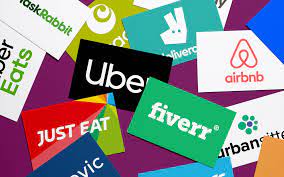
In a gig economy, large numbers of people work in part-time or temporary positions or as independent contractors. The result of a gig economy is cheaper, more efficient services, such as Uber or Airbnb, for those willing to use them. People who don’t use technological services such as the Internet may be left behind by the benefits of the gig economy. Cities tend to have the most highly developed services and are the most entrenched in the gig economy. A wide variety of positions fall into the category of a gig. The work can range from driving for Lyft or delivering food to writing code or freelance articles. Adjunct and part-time professors, for example, are contracted employees as opposed to tenure-track or tenured professors. Colleges and universities can cut costs and match professors to their academic needs by hiring more adjunct and part-time professors.

The Factors Behind a Gig Economy

America is well on its way to establishing a gig economy, and estimates show as much as a third of the working population is already in some gig capacity. Experts expect this working number to rise, as these types of positions facilitate independent contracting work, with many of them not requiring a freelancer to come into an office. Gig workers are much more likely to be part-time workers and to work from home. Employers also have a wider range of applicants to choose from because they don’t have to hire someone based on their proximity. Additionally, computers have developed to the point that they can either take the place of the jobs people previously had or allow people to work just as efficiently from home as they could in person.

Economic reasons also factor into the development of a gig economy. Employers who cannot afford to hire full-time employees to do all the work that needs to be done will often hire part-time or temporary employees to take care of busier times or specific projects. On the employee’s side of the equation, people often find they need to move or take multiple positions to afford the lifestyle they want. It’s also common to change careers many times throughout a lifetime, so the gig economy can be viewed as a reflection of this occurring on a large scale.

During the coronavirus pandemic of 2020, the gig economy has experienced significant increases as gig workers have delivered necessities to home-bound consumers, and those whose jobs have been eliminated have turned to part-time and contract work for income. Employers will need to plan for changes to the world of work, including the gig economy, when the pandemic has ended.

Criticisms of the Gig Economy

Despite its benefits, there are some downsides to the gig economy. While not all employers are inclined to hire contracted employees, the gig economy trend can make it harder for full-time employees to develop in their careers since temporary employees are often cheaper to hire and more flexible in their availability. Workers who prefer a traditional career path and the stability and security that come with it are being crowded out in some industries.

For some workers, the flexibility of working gigs can actually disrupt the work-life balance, sleep patterns, and activities of daily life. Flexibility in a gig economy often means that workers have to make themselves available any time gigs come up, regardless of their other needs, and must always be on the hunt for the next gig. Competition for gigs has increased during the pandemic, too. And unemployment insurance usually doesn’t cover gig workers who can’t find employment.

In effect, workers in a gig economy are more like entrepreneurs than traditional workers. While this may mean greater freedom of choice for the individual worker, it also means that the security of a steady job with regular pay, benefits—including a retirement account—and a daily routine that has characterized work for generations are rapidly becoming a thing of the past.

Lastly, because of the fluid nature of gig economy transactions and relationships, long-term relationships between workers, employers, clients, and vendors can erode. This can eliminate the benefits that flow from building long-term trust, customary practice, and familiarity with clients and employers. It could also discourage investment in relationship-specific assets that would otherwise be profitable to pursue since no party has an incentive to invest significantly in a relationship that only lasts until the next gig comes along.

Property Rights

What Are Property Rights?

Property rights define the theoretical and legal ownership of resources and how they can be used. These resources can be both tangible or intangible and can be owned by individuals, businesses, and governments. In many countries, including the United States, individuals generally exercise private property rights or the rights of private persons to accumulate, hold, delegate, rent, or sell their property. In economics property rights form the basis for all market exchange, and the allocation of property rights in a society affects the efficiency of resource use.

Understanding Property Rights

Property is secured by laws that are clearly defined and enforced by the state. These laws define ownership and any associated benefits that come with holding the property. The term property is very expansive, though the legal protection for certain kinds of property varies between jurisdictions.Property is generally owned by individuals or a small group of people. The rights of property ownership can be extended by using patents and copyrights to protect:

  • Scarce physical resources such as houses, cars, books, and cellphones
  • Non-human creatures like dogs, cats, horses or birds
  • Intellectual property such as inventions, ideas, or words

Other types of property, such as communal or government property, are legally owned by well-defined groups. These are typically deemed public property. Ownership is enforced by individuals in positions of political or cultural power. Property rights give the owner or right holder the ability to do with the property what they choose. That includes holding on to it, selling or renting it out for profit, or transferring it to another party.

Acquiring Rights to a Property

Individuals in a private property rights regime acquire and transfer in mutually agreed-upon transfers, or else through homesteading. Mutual transfers include rents, sales, voluntary sharing, inheritances, gambling, and charity. Homesteading is the unique case; an individual may acquire a previously unowned resource by mixing his labor with the resource over a period of time. Examples of homesteading acts include plowing a field, carving stone, and domesticating a wild animal. In areas where property rights don’t exist, the ownership and use of resources are allocated by force, normally by the government. That means these resources are allocated by political ends rather than economic ones. Such governments determine who may interact with, can be excluded from, or may benefit from the use of the property.

Private Property Rights

Private property rights are one of the pillars of capitalist economies, as well as many legal systems, and moral philosophies. Within a private property rights regime, individuals need the ability to exclude others from the uses and benefits of their property. All privately owned resources are rivalrous, meaning only a single user may possess the title and legal claim to the property. Private property owners also have the exclusive right to use and benefit from the services or products. Private property owners may exchange the resource on a voluntary basis.

Private Property Rights and Market Prices

Every market price in a voluntary, capitalist society originates through transfers of private property. Each transaction takes place between one property owner and someone interested in acquiring the property. The value at which the property exchanges depends on how valuable it is to each party. Suppose an investor purchases $1,000 in shares of stock in Apple. In this case, Apple values owning the $1,000 more than the stock. The investor has the opposite preference, and values ownership of Apple stock more than $1,000.

ARE ONLINE CLASSES HERE TO STAY ?

ONLINE CLASSES ARE HERE TO STAY ?

Online classes are here to stay . Online learning has gain popularity , thanks to this pandemic . Not only colleges & universities but all schools have also introduced this system . In this pandemic , where the whole world is in lockdown it was very difficult to continue studies as all schools , universities , organizations were shut , & here these online class came into force .Online classes have whole different environment as compare to our traditional form of classroom , & students are enjoying this environment.

Some advantages of online classes which you also will relate to are :

  1. Taking classes usually means showing up on class at a particular time, sitting through a somewhat lengthy lecture and then going directly to your next class. Or, if you’ve spaced your classes out, you may be able to take a break in between, but you still have to stay on campus. It can make for really long, really intense, really exhausting days. Then you have to come home, do homework, sleep and do it all again the next day. It can easily become a grind. But with online classes you can sit comfortable & take the lecture by sitting in the position you want to .
  2. Online classes teaches you self discipline , because their is no teacher that will ask you to sit in discipline . You learn the most important thing of your line that is self discipline .
  3. Comfort of you very own home is what students like the most . You can take class from any where & every where .

4 Online classes will force you outside of your comfort zone (in a good way). You will have to learn to navigate the course lectures, download materials, interact with others online and communicate well digitally. Yes, this may be scary for some people! However, in the information age, these are essential skills and will allow you to keep pace with others.

At the same time online classes have disadvantages also which all of us know , they are :

  1. Online learning creates a sense of isolation , students starts feeling that they are in a cage & somebody is forcing you to sit in front of a device .
  2. It require self discipline , students don’t have this skill , as this skill require experience.
  3. Online classes are prone to technical issues, it require proper network connection & needs a proper device for taking classes on .
  4. Online classes need more time to be spend on screen & people don’t have this much time & patience to sit at one place .

Conclusion drawn from this is , we all know that this pandemic will stay for long & online classes are the only remedy for this , to avoid contact with one & other , & for students safety & security , online classes are here to stay

E- EDUCATION: AN EDUCATIONAL REVOLUTION

Eeducation or elearning is the delivery of education or training by electronic teaching methods like computers or laptops etc. E- Education means Schools on Web and it consolidates virtual classrooms, laboratories and integrates it with your other enterprise applications. These now supplement the face – 2 – face class room and commonly known as Blended Learning. It is the learning experiences from the online information sources. This E-Learning approach helps the students know, makes them understand how to research more and the students can preserve their online resources posterity. It helps the teacher to provide better materials for the students by doing research on various topics and subjects. It normally works over the internet and provides numerous tools such as for assessment, communications, collaborations, uploading of content etc.

Schools On Web help in connecting people with each other and provides new ways of communications and collaborations with the help of all kinds of information’s being provided by it. The aim is – Learning without Limits- anytime, in any place, and at any pace. It provides a platform where students and parents are connected, administrators are empowered and teachers are inspired.

E- Learning

The technologies of web collaborations helps in real time access to subjects or instructors or topic matters directly from the PC of users. The key communication/ participation tools are: e mail, chat rooms, whiteboards, journals etc.

Some of the key benefits are:

  1. Enable the teaching od new or existing courses wuthin virtual classrooms
  2. Interactive sessions which can be recorded
  3. Effective evaluation of virtual classes
  4. Provide instant accesS
  5. Generate academic reports
  6. Enables to track the progress of individual learner

Experiential Learning

Experiential Learning

Experiential Learning stimulates experiments and boosts the dimensions of interest, involvement, imagination and interaction by virtual laboratories, scenario – based learning activities and tests of different concepts. All these can be incorporated into various teaching approaches as pre-labs, as alternatives to textbooks home work and individual or group activities.

Some of the key benefits are :

  1. Highly Interactive Platform
  2. Provide Learning by Doing
  3. Ensures and promotes high level of cognition and retention
  4. Safety and Security is ensured
  5. Simulates real-life environments

Management System

E-Learning helps in managing fee structure, fee submission, generation of time table and management, library management and other reports. Web based Institute Management software is designed which enables better interaction among students, teachers, parents and managing body. Thus, it helps in customization of the system for respective needs at a reasonable cost.

COVID 19 and E – Education

Countries are at different points in their COVID 19 infection rates and worldwide there are nearly 1.2 billion children in 186 countries who are getting affected by school closures due to the pandemic. With such sudden transition and shift away from the classroom many problems and issues have emerged across the globe. In such situations, online learning and e-learning approaches have emerged as solutions and in response to significant demand, many online learning platforms have also moved forward for offering free access to their educational services. With the help of e-learning and online teaching initiatives many issues which were being faced in the field of education have been sorted out but still there are still lots of problems which are associated with the availability of proper infrastructures etc. at each and every corner of the globe which can enable each and everyone to access the facilities of e-learning.

DIGITAL Marketing

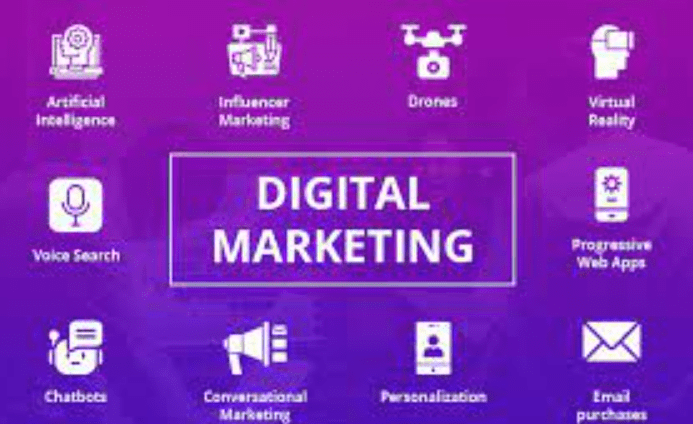
Digital marketing as the words means to use digital media to market their products.In this pandemic digital marketing grow very fast as people have only oftion to explore anything in just one click.Now digital marketing is very big from pen to car everything we buy digitally lost of shopping site provides Products at very low cost and at home .

Not only in shopping but in education digital marketing now a very big industry . everyone is now online every student doing their online class .we can easily search any topic and read . There are lot of new industries come up to provide different platforms to explore but the challenge is for the right information of the right products to reach the right customer. This is where digital marketing comes in.

Through data mining, it is easy for marketers to target the right audience with the right advertisement of products that they might need. This is what makes digital marketing successful more than anything. Finding and targeting the right audience can increase sales drastically. Some tools can be used to analyze and suggest better options for marketing as well. This helps sellers market their products.

Photo by Pixabay on Pexels.com

We must use this opportunity to develop our skill and knowledge and ready for the future because everything is going to be online.BE THE PART OF CHANGE&MAKE THE CHNGE .

Photo by Canva Studio on Pexels.com

In today’s era, everything has gone online. Internet has made our lives better and through this we can enjoy many facilities only through phone or laptop.We can do many things like online shopping, ticket booking, recharges, bill payments, online transactions (online shopping, ticket booking, recharge, bill payment, online transactions) etc. through internet. Due to this trend of users towards Internet, businesses are adopting Digital Marketing.If we look at market stats, about 80% of shoppers do online research before buying any product or before taking service. In such a situation, digital marketing becomes important for any company or business.

What does digital marketing?

Digital marketing is the response to marketing your goods and services through digital means. Digital marketing is done through the Internet. We can connect to it through internet, computer, mobile phone, laptop, website advertisements or any other applications.The first few attempts were made in the 1980s to establish a digital market but this was not possible. Its name and usage started in the late 1990s.

Digital marketing is a simple way to reach new customers. It carries out marketing activities. It can also be called online marketing. Digital marketing is marketing to reach more people in less time. It is a technological developing area.Digital marketing allows the producer to reach his customer as well as keep an eye on their activities, their needs. Where the customer is trending, what the customer is looking for, all these can be discussed through digital marketing. Simply put, digital marketing is a means of reaching customers through digital technology.

Future of Digital Marketing

Change is the law of life, you all know this. How much has changed in the first time and in today’s life and today is the age of the Internet. People of all varnas are connected to the Internet today, due to all this it is easy to collect all the people in one place, which was not possible in the first time. Through internet, we can also establish the connection of all businessmen and customers.

The demand for digital marketing is being seen very strongly in the present times. The merchant who is making his goods is easily passing on to the customer. This is giving a boost to digital business.

Earlier, had to resort to advertisements. The customer looked at him, then liked, then he bought it. But now goods can be sent directly to the consumer. Every person is using Google, Facebook, YouTube, etc., through which the trader shows his product to the customer. This trade is within the reach of all – traders and consumers too.

Every person gets every use thing without any hard work. The businessman does not even have to think of resorting to newspapers, posters, or advertisements. In view of the convenience of all, there is demand for it. People’s trust is also moving towards the digital market. This is a matter of joy for a businessman. The saying goes, “What you see is what sells” – the digital market is a good example of this.

Education System Suffering during pandemic

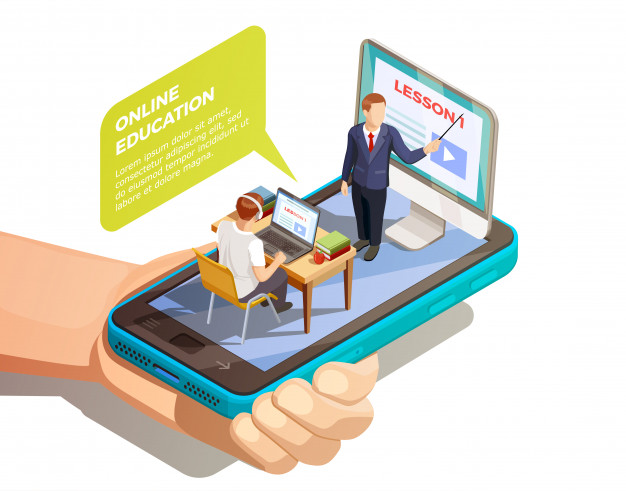
Online education in this pandemic

The Covid created lockdown damaged very badly to education system. schools were closing down and online learning is not everywhere working.

There are some statics

  • Estimated 1.5 million schools across India closed down due to the pandemic A switch to large-scale digital education is not possible now.
  • according to a 2019 government survey.Only 24 per cent house-holds have access to the internet,
  • In rural India, the numbers are far lower, with only 4 per cent households having access The education ministry’s budget for digital e-learning was slashed to Rs 469 crore in 2020-21—the year Covid struck—from Rs 604 crore the previous year

According to world bank :

before the COVID-19 pandemic, world was living in a educational crisis . 258 million children and youth of primary and secondary school age were out of school. quality of education also was very low , meant many who were in school learned too little. The COVID-19 pandemic threatens to make education outcomes even worse. The pandemic has already had profound impacts on education by closing schools almost everywhere in the planet, in the largest simultaneous shock to all education systems in our lifetimes. The damage will become even more severe as the health emergency translates into a deep global recession.

Deepesh Bisht is a first-year student of BAMS in Doon Institute Of Medical Science . He is 18-year-old hasn’t set foot on campus even once since he took admission in 2020 sept . He has taken a virtual tour of the college and has been taking lessons through his laptop and mobile phone. Deepesh isn’t alone in this. That’s how the batch of 2020-the Covid-19 generation-has been experiencing institutional education in a world disrupted by an unprecedented pandemic. Because of this, 47 per cent students have decided against migrating to another city for higher education, revealed a study titled the ‘Big Qs Student Survey’. 50% respondents have also abandoned plans to pursue higher education abroad.

states like Delhi are still confined to homes, spending long hours online, leading to concerns over physical health and stress triggered due to the prolonged use of electronic devices.Even in the national capital, when government schools started online classes during the lockdown, the attendance hovered between “25 and 30 per cent”. students in Assam and several other states have gradually returned to schools and colleges . The education ecosystem of India, already weighed down by myriad issues such as school dropouts, learning deficiencies, teacher absenteeism, gender disparity and lack of infrastructure, now faces yet another big challenge-the widening digital divide.

Hence , this pandemic made our education system digital . This digital education is giving benefit to a part of society only . Poor students were fading away from education. This will create a huge disparity in our society.

A computer screen: the new classroom of the modern age?

The outbreak of COVID-19 affected all sections of society since the first case recorded in China in late 2019. People were asked to quarantine themselves in their homes to prevent the spread of this virus. Despite its negative effect on other sectors, the pandemic was a boon for a few viz online shopping sites and also a rapid increase was seen in e-learning as compared to the traditional classroom method of education.

Even before COVID-19, there was already a high growth and adoption in education technology, with investments in e-learning apps reaching a value of $18.66 billion in 2019 and the overall market for online education is projected to reach $350 billion by 2025. The pandemic however challenged the education system across the world and forced educators to shift to an online mode of teaching overnight. Many academic institutions that were earlier reluctant to change their traditional approach were left with no alternative option but to shift entirely to e–learning. Whether it was language learning apps, virtual tutors, tools for video conferencing or online learning software, all had a significant surge in its usage since the pandemic hit.

While some believe that the unplanned move to online learning – with no training and little preparation – will result in a poor user experience, others believe that a new hybrid model of education will emerge, with significant benefits. There have already been successful transitions amongst many universities. The Imperial College, London started offering a course on the science of coronavirus, which is now the most enrolled class launched in 2020 on the site coursera. The e-learning method offers teachers an efficient way to deliver lessons to students. Videos, PDFs, podcasts, can be used as a part of lesson plan. By extending the lesson beyond traditional textbooks to include online resources, teachers are becoming more efficient educators. The online learning system, with its range of options, can be personalized in many ways. Some students are visual learners, while some prefer to learn through audio. Similarly, some students thrive in the classroom, and others are solo learners. It is the best way to create a perfect learning environment suited to the needs of each student.

There are, however, challenges to overcome. Some students without reliable internet access and/or technology struggle to participate in digital learning; this gap is seen across countries and between income brackets within countries. While internet penetration has grown in leaps and bounds over the past few years, still in smaller cities, a consistent connection with decent speed is a problem. Without a consistent internet connection for students or teachers, there can be a lack of continuity in learning. This is detrimental to the education process. Online learning also requires teachers to have a good understanding of digital forms of learning. However, this is not the case. Very often, teachers have a very basic understanding of technology. To combat this, it is important for schools to invest in training teachers with the latest technology updates so that they can conduct their classes seamlessly.

Parents and students are also concerned about the health hazards of spending hours staring at a screen. This increase in screen time is one of the biggest disadvantages of online learning taking a toll on students ‘eyesight. Sometimes students also develop bad posture and other physical problems due to staying hunched in front of a screen.

Major world events are often an inflection point for rapid innovation – a clear example is the rise of e-commerce post the SARS pandemic (2002-2004). While we have yet to see whether this will apply to e-learning post-COVID-19, it is one of the few sectors where investment hasn’t dried up. What has been made clear through by this pandemic is the importance of disseminating knowledge across borders, companies, and all sections of society. If online learning technology can play a role here, it is incumbent upon all of us to explore its full potential. From chalks and blackboards to smart boards to laptops -the education sector has jumped the boundaries of a school wall…the journey has just begun.

Jee mains 2021 exam date announced; Registration process begins for April/may session.

The most crucial engineering and medical entrance exams JEE Main and NEET UG have also been postponed due to the coronavirus outbreak.The February and March sessions of engineering entrance exam JEE Main 2021 were held while the April and May exams were postponed.

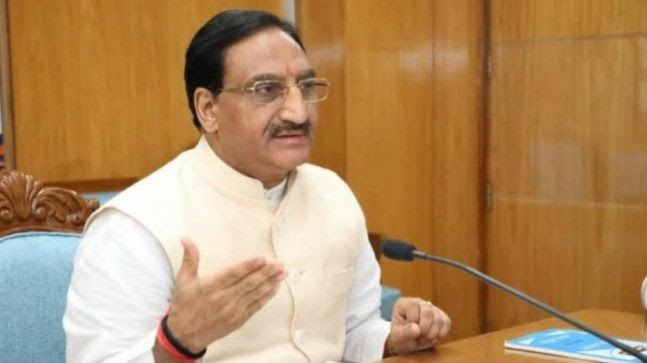
Education Minister Ramesh Pokhriyal has announced the exam schedule for JEE Main (April / May) sessions 2021 today. The minister made the announcement through a live session. The third session of JEE Main 2021 (April session) will be conducted from July 20-25. The fourth and last session of JEE Main 2021 (May session) will be conducted from July 27-August 2.Candidates can apply at jeemain.nta.nic.in. Those who wish to apply for the April session will be able to apply from tonight to July 8. JEE Main (May) session registrations will be open from July 9-12. Candidates will also be able to change their exam centres. Even to ensure social distancing amid the pandemic, the NTA has also increased the number of test centres for JEE Main (April and May) sessions. Earlier, the total number of test centres was 660. The test centres have now been increased to 828.

Social media reaction

Just within two hours of date announcement , the news started Trending over various social media plateform. On twitter the #jeemains2021reached in top ten trend within two hours only. Most of the people are making memes on the surprising announcement of exam date , while some are demanding for postponement of the exam .

What about jee advanced date announcement?

In this context, one thing has to be noted that the JEE Advanced 2021 Exam which was scheduled to take place July 3, 2021, also had to be postponed due to the COVID-19 situation in the country. However, recently, on June 25, 2021, IIT Kharagpur, the organising institute for JEE Advanced 2021 Exam has released the information brochure and list of documents that will be required for JEE Advanced 2021 Exam on the official website of JEE Advanced at jeeadv.ac.in. On the website, it is also mentioned that a new date for JEE Advanced 2021 Exam will be announced soon.

for more detail vist the link 👇

https://youtu.be/6x4aP17GXoE

https://www.dnaindia.com/education/report-nta-jee-main-2021-neet-2021-entrance-exam-dates-application-form-ntanicin-cbse-class-12-board-exam-2021-result-date-latest-updates-2898900

BYJU’S: India’s most valuable Unicorn.

Photo Credits: BYJU’s

What’s the business about?,

BYJU’s is an Indian multinational educational company which was founded in 2011 by BYJU Raveendran and Divya Gokulnath. Today, it’s the most valuable unicorn in India and world’s most valuable technological educational company.

History of BYJU’S

In 2011, Mr. Raveendran and Ms. Divya Gokulnath founded an educational company with the help of their students which provided online video based learning programmes for students of kindergarten to Grade 12th.

In 2015, with the help of Think and Learn Ltd., the business firm launched its first ever app named BYJU’s: The learning app. After that, in 2017, BYJU launched its second app for mathematics for kids and subsequently they also launched another app for parents to help them track their child’s learning course.

Rose to fame: BYJU’s

By 2018, BYJU’s had more than 15 million users and 9 hundred thousand paid users. In 2019, BYJU’s won sponsorship rights for Indian Cricket Team jersey. Popular Indian actors Mohanlal and Shah Rukh Khan are the brand ambassadors for Byju.

Major Services provided by BYJU.

Initially, educational content was only made for students from classes kindergarten to 12. But now BYJU also trains students for Indian competitive examinations like IIT-JEE, NEET, CAT, UPSC and it also trains students for international exams like GMAT and GRE.

In 2019, the company announced that it would soon start providing classes to students in their respective regional languages in India. The same year it also announced the commencement of an international app for students living in countries outside of India.

Byju’s also launched its Future School which is a Kids Coding Platform where kids are taught to code online by experts.

The video tutorials in the app are about 12-20 minutes long and they’re digital animation videos for classes 4th to 12th and hence this makes it easy for students to grasp and learn.

Road to most valued start up!

BYJU’s has raised 350 million dollars from UBS, private equity Equity Giant Blackstone and also from Abu Dhabi state fund ADQ, Phoenix Rising and Zoom.

Byju’s has raised over 1.5 billion dollars in last eighteen months because of the increase in online learning and teaching due to the COVID-19 pandemic.

Byju’s has also acquired several other small business in the recent past like White Hat Jr, Scholr, Osmo and Toppr. In fact, it’s latest fundraising comes from popular educational chain, The Akash Educational Services, estimated at about 950 million dollars.

According to Mr. Raveendran, the 21st century illiterates are not those who can’t read and write, but those who can’t learn, unlearn and relearn.

Digital marketing

INTRODUCTION:-

Any marketing that uses electronic devices to convey promotional messaging and measure its impact. In practice, digital marketing typically refers to marketing campaigns that appear on a computer, phone, tablet, or other device. It can take many forms, including online video, display ads, and social media posts. Digital marketing is often compared to “traditional marketing” such as magazine ads, billboards, and direct mail. Oddly, television is usually lumped in with traditional marketing.
Did you know that more than 3 quarters of Americans go online on a daily basis? Not only that, but 43% go on more than once a day and 26% are online “almost constantly.” These figures are even higher among mobile internet users. 89% of Americans go online at least daily, and 31% are online almost constantly. As a marketer, it’s important to take advantage of the digital world with an online advertising presence, by building a brand, providing a great customer experience that also brings more potential customers and more, with a digital strategy

What is digital marketing?

Digital marketing, also called online marketing, is the promotion of brands to connect with potential customers using the internet and other forms of digital communication. This includes not only email, social media, and web-based advertising, but also text and multimedia messages as a marketing channel.
Essentially, if a marketing campaign involves digital communication, it’s digital marketing.

Inbound marketing versus digital marketing:-

Digital marketing and inbound marketing are easily confused, and for good reason. Digital marketing uses many of the same tools as inbound marketing—email and online content, to name a few. Both exist to capture the attention of prospects through the buyer’s journey and turn them into customers. But the 2 approaches take different views of the relationship between the tool and the goal.
Digital marketing considers how each individual tool can convert prospects. A brand’s digital marketing strategy may use multiple platforms or focus all of its efforts on 1 platform.
Inbound marketing is a holistic concept. It considers the goal first, then looks at the available tools to determine which will effectively reach target customers, and then at which stage of the sales funnel that should happen.
The most important thing to remember about digital marketing and inbound marketing is that as a marketing professional, you don’t have to choose between the 2. In fact, they work best together. Inbound marketing provides structure and purpose for effective digital marketing to digital marketing efforts, making sure that each digital marketing channel works toward a goal.

B2B versus B2C digital marketing:-

Digital marketing works for B2B as well as B2C companies, but best practices differ significantly between the 2.

  • B2B clients tend to have longer decision-making processes, and thus longer sales funnels. Relationship-building strategies work better for these clients, whereas B2C customers tend to respond better to short-term offers and messages.
  • B2B transactions are usually based on logic and evidence, which is what skilled B2B digital marketers present. B2C content is more likely to be emotionally-based, focusing on making the customer feel good about a purchase.
  • B2B decisions tend to need more than 1 person’s input. The marketing materials that best drive these decisions tend to be shareable and downloadable. B2C customers, on the other hand, favor one-on-one connections with a brand.
Of course, there are exceptions to every rule. A B2C company with a high-ticket product, such as a car or computer, might offer more informative and serious content. Your strategy always needs to be geared toward your own customer base, whether you’re B2B or B2C.

Types of digital marketing:-

What is Digital Marketing & Types of Digital Marketing (2021)

The 7 Types of Digital Marketing:-

INTRODUCTION:-

A group of men and women sitting around a conference room table working in their role as digital marketers.
Digital marketing can be broadly broken into 7 main categories including: Search Engine Optimization, Pay-per-Click, Social Media Marketing, Content Marketing, Email Marketing, Mobile Marketing, Marketing Analytics.
In the past decade, digital marketing has become a vital component in organizations’ overall marketing strategy. It allows companies to tailor messages to reach a specific audience, making it possible to market directly to people who are likely to be interested in their product. Digital marketing encompasses a wide variety of marketing tactics and technologies used to reach consumers online. Two academic team members from Southern New Hampshire University (SNHU) spoke about how digital marketing aligns with traditional tactics and shared information on some of the types of digital marketing in practice now.
A senior associate dean of business programs, Dr. Mark Hobson, said although digital marketing seems like a new world, in fact it is based in many of the principles familiar to traditional marketers and requires both foundational marketing knowledge and technical know-how.
Dr. Jessica Rogers, associate dean of marketing programs, said the two disciplines serve to connect with distinct groups of consumers. “… Traditional media is a great way to reach a broad consumer base, whereas digital media has the ability to reach very specific audiences,” she said “A key point is that depending on the target audience, some channels are more effective than others.”

Types of Digital Marketing:-

Rogers talked about some of the most popular types of digital marketing, providing a brief overview of each

1. Search Engine Optimization (SEO):-

The goal of SEO is to get a business to rank higher in Google search results, ultimately increasing search engine traffic to the business’s website. To accomplish this, SEO marketers research words and phrases consumers are using to search for information online, and use those terms in their own content. According to leading SEO software company Moz’s “Beginners Guide to SEO,” SEO encompasses many elements, from the words on your web pages to the way other sites link to you on the web to how your website is structured. An SEO specialist can make around $59,000, according to Salary.com.
So, what are some things that can improve a site’s SEO? It’s important to understand that one of the things that makes SEO challenging is that the answer to this question always depends on Google and its most current algorithm. Keeping that in mind, here are a few of the most important things for SEO strategists and marketers in general to understand about how SEO works today, from Moz’s Beginners Guide to SEO:
  • Content indexing – It is important to allow search engines to clearly “read” what your site content is, by doing things like adding alt text for images and text transcripts for video and audio content.
  • Good link structure – It is important that search engines can “crawl” your site structure to easily find all the content on your site. There are many things that an SEO specialist can do to properly format links, URLs, and sitemaps to make them most accessible to site crawlers.
  • Keywords and keyword targeting – Properly deploying your keywords – i.e. the search terms you want your site to be found for—in your content and headers is one of the fundamental building blocks of SEO. It is no longer good practice to “stuff” your content with as many keywords and keyword variations as possible. Writing high-quality content that uses keywords in the headers and a few times in the crawl-able page content is now considered better practice, and will make pages rank better in search results.

2. Pay-per-Click (PPC):-

A laptop screen showing the analytics behind a pay-per-click digital marketing campaign.

Pay-per-click refers to paid advertisements and promoted search engine results. This is a short-term form of digital marketing, meaning that once you are no longer paying, the ad no longer exists. Like SEO, PPC is a way to increase search traffic to a business online.
Pay-per-click can refer to the advertisements you see at the top and sides of a page of search results, the ads you see while browsing the web, ads before YouTube videos and in ads in mobile apps.
One of the other things that differentiates pay-per-click from SEO is that you only pay for the results. In a typical PPC model like a Google AdWords campaign, you will pay only when someone clicks on your ad and lands on your website. You can spend just about any amount of money on pay-per-click advertising. Some companies may see results from investing just a few hundred dollars, but plenty of large companies spend tens of thousands a month on pay-per-click.
How much it costs to run an ad or promote your search results will depend primarily on how much competition there is for your keywords. High competition keywords (i.e. keywords that many people are searching for and that many sites are trying to be found for) will be more expensive and lower competition terms will likely cost less.
When you set up a pay-per-click campaign, you will also be able to choose whether you want your ad or promoted results to be shown to users all over the world, or only within a specific geographic area. If you are marketing a brick-and-mortar business, this ability to tailor by location helps you not waste ad dollars serving ads to users who don’t live anywhere near your business, according to Google.

3. Social Media Marketing:-

A woman using her cell phone to track the results of a social media marketing campaign.

This includes everything a business does via social media channels. Just about everyone is familiar with social media, but marketers must approach social with an integrated and strategic approach. Social media marketing goes far beyond simply creating posts for social channels and responding to comments.
To be effective, efforts must be coordinated and consistent rather than an afterthought. To help keep posts consistent, there are many online tools available to automate and schedule social media posts, although marketers only should use automation as a tool, not a “set it and forget it” solution. Users will figure it out quickly if there is no real person behind the posts.
Social media marketers should not be in a silo separate from other marketing functions. Social marketers need to work with the company’s wider marketing team to coordinate their message across all platforms, online and off, so that every part of the brand is telling the same story.
A crucial part of social media marketing is analytics: Social media marketers must also be savvy at analyzing the performance of their posts, and creating strategies based on that data. Another reason for marketers to be consistently measuring and tracking their campaigns is that this data allows marketers to demonstrate to business leadership that their efforts are driving users to engage with the brand and eventually converting users into customers, therefore providing value to the company, according to Forbes contributor Jayson DeMers.
In other words, social media marketing is a lot more complicated than managing your personal Facebook or Twitter profile. It requires a blend of creative thinking and objective, data-driven strategy, and may be a great fit for professionals who enjoy blending these two disciplines. A social media analyst with a bachelor’s degree can earn about $63,841, according to Salary.com.

4. Content Marketing:-

A digital marketer working on a content marketing article on his laptop.

Content marketing uses storytelling and information sharing to increase brand awareness. Ultimately, the goal is to have the reader take an action towards becoming a customer, such as requesting more information, signing up for an email list, or making a purchase. “Content” can mean blog posts, resources like white papers and e-books, digital video, podcasts, and much more. In general, it should first and foremost provide value to the consumer, not just advertise the brand or try to make a sale. Content marketing is about building a sustainable, trusting relationship with your customers that can potentially lead to many sales over time, not just making a single transaction.
Content marketing works in symbiosis with other types of digital marketing: It is a way to incorporate SEO search terms into fresh website content, and the content created can be shared as social media posts and in email marketing publications. Looking at the analytics for your content marketing can tell you a lot about your customers: what are they looking for when they land on your site? What kinds of content make them stay on the site longer and keep looking around? What kinds make them lose interest and navigate away?
Unlike a method such as PPC, content marketing is a long-term strategy. Over time, marketers build up a library of content (text, video, podcasts etc.) that will continue to bring users to the site via search engines, according to Marketo, a marketing automation company. This content library also helps promote knowledge of your brand and increases your profile as a resource for information. And, if users are visiting your site for information, ideally they will remember you as an authority when it’s time to make a purchase.
Content marketing is a great avenue for people who enjoy writing and/or video and audio production. But as with digital marketing in general, it also calls for strong strategic and analytic skills.

5. Email Marketing:-

A cell phone displaying bar graphs associated with an email marketing campaign.

Even with the emergence of social media, mobile applications and other channels, email is still one of the most effective marketing techniques, Rogers said. It can be part of a content marketing strategy, providing value to consumers and over time convert an audience into customers. Email marketing pros not only know how to create compelling campaigns, they also understand optimal audience outreach and are skilled at analyzing customer interactions and data, and making strategic decisions based on that data, according to the American Marketing Association. 
Email marketing software can offer many different analytical measures, but two that marketers are always striving to improve are the open rate –the percentage of recipients who opened the email – and the click through rate – the number of recipients who opened the email and clicked on a link in the email. According to leading email marketing software company Constant Contact, there are many things marketers can do to make their emails more appealing to users and more likely to be opened. These include:
  • Create a Sense of Urgency – Writing email copy that lets your recipients know that time is running out to get a special deal or that there are only a limited number of the offer available, can increase the number of people clicking through to your website.
  • Personalize Your Email – Setting your emails and subject lines up to incorporate the recipient’s name is a proven way to increase open and click through rates. (A sample subject line: “Katie, a special offer just for you.”)
  • Let Recipients Set Their Preferences – Allowing users to specify how often they want to hear from you can help keep some of your email subscribers subscribed to your list and clicking on your emails.

6. Mobile Marketing:-

A group of digital marketer looking at a tablet displaying the results of a mobile marketing campaign.

This digital marketing type is this focused on reaching your target audience on their smart phone or tablet. Mobile marketing reaches people through text messages, social media, websites, email and mobile applications. Marketers can tailor offers or special content to a geographic location or time, such as when a customer walks into a store or enters an event.
ccording to a recent TechCrunch article, consumers in the United States now spend five hours a day on their phones. This represents a 20% increase from the fourth quarter of 2015. Users are also spending much more of their time in apps rather than on mobile browsers. In 2017, users are spending much more time with apps than watching television. 15% of that app time is spent with entertainment apps like Netflix and Hulu, 19% of it is spent on Facebook’s mobile app, 12% on other social and messaging apps, and 11% in gaming apps, according to the TechCrunch article.
Retail Dive reports that 45% of all shopping always or frequently involves a mobile device in some way, whether it’s used to do research, compare prices or make a purchase. For a majority of Millennials (defined the Pew Research Center as people born between 1981 and 1997), that number is 57%.
Marketers know that you need to take your message to where you customers are, and in 2019 it is very clear: your potential customers are on their phones.

7. Digital Marketing Skills:-

A laptop screen showing the analytics behind a digital marketing campaign.

Digital marketers support the wider marketing team and the strategic goals of the whole company by rolling out marketing strategies in the online environment, Hobson said. Digital marketers strive to be a voice for the customer and how they want to interact with a brand digitally, Rogers said. “(Marketers) strategically approach the brand’s channels to maximize investments, drive traffic and conversions, as well as manage integrated digital content,” she said.
The need to be where the customers are at all times means that digital marketers have a significant responsibility to be attuned to changes in technology, social media and software.
Technology changes quickly; the hot social media app of today may be all but abandoned by next year, but many of the foundational principles of marketing remain the same.
Today, many employers are requiring experience in Google Analytics, Google and Facebook Ads, HubSpot and Hootsuite, according to Rogers. In a master’s in digital marketing program, you’ll learn the foundations of tools such as these, exploring and applying them through coursework. They are also looking for candidates who are proficient in Adobe Creative Suites and have a working knowledge of SEO and keyword research.
However, some important pieces of the marketing puzzle have not changed since the days when companies primarily advertised in print, radio and TV. All marketers need strong communication skills and a strong basis in marketing principles.
Employers include these soft skills with the technology-related proficiencies in job posting requirements, according to Rogers. 
“A basic tenant of marketing is communicating a marketing message to a target audience,” she said. “… Not only must we communicate with our teammates, but we must be able to communicate to customers, executives and more. These folks are our target audience and without strong communication skills, messages will not be received in the way in which we intended.”
Since digital marketing is a rapidly changing space and it is imperative for companies to stay up to date on new and emerging strategies, Hobson said. There are many ways that companies do this, some of which are the responsibility of digital marketers and some of which is done by other departments.
“Staying ahead of the competition has never been more important,” Rogers said. “The landscape for businesses is changing so rapidly, that is has become a key strategy to include looking to the competition to help inform your own digital strategy.”

Reference Links:-

https://mailchimp.com/marketing-glossary/digital-marketing/

https://www.snhu.edu/about-us/newsroom/2017/11/types-of-digital-marketing