Self-love

I’m not being sexist but this concept of self love must have been introduced by women, because when I see men, I don’t find these type of words really exist for them. And see now it’s like in the air. Actually, men get inspired by women but they don’t accept because of male ego or whatever. But,  action speaks more then words, na!

Hello there, how was your day? Don’t get me wrong but I’m asking you to ask yourself this question everyday before the day gets over. It is also a kind of self love, and when you will be able to answer this question to yourself in a very elaborating manner then you will start getting yourself better. In starting it can be little fussy but as the time passes you will learn it’s importance and will also able to see it’s impact on you.

Now a days, people thinks that everything a particular person do, should also be able to defend there own doing in the world. Like, if I’m doing something which is even though not good for me or the society, but, to save me from everyone else i should be able to defend my doing. And this is bullshit. Soon you will start doing whatever you want no matter it’s good or bad when you are ready to defend it. This is not self loving, it is self manipulation. And there’s a huge difference between them.

Self love is like accepting yourself, your own habits with its flaws. It is never to defend your flaws. If you keep defending you flaws you will be heading towards wrong way. You can never be someone who can be admired in the same society where you are trying to be cool and loveable just by putting yourself as priority.

Knowing yourself means accepting and evolving yourself. The better you know your flaws is the better you get with it. I Don’t say that defending yourself from the outer world is not good but everytime is not good. It’s always you who knows the real intention behind doing any work. So, if you keep your good intentions it will be you get benefits of it and if you are not then it will also be you who will face the conciquences.

So, try to improvise yourself by facing the real you in personal because that’s what self love means.

See yaa..

Importance of talking.

we humans are no super heroes, we are blessed with various things like ability to help people, emotional intelligence, gut feelings so on and so forth

But we can’t read minds- right?

there’s a gap between your and others brain every brain works differently and to bridge that gap you have to be vocal and be clear

Set the expectations make yourself heard loud and clear as worst case scenario if things don’t work out you have your satisfaction that you were vocal and you can end things peacefully.

transparency is the key – be transparent so that the people can in act and interact with you.

If you are an introvert, then for you I will suggest that speaking in mind is never gonna help you but I will always put you in a situation where you find yourself uncomfortable. So, atleast talk little bit and if not then Stop filling gap and also thinking to fill the gap. That way you can lead a good way.

So, tell us why you think it’s important to talk, in comment section down below.

See yaa…

8 Good Habits to Develop

Habits are a necessary part of our life. Most of us develop many habits throughout our lives. Although it may seem small or trivial habits can influence a person’s life in many ways. Some can lead to drastic changes in life over a period of many years while some can lead to changes in a month. Good habits can make one transform their lives with time and help to achieve new heights. While bad habits may slowly lead to reduction in the quality of one’s life. The following list features some of the habits you can develop in order to become a better person and achieve success in life.

Photo by Alina Vilchenko on Pexels.com
  • Maintaining a journal – Writing a diary or a journal is a very helpful practice for self-growth. It also helps you to improve your writing skills. Jotting down your thoughts or even writing about your daily life can be a simple yet helpful practice. It helps you to form the habit of gathering your thoughts and expressing yourself. Years after when you go through that journal it makes you realise how far you’ve come and also revisiting the past and engaging with memories is something which we all like to do once in a while.
  • Setting up a routine – Humans like to go about their day in an orderly manner. No matter what profession you take maintaining routine and order is something which is necessary for all. Setting a routine beforehand also helps you to have a look at your tasks and helps you complete them. You can also try and make a to-do list which is extremely effective for completing tasks.
  • Reduce procrastinating – Procrastination is a habit most of us have. Leaving our work for the last minute is a very common practice. Reducing procrastination can lead you to slowly move away from it and make you more punctual.
  • Reading habit – Reading a book everyday for even as little as half an hour can work wonders for your life. Books help you build vocabulary and helps you gain knowledge. It also makes you a better writer and story teller. People who have a habit of reading books from a very early age are found to have better memorisation capacity.
Photo by Andrea Piacquadio on Pexels.com
  • Exercise – Exercising often is a very healthy habit and helps to maintain a healthy mind and body. Doing simple exercises or yoga will also secrete hormones or endorphins which will boost your mental outlook and help you have a good mood. Exercises will result in a better posture too.
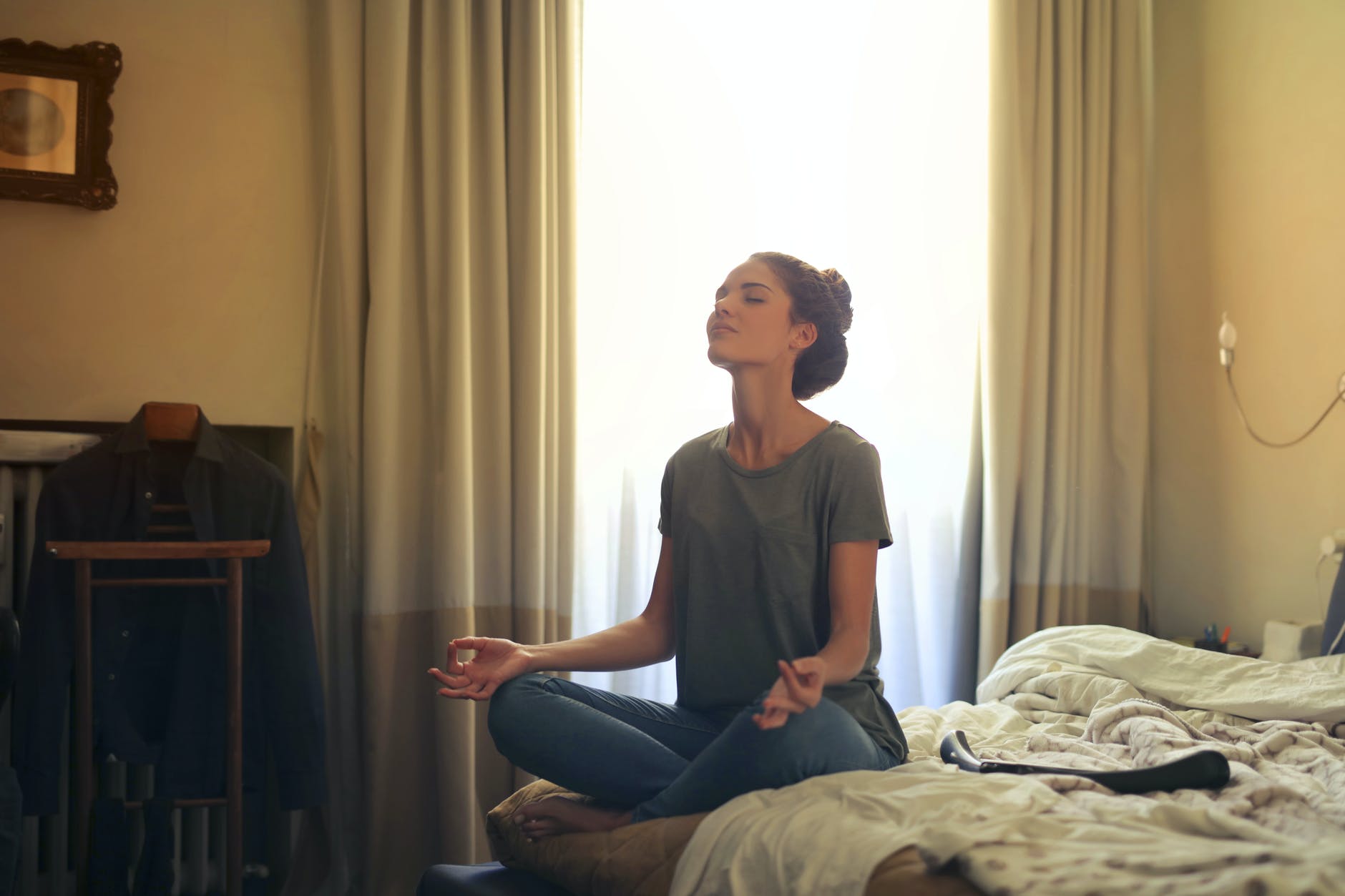
  • Meditate – Meditating for a while helps us to calm our minds. There is no fixed rule as to how one should meditate. One can just sit and close their eyes for some time or follow a meditation guideline. According to some studies, painting or colouring simple shapes and patterns can also act as a form of meditation.
Photo by Maggie My Photo Album on Pexels.com
  • Gardening – You need not know a lot about gardening. A small cactus near your desk or a simple flower plant can do magic. Watering them and taking care of them will help you make some time for yourself in a hectic or busy schedule. Plants can help you exercise the idea of effort. It helps you build patience and improves your life.
  • Smile – Having a positive outlook towards everything is a secret to having a happy and better life. A smile can help you brighten your day and maintain a positive relationship with people around you.

The Psychological Connection to Hobbies

Most of us have had a childhood interest or a hobby which was our favourite pastime. With not much to do all day, we would spend our time engaging in different unique and creative activities. Not only saving us from boredom, these hobbies have provided us with lot of benefits and shaped us into becoming what we are today.

Photo by Sharon McCutcheon on Pexels.com

Almost everyone had a favourite pastime activity which would keep us busy in our childhood. Starting from painting, doodling to collecting stamps, pebbles, train tickets and what not. When asked about their hobbies many people were found to narrate happy tales of their childhood. In today’s busy world where it is difficult to even take a day off from work, we tend to lose touch with our creative sides. Thinking about our childhood days makes us realise how long it had been since these hobbies were a part of our lives. Sports, music, crafts have all been pushed aside in adulthood by our busy schedules and responsibilities. In the midst of all these we have not realised how important these had been in shaping us and how amazing it would be to revisit these days by going back to those hobbies.

As children we had many different ways to spend our times. Some of us were into painting and crafts, some were into musical instruments, while some had the interesting habit of collecting stuffs. All these hobbies seem simple but studies show that there is a lot more to it.

There’s a lot of factual information about the importance of art in a child’s development. Researches show that individuals who have been into art and crafts in their childhood are found to be more expressive and have better communication skills. Experimenting with art makes children open to broader ideas and help them handle unexpected situations with ease.

Photo by Marko Blazevic on Pexels.com

Collecting is believed to be a psychological impulse. Collection is a historical practice and it ranges from stamps, books, tickets, coins to leaves and pebbles. People maintain the habit of collecting due to various reasons. Some collect due to an interest in the things that the collections represent, while others view collection as a pleasurable form of owning something. The different aspects attached with it makes the psychology behind it so interesting. It has been known that individuals who had the habit of collecting grow up to be careerist individuals in future. As the saying goes “An individual’s childhood is reflection of their life”. Collectors are also known to make better social connections and more friendships.

Photo by Karolina Grabowska on Pexels.com

Individuals engaging with music from a very young age tend to enjoy musical instruments. Engaging with music makes us happy and lifts our spirits. Studies show that music improve our brain functions and it keeps the brain active. It has also been known that music helps in retaining information and develops memory. Children who have had such hobbies grow up to be smart individuals.

Photo by Nick Bondarev on Pexels.com

Few years back, Google had encouraged its employees to devote 20 percent of their time to side projects of their interest. It was a very innovative decision on the part of the company and it yielded amazing results. It has been known that following this, employees have performed more productively in their work and have achieved more. There are innumerable ways in which hobbies help in one’s overall growth and development. Most of us have lost touch with these but we can surely try and revive those habits. In fact, discovering childhood hobbies can make our lives better and make us happier. It feels amazing to revive those countless memories we have with an instrument or a habit. This will also help us become more productive in our work. Investing one’s time in areas of interest alongside their career can yield incredible results and, in the process, will make us better individuals with a more holistic outlook towards life.

Review of a research article

Article name:A Study of University Students’ Motivation and Its Relationship
with Their Academic Performance.

Student motivation is the element that leads students’ attitude towards learning process.God-gifted talents, best teachers and best schooling facilitate the academic performance and students’ motivation
is prerequisite for students’ accomplishment. This study attempts to identify the influence of students’
motivation on their academic performance.So come on research enthusiasts let’s look into the why,how and what of student motivation through this review!

Purpose and sample

This outstanding Research article by Ali and colleagues has been published in the International Journal of Business and Management.This study attempts to identify the influence of students’ motivation on their academic performance.The sample consisted of 342 university students of different programs in various universities of Islamabad and Lahore, Pakistan.The students were asked about how motivated they are about their university experience and what really motivated them to study.

METHODOLOGY

The questionnaire was distributed among both male and female students. There were 82% male and 18% female students in the survey with an average age of 20 years.“The University Student Motivation and Satisfaction Questionnaire version 2″ (TUSMSQ2) instrument was developed by Neill (2004) to measure student’s motivation. TUSMSQ2 instrument contains 30-items.

WHAT WAS TESTED?

The questions measure both Intrinsic and Extrinsic motivation of students. There were two intrinsic motivators; Self-exploration and Altruism and four extrinsic motivators;rejection of Alternative options, career and qualifications, Social enjoyment, and Social pressure in the questionnaire. The questions were based on five point Likert scale. For each item, students rated themselves on a scale of 1 to 5; 1 being “Very False”, towards, 5 being “Very True”

BASIS/THEORY OF THE STUDY

Motivation is state of mind that stimulates activities and human body actions.Student motivation is often separated into two types: Intrinsic motivation and extrinsic motivation.


Intrinsic motivation: A student is intrinsically motivated when he or she is motivated from within. Intrinsically motivated students keenly engage themselves in learning out of oddity, interest, or enjoyment, or in order to achieve their own scholarly and personal goals.Thus students with intrinsic motivation are more enthusiastic, self driven, challenging and feel pleasure in their studies.Intrinsically motivated students tend to prefer challenging tasks.

Extrinsic motivation: It is commonly viewed that extrinsically motivated student engages in learning
purely for attaining a reward or for avoiding some punishment.Extrinsic motivation means
to obtain some reward or avoid some punishment external to the activity itself such as grades, stickers or teacher approval.Students with extrinsic motivation try to drag themselves with academic assignments, feel compelled to learn, and always put minimal efforts to achieve maximum appreciations.

Results

The results indicate that academic performance amplifies between the ranges of 23 percent and 34 percent due to extrinsic motivation and intrinsic motivation.Also the comparisons of variables on
individual bases indicates that those students who adapt self-exploratory variable and altruism variable, rejection of alternative options variable tend to perform better, whereas student who adapt career and qualifications variable, social enjoyment variable and social pressure variable tend to perform less then expected.Also the study found positive and mutually causal relationship between student’s motivation and student’s academic performance. This relationship is reciprocal, meaning students who are more motivated perform better and student who perform better become more motivated.

implications

Any research article would be a waste without implications.This study helps in identifying the factors that will help educational thinkers to know students’ attitudes towards learning, what facilitates learning and what hinders in learning.Thus it will lead to better teaching methods and facilities to suit the student’s need thereby increasing their job competence.

So,this was a comprehensive review of a wonderful research article.Click the below button to read the article:

Hope you all liked the review,if yes please give this blog a like.

Thankyou!

Stay Knowledgeable!

Motivation:Cause of all actions

Why have i written this blog?why are you reading this blog?Why do you eat?Why do you love?

The answer to all of these actions is MOTIVATION!Motivation is the process that initiates, guides, and maintains goal-oriented behaviors. It is what causes you to act, whether it is reading this article, getting a glass of water to reduce thirst or reading a book to gain knowledge.So this blog will critically analyse the concept of motivation and help all of you to understand the reasons behind your actions.So lets get started!

Motivation describes the wants or needs that direct behavior toward a goal. It is an urge to behave or act in a way that will satisfy certain conditions, such as wishes, desires, or goals. Older theories of motivation stated that rational thought and reason were the guiding factors in human motivation; however, psychologists now believe that motivation may be rooted in basic impulses to optimize well-being, minimize physical pain, and maximize pleasure.

Motivation involves the biological, emotional, social, and cognitive forces that activate behavior. In everyday usage, the term “motivation” is frequently used to describe why a person does something. It is the driving force behind human actions.

So lets analyse the mechanism of motivation

Drives and motives

Motivations are commonly separated into drives and motives.

Drives are primarily biological, like thirst, hunger, sleepiness, and the need to reproduce—all of which lead us to seek out and take part in certain activities. Drives are believed to originate within a person and may not require external stimuli to encourage behavior.

Motives, on the other hand, are primarily driven by social and psychological mechanisms, such as work, family, and relationships. They include factors like praise and approval.

INtrinsic and extrinsic motivation

Motivation can be intrinsic (arising from internal factors) or extrinsic (arising from external factors).

Intrinsic:arise from within the individual, such as doing a complicated crossword puzzle purely for the personal gratification of solving a problem.

Extrinsic:arise from outside of the individual and often involve rewards such as trophies, money, social recognition, or praise.

In reality, our motivations are often a mix of both intrinsic and extrinsic factors, and the nature of the mix can change over time.Sometimes, intrinsic motivation can diminish when extrinsic motivation is given—a process known as the overjustification effect. This can lead to extinguishing the intrinsic motivation and creating a dependence on extrinsic rewards for continued performance.

Motivation v/s emotion

While motivation and emotion can be intricately linked, they are two fundamentally different things. Motivation describes the wants or needs that direct behavior toward a goal; in contrast, an emotion is a subjective state of being that we often describe as a feeling. Emotion and motivation are linked in several ways: both influence behavior and can lead us to take action, and emotion itself can act as a motivator.

The need to understand motivation

So at the end of this article,lets see what is the use of understanding the concept of motivation.Understanding motivation can:

  • Help improve the efficiency of people as they work toward goals
  • Help people take action
  • Encourage people to engage in health-oriented behaviors
  • Help people avoid unhealthy or maladaptive behaviors such as risk-taking and addiction
  • Help people feel more in control of their lives
  • Improve overall well-being and happiness

If you all liked this article,please do like it!

Thankyou!

Psychological impact of Covid-19

As a result of the emergence of coronavirus disease 2019 (COVID-19) outbreak caused by severe acute respiratory syndrome coronavirus 2 (SARS-CoV-2) infection in the Chinese city of Wuhan, a situation of socio-economic crisis and profound psychological distress rapidly occurred worldwide.

So this blog will look into various forms of psychological distress bought in by this pandemic due to educate and sensitize the readers about these issues.

Many psychological problems and important consequences in terms of mental health including stress, anxiety, depression, frustration, uncertainty during COVID-19 outbreak emerged progressively.Common psychological reactions related to the mass quarantine which was imposed in order to attenuate the COVID-19 spread are generalized fear and pervasive community anxiety which are typically associated with disease outbreaks, and increased with the escalation of new cases together with inadequate, anxiety-provoking information which was provided by media.The psychological reactions to COVID-19 pandemic may vary from a panic behavior or collective hysteria to pervasive feelings of hopelessness and desperation which are associated with negative outcomes including suicidal behavior.Importantly, other health measures may be compromised by abnormally elevated anxiety.

As the general population became increasingly exposed, anxiety-provoking topics related to this emergence of the health and socio-economic crisis need to be rapidly identified to early detect dysfunctional processes and maladaptive lifestyle changes potentially leading to the onset of psychiatric conditions.

So let us discuss the most important psychological impacts of COVID which are the root cause of other mental disorders :

-uncontrolled fears related to infection

This is commonly one of the most frequent psychological reaction to pandemics. Several existing studies demonstrated that those who have been exposed to the risk of infection may develop pervasive fears about their health, worries to infect others and fear infecting family members.

-Pervasive anxiety

Social isolation related to restrictions and lockdown measures are linked to feelings of uncertainty for the future, fear of new and unknown infective agents resulting in abnormally increased anxiety.Anxiety may be directly related to sensorial deprivation and pervasive loneliness.

-Frustration and boredom

Distress, boredom, social isolation and frustration are directly related to confinement, abnormally reduced social/physical contact with others, and loss of usual habits.

-LONELINESS

The final effect of social isolation is pervasive loneliness and boredom, which have potential dramatic effects on both physical and mental individual well-being. Pervasive loneliness may be significantly associated with increased depression and suicidal behavior.Unfortunately, the isolation is progressively enhanced by anxiety, panic or collective hysteria. Cognitive functions and decision making are firstly impaired by hyperarousal and anxiety and later by disabling feelings of loneliness.

After looking at these gruesome psychological impacts,it is crystal clear so as to how psychologically damaging this pandemic has been!The protective factors against these impacts include social support and psychological support.

Implementing community-based strategies to support resilience and psychologically vulnerable individuals during the COVID-19 crisis is fundamental for any community.The psychological impact of fear and anxiety due to the horrible spread of pandemic needs to be clearly recognized as a public health priority for both authorities and policy makers who should adopt clear behavioral and interventional strategies to reduce the burden of disease and the dramatic mental health consequences of this outbreak.

Graphology

Photo by Karolina Grabowska on Pexels.com

Graphology is the study of hand writing to assess the personality traits of a person. It is the evaluation of physical characteristics and patterns of a handwriting to identify personality characteristics. Graphology is also used to identify the writer and their mental state during the time of writing. The word ‘graphology’ has been derived from the Greek word grapho meaning writing and logos meaning study or discussion. Graphology has been used by European psychologists and counsellors. It says that there is a relationship between personality, conducts, intellectual level, temper and character in handwriting. Hand writing can be analysed according to pressure, size, slant, zones, layout (margins, spaces between letters, words and lines). At present there are also some AI tools and websites which can be used.

Alfred Binet conducted a study on handwriting and called graphology “the science of the future”. In 1929, Milton Bunker founded The American Grapho Analysis Society. It made two different branches in the world of American graphology – graphoanalysis and holistic graphology.

Graphologists:

The works of some graphologists are mentioned below:

Max Pulver had authored three graphology books (from 1931 to 1949) and several articles. He has worked on pressure, intelligence, and crime. He developed the theory of Symbolism of Space and founded the Schweizerische Graphologische Gesellschaft (Swiss Graphological Society) in 1950 and was its president until his death.

Camillo Baldi was an Italian philosopher who worked on a variety of subjects. His best known essay on graphology was the first detailed investigation of the discipline.

Robert Saudek was a Czech-born graphologist. He was also a writer of novels, stories, poems and plays. He had considerable influence on the content and standing of graphology worldwide and published numerous articles in many languages like The Listener, Zeitschrift für Menschenkenntnis and the Journal of Social Psychology. He founded the Professional graphology society in the Netherlands and started two academic periodicals: in Dutch and English. Many graphologists worldwide today refer to Saudek’s work without knowing the origin. He published Experimental Graphology in 1929. Saudek examined the speed in handwriting and quantified handwriting by using a microscope, caliper, pressure board, ruler, protractor and slow-motion pictures. He also dealt with graphological phenomena in terms of the experimental psychologists.

Sheila Lowe is a British-born novelist and graphologist. Her first book was published in 1999 and was a bestseller in the Complete Idiot’s Guides series. In 2007, the first edition of Poison Pen, the first of her Claudia Rose forensic mystery series came out, published by Capital Crime Press. She is at present the president of the American Handwriting Analysis Foundation.

Photo by cottonbro on Pexels.com

Studies:

There has been studies in the U.S. on handwriting and sex. According to the research sex could be determined through writing at a significant level. Studies on ethnicity, race, age, nationality, sexual orientation, weight have got mixed results.

According to the Hungarian Parliamentary Commissioner for Data Protection and Freedom of Information, handwriting analysis without informed consent is considered to be a privacy violation.

Controversy:

Graphology has been a controversial topic for about a century. Some suggest that empirical studies have failed to show its validity to perform personality evaluation. Although it has got support from the scientific community in the mid twentieth century, some recent researches have rejected the validity of graphology as a tool for assessing personality and job performance.

Bulimia:An Eating Disorder

In today’s instagram world,People especially adolescents are getting image and body conscious.They look at the perfect bodies of celebrities and aspire to be like them.In this aspiration,they are psychologically and physically wounded.Most of such people experience eating disorders where in they undergo extreme changes in their eating and exercise habits.Ultimately they damage themselves.

So,in today’s blog lets look at one of the eating disorders called Bulimia Nervosa,it’s causes and it’s impacts.Let’s get started.

Bulimia nervosa is an eating disorder characterized by episodes of binge eating—consuming a lot of food quickly—followed by compensatory behavior, most commonly vomiting or “purging.” People who are bulimic often feel a lack of control over their eating. A bulimic can consume as many as 3,400 calories in little more than an hour and as many as 20,000 calories in eight hours.

People with bulimia often know they have a problem and are afraid of their inability to stop eating. Bingeing is then followed by purging — namely, self-induced vomiting or the abuse of diuretics or laxatives. Bingeing and purging are often performed in secret, with feelings of shame alternating with relief.

The bingeing and purging cycle is usually repeated several times a week. As with anorexia, people with bulimia often have coexisting psychological illnesses, such as depression, anxiety, and substance abuse problems. Many physical dysfunctions result from the purging, including electrolyte imbalances, gastrointestinal troubles, and dental problems.

An estimated one to four percent of females have bulimia nervosa during their lifetime. The prevalence in males is unknown, but bulimia nervosa is far less common in males than females. Most cases begin in the late teens and early 20s, but can go undetected until the 30s or 40s.

SYMPTOMS

Bulimia signs and symptoms may include:

  • Being preoccupied with your body shape and weight
  • Living in fear of gaining weight
  • Repeated episodes of eating abnormally large amounts of food in one sitting
  • Feeling a loss of control during bingeing — like you can’t stop eating or can’t control what you eat
  • Forcing yourself to vomit or exercising too much to keep from gaining weight after bingeing
  • Using laxatives, diuretics or enemas after eating when they’re not needed
  • Fasting, restricting calories or avoiding certain foods between binges
  • Using dietary supplements or herbal products excessively for weight loss

CAUSES

Exact causes are not completely known and are believed to complex.Hence there is no single known cause of bulimia, but there are some factors that may play a part,such as:

  • Culture:As in strict body expectations:Slim and trim girls wanted for marriage in India.
  • Families:Constant pressure and criticism from parents on looks of children
  • Life changes or stressful events: can trigger bulimia.
  • Personality traits: Those with bulimia may have low self-esteem and feel hopeless.
  • Biology.:Genes, hormones, and other biological factors may contribute to development of bulimia.

Impact

Bulimia has a great impact on the individual and can lead to following complications:

  • Negative self-esteem and problems with relationships and social functioning
  • Dehydration leading to kidney failure
  • Heart problems
  • Severe tooth decay and gum disease
  • Absent or irregular periods in females
  • Digestive problems
  • Anxiety, depression, personality disorders or bipolar disorder
  • Misuse of alcohol or drugs
  • Self-injury and suicidal thoughts.

Management

If left untreated,bulimia can create major complications in life as mentioned above.Hence if you see your loved ones experiencing symptoms of bulimia,support them and console them.If the symptoms are unbearable,immediately consult a doctor and psychologist who will be able to help the patient successfully.

Please spread empathy and kindness.Acceptance and kindness can prevent bulimia in such insecure people.Every difficulty can be defeated with empathy,patience and willingness to improve and come out.

If you all found the article useful,do give it a like.

Thankyou!

Stay Kind!

PERSONALITY THEORIES

According to the American Psychological Association,Personality refers to an individual differences in characteristic patterns of thinking, feeling and behaving. The study of personality focuses on two broad areas: One is understanding individual differences in particular personality characteristics, such as sociability or irritability. The other is understanding how the various parts of a person come together as a whole.

So this blog will introduce the readers to some important theories used to describe personality.Let’s get started!

1) FREUD PSYCHOANALYTICAL PERSPECTIVE:

 According to Sigmund Freud Father of Psychoanalysis, an adult personality generally has three determinants: Id, Ego and Super Ego.The outcome of the combination of all the three determinants shapes an adult personality. Freud believed than an individual’s personality has three parts and thus is often called as tripartite personality.

  • Id:Irrational demands and urge.
  • Ego:Helps in fulfillment of Id after taking into consideration the reality.
  • Superego:Moral constraints of the individual.

Defense mechanisms play an important role in pushing unrealistic thoughts out of awareness. Stressful thoughts which are threatening to an individual’s survival should be pushed into unconscious mind to reduce anxiety through them.

2)ERIK ERIKSON:PSYCHOSOCIAL DEVELOPMENT THEORY:-

Erikson believes there are 8 stages in a person’s life and to enter into the next stage,a virtue has to be learnt from the previous stage and this leads to personality development.He focuses on different identity crisis in a person’s lifespan.As in

STAGE 1:Trust v/s Mistrust;Virtue:Hope

STAGE 2:Autonomy v/s Doubt;Virtue:Will

STAGE 3:Initiative v/s Guilt;Virtue:Sense of Purpose.

STAGE 4:Industriousness v/s Inferiorty;Virtue:Competence

STAGE 5:Identity cohesion v/s Role confusion;Virtue:Fidelity

STAGE 6:Intimacy v/s Isolation;Virtue:Love

STAGE 7:Generativity v/s Stagnation;Virtue:Care

STAGE 8:Ego Integrity v/s Despair;Virtue:Wisdom

3)CARL JUNG:INTOVERSION V/S EXTRAVERSION

Carl Jung established a theory, which saw universal types in human personality. The types categorized by Carl Jung are present in all of us. But, certain types are predominant over the normal mode of organizing our experience.Carl Jung also developed a theory of personality. His theory is one of the type theories of personality, as it involved typology of introversion and extraversion.There are 4 functions :Sensing,intuiting,thinking and feeling.

4)JULIAN ROTTER-LOCUS OF CONTROL

“Locus of Control.” For many people, their only exposure to the ideas of Julian B. Rotter is his concept of generalized expectancies for control of reinforcement, more commonly known as locus of control. Locus of control refers to people’s very general, cross-situational beliefs about what determines whether or not they get reinforced in life. People can be classified along a continuum from very internal to very external.
People with a strong internal locus of control believe that the responsibility for whether or not they get reinforced ultimately lies with themselves. Internals believe that success or failure is due to their own efforts. In contrast, externals believe that the reinforcers in life are controlled by luck, chance, or powerful others. Therefore, they see little impact of their own efforts on the amount of reinforcement they receive.

Thus we come to the end of the blog.This blog is aimed at introducing the readers to the world of personality analysis.However one must remember that human beings are complex and not one theory explains all the human behavior.The readers are requested to read more articles about the same and fill themselves with knowledge.

Give a like,if you all felt this article was informative and interesting.

Thankyou!

Vata, Pitta, Kapha in Ayurveda

Have you ever wondered what actually accounts for difference in people ? Why are some people hyperactive and why are some people very lazy and slow ? Why can some people eat six course meal in a day with ease, while others barely finish their one course meal ? Modern genetics provide some insight, But what about the other characteristics that make every person unique ?

Ayurveda answers all these answers with the three doshas : Vata, Pitta and Kapha.
Just as everyone has a unique fingerprint, each person has a particular pattern of energy.

Vata is characterized by the mobile Nature of wind (air) energy.

Pitta emobies the transformative nature of fire energy.

Kapha represent the binding nature of water energy.

Vata, Pitta, and Kapha are each essential to our physiology in some way, so no one dosha is better than, or superior to, any other. Each of them has a very specific set of functional roles to play in the body. That said, when the doshas are out of balance, they can wreak havoc on our health. But before we get into the specifics of each of the three doshas, it is helpful to understand their elemental composition, and their broader role in the natural world.

Vata

Vata is characterized by the mobile Nature of wind (air) energy. It is the energy of movement and the force governing all biological activities. vata is often called ” the king of doshas”. It gives motion to vata and pitta. 

Vata characteristics :

1. Lean body frame,

2. Very active,

3. Lack of sleep,

4. Very agitated,

5. Digestive issues,

6. Intolerant to cold.

Pitta

Pitta derives from the elements of fire and water and translate as “that which cooks”. It is the energy of digestion and metabolism In the body such as organic acids , enzymes and bile.

Pitta characteristics :

1. Short tempered,

2. Very cheerful,

3. Very social,

4. Intolerant to hunger,

5. Quick digestion.

Kalpha

Kapha derives from the elements of earth and Water and translates as “that which sticks”. It is the energy of building and lubrication that provide the body with physical and structure form.


Kapha characteristics :

1. Calm and composed,

 2. Firm judgment,

3. Large body frame,

4. Slow digestion,

5. Sleeps Deeply.

Conclusion : 

Vata, Pitta or kapha ? The combination of Doshas is essential for your health. When You know what constitution you have .You better understand who you are the wayYou are. You discover what nutrition is Suitable for you and how you can stay healthy.Because any imbalance of doshas leads to Diseases. Everyone has these three doshas But one of them usually primary the other Is secondary and the third one is least Prominent.

Curiosity

“When you’re curious, you discover many interesting things to try to to .”
– Walt Disney

Why does one need curiosity, and what does one gain out of it?

Curiosity is that the key to knowledge and to improvement. A curious person wants to understand the explanations behind things, and if he’s not satisfied with the answers, his curiosity will lead him to hunt it in other ways and in other places.

Curiosity has many benefits and brings interest, enthusiasm and therefore the desire to understand into one’s life. It makes life more interesting and expands one’s horizons.

Curiosity has also a negative side, when it turns into prying into other people’s life, seeking some dark or unsavory facts about them and using it during a way that hurts people.

I am not talking about this kind of curiosity, nor about reading the gossip columns, or seeking unimportant information. In this post, I am talking about the positive and useful benefits of curiosity.

Amazing Facts about Curiosity You Need to Know

  1. A curious person never feels bored

Do you sometimes feels bored, and zip seems to be interesting?

A curious person seldom gets bored. There is always something new to know, to learn, to explore or to fix. Life for a curious person is always interesting

A curious person can find interest and enthusiasm at any place or time, in the most boring place, and in the most exciting place.

  1. Curiosity at Work

As a curious person, you’ll show more interest in your work. Being curious, you’ll ask questions, learn, read and expand your knowledge concerning your job. This will lead you to be more efficient and expert in your work, and would bring you success and promotion.

  1. A curious person is an interesting and an open-minded person

Curiosity opens your mind to new facts and knowledge , understanding people, and learning about cultures, other ideas, and other ways of doing things. It makes you inquisitive and desirous to explore new ideas and new ways of making things.

A person with an inquisitive mind has more knowledge and information, looks for answers and solutions, and brings interest, enthusiasm and liveliness into a conversation.

  1. Curiosity brings creativeness into one’s life

When you are curious, you become creative, because you’ll see things during a different or broader way. This is most useful for a writer, a painter and for any kind of artist. It is also useful in business and in any kind of job, since you’ll be seeking creative and new ways of doing things.

In order to create new things or do things in a different way, you need to look around you, see what other people do, ask questions, and then do it differently and better.

  1. Popularity and gaining friends

When you are curious, you show interest in people, ask questions, and let them talk about themselves, rather than making the conversation revolve about you. This causes you to a more pleasant, popular and friendly person.

It might seem strange, but when you ask questions, show interest in the others and encourage them to speak about themselves, people regard you as a most friendly person, even if you hardly talk.

  1. Curious people have a singular way of watching things

A curious mind is more inquisitive, and needs to understand and understand what people think and why.

Curious people got to know the “why”, “how”, “where” and “when” of each subject they explore. This gives them a wider perspective on life, events and straightforward facts. This curiosity opens new vistas and ways of looking at life, helps them see things from other points of view, and broaden their mind and knowledge.

These aren’t the sole reasons why you would like to develop curiosity, but they’re a couple of of the important ones.

How Can You Cultivate Your Curiosity?
Usually, we are all interested by things that we truly love and care about, but hardly show real interest in other things. This attitude prevents us from acquiring important information and experience that can help us in many ways.

Would you like to cultivate your curiosity? It is simple and within your reach.

  1. Become more interested in people and in the world around you

Ask questions, ask other people’s opinion on various topics and listen to what they say. Show real interest in people and the world around you.

Listening is the key to improving curiosity.

Don’t be afraid or shy to ask questions and seek answers. Show interest and desire to acquire knowledge and understanding. This will make your life more interesting, exciting and fulfilling.

  1. Make a conscious decision to explore things you don’t care about

It might not be easy to explore things that you don’t care about, but it could be a very rewarding experience.

For example, if you don’t care about football, basketball or soccer, start getting interested in one of these sports. Ask questions, read about them, and go see one of them.

If you dislike classical music, start listening to that music. Explore the music of the classical composers. Listen to their music and find one that you like more, and start listening to his music, and even read about his life and his music.

Try to examine science, astronomy or geography and the other topic. Even if these topics don’t interest you now, you would possibly discover new doors to something interesting and exciting. You need to make the first step and show interest.

  1. Read books about diverse topics

Read books about topics that interest you, and even on topics that do not interest you. Read nonfiction books about various topics, not only stories and novels. This will broaden your visions, increase your knowledge, and help you in many areas of your life.

I am sure that opening your mind to new interests and new knowledge will broaden your horizon, help you cultivate your curiosity, and make you a more interesting and knowledgeable person.


Knowing Your Purpose and Passion in Life

Knowing Your Purpose and Passion in Life

Have ever thought about your purpose? It is most likely that you have one, even if you don’t know it.

What about your passion? Do you have one? Perhaps you’ve got never considered that either, but knowing your purpose and keenness in life can completely change your outlook. When there’s a purpose, it gives meaning and hope to who we are, while a passion can create satisfaction and a way of accomplishment .

It is important to point out this isn’t about the purpose of life in general, but your purpose to your life. Both these might be the same, but they will be different. The purpose of life has been debated for many centuries. It depends on various beliefs, on religion, and on whether you are a non-believer.

There might not be a purpose that is common to all mankind, but if there is, it’s most likely to be to enjoy life and be happy. It isn’t selfish to think in those terms, because being happy and enjoying life can encompass everything good, like helping others, providing, protecting your family or contributing to make the world a better place. It might even be a pathway to an afterlife, who knows.

What about you? Forget a standard purpose for a flash , what’s your purpose, and does it link to a passion you have?

Purpose vs Passion
Purpose and keenness aren’t necessarily an equivalent , they can be, but don’t need to be. If you have a passion in your life, you will probably know what it is. It will be something you care about considerably and fasten your emotions thereto . A purpose, on the opposite hand, doesn’t require emotion. It is self-perpetuating just because it exists.

You can have a purpose and a passion, and they don’t need to depend on one another. A person may for example, have a passion for playing tennis and reaching the top in that game, but may feel his or her purpose is to help underprivileged children. Both the eagerness and purpose are completely different during this case. However, they can be linked.

By following the passion, and becoming a top tennis player, this person could work into a position where he or she had some extra spare time and cash. They could then give that extra time and money towards their purpose of helping underprivileged children.

The purpose and passion are linked but it’s important to see how they are different from each other. When both are the same thing for a person, it can result in a focus and dedication to just one thing in life. Whether your purpose and passion are linked or do not link does not matter. It is just that knowing what they are can help you to define yourself.

Effects of Knowing Your Purpose and keenness in Life
It’s quite likely your purpose will follow your passion but don’t assume that it will be that way. As you experience life, things may occur that open up your purpose. You might see wrongs and want to right them. Perhaps you see injustice and need to cause justice, otherwise you may even see possibility and need to form it reality.

If you search for it, your purpose will happen to you. There is a good chance it was formed by beliefs and past experiences held within your subconscious. This is what makes your purpose unique to you.

Once you’re on the trail of knowing your purpose and keenness in life and taking action to form it happen, you’ll cause changes. Not just changes to yourself but to the universe, because you are a part of it.

At its basic state, the universe and all that is part of it, is made up of vibrations. These vibrations resonate at different frequencies and cause the formation of “things” and that includes you. As well as being in the universe, you are a part of it, which means you are connected to it.

You are like a cog, a nut or a bolt, which is a crucial part of the “whole”. Without you, it would be very different and wouldn’t work in exactly the same way.

Your actions, however small, cause reactions that make change, or steer the course of the universe. For example, if you happened to be at the scene of an accident and saved a person’s life, the result would are very different if you probably did not exist. That person may have died, which would have had an effect on many other lives and events that turned out differently because there was no you to save that person.

Do not underestimate your importance as a part of the functioning of the universe.

Purpose and Passion in Life’s Perspective
The universe is constantly changing and expanding because of the vibrations that occur. You are an important part of this, a piece of the jigsaw and it is important to remember that changes and growth caused by your vibrations are permanent. This means that a part of you continues forever, it will always be there even after you are gone.

Viewing your life as having permanence thereto might cause you to think differently about your purpose and even your passion. Expressing your life through your purpose and following your passion will affect how the universe develops, changes and grows, forever.

Even if you’re taking no action, the thoughts in my mind, printed here, have reached yours for a flash . That is a minor change, which could never have happened if I did not exist.

Knowing your purpose and keenness in life carries a responsibility, because whatever they cause you to try to to can’t be undone. When you think of it in this way, it demonstrates how your existence, as part of the universe, is as important as any other part of it, and may be a purpose in itself.

You Deserve a Love Just Like This

You! Yes, you! Right there in the corner of the room, probably feeling like a wallflower. Your eyes are low, trying hard not to catch anybody’s attention. And you, the life of the party, a true social butterfly! You too! Liked by almost everyone you’ve ever met in your life. Do you know what is common between you both? You both deserve to be loved, equally as hard and passionately. You both deserve the love you always keep trying to give to everyone else you meet. And for this to happen, you both need to open up your hearts and let that love settle in.

loveMore than anything in our lives, we all long to be seen. We want someone to accept us with all our flaws; accept us as we are. And this thing that we yearn for so longingly is the same thing that we fear the most too. Why? Because it takes strength to show our real faces to anyone. It is exceptionally hard breathing under a mask but all of us do that in bleak hopes of finding acceptance in this warped society. You deserve someone who stays by your side even when you rip that mask off your face, the mask that was suffocating you and hindering your fresh breath of life anyway. You deserve someone who stays even when they know the real you: confused, broken, hurt, and fragile. You deserve someone who is not afraid of the way you love them with such fervor and someone who is not afraid to shower you back with the same kind of love.

It does not matter if you are cynical about love, have never been in love, or were in a toxic relationship this whole time. It does not matter because there are absolutely no prerequisites to love. It could be with an absolute stranger who caught your eye by chance on the street last week. It could be with your best friend in the whole wide world, whom you have known since forever. That is the beauty of love. It appears out of the blue and leaves an imprint on your life which stays with you long after your lover.

love2Every one of you deserves your beautiful fantasy to be a reality. All the clichés you watched in the movies to become a reality of your lives. All of you deserve someone who is looking at the bigger picture in their life, and more importantly, that picture has you in it.

And if a relationship leaves you feeling empty from inside, it is your job to find the courage to walk away from it. Remember always, you do not need someone’s half-hearted love. Sometimes, walking away is not a sign of weakness but of strength. You walk away not because you want others to realize your importance in their lives but because you realize your importance in your own life. You want and need your own heaven. It may be flawed but it will be enough for you. Anything less than that would be settling, and settling, my friend, is the worst kind of self-robbery.

Image Courtesy: GOOGLE

How to Detach Yourself from Someone Who Distresses You

Do you sometimes wonder the way to detach yourself from someone who causes you to feel distressed and uncomfortable?

We often need to affect people that cause us stress. These might be strangers, but they will even be close people, whom we love.

Attachment to folks that creates stress in your life isn’t good for your physical, emotional and psychological state .

There are people that only speak of their troubles and problems and suck the energy of the people around them. they’re often focused on themselves, and aren’t really curious about people . it’s tiring and exhausting to be around such people.

These people might be your coworkers, neighbors, friends or family. the simplest thing for you to try to to , if this is often possible, is to stay a distance from them. you furthermore may got to detach yourself from people who create stress, distress and anxiety, and who suck you energy and cause you to feel exhausted.

What Does Attachment Do to You?
Too much attachment causes you to susceptible to other people’s moods and state of mind. If these people are positive, the connection could be helpful, but if they’re negative and therefore the complaining type, there could be problems for you.

Too much attachment to negative people leaves the door open for his or her worries, anxieties, fears and complaints to enter your mind and affect you adversely.
In this situation, you permit their worries, anxieties, fears and problems to affect how you think that and feel.
You allow their thoughts and emotions to soak into your subconscious and affect you.
You allow negativity, distress and bad feelings into your life.
You lose your emotional and mental freedom.
You worry an excessive amount of about matters that don’t concern you.
You allow people to control you emotionally and mentally.
The more you’re attached to someone, the more worried you’ll get around losing him or her. you would possibly call this type of behavior love, but it’s not love, it’s attachment, fear, and lack of independence.
If you get aside from someone to whom you’re attached, you would possibly get depressed.
Detach Yourself from people that cause you to Feel Stressed
You might be attached to your job, career, and therefore the people on the brink of you. However, this attachment is usually against your best interests, and sometimes , might hurt you. you would like to form a change in your life, strive to be less attached to anything that causes you pain and unhappiness.

When within the company of stressful people, who cause you to feel stressed, emotionally agitated and unhappy, just leave and get away .

What do you have to do if you can’t just leave and go away?

What if you can’t leave your job or prevent from certain people, and you’ve got to continue being around them? Sometimes, the people closest you’re those you disturb your inner peace.

In these situations, you would like to find out to display a particular degree of emotional detachment.

What Is Emotional Detachment and Why you would like It
Emotional detachment doesn’t mean abandoning .
Detaching yourself from people doesn’t mean abandoning on them.
Detaching yourself from someone doesn’t mean breaking communication and becoming and uncaring and inconsiderate.
Detaching yourself from someone means protecting your mental and emotional health, staying calm and poised, and not allowing negative thoughts and feelings to affect your state of mind, attitude or actions.

You can be loving and considerate, and yet detach yourself from the negative emotions and negative thoughts that somebody projects.

The detachment process doesn’t mean ending relations, abandoning goals, or abstaining from the items you’re keen on to try to to .

Emotional detachment is that the skill of remaining calm and poised in stressful and difficult situations, avoiding stress and worries, and not allowing the strain , worries, and anxieties of people to agitate your mind and emotions and affect you adversely.

Attachment and detachment apply not just to people, but also to things and possessions. Enjoy what you’ve got , be grateful for what you’ve got , but if you lose anything or something breaks down, stay calm and advance . this is often detachment.

Feeling okay if you lose something, and happening together with your life, saves you tons of heartache, pain and unhappiness.

Detaching yourself mentally and emotionally from anything that limits you or creates stress, distress and unhappiness will bring freedom, lightness and happiness into your life.

Attachment causes you to feel weak, helpless and worried. Detachment causes you to feel strong, confident, invulnerable and happy.

How to Detach Yourself from Someone Who Creates Stress
How does one detach yourself from someone who features a bad influence on you, and who causes you to feel stressed and unhappy? Here are a couple of simple suggestions:

  1. Find a couple of minutes a day to believe the bad effect stressful people wear you.
  2. believe what these people’s words and emotions do to you, and the way they affect your mind, emotions and behavior. If you’re not satisfied with things , you would like to try to to something about it.
  3. Think and picture how you’d feel if you’ll stay calm and poised, not suffering from the strain , anxiety and strain they’re causing you.
  4. Think and plan what you’ll do to avoid being suffering from them. Maybe you’ll stand back from them, not hear their words, or change the conversation.
  5. When in stressful situations, take a couple of deep breaths, and when possible, drink a category of water.
  6. Another useful strategy is to start out brooding about something pleasant and funny, so you divert your attention from what you’re hearing.