Why a Cheap IPv6 Proxy is Essential for Online Privacy and Security

With the internet landscape evolving, the demand for online privacy and efficient browsing has skyrocketed. Proxies have become an invaluable tool for securing personal information, hiding IP addresses, and bypassing geographic restrictions. For an affordable yet powerful option, a cheap IPv6 proxy offers a cost-effective solution that meets the needs of individuals and businesses alike. IPv6 proxies, in particular, are gaining popularity for their increased availability and enhanced performance.

What is an IPv6 Proxy?

An IPv6 proxy uses the newer Internet Protocol Version 6 (IPv6), which was introduced to replace the older IPv4 due to IPv4 address exhaustion. With IPv6, there are trillions of available IP addresses, which makes them less likely to be shared or flagged as suspicious by websites. IPv6 proxies route your internet traffic through an IPv6 address, hiding your actual IP and allowing you to access content with an additional layer of privacy and security.

Benefits of Using a Cheap IPv6 Proxy

  1. Enhanced Privacy and Anonymity: IPv6 proxies mask your real IP address, allowing you to browse the internet more privately. By hiding your IP, you reduce the chances of being tracked by websites, advertisers, or even hackers, making IPv6 proxies ideal for users who value online anonymity.
  2. Cost-Effective Solution: IPv6 proxies are generally more affordable than IPv4 proxies due to the abundance of available addresses. This means you can achieve the same level of privacy and security at a lower cost, making IPv6 an economical choice for both individuals and businesses.
  3. Bypass Geo-Restrictions: Many websites restrict access based on geographic location. With IPv6 proxies, you can easily bypass these restrictions by connecting through an IP address from a different region, granting you access to otherwise unavailable content. This is ideal for accessing streaming platforms, gaming servers, or restricted websites.
  4. High Performance and Reliability: With a vast number of available IP addresses, IPv6 proxies are less likely to experience network congestion. This results in faster speeds and more stable connections, ensuring a smooth browsing experience. For users conducting data-heavy activities like streaming or gaming, this can make a significant difference in performance.
  5. Ideal for Web Scraping and Data Collection: For businesses that rely on data collection, IPv6 proxies are invaluable. Websites often block IP addresses after multiple requests, but the sheer volume of IPv6 addresses allows for efficient IP rotation, minimizing the risk of detection and enabling seamless data gathering.
  6. Support for Future Internet Protocols: As the internet continues to transition to IPv6, using an IPv6 proxy prepares you for future developments. With major websites increasingly supporting IPv6, having a proxy that aligns with this transition ensures you stay ahead in the digital world.

When to Use a Cheap IPv6 Proxy

  • Bypassing Regional Restrictions: Access region-locked content by connecting through an IP address from the desired region.
  • Streaming and Gaming: Enjoy high-speed, uninterrupted connections for data-heavy activities.
  • Web Scraping and Market Research: Rotate through IPv6 addresses to avoid detection while collecting valuable data.

Why Choose a Cheap IPv6 Proxy?

  • Cost Savings: With a greater supply of IPv6 addresses, IPv6 proxies are more affordable than their IPv4 counterparts, offering excellent value without sacrificing performance.
  • Uninterrupted Connections: IPv6 addresses are less congested, providing stable, fast connections essential for both casual browsing and professional use.

Conclusion

In a world where online privacy, security, and unrestricted access are vital, an IPv6 proxy provides a solution that’s both effective and affordable. Whether you’re a casual user seeking privacy or a business needing reliable data collection, IPv6 proxies offer the security and flexibility needed for modern internet demands. With a cheap IPv6 proxy, you can enjoy high-performance browsing at a fraction of the cost, all while staying private and secure online.

Aadhar and Privacy

In the Indian Constitution, Article 21 preserves an individual’s right to privacy along with the human life’s dignity. The right to dignity is considered as a significant part of an individual’s right to life.

” In my considered opinion, right to privacy of any individual is essentially a natural right, which inheres in every human being by birth. Such right remains with the human beings till he/she breathes last. It is indeed inseparable and inalienable from human being. In other words, it is born with the human being and extinguish with the human being.”

– Justice Abhay Manohar Sapre

The most common question that we hear in every day is ‘May I see your ID?’, many of our regular activities depend upon the IDs like while cash withdrawal from an ATM, joining the line of fast track at the airport, at the entry of workplace etc. If the wrong ID is shown then in many places one is denied secure access to website, attention of emergency medication and many more facilities. In Hindi, the word ‘Aadhar’ refers to ‘the foundation base’. An Aadhar is basically a random number of unique identification containing 12 digits issued in India to all its citizens irrespective of the gender and age. The agency that issues and manages the Aadhar Card is Unique Identification Authority of India (UIDAI). In order to obtain Aadhar number, an individual who is an Indian resident requires enrollment. Primarily, Aadhar was initiated for the direct subsidies transfer into the bank account of citizens. However, the scope of Aadhar has been widened today. A case of privacy infringement was filed, the reason being that in order to acquire the Aadhar cards, the citizens were asked for their Biometrics by the Indian government. It was made compulsory for all the Indian citizens to have Aadhar card under the Aadhar scheme for the smooth functioning of the operations such as tax payment, bank accounts opening etc. A number of security benefits are provided to the weaker sections by the government, thus to avail such benefits it is necessary for all the citizens to be Aadhar card holders. However, the enrollment is not mandatory and hence it does not violate the any privacy rights as the biometrics are also provided voluntarily by the citizens. Certain sections of the society are unduly influenced secretly or directly by the government, thus the Act of Aadhar is a form of Doctrine of Colourable Legislation. In the case of Justice K.S.Puttaswamy vs. Union of India and ors 26, a petition was filed by the retired justice in which he challenged the Aadhar Scheme’s constitutional validity asserting that as the Aadhar is made compulsory, there is instance of violation of right to privacy of citizen. As an outcome, the individuals who are unwilling to register are not left with any option. Besides, in India there is lack of laws related to data protection which further increases the chances of leak of personal information of data if not handled with care. It was held that Privacy is a constitutionally protected right which not only emerges from the guarantee of life and personal liberty in Art. 21 of the Constitution, but also arises in varying contexts from the other facets of freedom and dignity recognized and guaranteed by the Fundamental Rights contained in Part III of the Indian Constitution.

Right to Privacy is a Fundamental Right. The right protects an individual’s internal sphere by the State as well as the Non- State’s interference and autonomous choices in life are allowed by the individual. The Right to Life and Personal Liberty derives the Right to Privacy. An individual can enter a citizen’s house without knocking at its door, this is easily made possible by technology. The same may be possible in case of state or non states. The privacy of the home must preserve all the essential aspects of dignity such as marriage, family, sexual orientation. The Article 21 of the Indian Constitution extends to the right to privacy and the Right to live with dignity.

Pegasus Spyware – Is it a curse to privacy ?

What is the work of Pegasus and What is its origin?

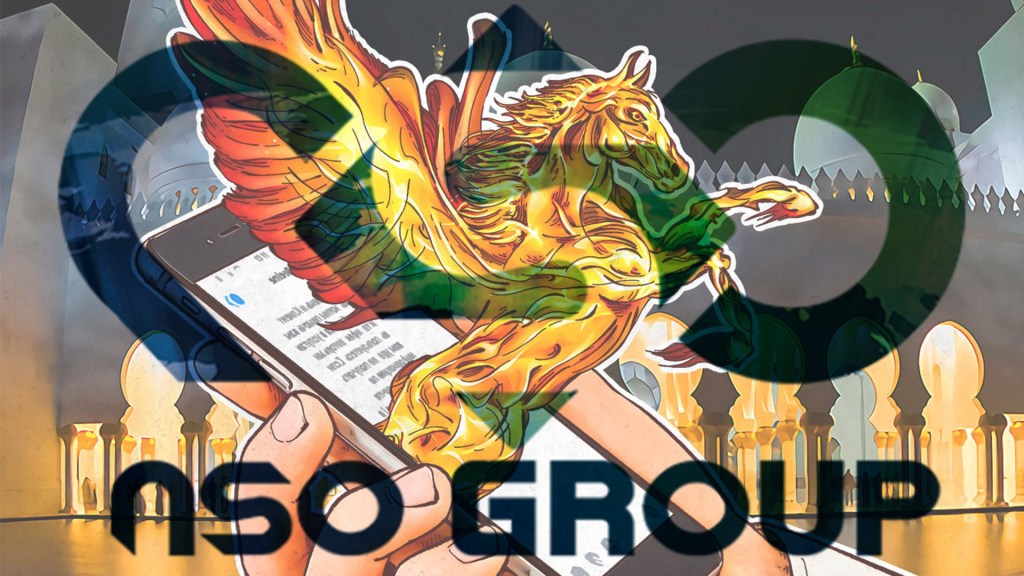
Pegasus owned by a NSO group- a private foundation, which many leading countries believe that it is the most powerful spyware ever created, it was coded to infiltrate into the smartphones of target users, be it IOS or Android, and it converts personal devices into surveillance devices. It is the main product of NSO group which was founded by Niv Carmi, Shalev Hulio and Omri Lavie. It is a Herzliya based company located near Tel Aviv, Israel which was founded in 2010, it is a subsidiary of Q Cyber Technologies group of companies.

What is the actual meaning of a Spyware?

Let’s get this straight, in simple words, a spyware is the term given to a category of software which aims to steal personal or organisational data/information without the consent of host. Once a spyware is successfully installed, it starts sending the data from that computer/mobile in the background to a third-party which is controlling this spyware. This third-party can be any government or The NSO group itself.

Pegasus can bypass your phone’s security and install malware that grants complete access to your device. It can access every message you’ve ever sent and received, every photo, video and email, can turn on your microphone, even when you’re not using a phone call, just record what you’re doing in the room. It can turn on your camera, and is also able to record what’s on your screen, can access your GPS, it can monitor your location. And it is able do all of this without you ever knowing.

So if you think that you are using online chatting apps like WhatsApp owned by Facebook or Signal owned by Moxie Marlinspike and Brian Acton which are famous for end-to-end encryption but this gets meaningless once Pegasus is on your phone. It is virtually undetectable which makes it even more lethal.

History of Pegasus software :

  • To begin with the brief history of Pegasus, in 2016 the Canadian Cybersecurity Organisation The Citizen Lab encountered it’s first case on the smartphone of Human Right activist Ahmed Mansoor.
  • In addition, in September 2018 The Citizen Lab published a report identifying 45 countries in which Pegasus was being used.
  • Furthermore, in the year 2019 WhatsApp exposed that journalists and Human Rights Activists in India were under surveillance by operators using Pegasus.
  • The latest case of this spyware is found India in July 2021, The Pegasus Project revealed that various governments used the software to spy on government officials, opposition politicians and many more eminent faces. Some records state that Indian government used the software to spy on around 300 people between 2019 and 2021.
This image has an empty alt attribute; its file name is nso.jpg

Is spying legal in India?

The laws governing surveillance in India are The Telegraph Act, 1885 which indicates about the interception of calls and The Information Technology Act, 2000, it deals with the interception of data. Under both the laws, only government, under certain circumstances, is allowed to conduct surveillance. Moreover, hacking in India is illegal under IT Act.

Is there any solution to save us from this cyber attack havoc ?

Many Cybersecurity experts state that a phone infiltrated by Pegasus might not be able to recover completely, some traces can be found even after a strong factory reset.

Although they have introduced some preventive measures to save oneself from getting hitched with this software.

Open links only from trusted websites, contacts and sources while using your device.

Please make sure that your device is fully upgraded with the latest patches and system/app updates.

Keep your device safe by limiting physical access. This can be done by applying pin, password, biometric locking and face-locking facility.

Also avoid using open Wi-fi or hotspot as the host may steal your data from the network connection. Try using VPN to prevent this condition while using Wi-fi or hotspots it is a safer option to prevent your information.

Do have a backup of your credentials and important documents, if in case your device is lost, stolen or broken you will never lack from your data.


PEGASUS; a threat to privacy?

Pegasus is spyware developed by the Israeli cyberarms firmNSO Group that can be covertly installed on mobile phones (and other devices) running most versions of iOS and Android.The 2021 Project Pegasus revelations suggest that current Pegasus software is able to exploit all recent iOS versions up to iOS 14.6. According to the Washington Post and other prominent media sources, Pegasus not only enables the keystroke monitoring of all communications from a phone (texts, emails, web searches) but it also enables phone call and location tracking, while also permitting NSO Group to hijack both the mobile phone’s microphone and camera, thus turning it into a constant surveillance device.

image source – TechChannel News

The company had previously been owned by American private equity firm Francisco Partners, then bought back by the founders in 2019. NSO states that it provides “authorized governments with technology that helps them combat terror and crime” has published sections of contracts requiring customers only to use its products for criminal and national security investigations, and stated that it has an industry-leading approach to human rights. The spyware is named after the mythical winged horse Pegasus—it is a Trojan horse that can be sent “flying through the air” to infect phones.

Pegasus was discovered in August 2018 after a failed attempt at installing it on an iPhone belonging to a human rights activist[citation needed] led to an investigation revealing details about the spyware, its abilities, and the security vulnerabilities it exploited. As of 2016, Pegasus was capable of reading text messages, tracking calls, collecting passwords, tracking location, accessing the target device’s microphone and camera, and harvesting information from apps. News of the spyware caused significant media coverage. It was called the “most sophisticated” smartphone attack ever, and was the first time that a malicious remote exploit using jailbreak to gain unrestricted access to an iPhone had been detected.

How is it a threat ?

The spyware can be installed on devices running certain versions of iOS, Apple’s mobile operating system, as well as some Android devices. Rather than being a specific exploit, Pegasus is a suite of exploits that uses many vulnerabilities in the system. Infection vectors include clicking links, the Photos app, the Apple Music app, and iMessage. Some of the exploits Pegasus uses are zero-click—that is, they can run without any interaction from the victim. Once installed, Pegasus has been reported to be able to run arbitrary code, extract contacts, call logs, messages, photos, web browsing history, settings, as well as gather information from apps including but not limited to communications apps iMessage, Gmail, Viber, Facebook, WhatsApp, Telegram, and Skype.

Pegasus hides itself as far as is possible and self-destructs in an attempt to eliminate evidence if unable to communicate with its command-and-control server for over 60 days, or if on the wrong device. Pegasus can also do this on command.

Recent buzz

Independent digital forensic analysis conducted on 10 Indian phones whose numbers were present in the data showed signs of either an attempted or successful Pegasus hack. The results of the forensic analysis threw up shows sequential correlations between the time and date a phone number is entered in the list and the beginning of surveillance. The gap usually ranges between a few minutes and a couple of hours.

11 phone numbers associated with a female employee of the Supreme Court of India and her immediate family, who accused the former Chief Justice of India, Ranjan Gogoi, of sexual harrasment, are also allegedly found on a database indicating possibility of their phones being snooped.

Records also indicate that phone numbers of some of the key political players in Karnataka appear to have been selected around the time when an intense power struggle was taking place between the Bharatiya Janata Party and the Janata Dal (Secular)-Congress-led state government in 2019.

Why should we care about our privacy?

Privacy in general terms is the right to be left alone or freedom from interference or intrusion. In terms of the internet, privacy is the right to have some control over how your personal information is collected and used.

More technical innovation gives way to more efficient and advanced technologies. In recent years the information has become the most important component to cultivate this innovation. As many new people are coming on the internet and the amount of information being shared is increased manifold. Every organization or individual is entering the realm of the digital world and data is the entity of this world. Data is also very essential to understand a user or a customer or a client but sometimes there is no limit to the amount of data that an internet corporation is willing to extract. Somewhere there has to be a line that needs to be drawn. In recent years there have been many issues regarding the privacy policy of many tech corporations. Facebook has been in controversy much time. Recently Whatsapp’s privacy policy also raised many questions, then in an ironic move Whatsapp raised the question of privacy by suing the government regarding the new Information technology rules. But this is just the tip of the iceberg and numerous other aspects get overlooked. First, we will need to understand what this privacy means for us as individuals. Only then we can clearly determine the relevance of these rapidly changing developments in this subject.  

“Arguing that you don’t care about the right to privacy because you have nothing to hide is no different than saying you don’t care about free speech because you have nothing to say.”

-Edward Snowden

It’s not that privacy means that there is something to hide; rather privacy is having things you don’t want to show. For instance, people would not like to post their Bank account online or Bank statements. People would also not like to have a public camera inside their homes. Similarly, there are some things that an individual would not like to share online. Privacy can provide secrecy, but there is more to it. Privacy also provides autonomy and therefore freedom to an individual. Well, there is even more to privacy than the freedom that many people do not realize which is that when we think we’re being watched, we make behavior choices that we believe other people want us to make.  Humans intrinsically like to avoid societal condemnation and perception of whether or not we are in private changes the way we behave. This indicates the benefit that a state can have with surveillance and can lead to a conformist population.

As it is stated by many that data is the oil and for many tech organizations it truly is. We can witness this with the various technological corporations that rely upon user data including Facebook, Google, Amazon etc. But Even Smartphone manufacturers like Xiaomi have realized the lucrative benefits of collecting and selling user data. For these companies, our data is money and they earn billions of dollars with this data. Both the private tech giants have clauses in their privacy policy that allows government agencies and third parties to access the data. The data that gets uploaded on the internet never gets deleted and stays there forever. What we have to realize is that even if the information seems futile today, it may have an importance tomorrow. In conclusion, privacy is not a trivial issue and people will have to understand its importance until it’s too late.

References:

Audacity and controversy after its new privacy policy

Audacity is free and open-source software that is available for Linux, Windows, macOS, and other UNIX operating systems. The project was started by Dominic Mazzoni and Roger Dannenberg in the fall of 1999 at Carnegie Mellon University, Pennsylvania. The software was officially released on May 28, 2000. It is a digital audio and recording application. It is one of the most popular free and open-source software with over 100 million downloads.

In July 2021, the software was acquired by the Muse Group. The acquisition has brought several changes in the privacy policy of the software. Audacity is very popular software in the audio editing space and is being used by beginner podcasters and musicians to professionals.  The recent changes in the privacy policy under the new ownership have led to accusations that it is spyware now. The new policy states that alongside collecting user data for “app analytics” and “improving our app”, which is not unusual. But further in the policy statement, it’s mentioned that the data collected will also be used for “Legal enforcement”.

The policy is a little unclear and it states:

“It may share personal data with “any competent law enforcement body, regulatory, the government agency, court, or other third parties where we believe disclosure is necessary.”

https://www.audacityteam.org/about/desktop-privacy-notice/

The language used quite vague but roughly it can be interpreted that Audacity will share data if requested by the law enforcement or court order. But they can also transfer more data if there is a potential buyer or merger in the future.

Another concerning change is the banning of under 13 years old users which was not a case earlier. This also violates the license under which the software is currently distributed.

It has been a concern for many users of the program. But this also raises a bigger question about data collection. This also hints at the intention of the purchase. The software already has a user base of millions and the potential of data collection is rather high. The policy to further distribute the data to third parties is a decision that is being bet with the most criticism. Another thing to understand is that Audacity is a small lightweight piece of open-source standalone software. But with this new policy, the software might no longer remain offline software. But these are still speculations.

Some years back similar instance occurred when Oracle Corporation had acquired a very popular office suite: Open Office. As users and contributors were not happy with the changes under the new ownership of Open Office, a new fork of Open Office was created. Contribution for this new Open Office alternative, Libre Office had increased in a very short period of time and it emerged as a viable successor of Open Office. Soon Libre Office also replaced Open Office in most of the future Linux distributions. There is already a new fork of Audacity and it is being actively worked on.

But we can also interpret it as a case of incorrectly drafted writing. There can be a possibility that the language used in the new policy changes was understood differently and things got overblown.

References:

Privacy in Internet era

The use of digital technology is growing, and people are becoming more aware of it, as well as the numerous benefits that technology provides. They are always connected, can contact almost anyone from anywhere, and carry the world’s most powerful information source in their pockets. People, on the other hand, appear to overlook one fact: how much data technology generates. And that’s where the issue of privacy comes into the picture and it is no secret that the modern use of the Internet and social media has a significant impact on people’s privacy. And our need for privacy is one of the characteristics that define us as human beings. Nobody like having their privacy invaded, whether it’s by someone looking over our shoulder or by a data breach. Every day, we come across headlines concerning privacy breaches that make us worry. The Internet is commonly regarded as a tool that has enabled people to write their own stories and share their experiences with a global network of people. As we continue to digitize every aspect of our lives, from gyms to vacation destinations, security and privacy protection will become increasingly more important in the coming years. As a result, it is growing easier to unintentionally give out sensitive information via email, social media, and other means these days. From internet service providers collecting user browsing history to software vendors gathering broad data about our personal life, there is a lot of data being collected about us. As a result, simple laws and regulations ensuring consumers’ ability to opt out of personal data collecting are urgently needed. In the digital era, this would go a long way toward safeguarding privacy.

Until 2021, the total sum of our personal information on the internet will be around 1.2 Million TBs, and it will undoubtedly rise in the future. Have we ever thought about how to keep it safe? If we continue to take this lightly, the day will come when digital privacy issues will attract an increase in cyber attacks, resulting in a loss of reputation, theft of sensitive documents, and a lack of confidence among users.

To emphasize the importance of data privacy in our lives, we should all take a look at the approaches or methods that can help us add value to data privacy.

  • Using technologies to effectively manage compliance and vulnerability in security.
  • Auditing security setups on a regular basis.
  • Staffs should be well-trained and educated on the ongoing threat of ransom ware.
  • Make the Privacy Procedures sound more effective by updating them.
  • Creating and restoring backup files with caution.
  • For reaching the unreachable updates, technology should be used.
  • Obtaining illegible H/W Channels from the attackers.
  • Also education has the duty of transferring awareness, attitudes, skills, and conduct from actual life domains such as home, school, and friends to young people.

From beginning till the end, it can be concluded that data privacy should not be overlooked. And what we should be doing right now is actively participating in the fight to make our lives more secure in this era of digitization.

Cyber Stalking – A Psychological Study

Cyber stalking is a crime in which stalkers use the internet or another electronic device to stalk an individual. It is also known as online harassment or online abuse. It entails harassing or threatening an individual on a regular basis. Stalking can be done in the following ways such as to follow a person till his home or where he does his business, to cause destruction to a person’s property, leaving written messages or objects, or making harassing phone calls.

The Cyber stalkers always think that they’re anonymous and can hide. In other words, the cyber stalker’s greatest power is their ability to rely on the anonymity that the internet offers them, allowing them to monitor their victim’s activities without their name being revealed. Thus, there is a need of efficient cyber tools to investigate cyber crimes and to be prepared to defend against them and to bring victims to justice.

Extreme narcissism, hatred, frustration, vengeance, jealousy, obsession, psychiatric disorder, power and control, sadistic fantasies, sexual predation, internet addiction, or religious bigotry are all psychological reasons for stalking. Some of them are discussed below:

  • Jealousy: Stalking can be motivated by jealousy, especially when it involves ex-lovers and present partners.
  • Obsession: Obsession could be another reason for stalking. The stalker may be drawn to the victim on a sexual or mental basis. The difference between admiring and stalking is very marginal.
  • Erotomania: It’s a type of belief in which the stalker believes the victim, who is usually a stranger or well-known figure, is in love with him.
  • Harassment: Cyber stalking is claimed to be motivated by this. This is due to the fact that the internet reflects actual life.
  • Revenge or Hate- Even though the victim is not the cause of the stalker’s feelings of hatred and revenge, he or she remains the stalker’s target. Based on the aforementioned causes for stalking, a stalker could be obsessed, outraged, psychotic, or crazy, and the Internet appears to be the most convenient venue for the stalker to vent his feelings of hatred and revenge.

In particular, there are three types of stalkers. Obsession stalkers are motivated by their fixation with sexual harassment and sometimes love, deluded stalkers are motivated by the urge to display their authority, and vengeful stalkers are motivated by the want to exact retribution.

The term cyber space means the environment where the communication takes place using internet. To put it another way, the internet has created a world. A global domain inside the digital landscape consisting of the interdependent network of information technology infrastructures, including the Internet, telecommunication systems, computer systems, and embedded processors can be classified as cyber space. Another term is the virtual environment in which worldwide PCs’ electronic data circulates. This is a hazy explanation of cyberspace. Its fundamental feature is that it is made up of many computer networks, switches, routers, servers, and so on. It consists of a collection of infrastructures including transportation, banking, finance, telecommunications, energy, and public health.

Cyber stalking is an activity in which a person, abuser, or stalker uses the internet or electronic media to stalk or harass another person or victim. In cyber stalking, a stalker may communicate with a victim via email, social media, messaging apps, or other forms of online communication. A stalker may use the internet to harass a person by posting messages, pictures, or information about them. Some also track location or online activities of individuals while stalking. Although cyber stalkers do not physically follow the person who has been wronged, they do so virtually. The cyber stalkers do adopt all types of technological and digital instruments assault but it is an emotional assault and harassment which is carried out by using electronic media. However, the provisions made for cyber stalking are not the same as those made for real-life scenarios.

IMPACTS OF SOCIAL MEDIA IN OUR LIFE

There are so many things that have advantages and disadvantages in life. More than pros and cons, these things leave an impact in our life either good or bad. One such thing is social media. Every one of us uses social media knowingly and unknowingly. Our day starts with and ends in social media. Social media doesn’t only include WhatsApp, Facebook, Instagram, or Twitter. It covers all that provide us information through the internet and keeps the world connected. Such media which influence our day-to-day life has both advantages and disadvantages. Let’s explore that in this article.

ADVANTAGES

Starting with the advantages we have many to cite as an example. Social media is a platform used to portray ourselves to the outside world. Here, we share content and get to other’s content which keeps us bound. It enables us to engage in social networking. It is widespread across the globe and allows us to create a community. It connects us and makes our communication easy and accessible. Through this, we could build our relationships stronger. Social media supports education through different learning platforms. This provides knowledge to every single part of the world. It develops the students’ interests to explore more and more. Social media also helps in building customer relationships through digital marketing. It makes customers fall for your services and give their feedback. Information spreads faster than wildfire in social media. This helps to get emergency helps like finding the missing persons. During this second wave of the pandemic, social media helped out to get blood donors, oxygen cylinders, and some rare dugs. It lets us share our achievements and also lets us know others’ accomplishments which motivates us to do a lot more. It provides support and encouragement through our community. It gives us a way to connect with our distant friends and relations. Also, social media is used for relaxing and getting relief from work stress.

DISADVANTAGES

After going through a lot of advantages, let us see some disadvantages of social media. When coming to disadvantages the first thing that comes to our mind is privacy problems. Sharing some content or posts may seem inappropriate for others and problems can arise from it. Also, sharing our personal and professional info can cost us sometimes due to hacking and other threats. Some people may try to bully us by knowing our details. This is a very bad disadvantage of social media. Another, we get influenced by others so much that we start changing our lifestyles. Scrolling for long hours will have a very bad effect on our body and health. We change our sleep cycles due to this unending scrolling and ruin our eyes and sleep. Although social media connects people, there is a lack of emotional connection between them. Due to these social media, we end up sending messages even for important issues and lost the habit of speaking over the phone. When we speak over the phone, the emotions are also conveyed along with the messages. In chatting, only our messages are sent and not the emotions. So, anybody in the conversation cannot sense that feel. We engage ourselves most of the time in social media and fail to spend time with family which is the most essential one. Finally overusing will lead us to get addicted to it and it becomes very difficult to get over the addiction.

This conflict between advantages and disadvantages continues to grow. Nothing can be perfect in life. It is our efforts that help us lead a perfect flawless life. We have to ensure that whether we are making good use of social media. If we feel that we are getting addicted to social media, just try to come out of that routine. Everything lies in our hand’s control and nothing can go out of it until we don’t allow it.

“RIGHT TO LIFE AND PERSONAL LIBERTY”

CONCEPT

Every person has the right to life library and security. Among all the fundamental right the right to life is unquestionably. Right to life means that no body can interfere in your freedom including government also. The people have human rights which protect their life and give them right to life. Right to life is concept which explain under the fundamental rights, that the citizen have rights to enjoy there life on there ways no body can stop them or restrictions on there fundamental rights.

The word “personal library” in Article 21[1] means nothing more than the liberty of the physical body, that is, freedom from arrest and detention without the authority of law. Personal liberty is one of the oldest concept which is safeguard by national court. The right to personal liberty as understood means in human rights not to be subjected to arrest any mode that does not admit to legal justification.

Personal liberty was not only merely the liberty of body, it also includes the other, freedom from restraintion and the law shall bind no person. Personal liberty was a widest concept that covers all the various rights. Right to personal liberty also means that free from the unnecessary restriction by the law on the member of the socity.

Every citizen has a right to life, liberty and the security. Among all the fundamental rights, right to life is unquestionably. The right to life and personal liberty is all about the development of human beings life. The right to life is a moral principle based on the right of freedom of peoples. The government should always take a proper measures or action to protect the life of peoples by making laws to protect citizen of their country and also in some conditions, by taking an good step to safeguard there states peoples at any risk.

There are many laws making by the government, which in any circumstance if a person might put in danger and if state was involve on that then the people might have the right to investigate. The main aim of the state to carry out the “justice”. According to the Constitution parliament and the State legislature in India have the power to make law. The meaning of personal liberty is that the citizen of state have there right arrest or detent according to law or if the person is guileless then he have right to protect there legal rights in such conditions. The right to personal liberty was an personal freedom in which no government can abbreviate.

ARTICLE 21

“No person shall be deprived of his life or personal liberty expect according to procedure established by law” [2]

The Article 21 explain about the protection to life and personal liberty, it protects the freedom of citizen. Two teams of Article 21:- First, “Due process of law”(USA).and second,”Procedure established by law”(India). The term “produce established by law” in India it taken from Japan. And in USA if citizen were deprive by law the tha term due process of law used, and in India it’s produce established by law was used. This rights are for both the citizens as well as non-citizen. And for those also how not have the knowledge about this concept.

Due process of the law is a very unique clause of the americanConstitution. It is very broad and formative concept. It is difficultto give the accurate definition which could explain it in very well manner. Due process of law literal meaning of it is ‘guarantee of fair procedure’. The Constitution promises there citizen or individual that government will not deprive him of life, liberty or property without due process of law. After having the brought explanation of life and liberty, now we will deal with the term”procedure established by law”. It does not have the same meaning as express in the due process of law. Procedure established by law express the wider connotation than the expression used in the Indian Constitution.

The Article 21 even thought to frame in negative language, established the person the fundamental right to life and personal liberty and it become the infinite source of many rights. It has the fundamental right for everyone who lives in country shall be live freely in the socity with the right that was enshrined in Article 21.

In Article 21 the right to life is not only with the physical existence of life but it is also for the other elements. Article 21 has proved to be avery fruitful source of right of the peoples.


[1] Protection of life and personal liberty No person shall be deprived of his life or personal liberty except according to procedure established by law.

[2] Article 21

Surveillance and Privacy

The debate on Surveillance and Privacy has become an indisputable component of all environments. While some degree of surveillance has always existed, in the last few decades it has expanded due rise of Information Communication Technologies (ICTs). Surveillance practices particularly in technologically advanced societies have increased because of use of ICTs.

What is Surveillance? Surveillance can be understood as any focused attention on personal details. This could be for the purpose of influence, management, or exercising control. Besides those who may be suspects (owing to their record of alleged offences), the everyday lives of ordinary people like workers, travelers etc find that their personal data is of high interest to others.

Everyday life may now appear less private, and ordinary people might feel that they are more vulnerable to control, due to the use of searchable databases, for categorizing and profiling where deep rooted questions of power are also involved. A lot of scholars have suggested that what exists now is an increased need for ethics of information in an era where we are witnessing intensifying surveillance. This is also because life chances and choices are likely to be negatively affected by the judgments made on the basis of such data, which means that surveillance is deep rooted in basic questions of social justice and freedom.

ICTs are being used to increase the power, reach, and capacity of surveillance systems. The most controversial element in this regard is the processing of personal data for the purposes of control, in order to influence or manage population. Sociologist Gary T. Marx coined the term ‘surveillance society’ back in mid-1980s. Later historians remarked that surveillance societies were becoming ‘information societies.’ Gilles Deleuze went on to suggest that we all now live in societies where cameras, personal identification numbers (PINs), barcodes are all used to determine which opportunities will be open, and which will be closed to whom in daily life.

The idea of a surveillance society gains credence by the fact that in ordinary everyday life, not only are people themselves constantly being watched, they are also willing to use such technical devices to watch others. For instance, there are plenty of domestic technologies in the market that provide video camera protection to homes and offices, such as CCTV which is now common in schools, colleges, work places etc.

What becomes important here is that in most cases, surveillance is already known about by those whose data are stored, manipulated, processed in many other ways. Sociologist David Lyon gave the example of those buying houses, they are already aware that checks will be made on them. Similarly, video surveillance cameras are visible on the street and generally speaking, people are aware that they exist. Another example being that Internet users are aware that their activities are traceable.

Thinkers recognize that Surveillance has been expanding since the start of the twenty‐first century particularly in an international response to global terrorism and now more recently to tackle the global pandemic. What it is evident is that surveillance is now much more internationally networked because of ICTs. This has inevitably led to several debates on the breach of privacy.

Reference- https://panoptykon.org/sites/default/files/FeedsEnclosure-oxford_handbook_3.pdf