The Ultimate Guide to Office Safety Training: Best Practices and Tips

Daily writing prompt
Have you ever performed on stage or given a speech?

Effective office safety training is key to a safe workplace. Every employee deserves a safe, hazard-free workplace.

Office safety training prevents injuries. It also gives employees the skills and knowledge to use safety measures effectively.

This guide will detail the best practices for office safety training.

Understanding the Importance of Office Safety Training

Office safety training is crucial for creating a safe working environment. It trains employees to spot dangers and act.

Proper training can significantly reduce workplace injuries. An organization that invests in safety training protects its employees. It also boosts productivity and morale.

Identifying Workplace Hazards

Being aware of office hazards is the first step towards prevention. Common office hazards include slips, trips, and falls from clutter or wet surfaces.

To ensure safety, assess risks regularly and reduce them. Encourage employees to report any unsafe conditions immediately. This proactive approach fosters an environment of accountability and vigilance.

Integrating Ergonomic Safety Training

One of the significant aspects of office safety training is ergonomic safety. Long hours at desks put employees at risk for musculoskeletal disorders.

Ergonomic training teaches employees to set up their workstations. This minimizes discomfort and prevents injuries. This includes adjusting chair heights, monitor positions, and keyboard placements.

Focusing on ergonomic safety can boost productivity and comfort. It can also reduce injury risk.

Implementing Emergency Response Procedures

Emergency response procedures are a critical component of office safety training. Train all employees to respond to emergencies. Having a well-structured plan helps minimize chaos and ensures everyone understands their role.

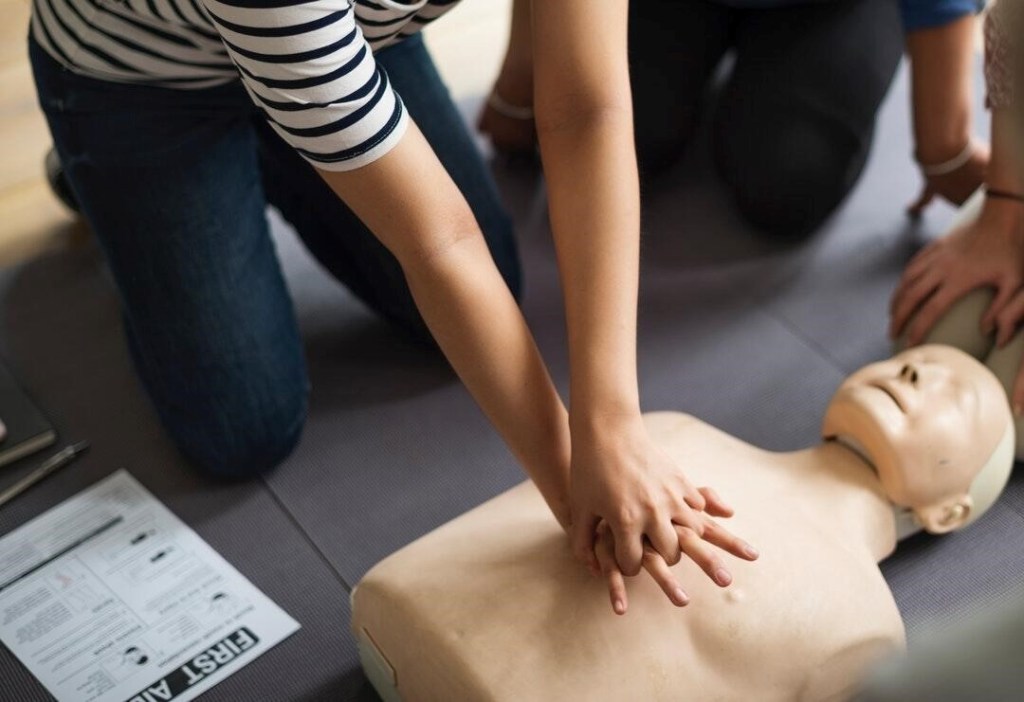
Conduct regular drills to familiarize staff with evacuation routes. Be sure to designate emergency contacts and ensure all employees know them. Keep first-aid kits accessible and well-stocked

Regularly reviewing and updating these procedures based on feedback and changes is vital. A prepared workforce is key to minimizing risks in unexpected situations.

Training Programs and Resources

Effective office safety training often includes interactive programs, workshops, and online resources. Many organizations offer training sessions.

They tailor them to their workplace’s specific needs and hazards. Using expert trainers in workplace injury prevention can improve the training.

Also, safety training courses boost employees’ confidence in emergencies. To improve employee safety skills, provide resources on workplace hazards.

A culture of continuous learning about safety will keep employees prepared. For further assistance in office safety training, visit Cprcertificationnow.com.

Creating a Safety Culture

Beyond formal training, developing a safety culture within the organization is vital. This means making safety a priority at every level, from management to new hires. Regular safety meetings and open discussions about hazards promote employee involvement.

When employees take ownership of their safety, they become more engaged. Celebrate safety achievements to reinforce positive behavior. Remember, a collective effort is more effective than individual actions.

Conducting an Office Safety Training

Office safety training is indispensable for a healthy work environment. Organizations can cut workplace injury risks by using best practices. These include hazard awareness, ergonomic training, and emergency response. Make safety a priority. Foster a culture of care among employees.

If you enjoyed this article and would like to read more like it, please check out the rest of our blog today.

GOI Measures for Safety, Security and Empowerment of Women

 The Government accords highest priority to improving sex ratio in the country and ensuring healthy life for women. Some major initiatives taken by the Government in this regard are as follows:


  • Beti Bachao Beti Padhao (BBBP) ensures protection, survival and education of girl child.
  • Mission Saksham Anganwadi and Poshan 2.0 aims to address the challenges of malnutrition in children, adolescent girls, pregnant women and lactating mothers through a strategic shift in nutrition content and delivery and by creation of a convergent eco-system to develop and promote practices that nurture health, wellness and immunity.
  • Pradhan Mantri Matru Vandana Yojna (PMMVY) provides partial compensation for the wage loss and seeks to improve health seeking behaviour among the pregnant women and lactating mothers. The revamped PMMVY under Mission Shakti also aims to promote positive behavioural change towards girl child by providing additional cash incentives for the second child, if that is a girl child.
  • Rollout of Comprehensive Primary Health Care including health promotion through Ayushman Bharat-Health & Wellness Centers (AB-HWC).
  • Janani Shishu Suraksha Karyakram (JSSK) to eliminate out-of-pocket expenses for pregnant women delivering in public health institutions and sick infants accessing public health institutions for treatment.
  • Janani Suraksha Yojana (JSY) to provide financial assistance to pregnant women for encouraging institutional delivery.
  • Pradhan Mantri Ujjwala Yojana empowers women and protects their health by providing LPG cylinder free of cost.


As a result of the above measures, the sex ratio at birth has improved from 918 (2014-15) to 937 (2020-21) and the life expectancy at birth has improved from 69.4 years (2014-18) to 69.7 years (2015-19).

The Government has taken several initiatives to enhance women’s participation in labour force. The labour laws have specific provisions relating to women workers besides all other rights under labour laws which, inter alia, include:


  • The Equal Remuneration Act, 1976 provides that there shall be no discrimination in an establishment or any unit thereof among employees on the ground of gender in matters relating to wages by the same employer, in respect of the same work or work of similar nature done by any employee.
  • The Maternity Benefit Act, as amended in 2017, provides paid maternity leave from 12 weeks to 26 weeks for two surviving children. It also has enabled provision of “Work from home”, after availing of the maternity benefit by the woman, where the nature of work being assigned of such nature, for such period and on such conditions mutually agreed upon by the employer and the woman employee.
  • Vide notification dated 29th January 2019 under Mines Act 1952, the Government allowed the employment of women in the aboveground mines including opencast workings between 7 pm and 6 am and in below ground mines working between 6 am and 7 pm in technical, supervisory and managerial work where continuous presence may not be required.
  • The Government has also enacted the four Labour Codes, namely the Code on Wages, 2019; the Industrial Relations Code, 2020; the Code on Social Security, 2020, and the Occupational Safety, Health and Working Conditions Code, 2020, which inter alia promote participation of women in workforce in a dignified manner through a number of provisions, some of which are as follows:
  • No discrimination on the ground of gender in matters relating to wages, recruitment and in the conditions of employment,
  • Women are entitled to be employed in all establishments for all types of work even before 6 AM and beyond 7 PM subject to their consent and other adequate safety measures.


Some of the major initiatives taken by the Government for improving economic empowerment of women are as follows:


  • Sakhi Sadan (Working Women’s Hostel) scheme provides safe and affordable housing for working women and thereby encourages more women to seek employment.
  • Palna, the National Crèche Scheme, ensures that women take up gainful employment through providing a safe, secure and stimulating environment to the children.
  • Hubs for Empowerment of Women (HEW) at National, State and District level have been approved under the new ‘Mission Shakti’. The support under HEW is available for guiding, linking and hand holding women to various institutional and schematic set-up for their empowerment and development including equal access to healthcare, quality education, career and vocational counselling/training, financial inclusion, entrepreneurship, backward and forward linkages, health and safety for workers, social security and digital literacy at various levels across the country.
  • Pradhan Mantri Mudra Yojana (PMMY) has been initiated by Government, inter alia, for facilitation self-employment. Under PMMVY, collateral free loans upto Rs. 10 lakh are extended to micro/small business enterprises and to individuals to enable them to setup or expand their business activitiesMajority of the beneficiaries under this yojana are women.
  • Stand Up India scheme promotes entrepreneurship amongst women, SC and ST categories, i.e., those sections of the population understood to be facing significant hurdles due to lack of advice/ mentorship as well as inadequate and delayed credit.
  • Pradhan Mantri Kaushal Vikas Yojana aims to enable a large number of Indian youths including women to take up industry-relevant skill training in securing a better livelihood.
  • Deen Dayal Antyodaya National Urban Livelihoods Mission focuses on creating opportunities for women in skill development, leading to market-based employment.
  • Pradhan Mantri Awaas Yojana aims to provide housing under the name of woman also.
  • Sukanya Samriddhi Yojna – Girls have been economically empowered by opening their bank accounts under this scheme.
  • Skill Upgradation & Mahila Coir Yojna is an exclusive training programme of MSME aimed at skill development of women artisans engaged in coir Industry.
  • Prime Minister’s Employment Generation Programme is a major credit-linked subsidy programme aimed at generating self-employment opportunities through establishment of micro-enterprises in the non-farm sector.


Framing standards on provisions relating to Safety, Health and Welfare, Occupational Safety, Health and Working Conditions Code

 A number of major initiatives were undertaken by the ministry of Labour and Employment during the year 2021. These include inauguration of E-Shram portal, EPFO-linked Atma Nirbhar Bharat Yojna and setting up of new/expansions of ESIC hospitals in Gurugram (Manesar), Shahjahanpur, Haridwar, Vishakhapatanam, Meerut and Tinsukia, Assam. The following are the details: E-Shram Portal: The e-Shram portal was inaugurated on 26th August 2021 by Shri Bhupender Yadav, Hon’ble Minister (L&E) in presence of Shri Rameswar Teli, Hon’ble Minister of States (L&E). E-SHRAM portal has been developed for creating a National Database of Unorganized Workers, which is seeded with Aadhaar. It will have details of name, occupation, address, educational qualification, skill types and family details etc. for optimum realization of their employability and extend the benefits of the social security schemes to them. Any worker who is working in unorganized sector and aged between 16-59, is eligible to register on the eSHRAM portal e.g. migrant workers, gig workers, platform workers, agricultural workers, MGNREGA workers, Fishermen, Milkmen, ASHA workers, Anganwadi workers, Street Vendors, Domestic workers, Rickshaw pullers and other workers engaged in similar other occupations in the unorganised sector. 15,53,34,546 registrations have been completed in the eshram portal till 28.12.2021.

Atma Nirbhar Bharat Rozgar Yojana (ABRY)- 

To boost employment generation and to minimize socio-economic impact of COVID-19 pandemic, Ministry of Labour& Employment on 30.12.2020 notified EPFO-linked Atmanirbhar Bharat Rozgar Yojana (ABRY). ABRY will help in formalization of informal employment and create new employment opportunities during and post COVID-19 Pandemic. As on 18th December, 2021 total benefits of Rs. 2966.28 Crore have been given to 42,82,688 beneficiaries through 1,20,697 Establishments under ABRY. 

Progress on EDLI Scheme

Under Employees’ Deposit Linked Insurance (EDLI) Scheme, assurance benefit is provided to eligible family members so as to provide financial assistance in the event of an employee’s unfortunate death while in service. The assurance benefit has been raised from earlier ₹6 Lakhs to ₹7 Lakhs from 28.04.2021Since 15.02.2020, an amount of Rs. 2470.80 Crore has been disbursed to 88,224 beneficiaries across 39,265 establishments as assurance benefit till 30.11.2021.

Occupational Safety, Health and Working Conditions Code, 2020 (OSH &WC Code 2020)

Expert Committees: The Government of India has constituted four Expert Committees for the purpose of framing standards on provisions relating to Safety, Health and Welfare as under Section 18, 23 and 24 of the Occupational Safety, Health and Working Conditions Code, 2020 pertaining to Factories, Dock Works, Building & Other Construction Works and Fire Safety.        

Further the following two Expert Committees are being headed by Director General, DGFASLI: Expert Committee for the purpose of framing standards on provisions relating to Safety, Health and Welfare for workplaces relating to Factories, and Expert Committee for the purpose of framing standards on Occupational Safety and Health for workplaces relating to Dock Work. The Draft standards being prepared, which are nearing completion.


Conduct of All-India Surveys:

Labour Bureau, is conducting the following All-India Surveys under the overall guidance of an Expert Group:

  1.  All India Survey on Migrant Workers. (launched on 1st April, 2021.)
  2.  All India Quarterly Establishment based Employment Survey (AQEES) (launched with effect from 1st April 2021.)
  3. All India Survey on Domestic Workers. (Survey has been flagged off on 22nd November 2021)


The Expert Group, chaired by Prof. S. P. Mukherjee and co-chaired by Dr. Amitabh Kundu, consists of distinguished statisticians and economists, alongwith senior officers of Ministry of Labour and Employment, Ministry of Statistics and Programme Implementation and NITI Aayog. 

6Labour and Employment Minister Shri BhupenderYadav released the report of first quarter of Quarterly Employment Survey (QES) part (April to June 2021), of the All-India Quarterly Establishment-based Employment Survey (AQEES) prepared by the Labour Bureau on 27.09.2021.

The AQEES has been taken up by the Labour Bureau to provide frequent (quarterly) updates about the employment and related variables of establishments, in both organised and unorganised segments of nine selected sectors. 


Tripartite discussion on Global call to action for a human centred recovery from COVID-19

ILO in collaboration with this Ministry has organized a tripartite discussion on the Global call to action for a human centred recovery from COVID-19, in the context of India on 10.12.2021 in New Delhi. Shri Bhupender Yadav, Hon’ble Minister of Labour & Employment gave the Key Note address in the conference. There were two High Level Panel Discussions in the Conference. Shri Sunil Barthwal, Secretary (Labour & Employment) chaired one of the Panel Discussions on “Universal Social Protection and protection of all workers for a human centred sustainable and resilient recovery from COVID-19in the world of work in India”.


Providing medical care facilities ESIC beneficiaries from nearby ESIC empanelled Hospitals in case of non-availability of ESIC Hospital or Dispensary.

Keeping in view the sizeable increase in the number of ESI beneficiaries subsequent to expansion of ESI Scheme in newer geographical areas, efforts were made to strengthen the ESI medical care infrastructure to provide better medical services in the vicinity of beneficiaries’ residence. A step towards easing the hardships of ESI beneficiaries has been taken wherein, from now on ESI beneficiaries who did not have medical care facilities in the 10 KM radius of their residence can now avail medical facilities from ESI empaneled hospital, without referral, with the use of ESI e-Pehchan card/Health Passbook along with Aadhar/Govt. issued Identity Card and avail cashless medical consultation for OPD services directly from such hospital. Reimbursement of the availed medical services and prescribed medicines during OPD consultation will be done through their nearest Dispensary cum Branch Office (DCBO) or Regional Office where DCBO is not available.

Launch of ESIC COVID-19 Relief Scheme, in aid to COVID stricken IPs

In order to provide help and succour to the families of the Insured Persons (IPs) who died due to COVID-19, Employees’ State Insurance Corporation (ESIC) has on 03.06.2021 launched ESIC COVID19 Relief Scheme. Under this scheme 90% of average wages of deceased Insured Person shall be paid to the eligible dependents of the Insured Person who died due to COVID-19. The Scheme is effective for a period of two years w.e.f. 24.03.2020.

The ESI Corporation, in its meeting held on 04.12.2021, has decided to relax the condition of minimum contribution from 70 days to 35 days in one year immediately preceding the diagnosis of Covid-19 disease.  


The spouse of the deceased IP shall also be eligible for medical care on depositing Rs. 120/- every year.

ESIC to construct 300 bedded Hospital including 50 Super Specialty beds at Haridwar, Uttarakhand.

To meet the medical services needs of IPs in Haridwar & surrounding districts, the ESI Corporation has decided to construct 300 bedded ESIC Hospital including 50 bedded Super Specialty beds & Staff Quarters in 5 acres of land at Haridwar, Uttarakhand. After construction, the hospital will provide medical care services to around 2.55 lakh Insured Workers & their family members.

ESIC to construct 350 bedded Hospital with additional 50 bedded SST wing at Vishakhapatnam, Andhra Pradesh.

Keeping its firm to provide good medical healthcare benefits to the Insured Workers and to strengthen its medical care infrastructure of 350 bedded Hospital with an additional 50 bedded SST Wing and 128 Staff Quarters in a plot area of 8.72 acres(approx..) at Sheelanagar, Vishakhapatnam. The proposed hospital, after construction, will provide medical services to around 14 lakh beneficiaries covered under ESI Scheme in Vishakhapatnam & surrounding areas.

Launch of Pilot Project on Annual Preventive Health Check-up Programme for ESI Insured Persons / Insured Women (IPS/IWs) aged 40 years and above

Shri Bhupender Yadav, Hon’ble Minister of Labour & Employment; Environment, Forest and Climate Change, Govt. of India and Chairman, ESIC launched a dedicated Pilot Programme for preventive Annual Health Checkup for Insured Persons aged 40 years and above from VigyanBhawan, New Delhi in 04 ESIC Medical Colleges/Hospitals located at Ahmedabad, Faridabad, Hyderabad and Kolkatta. This will benefit Insured Persons in early detection of diseases.

Construction of 500 bedded ESIC Hospital at Gurugram (Manesar) for expansion of services of existing 100 bedded Hospital

ESIC approved acquisition of the plot admeasuring 8.7 acres for setting up of 500 bed ESIC Hospital at HSIIDC, Manesar.

Setting up of 100 bedded ESIC Hospital at Meerut

The Corporation approved acquisition of land of 2.024 hectares for construction of 100 bed ESIC Hospital at Meerut, which the Govt. of UP provided free of cost.

Taking over of State run ESIS Hospital, Tinsukia, Assam

ESIC Corporation approved taking over of State run hospital at Tinsukia and its subsequent upgradation to a 100 bedded ESIC Hospital.

Inauguration of Dispensary and Branch Office at Rae Bareli & Panki, Uttar Pradesh

ESI Corporation also inaugurated new Dispensaries & Branch Offices at Rae Bareli &Panki on 27.11.2021 and 24.12.2021 respectively. 

Bhoomi Pujan of 30 Bedded ESIC Hospital at Shahjahanpur, Uttar Pradesh.

Bhoomi Pujan of the land acquired through the state govt. of U.P to kick start the construction of 30 bedded ESIC Hospital was also done on 24.12.2021.

Expansion of ESI Scheme 

The ESI Scheme has been further expanded to 52 districts during the calendar year 2021, bringing 2,31,495 employees along with their family members under the Social Security umbrella of ESI Scheme. The benefits of ESI Scheme are now available in 592 districts. It is proposed to extend the coverage of ESI Scheme to all districts of the country by the year 2022. 

National Career Service (NCS):

NCS portal leverages information technology to bring together job seeker and employer on common platform. As on 28-12-2021, the NCS platform has around 1.34 crore active jobseekers with around 1.7 lakh active employers and around 2.21 lakh active vacancies. The total number of vacancies mobilised on the portal since its launch in 2015 is more than 90 lakh.

.

************

                                                                       (Photo: Oscar)

How to take care of your health from corona?

In today’s pandemic time, health is the foremost thing to
take care of. So, here I am sharing an insight about Corona and ways to take
care of ourselves from it. Let’s begin.

We all have witnessed the most life-threatening disease,
that is, Coronavirus, started in 2020. Coronavirus is a communicable disease
which means it can easily transfer from one person to another. It has
dreadfully impacted millions of lives globally. No doubt, we all have lost our
loved ones’. It has turned employed persons into jobless, farmers with no food,
middle class into poor class, mass killing of innocent migrant workers, in
short, it has turned the brightest chapter of our lives into the darkest one’s,
where we had no choice, except, Death.

The situation became worse day-by-day. We have entered 2021
but with Coronavirus. The researchers, scientists, health organization, all
strove effortlessly to come up with a solution to cure it. But as such no
permanent solution has come up, except, the vaccine which does not really
protect the person entirely. Health is really important for all of us. And more
important is to maintain our health. Because if we don’t do, we can easily
catch up with different disease and it can trigger the situation. It’s totally
on us whether we want to be healthy or how we want our body to be? So, it’s our
responsibility to make a fair choice. Maintaining a good health physical
exercise, which will help in keeping the body fit, balanced diet comprises of
all essential nutrients, staying healthy mentally, away from depression and
anxiety and much more.

Now let’s take a look at the symptoms of COVID and some
basic ways to prevent ourselves to come in contact with the disease. Firstly,
the symptoms are: Headache, dizziness, shortness of breath, fever, cough, sore
throat. 

WARNING SIGN:  Whenever you observe such
symptoms in yourself, you should immediately contact the Doctor and get
yourself quarantined. You should understand the fact that if you get infected,
you can also infect your family members, friends or people around you. So be a
responsible person and seek medical help on an urgent basis.

If it’s a mild fever and you don’t observe any other
symptoms then take one tablet of DOLO 650. Consume multi-vitamins tablet on a
daily basis to boost your immunity. Along with the consumption of medicines,
drink plenty of water to keep yourself hydrated, eat fruits and vegetables rich
in nutrients, maintain hygiene. You can also eat dry fruits but if you can’t
afford, it then you can drink milk with turmeric added in it or soya chunks or
peanuts. 

Some of the basic ways to prevent the spread of disease are:

  • Wear
    a mask properly. Ensure that your nose and mouth is properly covered.
  • Use hand
    gloves to avoid getting touched by people around you.
  • Use
    hand sanitizer all the time as it will help to kill the bacteria.
  • Avoid
    travelling if it’s not urgent. Stay indoor as much as possible because you
    never know what can happen with you anytime and at any place.
  • Wash
    your hands properly as it will help to kill the germs.
  • Whenever
    you come from outside open your clothes, keep it away and take bath
    properly. Try using Dettol while bathing.  
  • Do
    not use other person mask or sanitizer. Ensure that you are living in a
    healthy and hygiene environment.
  • Do
    not share your things like water, food with others. As I have already
    mentioned that it’s a communicable disease so it’s better to avoid.

Remember, it’s very important to take precaution at the
first place itself so that you don’t regret later. As our lives are on our own
hands. Not only ours but also other lives too and we too need to become a
responsible person.

Due to the ongoing situation most of the people have lost
their dear ones which at certain level have affected them mentally like they
overthink, depression or anxiety. I totally understand their emotions. But it’s
also true that what has gone will never return. Instead, we need to gear up
ourselves and stand like a strong pillar. We need to motivate ourselves because
we all are in this together. Mental health is also a very serious concern. The
most important thing is we should not stop smiling. When you smile it releases
positive energy within yourself and surrounding. We need to ensure that he or
she is smiling and keeping others happy too. This is also a way to boost up the
immunity. The more you think, the more you will become negative. 

First of all, stop being corona conscious. What I mean by
this is stop thinking about corona all the time like this or that can happen to
you. Because that’s going to affect you emotionally. Don’t let it play and take
over your emotions. It’s you who will have to decide whether you want to fight
or quit. Take a break from all this and do something which calms you down. For
example, do yoga, meditation. Do something that interests you. And take all the
precautions too. Trust me it’s the time to become a strong and be positive
pillar for yourself and your family. Instead of getting demotivated, stay
positive.

Now looking at the vaccine found out by the scientists. So,
the vaccination drive started globally. People started getting vaccinated. Most
people are afraid of getting vaccinated because they believe that they will
die. To pinpoint, few deaths have taken place but I want to clear that vaccine
is for boosting immunity. It will not protect you entirely. Even after taking
vaccine, you can get infected but the vaccine will help you to fight. After
taking vaccine one should stay at home for a week. It’s necessary because one
might get sick. 

At last, I would like to say, try to help others who are in
need. We have to be backbone of one other at this time. Through support we can
win the war against corona. Take care of yourself and your family. And don’t
forget to smile.


Traffic Rules and Regulations

What are traffic rules?

I feel like both pedestrians and the drivers should be disciplined and obey all the rules and regulations. So, I request every citizen of this country to follow these do’s and don’t listed down below for pedestrians and drivers, respectively.

DO’s for pedestrians:

  • DO walk in a straight line down the sidewalk.
  • DO stop at crosswalks and pay attention to the signals.
  • DO pay attention to your surroundings when walking, especially at night and alone.
  • DO take the time to enjoy your walk even if you are in a hurry… look around and see.
  • DO smile if you happen to make eye contact with another human being.

DON’Ts for pedestrians

  • DON’T stop randomly on the sidewalk without checking that people are right behind you.
  • DON’T jaywalk without looking.
  • DON’T wear headphones and have your music turned up so loud you can’t hear what’s happening on the street.
  • DON’T cut across the sidewalk to get to a shop or something without looking behind you.
  • DON’T walk into things while your head is down looking at your phone… trust me, it happens!

DO’s while driving

  • Do always wear a helmet while riding a 2 wheeler.
  • Do always wear a seat belt. ±Do follow the speed limit.
  • Do be courteous towards other drivers and riders.
  • Do give pedestrians the right-of-way in crosswalks.
  • Do make room for bicycles. ±Do pay attention while driving, even if you are familiar with the area. A surprising number of accidents take place only blocks away from home!
  • Do use indicators.
  • Always keep to the left.
  • Do keep a safe distance.
  • Do always carry the important papers and your driving license.
  • Do drive cautiously in severe weather.
  • Do plan your long route journeys in advance. Take proper gaps in between.

DON’Ts while driving

  • Don’t drive alcohol and drive, and don’t get in a car with a driver who has been drinking or using drugs.
  • Don’t talk on your cell phone and drive at the same time. If you need to make or answer a call, pull over at a safe place and then resume your journey.
  • Don’t let your emotions and frustrations get the best of you. Don’t engage in road rage, no matter how irritating another driver might be to you.
  • Don’t tailgate other cars, pass on shoulders, run stoplights or stop signs, or break any other rules on purpose.
  • Don’t drive if you are underage.
  • Don’t overtake suddenly.
  • Don’t use brakes suddenly.
  • Don’t overspeed over potholes.

Out of sight out of mind

The world has so much problem with the waste production and dumping and landfills. We need more space. Why not send it to outer space? You know take some amount of trash at a time and send it to space and let it go. Sounds easy but turns out it isn’t that easy.

First of all it costs a LOT to send a spaceship into the space. We would need a large number of rocket launches to actually get rid of the insane amount of garbage the world produces(1.2 trillion kg). That way, the rise in air pollution… unimaginable. Also, complex infrastructure requirements! We need a lot more launch pads.

Suppose we do find a way to manage the costs and send a rocket filled with trash to be thrown out in the space. Imagine if some technical issue occurs and it blasts. It would rain burning plastic. Not good for the environment.

Even if we throw it out, the accumulation would make our atmosphere so dense that it would be a toxic world to live in. Also we couldn’t use satellites plus space travel would be tough. What if it comes floating back. Gross sight.

There’s another thing we could do. Burn the trash in the volcanoes. Trash incinerators have filters to filter out poisonous gases. In case of volcanoes filtering is not possible so again toxic world. Besides throwing something in the lava, disturbing the surface, would instantly trigger a chain reaction leading to an explosion. So not an option.

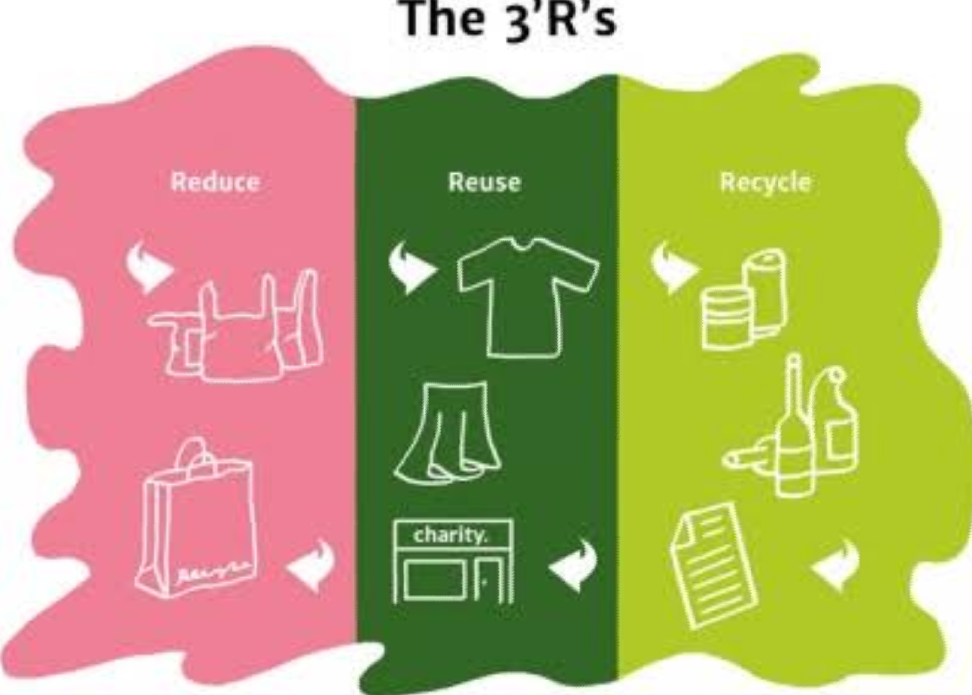
Guess we have to find other sources to convert the trash into some kind of energy. Maybe some day. Till then we need to manage our trash and follow the three R’s. (Reuse, Recycle, Reduce)

Thank you for reading. Have a nice day!

Steps colleges need to take before they open after Covid-19

This pandemic has brought us all into a dilemma regarding the position of academics of students. Online classes are already being carried on by schools and colleges. Yet, this cannot be continued for long as the effectiveness of classroom education lacks in online classes. No one actually knows when the pandemic will be flattened and students flock to campuses.

The only thing that is known is that a large number of students and teachers would come together at their colleges. Students are already mentally fatigue and dying to be back to the campus.

The Government had earlier instructed a gradual opening of colleges with caution and precautionary measures from September 1st. But with more than 3.6 million Coronavirus cases in India, the date was shifted and the next plausible one may go for the dawn of the new year, with one semester going online.

Colleges have to be opened someday. When the day comes, there are many chances of arising this pandemic again. We can avoid this situation to an extent by following certain steps and safety measures.

Here are the steps colleges need to take before the reopen after Covid-19 :

1) To start with, all educational institutes need to quickly migrate to the digital mode through the use of existing massive online courses (MOOCs) and create their own MOOCs for the domains they deal in, provided they can muster the courage and the resources. Going ahead, it will by PhyGital or blended learning, with physical being the base and digital being the larger engagement period. Even virtual labs and studios will do half the practical work as well. This is a big call and for digital content creation and aggregation along with engaging delivery need to be ensured.

2) It goes without saying, that no campus can ensure a batch coming in for all 5 days or 6 days to the campuses physically for a long time ahead. It will be two to a maximum of three days a week, and that too, with temperature checking, gloves and masks, ideally with full sleeves and legs covered, and a head cover might be ordered also.

3) Many campuses will and should have a sanitising tunnel to walk through, will have to walk with a minimum 4 feet distance from the nearest peer and sit at a distance from the next buddy.
This will make it necessary for half the batch to sit in a classroom, and half the team working in studios at a point of time, which stretches the infrastructure to a hilt and doubles the workload of mentors, who anyways shall be rarer and lesser paid in these Corona times.

4) The lunch-time will be staggered to reduce crowding at eating places, while session timings will be changed to reduce commotion on corridors. Lunch-time is a weaker time period during which the students tend to form groups for informal talks.

5) Campuses will call for creating a digital persona for all learners thus making it compulsory for all to have networked smartphones, specific apps to be downloaded for regular use, a good laptop, WiFi-driven high-speed digital access at homes, and cameras, to assist tech-driven learning. Though many schools banned mobiles sometime earlier, today, schools need mobile handsets more than ever. The tool of wasting time is the harbinger of besting time today.

6) While an individual student may need to come to campuses for two to three days a week, most staff and faculty members may in fact need to be on campus for five to six days to cater to the staggered and smaller batches, while continuing to guide those online at homes. That’s a double whammy for the staff in times of fewer colleagues and insecure salaries.

7) Another major need is to revolutionise the assessment system with loads of formative assessments online through quiz and open book tests. Instead of conducting exams offline, online exams would give a way to reduce the chances of another pandemic.

8) Libraries need to go digital, and mentors need to be thoroughly trained to create and deliver an engaging learning content and aggregated learning resources, apart from management becoming flexible on fees and add-ons.

9) Hostels may be hit hard for a while, and learners may choose to have home food and water. This will harm economic interests of the related service providers.

10) We are in for a plethora of surprises. But college campuses with a quick migration to a robust yet easy-to-use learning management systems, and with a sanitised environment are expected to do better.

HACCP

“Hazard Analysis and Critical Control Points”.
It is basically a preventive approach to food safety which is used to find and then eliminate the biological, chemical and physical hazards which may or may not be there in production processes and can cause the final products to be unsafe and unhealthy for human consumption. These are certain principles which have been designed by the government to ensure the food quality and safety. It is a various step process that is followed in any food industry.
The HACCP system is followed at each and every level of food chain i.e. in food production and preparation processes which also includes packaging, distribution and even consumption by the consumer. It is therefore known as FARM-TO-TABLE process.
This technique was originated by NASA in the 1960s and US food and drug administration gave a particular definition to this. The main objectives of the HACCP system are –
• Prevention of food-borne diseases so that no one is affected after the consumption of food.
• This system mainly focuses on quality assurance unit i.e. maintains the quality of the food.
• HACCP system tends to reduce the cost of analysis of food.
• It also reduces the losses which occur due to product recall.
• And finally it helps in protecting the reputation of government.

HOW TO CONDUCT A HACCP PLAN??????
Conducting a HACCP plan is a 5 step process as mentioned below –

  1. Collection of HACCP resources and assembling of HACCP team which will look into the all steps.
  2. Description of the product by the team and deciding its method of distribution.
  3. Developing a complete list of ingredients and raw materials which are to be used in the production of the final product.
  4. Developing a flow diagram of the process i.e. how the product will be manufactured, its complete process.
  5. Meeting the requirements for the product to be manufactured safely.

PRINCIPLES OF HACCP
There are 7 main principles of conducting successfully a HACCP plan.

  1. To conduct a hazard analysis is the first step in which all the potential physical, chemical as well as biological hazards in the production of the product are identified.
  2. To determine all the critical control points (CCPs). At this step, all the control measures are thought to be applied. Basically at this step, those points are identified where control measures can be applied for the safety. This step is very essential to eliminate hazards completely from the product.
  3. To establish critical limits is the next step i.e. in this step the control measures are actually applied and also the maximum and minimum limits are set for the preventive measures. To each point found in the last step, a critical limit is applied. These limits assure the food safety.
  4. To establish monitoring procedures is the next step in which all the planning which was done yet is monitored and it should be done on a regular basis. This step assures that there is no mishandling of any procedure of the complete plan.
  5. To establish corrective actions is the next step in which appropriate correct actions are taken if after monitoring it is observed that the critical limits are not met. The corrective actions for each point and limit are already pre-decided.
  6. To establish verification procedures is the next and most important step in which the complete HACCP plan is validated. The complete verification of the plan is required to assure that the precautions and preventions are taken carefully.
  7. To maintain record keeping and documentation procedures is the final step in which the record is maintained and established which must be done regularly. It is necessary for validation procedures.

GOOD LABORATORY PRACTICES AND BIO-SAFETY METHODS

  1. When you arrive the laboratory, the first thing is that you must wash your hands with a disinfectant soap for your immediate sanitization.
  2. Eating anything in the laboratory area and smoking is strictly prohibited. Do not put anything in your mouth such as pencils, labels, or fingers. Do not store food in areas where microorganisms are stored.
  3. Purchase a lab coat and safety glasses and use them. Leave protective clothing in lab and do not wear it in non-lab areas.
Photo by Chokniti Khongchum on Pexels.com
  1. Avoid loose fitting items of clothing. Wear appropriate shoes (sandals not allowed) in the laboratory.
  2. Backpacks, purses and quotes should be placed in the cubbyhole by the front door of the lab. Place needed items on the floor near your feet, but not in the aisle.
  3. Disinfect work areas before and after use with 70% ethanol and fresh 10% bleach. The regular disinfection of the laboratory surfaces must be done using appropriate disinfectants like hypochlorite solution which kills almost pathogenic microorganisms.
  4. Label everything clearly.
  5. Caps and lids of reagents, solution bottles, and bacterial must be replaced properly in order to prevent contamination and petri dishes must not be opened directly in the lab unless absolutely necessary.
  6. Inoculating loops and needles should be flame sterilize in a bunsen burner before you lay them down.
  7. Turn of bunsen burner when not in use. Long hair must be restrained if bunsen burner are in use.
  8. Flame sterilization using alcohol must be done so carefully and it must be kept in mind that no papers or similar materials that can catch fire easily are nearby.
  9. Treat all microorganisms as potential pathogens and culturing of microorganisms must be done inside a special sterilized laminar flow hood and not outside it because many air-borne microorganisms can be spread.
  10. Wear disposable gloves when working with potentially infectious microbes and samples. If you are surely working with a pathogenic sample, you must handle it with extra care so that it doesn’t spill out on you or on any surface of the laboratory.
  11. Sterilize equipment and materials.
  12. Never pipette by mouth.
  13. Consider everything a bio hazard. Do not pour anything down the sink. Autoclave liquids and brought cultures to sterilize them before discarding.
  14. Dispose off all solid waste material in a biohazard bag and autoclave it before discarding in the regular trash.
  15. There are a special column of safety equipment in the laboratory which you must be aware of so that in case of any emergency you can make use of those safety equipments.
  16. Dispose of broken glass in the broken glass container.
  17. Dispose of razor blades, syringes, and sharp metal object in the “sharps” container.
  18. If by any chance, there is any type of spill of sample or culture or any media, you must immediately contact your instructor or mentor so that he/she can help you and find a solution to remove it from the surface. If you’re able to clean the spill by yourself do it immediately.
  19. In the same way, in case of any mishappening or sudden accident, you must immediately report to your instructor for the immediate help.