Perfectionism Destroys Productivity

Do you always worry that you didn’t do a good job? Do you always question your work and your actions? Are you afraid of admitting your mistakes? Does rejection make you feel bad? If so, you’re in great danger. If you’re a perfectionist, you’re just a procrastinator with a mask. It’s no different from someone who’s lazy and does nothing at all. A perfectionist…

  • Always waits for the right moment.
  • Never makes mistakes.
  • Always needs more time.

But at the end of the day, life and work is about outcomes. Results matter.

Is perfectionism worth it?

Perfectionism is just another form of procrastination. When you constantly worry about making mistakes, doubt creeps in your mind. And that causes indecision.

There are two types of perfectionists:

  1. The one that never starts. You want to achieve something, but you immediately start doubting yourself. You think: “I don’t think I can do it.” So you never start.
  2. The one that starts but has too high standards. You set a goal. You work hard (maybe too hard). But you’ve set your goals so high, that you’re always failing yourself.

These are things that we rather avoid. Joachim Stöber and Jutta Joormann, who studied Worry, Procrastination, and Perfectionism, write:

“The combination of concern over mistakes and procrastination may be a crucial factor in the maintenance of worry. On the one hand, it may prolong existing threats because no steps are taken to cope. On the other hand, it may increase existing threats or even produce additional threats because initially solvable problems will pile up, thus creating an overload of problems that may finally be insoluble.”

And that feeling of being helpless is the biggest pitfall for us. Because what do we do when we feel helpless? Exactly—we give up. Just look at the studies about Learned Helplessness. However, perfectionism is not always bad. In fact, some studies suggest perfectionism is related to greater achievement. But that’s not the question here. Of course, when you set higher goals and if you have higher standards; you achieve more. Without a doubt, perfectionistic tendencies can be a good thing. But as we all know, achieving goals is not the only thing in life. It’s more about HOW we reach our goals and aspirations.

How to beat it?

In an interesting study by Gordon L. Flett and his colleagues; they talk about the role of learned resourcefulness to perfectionism. They suggest that learned resourcefulness can play a mediator role.

Michael Rosenbaum, a Professor at Oxford University says,

“Learned resourcefulness refers to the behavioral repertoire necessary for both regressive self-control and reformative self-control. This repertoire includes self-regulating one’s emotional and cognitive responses during stressful situations, using problem-solving skills, and delaying immediate gratification for the sake of more meaningful rewards in the future.”

Learned resourcefulness is the skill that you need to stop sabotaging yourself.

Finding Balance

If you’re a slacker, you don’t care about much. Good enough is your motto. And you have no ambition at all. An attitude like that doesn’t bring you anywhere. The American novelist Cormac McCarthy put it best:

“It’s like a lot of things, said the smith. Do the least part of it wrong and ye’d just as well to do it all wrong.”

Slacking is an attitude of “I don’t care.” But if you want to make things happen in your life, you have to care. And what you want is to find a middle ground where your perfectionistic tendencies drive you, but you have the calm of a slacker, and you combine that with learned resourcefulness. Do great work like a perfectionist, but don’t give too much attention to your goals like a slacker. And finally, combine it with this:

Resourcefulness — Goals can work well, but they can also be counterproductive. That’s why you want to rely on systems. And when shit hits the fan; use your problem-solving skills to figure things out.

 Instead of beating yourself up when you make a mistake or if you fail yourself, you just adjust or solve the problem.

  • Avoid the perfectionist’s favorite sentence: “OMG, this is the worst thing ever!”
  • Also avoid the slacker’s favorite sentence: “I don’t care.”
  • But instead, you say: “I’ve got this.”

Everything about Procrastination

We all procrastinate Procrastination is the act of putting off work for no particular reason. Some guides and experts say that you’re procrastinating when you’re not doing a task that needs to be accomplished by a certain deadline.  That’s a false definition. It implies that we’re not procrastinating as long as we get the work done. If that’s true, most people don’t procrastinate. Which is of course not true.  In fact, a recent study with 2,219 respondents showed that 88% of all people admit to procrastinating at least one hour a day. That’s more accurate. Why? Because we all delay or postpone a task for no good reason. Sometimes, we start a task or project, but we end up delaying the work. We don’t get it done.

Examples of Procrastination

When you delay work for a good reason, you’re not procrastinating. What’s a good reason? When your work improves with the delay. Think of someone who needs to write a report but runs into a new challenge that must be included in the report. One can argue that the work will be better by spending more time on researching the new challenge. However, most of our work does not get better by delaying it. If you want to go to the gym, your performance will not be better tomorrow. It will probably be worse because of entropy.  Until four days before the exam. That’s when the exam comes close, which is when most students start panicking. Now, most of us form this behavior in college and remain working this way long after we’re graduated. In the workplace, we procrastinate in the same way. How often have you delayed work on a project until the last minute? Again, this pattern is not only limited to education and work. In our personal lives, we do the same. When are you submitting your yearly income taxes? Exactly, on the last day. Will we do a better job with our taxes on the last day? Probably not. I argue that we’re even more likely to make mistakes because of the time pressure.  Some people say that they love deadlines and claim that’s what fuels them to do good work. I know journalists who swear by it. But it’s not a sustainable way of living and working. When you’re close to your deadline, and you haven’t done anything, you experience more stress. While stress may improve your concentration, it also has negative effects on your long-term well-being. Long-term, or chronic stress, can lead to depression, anxiety, heart disease, high blood pressure, abnormal heart rhythms, heart attacks, obesity, eating disorders, and a handful of other health problems1. Procrastination is not a problem we should take lightly.

Benefits of Stopping Procrastination

Procrastination is an inner struggle that can seriously destroy our overall well-being. There are three main benefits to beating procrastination:

1. Lower Anxiety

The more we procrastinate, and the longer we wait to get started with important things, the more anxiety and stress we have. Doing work is never easy. And if you wait until tomorrow, you will only feel more anxious about getting started. If you overcome procrastination and take immediate action, you will get things done. You remove the anxiety from that task before it gets to you.

Higher self-discipline

Research shows that procrastination is not only a time-management problem. One of the biggest reasons we procrastinate is low self-discipline. The main benefit of beating procrastination is that you automatically increase your self-discipline. 

Better Work

People who don’t procrastinate accomplish better work. When you work with less stress, anxiety, and high self-discipline, you give yourself the chance to do better work. 

Tips To Stop Procrastinating

  1. Know your time: This is one of the most effective techniques to identify how much time we waste. If we want to stop wasting our time, we need to be aware of how we spend our time first.
  2. Perfectionism destroys Productivity: This is a common trap ambitious people fall in. When you try to be perfect, you’re more likely to procrastinate.
  3. Disconnect from Internet: A big aspect of beating procrastination is to avoid distractions. One of the biggest distractions is the internet. It’s good to disconnect at times.
  4. Sleep Well: Sleep is a big part of getting things done. When you’re tired, you’re more likely to put off tasks. 
  5. Exercise: Exercising is a perfect way to test yourself. If you can exercise consistently every week, it’s a good sign you’ve beaten procrastination. 
  6. Improve Self-Confidence: Improve your self-confidence so you are more likely to get things done. Believe in your ability to figure things out. 
  7. Write Daily: Writing every day is another example of self-discipline. Just like exercise, if you can write for your own purposes every day, you’ve beaten procrastination.

Books to help you stop procrastinating

  1. Man’s Search for Meaning by Victor Frankl:  Viktor Frankl was a psychiatrist before the war. His ability to observe the behavior of his fellow prisoners in Auschwitz resulted in Man’s Search For Meaning. This unique book describes how we choose our attitude in any given set of circumstances. Even during the horrible conditions of a concentration camp, humans can endure the suffering and find meaning in living because of inner decisions.
  2. A Manual for Living by Epictetus: A Manual For Living is exactly what the title says it is. This book also gives you a larger perspective on humanity. People have always had problems with self-confidence, family, work, other people, etc. In a way, nothing has changed. And that’s pretty comforting.
  3. Mindset: The New Psychology of Success by Carol Dweck: Life is about solving problems and finding solutions. If you always look at the risks and consequences of everything, you might play it safe, but you’ll also never grow. Carol Dweck’s book is one of my favorite books about developing the mindset you need to succeed in life.

TIPS FOR STUDYING EFFECTIVELY ONLINE

How many times have we opened our books to study, only to discover that even sitting for hours, we are still unable to grasp the material? Because of our sub-conscious mentality, we sometimes attend class yet don’t understand anything. We are physically there in class, but not psychologically.

Here are some study suggestions to help you get the most out of your time:

1.Select a study location that has reliable Internet access.

Making a Good Study Place For Board Exam : Good environment highly..

When studying, you will most likely need to refer to online lectures and notes. As a result, you’ll need a study location where your Internet connection won’t be disrupted. Internet access will be especially vital for things like class study sessions.

2.Make a schedule for studying.

How to Create a Study Schedule: 14 Steps (with Pictures) - wikiHow


In order to succeed in an online course, you must stick to a rigid timetable. You must keep up with the course material on your own time even if you are not expected to attend courses or lectures at specific times. As a result, self-discipline is critical. Make a weekly schedule for logging into the class and studying the information.

3. Be disciplined.

Becoming a Disciplined Person | Little Things Matter

It can be hard to stick to a schedule for an online course. However, be strict with yourself about adhering to your schedule. Self-discipline is vital to your success in an online course.

It can be difficult to focus on your online course if you have a social media account open in another tab on your computer. When you’re doing classwork, avoid browsing the Internet, checking your email, and other distractions.

4.Actively learn

When the neurons in your brain are active, you can learn. You must engage your intellect in order to learn properly. Write notes in your own words, recollect knowledge, and speak about what you know about a subject without referring to notes.

5.Staying Motivate

How to stay motivated on We Heart It


To achieve your goals, employ motivational techniques. You may study while listening to music you enjoy, or imagine yourself finishing the assignment in an hour and taking a well-deserved vacation.

6.Any materials should be printed.


The internet or your computer can be a source of distraction at times. When you’re studying, it’s a good idea to switch your laptop off. You should also print out course materials such as the curriculum and timetable.

7.Test yourself

Test Yourself: Psychology Cheats For PlayStation 3 - GameSpot

Even if you don’t have access to practice tests, you can still test yourself by writing down everything you remember after each new chapter or frequently asking yourself questions about what you’re learning.

Indian Education System

Education plays an important role in the development of an individual and making him a knowledgeable citizen. It is the education that makes an individual self-reliant, helps to suppress the social evils and contribute towards the development of the society and nation as a whole. Education helps in unravelling the mystery of nature. It enables us to understand and improve the working of our society. It creates conditions for a better life. Education brings out the capabilities to fight injustice happening in society. Every individual has the right to education. 

Indian Education is one of the largest and complex education systems in the world along with China. India is committed to providing basic education to its citizens, the framework of which is defined in the National Policy of Education. Elementary education is now compulsory in India. At the time of Independence, only 14% of India’s population was literate. Now after so many decades since Independence, the number of literates has increased by fivefold.

History of Education System

The history of Indian education system comes from the times of Ramayana and Mahabharata. The historic Indian education system is also called the Gurukula system. There were gurus then who are now known as teachers and shishyas who are called students now. The gurus and the shishyas lived together under one roof in Gurukula until the completion of their education. The shishyas were expected to help the guru in all the daily chores as part of their learning. The children belonging to higher strata of the society were taught all the subjects from Sanskrit to Holy Scriptures and mathematics to metaphysics by the gurus. The Gurukulas during those times focused on the practical aspects of life. The students were taught in the open classroom in the surrounding area of nature. This early system of education in India continued for many years until the modern education system came into the picture in the nineteenth century.

In the early 19th century, during the British period, the modern education system was brought into our country by Lord Thomas Babington Macaulay. The basic strength of this modernized education system was the examinations and a well-defined curriculum, which gave importance to subjects like science and mathematics and subjects like philosophy, metaphysics were given a back seat. The brick and mortar classrooms replaced the open classrooms in the Gurukulas. The essence of the guru shishya bond was taken over by a more formal relationship between the teacher and the student. To understand the progress of any student, examinations were conducted at frequent intervals. The focus of the education system shifted from learning to memorizing of the concepts to score good marks in the examinations.

Problems of Indian Education System

Over a period of time, it has been observed that there are many loopholes in the system of education in India. Instead of understanding the concepts, students started cramming and memorizing the lessons. Knowledge is given a backseat and scoring in high rankings takes importance. The modern parents have tuned their mindsets accordingly and their goal is to ensure that their children score good marks instead of acquiring knowledge right from the primary level. 

Private schools and colleges have been rapidly increasing in the country but the results produced by them are far beyond satisfactory. It has also been observed that the quality of teachers deteriorated with the passing of time. Our examination system is responsible for the wide skill gap. India is producing lakhs of engineers and professionals every year but only a fraction of this number is actually getting employed. This is because the Indian examination system focuses more on scoring good percentages rather than the actual continuous comprehensive evaluation. 

Research and development, which should be the cornerstone of our system, are given the least importance. The private schools and colleges focus on the admission of more students and are least interested in the quality of their education. This is the major reason why the faculties and the teachers lack skills and specialization. This is quite evident from the fact that a single professor is assigned to teach multiple subjects. 

How Can We Improve the Indian Education System?

First and most importantly we should improve the grading system. Rote learning should be discouraged completely. Teachers and faculties should focus more on the analytical skills of the students and grade them accordingly. There should be more focus on comprehensive evaluation instead of scoring only good marks. Workshops must be organized for teachers on a regular basis to keep them updated about the latest developments in the sector of education. At the same time, the curriculum should be reframed according to the present needs of education in India. 

The payroll structure of the teachers and the faculties especially in the government institutions should be improved. This step will help in motivating the teachers to develop their skills and they will take a keen interest in grooming or shaping up a student’s life and career. The government and other entities who are associated with the education sector, need to understand the importance of quality of education. Education should be a holistic process that must focus on the overall development of the physical, emotional, social and cognitive skills of a child. It needs to be a slow and cyclic process and must take place gradually to help the child develop into an autonomous, independent and knowledgeable individual.

Conclusion

An educated individual is an individual who should be able to contribute towards the betterment of the economic and social development of the society as well as the country. The true goal of education must exceed awarding the degrees and certificates to the students. Education is not a tool to earn livelihood but it is a way to liberate the mind and soul of an individual. 

WHY CELLPHONE SHOULD NOT BE ALLOWED IN SCHOOL ?

Cell phones are extremely helpful. They assist us to contact with individuals. We can get different data about different things by means of web. Yet, are cellphones that vital in an understudy life that he/she can take that to class ? The appropriate response is no a result of the accompanying reasons:

1.Interruption/Distraction

While Cell telephones are in your grasp the entire day, warnings will continually go off. You’re compelled to looked without figuring it out. Understudies get diverted all for the duration of the day without seeing they are. The entirety of the data from their instructors go in one ear out of the other, and fail to remember all that they were educated. Many time understudies will have games on their telephones and consider passing a level and attempt and have a go at deduction they will complete it and afterward work, however without seeing when they finish a level the class is going to be done and you have no work done.

Distraction-Blocking Apps to Become a Better, More Productive Salesperson -  Salesforce Canada Blog

2.Grades Falling

At the point when children are on their telephones for the majority of their days, they don’t take care of job and grades drop drastically. At the point when you take a gander at your telephone it typically requires around 5 minutes to zero in again on whatever they were doing previously. Data isn’t being put away in your cerebrum so work isn’t possible.

More students got F's in first term of school year - The Washington Post

3.Can make understudies get vexed

With the pace of Cyberbullying going up numerous children will get singled out over web-based media and keep taking a gander at various things for the duration of the day and get vexed and not have the option to focus on their work. Likewise, say you and a companion or a beau/Girlfriend get in a contention, you will be more stressed over that than your school work.

4.Schoolwork

On the off chance that children are continually on their telephones at school, what makes you believe they’re not going to do exactly the same thing at home. In case they’re occupied for the duration of the day and not managing job in school, schoolwork is less inclined to complete at home. Grades continually drop as a result of understudies accomplishing school work, however significantly more due to schoolwork. On the off chance that Cell telephones weren’t permitted in school, understudies may basically have the option to complete their work in school and could decrease schoolwork.

5.Break course

Ordinarily when an understudy doesn’t get something or simply doesn’t have any desire to do it, they’ll go to their telephone as opposed to requesting help or clarification. By this point understudies don’t think often about their work. So they simply forget about it.

6.Insolence

At the point when an instructor is talking and showing something new to understudies, and many are on there telephones while few are attempting to learn, these children on the telephone are diverting the other. Indeed, even without sound being on, in case you’re playing a game or watching a video on quiet, more often than not another person can get an impression and not quit thinking back. This is slighting your instructor who is removing time from their day to show you and help you while you’re on your telephone.

7.Cheating

Kids are standing out enough to be noticed, so with regards to stepping through an exam they have no clue about what the appropriate responses are such countless understudies will cheat and not learn anything. In the event that an understudy is bamboozling they’re not picking up anything and by and by getting into a school turns out to be much harder.

Students caught cheating in Gujarat board exams, FIR lodged against Class  10 student - Education Today News

8.Public activity

I accept an understudies public activity is vital. It encourages children to interface with individuals for when they have some work further down the road. Understudies being secured in their telephones the entire day, they don’t understand there is a genuine world out there. Social connection isn’t simply messaging, it’s going out and verbally conversing with somebody. Commonly, without a genuine public activity it can likewise cause sorrow, it can make somebody think they have no companions and nobody likes them, however truly this is on the grounds that they’re generally on their telephones as opposed to going out and really attempting to interface with somebody.

RESOURCES:

https://www.addictiontips.net/phone-addiction/why-cell-phones-should-not-be-allowed-in-school/

STAYING MOTIVATED WHILE STUDYING

Some people say that the hardest step in studying is to get started. Once you have taken the first step, the rest is easy, they suggest.

Other people, however, find it difficult to stay motivated when studying, especially when the end seems a long way away.


A Strategy for You👉

There is no single strategy that will work for everyone in supporting ongoing motivation.

However, there are plenty of options that you can try, to see if they work for you. If they do, you should incorporate them into your ongoing strategy. If not, then put them aside and try something else.

The important thing is whether your strategy keeps you motivated, not whether other people agree with you.

Tips for staying motivated👇

1. Designated study space

The first step to help you motivate yourself to study at home involves creating a designated space for your learning and revision to take place. Whether it’s a desk in your bedroom, or a portion of the kitchen table, make sure you sit in this same space each time you want to study, so your body gets into a routine of knowing that this is the space in which it needs to focus. 

2. Effective study schedule

One of the greatest benefits of getting up and going into school and/or college or university, is that you follow a structured timetable that helps your body get into routine. As humans, we need routine to help our brains know where and when to focus our attention, as well as when to relax. Therefore, it’s essential you create your own schedule/timetable to ensure you can study efficiently at home.

3. Break the task down into manageable chunks

A big task, such as writing a dissertation, or revising for an extended period, can be demotivating because it seems so big.

Breaking the task down into manageable chunks can therefore help make it seem less daunting.

4. Try different study approaches

Especially when you first start studying, you will not necessarily know what works for you. 


It is therefore worth trying different approaches, to see which you find most productive.

It is also worth varying your studying to keep you interested. Some days you may want to look at one subject, and try another on a different day. You may also find it helpful to vary your style of working. You could, for example, try working in different places, and varying whether you work alone or with friends.

5. Exercise regularly

When you’re focused on studying for a major exam, it’s common to overlook exercise.

But, as far as possible, get 20 to 30 minutes of physical activity every day.

This is because regular exercise is vital if you want to study effectively and stay motivated.

Aerobic activity, such as swimming, jogging or walking, sends oxygen, blood and nutrients to your brain.

This helps you to think and concentrate.

Conclusion

The key to getting motivated to study is organising your time and work, and knowing how to use your mind effectively.


AIM OF EDUCATION IS TO BUILD CHARACTER

The aim of education should be building of character and not merely injecting of information.

– Pranab Mukherjee.

Education is a learning process that enables students and adults in a school community to understand, care about and act on core ethical values.

Learn the value of respect, justice, civic virtue and citizenship, and responsibility for not only themselves but also for others.

Education gives us the knowledge we need to know what dangers in society are and how to deal with them properly.

Intelligence plus character – that is the goal of true education. The complete education gives one not only power of concentration but worthy objectives upon which to concentrate.

– Martin Luther King Jr

Important aim of teaching should be producing students with good moral and skills for life.

Confidence and resilience are two character traits that are essential for success in the workplace.

As we all know, we faces various challenges after school life. We do not comfort with our good grade but we feel comfort with the character traits like confidence and resilience.

People with Confidence deals with well interview and prospect the more responsibility the within a job or any role.

People with resilience character, deals with failure rejection and various unseen obstacles in life. They face problems rather than wasting time on worrying about Minor failures. They always try to keep growing.

Education is the key to build characters

Producing students with good grades are not enough for them to face various kinds of challenges in their life. Good grapes are not going to help them for their fruitful life. But preparing students with good ethics, good Morals, social skills and life skills are really going to help them for their future challenges.

In today’s world the schools are focusing on student and forces them for good grades in academic. Parents also want their child to gain good grades in academics. but in future only good return are not going to work anymore. A person with with good grades and without any social or soft skills or ethics they faces competitions only.

Thus, focusing on building character is also very important for us.

A HOT NOON IN MALABAR

by Kamala Das

MADHAVIKUTTY

“All round me are words, and words and words,
They grow on me like leaves, they never
Seem to stop their slow growing
From within… But I tell my self, words
Are a nuisance, beware of them, they
Can be so many things, a
Chasm where running feet must pause, to
Look, a sea with paralyzing waves,
A blast of burning air or,
A knife most willing to cut your best
Friend’s throat… Words are a nuisance, but.
They grow on me like leaves on a tree,
They never seem to stop their coming,
From a silence, somewhere deep within…”
― Kamala Suraiyya Das, Summer in Calcutta

ABOUT THE POET

Kamala Das was born in the year 1934 in Malabar, Kerala. She received her education at home. Her mother wrote poetry in Malayalam and Kamala Das also published short stories in Malayalam before her first book of poems, Summer in Calcutta’ appeared in 1965 and brought her recognition. Her works in English include The Playhouse and Other Poems’ and her autobiography ‘My Story’.

Her poetry is frank and open. It impresses by being totally natural and distinctively feminine. Her favourite theme is fulfilment and unfulfillment in love and her expression is striking for its frankness and intensity of feeling. She won the poetry award of the Asian PEN, Manila in 1964 and the Kerala Sahitya Academy Award in 1969.

THE POEM

In this poem Kamala Das recreates idealized moments in her childhood. It is a nostalgic, sentimental reminiscence of her family home in Malabar. She remembers the landscape of Kerala. Others may be annoyed by the heat dust and noise, but she always longs for the hot noon in Malabar because it is associated in her mind with wild men, wild thoughts, wild love.’ It has been often said that her poetry is in the nature of a psychic striptease and she always exudes autobiography. Most of her poems deal with the theme of unfulfilled love, her search for love and her failure to get it. Some of them, like the poem under consideration also deal with the loss of her happy childhood in the family home in Malabar. She writes, from every city I have lived, I have remembered the noons in Malabar with an ache growing inside me, a homesickness.’

The poem is a nostalgic journey down memory lane and the poetess looks back on her pre-marital years when she lived happily in her family home in Malabar. She particularly misses the hot noons of Malabar when the streets of Malabar used to be crowded with interesting people and pleasant sounds, beggars, bangle-sellers, fortune-tellers and other strangers used to throng the streets. She confesses that no doubt her house in Calcutta also gives her a chance to see and hear similar type of people. In the Calcutta streets also can one see a fortune-teller with parrots and soiled cards, beggars and bangle-sellers sell their wares in sing-song voices. But there is a major difference between the noons in Malabar and those in Calcutta.

Everything and everybody in Malabar bore a look that was innocent pure and familiar. All pulsated with a warm and full life her home, the Malabar town and its landscape. Contrasted with it Calcutta appeared strange and dirty. The cries of the beggars, fortune- tellers and bangle-sellers jar harshly to the ears of the poetess. There are jungle voices and their eyes hot burning and wild. The heat of the noon in Calcutta is maddening and strange.

To live in Calcutta is a torture for Kamala Das as her mind and body reject this environment. Her soul yearns to return to her heavenly home in Malabar where she spent a joyous childhood.

Malabar was a place which the poetess associated with love but in Calcutta she finds the people to be freaks, abnormal persons who cannot love. The poetess attempts to show that the transition from childhood is from a world of joy and love into a cold, indifferent world. The childhood memories are a much-needed relief.

HOW TO STUDY EFFECTIVELY AS A STUDENT

Education is important for all of us and it is our right to take education but today’s education system makes our study problematic and even student find it difficult to study their subjects.

Our teachers, parents only told us to study but they never told us How?

But there is always a real practical approch to do anything that you want to do and for study effectively it can also apply.

1. Adopt a study schedule

Every student studies many subjects in the school. For effective learning, we should know how to achieve more in less time and with lesser effort. It can be done by adopting a study schedule. When we make a schedule. We mentally prepare how to achieve it. It removes the uncertainty as to what we need to or not to do.

● Points to remember while making a study schedule

° Study schedule should be flexible to add and subtract some uncertain work to it which arises in day to day life.

° you should make it in such a way that it leaves. Some time in between for relaxation.

° personal preferences must be kept in mind while making a study plan

° you should always resolve to follow the schedule strictly then only you will have the maximum benefit from the study plan.

° Study schedule should include provision for homework, revision and some time for making notes.

° You should also have separate study plan for school days and holidays.

2. Make Notes

Note making is the most important skill leading to greater success in exams, but it is not enough to just make notes.

° Notes must be clear and understandable, they should be written in such a way that a glance should enable you to recall the entire subject

° Good notes are simple, well organized and easy to understand

3. Mind Mapping

Mind mapping involves visual images and other graphics details to make a deeper impression.

Because you know the fact that mind learn easily from images, songs, symbols, sounds and shapes.

Through mind mapping you can learn whole chapter or entire subject on one page.

4. How to Make Mind Map

Make mind maps on your own. Write the main topic in the middle. Add a branch extending out from the centre for each important point and add the details. Use abbreviations to learn it easily.

5. Look, Memorize, Write and Check Technique

Study a topic for some time and then close the book and write down what you remember. Now check your work with the book. Repeat this practise until you have most of the work correct and then move on to the next topic. Practice this technique on each topic twice atleast.

6. Revision- Important part of the effective study plan

It is the most important part but many students leave it as it is not important or procrastinate it for long time

° Prepare a revision plan for all the subjects.

° Keep a checklist for the all the chapters that you studied

° Do not exceed your revision time and break up the available time into study sessions and breaks.

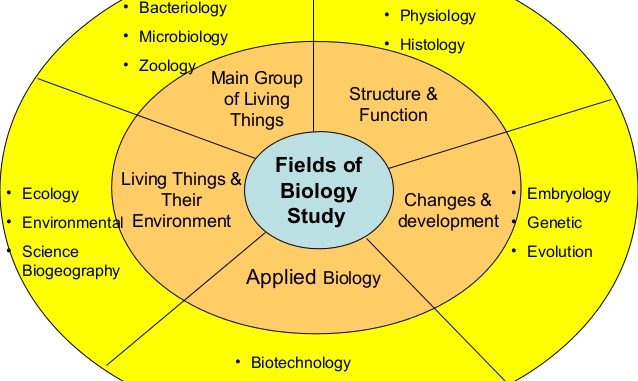
Scope of Biology

Biology is not only the study that unveils mysterious secrets of the world, but it is also a field of education and employment.

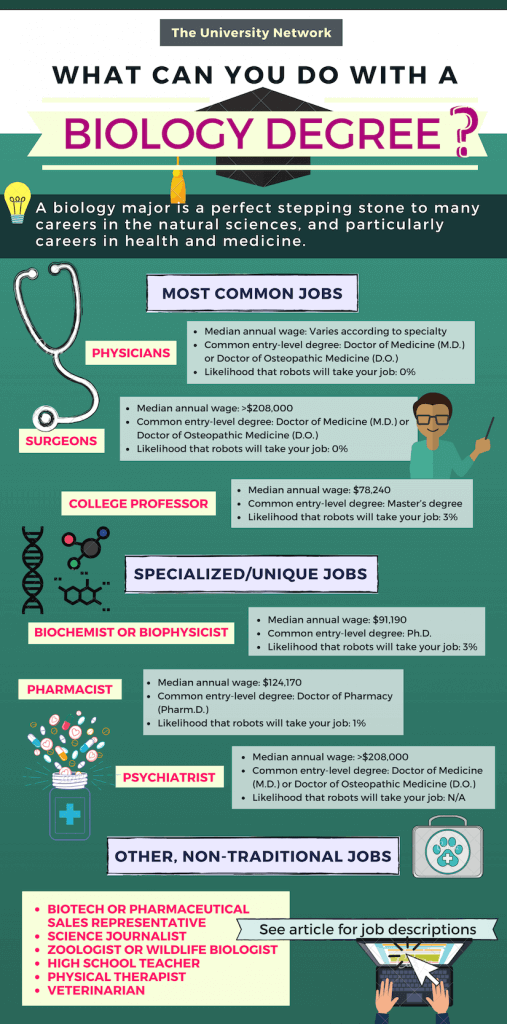
Professional scopes are doctors, nurses, pharmacologists, scientists, research scholars, etc.

vocal sources include lecturers, teachers, professors, etc.

Research scientist, forensic scientist, biotechnologist, pharmacologist, biologist, ecologist, nature conservation officer are some careers that a biology student can choose according to his/her interest.

practical application of the scope of biology in different fields: 

Agriculture

It gives important useful information about fertilizers, pesticides and insecticides that must be used. It has great application in the development of disease-resistant varieties, better production of crops in terms of quality and quantity, etc. A major aspect of agriculture like maintenance of field and soil, nutrients requirements of various species of plants are also studied under biology. 

Medicine

It can be considered as a boon to medicine. Be it a simple disease or contagious disease. Drugs need to be there to cure it. It can be in the form of vaccines or steroids or drugs. For example, the current pandemic situation is being cured by detailed study of the virus and creating effective vaccines.

Industries

Various industries use plant and animal products as their raw material. So basically, it is the study of plants and animals that helps in running an industry. Major industries include dairy, food, leather, textile, paper, jute, etc.

Conservation of the Biosphere

Conserving our ecosystem is an important aspect of the present scenario.

It has become very important to maintain stability in the environment. The study of biology helps in preventing the extinction of flora and fauna by conserving the biological hotspots and other endemic places with the help of constructing botanical gardens, zoological parks, sanctuaries, etc

Art and Aesthetics

In the form of museums, art galleries, planetariums, exhibitions etc., the study of biology has never failed to prove its importance. Apart from these, there is a vast scope in sectors like biochemistry, biophysics, animal husbandry, etc. New technologies keep developing in every field and require biology as their primary source of knowledge.

Genetic Engineering

It is an advanced study that has gotten its fame recently. Right now, it is the most flourished scope of biology where recombinant DNA technology, somatic hybridisation, cloning, tissue culture etc., is getting advanced every day.

Anthropology

It includes learning about the history of human lives through archaeology to understand the biological and physiological characteristics of humans and also their evolution through different eras.

BIOLOGY AND ITS RELATION WITH OTHER SCIENCE

Biochemistry

It is the study of chemical reactions, chemical composition, structural orientation, acid and base equilibrium.

Biostat

It is used to study the statistical data of living species, population density, ecological balance.

Sociology in Relation to Biology

It involves the study of human behaviour. It can only be done when one knows about the brain and nervous system in human beings and also about hormonal changes.

Geology in Relation to Biology

Many geological instances include biological factors.

For example, weathering of rocks happens only when there are biological factors like growth of lichens or growth of several microorganisms etc.

Role of Biology in Human Welfare

  • The study of human health and diseases is the most important criterion for humans, wholly dependent on biology. 
  • The strategies that are related to the enhancement of food is the second most important criterion.
  • The study of microorganisms under this subject plays a crucial role in decomposition, biogeochemical cycles, pharmaceutical needs, etc.
  • It is applied in several essential industrial processes like the production of enzymes, antibiotics and several other by-products.  
  • To understand the interdependence of biotic and abiotic factors of the environment and use this knowledge to maintain a balance between both.

Career Opportunities in the Field of Biology

  •  A student studying biology can work in various fields as a doctor, nurse or pharmacist, as a lecturer, as a scientist or a research scholar.
  •  A biologist can work in the food, dairy, leather industries, in biotechnological labs, airports, as a food quality manager and a lot more. 
  • Almost all the fields hire biology graduates as basic knowledge of the subject is one of the primary requirements in any field.

Ways to improve yourself [part 2]

[Bhoomika Saini]

Why is it important to improve yourself?

Bettering yourself can help you advance your career and accomplish professional objectives. For example, you could take a certification course in your field to increase your chances of a promotion. By taking steps to improve yourself, you can also acquire skills outside of traditional educational and occupational settings. Having well-developed hard and soft skills can aid you in a variety of workplace settings. For instance, you might decide to develop your communication skills. After improving yourself in that way, you may find that you can help mediate parties with different opinions.

1. Try a new schedule

Adopting a new schedule can offer a different perspective on how you use your time. Rethinking the way you spend your day and pinpointing your most productive hours can help you identify new ways to maximize the time you have.

For example, try waking up an hour earlier for an entire week to set aside time for yourself to learn, grow and improve. You can also allow yourself an hour before bed to read or allot an hour in the middle of the day to pursue a new hobby.

2. Commit to an exercise routine

Working out regularly can improve your health, increase your life span and contribute to a better quality of life at work and beyond. Adopting an exercise routine can also clear your mind and help you relax, which can improve your productivity.

Consider committing to working out for a few hours a week for an entire month. Choose a sport or a type of exercise you like, and consider partnering with a gym buddy to make the process fun. Cheer yourself on every time you accomplish a workout. If you miss a session, try to resume your normal workout schedule as quickly as possible to develop a healthy new habit.

3. Set big goals

On a typical day, you might have a series of small goals to accomplish. These can include everything from arriving at work on time and finishing a project to eating dinner with your family and finding time to relax together. You might even have long-term goals like saving for a down payment on a house or taking a vacation next summer. To improve yourself, make a point of thinking bigger.

For example, consider what you want to accomplish in the next five years, such as transitioning into a more rewarding career or launching your own startup company. Then establish specific, measurable, actionable, realistic and time-sensitive (SMART) goals to develop a plan for accomplishing these objectives.

4. Change your mindset

Take steps to adjust the way you think. When you change your mindset, you might realize you have more control over your circumstances than you previously thought. Knowing what you can and cannot control can empower you to improve your quality of life.

For example, you can start by questioning the status quo and any assumptions about your life situation. Consider asking yourself why you believe what you do, and challenge yourself to rethink the truth behind your beliefs.

5. Find a mentor

Striving for self-improvement can be more rewarding when you have a guide to lead the way. Whether you need professional inspiration or expert assistance, seeking a mentor can help you achieve your biggest goals.

To find a mentor, think about who you admire or who you want to be in 10 years. Look for a professional with excellent leadership skills and extensive experience in your field. Consider a mentor who can offer you the insight you need to accomplish your goals.

Common Language Questions.

[Bhoomika Saini]

1. What’s The Most Commonly Spoken Language Today?

First Language

Mandarin Chinese tops the list of most commonly spoken native languages with 870 million native speakers. With less than 200 million second language speakers, the vast majority of Mandarin speakers are native and also located in mainland China.

Second Language

When it comes to second languages, English takes the cake, with over 750 million second language speakers, which makes up the majority of the number of English speakers overall. Arabic is also a popular second language. With over 59 countries with an official language of Arabic, it’s easy to see why.

2. Is There A Language Spoken On All Five Continents?

There is, and you may be surprised to learn it is… French! French colonizers spread out all over the world, and as a result, there are both native and nonnative speakers in every continent.

Map of all five continents
Photo by Andrew Stutesman on Unsplash

3. What’s The Most Useful Language On The Internet?

Russian. A little less than half of all web content is written in Russian! Plenty is written in English as well, but if you are all about the internet life, you may want to learn some Russian.

4. What’s The Highest Demand Language?

Portuguese! This is due to the rapidly growing economy of Brazil. The native language of Brazil is Portuguese, an effect of colonizers in the area from Portugal. Brazil’s tourism industry is booming, and many companies are setting up locations in Brazil, making Portuguese a newly in-demand language.

Most spoken languages in the world, important to learn. Infographic by University Of The People

Languages you should try! [Part 2]

[Bhoomika Saini]

Photo by Monstera on Pexels.com

Mandarin Chinese

With over one billion Mandarin Chinese speakers in the world, of course it tops the list of most important languages to learn in 2020.

Most speakers are located within China, however, so is it still one of the most important languages to learn? The answer is yes — with China emerging as a global power, it becomes increasingly more important for businesses to have team members that know Chinese.

Arabic

Arabic started as a nomadic language, spoken between moving tribes. Today it is the official language of the Arab League, consisting of 22 countries such as Egypt, Jordan, Morocco, and the United Arab Emirates. These popular travel destinations make it worthwhile to learn Arabic. Not just that, it is the language of the entire Muslim civilization and all of its texts. With over 1.8 billion Muslims around the world, no wonder Arabic made the list.

Portuguese

Portuguese is spoken all over the world — it is the official language of countries in Europe, South America, Asia, and Africa. If that wasn’t enough to prove that this language is one of the most important languages to learn, here’s more: Brazil is emerging as one of the world’s newest economic powerhouses. Tourism in the country is growing and global companies are setting up shop, so the demand for Portuguese speakers is growing.

Hindi

With some of the highest numbers of speakers in the world, Hindi is one of the most important languages to learn without a doubt. But like with other languages, it’s not just the sheer number of speakers that should entice you to learn the language, but the global power of where the language comes from. India is a huge part of today’s world economy, and as Hindi is the most spoken language in India, it’s the one to learn.

Italian

Italian may not have the most speakers on this list, but that doesn’t mean it isn’t an important language to learn. Italy is steeped in arts, culture, and history. Many world heritage sites are located in Italy, and many historical texts are written in Italian. This country is a popular travel destination, and knowing Italian will help you on a trip. Plus, knowing any of these similar romance languages — Spanish, French, Italian, and Portuguese, will make it much easier to learn the others in the group.

Languages you should try! [Part 1]

[Bhoomika Saini]

French

French, also called the language of love, was actually the international, diplomatic language for centuries. Only recently, historically speaking, with the rise of the United States as a global power, did English prevail as the language of diplomacy. France is still quite the economic powerhouse, and a popular travel destination, so French is definitely a language to learn!

Spanish

Spanish has a large number of native speakers, and a large number of overall speakers as well. Most Spanish speaking countries are located in South and Central America, which are extremely popular travel destinations in recent years. For this reason, you will find many across the world who speak Spanish. In addition, due to the large number of Spanish speakers in the US, if you live, work, or travel in the United States, Spanish is the one to learn!

Russian

Russian is an extremely influential language among many Eastern European and Europeasian countries. The Russian language also has the second highest percentage of internet content (following English), and the leading percent of internet content in Europe. This makes the Russian language one of the most important languages to learn for European business.

Japanese

While the Japanese language is not spoken widely outside of Japan, it’s still an important one to know. Whether you want to travel in Japan, love the culture and food, or the technology, knowing Japanese can get you far in many ways. It’s also an excellent introduction to other Asian languages. There are some Chinese characters in Japanese, and with similar grammar to Korean, learning Japanese puts you on the path to learn all three.

German

Germany is the most widely spoken language throughout Europe, as Germany remains Europe’s most dominant economy. For this reason, if you do business or plan to do business in Europe, German is one of the most important languages to learn. It’s a funny language to learn, with endings tacked on to words to give them specific meanings. But it is also a surprisingly easy language to learn.

Benefits of learning different languages. [part 2]

[Bhoomika Saini]

Learning languages is an important part of being very soft and friendly welcomed in different countries. Even only one language cans totally change the way of the communication, the attitude towards you and the impression which you will make in people with which you conduct a conversation.

Nowadays it is like must to study and learn new languages, in terms of self development, comfort and confidence. During the years of studying and later when you want to work the knowledge of language is a big advantage. Studying abroad gives opportunity for better education which leads to a better working position after graduation. But this cause is reachable only when you know forage languages.

Let’s learn some more benefits of learning languages.

1. Connect!

One of the most rewarding aspects of the human experience is our ability to connect with others. Being able to communicate with someone in his or her language is an incredible gift. Bilinguals have the unique opportunity to communicate with a wider range of people in their personal and professional lives. Knowing the language makes you a local no matter where you are, opening up your world literally and figuratively. You will be shaped by communities. You will be humbled by the kindness of strangers. You will build lifelong friendships. And for these reasons alone, you will see the reward of learning languages for many years to come.

2. Deepen Your Connection to Other Cultures

Language is the most direct connection to other cultures. Being able to communicate in another language exposes us to and fosters an appreciation for the traditions, religions, arts, and history of the people associated with that language. Greater understanding, in turn, promotes greater tolerance, empathy, and acceptance of others—with studies showing that children who have studied another language are more open toward and express more positive attitudes toward the culture associated with that language.

3. Go to the Source

In a world of more than 6,000 spoken languages, we sometimes require translation, but speaking at least one additional language empowers us to access information that would otherwise be off-limits. For example, individuals proficient in other languages are able to navigate the Internet as genuine global citizens—consuming and assessing foreign media and entertainment.

4. Strengthen Your Decision Making

Studies show that decisions made in your second language are more reason-driven than those made in your native language.4 Contrary to popular assumptions, when we deliberate in a second or third language, we actually distance ourselves from the emotional responses and biases deeply associated with our mother tongue. The result? Systematic and clear-headed decisions based on just the facts.

5. Gain Perspective

As we explore a new language and culture, we naturally draw comparisons to what is most familiar. Learning about another culture sheds light on aspects of our own culture—both positive and negative—we may not have previously considered. You may find a greater appreciation for what you have, or you may decide to shake things up!

6. Become a Polyglot

Not only does learning a second language improve communication skills and multiply vocabulary in your first language—yes, really!—but research shows that it makes picking up additional languages a much easier feat, especially among children.3 That’s because when you learn a new language, you develop new brain networks that are primed and ready when you embark on learning a third language.

7. Boost Your Confidence

Any language learner can attest to making his or her share of mistakes while discovering a new language—often in front of an audience. It’s a necessary part of the learning process! Learning a language means putting yourself out there and moving out of your comfort zone. The upside is the amazing sense of accomplishment you’ll feel when conversing with someone in their native language.