Counter Strike First Person Shooter

Since its inception in the late 1990s, Counter-Strike has remained a cornerstone in the world of first-person shooters (FPS). Its impact on gaming culture, esports, and the broader gaming community is nothing short of profound. Developed by Minh “Gooseman” Le and Jess “Cliffe” Cliffe as a Half-Life modification, Counter-Strike emerged as a pioneer in team-based multiplayer gaming, reshaping the FPS landscape forever.

Birth of a Legend

The year was 1999 when the first iteration, Counter-Strike&nbsp, was released. Its premise was simple yet compelling: two teams, Terrorists and Counter-Terrorists, engaged in tactical combat across various maps. Players could buy weapons and equipment, encouraging strategic gameplay and teamwork. The formula struck a chord with gamers worldwide, captivating audiences with its intense gameplay and skill-based mechanics. 

A Community-Driven Phenomenon

What truly distinguished Counter-Strike was its grassroots evolution. As the gaming community embraced it, a fervent modding scene emerged. Countless custom maps, game modes, and modifications flooded the internet, breathing new life into an already addictive experience. This collaborative effort not only sustained the game’s popularity but also nurtured an engaged and passionate player base.

Competitive Foundations

The competitive aspect of Counter-Strike laid the groundwork for what would become a thriving esports ecosystem. LAN parties and local tournaments served as the breeding grounds for aspiring pro players, fostering a competitive spirit that transcended casual gaming. The birth of leagues and events like the Cyberathlete Professional League (CPL) and the Electronic Sports World Cup (ESWC) catapulted Counter-Strike into the realm of professional esports.

Evolution and Global Domination

Counter-Strike underwent multiple iterations, with each version introducing new mechanics, maps, and updated visuals. The release of Counter-Strike: Source and later, Counter-Strike: Global Offensive (CS:GO) in 2012, marked significant milestones. CS:GO, in particular, not only retained the essence of its predecessors but also introduced improved graphics, refined gameplay mechanics, and a more accessible interface, captivating both veterans and newcomers.

Cultural Impact

Beyond its gaming prowess, Counter-Strike has left an indelible mark on popular culture. Its influence extends to movies, television, and even traditional sports. References to the game are widespread, showcasing its penetration into mainstream consciousness. The game’s iconic maps like Dust II and gameplay mechanics like bomb defusal have become synonymous with gaming itself.

The Future of Counter-Strike

As of my last update in 2022, Counter-Strike remains a force in the gaming industry. Valve Corporation, the game’s developer, continues to support CS:GO with updates, tournaments, and a thriving esports scene. However, the gaming landscape is dynamic, and new challenges and opportunities will undoubtedly arise.

Conclusion

Counter-Strike’s journey from a humble mod to a global phenomenon is a testament to its enduring appeal. Its impact on the gaming industry, esports, and popular culture is profound, shaping the way we play and experience games. As it continues to evolve, one thing remains certain: Counter-Strike’s legacy as an FPS icon is firmly cemented in gaming history.
Counter-Strike: A First-Person Shooter Classic

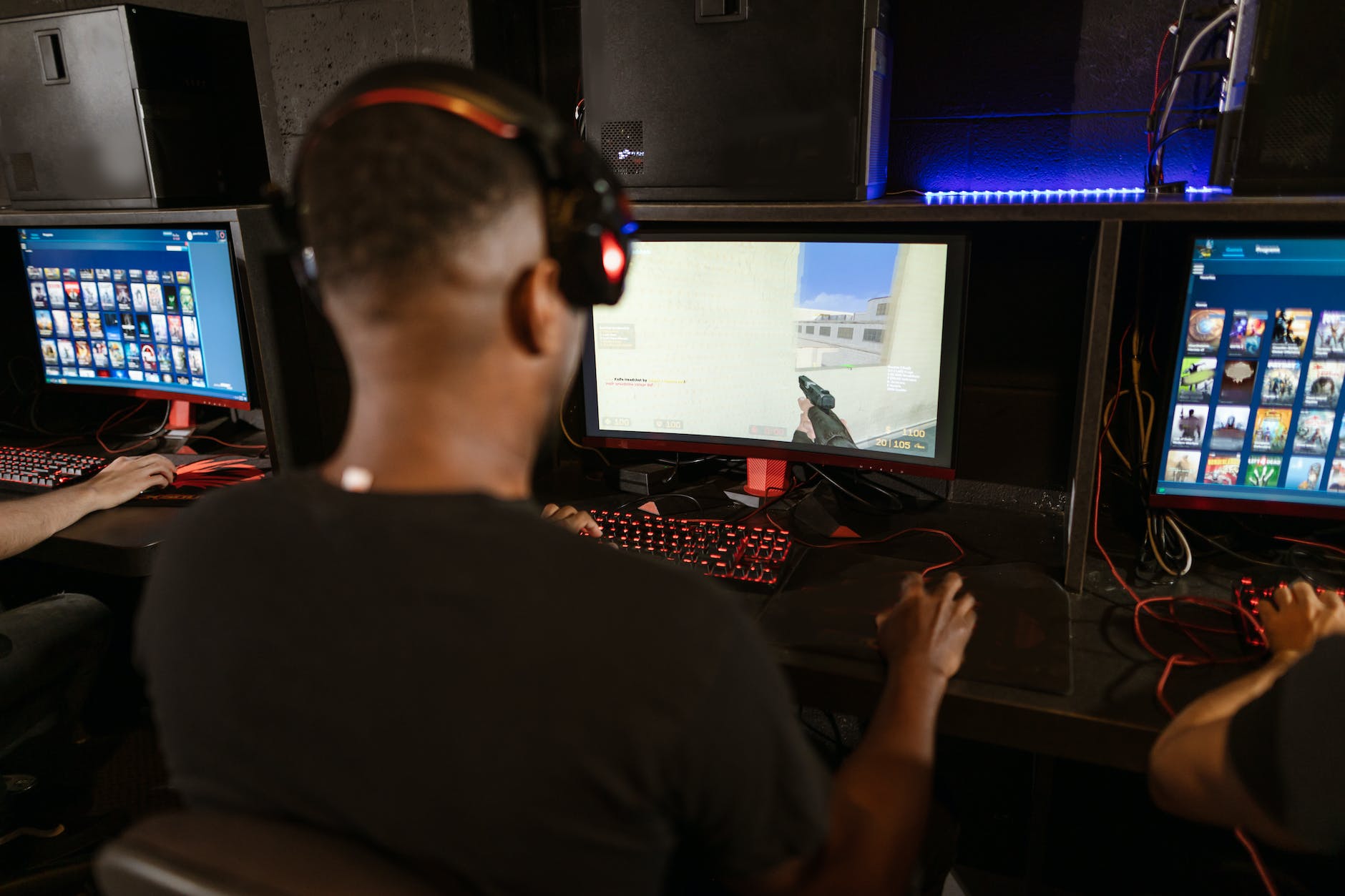
 Counter-Strike, often abbreviated as CS, is a renowned and influential first-person shooter (FPS) video game series that has left an indelible mark on the world of gaming. Developed by Minh “Gooseman” Le and Jess Cliffe, the first version of the game was released as a mod for Half-Life in 1999. Since then, Counter-Strike has evolved into a highly competitive and widely beloved franchise, with several iterations and an active global player base.

Photo by RDNE Stock project on Pexels.com

Gameplay and Objectives

The core gameplay of Counter-Strike is built on the concept of counter-terrorism versus terrorism. Players are divided into two teams: the Counter-Terrorists (CTs) and the Terrorists (Ts). The main game modes include Bomb Defusal and Hostage Rescue.

In Bomb Defusal, the Terrorists must plant a bomb at a designated site, while the Counter-Terrorists aim to prevent the bomb from being planted or defuse it if it is. This mode requires strategic planning, teamwork, and precise gunplay.

In Hostage Rescue, the Terrorists are tasked with capturing and guarding hostages, while the Counter-Terrorists must rescue them. The game promotes cooperation, communication, and tactical thinking.

Global Success and Professional Esports

Counter-Strike quickly gained popularity and became a major title in the emerging esports scene. The competitive aspect of the game led to the establishment of numerous professional tournaments and leagues, including the iconic ESL One and the Valve-sponsored Major Championships.

Counter-Strike: Global Offensive (CS:GO), the latest installment of the series released in 2012, remains one of the most popular esports titles. With millions of players, CS:GO features a sophisticated matchmaking system and a bustling market for weapon skins, adding depth to its competitive environment.

Professional players and teams from all over the world compete for substantial prize money, and CS:GO tournaments draw millions of viewers. The game’s competitive nature has led to the formation of dedicated esports organizations and the rise of famous players.

Maps and Strategies

Maps play a pivotal role in Counter-Strike. Iconic locations like Dust II, Mirage, and Nuke have become legendary battlegrounds. Each map presents unique challenges and opportunities, emphasizing different aspects of gameplay, such as long-range sniping, close-quarters combat, or tactical maneuvering.

Players develop strategies that involve map control, economy management (buying weapons and equipment), and coordinated team tactics. Communication is essential for planning attacks, holding positions, and adapting to the ever-evolving game dynamics.

Community and Customization

Counter-Strike has a passionate and dedicated player community. Gamers create custom maps, game modes, and mods, adding to the game’s longevity and diversity. The Steam Workshop provides a platform for players to share and access user-generated content.

In addition, the introduction of weapon skins in CS:GO allowed players to personalize their weapons and trade them in a virtual market, fostering a sense of ownership and investment in the game.

Conclusion

Counter-Strike stands as a hallmark in the world of first-person shooters. Its addictive gameplay, competitive spirit, and dedication to tactical team-based combat have led to its enduring popularity. As one of the pioneers of the esports movement, Counter-Strike continues to attract a dedicated player base, both casual and professional, making it an enduring classic in the gaming industry. With the potential for new iterations and updates, the legacy of Counter-Strike is far from over, promising to captivate the hearts and minds of gamers for years to come.

CS:GO Game Sense: Is There Any Chance of Improvement?

 CS:GO game sense may vary, depending on your playing style and individual success. However, it is a real thing that should not be ignored by any chance. There is even a chance to enhance your game sense through CS:GO live streaming, practice, and strategic experiments. Players should be ready to generate their own unique ideas which promise to make the game even more interesting and exciting.

The significance of game sense is still the subject of discussion in the fanbase. In this article, we will try to explore this feature from different perspectives.

Photo by Sean P. Twomey on Pexels.com

Game Sense CS:GO Cheat

Players can enjoy an unfair benefit. Cheats allow punters to see through walls, track the opponent’s location, and provide them with a crucial leg up in a game. While some individuals may like using these cheats for winning purposes, others may think about the “takeaway” feel that puts the fair yet random gameplay at risk.

When it comes to CS:GO, a cheating offence is not something to avoid. While a player uses external assistance in order to benefit, this can be viewed as a form of cheating. It is crucial to take action when spam, fraudulent activities, and special codes are involved. Nevertheless, many punters start accusing CS:GO matches of being unfair. But this doesn’t seem to be an issue in the near future.

Interestingly, cheaters are not the luckiest in the community. They are actually punished quite often due to lost battles and the necessary treatments. This is why they should devote a great amount of time and effort to practice. Otherwise, things might get darker than they actually seem.

When playing CS:GO, it is necessary to have a Steam account and buy the game. Once players are done with it, they can launch the game and join a server in a short time. After finding the server, players use the in-game server browser or an independent-party server browser. Thus, having a server can make it easier to join the community and start completing various missions.

Good Game Sense

The ability to take smart decisions throughout gameplay is a crucial value that might affect the game’s efficiency. It’s crucial to have good game sense, as it allows players to engage most of their team’s powers. Good game sense provides an idea of when to make particular scenes and how to manage them accurately.

For more efficiency, it takes time and effort to organize the activities that will assist you in mastering the game and developing a good game sense. Playing against individuals who stand above the rest, watching the collaboration between professional players is a great way to master the game from the inside out. The more they can improve, the better. This is especially the case when it comes to a long-term perspective.

Players can enhance their game sense in different ways. It is crucial to play against strong opponents to learn how to build effective strategies in the most complex battles. Players can also apply their skills in the long run as long as they learn to apply those skills correctly. No mistakes are allowed due to their instant effect on the situation. It’s in the best interest of players to checkCSGO live scoreseach time they join CS live streaming.

Pro Game Sense

Players try to comprehend the internal processes that take place throughout the game. This determines their ability to make smart decisions and take instant actions without worrying about future success. It happens to be a smart combination of knowledge, experience, and 6th sense.

At the professional level, it is always a good idea to know the best aim in advance. Of course, there are numerous factors that determine an individual’s ability to make accurate shots. While luck is never a reliable companion, players should be ready to develop proper technique and proceed with regular follow-through. Moreover, having an absolute understanding of the target and what you try to achieve with each shot can boost your performance once and for all.

Those who are fond of strategic shooting games should be able to surpass the gaming mark. When players enter the word aim into a search engine, there are a great number of practical recommendations. Not all of them can be taken seriously due to a diversified game scene.

Over-watch or Over-worked ?

In October 1958, American Physicist Willy Higinbotham creates a tennis game called “Tennis for Two” on an oscilloscope and analog computer for public demonstration at Brookhaven National Laboratory. This was the world’s first video game and was a major inspiration behind the 1972 arcade game legend: Pong. With Pong came a boom of other successful video games including Pac-Man (1980) and Donkey Kong (1982) and a new industry was born.

In recent years besides consoles and arcades with the emergence of social networks, smartphones and tablets introduced new categories such as mobile and social games into the picture and now in 2021 the value of the video game industry in the United States was estimated to be $65.49 billion. But as tens of thousands of video game fans and creators shell out their dollars, a difficult truth about the gaming industry is beginning to emerge: what’s seen by outsiders as a fun, creative business is becoming psychologically and financially unbearable for those working in it.

“Every game you like is built on the backs of workers,” says Nathan Ortega, who thought he found his dream job when Telltale Games offered him a position as a community and video manager in 2015. Ortega was a Telltale enthusiast so it was an easy decision to pack up his stuff and relocate near the company’s headquarters in California. But he was soon so stressed out by work that he developed an ulcer and started coughing up blood. The dedication that goes into masterpieces of gaming is admirable. Whether it be designing, coding, producing, or even testing a game, it is clear that passion is abundant from people working “behind the screen”. While this euphoric hype is indeed an aspect of the gaming industry, more often than not the wave that pushes these passion-filled developers forward is harsh and ruinous, leaving nothing but a husk of what once was a spirited creator. Video game makers call it “crunch” – the process of working nights and weekends to hit a tight deadline. But unlike other professions that might muster employees to work overtime in the final stretches of a project, in game development it can be a permanent, and debilitating, way of life. In October 2020, Polish game developer CD Projekt Red, asked all of its employees to work six-day weeks in the lead-up to the November release of Cyberpunk 2077, one of the most anticipated games of the year. But the new policy was just the formalization of an informal code that has long existed at the studio. Various departments had already been working nights and weekends for weeks or months straight in order to meet deadlines, according to people who have worked there. Studio head Adam Badowski said he was aware that many employees had been testing their limits to bring the game to launch, efforts for which he was “immeasurably thankful!”

The “crunch” is a situation that has existed in the gaming industry for decades. Many other game developers have also cultivated reputations for running flat out. As the industry prepares for another big holiday season, workers are putting in long hours to finish their games in time. Few employees would object to putting in the occasional night or weekend, but crunch is a culture, an atmosphere, a state of mind. Countless horror stories have come out from ex-developers who know crunch is bad news. After a 70, 80, or even 90-hour work week, spending quality time with family becomes more of a challenge than a relief. An offset of these overworked developers not being able to take basic care of themselves is an inclination to abandon the industry.

Amid this turbulence, dozens of workers in the gaming business are calling for the industry to unionize. The turmoil presents them with both an opportunity and a challenge. On one hand, the instability can make it difficult to talk about unionization. Still, a recent survey conducted by the industry group International Game Developers Association found that 47% of workers said they would support a union at their company, while 26 % said they “maybe would.”

Video games are supposed to be an outlet to relieve stress and spark imagination and creativity, but they are instead being exploited by companies to squeeze money out of their employees. If crunch isn’t solved, this industry is doomed to failure.

What if we are living in a Video Game?

Kids these days are so head over heels into video games, do you ever think what if we are pawns in a video games ourselves, some alien species with the controller?

Rizwan Virk, a computer scientist and video game designer, published a 2019 book, The Simulation Hypothesis, that traces the path from today’s technology to what he calls the “Simulation Point,” the moment at which we could realistically build a Matrix-like simulation.

I know nothing about computer science, but this idea that we’re all characters in an advanced civilization’s video game is, well, kind of awesome.

Pretend I know absolutely nothing about the “simulation hypothesis.” What is the simulation hypothesis?

The simulation hypothesis is the modern equivalent of an idea that’s been around for a while, and it is the idea that the physical world that we live in, including the Earth and the rest of the physical universe, is actually part of a computer simulation.

You can think of it like a high resolution or high-fidelity video game in which we are all characters, and the best way to understand it within Western culture is the movie The Matrix, it’s become a cultural phenomenon now beyond the film industry.

In that movie, Keanu Reeves plays the character Neo, who meets a guy names Morpheus, who is aptly named after the Greek god of dreams, and Morpheus gives him a choice of taking a red pill or a blue pill. And if he takes the red pill, he wakes up and realizes that his entire life, including his job, the building he lived in, and everything else, was part of this elaborate video game, and he wakes up in a world outside of the game, which he did. That is the basic version of the simulation hypothesis.

Are we living in a simulated universe right now?

There are lots of mysteries in physics that are better explained by the simulation hypothesis than by what would be a material hypothesis.

The truth is that there’s much we simply don’t understand about our reality, and I think it’s more likely than not that we are in some kind of a simulated universe. Now, it’s a much more sophisticated video game than the games we produce, just like today World of Warcraft and Fortnite are way more sophisticated than Pac-Man or Space Invaders. They took a couple of decades of figuring out how to model physical objects using 3D models and then how to render them with limited computing power, which eventually led to this spate of shared online video games.

I think there’s a very good chance we are, in fact, living in a simulation, though we can’t say that with 100 percent confidence. But there is plenty of evidence that points in that direction.

Watch season 18, episode 7 of South Park if you haven’t gotten the hint already!

Think of how sometimes when you walk into a room with a purpose but the moment you enter, you forget the reason you walked in for? Who knows some work might have come up so the gamer playing you had to leave? So, you go blank for a few seconds, but when the gamer comes back, you are back on track as well.

Think of how every time you fell down. Who knows that isn’t because the controller from the gamer’s hand maybe because he was balancing his plate of food in his hand while playing?

What if the old people are being played by the gamers with low frame rate and bad internet connectivity?

When I say there are aspects of our world that would make more sense if they were part of a simulation, I mean there are a few different aspects, one of which is quantum indeterminacy, which is the idea that a particle is in one of multiple states and you don’t know that unless you observe the particle.

Probably a better way to understand it is the now-infamous example of Schrödinger’s cat, which is a cat that the physicist Erwin Schrödinger theorized would be in a box with some radioactive material and there was a 50 percent chance the cat is dead and a 50 percent chance the cat is alive. Now, common sense would tell us that the cat is already either alive or it’s dead. We just don’t know because we haven’t looked in the box. We open the box and it’ll be revealed to us whether the cat is alive or dead. But quantum physics tells us that the cat is both alive and dead at the same time until somebody opens up the box to observe it. The cardinal rule is the universe renders only that which needs to be observed.

Isn’t the hypothesis that we’re living in a flesh-and-blood physical world the simpler explanation?

A very famous physicist, John Wheeler, was one of the last physicists who worked with Albert Einstein and many of the great physicists of the 20th century. He said that physics was initially thought to be about the study of physical objects, that everything was reducible to particles. This is what’s often called the Newtonian model.

But then we discovered quantum physics and we realized that everything was a field of probabilities and it wasn’t actually physical objects. That was the second wave in Wheeler’s career.

The third wave in his career was the discovery that at the core level, everything is information, everything is based on bits. So Wheeler came up with a famous phrase called “it from bit,” which is the idea that anything we see as physical is really the result of bits of information. He didn’t live to see quantum computers come into reality, but it’s looking more like that.

So I would say that if the world isn’t really physical, if it’s based on information, then a simpler explanation might in fact be that we are in a simulation that is generated based on computer science and information.

How close are we to having the technological capacity to build an artificial world that’s as realistic and plausible as The Matrix?

There are 10 stages of technology development that a civilization would have to go through to create a hyper realistic simulation. We’re at about stage five, which is around virtual reality and augmented reality. Stage six is about learning to render these things without us having to put on glasses, and the fact that 3D printers now can print 3D pixels of objects shows us that most objects can be broken down as information.

But the really difficult part — and this is something not a lot of technologists have talked about — is in The Matrix, the reason they thought they were fully immersed was they had this cord going into the cerebral cortex, and that’s where the signal was beamed. This brain-computer interface is the area that we haven’t yet made that much progress in, but we are making progress in it. It’s in the early stages.

So my guess is within a few decades to 100 years from now, we will reach the simulation point.

The effects of video games on a child’s behaviour

Video gaming has become a popular activity for people of all ages. Many children and adolescents spend large amounts of time playing them, although no one should have more than two hours total of screen time in a day. Video gaming is a multi-billion dollar industry, bringing in more money than movies and DVDs combined. Video games have become very sophisticated and realistic and some games connect to the Internet, which allow children and adolescents to play online with unknown adults and peers.

While some games have educational content, many of the most popular games emphasize negative themes. They promote the killing of people or animals, the use and abuse of drugs and alcohol, criminal behavior, disrespect for the law and other authority figures, sexual exploitation and violence towards women, racial, sexual and gender stereotypes, and foul language obscenities and obscene gestures. Examples of video games not acceptable for children because they have these themes include the popular ones Grand Theft Auto, Call of Duty, and Mortal Kombat.

There is growing research on the effects of video games on children. Studies of children exposed to violence have shown that they can become immune or numb to the horror of violence, imitate the violence they see and show more aggressive behavior with greater exposure to violence. Studies have also shown that the more realistic and repeated the exposure to violence, the greater the impact on children. Children and adolescents can become overly involved and even obsessed with video games, leading to poor social skills, time away from family time, school work and other hobbies, lower grades, reading less, exercising less, becoming overweight, and having aggressive thoughts and behaviors.

So how can you, as a parent, protect your child against these types of video games? First, you can check the Entertainment Software Rating Board ratings to learn about the game’s content. Every video game will actually have a label on the front to tell you what type of game it is. If it says M for mature, it’s not for your child.

Play the video games with your child to experience the game’s content and know exactly what your child is playing. Set clear rules about the game’s content for both playing time in and outside of your home. Strongly warn your children about the potential serious dangers of Internet contacts and relationships while playing online. There are a lot of online predators that will look for children specifically playing video games and this can lead to them meeting in real life. Finally, remember that you are a role model for your child. Make sure the video games you play as an adult are ones that you would want your child to play.

If you are concerned as a parent that your child is spending too much time playing video games or your child starts becoming obsessed with aggressive or violent video games, make sure you set some limits. You’re not allowed to play games for one hour after all the homework is done and encourage your child to participate in other activities so they’re not drawn to those video games. By being aware of what games are out there, you can help your child make appropriate decisions about gaming no matter where your child plays.

Video Game crash of 1983

In 1983 the video games industry was hit with a recession that almost ended the existence of video games of that time period. This period lasted for almost two years from 1983 to 1985. Many people and journalists who were critical were calling video gaming a fad. Numerous companies went bankrupt or stopped making video games entirely. This recession is known as the Great North American Video Game Crash or Atari Shock (Primarily in Japan).

Video games in the 1970s were dominated by arcade machines and by the end of the decade home game consoles were also getting popular. With the start of the 1980s, the video gaming industry witnessed a boom with numerous companies like Mattel, Atari, and Coleco dominating the market. The early 80s was a time of innovation and growth in the video game industry but there was instability in the industry as well. This was a time period when video games were becoming more mainstream and popular. Many new players entered the market ranging from industries to small developers that had no association or prior experience in game development in general.

Pacman was a big hit in the early 80s and it was not of the most popular video games in the arcades. Its successor Miss. Pacman improved on the formula and was a success as well. After the success of Pacman in the arcades, Atari wanted to replicate the success in the home game consoles. But with the limited constraints with the memory and short development period, the game was not well received by the consumers and critics alike. In 1982 Atari also brought the license to release the video game of the movie for 21 million. The game was developed in a time period of only 5 weeks. The game was negatively received and only 1 million copies of the game were sold off the 5 million manufactured. Many of the sales were also returned to the retailers furthering the damage. During this period video games were being published by small developers with very poor quality and many big developers were producing games that were more of a marketing token than the game. There were many clones of the same games with little to no redeeming quality and replayability. There were also numerous consoles unlike today with too many options that were no different from one another. With the abundance of supply and low sales of games, retailers started to remove stocks of video games and this led to the shrinking of the industry. Atari had lost $500 Million in 1983 and had to cut its workforce from 10,000 employees to just 400 employees.

During the 1980s there was a boom in the Personal Computers market as well. The PCs were much more powerful than consoles and they could play games and do many tasks like word processing and spreadsheets. The PC industry was unaffected by this low point of video game consoles.

In 1985 Nintendo Corporation launched the Nintendo Entertainment systems in North America and Nintendo ensured that only a limited number of games to be released under their license agreement. This ensured a certain threshold of quality for the games that were released for the system and Nintendo emerged out of the survivor from the video game crash. The Nintendo Corporation started to dominate the video game industry with an assurance of quality that was unmatched by any other corporation at that time. Many other entrants like SEGA also emerged after the crash. Nintendo with its approach and license and quality assurance of video games has left a big impact on the industry to this date. Video games industry has only grown since then and also overtaken other source of entertainment. Nintendo can be credited to provide the industry a trajectory that was severely needed after the crash of 83.

References:

The Story of the Best Selling Video Game of all time: Tetris

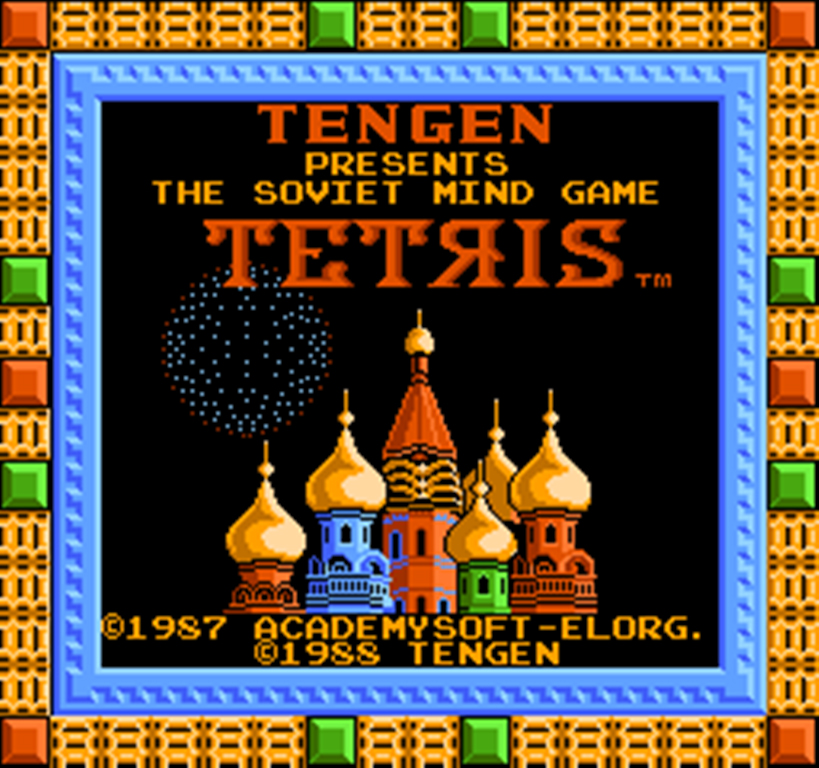
Tetris has its origin in the Dorodnitsyn Computing Centre (Research Lab). It was one of the foremost research institutes of the Russian Academy of Sciences, located in St Petersburg, Soviet Union (Now Russia). Created by software researcher Alexey Pajitnov in 1984, Tetris is a simple tile-matching game that took the world by storm upon it’s release.

It was developed for Electronika 60, which was a computer, made in the Soviet Union. This period was the final stage of the Cold war Era and computers were becoming more popular as well.

The game wasn’t intended as a commercial product just like the creation of the music record. But it was to be distributed freely among academic institutions around the Soviet Union and the economic bloc of countries aligned with the USSR in Eurasia, Africa, and the Americas that demonstrated use cases for the software.

As USSR was a communist state, so Pajitnov did not technically own the program as the game was under the ownership of the state. Pajitnov along with the help of a colleague, Dmitry Pavlovsky, and a teen computer programmer, Vadim Gerasimov continued to work on the game project even though commercializing it would have been a risky move under the Soviet government. Gerasimov further ported the game from the old and bulky Elektronika 60 to the more widely used (IBM) compatible PCs.

As Elektronika 60 had no graphics output, the individual blocks in the game were made of different text, but with the port in PC, they were able to support color graphics. This brought the game to life.

Pajitnov and Gerasimov had started distributing Tetris for (PC) in 1985 among their friends and colleagues in various math or computer conventions. Soon the sharing spread and the game was smuggled outside USSR to Hungary. During mid-80s U.S and Japan had a more prevalent console market whereas, in Europe, gaming was primarily done on computers. There was a non-existent software market in Russia and most software was usually copied in floppy disks.

Welcome screen of 1987 version of Tetris

In 1986 Robert Stein, a salesman from the UK-based software company Andromeda spotted Tetris at Hungary’s Institute of Computer Science. He was convinced by the potential of the software and he struck an agreement with Pajitnov to sell the games internationally. But legally Tetris was still under the ownership of the Soviet government.  There was one problem, the agreement was only for the PC and not for any other platform and Stein has struck a deal with Sega to launch the game on their platform. Later Henk Rogers, another salesman from the Netherlands wanted to find a good launch game for the Nintendo’s new Game Boy handheld. The Soviet government was not happy with the Stein deal. But Rogers convinced the Soviet government and they agreed and he also formed a good relationship with Pajitnov. Later Andromeda’s license of Tetris was deemed illegal. Nintendo was given the right to launch the game on its console. The GameBoy was a platform to showcase one of the first video games exported from Russia. The game was a commercial hit and it has been ported to the most number platforms to date. The game also holds the record as the best-selling game of all time. In 1996, Pajitnov was able to reclaim the ownership of the rights and formed the Tetris Company, along with Henk Rogers. Even though he missed collecting the potential royalties for Tetris which were over hundreds of millions, he was still able to secure the future royalties.

References:

Far Cry 4’s Indian Connection

Introduction

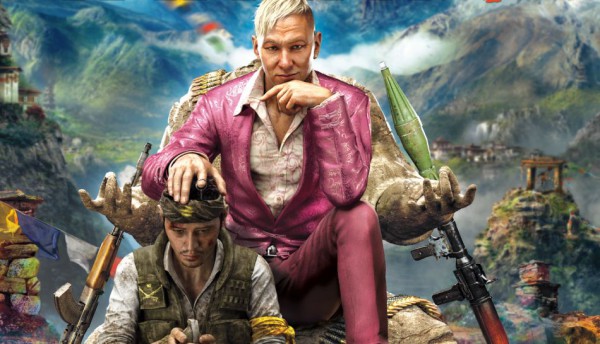
Far Cry 4 is an open world, first person shooter made and released by Ubisoft Montreal in 2014 and is the fourth installment in the popular Far Cry series. The game takes place in Kyrat, a fictional Himalayan country based on Nepal,Indian and Tibetan Himalayan frontier. The main story follows Ajay Ghale, a young Kyrati-American, where he is caught in a civil war involving Kyrat’s Royal Army, controlled by the tyrannical king Pagan Min, and a rebel movement called the Golden Path.

Interesting Features

The story is loosely inspired by the Nepalese Civil War, an armed conflict between the Government of Nepal and the Communist party of Nepal (Maoist) (CPN-M) between 1996 to 2006. The games’s location is modeled on the Himalayas and the developers have done an amazing job on the all the details.The game has many interesting characters and as per the Far Cry tradition, the villain, Pagan Min, takes the spotlight in an amazing performance Troy Baker. The local ‘Kyratis’ speak Hindi and their religion, temples, monasteries and culture are inspired by Hinduism and Buddhism. There are even missions based on Buddhist legends and folklore. The game, in its parallels, aptly portrays the adrenaline rush and dread of the real civil war and mountain warfare. Even the melee weapon is the Khukri which is famous for it’s association with Gurkhas. The names of all the places, regions, landmarks and frontiers sound very Desi showing the developers did their homework by visiting and studying the locations they modeled the whole game on. The soundtrack by Cliff Martinez consists of usage of traditional Nepalese and Indian instruments which combined with electronic samples had high octane action and mystical wondering.

Virtual Reality: Its history and future

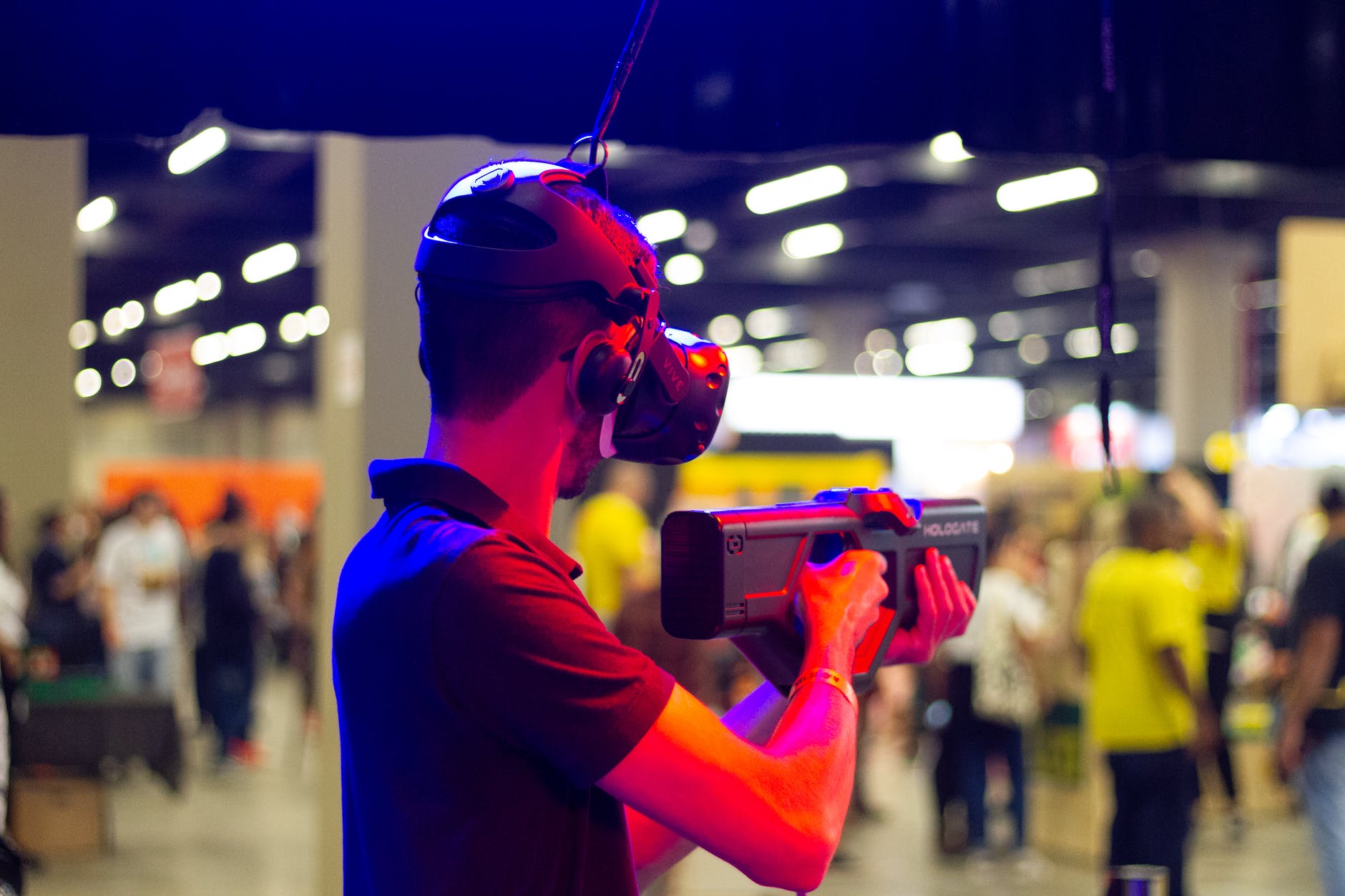
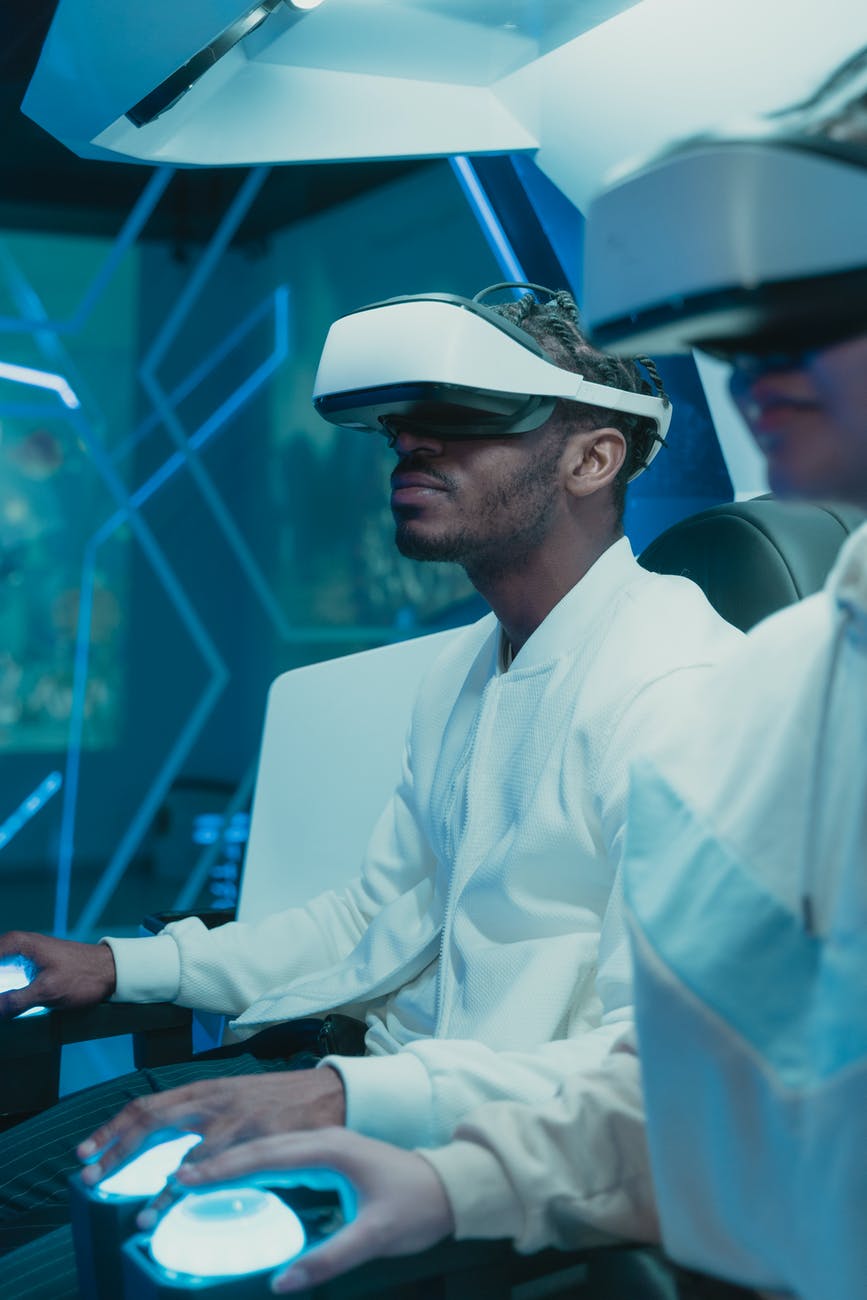
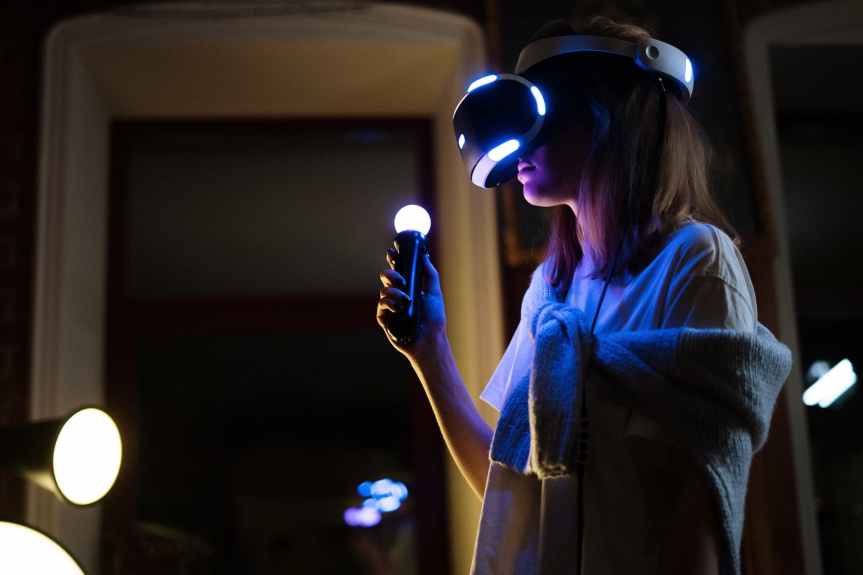
Virtual Reality has a brief yet rich history with many ups and downs. Even though the formal name was defined much later, there had been many attempts that resembled the Virtual Reality that we know it as today. Let’s first define the goal of Virtual Reality. It is to trick the brain to believe that something is real with the help of virtual elements, these elements can be auditory (sound) or visual (sight). But there are many parallel definitions of VR but one of the essential differentiating factors of Virtual Reality compared to other forms of media is that VR has some sort of interactivity. Unlike Movies or 3D movies where a person can only view but not interact, VR facilitates the freedom to touch, interact and control what a person sees on their screen.

History of VR

The fascination with VR goes way back to the 1930s when science fiction writer Stanley G. Weinbaum wrote a story where he mentions about Pygmalion’s spectacles. The wearer would be able to experience the virtual world. VR was further popularized by the popular Sci-fi movie, Star Trek: The Next Generation and its Holodeck.  

­One of the first examples of VR HMD (Head Mounted Display) was ‘Sword of Damocles’ developed by Ivan Sutherland and his student Bob Sproull. The HMD was connected to a computer. The contraption setup was intimidating, cumbersome, and heavy. The graphics that were shown if the HMD were quite simplistic and trivial, but it was a convincing step towards the VR we know today. The term ‘VR’ was popularized in the 1980s by Jaron Lanier. By the end of the 1980s, NASA with the assistance of Crystal River Engineering, created Project VIEW. It was a VR simulator that was developed to train the astronauts. The 1990s saw the use of VR in multimedia and mainstream commercial spaces. Numerous virtual reality arcades were introduced in the public spaces where players could play games with immersive stereoscopic 3D visuals. The mid-1990s saw the VR foray by console manufacturers. Nintendo and SEGA both showcased their VR gaming headsets but both were a commercial failure due to technical limitations and lack of software support.

In 2012 Oculus Kickstarter had raised 2.5 million dollars and this gave the startup a monetary jumpstart that previous VR projects were not able to attain. In 2014 Facebook bought the Oculus and this ensured that the VR startup would be adequately funded in their VR developments. 2014 also saw the launch of numerous other VR developments like Google cardboard, Sony PSVR and Samsung Gear VR. In 2016 HTC released its advanced VR headset, HTC Vive. Now the focus was to make VR truly standalone free from the assistance of a dedicated computer or a smartphone.

The Future

The Future of VR looks bright, there are many factors for this but one of the major factors is the price of VR has significantly gone down. There are continual developments in the sphere of VR and various new technological innovations are attempting to make the adoption of VR much more seamless, comfortable and intuitive to use. The use of VR is not just limited to gaming but now VR is also used for many commercial and business purposes. Recently Microsoft signed an agreement with the US government to supply 120,000 semi-custom versions of Hololens VR/AR headsets. VR is increasingly used in the health and manufacturing sectors as well. With a compound annual growth of 21.6% from 2020 to 2027, it seems that VR is only going to get more mainstream in the future.

References:

https://nix-united.com/blog/the-past-present-future-of-virtual-reality/

https://www.vrs.org.uk/virtual-reality/history.html

Steam : PLATFORM THAT CHANGED PC GAMING FOREVER

Steam is a digital marketplace and is owned by Valve Corporation. Valve Corporation was formed by ex-Microsoft employees and after launching critically acclaimed games like Half-Life and Counter-Strike, they set out their eyes on retailing software through the internet.  

History of Steam

Steam was launched as a standalone software client in September 2003 as a channel to provide automatic updates for their games.  It pioneered the digital distribution of the software. Before video games used to be physically owned and any kind of updates and patches were very cumbersome to implement.  As owning music CDs became obsolete similarly owning games in physical media became a rare thing. As internet speeds increased, this meant that downloading games over the internet became easier, and having a single library where the users can access all their purchases has now become the norm.

Later it expanded to provide software by third-party developers to become a full-fledged distribution platform. The developer of Steam is Valve Corporation.  As of today, it is one of the most profitable privately owned corporations in the world.

Steam’s business model is very similar to the model that Apple uses in its app store. It operates a commission-based business model. Steam takes a percentage cut from all the sales made on its platform (30%)

How Steam grew from its initial years?

During In its initial years, Steam provided a freemium model.  It offered its games for a free-to-play model. It helped Steam to reach a wider audience and increase its growth.

Steam has benefited a lot with its network effect. As more and more game publishers and smaller indie game developers joined the platform. Steam increased its titles library. New developers got a medium to publish their games without the hassles and cost of hosting and maintaining the games. With the help of free games and new value units being added all the time, new users joined the platform at an ever-increasing rate as well.  Now consumers could access their whole game library in a single place. Thus benefiting both these sides of the core interaction.

Currently Steam has 100 million monthly active users and over 30,000+ games listed on its platform.

In the initial years Steam solved its chicken and egg problem by providing free games and free demos of games. The strategy of seeding by providing free updates and discounts that were not available in physical media helped Steam to become a viable option. The Same strategy is also followed by the Fortnite developer and Steam rival Epic Games Store which was launched in 2018. It gives away a free game every week. This has helped Epic to get a significant foothold in the market dominated by Steam. Even though Epic games store lacks in the number of feature layers that Steam provides. Valve had realized that its user base is a very valuable asset. To increase the engagement in the platform it added community forums. Where fellow users could discuss and help each other with any topic. Steam also introduced many new features including statistics tracking system and friend list. Now Steam was shaping up like a social media platform over its core interaction as a mere platform.

In 2008 Steam introduced a filtering system. That helps users to better find their desired product. Now the catalog could be browsed according to the genre. In 2012 Steam introduced Steam Guard.  This included two-factor authentications to curb frauds and also launched its mobile app. In 2012 Steam introduced Steam Guard.  This included two-factor authentications to curb frauds and also launched its mobile app. In 2016 Valve introduced the support for VR headsets. It collaborated with HTC to introduce the Vive headset.  Later extending support for Oculus Rift.

Present and Future

Recently Steam launched a new VR title, Half-life: Alyx with the introduction of its new VR headsets. It’s one of the best virtual reality applications to date and the game received critical acclaim from reviewers and users alike. Valve is again trying a paradigm shift for pushing Virtual Reality to the mainstream and so far they have been successful in it.

Steam was one of the first digital marketplaces and they are continually working on improving their platforms. Even with new competitors, Steam has been a relevant force for over 15 years. New technological ventures and platforms can learn a lot from Valve with its drive to be innovative and ambitious in its approach.

References:

Video games and Education : How to bridge the two

Videos games have become a significant part of our culture for over half the century. They have also lead to many leading artistic and technical endeavors including many innovations in all these years. People have started to recognize the importance of these games as culturally important and the need to curate and store them properly. 

Education is one of the areas that have gone through a transformational change in 2020 and forward. The learning space has transitioned from a physical space to a space that has gone digital. The convergence of various technologies and modalities has given birth to a new space in the education system.

When it comes to Computer games, many used to scoff at them as a mere product for brief entertainment, but the increased proliferation of digital in every individual’s life means that Video games have a more significant role to play than ever before. The increased visual fidelity with better computing power has signified more immersion in the digital world. Online education has been given a push from governments around the globe. The majority of the higher institutions are teaching remotely with the help of different online tools. One of the major challenges that many educators face is the problem of engagement on par with the physical class.

Instead of just looking at online education as an alternative for the physical classes, we have to look at online education as a means of learning that can enhance the experience and engagement of the students than the physical classes as well. The technologies in 2021 clearly indicate that various tools and measures can be added into the experience of not just online learning and but also in the space of cultural heritage and digital tourism. Video games are an important tool that educators can leverage to fulfill these requirements.

Engagement and immersion can be the key factors that can drive the education system forward. There are many instances where students skip a certain subject even before attempting to learn it. This can be due to a poor and unfavorable experience with a certain instructor or wrong assumptions about the difficulty of that subject. Engaging interfaces in the form of creative games, virtual reality, augmented reality, mixed reality can help alleviate these types of issues.

Human-Computer-Interaction is an important field where the aspect of design and technology converge. This area not just deals with technological issues but also with the psychological and socio-cultural problems while designing/building a product or an interface. The interface is an important area that is often overlooked on many platforms. Many Educational platforms don’t offer the freedom that can help students, but they rather use the stingy design philosophy and force the users to a particular behavior while using it. Therefore the interface of games becomes equally important. Games can be used to create a more participatory environment for both the teachers and students alike while increasing the experimentation and systematic thinking in the class.

Video games are usually played to win or accomplish a level. Players are motivated by winning these challenges and this is the key to stay engaged. Games motivate through fun, which is part of the natural learning process in human development with instant and visual feedback.

We can conclude that the implementation of video games in the realm of education can make online learning more engaging and intuitive for learners. This is still a novel field of research and we have a long way to go but we cannot dismiss the numerous possibilities that games can provide us in this area.