Impact of MGNREGA in India

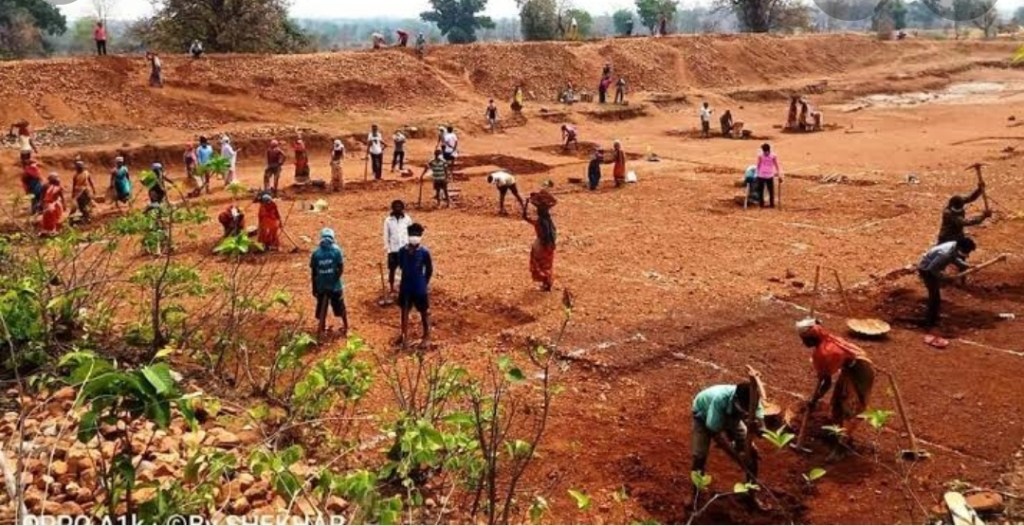
National Rural Employment Guarantee Act (NREGA) was enacted by the legislation on August 25,2005. But it was renamed as the Mahatma Gandhi National Rural Employment Guarantee Act (MGNREGA) on 2nd October 2009.

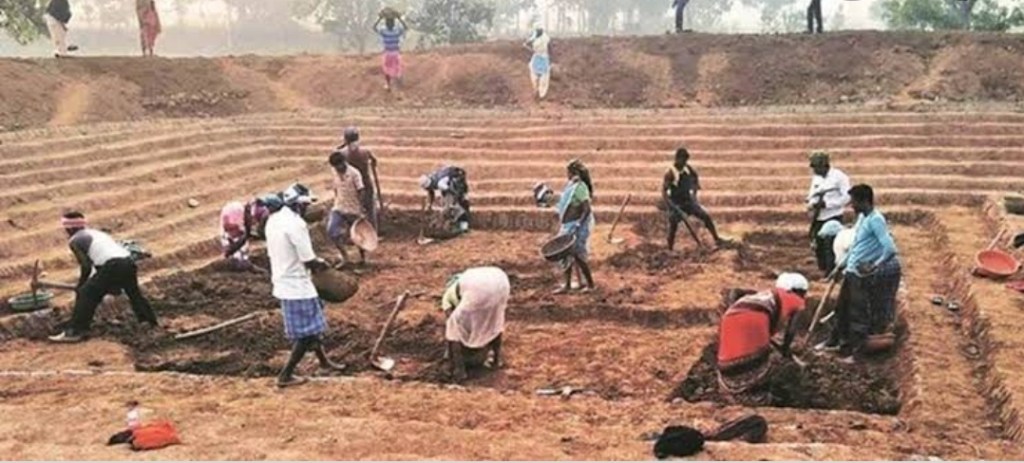
” The aim of this scheme is to enhance livelihood security of the household in rural areas of the country by providing at least 100 days of guaranteed employment in every financial year of every household whose adult member volunteer to do the unskilled work.”

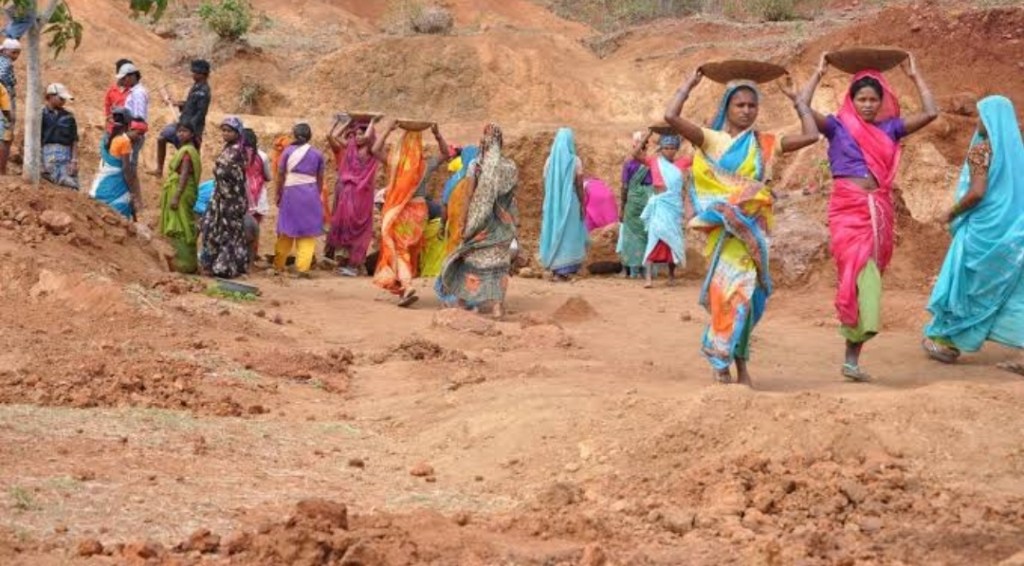
The MGNREGA has positive impact on the empowerment and employment pattern of women. Under this scheme, the women can also get wages for the 100 days, because of their taking part in this.

Women participation has increased significantly and perceived it giving them a sense of independence and security. During the year 2013-14, 3.8 crores household were given employment and a total of 135 crores person-days of employment have been produced.

“The MGNREGA programme is the largest and most ambitious social security and public works programme in the world.”

It is seen that MGNREGA covered all poor sections of the rural society irrespective of castes,genders or social orders. It is also observed that this project enhanced income as well as savings of rural households.

MGNREGA has increased the real GDP of the Indian economy as well as household income and real consumption budget.

https://www.icommercecentral.com/open-access/impact-of-mgnrega-on-women-empowerment-and-their-issues-and-challenges-a-review-of-literature-from-2005-to-2015.php?aid=85525

https://www.theindiaforum.in/article/continuing-relevance-mgnrega

https://papers.ssrn.com/sol3/papers.cfm?abstract_id=3163659

What ‘Pride and Prejudice’ tells about life of women in early nineteenth century ?

Pride and Prejudice is a romantic novel by Jane Austen, was first published in 1813. It is a classic of English literature which centres on the relationship between Elizabeth Bennet, the daughter of a country gentleman and Fitzwilliam Darcy, a rich aristocratic landowner. The novel throws light on role of women in early nineteenth century Britain. The importance of marriage in the lives of Elizabeth Bennet and her sisters have been revealed which reflects on how hard it is to be in a unmarried state, where one needs to depend on others to support themselves financially.

Those days it was believed that marriage as a vital part in a women’s life who needed support inorder to lead their life. The men were allowed to pursue higher education, then job and were let to live independently whereas women were denied education and as a result only few of them got employed. This situation of women are represented through the story of Elizabeth Bennet and her sisters. The women of those period weren’t given choice of independent life and were left to relay on someone else. Although the daughters of the middle and upper class were sent to school still their education was in a restricted form. It created lesser academic knowledge in them and restricted them from pursuing in various fields. Education for women of that time was only gained through private tutors or private institutes thus higher education got restricted and even those who were able to complete their studies successfully were not able to choose the job of their choice. As these cases can be seen through the novel where Elizabeth Bennet being lively and inquisitive mind was able to further her education independently whereas her sisters needed a more elaborate and structured one. Another major cause for denial of women’s formal education was the less job opportunities. In turn these less job availability paved way for marriage as a unavoidable part of their life. The novel also clearly states how the inheritance of property moves only to the male heirs. In case of unmarried state they remained dependent upon their relatives, receiving small incomes. At the end women were left to depend on men to support themself financially. In order to live a independent life and to ensure it for everyone there was a need for structured form of education. The novel thus clearly portrays the life of women of early nineteenth century and also stands as a record which shows the changes the life of women had been through.

Body Hair and Insecurity

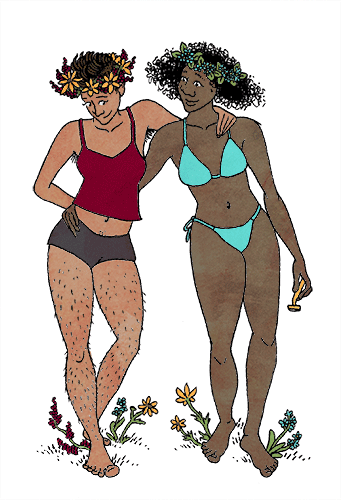
For many of us, atleast for me, body hair is an insecurity. Lacking confidence, diffidence when your body hair is exposed is common. It’s believed that cavewomen & cavemen where the first to remove body hair, but they shaved for safety reasons, not vanity. They shaved their heads & faces so their opponents wouldn’t grab onto it in battle. Guess Anil Kapoor was trying to be a caveman all these years.

What is body hair?

Body hair, or androgenic hair, is the terminal hair that develops on the human body during and after puberty. It is differentiated from the head hair and less visible vellus hair, which is much finer and lighter in color. The growth of androgenic hair is related to the level of androgens (often referred to as male hormones) and the density of androgen receptors in the dermal papillae. Both must reach a threshold for the proliferation of hair follicle cells.

From the beginning, from our childhood itself these vellas hair cover the human body regardless of the sex. Exceptions are granted to certain parts of the body where vellas hair is not present; lips, the backs of the ears; the palms of hands; the soles of the feet; certain external genital areas; the navel; and scar tissue.

Why is it considered a insecurity

Markus J. Rantala of the Department of Biological and Environmental Science, University of JyväskyläFinland, said humans evolved by “natural selection” to be hairless when the trade off of “having fewer parasites” became more important than having a “warming, furry coat.

The evolution of humanity led to the creation of insecurity called “body hair”. Body hair is supposed to keep us warm and is a very good thermal conductor and aids heat transfer both in and out of the body. The cavemen and cave women started shaving their body hair despite their loss of warmth, to protect themselves at times of battles.

In the 21st century indeed, body hair remains much more than an indication we’re mammals; it’s loaded with meaning. We equate body hair with power and masculinity, and many are intimidated when women showcase those traits, explains Merran Toerien, Ph.D., professor of sociology at the University of York in England. This ideology has indeed made body hair, the very same hair that you get during puberty, they very same hair that has been on your body since your existence an insecurity. Women are criticised for showing off their body hair, because the world “thinks” and “believes” that it is a sign of “musculinity”. What is forgotten here is that body hair is NATURAL, that means it is not a choice.

Reforms

Since the obscenity of body hair came into existence with evolution, the removal of obscenity is also taking place with evolution. Many body hair activists like; Harman Kaur, Morgan Mikenas, Angelo tesso have put in their inputs to normalise body hair. These strong standing women are a pride,and an inspiration to many. The body hair scene is being normalised.

more #bodyhair pics have probably popped up in your Instagram feed lately. Sift through the hashtag and among guys showing off Hasselhoff-ian chests, you’ll see women proudly displaying their leg, pit, and arm fuzz. Related hashtags #dyedpits, #bodyhairdontcare, and #girlswithhairyarms boldly caption thousands upon thousands of hair-proud posts.

It is now being understood by men and women that, the concept of body hair being obscene is a mere speculation and a “opinion” of someone. It is being understood that opinions of other’s should’nt change the way you embrace yourself.

PSYCHOLOGICAL ASPECTS OF WOMEN ATHLETE

Lesson 6 women and sports

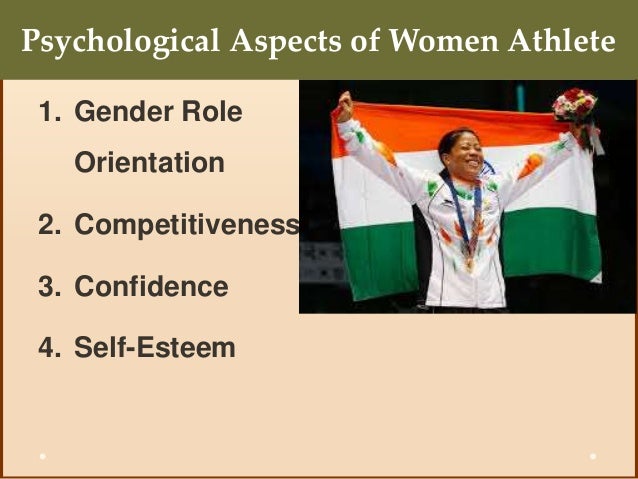
Over the past several decades , the role of women has changed drastically .However , gender beliefs and stereotypes still do exist across the world especially in sports . Most of the people in our society consider that sports are not meant for females but only for males .Social tradition , customs and cultures have great influence upon the psychology of women . In a male dominating society , males are expected to be aggressive , independent , dominating , robust and confident , whereas females are expected as well as considered to be emotional , sensitive , cooperative , sympathetic , loyal , etc. It is a well – known fact that participation of women in sports is increasing year after year .With this enhancement in female participation in sports , there is also renewed interest in the psychological characteristics of the female athletes and the effects of athletics on women . The various psychological traits of women athletes are stated below .

  1. Gender Role Orientation : It is an established fact that there has been an increase in the level of women’s participation in the types of sports that have been traditionally limited to only males , e.g., wrestling , weightlifting , kick boxing , body building , etc . However , many sports have been still considered inappropriate for women . For a long time it was considered that women should not take part in athletics because of the potentially harmful masculinising effects of sports .
  2. Competitiveness : It is evident that in the field of sports , both men and women are competitive in their own fields . In fact , women are more goal oriented and perform magnificently in artistic activities such as gymnastics . However , a number of research studies indicate that females who take part in sports are more competitive in comparison to the females who do not participate in sports .
  3. Confidence : As mentioned earlier , due to social pressures , women tend to have less confidence than men . Participation in sports , competitive environment , awards and recognitions increase confidence levels of sportspersons . However , a significant difference may exist between sportswomen and non- sportswomen .
  4. Self-esteem : Most of the research studies indicate that training plays a vital role in performance . Self -esteem improves with good performance . In the field of sports , intensive training helps in enhancing self-esteem . Research studies also show that those people who engage in sports have high self-esteem in comparison to non-participants .
  5. Aggression : Aggression is a forceful , goal- directed action that maybe verbal or physical . Participation in sports has many positive aspects which usually involve aggressive behavior . Various studies of aggression show that athletes who participate in contact sports , i.e., football players , judos or wrestlers are more aggressive than the athletes who participate in less contact sports . However , females who participate in contact sports show more aggression in comparison to females who do not participate in sports at all.

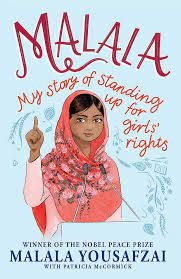
May Malala Come in Every Lap!

Let’s peep in the alleys of the most promising international icon with exceptional zeal:

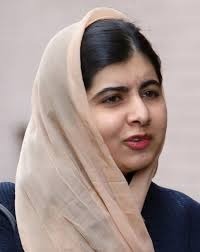
Malala Yousafzai (Pic Source: Google)

We Human beings are succumbing every minute to fear & bigotry since the mysterious accident by which life sprang on Earth .And also every era-produced Malala pick up the flag of humanity with the brave philanthropic hymns. The world which is now somehow livable, is about to celebrate the 24th birthday of an exceptional mental strength as well as of such a magnificent lens and throw a glance on the pager of her life:

The journey of an ordinary human to an extraordinary one started on July 12 , 1997 at Mingora in Pakistan. Since childhood, with the touch of her father. Ziauddin Yousafzai, a school owner and an educational activist himself (whom Malala termed as the ‘Falcon’) Malala got herself involved in human rights advocacy, especially education of women in her native swat valley in Khyber Pakhtunkhwa where the local  Taliban had banned girls from attending schools . Then the little mind rarely couldn’t take so much time to realize the bluffing of terror patriarchy and resolved to eradicate it for a harmonious life of every girl with a backbone.

When she was only 11 years old, She gave a speech in Peshawar on “How dare the Taliban take away our Basic Right to Education” In 2009 , She started blogging as a short step towards the zenith of her life. In 2011 , She was awarded ‘Pakistan’s  National youth peace prize’ In that year, Archbishop Desmond Tutu, a south African activist, nominated her for the International Children’s Peace Prize of the Dutch International children‘s advocacy group kids Rights Foundation.

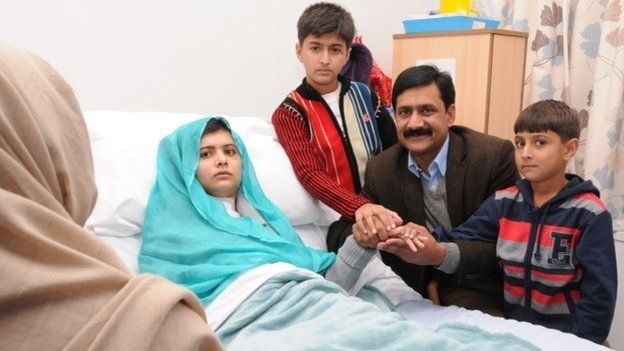
With Malala’s growing popularity, dangers too stealthily came along her way. On October 09, 2012, the Taliban ascended to the peak of inhumanity by shooting this 15-year old child  returning from school by bus. One bullet went through her head, neck and ended in her shoulder. Though her health was critical, her fighting spirit made her recover from the malign wounds and after almost 1 year restarted attending school.

Malala with her lovely Family, during her hospitalization (Pic Source: Google)

Eventually, Malala got a massive outpouring of support in the limelight. On July 12, 2013 on her 16th birthday Yousafzai delivered a speech at the United Nations. There she sad:

“The terrorists thought that they would change our aims and stop our ambitions but nothing changed in my life except this weakness, Fear and hopelessness died ; Strength, power and courage were born.”

–Malala

There Malala challenged orthodoxy, illiteracy & terrorisms:

“The extremists were and they are, afraid of books and pens… They are afraid of women… Let’s speak of our books and pens — our most powerful weapons.”

–Malala

On that very auspicious day, Ban Ki-moon, Secretary General of the UN, pronounced “Malala Day” in honor of The young leader’s activism. He assured that no child should have to die for learning and nowhere should teachers to teach.

When the second voyage of Malala’s life had just started to roll out the wheels, European parliament awarded her the ‘Sakharov Prize’ in 2013.

In the next year, conches of ‘Satyam’ blew when Malala became the youngest ever Nobel Prize Laureate. She received the award along with Kailash  Satyarthi, Indian children’s rights activist. This unparalleled and unequal ‘Global Teacher‘ became a gentle advocate of Peace.

Malala Yousafzai (Source: Google)

In April 2017, United Nations secretary general Antonio Guterres appointed Yousafzai as a UN messenger of peace to promote girls’ education. She was also given Honorary Canadian Citizenship in 2017.

In the meanwhile, Yousafzai family launched the Malala fund in 2014 to ensure girls around the world have access to 12 years of free, safe & quality education, though later she revealed her extreme grief:

“The shocking truth is that world leaders have the money to fully fund primary AND secondary education around the world – but they are choosing to spend it on other things, like their military budgets. In fact, if the whole world stopped spending money on the military for just 8 days, we could have the $39 billion still needed to provide 12 years of free, quality education to every child on the planet.”

Malala wrote in her Website (https://malala.org/)

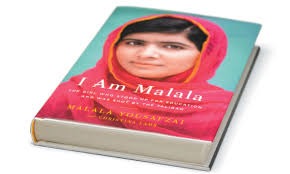
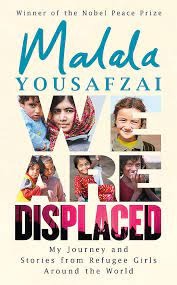
This torch bearer of Pakistan as well as of the enter world have offered the opportunity to go through the reviews by publishing books:

However Malala has taught all the Homo sapiens sapiens what education is, what consciousness is, what backbone is and what fearlessness is. We all are hopeful — this gene of Brave is/will be straight at the nook and corner of this world — every mother will stealthily smile, seeing her fearless child crying in its subconscious mind.

Startup Stories – Nua Women

Nua women

Menstrual Hygiene:

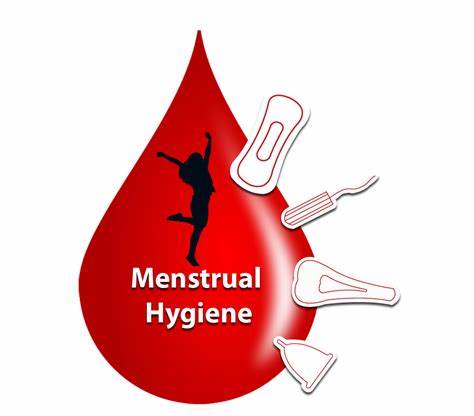
Menstrual Hygiene is the area with the least awareness in India. It is pathetic to know that only 18% of women in India have access to better sanitary hygiene. The rest percentage of the women make use of economic alternatives to pads like cloths unaware of the side effects caused by them. This is primarily due to the fact that despite everyone knows about periods, their frequency they consider it a  disgrace when discussed in public. Pads that are primarily composed of synthetic material are constantly in contact with the skin surface causing rashes, infections, etc.

The Launch:

Nua women was launched in the year 2017 in Mumbai by Ravi Ramachandran and Swathi Kulkarni with the goal of making the menstruation cycle to be hassle-free. The market of sanitary pads in India enormous due to the population prevailed in here.  But it never remained as an untapped market.  Amidst the global competitors like Whisper, Stayfree, Nua Women was launched. Hence it was expected to make a Herculean effect to gain the attention of the audience and capture the market.

Novel Nua Women:

While certain startups were hustling to capture the market with their innovative market, Nua women choose either way. Following are the reasons for their triumph in India:

  • User experience: They understood their customers clearly at the early stage of its launch. Hence they ensured that they would provide not just a product but an experience. They came up with a plan where their users can choose pads according to their flow. Most of the women would have definitely wished for such a plan as the flow varies between day 1 to day 4. 
  • Marketing: While the primary pad brands were advertising with animations of pads, Nua women started to advertise by forming a community. In the community, women expressed thor period concerns, queries, and pains. The engagement was kept active and all their concerns were addressed. Social media played a vital role in the exposure of their product. This was one of the primary reasons for their initial funding by LIghtBox Ventures.

They also partnered with some women influencers and made promotional videos. The videos clearly explained their product and made very women connect it with their life. Their advertisement in partnership with the Youtube Sensation CheekyDNA won the Best Brand Integration Category Award at StreamCon.

  • Subscription: In the industrious world, everyone is running to balance their work and life. When the product is proven to reduce their time and efforts then it’s for sure a hit in the market. Women normally forget to refill their pads and in such cases, they use pads from their friends or from the sanitary vending machine at their workplaces. The change in brand may cause them discomfort. Hence Nua women came with a subscription plan where they can pay for a period of 3 months and pads will be automatically refilled every month.
  • Rash-free pads: Rashes are the most primary concern of women while purchasing a pad. Nua women customers are saying the rashes have considerably reduced after its usage. 
  • Stress-free Disposal: If you are the one who is irritated by the disposal of pads, Nua women has got your back. Every pad comes with a disposable cover and the way of disposal is smooth.

Funding Facts:

Initial Funding: Series A funding of 5.4 Million Dollars by LIghtBox Ventures in 2019.

Latest Funding: Pre Series B funding of 7.4 Milion Dollars by LightBox Ventures and Kae Capital in June 2021.

https://inc42.com/buzz/nua-raises-7-1-mn-in-funding-led-by-lightbox-ventures-kae-capital/

https://entrackr.com/2021/07/funding-in-indian-startups-this-week-28-june-03-july/

https://www.indiantelevision.com/iworld/over-the-top-services/divo-to-now-offer-digital-content-influencer-marketing-services-201221

https://www.vims.ac.in/blog/menstrual-hygiene/

https://inc42.com/startups/lightbox-nua-sanitary-napkins-women-wellness/

Why society only loves women who sacrifice ?

We must have heard from our relatives and people from our older generation that a good woman or a good wife is the one who knows how to ‘adjust’. We also must have come across conversations where patriarchs have often said things like “to maintain a good relationship, a woman must adjust” or “till the time things don’t go worse a woman should learn to adjust and shouldn’t go for judicial recourse”.

Photo Credits: First Post


These casual patriarchal phrases raise many important questions: do women need to face the worse to get justice? Do women need to tolerate abuse from their partners till the time abuse doesn’t go extremely physical or sexual in nature? Do only women need to give up on their dreams and just look after their families?

Patriarchy apologists, however appraise some women in our society and they are only those women who unwillingly or willingly give up on their dreams and career in order to maintain a ‘happy’ family or women who stay with their ‘cruel’ in laws. This proves that the more a woman sacrifices or the more a woman tolerates abuse, the more she is loved and the more she is considered as an “ideal woman”.

But the moment a woman stands up for herself, the moment she focuses on her dreams and career instead of caring about maintaining a family, the moment she stops adjusting, the same patriarchy apologists start slut shamming her or shamming her simply. In this case, she becomes a “bad example” for all other women just for standing up for her simple basic rights.

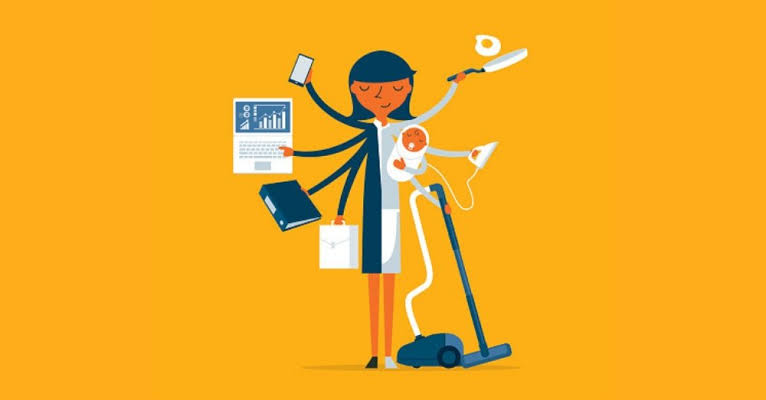
This also reminds us about how society has taught us that a mother only becomes “a true mother” when she is sacrificial. In India, people question a mother’s identity even if she chooses to wear a western outfit. Do women now even have to sacrifice on their preferred clothes? Women wearing western are seen “incapable “of raising a child? How does a simple piece of fabric decides a woman’s worth? Mothers are also judged by our patriarchal world for being into a particular profession, for example, those engaged in beauty and wellness or into travelling. How does a mother’s profession makes her “less of a mother”?

Photo Credits: Clipart Library.

It’s high time we stop romanticising women who suffer because of internalized patriarchy. The only thing our patriarchal society has to understand is that a woman’s personal choices are her own fundamental rights and she can exercise them as and when she wants.

Dowry Continues To Remain A Menace In Indian Society

Despite the fact that dowry has been banned in India since 1961, a research found that it is still being given on a regular basis, with over 95% of weddings including the exchange of money.

Dowry is correctly represented as a societal evil since it is the practise of paying and accepting articles of worth (such as clothes, jewellery, furniture, cash, and other items) between two households. Typically, the bride’s family is obligated to pay these items to the groom’s family.

The World Bank carried out the study, which examined almost 40,000 marriages that occurred between 1960 and 2008 in 17 Indian states that account for 96% of the nation’s population.

Researchers calculated “net dowry” to study the difference as to what was paid by the bride’s family to the groom’s family and vice versa, and the results revealed that, in the vast majority of instances, it was the bride’s family who paid more compared to the groom’s family, rather than the other way around.

According to the estimated amount confessed by families, a groom’s family spends Rs. 5,000 on presents to the bride’s family on average. The bride’s family, on the other hand, pays about Rs. 32,000 on presents and other monetary contributions to the groom’s family, taking the net dowry to roughly Rs. 27,000.

It has also been noticed that the dowry value is typically 14 percent of the annual income and includes a significant portion of the family’s savings.

While much has started to change since 2008, experts think the tendency of dowry is still highly prominent in India, since the notion is quite widespread in all major religious groups, with Christians and Sikhs exhibiting a “dramatic increase in dowry.”

Dowry inflation was seen in certain states, including Kerala, Haryana, Punjab, and Gujarat, with Kerala having the highest average dowry in recent years. On the other side, average dowry decreased in states such as Orissa, Tamil Nadu, Maharashtra, and West Bengal.

This venom affects people of all castes and socioeconomic classes. Neither the husband’s nor the wife’s educational background protects them from dowry harassment. Currently, dowry-related fatalities in Kerala have been documented, with the majority of victims coming from the upper strata of society. The culprits come from well-educated and wealthy families, and the victims are also well-educated. If this is the situation of women in a culture that was matriarchal a few decades earlier and claims of high social indicators in women empowerment, it’s anybody’s imagination how it will be in many Indian states that have numerous social indicators that are much worse than those of war-torn Syria or Sub-Saharan Africa. According to the NCRB study, Uttar Pradesh and Bihar top the list of dowry-related deaths, accounting for roughly 30 percent.

It is time to reform these retrograde societal standards in 2021. Receiving dowry should be considered a societal shame, and all generations should be taught. Young people should also make a stand. Women should explicitly refuse to pay dowry as part of a marriage , and men should also refuse to accept it in any way. Why should brides’ parents be obliged to give pricey “gifts” that are essentially a dowry by another name? 

The wider background for dowry is women’s low labor-force participation and, as a result, their lack of financial independence. Women should be encouraged to work and earn their own money.

Discrimination is present in all parts of life. To combat gender inequality, States should examine gender-disaggregated statistics across the life cycle — birth, early childhood, schooling, nourishment, employment, healthcare access, and so on. Teachers and textbooks shape students’ views and values. Children should be routinely educated on the fundamental ideal of gender equality.


MENSTRUAL HYGIENE IN RURAL AREAS.

More than 60 percent of population India lives in rural areas.

women lack access to menstrual hygiene products and menstrual cycle becomes a burden and bane for them

For the privileged, periods are normal, something which occurs every month. we are educated and understand as to why it occurs.

we might have to deal with pain and discomfort But for those who live in rural areas this prevents them to do their daily activities. Myths and taboos which are embedded with periods, makes lives of these women even worse.

According to a report less than 40 percent of women get access to sanitary products.

The cost of sanitary products are expensive for the people of rural areas, who hardly get to earn money to have some food , Some fill in their stomach’s using hand to mouth process.

A lot of women in rural areas use cloth during their periods, this can cause infection and fungal diseases. Due to Menstruation, a lot of young adults in villages are forced leave the schools and are looked upon with a feeling of disgust.

  Monthly campaigns should be put to make people understand the importance of menstrual hygiene. free sanitary products should be distributed every month. The villagers can be taught to how to make sanitary products, it will also add up to their incomes.

steps like these would definitely remove the stain of fungal/ bacterial infection due to menstruation.

Rise of Women’s cricket

The Indian men’s cricket team is one of the best teams in all formats among the other world class teams. People following men’s cricket are many. People know the names of every player playing for the nation. Many fans go craze on their favourite stars. There is also women’s cricket in India which was played from many years back. But people following women’s cricket are very few. The count is incomparable with that of men’s cricket. In men’s cricket, there are many idols like Kapil Dev, Sunil Gavaskar, Sachin Tendulkar, Sourav Ganguly, Rahul Dravid, MS Dhoni, Virat Kohli. But there is no big name in women’s cricket that everyone knows. The reason is apparent. There is no proper plan and infrastructure for women’s cricket across the country in domestic State level and District level. There was no inspiration for girls to take up cricket. They didn’t get to know the life of a woman cricketer. They didn’t have any idea of how would the life be after playing for the nation; what are the benefits they get; and how to get into a State level team. No growth of women’s cricket was seen till 2010s.

This situation prevailed for some years until 2011. After that a name had gone familiar with people. That name is Mithali Raj. She is also called as the lady Sachin Tendulkar of India. She has a pretty long and successful career. She made her debut in 1999 and is still playing for the country with career spanning over 2 decades. At 16, Raj scored an unbeaten 114 on ODI debut and soon established herself as the lynchpin of India’s batting. The roots of her copybook stroke play lay in her precocious talent that blossomed under the tutelage of her former coach, the late Sampath Kumar, and a regimented upbringing in an army family. With a passion for Bharatanatyam, her nifty footwork found expression on the field, becoming as much a hallmark of her batting as have been grace and an unrivalled precision at plundering runs in the cover region. She captained the Indian team for the first time at a young age of 22 years. She holds the record of having 3rd longest test careers, playing for 19 years. She is the 2nd highest run scorer in history of women’s cricket in all three formats added. She scored 10266 runs in her career totally. She has an amazing average of 44.6 in tests, 51.26 in ODI’s and 37 in T20s.

After her, many girls took up cricket as their career and started representing India. BCCI also looked up to the growth of women’s cricket. They developed the infrastructure and conducted many domestic games which boosted the talents to work hard. Also created a craze for young girls towards cricket. In the growth of Indian women’s cricket, there is a notable contribution done by Mithali Raj. She was also awarded with Padma Shri and Arjuna Award for cricket. She deserves every honour that she received. Thank you Mithali Raj.

The status of women in a family


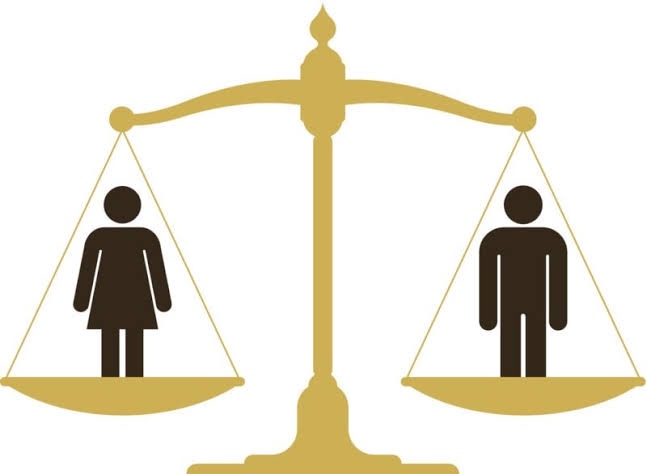
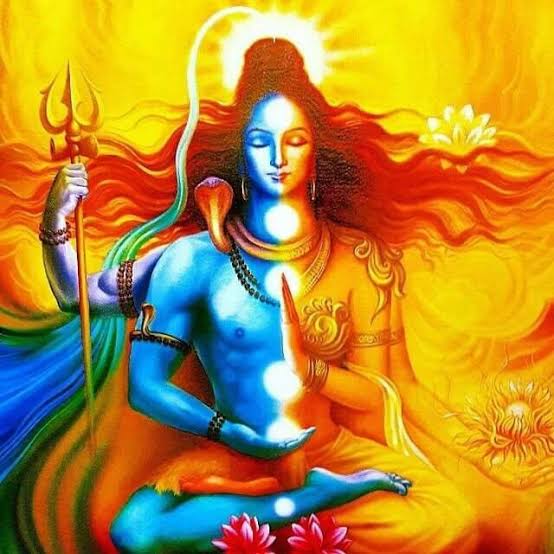
There is a popular concept in the Indian Mythology the Ardhanaarishwara – this word consists of 3 parts “Ardha” which refers to half. “Naari” for women and “Ishwara” for lord. A half male and half female figure, in which the male part depicts lord Shiva and the other half depicts Goddess Shakti, this makes it quite clear to understand that a male and a female has equal importance and power but, in contrast to this we have a society where male enjoys a supreme status than a female in the same household.

There are exceptional cases where a woman is given equal importance in a family as a result of which, most of the women specially those who belong to a backward area or uneducated background have to suffer a lot in her own family but this suffering which is named as the ‘destiny’ of a women creates a much bigger problem. The social norms accept male supremacy and this can be observed in our day-to-day life and practices which are followed since a long time for instance- male head of a family, in a typical household is common but, the drawback is when it comes to decision making and implementation of rules and laws. It ultimately reduces the power of a female they are not allowed to participate in the decision making and even if they are the final decision is in the hand of the head all the major decisions of the family will be taken by the head, rules will be framed by him. Moreover, the traditional role of a women as a housekeeper and the one who is solely responsible for the upbringing of children, serve the family etc has never let women look beyond house and family, this has killed the dreams and ambition of so many women, who could have achieved so much more in life.
Similarly, there are so many incidences and rules which can highlight the fact that the society practices inequality, supremacy and discrimination in different forms and if all these problems exist how can we expect balance in a society.

Today, the situation is better than before a women can be seen in much appropriate roles not only at personal level but, professionally also they are self-build, independent and respected, they have come a long way to get accepted in the roles which were not supposed to be theirs. Theses days women are the sole bread earners in family and get equal participation in the decision making, they have done extraordinary progress to stand out and inspire other women to do the same. As great leaders like Swami Vivekananda have said that a woman is of uttermost importance in a society and the condition of a women in a society reflects the development of a society.


This brings us to the conclusion that, it is not only about supremacy or dominance of a particular gender but, a deep-rooted problem of the society which has many causes and can become an obstacle in the path of development in any country and if we can possibly eradicate such problems from the society. It will definitely benefit each and every one.

DIRT $ SHAME ?

AS SOON AS A GIRL HITS PUBERTY, HER BODY GOES THROUGH A LOT OF CHANGES. ONE AMONGST THE CHANGES THAT TAKES PLACE IS: SHE BLEEDS EVERY MONTH . WHAT IS MENSTRUATION? EVERY MONTH THE UTERUS PREPARES ITSELF TO RECEIVE THE FERTILIZED EGG, IF THE EGG DOES NOT FERTILIZE, THE BED LIKE FORMATION OF BLOOD AND MUCUS, WHICH HAD BEEN PREPARED FOR THE PLACEMENT OF FERTILIZED EGG; BREAKS ITSELF AND THAT IS WHY A WOMEN BLEEDS.

FOR A LOT OF PEOPLE TALKING ABOUT MENSTRUATION IS A SHAME. WHY SO? JUST BECAUSE A WOMEN BLEEDS? THERE ARE MYTHS AND TABOOS EMBEDDED WITH IT. PEOPLE MAKE WOMEN FEEL DIRTY ON THE DAYS OF THEIR PERIODS. SOME CONSIDER IT TO BE GROSS AND SOME IMPURE.

IN A COUNTRY LIKE INDIA WHERE WE OFFER PRAYERS TO MAA DURGA, MAA LAKSHMI AND MAA SARASWATI ; HUMILIATING AND RIDICULING A WOMEN ON SOMETHING THAT IS NATURAL AND GOD GIVEN, PAINS MY HEART A LOT.

WOMENS ARE STRENGHTH OF THE FAMILY, THEY ARE THE BACKBONE. SUPPORT THEM, LOVE THEM AND TAKE CARE OF THEM WHEN THEY NEED YOU THE MOST. STOP SPREADING HATE! THIS ISNT IMPURE. THIS IS THE REASON WHY WE ARE HERE, IN THIS WORLD.

WOMENS ARE PRECIOUS GIFT OF THE ALMIGHTY. RESPECT HER ALWAYS!

FEAR OF MARRIAGE

In Indian culture, marriage is very important to raise a generation.It is believed that the only goal of girls is to be married to someone .Girls only know one thing that they have to go to someones home after getting married thought to be a good wife, good daughter in law.
Just want their daughter to be good in their homes so that they should feel proud of them.Generally girls learn household work just only because one day they have to go to someones home as a wife and they have to do all those who work there

I think this thing is very wrong here if they have to learn household work then they have to learn for themselves then it is good. The first thinking of Gender inequality comes here in woman’s mind that the parents always forced them to do all these things just because they were female,. Why don’t they teach boys to do all those things?

It is changed in todays world but somewhere it is also the same as before.If boys just serve their own meal then a large argument starts in homes that why does their son serve their own meal. They have two sisters already.It is their job to serve everyone.

Just because of male dominance or patriarchal society. Women are not allowed to do what they like. Women are not allowed for studies just because parents think that if they study their expectations increases and parents faces many difficulties to discover a guy who is good for her.If women wants to go out of town for further studies they are not allowed just because of families in security or societal pressure at what if their daughters get attracted towards someone but why this is only for women? Men are always allowed to do what they want whether it’s a choice whether it’s the studies or whatever they want.It is all just due to thinking of everybody that girls have to do everything or they have to sacrifice their dreams, hobbies, likes and dislike just because they are female they have to go to someones home as a wife after marriage.

Just take an example – mom woke up early in the morning and from that time till late night they are busy in household work and It become daily routine because of this they forget how to enjoy their life.They sacrifice their dreams, hobbies, life for family. They don’t do anything for themselves because there has a lot of guilt attached with taking care of themselves, doing things for themselves. And we don’t even thinks about it. If we ask anyone Does your Mom eat something? Not only children her family members don’t know whether she take her meal or not.Just because we don’t notice this. why don’t we notice? It is just because of what we see from childhood.

In our culture, parents choose a guy for their daughters.How can two strangers live their whole life without knowing each other?

WEDDING MEANS LOVE, LAUGHTER AND HAPPILY EVER AFTER….

How can a normal marriage be?

All the proposal come through someone or other who tells the man’s family about lady or vice versa, then the man’s family would contact girl’s family or vice versa and then they ask for time and day to meet. Then match making occurs and then parents or family decide that both men and lady are made for each other.

Right???

Or what happens when this doesn’t work?

Women went through matrimonial hell. To meet random strangers and matchmakers, face a lot of judgements and criticism that leads to clinical depression and anxiety for them. They have to go through lots of rejection for just human beings.

How can anyone be judged by skin colour, body structure, body weight, height, & education?

And after all these women aren’t allowed to reject someone.If a guy is chosen by her family than women have to marry whether she wanted or not.

Everyone says women also have the right to choose their life partner, they are allowed to do what they want to do in their life. But in reality, just opposite is happening because we obey what parents want because this is what we see from our childhood.

It is not about matrimonial / marriage. It is about the Rights, wishes, likes and dislikes of a Woman who is been suppressed by either family or society. Just because of thinking…

Marriage is a very beautiful journey in everyone’s life. Just because of something we hate it or women thought that after marriage their life is going to hell. some women take it as a Golden cage or some take it as a most beautiful dream .so it depends upon how they think about it

The period taboo

Women are often told to not do certain things while they are menstruating. These things vary from not going to a temple, not entering the kitchen, to being treated like an untouchable. There are many homes where they have separate rooms, utensils for women menstruating. Nobody enters the room nor do they touch the things used by them. You might find it hard to believe but these things still happen and what’s worse is they are “normalised”.

Menstruation is normal, every woman goes through it every single month. So, why is it still looked down upon? Menstruation has been around for as long as the very existence of human beings. But still, people treat it like a taboo. Here are some things that prove that periods are still taboo.

Why do the commercials of sanitary products show the period blood blue? 

It is considered fine to show blood in movies during a fight but when it comes to period blood it is suddenly “sensitive content”.

Why in schools did we hide the sanitary napkin like it was something illegal? 

This one time in school a female teacher during a bag checking, picked my sanitary napkin and asked what’s this?

Why are sanitary napkins packed in newspaper, or a black bag like we are hiding something? 

Why do we have to hide the fact that we are menstruating from our brothers or father?

Why are menstruation products still so expensive for the women? 

In a lot of places women still have to use newspapers, cloths, rags, hay, or leaves because they cannot afford the sanitary products. The world has come so far yet it fails to provide necessities to the women who cannot afford them.

  • In India, 88% of women don’t have access to menstrual products.
  • 23% of the girls drop out of school after they start menstruating.

Some girls don’t even receive education on menstruation because it is an “uncomfortable” topic to talk about.

The women go through a hard time while menstruating. A lot of women get very painful cramps, that even pain killers do not help. While women go through this, society decided to treat women as impure and dirty while they are already dealing with so much.

I fail to see the justice in that. Society needs to be supportive and not make the girl hate herself for getting her periods.

I know that not everyone suffers from the issues I talked about. But, the majority of the women are going through this. So, it is our responsibility to raise awareness. We need to start talking about it, raising awareness, supporting films like Padman and advertisements like bleeding red: where Radhika Apte shows period blood as red instead of blue.

 Let’s normalise menstruation and help the women out. Raising awareness will bring more and more light to the issues and that is how we will be able to create change. This article is not just for women. It is also for the men, as a men make sure that the females in your family, or your partner, or your female friends know they can talk to you about menstruation. It should be a normal topic and not an uncomfortable taboo.

Breaking taboos is hard but it is something that is needed to be done.

I may not be able to change the mindsets of the people who are older and like to stick to old norms. But, I know I will be able to change the mindsets of the future generation.

Women’s Financial Security Post COVID-19

The daunting number of jobs lost by women during the coronavirus pandemic is only the beginning of the story.Yes, it’s widely recognized that women have taken the brunt of the nation’s total job losses — they’re still down 5.3 million vs. 4.6 million for men even with the economy having rebounded somewhat off its COVID-19 lows — largely because working remotely isn’t possible in the hard-hit businesses like restaurants, hotels and retail stores where females dominate. And, yes, it’s also recognized that many moms were forced to drop out to look after their kids after schools went remote — with nearly four out of 10 currently working women still actively considering doing likewise, according to a recent survey by Fidelity Investments.But what’s not talked about as much is this: the potential long-term consequences of having had their financial security and career prospects upended by the pandemic.”Being in a position to take a career break by choice can be considered a privilege,” said Lorna Kapusta, head of women investors at Fidelity. “But we know for many in times of crisis like this one that stepping back from work is more like a necessity. Either way, it’s critically important to understand the decision’s impact on your savings today and into the future, so you can take steps to address it.”Fidelity conducted an analysis of the estimated effect even a one-year career break could have on retirement savings, and the results are staggering.Exhibit No. 1: Say you took your “break” at age 35 when you’d been earning $50,000 a year and had to subsequently accept a slightly lower salary just to get back into the workforce. Assuming a conservative 4.5 percent annual growth rate and factoring in lost retirement contributions — including a 3 percent match from your ex-employer on top of what would have been your own 9 percent contribution — your 401(k) would be $106,469 lighter ($733,325 vs. $839,594) by the time you turned 67.Exhibit No. 2: Substitute a $75,000 salary and the difference is even bigger ($159,702, or $1,099,679 vs. $1,259,381).Exhibit No. 3: And bigger still at $100,000 ($212,936, or $1,466,233 vs. $1,679,169).Plus, don’t forget there’s also the matter of lost Social Security contributions. “Your benefit is calculated based on your top 35 years of earnings,” said Kapusta. “So if you work fewer years, have a lower salary, or don’t reach the minimum eligibility, you may have a smaller check when it comes time to collect in retirement.” All of which helps explain the impetus for launching Fidelity’s weekly Q&A discussion series called “Women Talk Money.” Airing live on Zoom every Wednesday at noon ET and available later on demand, each 30-minute interactive episode uses viewer-submitted questions to address a different topic each week, ranging from job loss to health care to the hidden costs of caregiving.”It’s real talk to help answer women’s most pressing money questions right now — no jargon or judgment,” said Kapusta, noting that the program’s six-part, archived video series is also must-see viewing for those who want to learn the key factors that can significantly impact women’s financial futures.Finally, some historical perspective. When the Labor Department first started tracking such data back in 1948, only one third of women held jobs. That number had nearly doubled by the late 1990s.And today? The ratio of women working has fallen below 57 percent for the first time since 1988.