SOCIAL COGNITION

A person who has not been completely alienated, who has remained sensitive and able to feel, who has not lost the sense of dignity, who is not yet “for sale”, who can still suffer over the suffering of others, who has not acquired fully the having mode of existence – briefly, a person who has remained a person and not become a thing – cannot help feeling lonely, powerless, isolated in present-day society. He cannot help doubting himself and his own convictions, if not his sanity. He cannot help suffering, even though he can experience moments of joy and clarity that are absent in the life of his “normal” contemporaries. Not rarely will he suffer from neurosis that results from the situation of a sane man living in an insane society, rather than that of the more conventional neurosis of a sick man trying to adapt himself to a sick society. In the process of going further in his analysis, i.e. of growing to greater independence and productivity,his neurotic symptoms will cure themselves.

Social cognition is a sub-topic of social psychology that focuses on how people process, store, and apply information about other people and social situations. It focuses on the role that cognitive processes play in our social interactions. The way we think about others plays a major role in how we think, feel, and interact with the world around us.

Defining Social Cognition
How exactly do psychologists define social cognition? While there is no single definition, there are some common factors that many experts have identified as being important.

Social cognition involves:
The processes involved in perceiving other people and how we come to know about the people in the world around us.
It involves the study of these mental processes that involved in perceiving, remembering, thinking about, and attending to the other people in our social world.
Psychologists are interested in why we attend to certain information about the social world. how this information is stored in memory, and how it is then used to interact with other people.
It is not simply a topic within social psychology – it is an approach to studying any subject with social psychology. Using a social-cognitive perspective, researchers can study a wide range of topics including attitudes, person-perception, prejudice, stereotypes, self-concept, discrimination, persuasion, decision-making, and other areas.
The Role of Social Cognition
For example, imagine that you are getting ready to go on a blind date. Not only do you worry about the impression and signals that you are sending to the other person, you are also concerned with interpreting the signals given by the other individual. How do you form an impression of this person? What meaning do you read into the other person’s behavior?

This is just one example of how social cognition influences a single social interaction, but you can probably think of many more examples from your daily life. We spend a considerable portion of every day interacting with others, which is why an entire branch of psychology formed to help understand how we feel, think and behave in social situations.

The Development of Social Cognition
Developmental psychologists also study how social cognition develops over the course of childhood and adolescence. As children grow, they become more aware not only of their own feelings, thoughts, and motives but also of the emotions and mental states of others. As this awareness increases, children become more adept at understanding how others are feeling, knowing how to respond in social situations, engaging in prosocial behaviors, and taking the perspective of others.

While there are many different theories that look at how social cognition develops, one of the most popular focuses on the work of the psychologist Jean Piaget. According to Piaget, a child’s cognitive development goes through a series of stages.

During the earliest stages of development, children are very egocentric. They see the world from their own perspective and struggle to think about how other people may view the world.
As children grow older, children become increasingly adept at perspective-taking and have an increased ability to think about how and why people act the way they do in social situations.
More recently, research has provided evidence that children develop the ability to think about the perspectives of other people at an earlier age than Piaget previously believed. Even young preschoolers exhibit some ability to think about how other people might view a situation.

One of the most important develops in the early emergence of social cognition is the growth of a theory of mind. A theory of mind refers to a person’s ability to understand and think about the mental states of other people. It is the emergence of a theory of mind that is critical to being able to consider the thoughts, motives, desires, needs, feelings, and experiences that other people may have. Being able to think about how these mental states can influence how people act is critical to forming social impressions and explaining how and why people do the things that they do.

Questions About Social Cognition
So what are some of the different questions related to social cognition that researchers are interested in understanding? Our perceptions of others play such an important role in how we forge relationships, how we interact with others, how we treat others, and how others treat us. Some of the topics that psychologists are interested in when it comes to social cognition include:

How do we interpret other people’s feelings and emotions? How do we figure out what they are thinking or feeling? What cues or indicators do we use to make these assumptions?
What influence do our thoughts have on our feelings?
How do we develop attitudes? What role do these attitudes play in our social lives?
How is self-concept formed and how does it influence our relationships with others?
What mental processes influence person perception, or how we form impressions of other people?
Cultural Differences
Social psychologists have also found that there are often important cultural differences in social cognition. When looking at a social situation, any two people may have wildly different interpretations. Each person brings a unique background of experiences, knowledge, social influences, feelings, and cultural variations.

Some researchers have found that there are also collective, cultural influences that can affect how people interpret social situations. The same social behavior in one cultural setting may have a very different meaning and interpretation if it was to take place in another culture. As people interpret behavior, extract meaning from the interaction, and then act based upon their beliefs about the situation, they are then further reinforcing and reproducing the cultural norms that influence their social cognitions.

Possible Shortcomings
One criticism of some of the research on social cognition suggests that it is too focused on individualistic behavior. Because the topic itself is so social, some suggest that many of the information-processing models that have traditionally been used to understand the cognitive processes behind social cognition are too limited. Focusing more on the collective and interactive aspects of human thought may provide a better understanding of how people think about and understand social behavior.

World’s food safety day

It is necessary to assure that food remains safe at every stage from production to harvest, processing, storage, distribution, preparation, and consumption. That’s why World Food Safety Day is celebrated on 7 June to highlight the health consequences of contaminated food and water. The World food safety day was observed by the United Nations from 2019. This year’s world is celebrating second world food safety day. Unsafe food is a threat to human health and economies, and marginalized people, especially women and children.

World Food Safety Day Theme: Food-Safety Everyone’s Business

This year’s theme for world food safety day is food safety everyone’s business. This campaign will promote global food safety awareness and will call upon countries, the private sector, civil society, UN organizations, and the general public to take action. The theme Food-safety everyone’s business depicts that whether we grow, transport, process, distribute, store, sell, prepare, or consume food, everyone has a role to play in making consumed food safe and uncontaminated for people. Through World Food Safety Day, the World Health Organization pursues its efforts to mainstream food safety in the public agenda and reduce the burden of foodborne diseases globally.

Food Safety Tips

* It is important to keep foods safe to maintain healthy eating. We all can reduce contaminants in food and keep food safe by following food safety tips:

* Wash your hands properly with soap and water before going to the kitchen.

* Before eating, cooking, and cutting fruits and vegetables rinse them properly under running water.

* Clean inside and outside of appliances and buttons and handles of appliances.

* Daily sanitize kitchen surfaces with hot and soapy water or use disinfectant.

* While doing food shopping keep raw seafood, poultry, and meat in a separate bag and fresh fruits and vegetables ina separate bag.

* Clean your refrigerator once a week, discard cooked leftovers in 4 days and raw poultry and ground meats in 1 to 2 days.

Top 10 Laboratory Information Management System Courses.

The main function of Laboratory information management system (LIMS) is to somehow track and manage samples which are associated to the laboratory and also streamlining the overall activities and processes happening within a lab.

Courses related to LIMS.

Thermo Scientific SampleManager LIMS

Thermo Scientific SampleManager LIMS software process execution capabilities in a single solution and delivers laboratory management, data management and process execution. Laboratories across all Industries rely on SampleManager LIMS software to unlock the power of their laboratory data.

Benchling.

Benchling is a modern research platform where scientists can design, share, and record experiments all in one place. The applications are natively unified from the ground up, resulting in a completely seamless user experience.

LabWare. (LIMS)

LabWare is the global leader in laboratory information management systems (LIMS), with +3,000 customers including NIH, Merck, GSK, Pfizer, Nestle, and Chevron and 98% customer satisfaction.

Sunquest Laboratory.

With Sunquest Laboratory, your lab will deliver results through quality healthcare and optimized, efficient workflow

StarLIMS

Abbott Informatics supports the rapidly changing data management needs across your organization with our STARLIMS solution product suite.

SoftLab

SoftLab is a LIS solution built on the latest modem multi-tier client server architecture.This includes CORBA (Common Object Request Broker Architecture) and Web Services, which promote enterprise-wide connectivity and allow the incorporation of new technologies.

Lab Management System.

Lab Management System (LMS) is a Medical Business Management Software designed to support Laboratory and Clinic processes as well as administration. LMS handles both Laboratory and Clinic functions and procedures allowing for both business divisions to share patient information.

CloudLIMS.

CloudLIMS is an advanced web based sample management software, offered as SaaS. It is essential for any laboratory wanting to automate their informatics systems in a secure and reliable environment.

LABVANTAGE.

LABVANTAGE offers a comprehensive portfolio of solutions for the laboratory, including LIMS, quality ELN and business intelligence.

Apex LIS

The Management Console provides the analysis, management, QC and reporting functions of the Apex LIS at a fraction of the cost.

Inner Voice- our constant companion

From an early age, we learn to talk to ourselves. That voice in our head which constantly answers, stops us from committing a mistake , encouraging and motivating us to keep moving forward, grabbing an opportunity. Each one of us is blessed with a best friend with whom we can share our thoughts and secrets , hangout with them and make the best of the memories. But what about our partner, our constant companion? Our Inner Voice or we can also call it as our gut feeling, intuition, inner conscious and the latest trendy name which I came across an ‘expert advice’. There is this trending caption going on these days on social media, “Yes I like to talk to myself sometimes , because it is important to take an expert advice”. So that is what I call my inner voice – my expert advise on which I can rely on most of the times.

What is Inner Concious?

One way to begin is by talking about self-consciousness which is equivalent to self-awareness. It refers to the awareness of unique thoughts, memories, feelings etc. It is your voice which always speaks the truth (more than your parents). For example, when we are about to commit a mistake our inner voice stops us from doing so, though we get angry or sad but our concious always give us a sign from doing anything wrong and trust me it never lies, you just need to trust yourself for that.

steemit.com

How should we listen to our inner voice and why do we ignore it?

Have you ever noticed that your Inner voice never speaks nice&comfortable things and it is never a desperate voice or angry, it is always calm, clear and precise which works as a saviour. Now there are sometimes when we don’t listen to our Inner voice and ignore it, so here are some ways to listen and focus on your intuition’s voice:

  1. Delete the extra apps and create space in your mind

Surfing on the internet, clicking and posting pictures, updating stories on Instagram, chatting with your friends, reading disturbing news articles or checking your mails never gives you the time to actually think about yourself. These social media things has taken up too much of space in our lives that we are not alone even being alone itself because we keep on checking our phones constantly. You need to undo this part from your everyday life and create a space for yourself so that your mind remains calm and works efficiently.

lifeath.com

2. Always pay attention to your emotions

Whenever you feel sad accept that you are sad, do not pretend to be happy every time and you should also cry sometimes so that you can understand of what is going on in your life. But nowadays I am noticing that people are becoming emotionless, they really don’t focus on their mental health and they have become like a solid stone, always showing up as a strong person. But what about your feelings that are building up like a skyscraper inside your mind. You cannot flush them out at ones, it will turn into a disaster. So concentrate on your mental health , focus on what is happening and what can be done with it.

3. Don’t let your mind take over your heart

It’s good to be practical but not every time , sometimes we need to take decisions from our heart. If our conscious says that the other person is good, you should take a step forward and talk to that person if your heart says that he/she is the right person. Don’t start judging them before getting acquainted, do not take a decision from your mind.

4. Breath, Walk and meditate

It will just take 15 minutes to turn on a soft song, put on earplugs and meditate. This should be our everyday activity, since we all are at home we can do this more often. This will bring a positive energy in our lives and will help you to be calm and relaxed no matter in what situation we are, unless it is very important. Breathing will help us to be active and will always bring a smile on our face. You can also take this as a mantra which only requires 15 minutes and it is not difficult to give this much time to yourselves.

vox.com

5. Listen to yourself and do not focus on what the others say

What a strange thing it is that we humans tend to listen what others are speaking and never focus of what we want. We always try to live according to the society and forget about ourselves, that is where we should stop and listen to ourself which will help us to become confident and courageous.

But we human beings are always busy in making money, ignoring everything of what are heart speaks.So from now we should begin to listen to our Inner voice because that is our innerself, the inner us, who knows us better than anyone else and not just hear them , ask for an expert advice. Obey it and become aware of it which will help you to become a better person.

“Don’t let the noise of other’s opinions drown out your own inner voice”- Steve Jobs.

But why can’t Globalized Navic as World Recognized GPS System : Super Exclusive >>>>>>>>

Why Navic :-

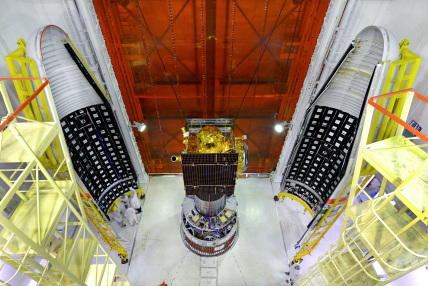
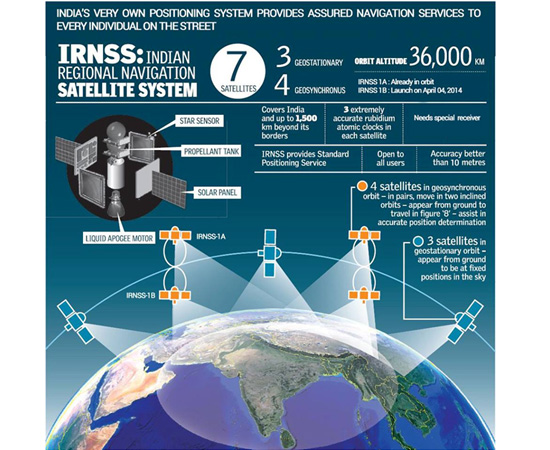
Navic is an independent Indian Satellite based positioning system for critical National applications. The main objective is to provide Reliable Position, Navigation and Timing services over India and its neighbourhood, to provide fairly good accuracy to the user. The IRNSS will provide basically two types of services

  1. Standard Positioning Service (SPS)
  2. Restricted Service (RS)

To date, ISRO has built a total of nine satellites in the IRNSS series; of which eight are currently in orbit Three of these satellites are in geostationary orbit (GEO) while the remaining in geosynchronous orbits (GSO) that maintain an inclination of 29° to the equatorial plane. The IRNSS constellation was named as “NavIC” (Navigation with Indian Constellation) by the Honourable Prime Minister, Mr. Narendra Modi and dedicated to the nation on the occasion of the successful launch of the IRNSS-1G satellite. The eight operational satellites in the IRNSS series, namely IRNSS-1A, 1B, 1C, 1D, 1E, 1F, 1G and 1I were launched on Jul 02, 2013; Apr 04, 2014; Oct 16, 2014; Mar 28, 2015; Jan 20, 2016; Mar 10, 2016, Apr 28, 2016; and Apr 12, 2018 respectively. The PSLV-39 / IRNSS-1H being unsuccessful; the satellite could not reach orbit.

Credit: Third Party Reference

Oh, Did I just ask to not address NAVIC (Navigation with Indian Constellation) as our own GPS (Global Positioning System). Have I lost my mind to go against the trend media has created? Am I actually serious about it? Well, let’s see why I am making such a preposterous appeal.

I have realised while talking to a lot of people on social media that they think GPS is a technology per say in generic terms which is completely incorrect. And the headlines all over media are reflecting as such. So first let’s talk about different satellite based navigation systems.

WHAT IS GPS :-

GPS (Global Positioning System) is a global satellite-based navigation system made up of a network of 24 satellites placed into orbit by the U.S. Department of Defense (DoD). It is a U.S.-owned utility that provides users with positioning, navigation, and timing (PNT) services. This system consists of three segments: the space segment, the control segment, and the user segment. GPS is operated and maintained by the U.S. Air Force. It is currently the world’s most utilized satellite navigation system.

ABOUT GNSS :-

The generic name of what we assume to be GPS is GNSS (Global Navigation Satellite System). Currently there are two operational GNSS:
1) Global Positioning System (GPS) is owned by the United States.
2) GLONASS is owned by Russia.

The third GNSS- GALILEO of European Union isn’t completely operational yet, 12 of 30 satellites in orbit. The forth BeiDou (Chinese Navigation system) is a limited test system, its full-scale global navigation system or GNSS also known as COMPASS or BeiDou-2 is currently under construction, it has about 20 satellites in orbit at present.

THEN WHAT’S THE ISSUE?

See, by now we have developed GPS isn’t a generic term, it’s just most popular and we human race runs after something that’s always more popular and it’s exactly what needs to be changed if we want to create our own identity in this world, if we want to stand with pride, if we want other nations to respect and recognise us then we need to be own people and not some ripped off identity of other nation and that’s what NAVIC deserve.

Credit: Third Party Reference

NAVIC was developed after so much of continuous handwork of ISRO scientists, thorough research and loads of money. It isn’t just another satellite based navigation system, it made us the fifth elite nation in this world to have our own navigation satellite system and it is a big deal. I am forever grateful to GPS for extending its services to us but we (India) developed and deployed NAVIC because many of the GPS services weren’t available to defence forces specially and we needed that thus came NAVIC.

NAVIC made us a proud nation, it showed the world the powerful force India is, it showed that we were Inventers/developers, we are and we always will be. We have some of the best brains in the world that is what NAVIC represents. It’s our pride and giving it a second hand name just dishearten me and it should dishearten you as well.

China has its own search engine Baidu and they do not call it ‘Chinese Google’. We do not call Flipkart as ‘India’s Amazon’ or Ola as ‘India’s Uber’ or every Smartphone an iPhone. Even you wouldn’t like to be called by other’s names!

What we say today, what we trend today will be remembered tomorrow and I do not want NAVIC to be known as ‘Indian GPS’.

If you agree with me then kindly share this post, raise your voice, talk about it, and aware more people about it. All I want is NAVIC to be known as NAVIC to the entire world and I need your help in doing so.

Reference- divyanshspacetech.wordpress.com and isro.gov.in

MS DHONI – a man with a dream

“If the plan doesn’t work, change the plan but never the goal.”

Born in small town of Ranchi,Jharkhand coming from a lower middle class family to becoming a legend in the field of cricket and staying in hearts of billions of people carving his own path of success with gaining the title of captain cool. His journey inspires a lot of people and I am one of them . starting with an accidental adventure in field of cricket ,he has faced all the failures but one thing that remained constant was his determination and the never give up attitude that led him to what he is today. An everyday man who went on to be popularly known as the ‘Captain Cool’ is none other than our very own former Indian Men’s (ODI & T20Is) Cricket Team Captain, Mahendra Singh Dhoni or simply known as Dhoni.

His cricket journey started when he was in his school in his football team  and his coach asked to do wicket keeping that’s where he impressed everyone with his wicket keeping skills and secured his position in  commando cricket club for 3 years and selected for Vinoo Mankad Trophy under 16 during 1997-1998. Well his journey to be a part of Indian cricket team wasn’t that easy for him, after playing cricket at district and state level, he worked as a train ticket examiner at Khargpur railway station in West Bengal to financially support his family. But the young man always had a bigger vision and wanted to achieve more , he saw a dream, which many feared to see.

He made his debut in Ranji Trophy for Bihar in year 1999-2000 and played for three years. Seeing his excellent performance in Ranji Trophy, TRDO officer Prakash Poddar was attracted towards his performance and later sent a report to national cricket academy regarding his performance.  Finally his struggle and hardwork payed off and he was selected for India A squad for a tour of Zimbabwe and scored back to back centuries.

ODI CARRER

After delivering good performance in India A team he was selected in ODI squad for Bangladesh tour in 2004-2005  and was also picked for Pakistan series. Though his initial matches were not a great success.

His turning point came with Sri Lanka bilateral ODI series in 2005 where India  had to made 299 runs among which Dhoni made 183 runs finally winning the game for India. Due to his consistent performance in later ODI’s, Dhoni overtook Ricky Ponting and  became number 1 in ICC ODI ranking for batsmen in 2006.

There are many inspiring lessons that the sportsman has taught us about life. He loved the sport and he wanted to chase his passion. He taught us to dream big and not get satisfied with small joys of life. He is a wonderful human, who was always up for absorbing new learning from his peers. He never hesitates to appreciate the outstanding work of others. He never lost hope and put in extra effort to fulfill his dream.

BECOMING A SENSATION AND HIS JOURNEY AS THE INDIAN CAPTAIN

Dhoni was not only known for his cricket but was also very popular for his lengthy wavy hair style. In fact, it had then become a trend in those days that every boy in the country now wanted to adorn the “Dhoni Hairstyle”.

In 2007, he led the team a whopping victory in ICC T-20 World Cup. He continues to inspire the younger generation with his brilliant captaincy, and out of the box thinking.

MS Dhoni is India’s only two-time World Cup winning captain, leading the team to victory on two occasions which involved two different format. He led a young Indian team to the first ever T20 World Cup victory in South Africa in 2007. Dhoni then led India to their second ODI World Cup victory in 2011.

He is arguably one of the best captains in the history of not just Indian cricket but also world cricket. The miracles he has done on the cricket field makes everyone wonder if he really is a human.

His cricket acumen is so accurate that people believe if Dhoni gives someone out on the field then his team starts celebrating without waiting for 3rd umpire. People started referring the DRS  not as Decision Review System but as Dhoni Review System. His lightning fast stumpings are viewers delight. He has taught us that no situation, however bad can be fought through and defeated. The only Indian captain with over 100 wins in ODI’s, the next best captain after Ricky Ponting with 11 consecutive wins in world cup matches.

He is a phenomenal cricketer and a legend, and  because of him I became a cricket lover. I bet no Indian can ever forget the line – “INDIA LIVES THE WORLDCUP ONCE AGAIN AFTER 28 YEARS” right after his six. He served his nation for 15 years. Dhoni is the most successful captain of India who has won two ICC cricket world Cups for the country.

The person behind the stumps, the cricketer who held is calm and takes his team to victory in immense pressure – famous as captain cool. The man who went on to become one of the most agile wicket keeper in modern limited overs in international cricket , right handed batsman , a magnificent  finisher , absolute fighter and the person who have billions of hearts attached

THE MSD NO.7 GAME.

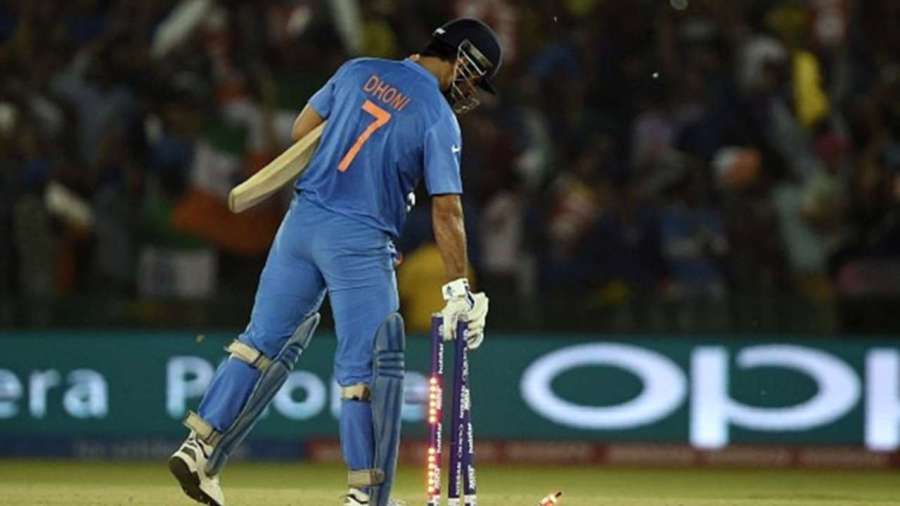
  • Cleary, Dhoni got a special preference for the number as his India shirt also has number 7
  • M.S. Dhoni was born on July 7, 1981. The year 2007 is strikingly significant for such people. No wonder he was won the World T20 Championship that year.
  • The name ‘M.S.Dhoni’ carries 7 characters!
  • India won the final (World T20) when Dhoni was 26 years and 80 days old. The age adds up to 7! (26+80=106). NO.7 will always be in everyone’s heart .

MS Dhoni has been an asset in the Indian cricket team and he has a fan following across the world. When he is in a room full of people, his presence is felt and he is a humble man. He is the man, who never hesitates to improvise. He always improvised his game and never let a failure get to him. This is a true story and it has inspired many! If you have a dream or passion, you should go after it and achieve it. There will be obstacles but life is not easy. Once you go after your dreams, the universe will find a way for you to achieve it.

Maharashtra govt sets up panel to fix COVID-19 testing charges at private labs

The Maharashtra government has formed a four-member committee to ascertain the rates of COVID-19 tests conducted at authorised private laboratories in the state and the new rates will be fixed within seven days.
 
AIR correspondent reports that the Indian Council of Medical Research – ICMR has allowed 44 government and 36 private laboratories in the state to carry out coronavirus tests. While the tests are free at government laboratories, the ICMR fixed charges at private laboratories at Rs 4,500.
 
Health Minister Rajesh Tope said that the kits required for conducting the tests were being imported earlier when charges of tests at private laboratories were fixed by ICMR. Now kits are being manufactured in the country itself and are available. Hence, ICMR has conveyed to negotiate with the private laboratories and fix the test rate.
 
It added that the rates will be finalised in seven days. It further said that the private laboratories can charge for tests at current rates, fixed for the district in which they are located, till the new rates are finalised. Meanwhile, in its advisory, BMC said that all corona positive patients who do not have symptoms or have mild symptoms, need not rush to the big hospitals for admission when the test result is positive. It said that Heatlh Department will guide such people for the same to nearby Corona care centers.

Bihar: All eligible migrant workers to be included in voters list

In Bihar, all eligible migrant workers will be included in voters list during it’s. Chief Electoral officer HR Srinivasa said all DMs, SSPs and SPs will initiate special summary revision of the voters list for the upcoming assembly elections. 
 
The process of updating the voters list is underway. Efforts will be made to add the people who have returned to the state but don’t have their names in the voters list. About 25 lakh migrant workers from different parts of the state have returned to Bihar so far.

REOPENING OF SCHOOLS

The pandemic of Coronavirus that has engulfed the globe has also motivated us to find solutions for living life with Coronavirus. Our life will not be the same as it was till Coronavirus is around and the medical fraternity comes up with certain medicine that would increase the chances of survival of the people. A nationwide debate has begun about the reopening of schools and educational institutions.

The lock down that commenced from March did not affect the academics as the majority of learning was already completed and only assessment was to be completed. Students could stay at home safely during the spread of the Coronavirus due to the timely closure of the educational institutes by the government.

The time has come when the new academic year is about to commence. The government and the educational stakeholders are in a fix over the methodology or concrete path to be followed for the reopening of the schools. What should be the guidelines to obviate the fear of all the stakeholders about economical aspects and above all safety of students.

The medical perspective has put forth two issues one is safety and protection of the students, teachers, and families, and the other is the prevention of the spread of disease through schools as a hub for the same. Students have a habit of socializing and they are at greater risk than those who will follow the medical guidelines in letter and spirit. It is a difficult task to ensure all the youngsters at schools and colleges following the guidelines on keeping themselves safe. India is a densely populated country and the cases of Corona infection are on rising day by day. Hence, a judicious and careful approach for the reopening of the schools is considered by the government by finding a novel approach to handle the situation.

Factually the corona infected cases are increasing in India and experts have been forecasting that the country may reach a peak in July. Keeping in view the aspect of the increase in the number of corona viruses infected patients by July would pose a different challenge to the government if it opens the schools. Parents association and some activists have already filed cases in the court of law for seeking a delay in the opening of schools.

Though in urban areas online classes are about to become a routine concept. The condition of rural areas in terms of online connectivity is a matter of concern, putting the rural students at a disadvantage. A thought over long term impact on students residing in remote areas and with no resources be also given.

The students can be called to school physically in the second half of the academic year, in the first half certain measures that would reduce the burden on students and the teachers can be initiated. Reduction in the syllabus is one such aspect. The planned conduct of online classes can help all to achieve concrete success in the first half.

The development of a vaccine is in progress and let us hope that we get the same soon. This is the time when we can redefine the education system and help the Education sector find a new beginning. We need to provide the best education to the students.

Gender inequality : Development issue

Inequality refers to unequal treatment. On gender inequality index rank is 132 out of 187 countries. In India women’s don’t get that much priority as compared to men in most of the areas women’s face a lot of problems. Mostly in rural areas people celebrate the birth of baby boy but don’t celebrate the birth of baby girls. If we compare the literacy rate between men and women we found that the literacy rate of men’s are more than the females most of the parents think that if they educate their daughters its not beneficial for them because tif they educate their daughters then who will look after the household chores .if we see in rural areas we found that women’s are more engaged in agriculture they do all the field works like irrigation, weeding, winnowing, transplanting etc. and also people think that women are not able to do work after marriage or most of the institutions wants male teachers because they think that men’s are capable of doing a lot of things and they think boys are main source of income for their families. So only here women’s face discrimination in work area also they do same work as men but they don’t get equal money for that. the report of Human Development in 2019 says that in 189 countries India’s rank is 129th in [HDI] mainly the human development focuses on the overall growth which also includes economic growth and in 2019 they mainly focused on gender inequality and the report said that the coming generation will focuses more on technology and the report said the rank of India is less than the china in Gender Gap Index because number of women’s participant in labour force are less there are several reasons behind it may be their husband’s don’t allow it or maybe there is safety issue and so on and if we are talking about opportunities women always get less opportunities as compared to men in rural areas women’s don’t work outside the home or usually they work in their own fields in urban areas the report said that girl don’t get opportunity to study further after they reach puberty and boys don’t have any restriction like that they don’t allow their girl child to study and they cut their daughter’s name from the school most of the pregnant ladies use female foeticide which disturbs the male and female ration overall that is 91 girls for every 100 boys
ECONOMIC GROWTH AUTOMATICALLY INCREASES IF THERE IS NO GENDER INEUALITY.
If there is no inequality so women’s started taking part in every sector so their productivity also increases so they produce better goods so after reading a research paper I found that industries which have more female worker grow faster than the industries which don’t have more female worker.
The participation of labour force and growth is lowest as compared to other countries the first think India have to think that how to increase the participation of women’s in labour force then the economic growth already increases for the development we have to remove the gender inequality. Mostly women get chance to those industries where they don’t face any difficulty where people have to think that they have to do those works which don’t require physical work and most of the industries which give opportunity to female want their owner should also be female so they work easily there are some states in India which have female entrepreneurs that is in Andhra Pradesh, West Bengal, Tamil nadu so in India these states have high income as compared to other states
India come to 112th position from 108th position in 2018 in WEF that is world economic forum now its is improved at some extent but some country which have lower rank than India is improving more faster the report said in India the the political gender gap is less than the economic gender gap
Now most of the countries have good gender parity :

  1. Iceland [ 87.7%]
  2. Norway [84.2%]
  3. Finland [83.2%]
  4. Sweden [82.0%]
  5. New Zealand [79.9%]
    So most of the issues covered by Indian media on gender inequality one of them was Sabarimala temple located in Kerala. In India today newspaper it tells us that women’s don’t allowed in that temple so that the supreme court take action on it and decided to remove this rule so now every women whatever her age is should allowed to go and pray so this is the new step taken in our country to remove the gender inequality because people think that the women’s who menstruate are impure and they don’t go to the temples because temple are pure and this kind of discrimination they faced from several years, so now it is remove.
    Another case was article 377 which in favour of gender equality so these steps are taken to remove the gender inequality
    Now India is improving but in most of the areas women’s are still don’t get equal rights so we have to focus on that area and educate them so that they understand it and give opportunities to their daughters and treat equal because if the women is literate then she will educate their children and society too and also improvement of any country is impossible without gender equality because there are lots of people who have good skills but they don’t have platform to show it so lack of these things also decreases the growth so for better development and growth it is necessary to remove the gender inequality.

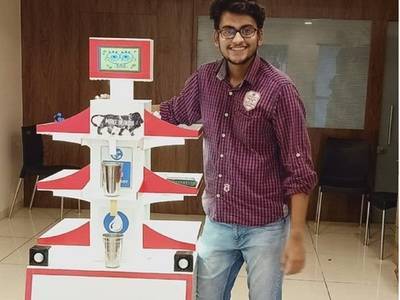
Worlds first “Internet controlled robot” By 23 year old Indian boy : Covid-19

A 23 year old Thane engineer has developed worlds first-of-its-kind internet controlled robot which can be used to treat covid patients in hospitals.

The robot delivers food, water, beverages, medicines and even some good advices to the patients without the help of any hospital nurses or staffs.

This aCoro-bot’ eliminates the need of physical presence or contact of nurses or ward boys with the patient. It can deliver food, water, medicines and interact with the patients through a camera. Through a speaker, it can also advise patients on various precautions like sanitizing their hands before picking up anything from the robotic tray,” Says Pratik tirodkar the creator and designer of this robot.

This smart boy is also the founder of a start up ‘PNT solutions’. Whatsmore this young lad had developed other unique creations when he had barely stepped to college. This include world’s first ‘Humanoid’ with 47 body (axis) movements, a robotic bird ornithopter for various outdoor applicationsapplications,  a mini packaging robot and several others.

This genius has even given over a 100 guest lectures to the brain students of IITs and NITs in the country.

This robot can be operated from any part of the world through internet. The robot comes with 3 trays with a carrying capacity of 10-15 kg each, plus a 30-kg storage at the bottom, enabling it to serve the supplies to over a dozen patients at a time in the COVID-19 ward.

There are separate dispensers for water, tea, coffee, besides sensors for sanitizers which flow out quickly when the patient holds his hand below it and cuts off the supply when the hand is removed. Thus there is minimum wastage,” Tirodkar explained.

“Not only the COVID-19 patients, Coro-bot can also take care of itself. It has three nozzles at the back to give itself a disinfectant bath regularly, it goes on spraying sanitisers on both sides of the path, plus disinfects the ground it moves on by using UV lights” Says the genius.

The Coro-bot also has LED lights illumination to make it convenient for night usage as well, timers for indicating lunch-dinner, emergency button, besides a small PC like screen on the top for basic computer work or entertainment, he said.

This is now successfully deployed at Holy Cross Hospital in kalyan. Impressed by this robot over a dozen of other hospitals have ordered coro-bot in Mumbai.

The Coro-bot costs between Rs 1.60-Rs.3.80 lakhs, depending on various specifications like the load-carrying capacity, etc, and the Ornithopter is around Rs 30,000. I have a small manufacturing unit at Dombivali, but if I can get a good investor, I can get into mass production,” he said.

Pratik tirodkar is currently doing his Btech in instrumentation engineering from Bharati  Vidyapeeth College of Engineering, Navi Mumbai.

World food safety day.

we all know that food is important to live life, and it is also a basic need of the human cycle. from the last two years from around the world, people celebrate the world food safety day on 7th Jun, this day was declared by The United Nation Organisation’s Food and Agriculture Association introduce it on 16th October in 1945. the moto to create world food safety day is to create awareness about the existing problems of obesity and malnutrition due to hunger. at an early age, in these only 150 members they have to organized activities and events in an effort to end hunger and promote a healthy lifestyle. When they get the proper results in their organization, they get help from businesses, governments, the media, NGOs and the general public to help those who cannot afford even one meal a day.

In recent 10 to 20  years, all around the globe government established food safety organizations to spread the awareness regarding the crisis of food and hunger, in India Food Safety and Standards Authority of India, established under the Food Safety and Standards Act, 2006, is the regulating body related to food safety and laying down of standards of food in India. this organization collects food from parties and wadding to provide slum people, who can not afford the food for a single time.

However, they not only provide food to poor people but also provide information regarding how to manufacture any product in factories, how Genetically modified foods works, Food additives, and many other services regarding food.

Food processing is the transformation of agricultural products into food, or of one form of food into other forms. Food processing includes many forms of processing foods, from grinding grain to make raw flour to home cooking to complex industrial methods used to make convenience foods. Primary food processing is necessary to make most foods edible, and secondary food processing turns the ingredients into familiar foods, such as bread. on many T.V. channels also telecasted many shows which are authorized by well-known food manufactories for farmers to grow healthy and good crops. from many times food processing has been criticized for promoting overnutrition and obesity, containing too much sugar and salt, too little fiber, and otherwise being unhealthful in the dietary needs of humans and farm animals. With the help of a food safety organization, the ration is going down slowly.

nowadays genetically modified food is also famous all around the world many countries scientist do research on how to grow genetically modified food and china get success in it and they made first-ever modified corn Indian-Cornand they also do research on food which provide high vitamins and other essential things for the body.

they also run classes where they teach us how to read the label, Know your produce, Know your seller/market, Clean your food, Store right, Cook properly, and Eat raw but eat right.

The United Nation Organisation also run a campaign regarding the obesity, which we can see in present world in small and adult children, more than 603 million adults and 107 million children out of a global population of around 7.5 billion are obese. spreading the right information regarding it is very important and help full for the future a single child, otherwise, a child has to face problem regarding asthma, heart disease.

So, we have to support this organization and do not disobey the instructions which are provided.

thank you to read this post.

Geography of India

The second most populated and the seventh-largest country in the world. A land of culture and values, heritage, spirituality. A country blessed with all possible geographic features i.e. plain, dessert, plateau, mountains, island and grassland etc. Land of many religion, languages, spices, festivals. A country who gifted Yoga and Ayurveda to the world. It also called the soil of kings and legends, soldier, farmers, doctors, scientists. We are diverted cast, religion, language but united by a county named India.

Let’s have a look at some more important, amazing and extraordinary things about our country.

Location

• Lying between latitude 8°4′ N to 37°6′ N and from longitude 68°7′ E to 97°25′ E, the county is divided into almost equal parts by the Tropic of Cancer.

• The 82°30′ E longitude is taken as the Standard Time Meridian of India, as it passes through the middle of India.

Area and boundaries

• India stretches 3,214 km from north to south and 2,933 km from east to west. The area is 32,87,263 sq km. Accounts for 2.4% of the total world area and 16% of the population.

• In India, of the total landmass – Plain: 43.3%, Plateaus: 27.7%, Hills: 18.6%, Mtns: 10.7%

• Total land neighbours: 7 ( Pakistan, Afghanistan, China, Nepal, Bhutan, Bangladesh, Myanmar)

Position of States in India

• Uttar Pradesh borders maximum number of 8 states.

• Tropic of cancer passed through 8 states – Gujarat, Rajasthan, MP Chattisgarh, Jharkhand, West Bengal, Tripura and Mizoram.

• Indian standard Meridian passes through MP, UP, Chhattisgarh, Orissa and Andhra Pradesh.

Mountains of India

• Himalayas

• Trans-Himalayan Zone

• Peninsular Mountains

Plains of India

To the south of the Himalayas and to the north of the Peninsula lies the great plain of Northern India. They are formed by the depositional work of three major river systems, Indus, Ganga, Brahmaputra. The vast plain of north India are alluvial in nature and the westernmost portion is occupied by the Thar Dessert.

Peninsula Plateau

• Spreads south of the Indo Gangetic plains flanked by the sea on the three sides. This plateau is shaped like a triangle with it’s the base in the North.

• Vindhya Plateau is situated south of Malwa plateau.

• The Deccan plateau is the largest plateau in India.

Island of India

• Total coast: 7,516 km largest coastline: Gujarat

• Indian territorial limits include 247 Island.

Rivers of India

Three major river system are there –

• Himalayan river ( Indus system, Ganga system, Brahmaputra system)

• River of the Peninsula ( River flowing into Bay of Bengal, West flowing river)

• Inland Drainage

The Climate of India

• India has a tropical monsoon type of climate. It is greatly influenced by the presence of the Himalayas in the north as they block the cold air masses from Central Asia. It is because of them only that the monsoon have a watershed in India.

The tropic of cancer divides India into two almost equal climatic zones, namely, the northern zone and the southern zone. The warm temperature or the subtropical climate of the northern zone gives it cold winter and the hot summer season. The tropical climatic zone us warmer than the north and does not have a clear cut winter season.

Forests in India

• According to the National Forest Policy, the minimum desired area which is considered safe for the tropical country like India is about 33%. At present, about 20.64% of India has covered with forest.

• Madhya Pradesh has the largest area to total area, first is Andaman and Nicobar Island, followed by Mizoram, Manipur, Himachal Pradesh, Arunachal Pradesh, Tripura and Nagaland. They are in a very comfortable position as more than half of their area is under forest.

• Arunachal Pradesh has the highest per capita forest area.

• In mangrove forest, West Bengal holds the first position, followed by Gujarat and Andaman and Nicobar Island.

There are many things that reflect the beauty of India. The land, environment and people of India are like a gift for the world. At last, I just want to share a quote written by Mohammad Iqbal to justify it all.

Sare jaha se accha hindustan humara Hum bulbule h iski ye gulsitan humara

The first women ruler of Delhi Sultanate: Raziya sultana

Raziya Sultana, a woman who was the first and last women ruler of Delhi sultanate belonged to the 13th century. She was the daughter of Mamluk sultan Shamsuddin Iltumish and Turkan Khatun. Raziya’s father was the son in law of Qutb-al-Din Aibak the first Delhi sultan. After Aibak’s death, there was a battle of succession in which finally Raziya’s father was able to capture the throne and thus ushering in the slave dynasty.

Raziya was a bold and strong girl from her young age. She got training in military, warfare and administration along with her three brothers. Even during her father’s reign, her father took her into his confidence and trained her in the administration. She won appreciation and admiration of her father as she exhibited her extra ordinary ability and intelligence. Raziya did not follow the customary behaviour of Muslim women veiling their face; she showed her face in public gatherings and rode elephants in public. She many times led the army. But her brothers were interested only in the royal privileges and enjoyed their extravagant royal life. They did not have much interest in administration and warfares. During her father’s Gwalior campaign, she was entrusted the charge of the administration. Her administration skills made her father convinced that she is the fit person to wear the mantle of sultanate after him. This was an historical decision never done before in the history of Delhi to have a woman as an heir to the throne. In a country where women are given equal property rights legally only in the 21st century, he made his daughter the ruler of Delhi in the 13th century, something unheard of and never tested. He was liberal-minded and a man way ahead of his time. She learned all the military and administrative skills not to become a good queen to a king but a ruler by herself.

  Even though Iltumish made her the ruler, there were so many uprisings against her becoming the Sultan. Due to the political pressures and intrigues, her brother Rukn ud din Firuz, a drunkard and an incompetent was made the Sultan. Rukn ud din Firuz who indulged in drinking binge and other carnal pleasures did not mind his mother Shah Turkhan taking the rein of administration. Iltutmish’s son Qutubuddin was blinded and exexuted by Shah Turkhan and Rukn ud din Firuz. This led to upsurge and rebellion among the nobels, religious heads and general public. There were also murders of several important Tazik officers. Rukn Ud din Firuz marched towards Kuhram in Punjab to put down the rebellion. In mean time, Shah Turkhan planned to kill Raziya in Delhi. At a congregational prayer, Raziya instigated the general public against Shah Turkhan. Raziya had the backing and support of the public, the army and the nobles which led to the enthronement of Raziya, the first muslim women ruler in south Asia. Rukh ud din marched back to Delhi when he was taken into custody and put in prison, and probably he was executed. Raziya has become the undisputed ruler in 1236.

  She was a secular ruler. She allowed even non-Turks to occupy higher rankings. She was a revolutionary in that she gave up wearing purdah and wearing male attire instead. She did not like to be called the sultana and preferred to be addressed as Sultan. She conquered new territories, established educational institutions, built public libraries. She was the first to abolish ‘Jaziya tax’ which was collected from non-musilms. She also minted coins in her name. Her financial management, general administration and judicial fairness earned her a lasting popularity and admiration among the public.

The nobles, who initially supported her, thought she would depend on them for advice and opinions in administration. But contrary to their expectation she became more and more assertive and independent, exhibiting her innate boldness and manliness. She made important appointments in administration and army whom she trusted to be very loyal to her. She enjoyed a close rapport with the general public. She started appearing in public dressed in traditional male attire, wearing a cloak and a hat. She rode on elephants through the streets of Delhi, making public appearances like the earlier Sultans. She was popularly called the “Queen of the people”.

Some of the governors of the states under the Delhi Sultanate found that Razia was too independent and the chiefs at her durbar began conspiring against her. Armies were readied for an attack on Razia, but she skilfully managed to divide them and make them fight against each other. Her favourite officer was Jamal Yakut, a black African whom the court nobles called a “Habshi” — a derogative term — who was totally loyal to her and whom the chiefs could not accept as a senior officer.

Within 4 years of being a sultan, there rose a coup against her. The religious chiefs and nobles could not accept an assertive and independent female ruler who had become very popular with the general public. Her brother was made sultan and she was imprisoned at Bhatinda fort. She married Altunia the governor of Bhatinda; with his help she recruited an army and fought for her throne which was hers. However, her effort to retrieve her throne met with disaster. She was murdered during the fight. Thus, the reign of the only female ruler of Delhi ended abruptly and sadly. The final resting place of Raziya is obscure some state her grave is in Old Delhi and a ruined building in Kaithal is also stated to be the site of Razia’s original grave.

A contemporary 13th-century Persian historian, Miraj-i-Siraj, mentioned about her in one of his works:

‘She was a great monarch, wise, just, generous, benefactor to her realm, dispenser of justice, protector of her people and leader of her armies; and endowed with all admirable attributes and qualification necessary for a king’

                She might have been eliminated by the unforgiving misogynist religious fanatics but she lives eternally in the hearts and minds of every secular Indians. 

Video and Animation Design Contest on Response to Corona

Eduindex News has been inspiring design-driven social innovation by addressing urgent social issues over the past two decades.

Humanity today is facing the most challenging times we’ve ever seen across generations. Today it is this pandemic, tomorrow it could be another catastrophe of a different kind, a natural or a manmade one. Our world might not be the same again. So, what are we, as human-centric designers, thinkers, and thought leaders doing about it?

How can you get involved?

EXPRESS

Submit your thoughts, ideas, expressions, big problems, opportunities, etc.

EXPLORE

Re-imagine and explore with your friends or families to create a better world in these challenging times.

EXPERTISE

Showcase our strength by standing united in order to boost the confidence of our community.

EXPERIENCE

Lining up a very interesting cadence of talks and expert speakers to cover a broad range of diverse topics.

EXCEL

Join Eduindex News to get inspired, trained, and certified to excel in your careers.

EXECUTE

Connect with like-minded people to solve urgent socials issue identified by NGOs and Govt.

We are isolated but united for social good

As an effect of this pandemic, we are seeing so much pain, suffering, insecurity, and uncertainty surrounding us. It’s time for us to step up, take charge of the situation and be resilient. This downtime has given us our own space to introspect and connect to our inner selves. Bring your thoughts, ideas, creativity, skills and passion for our collective good.

Who can take part?

Passionate individuals

You could be an individual, from any background, not limited to design. If you can write, sketch, photograph, blog, post in social media, or even take a video then you
are gold to us.

Inspired teams

You could be an individual, from any background, not limited to design. If you can write, sketch, photograph, blog, post in social media, or even take a video then you
are gold to us.

Enablers/Mentors

You could be an experienced professional, a teacher, or a seasoned mentor from any domain, not limited to design. We would love to have you guide and mentor our teams participating in our challenge and together create a long-lasting social impact.

How to Participate in Design Contest

Video Making Competition

  1.  Write mail to news@eduindex.org
  2. Make video of at least 2 minutes on any topic or news published on Eduindex News.
  3. Make animated video or creative video, express the your ideas or present the news to the global audience
  4. Send the final video to news@eduindex.org

How to Get More Points

  1. You will receive the link to video from news@eduindex.org
  2. Share the video to your family and friends
  3. Get more likes and views to get more points
  4. Make good and impactful videos

Result of the Contest will be Announce in July 2020

The team of Editors from Eduindex News will select and decide the winner of the contest based on the quality of video, likes, views and social impact of the video.

Award and Prizes

  1. Certificate of Participation
  2. Name and fame on Eduindex News platform.
  3. Certificate of Winner
  4. Cash Award will be decided based on the no. of participants and donations from generous people.

Contact Us

Write mail to

news@eduindex.org

Eduindex News