George Floyd- What happened and what has happened since.

Racism, a word that’s on everyone’s lips these days. It refers to a systemic and mental prejudice against a particular group based on their looks, ethnicity etc. It’s a phenomenon that’s been around for several decades, it’s the thorn by the side of humankind that has hampered our enhancement. But why now, why the sudden uproar, why bring this issue to light so dramatically.

Photo by Kelly Lacy on Pexels.com

The hotspot for this issue started in Minneapolis, USA, which has an infamous record of police brutality and racism against those of African-American origin. Even within US Minneapolis has had a blatant disregard for the rights of African Americans since the last two decades. The death of George Floyd, a Minneapolis resident was the tipping point for all this. The police were called on Floyd regarding a suspected forgery of a $20 bill, what happened next was both sickening and disheartening. Derek Chauvin, one of the officers in charge of “arresting” Floyd was seen crushing his windpipe by the pavement. He has been involved in using excessive force 20 times out of which 19 included no disciplinary action against him. His offences include pulling a gun at a couple of kids due to their Nerf gun hitting a passer-by. The kids were verbally abused and were threatened by Chauvin. They later told a news outlet that they feel the only reason they are alive is because they weren’t black. So, him killing an African-American in cold blood as he begged him to breathe isn’t too farfetched. Initially as soon as Floyd was termed dead at a local hospital, the police department issued a statement that he “suffered a medical episode while struggling with officers,” however a video posted by a passer-by by the name of Darnella Frazier showed the world the actual truth, as the body cams of the police officers involved were suddenly heavily muted and redacted. The video showed how no sympathy was shown the poor man, who had moved from Houston to start his life anew. What followed were massive protests throughout the country and then the world. The movement involved a cry for reform and justice, justice for Floyd and all the other victims and reform so that no other person suffers like them. However, the response from the government was rather lukewarm, initially whenever the Hennepin County attorney was questioned about the call for an arrest of Chauvin their spokesperson would reply as it being discussed. This sparked a major outrage which led to riots and looting within many states in the US. The subsequent looting increased to such a point that the military was asked to guard various stores to ensure the stores safety. Various celebrities have spoken up about this issue and how devastated they are, especially amongst the African-American community. The brother of George Floyd, Philonise Floyd was asked about his thoughts regarding the movement and its association with looting and breaking of stores and he said  “I want everybody to be peaceful right now, but people are torn and hurt because they’re tired of seeing black men die, constantly, over and over again,” And I understand, and I see why a lot of people doing a lot of different things around the world. I don’t want them to lash out like this,” he added. “But I can’t stop people right now, because they have pain. They have the same pain I feel. I want everything to be peaceful, but I can’t make everybody be peaceful.”  How this episode follows is for all of us to see.

TERRORISM

The fundamentalist seeks to bring down a great deal more than buildings. Such people are against, to offer just a brief list, freedom of speech, a multi-party political system, universal adult suffrage, accountable government, Jews, homosexuals, women’s rights, pluralism, secularism, short skirts, dancing, beardlessness, evolution theory, sex. There are tyrants, not Muslims.

United Nations Secretary-General Kofi Annan has said that we should now define ourselves not only by what we are for but by what we are against. I would reverse that proposition, because in the present instance what we are against is a no brainer. Suicidist assassins ram wide-bodied aircraft into the World Trade Center and Pentagon and kill thousands of people: um, I’m against that. But what are we for? What will we risk our lives to defend? Can we unanimously concur that all the items in the preceding list — yes, even the short skirts and the dancing — are worth dying for?

The fundamentalist believes that we believe in nothing. In his world-view, he has his absolute certainties, while we are sunk in sybaritic indulgences. To prove him wrong, we must first know that he is wrong. We must agree on what matters: kissing in public places, bacon sandwiches, disagreement, cutting-edge fashion, literature, generosity, water, a more equitable distribution of the world’s resources, movies, music, freedom of thought, beauty, love. These will be our weapons. Not by making war but by the unafraid way we choose to live shall we defeat them.

How to defeat terrorism? Don’t be terrorized. Don’t let fear rule your life. Even if you are scared.

Terrorism, the calculated use of violence to create a general climate of fear in a population and thereby to bring about a particular political objective. Terrorism has been practiced by political organizations with both rightist and leftist objectives, by nationalistic and religious groups, by revolutionaries, and even by state institutions such as armies, intelligence services, and police.

Definitions of terrorism are usually complex and controversial, and, because of the inherent ferocity and violence of terrorism, the term in its popular usage has developed an intense stigma. It was first coined in the 1790s to refer to the terror used during the French Revolution by the revolutionaries against their opponents. The Jacobin party of Maximilien Robespierre carried out a Reign of Terror involving mass executions by the guillotine. Although terrorism in this usage implies an act of violence by a state against its domestic enemies, since the 20th century the term has been applied most frequently to violence aimed, either directly or indirectly, at governments in an effort to influence policy or topple an existing regime.

Terrorism is not legally defined in all jurisdictions; the statutes that do exist, however, generally share some common elements. Terrorism involves the use or threat of violence and seeks to create fear, not just within the direct victims but among a wide audience. The degree to which it relies on fear distinguishes terrorism from both conventional and guerrilla warfare. Although conventional military forces invariably engage in psychological warfare against the enemy, their principal means of victory is strength of arms. Similarly, guerrilla forces, which often rely on acts of terror and other forms of propaganda, aim at military victory and occasionally succeed (e.g., the Viet Cong in Vietnam and the Khmer Rouge in Cambodia). Terrorism proper is thus the calculated use of violence to generate fear, and thereby to achieve political goals, when direct military victory is not possible. This has led some social scientists to refer to guerrilla warfare as the “weapon of the weak” and terrorism as the “weapon of the weakest.”

In order to attract and maintain the publicity necessary to generate widespread fear, terrorists must engage in increasingly dramatic, violent, and high-profile attacks. These have included hijackings, hostage takings, kidnappings, mass shootings, car bombings, and, frequently, suicide bombings. Although apparently random, the victims and locations of terrorist attacks often are carefully selected for their shock value. Schools, shopping centres, bus and train stations, and restaurants and nightclubs have been targeted both because they attract large crowds and because they are places with which members of the civilian population are familiar and in which they feel at ease. The goal of terrorism generally is to destroy the public’s sense of security in the places most familiar to them. Major targets sometimes also include buildings or other locations that are important economic or political symbols, such as embassies or military installations. The hope of the terrorist is that the sense of terror these acts engender will induce the population to pressure political leaders toward a specific political end.

Some definitions treat all acts of terrorism, regardless of their political motivations, as simple criminal activity. For example, the U.S. Federal Bureau of Investigation (FBI) defines both international and domestic terrorism as involving “violent, criminal acts.” The element of criminality, however, is problematic, because it does not distinguish among different political and legal systems and thus cannot account for cases in which violent attacks against a government may be legitimate. A frequently mentioned example is the African National Congress (ANC) of South Africa, which committed violent actions against that country’s apartheid government but commanded broad sympathy throughout the world. Another example is the Resistance movement against the Nazi occupation of France during World War II.

Since the 20th century, ideology and political opportunism have led a number of countries to engage in international terrorism, often under the guise of supporting movements of national liberation. (Hence, it became a common saying that “One man’s terrorist is another man’s freedom fighter.”) The distinction between terrorism and other forms of political violence became blurred—particularly as many guerrilla groups often employed terrorist tactics—and issues of jurisdiction and legality were similarly obscured.

These problems have led some social scientists to adopt a definition of terrorism based not on criminality but on the fact that the victims of terrorist violence are most often innocent civilians. Even this definition is flexible, however, and on occasion it has been expanded to include various other factors, such as that terrorist acts are clandestine or surreptitious and that terrorist acts are intended to create an overwhelming sense of fear.

In the late 20th century, the term ecoterrorism was used to describe acts of environmental destruction committed in order to further a political goal or as an act of war, such as the burning of Kuwaiti oil wells by the Iraqi army during the Persian Gulf War. The term also was applied to certain environmentally benign though criminal acts, such as the spiking of lumber trees, intended to disrupt or prevent activities allegedly harmful to the environment.

Various attempts have been made to distinguish among types of terrorist activities. It is vital to bear in mind, however, that there are many kinds of terrorist movements, and no single theory can cover them all. Not only are the aims, members, beliefs, and resources of groups engaged in terrorism extremely diverse, but so are the political contexts of their campaigns. One popular typology identifies three broad classes of terrorism: revolutionary, subrevolutionary, and establishment. Although this typology has been criticized as inexhaustive, it provides a useful framework for understanding and evaluating terrorist activities.

Revolutionary terrorism is arguably the most common form. Practitioners of this type of terrorism seek the complete abolition of a political system and its replacement with new structures. Modern instances of such activity include campaigns by the Italian Red Brigades, the German Red Army Faction (Baader-Meinhof Gang), the Basque separatist group ETA, the Peruvian Shining Path (Sendero Luminoso), and ISIL (the Islamic State in Iraq and the Levant; also known as the Islamic State in Iraq and Syria [ISIS]). Subrevolutionary terrorism is rather less common. It is used not to overthrow an existing regime but to modify the existing sociopolitical structure. Since this modification is often accomplished through the threat of deposing the existing regime, subrevolutionary groups are somewhat more difficult to identify. An example can be seen in the ANC and its campaign to end apartheid in South Africa.

Establishment terrorism, often called state or state-sponsored terrorism, is employed by governments—or more often by factions within governments—against that government’s citizens, against factions within the government, or against foreign governments or groups. This type of terrorism is very common but difficult to identify, mainly because the state’s support is always clandestine. The Soviet Union and its allies allegedly engaged in widespread support of international terrorism during the Cold War; in the 1980s the United States supported rebel groups in Africa that allegedly engaged in acts of terrorism, such as UNITA (the National Union for the Total Independence of Angola); and various Muslim countries (e.g., Iran and Syria) purportedly provided logistical and financial aid to Islamic revolutionary groups engaged in campaigns against Israel, the United States, and some Muslim countries in the late 20th and early 21st centuries.
Terrorism, the calculated use of violence to create a general climate of fear in a population and thereby to bring about a particular political objective. Terrorism has been practiced by political organizations with both rightist and leftist objectives, by nationalistic and religious groups, by revolutionaries, and even by state institutions such as armies, intelligence services, and police.
Definitions Of Terrorism
Definitions of terrorism are usually complex and controversial, and, because of the inherent ferocity and violence of terrorism, the term in its popular usage has developed an intense stigma. It was first coined in the 1790s to refer to the terror used during the French Revolution by the revolutionaries against their opponents. The Jacobin party of Maximilien Robespierre carried out a Reign of Terror involving mass executions by the guillotine. Although terrorism in this usage implies an act of violence by a state against its domestic enemies, since the 20th century the term has been applied most frequently to violence aimed, either directly or indirectly, at governments in an effort to influence policy or topple an existing regime.
Terrorism is not legally defined in all jurisdictions; the statutes that do exist, however, generally share some common elements. Terrorism involves the use or threat of violence and seeks to create fear, not just within the direct victims but among a wide audience. The degree to which it relies on fear distinguishes terrorism from both conventional and guerrilla warfare. Although conventional military forces invariably engage in psychological warfare against the enemy, their principal means of victory is strength of arms. Similarly, guerrilla forces, which often rely on acts of terror and other forms of propaganda, aim at military victory and occasionally succeed (e.g., the Viet Cong in Vietnam and the Khmer Rouge in Cambodia). Terrorism proper is thus the calculated use of violence to generate fear, and thereby to achieve political goals, when direct military victory is not possible. This has led some social scientists to refer to guerrilla warfare as the “weapon of the weak” and terrorism as the “weapon of the weakest.”

In order to attract and maintain the publicity necessary to generate widespread fear, terrorists must engage in increasingly dramatic, violent, and high-profile attacks. These have included hijackings, hostage takings, kidnappings, mass shootings, car bombings, and, frequently, suicide bombings. Although apparently random, the victims and locations of terrorist attacks often are carefully selected for their shock value. Schools, shopping centres, bus and train stations, and restaurants and nightclubs have been targeted both because they attract large crowds and because they are places with which members of the civilian population are familiar and in which they feel at ease. The goal of terrorism generally is to destroy the public’s sense of security in the places most familiar to them. Major targets sometimes also include buildings or other locations that are important economic or political symbols, such as embassies or military installations. The hope of the terrorist is that the sense of terror these acts engender will induce the population to pressure political leaders toward a specific political end.
An Indian policeman firing a shot during a 12-hour-long gun battle in the town of Dinanagar, in the northern state of Punjab, India, July 27, 2015. Three armed gunmen attacked a police station, killing four police officers and three civilians before succumbing to the counterassault by local police.
Some definitions treat all acts of terrorism, regardless of their political motivations, as simple criminal activity. For example, the U.S. Federal Bureau of Investigation (FBI) defines both international and domestic terrorism as involving “violent, criminal acts.” The element of criminality, however, is problematic, because it does not distinguish among different political and legal systems and thus cannot account for cases in which violent attacks against a government may be legitimate. A frequently mentioned example is the African National Congress (ANC) of South Africa, which committed violent actions against that country’s apartheid government but commanded broad sympathy throughout the world. Another example is the Resistance movement against the Nazi occupation of France during World War II.

Since the 20th century, ideology and political opportunism have led a number of countries to engage in international terrorism, often under the guise of supporting movements of national liberation. (Hence, it became a common saying that “One man’s terrorist is another man’s freedom fighter.”) The distinction between terrorism and other forms of political violence became blurred—particularly as many guerrilla groups often employed terrorist tactics—and issues of jurisdiction and legality were similarly obscured.

These problems have led some social scientists to adopt a definition of terrorism based not on criminality but on the fact that the victims of terrorist violence are most often innocent civilians. Even this definition is flexible, however, and on occasion it has been expanded to include various other factors, such as that terrorist acts are clandestine or surreptitious and that terrorist acts are intended to create an overwhelming sense of fear.

In the late 20th century, the term ecoterrorism was used to describe acts of environmental destruction committed in order to further a political goal or as an act of war, such as the burning of Kuwaiti oil wells by the Iraqi army during the Persian Gulf War. The term also was applied to certain environmentally benign though criminal acts, such as the spiking of lumber trees, intended to disrupt or prevent activities allegedly harmful to the environment.
Various attempts have been made to distinguish among types of terrorist activities. It is vital to bear in mind, however, that there are many kinds of terrorist movements, and no single theory can cover them all. Not only are the aims, members, beliefs, and resources of groups engaged in terrorism extremely diverse, but so are the political contexts of their campaigns. One popular typology identifies three broad classes of terrorism: revolutionary, subrevolutionary, and establishment. Although this typology has been criticized as inexhaustive, it provides a useful framework for understanding and evaluating terrorist activities.
Revolutionary terrorism is arguably the most common form. Practitioners of this type of terrorism seek the complete abolition of a political system and its replacement with new structures. Modern instances of such activity include campaigns by the Italian Red Brigades, the German Red Army Faction (Baader-Meinhof Gang), the Basque separatist group ETA, the Peruvian Shining Path (Sendero Luminoso), and ISIL (the Islamic State in Iraq and the Levant; also known as the Islamic State in Iraq and Syria [ISIS]). Subrevolutionary terrorism is rather less common. It is used not to overthrow an existing regime but to modify the existing sociopolitical structure. Since this modification is often accomplished through the threat of deposing the existing regime, subrevolutionary groups are somewhat more difficult to identify. An example can be seen in the ANC and its campaign to end apartheid in South Africa.

Establishment terrorism, often called state or state-sponsored terrorism, is employed by governments—or more often by factions within governments—against that government’s citizens, against factions within the government, or against foreign governments or groups. This type of terrorism is very common but difficult to identify, mainly because the state’s support is always clandestine. The Soviet Union and its allies allegedly engaged in widespread support of international terrorism during the Cold War; in the 1980s the United States supported rebel groups in Africa that allegedly engaged in acts of terrorism, such as UNITA (the National Union for the Total Independence of Angola); and various Muslim countries (e.g., Iran and Syria) purportedly provided logistical and financial aid to Islamic revolutionary groups engaged in campaigns against Israel, the United States, and some Muslim countries in the late 20th and early 21st centuries.

The military dictatorships in Brazil (1964–85), Chile (1973–90) and Argentina (1976–83) committed acts of state terrorism against their own populations. The violent police states of Joseph Stalin in the Soviet Union and Saddam Hussein in Iraq are examples of countries in which one organ of the government—often either the executive branch or the intelligence establishment—engaged in widespread terror against not only the population but also other organs of the government, including the military.

The persistent element of all forms of establishment terrorism, unlike that of nonstate terrorism, is that of secrecy. States invariably seek to disavow their active complicity in such acts, both to evade international censure and to avoid political and military retribution by those they target.

Terrorism appears to be an enduring feature of political life. Even prior to the September 11 attacks, there was widespread concern that terrorists might escalate their destructive power to vastly greater proportions by using weapons of mass destruction—including nuclear, biological, or chemical weapons—as did the Japanese doomsday cult AUM Shinrikyo, which released nerve gas into a Tokyo subway in 1995. These fears were intensified after September 11, when a number of letters contaminated with anthrax were delivered to political leaders and journalists in the United States, leading to several deaths. U.S. Pres. George W. Bush made a broad “war against terrorism” the centrepiece of U.S. foreign policy at the beginning of the 21st century


Wake up, your child is going to do suicide

“If my parents understood my dreams than today I won’t be stealthy sitting on roof and writing this blog.”

So, you are a parent, if not than at one stage of life you’ll be ( but for now just read and share it with a parent). Every parent has great GREAT expectations from their offspring and sometimes that desire becomes so pressurizing that it takes the toll of the life of that little angel.

How many of you asked your child what he or she wants to become well many of you haven’t and in a rare case if you have, I am sorry to say that you didn’t took that seriously.

A child of 21st century is none less than the most busiest person on Earth, schooling, coaching, homework and much more trouble some tasks are a part of their life and after all that when they get the night time to rest, they wander in the land of dreams; the world that’s their own, they make ambitions and set goals for their life.

But do you even know the amount of grief and misery that your child feels when you say a crisp clear NO to them when they beg you to let them achieve what they want ?

Let me talk in statistics. Globally Around 65000 kids committed suicide in 2019 just because their parents didn’t allowed them to study in the field of their choice.

Just imagine the condition of a student who passed school working hard so that he could take admission in his dream college. But guess what, his CARING parents deny him that because the college is in another city . WTF, like seriously, we kids work our ass whole childhood to satisfy your marks hungry taste buds and what we get in return, a big rejection on our dreams.


As a parent your worries and thinking of well being of ur kid is justified. But you have to understand that the dreams and choice of your child also matters, afterall it’s them who would be studying and if they want to pursue a field of their choice then why deny it to them and become the reason of them going into depression or at worse, commuting suicide.


Parents, you have to understand this, your child knows his interests more than you or anyone else. Please, you just can’t put an end on their life by making them give up on their dreams.

Just go and talk to them, understand what ur child wants. Otherwise the day is not far when your child will cry silently in night and will fear to meet eye with people and will curse his very existence like I do. Please parents, wake up .


Lockdown: A Reset button for nature

People were very anxious due to the lockdown, they were bored of sitting at home, they didn’t had work to do, many of the people even lost their jobs especially labours, many people didn’t had food to eat although government had been trying hard to supply food and other essentials to every needy, and many celebrities and even common people were trying to help poors, providing them with food, masks, sanitiser which were very important at the time of corona, making them reach their homes.

People were abusing the corona virus for making them locked up in their homes, but one thing which the government had been trying to do for so many years, there were so many policies regarding that, a lot of fund has been given to that, but none of these worked but it happened now, that is clean environment, clean rivers,  decreasing pollution, decreasing global warming and so many more things. A lot of fund had been given to these campaigns but they didn’t showed much effect, but this corona virus did. This showed that it is the right of the nature to be clean but we humans for our own good destroyed it to the extreme level but the nature always finds its way through different means to retain itself as it is, clean and tidy.

The Biggest concern of Indian government to clean river ganga has been done by this lockdown. The ganga is clean to such extent that aquatic animals can be seen easily through naked eyes. Dissolved oxygen content has been increased which is necessary for aquatic animals to survive and even to clean the river through biodegradable decomposition when waste water from the industries enter into the rivers.

Biochemical oxygen demand has been decreased which is the amount of oxygen required to clean the river through biodegradable decomposition.
Even the ozone layer healed itself, the largest hole in the ozone layer healed during lockdown due to decrement of  harmful gases present in atmosphere.
During lockdown, marine lives were seen to be back on beaches, due to absence of humans, due to no interference of humans in nature cycle.

Nature has been giving us warning through many small natural disasters but we humans didn’t changed, so nature had to take such severe step to heal itself. This positive impact on environment showed us that nature can be healed as it was before the human, it’s not too late, stop now, stop disturbing nature otherwise it will disturb you completely, so live peacefully and let nature live peacefully too.

Beyond the Ivory Tower: New Role of Higher Academic Institutions in Crisis Situations

COVID-19 and natural disaster have provided new opportunities for the higher academic institutions of India to demonstrate their social relevance and potential for outreach beyond purely academic activities. Let us have some glimpses.

As part of negotiating the pandemic threat St. Xavier’s College (SXC), Mumbai, has provided its auditorium hall, canteen and the Xavier Institute of Management and Research terrace to Brihanmumbai Municipal Corporation to set up a 160-bed quarantine centre for fourteen day- isolation. The college has started a helpline number with six professional counsellors, twenty three faculty and six Jesuits. The purpose is to guide the students who are stuck at home, confused about the dates of semester examinations and admission.  The college has sent around Rs. 1,75,000 worth of medical equipment through Urja Foundation to Kasturba Hospital to fight against COVID-19. SXC sent around 1000 food bags to Mumbai Dharavi, adequate for a family of five for ten days. Rs. 1 lakh worth of plastic face visors have been sponsored by SXC for the police. The college also sent Rs. 30,000 to Maharashtra Prabhodhan Seva Mandal, Nashik, for aid work with migrants.

IIT Delhi incidentally was the first higher education institution to receive approval from the Indian Council for Medical Research (ICMR) for a polymerase chain reaction for COVID-19. It is issuing non-exclusive licenses to half-dozen companies. There are more than 200 projects issued by the IIT. One of the projects is Project Isaac, which encourages students to research on COVID-19 or open start-ups and much more.

Super cyclone Amphan, with its 135 km/hr strong wind, played havoc in the southern parts of West Bengal. It destroyed over hundred homes in South 24-Parganas district. Former students of St. Xavier’s College, Kolkata, gathered fund to repair houses of the villagers. The houses belong to the students of the Raghabpur campus of the college, who are from the marginalised rural section of the society. The strong wind blew away the roofs of the houses and fell thousand of giant trees which crashed on lot of houses. The college campus gave shelter to many families before the cyclone struck on 20 May, as a precautionary measure. A project called ‘Gift a Roof’ has been started by the volunteers of St. Xavier’s College Alumni Association, which conducted a door-to-door survey to detect the damage caused. More than Rs. 8 lakh has been given to the affected families of students to repair the homes by sending money directly to their bank accounts. The villagers were also provided with safe drinking water immediately after the super cyclone.

Jadavpur University, Kolkata, has constituted a committee to try and preserve a few out of 181 trees uprooted by the Super cyclone Amphan. The giant trees like banyan, peepal, mahogany and many more were ripped apart and blocked the concrete driveways in the 58-acre campus. The committee has the representatives of National Medicinal Plant Board and teachers of the campus, who have joined hands to try to revive some fallen trees without disposing them. The committee has straightened eighteen trees with the help of a chain pulley. The surviving trees are given fungicides to the roots to kill the infection. The roots of fallen trees will receive hormone treatment to stay alive. The members are building up stacking which is required to support the repaired trees with external props.

The few instances reveal that higher academic institutions during the crisis times are involving themselves directly in facilitating the struggle of survival of the vulnerable sections of the society and also in saving environment. Such activities contribute much more to their societal presence and goes on to increase their credibility.

What should be the main concern? Corona or Unemployment

What is the main reason behind our fear? Is it media, or the public fear or any other reason. We are making our opinions based on the information conveyed to us. Who takes the responsibility that information conveyed is correct? It is basically the incomplete information which we are receiving on the daily basis. Once we get the clear understanding that what is actually happening around us then this may happen that our fear is reduced a bit. Current scenario says that we have around 2,00,000 cases in India, more than 5000 people are dead, out of 40 lakh people being tested. The most important thing to understand is that what is the role of testing and what is the connection of the fear with it? If the question is asked to someone that what is the reason behind his/her fear? The answer would be because of the number of deaths. It must be noted that the death rate is 3% which means the ratio is 3:100. Is it true?

The population of India is 135 crore. Out of 135 crore people, testing is done only of 40 lakh people which is not even 1%. So out of 40 lakh people being tested, 2,00,000 cases are found positive. So, in this way the calculation went wrong. Each one of us is focusing upon the number of deaths and number of positive cases emerging on the daily basis. But, no one is noticing that these cases are growing as the number of tests are increasing so there arises a need that the actual death rate needs to be calculated. Thus, the decision should be made on that basis.

We do not need to under-report the number of deaths. Instead over-reporting can be done. People in India die in accidents more than they are dying due to Corona. We are actually setting up only the mathematical modelling of the figures. We don’t have the correct information conveyed to us. If the death rate is 0.01 % then why are we scared. Shouldn’t we be scared of other important things? Yes, unemployment should be our matter of concern. In one of the articles, it was mentioned that around 13 crore people are unemployed. We must be scared of this figure. It means that out of economic point of view, this 13 crore people would be spending in limit. Lacs of industries are already in trouble because their demands are getting reduced at the economic level. This will lead to the reduction of supply. Hence, unemployment would rise.

Everyone is trying to increase the fear among the people. Instead we must make efforts to remove the unemployment from the country and help the needy ones. The solution is that only the critical cases need to be tested. People having mild symptoms of Corona can be quarantined at home. Since, it is clearly analysed that it is nearly impossible to test the whole country then why the tests are increased on a daily basis? The death rate is less. So, reality is that we must focus more on the people who have lost their jobs in this pandemic.

SELF LOVE

Do you love someone? Does he/she is more important than your own? Do you take time for yourself? Do you love yourself prior to anyone? Do yo make yourself happy?

Well, You should love yourself prior to anyone else. You should take time for yourself. ‘You’ should be important to yourself. You should do things that makes you happy.

The first thing you should do in the morning is to make yourself smile. Eat your favourite food. Go to your favourite place. And do whatever makes you happy.

There are many people who’ll put you down in the life, but chin up princess you are born to shine. No matter what people say about you, you always remember this that people talk about them who have positive character, so, don’t worry and chill. Sometimes people bitch about you and sometimes they appreciate you, but throughout you should appreciate yourself and make all the efforts to make yourself up above all. Never underestimate yourself. You were made with love, so, spread love. Don’t listen to anybody, just do what makes you feel beautiful.

There is one quote, it is personally my favourite, and I have selected it as my phone’s wallpaper, it says “ I will do amazing, I will be amazing, I will be happy and make myself proud”. In short, it says that you are amazing and you will make yourself happy and very proud.

NEED OF FINANCIAL SUPPORT OF GOVERNMENT TO EDUCATION SECTOR

COVID-19 has halted all the productive sectors of economy resulting in financial imbalance. However, a unique sector that has emotions of our kids attached to it is their school, where they prepare themselves for the future. The teachers too have been forced to stay away from the school due to COVID-19 outbreak.

We have been hearing that government is providing some financial relief to certain sector. However, there is a necessity to provide some relief to the education sector too. Many educational institutes have taken loan to cater for variety of courses of instructions. The teachers of private and public educational institutes require support of the government, so that they can survive this tough phase. All the educational institutes and the staff working there needs to be supported financially for the time being.

We should ensure a respectful and dignified life for the teachers and support them to be stable and stay cheerful so that they develop the patience required to conduct the online classes for a longer period. A committee of educationist can be set up to look in to the concept of providing insurance cover against the Coronavirus to the school staff and the students. The government can include the public and private education sector in the list of sectors requiring economical support. Education sector has suffered financially and emotionally too.

A minimum financial help can be provided to all the teachers belonging to private sector on priority as it is a fact that they have not received their salaries since lock down was imposed from the month of March 2020.The plight of private school teachers has increased as these schools are totally dependent on fees from the parents.The management running the schools can support the teachers and hold their hands during this period of financial and health related crisis caused due to spread of Coronavirus.

The policies to hire and retain the teachers needs to be strengthened and redefined in the light of certain evil practices of hiring that are in vogue and have been in practiced. Such practices go unchecked specifically in the private hiring of the teachers. Hiring agencies are providing teachers to educational institutes at times overlooking all the laid down rules by the government. Though the efforts of private schools is commendable in contributing positively towards the growth of the students and in turn that of the society, certain scope of improvement in terms of treating teachers with respect exists. As a onetime special case some financial support can definitely be extended to the teachers so that they can support themselves during this uncertain lock downs due to COVID-19 spread.

A complete redefining of education sector can be done and many issues or evil practices that have intruded the system can be resolved and a new energy can be given to education sector for its revival. All the stakeholders need to accept the change for the betterment of students. The government has a greater role to play in this scenario and should come up with flexible policies for the revival of the education industry that can include granting subsidy to the educational institutes and extending some financial help to the teachers. The risk of COVID-19 is still there in the environment. We all have to treat this situation as an opportunity to learn.

Benefits of waking up early

Early to bed and early to rise makes a man healthy, wealthy and wise”, a very famous quote by Benjamin Franklin which I am sure we all have heard of but most of the people do not apply this in real life. Amid lockdown and with comparatively less work to do, our bodies do not feel tired enough to sleep early. But once you start waking up early and following an organised sleep schedule, your body will feel good, your mood will be better and people around you will be able to sense it.

After talking to a few teenagers, it was seen that almost everyone’s sleep schedule has been poor. Usually people are awake until 5 am and it is their normal routine pattern these days. 

The main reason for sleeping late is the inactivity in the body. As everyone has been home, we do not do much physical activity and our bodies do not feel tired enough to doze off early at night. Another reason is the constant use of the phone all night where time passes so quickly. Before they notice or feel sleepy, it is 5 am. 


Here are a few health benefits of going to sleep on time and waking up early-

  1. Body feels fresh and energetic: Once you start waking up early you will have an immense sense of pleasure. It makes the body feel fresh and energetic and you will not feel lazy instead you will be full of energy. You will also feel happier and healthier as your body is more alert in the morning. 
  2. More organised schedule: Waking up early will make your schedule more organised and you will have a positive outlook towards your day and everyone around you. It is healthy to have an organised schedule as you will have more time in the day and you can be more productive. 
  3. Healthy eating: When you wake up early, you will have time for breakfast. Breakfast is one of the most important meals of the day that no one should miss. Once you have your breakfast on time, you will automatically have rest of your meals on time too. Eating healthy and eating on time is essential for a good and healthy body. 
  4. Morning is comparatively more peaceful, bright and positive: Many people prefer fewer distractions while working, waking up early and doing your work is a good way as mornings are peaceful, calm and distraction free. 
  5. More productivity: When you wake up early, your day feels big, meaning more time to do things. You can also take out time for things you thought you did not have time for. You can work on yourself by doing some exercise, as you have time extra now. Exercising also makes your body healthy and keeps you fit. 
  6. Mind feels healthy: It is important for our body as well as our mind to sleep and wake up on time. Once you try waking up on time. You will notice your mind feels healthy and you will automatically refrain yourself from negativity. 

SOCIAL COGNITION

A person who has not been completely alienated, who has remained sensitive and able to feel, who has not lost the sense of dignity, who is not yet “for sale”, who can still suffer over the suffering of others, who has not acquired fully the having mode of existence – briefly, a person who has remained a person and not become a thing – cannot help feeling lonely, powerless, isolated in present-day society. He cannot help doubting himself and his own convictions, if not his sanity. He cannot help suffering, even though he can experience moments of joy and clarity that are absent in the life of his “normal” contemporaries. Not rarely will he suffer from neurosis that results from the situation of a sane man living in an insane society, rather than that of the more conventional neurosis of a sick man trying to adapt himself to a sick society. In the process of going further in his analysis, i.e. of growing to greater independence and productivity,his neurotic symptoms will cure themselves.

Social cognition is a sub-topic of social psychology that focuses on how people process, store, and apply information about other people and social situations. It focuses on the role that cognitive processes play in our social interactions. The way we think about others plays a major role in how we think, feel, and interact with the world around us.

Defining Social Cognition
How exactly do psychologists define social cognition? While there is no single definition, there are some common factors that many experts have identified as being important.

Social cognition involves:
The processes involved in perceiving other people and how we come to know about the people in the world around us.
It involves the study of these mental processes that involved in perceiving, remembering, thinking about, and attending to the other people in our social world.
Psychologists are interested in why we attend to certain information about the social world. how this information is stored in memory, and how it is then used to interact with other people.
It is not simply a topic within social psychology – it is an approach to studying any subject with social psychology. Using a social-cognitive perspective, researchers can study a wide range of topics including attitudes, person-perception, prejudice, stereotypes, self-concept, discrimination, persuasion, decision-making, and other areas.
The Role of Social Cognition
For example, imagine that you are getting ready to go on a blind date. Not only do you worry about the impression and signals that you are sending to the other person, you are also concerned with interpreting the signals given by the other individual. How do you form an impression of this person? What meaning do you read into the other person’s behavior?

This is just one example of how social cognition influences a single social interaction, but you can probably think of many more examples from your daily life. We spend a considerable portion of every day interacting with others, which is why an entire branch of psychology formed to help understand how we feel, think and behave in social situations.

The Development of Social Cognition
Developmental psychologists also study how social cognition develops over the course of childhood and adolescence. As children grow, they become more aware not only of their own feelings, thoughts, and motives but also of the emotions and mental states of others. As this awareness increases, children become more adept at understanding how others are feeling, knowing how to respond in social situations, engaging in prosocial behaviors, and taking the perspective of others.

While there are many different theories that look at how social cognition develops, one of the most popular focuses on the work of the psychologist Jean Piaget. According to Piaget, a child’s cognitive development goes through a series of stages.

During the earliest stages of development, children are very egocentric. They see the world from their own perspective and struggle to think about how other people may view the world.
As children grow older, children become increasingly adept at perspective-taking and have an increased ability to think about how and why people act the way they do in social situations.
More recently, research has provided evidence that children develop the ability to think about the perspectives of other people at an earlier age than Piaget previously believed. Even young preschoolers exhibit some ability to think about how other people might view a situation.

One of the most important develops in the early emergence of social cognition is the growth of a theory of mind. A theory of mind refers to a person’s ability to understand and think about the mental states of other people. It is the emergence of a theory of mind that is critical to being able to consider the thoughts, motives, desires, needs, feelings, and experiences that other people may have. Being able to think about how these mental states can influence how people act is critical to forming social impressions and explaining how and why people do the things that they do.

Questions About Social Cognition
So what are some of the different questions related to social cognition that researchers are interested in understanding? Our perceptions of others play such an important role in how we forge relationships, how we interact with others, how we treat others, and how others treat us. Some of the topics that psychologists are interested in when it comes to social cognition include:

How do we interpret other people’s feelings and emotions? How do we figure out what they are thinking or feeling? What cues or indicators do we use to make these assumptions?
What influence do our thoughts have on our feelings?
How do we develop attitudes? What role do these attitudes play in our social lives?
How is self-concept formed and how does it influence our relationships with others?
What mental processes influence person perception, or how we form impressions of other people?
Cultural Differences
Social psychologists have also found that there are often important cultural differences in social cognition. When looking at a social situation, any two people may have wildly different interpretations. Each person brings a unique background of experiences, knowledge, social influences, feelings, and cultural variations.

Some researchers have found that there are also collective, cultural influences that can affect how people interpret social situations. The same social behavior in one cultural setting may have a very different meaning and interpretation if it was to take place in another culture. As people interpret behavior, extract meaning from the interaction, and then act based upon their beliefs about the situation, they are then further reinforcing and reproducing the cultural norms that influence their social cognitions.

Possible Shortcomings
One criticism of some of the research on social cognition suggests that it is too focused on individualistic behavior. Because the topic itself is so social, some suggest that many of the information-processing models that have traditionally been used to understand the cognitive processes behind social cognition are too limited. Focusing more on the collective and interactive aspects of human thought may provide a better understanding of how people think about and understand social behavior.

World’s food safety day

It is necessary to assure that food remains safe at every stage from production to harvest, processing, storage, distribution, preparation, and consumption. That’s why World Food Safety Day is celebrated on 7 June to highlight the health consequences of contaminated food and water. The World food safety day was observed by the United Nations from 2019. This year’s world is celebrating second world food safety day. Unsafe food is a threat to human health and economies, and marginalized people, especially women and children.

World Food Safety Day Theme: Food-Safety Everyone’s Business

This year’s theme for world food safety day is food safety everyone’s business. This campaign will promote global food safety awareness and will call upon countries, the private sector, civil society, UN organizations, and the general public to take action. The theme Food-safety everyone’s business depicts that whether we grow, transport, process, distribute, store, sell, prepare, or consume food, everyone has a role to play in making consumed food safe and uncontaminated for people. Through World Food Safety Day, the World Health Organization pursues its efforts to mainstream food safety in the public agenda and reduce the burden of foodborne diseases globally.

Food Safety Tips

* It is important to keep foods safe to maintain healthy eating. We all can reduce contaminants in food and keep food safe by following food safety tips:

* Wash your hands properly with soap and water before going to the kitchen.

* Before eating, cooking, and cutting fruits and vegetables rinse them properly under running water.

* Clean inside and outside of appliances and buttons and handles of appliances.

* Daily sanitize kitchen surfaces with hot and soapy water or use disinfectant.

* While doing food shopping keep raw seafood, poultry, and meat in a separate bag and fresh fruits and vegetables ina separate bag.

* Clean your refrigerator once a week, discard cooked leftovers in 4 days and raw poultry and ground meats in 1 to 2 days.

Top 10 Laboratory Information Management System Courses.

The main function of Laboratory information management system (LIMS) is to somehow track and manage samples which are associated to the laboratory and also streamlining the overall activities and processes happening within a lab.

Courses related to LIMS.

Thermo Scientific SampleManager LIMS

Thermo Scientific SampleManager LIMS software process execution capabilities in a single solution and delivers laboratory management, data management and process execution. Laboratories across all Industries rely on SampleManager LIMS software to unlock the power of their laboratory data.

Benchling.

Benchling is a modern research platform where scientists can design, share, and record experiments all in one place. The applications are natively unified from the ground up, resulting in a completely seamless user experience.

LabWare. (LIMS)

LabWare is the global leader in laboratory information management systems (LIMS), with +3,000 customers including NIH, Merck, GSK, Pfizer, Nestle, and Chevron and 98% customer satisfaction.

Sunquest Laboratory.

With Sunquest Laboratory, your lab will deliver results through quality healthcare and optimized, efficient workflow

StarLIMS

Abbott Informatics supports the rapidly changing data management needs across your organization with our STARLIMS solution product suite.

SoftLab

SoftLab is a LIS solution built on the latest modem multi-tier client server architecture.This includes CORBA (Common Object Request Broker Architecture) and Web Services, which promote enterprise-wide connectivity and allow the incorporation of new technologies.

Lab Management System.

Lab Management System (LMS) is a Medical Business Management Software designed to support Laboratory and Clinic processes as well as administration. LMS handles both Laboratory and Clinic functions and procedures allowing for both business divisions to share patient information.

CloudLIMS.

CloudLIMS is an advanced web based sample management software, offered as SaaS. It is essential for any laboratory wanting to automate their informatics systems in a secure and reliable environment.

LABVANTAGE.

LABVANTAGE offers a comprehensive portfolio of solutions for the laboratory, including LIMS, quality ELN and business intelligence.

Apex LIS

The Management Console provides the analysis, management, QC and reporting functions of the Apex LIS at a fraction of the cost.

Inner Voice- our constant companion

From an early age, we learn to talk to ourselves. That voice in our head which constantly answers, stops us from committing a mistake , encouraging and motivating us to keep moving forward, grabbing an opportunity. Each one of us is blessed with a best friend with whom we can share our thoughts and secrets , hangout with them and make the best of the memories. But what about our partner, our constant companion? Our Inner Voice or we can also call it as our gut feeling, intuition, inner conscious and the latest trendy name which I came across an ‘expert advice’. There is this trending caption going on these days on social media, “Yes I like to talk to myself sometimes , because it is important to take an expert advice”. So that is what I call my inner voice – my expert advise on which I can rely on most of the times.

What is Inner Concious?

One way to begin is by talking about self-consciousness which is equivalent to self-awareness. It refers to the awareness of unique thoughts, memories, feelings etc. It is your voice which always speaks the truth (more than your parents). For example, when we are about to commit a mistake our inner voice stops us from doing so, though we get angry or sad but our concious always give us a sign from doing anything wrong and trust me it never lies, you just need to trust yourself for that.

steemit.com

How should we listen to our inner voice and why do we ignore it?

Have you ever noticed that your Inner voice never speaks nice&comfortable things and it is never a desperate voice or angry, it is always calm, clear and precise which works as a saviour. Now there are sometimes when we don’t listen to our Inner voice and ignore it, so here are some ways to listen and focus on your intuition’s voice:

  1. Delete the extra apps and create space in your mind

Surfing on the internet, clicking and posting pictures, updating stories on Instagram, chatting with your friends, reading disturbing news articles or checking your mails never gives you the time to actually think about yourself. These social media things has taken up too much of space in our lives that we are not alone even being alone itself because we keep on checking our phones constantly. You need to undo this part from your everyday life and create a space for yourself so that your mind remains calm and works efficiently.

lifeath.com

2. Always pay attention to your emotions

Whenever you feel sad accept that you are sad, do not pretend to be happy every time and you should also cry sometimes so that you can understand of what is going on in your life. But nowadays I am noticing that people are becoming emotionless, they really don’t focus on their mental health and they have become like a solid stone, always showing up as a strong person. But what about your feelings that are building up like a skyscraper inside your mind. You cannot flush them out at ones, it will turn into a disaster. So concentrate on your mental health , focus on what is happening and what can be done with it.

3. Don’t let your mind take over your heart

It’s good to be practical but not every time , sometimes we need to take decisions from our heart. If our conscious says that the other person is good, you should take a step forward and talk to that person if your heart says that he/she is the right person. Don’t start judging them before getting acquainted, do not take a decision from your mind.

4. Breath, Walk and meditate

It will just take 15 minutes to turn on a soft song, put on earplugs and meditate. This should be our everyday activity, since we all are at home we can do this more often. This will bring a positive energy in our lives and will help you to be calm and relaxed no matter in what situation we are, unless it is very important. Breathing will help us to be active and will always bring a smile on our face. You can also take this as a mantra which only requires 15 minutes and it is not difficult to give this much time to yourselves.

vox.com

5. Listen to yourself and do not focus on what the others say

What a strange thing it is that we humans tend to listen what others are speaking and never focus of what we want. We always try to live according to the society and forget about ourselves, that is where we should stop and listen to ourself which will help us to become confident and courageous.

But we human beings are always busy in making money, ignoring everything of what are heart speaks.So from now we should begin to listen to our Inner voice because that is our innerself, the inner us, who knows us better than anyone else and not just hear them , ask for an expert advice. Obey it and become aware of it which will help you to become a better person.

“Don’t let the noise of other’s opinions drown out your own inner voice”- Steve Jobs.

But why can’t Globalized Navic as World Recognized GPS System : Super Exclusive >>>>>>>>

Why Navic :-

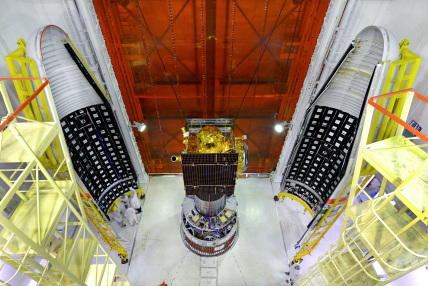
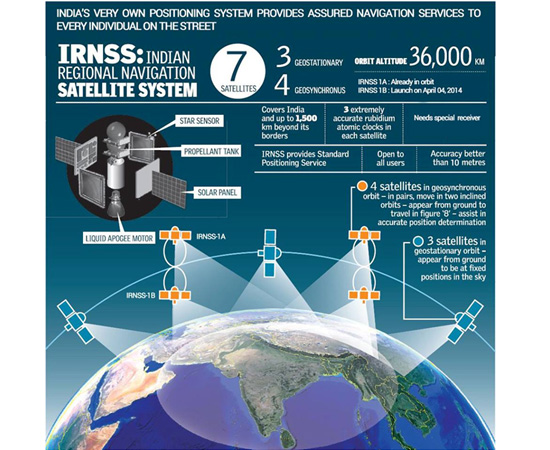
Navic is an independent Indian Satellite based positioning system for critical National applications. The main objective is to provide Reliable Position, Navigation and Timing services over India and its neighbourhood, to provide fairly good accuracy to the user. The IRNSS will provide basically two types of services

  1. Standard Positioning Service (SPS)
  2. Restricted Service (RS)

To date, ISRO has built a total of nine satellites in the IRNSS series; of which eight are currently in orbit Three of these satellites are in geostationary orbit (GEO) while the remaining in geosynchronous orbits (GSO) that maintain an inclination of 29° to the equatorial plane. The IRNSS constellation was named as “NavIC” (Navigation with Indian Constellation) by the Honourable Prime Minister, Mr. Narendra Modi and dedicated to the nation on the occasion of the successful launch of the IRNSS-1G satellite. The eight operational satellites in the IRNSS series, namely IRNSS-1A, 1B, 1C, 1D, 1E, 1F, 1G and 1I were launched on Jul 02, 2013; Apr 04, 2014; Oct 16, 2014; Mar 28, 2015; Jan 20, 2016; Mar 10, 2016, Apr 28, 2016; and Apr 12, 2018 respectively. The PSLV-39 / IRNSS-1H being unsuccessful; the satellite could not reach orbit.

Credit: Third Party Reference

Oh, Did I just ask to not address NAVIC (Navigation with Indian Constellation) as our own GPS (Global Positioning System). Have I lost my mind to go against the trend media has created? Am I actually serious about it? Well, let’s see why I am making such a preposterous appeal.

I have realised while talking to a lot of people on social media that they think GPS is a technology per say in generic terms which is completely incorrect. And the headlines all over media are reflecting as such. So first let’s talk about different satellite based navigation systems.

WHAT IS GPS :-

GPS (Global Positioning System) is a global satellite-based navigation system made up of a network of 24 satellites placed into orbit by the U.S. Department of Defense (DoD). It is a U.S.-owned utility that provides users with positioning, navigation, and timing (PNT) services. This system consists of three segments: the space segment, the control segment, and the user segment. GPS is operated and maintained by the U.S. Air Force. It is currently the world’s most utilized satellite navigation system.

ABOUT GNSS :-

The generic name of what we assume to be GPS is GNSS (Global Navigation Satellite System). Currently there are two operational GNSS:
1) Global Positioning System (GPS) is owned by the United States.
2) GLONASS is owned by Russia.

The third GNSS- GALILEO of European Union isn’t completely operational yet, 12 of 30 satellites in orbit. The forth BeiDou (Chinese Navigation system) is a limited test system, its full-scale global navigation system or GNSS also known as COMPASS or BeiDou-2 is currently under construction, it has about 20 satellites in orbit at present.

THEN WHAT’S THE ISSUE?

See, by now we have developed GPS isn’t a generic term, it’s just most popular and we human race runs after something that’s always more popular and it’s exactly what needs to be changed if we want to create our own identity in this world, if we want to stand with pride, if we want other nations to respect and recognise us then we need to be own people and not some ripped off identity of other nation and that’s what NAVIC deserve.

Credit: Third Party Reference

NAVIC was developed after so much of continuous handwork of ISRO scientists, thorough research and loads of money. It isn’t just another satellite based navigation system, it made us the fifth elite nation in this world to have our own navigation satellite system and it is a big deal. I am forever grateful to GPS for extending its services to us but we (India) developed and deployed NAVIC because many of the GPS services weren’t available to defence forces specially and we needed that thus came NAVIC.

NAVIC made us a proud nation, it showed the world the powerful force India is, it showed that we were Inventers/developers, we are and we always will be. We have some of the best brains in the world that is what NAVIC represents. It’s our pride and giving it a second hand name just dishearten me and it should dishearten you as well.

China has its own search engine Baidu and they do not call it ‘Chinese Google’. We do not call Flipkart as ‘India’s Amazon’ or Ola as ‘India’s Uber’ or every Smartphone an iPhone. Even you wouldn’t like to be called by other’s names!

What we say today, what we trend today will be remembered tomorrow and I do not want NAVIC to be known as ‘Indian GPS’.

If you agree with me then kindly share this post, raise your voice, talk about it, and aware more people about it. All I want is NAVIC to be known as NAVIC to the entire world and I need your help in doing so.

Reference- divyanshspacetech.wordpress.com and isro.gov.in

MS DHONI – a man with a dream

“If the plan doesn’t work, change the plan but never the goal.”

Born in small town of Ranchi,Jharkhand coming from a lower middle class family to becoming a legend in the field of cricket and staying in hearts of billions of people carving his own path of success with gaining the title of captain cool. His journey inspires a lot of people and I am one of them . starting with an accidental adventure in field of cricket ,he has faced all the failures but one thing that remained constant was his determination and the never give up attitude that led him to what he is today. An everyday man who went on to be popularly known as the ‘Captain Cool’ is none other than our very own former Indian Men’s (ODI & T20Is) Cricket Team Captain, Mahendra Singh Dhoni or simply known as Dhoni.

His cricket journey started when he was in his school in his football team  and his coach asked to do wicket keeping that’s where he impressed everyone with his wicket keeping skills and secured his position in  commando cricket club for 3 years and selected for Vinoo Mankad Trophy under 16 during 1997-1998. Well his journey to be a part of Indian cricket team wasn’t that easy for him, after playing cricket at district and state level, he worked as a train ticket examiner at Khargpur railway station in West Bengal to financially support his family. But the young man always had a bigger vision and wanted to achieve more , he saw a dream, which many feared to see.

He made his debut in Ranji Trophy for Bihar in year 1999-2000 and played for three years. Seeing his excellent performance in Ranji Trophy, TRDO officer Prakash Poddar was attracted towards his performance and later sent a report to national cricket academy regarding his performance.  Finally his struggle and hardwork payed off and he was selected for India A squad for a tour of Zimbabwe and scored back to back centuries.

ODI CARRER

After delivering good performance in India A team he was selected in ODI squad for Bangladesh tour in 2004-2005  and was also picked for Pakistan series. Though his initial matches were not a great success.

His turning point came with Sri Lanka bilateral ODI series in 2005 where India  had to made 299 runs among which Dhoni made 183 runs finally winning the game for India. Due to his consistent performance in later ODI’s, Dhoni overtook Ricky Ponting and  became number 1 in ICC ODI ranking for batsmen in 2006.

There are many inspiring lessons that the sportsman has taught us about life. He loved the sport and he wanted to chase his passion. He taught us to dream big and not get satisfied with small joys of life. He is a wonderful human, who was always up for absorbing new learning from his peers. He never hesitates to appreciate the outstanding work of others. He never lost hope and put in extra effort to fulfill his dream.

BECOMING A SENSATION AND HIS JOURNEY AS THE INDIAN CAPTAIN

Dhoni was not only known for his cricket but was also very popular for his lengthy wavy hair style. In fact, it had then become a trend in those days that every boy in the country now wanted to adorn the “Dhoni Hairstyle”.

In 2007, he led the team a whopping victory in ICC T-20 World Cup. He continues to inspire the younger generation with his brilliant captaincy, and out of the box thinking.

MS Dhoni is India’s only two-time World Cup winning captain, leading the team to victory on two occasions which involved two different format. He led a young Indian team to the first ever T20 World Cup victory in South Africa in 2007. Dhoni then led India to their second ODI World Cup victory in 2011.

He is arguably one of the best captains in the history of not just Indian cricket but also world cricket. The miracles he has done on the cricket field makes everyone wonder if he really is a human.

His cricket acumen is so accurate that people believe if Dhoni gives someone out on the field then his team starts celebrating without waiting for 3rd umpire. People started referring the DRS  not as Decision Review System but as Dhoni Review System. His lightning fast stumpings are viewers delight. He has taught us that no situation, however bad can be fought through and defeated. The only Indian captain with over 100 wins in ODI’s, the next best captain after Ricky Ponting with 11 consecutive wins in world cup matches.

He is a phenomenal cricketer and a legend, and  because of him I became a cricket lover. I bet no Indian can ever forget the line – “INDIA LIVES THE WORLDCUP ONCE AGAIN AFTER 28 YEARS” right after his six. He served his nation for 15 years. Dhoni is the most successful captain of India who has won two ICC cricket world Cups for the country.

The person behind the stumps, the cricketer who held is calm and takes his team to victory in immense pressure – famous as captain cool. The man who went on to become one of the most agile wicket keeper in modern limited overs in international cricket , right handed batsman , a magnificent  finisher , absolute fighter and the person who have billions of hearts attached

THE MSD NO.7 GAME.

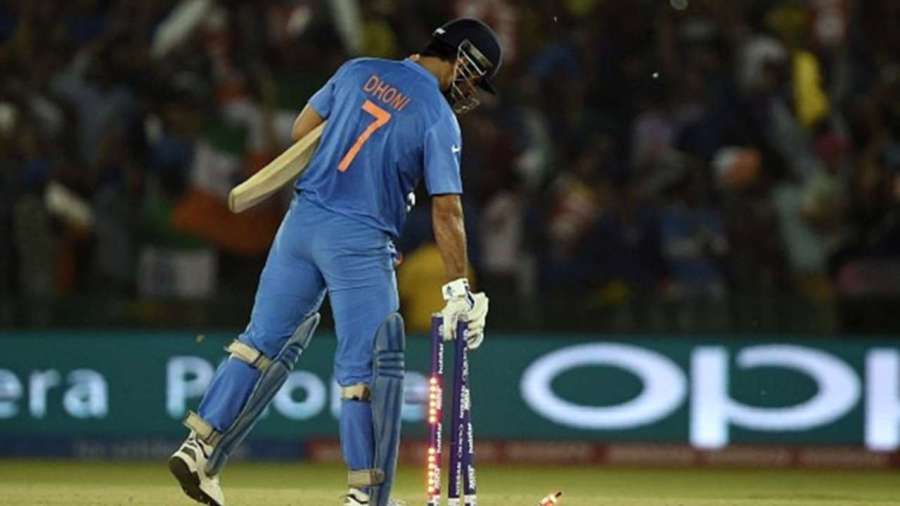
  • Cleary, Dhoni got a special preference for the number as his India shirt also has number 7
  • M.S. Dhoni was born on July 7, 1981. The year 2007 is strikingly significant for such people. No wonder he was won the World T20 Championship that year.
  • The name ‘M.S.Dhoni’ carries 7 characters!
  • India won the final (World T20) when Dhoni was 26 years and 80 days old. The age adds up to 7! (26+80=106). NO.7 will always be in everyone’s heart .

MS Dhoni has been an asset in the Indian cricket team and he has a fan following across the world. When he is in a room full of people, his presence is felt and he is a humble man. He is the man, who never hesitates to improvise. He always improvised his game and never let a failure get to him. This is a true story and it has inspired many! If you have a dream or passion, you should go after it and achieve it. There will be obstacles but life is not easy. Once you go after your dreams, the universe will find a way for you to achieve it.