Adultery in India

Introduction

The word “adultery” derives its origin from the French word “avoutre”, which has evolved from the Latin verb “adulterium” which means “to corrupt”. The dictionary meaning of adultery is that a married man commits adultery if he has sex with a woman with whom he has not entered into wedlock.

Section 497 of the Indian Penal Code was a section dealing with adultery. Only a man who had consensual sexual intercourse with the wife of another man without his consent could have been punished under this offence in India. The law became defunct on 27 September 2018 by a judgement of the Supreme Court of India.The Supreme Court called the law unconstitutional because it “treats a husband as the sole master.” However it is still a sufficient ground for divorce as ruled by the Supreme Court.

The offence of adultery is non-cognizable (a case in which a police officer cannot arrest the accused without an arrest warrant). Also, it is a bailable offence.

The offence of adultery is compoundable by the husband of the woman with whom adultery is committed. Compoundable offences are those where the court can record a compromise between the parties and drop charges against the accused. [Section 320 CrPC].

Section 497 read as follows:

Adultery.—
Whoever has sexual intercourse with a person who is and whom he knows or has reason to believe to be the wife of another man, without the consent or connivance of that man, such sexual intercourse not amounting to the offence of rape, is guilty of the offence of adultery, and shall be punished with imprisonment of either description for a term which may extend to five years, or with fine, or with both. In such case the wife shall [not] be punishable as an abettor

The Court began to hear the arguments on this petition on 1 August 2018. The Court said that if the party challenging this section can simply prove that it violates Article 14 of the Constitution of India, then the section will be struck down.

A five-judge Constitution bench of the Supreme Court on 27 September 2018 unanimously ruled to scrap Section 497 and it is no longer as a offence in India

While reading the judgment, Chief Justice Dipak Misra said, “it (adultery) cannot be a criminal offence,” however it can be a ground for civil issues like divorce.

In October 2017, Joseph Shine, a non-resident Keralite, filed public interest litigation under Article 32 of the Constitution. The petition challenged the constitutionality of the offence of adultery under Section 497 of the IPC read with Section 198(2) of the CrPC.

Section 497 IPC criminalised adultery by imposing culpability on a man who engages in sexual intercourse with another person’s wife. Adultery was punishable with a maximum imprisonment of five years. Women, including consenting parties, were exempted from prosecution. Further, a married woman could not bring forth a complaint under Section 497 IPC when her husband engaged in sexual intercourse with an unmarried woman. This was in view of Section 198(2) of CrPC which specified how a complainant can file charges for offenses committed under Sections 497 and 498 IPC.

Section 497 was unconstitutional as the very basis for criminalising adultery was the assumption that a woman is considered as the property of the husband and cannot have relations outside of marriage. The same restrictions, however, did not apply in case of the husband. Section 497 violates right to privacy as well as liberty of women by discriminating against married women and perpetrating gender stereotypes.

On 27.09.2018, a 5 Judge Bench of the Supreme Court unanimously struck down Section 497 of the Indian Penal Code as being violative of Articles 14. 15 & 21 of the Constitution.

Conclusion

The most important reason for debate to get re-ignited is the drastic change in the social status of women. Gone are the days when Women were suppressed or subjugated lot. The practices of sati, child marriage, polygamy, etc, have been done away with.

Today there are laws against these evils and also laws providing effective relief against heinous acts such as domestic violence, dowry and others. Almost all professional colleges has a quota for women. Thus women today are in no way inferior to men or suppressed, and are at par with the opposite sex. The effective implementation of these laws and other women friendly provisions in the constitution insures that women, today, have an edge in the society. All this has resulted in them gaining the power of choice. They can no longer be classified as victims in cases of adultery

Necessity of Absolute Liability

Our country is a pioneer in industrial development and the demo-graphs of such development is soaring high each day. Also, with the complexity in both geography and life, it is necessary the rules established should be strict and more absolute principle of liability with the respect of no fault liability. Thus, the principle established in Rylands v Fletcher of strict liability evolved in the 19th century, and in the period when the industrial revolution had just begun cannot be used in the modern world. The two century old principle of tortious liability compared to the present conditions of our country when it is in the verge of being one of the most globalized countries of the world, cannot be taken into consideration without modifications. It is also to notice that the technical complexity and the nature of industrial development being high at a high rate, the protection of the human rights and lives of people should be taken into consideration. Hence, the principle of strict liability cannot be still considered as the only redressal. It is also true that law cannot afford to be static and the fact that the industrial development cannot be done without the existence of inherently dangerous industries, it is very much necessary that the responsibility for the protection of people from any such type of accidents, etc is put on the shoulders of the industries themselves. From the above mentioned points, it is a key necessity that such a principle is evolved which will not only shape the jurisprudence but will also help to not carry the absolute principle of Strict liability in modern society. Thus, the necessity factors as discussed clearly helps us to understand that the principle of absolute liability is not only required to protect the human rights of the people, but also to develop tort law in India which will expand our own country’s jurisprudence.

In absolute liability only those are risk which are associated with risky or isn’t fundamental. It is material to those harmed inside and outside the preface. The rule doesn’t have any special exceptions like Strict Liability. The control which was clarified in Rylands v Fletcher applies just to the normal utilization of land, however, outright risk applies even to the common utilization of land. When a man utilizes a dangerous substance and that substance gets away, he will be held liable even if he had taken due care. The degree of the dangerous activity also depends upon the money and size related capacity of the establishment. The Supreme Court additionally expressed that the undertaking must be held to be under a “commitment to guarantee” that the hazardous dangerous activity exercises in which it must be directed with the most standard of safety and security if any damage comes because of such careless activity. The organization, then, must be held absolutely liable to adjust, for any harm caused and no defense that he had taken all sensible care and the damage caused with no carelessness on his part.

The principles of absolute and strict liability can be viewed as exceptions. It is known that a man can be at risk if he has fault. The guideline overseeing these two rules is that a man can be a subject even without his fault. Thus, this is also known as principles of “no fault liability”. Under these principles, the individual at risk might not have done or been involved in the act, but he will be at charge despite everything because the harm was caused by the act. In the principle of strict liability, there are a few exceptions where the defendant would not be made at risk. But in absolute liability, no exceptions are given to the defendant. Tort is a civil wrong for which the remedy is a precedent based law activity for unliquidated harms and which doesn’t necessarily happen due to breach of an agreement or the break of a trust or just fair commitment. For “no fault liability”, the individual at risk might not have done any act of negligence or carelessness or may have put in some positive attempts but however the rule will hold him liable. This guideline has its foundations in the two landmark cases – Rylands v Fletcher (Strict Liability) and MC Mehta v Union of India (Absolute Liability). The strict liability principle expresses that a person who keeps hazardous or inherently dangerous substance in his territory will be in charge of the fault if that substance escapes in any way and causes any harm. This rule stands genuine even if there are no negligence or carelessness in favor of the person keeping it. The burden of proof lies on the defendant to act how is not at risk. The principle of absolute liability, on the other hand, held that where a person is undertaking a hazardous or inherently dangerous movement and it hurts anybody because of an accident while carrying out the characteristically hazardous action, the result is strictly and absolutely liable decision where the remedy is to repay to everyone who was affected by the accident. Both these principle take after the “no fault liability principle”, a principle in which the defendant is held liable regardless of whether he is not specifically or impliedly in charge of the harms caused to the plaintiff.

Easy and Tasty Vegetarian Indian Recipes On YouTube – Tried and Tested

I spent my time this last few months becoming an amazing cook.

Here’s a list of videos that show beautiful recipes that I’ve made and can vouch for.

Spicy Masala Pasta Recipe/ Macaroni Recipe without Sauce/ Indian Style Pasta Recipe
Paneer 65 ki recipe hindi me – बेस्ट पनीर veg 65 fry – cookingshooking


0:04 / 7:37


Cajun Spiced Potatoes – Barbeque Nation Style Recipe – CookingShooking
Veg Manchurian Gravy Restaurant Style Vegetable Wet Recipe – CookingShooking
२ मिनट वाली वेज फ्राइड राइस – 2 Min Veg Fried Rice Street Style Recipe – CookingShooking
Rice Cutlet Recipe | Leftover Rice Recipes | Easy Evening Snacks Recipe For Kids
Sambar | South Indian Style Sambar
Tawa Pulao – Indian Rice Variety – Spicy Main Course Rice Recipe By Ruchi Bharani
हैदराबादी दम बिरयानी बनाने का तरीका – बिरयानी रेसिपी – Veg Biryani Dum CookingShooking

Bigg boss 4

The biggest reality show of Telugu bigg boss is gearing for season 4 ,the host Nagarjuna confirmed his presence in the show as host,the housemates have been decided by the team

Now, the team is constructing Bigg boss house for the show, the housemates are going for COVID tests, and the housemates are going for isolation for 14 days before entering the house

The show is starting from August 30 and going to be telcast in star maa Telugu and hotstar

Real Shakuntala Devi – Mindblowing Videos

Shakuntala Devi vs Computer | Indian Human Computer
Shakuntala Devi 
Shakuntala Devi 
Shakuntala Devi Full Interview | Solving Maths infront of panel | Left to Right or Right to Left !!
Shakuntala Devi | Mathematical Bonanza | 1977

India’s federal system of States and the Union.

India’s recent growth story is now much analyzed, and quite well understood. Despite some temporary controversy over the relative impacts of economic reforms in the 1980s and 1990s – hesitant and piecemeal in the first of those decades, deeper and more systematic in the subsequent period – the new consensus is not very different from the old, namely, that an overall shift in economic policy toward greater reliance on the market for resource allocation, including greater openness to the global economy, has been an important factor in increasing India’s average growth rate from its previous low levels. This recognition of the role of market competition does not diminish the Indian government’s past importance in building physical infrastructure and human capital, and in providing stability and safety nets. Nevertheless, the reform of India’s governance is one of two major strands of current policy debates, the other being areas where further “liberalization” of the economy is needed (e.g., small scale industry reservations, privatization, and matters pertaining to openness to foreign capital). Debates about India’s governance include old concerns about corruption, affirmative action (e.g., the latest controversy over quotas in higher education) and social safety nets (e.g., the new Employment Guarantee Scheme), as well as newer worries about growing regional inequality. Managing the public finances appropriately has been an obvious part of the reform story, since fiscal deficits have been a continuing problem for well over a decade. Within the broader context of governance, issues of federalism and decentralization have been addressed in a somewhat piecemeal fashion. Thus, the need for fiscal consolidation has focused considerable attention on the states’ situations in this regard, and the central government, central bank, and central Finance Commission have all made efforts to ameliorate aspects of the states’ fiscal crisis. At the same time, the decentralization to local governments, put in motion by the 73rd and 74th amendments to the Constitution, has been proceeding unevenly, and with mixed success. States have made various kinds of efforts to attract investment, done various deals with multilateral agencies, and wrestled with potentially major tax reforms, all the while struggling with fulfilling their constitutional responsibilities to constituencies such as the rural poor.

Underlying all the developments in economic policymaking, and concerns about governance, therefore, is the working of India’s federal system. It is important to understand what this system is, what it does, and how it has been changing in response to the forces put in motion by India’s renewed struggle to fulfill its “tryst with destiny” by substantially improving the well-being of all its citizens in a tangible manner. In particular, many of India’s fiscal federal institutions evolved in the context of a planned economy, with the state playing a dominant role and that of the private sector and markets heavily circumscribed, and largely closed to the outside world. Economic liberalization with state control receding and markets coming into their own, and globalization together require a comprehensive reassessment of these institutions.

In today’s time we have seen multiple examples where this federal system of India had been challenged. We’ve seen example of west-bengal and telangana states of India who denied to no-permit entry of Central Bureau of Investigation (CBI), where CBI holds power of independent investigation from the Indian constitution and as per that CBI officials need not seek any kind of permit to enter into any of Indian states. CBI when required can be into any Indian state because it comes under its investigation needs. Another recent example is the on-going dispute between Maharashtra’s and Bihar’s police, where two different FIRs had been launched for the same case of Indian Bollywood actor Sushant singh’s death. Here, Mumbai police’s investigation has been repeatedly alleged to delay the investigation process. Things were stretched into far ends when Bihar police’s investigation team was forcibly taken off from their scheduled press meeting. Another example was set when Bihar police’s IPS officer who came Mumbai in regards to FIR filled in Patna was held and sent into 14 days quarantine. Now this is seen as a fight between two Indian state police and their prestige, such activities seriously damage India’s federal integrity of state and the union.

Ambulance staff in Tamil Nadu turn midwives for woman

A 23-year-old, Aishwarya developed labor pains during the wee hours of the morning. Her husband and mother rushed her to the Rapussal Primary Health Centre (PHC).

“It was 2 am when we went to the PHC. The staff there said that the baby’s head was turning, and asked us to go to the Pudukkottai Medical College Hospital,” said Gopalakrishnan.

On their way to MCH, Aishwarya experienced excruciating pain and discomfort, and that’s where the ambulance driver, and the emergency medical technician stopped the ambulance and helped Aishwarya deliver her baby.

“The lives of both the mother and the baby were at stake here, and that is when we decided to proceed with the delivery,” said the medical technician.

“I could see their struggle while delivering the baby. It was a little complicated, yet they managed it well. They made us feel very comfortable. We will be forever grateful to them,” said Gopalakrishnan.

The new born’s parents were incredibly delighted and grateful to them for saving the lives of the mother as well of the child.

Devabaskaran, the ambulance driver, and Boopathiraja, the emergency medical technician, had helped with deliveries for over 10 women in the past year itself.

Tamil Nadu village goes without streetlights for 35 days to make home for bird and its chicks

A. Karuppuraja, a student of Pothakudi village said that a common switchboard near his house has the switches for all the 35 streetlights.

“When the lockdown began, I saw a bird filling the box with straw and leaves, when I looked into it, I could see 3 greenish-blue eggs with spots,” said the 20 y/o.

The village youngsters had a common WhatsApp group called Pottakudi Ilaingnargal Kuzhu. Karuppuraja shared the bird story and all the 35 members decided to ensure the bird nested in peace for the eggs to hatch.

The group members went around the village convincing the nearly 100 households to refrain from switching the streetlights til the nesting period gets over. H. Kaleeswari, the President of Panchayat joined in too.

“Some readily agreed. Others called it stupid to switch of light for a small bird. But we managed to convince everyone and the entire village has gone without streetlights for 35 days now,” said N. Muruganantham, a villager.

The villagers said that they would clean the box and restore the power once their “winged visitors” leave.

For now they are managing with the help of torches and flash lights from mobile phone to continue their routine.

Education in India for girls

As we know school has been arrived for girls in India since 2009. So why aren’t they going ?

In 2018 , 13.5% of girls between the ages 15 16 where out of school, as opposed to more than 20 person in 2008 according to the 2018 annual status of education report release in January this year.

There are several advantages of developing female education in India, since education can play an important role in the development of the country. Improve literacy rate that is India’s literacy rate continues to be below the global average many NGO’s have helped to make a slight difference in the literacy rate .

The Big Four: Review

The Big Four is a novel by Agatha Christie published in the year 1927 which has a very intriguing story. The action in the novel begins from the very first moment when Captain Hastings arrives at his friend, Hercule Poirot’s place. They have an unexpected guest at his place. He has some very important information to give but is killed at the detective’s very place in his absence. This is related to a case Poirot had shown interest in lately. Further some incidents occur which again point to the same case. What is in common, is the number Four.

The novel series a very consistent fight between the people who make up the four the Big Four. Everytime it seems that Poirot has got to them seem to go even farther. It has the power of science, money, criminal brain and artistic mastery against Poirot’s own brain which he famously calls “little grey cells”. There are a lot of red herrings Agatha Christie has employed in such a way that you can’t help but read along. The story is told by Hastings who has his share of adventures and a very significant part to play in the novel. For the first time you will be introduced to a relation of Poirot: Poirot has endured a lot more than in any of his novels that I have read.

Christie has employed a very revealing/unrevealing kind of story telling style. You seem to know a lot of things but yet you know nothing. At some places you are able to guess what Poirot has posed as a question to Hastings but not always is that assumption true. But at the same time I am not very satisfied with the ending of the novel. It would have been better if Christie would have given more explaination. because during the endpoint it seems to have done his action all in the background. Evan Hastings is unaware of them. Nevertheless this book is worth reading.

Missing Rakhi from my sister

You never knew what you had untill you haven’t have it. I never knew that someday this day would come. I never felt sad because I was happy always. My sister never ever forget to sent Raksha Bandhan band to me. She either sent it or tied it. I never felt so sad for such things because she always sent it. But this time it was different. My sister tried her best to sent it to me but it was out of delivery or lately received. So she thought of making it to me whenever she was with me.

I had friends but very few. How could I make sisters when there exists no one whom I know. I never spoke to someone until they spoke. I never greeted someone till they do. So I have none to call me as a brother apart from my sister. That’s my fault to make my life stick to myself. Today is the only day my hand left with no rakhis. Everytime I don’t have to think about it because I had it. Almost all my friends had it even though they don’t have sisters. Everytime my sister used to tie rakhis to my friends but not now. This time it was quite opposite because my friends had it but not me. It might look like a silly thing to you, ofcourse it’s a silly thing to become sad of. Why do I feels sad ri Suh silly thing even after knowing it as a silly thing. Because ones emotions are unpredictable. We never know until it came.

I can’t stop looking at my friends rakhis because there are none on my hand. I know it’s hard to handle if you can’t get what you want. Sometimes it’s good to miss sister because it makes us think about her. Being same will always makes us bore so for a change now I am experiencing this too. I am so shy to share this writing even to my sister because there’s no way that I can make you feel the same way that I feel.

Happy Rakshabandhan to all the sisters who are reading this post because it’s the least that I could do

Skills: Make Quarantine useful

The biggest mistake you can make in life is to waste your time“, the quotation simply demonstrates all of this. The pandemic is a stressful time for everyone, particularly those who want to apply for a new job or those who want to better their careers. Because now, all we want to know is only a step ahead, there are a lot of channels, whether youtube or some other web channel.

So, why not use this time to enhance our personality or build a strong resume? for this, you just need a resolution and some knowledge regarding this kind of stuff. So, if like many others you are also confused about what to learn and from where? Just go through this once.

Learn a second language:

This boosts your resume and also plays a vital role in enhancing your personality while preparing you to compete and succeed in the world economy. It surely comes with a lot of advantages as well. Learning a second language means you are going to be equipped with a lot of other skills also like it deepens your connections with other cultures, strengthens your decision making, and undoubtedly boosts your confidence.

The languages which I prefer are Spanish, German and French as these languages are in great demand in the global market. I am learning French nowadays and trust me guys you it is really fun to learn a new language.

Now let’s come to resources where you can learn them online. the resources which I have forged are Duolingo(free and I am using this now so I can assure you that it’s an awesome platform to learn), Babble(paid), Coursera(paid).

Learn to code:

In today’s scenario, this is the skill you can rely on and one of the most interesting skills as well. And the demand for coding related jobs remains strong as always. And the best part about learning this skill is the amount you are going to earn as a coder. Here are some stats for that.

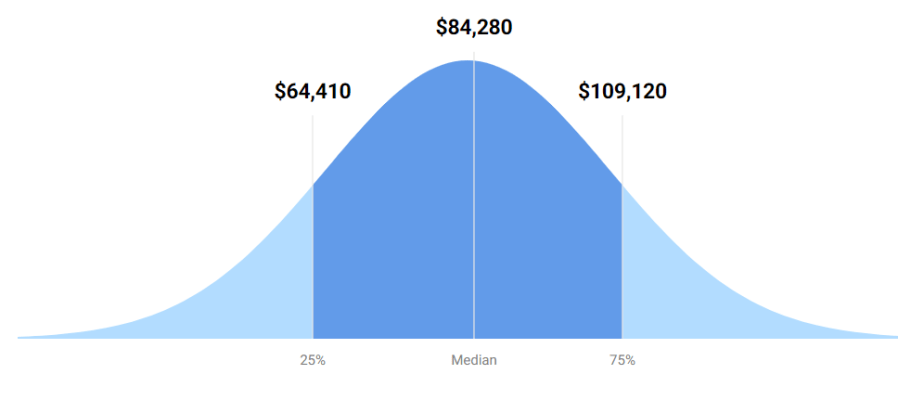
Computer Programmers made a median salary of $84,280 in 2018. The best-paid 25 percent made $109,120 that year, while the lowest-paid 25 percent made $64,410.

A lot of options are available when it comes to languages but here again I would prefer

  • SQL
  • Java
  • Python
  • Java Script
  • C
  • C++
  • C#
  • Golang
  • Scala

Jobs involving other computing skills will pay six-figure amounts on average, based on the language of the candidate. The highest-paying programming language is Golang – commonly known as Go – with U.S. occupations needing this ability to pay an average of $151,069 at the time of writing.


Now the question is where to learn these languages online? So I have forged some resources like Code Wars(free), Free Code Camps(free), Udemy(paid), Coursera(paid), and obviously, youtube.


Boast your marketing resume:


What marketing skills can capture an employer’s eye? As digital marketing is growing day by day you need to enhance your skills accordingly. The skills which I forged and would recommend are listed below

  • SEO
  • Content Marketing
  • Content Management System(CMS)
  • Customer Relationship Management(CRM)
  • Mobile Marketing
  • Lead Nurturing
  • Email Marketing
  •  Mastery of a Full Marketing Arsenal of Tools
  • Video Production
  • Paid social media advertising
  • Data Science
  •  Consumer Behaviorist

Well, there are undoubtedly many more skills but these are some which I prefer. Having some of them on your resume would make you stand apart from the rat race.

Now let me discuss the resources, so for SEO I would prefer Moz Beginner’s Guide to SEO (free) and there are many more resources for this. (I would try to take this to cover this topic in detail. Till then google t]some other resources and let me know in the comment section.)

There are a lot of other skills that you can try a hand on. The skills which I have summarized here are one of the most in-demand skills which I would say worth learning for all you need is determination and a resolution to learn and some more googling. You would get to know about a lot of resources.

So all the best and Happy Learning guys and please try to make use of this time. I can assure you that you would not get this much free time in the future.

Depression

Depression is different from usual mood fluctuations and short-lived emotional responses to challenges in everyday life. Especially when long-lasting and with moderate or severe intensity, depression may become a serious health condition. It can cause the affected person to suffer greatly and function poorly at work, at school and in the family. At its worst, depression can lead to suicide. Close to 800 000 people die due to suicide every year. Suicide is the second leading cause of death in 15-29-year-olds.The burden of depression and other mental health conditions is on the rise globally.depression is caused by a combination of genetic, biological, environmental, and psychological factors, according to the NIMH. Certain medical conditions may also trigger depression, including an underactive thyroid gland, cancer, heart disease, prolonged pain and other significant illnesses.

Depression is a state of low mood and aversion to activity that can affect a person’s thoughts, behavior, feelings and sense of well-being. People with depressed mood can feel sad, anxious, empty, hopeless, helpless, worthless, guilty, irritable, ashamed or restless. Depressed mood is a feature of some psychiatric syndromes such as major depressive disorder but it may also be a normal reaction to life events such as bereavement, a symptom of some bodily ailments or a side effect of some drugs and medical treatments.

Deepression is as “living in a black hole” or having a feeling of impending doom. However, some depressed people don’t feel sad at all—they may feel lifeless, empty, and apathetic, or men in particular may even feel angry, aggressive, and restless. Whatever the symptoms, depression is different from normal sadness in that it engulfs your day-to-day life, interfering with your ability to work, study, eat, sleep, and have fun. The feelings of helplessness, hopelessness, and worthlessness are intense and unrelenting, with little, if any,

The medical community does not fully understand the causes of depression. There are many possible causes, and sometimes, various factors combine to trigger symptoms.

Factors that are likely to play a role include:

  • genetic features
  • changes in the brain’s neurotransmitter levels
  • environmental factors
  • psychological and social factors

A person should only take these medications as their doctor prescribes. Some drugs can take a while to have an impact. By stopping the drug, a person may not experience the benefits that it could offer.

Some people stop taking medication after symptoms improve, but this can lead to a relapse.

Raise any concerns about antidepressants with a doctor, including any intention to stop taking the Some people use natural remedies, such as herbal medicines, to treat mild-to-moderate depression.

Don’t let the desire of a successful future destroy your present

Vaishali Singh ( Cheenu Singh Rathore)

This four lettered word “LIFE” is the synonym of living and nothing else, don’t waste it about thinking over the things which have either happened in the past or more likely have not even happened yet, this is a constantly changing world, everything is temporary in this world even you and me, we are perishable, then what are you doing why are you wasting your life over thinking of the things which are just confined within your mind doors, they are not reality they just exist within in your mind most of the problems you have in your life have originated from overthinking, be in now and enjoy this moment, live this moment because this moment is life, don’t take it too seriously, don’t put too much pressure on your mind, don’t let the desire of a successful future destroy your present, if you think that a sad present can give you a beautiful life then you’re wrong because life is now and if you can’t make yourself happy being in this moment then how can you expect it from yourself that attaining a certain goals will make you happy? If something doesn’t satisfy you today then how can you think that it will give you a beautiful and peaceful life, most of the people destroy their life either thinking about their past or caring about their uncertain future, we human being have only 5 senses, we can never analyse what’s going to happen in the future the only thing which is in our hand is to take actions but we can never predict the result of our actions and most of times the way we perceive our future is not exactly how it turns out to be, now the current scenario of world is a good example of the uncertainty of life, no one knew that this would happened in the beginning of 2020 all of us had a tons and tons of plans for our new year but our plans got failed they turned out to be something called “LOCK DOWN” we are at our home today, probably many of us had a lot of plans and wishes with our family, or friends but today it’s not safe to step out of our homes unnecessarily, this is life man, this is the reality and nothing can change the fact no matter how many plans you make, no matter how much time you waste in figuring out your life, at the end you will have even more questions than before. So live your life instead of worrying.

Meaning of Company and its Classification


A company is a voluntary association of individuals formed to carry on business to earn profits or for non profit purposes. These persons contribute towards the capital by buying its shares in which it is divided. A company is an association of individuals incorporated as a company possessing a common capital i.e. share capital contributed by the members comprising it for the purpose of employing it in some business to earn profit.

“As per Companies Act 1956, a company is formed and registered under the Companies Act or an existing company registered under any other Act”.

Types of Companies:

Companies can be classified under the following heads:

1. On the basis of formation.

2. On the basis of liability.

3. On the basis of ownership.


1. On the basis of formation: On the basis of formation companies can be categorised as:

(a) Statutory Company: A company formed by a Special Act of parliament or state legislature is called a Statutory Company. Reserve Bank of India, Industrial Financial Corporation of India, Life Insurance Corporation of India, Delhi State Finance Corporation are some of its examples.

(b) Registered Company: A company formed and registered under the Companies Act, 1956 or earlier Companies Acts is called a Registered Company. The working of such companies is regulated by the provisions of the Companies Act.


2. On the basis of liability: On the basis of liabilty, companies can be catagorised as:

(a) Company limited by shares: The liability of the member of such company is limited to the face value of its shares.

(b) Company limited by guarantee: The liabilty of each member of such company is limited to the extent of guarantee undertaken by the member. It may arise in the event of its being wound up.

(c) Unlimited Company: The company not having any limit on the liability of its members, is called an unlimited company. Liability in such a case extends to the personal property of its shareholders. Such companies do not use the word ‘limited’ at the end of their name.

(d) Company under section 25: A company created under section-25 is to promote art, culture and societal aims. Such companies need not use the term limited at the end of their name. Punjab, Haryana, Delhi chambers of commerce, etc. are the examples of such companies.


3. On the basis of ownership: On the basis of ownership, companies can be catagorised as :

(a) Private Company: A private company is one which by its Articles of Association :

(i) restricts the right of members to transfer its shares;

(ii) limits the number of its members to fifty (excluding its past and present employees);

(iii) prohibits any invitation to the public to subscribe to its shares, debentures.

(iv) The minimum paid up value of the company is one lakh rupees (Rs 100000). The minimum number of shareholders in such a company is two and the company is to add the words ‘private limited’ at the end of its name. Private companies do not involve participation of public in general.

(b) Public Copmpany: A company which is not a private company is a public company. Its Articles of association does not contain the above mentioned restrictions. Main features of a public company are : (i) The minimum number of members is seven.

(ii) There is no restriction on the maximum number of members.

(iii) It can invite public for subscription to its shares.

(iv) Its shares are freely tansferable.

(v) It has to add the word ‘Limited’ at the end of its name.

(vi) Its minimum paid up capital is five lakhs rupees (Rs 500,000).

(c) Government Company: A Government company is one in which not less than 51% of its paid up capital is held by (1) Central Government or (2) State Government, or (3) partly by Central Government and partly by State Governemt. Example of a Government company is Hindustan Machine Tools Limited, (HMT) State Trading Corporation (STC). Minerals as metals training corporation (MMTC).

(d) Foreign company: A foreign company is one which is incorporated outside India but has a place of business in India, for example Philips, L.G, etc. standard materials.

(e) Holding company and Subsidiary company: A holding company is a company which controls another company (called subsidiary company) either by acquiring more than half of the equity shares of another company or by controlling the composition of Baord of Directors of another company or by controlling a holding company which controls another company.

(f) Listed company and unlisted company: A company is required to file an application with stock exchange for listing of its securities on a stock exchange. When it qualifies for the admission and continuance of the said securities upon the list of the stock exchange, it is known as listed company. A company whose securities do not appear on the list of the stock exchange is called unlisted company.