Shri Dharmendra Pradhan addresses USISPF-3rd annual leadership summit; Invites US companies to partner in Aatmanirbhar Bharat campaign

Minister of Petroleum and Natural Gas and Steel, Shri Dharmendra Pradhan today participated in the USISPF- 3rd Annual Leadership Summit on the theme of “Navigating New Challenges.”

Minister Pradhan talked about the unprecedented impact of the Covid-19 pandemic on the global economy and the consequent energy demand contraction. He added that with the gradual pick up of economic activity in India, energy consumption is anticipated to reach pre-Covid levels soon. 

Speaking about Aatmanirbhar Bharat campaign, Shri Pradhan said the campaign launched under the leadership of Prime Minister Modi calls for a self-reliant India, seeking to convert Covid-19 challenges into an opportunity, to merge domestic production and consumption with global supply chains, and aims to transform India into a global manufacturing hub of the 21st century.

The Minister underlined the importance of energy infrastructure as a key to transformation in India and invited US industry leaders to take advantage of the opportunities being created in Indian energy sector.

Shri Pradhan talked about the growing bilateral hydrocarbon trade between India and the US, which touched above US$ 9 billion during FY 2019-20 and is expected to increase further as companies are looking to source more crude oil and LNG from the US at competitive rates. 

The Minister talked about the importance of gas sector in the Strategic Energy Partnership as India is working to transform itself into a gas based economy by increasing the share of gas from 6% to 15% in the energy mix by 2030, with an estimated investment of $60 billion lined up in the sector, developing a “One Nation, One Gas Grid.”He also expressed happiness at global oil & gas majors like BP, Shell, Total, Exxon Mobil expanding their footprints in India and invited the US companies to take advantage of reforms in the exploration and production sector and participate in the next oil and gas block bidding rounds.

Minister Pradhan also added that India and the US have been working in close collaboration, including in stabilizing global energy markets and it is reassuring that despite the Covid-19 induced challenges, the industry leaders are quite optimistic about reinvigorating the energy linkages between the two countries.

Dr. Mukesh Aghi, CEO, USISPF said that the USISPF will facilitate greater collaborations between the US and Indian companies for the success of Aatmanirbhar Bharat.

IGNORING THE MAIN ROLE

After actor Sushant Singh Rajput was found dead in his Bandra residence in Mumbai, reports claimed that the actor had been suffering from depression because of professional setbacks engineered by nepotism in Bollywood.
The film industry has been traditionally guilty of promoting family raj at the expense of outsiders. Rajput was a promising actor without being an A-lister or having a godfather in Mumbai. The infinitely bigger developing story of the same period was the impact of the Covid-19 pandemic. Rajput died on June 14, a period in time when the dreaded virus had been infecting unsuspecting people the world over, including India.
Two and a half months later, India is among the worst-hit nations in the world.

Each new day is the forerunner of bad news with thousands falling sick and many dying a few days after getting infected. The nation’s economy has hurtled towards a big crash with the GDP shrinking by 23.9 per cent in the first quarter of 2020-21.Lakhs of Indians have experienced job losses, among them daily wage earners whose lives are a struggle for survival even under normal circumstances.
Troubled by the news of sickness and deaths, faced with the possibility or reality of unemployment, and aware that there is no reliable vaccine and well-defined route of treatment, many are doing what they can to protect themselves from the wrath of the virus.
Other ‘brave’ ones who are being inexplicably reckless are not only more susceptible to the illness, but the infected ones among them are also guilty of spreading it among those taking precautionary measures. The presence of such irresponsible individuals is a significant worry for the Indian society.
Given a choice between continuous coverage of the pandemic and prolonged focus on the SSR death case, where should the media look? It must concentrate on the pandemic and its aftermath by delivering stories on health, economy and society to the consumer. The entry of the girlfriend in the script (Rhea Chakraborty, a national name now) followed by hysteria on social media enhanced the focus on the case, which is providing with the recipe for action in the media each day.
Cacophonic drama is irresistible for certain news anchors, who are capitalising on the story’s ability to deliver entertainment packages. These anchors are analysing the case endlessly, knowing they will find a captive audience that the coverage of Covid-19 may not guarantee.
The need to find viewers for TV shows and online visitors in an eternal rat race has made rationality disappear in many sections of the media. While that is not a good thing, don’t expect such disproportionate coverage to end anytime soon. The treatment of the Sushant Singh
Rajput case by many TV news channels is a good example of how the interrelated concerns about ratings and revenues drive news coverage in substantial parts of the electronic media. The mainstream electronic news media, it can be argued , has demonstrated a serious lack judgment by distorting national priorities. They also include the pandemic that shows a sign of abating with cases rising exponentially and putting public health system under unbearable strain

UNRESOLVED BORDER TENSIONS

Looking back at the past 70 years, China-India relations have moved ahead despite wind and rain and gone through an extraordinary development path. In the 1950s, the leaders of the older generation of the two countries made the historical decision to establish diplomatic relations between China and India, and jointly advocated the Five Principles of Peaceful Coexistence. “Hindi Chini Bhai Bhai” (Indians and Chinese are brothers) resounded throughout our two countries. From the 1980s, the two sides agreed to solve the boundary question through peaceful and friendly consultation, established strategic and cooperative partnership for peace and prosperity, and achieved all-round development of bilateral relationship.

Despite 2020 marking 70 years of diplomatic ties between China and India, the border tension over the past month has been heightened again.Troops from the world’s two most populous countries engaged in a physical clash. Although the two Asian giants are not stranger to border incidents, it was the first time in decades that the border dispute turned deadly. The question of whether India can sustain and withstand retaliatory measures from China is one that requires much thought and deliberation from the government. India fears that China is violating rules of origin norms and pumping goods into India through their common trading partners in Asia, by abusing the loopholes in existing trade agreements. The Ministry of Commerce and Industry in India has called into scrutiny various free trade and bilateral agreements that India is roped into, with countries that have similar agreements with China.
India has already refused to sign the Regional Comprehensive Economic Partnership (RCEP), fearing that it could pave the way to Chinese goods flooding the Indian market and overthrowing domestic manufacturers. However, if we are looking at backing out of other such regional and bilateral agreements as well, India has much more to lose than China does in the long run.
More concerning is the possibility that China may decide to strike back by throwing Indian companies out of China. We are already seeing reports of customs authorities in Hong Kong and China, holding back some consignments of Indian exports after Indian ports started inspecting Chinese imports. This is only going to get worse if India implements a blanket ban on Chinese imports, against all odds.
If India really seeks to check the unregulated flow of Chinese imports in India and create a dent in the Chinese economy, India would have to do a lot more than just cut down imports that are coming in directly from China. We would also have to narrow down all consumer products that are manufactured or processed, even in part, in China before finally being assembled and exported to India from another country. The obvious knee-jerk reaction of shutting down these big brands would only have a minuscule impact, if at all, on the Chinese economy. On the other hand, the question of whether India can sustain and withstand retaliatory measures from China is one that requires much thought and deliberation from the Indian government.
The coronavirus crisis, in particular China’s mismanagement of the initial stages of the outbreak, has generated intensely negative public sentiments against Beijing—in India and many other countries around the world. Countries have demanded an investigation into the origin and handling of Coronavirus. Indian app ‘Remove China Apps’ highlights backlash against Chinese business amongst the Indian public. Its popularity comes amid calls for a boycott of Chinese mobile apps in India as a border dispute in Ladakh fuels a backlash against products from China. It scans a user’s phone for apps such as ByteDance’s TikTok and Alibaba’s UC Browser and removes them. Popular Indian yoga guru Baba Ramdev described deletion of Chinese apps as a “national service”.
The COVID-19 pandemic is reviving sentiments against Chinese products in the country. The recent backlash against China over faulty testing kits or alleged suppression of actual numbers of infection are fuelling online campaigns in India urging people to reduce dependence on Chinese electronics and refrain from buying them.Previous boycott calls have focused on Chinese goods, whereas this one especially targets Chinese apps.
This isn’t the first time that Chinese products or brands have drawn flak in India. Some experts point out that in the short term this will raise questions in people’s minds, but in the medium term they don’t see any impact of these campaigns on Chinese companies or products

Period Leaves: Necessity For A Faction

Zomato, a restaurant aggregator and food delivery company, has been dominating the headlines of the tabloids since August. The reason? A landmark decision of introducing ‘period leaves’ for their women and transgender employees. On an annual basis, 10 leaves can be availed under this category. Regardless to say, this has stirred a full blown debate on and off the screens.

Though most of the people on Twitter have expressed support and elation over this progressive move, a faction of people have opposed the whole idea. The most common arguments that one will hear from the ‘against’ camp are about how women managed these with their sick/casual leaves. Or how the employers would be less inclined to include more female staff in the workforce, or consider them for an important position. Or, how there is a scope for the female employees to abuse these leaves and get an easy way out of commitments. 

Managing periods with casual leaves is a very ungrounded argument, for the labour policies vary drastically across different Indian states.  Under the Shops and Establishment Act, an employee working in Maharashtra has no sick leaves per say, and can avail a paid leave of upto 5 days for every 60 working days. On the other hand, an individual working in Assam can avail 12 sick leaves annually and has 16 earned leaves after 12 months of continuous service. This shows the glaring irregularity in the leave policies, which makes it very difficult for female employees of various regions to take menstrual leaves. Corporate sector needs to consider this, and seriously! Meanwhile, the government needs to find a ubiquitous solution too. As, this affects a significant working population of the public and private sector. The Menstruation Benefit Bill, introduced by Ninong Ering, a MP of Arunachal Pradesh in 2017, though didn’t see the light of the day, opened up the large avenue for consideration for the government. Bihar government has set an example here, by availing leaves of two days per month categorized ‘for biological reason’ since 1992.

We, as a society, have a flawed understanding about menstruation. As a result, most of the men, and sometimes women, consciously or otherwise, fail to acknowledge that menstrual conditions are far from universal. Each female experiences different kinds of pain and/or discomfort during their menstruation phase. Individuals with medical conditions endometriosis,dysmenorrhea, PCOS etc. suffer the worst brunt. Sometimes, even the travel to work elevates the pain and makes it unbearable. And trying to justify the gender bias on the basis of biological processes is a matter of regressive judgement. Now, a question might be possessed, is it constitutional? Especially when our Constitution stresses on equality. The answer is an undebated yes. Article 42 of the Constitution mandates “provision for just and humane conditions of work and maternity relief.” As a mid way solution, some companies have the provision of work from home, for those who have the desk jobs. This allows the female employees to work comfortably at their own convenience. Also, with the technological support available, attending meetings are also a possibility and in many companies, a reality. A bit of co-operation can go a long way for inclusivity of all the employees without any compromise on their health and well being. 

The naysayers made a special point regarding the field jobs, for it is more demanding and requires being in action all the time. Regarding this, journalist Barkha Dutt has argued how female employees have to work double hard in certain fields to prove their merit than their male counterparts. And the introduction of ‘period leave’ might leave them with an obvious disadvantage. While this is a valid concern and hence needs further discussion and deliberation, the moot point boils down to how this leave is an OPTION for those who are in dire need of it, and hence does not account for the blatant generalization that is being made.

At present, open conversation and sensitization about menstruation is a requirement. Because, the stigma attached with the leave prevents many women from availing it. With the taboo about menstruation in India, many women actually choose pain over the shame and embarrassment! The de-stigmatisation also creates an understanding and sense of empathy in the male counterparts. At the very least, individuals availing the leave deserve a ‘benefit of doubt’. Also, not everyone has the same pain threshold, so it is upon the females alone to decide if the pain is overbearing enough to avail the leaves. 

It is high time that menstruation is viewed just as a biological process, shedding all the social taboos attached to it. Then only, proper and inclusive discussions can be held regarding the validity of these leaves, where women from all spheres of economic development have their contribution.

Website referred:

https://paycheck.in/labour-law-india/leave-and-holidays/state-wise-leave-provision

Insights –2nd day of JEE MAIN 2020 with Paper analysis.

Irrespective to student’s opinion, Govt. managed to organise the JEE Main Exams for nearly 8 lakhs of students from 1st of September to 6th of September. On the first day of exams i.e. 1st September, there were many speculations and doubts on the conduction of exams. However, there was no big news of any kind of unwanted and bad news across the country. Same was the situation in 2nd day. There was no such news of unpleasant incident around the whole country and exam went smooth, we can say although it faced many other issues. There was the news of students getting late across the country.

In a major announcement today, just half-an-hour before the exam began, the Nagpur bench of the Bombay High Court said that the students residing in flood-affected areas in Vidarbha region of Maharashtra can approach the National Testing Agency (NTA), if they were unable to reach the exam centre or reached late. The court also asked NTA to check the veracity of the claims and decide their representation within 15 days.

The JEE paper 2 was held yesterday and today onwards, the engineering exam will be conducted. JEE Main morning shift timing is 9 am to 12 noon. NTA conducted 1st shift exam with all security measures and students maintained social distancing. But still, some centres were failed to maintain social distancing and students shared photos and videos on twitter for the same. Due to the COVID-19 pandemic, the exam is being conducted amid special arrangement, from no shoes with thick soles to mandatory masks at exam hall – several arrangements have been made by the NTA. Over 10 lakh masks, 10 lakh pairs of gloves, 1,300 infrared thermometer guns, 6,600 litres of hand sanitiser and an equal amount of disinfectant liquid, 6,600 sponges, 3,300 spray bottles and 3,300 cleaning staff have been arranged at an additional cost of almost Rs 13 crore.

JEE Main 2020 for B.Tech/ B.E shift 2 has been concluded at 6 pm across 660 centres. Students are coming out of exam centres. The exam will be conducted at 660 centres across the country, which was increased from 570.

Analysis

On the analysis of the paper of JEE Main 2020, Exams pattern was observed like following. Paper was on the decent hard level. As per students, student’s reaction was not quite good. The stress of paper and fear of being corona positive while visiting the centre was peeping out from their faces.

-The overall level of the exam was Easy to Moderate. 

-Most of the Students were able to attempt 13-14 questions easily.

-however, physics section was a little difficult.

-Maths was moderate but they were quite time consuming.

-Chemistry was the easiest part in all three subjects.

-A lot of questions were based on NCERT & Applications (60-70%).

-Distribution of all questions were uniformly asked from whole syllabus in each of the subjects.

To know more about the question paper and its detail with every question, you can browse the JEE paper too. National Testing Agency (NTA) will publish JEE Main question paper PDF at nta.jeemain.nic.in. It will be released in candidate login, at jeemain.nta.nic.in.

The Joint Seat Allocation Authority (JoSAA) will start counselling for admission to IIITs, NITs, and GFTIs soon after the declaration of the JEE Main result. The registration for JoSSA counselling, according to the JEE Advanced brochure, will begin tentatively on October 6.

Candidates, who qualify in JEE Advanced 2020 and seek admission to BArch programme in IITs, will be required to sit for the Architecture Aptitude Test, or JEE Advanced AAT 2020.

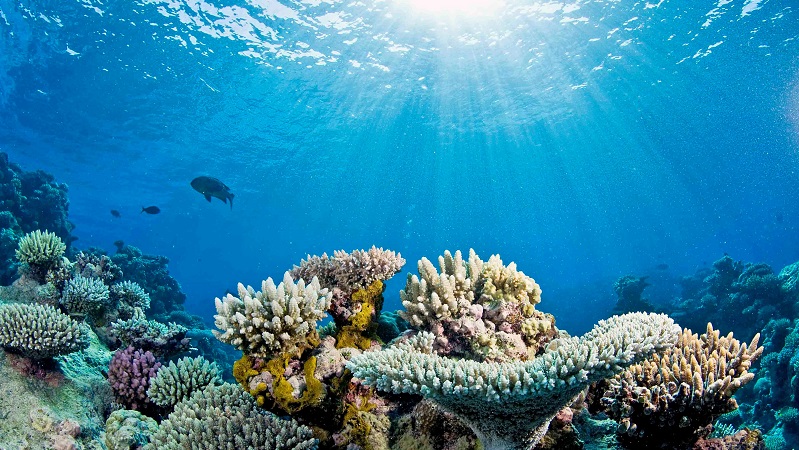
Acidification of Ocean causes Coral ‘Osteoporosis’

Retrieved from climatechangenews.com

It has been long since the scientists have been suspecting ocean acidification being the cause of affecting corals’ capacity of forming their skeletons. They were not able to isolate the effect as continuous heating of ocean temperatures due to warmer weather also contributed to effect on coral growth. The scientists of Woods Hole Oceanographic Institution came up with new study according to which certain impact of acidification of ocean on reef was seen. The study was funded by the U.S. National Science Foundation which was later published in Geophysical Research Letters. In this study, scientists showed a remarkable reduction in coral skeletons’ density due to continuously increasing acidity since the 1950s, of the Great Barrier Reef which is one of the largest coral reef systems in the world.  

Because of the declining pH of the ocean (turning more acidic), the animals like corals are finding it difficult to build their skeletons as acidification of the ocean leads to less density, taking away coral’s strength in the same way as osteoporosis withers human’s bones. The scientists say that it can be easily detected just by seeing them that they are not stronger anymore and it will heavily affect the reef and break it.

Yoga: Physical and Mental fitness.

Benefits of yoga

Yoga is a complete combination of spiritual, mental and physical practices which was originated in ancient India. It is followed by many people all around the world. It is adapted by the people in their lifestyles on daily basis  Yoga is a type of work out that involves both mind and body, it is much more than just burning calories and strengthening muscles.

Among with them their are some other major health benefits of yoga.

Improves overall health.

Yoga is combined of cardio, functional and strength training which effects the overall health physically and mentally. Yoga helps in developing core strength, improving immunity, improving mental health, improves heart health, increases immunity, decreases stress, etc. A few minutes of yoga everyday can bring some good changes in your everyday lifestyle.

Develops strength.

Yoga poses requires balancing of the body, and it takes a lot of strength to hold your body in balanced posture. Regular yoga helps you to strengthen the muscles of your arms, legs, back and core. It works as a full body workout. 

Boosts metabolism.

Yoga can be a very good way to increase your metabolism. As it helps in improving digestion, circulation and increasing lean muscle mass. And by boosting the metabolism, yoga can also help in loosing weight as it helps in burning calories.

Improves flexiblility and posture

Yoga poses works by stretching your body muscles. Regular yoga is a great way to improve your flexibility and posture. Few weeks of daily yoga can help you to feel less stiff and you will be able to move your body better. It also serves the purpose of keelping your body toned.

Improves mental health and concentration.

Everyday yoga helps a person to relax mentally and concentrate better. Yoga and meditation requires you to concentrate on your breathing, it helps you to calm your mind and be more relaxed mentally. As a result few minutes of yoga in the morning can result in better concentration throughout the day.

Plight of Dugg Dugge Brahmins

Maharaja Gulab Singh brought Dugg-Dugge Brahmins from Rajasthan approximately 170 years back to accept ‘Shani Daan’ and to perform ‘Shani Dev Pooja’ as a priest as Hindu priests were not ready to accept ‘Shani Daan’ and denied to perform such ‘Pooja (worship)’ and accept ‘Daan (alms)’ related to ‘Shani Dev.’ The Brahmins who were bought on special request in 1970’s are now living in inhumane conditions and have not even issued domicile certificates till now. They still collect alms on Saturdays and some of them are seen on roads as astrologers or palmists.

They are scattered in the areas of Ramban and other parts of Jammu region. These communities’ people are still waiting for their domicile certificates whereas Gurkha and Valmiki communities were the first to get it by the BJP leaders after last year’s revocation of Article 370 and 35- A. The administration had been dawdling the matter of issuing Permanent Resident’s Certificate (PRC) to the people who had no land records or ration cards as these are necessary parameters for domicile certificates. They cast their vote in elections every year as they have been issued with Aadhar card  but can’t get PRC in the view of no land of theirs at the place.

There are 27 families comprising 136 members of the impecunious community residing at Maitra in Ramban district. Bakshi Ghulam Mohammad, who was the Prime Minister in Jammu and Kashmir at that time had allocated a piece of land at Phelti Maitra in Ramban to the nine families of this community. Though in 2012, the ruling government provided them ration cards which were discarded in 2015-16 due to unknown reasons.  They live in huts or shanties which have electricity connection but no water or toilet facilities and the area in which they reside is known as Bakshi Nagar after the Prime Minister who had provided them at least a place to live.

They can’t get proper education because of poverty, in the whole community there are only two boys who have got college education and a girl whose education is going on. Those two boys also left their education to do some menial work to earn money.

Though they have been given assurance by the government recently that their domicile certificates will be issued soon and it is a ray of light in their lives.

Linguistics

Linguistics is a discipline which involves the scientific study of language. This includes the analysis of form, meaning, and context of language. Traditionally it was done by observing an interplay between sound and meaning. The social, cultural, historical, and political factors that influence language are also studied. Linguistics is primarily a descriptive study and it describe and explain features of language without making subjective judgments on it. The earliest documentation and description of language studies were done by 6th century BC grammarian Panini. He wrote Astadhyayi which was a formal description of Sanskrit language. Contemporary linguists assume that spoken data and signed data are more fundamental than written data. Languages can undergo many internal changes which results in the development of subvarieties such as linguistic registers, accents, and dialects.

Related areas of language study are the disciplines of semiotics – the study of direct and indirect language through signs and symbols, literary criticism – the historical and ideological analysis of literature, cinema, art, or published material, translation – the conversion and documentation of meaning in text from one language to another, and speech-language pathology – a corrective method to cure phonetic disabilities and disfunctions at the cognitive level.

Photo by Matej on Pexels.com

Linguistics has several branches of study, namely,

Historical linguistics was one of the first sub disciplines and widely practiced form which was the study of language change over time with regards to a specific language or group of languages. Synchronic approach was focused on for some time which was the systemic study of the current stage in languages, and historical research was a field of linguistic inquiry. Language change and grammaticalization studies are other fields.

Photo by Ian Panelo on Pexels.com

Eco linguistics explores the role of language in the interactions of humans, other species and the physical environment. It sees humans not only as a part of society, but also as a part of the larger ecosystems that life depends on. It aims to connect with ecological issues, climate change, biodiversity and environmental justice. Historical and evolutionary linguistics focuses on how languages change and grow, over an extended period of time.

Sociolinguistics is the study of how language is influenced by social factors. It focuses on the synchronic approach of linguistics, and shows the variation and varieties within it at a given point in time. Sociolinguist researches include studying both style and discourse in language, along with the theoretical factors that are at play between language and society.

Developmental linguistics is the study of the development of linguistic ability in individuals, like the acquisition of language in childhood. Developmental linguistics looks into how children acquire different languages, how adults can acquire a second language, and the process of language acquisition.

Photo by Pixabay on Pexels.com

Neurolinguistics is the study of the structures in the human brain which help grammar and communication. It is the study of physiological mechanisms of the brain and how it processes information about language. It evaluates linguistic and psycholinguistic theories, by using aphasiology, brain imaging, electrophysiology, and computer modelling. The cerebellum contains the highest numbers of neurons and has a major role in terms of predictions required to produce language.

Evolutionary linguistics is the study of the emergence of language through human evolution, and the application of evolutionary theory to the study of cultural evolution among different languages. It is a highly interdisciplinary field which includes the working of linguists, biologists, neuroscientists, psychologists, mathematicians together.

Forensic linguistics is the application of linguistic studies to forensics. It is used to investigate the style, language, lexical use, linguistic and grammatical features used in the legal context to provide evidence in courts of law. Forensic linguists use their expertise in the framework of criminal cases.

Pollution

Pollution implies to interference in the natural environment that creates unfavourable changes. Pollution may take the form of liquids, noise, heat, or light, or chemical substances or energy. Pollutants, emission elements, maybe either alien materials/energies or pollutants that arise naturally. Emissions are often labelled as a point source or as emissions from non-point sources. In 2015, 9 million people worldwide have been killed by pollution. Significant pollution sources include ozone pollution, light pollution, noise pollution, plastic pollution, contamination of soil, radioactive contamination, thermal pollution and water pollution

The availability of Earth’s air and water helps all living organisms, from one cell bacteria to blue whales for living. All aspects of life are endangered when these resources are contaminated.

Forms of pollution-

Air pollution: release into the atmosphere of chemical compounds and particulates. Popular gaseous emissions include carbon monoxide, sulphur dioxide, fluorocarbons (CFCs) and industrial and motor vehicle produced nitrogen oxides. As nitrogen oxides and hydrocarbons react to sunlight, photochemical ozone and smog are formed. Particles or fine dust are marked by the PM10 to PM2.5 micrometre scale.

Electromagnetic pollution: an overabundance of non-ionizing electromagnetic radiation such as radio waves, etc., in which people, especially in big cities, are constantly exposed. Whether or not such types of radiation impact human health remains unknown.

Light pollution: Light intrusion, over-illumination and cosmic intrusion involved.

Noise pollution: like road noise, aircraft noise, industrial noise and sonar.

Plastic pollution: includes the build-up of plastics and environmental microplastics, which adversely impact ecosystems, wildlife or human life.

Soil pollution occurs when chemical contaminants are emitted by spill or underground leakage. Hydrocarbons, heavy metals, herbicides , pesticides and chlorinated hydrocarbons are among the most important soil contaminants.

Radioactive pollution arising from atomic physics activities under the 20th century, including testing, production and implementation of nuclear energy generation and nuclear weapons.

Water pollution:Water emission through waste disposal from commercial and industrial waste (intentional or by way of waste) into surface water; waste disposal from waste disposal from treated waste water and from contaminated chemicals, e.g. chlorine; disposal in surface runoff to surface waters (including urban runoffs and agricultural runoffs which may contain chemical waste and contaminants).

Control-

People and governments around the world are working to tackle pollution. For example, recycling becomes more prevalent. Waste is processed for recycling to make use of useful materials. It can be melted and reused with bottles, aluminium cans and various plastics. It may break down paper and turn it into new paper.

The waste that results in waste collection, incinerators and the rivers is decreased by recycling. The highest recycling rates exist for Austria and Switzerland. About 50 and 60% of the waste is recycled by these nations. About 30% of its waste is recycled by the US.

Reducing environmental, political and economic pollution requires leadership. Developed countries need to work towards material reduction and recycling while developing nations need to work to consolidate their economies without damaging their environment. Environmental protection for future use should be the common goal to developed and developing countries jointly work towards.

BETTER OPTION-PUBLIC OR PRIVATE SECTOR JOBS.

The primary distinction between public-sector and private-sector jobs is that public-sector jobs are commonly within a government firm and are controlled by the Government or various Government bodies, whereas private-sector jobs are those where people who are working for non-government offices, controlled by Individuals or private companies. People are more inclined towards Government sector jobs, and the faith in the private sector’s jobs is also developing rapidly. The modern generation wants to accomplish a job post in private enterprises and it is because of wage increment approvals, top hierarchy, and additional benefits.

There are many advantages of working in government agencies such as a stable job with beneficial packages with the best retirement privileges (Pension). But it is slightly difficult to bag a government job, mainly because it is a necessity to crack entrance examination within the time frame allotted and there are certain age limitations too. Even though government jobs are known for less salary, the starting payroll of a bank clerk is 20k per month, and higher designation entry-level monthly salaries can be as high as INR 70k to 80k and above. Superior officials experience the generous advantages of monthly pays of well over Rs.2.0 lakhs. Compared to private jobs, government employees have less work pressure and experience plays an important role in government administration with promotions. Disadvantages of government jobs are the misuse of power, political interference, the financial burdens, etc. which is why normally people avoid getting into the government sector. Certain Government Sectors Jobs are armed forces, Civil Service, Health Care, etc.

In the private sector, it links performance and growth. The better you work, the greater will be your growth. If you are dedicated and have the talents to work up to the next level, you will be promoted to the next level. Employment in the private sector provides more growth opportunities and is more flexible in allowing employees to move further into the engaging roles within the company,with which they can lead a lavish lifestyle. But how much ever-interesting it sounds there are a lot of obstacles in working in private companies such as instability of job, like in case of failure to gain scheme funding, recession, low business performance all can act against an employee. If a private-sector organization is suffering loss, then your work may be at stake. That means there is zero job security. Certain private sector jobs are Law Firms, Newspapers, Hospitality, and magazines, etc. If an individual is not interested in joining the public or private sector then the person can set up their own business which can be difficult to start but can go smoothly if handled well which depends on the individual.

But in this pandemic Government jobs have proven to be very useful because many people who were employed in the private sector have lost their jobs, which can be very stressful in the difficult phase of time where expenditure is more. It depends on a person to make the right choice according to their talent and capacity.

The Apatani

Arunachal Pradesh is the land of lofty mountains, pristine landscape, and a large tribal population. Surrounded by blue rolling hills, tucked in foothills of Himalayas, and nestled in the lap of nature, is the tiny yet picturesque town of Zero. Zero Valley is the home to the Eastern Himalayan ethnic group, Apatani or Tanii as they call themselves. The Apatani people were unknown to the outside world until the 1900s. The valley is dotted by paddy fields and the tribe makes its living from farming and fishing. They reflect a beguiling co-existence between man and nature.
The Apatani tribe is non-nomadic which means, unlike other tribes, they don’t travel. Though, some sources say they migrated from Mongolia and Tibet regions.
The Apatani has no written historical record, but a very strong oral culture. It is through folklores and stories transmitted orally from generations, one gets to know about their rich past.

The Apatani also had some traditions which seem quite unusual to the modern world. One of them being the forceful abduction of girls and women by the men of their tribe in to wed them. Once the girl is picked by the man, the shaman, the religious priest, would check their compatibility in the chicken’s liver, thus declaring them married. They are also one of the very few tribes who practice their religion. Apatani follows the Dongi- Polo religion which is worshipping nature, the Sun, and the Moon. They have a totem in every house and sacrifice animals to seek spiritual blessings for their tribe and land. Their major festivals are Murung in January and Dree in July.

Besides their cultural heritage is distinct too. The Apatani women adorn themselves with big wooden nose plugs known as Yaping Hurlo and facial tattoos known as Tippie. At the time Apatani women’s first menstruation their face is tattooed and nose plugged. The ink of the tattoo is made up of pig fat and soot from the fireplace and the motif is hand-poked on the face using a thorny plant. The tattoo is a line extending from their forehead till the tip of the nose and five lines under the lower lip. Men also have a T shape tattoo on their chin.

The famous story behind the practice of nose plugs and the facial tattoo is fascinating. The Apatani tribe women were considered to be the most beautiful women in Arunachal Pradesh, and men from neighboring tribes would try to steal them. To protect them, the Apatani women were made to have the nose plugs and cover their faces in the tattoo. This was done to disfigure them so they look less appealing and over time it has embedded in their local culture. But this is just one of the stories one gets to hear about this practice. There are other stories for different reasons. But unfortunately, there is no written account to solve the mystery.

But this ‘Apatani art’, as the older Apatani women call it, is slowly dying. The newer generations are not into nose plugs and facial tattoos. They are now going out to the ‘Indian mainland’ to study and believe that this practice is a visual identification of their tribe, often making them prone to discrimination in their social lives. Also, the tradition was banned by the government in the 1970s and thus is no more in practice. The nose plug and tattoo are only visible on older Apatani women. But the last bearers of this tradition are proud of their identity.
Presently, only 60,000 Apatani people are living in the Zero Valley. Their tribe and its tradition are on the verge of extinction.

Career opportunities in Humanities stream

Taking Arts stream always seems like a tough choice and a stressful one too. You constantly doubt yourself asking whether you had made the right choice. Just like science arts also have holistic area of study and expertise all we have to do is search thoroughly and read more about

Arts stream offers a wide variety of opportunities in all kinds of fields. We usually find UPSC aspirants quite common but not just UPSC but we can also be lawyer, psychologist,fashion designers, journalists and lot more

Here are the most commonly chosen options

Union Public Service Commission aspirants

This is the most common choice of a Humanities student. Being a UPSC aspirant is the main attraction of the arts subject. Students all across India opt for political science with the dreams of being a Civil Servant. Delhi University has become a hub for UPSC aspirants and political science its main attraction. online and offline coaching are available for civil services all across India

Lawyers

One of the professional courses under the arts stream is that of lawyers law courses are now integrated with B A, BBA , B.Com and all sorts of new subject in order to enhance the learning. law has a lot of different fields under it ranging from Civil, Environmental, criminal etc

Mass Media

Mass Media itself covers a lot of opportunities like reporters, journalists, news readers, editors, magazine writers and lots more. Mass media is a field of great attention. Being creative can be a quick JumpStart in this sector

Fashion Designing

This field of study is quite accepting one, creativity and one’s skill and talents are to be put into use in this field. Fashion designers are widely recognised and highly paid too

Professors and Lecturers

This is is one of the commonly opted jobs by the students. Teaching in colleges have its own perks and benefits too professors are widely respected around the country, not only they command respect but they have become an icon for teaching a very skillful young Nation

Event Management

One of the recent trends in our economy is the growing tertiary sector. More and more jobs are being created in this very sector. Event management is one such emerging one. Managing events and Ceremonies by a team of well equipped and professional people has become quite common these days

Hotel Management

Food technology and food studies have become a hit among the youth. This course takes life in a different perspective and teaches you that not only classroom learning matters but learning by experience is important too.

Theater and Film Making

Some of us love the idea of stage and performing arts and where most of us fail to follow these passions is because we are afraid to take a risk, due to this we never come across its advantages and courses. We often focus on the big picture that we forget the little things.

Criminologist

This course can also come under a science branch too. It can also be learned as a discipline under arts too. What’s more interesting that looking at a crime from the point of view of a social thinker

There are even more courses like interior designing, international studies, linguistic expert and lots more to study.

What’s more important is to read more, Learn more and explore more.

startup-in a simple language

As you have seen above, let us explore the idea of startup in simple sense. Startup is simply coming up with a solution for earlier unsolved problems, or with a more enhanced solution than that of the solutions, which already discovered.

startups are the only way to bring up equality among all citizens, by providing equal opportunity for all of us to execute our own plans. But,I wonder!, how is it possible for all of us to make startup ? and How do they help in bringing up equality?. Cool…let’s us get into the thick jungle,slowly.

It’s really hard to come up with a whole new solution, but we definitely inherit the talent of adding colors to the existing product in our own style. This little glimpse added by us, keeps us apart from the whole crowd and paves a way full of opportunities. This is the ideology, which created a unique brand for desi chai, mobile dosa van, desi handicrafts and many more have emerged into promising brands. One thing in common is adding the local swag to every product and enriching it with our culture creates more opportunities for common man to sustain in this corporate world. There is a great necessity for all of us to promote our very businesses to the next level by analysing trends in the market and making appropriate changes for our products.

If startups have not emerged, it leads to dearth of job opportunities, in return leaves huge amount of youth unemployed. You know better, what are the problems to be faced being an unemployed ?. There is an other alarming effect of not coming up with startups. All the wealth will be not distributed uniformly and the flow of money ceases. The best example of this is one man being the fame since decades, the ambani being one of the master businessman and had occupied space in almost every area.The money directly or indirectly from a tiny village to metro city is being transferred to his account. In return, who knows the savings of ambani in banks and as well as the unliquified money in the form of valuable assets. The money from the whole nation reached heavily to one place. To disburse this money equally, it is necessary to come up with startups, but not merely with business. Because, business always cannot reward profits, but we have high opportunities to turn every startup into successful business as it has one unique feature which always helps us to be on top.

The above said format of startups are not very risky neither requires great outstanding intelligence. But, there is always necessary for bright minds to use their knowledge to discover whole new solutions for the problems not yet resolved and being haunting us since ages. There was no great amount of awareness among us regarding research, which was one of the vital base of strong startup. We are just being dwelled in struggle, striving to understand the academics, it is because of poor quality of teaching and educational practices. So, it must be our responsibility to take up new pathways by understanding the whole scenario.

we could able to create, only when we able to learn and apply what we learnt. In the process of pursuing studies by real life applications, enables us to find the gaps and new thoughts bloom in our minds to bridge that gaps. That is what innovation is..and with right vision and the ability to take it into the market makes a great startup…….however, so much glad , that most of the youth are turning towards this naya trend called startup swag…and turning their dreams into reality.

INVESTMENT FUTURE CONTRACT IN DEPTH

A Future Contract is a contract between two parties where both agrees to buy or sell the underlying asset at a predetermined price and the specified date in future. It’s also known as a derivative because future contracts derive their value from an underlying asset. The underlying asset in the future contract could be commodities ,stocks, currencies, interest rates and bond. The future contract is a standardized agreements which held at a recognized stock exchange. A futures contract provides both a right and an obligation to buy or sell a standard amount of a commodity, security or currency on a specified future date at a price agreed when the contract is entered into.

There are two types of people who trade whether buy or sell, future contracts: Hedgers and Speculators. In simple words Hedging means reduction of risk. An investor who is looking at reducing his risk is known as a Hedger. A Hedger would typically look at reducing his asset exposure to price volatility and in a derivative market, would usually take up a position that is opposite to the risk he is otherwise exposed to. Speculators are those class of investors who willingly take price risks to profit from price changes in the underlying.

Futures contracts are considered an alternative investment, as they typically do not have any positive correlation with stock market prices. Commodity futures trading offers investors access to another asset class of investments. Futures trading offers advantages such as low trading costs, but carries greater risk associated with higher market volatility. Futures contracts are useful for risk-tolerant investors. Investors get to participate in markets they would otherwise not have access to. Margin requirements for most of the commodities and currencies are well-established in the futures market. Thus, a trader knows how much margin he should put up in a contract.