Why and what infatuates someone with the subject of psychology and its importance and acceptance to human existence.
What was it that got me curious about the idea of psychoanalysis, is the part where you tap into someone’s psyche or at least lear about the process and what could it unravel. The idea of psychopathology and beyond what society perceives psycho therapy lies an abundance of resources one must always find a way to study or understand that. The notion of psychoanalysis needs to adapted as a common practice, too, since it gives everyone a more peacefully aware and woke outlook towards life and people they engage with.
The generation now is pretty invested in Psychology, just based on the prejudices they have over the subject, their prejudice seemingly creates a very systemic fascination and it helps in understanding a group or an individual alike.
But beyond this is works in clinical psychology or behavioural psychology that has interested scholars and led many thesis work.
But why is such curiosity in people to take on this subject? Is it to better understand your s/o, that seems almost like a common consensus, but is it that people feel allured to analyse someone? Mostly to justify their actions, no matter how absurd, such analysis help cover their wrongs, to help them get better, perhaps. The motif seems sufficient but we aren’t here to cure everyone, we are to push them, or to give them impetus toward a direction that would help them for a better way forward, and that’s what Psychoanalysis is, it is a way — a scientific way — to have a better action plan, call it therapy, but the stigma around that word has created a wave that has saddened people, but we in lieu of respecting psychoanalysis and all that it entail, we need to create a purer atmosphere for us, our peers and one way to do so it having a open approach to this field of study.
Freud, Lacan and many more enable us with tools to understand a fraction of this field but make no mistake that the field is broader and intense and relieving if we take up the patience and understanding of it.
What is body positivity? Body positivity refers to the assertion that all people deserve to have a positive body image, regardless of how society and popular culture view ideal shape, size and appearance. Some of the goals of body positivity include:
challenging how society views the body
Promoting the acceptance of all bodies
Helping people build confidence and acceptance of their bodies
Addressing unrealistic body standards In today’s day and time, people promote body positivity all over social media. But, the only chess or positivity in social media is known as “toxic positivity”. What is toxic positivity? Toxic positivity refers to the idea of focusing only on the positive aspects of life while rejecting or dismissing negative emotions, which are a part of our human nature. Social media and the body positivity Movement can put some pressure on people by telling them that we should feel good about their bodies all the time regardless of their state of health. We should learn to love ourselves at our own pace, and not be empowered by something we see on social media. It is valid to not feel great about ourselves and be uncomfortable or unsatisfied. Even though a person has a lot of confidence and high self-esteem, it’s completely okay for them to go back as a whole. Going back to the term “body positivity” this movement is based on the fact that all bodies are beautiful. But, If a body is obese or svelte- it has a direct relation to the lifestyle that person leads. Those who support this movement say that a body must be accepted regardless of its condition. Something such as race and height of a person cannot be changed, so in that terms, we must love and accept who we are. But, why should we accept q body type that may not be healthy? Why not change something that can be changed? Being obese or losing weight recklessly is not right nor healthy, or think that just because you are slim you are automatically healthy. Because of social pressure, men and women suffer from body distortion. While women suffer from anorexia, men suffer from bigorexia (it makes the person look weak, while they aspire to have a perfect, strong and muscular physique) body positivity must have worked wonders for some men and women, but it isn’t for everyone. When obesity coexists, it’s not as simple as “learning to embrace your body” but it is rather learning to love the process. You can learn to love yourself while seeking some change for the sake of your health. Because of the social pressure and the unrealistic standards of a body, many people feel discontent about their selves with directly affects a person’s mental health and physical health. Diseases such as anorexia, bulimia, morbid obesity, anxiety among others are clear example. Thus, strong messages and movements are overall positive for a collective purpose, but it is important to create awareness about how it is important to seek professional help for a particular case. Every person has a different story and different struggles to overcome.
THE THREE MISTAKES OF MY LIFE : WRITTEN BY CHETAN BHAGAT
In late 2000, a young boy in Ahmedabad called Govind dreamt of having a business. To accommodate his friends Ish and Omi’s passion, they open a cricket shop. Govind wants to make money and thinks big. Ish is all about nurturing Ali, the batsman with a rare gift. Omi knows his limited capabilities and just wants to be with his friends. However, nothing comes easy in a turbulent city. The 3 Mistakes of My Life is a book from Chetan Bhagat, a well-known author, and writer. The story lines based on love, historical disasters, religion, friendship, cricket, excitement, business, and humor. In other words, the book shows the picture of the real life of a common Indian and elaborate Indian mentality. He has presented the facts, neutrally narrated a story. It’s the story about three friends Omi, Govind, and Ish. The story is presented through Govind’s eyes and it’s his three mistakes of life. Govind is a true Gujarati, interested in coming up on his own in life, through business. Ish is an avid cricket player whose passion lies in playing, teaching, and watching cricket. Omi is a priest’s son who doesn’t have any ambition and moves along with his two friends. These simple people’s journey in life, how their lives get affected by the worst disasters in Gujarat’s history is portrayed in a simple yet efficient way. This book also teaches you how your dreams crash into pieces by unexpected events but how with support from people around you, you get back on track, focus and rebuilt your dreams.
This novel especially comes when people only want to come up with excuses to show or feel how different they are rather than see the common aspects and bring oneness, which can keep us together and achieve our common goal of growth, peace and prosperity. The language is simple, it connects well with India’s youth, the narration has improved, all in all, Chetan has improved in all the departments of writing a book. He has again proved that to be the best novelist, you don’t need fabulous vocabulary, or you don’t need awesome critics review, all you need is a threat to connect to people’s minds. Truly his best book ever
In these pandemic situation there no offline meetings and interviews. Video conference is daily habited in these time , we are using lot of application for video conference like Google meet, zoom meet, Microsoft teams , Skype and jio meet
Most of people facing problems while hosting and interviews times ,our laptops and PC doesn’t have good quality of video
Then , is there any way to optimise for good quality of video . yes there is a way for that problem
In these day every one have mobile phones , by those mobile phone we can as a webcam
Are you thinking I am joking , then just follow my instruction you will be find my word are no joke..
I have research many application but ,I recommended an application Droidcam that can be download by our favourite app stores
Now you connect your PC or a Laptop over the same Wi-Fi network or with the help of a USB cable. If you downloaded the DroidCam app on your phone from the app store, then download the DroidCam Client on your Windows laptop or PC
There are two ways :
Using wi-fi
Using cable
using Browser
Using Wi-Fi
Open the DroidCam app on your phone and click on the ‘Wireless’ option.
Then next screen should display the ‘WiFi IP’ and ‘DroidCam Port’ . If your ‘WiFi IP’ appears 0.0.0.0, then you are not connected to the Wi-Fi.
Open the DroidCam Client on your PC or laptop and enter the ‘WiFi IP’ and ‘DroidCam Port’ as displayed on your mobile phone. Click on the ‘Start’ button.
Now start the video conferencing app and check the webcam by clicking on the ‘Webcam’ or ‘Video’ settings.
Using cable
Connect your mobile phone to your PC or Laptop with USB cable.
We have remember to note is that you need iTunes downloaded on your PC to connect using USB cable. If you do not have iTunes, you can download it . Once you login to iTunes, it will automatically detect your mobile Phone.
Start the DroidCam Client, select the ‘USB’ option and tap on ‘Start’.
using Browser
DroidCam mobile phone application also connect to the camera using a web browser.
Then you have to connect your phone to a Wi-Fi and open DroidCam application.
Lunch Chrome on your Laptop or PC and enter the ‘Browser IP Cam Access’ data then ‘http://192.168……./video’ and click on enter.
If you have wish to specify the resolution of the video in the URL by using the path including ‘force’. example – http://192.168…./video.force?1280×720.
The application DroidCam Wireless Webcam we used was the free ver . You canl also find the paid ver of this app, called the DroidCamX Wireless Webcam Pro in the Google Play Store. The paid version application supports HD video streaming with out ads
there is one more application I recommends i.e Xsplit connect
Dr Reddy’s Laboratories on Monday announced the commercial launch of anti-Covid drug 2DG, developed by Defence Research and Development Organisation (DRDO)
It was earlier said on June 1 that the anti-Covid drug is approved for emergency use as an adjunct therapy to the standard of care in the treatment of coronavirus patients in hospital settings. “Ideally, 2DG should be prescribed as early as possible by doctors for moderate to severe COVID infected patients for a maximum duration of up to 10 days,” it said.
The DRDO further said that uncontrolled diabetes, severe cardiac problem, ARDS, severe hepatic and renal impairment patients have not been studied yet with 2DG, and hence caution should be exercised.
“The 2DG should not be given to pregnant and lactating women and patients below 18 years,” it added.
The first batch of DRDO’s anti-Covid-19 drug was released on May 17 by Union defence minister Rajnath Singh and health minister Dr Harsh Vardhan, after the Drugs Controller General of India (DCGI) permitted the emergency use authorisation of 2-deoxy-D-glucose (2-DG), anti-viral drug as an adjunct therapy for moderate to severe coronavirus. The 2DG drug comes in powder form in the sachet, which is taken orally by dissolving it in water. It accumulates in the virus-infected cells and prevents virus growth by stopping viral synthesis and energy production. Its selective accumulation in virally infected cells makes this drug unique. The drug reportedly reduces a patient’s average recovery time by two and a half days and oxygen demand by up to 40 per cent, the Union health ministry had said.
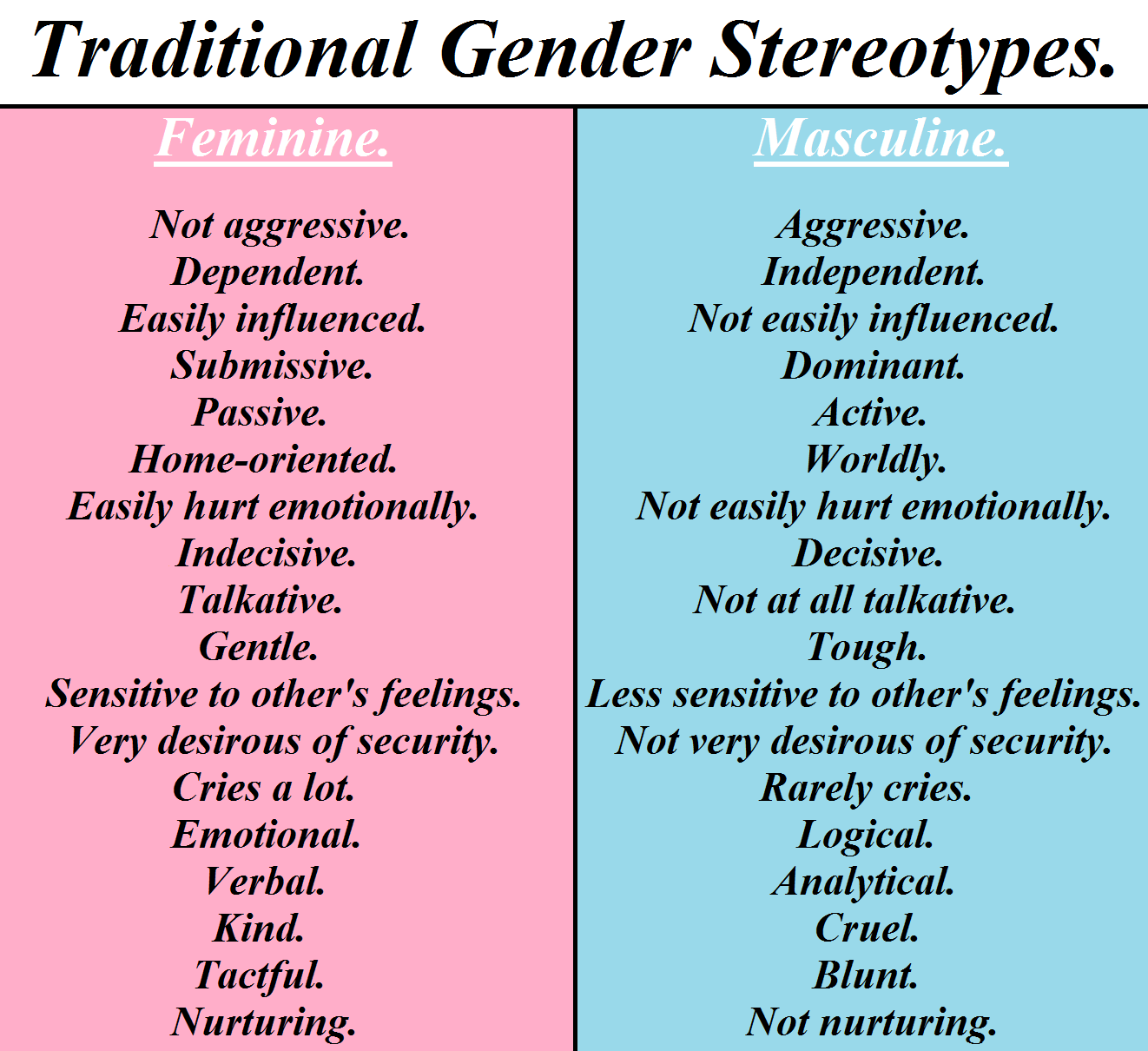
Gender in contrast to sex is a social construct. It is an established set of characteristics of society according to which people are categorized into males or females. Gender roles vary from society to society. There are many agencies present in society that facilitate the social construction of gender. Family is one such agency.
In this article, I will try to show the various processes through which gender identity is established in children by their families.
As a child grows the gender identity is established through four processes namely:
Reinforcement or moulding-Parents at home treat their children differently depending on their sex. Boys are normally given more freedom than girls while girls are treated more protectively. Any ‘effeminate’ behaviour on the part of the boy is highly discouraged and if such tendencies continue they are regarded as ‘psychological disturbances.’As a result of this training, children learn their sex roles effectively and quickly.
Opportunities-Opportunities go a long way in determining gender roles. While boys are encouraged to take up technical jobs girls are discouraged . Girls are encouraged to go along the ‘the feminine way’ and boys are expected to develop themselves along ‘the masculine way’.Boys are given cars, building blocks etc to play with while girls are given kitchen set, dolls to play with. The boys are expected to help their fathers and girls are expected to help their mothers.
Role modelling-It is a major mechanism of gender socialisation. By the age of three, nearly all children know whether they are male or female and by the age of four, they have very definite ideas of what masculinity and femininity must involve. A male child usually identifies with his father and a female child with her mother. The boys considering their father as a role model emulates them and the same is the case with girls who look up to their mothers. Role modelling is more effective when the child has a strong and warm relationship with the role model.
Explicit verbal instruction-Certain instructions also determine gender identity.” Boys don’t cry like girls”,” Pink is the colour of girls”,” You are a girl you should know how to cook” etc are some very common instructions. Hearing the same everywhere and on daily basis influences the mind of an individual and determines the gender identity.
Hence, families give the earliest reinforcement for acting appropriately according to one’s gender, and the environment continues to teach what is acceptable for men and women.
Meditation is the practice of thinking deeply in silence, in order to make the mind calm. Through regular mediation, levels of stress can be reduced as well as managed. Meditation is a relaxation technique like yoga and deep breathing that activates the body’s relaxation response. When meditation is practiced regularly, it leads to decrease in our stress levels in everyday life. Meditation gives a boost in our feelings of happiness and calmness. It increases our ability to stay cool, calm and composed under pressure.
Meditation begins by heating the activities of the brain for some time and going into a state of stillness or silence. In today’s time, when one’s life is affected be immense stress due to pressure emanating from excessive materialism, professional success, social acceptance, etc, meditation comes as a heavenly refuge. A major benefit of effective meditation is a reduction of anxiety and effects of depression.
Thousands of years ago, a wandering Nepalese prince sat under a tree, vowing not to rise until he attained enlightenment. After a long night of deep meditation, Siddhartha Gautama, better known as the Buddha, saw the light and declared that suffering is subjective and can be reduced through self-awareness. This was laid the foundation of meditation as as successful technique for reducing suffering.
Many studies have shown that meditation not only has mental but profound physiological effects on the body. Thus, to achieve peace of mind, meditation is an exercise not to be missed. It should ideally be followed daily and be supported by a healthy lifestyle and a healthy diet. Only 15-30 minutes of his daily can have a magical effect on one’s life
Effective meditation is free from any kind of other distraction. Research has shown that meditation has benefits on mental health, including decrease in depression, increase in positive emotional state and increases in the ability to deal with unavoidable stressful conditions in life. Meditation not only involves relaxation but also the active growth of positive mental states such as affection, kindness, sympathy, tolerance and energy.
The benefits of meditation are many. Meditation also helps in increasing creative levels of mind. While practicing meditation, our heart rate and breathing slows down, blood pressure becomes normal, sweating becomes less and oxygen can be used more efficiently. Moreover, our immune system functions well. In short, meditation is magnificent and effective in temporary stress reduction and long-term health. A clear and peaceful state of mind can be achieved through this practice. Meditation increases positive thinking, attention levels and awareness to reduce stress. Thus, meditation should be suggested as a treatment for the prevention of many stress-related conditions.
Meditation alters the chemistry of the brain and increases positive emotions. Statistics have shown that meditation has improved lifestyles of people suffering from stress-related conditions. People living in a big city suffering from continuous pain, hypertension, anxiety and depression can be trained to do meditation. Positive effects can be seen soon among them.
To conclude, meditation should be recommended to patients suffering from conditions caused by stress. Doctors and scientists are working to observe the effects of meditation practiced by people who are undergoing stressful situations. It should be noted that many prestigious Universities such as Harvard have made their best efforts in carrying out their researches on meditation and without a doubt, the results are positive. Meditation is an important tool to cope up with stress-related situations. Moreover, through meditation, one can turn to the internal peace to calm down the discomforts caused by stressful experiences of life.
Cricket! It is almost a religion in India. In this huge population, a team of 11 players get selected and represent the country in world stage. The competition for a youngster dreaming to be an international cricketer is very high. One has to dedicate his entire young age for cricket to play for India one day. He must practice daily; sacrifice his wishes of enjoying life. All these shows that cricket has grown that big today. Who sowed the seeds for this growth? Cricket was there in the nation from 1960s. Children used to play cricket after school and during free time. Some played seriously. But many didn’t know that they can take cricket as career. Cricket was played in Olympics during 1960s. Many countries played cricket at that time. But cricket was removed from Olympics because it took too long to complete a single match. Then cricket was played for 60 overs in Olympics. In 1975, for the first time, Internal Cricket Council (ICC) organised a grand cricket tournament inviting teams from all over the world. That event was the World Cup. It was played for 50 overs. West Indies won the World Cup 1975 and became the first time Champions. They made history and repeated that in 1979 as well. Yes, they won the consecutive World Cup in 1979. During that time West Indies were the giants of the world cricket.
In 1983, India won the World Cup under the captaincy of the great all-rounder Kapil Dev. At that point they might not know that incident would inspire millions to take up cricket. The face of cricket in India got changed then. Youngsters started believing that they too could play cricket. They too could be selected for the national team. They too could win trophies for the nation. At that phase, Kapil was the hero for Indian fans. Then after Kapil Dev, there came Sunil Gavaskar. He played brilliantly over the years. He smacked the giant West Indies bowlers for boundaries without helmet. Then came Sachin Tendulkar at his very young age of 16 years. Sachin took up against the world’s best bowlers in his very young age. The worked hard and became the God of Cricket scoring 100 centuries in his career. All those years from 1983, cricket has grown continuously and remarkably. In 2004, MS Dhoni made debut for Indian team when he was 23 years of age. That time, Sourav Ganguly and Rahul Dravid captained India. In 2007, ICC started conducting a new format World Cup called “ICC World T20” which was played for 20 overs. India won the first ever World T20 cup under the captaincy of Dhoni. In 2011, India won the World Cup. In 2013, India won the ICC Champions trophy. Dhoni, through his amazing leadership won trophies after trophies. They way he handled youngsters was very impressive. He also won 3 IPL trophies. Now Virat Kohli is leading the Indian team. He made India to win a Test Series in Australia for the first time. He made India the No.1 Test ranking team.
All these years, India won, lost, suffered, sustained and fought. Cricket never fell down from the hearts of Indians.
A dowry is a transfer of parental property, gifts, money, upon the marriage of a daughter’. it’s questionable that why it’s not given for men too, a gift by the parents to the groom, like bride price. It’s a common notion to judge bride and her family by the dowry that they give to their daughter. It’s considered as a status symbol. Even though it’s an ancient custom and prohibited by law it’s still in practice. The reason still it continues is because it’s an additional benefit for the groom’s family both financially and socially. In contrary it’s a heavy burden to the family of bride. When we think more about the dowry this also a reason for female feticides, the parents think about the money they have to make for raising the female child. Women as only a mere commodity, for sale or an object. if she is a colored girl the dowry increases the dowry increases.
According to the analysis, India has the highest rate of excess female deaths ,13.5per 1000 female births, which suggests that an estimated one in nine deaths of females below the ages of 5 may be attributed to postnatal sex assortment. “Dowry and alcoholism remain the primary reasons for domestic violence, and women faced with both reduced to living hell. Abusive husbands turn on their worst against women without a place to go or means to stay independent. Women either presume or face the reality that having married them off at quite an expense, they were no longer welcome at their homes,”
In domestic violence cases lives triggered by dowry, the husbands often appropriate the entire dowry, leaving their partners dependent on them. some of them even pressure women to bring more money or property. More over this topic was considered as an outdated topic by the society itself now it came back as a questionable think after a long time because of some current happenings. The sad side of it is that it only regained its importance after losing few valuable.
The divorced daughter is better than a dead daughter – is a most seen quote in both social media and internet. I didn’t get point of comparing a divorced women to a dead, here we can understand the societal notion of women should have a companion for making her life fruitful. Never independent women are having made their life more fruitful than that of a married woman. It doesn’t matter whether the women is married or not, what matters is happiness and satisfaction of her as an individual.
What kinds and quantities of goods shall be produced, “how much and which of alternative goods and services shall be produced? How shall goods be produced? ..by whom and with what resources (using what technology)…? For whom are the goods or services produced? Who benefits? Samuelson rephrased this question as “how is the total of the national product to be distributed among different individuals and families? Economic systems solve these problems in several ways:”… by custom and instinct; by command and centralized control (in planned economies) and in mixed economies that “…uses both market signals and government directives to allocate goods and resources.The latter is variously defined as an economic system blending elements of a market economy with elements of a planned economy, free markets with state interventionism, or private enterprise with public enterprise…
Samuelson wrote in Economics, a “canonical textbook” of mainstream economic thought[5] that “the price mechanism, working through supply and demand in competitive markets, operates to (simultaneously) answer the three fundamental problems in a mixed private enterprise system… At competitive equilibrium, the value society places on a good is equivalent to the value of the resources given up to produce it (marginal benefit equals marginal cost). This ensures allocative efficiency-the additional value society places on another unit of the good is equal to what society must give up in resources to produce it.
The solution to these problems is important because of the “fundamental fact of economic institution life” that ..
“The economic problem, “the struggle for subsistence”, always has been hitherto primary, most pressing problem of the human race- not only of the human race, but of the whole of the biological kingdom from the beginnings of life in its most primitive forms.” -Samuelson, Economics, 11th ed., 1980
Dreams are stories and images that our minds create while we sleep. They can be entertaining, fun, romantic, disturbing, frightening, and sometimes bizarre. It is a fact that each dream lasts up to 5-20 minutes only. That is probably the reason why we often feel that dreams were short.
WHY DO WE DREAM?
There are many theories that state why we get dream, some of them are,
1)Building memory: Researchers suggest that dreams reflect a biological process of long-term memory consolidation, serving to strengthen the neural traces of recent events, to integrate these new traces with older memories and previously stored knowledge, and to maintain the stability of existing memory representations in the face of subsequent experience.
2)Processing emotion: The society seems to condition us to always appear calm and in full control of how we feel, no matter the circumstances which leads us in suppressing all our dark emotions. Researchers have discovered that there is a greater tendency for negative emotions experienced during waking hours to manifest within dreams. Especially sadness, fear, anger, and anxiety. Positive emotions did not significantly manifest in dreams.
3)Mental housekeeping: During sleep, the brain needs to process all the information from that day. This theory states that dreams are a result of the sorting, scanning and searching through memories. Very few people can actually remember their dreams during the day as they are more focused on working for the following day.
4)Instant replay: Human brains use dreams to replay recent events and help form memories — and experts have gotten the first glimpse of this process in action, a study has reported. When we sleep, our brains replay the firing patterns our neurons underwent.
5)Incidental brain activity: This view holds that dreaming is just a by-product of sleep that has no essential purpose or meaning. No worries and no place for superstitions.
TYPES OF DREAMS
VIVID DREAMS: Vivid dreams involve especially realistic or clear dream content.
RECURRING DREAM: Recurring dreams involve the same imagery repeating in multiple dreams over time.
BAD DREAMS: Bad dreams are composed of bothersome or distressing content.
WHY DO WE OFTEN FORGET OUR DREAMS?
Part of this is biological, as neurotransmitters forming memory are less active during sleep, and dream forgetfulness also appears to be related to the level of electrical activity in the brain during dreams.
Additionally, it could have something to do with the content of your dreams. Early psychoanalytic theory suggested that difficult or traumatic information in dreams is suppressed, and the dreamer is less likely to retrieve or analyse it.
remembering dreams is a superpower!
FORGETTING DREAMS
Most people over the age of 10 years dream between 4 and 6 times each night, but some people rarely remember dreaming. It is often said that 5 minutes after a dream, people have forgotten 50 percent of its content, increasing to 90 percent another 5 minutes later.
HOW CAN YOU REMEMBER DREAMS?
Focusing on the dream as much as possible upon waking.
Writing down as much about the dream as possible upon waking.
Waking up naturally and not with an alarm.
Remind yourself that dream recall is a priority.
FACTS ABOUT DREAMING
1)Dreaming can help you learn and develop long-term memories.
2)Lucid dreaming is when the dreamer’s aware that they are dreaming. They may have some control over their dream.
3)We may not remember dreaming, but everyone is thought to dream between 3 and 6 times per night.
4)Around 95 percent of dreams are forgotten by the time a person gets out of bed.
5)Blind people dream more with other sensory components compared with sighted people.
6)You can only dream about faces you’ve have already seen.
It is said , Little of man’s behaviour is instinctive , rather his behaviour is ‘ learnt ‘.
At birth the human child possesses the potentialities of becoming human .
The human child comes into the world as a biological organism and becomes a social being by learning social ways of acting .
The child becomes a man or a person
( Purush) through various experiences .
Socialist referred it as “socialised person “
Every society has its own way of making a biological organism into a socialised being .
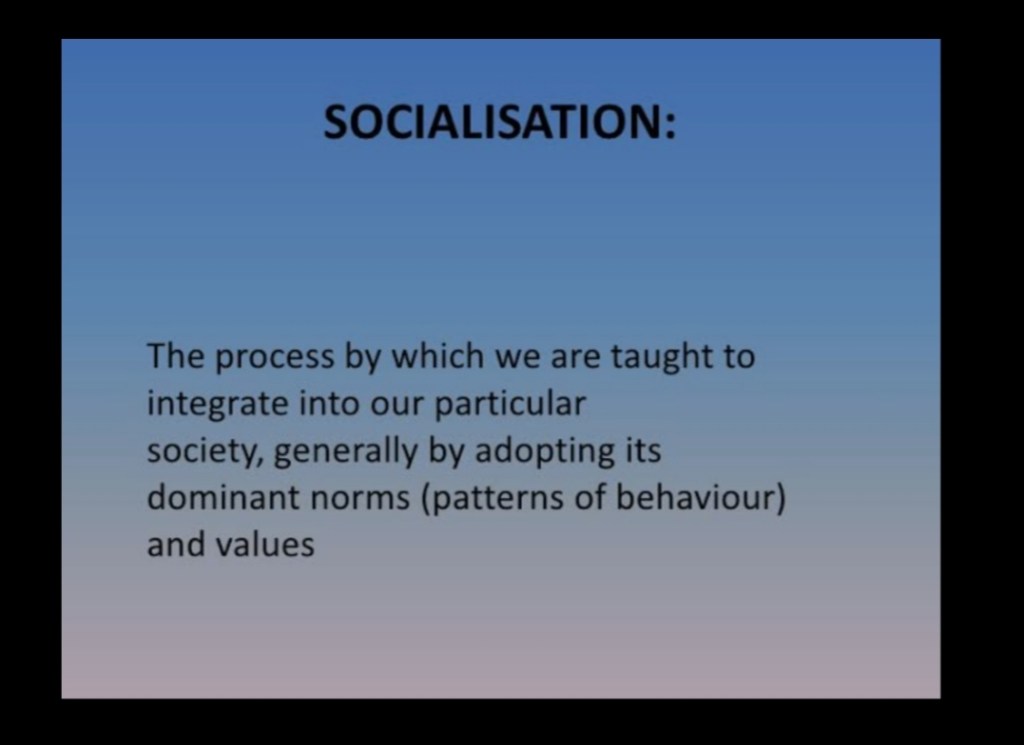
This social training is called “Socialisation “
Hence , the process of moulding and shaping the personality of a human infant is called “Socialisation “.
Sociologists have often referred to socialisation as “transmission of culture “.
A man is not only social but also a cultural being .
Cultural learning is the process by which the individual learns the fundamental culture pattern of the society in which he lives or will live . Culture includes not only its living members but also members of past generations and those yet unborn . Culture defines social conditions for us like what we eat , drink , wear , God we worship , our beliefs etc.
Still cultural learning does not completely define socialisation .
Socialisation is an aspect of all activities within human societies and are socialised in the course of the activities.
Socialisation is the process of adjustment of an individual to conditions of his social environment . There are some relevant internal forces that direct or limit socialisation like instinct , urges , capabilities , education , reflexes , etc .In the process of socialisation an individual learns culturally approved habits , ideas ,. beliefs . He is taught his rights and duties ,his position and responsibilities. The culture rules are so completely internalised that they become part of individual personality .
Definitions :-
Lundberg says that socialisation consists of the ” complex processes of interaction through which the individual learns the habits , beliefs ,skills and standards of judgement that are necessary for his effective participation in social groups and communities . “
Peter Worsley explains socialisation as the process of “transmitted culture, the process whereby men learn the rules and practice of social groups “.
Socialisation is the process of working together ,of developing group responsibility or being guided by the welfare needs of others ”
– Bogardus
W.F. Ogburn defines Socialisation as “, the process by which the individual learns to conform to the norms of the group “.
Hence , Socialisation is a process of transforming the human animal into human being ,of converting the biological being into social being .
Characteristics of Socialisation :-
• It is a continuous process .
• Socialisation is also referred to as ” transmission of culture “.
• Socialisation is social learning .
• Socialisation can be informally or formally conducted
• Socialisation means internalisation of norms .
• The process of Socialisation emerges from the development of “self “.
• Timing is an important concept of Socialisation .
Types of Socialisation
Ian Robertson in his book “Sociology “( 1977) described four types of Socialisation . According to him , an individual undergoes four types of socialisation in his lifetime .
1:
Primary Socialisation :-
Many Sociologists like Sigmund Freud, George Herbert Mead, Charles Cooley, Jean Piaget and Talcott Parsons , have contributed to the theory of primary socialization.
Primary Socialisation is the most essential and fundamental type of socialisation. Period early in a person’s life during which they initially learn and build themselves through experiences and interactions around them is the period of primary socialisation.
It takes place in the early years of life of a newborn individual .It includes teaching of language and cognitive skills , internalisation of culture and norms , developing a perspective , emotional ties etc.
Primary socialization starts with the family teaching children how to bond, create relationships, and understand important concepts including love, trust, and togetherness.
“Internalisation of norms ” is the most important aspect of primary socialisation . It is a process where the norms of the society become a part of an individual .
Several agents reinforce an individual’s learning of norms , the right and wrong behaviour .
2:
Secondary Socialisation:
Secondary socialisation generally refers to the social training received by the child in institutional or formal settings and continues throughout the rest of his life.The process can be seen at work outside the immediate family, in the ‘peer group’. The growing child learns very important lessons in social conduct from his peers. He also learns lessons in school. Hence, socialisation continues beyond and outside the family environment.
3:
Anticipatory Socialisation :-
According to Merton , the process whereby men socialise themselves into the culture of groups with the anticipation of joining that group .
Men learn not only the culture of the group which they belong to but also about the group they don’t. An individual may socialise into groups of which they are already members or into groups to which they wish to become attached.
For instance , a person starts doing his physical exercises and learns to become tough mentally and physically if he intends to join the military.
Socialisation is not a process that takes place merely in early childhood but also at different times and places throughout life .
4:
Developmental Socialisation and Resocialisation :-
According to Ian Robertson ,
“It builds on already acquired skills and knowledge as the adult progresses through new situations such as marriage or new jobs . These require new expectations , obligations and roles . New learning is added to and blended with old in a relatively smooth and continuous process of development “.
Developmental Socialisation is based on learning on the achievements of primary socialisation. A person learns more developed beliefs, values and norms through which he learns how to act in his new role.
Re- Socialisation fundamentally means ” stripping away of the learned patterns and substitution you f new ones “
Re- Socialisation takes place mostly when a social role is radically changed during periods of rapid mobility .
Agents of Socialisation
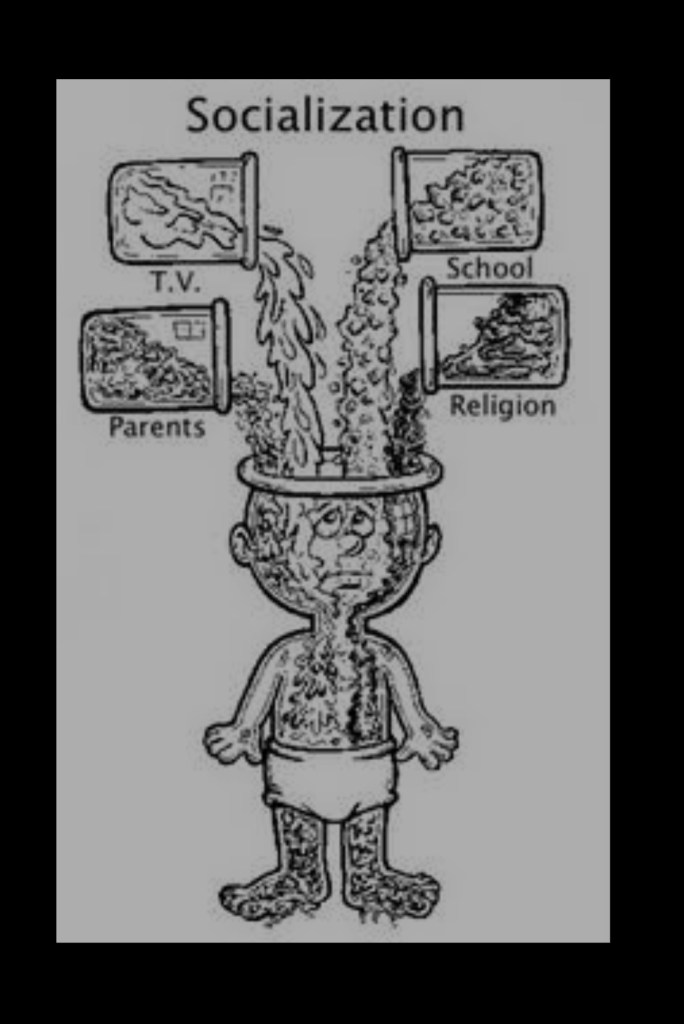
Socialisation includes moulding and shaping the personality of an individual . The continuous process of socialisation includes some agents who help an individual human being to become a social being .
• Family and Parents :-
The first stage of socialisation starts from the foetal form , where the mother plays an important role . The process of socialisation begins with parental , particularly maternal influence on an individual.
Parents are the first to introduce the child to the society system and culture of his group.
The family acts as the fundamental agent in internalisation of roles for an individual.
• Peers :-
As the child grows he starts associating with other individuals outside his family . He learns from these individuals in school or in the playground or on the street .
The peers group forms perspective on several important topics .
In modern society the peer group has surpassed the importance of the parental group. An individual has more communication understanding with his peers than his own family.
The child maintains an egalitarian relationship with those who are of the same age or gender .
It’s with the peers group that an individual learn more information regarding culture , manners , fashion , styles , gender etc.
• Teachers :-
School is the most influencing place where an individual learns how to behave and form an independent personality . Teachers are major agents of socialisation. School is a formal conduct in the process of socialisation . Teachers help an individual to be responsible and mature .
• Literature and Mass of Communication :-
Entertainment media , mass.media , literature , plays an important Agent I’m socialising . The different opinions or perspectives on several important topics like political , economical , social , etc are highly influenced by these agents.
The attitudes and ideologies ,the words written by someone impact a person in guiding and forming a perspective in a new light .
Stages of Socialisation
Socialisation is a continuous process of learning. AC children are taught about social life in various stages . The form of socialisation begins with ‘ simplicity to complexity’ as the social world gets wider and wider and the child is confronted with several things to learn and adjust .
At each stage of socialisation the child internalises a ‘ system ‘ of roles .
Socialisation consists of four stages from infancy to adulthood .
The first stage –
The Oral Stage :- Oral Stage begins with the birth of the child . It lasts till the child completes his one year .In the foetal form the child feels the comfort of his mother’s womb .
In this stage the child establishes his oral dependency by whimpering or bawling for everything .
Sigmund Freud ,an Australian Psychiatrist ,called this stage as primary identification as a child tries to internalise his and his mother’s role .
2:
The Second stage
The Anal Stage :- The next stage in socialisation is the Anal Stage which begins just after the completion of the oral stage . In this stage the child is taught to do some fundamental tasks such as eating , Cleaning , toileting , etc .
In the first stage the oral dependency starts to fade and the child learns that he cannot depend completely on his mother .
In this stage the child’s mother is the socialising agent .The child in this stage separates his and his mother’s role and understands the social system to a larger extent than in the first stage .
3:
The Third stage
The Oedipal Stage :-
The thirst stage starts from the fourth year of the child and lasts till puberty i.e 12-13 years .
The third stage the child establishes his role on the basis of his sex .
The boys and girls learn about their roles in the society and identify themselves as part of the social system and starts internalising according to their sex , the role of others and their identities on the basis of their gender .
4
The Fourth Stage :-
The Stage of Adolescence :- The fourth is the stage where the child becomes free from their parental control and establishes independence . Parents play an important role in a child’s life at all stages . Despite the freedom from parental control ,they help the child to make some very important decisions in his life . They encourage and help them to take new roles during this period of Adolescence . They expect the child to learn new responsibilities and new roles that are assigned to them .
In modern society ,the parents intend to give more freedom than traditional societies where parents take mostly all the important life decisions of the child .
This stage is the most important stage in socialisation as the child’s behaviour and personality depends on the kind of learning he / she learns and the decision he/ she takes that affects the society . During adolescence the child goes through several physiology and psychological changes ,which affects mentally and emotionally and hence establishes more new experiences than any other stages .
Socialisation makes an individual a social being who transmits cultural ideas , beliefs , languages , skills etc from generation to generation, learns rules and practices of social groups and contributes to forming a society .
Any person may suffer from some sort of health issue. Especially, in today’s time where people are living a hectic, stressed, and unbalanced lifestyle. Hormonal disorders have also become common. Some issues cure with time, while some take a lifelong deal. In India, 1 in 5 women suffers from PCOS.
What is PCOS?
PCOS or polycystic ovarian syndrome is a hormonal disorder. The female body produces estrogen, progesterone, and androgen. These hormones are responsible for regulating ovulation. Though androgen is said to be the male hormone, it is also produced by the female body; just the amount is low comparatively. When the body produces higher amounts of androgen than the normal amount (because of increased insulin level), it results in PCOS.
The ovaries produce eggs each month, if the egg gets fertilized it gets itself embedded in the uterus, otherwise, the uterus lining (consisting of blood, tissues, and nutrients forming a cushioning for the embryo to grow) breaks and flow through the vagina. And this is called a period. But when the eggs are interfered with by the higher amounts of androgen, the eggs in place of maturing start to develop cysts. These eggs then instead of releasing, like in a normal period, start to build up cysts on the ovaries. This causes irregular ovulation each month and hence irregular or missed periods.
Problems of Polycystic Ovarian Syndrome (PCOS)
Usually, PCOS is only thought to be related to difficulty in conceiving. But it has other issues too which are often not talked about as fertility remains the prior concern as infertility is considered something that could create a problem for marriage. However, is it not necessary that female suffering from PCOS is infertile. And the issue of infertility (if there) is treatable (for most of the cases) through proper medication, exercise, and a healthy lifestyle.
As the male hormone ‘androgen’ level increases, it results in excessive body hair (as can be seen in males), called hirsutism. However, this symptom is not necessarily shown in every female suffering PCOS.
Male pattern hair loss or thinning of hair.
Acne outburst
Obesity is another issue in PCOS. People tend to get obese with PCOS but it can be controlled through a healthy diet and lifestyle. However, this symptom is not necessarily shown in every female suffering PCOS.
As the insulin levels are increased there is a higher risk of developing diabetes, hypertension (high blood pressure), and even heart diseases.
Insomnia and sleep apnea (paused breathing for a short period while asleep).
Irregular periods are the most common sign of PCOS. It can be diagnosed by gynecologists through different check-ups like weight, hair growth, acne, darkened skin may even prescribe a pelvic ultrasound and blood tests.
Treatment
PCOS is not curable but treatable. Proper diet, exercise, and a healthy lifestyle can help in manage PCOS. Taking consistent medication as prescribed by the medical experts helps in regulating the menstrual cycle. The doctors often prescribe for birth control pills to control the hormone levels as they are rich in hormones. This regulates the menstrual cycle as well as controls excessive hair growth and acne. The treatment varies from 6 months to 1 year.
Food rich in omega 3 fatty acids, magnesium, zinc, vitamin D, vitamin B12 is important to manage PCOS. Leafy greens are best to be consumed as it provides the body with required nutrients without adding to obesity.
Exercise and yoga are as necessary as diet and medicines. The doctors often suggest practicing certain yoga asanas that help the womb heal.
Following a healthy routine with good food and proper sleep is important. Sleep plays a vital role in helping the body absorb the nutrients in food and medicines better.
It is strictly advised to consult a doctor if any of the above-mentioned symptoms show up.
And never take any medicines without consulting the doctor.
Corruption has been in Indian society in some shape or another since time immemorial. Our opportunistic politicians, who have already done more harm to our country, are at the root of corruption. People who labour on the basis of correct ideals are acknowledged and seen as silly in today’s culture. Corruption in India is caused by the collaboration of bureaucrats, politicians, and criminals. Previously, bribes were paid to have the wrong things done, but now bribes are paid to get the right things done at the appropriate time. Furthermore, because respected individuals are participating in it, corruption has become something respectable in India. Social corruption such as under-weighing of products, adulteration in culinary items, and different types of bribery have persisted in society.
In today’s world, if a person wants a government job, he must pay lakhs of rupees to higher officials, even if he meets all of the eligibility criteria. In any office, one must either offer money to the employee in question or arrange for work to be done through other means. Adulteration and duplicate weighing of products occur in the food and civil supply departments by unethical workers who defraud consumers by jeopardising people’s health and life. Officers charge money in property tax assessments even if the house is built properly according to government norms and regulations.
In India, political corruption is at its highest. The primary source of concern is that corruption is weakening the political body and undermining the supremacy of the law that governs society. Politics is now solely for criminals, and criminals are designed to be in politics. Elections in several sections of the country have become connected with a slew of illicit activity. Threatening voters to vote for a specific candidate or physically preventing voters from entering polling booths – particularly weaker sectors of society such as tribals, Dalits, and rural women – occurs often in numerous parts of the country. The government has boosted the compensation of M.P.s from Rs.16, 000 to Rs.50, 000, a 300 percent increase over the previous salary. However, many of them are dissatisfied with the raise and want the government to increase the wage to a much greater amount. This clearly demonstrates how politicians are always out for monetary gain and are unconcerned about the wellbeing of the people. One of the most common types of corruption is tax evasion. It is usually practised by government officials and politicians, resulting in the buildup of black money, which lowers people’s morale.
MAJOR REASONS RESPONSIBLE FOR CORRUPTION-The nature of the human being is the most significant component. People in general have an insatiable desire for luxury and comforts, and as a result, they become involved in any dishonest activity that results in monetary or material gain. Moral and spiritual qualities are not prioritised in the educational system, which is largely to blame for the degeneration of society. Employees are paid extremely little, and as a result, they are obliged to generate money in illicit ways. The penalties placed on criminals are insufficient. Political leaders have absolutely ruined society. They live a lavish lifestyle and are unconcerned about society. The people of India have not been woken or enlightened. They are afraid to speak out against anti-social elements in society.
MEASURES– The Right to Information Act (RTI) provides all necessary information about the government, such as what the government does with our tax payments. This act gives you the right to ask the government about any problem you’re having. The Central Vigilance Commission is another effective anti-corruption tool (CVC). The Government established it to advise and guide Central Government entities in the areas of vigilance. If there are any instances of corruption or complaints about them, they can be filed to the CVC. CVC also bears the obligation of raising public awareness about the dangers of bribery and corruption. The establishment of special courts for expedited justice can be a tremendous benefit. There should not be a long period of time between the filing of a case and the delivering of a verdict. Strong and strict rules must be adopted, leaving no room for the guilty to flee. In many circumstances, personnel choose corrupt methods out of necessity rather than choice. Some people believe that the earnings they are paid are insufficient to feed their families. They would not be forced to accept bribes if they were paid more. The one thing that must be ensured is the correct, fair, and unbiased application of numerous anti-social legislation in order to take strong, deterrent, and prompt legal action against offenders, regardless of their political influence or financial strength. To combat the threat, firm and decisive efforts must be taken, and an environment must be established in which decent, patriotic intellectuals can come forward to serve the country with pride, virtue, and honesty for the benefit of the people of India.
“Photography is the story I fail to put into words.”
– Destin Sparks
What is photography ?
Photography is the art, application, and practice of creating durable images by recording … Other names: Science or art of creating durable images
The art or process of producing images by the action of radiant energy and especially light on a sensitive surface (such as film or an optical sensor)
Concepts of photography –
Aperture, shutter speed, ISO speed, exposure. Photography is all about light. You use aperture and shutter speed to achieve the proper exposure, while taking into account some important side-effects you should be aware about.
Principles of photography –
The seven principles of art and design in photography; balance, rhythm, pattern, emphasis, contrast, unity and movement, form the foundation of visual arts. Using the seven principles allows you to take greater control of your photographic practice. This will lead to better photos and more photographic opportunities.
Elements used in photography –
Patterns, texture, symmetry, asymmetry, depth of field, lines, curves, frames, contrast, color, viewpoint, depth, negative space, filled space, foreground, background, visual tension, shapes. We use one or more of these elements to create a composition that works for our image.
There are many elements in photography that come together to make an image be considered “good”. Elements like lighting, the rule of thirds, lines, shapes, texture, patterns, and color all work well together to add interest and a great deal of composition in photographs.
A good photographer must have a very keen eye for detail to ensure that all elements within the photo , the lighting , the composition , the subject , and everything else in between to work together harmoniously to convey the right vision or message. Even the tiniest detail can make or break a photograph.
” Photography is a way of feeling, of touching, of loving. What you have caught on film is captured forever… It remembers little things, long after you have forgotten everything.”
– Aaron Siskind
A picture is a poem without words.
The art or process of producing images of objects on photosensitive surfaces. Photography is the art, practice or occupation of taking pictures with a camera. An example of photography is someone taking pictures for a magazine.
Photography in career –
Photography is a good career if you have an excellent skill set, good creative ability, composition, and technical expertise. Good photography skills come with a lot of practice and hard work. This career can be rewarding if you love to take challenges and are eager to live your life through the eye of the camera.
Photographer skills –
Photographer skills are those skills needed to create high-quality pictures, including artistic vision and technical knowledge of camera equipment and the art of photography
“There is one thing the photo must contain – the humanity of the moment.”
–Robert Frank
“Photography is the story I fail to put into words.”
– Destin Sparks
What is photography ?
Photography is the art, application, and practice of creating durable images by recording … Other names: Science or art of creating durable images
The art or process of producing images by the action of radiant energy and especially light on a sensitive surface (such as film or an optical sensor)
Concepts of photography –
Aperture, shutter speed, ISO speed, exposure. Photography is all about light. You use aperture and shutter speed to achieve the proper exposure, while taking into account some important side-effects you should be aware about.
Principles of photography –
The seven principles of art and design in photography; balance, rhythm, pattern, emphasis, contrast, unity and movement, form the foundation of visual arts. Using the seven principles allows you to take greater control of your photographic practice. This will lead to better photos and more photographic opportunities.
Elements used in photography –
Patterns, texture, symmetry, asymmetry, depth of field, lines, curves, frames, contrast, color, viewpoint, depth, negative space, filled space, foreground, background, visual tension, shapes. We use one or more of these elements to create a composition that works for our image.
There are many elements in photography that come together to make an image be considered “good”. Elements like lighting, the rule of thirds, lines, shapes, texture, patterns, and color all work well together to add interest and a great deal of composition in photographs.
A good photographer must have a very keen eye for detail to ensure that all elements within the photo , the lighting , the composition , the subject , and everything else in between to work together harmoniously to convey the right vision or message. Even the tiniest detail can make or break a photograph.
” Photography is a way of feeling, of touching, of loving. What you have caught on film is captured forever… It remembers little things, long after you have forgotten everything.”
– Aaron Siskind
The art or process of producing images of objects on photosensitive surfaces. Photography is the art, practice or occupation of taking pictures with a camera. An example of photography is someone taking pictures for a magazine.
Photography in career –
Photography is a good career if you have an excellent skill set, good creative ability, composition, and technical expertise. Good photography skills come with a lot of practice and hard work. This career can be rewarding if you love to take challenges and are eager to live your life through the eye of the camera.
Photographer skills –
Photographer skills are those skills needed to create high-quality pictures, including artistic vision and technical knowledge of camera equipment and the art of photography
“There is one thing the photo must contain – the humanity of the moment.”
















 Eduindex News
You must be logged in to post a comment.