Influence of Social Class in ‘Pride and Prejudice’

Social Class refers to a hierarchy in a society wherein people are grouped on the basis of their wealth status. Jane Austen’s Pride and Prejudice (1813) is acknowledged for its keen commentary on these aspects of the society. The influence of social class and the greed to climb up this social hierarchy is much of novel’s criticism.  

Austen’s works usually focus on the preoccupations of the middle class and the upper class, and are rarely focused on the Aristocrats (people with title) or the working class. But even within that, there are several other differentiations as Regency England so working for money something of low standards. They acquired wealth through property, marriage, and inheritance. For instance, although the Bingley family are economically farer than most, on the basis of class, they are considered equal or maybe even lower than that of the Bennets as they are said to have made their money through trade or business.

A still from Pride and Prejudice (2005)

The novel also portrays characters who react differently to class. Characters like Bingley sisters and Mr. Collins fawn over the rich and try to please them. Especially Mr. Collins who depends on largely on Lady Catherine De Borough to gain social acceptance. He does all their biddings and constantly attempts to flatter them in order to ensure his good associations with them. Lady Catherine on the other hand, is very proud of her richness and sees everyone as beneath her. The novel satirises these characters who move only in relation to class, and are portrays the conceited idea that social distinction is an important factor in judging someone’s character. Lady Catherine is so used to people doing her biddings and obeying her orders that she is taken off-guard when Elizabeth stands up for herself. She objects to Lizzy marrying Darcy due to her fear that it would indirectly affect her own social class through association. Elizabeth in return, replies that she’d marry whomever she wishes to for her own happiness.

“In marrying your nephew, I should not consider myself as quitting that sphere. He is a gentleman; I am a gentleman’s daughter; so far we are equal.”

Jane Austen (Chapter 56)

Characters such as Mr. Bingley and the Gardeners seem much more as they do not discriminate on the basis of class even if they are financially well-to-do. Darcy can be seen as an example of Austen’s ideal high-class gentleman. Despite seeming selfish and arrogant initially, he later proves that he is capable of change. His innocence also becomes evident when Lizzy talks to the residents of Pemberly. The social status of the Bennet family is threatened to a large extant when Lydia runs away with Mr. Wickham. They are saved from ‘social degradation’ only when Darcy covers up the issue with money.  

Pride and Prejudice shows that class might determine a character’s social situation, but it doesn’t signify anything about their behavior. The marriage between Elizabeth and Darcy shows that even though class restrictions are rigid, it does not determine one’s character and that love can overcome all material obstacles like class. It proves that class is ultimately an arbitrary and meaningless distinction between people.  

Reference Links:
Attitude: Formation & Change

We all have our own opinions about people, situations, issues or life. These opinions are formed over time with experience and are an example of attitude. An attitude is basically a state of mind or a set of views regarding some topic. It is accompanied with a tendency to act in a particular way with regard to attitude object. Attitude are not a behaviour in itself but rather it represents the tendency to behave in a certain way.
Attitudes have an evaluative feature i.e. they are either positive or negative. Attitudes are formed through interaction and changes throughout our lives through experiences. Some attitudes however, remain fairly constant. Such attitudes get incorporated in our lives as a part of our belief system and moral values. Beliefs and values differ for every individual. For some they may change over time while for others they may never change.
In general, attitudes are learned. This learning can take place through association, observation, exposure, culture etc. In early age group, attitudes are learnt by being rewarded or punished. For example, praising(rewarding) a child every time he does his share of chores will lead to a positive attitude formation towards doing chores. Most of the attitudes are formed by modelling or observation. During pre teen years or even teenage in that matter, important attitudes about life and related matters are formed by observation of living environments. Social norms also shape our attitudes. Social norms are exclusive to their cultures and become a part of our social cognition.
Family and school environment especially during the early years play a significant role in shaping the attitude of an individual. Most of the attitudes are formed through direct personal experiences which bring about a drastic change in our opinions towards people and our own life. Over the years, media has become an important source and factor for attitude formation. It provides an exposure to vast amount of information, both positive and negative. Internet is also a very powerful factor for attitude formation.
Change in the attitude depends on it’s existing nature. Nature of attitude includes it’s positivity or negativity, simplicity or complexity and centrality. Generally speaking, positive attitudes are easier to change. Extreme attitudes and central attitudes are rather difficult to change. Attitude may change in the same direction as the existing one, or it may change in the opposite direction. It has been observed that attitude changes when message comes from a highly credible source. A message in the information that is presented to change the attitude. Whether the message contains a rational or emotional appeal also makes a difference. People who have a more open and flexible personality change more easily then those who are less open. People with low self esteem and low confidence also tend to change their attitudes more easily than those with high self esteem and confidence. People with strong prejudices do not easily change their attitudes. More intelligent people change their attitude less easily but sometimes they change it more willingly than others.

https://youtu.be/xxisEC4nF1A

https://youtu.be/tohd2AJ2bvI

MORE ABOUT GST

After 14 years of working on it, it was recommender by Dr. Kelkar Task force (Constituted in 2003) by Atal Bihari Vajpayee Government on 16-07-2004 who realized the need of implementation of Goods and Services Tax in INDIA for its growth and development. GST implemented in India on 1st July 2017.

Little History

  • The idea of National GST was first mooted in India by Kelkar force in 2003.
  • The first announcement for proposing GST was made in budget speed on 28-02-2006 by the finance minister of that time. But that date was not able to achieve due to political differences.
  • Various steps were taken to the introduction of GST. task of designing GST was given the power to state finance committee on 10 November 2009. The proposed GST law is broadly on lines as indicated in the discussion paper.
  • Constitution (122nd Amendment) Bill, 2014 was introduces in Loak Sabha. And on 03-08-2016 passed in Rajya Sabha.
  • Implementation of GST took place across India on 01-07-2017.

Pranab Mukherjee and Prime Minister Narendra Modi pressed buttons to launch of Goods and services tax at midnight.

The Prime Minister said that ONE TAX ONE NATION ONE MARKET would be greatly helpful to traders.   

There were various reasons for the implementation of goods and services tax instead of old system of multiple taxes.

The following major defects were in structure of indirect taxes, an existing unto 30-06-2017 –

  1. Central sales tax (CST) was payable @ 2% for every movement of goods from one state to another. Even in case of stock transfer or branch transfer.
  2. Cascading effect of taxes could not be avoided due to CST and entry tax. Central VAT was payable on central excise element also.
  3. Movement of goods in European Union (EU) is free across all countries without any incidence of tax. However, in India movement of goods and services from one state to other was not tax free.
  4. India did not have one national markets due to invisible barriers because of various taxes like sales tax, vat tax, state tax etc.
  5. Millions of man hours and truck hours were lost due to check post. Tough huge corruption is involved.
  6. Central government could not impose tax on more than manufacturing level.
  7. Some transaction was taxed by both central government and state government.
  8. Each state had their own VAT Laws. Thus, taxable person who  owns business in more than one state found it difficult to keep pace with tax laws of each state.

Few lines from PM Modi’s speech at the time of implementation of GST “Chanakya’s words summarize the whole GST process. Even if something is very difficult to be achieved, one can obtain it with penance and hard work. Can we imagine, when we became independent there were more than 500 Princely states. If it was not for Sardar Vallabh Bhai Patel to integrate these Princely states, what would have been the political map of India today? Just as Sardar Vallabh Bhai Patel unified India by helping several princely states subsume into a common entity, the GST will bring economic unification. If we take into consideration the 29 states, the 7 Union Territories, the 7 taxes of the Centre and the 8 taxes of the states, and several different taxes for different commodities, the number of taxes sum up to a figure of 500! Today all those taxes will be shred off to have ONE NATION, ONE TAX right from Ganganagar to Itanagar and from Leh to Lakshadweep.”  https://www.ndtv.com/india-news/full-text-of-pm-narendra-modis-speech-at-goods-and-services-tax-launch-from-parliament-1719236

WHAT IS THE BUSINESS RESPONSE TO THE CYBER CRIME?

Firstly let us know what is cybercrime? cybercrime is nothing but it is the criminal activity that either targets or compute, a computer network or a networked device. most but not all cybercrime is commited by cybercriminals or hackers who want to make money. cybercrime is carried out by individuals or organizations. some cybercriminals are organized, use advanced techniques and are highly technically skilled other are novice hackers.

As a business, your best bet against cyber crime is to prepare a solid incident response plan. often planning is not enough you should have the security staff and tools in place to execute it. an incident response plan, according to the SANS framework, includes:

PREPARATION: Codifying your security policy, indentify types of critical security incidents, prepare a communication plan and document roles, responsibilities and processes for each one. recruit members to your computer security incident response team and train them

IDENTIFICATION: Use security tools to accurately detect anomalous behaviour in network traffic, endpoints, applications or user accounts and rapidly collect evidence to decide what to do about the incident

CONTAINMENT: Isolate the affected systems, clean them and gradually bring them back online

ERADICATION: Identify the root cause of the incident, and do everything to ensure the issue does not repeat itself. fix broken security measures that let in the attackers, patch vulnerabilities, and ensure you clean malware from all endpoints.

RECOVERY: Bring production systems backup, taking care to prevent another similar attack. test to ensure that systems are backup and working as usual

LESSONS LEARNED: Up to two weeks after the incident review it with the team to understand what went well and what didnt and improve your incident response plan.

Web development

Web development is the work involved in developing a Web site for the Internet or an intranet … Among Web professionals, “Web development” usually refers to the main non-design aspects of building Web sites: writing markup and coding.


The Three Types of Web Developers
The Front-End Developer
The Back-End Developer
The Full-Stack Developer


Web development is the process of building websites and applications for the internet, or for a private network known as an intranet. Web development is not concerned with the design of a website; rather, it’s all about the coding and programming that powers the website’s functionality.


So, web design process at RubyGarage includes four major phases: project discovery, ideation and information architecture, user interface design, and testing and evaluation after launch. Let’s go deeper into what each phase includes and what deliverables you’ll get.


Here are the most common languages and how they are used:
✓HTML. HTML makes up the layout and structure for your website. …
✓CSS. CSS is the language developers can use to style a website. …
✓Java. Java is the most popular web programming language.
✓JavaScript.
✓Python.
✓SQL.
✓PHP.


The 7 Steps of a Professional Design Process

Step 1 – Study the Client Brief
Set goals and context from the brief – this intake sheet is the blueprint that leads you to the final design. Ask as many questions as you can now, to make sure you start off on the right path.

Make sure that your questions will yield answers that will enlighten you on the project key points. What message is the project trying to convey? What art styles and design approach would they like to see? Would they be open to using illustrations or photographs?

Step 2 – Research, Research, Research
Research as much as you can. This helps you understand the project as fully as you can. Initial research areas should always include the client’s company history and culture, the local (and possibly international) competitor landscape, and any industry-related trends. Doing this will keep you away from revising your draft because it looks too similar to your client’s competitor.

Step 3 – Brainstorm
You’ve researched your brief, the client, the industry, and the audience. Now it’s time to start putting it all together.

Step 4 – Sketch
Sketching your ideas to define their visual elements is a good way to save time. You don’t want to spend heaps of time in Illustrator refining a concept that your client won’t like. These prototypes will allow you to work on your design with confidence, too. It is a common practice done by experienced graphic design professionals to give their work a solid foundation.

Step 5 – Concept Development
Once you’ve sketched out your initial thoughts, it’s time to develop your favorite concepts a bit further. It is a good idea to develop 3-5 different concepts to give your client some choice. Although that number can fluctuate depending on the project’s needs.

Step 6 – Revisions
After the client chooses one concept, it is time to revise the design so it meets the goals and outlines.

The client may want you to mix and match from all concepts you have presented, or come up with something entirely new. From comments and suggestions, you can present another round of designs.

Step 7 – Completion
Way to go! Your client is loving it, apart from some minor tweaks here and there. Once these are completed there is only one last step…

Get approval. Send the final files – the project is complete! There is nothing more rewarding than turning around a completed graphic design gig to a satisfied client. So congratulate yourself on a job well done.

Adobe Dreamweaver

Adobe Dreamweaver is an advanced web design software. It comes with a screen to write code and design your web template. It also has a drag and drop section where you can create your web design with a live preview.

Online Marketing

Marketing is a good idea.But whenever it comes to the online marketing,it is not appreciable one.The people have comforted themselves but they like online marketing,online business etc.When it deals with a large capital things,the customer may fall under the wrong impression and may have a wrong opinion on the product he or she is trying to get over.

On the other hand,the online marketing is also helpful in the situation like the pandemic times.It is very difficult to go out and to get the things for the needs and fulfill the necessity.It is very difficult to travel outside and get all the thing1 ⅜s done within the time.The online marketing helps the individual to acquire all the things which are needed in a particular period of time.For instance,the covid patients cannot go outside and get all the things which deals with the basic needs.so,the online marketing helps the individual to get all the things done by being at the home and in a very simple way

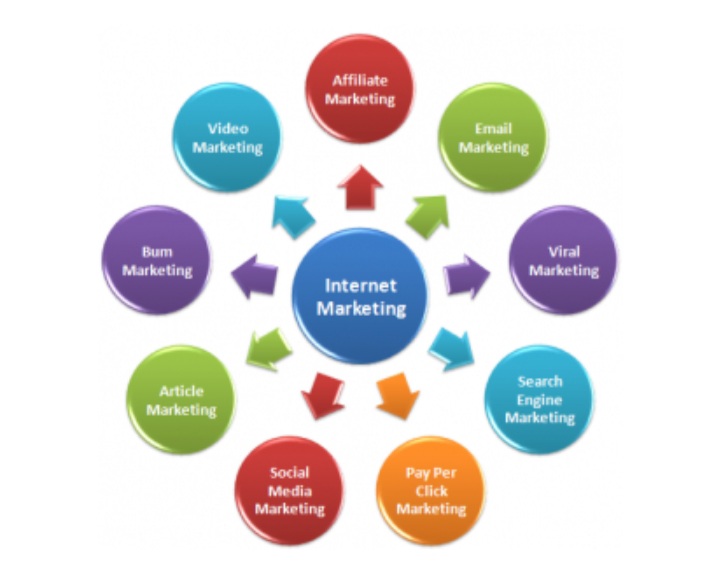
Types of online marketing:

Search Engine Optimization(SEO):

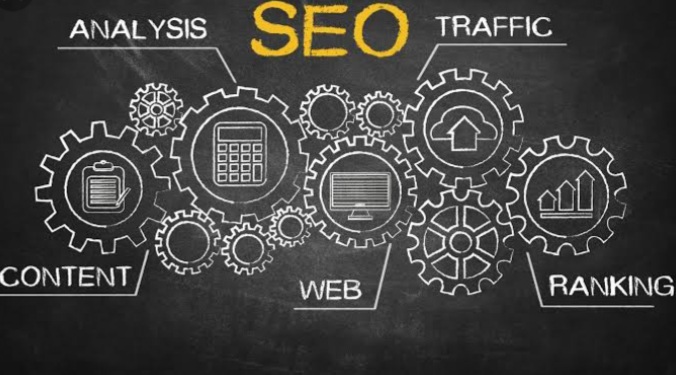
When you optimize your website and other online properties for search engines,you make your content more accesible to ur audience.SEO allows consumers to type search queries into google and other search engines,then find your content.

Getting good at SEO will move your content up in the serach engine results pages(SERPs).you are more likely to get a click from a prospective customer if you appear on page versus page nine.

Search Engine Marketing(SEM):

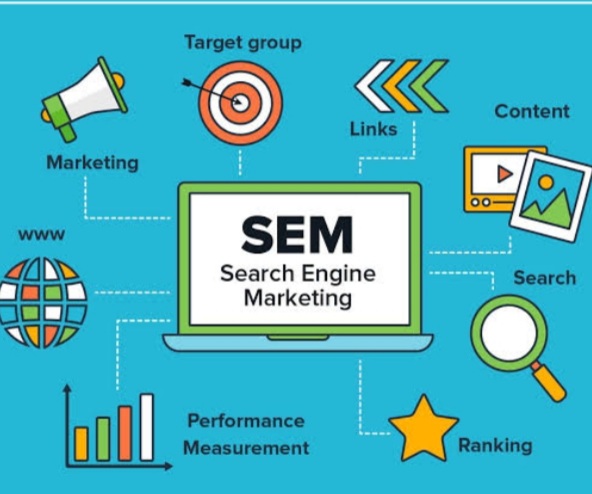
While SEO and SEM share certain qualities,most marketers use SEM to refer to any advertising efforts you make via search engines.For instance,if you run ads on google Adwords’s program,you are participating in SEM.

Many brands struggle to rank high in google during their first year or two of operation.SEM allows you to gain an advantage over the competition without waiting for your SEO efforts to take effect.

Email Marketing:

We’ve covered email marketing in great depth here on the kajabi blog_ and there’s a reason for that.It works.

Yours email list can become your greatest asset as you build your bussiness.It gives you a direct line to current,past,and prospective customers.As you release new digital products,you can make your audience aware of them.

Plus,it helps you keep your brand fresh.If your audience receivers regular,high-value communication from you,those people will associate your brand with good things,from generosity to credibility.

Pay-per-click(ppc) Ads:

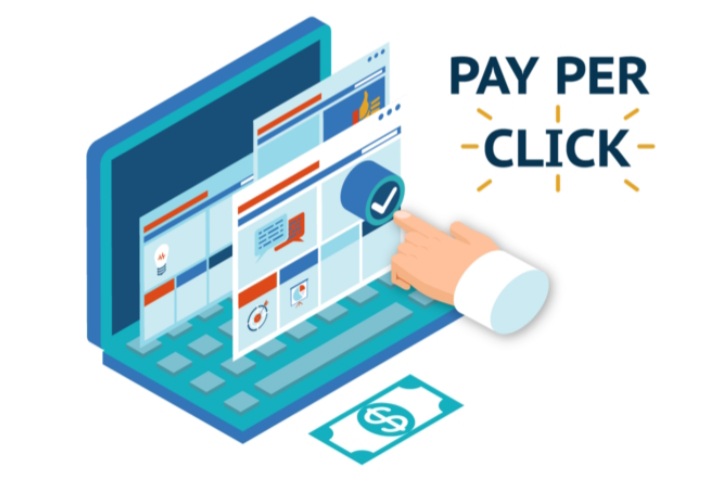
PPC ads and banner advertisements share lots of similarities.The primary difference is how you pay.

With ppc ,you pay each time someone clicks on your add.If you’re showing banner ads with an arrangement with an add network or website,you typically pay a flat fee in advance.

PPc ads through search engines, social media,platforms,and other online spaces can prove extremely effective.If u set your budget,so you never pay more than you intend.when you’ve consumed your budget,ads stop runing

Affiliate Marketing:

Like a car dealership salesperson,an affiliate marketer only gets paid after someone purchases your product.If no sales take place you don’t pay.

Affiliates can promote your products anywhere they want.It’s a great way to gain access to new audiences.

Influencer Marketing:

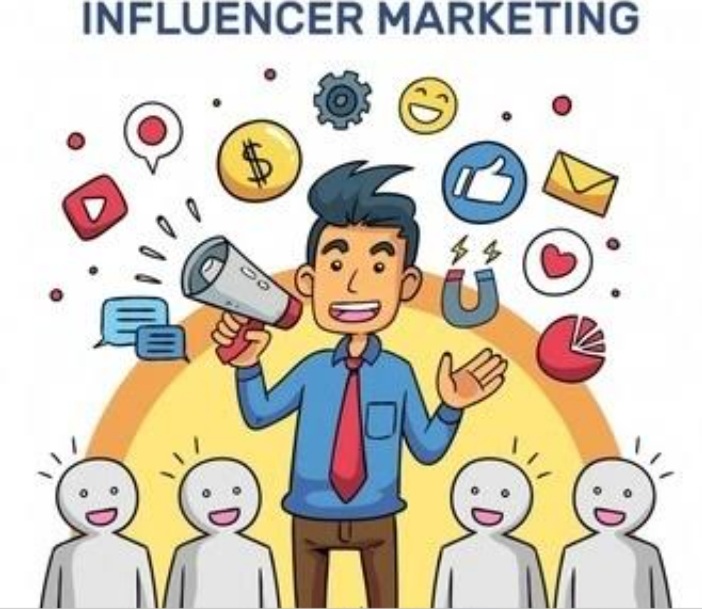
Influencers have become a hot topic of conversation. They are highly regarded among their audiences ,they often relate well to the people who follow them,and they can persuade people to buy your products.

Not all influences have audiences as large as those of kim kardashian.you don’t have to pay hundreds of thousands of dollars for someone to promote your product.

Look for influences in your niche or industry.Approach them by offering them free access to one of your digital products.

Social Media:

Just about everyone is on social media these days .Most people use facebook,twitter,instagram,whattsapp,…etc and the other major players to share news with their friends and family members. Some have built businesses excusively around their social media activity.

However,you can also use social media to promote your knoeledge commerece products. Whether you advertise on these platforms or not ,you’re gaining visibility and sending people to your website.

Advantages and Disadvantages:

Advantages:

*Comforts:

The marketing through online helps the individual for being comfortable and fulfilled at the needs within the time without any delay.By being at the home comfort the individual can get all the things which are needed and can also help others who are in need

*Discounts:

There are good number of discounts provided in the platforms of marketing basing on the seasons.If an individual can catch the discounts,he or she will be benifited with some amount of money.This is a smart way to save the money and can have a good life style.

* Big Deals:

Whenever an individual goes for the big deals like buying the refrigerators,Ac’s,washing machine etc.., to individual can get good amount of offers and also the best quality is provided.carrying things like refrigerators and washing machines from the market to the home is very difficult thing.But, through online marketing the things are brought very easily to the home without any damage.If any damage occurs,this also chance to return it and get a good one

Disadvantages:

*Because online marketing requires customers to use newer technologies than traditional media,not all people may get the message

* Another one is the inability of shoppers to touch,smell,taste or try on tengible goods before making on online purchase

* Many consumers are hesitate to buy items over the internet because they do not trust that their personal information will remain private

What you should know about IVF-Technology

IVF or In Vitro Fertilization is one of the famous fertility treatment where eggs from a woman’s ovaries are is retrieved and fertilized in vitro that is in laboratories with the sperm to produce embryo. This embryo can be stored by freezing or can be transferred to woman’s uterus. This technique became a boon to couples who were facing infertilely or pregnancy related issues.

SOME OF THE INFERTILITY ISSUES:
  • Chances of fertility is reduced in woman over 40 years of age.
  • There may be damages in the fallopian tube of the female which may be causing infertility.
  • Reduction in the function of the ovaries due to various reasons.
  • Endometriosis– Where the tissue that normally grows inside the uterus, lining it, will grow outside it.
  • Uterine fibroids – Non cancerous growths in the uterus
  • In males, low sperm count
  • Abnormalities in sperm shape
WHAT ARE THE PROCEDURES BEFORE IVF

Before IVF women undergoes ovarian reserve testing which involves tests for the level of follicle stimulating hormone in blood. Examination of the uterus usually by doing ultrasound to know the health of the uterus. Men will have sperm testing which is done by taking semen sample and analyzing for the sperm size, number and shape. If the sperms are weak or damaged, intracytoplasmic sperm injection (ICSI) is performed where sperm is directly injected to the egg by the technician. Otherwise sperms are left to fertilize the egg in incubation.

EMBRYO
HOW IVF IS PERFORMED
  1. Stimulation: IVF requires multiple eggs to make sure that viable embryos are produced. A woman produces only one egg during one menstrual cycle. So drugs are injected into female body to stimulate the production of multiple eggs. The doctor will perform multiple blood tests to monitor the production of eggs and to decide when to retrieve them.
  2. Egg retrieval: It is a surgical process. Doctor uses an ultrasound wand to direct a needle into the ovaries through vagina to an egg containing follicle. This needle takes out the eggs through suction.
  3. Insemination: Semen sample is taken by the male partner. Technician will mix the sperm with the eggs in a petri dish. If it did not work they may go for ICSI.
  4. Transfer: Normally after 3-5 days after insemination, when embryos become big enough, they are implanted into the uterus. A catheter is introduced into vagina past the cervix into uterus. Embryo is released. Then embryo implants itself to the uterine wall. A blood test will determine if the female is pregnant or not.

POSSIBLE COMPLICATIONS

SOME OF THE MYTHS ABOUT IVF

  • IVF can be done at any age: This is not true. As the age of women increases she may not be able to produce many eggs and that time IVF can not be done.
  • Fertility drugs cause cancer: The drugs used to stimulate egg production are safe. No studies have shown increased risk of cancer.
  • IVF babies have risk of birth defects and malformations: Not true. Even though there is slight increase in the malformation as compared to normal births, but the risk remains low as studies say.
  • IVF is dangerous: IVF is not dangerous. Only 1-2% patients become unwell.
  • IVF is for rich people: This is little bit costly but less expensive compared to other surgical treatments.
LEGAL ASPECT OF IVF

IVF is legal in India. But there is no specific law regarding the aspect. But IVF has gained public attention and needs a good law to monitor.

Football Analytics

Introduction

Data analytics have come to play an important role in the football industry today. Clubs look to gain a competitive edge on and off the pitch, and big data is allowing them to extract insights to player scouting, improve player performance, prevent injuries, their suitability to the club’s system and ethos, output prediction and increase their commercial efficiency. However, contextualizing the information and extracting valuable insights is not always an easy task.

Moneyball & Football

Overtime, Analytics has started to play more important roles in Football with respect to player recruitment. There are many Football clubs in the world who pride themselves over their player recruitment models based purely data and metrics. Billy Beane, the pioneer of the ‘Moneyball’, a system of player recruitment based purely on stats instead of the old, tried and tested ‘eye-tested’ proved to revolutionise recruitment in Baseball. Nowadays clubs like Liverpool FC, Brentford FC, Barnsley, Midtjylland, AZ Alkmaar the Red Bull Franchise and many other clubs are known for their data driven approach to player recruitment.

The Metrics

There are many metrics over which a football player is analysed. These include Xg(Expected Goals), Xa(Expected assists), turnovers, dribbles, different per 90 minutes stats like passes, dribbles, pressures, tackles, interceptions etc. These stats can be viewed by the helps of charts and graphs which can present a player’s overall stats and make it easy for assessment. This model also helps in predicting potential risks and assessing the weaknesses of a player which reduces the chances of signing a player who can prove to be a flop, significantly.

Future

Moneyball and the modern data driven approach in football has been proved to be a efficient, smart and cost effective way of recruitment. This model has allowed many smaller clubs to punch above their weight and challenge the bigger, more established clubs and have a successful trophy winning runs.

There are many football applications and websites available where one can view player stats like Sofascore, StatsBomb, FbRef etc. This field has gained more demand recently and many clubs are moving towards a pure data driven approach towards recruitment.

https://statsbomb.com/

http://sbibarcelona.com/test/data-analytics-in-the-football-industry/#:~:text=Data%20analytics%20have%20come%20to,and%20increase%20their%20commercial%20efficiency.

GST: Simplified

GST is a destination-based tax on consumption of goods and services. It is proposed to be levied at all stages right from manufacture up to final consumption with credit of taxes paid at previous stages available as set off. In a nutshell, only value addition will be taxed and the burden of tax is to be borne by the final consumer. 

A few important points of consideration are given below: 

The tax would accrue to the taxing authority, which has jurisdiction over the place of consumption which is also termed as place of supply. 

1. The Existing Taxes that are proposed to be Subsumed under GST- 

The GST would replace the following taxes: 

(i) Taxes currently levied and collected by the Centre:

a. Central Excise duty 

b. Duties of Excise (Medicinal and Toilet Preparations) 

c. Additional Duties of Excise (Goods of Special Importance) 

d. Additional Duties of Excise (Textiles and Textile Products) 

e. Additional Duties of Customs (commonly known as CVD) 

f. Special Additional Duty of Customs (SAD) 

g. Service Tax 

h. Central Surcharges and Cesses so far as they relate to supply of goods and services 

(ii) State taxes that would be subsumed under the GST are: 

a. State VAT b. Central Sales Tax

c. Luxury Tax

d. Entry Tax (all forms)

e. Entertainment and Amusement Tax (except when levied by the local bodies) 

f. Taxes on advertisements

g. Purchase Tax

h. Taxes on lotteries, betting and gambling i. State Surcharges and Cesses so far as they relate to supply of goods and services. 

The GST Council shall make recommendations to the Union and States on the taxes, cesses and surcharges levied by the Centre, the States and the local bodies which may be subsumed in the GST. 

2. The Status of Tobacco and Tobacco Products under the GST Regime- 

Tobacco and tobacco products would be subject to GST. In addition, the Centre would have the power to levy Central Excise duty on these products. 

3.Type of GST proposed to be Implemented- 

It would be a dual GST with the Centre and States simultaneously levying it on a common tax base. The GST to be levied by the Centre on intra-State supply of goods and /or services would be called the Central GST (CGST) and that to be levied by the States would be called the State GST (SGST). Similarly, Integrated GST (IGST) will be levied and administered by the Centre on every inter-state supply of goods and services. 

4. Need for Dual GST-  India is a federal country where both the Centre and the States have been assigned the powers to levy and collect taxes through appropriate legislation. Both the levels of Government have distinct responsibilities to perform according to the division of powers prescribed in the Constitution for which they need to raise resources. A dual GST will, therefore, be in keeping with the Constitutional requirement of fiscal federalism.  

5. Authority to Levy and Administer GST-  Centre will levy and administer CGST and IGST, while states will levy and administer SGST.   

6. Benefits from GST-  Introduction of GST would be a very significant step in the field of indirect tax reforms in India. By amalgamating a large number of Central and State taxes into a single tax and allowing set-off of prior-stage taxes, it would mitigate the ill effects of cascading and pave the way for a common national market. For the consumers, the biggest gain would be in terms of a reduction in the overall tax burden on goods, which is currently estimated at 25%-30%. Introduction of GST would also make our products competitive in the domestic and international markets. Studies show that this would instantly spur economic growth. There may also be revenue gain for the Centre and the States due to widening of the tax base, increase in trade volumes and improved tax compliance. Last but not the least, this tax, because of its transparent character, would be easier to administer.  

7. Concept of IGST-  Under the GST regime, an Integrated GST (IGST) would be levied and collected by the Centre on inter-State supply of goods and services. Under Article 269A of the Constitution, the GST on supplies in the course of inter-State trade or commerce shall be levied and collected by the Government of India and such tax shall be apportioned between the Union and the States in the manner as may be provided by Parliament by law on the recommendations of the Goods and Services Tax Council.  

8. Deciding Authority for levy of GST- The CGST and SGST would be levied at rates to be jointly decided by the Centre and States. The rates would be notified on the recommendations of the GST Council.  

Tax reforms must be implemented. To improve revenue performance factors like globalization, large informal sectors and policies of neighboring countries must be considered. 

The impact of Social Media Influencers on Promotion of a brand

Promotion of a brand involves informing, persuading and keeping the potential consumers for continued and long term engagements. Promotion can be done by informing the public about the features of the product or brand, persuading them to buy the product by telling its unique features and keeping in touch with the customers to convince them to further buy more products of the same brand by providing after-sales-services and by maintaining good producer-consumer relations.

It is also important to note that there is a difference between promoting a product and promoting a brand. Promoting a brand is broader in terms as it focuses on building and maintaining brand image and is related with the promotion of the entire business. Promotion of a product is narrower in terms as it just focuses on promoting a “particular product”. For example, when Loreal Paris uses the tagline “You’re worth it”, it not just promotes a particular product but the entire Loreal brand. However, when it uses “5 problems, 1 solution”, it promotes a particular product (i.e., Total Repair 5) by highlighting the importance of it.

Online Brand or Product Promotion is the method of promoting the brand or product on different social media and online platforms by using the internet to its full potential to reach a wide range of audience. For ages, brands and advertisers have influenced and shaped consumers’ attitudes and behaviours and sometimes we don’t even get to know about it.


There are several ways in which Social Media Influencers impact promotion of a brand or a product:

1) Influencing Purchase Decision of Consumers:

Consumers’ purchase intentions are frequently measured and used by marketing managers as an input for decisions for new and existing products. Social Media Influencers do not put up advertisements but just directly talk about the product or brand in details, how to use their, if they are value for money. So influencers cover the “Frequently Asked Questions” about a product.

2) Convincing customers to buy products:

After influencing the purchase decision of the customers, the main task of influencers is to make their followers buy the products. Actions involving social media influencers help more when there is best personalised advertisement done by the influencers.

3) Distribution of Samples:

This is one of the newest techniques through which social media influencers help business firms in their promotional activities. The influencers take free samples from the producers and further distribute them to their followers in terms of “online giveaways”. This technique of “Online Giveaway” becomes extremely beneficial for those firms which are new in the market. The social media influencers ask their followers to comment, like or share the posts of the business product/firm they’re associated and few lucky winners are the ones who get to take the products in these Online Giveaways. There’s also traditional form of distribution of samples where influencers distribute a business firm’s products which are generally smaller in quantity than the original products so that customers get a first hand experience of the products.

Clearly, social media influencers have had gained and influenced their followers a lot in recent years and especially during the pandemic. People rely on influencers more these days and influencers keep on creating more content for their followers.

Google Word Coach

Introduction

Google is always improving our site , making changes and adding different Features. This new feature Google Word Coach is very informative , interesting and designed like a vocabulary game. It is designed to expand English language vocabs in a fun and engaging way.Google Word Coach launched in non-English speaking countries and also in India. It may also come to other countries and different languages in the future.

What is Word Coach ?

Word Coach : Word Coach is helpful to enhance the vocabulary of users. This feature is currently only available in one language (English). Word Coach asks users to identify antonyms , synonyms and recognize different types of images. There are two possible answers to every question, one out of which is correct and other in Incorrect. If you choose the right answer, Word Coach will reward you with so many points. There is no negative scoring, so you won’t lose any points if you mark a wrong answer.

Uses of Google Word Coach

Google has added a new feature that is very interesting named Google Word Coach to the Google dictionary and Google translation boxes within web search for non-English searchers.When you do a search in a dictionary or translation box, Google may show you this Word Coach that helps you to expand our knowledge and improve English language vocabulary in a fun and effective way, a Google spokesperson told everyone.Google Word Coach launched in the Google search results 3 years ago (starting 2018).

Many Advantages of Google Word Coach

Entertaining

Improve English

Learn Vocabs

For all peoples

Main Purpose to Google Word Coach is a game designed to improve English language vocabulary in a fun and engaging way. It appears under our Google dictionary and Google translation boxes or when someone searches for “Google Word Coach in Google.” It may come to other countries and languages in the future.

Score on Google Word Coach

I play many times and improve my results to increase our score . This game is interesting and helpful also. I was searching for improving English Mainly Vocabs during evening time and the Google Word Coach game suddenly showed up in my search engine. It’s a very nice and popular game especially for the ones who need to learn new words and improve their vocabulary. I suggested it to my friends to play this game and learn Vocabulary in a fun way.

Google Word Coach Effective for the Preparation:

Google Word Coach is a fun and easy way to test your vocabulary and improve English. Google Word Coach is Preparation for the many competitive exams that involve a lot more than just vocabulary enhancement. You will have to display a comfort in reading, writing, speaking and comprehending English through correct grammar rules, daily task achievement, clear pronunciation, and excellent speaking. My advice is to understand what each of these tests are helpful to you, test our english, vocab using free online practice tests, see your point and day to day improvement.

Thank You

If Goa has a common civil code, why can’t the whole territory have it?

Since 1965, the state of Goa has a common civil code, which is applicable to all the citizens including the members of different caste, religion or community. Such a question is expected to arise. Even minor girls are victimized by the act of Polygamy and Nikah halala and certain marriage contracts. The country urgently needs a common law to be implemented in the whole Nation. All the developed countries have implemented a common law for the whole territory. It is necessary to implement best practices of all religions and communities for the best development. It is a pertinent fact that Goa has gotten rid of all the inequalities by establishment of a uniform civil code. Until the code is established, the terms like gender equality and gender justice will only exist in papers and words. The right of equality, rights against discrimination and right to life and libertyguaranteed under various Articlescannot be achieved until the implementation of a common law. Therefore, the same code may be amended and adopted as a Common Civil Code throughout the region of India. Also, the Constitution makers poured their mind and soul in the making the laws . They had outlooked for thesecurity and safety of the nation setting forth the socialist secular principles, which created hopes and aspirations of the people. Therefore, it is the duty of the Government to implement the Uniform Civil Code.

Is it a tyranny over the minority community?

The allies object the concept of UCC stating that it is tyranny over the other communities. The statement is completely denied by Ld. Mushi as this: ” Nowhere in the Muslim countries the personal law of each minority has been considered in order to prevent the implementation of the common civil code. For instance in Turkey Or Egypt, no minority has a separate law and are not permitted to practice their own laws. The khojas and Cutchi Memons were highly dissatisfied by the Sharia Law. They followed the Hindu customs since they had become converts, they didn’t want to agree to the Central Legislature where Muslim members  existed who felt Sharia was aneed.

They had to forcefully agree to the central government. In a community to consider the benefits one may acrcue to a common law. The only attempt is to separate the religions from the common legislature of a country.” The religion has nothing to do with the laws of a country  where several communities live. Religions must be restricted to the spheres, which legitimately relate to the religion. The rest of the life must be regulated in a way that the nation evolves as early as possible. The first factor to recreate is the national unity.

“We are not merely a nation because we say so, but also in effect, by the way we live,  by our personal law, we are strong and consolidated nation. ” The implementation will not be a tyranny over the minors but not implementing it would be much more tyrannous to the majority community.

What is Uniform Civil Code?

See the source image

Article 44 directs the state to secure a uniform civil code for the citizens applicable throughout the territory of India. Its main motive is to establish gender justice in India. Even though the state has not shown any efforts towards the enactment of uniform civil code but the judiciary considers it essential to lookout the necessity of the code in the country so as to establish gender justice. Also, the uniformity in the application of laws such as marriage laws, divorce and maintenance laws, etc.    

Article 44 states that, “The state shall endeavor to secure for the citizens a uniform civil code throughout the India.” 

The above article was looked upon by the historical judgment in Sarla Mudgal vs. Union of India[1]. The Court had directed the government through the Secretary of Ministry Law and Justice, to file an affidavit, and issue a Uniform Civil Law. There had been many cases witnessed that involved such incidents. In the cases, the husband of the plaintiff had converted his religion to Islam and married another woman. The problems were not confined to this but had a large scope, for instance in a case the man had married to a Muslim woman and later left her and converted to Hinduism again. By this, the grievance of the woman was that she could not claim and ask for any protection under the Muslim law as she continued to be a Muslim.  In another case, the petitioner was threatened by her husband that he would embrace Islam and marry another woman.  She had asked for a restraining order by the court for preventing her husband to marry another woman.

On the facts, the court held that a Hindu marriage continues to exist even after conversion to Islam. And the husband as declared by the court under the section 494 of IPC will be held liable under the practice of bigamy.

Uniform Civil Code seeks to replace personal laws that were based on the scriptures and holy books and customs of each specific religion and community in India by a common set of rules and law. As discussed before, the list of marriage, divorce and the maintenance comes under the list.

Recently, the Supreme Court considering the judgments held that:

  1. The constitution in Article 44 requires the state to enact the common civil code throughout the but till date no action has been taken in this regard.
  2. The Hindu personal laws have been modified but there has been no attempt to frame a uniform civil code for the citizens of the country.  
  3. Even after the conclusions made and the judgments delivered in the case of Shah Bane in 1985[2], there has nothing been done to enact a common law for all.
  4. The Supreme Court has enshrined the state of Goa as a ‘Shining Example’ where Uniform Civil Code has been implemented for every religion while protecting certain limited rights.

“Goa as a shining example”

Goa has a common civil code for all which follows the Portuguese civil code 1867.  It includes certain provisions:

  1. A Muslim man residing in the state of Goa who has registered marriage in the state cannot practice polygamy.
  2. If a married couple share property equally, in a pre-nuptial order the assets are divided equally between man and woman on divorce.

Personal laws

The laws that are applicabe to a certain class or group of people based on their religion, faith and culture are the personal laws. In a country like India, there are many religions and the people belong to different castes, having their own faith and belief. The set of laws prescribed for their religion is based on their belief. These laws were made considering the customs followed by the people and their religion. In India, people follow these laws since colonial period. Earlier the British had implemented these laws as they were a foreign Nation and it was an approach to prevent any kind of protests that they could have faced by imposing a common civil code for all.

The main subjects of personal law were marriage, divorce and maintenance. The Hindu law, initially had a lot of discrimination towards the women. But later, with the actions and voices raised against, they were largely modified and secularized by the statutory enactments. It was codified by the parliament in 1956 . It was applicable to Sikhs, Jains and the Buddhists too. The Hindu code bill has been split in four parts:

  1.  The Hindu Marriage Act, 1955
  2. The Hindu Succession Act, 1956
  3. The Hindu Minority and Guardianship Act, 1956
  4. The Hindu Adoption and Maintenance Act, 1956

The Muslim personal laws are unmodified and has a traditional approach in their content and laws. They have not been changed considering the opposition. The Muslim laws are governed by the Shariah Law of 1937. There hasn’t been much change in those laws. There are only some enactments till the date. The law clearly states that in the matters of personal disputes, the state shall not interfere and a religious authority would pass a declaration on the basis of interpretation of the Quran and the Hadith.

The Christian and Jews apart from these have their own personal laws.

Are the personal laws Fault-less?

The Supreme Court has recently declared the act  triple-talaaq as illegal which is a big step towards the gender equality and has raised a question on religion-based personal laws in the country.

Thirty-two years ago Shahnaaz Shaikh filed a public interest litigation (PIL) challenging the triple talaq provisions as she was given divorce by her husband at midnight, which acquired attention. The petition stated that Sharia law had given unequal rights to the Muslim women by imposing purdah, also allowing polygamy and the unilateral divorce and depriving the divorced Muslim women of maintenance rights.

The women activists had soon discovered that this kind of discrimination existed for all the personal laws,and all the religions. For instance, the hindu daughters were also deprived of the property rights. They were not entitled to their patriarchal property. After Lata Mittal filed a case in 1985 and won a 20-year legal battle in the Supreme Court was only that Hindu daughters were provided equal rights in the ancestral property.

Similarly, the Christian women were not allowed to divorce their husbands on the claim of adultery committed by their husbands. But on the other hand the Christian men could simply pronounce their wives as adulteress and issue a divorce. It was only a few years ago that the proposal to amend the Christian divorce act, 1869 was accepted.


[1] (1995) 3 SSC 635.

[2] 1985 AIR 945, 1985 SCR (3) 844

Geophysical phenomena -PLATE TECTONICS THEORY

• 300 Mya – two great landmasses

• Laurasia – N.P

• Gondwanaland – S.P. – India (without the Himalayas) ; S. America ; Africa ; Australia.

• 200 Mya – Gondwanaland broke up and the land masses started drifting.

• India – moved northward – position across the equator about 50 Mya.

• Movement – further northward and collided
with northern Asia which gave rise to the present Himalayan mountains.

• Indian climate – Monsoon type .

• Evolution of monsoon climate in India is not fully understood.

• Monsoon – a tropical phenomenon

• First appeared –entering the subtropical belt of the southern hemisphere .

• Research – monsoon system dates back to about 25 million years.
• Fossil leaves : morphological characters were analyzed
 Deccan Volcanic Province
 East Garo Hills of Meghalaya
 Gurha mine in Rajasthan
 Makum Coalfield in Assam collected.

• Fossils – different geological ages like 65, 57,
54, and 25 Mya.

• Note : Morphological characters of leaves get
altered according to the prevailing weather
and climatic conditions.

Study of the fossil leaves.

• Dated back – 65, 57, 54, and 25 Mya .

• Adapted – Australian type of monsoon and not the current Indian monsoon system.

• Fossil sites had warm climates – 16.3–21.3 degrees C.

• High rainfall between 191.6 cm to 232 cm

• India – only subcontinent to have crossed from the southern hemisphere to the northern hemisphere.

• Aim – better understanding
 Evolution of Indian monsoons
 Role in the evolution of biodiversity hot spots
⮚ Help in the conservation of modern biodiversity hot spots
⮚ The future monsoon prediction