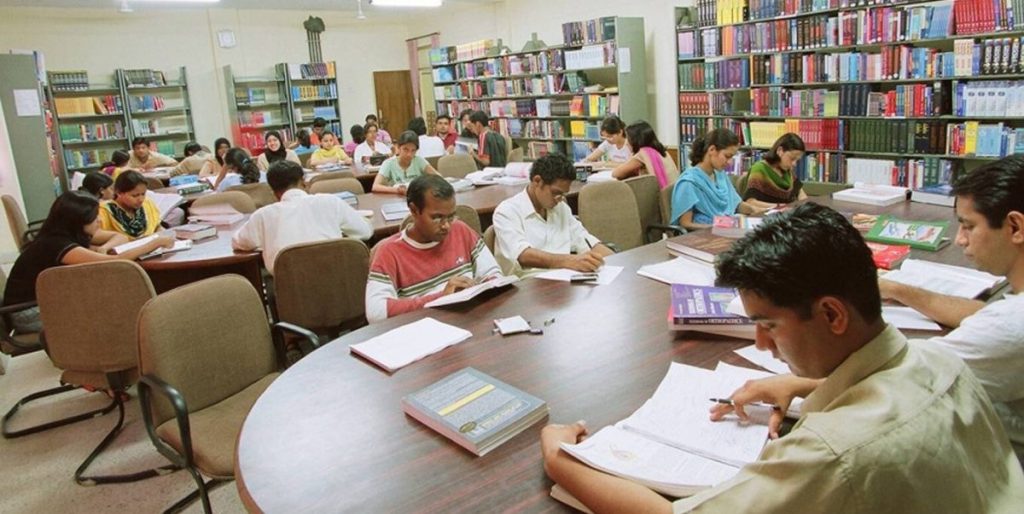
According to WIKIPEDIA, “A library is a collection of materials, books or media that are easily accessible for use and not just for display purposes. It is responsible for housing updated information in order to meet the user’s needs on a daily basis. A Library provides physical (hard copies documents) or digital access (soft copies) materials, and may be a physical location or a virtual space, or both. A library’s collection can include printed materials and other physical resources in many formats such as DVDs, CDs and Cassette as well as access to information, music or other content held on bibliographic databases.”
IMPORTANCE OF LIBRARIES TO MAN
Libraries are said to be the storehouse of culture. If a man is to be known by the company he keeps, society is to be known by the number of good libraries it has. Man’s craving for knowledge is eternal. He wants to know more; he wants to enjoy more. But he cannot always move about for various reasons. He goes to a library and reads books of his choice. Libraries preserve books of various types, old and new. There are also periodicals and daily papers to meet the demands of the people. In all ages, libraries have been considered to be the best medium of public instructions.
The doors of library are exposed to everyone for rewarding the requirement for information. They are run by the government, schools, colleges, and universities. The society members of the neighbouring locality can visit these libraries to boost their information and complete their research.
TYPES OF LIBRARIES
There are different types of libraries, such as public libraries, circulating libraries, private or personal libraries. Of these, public libraries are most important. These are financed either by Government or by public institutions. All readers are allowed to read here. These libraries have two sections-lending and reference. Books are lent out to those who deposit money. Others are allowed to sit a id read books during the period, these are kept open. As libraries spread education, the Government of India have taken up a scheme to establish rural libraries for the benefit of rural people. They sanction annual grants to these libraries in cash or kind. In these libraries, books are stocked to suit the half-literate people of villages.
A FRIEND IN NEED
Government-managed libraries are well equipped and well manned. Only technical men are employed here to help the readers. Quite a large number of scholars, students and members of the public daily attend such libraries for reading and making notes. There are public libraries organised by public institutions. These libraries cater to the needs of a large number of people living in particular localities. Students of schools and colleges also utilise these libraries and derive benefit from them. But these libraries are in bad shape. Government grants to these libraries are not adequate. Public-spirited men now-a-days, are rare. Development of libraries is an important task of a welfare Government. Common people and students get opportunities to read in these libraries. In our country where the percentage of illiteracy is high, these libraries help in expanding the facilities for reading. Public libraries and rural libraries do a lot of good to the localities where they are established. Now the Government has established primary unit libraries, town libraries etc. The Government gives regular grants for the purchase of books and equipment. But still the grants are not adequate. However, they help the public libraries to satisfy the needs and aspirations of the local people.
CONCLUSIONS
So, if we can see deeply a library Builds and helps to connect Community, it Provide Access to the full range of information resources needed to live, learn, govern, and work. It Promote Literacy to both children and adults. It Protect Your Rights to read and offers freedom of information gathering and sharing. People becomes innovative and smart in the company of library, which enhances creation and collaboration.
The term violence refers to the intentional hurt which a person gives to another person in order to fulfill their motive which is to see the other person in pain. Now, the type of violence which we know is the one which is visible to our eyes i.e. if the victim’s body showing an evidence of any kind of hurt , then it is considered to be a violence but what about the mental and emotional trauma that the person(the victim) has to suffer due to this “physical violence”.
We hear the cases of major fights on the road, or any mob outrage , the culprits are charged against various sections which provides punishment for basically only the visual harm but if the mental trauma of the victims is also to be taken into consideration , then the charges pressed will be so many.
Domestic violence in the same way is a term which is constituted to take the women under its shed if they suffer any kind of physical abuse from their husbands or their in-laws. The term domestic refers to anything which is related to the establishment of the family i.e. mainly the issues that happens after marriage as it is when the formation of a family actually starts, traditionally speaking . When a woman gets married in India, she is considered as a multitasking robot and also referred to as Goddess Lakshmi , the Hindu Goddess who symbolises money and prosperity. Until recently I thought that the reason of the reference of a married woman to Goddess Lakshmi is because the arrival of a daughter in law in a family is considered to be auspicious and she is regarded as the carrier of fortune and also she is the carrier of the future generation of the family thus prospering the family with happiness. I was so wrong. The reference to the Holy Goddess of Wealth is because the arrival of a new daughter in law in a family brings a lot of money to the family which the new woman brings in from her family. This money in older terms was refferred to as a ritual, a set of gifts which the Bride’s and Groom’s family and friends gives to the newly married couple in order to help them set their new household. In today’s terms these never ending lists of gifts which commonly includes luxurious items for every member of the family and in the cases when this demand is not meant , the woman has to bear the wrath which sometimes lead to her being burnt alive. The bride is basically seen as a no repayment bank which will solve all the financial problems of the family and the consequences when the expectations are not met are horrific to say the least. If not death, then the hits , rape by other males of the family with husbands consent , continues for a life time.
Not to mention the emotional and mental trauma which a woman has to suffer. She stands at a threshold in these cases because if she dares to escape this turmoil by going back to her parents house, she will labelled as “tainted”, and a thousand other faults will be found out in her which will be humiliating for her family. AND no girl wants their family to face humiliation because of them. This is just one instance of one of the type of domestic violence that is very prevalent in India. Mental and emotional abuse are also a very popular form but not many are aware of it because there is no provision for the law to find the damage to a woman’s mental stability that has been caused by the family she has been married into. Now, the term “affecting the mental stability” does not means that a woman gets completely retarded but the trauma which these instance causes which leads her to question her self worth, her confidence, her judgement and eventually she becomes a puppet in the hands of this patriarchy.
This blog will provide some insights into the causes, affects and the consequences of the mental abuse which a woman has to undergo.
Causes of Mental and Emotional abuse
In India, there are several definitions to define a good wife. These may include her “respectful” sense of dressing which in a traditional way prohibits an exhibition of even an inch of skin except when she is wearing a saree, catering to all the demands of her husband from being his washerperson, cook, maid even his frustration box to leash out his frustration which may include either physical abuse or marital rape. Oh! the term marital rape does not even exists nor in the judiciary(not for woman who are legal adults) nor in the dictionary of the patriarchy. These all things are termed under “wife duties”. Amidst all these we tend to forget that the woman is also a human being with emotions and feelings and is supposed to be respected. Mostly after marriage a woman is made to give up on her career , if she had any( as daughters in India are nothing but a liability who are educated to just financially help their partner if the need arises in future. Though this concept is changing now but is still prevalent for 70 percent of the households) to concentrate better on her family. She is put under constant restrictions and is constantly judgesd for everything she does. This takes the identity of a woman. She starts seeing herself just as a wife , a daughter-in-law, a mother, but never as a person. The snatch of this basic freedom to do the basic things can led to decline of confidence and cause a trauma which even after years still continues to haunt.
This basically comes as a result of the supremacy which one gender wants to show on another. Marriage is a bond of togetherness, and whenever we combine to persons in a closed spaces some compromises have to be made by both the parties to accommodate and live but the problem arises when just the female is expected to change herself.
consequences
This emotional and mental trauma then becomes a sort of family heirloom which is passed from one generation to the other. I call it as a sadist thing to feel one’s peace through the trauma of others. This the biggest consequence of the mental trauma that a woman has to undergo that these all things becomes natural to her and without her even realising the fact that she is becoming a part of the same system she lets the emotion of revenge take over her. It is a revenge cycle which continues where a mother in law tries to dominate her daughter-in-law using all the measures without involving any physical abuse at times, “because this is how it has always been” is their counterargument. Whereas, the mothers who have been dictated all their lives if has no sons to transform this heirloom to their son’s wife, then transfers it to her daughter by being extra dominating and dictating her life to such an extent that she looses all her self confidence, develops self loathe and is left with no esteem. Ironically, these very qualities which sets a human different from an animal is snatched just to have a “long period of marriage”, the words “happiness”, “success of marriage” being hidden. Because in India what matters is the time period of the marriage not the happiness and compatibility of the two individuals sharing this Holy bond.
Every female in India has to suffer some restrictions which comes as a protective measure by the families against the raising of number of crimes against woman but the problem arises when her personal decisions such as the choice of her inner garments are also being dictated upon by the females of her family. When she is made to got through those rude snides questioning her character if she ever as much as laughs with a member of the opposite gender who is not family, when her self dependence is shamed and when she constantly becomes a box for all the frustrations .
Anubhav Sinha’s bollywood directorial THAPPAD starring Tapsee Pannu proves my point of woman being a frustration box no matter what the financial condition of the family is.
What we can do to stop this is STOP PASSING TRAUMA AS A HEIRLOOM. It has to stop at some point otherwise the wrath which it emits will risk the future of even the coming generations.
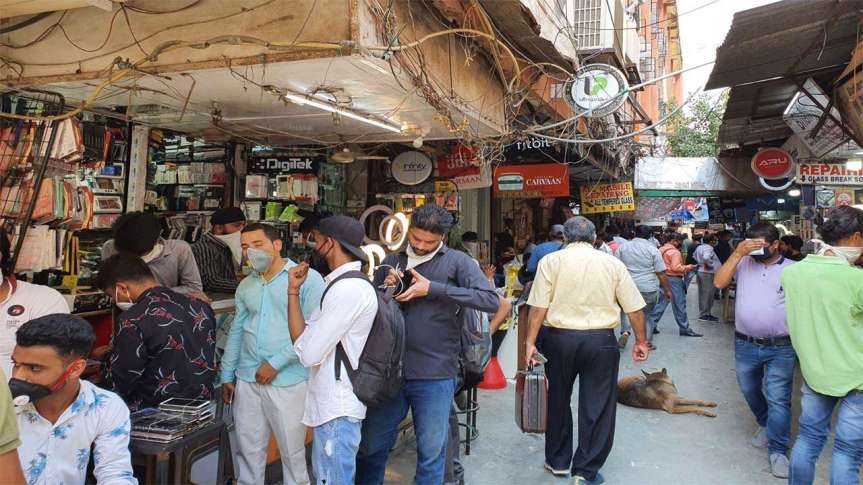
Due to violation of coronavirus protocols Gaffar Market and Naiwala Market of Karol Bagh will remain closed from 10pm today till 10pm on 11 july.
“market shopkeepers, thiyawallahs/vendors, and general public in Gaffar market and Naiwala, Karol Bagh are not following the Covid-appropriate behavior. Due to large footfall, market association and shopkeepers are not able to ensure Covid protocols in the markets in last three days.
“The guidelines/directions of Covid Protocol are being contravened in the Gaffar Market and Naiwala market which may cause super spreading of the coronavirus,” the order said.
The order also stated that the market welfare association of Gaffar Market and Naiwala Market have “failed to ensure the strict compliance of the guidelines of COVID-19”.
The order for closure of markets in Karol Bagh also noted that it is “necessary to take an immediate and stringent action to curtail the spread of the virus and not to let develop any such place as super spreader in larger interest of public”.
Due to flouting Covid norms, Lajpat Nagar, Laxmi Nagar market, Kamla Nagar, Sarojini Nagar and parts of Sadar Bazar were among those shut in recent weeks by the
Delhi Disaster Management Authority(DDMA).
The infection rate, which had reached to 36 percent in the last week of April, has come down to below 0.15 percent now.
Despite fall in daily cases in the last several days, Kejriwal had recently cautioned that the chances of the third wave of COVID-19 pandemic were quite real, while he asserted that his government was preparing on a “war-footing” to combat it.
However, the number of cases have shown a downward trend and the positivity rate too has been shrinking in the last several days. The number of deaths per day, has also been showing a decline in the last couple of days.
Kejriwal earlier said “that the virus is reducing in Delhi slowly and steadily, and I hope it diminishes completely and does not rise again. However, we are not going to become negligent in anyway”, while sounding a tone of caution.
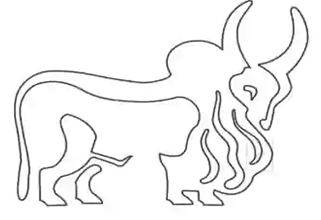
IndusInd Bank was established on 17th April 1994 in Mumbai, Maharashtra. It derived its name from Indus Valley Civilization and is first among New Generation Private Bank in India. It offers Commercial, transaction and Electronic Products and Services. It started its operations with a Capital amount of Rs. 1 billion among which Rs. 600 million was raised by the Indian Residents and Rs. 400 million was raised by the Non-Resident Indians. It was able to grow ceaselessly and dynamically driven by a zeal to offer its customers banking services at par with the highest quality standards in the industry and is known for its continuous updates and introduction of new technology.
Its working on expanding its network of branches across the country and has a customer base of more than 2.5 crores that depicts the trust of people. It had 2453 ATMs and 1,558 branches spread across the country by the end of year 2018 and have more than 2000 branches and 5,000 distribution points by April 2021. It have Representative Offices in London, Dubai and Abu Dhabi and has its largest number of branches in Mumbai followed by New Delhi and Chennai in India.
CSR Mission Statement of IndusInd Bank Ltd
IndusInd Bank believes that ‘Good Ecology is Good Economics’.
With this belief IndusInd Bank sets a mission to continue creating value for all their stakeholders and emerge as a ‘Best-in-Class’ Bank that is committed to sustainable economic growth. They want to ensure that the Bank’s business grows consistently and responsibly, benefiting those they directly serve while also promoting the well-being of their employees, natural environment and the community at large. IndusInd Bank wants to support and design sustainable CSR programs, that primarily empower, and benefit marginalized and weaker sections of society, high-risk and high-stressed communities.
Guiding Principles of IndusInd Bank Ltd CSR Policy
1.Strengthen their governance framework with ethics, transparency and accountability
2.Provide value to consumers through effective stakeholder engagement
3.Promote gender equality, diversity and wellbeing of all employees
4.Respect the protection of internationally proclaimed human rights
5.Engage with Government and Trade & Industry Associations on national and international platforms
6.Build inclusive, healthy and sustainable communities
7.Undertake initiatives to promote greater environmental responsibility
8.Communicate their CSR objectives and goals to all internal and external stakeholders
Today while I was attending my friend’s birthday party, I noticed something that prompted me to write about it. Alongside our group there was another group at this club. They all were easily below the age of twenty but their behavior was totally unacceptable. They were completely drunk and had no regard for the other guests. They were hogging the dance floor and when my friends and I tried to dance in the corner, they deliberately started bumping into us. One of the girls in my group even pushed him away hard but they didn’t budge from their conduct. They continued with their acts and finally we had to give up and get down the dance floor. The level of discomfort we felt during that moment can’t be accurately described. Even though two of the guys of their group came and apologized but doesn’t give them the right to behave like that in the first place. My question is Do people think that being drunk can be an excuse for everything? Why does our youth depend on alcohol to have fun? How can you make people around you uncomfortable and not even care a little?
It seems as if alcohol has become a lifestyle. Somehow consuming alcohol at a young age makes you “cool”. Surveys have shown that 75% youngsters in India consume alcohol before reaching the legal age. This normally starts with “I’ll have a few sips only” and ends up at binge drinking all weekend long. Around 80% of youth have at least tried alcohol once even if they didn’t develop a taste for it. Another factor that has ruined our youth is ‘Peer Pressure’. There are several examples where we can see a youngster following whatever the group says even though he is completely unwilling. As if peer pressure wasn’t enough, FOMO (Fear Of Missing Out) creeps in the minds of the youth. They feel as if they are missing out on something amazing because they see their friends having fun without realizing that their happiness is short lived. And before you know it that first drink turns into the first of many drinks to follow.
Other than the above mentioned reasons, it is a popular belief that kids take up drinking at a young age either because their parents regularly do so or because their parents introduce them to it. Children who take up drinking by following their parents never learn how to drink moderately because they generally do it secretly. On the other hands those who are introduced by their parents can learn to moderate their number of drinks. But the question still remains as to why is the youth so obsessed with drinking at an early age? The only reasons that come to mind are: because they are curious, to make themselves feel good, to relieve stress or to fit it. Do they not realize the risk they are putting themselves into? If they do, is it really worth it?
If you did not know it earlier, let me clarify you that alcohol can make you look extremely stupid especially if consumed without a check. You embarrass yourself, you embarrass the group you came with and in no way it that considered “cool”. In fact it is very disrespectful towards the people who are there for a good time. Drinking before legal age can even get you arrested. How would that be perceived among your peer group who you were trying so hard to impress? If this doesn’t persuade you to stop drinking then maybe when you grow a little older and your health starts to deteriorate, you would realize the hell you put your body through for a very short lived moments of fun.
If you don’t want to drink just say so. Don’t give into this vicious cycle. Stop drinking at every social gathering. If you problem is extreme, talk to an elder. Ask for help. One day you’ll be very thankful you stopped when you did. Don’t let alcohol ruin your youth and create problems for your adulthood. Stop before it becomes an addiction. Stop before having a drink turns into doing drugs. You will realize how your brain slowly loses its function when you feed this poison to your body. Remember, with alcohol the fun is temporary but the consequences are permanent.
In 1900 five of the European Great powers were divided into two armed camps.One camp consisted of the Central powers-Germany, Australia-Hungary and Italy.Under the guidance of Bismarck,they had formed the Triple Alliance in 1882.The understanding was that Germany and Austria would help each other.The other camp consisted of France and Russia.Their alliance was formed in 1894 with the promise of mutual help if Germany attacked either of them.An isolated Britian wanted to break her isolation and approached Germany twice but in vain.As Japan was the ally of Russia,it preferred to ally with Britain (1902).The Anglo-Japanese Alliance prompted France to seek an alliance with Britain (1902).The Anglo-Japanese Alliance prompted France to seek an alliance with Britain to resolve colonial disputes over Morocco and Egypt.This resulted in the Entente Cordiale(1904).In return in the Entente Cordiale (1904).In return for letting the French have a free hand in Morocco, France agreed to recognize the British occupation of Egypt . Britain subsequently reached an agreement with Russia over Persia,Afghnis an and Tibet.Thus was formed the Triple Entente of Britain, France and Russia.
Violent Forms of Nationalism
With the growth of Nationalism,the attitude of”my country right or wrong I support it” developed.The love for one country demanded hatred for another country.England’s jingoism, France’s chauvinism and Germany’s kultur were militant forms of Nationalism,contributing decisively to the outbreak of war.
Aggressive Attitude of German Emperor
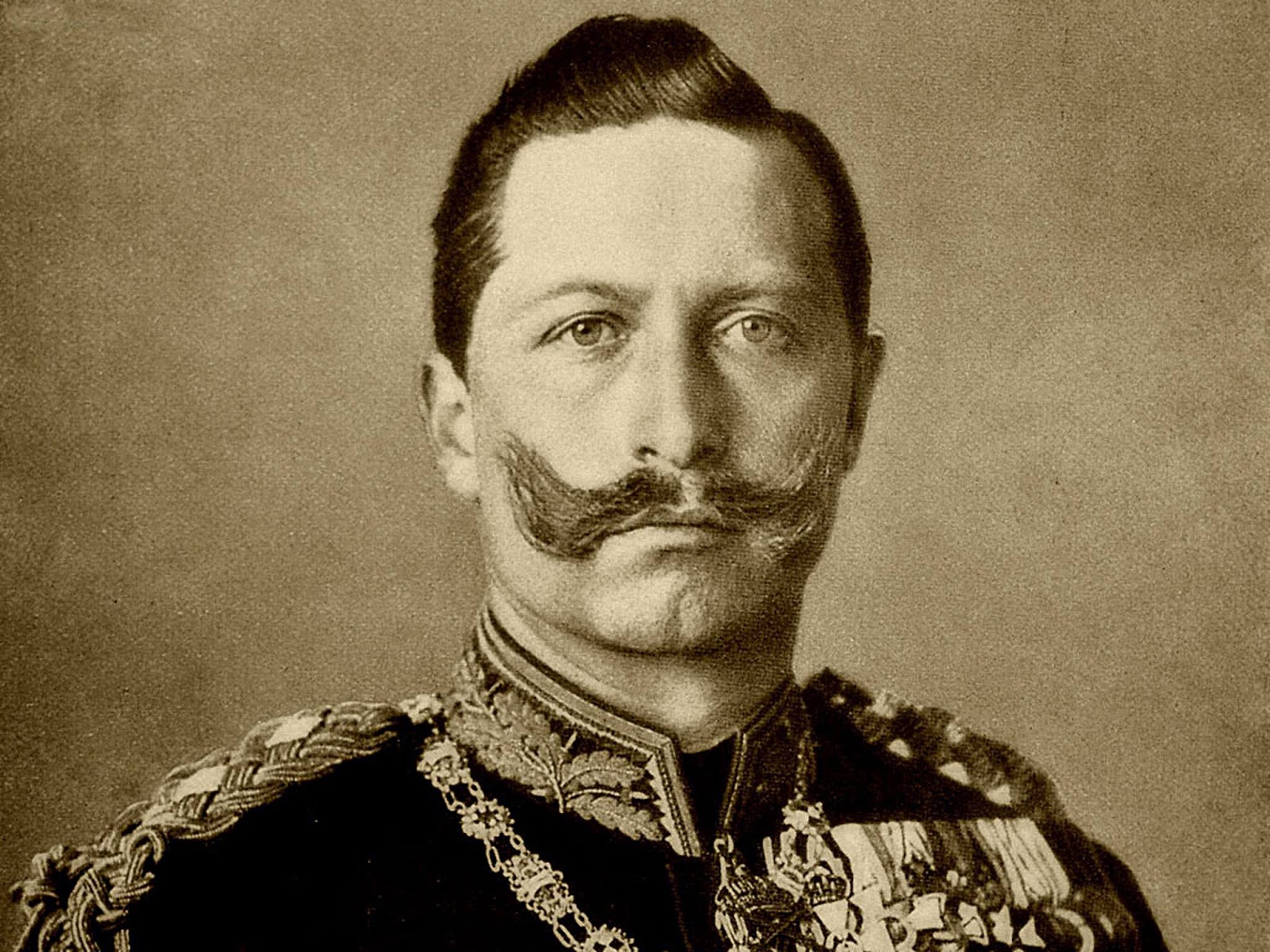
Kaiser Wilhelm ||
Emperor Kaiser Wilhelm || of Germany was ruthlessly assertive and aggressive.The Kaiser proclaimed that Germany would be the leader of the world.The German navy was expanded.The sea being considered a presserve of England ever since Napoleon’s defeat at Trafalgar (1805), Germany’s aggressive diplomacy and rapid building of naval bases convinced Britain that a German navy could be directed only against her.Therfore , Britain embarked on a naval race, which heightened the tension between the two powers.
Hostility of France towards Germany
France and Germany were old rivals.Bitter memories of the defeat of 1871 and loss of Alsace and Lorraine to Germany rankled in the minds of the French.German interference in Morocco added to the bitterness.The British agreement with France ovr Morocco was not consented by Germany.So Kaiser Wilhelm|| intertionally recognissed the independence of the Sultan and demanded an international of the Sultan and demanded an international conference to decide on the future of Morocco.
Imperial power politics in the Balkans
The young Turk Revolution of 1908 ,an attempt at creating a strong and modern government in Turkey, provided both Austria and Russia with the opportunity to resume there activities in tha Blankans.Austria and Russia met and agreed that Austria should annexe Bosnia and Herzegovina,while Russia should have freedom to move her warships, through the Dardanelles and the Bosporus ,to the Mediterranean.sokn after this , Austria announced the annexation of Bosnia and Herzegovina.Austria’s action aroused intence opposition from Serbia.Germany gave Austria firm support.Germany went to the extent of promising that if Austria invaded Serbia and in consequence Russia helped Serbia, Germany would come to Austria’s assistance.The enmity between Austria and Serbia , Germany would come to Austria’s assistance.The enmity between Austria and Serbia led to the Outbreak of war in1914.
The Balkan wars
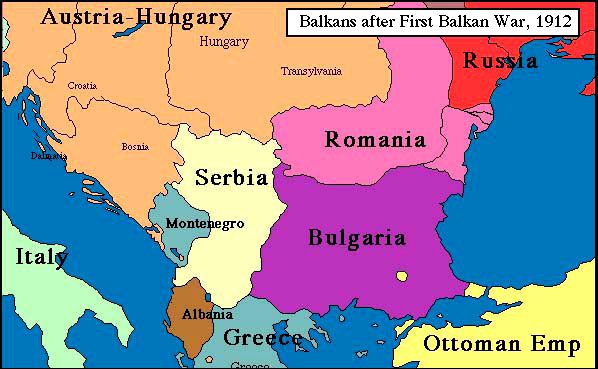
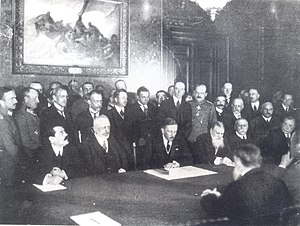
Turkey was a powerful country in the south west of Europe in the first half of eighteenth century.The Ottoman Empire extended over the Balkans and across Hungary to Poland .The Empire contained many non-Turkish people in the Balkans.Both the Turks and their subjects of different nationalities in the Balkans indulged in the most frightful massacres and atrocities.The Armenian genocide is a frightful example.Taking advantage of the political and economic instability of the Turkish Empire from the second half of the eighteenth century,Greeks followed by others began to secede,one after another,from Turkish control.Macedonia had a mixed population.There were rivalries among Greece ,Serbia,Bulgaria and later Montenegro for the control ofbit.In March 1912 they formed the Balkan League.The League attacked and defeated Turkish forces in the first Balkan war (1912-13). According to the Treaty of London signed in May 1913 the new state of Albania was created and the other Balkan states divided up Macedonia between them.Turkey was reduced to the area around Constantinople.
Treaty of Bucharest
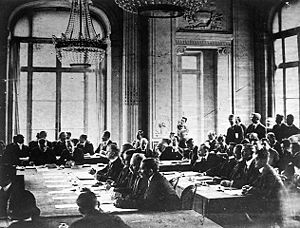
The division of Macedonia, however,did not satisfy Bulgaria.Bulgaria attacked Serbia and Greece.But Bulgaria was easily defeated.The second Balkan war ended with the signing of the Treaty of the Treaty of Bucharest in August 1913.
Immediate cause
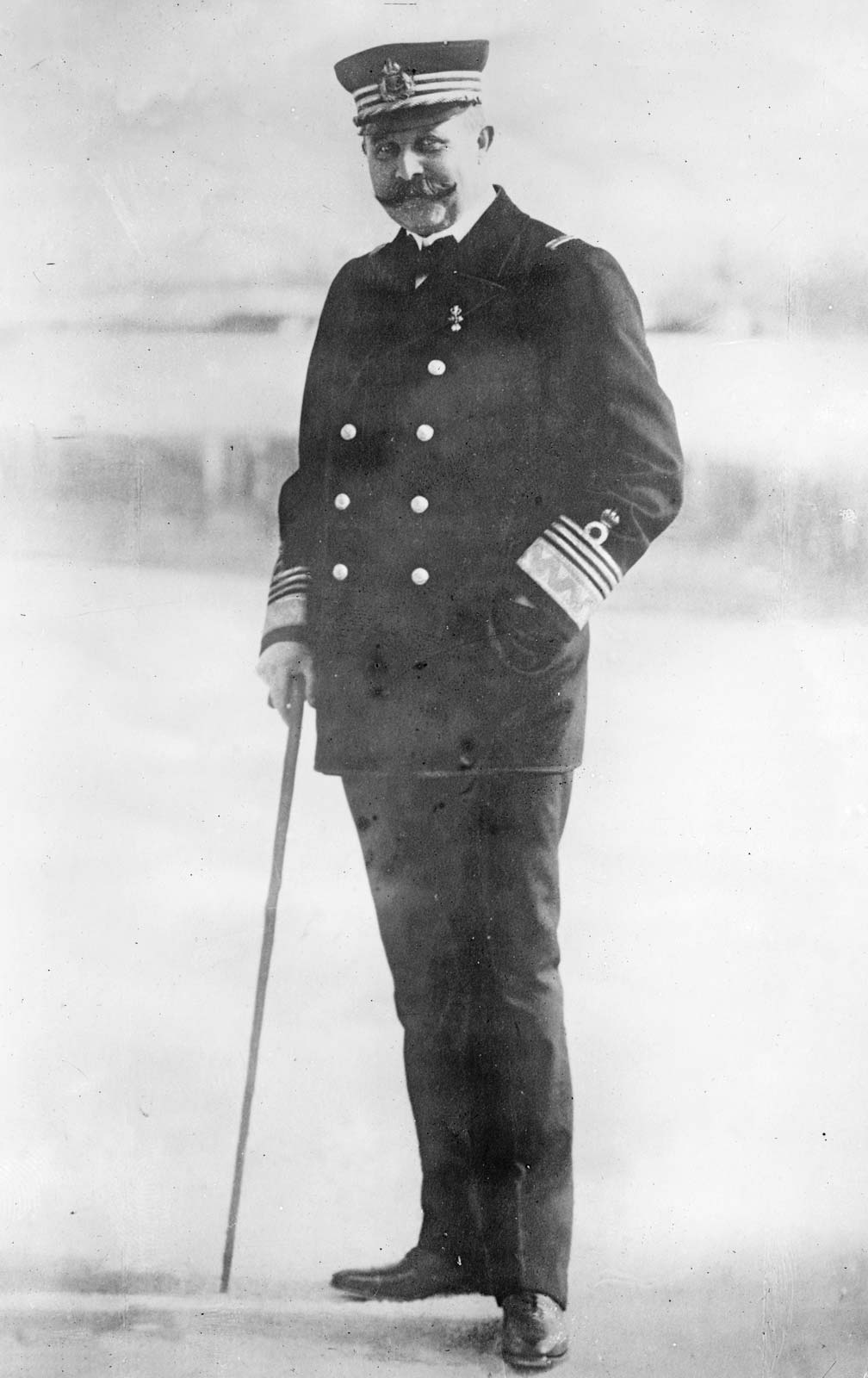
Franz Ferdinand
The climax to these events in the Balkans occurred in Bosnia.On 28 June 1914 the Archduke Franz Ferdinand,nephew and heir to Franz Joseph, Emperor of Austria-Hungary,was assassinated by Princip ,a Bosnian serb.Austria saw in this an opportunity to the eliminate Serbia as an independent state.Germany thought that it should strike first.It declared war on Russia on 1Augest . Germany had no quarrel with France,but because of the Franco-Russia Alliance ,the German army which was planning a war against both France and Russia wanted to use the occasion to its advantage.The German violation of Belgian neutrality forced Britain to enter war.
Digital India initiative is one the key initiative launched by government of India on 1st July 2015. The initiative is counted among one of the most prestigious projects just like made in India, Swach Bharat Abhiyaan etc. it consists of some major objective towards the development of better services and infrastructure in terms of digital modernisation of the country. It comes under the ministry of Electronics and information and ministry of finance, officially launched by Prime minister of India Shree Narendra Modi. it has 3 main area of focus which includes: • The utility of Digital infrastructure for the citizens of India Improvement of digital infrastructure so that the citizens can utilise the services of internet. • Internet and other services requirement There are areas where people still do not have access to basic internet services, and additionally providing all the advance services to the population of the country. • Digital empowerment It refers to overall empowerment that will occur when the digital structure strengthens in the country. The initiative serves multiple purpose, starting from improving the basic facilities to introducing modern technology at various level. the initiative stands upon many important aspects which are: • Broadband highways • IT for all • Electronic manufacturing • E governance • E Kranti etc These aspects have their own significance in long run and can bring the much-needed changes in the country. Digitisation of the already existing facilities for the convenience of people and implementing new changes and development in the country. Implementing a big initiative like digital India on a very large scale takes to answer a lot of challenges. Highlighting the challenges which occurred are: • Adaptation adapting to the ongoing and upcoming changes is going to be a big task for many Indians, it is also a time taking process. • Illiteracy The portion of population which is not well educated will find is very challenging, as they are not even aware about the basics. To make them aware and making them digitally literate is a major challenge. • Providing better facilities to all India has a huge population, ensuring that each and every one has access to the latest facilities and convenience is important.
Conclusion Digital India has proven beneficial for many specially the ones who had minimal access to such facilities, this is important from the perspective of both economic development and individual development. Technology, if used wisely can-do miracles in different sectors like education, employment, agriculture etc. the ongoing pandemic crisis has made us totally dependent on laptops and smartphones. Every developing country aim is to be technologically advanced in the coming years is a common goal. Even the developed nations are getting advanced each day.
Thus, an initiative like this can support and enhance the development taking place in the country. Despite, the challenges faced progress is visible. The initiative is already running since 2015 and within the reach of this initiative many changes are successfully implemented too.
Every student wants to join a dream college or university.
After schooling, we desire to join a top college or university for the security of our feature
Is a college the same thing as a university? What does “liberal arts” mean? Why are some colleges called public and others private? Here are the basics of the types of colleges.
Let me know about NIT AGARTALA
Institute is committed to developing highly competent young Engineers, Scientists, and Management Professionals to cater to the ever-increasing techno-managerial needs of national and international standards fulfilling professional ethics and societal commitment.
MISSIONS
• To produce techno-managerial human resources in line with global needs, offering a state-of-the-art facility, research, and engineering and allied disciplines.
• To enhance the effectiveness of technical education with innovative systems and devising a mechanism to facilitate the application of research findings to solve real problems of industries/academics.
• To nurture and sustain an academic ambience conducive to the development of intellectually capable and committed professionals so that effective growth is obtained for the region’s economic development and the nation as a whole.
• To establish as the corridor of higher education for the South East Asian countries.
EDUCATION SYSTEM
Presently the Institute offers eight UG courses and PG courses in several fields along with Post Doctoral Fellowships. This Institute is autonomous under NIT being act passed by the parliament.
The Institute recently introduced a new curriculum in IITs where more elective subjects are being offered to make the system flexible. Previously, the Institute used to follow the mark based system of evaluation, but have been switching over to a credit-based system to keep track of the global evaluation methods. Industrial training, Undertaking projects are parts of the education system and students are also encouraged to take various activities for social development through NSS and NCC.
Initiatives
The Institute recently has been converted from State Engineering College to National Institute of Technology. The total seats have been increased from 250 to 420 for the academic session 2007-2008. Recently three Under Graduate courses has been introduced in Electrical & Electronics Engineering, Transportation Engineering and Production Engineering. The Civil Engineering Department will start a PG programme in Structural Engineering to fulfil the requirement of the State. The nonresidential campus is to be made residential with the reopening of two boys hostels and one girl’s hostel for the students admitted for the session 2007-2008. A master plan is under preparation for 335 acres of land where a new campus will be built with modern facilities for the overall requirement of the Institute. The Institute is getting a 33 VK dedicated power supply through Tripura State Electricity Corporation Limited for uninterrupted power supply in the campus. The R. D. Department of Govt. of Tripura took total renovation work of the existing buildings after conversion to NIT. The Institute has also obtained a grant of 12 crore rupees from DoNER for the development of infrastructures like the extension of the Library Building, an extension of the Academic Building, the Centralized Computer Centre, a new water treatment plant and boys and girls common room. The campus is now totally connected through Wi-Fi with WiMAX wireless backbone and all e-journal facilities are available in the digital library of NIT Agartala.
Sensors can be found all over the world. They may be found in our homes and offices, as well as retail malls and hospitals. They’re built into cellphones and play a key role in the Internet of Things (IoT). Sensors are the IoT devices’ front-end. In the Internet of Things, they actually mean “things.” Their primary responsibility is to collect required data from the environment and transmit it to databases or processing systems. Because they are the primary front-end interfaces in a vast network of other devices, they must be individually identifiable by their IP address. Sensors gather real-time data and can be self-contained or controlled by the user. Sensors are vital to the success of many modern enterprises. They can alert you to possible issues before they turn into major issues, allowing firms to undertake preventative maintenance and avoid costly downtime.
Gas sensors, water quality sensors, moisture sensors, and other sensors are examples of sensors.
Processors
Processors, like computers and other electrical systems, are the IoT system’s brain. Processors’ primary function is to turn raw data acquired by sensors into useful information and knowledge. In short, its role is to provide intelligence to the data. Applications can readily manage processors, and one of their most essential functions is data security. They are in charge of data encryption and decryption.
Processors built within microcontrollers, embedded hardware devices, and other devices may process data.
Gateways
A gateway for the Internet of Things (IoT) is a physical hardware or software program that connects the cloud to controllers, sensors, and intelligent devices. An IoT gateway, which can be either a specialized hardware appliance or a software application, is responsible for transferring data between IoT devices and the cloud. An intelligent gateway or control tier is another name for an IoT gateway. The primary function of gateways is to route processed data to appropriate databases or network storage for suitable use. In other terms, the gateway facilitates data transmission. IoT systems require communication and network access to function.
LAN, WAN, PAN, and other gateways are examples.
Applications
Another end of an IoT system is applications. Because it is adaptable to practically any technology capable of giving useful information about its own operation, the execution of an activity, and even the environmental conditions that we need to monitor and manage at a distance, IoT technologies have a wide range of applications. Many organizations from many industries are now using this technology to simplify, enhance, automate, and control various operations. Applications make good use of all acquired data and offer users an interface through which they may interact with it. These apps might be cloud-based and are in charge of rendering the data acquired. Applications are controlled by the user and serve as delivery points for certain services.
Smart home apps, security system control apps, industrial control hub apps, and so on are examples of applications.
The raw data collected by the sensors is transmitted to embedded processors in the IoT Building Blocks. Processors convert raw data into useful information, which they subsequently send to remote cloud-based apps or database systems via gateway devices. The data is subsequently transferred to the apps for effective application and data analysis through big data.
The Paris Agreement is a legally binding international treaty on climate change. It was adopted by 196 Parties at COP 21 in Paris, on 12 December 2015 and entered into force on 4 November 2016.
Its goal is to limit global warming to well below 2, preferably to 1.5 degrees Celsius, compared to pre-industrial levels.
To achieve this long-term temperature goal, countries aim to reach global peaking of greenhouse gas emissions as soon as possible to achieve a climate neutral world by mid-century.
How does it work ?
The Paris Agreement works on a 5- year cycle of increasingly ambitious climate action carried out by countries. By 2020, countries submit their plans for climate action known as nationally determined contributions.
In their NDCs, countries communicate actions they will take to reduce their Greenhouse Gas emissions in order to reach the goals of the Paris Agreement. Countries also communicate in the NDCs actions they will take to build resilience to adapt to the impacts of rising temperatures.
To better frame the efforts towards the long-term goal, the Paris Agreement invites countries to formulate and submit by 2020 long-term low greenhouse gas emission development strategies (LT-LEDS).
LT-LEDS provide the long-term horizon to the NDCs. Unlike NDCs, they are not mandatory. Nevertheless, they place the NDCs into the context of countries’ long-term planning and development priorities, providing a vision and direction for future development.
How are countries supporting one another ?
The Paris Agreement reaffirms that developed countries should take the lead in providing financial assistance to countries that are less endowed and more vulnerable, while for the first time also encouraging voluntary contributions by other Parties. Climate finance is needed for mitigation, because large-scale investments are required to significantly reduce emissions. Climate finance is equally important for adaptation, as significant financial resources are needed to adapt to the adverse effects and reduce the impacts of a changing climate.
The Paris Agreement speaks of the vision of fully realizing technology development and transfer for both improving resilience to climate change and reducing GHG emissions. It establishes a technology framework to provide overarching guidance to the well-functioning Technology Mechanism. The mechanism is accelerating technology development and transfer through it’s policy and implementation arms.
Not all developing countries have sufficient capacities to deal with many of the challenges brought by climate change. As a result, the Paris Agreement places great emphasis on climate-related capacity-building for developing countries and requests all developed countries to enhance support for capacity-building actions in developing countries.
How it tracks progress made by countries ?
With the Paris Agreement, countries established an enhanced transparency framework (ETF). Under ETF, starting in 2024, countries will report transparently on actions taken and progress in climate change mitigation, adaptation measures and support provided or received. It also provides for international procedures for the review of the submitted reports.
The information gathered through the ETF will feed into the Global stocktake which will assess the collective progress towards the long-term climate goals.
The mirror is the real you, where you run to prove it not. Not only mirror shows your external appearance also it shows how your thoughts and attitude be. Even a accused can confess his feel of guilt on the court, but a man doesn’t on mirror. Lot of people don’t ever look at windows, as they try to hide their original in themselves.
The mirror can question you anytime, it has the power to touch your soul where nobody cannot. The mirror influence either you in good or bad ways but it runs through you. Mirror knows a demon behind your smile and an angel behind your anger.
The mirror smiles on you if you smiles at seeing it or it cries if you’re in tears. It will not only helps you to beautify your skin,hair it also influences your habit. If you’re in love, then definitely you’ll always with a mirror. If you’re in depression, then you’ll never take a look on it.
Literally you’re naked before the mirror, your cunning skills, your intelligence, your knowledge, your everything fails before a mirror. You can’t hide anything from it. So try to be yourself whatever the situation demands. You should be only,the you.
CSR is the process by which an organisation thinks about and evolves its relationship with stakeholders for common goods and demonstrate its commitment in their regard by adoption of appropriate business process and strategies.
CSR is no charity or mere donations but is a way of conducting business, by which corporate entities visibly contribute to social good. Socially responsible companies use CSR to integrate economic, environmental and social objectives with companies operations and growth.
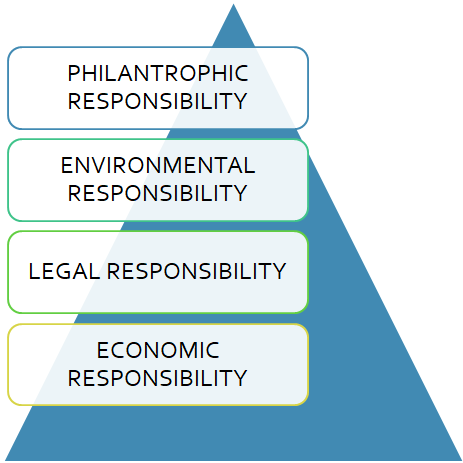
TYPES OF CORPORATE SOCIAL RESPONSIBILITY
1.Philanthropic Responsibility
At the top of the pyramid, occupying the smallest space is Philanthropic Responsibility. Businesses have long been criticized for their carbon footprint, their part in pollution and exploitation of natural resources. To counterbalance these negatives a business stands a responsibility to “give back” to the community they take from.
Philanthropic responsibility include things such as:-
i) Funding educational programs
ii) Supporting health initiatives
iii) Donating to causes
iv) Supporting community beautification projects
2. Environmental Responsibility
Environmental CSR aims to reduce any damaging effects on the environment from operations of business.
It may focus on:
1.Energy use
2. Water use
3. Waste Management
4. Recycling
5. Emissions
6. Eco-friendly office and business travel policies
Advantages of Environmental CSR
1.Green CSR can reduce business risk
2. Improve reputation
3. Provide opportunities for cost savings
Even the simplest energy efficiency measures can generate savings and make a difference for firm.
3. Legal Responsibility
Legal responsibilities are not only liable to the individuals in the society but also to the businesses in the society. As business is an entity itself, it must also follow laws and rules.
Every business has a responsibility to operate within the boundaries set by the various commissions and agencies at every level of the Government. These rules and regulations are set for maintaining balance and the greater good of the society.
A law-abiding enterprise is a socially responsible enterprise as well. The business is free to do business however it wants but only within the boundaries of regulations of various laws
Some Laws are as follow:-
1. Labour Law
2.Environmental Law
3. Criminal Law
For example, it’s a business’s duty to pay taxes to the government and keep its account books clean as it helps the government to track the economic state of the company.
4. Economic Responsibility
The first and most important responsibility of a business is to be profitable. It is the foundation and base on which all other responsibilities rest. Without profit, the company would not be able to pay their workers, employees will lose their jobs even before the company starts CSR activities.
Being profitable is the only way for a company to be able to survive long term, and benefit society. Additionally, this also means that it is a company’s duty to produce goods and services that are needed/wanted by the customers, at a reasonable price.
Economic responsibility is an interconnected field that focuses to strike a balance between business, environmental, and philanthropic practices.
Performing this responsibility companies try to find out a solution that can facilitate their business growth and generate profits by benefiting the community and society.
We’ve been through this pandemic since 2019. It’s only in January 2020 we came to know about it, too late to take any precautions as such. The nation started to witness a huge number deaths and got to understand the severity of this virus. The only option left for the government was a nationwide lock down. On the evening of March 24, 2020, the government of India under Prime Minister Narendra Modi, announced a nationwide lockdown for 21 days, i.e till 14th April 2020, but was extended further for months.
This affected the nation in a drastic manner with the downfall in the economy of the country, rise in unemployment, poverty, theft and robbery. Everything brought into the nation a complete chaos. It not only affected the country economically but also the mental health of the people. The suicide rate during the pandemic has increased drastically. We humans need companions. Maintaining social distance and not to talk and meet anyone in person is really difficult for a normal human. It’s just that we are not use to, though it has become a new normal now.
The education system collapsed completely during this pandemic. Online mode of education can never replace the offline mode, no matter how much technically capable we become. Never in the history had matriculation and intermediate examination be cancelled. Now as it has, students have taken things so lightly that examination don’t fear them anymore. Children now, are the future of our country. What will these students grow up and do? How will our country develop further? Will our country be safe in their hands? We don’t have an answer to these. This pandemic no matter how soon we wish to end, is going to have a long term effect on everybody’s life.
‘COVID third wave to hit India in August’
A research report has predicted that India may witness the third wave of COVID-19 in mid-August 2021, raising the alarm bells for policymakers and citizens. The research claims that the COVID third wave peak will arrive in the month of September 2021. According to the SBI report, the global data shows that on average, peak COVID-19 cases reached during the third wave are nearly twice or 1.7 times those from the second wave of the pandemic.
Are we ready for the next wave to hit? Everything that’s happeningto happen once again?
No, right? The people of our country are not at all, though the government is arranging for beds, oxygen and all other necessities. The people on the other hand are planning trips and vacations. Just a month ago, people were struggling to get oxygen and a bed at the hospital. Now the same people are struggling to get rooms at a resort in Manali.
India registered 43,393 new COVID-19 cases today from peak of 4 lakhs in the 3rd week of May. 44,459 recoveries, and 911 deaths in the last 24 hours, as per the latest update by the Health Ministry this morning. As per the data shared by the Ministry of Health and Family Welfare (MoHFW), there has been been a slowdown in the downward trend of daily COVID infections and a slight increase in the positivity rate. Yet, third wave is knocking the door. Beware!
Vaccination
The only way you can be a little safe during the third wave is through vaccination. Though it’s very difficult to get your slots booked, try and vaccinate yourself as soon as possible. Vaccination too cannot protect you from the virus completely. Go out only if necessary and wear masks properly. It’s better to stay away from crowded places to avoid being caught by the virus.
Climate change encompasses not only rising average temperatures but also extreme weather events, shifting wildlife populations and habitats, rising seas, and a range of other impacts. All of those changes are emerging as humans continue to add heat-trapping greenhouse gases to the atmosphere, changing the rhythms of climate that all living things have come to rely on.
The “greenhouse effect” is the warming that happens when certain gases in Earth’s atmosphere trap heat. These gases let in light but keep heat from escaping, like the glass walls of a greenhouse, hence the name. humans have increased the amount of carbon dioxide in the atmosphere by more than a third since the Industrial Revolution. Changes that have historically taken thousands of years are now happening over the course of decades.
EFFECTS OF CLIMATE CHANGE ON OUR FUTURE
The direct consequences of man-made climate change include:
rising maximum temperatures
rising minimum temperatures
rising sea levels
higher ocean temperatures
an increase in heavy precipitation (heavy rain and hail)
shrinking glaciers
thawing permafrost
The indirect consequences of climate change, which directly affect us humans and our environment, include:
an increase in hunger and water crises, especially in developing countries
health risks through rising air temperatures and heatwaves
economic implications of dealing with secondary damage related to climate change
increasing spread of pests and pathogens
loss of biodiversity due to limited adaptability and adaptability speed of flora and fauna
ocean acidification due to increased HCO3 concentrations in the water as a consequence of increased CO₂ concentrations
the need for adaptation in all areas (e.g. agriculture, forestry, energy, infrastructure, tourism, etc.)
Exercise is the miracle cure we have all been waiting for. It is free, easy to start, has few side effects when done properly, and does not need a prescription. If exercise were a drug, it would be the most cost-effective medicine of all time.
Being physically active has an overwhelming number of attached benefits, such as helping you maintain a healthy weight, strengthening your heart, improving lung function, and reducing your risk for coronary heart disease. Furthermore, physical activity lowers your risk of depression, cognitive decline, diabetes, and cancer.
1.RunKeeper:
RunKeeper tracks walks, runs, and any other physical activity. From the casual stroller to the 5K runner and those building up to a marathon, this GPS app boasts a community of 50 million users and is suitable for everyone. You can build, save, and discover new routes with GPS to keep your workout stimulating.
Whether your goal is to train for a race, lose weight, orhit a particular pace target, RunKeeper can help you to plan your route to get there. The My Plan dashboard provides custom training plans based on your answers to a series of questions, or there are ready-made schedules that can be selected.
It is easy to stay motivated with RunKeeper. You can join challenges to push yourself, win rewards for your workouts, and share your progress with friends. You can also create your own challenges, invite friends to join you, and encourage and cheer each other on along the way.
2. Strava:
Strava aspires to connect the world’s athletes by providing an inspiring experience minus the junk posts you might find on other social networks. They say that you might join Strava for the app’s tracking ability, but you will stay for their motivating and competitive community. Strava is our top pick for social training.
Strava’s community involves millions of cyclists, runners, active adventurers, and pros that record their activities. Strava’s activity tracking provides key statistics such as speed, pace, distance, elevation gained, and calories burned during and after exercise. An interactive map of your activity is also displayed.
You can compare your performance with other users and connect with the community, as well as share highlights of your activity, stories, and showcase photos of the best moments from your run or ride. Encouragement and motivation can be gained or given through comments and kudos. A bit of friendly competition can also be injected into your workout by shooting for the best time on the leaderboard.
3. Yoga Studio:
Yoga Studio is the most highly recommended yoga app and for a good reason. With more than 70 ready-made yoga and meditation classes with levels ranging from beginner to advanced and lasting from 15 to 60 minutes, there is something for everyone.
You can customize classes and choose whether you want to focus on strength, balance, flexibility, relaxation, or a combination of all four. The commentary provides clear and easy-to-follow instructions on how to do a pose and how to move from one pose seamlessly to the next.
With step-by-step instructions of more than 280 poses, plus their benefits, modifications, variations, and cautions of those poses, you have an instant yoga library in your pocket. You can also sync classes with your phone calendar to make sure you can fit regular yoga practice into your busy schedule.
4. Sworkit:
Sworkit is a simple and customizable workout app rated number 1 by the American College of Sports Medicine for quality of instructional exercise standards. Sworkit has delivered more than 40 million workouts to people of all levels of fitness.
After entering your personal data, you can select your motives and goals to make sure every second counts. The workout dashboard introduces numerous exercises for strength, cardio, yoga, and stretching demonstrated by your coach. Individual exercises can be viewed using the custom dashboard to compile your personalized workout.
You can choose workout plans to become “Leaner,” “Fitter,” or “Stronger,” and each of the three categories contain workouts, which are free for 7 days, for the beginner, intermediate, and advanced.
5. J&J Official 7 Minute Workout:
The J&J Official 7 Minute Workout is a science-based workout method designed by Chris Jordan, director of exercise physiology at the Johnson & Johnson Human Performance Institute. The app is centered around research on HIIT and circuit training that shows that short bursts of hard exercise with short recoveries can improve aerobic fitness quickly.
Setup is fast. You can jump straight into a 7-minute workout, or 9.07 minutes with a warmup. Swiping between workout views on the slick interface displays time, video, or music, which can be selected from your phone music library. You can also give a thumbs up or thumbs down for exercises that you like or dislike.
Browsing through the video tutorials teaches you how to perform each of the 72 exercises safely and effectively. Your progression is tracked in the performance dashboard to indicate the days, number of cycles completed, and effort. A snapshot of your training can be shared with your friends to help keep you motivated, or perhaps to involve a little healthy competition.
6. Couch to 5K:
Couch to 5K helps you go from couch potato to running 5K in just 9 weeks by following their easy and fun training plan. The app is designed for complete beginners to spend around 20 to 30 minutes working out, three times per week, to get 5K-ready.
The race training tools allow you to log your workouts and share progress on Facebook. Your distance and pace progress can be monitored in the graphs section, and workouts can be manually entered if you train on a treadmill.
The app syncs with your phone’s playlists so that you can listen to your favorite tracks while running.
7. JEFIT: Workout Tracker Gym Log:
JEFIT is the essential app for gym-goers. Say goodbye to pen and paper for good, and use JEFIT to log the weight and repetitions on each gym machine in one-click. JEFIT enables you to track your workout routines and your rest time, and log and graph all body measurements as you progress.
If you are a gym beginner, JEFIT provides you with more than 60 routines devised by the JEFIT team, or you can access more than 2,000 community-created plans to get you started. An exercise dashboard displays an excess of 1,300 exercises for weight lifting equipment and cardio machines, and it provides visual step-by-step instructions on how to complete the exercises, as well as useful tips.
JEFIT has an active workout community. There are millions of other users to connect with, or you can add friends to keep you motivated and on track. You can share your training progress with the community and compare statistics.
8. Zombies, Run!:
Zombies, Run! is an immersive running game and audio adventure. Upon installation, you are presented with a story detailing that you are runner en route to one of humanity’s last remaining outposts after the zombie epidemic. Your job is to gather supplies, rescue survivors, and defend their homes.
By running in a park, walking trails, or even jogging on a treadmill, you can save hundreds of lives and discover the truth about the zombie apocalypse. Your mission and music channels play through your headphones, and if you are chased by zombies, you must speed up.
The first four missions are free, and a new mission can be unlocked each week. Upgrading to Pro unlocks unlimited access to more than 260 missions and interval training. If you want to get your heart racing and have an adrenalin rush, this is the app for you.
9. Charity Miles:
If you fancy making a real difference with your training, Charity Miles is for you. By going out to grab a coffee, walking your dog, biking around the neighborhood, or shoveling some snow, not only will your health benefit from being physically active, but charities will also benefit too.
On setup, you can select from more than 40 charities to support. Once you start your activity, you are sponsored by a brand to complete your task. Your activity, distance, duration, and the total amount earned by the community for your chosen charity is displayed on the dashboard.
As all physical activity contributes to charity, you will be motivated to go that extra mile and move more. As a bonus, you will also increase your fitness levels and improve your health. The more steps you do, the more you earn; “Every Mile Matters.”
10. CARROT Fit:
CARROT Fit is the fun way to get fit with your sadistic computer-generated coach. CARROT has one goal – “to transform your flabby carcass into a Grade A specimen of the human race” – and will stop at nothing to achieve her objective. CARROT bribes, inspires, threatens, and ridicules, saying, “You will get fit – or else!”
The app is based on the same 7-minute science-based method as the J&J Official 7 Minute Workout. However, those 7 minutes are sweat-and-pop-culture soaked, involving activity such as Celebrity Face Punches, Dragon Mating Dances, and Mt. Doom Climbs. You can take part in 30 seconds of punishing exercise, followed by 10 seconds rest, “just in case you need to hydrate, catch your breath, or vomit into a bucket.”
CARROT tracks how many steps you have taken and your weight loss, as well as displays your workouts on a calendar. CARROT will pass judgment on your progress. If CARROT is upset by your progress, her harsh demeanor has a 74.9 percent chance of making you cry. However, if CARROT is impressed by your progress, she will reward you with app upgrades and permission to watch a friend eat a bag of potato chips, and she may even present you with cat facts. Lucky you!































 Eduindex
You must be logged in to post a comment.