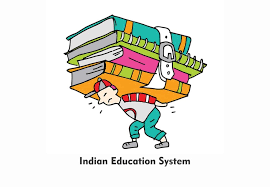
Indian Education System

Education plays an important role in the development of an individual and making him a knowledgeable citizen. It is the education that makes an individual self-reliant, helps to suppress the social evils and contribute towards the development of the society and nation as a whole. Education helps in unravelling the mystery of nature. It enables us to understand and improve the working of our society. It creates conditions for a better life. Education brings out the capabilities to fight injustice happening in society. Every individual has the right to education. 

Indian Education is one of the largest and complex education systems in the world along with China. India is committed to providing basic education to its citizens, the framework of which is defined in the National Policy of Education. Elementary education is now compulsory in India. At the time of Independence, only 14% of India’s population was literate. Now after so many decades since Independence, the number of literates has increased by fivefold.

History of Education System

The history of Indian education system comes from the times of Ramayana and Mahabharata. The historic Indian education system is also called the Gurukula system. There were gurus then who are now known as teachers and shishyas who are called students now. The gurus and the shishyas lived together under one roof in Gurukula until the completion of their education. The shishyas were expected to help the guru in all the daily chores as part of their learning. The children belonging to higher strata of the society were taught all the subjects from Sanskrit to Holy Scriptures and mathematics to metaphysics by the gurus. The Gurukulas during those times focused on the practical aspects of life. The students were taught in the open classroom in the surrounding area of nature. This early system of education in India continued for many years until the modern education system came into the picture in the nineteenth century.

In the early 19th century, during the British period, the modern education system was brought into our country by Lord Thomas Babington Macaulay. The basic strength of this modernized education system was the examinations and a well-defined curriculum, which gave importance to subjects like science and mathematics and subjects like philosophy, metaphysics were given a back seat. The brick and mortar classrooms replaced the open classrooms in the Gurukulas. The essence of the guru shishya bond was taken over by a more formal relationship between the teacher and the student. To understand the progress of any student, examinations were conducted at frequent intervals. The focus of the education system shifted from learning to memorizing of the concepts to score good marks in the examinations.

Problems of Indian Education System

Over a period of time, it has been observed that there are many loopholes in the system of education in India. Instead of understanding the concepts, students started cramming and memorizing the lessons. Knowledge is given a backseat and scoring in high rankings takes importance. The modern parents have tuned their mindsets accordingly and their goal is to ensure that their children score good marks instead of acquiring knowledge right from the primary level. 

Private schools and colleges have been rapidly increasing in the country but the results produced by them are far beyond satisfactory. It has also been observed that the quality of teachers deteriorated with the passing of time. Our examination system is responsible for the wide skill gap. India is producing lakhs of engineers and professionals every year but only a fraction of this number is actually getting employed. This is because the Indian examination system focuses more on scoring good percentages rather than the actual continuous comprehensive evaluation. 

Research and development, which should be the cornerstone of our system, are given the least importance. The private schools and colleges focus on the admission of more students and are least interested in the quality of their education. This is the major reason why the faculties and the teachers lack skills and specialization. This is quite evident from the fact that a single professor is assigned to teach multiple subjects. 

How Can We Improve the Indian Education System?

First and most importantly we should improve the grading system. Rote learning should be discouraged completely. Teachers and faculties should focus more on the analytical skills of the students and grade them accordingly. There should be more focus on comprehensive evaluation instead of scoring only good marks. Workshops must be organized for teachers on a regular basis to keep them updated about the latest developments in the sector of education. At the same time, the curriculum should be reframed according to the present needs of education in India. 

The payroll structure of the teachers and the faculties especially in the government institutions should be improved. This step will help in motivating the teachers to develop their skills and they will take a keen interest in grooming or shaping up a student’s life and career. The government and other entities who are associated with the education sector, need to understand the importance of quality of education. Education should be a holistic process that must focus on the overall development of the physical, emotional, social and cognitive skills of a child. It needs to be a slow and cyclic process and must take place gradually to help the child develop into an autonomous, independent and knowledgeable individual.

Conclusion

An educated individual is an individual who should be able to contribute towards the betterment of the economic and social development of the society as well as the country. The true goal of education must exceed awarding the degrees and certificates to the students. Education is not a tool to earn livelihood but it is a way to liberate the mind and soul of an individual. 

Cracking the Interview Using ATS Resume?


Selection of Resume


Job searching is indeed a hard task.
Let’s get real.


You have great CGPA in college, you
did your graduation with flying colors, you made cool projects, and also earned
online course certificates. And with huge expectations you are applying to that
online job opening in your favorite Company, for days, weeks, and months…., and
what you get is stone-cold rejection!  


You must remember that you are
applying for a job along with millions of job seekers aka your competitors, for the same position, for the same Company,
and with same qualifications as yours. This is the part of job seeking phase
where we start questioning our abilities and toss your certificates out of the
window. With no success in view, you have two options: lose all hopes in
humanity or change your job hunting strategy.

And the best time to change your
strategy is now!


The Initial phase of job rejection: RESUME.

Have you ever received any friend
request from an unknown person, and you immediately hit ‘reject’? Yes you have.
We choose not to waste our time knowing anything more about an unknown person,
just because we don’t like his ‘Profile’. Your resume is your academic profile.
The recruiters are out of time for most of the time, they have meetings,
deadlines, interviews, and what not. And your resume just has 5 to 7 seconds to
make you visible to them. All the rest will be discarded without a second
thought.


The pandemic has captured businesses
into your mobile. The unemployment has been the reason for exodus of resources
in search of better career. Loads of resume get flooded in the single company
for a single job opening. Imagine analyzing thousands of resumes in a day.


The recruiters of giant techs do not have all
day to screen your well-designed resume. They just toss your resume
away…..not in trash……… but in ATS.


ATS, What’s that?

Applicant tracking system or ATS is document
screening software that analyze your resume in 2-3 seconds. This eliminates the
load of applications that the recruiters are looking for and give opportunity
to the best. ATS converts your well-designed resume into a text file then looks
for the keywords, sections, and skills that your recruiters are looking for. To
crack this phase you would have to make your resume ATS friendly.


ATS optimized resumes go to the final
decision phase, the HR. Saying that you would get selected or rejected because
you have ATS resume is half-truth. ATS is just filter that picks out candidates
with selective skills with non-relevant ones.


Public Sectors could use the ATS that
would be efficient to choose the right candidates, rather than accepting hundreds
of applications from PhD holders to fill a peon’s position. Like seriously.   


Not all recruiters use ATS

There are chances that your regional
recruiter expects well-structured resume that used best tools out there,
including tables, graphics, fonts and all.


You do not need to strictly comply
with ATS template. Your resume must fit the job requirement as much as your
recruiter’s scope. Every resume must be optimized with the area you want to
work. You would not require taking a minimally designed resume to the graphic
design position. Moreover, local companies do not really mind reading your
resume, as they do not have enough application to screen.


But bigger companies that use ATS do
not require these. ATS, a software, is really not interested in the creativity.
It reads text and might have problem reading fancy texts and graphics. So
before applying for any position do read the requirements if the company needs
ATS resume or not.


Writing a proper resume increases your
chance of getting hired. ATS or not, it all depends on the position and company you are applying for. After all, your resume must reflect your merit,
excellence, capability, and the true YOU. 

What Is Thrifting?

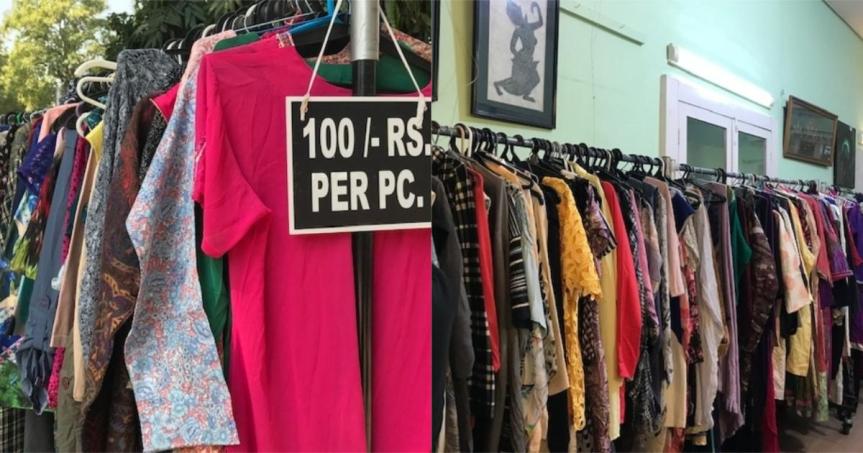
If you have never heard of thrifting and you wonder what it means, then thrifting simply means to shop at a flea market or at a thrift store where you get discounted items. Those who thrift shop love it cause items sold are at a good shape and can be purchased at a very lower price.

What is the difference between thrift store and retail store?

Thrift stores have goods that may not be brand new but they are surely in good conditions. Items already being partially used are sold in these stores at discounted prices. Retail stores on the hand sell unused goods similar to thrifted goods but with much higher price.

Thrift stores sell goods that are not from the current season and are vintage. Goods that you mean to own have to be hunted in flea markets or thrift store. Whatever you see at lower price you can purchase. Best part about thrifting is that you never know what you might find. You might end up getting the most affordable deal on an amazing item.

Retail stores have expensive products but if someone who follows particular season clothing can find them at retail stores and not thrift stores. Original brands are sold on these stores.

Why do thrift stores excite people so much?

Thrift stores are exciting and attractive. These stores don’t necessarily have clothes in-season but have clothing that create a creative personal style for someone seeking a trendy transformation. Thrift stores are owned by creative people who redesign fashion into trendy and affordable clothing. Clothes may not have a brand tag but are equally fashionable.

Thrifting isn’t entirely clothing related. Collectible items like vintage vases or paintings or jewelry are available that may have been used before but enhance aesthetics of your home. Old books that aren’t readily available can be unexpectedly found here. It’s also a great place to buy a totally unique item that you never discovered before. You get a wonderful opportunity to add these special items to your collection with absolute marginal price.

What type of items can you find in thrift stores?

You will find items like shoes, handbags, wallets, clothes, furniture, jewelry, household goods, kitchen supplies. Thrift stores have pretty similar products to what you get in any retail store.

Why should you choose thrifting?

Experimentation helps you understand what suits you and what doesn’t. Investing in clothes bought at thrift store allows you to experiment with your clothes without spending a huge amount on them.

Trendy clothes are found that sometimes you may not find in retail stores. They are not typically from famous brands but are of good quality.

Items that you find here will be quite different from the others. You are not likely to find a twin in public. You will stand out as clothes you own will be something that others may not find that easily.

Vintage clothes, bags, leather shoes are considered to be the new definition of fashion. To own such clothes that set you apart from the rest of the world is the beauty of thrift stores. Also, competition among brands that you see completely disappear in the case of thrift store.

Furniture items like cushions, bedspreads, glasses, dishes, curtains, mats, baking pans, mirrors and such other items are easily available in these stores with affordable prices.

Since, you spend very little on thrifted goods getting rid of those goods is possible. Unnecessary hoarding of goods can be avoided. If you buy clothes but they don’t fit you after a few days or months, then you can donate them as you haven’t spent that much.

Lastly, thrifting provides support to community. A lot of thrift stores donate a substantial amount to the charities. You can donate as well to be part of it.

Conclusion

Thrifting is an attractive concept that has been adopted in foreign countries but not so much in India. Nevertheless, thrifting is rising in cities like Mumbai and Delhi. It is an affordable solution to fast fashion. Online thrifting is significantly gaining popularity on social media platforms. Younger generation seems to be fascinated by this growing concept. It can potentially be the next big thing to dominate Indian fashion.

Cyrus Poonawala to receive Lokmanya Tilak Award

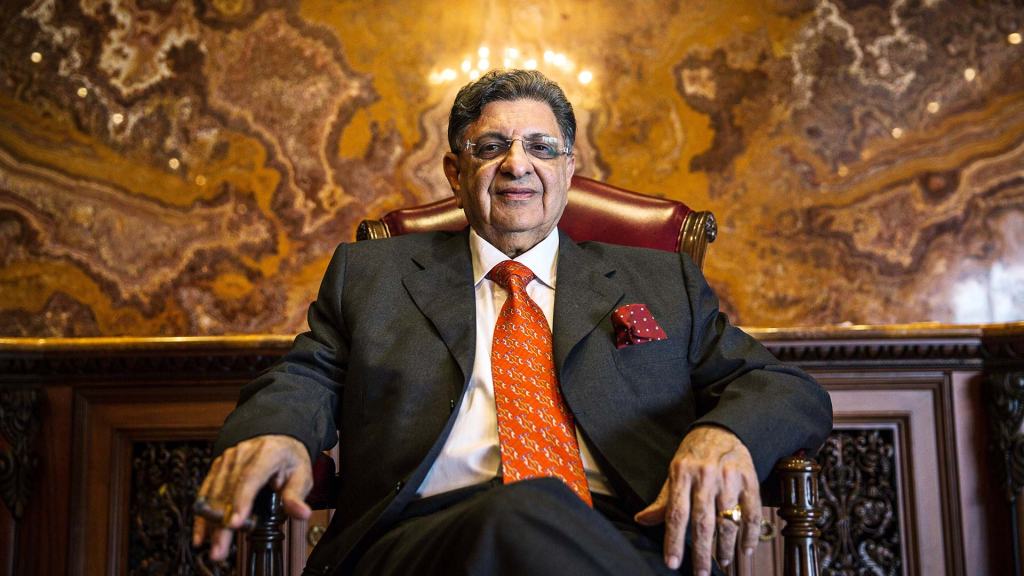
The founder of the Serum Institute of India (SII) in Pune, businessman Cyrus Poonawalla has been named the winner of the prestigious National Lokmanya Tilak Award 2021.He will be commended for his work during the COVID-19 pandemic and how his company helped save many lives by creating the Covishield vaccine and then making provided the medicine to the citizens of the country at an affordable price.Although the awards ceremony takes place on August 1 each year on the anniversary of the Freedom Fighter’s death, this epidemic-stricken year the award has been scheduled for August 13. The prize includes a cash prize of 1,00,000 rupees and souvenirs for the winners. The award was first presented in the year 1983. Winners include former Prime Minister Indira Gandhi, Dr. Manmohan Singh and Atal Bihari Vajpayee; Infosys founder NR Narayana Murthy and former President Pranab Mukherjee.

Cyrus poonawalla

Cyrus S. Poonawalla (born in 1941) is an Indian billionaire businessman, and the chairman & managing director of the Cyrus Poonawalla Group, which includes the Serum Institute of India, an Indian biotech company which is the largest vaccine manufacturer in the world. In 2021, he was ranked number eight on Forbes’ India rich list with a net worth of $12.7 billion. Poonwalla founded the Serum Institute of India in 1966 and built it to the largest vaccine manufacturer in the world by doses. Serum produces over 1.5 billion doses annually of a range of vaccines, including for measles, polio and flu. In May 2019, it was reported that Poonawalla, in partnership with Naum Koen, had proposed supplying Ukraine with 100 thousand doses of the measles vaccine for free vaccination.

Serum institute of India [SII]

Serum Institute of India (SII) is an Indian biotechnology and biopharmaceuticals company. It is the world’s largest manufacturer of vaccines located in the city of Pune, India and was founded by Cyrus Poonawalla in 1966. The company is a subsidiary of the holding company Poonawalla Investment and Industries. he company set out to produce immunobiologicals, which were imported into India at high prices. Among the first products the Serum Institute of India manufactured in large quantities were the tetanus antitoxin, snake antivenom, DPT vaccine, and MMR vaccine. The company’s product lines was expanded to include different types of vaccines against bacterial or virus infections, combination vaccines, influenza vaccine, and meningococcal vaccine. Besides vaccine the company also manufactures antisera, blood plasma, and hormone products. As of 2014 the vaccines manufactured by the Serum Institute of India have been used in international vaccination programmes run by the World Health Organization (WHO), UNICEF, and the Pan American Health Organization (PAHO). Today the Serum Institute of India is run by the Poonawalla Group and engages in research, development, and manufacturing.

The company has partnered with the British-Swedish multinational pharmaceutical company AstraZeneca, which is developing AZD1222 (Covishield) in partnership with the University of Oxford. It is reported that Serum Institute of India would provide 100 million (10 crore) doses of the vaccine for India and other low and middle-income countries. This target was later increased to 1 billion doses by the end of 2021. It is estimated to be priced at ₹225 (around $3) per dose.In September 2020, trials were halted by DCGI after a volunteer in Oxford developed illness following vaccination, but were soon resumed after consent by the British regulators. In December 2020, the Serum Institute of India sought emergency approval for the vaccine developed with AstraZeneca which was approved a month later. In March 2021, an agreement was reached to supply some doses to the UK.

Left wing politics

Left-wing politics supports social equality and egalitarianism, often in opposition of social hierarchy. Left-wing politics typically involves a concern for those in society whom its adherents perceive as disadvantaged relative to others as well as a belief that there are unjustified inequalities that need to be reduced or abolished. According to emeritus professor of economics Barry Clark, left-wing supporters “claim that human development flourishes when individuals engage in cooperative, mutually respectful relations that can thrive only when excessive differences in status, power, and wealth are eliminated.

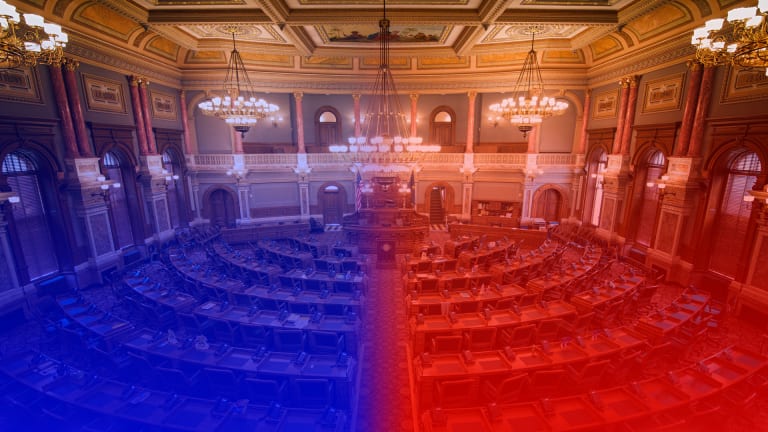
Within the left–right political spectrum, Left and Right were coined during the French Revolution, referring to the seating arrangement in the French Estates General. Those who sat on the left generally opposed the Ancien Régime and the Bourbon monarchy and supported the French Revolution, the creation of a democratic republic and the secularisation of society while those on the right were supportive of the traditional institutions of the Old Regime. Usage of the term Left became more prominent after the restoration of the French monarchy in 1815, when it was applied to the Independents.The word wing was first appended to Left and Right in the late 19th century, usually with disparaging intent, and left-wing was applied to those who were unorthodox in their religious or political views.

The term Left was later applied to a number of movements, especially republicanism in France during the 18th century, followed by socialism, including anarchism, communism, the labour movement, Marxism, social democracy and syndicalism in the 19th and 20th centuries.Since then, the term left-wing has been applied to a broad range of movements, including the civil rights movement, feminist movement, LGBT rights movement, anti-war movement and environmental movement as well as a wide range of political parties.

The terms “left” and “right” appeared during the French Revolution of 1789 when members of the National Assembly divided into supporters of the king to the president’s right and supporters of the revolution to his left.One deputy, the Baron de Gauville, explained: “We began to recognize each other: those who were loyal to religion and the king took up positions to the right of the chair so as to avoid the shouts, oaths, and indecencies that enjoyed free rein in the opposing camp”.

When the National Assembly was replaced in 1791 by a Legislative Assembly comprising entirely new members, the divisions continued. “Innovators” sat on the left, “moderates” gathered in the centre, while the “conscientious defenders of the constitution” found themselves sitting on the right, where the defenders of the Ancien Régime had previously gathered. When the succeeding National Convention met in 1792, the seating arrangement continued, but following the coup d’état of 2 June 1793 and the arrest of the Girondins the right side of the assembly was deserted and any remaining members who had sat there moved to the centre. However, following the Thermidorian Reaction of 1794 the members of the far-left were excluded and the method of seating was abolished. The new constitution included rules for the assembly that would “break up the party groups”.

The terms “left” and “right” were not used to refer to political ideology per se, but only to seating in the legislature. After 1848, the main opposing camps were the “democratic socialists” and the “reactionaries” who used red and white flags to identify their party affiliation. With the establishment of the Third Republic in 1871, the terms were adopted by political parties: the Republican Left, the Centre Right and the Centre Left (1871) and the Extreme Left (1876) and Radical Left (1881). The beliefs of the group called the Radical Left were actually closer to the Centre Left than the beliefs of those called the Extreme Left

How can online learning influences the education of a Student?

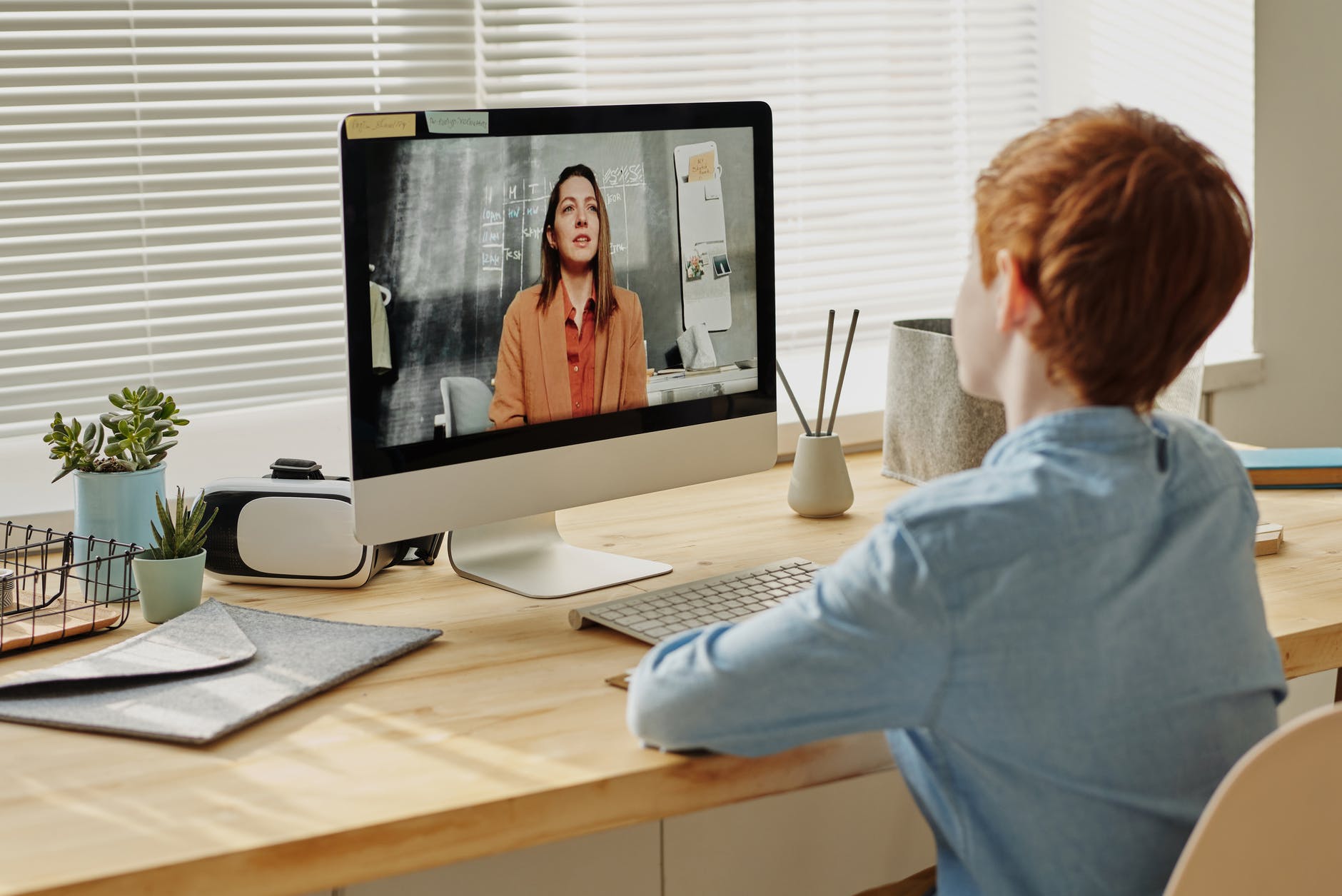
When the world has witnessed one of the most infectious diseases spreading around the globe that affects not only the physical health but also the mental health of people. It was really difficult for any educational institutions, schools, or a college to manage classes physically, But 21st-century technology made it easier and helped institutions with their breathtaking software to conduct online classes and tests.

Photo by Julia M Cameron on Pexels.com

How online education is a new way of learning?

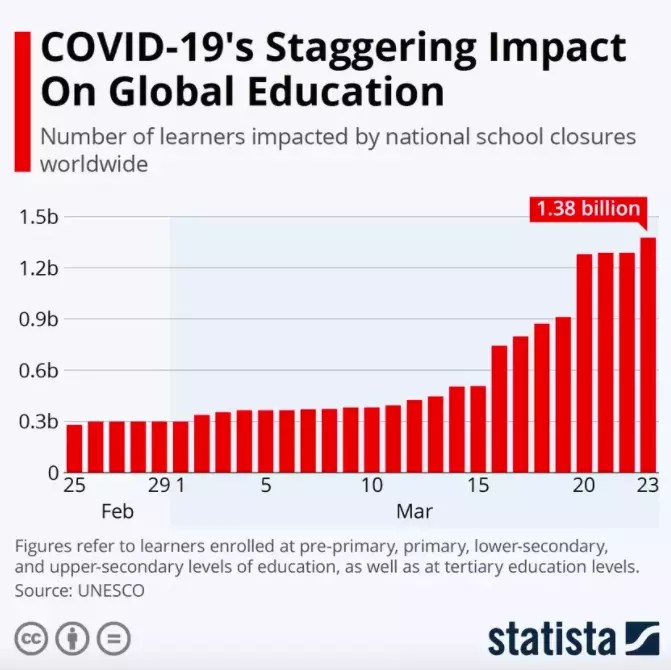
Prior to the COVID-19 pandemic, there were people who used to study on E-platforms, but not often, there were people who didn’t go to school and studied at home. Technology made a click away to explore and learn anything a student wanted to. Now one can carry their textbooks in their pocket, one can meet up anyone face to face on a software, just a click away and one can do learn anything from the internet. After school closed as a result of the pandemic, about 1.8 billion students from 186 different countries, their education was affected, but again technology did not want the student’s life to be ruined by the physical closure of schools. 

Future of Online Education

As per some scholars and economists, it’s highly believed that the overall market for online learning can be up to US $350 Billion in 2025 or more. Parents and students now don’t have to spend extra charges for classrooms, Electricity, or for any other activities that the school asks the students to pay. Parents who used to worry about their kids in school about their bullying, consuming drugs or any other harmful activities now are totally diminished. Now parents can witness their kid’s education during their online classes. Students now can easily study as well as can upgrade their extra skills through e-learning. Many students nowadays do internships, do extra courses, learn new things as well as the technology. Now a 8 year old student knows how to operate a mobile phone or a PC. Some believe that in future online education would be easily available and students don’t have to pay more for their education. “I believe that the integration of information technology in education will be further accelerated and that online education will eventually become an integral component of school education,“ says Wang Tao, Vice President of Tencent Cloud and Vice President of Tencent Education.

As Online education can also put the students in a bad or harmful influence, there are people who don’t want the online education as a major medium of learning.

Reasons why online education can be a harmful influence for the students?

  • Nowadays, most of the school or college students don’t study and cheat on their online exams or tests. It can be a really bad impact on their future and can be the core reason for the lack of their knowledge.
  • The daily and often use of electronic devices can make a person sick and hits their mental health in a really bad way.
  • Students are well aware of the technology and now are highly active on social media networks and making online friends. One can be good, but there are high number of chances to meet a fraud one. Those frauds assault the kids and ask them to do things which a kid didn’t want to.
  • Nowadays students as well as the adults store their personal information on their electronic devices and one don’t know that there are people on the internet named as hackers, who often used to steal the random people information from their cloud and upload them in the Dark web. There is a high number of chances of a kid or high school student could be one of the victims of online frauds and assault.

Reasons why online education can be a good influence for the students?

  • Firstly, the online education can be done in massive numbers at a time, which in physical classes were not possible. A student can know a number of different answers to a same question which is really helpful for a kid to understand that how an answer could be framed for a question.
  • Question answers from textbooks were limited, but in online education one can know more about a question through exploring it on the internet.
  • Technology is our future generation and learning about it since childhood could be an advantage for a student in their future.
  • In a traditional way of learning, one has to stick by a particular teacher and had to adapt their teaching style, but in online education a student can get through a number of teachers and can stick with the one they liked the most.

Disadvantages of Online education

Schools, Colleges are one of the best moments one could live in and online education can totally dismiss it. The other activities in schools like Upgrading leadership qualities through school/college competitions, Outdoor games for physical health of a student, and more things which a student learns through offline education are not possible through online education. The major and the core problem is, not every student or kid have mobile phones or PC and the access to the internet. They all were dependent on government schools, offline classes and free books from the school for their education. Poor family conditions, Bad environment, Poor Electronic facilities could be reason in the future for a student who might lose their interest in their education through E-Learning.

In the end, the conclusion of learning through online education has more disadvantages than their benefits.

Sources:-

https://www.weforum.org/agenda/2020/04/coronavirus-education-global-covid19-online-digital-learning/

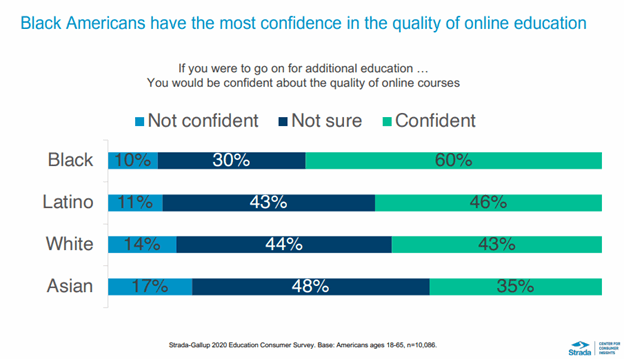
https://www.google.com/url?sa=i&url=https%3A%2F%2Fwww.insidehighered.com%2Fnews%2F2020%2F07%2F30%2Fsurvey-data-reveal-impact-covid-19-perceptions-online-education&psig=AOvVaw28oKObAFVXLJ-UO6vhxiqv&ust=1627984700132000&source=images&cd=vfe&ved=0CAwQjhxqFwoTCKCFmYeKkvICFQAAAAAdAAAAABAK

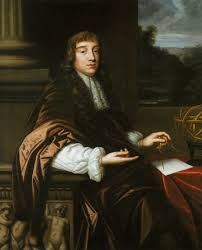
“ROBERT HOOKE” Biography

“Robert Hooke” was an architect natural philosopher and brilliant scientist. He was born on 28 July, 1635 in freshwater, Isle of Wight, England. His father’s name was John Hooke and Mother’s name was Cecily Gyles. His father was a Church of England priest. Robert had three siblings. He received most of education at home because our continual frail health. His father passed away in 1648.

He studied Greek Latin mechanics and mathematics in 1655 Robert hooke become an assistant to the famous scientist Robert Boyle and worked in this capacity till 1662. He helped in the construction and operation of Boyle’s air pump. He discovered the law of elasticity which eventually came to be known as Hooks law. He described this law in an anagram ceiiionsssttuv in 1660 and gave its solution in 1678. This La is extensively used in all branches of Science and Engineering in 1660 the Royal Society were formed by 12 men at the Gresham college and on Sir Moray proposal along with Boyle’s support. Hooke was named as the curator of the society. He became a fellow of the society in 1663, he succeeded Arthur Dacresias professor of geometry at the Gresham College. In 1665 he published the book micrographia which considered to be one of the most important scientific books ever written he made tremendous contribution to time keeping by improving pendulum clocks. In astronomy Robert Hooke studied the Pleiades star cluster, the crater on the Moon rings of Saturn and the double star system Gamma Arietis. In 1582 he proposed A Remarkable mechanistic model of the human memory which addressed the components of encoding memory capacity repetition retriever and forgetting. he was also an architect who served as a Surveyor of London city. After the great fire in 1666 he help to rebuild the city and core designed many architecture Robert hooke is received the degree of doctor of physic in 1691 he never married but his diary records that he had sexual relations with his niece, Grace, and several of his housekeepers. He point records that on the this housekeepers gave birth to you girl but does note the paternity of the child. He died in London United Kingdom on 3rd March 1703 at the age 67.

Section “66A” of the IT act

Section 66A in The Information Technology Act, 2000

66A Punishment for sending offensive messages through communication service, etc. Any person who sends, by means of a computer resource or a communication device,-

[a], any information that is grossly offensive or has menacing character;

or(b) any information which he knows to be false, but for the purpose of causing annoyance, inconvenience, danger, obstruction, insult, injury, criminal intimidation, enmity, hatred or ill will, persistently by making use of such computer resource or a communication device;

or(c) any electronic mail or electronic mail message for the purpose of causing annoyance or inconvenience or to deceive or to mislead the addressee or recipient about the origin of such messages,shall be punishable with imprisonment for a term which may extend to three years and with fine.

For the purpose of this section, terms “electronic mail” and “electronic mail message” means a message or information created or transmitted or received on a computer, computer system, computer resource or communication device including attachments in text, image, audio, video and any other electronic record, which may be transmitted with the message.

Unconstitutional

Shreya Singhal v. Union of India is a judgement by a two-judge bench of the Supreme Court of India in 2015, on the issue of online speech and intermediary liability in India. The Supreme Court struck down Section 66A of the Information Technology Act, 2000, relating to restrictions on online speech, as unconstitutional on grounds of violating the freedom of speech guaranteed under Article 19(1)(a) of the Constitution of India. The Court further held that the Section was not saved by virtue of being a ‘reasonable restriction’ on the freedom of speech under Article 19(2). The Supreme Court also read down Section 79 and Rules under the Section. It held that online intermediaries would only be obligated to take down content on receiving an order from a court or government authority. The case is considered a watershed moment for online free speech in India.

Recent buzz

On July 5 this year, a Bench led by Justice Rohinton F. Nariman said it was “distressing,” “shocking” and “terrible” that people are still booked and tried under Section 66A even six years after the apex court struck down the provision as unconstitutional and a violation of free speech.NGO People’s Union of Civil Liberties, represented by senior advocate Sanjay Parikh and advocate Aparna Bhat, had drawn the court’s attention to the violations.Justice Nariman had authored the judgment trashing Section 66A in a petition filed by law student Shreya Singhal, who highlighted cases of young people being arrested and charged under the ambiguous provision for their social media posts.

“Section 66A of the IT Act has continued to be in use not only within police stations but also in cases before trial courts across India. This information was available on Zombie Tracker website, developed by a team of independent researchers… The findings of the website reveal that as on March 10, 2021, as many as 745 cases are still pending and active before district courts in 11 States, wherein the accused are being prosecuted for offences under Section 66A of the IT Act,” the PUCL has submitted.

Unnao rape case; Foul play in the allegations levelled

A Delhi Court has upheld the finding of the Central Bureau of Investigation (CBI) which ruled out any foul play in the 2019 car accident involving the Unnao rape case survivor.

The CBI concluded that there was no evidence regarding criminal conspiracy hatched among the accused persons, including expelled BJP MLA Kuldeep Singh Sengar, who is serving life imprisonment for raping the girl in 2017, with the driver of the truck, which collided with the car carrying the victims.

On July 28, 2019, the Unnao rape survivor, along with her two aunts, and a lawyer, were on their way to meet her uncle Mahesh Singh, who was lodged in Rai Bareilly Jail, when their car collided head on with a truck. The two aunts and the lawyer succumbed to the injuries.

Mr. Mahesh Singh, in his complaint, alleged that the accident was the result of a conspiracy hatched by Sengar along with his associates. He also alleged that in order to execute the conspiracy, the Personal Security Officers (PSOs) who were deployed with the rape victim and her family members were withdrawn which was why they were not accompanying the victims in the car.

District and Sessions Judge Dharmesh Sharma noted, “there was indeed a very diabolical background of the events that had taken place prior to the incident in question, but at the stage of considering taking of cognisance of offences allegedly committed by the accused persons, this court cannot be swayed by public sentiments, media reports nor the aspect of the conviction of accused Kuldeep Singh Sengar”.The court said that the initial investigation by the local police “appears to be tainted, lopsided and attempted to reach a conclusion hastily to pose the incident as a road side accident to please the superiors and the political masters”.

“Despite the fact that the investigation had been taken over by the CBI around 9 p.m. on July 30, 2019, the following day i.e., on July 31, 2019 a hasty conclusion was drawn thereby holding that the incident was a simple case of motor accident,” the court said.

However the acts of omissions, lapses and irregularities committed by the local police had caused no irreparable loss to the foundation of the prosecution, the court added.

“I have no hesitation in holding the findings of the CBI in the final report/charge sheet that there is no case against the accused persons so as to take cognisance and proceed against them under Section 302 (murder) and 307 (attempt to murder) of IPC r/w Section 120 B of IPC can not be faulted,” the judge said.

The court, further, said that merely because Sengar had been provided with a mobile phone “surreptitiously by the jail authority at Sitapur Jail would not invite an inference that he was involved in the planning the accident”.

It also said that the investigating agency did not find any “direct or remote connection” in the call details records of the accused persons “so as to suggest meeting of minds forging a common purpose and planning the collision of the truck with the ill-fated car”.The court, however, framed charges against the truck driver for causing death by rash and negligent driving, besides framing charges of criminal intimidation against Sengar and his associates.

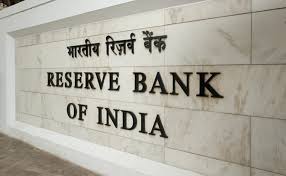
Reserve Bank Of India

The Reserve Bank of India (RBI) is India’s central bank, also known as the banker’s bank.
The RBI controls the monetary and other banking policies of the Indian government. The Reserve Bank of India (RBI) was established on April 1, 1935, in accordance with the Reserve Bank of India Act, 1934. The Reserve Bank is permanently situated in Mumbai since 1937.

Establishment of Reserve Bank of India

The Reserve Bank is fully owned and operated by the Government of India. The Preamble of the Reserve Bank of India describes the basic functions of the Reserve Bank as;

1)Regulating the issue of Banknotes

2)Securing monetary stability in India

3)Modernising the monetary policy framework to meet economic challenges

The Reserve Bank’s operations are governed by a central board of directors, RBI is on the whole operated with a 21-member central board of directors appointed by the Government of India in accordance with the Reserve Bank of India Act.

The Central board of directors comprise of:
Official Directors – The governor who is appointed/nominated for a period of four years along with four Deputy Governors.
Non-Official Directors – Ten Directors from various fields and two government officials.

Functions of RBI

  1. The Issuer of the Currency: It has the sole authority to produce the currency. It also takes action to stop regulating the passage of fake money.
  2. Banker to the Government: It acts as a financer both to state and central government. It delivers short-term credit. It governs all new matters of government lands, maintaining the government debt unsettled, and taking care of the market for the government securities. It counsels the government on banking and monetary subjects.
  3. Banker’s Bank: It is the bank of all banks in the country as it delivers the loan to banks, rediscounts the invoice of banks and receives the payment of banks.
  4. Lender of Last Resort: All the other banks can borrow from the RBI by keeping qualified securities as a deposit at the time of crisis.
  5. Money Supply and Regulator of Credit: To manage demand and supply of cash in economy by Open Market Actions, Credit Ceiling and much more. It has to meet the credit necessities of the remaining banking system. It requires sustaining price stability and an elevated rate of economic growth.

WHY LOVING YOUR CHILD ‘TOO MUCH’ CAN BE HARMFUL

Many times we, as a couple or family members argue fight each other in an ugly manner. This is completely normal in any relationship. People are different and so are their thoughts and opinions on crucial matters. Arguments arise and are settled through talks ( mostly I suppose!).
The problem arises when this act is carried out in front of children. To be more specific, children aged between 1-7 years. Although traumatic experiences at home or elsewhere may affect an individual at any age, the age between one to seven years is a learning stage for children.
Children are very sensitive and have to be looked after very carefully. During the initial years, they learn and grasp from their surroundings quickly. What is portrayed before them, remains in their memories and becomes an essential part of their personality.
No doubt, after growing up and in their teenage stage, they may fall into bad company. Also, display of decency in their initial years may not guarantee a lifelong embedment of those traits, but that is not, in any way an excuse for not sticking to the same.
It is observed in schools that students of even class 4th indulge in gruesome fights and display aggression levels par their age. This not only throws light on the upbringing of the child but also is dangerous for him at a personal level. The child may become a potent criminal if his behavior is not corrected at the earliest. Therefore, it becomes extremely important to make the child learn mannerisms that are good for him as well as the society.
It is not a rare sight when parents are found arguing with teachers during parent-teacher meetings. All parents love their children. They face every hardship, so that their child/children may live a smooth and happy life. But loving your child too much can prove dangerous for them. Now some may ask how much is ‘too much?’
Too much love comes into existence when we start ignoring the mistakes of our children and blame others for their acts. Children must be corrected at every wrong turn they take, else the dark path awaits them.
One common mistake that parents make while correcting their child from doing anything or when he has done something is by scolding and shouting at them. In some cases, a beating follows. This is a very wrong move and makes a negative impact on the tender mind of children. This leads them to believe that violence and anger are the only resort to get things done.
They should be made to understand things with patience and love so that elements of generosity are planted in them.
Children learn around 75% of behaviorisms and activities by the age of six years. Therefore carefulness must be taken so that they come out to be good human beings and contribute towards a better world.

Good Luck!

Role Of Todays Youth In Building A Self Reliant India

“Self-reliance is the key to a vigorous life.”

Self-reliant India is the vision of the Prime Minister of India Narendra Modi of making India a self-reliant nation. The first mention of this came in the form of the ‘Self-Reliant India Mission’ during the announcement of the coronavirus pandemic related economic package on 12 May 2020. This self-reliant policy does not aim to be protectionist on nature and as the Finance Minister clarified, ” Self-reliant India does not mean cutting off from rest of the world”. The largest fund in the country worth Rs. 21,000 crore was setup by the IIT Alumni Council with the aim of supporting the mission towards self-reliance.

Everybody knows, that the youth are the future of any country. But India can take lead over many other nations because about 65 percent of the country’s population is below 35 years and 50 percent is below 25 years. With huge, educated young population, India is very uniquely poised to realise the demographic potential amd reap the advantage of this vast powerhouse of human resource talent. The need of the hour is to upgrade the skill or upskill the youth to meet the emloyment needs of technology driven 21st century and accelerate the pace of self-reliance.

The uncertainity created by the pandemic is being seen by many as an opportunity to upgrade knowledge and acquire new skills that will cater to the post-corona virus job scenario. The skills required for tomorrow’s jobs will be completely different from the skill-sets youth possess today.

So, its high time now, we have to make India self-reliant and youth plays the most important role in this mission.

BLESSINGS OF YOGA

Many people misunderstand the YOGA considering it with just as a stretching exercise specially those who are unaware of the concept of yoga and its benefits. The importance of yoga asana can only understand when it is done practically and regularly. Yoga lessens mental fatigue and emotional disorder and makes you feel refreshed.

Goodness of yoga on health.

Practicing yoga daily has great emotional and physical impacts. Beside this it helps to grow body strength as well as flexibility. It also aids anxiety, depression, and stress.

Keep on reading to understand the significance of practising yoga daily which are even confirmed by scientist.  

Helps to attain peace

Better quality life minus the unnecessary stress that we all wish to attain. Scientific studies have proven that doing continue yoga for three months can actually reduce discharge the stress hormones. Doing meditation with breathing leads to achieve unmatched calmness and peace in your mind.

Assist from anxiety

Managing with anxiety daily can be exhausting. Many people who discovered anxiety disorder in them claimed that how regularly practicing certain yoga poses have diminished the symptoms of anxiety which were difficult to heal. The “Camel Pose” boosts blood circulation in the body which rejuvenate body and mind. “Bridge Pose” calms the mind where as the “Butterfly Pose” frees tension heads.

Improves sleep

Practicing yoga daily relax mind as well as reduces stress which leads to better sleep. It also upgrades sleeping pattern. People who practice yoga daily can see circadian rhythm stabilize.

Boost immunity

Yoga cures and improves every cell of body also helps your body to become more immune. Yoga stimulates lymphatic system which drains out bane. It enhances immunity system to work flawlessly.

Reduces blood pressure

Irregular lifestyle and stress in city life leads to high blood pressure. Hence doing yoga daily reduces high blood pressure. Breathing exercise helps to control blood pressure and eliminate high stress level. Good blood circulation enhances good functioning of heart. Improvement in blood flow increase oxygen level thus lower the blood pressure.

When you should avoid doing yoga.

Doing yoga regularly is considered good for well being however there are some circumstances you should avoid doing yoga :

When you are totally exhausted or feeling ill.

Women must skip doing yoga during their mensuration period.

One should avoid yoga asana when you are suffering from back pain or undergone with any surgery.

Being A teenager today

In this generation being a teenager is much harder than being a adult. Teenager are constantly under an immense amount of stress. Their bodies are changing physically and mentally and peer pressure is amongst them. Many do not enough sleep because everything going on in their lives. Balancing school and afterschool activities are a lot of teenager to handle. And then top of that, trying to decide which area of study. The idea of that the rest of a teenager’s life could be impacted by the decisions they make in high school puts a strain on many.

Teenagers are put under a lot of pressure. Between balancing school and work, teens barely have any time to unwind and relax . Adults have incredibly high expectations. They expect their sons and daughters to do chores around the house, play sports , volunteer , participate in extracurricular activities, and get good grades . The need to impress their parents is one of the heaviest burden to carry. Also these pursuits are time consuming. Many teenagers are up past midnight finishing their homework, since they were busy all day with clubs, sports, and school. As a result, a lot of teenagers are sleep deprived.

For the most part, adults have their lives figured out. Many have jobs and families. Teenagers still need to decide what they are going to do with their lives. Even if a teenager thinks that they have their life planned out, things change. One of the hardest decisions that anyone will ever make is deciding what to pursue in college. It’s a life changing decision that adults expect adolescents to make. Choosing the right path can put a lot of stress on teenagers.

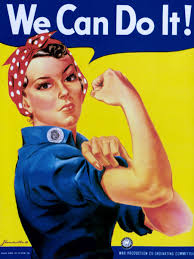
International Workers Day

“Without labour nothing prospers.”

Labour Day or International Workers Day is celebrated annually on 1 May to celebrate the working class and labourers across the world. Socialist and labour unions celebrate this day by organising programmes to improve wages and working conditions of the workforce. In more than 80 countries Labour Day is a national holiday.

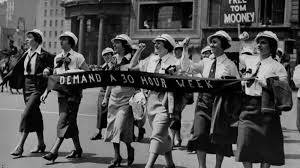
Before a formal Labour Day came into place, deaths, injuries and dangerous working conditions were very common among the working class globally. During the rise of industrialisation, the U.S. exploited the working class during the nineteenth century and made them work upto 15 hours a day under rigorous conditions. The rising death of the workforce in industries forced the working class to raise their voices for their safety. After efforts made by the workers and socialists, eight hours was declared as the legal time for the workers in the late nineteenth century by the American Federation of Labour.

The origin of Labour Day goes back to an incident in Chicago on May 4, 1886 known as the Haymarket Affair. On this day workers assembled as part of a peaceful rally in a strike demanding an eight hour work day. An unknown person threw a dynamite bomb at the police as they acted to disperse the meeting, and the bomb blast and ensuing gunfire resulted in the deaths of seven police officers and atleast four civilians; dozens of others were wounded. The Chicago protests led to many countries and at last they got the proper labour rights.

So, they had a long repression from the society. So, now the time has come to live respectfully and safe. Without labour no country can prosper. They are the ones who make a way towards country’s development. Their hardwork, dedication cherishes the path of development of country. So, respect them and provide safe working conditions to them. The below mentioned lives are aptly quoted;” A worker is a creator and a great asset to every nation”.