DEPRESSION


Depression
(major depressive disorder) is a common and serious medical illness that
negatively affects how you feel, the way you think and how you act.
Fortunately, it is also treatable. Depression causes feelings of sadness and/or
a loss of interest in activities you once enjoyed. It can lead to a variety of
emotional and physical problems and can decrease your ability to function at
work and at home
.

Depression affects an estimated one in 15
adults (6.7%) in any given year. And one in six people (16.6%) will experience
depression at some time in their life. Depression can occur at any time, but on
average, first appears during the late teens to mid-20s. Women are more likely
than men to experience depression. Some studies show that one-third of women
will experience a major depressive episode in their lifetime. There is a high
degree of heritability (approximately 40%) when first-degree relatives
(parents/children/siblings) have depression.

CAUSES

The medical community does not fully
understand the causes of depression. There are many possible causes, and
sometimes, various factors combine to trigger symptoms.

Factors that are likely to play a role
include:

ü genetic
features

ü changes
in the brain’s neurotransmitter levels

ü environmental
factors

ü psychological
and social factors

ü additional
conditions, such as bipolar disorder

SYMPTOMS

People who have depression will experience
some or all of the following symptoms almost every day for at least two weeks:


ü Feelings
of hopelessness, helplessness, emptiness, worthlessness, or guilt

ü Low
energy, fatigue

ü Irritability,
restlessness, anxiety

ü Slowed
thinking, speaking, or movement

ü Loss
of interest in activities they once enjoyed

ü Trouble
concentrating, remembering, or making decisions

ü Loss
of appetite, or eating too much

ü Weight
gain or loss

ü Trouble
sleeping, or sleeping too much

ü Headache,
stomachache, and other aches and pains that do not have a clear physical cause

ü Persistent
sad or empty mood

Some people with depression will
experience many of these symptoms. Others will have just a few. The severity of
depression symptoms can range from mild to severe enough to impact the person’s
day-to-day life.

TREATMENT

The typical treatment for depression
includes antidepressants or other medications, psychotherapy (talk therapy), or
a combination of the two interventions. Personalizing treatment to the
individual can increase the chances that it will be successful.

Antidepressants are a class of drugs used
to treat depression. They include the following types:

ü Selective
serotonin reuptake inhibitors (SSRIs) are often the first drugs doctors
prescribe for depression. These drugs affect the chemical messenger, serotonin,
which helps to regulate mood. Low serotonin levels have been linked to
depression.

ü Serotonin-norepinephrine
reuptake inhibitors (SNRIs) work on two brain chemicals—serotonin and
norepinephrine.

ü Atypical
antidepressants act on the brain in a different way from other antidepressants.
These drugs may be an option for people who have not found relief from SSRIs or
SNRIs.

Sometimes doctors will prescribe another
type of medication—such as an anti-anxiety drug, antipsychotic medicine, or
stimulant—along with the antidepressant. Antidepressants can take up to four
weeks to start working. It can take a few tries to find the best drug and
dosage combination that will relieve your depression.




Business Ethics

Business ethics are the moral principles that act as guidelines for the way a business conducts itself and in its transactions. The law often guides business ethics, but at other times business ethics provide a basic guideline that businesses can choose to follow to gain public approval. The practices mostly revolve around matters involving corporate governance, insider trading, bribery, discrimination and corporate social responsibility. The same guidelines that individuals use to conduct themselves in an acceptable way, in both personal and professional settings, apply to businesses as well. Following business ethics ensures that the public receives fair treatment.

The concept of business ethics began in the 1960s as corporations became more aware of a rising consumer-based society that showed concerns regarding the environment, social causes, and corporate responsibility. The increased focus on so-called social issues was a hallmark of the decade. Since that time period, the concept of business ethics has evolved. Business ethics goes beyond just a moral code of right and wrong; it attempts to reconcile what companies must do legally versus maintaining a competitive advantage over other businesses. the most recent and continually developing aspect of ethics is the third piece – the idea that companies are building business ethics into the core of their companies, making them a standard part of their operational blueprint. As the world continues to grow more political and more politically correct, an increased focus on proper business ethics and strong adherence to them has become ever more the norm. Buisness ethics also keep workers safe, help trade and interactions between companies remain honest and fair, and generally make for better goods and services.

Buisnesses display ethics in several ways. If a customer comes into a store looking for a product that meets very specific needs, it’s important to provide them the best product for the situation described instead of upselling them or encouraging them to buy a product that won’t meet their needs. However, it is important to ensure that this “customer first” attitude does not unintentionally result in the unethical treatment of employees.

If a company is faced with a public relations crisis, companies should call a meeting and address the problem directly with their employees. It’s important to truthfully describe the situation as it unfolded, present solutions, and accept criticism humbly.

If an employee notices that management tends to hire the same type of person (race, caste, gender etc.), they may suggest getting employees more involved in the hiring process. This will introduce different perspectives to the hiring process and increase the possibility that different kinds of applicants will be selected for a position.

These are some ways that companies practice business ethics.

Tabasco Pepper Sauce

Tabasco Pepper Sauce is a condiment that is a spicy hot sauce made from Tabasco peppers, vinegar, and salt.  The hot peppers are picked by hand as soon as they ripen to the perfect shade of bright red.  The same day the peppers are picked, they are mashed, mixed with a small amount of Avery Island salt, placed in white oak wooden barrels, and allowed to ferment and then age for up to three years.  When deemed ready by a member of the McIlhenny family, the approved, fully aged mash is then blended with all natural, high grain vinegar.  Numerous stirrings and about four weeks later, the pepper skins and seeds are strained out.  The finished sauce is then bottled.

History

Avery Island, the birthplace of Tabasco Brand Products including TABASCO® pepper sauce, has been owned for over 180 years by the interrelated Marsh, Avery and McIlhenny families. Lush subtropical flora and venerable live oaks draped with wild muscadine and swags of barbe espagnole, or Spanish moss, cover this geological oddity, which is one of five “islands” rising above south Louisiana’s flat coastal marshes.

 The  2,200-acre tract sits atop a deposit of solid rock salt thought to be deeper than Mount Everest is high. Geologists believe this deposit is the remnant of a buried ancient seabed, pushed to the surface by the sheer weight of surrounding alluvial sediments. Although covered with a layer of fertile soil, salt springs may have attracted prehistoric settlers to the island as early as 12,000 years ago. Fossils suggest that early inhabitants shared the land with mastodons and mammoths, giant sloths, saber-toothed tigers and three-toed horses.

A salt production industry dates back to about 1000 AD, judging from recovered basket fragments, polished stone implements, and shards of pottery left by American Indians. Although these early dwellers remained on the Island at least as late as the 1600s, they had mysteriously disappeared by the time white settlers first discovered the briny springs at the end of the next century. After the Civil War, former New Orleans banker E. McIlhenny met a traveler recently arrived from Mexico who gave McIlhenny a handful of pepper pods, advising him to season his meals with them. McIlhenny saved some of the pods and planted them in his in-laws’ garden on Avery Island; he delighted in the peppers’ piquant flavor, which added excitement to the monotonous food of the Reconstruction-era South.

21st Century

Archaeologists digging at the site of a black-owned saloon in the historic Old West mining town of Virginia City unearthed a 130-year-old bottle of Tabasco brand hot sauce.  The bottle, the oldest style of Tabasco bottle known to exist, was reconstructed from 21 shards of glass excavated from beneath the site of the Boston Saloon, which was owned by an African-American from Massachusetts and catered to blacks and whites from 1864-75, was among the first eateries to introduce the now-popular spicy sauce.  The Tabasco bottle is particularly intriguing because of what it implies about African-American cuisine and the development of the West,” said Kelly Dixon, the administrator of the Comstock Archaeology Center who is supervising the dig in Virginia City about 20 miles southeast of Reno.

The benefits of chanting Vishnu Sahasranama

Vishnu Sahasranama is an ancient script, a Sanskrit hymn that literally translates to thousand names of Lord Vishnu who is believed to be one of the most revered Gods in Hinduism. Lord Vishnu is also known as the preserver of this world. ‘Sahasra’ means thousand and ‘nama’ means name. It is said that one of the easiest ways to pray and pay respect to the Lord is by reciting mantras, strotras, and shlokas.

Lord Vishnu is believed to be the supreme power who rules the entire universe, the one who saves lives. The Vishnu Sahasranama or Strotra is written by Sankskrit scholar Sage Vyasa who has written epics like Ramayana, Mahabharata and Bhagwat Gita.

If you are suffering from insomnia, see bad dreams every night while sleeping or have a fear in your mind then reading the strotra helps you fight them all. Reading it helps you have a peaceful mind. Chanting the Vishnu Sahasranama calms down your mind and sharpens your focus in life. Reading every name of Lord Vishnu helps you boost your inner energies which further increases your focus. This helps you meditate better. It is best to read the strotra in the morning after you have taken a bath. However, if you wish to read it later in the day then the best time would be in the evening between 5-7 pm. Chanting the strotra before going to sleep is also said to be beneficial.

There are 108 shlokas in the Vishnu Sahasranama. Even if you find it difficult to read then even listening to it can be really beneficial.

WHY BEACHES ARE THE BEST CHOICE FOR VACATION

India has a variety of landscapes to offer. It can be the snowy mountains or river sides and lakes or plantations or beaches. India has a coastline of over 7500 km and has numerous beaches. Vacation means different for different people. For some it could be visiting prestigious museums, learning local language and for some it can be exploring the new place and for some it can be doing adventures and even trying the exotic new foods and cuisines. The sea sides give the free winds of the beach, gentle caressing waves and the mysterious depths of water will increase your interest in travelling the sea even more. The feeling achieved after sitting beside the seashore and watching beautiful sunset cannot be matched with anything else.

Lets see why you should plan your next holiday to the beach :-

  1. RECONNECT WITH NATURE: You will get to connect with the nature and the beach is the best spot to do so. From witnessing the vast sea to watching the tiniest seashell you will experience everything.
  2. ENJOY THE EXCITING BEACH ACTIVITIES: The beaches can also make your trip exciting with the beach activities and endless ways to enjoy your stay. There are many outdoor activities to try. From beach games to extreme sport, beaches are the power pack of excitement and joy. The beaches offer many activities, it can be renting a jet ski, boat, kayak, or paddleboard. It is like camping.
  3. It’s Chill: Wear filp flops, sundresses and play clothes and there you go…. You are ready to enjoy the amazing beaches! Your time here will be filled with comforts, casual (without any hurried itinerary) and adorable and unique little stores and little things, yummy ice creams and quiet streets all these are very adorable. Nothing is like the chaos of the big city. You can relax in the safe, warm and welcoming sunset beach. It’s cool and exciting…
  4. AWESOME FOOD: Vacations offer you the opportunity to try new tastes and cuisines. You can find top-notch restaurants and fresh seafoods from little shops and store. You can find the, in new and creative ways and beach is thus the perfect place. All you need to do here is, some meal planning, search few restaurants of your interest and enjoy the awesome food.
  5. SUNSETS AND STARS: There is no place for stargazing than beach! Here, the evenings are quiet and peaceful. You will get to enjoy the vast sea and ocean, stars and sky. Beaches will give you the best days with their amazing little things and vast experiences…. And Yes, Sunset beaches are the best place to watch sun set and nights. There is something in these beaches which will always attract you and you should visit them…
  6. BEACH TOWNS AND ISLAND PEOPLE : Everyone here is in a chilling mood and is very welcoming. Everyone has a smiling face which will not make you feel as a stranger there. Enjoyment is in the air! Relax! Life is simple. Let the islanders remind you.

The view of the mesmerizing sunsets, the soothing sound of the sea and the children playing is a pleasing scene and noise which can only be experienced in beaches. Yup, holidays are awesome and can be very purposeful and good to soul. We can escape from or hectic lifestyle and can earn our days off. A beach holiday can be very healing and can renew your perspective in a very special way.

Advantage of correct posture

Correct posture plays a vital role in everyone’s life. It enhances the personality of an individual. A person’s working efficiency and ability depends upon good posture. Here are some advantages of having correct level :-

  1. Physical appearance :- It is natural phenomenon that every individual wants good physical appearance. For creating good impression on other people, good appearance is prerequisite. Physical appearance depends upon the posture of the individual.
  2. Prevents disorder and diseases :- Poor body posture badly affects functioning of system. Correct posture prevents low back-pain, neck strain, constipation, irritation etc. It means that we are not easily affected by various disorder and diseases if we have good posture.
  3. Change in mental attitude :- Good posture affects in outlook, happiness, self-confidence, determination of an individual. Correct posture always boost up self- confidence and self-esteem.
  4. Improves concentration power :- Good posture helps in breathing properly. When an individual breathes properly their concentration power as well as thinking ability improved.

8 Clothing Tips No Woman Should Ever Miss

1. Old things must go

Open up your closet and take a good look at your clothes. You should ask yourself one simple question – if you were in a store right now, what items from your closet would you buy? It’s a very simple and quite efficient game you should play once in a while. 

2. Shop with a plan

You’ll definitely spend a lot of time searching for the right outfit. In order to be efficient and be happy with your choice, you should go shopping with a proper hairstyle, makeup and shoes, so you can see the bigger picture

3. Extend the life of your cashmere

The first step towards a long and happy life of an item made out of cashmere is purchasing a quality item. 

4. Be smart when you buy a jacket

Purchasing jackets, coats and blazers has just one rule – it needs to fit your shoulders. If it’s too tight or too wide, leave it in the store. Because this is one thing that’s very difficult to alter.

5. Make clothes work for you

You know how some people simply know how to wear the right clothes? There’s no mystery there, and actually, you could pull it off, too, by just thinking about what you’re wearing a little bit more. It all depends on how your body is built.

6.Having trouble with jeans?

The first rule of buying jeans, no matter the type, is that when you’re in doubt regarding the size, you should always go with the smaller size – they’ll stretch after only two washes.

7.Treat yourself like a queen

You’ve probably heard about something called beauty sleep, and you should know it isn’t a myth. So, invest in your beauty and health by encasing your bed with pure silk.

Secularism – An Integral part of Indian Democracy

The term “Secular” means being “separate” from religion, or having no religious basis.

A secular person is one who does not owe his moral values to any religion. His values are the product of his rational and scientific thinking.

Secularism means separation of religion from political, economic, social and cultural aspects of life, religion being treated as a purely personal matter.

It emphasized dissociation of the state from religion and full freedom to all religions and tolerance of all religions.

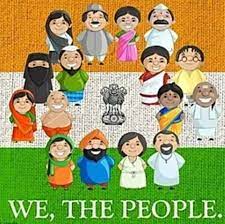
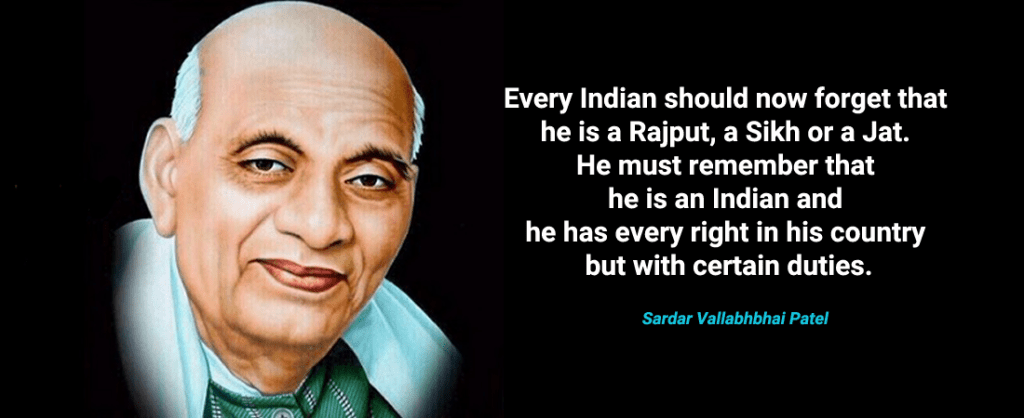
It also stands for equal opportunities for followers of all religions, and no discrimination and partiality on grounds of religion.

Secularism in the History of India

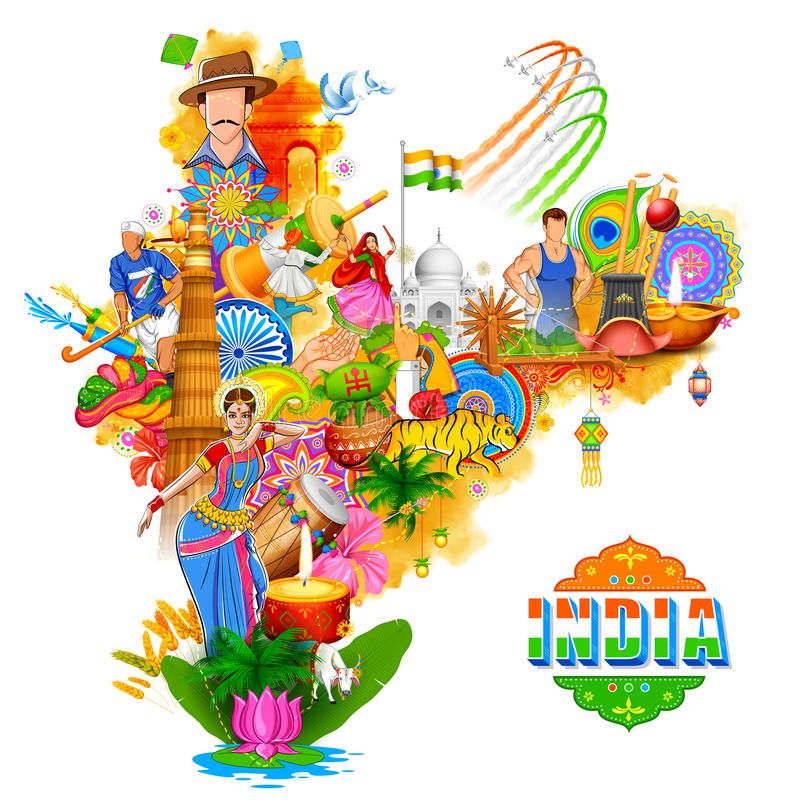
  • Secular traditions are very deep rooted in the history of India. Indian culture is based on the blending of various spiritual traditions and social movements.
  • In ancient India, the Santam Dharma (Hinduism) was basically allowed to develop as a holistic religion by welcoming different spiritual traditions and trying to integrate them into a common mainstream.
  • The development of four Vedas and the various interpretations of the Upanishads and the Puranas clearly highlight the religious plurality of Hinduism.
  • Emperor Ashoka was the first great emperor to announce, as early as third century B.C. that, the state would not prosecute any religious sect.
    • In his 12th Rock Edict, Ashoka made an appeal not only for the toleration of all religion sects but also to develop a spirit of great respect toward them.
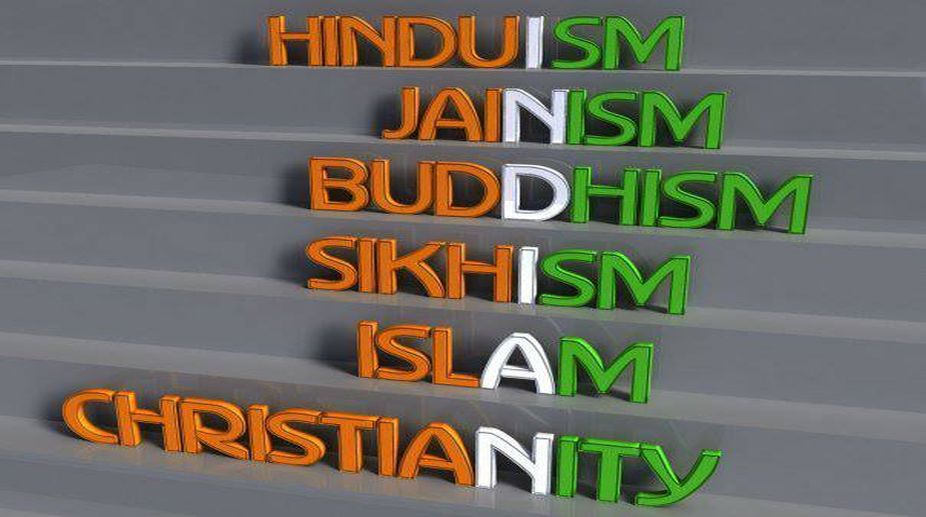
  • Even after the advent of Jainism, Buddhism and later Islam and Christianity on the Indian soil, the quest for religious toleration and coexistence of different faiths continued.
  • In medieval India, the Sufi and Bhakti movements bond the people of various communities together with love and peace.
  • The leading lights of these movements were Khwaja Moinuddin Chisti, Baba Farid, Sant Kabir Das, Guru Nanak Dev, Saint Tukaram and Mira Bai etc.
  • In medieval India, religious toleration and freedom of worship marked the State under Akbar. He had a number of Hindus as his ministers, forbade forcible conversions and abolished Jizya.
    • The most prominent evidence of his tolerance policy was his promulgation of ‘Din-i-Ilahi’ or the Divine Faith, which had elements of both Hindu and Muslim faith.
    • That this was not imposed upon the subjects is obvious from the fact that there were few adherents to it. Along with this he emphasized the concept of ‘sulh-i-kul’ or peace and harmony among religions.
    • He even sponsored a series of religious debates which were held in the ‘Ibadat Khana’ of the Hall of Worship, and the participants in these debates included theologians from amongst Brahmins, Jains and Zoroastrians.
  • Even before Akbar, Babar had advised Humayun to “shed religious prejudice, protect temples, preserve cows, and administer justice properly in this tradition.”
  • The Indian freedom movement was characterized by secular tradition and ethos right from the start.
    • In the initial part of the Indian freedom movement, the liberals like Sir Feroz Shah Mehta, Govind Ranade, Gopal Krishna Gokhale by and large pursued a secular approach to politics.
    • The constitution drafted by Pandit Moti Lal Nehru as the chairman of the historic Nehru Committee in 1928, had many provision on secularism as: ‘There shall be no state religion for the commonwealth of India or for any province in the commonwealth, nor shall the state, either directly or indirectly, endow any religion any preference or impose any disability on account of religious beliefs or religious status’.
    • Gandhiji’s secularism was based on a commitment to the brotherhood of religious communities based on their respect for and pursuit of truth, whereas, J. L. Nehru’s secularism was based on a commitment to scientific humanism tinged with a progressive view of historical change.
  • At present scenario, in the context of Indian, the separation of religion from the state constitutes the core of the philosophy of secularism.

Philosophy of Indian Secularism

  • The term ‘secularism’ is akin to the Vedic concept of ‘Dharma nirapekshata’ i.e. the indifference of state to religion.
  • This model of secularism is adopted by western societies where the government is totally separate from religion (i.e. separation of church and state).
  • Indian philosophy of secularism is related to “Sarva Dharma Sambhava” (literally it means that destination of the paths followed by all religions is the same, though the paths themselves may be different) which means equal respect to all religions.
  • This concept, embraced and promoted by personalities like Vivekananda and Mahatma Gandhi is called ‘Positive secularism’ that reflects the dominant ethos of Indian culture.
  • India does not have an official state religion. However, different personal laws – on matters such as marriage, divorce, inheritance, alimony varies with an individual’s religion.
  • Indian secularism is not an end in itself but a means to address religious plurality and sought to achieve peaceful coexistence of different religions.

Secularism and the Indian Constitution

  • There is a clear incorporation of all the basic principles of secularism into various provisions of constitution.
  • The term ‘Secular’ was added to the preamble by the forty-second constitution Amendment Act of 1976, (India is a sovereign, socialist, secular, democratic, republic).
    • It emphasise the fact that constitutionally, India is a secular country which has no State religion. And that the state shall recognise and accept all religions, not favour or patronize any particular religion.
  • While Article 14 grants equality before the law and equal protection of the laws to all, Article 15 enlarges the concept of secularism to the widest possible extent by prohibiting discrimination on grounds of religion, race, caste, sex or place of birth.
  • Article 16 (1) guarantees equality of opportunity to all citizens in matters of public employment and reiterates that there would be no discrimination on the basis of religion, race, caste, sex, descent, place of birth and residence.
  • Article 25 provides ‘Freedom of Conscience’, that is, all persons are equally entitled to freedom of conscience and the right to freely profess, practise and propagate religion.
  • As per Article 26, every religious group or individual has the right to establish and maintain institutions for religious and charitable purposes and to manage its own affairs in matters of religion.
  • As per Article 27, the state shall not compel any citizen to pay any taxes for the promotion or maintenance of any particular religion or religious institution.
  • Article 28 allows educational institutions maintained by different religious groups to impart religious instruction.
  • Article 29 and Article 30 provides cultural and educational rights to the minorities.
  • Article 51A i.e. Fundamental Duties obliges all the citizens to promote harmony and the spirit of common brotherhood and to value and preserve the rich heritage of our composite culture.

How is our Secularism different than the western form of Secularism

Over the years, India has developed its own unique concept of secularism that is fundamentally different from the parallel western concept of secularism in the following ways:

  • As per the western model of secularism, the “State” and the “religion” have their own separate spheres and neither the state nor the religion shall intervene in each other’s affairs. Thus, the western concept of secularism requires complete separation of religion and state.
  • However, in India, neither in law nor in practice any ‘wall of separation’ between religion and the State exists. In India, both state and religion can, and often do, interact and intervene in each other’s affairs within the legally prescribed and judicially settled parameters. In other words, Indian secularism does not require a total banishment of religion from the State affairs.
  • As per the western model, the state cannot give any financial support to educational institutions run by religious communities.
  • On the other hand, Indian model has chosen a positive mode of engagement. In India, the state provides all religious minorities the right to establish and maintain their own educational institutions which may receive assistance from state.
  • In the western model, State does not intervene in the affairs of religion till the time religion is working within the limits of the law.
  • On the other hand, in Indian secularism, state shall interfere in religion so as to remove evils in it. India has intervened by enforcing legislation against the practices of sati or widow-burning, dowry, animal and bird sacrifice, child marriage, and preventing Dalits from entering temples.
  • In western concept of secularism, religion is relegated entirely to the private sphere and has no place in public life whatsoever. The western model prohibits any public policy to be drafted on the basis of religion therefore; state is absolutely distanced from the religious activities and practices of its citizens.
  • In India, state has the policy of setting up Departments of Religious Endowments, Wakf Boards, etc. It is also involved in appointing Trustees of these boards.

Conclusion

  • In a pluralistic society, the best approach to nurture secularism is to expand religious freedom rather than strictly practicing state neutrality.
  • It is incumbent on us to ensure value-education that makes the younger generation understands and appreciates not only its own religious traditions but also those of the other religions in the country.

What is the importance of transgender in our eyes, and is transgender also a part of our nature?

Often, as soon as there is talk of transgender, many questions come in the mind of people that this is not normal, this transgender is not like us. But the life of transgender is also like us normal human beings, they also have a heart like us, they have a brain like us, they are also hungry like us, they also need shelter like us. So how is it different from us ?transgender is also a part of this beautiful world and nature like us. In our nature apart from male and female, there is another class that is neither completely male nor female. Whom the people of the society know as Hijra or Kinnar or Transgender. And transgender is known by another name which I find very beautiful name for them is Ardhanarishwar which is made for them only.

Transgender: They have both male and female qualities at the same time. Their living style, dress and occupation are also different from both male and female. Despite being like a common man, she is different from us. Transgender If this word is read then it will hardly take a second or two and if we try to understand it, then in 15 to 20 minutes any knowledgeable person will easily explain who are transgender. The same transgender we call Hijra, or six. But we hardly know this pain. By pressing this pain in their chest, transgender’s dance with their palms in front of common people, entertain them. His palms are his sigh and his thumb is pain. These people do not belong to any second or third house but are part of our own society. Because Seeing the way we treat them, the only question that arises in our heart is that eunuchs are not a part of human society? Probably not because it is the people who are indulging in the society, who have accepted only one religion, dance, sing, beat the palm, or you can give any other name if you want, like Hijra, six, etc. We always forget that his body is his too, he takes breath too, he eats food, he also casts his vote, he wears clothes too. Then how is he different from the society?

Our government has made many bills for transgender’s, Ardhanarishwar has also been given the right in the society, he is also a part of our society like us. Ardhanarishwar has been given the right to study like us, he has got all those rights like us, he has been given respect. Some actors have even made movies on them. They have every right to live their life like us because just as we are a part of this world, they are also a part of it.

Now is the time to change us, to change our thinking, To understand Ardhanarishwar as a part of our society, Transgender is also called the form of God Ardhanarishwar, But if we do not consider him as a god, then we should consider him as a human being. And there are many such families in our country who consider Ardhanarishwar as respect and a part of our society And it is true that no one can change it that transgender is an important part of our nature.

MSME


In India, MSMEs contribute nearly 8% of the country’s GDP, around 45% of the manufacturing output, and approximately 40% of the country’s exports. It won’t be wrong to refer to them as the ‘Backbone of the country.’ The Government of India has introduced MSME or Micro, Small, and Medium Enterprises in agreement with the Micro, Small, and Medium Enterprises Development (MSMED) Act of 2006. These enterprises primarily engaged in the production, manufacturing, processing, or preservation of goods and commodities.MSMEs are an important sector of the Indian economy and have contributed immensely to the country’s socio-economic development. It not only generates employment opportunities but also works hand-in-hand towards the development of the nation’s backward and rural areas. According to the annual report by the Government (2018-19), there are around 6,08,41,245 MSMEs in India.

Key Takeaways of New MSME Definition introduced in Aatm Nirbhar Bharat Abhiyan‘ or Self-reliant India Scheme 2020 by Government of India.

  1. Collateral Free Loans to MSMEs
  2. MSME Loans worth Rs. 3 lakh crore
  3. The moratorium period offered is 12 months
  4. Manufacturing and Service MSMEs shall be considered as the same entities
  5. Repayment Tenure of 48 months
  6. 100% Credit Guarantee
  7. To benefit approx. 45 lakh units

Features of Ministry of MSME (MoMSME)

  1. Works for the welfare of artisans and workers
  2. Provides credit limit or funding support from banks
  3. Promotes entrepreneurship development and skill up-gradation via specialized training centers
  4. Supports technology up-gradation, infrastructural development, and modernization
  5. Offers assistance for improved access to domestic and export markets
  6. Provides modern testing facilities and quality certification
  7. Supports packaging, product development, and design intervention


MSME was launched in 2006 to become an integral part of the supply chain for products and services; moreover, a creator of large-scale employment opportunities in rural India. MSMEs contribute to approximately 8% of India’s GDP, employs over 60 million people, has an enormous share of 40% in the exports market and 45% in the manufacturing sector.

10 BEST INDOOR PLANTS FOR YOUR HOME

  1. SPIDER PLANT
Spider Plants are a great indoor plant that purifies the air

Resilient spider plants seem to thrive even when neglected. They prefer moist soil but will forgive you if you forget to water occasionally. Keep spider plants in bright to moderate light, but avoid direct sun. Fertilize spider plants twice a month during the spring and summer.

PROS

  • Spider plants remove benzene, carbon monoxide, formaldehyde and xylene from the air.
  • Spider plant are considered safe for pets.

CONS

  • Who knew? Spider plants are mildly hallucinogens to cats.

2. ALOE VERA

Aloe Vera Plants Make Great Houseplants

Aloe vera plants prefer bright, indirect light. While it prefers moist soil, it seems to do just fine if you forget to water it occasionally. Aloe vera is native to southern Africa, but is now a common household and office plant thanks to its usefulness.

PROS

  • The gel-like sap from aloe vera helps heal cuts and burns.
  • Aloe vera absorbs carbon dioxide and releases oxygen at night, making it nice to have in bedrooms.
  • Your aloe vera plant will regularly produce plantlets. These baby plants can be removed to easily start a new plant.

CONS

  • If you take your aloe plant outside for the summer sun, don’t be surprised if it’s a pest magnet. The juices in this succulent are irresistible to sap-sucking insects. 

3. ENGLISH IVY

English Ivy Indoor Plant

English ivy (Hedera helix) is an easy-to-grow plant that does not like direct sunlight but does prefer bright light. It needs moist soil and cooler temperatures than most other house plants at about 50°F to 65°F (10°C to 18°C). Ivy likes humidity, so make sure you mist it or place it in a tray of pebbles and water. Regular fertilizing, except during the winter, is important to English ivy.

PROS

  • Research presented to the American College of Allergy, Asthma & Immunology found ivy reduces air pollutants including mold and dog feces.

CONS

  • It can be toxic to children and pets. This is due to the fact that English ivy generates a chemical called glycoside hederin. This chemical can produce a number of symptoms if ingested, including nausea, diarrhea, fever and difficult breathing.
  • English ivy can cause contact dermatitis to those sensitive to it. It’s not uncommon to confuse this rash with rashes caused by poison ivy.
  • If your light isn’t bright enough, English ivy will become leggy and sickly in appearance. This also leaves them prone to pest problems.

4. ARECA PALM

Areca Palm - Great Office Plants

If you’re after a tropical look for your home or office, the areca palm is the one. Areca palm looks exotic, elegant and stately. It prefers bright, indirect light and moist, well-drained soil. However, be careful not to overwater. In the spring, you can try using a time-release fertilizer.

PROS

  • The areca palm is featured on NASA’s list of air-purifying plants.
  • It removes benzene, formaldehyde and trichloroethylene from the air.
  • Areca palm adds humidity to indoor air.
  • Rarely suffers from problems from pests and diseases.

CONS

  • Areca palm plants require a large pot and they can grow quite big.
  • If not acclimated to office or home lighting, it can weaken rapidly after being removed from a greenhouse setting.
  • Can succumb to root rot.

5. GOLDEN POTHOS

Golden Pothos are Great Office Plants

Even if you think you have a “black thumb,” you can probably grow golden pothos. This plant does well in low light and is forgiving if you miss an occasional watering. In fact, the golden pothos prefers to dry out in between watering.

PROS

  • The golden pothos is easily one of the most common houseplants. It’s attractive and easy to grow.
  • Golden pothos is considered an air-purifying houseplant.
  • While root rot is a common problem with most houseplants, but the golden pothos rarely succumbs to this condition.
  • You’ll know when you need to water a golden pothos by its drooping leaves. Droopy leaves that cannot be revived by watering are a sign the golden pothos needs to be repotted into something larger.

CONS

  • This plant is toxic to ingest because it includes oxalates, so keep it away from pets and children who might try to eat the leaves.

6. SNAKE PLANT

Snake Plants can help clean your indoor air

Also known as mother-in-law’s tongue and by its species name (Sansevieria trifasciata), snake plant is hardy and adds a unique look to your decor with its upright, strap-like leaves. It can tolerate low water and light environments, though it prefers bright, indirect light.

PROS

  • Snake plants are on the NASA list of houseplants that clean and filter indoor air.
  • Caring for snake plants is relatively easy. Water them at their base. They can survive with fluorescent lighting. If they’re in a window, rotate them a quarter turn every week.

CONS

  • Saponins in snake plant leaves make it toxic to pets and may cause nausea and vomiting.

7. MINT

Growing mint indoors helps keep bugs away and purifies the air

Mint is one of the best herbs to grow inside because you can control where it spreads. When mint is outdoors, it tends to take over entire regions of your yard. When it’s in a small planter, it can be contained while still offering all the benefits that mint leaves present.

PROS

  • Mint plants act as their own natural insecticide and repel bugs.
  • Mint is great for adding natural flavor to iced tea and other beverages.

CONS

  • Once mint buds, its sprigs lose their signature taste. Pinch off flowering buds as they appear to extend the harvesting season.
  • Mint requires high-moisture conditions to grow, so watering is mandatory!

8.  DIEFFENBACHIA

Dieffenbachia houseplant that helps clean the air

Dieffenbachia, also called dumb cane, is a beautiful plant with leaves that feature an attractive mottled pattern. Dieffenbachia plants need well-drained, moist soil. It does best with low, indirect light, which makes it a great indoor plant for the home and office. Your dieffenbachia can also get as tall as 4 feet or more if you care for it well.

PROS

  • The dumb cane plant can improve indoor air quality.
  • Dieffenbachia is easy to grow when exposed to filtered light.

CONS

  • It’s toxic to pets and children. Pets will drool excessively and demonstrate oral irritation, including difficulty swallowing.
  • Overwatering is a common problem for dieffenbachia plant owners. It needs well-drained soil that is consistently moist but not soggy.
  • It can lean toward light sources, so rotate it regularly to keep it straight.

9. HEART LEAF PHILODENDRON

Heart Leaf Philodendron Indoor Plant

Heart Leaf Philodendron is a vigorous vining plant that makes a great indoor plant for the home or office. It prefers moderate to low indirect light. You should keep the soil moist, and occasionally mist the plant for ideal watering.

PROS

  • It effectively removes VOCs from the air, especially formaldehyde.
  • Heart Leaf Philodendron plants may bloom at any time of the year. Its blooms look a lot like peace lily flowers.

CONS

  • Heart Leaf Philodendron is toxic to pets and children. Pets will exhibit irritation to the mouth, tongue and lips, as well as drooling, vomiting and trouble swallowing.
  • Expect vigorous growth, which will demand regular pruning.
  • This plant is subject to a wide variety of pests, including thrips, scale, mealybugs, spider mites and aphids. 

10. BAMBOO PALM

The Bamboo Palm makes a Great Office Plants

Bamboo palms are great plants if you want to add a tropical feel to your home or office. While this houseplant, also called parlor palm, prefers bright light, it can do very well in low light as long as it receives enough water. However, make sure you don’t overwater the bamboo palm. Wait until the top of the soil is dry. This plant likes high humidity, so consider placing it on a tray of pebbles with water added. As the water evaporates, add more so the pebbles are almost covered.

PROS

  • Bamboo palm is excellent at reducing the airborne formaldehyde that is released by new furniture.
  • Bamboo palm is nontoxic to pets.

CONS

  • Spider mites are common pests to the bamboo palm. If you see webbing in the leaves, spray on the top and bottom of leaves.

SEVEN SISTERS


Northeast India, one of the most beautiful regions of India, is also known as the “Seven Sisters”. It includes Arunachal Pradesh, Assam, Manipur, Meghalaya, Mizoram, Nagaland, and Tripura states. Northeast is connected to the rest of the country by a narrow stretch of land between Bhutan and Bangladesh, and surrounded by an extremely sensitive frontier with Chinese-occupied Tibet and a 1600 km long border with Myanmar.

Every year thousands of children from these states travel all over the country for higher education and Delhi university in the capital state of the country is one of the favorite spots for it. And this institute also makes sure that they help them settle. One Northeast multi-cultural show is also one of those efforts to help students showcase their talent and cultural diversity. Mask Dance from Meghalaya, Pung Cholom & Basanta Ras Leela from Manipur, Satriya nritya from Assam, Naga Dance from Nagaland, and Bamboo Dance from Mizoram was part of the show.

The population of eastern India [northeast India in our vocabulary] includes a large population of tribal and minority people who speak languages closely related to languages of Southeast Asia rather than to the languages of India proper, and their cultures in many ways resemble the cultures of neighboring Southeast Asian peoples. Just as the southern boundary of China does not make a cultural or linguistic division, the eastern border of India does not mark off a cultural or linguistic area. Eastern India thus is an area where Southeast Asian highlanders come in contact with a highly stratified lowland society based on caste.

The Citizenship Amendment Act protests have been going on in India’s North East, especially in Assam, since 2016. Assam’s civil society, the largest farmers’ organisation, student organisations, pressure groups, teachers, writers, actors, indigenous people’s rights organizations, tribal people’s rights organisations, all have been opposing the Bharatiya Janata Party’s sinister design, along with other states in India’s North East.


                                                                                                                         E.LALITHA

AI IN POWER SYSTEMS

ARTIFICIAL INTELLIGENCE IN POWER SYSTEM

The term Artificial Intelligence was coined by John Mc Carthy in the year 1956. It is the art of science and engineering, which makes intelligent machines.


WHAT IS AI IN POWE SYSTEM?

  • High efficiency                                            
  •  Problem solving
  • Accuracy                                                      
  • Critical thinking
  •  Speed                                                          
  •  Applicable
  • Easy Adoption                                              
  • Especially for power systems where conventional methods                                          which experience difficulty
  • Precision
  • Vast  Data Management 
  • Memory


Three major families of AI,

  1. Expert system Techniques
  2. Artificial Neural Network
  3. Fuzzy Logic System

EXPERT SYSTEM


An expert system provides information about the specified domain from the human experts and convert into the machine implementable form. 
They are computer programs which have proficiency and competency in the particular field.
 They are also known as the Knowledge based system or ruled based system. They solve the problems which are very difficult to solve by human skill and intellectual. 
Any modifications can be easily done because they are just computer programs. Estimation of values can be done and efficiency is easily estimated.


ARTIFICIAL NEUTRAL NETWORKS

Artificial neural networks are biologically inspired system which converts a set of outputs by a network of neurons, where each neuron are able to produce output.
The understanding and working process and the pattern are interconnected with the computers by solving real world problems of classification of patterns and pattern recognition.
As ANNs operate in biological instincts and perform biological evaluation of real world problems in generations and transmission and distribution of electric cars can be fed to ANN so that suitable solution can be obtained.
Example: The value of inductance, capacitance and resistance in a transmission and distribution can be calculated by various factors.


FUZZY LOGIC SYSTEM

Fuzzy logic is the standardization system of any logical reasoning system.
They provide Data to produce information based on the human decision making which is accurate and reliable.
It is what exactly human brain works and they can perform exactly like machines.
They provide solutions such as high excessive date, capacity for modelling data with high generality.


EXPLANATION

Fuzzy diagram can be used for the fault diagnosis.

Expert and ANNs can be used in the performance of the line. Environmental sensors sense the environment and atmospheric conditions and they give input to the system. They provide output with the validation.

CONCLUSION

The main feature of the power system technique is reliability, conventional technique and they don’t fulfil the probabilistic essence of the power system, this provides the increased operations and maintenance costs. A lot of research is now being processed for the monitoring of the efficient electricity market as they are power system which is the renewable form in the operations.


MACHINES vs HUMANS

A systematic way of living life evolved gradually over the years. Early humans, over time, developed ways to sustain. Earlier they survived on grass and leaves and slowly tools were devised for hunting down animals. The invention of fire played a crucial role in the life of man. 

All this happened years ago, but the zeal of man to invent and develop new things, for his smooth lifestyle sees no stop. We live in a highly technology-driven world. A world where technology has become an inevitable part of our life. These technological developments include the invention of machines and artificial intelligence. 

When it comes to artificial intelligence, which is very popular these days, versus the human brain, some people believe artificial intelligence is more efficient than the human brain. As time passed by, humans became dependent on machines. Humans need to interact with each other because communication is not possible with machines. We feel comfortable in expressing, probing, and getting our problems solved with humans.

Is it possible that technology will one day surpass the human brain or rather, humans collectively? That we will be subject to the technological devices we are making for our ease? Let us try to see.

They are a creation of mankind – Humans are the most superior ( though not important) creatures on the earth. They have emotions and feelings, they express different emotions at different times. Machines work with their mechanical brain which is programmed by humans. Humans understand the situation and respond accordingly whereas machines do not have the capability of understanding. This makes humans superior to machines because though they may solve technical problems and materialistic ones, but at the emotional level, a human requires the presence of another human.

Impact of technology on human life – 

Machines and technology are replacing manpower for certain jobs and this is the big reason for unemployment and which is also a drawback of the machines. As humans are being replaced by machines hence certain jobs are disappearing. The industrial revolution has also led to unemployment, as a result, there is a loss of medium-skill jobs in various sectors.

Some effects of a machine on humans are competency, wars, and destruction, The radiation released from smartphones is absorbed by human bodies which can cause tumors, and also the power consumption has increased.

The increasing use of vehicles has increased air pollution that is damaging the environment. The effect of technology on our environment is severe and is responsible for drastic climate changes such as Global warming which leads to several diseases in humans. Technological machines are also responsible for the extinction of several birds, plants, and animal species due to climate changes.

Conclusion

Machines have become a very important part of our lives and undoubtedly are helpful in many ways, though it also harms our lives. There is no competition between humans and machines because humans are the creators of the machine. Humans have created machines for their use and it is also important to know the purpose of developing machines and artificial intelligence and their impact on human life. Machines can be used for creation as well as destruction by the power of human intelligence for the very humans who created them.

Fast Fashion Vs Slow Fashion

Today’s fashion is derived by material and methods that have opposite reaction to environment. Fast fashion concentrates on production of cheap, quick and trendy clothing. Garments that are fresh and highly demanded are massively produced that have social and environmental impact. To ward off irrevocable environmental damage, slow fashion is taking on the fashion industry. Slow fashion is quality based, while fast fashion is time focused. Movements have been run to protect people and planet by spreading awareness about the growing sustainable clothing concept and how eco-friendly production of slow fashion is. Brands these days are reinforcing materials that were out of trend with the proven fact of being planet friendly.

Slow fashion aims to regulate textile waste with slower and smaller production. Clothing under fast fashion is recycled withing a year or two but slow clothing production prevents regular recycling and ensures sustainable clothes with zero-waste designs.

Fast fashion had been acquired to provide to accelerating fashion desires and meet shooting trends. Fashion shows showcase seasonal collections that brands tend to launch. The hype generated through these shows influence quick and faster production with fabrics and methods that superfluously pollute landfills.

One of the prominent reasons, fast fashion is favoured over sustainable fashion is because of its ability to create highly intricate designs and looks. Slow fashion on the other hand does not chase trends and complex looks. It creates designs that would last and encourage minimal wastage.

Why fast fashion is being slowly replaced by slow fashion?

Pollution is a major problem caused by toxics released while producing fast fashion clothes. Fertilizers that are used have heavily contaminated water leading to water pollution.

Recent studies have stated that to produce 1kg of cotton, 20,000 liters of water is used. Resources are already scarce and producing such garments are pushing resources to terrible extent.

Water consumption is so extreme that it’s exceeding the limit of daily consumption of the whole population.

Synthetic Fibers like polyester and plastic are included that are not environmentally safe like linen. Such fibers are considered as danger to the planet.

Clothes are recycled or donated which directly are dumped into the landfills. The fibers used are non-biodegradable that result to be toxic waste polluting land.

Microfibers released into the water are swallowed by aquatic animals. Millions of plastic microfibers are claimed to float in the air simply by washing of clothes.

Few traits of slow fashion that sets it apart from fast fashion –

  1. Quality clothes with use of sustainable fabrics like linen.
  2. Lesser time required
  3. Prevents excessive production
  4. Clothes are locally produced and sold.
  5. Few seasonal collections

Slow fashion has flipped the usual consumer consumption and behavioral pattern. Intensive production is discouraged through slow fashion movement. Increased awareness through this movement has inspired people to support it and implement use of sustainable clothes as much as possible.

Slow fashion is often considered similar to sustainable fashion. Sustainable fashion is related to environment and capturing unethical fashion practices towards environment. Slow fashion tackles consumer fashion habits to improve deteriorating environmental conditions.

Slow fashion movement is set to change world of fashion and promote safe and holistic advancement towards modern fashion. Getting people to voice against excruciating impact of fast fashion is the motive of the movement. Betterment of the planet is placed first than fashion to save a beautiful earth for the future. If you feel the same then you must support this movement.