Artficial Intelligence

 Artificial Intelligence(AI)


What Is Artificial Intelligence (AI)?

Artificial intelligence (AI) refers to the simulation of human intelligence in machines that are programmed to think like humans and mimic their actions. The term may also be applied to any machine that exhibits traits associated with a human mind such as learning and problem-solving.

The ideal characteristic of artificial intelligence is its ability to rationalize and take actions that have the best chance of achieving a specific goal. A subset of artificial intelligence is machine learning, which refers to the concept that computer programs can automatically learn from and adapt to new data without being assisted by humans. Deep learning techniques enable this automatic learning through the absorption of huge amounts of unstructured data such as text, images, or video.

Understanding Artificial Intelligence (AI):


When most people hear the term artificial intelligence, the first thing they usually think of is robots. That’s because big-budget films and novels weave stories about human-like machines that wreak havoc on Earth. But nothing could be further from the truth.

Artificial intelligence is based on the principle that human intelligence can be defined in a way that a machine can easily mimic it and execute tasks, from the most simple to those that are even more complex. The goals of artificial intelligence include mimicking human cognitive activity. Researchers and developers in the field are making surprisingly rapid strides in mimicking activities such as learning, reasoning, and perception, to the extent that these can be concretely defined. Some believe that innovators may soon be able to develop systems that exceed the capacity of humans to learn or reason out any subject. But others remain skeptical because all cognitive activity is laced with value judgments that are subject to human experience.

Applications of Artificial Intelligence:


The applications for artificial intelligence are endless. The technology can be applied to many different sectors and industries. AI is being tested and used in the healthcare industry for dosing drugs and different treatment in patients, and for surgical procedures in the operating room.

Other examples of machines with artificial intelligence include computers that play chess and self-driving cars. Each of these machines must weigh the consequences of any action they take, as each action will impact the end result. In chess, the end result is winning the game. For self-driving cars, the computer system must account for all external data and compute it to act in a way that prevents a collision.

Artificial intelligence also has applications in the financial industry, where it is used to detect and flag activity in banking and finance such as unusual debit card usage and large account deposits—all of which help a bank’s fraud department. Applications for AI are also being used to help streamline and make trading easier. This is done by making supply, demand, and pricing of securities easier to estimate.

Categorization of Artificial Intelligence:


Artificial intelligence can be divided into two different categories: weak and strong. Weak artificial intelligence embodies a system designed to carry out one particular job. Weak AI systems include video games such as the chess example from above and personal assistants such as Amazon’s Alexa and Apple’s Siri. You ask the assistant a question, it answers it for you.

Strong artificial intelligence systems are systems that carry on the tasks considered to be human-like. These tend to be more complex and complicated systems. They are programmed to handle situations in which they may be required to problem solve without having a person intervene. These kinds of systems can be found in applications like self-driving cars or in hospital operating rooms.

FOOD SECURITY IN INDIA

Food security means availability, accessibility and affordability of food to all people at all times. It has been a major concern in India. Food is as essential for living as air is for breathing. The poor households living in the rural areas are more vulnerable to food security. Food security has following dimensions-

1- Availability of food- It means that enough food is produced within the country, it must be available in every part of the country and there should be no deficit.

2- Accessibility of food- It means food is within reach of every person, there is no barrier on access to food.

3- Affordability of food- It means that an individual has enough money to buy sufficient and nutritious food to meet one’s basic needs.

India ranks 71 out of 113 major countries in terms of food security index 2020.

WHY FOOD SECURITY?

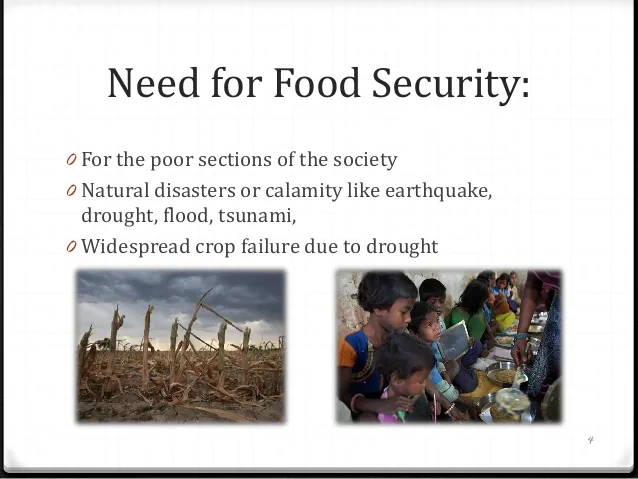
The poorest section of the society might be food insecure while even persons above the poverty line might also be food insecure when the country faces a disaster or calamity like earthquake, flood, drought, failure of crops causing famine. A famine means the widespread deaths due to starvation and epidemics caused by forced use of contaminated water or decaying food and loss of body resistance due to weakening from starvation. There are places like Kalahandi and Kashipur in Orissa where famine-like conditions have been existing for many years and some starvation deaths have also been reported. The most devastating famine that occurred in India was the FAMINE OF BENGAL in 1943. This famine killed 30 lakh people in the province of Bengal. So food security is needed in a country to ensure food at all times.

HOW IS FOOD SECURITY AFFECTED DURING A CALAMITY?

Due to a natural calamity, total production of foodgrains decreases. It creates a shortage of food in the affected areas. Due to shortage of food, the prices goes up. At high prices, some people cannot afford to buy food. If such calamity happens for a longer time period, it may cause a situation of starvation.

WHO ARE FOOD- INSECURE?

Although a large section of people suffer from food insecurity in India, the worst affected groups are landless people with little or no land to depend upon, traditional artisans, petty self-employed workers and beggars. In the urban areas, the food insecure families are those whose working members are generally employed in ill-paid occupations and casual labour market. These workers are paid very low wages that just ensure bare survival. The SCs, STs and some section of the OBCs who have either poor land-base or very low land productivity are prone to food insecurity. The people affected by natural disasters are also among the most food insecure people. The food insecure people are large in economically backward states with high incidence of poverty, tribal and remote areas, regions more prone to natural disasters etc. In fact, the states of Uttar Pradesh Jharkhand, Orissa, Chhattisgarh account for largest number of food insecure people in the country.

HUNGER-

Hunger is another aspect indicating food insecurity. It brings about poverty. The attainment of food security therefore involves eliminating current hunger and reducing the risks of future hunger. Hunger has chronic and seasonal dimensions. Chronic hunger is a consequence of diets inadequate in terms of quantity or quality. Seasonal hunger is related to cycles of food growing and harvesting. This type of hunger exists when a person is unable to get work for the entire year.

India is aiming at Self-sufficiency in Food grains since Independence. After Independence, Indian policy-makers adopted all measures to achieve self-sufficiency in food grains. India adopted anew strategy in agriculture which resulted in ‘Green Revolution’, especially in the production of wheat and rice.

Since the advent of the Green Revolution in the early 1970s, the country has avoided famine even during adverse weather conditions. India has become self-sufficient in foodgrains during the last 30 years because of a variety of crops grown all over the country. The availability of foodgrains at the country level has been ensured with a carefully designed food security system by the government. This system has two components- 1. Buffer Stock 2. Public Distribution System

Buffer Stock is the stock of foodgrains, namely wheat and rice, procured by the government through the Food Corporation of India TH(FCI). The FCI purchases wheat and rice from the farmers of the state where there is surplus production and the farmers are paid a pre-announced price for their crops. This price is called Minimum Support Price.

The food procured by the FCI is distributed through government regulated ration shops among the poorer section of the society. This is called the Public Distribution System (PDS). The PDS has proved to be the most effective instrument of government policy over the years in stabilising prices and making food available to consumers at affordable prices.

ROLE OF COOPERATIVES IN FOOD SECURITY-

The cooperatives are also playing an important role in food security in India especially in the southern and western parts of the country. The cooperative societies set up shops to sell low priced goods to poor people. For example, out of all fair price shops running in Tamil Nadu, around 94% are being run by the cooperatives. In Delhi, Mother Dairy is helping in provision of milk and vegetables to the consumers. Amul is another success story of cooperatives in mil and mil products from Gujarat. It has brought about the White Revolution in the country. Thus cooperatives are playing a major role in ensuring food security in India.

LUCID DREAMS

Photo by Pixabay on Pexels.com

We spend one third of our life dreaming. Sometimes dreams are happy, scary, unexplainable and even an indication of what is going to happen in future. There is a popular saying that the dreams we see in the morning are usually true and real, though there is no scientific proof to it. We usually dream what we think, stress is an important factor in dreams. Less stress means happy dreams.

But will you believe it if I tell you that you can actually control your dreams?🤔
A dream where one becomes aware of the dream it is known as lucid dreaming. And there are people who do this. You can do it too!! Let’s know how.
People have been studying lucid dreams for a very long time, from ancient to modern it has been studied to understand the cause and purposes of it. As a result many theories have emerged, though it is still under research.


This term was given by Dutch author and psychiatrist Fredreik Van Eeden. In his article A Study of Dreams in 1913. He studied his own dreams for a period of time and wrote them in his dream diary, 352 of his dreams were categorized as lucid.
He mentioned 7 different types of dreams and out of which he considered lucid dreams most interesting and worthy of observation.
The reference to this phenomenon can be found in ancient greek writings. According to Aristotle, Greek philosopher, “often when one is asleep, there is something in consciousness which declares that what then presents itself is but a dream”. Other than Aristotle, physician Sir Thomas Browne, Samuel Pepys and more have mentioned lucid dreaming.
In 2020 there was a large increase in reports of lucid dreams compared to the previous year.


There are a few conditions for a dream in order to be defined as a lucid dream and these were given by Paul Tholey. The conditions are:
1. Awareness of the dream state (orientation)
2. Awareness of the capacity to make decisions
3. Awareness of memory functions
4. Awareness of self
5. Awareness of the dream environment
6. Awareness of the meaning of the dream
7. Awareness of concentration and focus (the subjective clarity of that state)

Photo by Nadi Lindsay on Pexels.com

Lucid dreams are often found to be affective in treating nightmares. Physiotherapists have also been including lucid dreaming as a part of therapy. There are also books and movies based on this like inception, paprika, etc.
Though lucid dreaming has been beneficial in many aspects but for the people who experience it for the first time can go through the feelings of stress or confusion. People who see lucid dreams very often might feel empowered and also isolated from others in terms of their dreaming experience which is quiet different to others. Others might experience sleep paralysis, which is sometimes confused with lucid dreams.

Read about sleep paralysis here: https://edupub.org/2021/08/12/sleep-paralysis/

There are many methods using which one can experience lucid dream like, make a dream diary and jot down the dreams you remember, diary alone won’t help but it will be beneficial with other methods. Some devices and drugs are also used.

MUMMY

Mummies are dehydrated & they

long for the blood of living words”

~ Hakim Bey

A mummy is a person or animal whose body has been dried or otherwise preserved after death. When people think of a mummy, they often envision the early Hollywood-era versions of human forms wrapped in layers upon layers of bandages, arms outstretched as they slowly shuffle forward. Mummies may not literally rise from their ancient tombs and attack, but they’re quite real and have a fascinating history.


What are mummies?

The practice of preserving a body as a mummy is widespread across the globe and throughout time. Many civilizations-Incan, Australian aboriginal, Aztec, African, ancient European and others-have practiced some type of mummification for thousands of years to honor and preserve the bodies of the dead.

 Since most bacteria can’t thrive in extreme temperatures, exposing a corpse to the sun, fire or freezing temperatures was an uncomplicated way to create a mummy.

Some mummies happened by accident. Take, for instance, the Accidental Mummies of Guanajuato, a collection of over 100 mummies found buried in above-ground crypts in Mexico. Those bodies weren’t mummified on purpose. It’s thought either extreme heat or the area’s rich geological stores of sulfur and other minerals suffer the mummification process

Some  Buddhist monks practiced self-mummification by spending years starving their bodies and only eating foods that promoted decay. Once their body fat was gone, they spent a few more years drinking a poisonous sap to cause vomiting to get rid of bodily fluids. The poison also made the body an unsavory future host for corpse-eating bugs.

When the time was right, the monks were buried alive to await death and mummification. Death came quickly, but self-mummification seldom worked.

Egyptian Mummies

No matter how a body was mummified, the end game was the preservation of as much skin tissue as possible—and the priests of ancient Egypt  are considered the experts on the process. Egypt’s arid climate made it easy to dry out and mummify a corpse, but the Egyptians routinely used a more elaborate process to ensure the dead experienced safe passage to the afterlife.

The mummification process for royalty and the wealthy often included:

  • washing the body
  • removing all organs except the heart and placing them in jars
  • packing the body and organs in salt to remove moisture
  • embalming the body with resins and essential oils such as myrrh, cassia, juniper oil and cedar oil
  • wrapping the embalmed corpse in several layers of linen

Ancient Egyptians of all walks of life mummified deceased family members, but the process wasn’t as elaborate for the poor. According to Egyptologist Salima Ikram, some corpses were simply filled with juniper oil to dissolve organs before burial.

Mummies as Medicine

According to a 1927 abstract published in Proceedings of the Royal Society of Medicine, medicinal preparations made from powdered mummies were popular between the twelfth and seventeenth centuries. During that time, countless mummies were disentombed and burned to meet the demand for “mummy medicine.”

The interest in mummies as medicine was based on the supposed medicinal properties of bitumen, a type of asphalt from the Dead Sea. It was thought mummies were embalmed with bitumen, but that was rarely the case; most were embalmed with resins.

” The pyramid shape is said to hold

many secrets and amazing properties.

one of them is sense of wonder”

~ Vera Nazarian

B+ TREES

The B+ tree is almost identical to the binary search tree. It is a balanced tree where the search is directed through internal nodes. The data entries are present in the leaf nodes of the B+ tree. B+ trees support both random and sequential access since the leaf nodes are interconnected with each other through links.

STRUCTURE OF B+ TREE

The general node structure of B+ node is as follows 

  • It contains up to n – 1 search-key values K1, K2, . . ., Kn-1, and n pointers P1, P2, . . ., Pn.
  • The search-key values within a node are kept in sorted order; thus, if i < j, then Ki < Kj.
  • To retrieve all the leaf pages efficiently we have to link them using page pointers. 
  • The sequence of leaf pages is also called a sequence set.
  • In a B+ tree, the tree structure tends to grow on the insertion of new records and shrinks on the deletion of existing records. Hence it is called a dynamic tree.

CHARACTERISTICS OF B+ TREE

The following are the characteristics of the B+ tree:

  • The B+ tree is a balanced tree and the operations such as insertion and deletion keep the tree balanced.
  • Each node, except for the root node, must be compulsorily occupied with at least 50%.
  • Searching becomes so simple because traversing from the root to the relevant leaf nodes results in the record.

INSERTION OPERATION

Algorithm for Insertion:

Step 1: Find correct leaf L.

Step 2: Put data entry onto L.

  • If L has enough space, done!
  • If there is no space, split L (into L and a new node L2)
  • Allocate a new node
  • Redistribute entries evenly
  • Copy up the middle key.
  • Insert index entry such that it points to L2 into the parent of L.

Step 3: This can happen recursively. To split the index node, redistribute entries evenly, but push up the middle key. (Contrast with leaf splits).

Step 4: Splits “grow” tree; splitting the root increases the height. The tree grows either wider or one level taller at the top.

DELETION OPERATION

Algorithm for deletion:

Step 1: Start from the root to find the leaf node L with the entry.

Step 2: Remove the entry,

  • If L is at least half-full, done!
  • If L has only d-1 entries,
  • Try the redistribution technique by borrowing keys from the adjacent node (sibling) with the same parent node as L.
  • If a failure occurs when tried to re-distribute, merge L and sibling.

Step 3: Whenever a merge occurs, entry (pointing to L or sibling) must be deleted from the parent of L.

Step 4: Merge could pass the entries to the root, reducing the height of the tree.

MERITS OF B+ INDEX TREE STRUCTURE

1. In the B+ tree the data is stored in the leaf node so searching of any data requires scanning only of leaf node alone.

2. Data is ordered in the linked list.

3. Any record can be fetched in an equal number of disk accesses.

4. Since the leaf nodes are linked, performing range queries is easy.

5. Since keys are used for indexing, the height of the tree is less.

6. Supports both random and sequential access.

DEMERITS OF B+ INDEX TREE STRUCTURE

1. Extra insertion of non-leaf nodes.

2. There is space overhead.

Ban on Single Use Plastic from July 2022

 The Environment Ministry released a notification on 12th August,2021, about ban on single-use plastic items. The Ministry’s notification on waste management amendment, 2021, states that “The manufacture, import, stocking, distribution, sale, and use of single use plastic, including polystyrene, and expanded polystyrene commodities shall be prohibited with effect from 1st July, 2022.”

What will be banned?

The amendment prohibits the plastic items which have “low utility and high littering potential”. It also aims to ban Polythene bags with lower levels of thickness, in a phased manner. Polythene bags with less than 50 micron thickness are already banned. Bags with thickness less than 70 micron will be banned by September. By 31st December, next year, Polythene with less than 120 micron thickness will also be banned. 

The main items that will be banned from next year includes;  plastic sticks found in earbuds, balloons, flags, ice creams, candies, etc. It also includes thermocol used for decoration and single use plastic cutlery items such as fork, knife, spoon, plates, cups, glasses, straw, trays, wrapping film around the sweet boxes. PVC banners with less than 100 micron will also be banned.  The ban is not applicable to any compostable plastic. 

According to the statements by the officials, the main objective of these changes is to protect the environment from harmful plastics. The major reason is that the plastic waste is neither collected nor recycled properly. Thicker plastic is easier to be recycled, as compared to the thinner or single-use plastic items. Officials have said that the alternatives for the banned plastic items such as single use cutlery will be ensured and promoted. 

As per the data of The Environment Ministry and The Energy Resources Institute (TERI) in 2018, 43% of the plastic manufactured is mostly for single use, and are used for the purpose of packaging. 9.7kg plastic is used by each person annually in India, most of which is used for packaging related activities. According to the experts, the consumption and waste management pattern has to be shifted with a more eco-friendly approach. Single use plastic contaminates the water as well as soil. It also chokes the waterways and blocks the sewage system. 

The reforms will be monitored by the Central Pollution Control Board and the State Pollution Control Boards. They will ensure to take into consideration the violations and impose penalties as per the Environmental Protection Act. The states and Union Territories have been requested to coordinate with a special task force to ensure the elimination of single use plastic. Previously, India had addressed the issue of single use plastic in the 4th UN environment assembly held in 2019. 

With the cooperation of the policy makers, manufacturers and the citizens, plastic waste can be reduced to a great extent.


IMMUNOLOGY SERIES-PART 5- INTRODUCTION TO THE IMMUNE CELLS

The previous article was about the acquired immunity. This article is all about the immune cells, the warriors of the human body.

These cells play a major role in protecting the body from infections. Some of them contribute directly and some contribute indirectly. Despite the methods, all of them are required in optimum amounts so as to live a healthy life.

All of these cells are derived from a specific type of cell found in the blood. The blood is a freely flowing interstitial fluid that transports oxygen, nutrients, etc. to the cells of the body. There are two components in the blood in which the first one is called plasma. The plasma is the liquid carrying water, salts, enzymes, and proteins. There are three specialized proteins in the plasma-

Albumin- to maintain water balance

Globulin- for immunity (it is a part of immunoglobulin)

Fibrinogen- for clotting

Hence the plasma also contributes to immunity. This plasma constitutes about 55% of the blood. The rest 45% of the blood is constituted by the formed elements or corpuscles. There are three elements in it namely-

Erythrocyte or Red Blood Corpuscle- transport of oxygen

Leucocyte or White Blood Corpuscle- fight infections

Thrombocyte or platelets- for clotting

Out of these, the WBC is the one primarily contributing to immunity. A healthy person must have a WBC count from 4000-11000. Count less than 4000 means leukopenia meaning that the immune system is weak. If the count is more than 11000 then it means the condition of autoimmunity known as leucocytosis. There are some further classifications in the WBC which are displayed through the flowchart below.

There are two types of cells in the WBC namely the granulocytes and agranulocytes.

The granulocytes, as the name specifies have granules in their cytoplasm. There are three different cells in this.

The neutrophil constitutes to about 55-70% of the total WBC and they are ones involved in most of the fights against the infections. These defend against bacterial and fungal infections. These cells are mostly found in the epidermal regions and are in the first line of defense.  These cells engulf the pathogens by the process of phagocytosis. These cells have multiple nuclei hence these are also known as PMN (Poly Morpho Neutrophils). Neutrophils help prevent infections by blocking, disabling, and digesting off invading particles and microorganisms. They also communicate with other cells to help them repair cells and mount a proper immune response. The death of these cells often results in the formation of pus (suppuration).

neutrophil

The eosinophil constitutes about 2-4% of the total WBC. These cells are very little in the body but can increase in the case of allergic reactions, parasite infection, and so on. The functions of the eosinophil include movement to inflamed areas, trapping substances, killing cells, anti-parasitic and bactericidal activity, participating in immediate allergic reactions, and modulating inflammatory responses.

eosinophil

The basophil is present in the least concentration of all (0.2%) in total WBC. These cells play an important role in allergic reactions in which their count can increase. The basophil contains inflammatory mediators like histamine and heparin. The release of the compounds results in dilation of the blood vessels. Hence these cells regulate the inflammation process.

The agranulocytes are those which lack granules in their cytoplasm. There are two types in this. The lymphocyte can be called as the memory of the immune system. There are two types of lymphocytes namely T and B lymphocytes. These lymphocytes recognize the incoming pathogens and based on their memory it produces a suitable response in a short amount of time. These cells are involved in the secondary response in the acquired immunity.

B cells make antibodies that can bind to pathogens, block pathogen invasion, activate the complement system, and enhance pathogen destruction. The T cells mostly known as CD4+ T helper cells produce the cytokines (proteins in cell signaling) and coordinate with the immune system. There is another form called CD8+ cytotoxic T cells which is opposite to the previous type, they help in the destruction of tumors and pathogens.

The monocyte is the largest of all the cells in WBC. They function similarly to that of the neutrophils (phagocytosis of the pathogens). These cells present the pathogen to the memory cells upon which a response is generated. Once they leave the blood, they turn into macrophages which help in clearing cell debris and killing pathogens. These are known as the vacuum cleaners of immunity.

Hence all these cells work in different mechanisms and they coordinate together to make sure that we do not fall prey to the disease-causing microorganisms.

HAPPY LEARNING!!

Independence Day of India: History, Significance, Facts and Celebration!

Happy Independence Day 2021: Wishes, Messages, Quotes, Images, Facebook &  Whatsapp status

It is the 75th Indian Independence Day this year which means India has achieved 74 years of freedom from the britishers. We as Indians pay respect to all the leaders who fought bravely for our nation’s freedom in the past. The Prime Minister of India hoisted our tricolour flag at the Red Fort, Old Delhi. He also delivered a speech to the nation as well. However, all cultural programs and school celebrations didn’t took place this year due to the COVID-19 pandemic. Independence day i.e. the 15th of August is declared as a national holiday which means every government office, post offices, banks and stores will remain shut.

History:-

India was ruled by the Britishers for many years. The East India Company ruled India for about 100 years. It was in 1757 when the East India Company won the battle of Plassey. It was after the win went the Company started exerting power over India. Our nation had its rebellion against the foreign rule for the first time in 1957. The entire country united against British power. It was an unfortunate event as India was defeated back then but after that time. Indian rule was then passed to the British who ruled our country till India got its independence.

Our nation faced a long campaign to gain independence. Britain then began to weaken after two world wars and India was finally free. India’s freedom struggle has always been an inspiration to the work as it was the most non-violent campaign in the world.

Significance of this Day:-

This day reminds us of all the sacrifices that were made by our freedom fighters in order to set India free from British rule. 15th August is a national holiday and the day is then celebrated with flag hoisting, parades and cultural events.

India’s Independence Day is significant as it stands as a reminder of the sacrifices that many freedom fighters made to get independence from the British rule. It is a national holiday and it is usually observed throughout the nation with the hoisting of the tricolour, parades and cultural events. India’s first prime minister Jawaharlal Nehru raised the Indian national flag above the Lahori Gate of Red Fort in Delhi on August 15, 1947. It is a tradition that has since been followed by the incumbent Prime Minister, followed by an address to the country.

Some Rare and Unique Facts:-

  1. The song ‘Bharoto Bhagyo Bidhata’ composed in 1911 by Nobel laureate Rabindranath Tagore was renamed as ‘Jana Gana Mana’ and adopted by the Constituent Assembly of India as the national anthem on January 24, 1950.
  2. The Indian national flag with three horizontal stripes of red, yellow and green was hoisted on August 7, 1906, at Parsee Bagan Square in Kolkata. The first variant of India’s current national flag was designed by freedom fighter Pingali Venkayya in 1921. The current flag with saffron, white and green colours and the Ashok Chakra in the middle was officially adopted on July 22, 1947, and hoisted on August 15, 1947.
  3.  Five other countries celebrate their independence on August 15 along with India. They are Bahrain, North Korea, South Korea and Liechtenstein.
  4. The Indian flag is manufactured and supplied from only one place in the nation. The Karnataka Khadi Gramodyoga Samyukta Sangha (KKGSS), located in Dharwad in Karnataka, has the authority to manufacture and supply the Indian national flag. According to the Bureau of Indian Standards (BIS), the flag is manufactured only with hand-spun and handwoven cotton khadi wafting.
  5.  Even after India’s independence, Goa was still a Portuguese colony. It was annexed to India by the Indian Army only in 1961. Thus, Goa was the last state to join the Indian territory.

Celebrations Throughout the Whole Country:

The national anthem is sung on this day, flag-rising ceremonies and drills are also conducted in every corner of the country. Indians make an effort to dress in a specific way to celebrate their nation and culture. Kite flying is another tradition that is followed on Independence Day with people of all age groups as participants. It represents the freedom that we achieved on this day.

The Prime Minister of our country hoists our flag at the Red Fort in Old Delhi. A parade with members of the army and police also takes place. A speech to the nation is delivered by the PM where he speaks on the country’s accomplishments in all these years. He even speaks about the goals for future developments to be taken place in the coming years.

JAI HIND JAI BHARAT!

4 reasons to learn multiple programming languages

ARTICLE


4 Reasons To Learn Multiple Programming Languages

Learning your first programming language is a huge step in your journey to becoming a developer, but if the learning stops there it can dramatically impact your career prospects and income potential.

Technology is emerging at an unprecedented pace, with new coding languages created every year to keep up with this rapid innovation. Believe it or not, there are currently more than 500 programming languages, and that number continues to rise!

Companies like Shutterstock that used to be dedicated to only one language (Perl) are now multi-lingual with a developer team that programs in Node.js, Ruby, Java, Python, PHP, and Objective-C. A company using multiple programming languages isn’t the exception, it’s the norm.

So, here’s the million dollar question: Can someone really become a successful developer only knowing a single programming language? While there are specialized roles in single languages, including JavaScript, the majority of companies and jobs do, in fact, require knowledge of multiple programming languages.

Whether you already have one programming language under your belt, or are deciding where to start, here are a 4 reasons to learn multiple programming languages.

1. More Tools To Get The Job Done

As a developer, the end goal isn’t learning as many languages as you can, or even learning how to code. Instead, it’s about being able to look at a problem and figure out what tools (read: programming languages), you can bring in to get the job done. Naturally, the more tools you have under your belt the more ways you’ll be able to tackle different problems.

Just as there are hammers, screwdrivers, sanders, and an array of other tools for different tasks, there are countless programming languages, with each serving a unique purpose.

2. Pick and Choose the Jobs You Love

Knowing a variety of programming languages, especially in this day and age, helps open up the job market tremendously.

Let’s say you recently graduated from a coding bootcamp and are ready to dive headfirst into the field of programming. There are dozens of companies looking for junior developers, although you find only a fraction of them are hiring for the language you learned while attending a coding bootcamp. By default, only knowing one programming language automatically limits you to fewer roles.

Take a look at the market demand for each of these 9 programming languages:

programming-languages-ranked-by-number-of-jobs-graph-infographic

Having a solid grasp of multiple programming languages, on the other hand, means you have an edge in the job market and qualify for a wider range of job opportunities. You can pick the role and company you love, rather than settle with the limited options you’re dealt with after graduation.

3. Increase Your Salary Potential

More languages equals more money. Don’t believe me? Here’s a recent blog post that highlights the increasing number of companies looking for developers who can work across a number of different functions (and what they’re willing to dish out in return):

And while companies are often [cross-functional developers] to keep costs down, they’re also prepared to pay more to get someone who can switch between projects and has three or four programming languages at their fingertips. In fact, they’re prepared to pay up to a year more for developers who can work in multiple languages.

Facebook is another example of a company that uses a mashup of languages. Facebook.com’s front-end is built on JavaScript, back-end built on Hack, PHP, C++, Java, Python, Erlang, D, Xhp and Haskell, and its database on MySQL, HBase and Cassandra.

Additionally, there are several contributing factors when it comes to determining a developer’s salary. One being whether or not someone is a front-end, back-end or full-stack developer. Full-stack developers know all aspects of the development process, and can use both front-end and back-end technologies, making them more valuable to a company. Because of this, companies are willing to pay an average salary that tops out at roughly $20,000 higher than that of a front-end or back-end developer.

4. Don’t Get Left Behind: Become A More Versatile Developer

Learning a programming language isn’t all that different from learning a foreign language. Once you learn your first foreign language, it becomes progressively easier to learn your second,  third or even forth. The reason for this is because while learning your first foreign language you were essentially “learning how to learn.” You can also start recognizing similarities across languages, which accelerates the learning process. The same principle goes for learning additional programming languages.  

One of Coding Dojo’s lead instructors has been in the industry for 25 years. During that time, he’s learned more than 20 different programming languages! Throughout his career he applied for jobs not knowing any of the languages they used, but was still hired because he showed that he was able to quickly learn, and run with, new languages and technologies.

Being a versatile developer and knowing multiple programming languages means your skills will never become outdated, and you can quickly adapt to industry trends. You can use your vast knowledge of software and web development to keep your job opportunities varied and fresh. Even if you get hired on to work as a programmer for a specific programming language, it’s not unusual for companies to switch course and decide to move to or bring in new technologies. In this day and age, you really can’t afford not to know more than one programming language!

Comparison between software engineers and developers

Photo by Christina Morillo on Pexels.com

Many people have used software engineers and software developers as interchangeable terms. At a certain level, they are similar but there are many differences between both job roles as per the priorities and goals of professionals.

Software developer terms have been in the market since 1980 and till the time it reached the 1990s, it was at the peak of its popularity. But after that, software engineer became a much more popular term than a software developer. With this said, here are the basic differences between software developers and software engineers.

The major difference between software engineers and developers is the salary aspect. The salary of the software engineer is much higher than software developers since the engineers are responsible for compiling the developer’s code. However, both the job roles need a computer science degree along with the skill sets.

Software developers and engineers both must be familiar with application architectures, programming languages, DevOps concepts, etc.

Software engineering is held in higher esteem as compared to software development.

DEBATE CONCEPTS IN OSTEOARTHRITIS

This article deals with some of the concepts related to the progression of osteoarthritis. These statements were given by prominent researchers and resulted in a debate between two prominent groups of researchers against each other. All of these took place actively in the 19th century where the publications of research scholars were opposed to that of the scholars in the other group.

William Bauer told that mechanical trauma can result in OA directly or indirectly. By the 20th century ideologies were majorly split into two ‘inflammation’ and ‘no inflammation’. Henry Fuller and Robert Todd suggested that OA occurred due to disruption to nutrients required for knee development and doesn’t occur through inflammation. On the other hand, Garrod and others stated that OA is partly degenerative and partly inflammative. Hence the study for OA continued under these two domains and each group of scientists trying to prove the other is false. But this situation can be compared to two sides of a coin where both the situations cannot be neglected. Hence both the domains of OA cannot be neglected.

Some others say that OA is a neurogenic immune homeostatic disorder. Garrod in 1988 stated that OA is associated with lesions in CNS in a peculiar manner. CNS refers to the central nervous system which constitutes the brain and spinal cord. The brain is the mastermind of the body which generates electrochemical signals to simulate several neurons in the body. The spinal cord is known as a warehouse of reflexes. Reflex is an involuntary (cannot be controlled by conscience) rapid sequence of actions. Reflex can be best explained by several experiments.

When someone comes to hit you; you will either duck or catch his hand spontaneously and this is known as a reflex and the spinal cord or vertebral column is responsible for this.

The reflex of the knee is tested by the doctor who takes a rubber mallet and taps it on the knee and what interestingly happens is that the knee starts to retract and the patient can feel the pain. In case of OA or any knee-related diseases, the patient cannot experience any pain and hence the doctor understands that there is some abnormality in the knee. Hence we can understand that there is a connection between the knee’s ability and CNS and an interruption in this connection can lead to knee diseases.

We have to understand that this is a basic relation and there are other complex associations between them and require more complex methods like electrophysiology and pharmacology to understand them. Later it was proposed that changes in the sympathetic nervous system can also lead to OA.

The sympathetic nervous system is a part of the autonomic nervous system. This can be correlated to the word ‘increase’. The sympathetic nervous system works in response to stimuli like emotions and increases some parameters of the human body like heart rate, eye dilation, blood sugar, blood pressure, etc. this proposal paved the way for using micro-circuitry to correct it.

There is also another field on which the world is divided into two namely ‘nociceptive’ and ‘neuropathic’ where nociceptive refers to pain resulted due to receptors. These are present at target and send signals to the brain via the spine more or less like the reflex. On the other hand neuropathic refers to the condition where pain occurs due to nerves. The following table shows the difference between these two. 

NociceptiveNeuropathic
Receptor-mediated painNerve mediated pain
Doesn’t affect nervesAffects the nerves
Due to painful stimuliDue to inflammation

However, some of the debate topics have not been resolved even till now but a lot of research articles about the progression of the disease and its underlying phenomena have been published. This is one of the cases in which a debate has done some good to the field of science!

HAPPY READING!!

Time Management: Definition and Importance

For busy businesses, time management is critical so that they can prioritize all of their job responsibilities and reach their objectives more quickly. You’ll be able to take on new possibilities and build your business in a sustainable way if you properly manage your time.

In this article, let’s see the definition and importance of Time Management.

What is Time Management?

Time management is the process of planning out your available time and managing the amount of time you spend on various tasks in order to operate more efficiently. Some people find it easier to manage their time than others, but adopting routines can help anyone improve their time management skills. Your work and well-being may suffer as a result of poor time management, which can lead to:

  • Creating low-quality work
  • Failure to meet deadlines
  • Increasing your level of stress
  • Negatively affecting your work-life balance
  • Putting your professional reputation in jeopardy

Importance of Time Management

Time management is vital because it allows you to organize your workday so that you may grow your business while maintaining a healthy work-life balance. Here are seven advantages of effective time management:

1. In less time, accomplish more

One of the most significant benefits of time management is that it enables us to be more productive by allowing us to regulate how we spend our time. We can focus more effectively on vital tasks, resulting in enhanced efficiency. Consider a car being driven slowly by someone who is always staring out the window and talking on the phone. Consider another car being driven by someone who is focused on driving at the best possible speed to get to their destination as quickly as possible. That is what effective time management can accomplish.

2. Improve the quality of your job

You are required to offer work of a specific quality and standard as a dedicated employee. One can easily deliver a higher quality of work by properly utilizing time and prioritizing duties. Prioritization aids in focusing on critical tasks by placing them at the top of the priority list, allowing you to devote your whole attention and focus to them. As a result, the work’s quality has improved.

3. Reduce Your Anxiety

When you have a long list of duties to complete both at work and at home, it’s easy to grow nervous. Good time management may help you prioritize your to-do list and set aside the necessary time for your most important tasks, so you know exactly what you need to get done and how much time you have. Prioritizing your chores and allowing adequate time to complete them will help you feel less stressed.

4. A higher standard of living

Effective time management skills can improve your life outside of the office as well as your working life. When you have your business life under control, you have more time to focus on your personal life and relationships. Knowing that your responsibilities and activities are on schedule will help you relax in your personal life. Your quality of life increases instantly as you feel calmer and less worried.

5. Time to ponder

Time management tactics that work provide you extra time to think and plan. Planning your schedule allows you to devote more time to your most important tasks. You’ll have more time to strategize, which means you’ll have more time to focus on reaching your objectives. You won’t be able to make progress on your most important goals if you don’t manage your time well. It’s just as vital to take time to consider how to go forward with your goals as it is to take action.

Conclusion

Effective time management skills can benefit both your business and your personal life. You enhance your capacity to get things done, make better judgments, and, most importantly, obtain total control of your major priorities when you learn to manage your time on a regular basis.

Disadvantages of Modern Technology

In recent decades, digital technology has altered practically every area of people’s lives. Workplaces, shopping, music, movies, television, photography, travel, transportation, and long-distance communications are just a few examples of how things have changed. In fact, it’s becoming increasingly difficult to locate an electrical item or huge piece of machinery that doesn’t use digital technology in some form.

Because of digital technology, electronics have grown significantly smaller, lighter, faster, and more adaptable than they were previously. It also means that massive amounts of data may be kept locally or remotely and transferred from one location to another extremely instantly. Instead of just letters and numbers, the term “information” has evolved to include photographs, audio, video, and other forms of media. Information may also be changed considerably more simply; for example, photographs, music, and movies can all be edited.

In this article, let’s see the disadvantages of Modern Technology.

Demerits of Technology

1. Loneliness and social isolation

Because of computer and smartphone technology, social isolation is on the rise. Teens and young people are spending more time on social media, surfing the Internet, and playing video games, ignoring their real lives. Social media was created to assist us in making new acquaintances and conversing with them. However, the conversations that take place only on the screen of a smartphone or computer cause people to feel uncomfortable about real-life acquaintances. Even some people grow less sensitive to others as a result of their discomfort in interactions. Our previous style of engaging and meeting with people has been displaced by technology.

2. Society has become reliant on one another

Technology is becoming increasingly important in modern civilizations. Many critical services, including hospitals, electricity grids, airports, rail and road transportation networks, and military defenses, are now vulnerable to cyber-assault or catastrophic collapse. Humans would be rendered practically defenseless if technology were to be taken away from them overnight. We’ve given up on producing things with our hands and learning to survive off the earth.

3. Technology is a source of environmental issues

Technology causes a slew of environmental issues. Aside from the fact that most equipment and devices are made of toxic or non-biodegradable materials, most technologies require a power source, which can result in increased electricity and fossil fuel use. Aside from power, some technology creates harmful compounds. Although farming technology allows for more affordable and diversified food options, the technology used to produce them, such as pesticides and chemical fertilizers, can be harmful to humans and the environment.

4. Cost

Maintaining current with the latest and greatest technology can be costly, even if it saves you money in the long run. Investing in used equipment, maintaining a half-step behind the current tech development cycles, and enabling your employees to use their personal devices can all help you save money here.

5. Disbursement of Time

We devote a significant amount of time to our convenient technology. For example, when we want to be entertained, we turn to our iPhones. Alternatively, you may play video games, take the elevator instead of walking, watch the news, videos, and images of your friends on Facebook, and participate in pointless online discussions. However, if you give up all devices for a few days, you’ll be surprised at how much time you save. Time saved can be put to good use by participating in sports and exercising, meditating, or spending time with loved ones.

Conclusion

None of these drawbacks imply that technology is inherently harmful or should be avoided. Rather, they show that technology isn’t a flawless or all-encompassing solution for improving workplace performance and culture. Work to understand both sides of technological integration and make allowances for the real flaws that technology can bring.

WHY INDIA IS INCREDIBLE ?

You may have heard the expression “Incredible India” commonly however the genuine significance behind this expression can fascinate you. Martin Luther King, Jr said that “To different nations, I might go as a tourist, however to India, I come as a pilgrim.” What is the genuine article that made our nation so incredible ? Life in India can be upbeat, intense, beautiful, distressing, tumultuous however never exhausting.

What makes India a great country — The Indian Panorama

India really sets an illustration of “Unity in diversity”. It’s practically difficult to track down some other country with as much variety as India. Every Indian state can be considered as another country since when you go there language changes, garments changes, food changes and way of life changes. Despite that we all have same thoughts and we live with each other peacefully.

11 Quotes About India By Famous Personalities

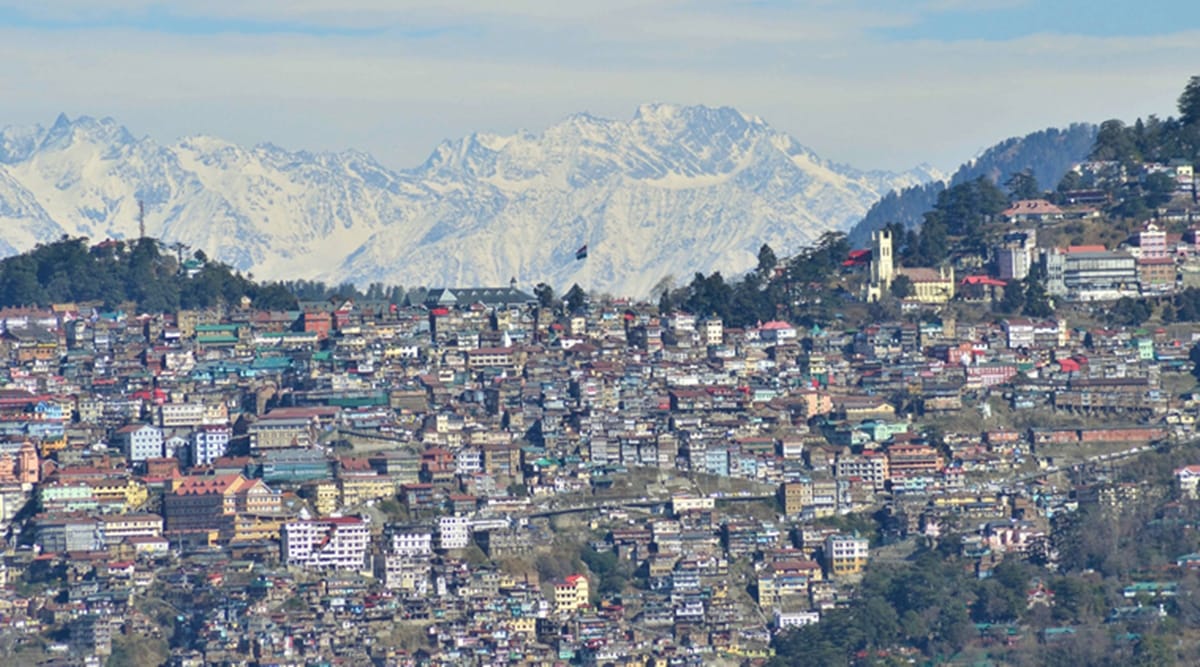
Not only that but people of different religions also live in India. That is the reason we have such countless celebrations which we praise all together. “Atithi Devo Bhava” which implies our guests are God to us. Indian food is overall mainstream you can’t get enough of it. Indian markets are open for both richer as well as poorer. Variety isn’t just among individuals yet additionally in climate. Assuming you need to see the warm places then, at that point deserts of Rajasthan can draw you in. However, assuming you need to see excellence of mountains you are generally welcome in Himachal Pradesh and Jammu Kashmir. Also there are numerous vacationer places in India which incorporate posts, sanctuaries, landmarks and some more.

50 years of Himachal Pradesh: A trip down the history lane | India News,The  Indian Express

India is the land of Yoga. Yoga assists one with being truly and intellectually fit. It assists you with expanding your focus, give alleviation while having a pressure entire day. Subsequently, these all things demonstrate that why India is great. On this 75th Independence Day let us all make a promise to serve our country till death and endeavor to make India “The Best Nation in the World”. We are extremely fateful to be born in this Incredible Nation.

Yoga and Well-being - 15 Days - India Tour Guide & Driver

Contract of Bailment and Pledge

Bailment and Pledge are two distinct types of contracts that are frequently misunderstood. Every bailment is a pledge, but not every pledge is a bailment. Bailment refers to the transfer of goods from one person to another for a specific purpose. Pledge, on the other hand, refers to the delivery of goods as security for the payment of a debt or the fulfilment of a promise. As a result, bailment and pledge are two distinct contracts. A pledge is a type of bailment.

Bailment

What Is Contract Of Bailment And Who Are Bailee And Bailor ?

A bailment is a type of special contract defined in Section 148 of the Indian Contract Act of 1872. It derives from the French word “bailer,” which means “to deliver”. Bailment’s etymological meaning is “handing over” or “change of possession of goods.” By bailment, we mean the delivery of goods from one person to another for a specific purpose with the agreement that they will reimburse the goods upon completion of the purpose or dispose of them as directed by the bailor. The person who delivers the goods is referred to as the bailor. And the person to whom the goods are given is referred to as the Bailee. And the property that has been bailed is known as Bailed Property.

Essentials of Bailment

  • There shall be a contract between the parties for the delivery of goods,
  • The goods shall be delivered for a special purpose only,
  • Bailment can only be done for movable goods and not for immovable goods or money,
  • There shall be a transfer of possession of goods,
  • Ownership is not transferred to Bailee, therefore Bailor remains the owner,
  • Bailee is duty bound to deliver the same goods back and not any other goods.
  • Exception: The money deposited in the bank shall not account to bailment as the money returned by the bank would not be the same identical notes. And it is one of the essentials of the bailment that same goods are to be delivered back.

Rights of a Bailor

As such Indian Contract Act, 1872 does not provide for Rights of a Bailor. But Rights of a Bailor is same as Duties of the Bailee i.e. Rights of Bailor = Duties of Bailee. So the rights of bailor are:

  • Enforcement of Bailee’s Duty:Since Right of the bailor is same as the right of the Bailee, therefore on the fulfilment of all duties of Bailee the bailor’s right is accomplished. For example, it is the duty of the Bailee to give the accretions and it is the right of bailor to demand the same.
  • Right to claim damages: If the Bailee fails to take care of the goods, the bailor has the right to claim damages for such loss. (Section 151)
  • Right to Termination the Contract: If the Bailee does not comply with the terms of the contract and acts in a negligent manner in such case the bailor has the right to rescind the contract. (Section 153)
  • Right to claim compensation: If the Bailee uses the goods for an unauthorized purpose or mixes the goods which cause loss of goods in such case bailor has the right to claim compensation.
  • Right to demand the return of goods: It is the duty of the Bailee to return the goods and the bailor has the right to demand the same.

Rights of a Bailee

  • Right to recover expenses: In the contract of Bailment, the Bailee incurs expenses to ensure the safety of goods. The Bailee has the right to recover such expenses from the bailor. (Section 158)
  • Right to remuneration: When the goods are bailed to the Bailee he is entitled to receive certain remuneration for services that he has rendered. But in case of gratuitous bailment, the Bailee is not awarded any remuneration.
  • Right to recover compensation: At times a situation arises wherein bailor did not have the capacity to contract for bailment. Such a contract causing loss to the Bailee, therefore the Bailee has the right to recover such compensation from the bailor. (Section 168)
  • Right to Lien: Bailee has the right over Lien. By this, we mean that if the bailor fails to make payment of remuneration or does not pay the amount due, the Bailee has the right to keep the goods bailed in his possession till the time debtor dues are cleared. Lien is of two types: particular lien and general lien. (Section 170-171)
  • Right to suit against a wrongdoer: After the goods have been bailed and any third party deprives the Bailee of use of such goods, then the Bailee or bailor can bring an action against the third party. (Section 180)

Pledge

What is Contract Management? | EcoSys

Pledges are a type of bailment. Pledge, also known as pawn, is defined in Section 172 of the Indian Contract Act of 1892. By pledge, we mean the bailment of goods as security for the repayment of a debt or advance loan, or the performance of an obligation or promise. Pledger or Pawnor is the person who pledges the goods as security, and Pledgee or Pawnee is the person in whose favour the goods are pledged.

Essentials of Pledge

Because a pledge is a subset of a bailment, all of the essentials of a bailment are also essentials of a pledge. Aside from that, the pledge’s other requirements are as follows:

  • There shall be a bailment for security against payment or performance of the promise,
  • The subject matter of pledge is goods,
  • Goods pledged for shall be in existence,
  • There shall be the delivery of goods from pledger to pledgee,
  • There is no transfer of ownership in case of the pledge.
  • Exception: In exception circumstances pledgee has the right to sell the movable goods or property that are been pledged.

Rights of Pawnor

The Pawnor has the Right to Redeem under Section 177 of the Indian Contract Act of 1872. This means that the Pawnor can redeem the goods or property pledged from the Pawnee before the Pawnee makes the actual sale upon repayment of the debt or performance of the promise. The right to redemption is lost once the Pawnee sells the property in accordance with his rights under Section 176 of the Indian Contract Act of 1872.

Rights of a Pawnee

The rights of the Pawnee as per Indian Contract Act, 1872 are:

  • Right to keep the items: If the Pawnor fails to pay a debt or fails to perform as promised, the Pawnee has the right to keep the goods given as security. Furthermore, Pawnee can keep items for non-payment of debt interest or non-payment of expenditures incurred. However, Pawnee cannot keep things for any other debt or commitment than the one specified in the contract. (Sections 173–174)
  • Right to recover extraordinary expenses: The expenses incurred by Pawnee on the preservation of goods pledged can be recovered from Pawnor. (Section 175)
  • The right of suit to procure debt and sale of pledged goods: On the failure to make repayment to Pawnee of the debt, the Pawnee has two right: either to initiate suit proceedings against him or sell the goods. In the former case, the Pawnee retains the goods with himself as collateral security and initiate the court proceedings. He need not provide any notice of such proceedings to the Pawnor. And in the latter case, the Pawnee can sell the goods after giving due notice of sale to the Pawnor. If the amount received from the sale of goods is less than the amount due then the rest amount can be recovered from Pawnor. And if the Pawnee gets more amount than the due amount then such surplus is to be given back to Pawnor. (Section 176)

Difference between Bailment and Pledge

BasisBailmentPledge
MeaningTransfer of goods from one person to another for a specific purpose is known as the bailment.Transfer of goods from one person to another as security for repayment of debt is known as the pledge.
Defined InIt is defined under section 148 of the Indian Contract Act, 1872.It is defined under section 172 of the Indian Contract Act, 1872.
PartiesThe person who delivers the bailed goods is known as Bailor and the person receiving such goods is known as Bailee.The person who delivers the pledged goods is known as Pledger or Pawnor and the person receiving such goods is known as Pledgee or Pawnee.
ConsiderationThe consideration may or may not be present.Consideration is always there.
Right to SellBailee has no right to sell the goods bailed.Pledgee or Pawnee has the right to sell the goods.
Use of GoodsBailee can use the goods only for a specific purpose only and not otherwise.Pledgee or Pawnee cannot use the goods pledged.
PurposeThe purpose of bailed goods is for safekeeping or repairs etc.The purpose of pledged goods is to act as security for repayment of debt or performance of the promise.

Illustrations

Illustration 1: Mr. A delivers his watch to Mr. B for repair. In this situation, Mr. A is the bailor, Mr. B is the bailee, and the commodities bailed are the watch.

Illustration 2: Harry bailed his bike to David so he could ride to college by himself. David put it to use for racing. David is now responsible for illegal usage of the bailed bike.

Illustration 3: Mr. X entrusted his cat to Mr. Y for a few days. During that time, the cat gave birth to kittens. Mr. Y is now likely to return the cat with the accretions.