PM Ayushman Bharat Health Infrastructure Mission

PM Ayushman Bharat Health Infrastructure Mission is regarded as the largest scheme to scale up the infrastructure of health in India. The aim of this initiative is to provide high quality, easily accessible and equitable health care facilities to the people in need. This mission was launched by the Prime Minister Shri Narendra Modi on 25th October 2021. The main motto of introducing this scheme was to address the three major integral gaps in the public sector of India. These three gaps include extension of pandemic studying existing institutions of research, increasing the health facilities for effective treatment and detailed network of testing for disease’s diagnosis.

The PM Ayushman Bharat Health Infrastructure Mission focuses on strengthening the critical network of healthcare from village to block, district, regional and national level in the upcoming five years. The major focus is in the aspect of formation of enhanced diagnostic facilities and increased health facilities for effective treatment. In order to carry out the purpose, 17,788 rural health and wellness centres and 11,024 health and wellness centres would be supported by the government and this would enable timely and effective treatment and would also provide means for early detection of diseases. These centres would facilitate medical advice and medicines free of cost. Under this mission, 35 thousand new beds related to critical care for serious illness are being added in 600 districts across the nation and in 125 districts, referral facilities will be provided.

Another aspect on which the scheme focuses is the strengthening of the network of testing for the disease’s diagnosis. In order to carry out this purpose, monitoring of disease and essential infrastructure would be developed for the diagnosis. Across the nation, in 730 districts, Integrated Public Health labs would be established and around three thousand blocks would be established in the Block Public Health Units. To further enhance the testing network in the country, 5 regional centres for control of disease, 20 metropolitan units and 15 biosafety labs would be established.

Third and the most significant aspect of the mission is the extension of institution of research that study pandemics. This aspect is against the backdrop pf the Covid-19 pandemic. The regional research platform of World Health Organization (WHO) would also help in this extension. Under this mission, the research labs and existing 80 viral diagnostic would be strengthened. 5 New labs of Biosafety level would also be put into operation. There would also be establishment of National Institute for one Health as well as new 4 National Institutes of Virology.

The PM Ayushman Bharat Health Infrastructure Mission would also correct imbalance of medical college’s distribution in different regions and encourage to increase the availability of health professionals as well as make better use of the infrastructure of district hospitals. In order to carry out the purpose, across the nation around 157 new medical colleges are being set up.

A healthier India is aimed by the PM Ayushman Bharat Health Infrastructure Mission. India can become healthy by the provision of reasonable health care to the overlooked segments of the nation. The measures under this scheme are a step towards addressing the long-pending need in the health care sector that aims to bridge several critical gaps in health infrastructure. Thus, this scheme would create an ecosystem for accessible and affordable infrastructure along with essential services from treatment to research of critical nature in every corner of the nation.

Shark Tank: India

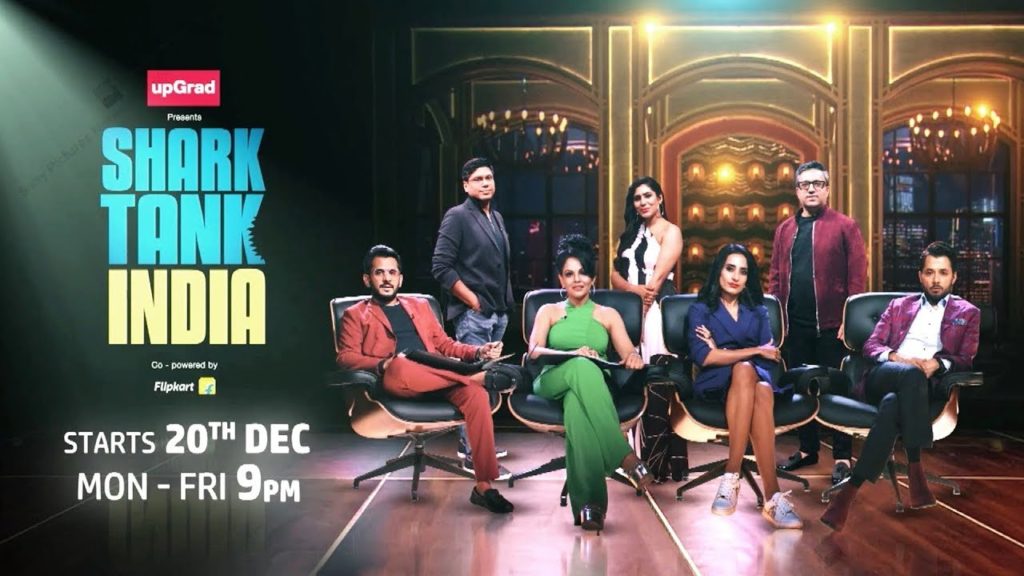
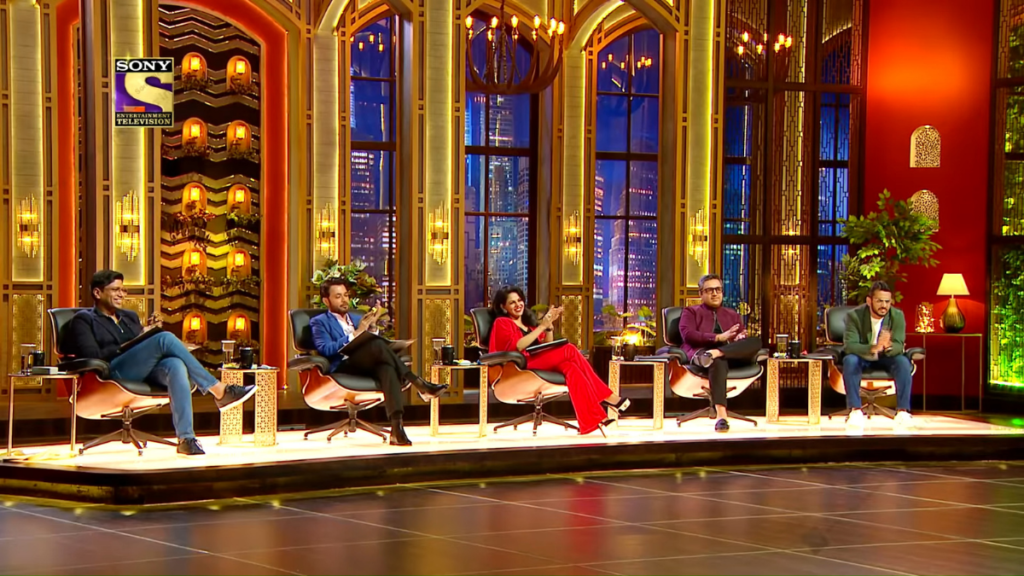
A one of a kind business reality TV series that has got India hooked is Shark Tank, India. Shark Tank is a series were aspiring entrepreneurs pitch in their business models to a panel of investors whom they refer to as Sharks, and persuade them to invest in their ideas. Shark tanks provides budding entrepreneurs the opportunity to secure the deals that would make them successful businesses.

This reality show is the Indian franchise of the American business reality show of the same name, which first aired in 2009. The Indian version is broadcasted on Sony Entertainment Television (SET), and is available online on its respected OTT platform and YouTube.

About the Sharks

The Indian version has seven panellist on board. All the panellists are giants in their respective area of business and hence, Sharks. The list includes:

  • Ashneer Grover- founder and Co-founder of BharatPe
  • Anupam Mittal- founder and CEO of People Group Shaddi.com
  • Aman Gupta- Co-founder and CMO of boat
  • Vineeta Singh- Co-founder and CEO of Sugar Cosmetics
  • Namita Thapar- Executive Director of Emcure Pharmaceuticals
  • Ghazal Alagh- Co-founder and CIO of Mama Earth
  • Peyush Bansal-  Founder and CEO of Lenskart

All the Sharks brought on the table their area of expertise to help the entrepreneurs with their venture along with investment for a reasonable percentage of equity.

The investments

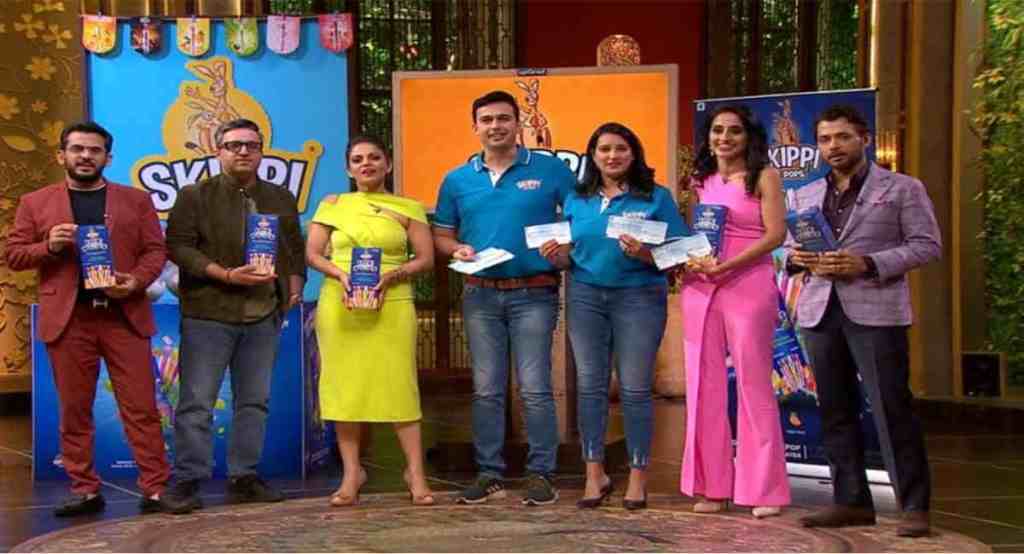
The show helped 67 start-ups bag funding for their venture which is estimated to be at 41.98 crores in total. The highest investments were made for 1 crore to 10 start-ups. The start-ups that bagged the investment were genuine problem solvers whose product or service could help the nation along with generating enough revenue and profit.

The investments ranged from ice popsicles, sugar free ice creams, Ed tech apps, textiles, braille literacy device, canned cocktail, lounge wears, and more. The Sharks invested in a wide variety of start ups in exchange for reasonable, and sometimes negotiable equity.

However, there were instances were participants had to head back with no investment, nevertheless the participants received constructive criticism from the Sharks for their start up, and to further establish it.

Success of the Show

The show has been a massive success and there are possible rumours of a second season. The show has 9 point rating on IMDB, and a substantially good TRP ratings. The show first aired from 21st December 2021, and has 35 episodes.

There were 50,000 plus applicants out of which 198 candidates for selected for the show. And after the massive success of the first season, the application number is only expected to increase in the possible next season.

The presence and popularity of the show was also felt on social media, as feeds  and homepages were flooded with relevant and funny memes made from Shark Tank India. This is one of the reason the show gained a massive audience, and helped connect with the youth on a closer level and inspired more entrepreneurs to follow their entrepreneurial venture.

                     Shark Thank India not only entertained but also provided crucial business advice to entrepreneurs both on the show and the ones outside who just started with their entrepreneurial journey. Such reality shows truly justify entertainment with a purpose.

National Movement

By – Supriya

Indian aspirations to be an independent entity remained unfulfilled till the second half of the 20th century. National Movement was always subdued due to the lack of organised efforts against the well – organised masters. The real organised effort to achieve the political , social and economic liberty was felt only after the formation of the Indian National Congress in 1885. The first reason for evolving a feeling of nationalism was the political unification of India. Before the advent of the British , the subcontinent presented a collage of selfish kingdoms under rival chiefs and rulers.The coming of the British brought western influence , which inspired western education. The liberal and radical ideas of Europe  influenced the Indian intelligentia and created a new educated middle class. The use of western education and English as a language for communication brought closer the population in various regions.Thus it helped in exchange of ideas and aspirations for liberty from the foreign rule. The initial Indian rebellion of 1857 sparked when soldiers serving in the British East India Company ‘ s British Indian Army and Indian kingdoms rebelled against the British hegemony. After the revolt was crushed, India developed a class of educated elites whose political organising sought Indians political rights and representation while largely remaining loyal to the British Empire. However, increasing public disenchantment with the British rule – owing to the suppression of civil liberties , political rights , and culture as well as alienation from issues troubling common Indians – led to an upsurge in revolutionary activities aimed at overthrowing the British authority. The revolt of 1857 was a major turning point in the history of modern India. The British abolished the British East India Company and replaced it with the direct rule under the British crown. A viceroy was appointed to represent the Crown. In proclaiming the new direct – rule policy to ” the Princes , Chiefs, and Peoples of India,” Queen Victoria promised equal treatment under the British law, but Indian mistrust of British rule became the legacy of the 1857 rebellion. The British embarked on a programme of reforms, trying to integrate Indian higher castes and rulers into the government. They stopped land grabs,decreed religious tolerance and admitted Indians into the civil service , albeit mainly as subordinates. However, they also increased the number of  British soldiers in relation to native ones and allowed only the British soldiers to handle artillery. Bahadur Shah was exiled to Rangoon, Burma where he died in 1862, finally bringing the Mughal dynasty to an end. In 1877, Queen Victoria took the title of Empress of India. The socio – religious movements brought forth by various social reformers all over the country inspired national consciousness to improve their social condition and invoked the spirit of patriotism in the Indian masses. The promotion of vernacular language and its use in the Indian and vernacular papers infused a feeling of nationalism in the people.
Inspired by a suggestion made by A.O Hume , a retired British civil servent, seventy – three Indian delegates met in Bombay in 1885 and founded the Indian National Congress. They were mostly upwardly mobile and successful western – educated provincial elites , engaged in professions such as law , teaching , and journalism. They had acquired political outlook from regional participation in various professions by securing nomination to various positions in legislative councils,universities and special commissions. The Indian Nationalism witnessed development but in phases. In the first phase ever since the evolution of Indian National Congress , a moderate movement with the will to co – operate for the grant of a better living conditions for the Indian people prevailed. They believed in the gradual realisation of their national goals. The first of a series of national movements was the Non – cooperation Movement (1920-1922). It was followed by the Civil Disobedience Movement, after a lull. Though the Congress was in the forefront of the freedom struggle but there were many other organisations and individuals who also played important roles. The struggle for Independence continued in the 1930s but the real momentum came with the Second World War. The Indian National Congress thought that after the war the British government in their war efforts. The Congress thought that after the war the British might leave India, but the real intentions of the British became clear soon after. The Congress under the leadership of Gandhi, began to prepare for the ‘ Quit India Movement ‘ in 1942. With the pace of developments all over the world ( after the Second World War) , the British came to realise that it was not possible to rule India any more and they decided to quit. After the First World War ,the revolutionary activities suffered major setbacks due to the arrest of prominent leaders. In 1920s, the revolutionary activists started to reorganize. Hindustan Socialist Republican Association was formed under the leadership of Chandrasekhar Azad. Bhagat Singh and Batukeshwar Dutt threw a bomb inside the Central Legislative Assembly on April 8,1929 protesting against the Public Safety Bill and the Trade Disputes Bill. Following the trial (Central Assembly Bomb Case), Bhagat Singh , Sukhdev and Rajguru were hanged in 1931. The third phase of the Indian National Movement was dominated by the Gandhian ideology ; non- violence, Non Co – operation and Civil Disobedience movements, the Quit India Movement with the slogan of ‘ Do or Die’, all ultimately resulted in the freedom at the mid – night stroke on 15th August 1947.

THANKYOU!

A GOD WHO HATES WOMEN

I had chosen to write about Dr. Majid Rafizadeh’s phenomenal novel ‘  A God Who Hates Women’. It is a beautiful yet tragically moving story of a women caught in a patriarchal household. It takes us back to the times when women were seen as commodities sold off in markets. Choice was a word that women could not even imagine. The story highlights the life of the authors mother, how she lived through oppression. This story forms around the background of a civil war. The novels throw light on the cruelties faced by women in a patriarchal society. The story begins with a short background of how the authors grandmother was born. It later shows the birth of the authors mother which turned out to be a disgrace for her own mother, since she expected a baby boy. The story continues with the atrocities faced by his mother at her own home and how she was forcefully married to a man who abused her at all chances he got. The irony of which the book talks about is the cruel side of patriarchy, how women carry it down more than men. 

Photo by Dennis Magati on Pexels.com

The name of the book also seems to bring out the story, about how the religion and its god were cruel to women. The people of the religion went to extreme ends to make sure that the rules of the religion are followed, sometimes inhumane practices were also used.

Religion and politics were not treated as two different entities by the people of Syria, Iran and Iraq. They had held religion so much close to their heart, that it was even involved in their politics. Political decisions were made in the name of god. People were abused in inhumane ways in the name of religion. It shows quite a different side of how far our modernity and education has not evolved in countries like these. Citizens of the nations could never really trust one leader to be liberated from his religious entity, each leader had their own approach to religion and people were forced to select someone who was less cruel than the other. The question of a good and humane leader was out of choice. 

The book is set in the backdrop of a series of political tension in Syria and Iran. The author and his family have moved from Syria to Iran a couple of times and the book shows the difference in the culture in both the countries vividly. The book shows how much political leaders are influenced by religion and how they kill people cruelly who goes against them, the authors father was one such victim. Maybe the author might have also got the influence from his father, but in a much better way. The author was the founder of an organization on human rights which reported cases of human cruelty. The authors father has a very interesting character, he on one side focuses on how modern our thinking should be in various aspects of life except in the equal treatment of womenas he had always abused his wife. His character was rather paradoxical. 

But one of the most important things that the book has left out is that it hasn’t brought into consideration the larger issues faced by the people. The author has merely had an interview with the close members of his family and friends. And so, we cannot really say that the book speaks about the whole of Syria. After certain parts of time in the book, it fails to show the feelings of Amira, the authors mother. How she felt about religion, her passion and how she lied to herself to live for her children. The authors life has been glossed over for most parts and it talks in the perspective of the author while the book was about his mother. 

The major concept the book focuses is on the patriarchy and how it has broken down the women of the household. Book spoke about how women were cut off from the world of pleasure and desire, forced into submission. Another novel aspect of the book is that it also talks about men abusing younger boys. Young boys were raped by elderly men in the remote areas of Iran

The book is set in a time when abuse was seen very common. People dominated over the weaker ones and religion was to be respected and those who don’t respect religion were also abused too. It is set in a completely different timeline with reference to religion or equality between men and women. But we cannot completely say that patriarchy has been wiped out from our modern-day world. Across the timelines we had only grown one step closer to lower its impact on the people. 

We might live in a secular world today but that does not mean that each and everyone among us are cosmopolitans in nature. But one thing that has drastically changed is the number of people who believes that women are to be respected and given equal rights as men. They believe that Women must not only be seen as homemakers but also as potential doctors, engineers, civil servants and all the more. This change in perspective had given rise to many feminist movements across the world. There are almost 3 waves of feminism, where each wave concentrated on the various aspects of a women’s lifestyle.  The world we live in as become so much more complicated with the passage of time; one person is not solely now identified with his/her religious aspects but with things they would want to relate too. Identities matter a lot in the world we live in, these identities connect us with similar people so to share the same feelings and aspirations. 

Something that we can always find common in all the stories we hear are the sufferings of women and not men, why was women just seen as fragile and homemakers? The ones that needed to stay at home and look after the children? Weren’t we equal beings with different biological systems? Why wasn’t marital rape unlawful in countries across the world? Why were people so focused on their religious identities? Why didn’t time make a difference in the modernization of the Asian countries? These were a few of the questions which kept disturbing my mind. I hope one day comes where women will be as free as men. A world where we all are equals. 


Canada Day, A Day of significance

Canada day (157 years), on July 1, 1867, A federal statutory holiday, it celebrates the anniversary of Canadian Confederation where the three separate colonies the official Union of provinces Canada, Nova Scotia and New Brunswick were united into a single Dominion within the British Empire called Canada. Until 1982, the Act served as Canada’s constitution, and July 1st was celebrated as Dominion Day. The British North America Act was repatriated from the British to the Canadian parliament under the conditions of the Canada Act of 1982, and Canada became a fully independent country. At the same time, the name of the national holiday was changed to Canada Day.

Canada Day showcases an important national milestone on the way to the country’s full independence. The day signifies the spirit of Canadian patriotism. And July 1st is also known as moving in day. It’s a tradition that goes a long way and has an interesting history. It begins as “a humanitarian” action by French colonial government on its New France colony (which is now Quebec), preventing the Feudal Lords from explaining the rural workers during winter. Shortly after, a 1750 law made it mandatory for all urban rentals to be one year, beginning May 1 and ending April 30. It was the birth of their Day of Change, but on a different date. In 1973, the Government of Quebec changed the Change Day to July 1.

Most communities in Canada host celebration organized for date, happening at public outdoor events with music, parades, thematic festivals, free concerts, displays of the flag, the singing of the national anthem, ‘O Canada’ and many fireworks and plenty of respect for the history of Canadian people. And you know what’s the best part? Everyone is welcome in the celebration. Multicultural and full of opportunity for foreigners, Canada is recognized for its diversity and for welcoming students from other countries.

Baltic States – Latvia, Lithuania, and Estonia

Baltics, also known as the Baltic States is comprised of three countries including Latvia, Lithuania, and Estonia. The three countries are situated on the eastern shores of the Baltic Sea. In 1991 the regional governments of Lithuania, Latvia, and Estonia declared independence from the Union of Soviet Socialists Republics (USSR). Three countries have a collective population of just over 6 million. The three have been one of the better examples which have been progressing well after the breakup of the USSR. Many other former Soviet republics have been suffering the disarray of corruption and political instability. 

In 2002 Baltic countries applied for membership in the European Union (EU) and by May 2004 all the three countries joined the EU. They also gained membership in NATO by March 2004.

It’s truly astounding how the three countries have developed since 1991. None of them were independent since 1940. The three countries had large Russian minorities and many Soviet soldiers were still stationed there. There were no major national institutions and banking infrastructure with a crumbling economy. There was a growing homegrown national moment against the ruling government since the 1980s. The homegrown fronts won the republican parliamentary election against the ruling party in early 1990 and were allowed to govern but with limited power. The Russian president at that time, Boris Yeltsin had not contested their newly declared independence in 1991. The Baltic also witnessed no violence when the three governments had declared their independence.

The three nations also had almost no natural resources, unlike USSR which was resource-rich. They were still in a very vulnerable situation with a small population and no military of their own. Even though the countries were linguistically distinct with different languages, but people in all three countries had the united drive to strive for a better future. The three had implemented reforms with a shared vision. The governments of the three share many policies, ideas, and experiences. The Baltic States also valued their new independence with a lot of enthusiasm and didn’t take it for granted. The other ex- USSR countries often had to ask for assistance from Russian Federation and also formed new alliances with the Russian government. Baltic countries on the other hand tried to stay away from joining the post-Soviet Commonwealth of Independent States. In the subsequent years, all the three countries adopted radical economic policies and Estonia was the first mover and Latvia and Lithuania would follow suit. In 1994 Estonia introduced a flat income tax at just 24 percent and the other two also implemented the policies. Currently, Lithuania has a tax rate of just 15 percent which is one of the lowest. With early and fast deregulation and privatization, the Baltic countries were able to capture a large amount of foreign direct investment. Estonia also radically transformed its public sector with various digitalization implementations and less reliance on paperwork. Latvian and Lithuania’s transformation in this area was not as drastic but after some time both of them followed Estonia’s footsteps.  Transparency International ranks Estonia No. 17, Lithuania 37, and Latvia 42 out of 175 countries on its Corruption Perception Index for 2020. This is a commendable ranking considering they all the three are relatively new entrants to the EU and many other EU countries have lower ranks than the three.

The success can also be attributed to the generous support that the three countries received from the international community and funds granted by the EU, World Bank, and the IMF. In 2008 Baltic suffered from the global economic crisis. The three soon adopted the Euro as their currency to avoid any future liquidity freeze issues that they experienced at that time. The economies al the Baltic rebounded quickly and due to good monetary measures, the three have a very low public debt. Baltic governments have also made swift progress in the Education sector and the three have attained commendable rankings in the Program for International Student Assessment (PISA) of the Organization for Economic Cooperation and Development (OECD). Estonia has done a very commendable task in this area with top 10 rankings in many assessments.         

In 2002 Baltic countries applied for membership in the European Union (EU) and by May 2004 all the three countries joined the EU. They also gained membership in NATO by March 2004.

It’s truly astounding how the three countries have developed since 1991. None of them were independent since 1940. The three countries had large Russian minorities and many Soviet soldiers were still stationed there. There were no major national institutions and banking infrastructure with a crumbling economy. There was a growing homegrown national moment against the ruling government since the 1980s. The homegrown fronts won the republican parliamentary election against the ruling party in early 1990 and were allowed to govern but with limited power. The Russian president at that time, Boris Yeltsin had not contested their newly declared independence in 1991. The Baltic also witnessed no violence when the three governments had declared their independence.

The three nations also had almost no natural resources, unlike USSR which was resource-rich. They were still in a very vulnerable situation with a small population and no military of their own. Even though the countries were linguistically distinct with different languages, but people in all three countries had the united drive to strive for a better future. The three had implemented reforms with a shared vision. The governments of the three share many policies, ideas, and experiences. The Baltic States also valued their new independence with a lot of enthusiasm and didn’t take it for granted. The other ex- USSR countries often had to ask for assistance from Russian Federation and also formed new alliances with the Russian government. Baltic countries on the other hand tried to stay away from joining the post-Soviet Commonwealth of Independent States. In the subsequent years, all the three countries adopted radical economic policies and Estonia was the first mover and Latvia and Lithuania would follow suit. In 1994 Estonia introduced a flat income tax at just 24 percent and the other two also implemented the policies. Currently, Lithuania has a tax rate of just 15 percent which is one of the lowest. With early and fast deregulation and privatization, the Baltic countries were able to capture a large amount of foreign direct investment. Estonia also radically transformed its public sector with various digitalization implementations and less reliance on paperwork. Latvian and Lithuania’s transformation in this area was not as drastic but after some time both of them followed Estonia’s footsteps.  Transparency International ranks Estonia No. 17, Lithuania 37, and Latvia 42 out of 175 countries on its Corruption Perception Index for 2020. This is a commendable ranking considering they all the three are a relatively new entrant to the EU and many other EU countries have lower ranks than the three.

The success can also be attributed to the generous support that the three countries received from the international community and funds granted by the EU, World Bank, and the IMF. In 2008 Baltic suffered from the global economic crisis. The three soon adopted the Euro as their currency to avoid any future liquidity freeze issues that they experienced at that time. The economies al the Baltic rebounded quickly and due to good monetary measures, the three have a very low public debt. Baltic governments have also made swift progress in the Education sector and the three have attained commendable rankings in the Program for International Student Assessment (PISA) of the Organization for Economic Cooperation and Development (OECD). Estonia has done a very commendable task in this area with top 10 rankings in many assessments.     

Origin of Vedas

The Vedas are a large body of religious text originating in ancient India. Composed in Vedic Sanskrit, the texts constitute the oldest layer of Sanskrit literature and the oldest scriptures of Hinduism. Vedas are considered as the earliest literary records of Sanskrit Literature, written by Rishi Vyasa. It is bealived to be the oldest book in hinduism. Vedas means knowledge.  It is a Sanskrit word from the root “Vid”, which means finding, knowing, acquiring, or understanding. The Vedas formed the earliest segment of Vedic literature. The Vedic literature had been evolved in the course of many centuries and was handed down from generation to generation by the word of mouth. The Vedas are the collection of hymns, prayers, charms, litanies, and sacrificial formulae. The ideas, teachings, and practices described in the Vedas formed the basis for the six major schools of Hindu philosophy – Nyaya, Vaisheshika, Samkhya, Yoga, Mimamsa, and Vedanta.

There are four Vedas: the Rigveda, the Yajurveda, the Samaveda and the Atharvaveda.and all of them together are attributed to as ‘Chaturveda

  • Rig Veda − It is the oldest Veda. It is a collection of hymns.
  • Samveda − it is a collection of songs, which are mostly taken from Rig Veda.
  • Yajurveda − It is a collection of sacrificial formulae.
  • Atharvanaveda − it is a collection of spells and charms.

The Rig Veda serves as the principal one and all three but the Arthaveda agree with one another in form, language, and content. Each Veda has been subclassified into four major text types or four portions.

  • The Samhitas, the most ancient layer of text in the Vedas, consisting of mantras, hymns, prayers, and benedictions which has in literary terms put together or joined the other three texts;
  • The Aranyakas which constitute the philosophy behind the ritual sacrifice,
  • The Brahmanas which in turn has the commentary on hymns of four Vedas and
  • The Upanishads, which consist of conversations between teachers and students which clarify the philosophical message of the Vedas.

Rigveda

The Rigveda Samhita is the oldest extant Indic text. It is a collection of 1,028 Vedic Sanskrithymns and 10,600 verses in all, organized into ten books. The hymns are dedicated to Rigvedic deities.  Two Sanskrit words Rig and Veda constituting it translates to ‘praise or shine’ and ‘knowledge’ respectively

Like the other three Vedas, the believers of the Hindu dharma regard the Rig Veda too as Apauruṣeya; meaning, not of a man or impersonal and also not belonging to a particular author. The hymns and the verses were written by the Rishis (Sages) and as the ardent believers of the Sanatana dharma claim the revered Lord himself taught the Vedic hymns to the sages, who then handed them down through generations by word of mouth.

The Mandalas of the Rig Veda which are ten in number and were composed by poets from different priestly groups over a period of several centuries is structured based on clear principles The Rigveda is structured based on clear principles. The Veda begins with a small book addressed to Agni, Indra, Soma and other gods, all arranged according to decreasing total number of hymns in each deity collection; for each deity series, the hymns progress from longer to shorter ones, but the number of hymns per book increases. Finally, the meter too is systematically arranged from jagati and tristubh to anustubh and gayatri as the text progresses.

Rigveda, in contemporary Hinduism, has been a reminder of the ancient cultural heritage and point of pride for Hindus, with some hymns still in use in major rites of passage ceremonies.  Musicians and dance groups celebrate the text as a mark of Hindu heritage, and these have remained popular among the Hindus for a long time. However, the contemporary Hindu beliefs are distant from the precepts in the ancient layer of Rigveda Samhitas.

Sama Veda

The Samaveda Samhita consists of 1549 stanzas, taken almost entirely (except for 75 mantras) from the Rigveda. While its earliest parts are believed to date from as early as the Rigvedic period, the existing compilation dates from the post-Rigvedic Mantra period of Vedic Sanskrit, between c. 1200 and 1000 BCE or “slightly later,” roughly contemporary with the Atharvaveda and the Yajurveda.

The Samaveda samhita has two major parts. The first part includes four melody collections and the second part three verse “books”. A melody in the song books corresponds to a verse in the arcika books. Just as in the Rigveda, the early sections of Samaveda typically begin with hymns to Agni and Indra but shift to the abstract. Their meters shift also in a descending order. The songs in the later sections of the Samaveda have the least deviation from the hymns derived from the Rigveda.

In the Samaveda, some of the Rigvedic verses are repeated. Including repetitions, there are a total of 1875 verses numbered in the Samaveda recension translated by Griffith. Two major recensions have survived, the Kauthuma/Ranayaniya and the Jaiminiya. Its purpose was liturgical, and they were the repertoire of the “singer” priests.

Yajurveda

Yajur Veda, of Sanskrit origin, is composed of Yajus and Veda; the two words translate to ‘prose mantras dedicated to religious reverence or veneration’ and knowledge respectively. Third of the fourth canonical texts of the Hindu dharma, this liturgical collection is famous as the ‘book of rituals’. Of the ancient Vedic text, it is a compilation of ritual offering formulas or the prose mantras to be chanted or muttered repeatedly by a priest while an individual performs the ascertained ritual actions before the sacrificial fire or the Yajna.

The earliest and most ancient layer of Yajurveda samhita includes about 1,875 verses, that are distinct yet borrow and build upon the foundation of verses in Rigveda. Unlike the Samaveda which is almost entirely based on Rigveda mantras and structured as songs, the Yajurveda samhitas are in prose and linguistically, they are different from earlier Vedic texts. The Yajur Veda has been the primary source of information about sacrifices during Vedic times and associated rituals.

The Yajurveda is broadly grouped into Krishna Yajurveda and Shukla Yajurveda, also referred to as the Black Yajurveda and the latter as the White. In reference to the verses of the Krishna Yajurveda being un-arranged, unclear, and disparate or dissimilar, the collection is too often referred to as Black Yajurveda. In contrast, the well-arranged and imparting a particular meaning, the Shukla Yajurveda is known as the White Yajurveda.

Yajurveda, in contemporary Hinduism, has been a reminder of the ancient cultural heritage and point of pride for Hindus. The text is a useful source of information about agriculture, economic, and social life during the Vedic era. The verse, translated from the Shukla Yajurveda, for example, lists the types of crops considered important in ancient India.

Atharvaveda

The Artharvaveda Samhita is the text ‘belonging to the Atharvan and Angirasa poets. It has about 760 hymns, and about 160 of the hymns are in common with the Rigveda. Most of the verses are metrical, but some sections are in prose. Two different versions of the text – the Paippalāda and the Śaunakīya – have survived into the modern times. The Atharvaveda was not considered as a Veda in the Vedic era, and was accepted as a Veda in late 1st millennium BCE. It was compiled last, probably around 900 BCE, although some of its material may go back to the time of the Rigveda, or earlier.

The Atharvaveda is sometimes called the “Veda of magical formulas”, an epithet declared to be incorrect by other scholars. The Samhita layer of the text likely represents a developing 2nd millennium BCE tradition of magico-religious rites to address superstitious anxiety, spells to remove maladies believed to be caused by demons, and herbs- and nature-derived potions as medicine. The text, states Kenneth Zysk, is one of oldest surviving record of the evolutionary practices in religious medicine and reveals the “earliest forms of folk healing of Indo-European antiquity”. Many books of the Atharvaveda Samhita are dedicated to rituals without magic, such as to philosophical speculations and to theosophy.

The Atharva veda has been a primary source for information about Vedic culture, the customs and beliefs, the aspirations and frustrations of everyday Vedic life, as well as those associated with kings and governance. The text also includes hymns dealing with the two major rituals of passage – marriage and cremation. The Atharva Veda also dedicates significant portion of the text asking the meaning of a ritual.


Section 309 IPC

The World Health Organisation defined suicidal act as “the injury with varying degree of lethal intent” and that suicide may be defined as “a suicidal act with fatal outcome”. Suicidal acts with non fatal outcome are called as “attempted suicide.” In recent times, attempted suicide has gained more importance than the suicide which is the successful act because for this there is no offender who can be brought within the purview of law. In India, attempt to suicide is made punishable under section 309[1] of Indian Penal Code, 1860. A lot of conflicting opinions have generated on retaining or deleting Section 309 of Indian Penal Code because of some differing judgments by the judiciary about whether right to life includes right to die within the meaning of article 21 of the Constitution of India.

One side is of the opinion that Article 21 of the Constitution of India is a provision guaranteeing protection of life and personal liberty and by no stretch of the imagination can extinction of life be read to be included in protection of life. By declaring an attempt to commit suicide a crime, the Indian Penal Code upholds the dignity of human life, because human life is as precious to the State as it is, to its holder and the State cannot turn a blind eye to a person in attempting to kill himself. Another set of people are of the opinion that the Section 309 of Indian Penal Code is cruel and irrational because it provides double punishment for a troubled individual whose deep unhappiness had caused him to try and end his life. It is cruel to inflict additional legal punishment on a person who has already suffered agony and ignominy in his failure to commit suicide.

Section 309 of the IPC was daunted with many controversies regarding its validity over the decades on the grounds of legality and morality. Finally, giving approval to the various Law Commission Reports and judgments of the Hon’ble High Courts and the Supreme Court, attempted suicide is de-criminalized (not punishable) after passage of The Medical Health Care Act, 2017.

 Section 309 of Indian Penal Code, 1860

Suicide has not been defined anywhere in the IPC. However briefly defined, ‘suicide’ is the human act of self-inflicted, self-intentioned cessation. It has been defined by various sociologists and psychologists in different ways. Suicide is killing oneself intentionally so as to extinguish one’s life and to leave this world. 

Suicide as such is no crime under the code. It is only attempt to commit suicide that is punishable under this section. If the person succeeds, there is no offender who could be brought within the purview of law. The section is based on the principle that the lives of men are not only valuable to them but also to the state which protects them.

Section 306

If any person commits suicide, whoever abets the commission of such suicide, shall be punished with imprisonment of either description for a term which may extend to ten years, and shall also be liable to fine.

S. 309 – Attempt to commit suicide: “Whoever attempts to commit suicide and does any act towards the commission of such offence shall be punished with simple imprisonment for a term which may extend to one year or with fine, or with both.”

Attempt must be intentional- The essence of suicide is an intentional self destruction of life.. Similarly, if a person because of family discord, destruction, loss of a near and dear relation or other cause of a like nature overcomes the instinct of self- preservation and decides to take his life, he should not be held guilty for attempt to suicide. In such a case, the unfortunate man deserves indulgence, sympathy and consolation instead of punishment. It is under very compelling adverse circumstances that a person resorts to taking the extreme step of attempting to commit suicide. Some of them are depressive illness, schizophrenic attitude, physical illness which is intolerable, poverty, unemployment, frustration, disappointment, dowry problems etc.

There are many ways in which suicide can be committed. The known methods are by drowning, hanging, poisoning, cutting throat, burning, shooting oneself, hunger strike etc. But it is difficult to generalize any and conceptualize particular theory because whenever we hear news about individuals committing suicide, we immediately come up with a conclusion that these people are depressed, dissatisfied, and unhappy with their lives. However, when popular and rich people commit suicide, we are left in confusion. Why would someone who is loved and idolized by many decide to kill himself? Depression may be the main culprit, but there are a lot of things to consider as well. These include overwhelming pain, grief, and stress; some use it as an escape for their failure and shortcomings like criminals who are about to be sentenced or caught. However, there are cases where suicide is an option that is mandatory or required. Thus, most people end up sacrificing themselves to save the lives of others in unbelievable circumstances. Heroes during the wartime generally belong to this category. 

The Indian constitution under Article 21 confers the right to Life as the fundamental right of every citizen. The Right to Life enriched in Article 21 have been liberally interpreted so as to mean something more than mere survival and mere animal existence. The Supreme Court has asserted that Article 21 is the heart of the fundamental Rights provided under part III of the constitution. The Supreme Court has clearly stated that in order to treat a right as a fundamental it is not mandatory that it should be expressly stated as a fundamental right. In India “The right to life” under Article 21 of the Constitution has received the widest possible interpretation under the able hands of the judiciary and rightly so. On the grounds as mentioned, Article 21 does not have a restrictive meaning and needs to be interpreted broadly. This affirms that if Article 21 confers on a person the right to live a dignified life, it should bestows the “Right to Die” also, but the inclusion of Right to die under Article 21 contradict the provision of Indian Penal Code under section 309. As according to section 309 of the I.P.C. “Whoever attempts to commit suicide and does any act towards the commission of such offense, shall be punished with simple imprisonment for a term which may extend to one year or with fine, or with both”. This section is based on the principle that lives of men are not only valuable to them but also to the state which protects them.

Section 309, Indian Penal Code [“IPC”] criminalises an attempt to suicide by any person. However, Section 115, Mental Healthcare Act, 2017 [“MHA, 2017”] states that any person who attempts to commit suicide shall be presumed, unless proved otherwise, to have severe stress and therefore, shall not be punished under the IPC.Therefore, Section 115, MHA, 2017 imposes a rebuttable presumption that the person who commits suicide is suffering from severe stress and, therefore, shall not be punished under Section 309, IPC. The result of the abovementioned provision of the MHA, 2017 is that Section 309, IPC is otiose. However, if the presumption of severe stress is rebutted, then such a person may be punished under Section 309, IPC. The MHA, 2017 has made Section 309, IPC redundant unless the presumption of severe stress is rebutted. However, there has been widespread use of the provision regarding cases of “hunger strikes” and “fasts unto death”, and to coerce public authorities. Nonetheless, retaining the provision to serve this purpose under its current language has unnecessary implications.The costs of retaining the provision is that there are several instances of police charging persons under the provision due to a lack of legislative awareness. The retention of the provision also makes attempted suicide a medico-legal case and prevents effective treatment to the person who has attempted such suicide at the “golden hour” for providing effective treatment.Since there is a clear intention of the Legislature to make Section 309, IPC redundant, its practical unwanted implications shall be done away with by removing such provision from the statute book. However, there is a need for a provision to take action against those who either intend to coerce public authorities by threatening to commit suicide, or attempt suicide to evade public authorities altogether. Nonetheless, since the cost of retaining the provision in its current form creates an unnecessary burden, the recommendation along the lines of the 42nd Law Commission Report to add Section 506A, IPC seems to be valid even now.

Rise in views of web series during covid 19.

Web series usually refer to series that are available on the various platforms like netflix , amazon prime , youtube
etcetera. During the pandemic there has been a rapid increase in the veiws

orms, too .One third of 55-64-year-olds, and 15% of people aged 65+ used subscription
services in the early weeks of lockdown.

The majority signed up to Netflix and Amazon Prime Video, although Disney+ overtook Now TV as the third most
popular paid-for streaming platform .Older viewers, who typically watch more traditional broadcast TV, increased
their use of streaming platf

The study, entitled Media Nations 2020, suggested that as lockdown
measures eased towards the end of June, the uplift in streaming services held firm – 71% up on the same time last year.
This figure also included people viewing more non-broadcast content on platforms like YouTube and gaming sites.
And more than half of UK adults (55%) with new streaming subscriptions said they will keep them and spend the same
amount of time watching streamed content in future.Growth is slowing as consumers get through the initial shock of
coronavirus and social restrictions,” the company said.

Valentine’s Day

Ah, Valentine’s day! The celebration many people love to hate and others to be the perfect excuse to get cheesy with their loved ones. No matter how you react to Valentine’s Day, there is no chance you can ignore it. It’s everywhere. In fact, once December ends and the Christmas decorations come down, all the brands get ready for the next big thing which is most definitely Valentine’s Day. And for good reason.

I’m sure we can all agree by now that what first started as a holiday celebrating love is now more about how much brands sell. Nothing wrong with this. Did you know that authors like Chaucer and Shakespeare popularized Vday and made it this gift-giving holiday it is today?

And have you ever wondered what goes beyond the famous February 14? How did Valentine’s Day become this huge, commercial holiday it is today? Let’s dig deeper into the history of Valentine’s Day and see how all this started.

A brief history of Valentine’s Day

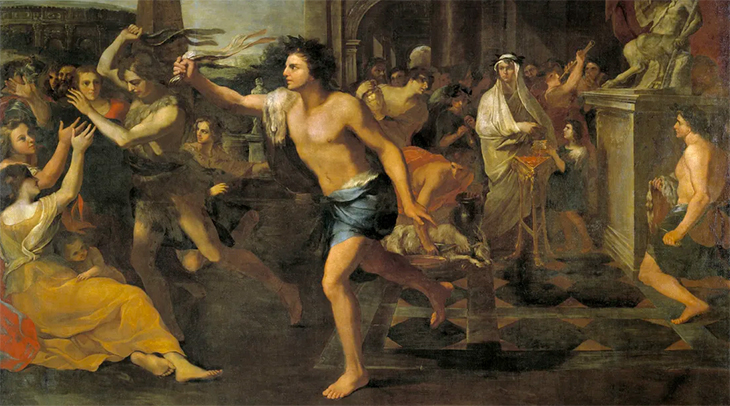
This pink-hearted holiday wasn’t always pink. The origins of this cutesy day are kind of dark and bloody. As far as we could track its provenance, the history of Valentine’s Day goes back to the Roman Empire. A time when men literally hit on women by hitting them. And women literally stayed in line for this to happen, believing it would make them more fertile. Kinda crazy, right? Stick with me, it gets even crazier.

According to the legend, what happens next is some sort of ancient version of “The Bachelor”. They had this tradition where all the young, fertile women in the city would have their names in a big urn. Then, the city’s single men would each pick a name and make a couple with that girl for the upcoming year. When the match was right, often these couples would end up getting married. This crazy ritual was called the Festival of Lupercalia.

Festival of Lupercalia

Who was Saint Valentine? 

Well, it seems like there was more than just one St. Valentine. Or at least, the history is mixed up a little bit. Because there are, at least, two different stories about who St. Valentine was. According to the first legend, Valentine was a Christian priest who was imprisoned and fell in love with his jailer’s daughter. Before he died, he left a love letter signed with the words “from your Valentine.”

The second one features, yet again, a priest who ignored the orders of Emperor Claudius of not officiating marriage for young men in his army. He continued to marry couples who were deeply in love and so, the priest got executed exactly on February 14th in the third century of Rome. The history of Valentine’s day tells us that this priest wore a ring with a Cupid on it – one of the well-known symbols of this holiday – so that soldiers would recognize him. He also liked to share paper heart cards to remind Christians of their love for God. 

While St. Valentine’s story established this holiday to be a romantic one, what truly solidified the connection between St. Valentine and love was a poem by medieval author Geoffrey Chaucer in 1381. Historians consider this poem as being the origin of the “modern” celebration of Valentine’s Day.

Why do we celebrate Valentine’s Day?

As we’ve already mentioned before, Chaucer and Shakespeare had a great impact on the history of Valentine’s Day. They both romanticized this holiday in their work that much that it gained popularity throughout Great Britain and the rest of Europe. Soon, people began writing and exchanging love letters to celebrate Valentine’s Day. The common folk even started to beg divinations to reveal their future romantic partners. 

Valentine's Day card example

In 1913, a well-known American company called Hallmark began distributing official “Valentine’s Day cards”. And the celebration of this popular and romantic holiday continued even more: flowers, candies, teddy bears, paper hearts, jewelry, romantic dinners… and the rest is history. February has not been the same since. 

Valentine’s Day nowadays. How people celebrate it

The celebration of Valentine’s Day still goes on nowadays all over the world, in many various ways. Many will break the bank buying jewelry, perfumes, or other expensive gifts, while others will prefer the simplest gifts: romantic dinners, flowers, chocolate, and Valentine’s Day cards. Did you know that people exchange millions of Valentine’s Day cards every year? Looks like Hallmark really revolutionized the history of Valentine’s Day! And also the tradition of offering red roses on Valentine’s Day is a special one. These flowers are associated with the Greek goddess of love, Aphrodite, that’s why people choose to give red roses instead of other types of flowers to express their love.

Valentine's Day gifts

No matter how you choose to celebrate Valentine’s Day, keep in mind that there are no rules. It’s a totally new era, so you can feel free to celebrate the way you want. A dreamy dinner out, some champagne, going out to the movies, cooking a fancy meal, offering a nice Valentine’s Day card, or even hosting a Valentine’s Day party…it’s up to you to pick the best option.

Legendary Bollywood actor Dilip Kumar passed away

Legendary Bollywood actor Dilip Kumar passed away today. He was one of India’s earliest and most famous film actor. His age was 98 years and died in Mumbai. Dilip Kumar acted in more than 65 films over nearly five decades and is known for his iconic roles in movies like ‘Ganga Jamuna’ (1961), ‘Kranti'(1981), ‘Karma'(1981), ‘Naya Daur'(1957), ‘Mughal-e-Azam'(1960). He was last seen in ‘Quila’ in 1998. The actor had been recuperating from age-related health issues for the last few days and had been admitted to the hospital multiple times. He was admitted to the intensive care unit (ICU) of Mumbai’s Hinduja Hospital on June 30 after he complained of breathlessness. He had been frequently ill for months. Kumar’s wife Saira Banu had been with throughout. His family friend Faisal Farooqui tweeted through the actor’s handle “With a heavy heart and profound grief, I announce the passing away of our beloved Dilip saab, few minutes ago. We are from God and to Him we return”

Many Bollywood celebrities including filmmaker Vidya Balan, Sidharth Roy Kapoor, Shabana Azmi, arrived at Dilip Kumar’s house to pay their last respects to the legendary actor Dilip Kumar.

Tributes have been pouring in on social media for the actor- Politicians, Bollywood stars and even historians have tweeted.

Lolita: The Book Review

Introduction

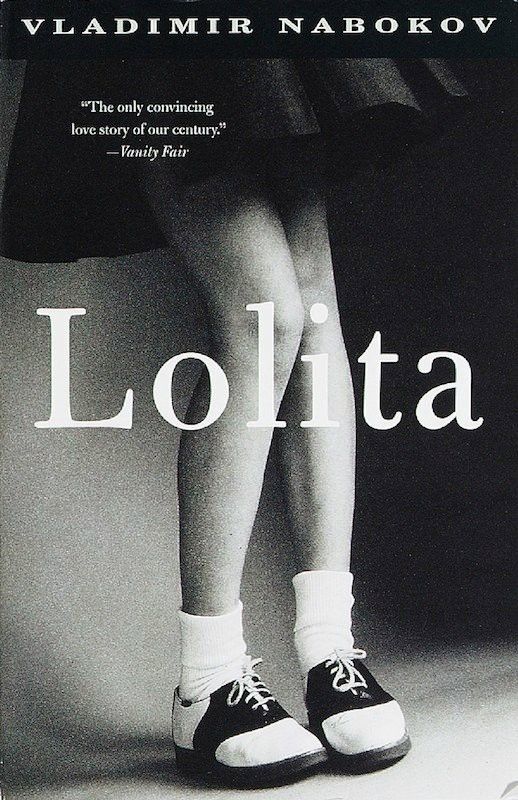
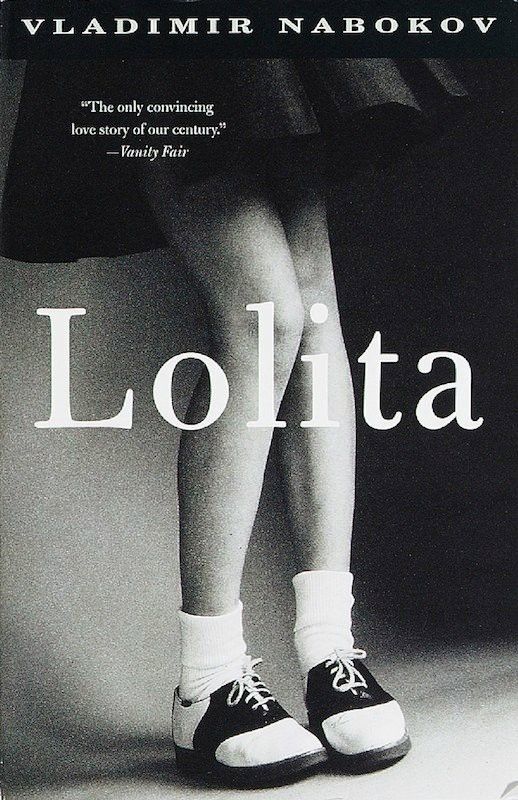
The cover of Lolita (1955)

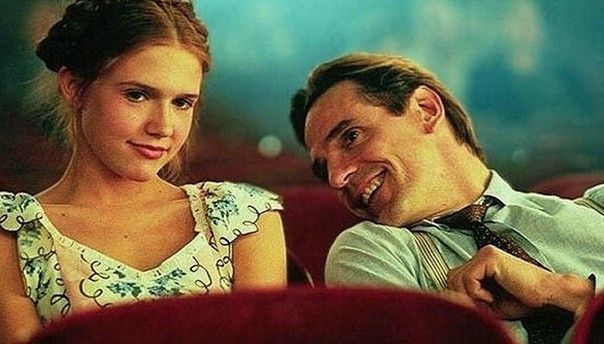
Lolita  is a 1955 novel written by Russian-American novelist Vladimir Nabokov. The novel is notable for its controversial subject, which engages an unethical relationship between a middle aged man and a minor girl. First issued in 1955 by an unorthodox Paris press after being rejected by a string of American publishers; banned by the French government, presumably out of solicitude for immature English-speaking readers (the ban was later quashed by the French High Court); pronounced unobjectionable by that blue-nosed body, the U. S. Customs office; and heralded by ovations from writers, professors, and critics on both sides of the Atlantic, became a near-instant bestseller in the US, shifting over 100,000 copies in its first three weeks alone. The shocking subject matter, gleefully punning unreliable narrator, and Nabokov’s spellbinding sentence-level prowess combined to create a book as repulsive as it was inviting—comic and horrific and utterly absorbing. The novel was later adapted in two movies with the same name of the novel, Lolita(1962) and Lolita(1997) .

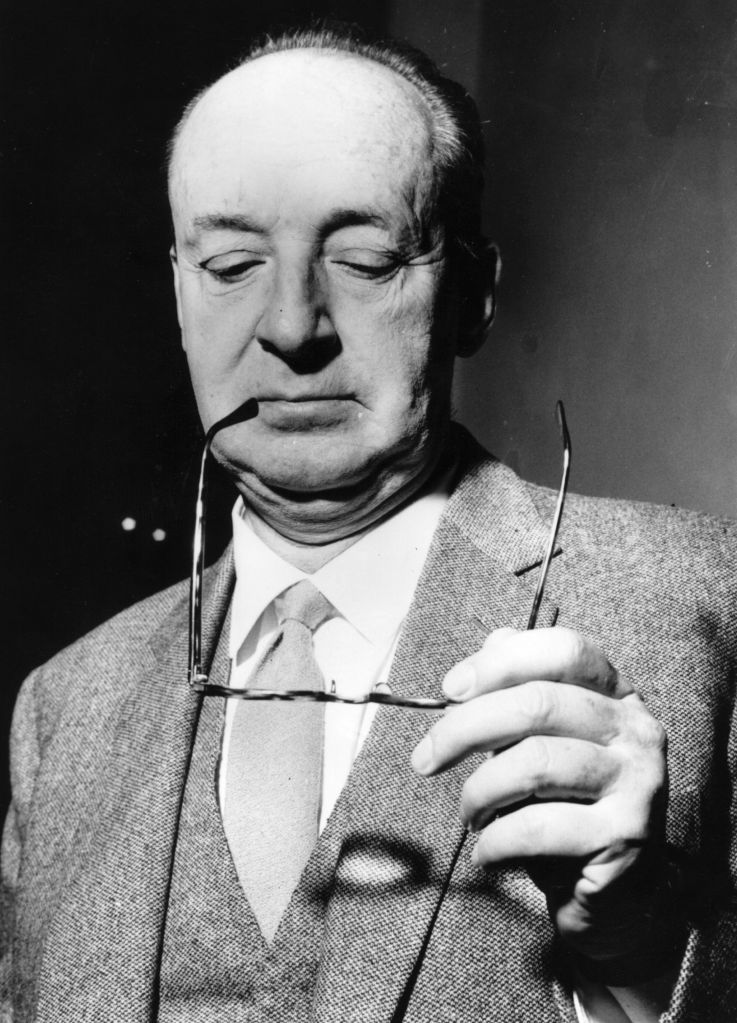
Russian writer Vladimir Nabokov (1899 – 1977) in Rome to work on the film screenplay of his most famous book, ‘Lolita‘.

About The Author

Vladimir Vladimirovich Nabokov , also known by the pen name  Vladimir Sirin, was a Russian-American novelist, poet, translator, and entomologist. Born in Russia, he wrote his first nine novels in Russian (1926–1938) while living in Berlin. He achieved international acclaim and prominence after moving to the United States and beginning to write in English. Nabokov became an American citizen in 1945, but he and his wife returned to Europe in 1961, settling in Montreux, Switzerland.

Nabokov’s Lolita  (1955) was ranked fourth in the list of the Modern Library 100 Best Novel  in 2007, Pale Fire  (1962) was ranked 53rd on the same list; and his memoir, Speak Memory (1951), was listed eighth on publisher Random House list of the 20th century’s greatest nonfiction. He was a seven-time finalist for the National Book Award for Fiction.

Cinematic Adaptation of Lolita (1962), starring James Mason as Humbert Humbert and Sue Lyon as Lolita

Storyline of The Novel

Lolita, Vladimir Nabokov’s immaculate and disturbing masterpiece, is the story of middle-aged paedophile man Humbert Humbert—a handsome, French-born intellectual on the one hand, and unapologetic sexual predator on the other and his tragic love affair with his 12-year-old, bubble-gum popping stepdaughter Dolores Haze, who is fondly called Lolita by Humbert. It’s a post-war road novel, the odyssey of a venerable European man and a prepubescent American girl bouncing across the United States, trying to outrun the past and find a future that doesn’t exist.

Lolita (1962)

Humbert’s sociopathic behaviour might be traced back to a sexual experience when he was 13, when he meets his “first love” Annabel—a 12-year old girl who is travelling with her parents. They lust for each other fervently, with an intensity that leaves a permanent impression on Humbert. He describes his passion with a cannibalistic “frenzy of mutual possession [that] might have been assuaged only by our actually imbibing and assimilating every particle of each other’s soul and flesh.” Their failure to complete the dirty deed leaves an indelible, unresolved tension in Humbert—an impoverished thirst for early-pubescent girls that carries through to adulthood, which he is forced to lie about . He gets married to a widow who he physically abuses to get his own way. He constantly admits himself to sanatoriums, but finds the doctors ridiculous and uses his intelligence to mislead them. He swings from “ashamed and frightened” to “recklessly optimistic,” craving hedonistic intercourse with 11 to 14 year-old girls, but living in the wrong country and century. He tries to justify his urges by recounting accepted paedophilia throughout history, but even his vindications are half-hearted and remorseless—he’s a grown man who wants to have intercourse with children, and there’s nothing to be done about it. He’s an “artist and a madman, with a bubble of hot poison in his loins.” His anguish is illustrated beautifully by Russian-born Nabokov, whose mastery of English is mind-blowing. The animalistic language that he uses is both shocking and enthralling, and some sentences are appalling in their vividness.

Cinematic Adaptation of Lolita (1997), starring Jeremy Irons as Humbert Humbert and Dominique Swain as Lolita

Humbert understands the precariousness of his attachment to Dolores. She’s a hostage who he appeases with countless and expensive bribes, spawning a crippling jealousy that his nymphet will run away with someone else, especially because of her flirtatious nature. The juvenile sensuality of Dolores Haze makes a paedophile and a green-eyed monster of Humbert, who becomes more and more paranoid as the story unfolds. 

Analysis of The Novel

To be sure, this novel isn’t for the faint of heart, but neither should prospective readers retreat to any kind of moral high ground. Nabokov, in fact, threads an unexpected and affirming emotional serenity through his portrait of obsession. His enigmatic narrator leaves us in spellbound rapture. Because for all of its linguistic pyrotechnics — as Humbert confesses, “you can always count on a murderer for a fancy prose style” — and for all its controversial subject matter, Lolita is one of the most beautiful love stories you’ll ever read. It may be one of the only love stories you’ll ever read. This is the most thrilling and beautiful and most deeply disturbing aspect of the novel — and it’s what most persuasively recommends the book — that in addition to finding Humbert’s soul on the page, we also find, like it or not, a little of our own.

Lolita (1997)

The Author has afflicted poor Humbert with a special and taboo variety for a couple of contradictory reasons. In the first place, its illicit nature will both shock the reader into paying attention and prevent sentimentally false sympathy from distorting his judgment. Contrariwise, I believe, Mr. Nabokov is slyly exploiting the American emphasis on the attraction of youth and the importance devoted to the ‘teen-ager’ in order to promote an unconscious identification with Humbert’s agonies. 

Criticism of The Novel

The art that palliates Humbert’s misery has not notably relieved the distress of reviewers, most of whom have felt obliged to ask themselves, how the author could come up with such horrific storyline. Some have concluded, rather desperately, that he hasn’t done it at all. According to one interpretation, Mr. Nabokov has merely written an allegory of a European intellectual who falls in love with America and discovers, to his gentle sorrow, that the country is still a trifle immature. Aside from the difficulty of assigning roles, the fact that the author is obviously capable of writing such a story without the aid of a nympholeptic allegory throws considerable doubt on the argument. It has also been suggested, ingeniously, that Mr. Nabokov really wanted to write a tale of romantic passion in the grand, or nineteenth-century, manner, and found that the only way to make such a passion interesting to the contemporary reader was to disguise it as psychopathology. If this interpretation is correct, one can only say that Mr. Nabokov has beautifully concealed his disappointment at having to portray his heroine as a child.

Lolita (1997)

Despite Humbert’s evil, the fallout from the relationship is heartbreaking. Our empathy for the odious rogue is Nabokov’s greatest achievement in the novel. We both detest and sympathise with him, leaving us feeling confused and perhaps a little guilty. Humbert’s vile actions and fantasies, in which he dreams of painting a mural and re-live hopelessness of falling in love with a girl who could never love him back. Like Humbert’s love for DoloresLolita felt like a forbidden fruit, breaking the sturdiest of taboos to illuminate the mind of an infatuated, sociopathic paedophile, which is a mind we rarely get to see. 

Lolita (1997)

Conclusion

Lolita is old enough and infamous enough to be known as a story of unhinged paedophilia. But it’s also a beautiful and depressing love story, with a tortured antagonist who despite his crimes, and due to the skill of the book’s author Vladimir Nabokov, we can eventually empathise with.

A Dialogue on National Education Policy 2020 at Nehru Centre, London

 A dialogue on the “New Education Policy 2020 – NEP Outreach”, was organized by the Nehru Centre, London with National Book Trust, India (under Ministry of Education) on 18 January, 2021.

Speaking on the occasion, Union of Education Shri Ramesh Pokhriyal ‘Nishank’, Minister said that under the leadership of Prime Minister Shri Narendra Modi, the NEP-2020 has been implemented with a futuristic mindset, thereby turning the challenges into opportunities. It will equip India to hold a position in the global knowledge system while maintaining and developing its traditional knowledge system. “Through the policy, we are hoping to transform education and putting a significant thrust on learning about how to think critically and solve problems, how to be creative and multidisciplinary, and how to innovate, adapt, and absorb new material in the novel and changing fields. Pedagogy is expected to evolve to make education more experiential, holistic, integrated, inquiry-driven, discovery-oriented, learner-centred, discussion-based, flexible, and, of course, enjoyable,” the Minister added.

Shri Vinay Sahastrabuddhe, President, ICCR, in his opening remarks said that the NEP-2020 is one of the greatest reforms presented by the Prime Minister Shri Narendra Modi.

Rt. Hon Jo Johnson, Educationist, Former Minister for Universities, Science, Research & Innovation, United Kingdom, lauded India’s NEP-2020 as an event of global significance and as a policy that will turn India into a global knowledge superpower, emphasizing its strong focus on early years, teachers, universal numeracy & literacy, etc. He also mentioned that the exciting fact about NEP-2020 is that it proposes to shift the mode of assessment from summative to formative, testing higher order skills like critical thinking, analysis and conceptual clarity.

Rt. Hon Jo Johnson and Shri Ramesh Pokhriyal ‘Nishank’ also engaged in a dialogue on various provisions of the NEP-2020, such as teacher training, entry of top 100 foreign universities in India, and education in Indian HEIs.

The engaging and enlightening event was moderated by Shri Amish Tripathi, Minister (Culture), High Commission of India, UK and Director, The Nehru Centre.