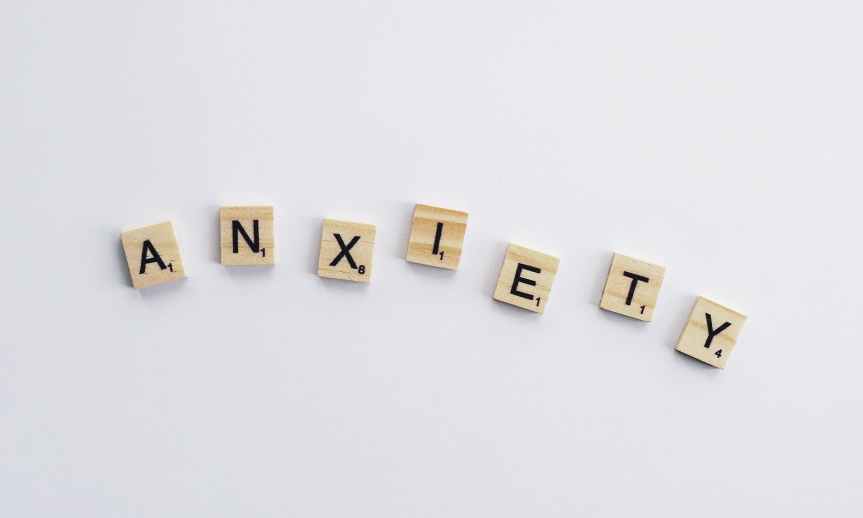
Success and mental health

Photo by Daniel Reche on Pexels.com

Mental health is a major concern worldwide these days and India is not far behind in sharing this. India is considered as one of the depressed countries in the world during the pandemic by WHO. Currently, the students are stressed, worried and anxious about the uncertainties of the future. One in seven Indians between 15-24 years of age feel depressed and lack interest in doing things. While the impact on children’s lives is incalculable, the economic loss due to mental health conditions between 2012-2030 is estimated to be USD 1.03 trillion in India, according to WHO 2020. This excessive online presence or screen time during the pandemic itself has created mood swings, irritability, social withdrawal, changes in sleeping and eating patterns, difficulty with attention, focus and concentration, and further detachment from family or the real world. Studies have shown that one third of the young people display poor knowledge of mental health problems. Regular fitness exercises like morning walks, yoga, and meditation have proved to be great medicine for curing mental health. Besides this, it is imperative to have a good diet and enough sleep. A person needs 7 to 9 hours of sleep every night on average , we should also stay connects with our friends and family , do what Piques our interest , be active and the most important we should reduce our screen time. When someone is tired yet still can’t sleep, it’s a symptom that their mental health is unstable. In students low self esteem , irritability, sudden anger, frequent absence, thoughts of suicide, reckless behavior, crying etc. could be some of the symptoms of depression.

As we speak, there is one suicide attempt every 3 seconds and one demise by suicide every 40 seconds by our youth and in most cases the causes are mental health problems.

The major cause of mental health problems in Indian students is seen due to academic pressure and the pressure created my families specially parents which ultimately leads to anxiety, over thinking and depression among students. This academic pressure is also driving kids to suicide.

Social standing is a big and also the main cause of parental pressure. Caring more about how the world perceives them, can render parents ignorant about the true talents of their children. Parents often generalize the definition of success and excellence, depending on how others are doing.

Majority of the Indian parents never try to understand why their children are not able to perform good in their academics or other fields. They never want to sit down with their children and talk about their problems with their children. Instead they prefer to scold or even beat their child which is somehow much more demoralizing and rather acts towards increasing the child’s stress level to a great extend. Kids who feel like they are under constant pressure can experience constant anxiety. Parents think that their only duty is to earn and pay for their children expenses but what they should really do is that they should build their relationship stronger. This means meeting there childs physical as well as emotional needs by taking care of them. They need to constantly instill into their next generation the importance of ‘resilience’ which is the inner strength. But parents are not the only one to blame or to take care of the children but we ourselves should take proper care of our mental health and should not ignore it.

If all these aspects are addressed at an earlier age and stage of a student’s life, it will not only make them emotionally stronger and healthier but also prepare them for future life with more mindfulness, respect, gratitude and strength.

What is Protocol? How many types of protocols are there?

What is Protocol?

What is Protocol


Hello friends, what is a VPN for you? You must know about it, but do you know what is Protocol, and how it works? Or what is it used for? So today we are going to tell you about the protocol.

Friends Protocol is a kind of digital rule, which is used in digital communication. The protocol itself decides how the data will be transmitted over the computer network and how the data is received. Protocol in computing is also called digital language. Without these, we cannot connect to the internet, nor can we transfer data from one computer to another. Any file or mail sent by us on the Internet reaches with the help of this protocol, and we can use the Internet.

How does the protocol work?

Each network protocol operates on rules for how its data packets should be organized. Because protocols such as the Internet Protocol often work together in layers, some of the data embedded inside a packet formatted for one protocol may be in the format of some other related protocol (named encapsulation).

Each protocol has its different methods, with the help of which it is decided what is its work? How will it send and receive information? If there is an error in all this, then how will he manage it? The protocol helps to connect two devices and transmit data, how the data should go from one device and how to receive the data to the other device, decides the protocol itself, and this is how the protocol works.

Connecting different hardware to the network and sharing information and giving instructions between them is a very difficult task, for this, it is necessary that both the sender and the receiver communicate in the same language and this work is possible only by protocol.

How many types of protocols are there?

Have you come to know what is the protocol? But do you know that there are many types of protocols as well? So let us know how many types of protocols are there?

1. TCP- Transmission Control Protocol:–

TCP and IP both follow different processes, but they can also be used together and when any two or more protocols are used for the same task then it is called a stack. Because they have some layer of operation. If seen, both these protocols are used to represent a complete suite and this suite of protocols transmits information about the operation of the web. TCP and IP protocols are also used for many local area networks.

2. FTP- File Transfer Protocol:-

The full form of FTP is File Transfer Protocol. As the name suggests, it is used to transfer files from one computer to another. FTP is a type of protocol that sets some rules for the exchange of files between two systems.

3. HTTP- Hyper Text Transfer Protocol:-

The full name of HTTP is Hyper Text Transfer Protocol which is an application protocol. Any data from the Internet reaches our computer from the server to our browser in the HTTP language itself, which the browser translates into its original language so that we can easily read it in our language.

4. SMTP- Simple Mail Transfer Protocol:-

By using the SMTP protocol, we send our email from one place to another, with SMTP there are two more protocols used, namely “POP (Post Office Protocol)” and “IMAP (Internet Message Access Protocol)”. All these protocols work with the help of TCP / IP and PORT25 works between them.

There are many other protocols, but they are not used much, you can see the list of other protocols below.

  • IGRP (Interior Gateway Routing Protocol)
  • EIGRP (Enhanced Interior Gateway Routing Protocol)
  • RIP (Routing Information Protocol)
  • RTMP (Real-Time Messaging Protocol)
  • HTTPS (HyperText Transfer Protocol over Secure Socket Layer)

So friends, what is the protocol? If you have anything that you did not understand, then you can ask us in the comment box given below, we will try our best to help you.

Personal Habits: Exercising

Everyone from India has heard the phrase, “ If you get up by 6 in the morning, everything will set in order.” It is a common phrase made for Millennials and Gen-Z. We hear it so often and tried a few times but it didn’t suit your routine. Did you ever wonder why you weren’t able to adopt it? After reading this, do let me know about your thoughts on this.

Exercising in the Morning

Of course, the most common habit among people. Exercising a few hours after you get up is beneficial to your health. It increases blood flow in you as well as trains your muscles. It increases alertness and also energizes you for the day. It’s common to do cardio in the morning with lifting weights before your first breakfast. This helps in burning fat as well as developing your muscle endurance. But why can’t you do it?

Jogging in the Morning increases blood flow and improves body endurance.

The most common reasons are:

  • Sleeping Late: You may have slept late. Even if you have slept around 11PM, if you need 8 hours of sleep then you will get up at 7AM. Your body needs sufficient sleep to get up or it will keep you tired the entire day. You have to plan your sleep schedule in a way you don’t compromise your sleep.
  • Exhausted: If you had a backbreaking day and you are completely exhausted of your energy, then you may not get up the next day at your set time. If this is your regular routine, you may want to change the time you want to get up.
  • Jam-packed daily routine: If your schedule is full on an everyday basis, you need to start prioritizing your work. It may be tough to change your routine but by doing this, you can improve the amount of time you can give to yourself and your new habits.
  • Feeling awkward where you exercise: Am I doing it well? Is my form right? Is my shirt torn? Am I sweating too much? Am I disturbing someone? Are they looking at how bad I am? Are they judging me? It is okay to feel these when you workout. Everyone goes through this and it’s okay. At the beginning it does feel weird to do a workout but we all started as beginners and we also have made mistakes. The only thing that you can do is ask a friend, family or trainer to help you. They may also point out other mistakes that you may have made which you can correct.
  • You don’t want to: Most of the time when you try to build a habit, there is a feeling that says, “This isn’t worth the trouble we are going through” but sometimes, you just don’t want to. You might want to do it to show others or of the stereotypical “healthy person”. If you think clearly by separating your external ideas/thoughts, you will understand why you want to do it.

How can you tackle these problems?

At first, these hurdles feel the hardest to jump over but unless you jump over them, you cannot reach your goal. There will be hurdles along the way and you are the solution to them. You will become better when you start crossing hurdles. Every hurdle you face is a step that you need to conquer and move forward.

  1. Set a Convenient time: 5 AM may be easy for others but it may be difficult for you. It may not agree with your sleep routine, or with your work routine so you quit. Rather, just change the time. If you get up around 7 AM and have to go to work by 10 AM. Make a slot of 1 hour for your workout and complete your morning routine! If you can’t make a slot of 1 hour, carry it to the evening when you come home. 1 hour before dinner, exercise to your heart’s content! 
  1. Change your workout: If you are the ‘No pain, No Gain’ person, sometimes, you may get too sore from your workout which leads to quitting. Rather than quitting, change your workout a bit. You don’t need to change weight, just change what you do. It is very helpful to have a 10-minute cardio session at the end. Not high intensity but something like walking on a treadmill or yoga, will help you recover efficiently.
  1. Get a workout partner: “Sometimes, the fruit tastes better when it’s shared” Get a partner! A friend who wants to workout or a family member who is bored of being alone in the gym, work together at the gym! When you have someone to look out for you, you get more confident and work better. It will also help in improving your form! If you workout with a partner you are comfortable with, you will be able to focus more on your workout than others.
  1. Take Pictures of yourself: When you take pictures of yourself after you workout, you can see the amount of progress that you are accomplishing over time. This way you get to see how far you have come. Every day that you work is a step forward. You and your partner could record each other’s workout and see where you could improve.
  1. 20% of the work gets you 80% of the way: Some days, you don’t feel like working out, you don’t feel like going to the gym but by showing up and doing 10% of your workout makes you feel happy that you came. Just by showing up and starting your workout sets the wheels in motion. By the time you take off your headset, you are halfway through.
  1. Take cheat days/rest days: When you exercise, it’s important to rest so your muscles recover and become stronger. By not taking rest, you are prone to burning out. If the gym is tiring you out way beyond it should, then you need a rest day. Hitting the gym after your rest day feels better because you will feel stronger and work more.

This article is my personal opinion that I have used when I workout and it has worked well for me. Experiment with your workout routines and I am sure you can find something that works well for you. To become better tomorrow, you have to work today. This way, you will become a better version of yourself. All the Best! 

Personal Habits: Exercising

Everyone from India has heard the phrase, “ If you get up by 6 in the morning, everything will set in order.” It is a common phrase made for Millennials and Gen-Z. We hear it so often and tried a few times but it didn’t suit your routine. Did you ever wonder why you weren’t able to adopt it? After reading this, do let me know about your thoughts on this.

Exercising in the Morning

Of course, the most common habit among people. Exercising a few hours after you get up is beneficial to your health. It increases blood flow in you as well as trains your muscles. It increases alertness and also energizes you for the day. It’s common to do cardio in the morning with lifting weights before your first breakfast. This helps in burning fat as well as developing your muscle endurance. But why can’t you do it?

Jogging in the Morning increases blood flow and improves body endurance.

The most common reasons are:

  • Sleeping Late: You may have slept late. Even if you have slept around 11PM, if you need 8 hours of sleep then you will get up at 7AM. Your body needs sufficient sleep to get up or it will keep you tired the entire day. You have to plan your sleep schedule in a way you don’t compromise your sleep.
  • Exhausted: If you had a backbreaking day and you are completely exhausted of your energy, then you may not get up the next day at your set time. If this is your regular routine, you may want to change the time you want to get up.
  • Jam-packed daily routine: If your schedule is full on an everyday basis, you need to start prioritizing your work. It may be tough to change your routine but by doing this, you can improve the amount of time you can give to yourself and your new habits.
  • Feeling awkward where you exercise: Am I doing it well? Is my form right? Is my shirt torn? Am I sweating too much? Am I disturbing someone? Are they looking at how bad I am? Are they judging me? It is okay to feel these when you workout. Everyone goes through this and it’s okay. At the beginning it does feel weird to do a workout but we all started as beginners and we also have made mistakes. The only thing that you can do is ask a friend, family or trainer to help you. They may also point out other mistakes that you may have made which you can correct.
  • You don’t want to: Most of the time when you try to build a habit, there is a feeling that says, “This isn’t worth the trouble we are going through” but sometimes, you just don’t want to. You might want to do it to show others or of the stereotypical “healthy person”. If you think clearly by separating your external ideas/thoughts, you will understand why you want to do it.

How can you tackle these problems?

At first, these hurdles feel the hardest to jump over but unless you jump over them, you cannot reach your goal. There will be hurdles along the way and you are the solution to them. You will become better when you start crossing hurdles. Every hurdle you face is a step that you need to conquer and move forward.

  1. Set a Convenient time: 5 AM may be easy for others but it may be difficult for you. It may not agree with your sleep routine, or with your work routine so you quit. Rather, just change the time. If you get up around 7 AM and have to go to work by 10 AM. Make a slot of 1 hour for your workout and complete your morning routine! If you can’t make a slot of 1 hour, carry it to the evening when you come home. 1 hour before dinner, exercise to your heart’s content! 
  1. Change your workout: If you are the ‘No pain, No Gain’ person, sometimes, you may get too sore from your workout which leads to quitting. Rather than quitting, change your workout a bit. You don’t need to change weight, just change what you do. It is very helpful to have a 10-minute cardio session at the end. Not high intensity but something like walking on a treadmill or yoga, will help you recover efficiently.
  1. Get a workout partner: “Sometimes, the fruit tastes better when it’s shared” Get a partner! A friend who wants to workout or a family member who is bored of being alone in the gym, work together at the gym! When you have someone to look out for you, you get more confident and work better. It will also help in improving your form! If you workout with a partner you are comfortable with, you will be able to focus more on your workout than others.
  1. Take Pictures of yourself: When you take pictures of yourself after you workout, you can see the amount of progress that you are accomplishing over time. This way you get to see how far you have come. Every day that you work is a step forward. You and your partner could record each other’s workout and see where you could improve.
  1. 20% of the work gets you 80% of the way: Some days, you don’t feel like working out, you don’t feel like going to the gym but by showing up and doing 10% of your workout makes you feel happy that you came. Just by showing up and starting your workout sets the wheels in motion. By the time you take off your headset, you are halfway through.
  1. Take cheat days/rest days: When you exercise, it’s important to rest so your muscles recover and become stronger. By not taking rest, you are prone to burning out. If the gym is tiring you out way beyond it should, then you need a rest day. Hitting the gym after your rest day feels better because you will feel stronger and work more.

This article is my personal opinion that I have used when I workout and it has worked well for me. Experiment with your workout routines and I am sure you can find something that works well for you. To become better tomorrow, you have to work today. This way, you will become a better version of yourself. All the Best! 

Ind vs Eng: Rohit Sharma made history becoming the first captain in the world to win as many matches in T20I cricket

Rohit Sharma has won his first T20 International match on foreign soil as captain against a strong team like England.By winning this match, Rohit Sharma made a great start to the T20 series and set a world record that no captain had set before him.Since Rohit Sharma became the regular captain of the Indian cricket team, he has not lost a single T20 match up to this game, which is a record. Rohit Sharma set a world record He has played against New Zealand, West Indies and Sri Lanka in the T20 series since the 2021 T20 World Cup and the team has not lost a game under his captaincy.Now captained even on foreign soil, he also won the first T20 International game against England.With this win, Rohit Sharma gained the distinction of becoming the first captain in the world to win 13 consecutive matches in men’s T20 international cricket.Under the captaincy of Rohit Sharma, the Indian team has had all these victories in a row this year.On the other hand, if we talk about the whole, after becoming captain, he managed the Indian team in 18 games and Team India didn’t lose in every game. Let us tell you that in the first T20 match against England, Rohit Sharma decided to bat first after winning the toss and then the Indian team scored 198 runs for 8 wickets in 20 overs. In response, England was ready for 148 runs in 19.3 overs and lost by 50 runs.Hardik Pandya’s all-around performance brilliantly contributed to the Indian team’s victory.He first scored 51 runs and then won four important wickets for the team.

Ind vs Eng: Rohit Sharma made history becoming the first captain in the world to win as many matches in T20I cricket

Rohit Sharma has won his first T20 International match on foreign soil as captain against a strong team like England.By winning this match, Rohit Sharma made a great start to the T20 series and set a world record that no captain had set before him.Since Rohit Sharma became the regular captain of the Indian cricket team, he has not lost a single T20 match up to this game, which is a record. Rohit Sharma set a world record He has played against New Zealand, West Indies and Sri Lanka in the T20 series since the 2021 T20 World Cup and the team has not lost a game under his captaincy.Now captained even on foreign soil, he also won the first T20 International game against England.With this win, Rohit Sharma gained the distinction of becoming the first captain in the world to win 13 consecutive matches in men’s T20 international cricket.Under the captaincy of Rohit Sharma, the Indian team has had all these victories in a row this year.On the other hand, if we talk about the whole, after becoming captain, he managed the Indian team in 18 games and Team India didn’t lose in every game. Let us tell you that in the first T20 match against England, Rohit Sharma decided to bat first after winning the toss and then the Indian team scored 198 runs for 8 wickets in 20 overs. In response, England was ready for 148 runs in 19.3 overs and lost by 50 runs.Hardik Pandya’s all-around performance brilliantly contributed to the Indian team’s victory.He first scored 51 runs and then won four important wickets for the team.

DDA Planning Assistant Syllabus 2022


Part-I

i.Basic concepts of urban planning and Architecture, Planning Legislation
and GIS.

Section 1: Architecture
Section 2: Environmental Planning and Design
Section 3: Services, Infrastructure and Transportation
Section 4: Planning Legislation and GIS

ii. Delhi Development Act, (DD Act), 1957 will include all sections and provisions of the Act.
iii. Master plan of Delhi 1962-2021 will include provisions, strategies and Master Plan
proposals as per documents published from time to time.

Part-II:

To measure candidate’s reasoning ability, quantitative aptitude and proficiency in English and
General Awareness

a) Test of Reasoning
b) Test of Quantitative Aptitude
c) Test of General Awareness and
d) Test of English Language


DDA Planning Assistant Syllabus 2022: Detailed Syllabus

Part-I

i.Basic concepts of urban planning and Architecture, Planning Legislation
and GIS.

Section 1: Architecture

Elements, construction, architectural styles and examples of different periods of Indian and Western History of Architecture;
Oriental, Vernacular and Traditional architecture;
Architectural developments since Industrial Revolution;
Influence of modern art on architecture;
Art nouveau, Eclecticism, International styles, Post Modernism, Deconstruction in architecture;
Recent trends in Contemporary Architecture;
Works of renowned national and international architects.

Section 2: Environmental Planning and Design

Ecosystem- natural and man-made ecosystems;
Ecological principles Concepts of Environmental Impact Analysis;
Environmental considerations in planning and design;
database for incorporation of environmental concerns in planning analysis, land suitability analysis, vulnerability analysis;
Climate responsive design;
Solar architecture; methods of addressing environmental quality;
Green Building Concepts and Rating; ECBC; Building Performance Simulation and Evaluation;
Environmental pollution- types, cause, controls and abatement strategies.

Section 3: Services, Infrastructure and Transportation

Urban infrastructure- Transportation, Water Supply, Sewerage, Drainage, Solid Waste Management, Electricity and Communications;
Process and Principles of Transportation Planning and Traffic Engineering; Road capacity;
Traffic survey method; Traffic flow characteristics;
Traffic analyses and design considerations; Travel demand forecasting;
Land use transportation – urban from inter-relationships; Design of roads, intersections/ grade separates and parking areas, Hierarchy of roads and level of service;
Traffic and transport management and control in urban areas;
Mass transportation planning; Para-transits and other modes of transportations Pedestrian and slow moving traffic planning; Intelligent Transportation Systems.

Section 4: Planning Legislation and GIS

Planning legislation will include acts and legislation related to development management and maintenance of Delhi and other towns of NCR, municipal corporation and local bodies, Land Acquisition Act, PPP etc. Local self- Governance.

ii. Delhi Development Act, (DD Act), 1957 will include all sections and provisions of the Act.
iii. Master plan of Delhi 1962-2021 will include provisions, strategies and Master Plan
proposals as per documents published from time to time.

Part-II:

To measure candidate’s reasoning ability, quantitative aptitude and proficiency in English and
General Awareness

a) Test of Reasoning
b) Test of Quantitative Aptitude
c) Test of General Awareness and
d) Test of English Language

Videos Lectures Covering these Topics are available at 

https://www.youtube.com/c/Track2Training


Consideration of Environmental Factors in Planning and Development of Urban Areas

 In order to ensure safety and adequate conditions of life of the population, to limit the negative impact of economic and other activities on the environment and to ensure the protection and rational use of natural resources for the benefit of present and future generations, local governments in the implementation of spatial planning should take environmental factors into account. Therefore, speaking about environmental factors, we should pay attention to those functional areas that are most dependent planning in relation to environmental factors or themselves have an impact on the environment.

These are production zones, zones of engineering and transport infrastructures, residential and recreational areas. Production zone designed to accommodate industrial, municipal and warehouse facilities. The production area recommended to be placed on territories with a calm relief, providing convenient transport links to places of settlement employed in the enterprise workers and external facilities and urban transport. Planning should take into account the fact that in the production area included the territory of sanitary protection zones of the objects themselves and in these sanitary protection zones are not allowed in residential houses, preschool and educational institutions, and healthcare institutions, leisure, recreational and sports facilities, horticultural, suburban and gardening cooperatives and agricultural production.

In addition to production areas should pay attention to the zones of engineering and transport infrastructure, which is designed to accommodate activities and facilities and communications of railway, road, river, Maritime, air and pipeline transport, communications and engineering equipment, and also have in one way or another impact on the environment. When planning must take into account compliance with the required distances from such facilities to areas of residential, social, business and recreational areas and other requirements to prevent harmful effects on the environment. It should be understood that the objects of engineering and transport infrastructure, possessing the feature of a direct harmful impact on the security of the population, must be located outside urban and rural settlements.

Also in planning land use should pay attention to the location of the city’s recreational areas. As these areas are intended for the organization of places of rest of the population you need to consider that their territories are not permitted the construction and expansion of existing industrial, communal and storage objects, which can have a negative impact on human health and the environment. The exception may be only industrial, municipal and warehouse facilities, which is directly related to the operation of facilities health and recreational purposes.

Territorial planning of the municipal district is accompanied by the preparation of necessary documentation for territorial planning.

documents of territorial planning;

documents zoning;

documentation on planning the territory.

In accordance with article 18 of the town planning Code of the Russian Federation territorial planning documents of municipalities are:

territorial planning schemes of municipal districts;

master plans of settlements;

master plans of urban districts

The General plan of the municipal formation is main planning document that determines the prospects of development of the city for a long time. It must be presented not only transport, architectural planning, engineering, social and industrial aspects of city development and the ecological living conditions of the population and prospects of preservation of the environment. With the development of project planning documentation should consider the regulations and restrictions on natural resources, the sanitary-hygienic norms and rules, and other regulations governing environmental safety of living of population, natural features areas, the demographic features of the territory, its historical and cultural value and other environmental factors, or otherwise influencing the adoption of planning decisions.

Such a collection of information about the area required for the implementation of investment projects for the integrated development of the city. Detailed preliminary analysis of the relevant documents allows to predict the possible risks at the initial stage of implementation of the investment. These documents are very important for the investor because on the basis of the relevant documents, management decisions that may affect the interests of holders of land plots and capital construction objects (for example, decisions on seizure of land plots).

Environmental factors

Ecological factors are processes or individual elements of the environment, natural or anthropogenic, are considered when planning land use in order to ensure favorable living conditions of the population and protection of sustainable functioning of natural ecological systems from pollution and other negative impacts of economic and other activities.

For effective management of urban areas and improve the planning should include the parameters of the natural environment as good or bad as air, drinking water quality, the presence or absence of green areas, noise, the presence or absence of unattractive objects. Very often three of the above factors — air quality, the presence of landscaping and the absence of industrial facilities that form people’s opinions about the good or bad quality of the environment and create preconditions for increase of prestige of urban areas and, consequently, increase in property prices of the cities.

Thus, in the urban planning law defines the concept of sustainable development of territories. In accordance with paragraph 3 of article 1 of GRK of the Russian Federation sustainable development of territories is a provision in the implementation of urban development of safe and favorable conditions of human life, the limitation of negative impact of economic and other activities on the environment and the protection and rational use of natural resources for the benefit of present and future generations.

The concept of sustainable development has a similar wording in the international law document – the Rio Declaration on the environment. On the basis of recommendations and principles published documents in Rio de Janeiro in 1992 at the UN Conference on environment and development.

The analysis of the documentation on territorial planning and materials for the assessment of the ecological status of the city, helped to identify the main problem areas of the municipality. Such today are:

environmental pollution by industrial enterprises and motor transport;

the poor state of hydrographic system of the Piedmont historical part of the city;

flooding and flooding of territories;

pollution of surface waters;

solid waste management.

In the framework of the environmental project acquired a mobile laboratory, which today can produce a sample of atmospheric air in any part of the city and the industrial site. 

It should be noted that industrial activities has a negative impact not only on air quality but also on water sources, therefore, for the protection of water environment and prevention of negative impact of industrial enterprises on its facilities in the city master plan is provided to develop projects for the organization water protection zones and coastal shelterbelts on water bodies. To clean the territories of water protection zones from industrial waste, to identify businesses that unauthorized use of water objects and to apply penalties, in accordance with environmental legislation.

It should be noted that industrial enterprises have a negative impact not only on atmospheric air and water objects, but also on the soil condition of the city district. To recover and also to prevent contamination and destruction of the soil cover of the city, the master plan proposes to develop a series of measures on protection of water objects, pesticides, industrial and other technological waste. For this reason provided for activities such as reclamation and rehabilitation of the territories of the liquidated farms, agricultural enterprises and other polluting objects. You should also organize agrotechnical service for continuous monitoring for quality changes of soil and taking appropriate measures for its protection, ensuring quality control and timeliness of performance of works on recultivation of disturbed lands.

In connection with these factors to improve the environmental situation in the city, to avoid the periodic flooding of urban areas and partial waterlogging, increasing the service life of pavement, as well as to reduce pollution of surface water the master plan provides for the comprehensive development of the Sewerage system of storm (rain) wastewater and protection from flooding of the city, as well as works on Bank protection of the river in the area of the cemetery and the construction of the dam embankment. 

On the territory of the municipality of solid waste represents a source of environmental pollution, contributing to the spread of hazardous substances. However, they contain in their composition components (ferrous and non-ferrous metals, plastics), which can be used as secondary resources. Production debris, similar in composition to MSW could be used as valuable secondary raw material after special processing. Food waste (catering, vegetable bases, etc.), if they do not require sorting, are also of great value. In any case, the separation of food and non-food solid waste allows us to offer an adequate technology of their processing.


Environmental Factors Affecting Urban Planning

Environmental factors, in varying degrees, always have a direct influence on the urban environment formation and the provision of favorable and safe conditions for the life of the population. Their role in the planning and development of urban areas remains an integral part of the management of such areas. Management should be aimed at improving the efficiency of use of the territories and ecological environment improvement. Planning must be done with the consideration of identified ecological processes in cities on the basis of the information about their occurrence in the past and present. Currently, cities face a multitude of problems that require urgent and immediate solutions. One of the most important issues is the poor state of the urban environment, so the environmental factors remain one of the most critical problems that should be considered by the authorities while implementing the urban areas’ development plans. 

It should be noted that urban development depends very much on investment policies, where the state, local governments are trying to develop a mechanism for development . 

The main sources of pollution of surface waters are insufficiently treated and untreated wastewater of industrial and utility companies, untreated sewage urban stormwater, runoff agricultural enterprises. As before, almost everywhere water bodies contaminated stubborn organic substances, compounds of iron, copper, zinc, manganese, oil products. The high content of these substances, with the exception of petroleum products, caused by natural factors.

Intense sources of pollution are urban stormwater, landfills for industrial and household waste from the territory of which there is erosion and filtering pollutants .

The impact of individual industries on the environment of the city

Industrial influence

The problem of all the industrial enterprises, the formation of large quantities of waste, air emissions, wastewater and solid waste production. The reduction of areas of forests, savannas, steppes in connection with the rapid construction of cities, industrial enterprises and highways leads to the reduction of oxygen in the atmosphere.

Therefore, the subjects of such enterprises should seek to take into account and improve the greening of production in the process of financial and economic activities.

Mining and processing enterprises for industrial purposes use large quantities of water. This entails the formation of wastewater contaminated with various substances, which in contact with water bodies is detrimental to their inhabitants. In the surface water is discharged petroleum products, copper compounds, iron, zinc, phosphorus, phenol, ammonia and nitrite nitrogen. Very often these and other harmful substances are in the groundwater, where they seep from landfills production and agriculture.

Transport influence

Transport is one of the most important elements of the material-technical base of social production and a necessary condition for the functioning of modern industrial society, as it is used for the movement of goods and passengers.

Transport is a major source of acoustic pollution of the environment. In large cities, the noise level of 70-75 acoustic decibels, which is several times exceeds admissible norms.

The combustion of fuel in engine cylinders are formed non-toxic (water vapor, carbon dioxide) and toxic substances. The latter are the products of combustion or side-reactions occurring at high temperatures. The main toxic component of exhaust gases released during the operation of gasoline engines is carbon monoxide. It is formed by incomplete oxidation of carbon fuels due to lack of oxygen in the whole volume of the engine cylinder or in its separate parts.

The priority areas of reduction of environmental pollution by motor transport are the use of new types of vehicles, minimally polluting (e.g., electric vehicle), rational organization and management of traffic flows and the use of better and more environmentally friendly fuels (e.g. gas).


Sewage and waste water

At present, domestic sewage is a huge problem both from the point of view of ecology and the environment, and economic side. Of the household domestic waste water to the hydrosphere do organic substances which are decomposed by oxygen-consuming colonies of bacteria. With the necessary access of air to the aerobic bacteria convert the wastewater into environmentally harmless substances. Given the restricted access of oxygen to the sewage decreases the activity of aerobic bacteria, thereby developing the anaerobic bacteria, implying the process of decay.

With sewage from domestic wastewaters into the water includes pesticides, phenols, surfactants (e.g., detergents). Their decomposition process is slow, some substances do not decompose at all. Via food chains from the organisms of aquatic animals and fish, these substances enter the human organism, negatively affect human health, which can further lead to various acute and chronic infectious diseases.

Municipal solid waste

Environmental pollution household waste affects the person through air, water, foods of plant origin grown on the poisoned soil debris.

Entering the soil chemical compounds accumulate and lead to a gradual change of chemical and physical properties, reduce the number of living organisms, impair fertility. Along with pollutants, often in soil bacteria, helminth eggs and other harmful organisms. Currently the recycling of trash is becoming the phenomenon only in a few countries, but there is an important need for more active use. Such methods of disposal of waste placement on landfills and incineration is not innocuous. Landfills emit methane gas, which creates a menacing our planet, the greenhouse effect, trapping heat in the earth’s atmosphere.

Gaura Devi who played an important role in Chipko Movement.

Gaura Devi (1925 – 1991) was a social activist and a rural women community leader from Uttarakhand, India who played an important role in the Chipko movement in 1970’s .
Gaura Devi was born in 1925 in a village named Lata of Chamoli district in the state of Uttarakhand. She got married at very young age, afer her marraige she moved to a nearby village named Reni by the Alaknanda River. At the age of 22 she was a widow with a child. After her husband death she moved to a new village which was near to the border of Indo-Tibet.

An environmentalist Sunderlal Bahuguna initially started the Chipko Movement . Gaura Devi became the leader of the Chipko movement in 1974. Gaura Devi was elected to lead the Mahila Mangal Dal (Women’s Welfare Association) in the wake of the Chipko movement. The organization worked towards protecting the forests of the community. On March 25, 1974, she learned from a young girl of the village that a local loggers of the village were logging a tree near the village. People in the village of Reni were told the news that according to government new policy, the government would pay compensation to the people for the land used by the army . Gaura Devi and 27 other women decide to take action against the loggers. She confronted the loggers and demanded that the men shoot her instead of cutting down trees, and she described the forest as “vandevta” (the jungle god) and her maika (mother’s house). Eventually, for the next three or four days Gaura Devi along with other village women’s protect the trees by hugging the trees , despite the insults and intimidation of the armed loggers,she was able to stop the logger’s work . After seeing the bravery of Gaura Devi and other village women’s how they protect the trees who are the important part of thier life other villagers from different villages joined the action with her . After this incident, the Uttar Pradesh government set up a specialized committee to investigate logging issues, and the logging company withdrew its subordinates from Reni. The Commission stated that the Reni Forest is an ecologically sensitive area where trees should not be logged. The Uttar Pradesh government who was in power of that area at that has since banned all logging in areas over 1150 km² for 10 years.

Some other important activist who played an important role in Chipko Andolan or Chipko movement along side Gaura Devi were :
Suraksha Devi, Sudesha Devi, Bachni Devi and Chandi Bhatt, Virushka Devi and others.

Gaura Devi passed away in July 1991, at the age of 66 in Reni village Chamoli.

“Ecology is permanent economy “

-Sunderlal Bahuguna