

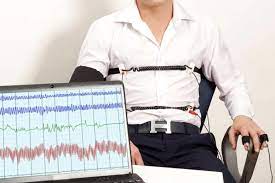
Lie detection is an assessment of a verbal statement with the goal to reveal a possible intentional deceit. Lie detector also known as polygraph, is a device that measures and records several physiological indicators such as blood pressure, pulse, respiration, and skin conductivity while a person is asked and answers a series of questions. Rate and depth of respiration is measured by pneumograph wrapped around a subject’s chest. Skin conductivity is assessed through electrodes attached to a subject’s fingertips. Blood pressure cuff is used to measure cardiovascular activity.
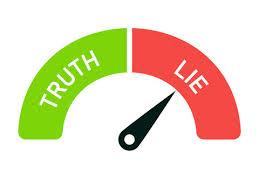
There are several questioning techniques in polygraph. The most widely used test is Control Question Test (CQT) which compares responses to “relevant” questions with those of “control” questions. The alternate test that’s been used is Guilty Knowledge Test (GKT) which has multiple-choice test with items concerning knowledge that only a guilty subject could have.
ACCURACY:
The American Polygraph Association which has set a standard for polygraph, says that they are highly accurate and have an accuracy rate of 90 percent when done properly. However, critics say that polygraph are correct only 70 percent of the time. It is difficult to analyze how well lie detectors work. But National Academy of Sciences found that “polygraphs work at rates well above chance, though far below perfection”. “Almost a century of research in scientific psychology and physiology provides little basis for the expectation that a polygraph test could have extremely high accuracy”, they added.
APPLICATIONS:
Psychologists and other scientists agree that there is little basis for the validity of polygraph tests and hence use them. Though the court have rejected polygraph evidence several times because of their unreliability but it is still used in non-judicial settings. Lie detectors are also used by
- Criminal investigations,
- Intelligence services,
- Security agencies,
- The Military,
- Federal agencies and also by
- Probation officers.

FACTS:
- Converus claims that Eye Detect is “the most accurate lie detector available,” boasting 86 percent accuracy.
- You can find lie detector software online.
- The first polygraph was created in 1921.
- You can fail a lie detector test if you are nervous.
- A lie detector typical cost between $200 and $2,000.
Although the idea of a lie detector may be comforting, the most practical advice is to remain skeptical about any conclusion wrung from a polygraph.



























 Eduindex
You must be logged in to post a comment.