EduPub (Edupedia Publications Pvt Ltd) is a company dedicated to the development of the education, learning, research and innovation in the field of the research and books publication. We are pioneer in providing wide range of services to educational institutions, government agencies, individuals and corporates in the field of training and education, research and development, research and innovation. research and publication.
Real estate property rate is very high nowadays.flat price in Mumbai at Rs 60,000 to Rs 70,000 per square foot, where city like noida and gurgaon housing plots at Rs 100000 per square yard. An asset price bubble is building up in real estate.
Due to covid -19 pendamic the situation is changed. Everyone has affected. A lower middle class person can’t afford a plot in city like Mumbai and Delhi because high rate of housing plot.
Another reason is increasing intrest rate of home loan.
What makes the picture more from”unfair ” to “grotesque” is the fact that exceptionally high real estate price exist with poor civic infrastructure. Because property taxes are not levied very sensibly and then not collected very efficiency. The result is that cities are usually broke to offer even rudimentary service to their citizens – like assured water supply, electricity, an effective land and efficient public transport system.
Life the biggest motivator itself describes it’s meaning. We as a human have to suffer from a lots of problems in our day to day life and sometimes we even want to leave everything and just want to leave this world but believe me this is not the solution of your problems the solution is you just need a motivation to again start where you have left and when we are talking about motivation we can’t be completed without our life.
I am not to old but just 16 and have a great experience and knowledge about world and people leaving here. Because I have to suffer or you can say fight with so many problems now you are thinking about that what problems a boy of 16 year have . So Dear let me tell you we all have problems but the thing is they differ people to people and the solution is we need to just take a rest and again start with your work.
Life this small word gives us a lots of lesson to everyone in his life but the difference is some understand it and many not. When ever you are feeling low ,tensed just look at your life that how much you suffer to come now many will say I am not anywhere I am just a child or boy so let me tell you will will also give you some motivation to achieve great thing’s in your life think when you were born how many times you fall when you learning to walk but after you all you have learnt na so this is the thing nothing is impossible here here we as a human are many to make impossible things possible.
So after all I just want to say don’t be sad at what you have because atleast you have and you have achieved it with lots of hardwork and dedication .
Keep this line in your mind whenever you are doing something “Try try but don’t cry”.
No life is without food, the need of the food and the need of the farmers are keep on increasing in our day to day life. The farmers are following many pathways for the production of the nutrient rich food for us but somehow they are facing lot of troubles sowing to marketing. The government is also taking up steps to minimize these problems. Smart farming is one of the way to overcome the crises. So, in this essay let us discuss in short about Smart farming in India is a dream or a reality.
‘The best culture in this world is AGRICULTURE’
Farming in India
The backbone of India is former as the saying goes, many forming methods have been following throughout the country. The forming method depends upon the climatic condition, the type of the land (soil), based on the availability of water, and of course based on the condition of the environment.
At present due to the poor natural conditions like poor climate, delay of rainfall, windy, over heat, at times drought, and of course of different insects effect which are caused due to the modern era, it created the fact that bringing out the crop with product is a challenge. So sure we need a smart farming method to overcome these types of problems.
‘Modern problems needs modern solution’
Smart farming
The survey says that the demand of food will increase nearly to the 70 percentage of world food production, so it is important and basic need to be fulfilled in the future. This can be achieved only by the smart farming that through with the technology. It is more over like predicting the weather, proper supply of water, sensing the amount of nutrient content in the soil for the plant growth, protecting the plants and crops from the insects and other that affecting the plant.
This all can be brought by watching every activity of the plant growth and providing them with the things they lack. For example the automatic irrigating system this will help to maintain the moisture that needed by the plant and turn off automatically when they get enough water, then noticing the plant growth and its needs through the sensors, identifying the insects entry and keeping them away and by tracing the animals.
Then the storage is one of the foremost important thing and it can be brought by maintaining the temperature, air flow, humidity etc.,
“To get her(food) we need to work to-get-her(together)”
Dream or reality
In country like India it is really difficult task to implant all over the states, but it can be achieved with the help of the government and the funding agencies. The coast of smart farming is really huge and it cannot be set up by the individual farmers who are poor. But it can be brought by the students who create a smart farming individually by his education and love towards the farming.
Even we can say smart farming is achieved in some places, where the person step out individually and created the impact over the farming by inventing new machinery and equipments.
The awareness can be created among the people by explain bought the need of farming and its importance in the future world. Thus it motivates the people to do smart farming and that will help in the betterment of farming.
“Reality are once dreams”
Conclusion
No person is island as the saying goes that holds true for farming also because everything in this world is depends upon one another, so the smart farming can be achieved through the team work, and every reality is once a dream so it can be achieved one day for sure. Let us hope for the best and great future.
“The only culture to be cultured in the world is Agriculture”.
There are many circumstances of children around the world who experience a lack of education, resulting in them having a below average level of knowledge. Lack of education is a significant barrier for underprivileged children around the world.
Today, education remains an inaccessible right for millions of children around the world. More than 72 million children of primary education age are not in school and 759 million adults are illiterate and do not have the awareness necessary to improve both their living conditions and those of their children.
What Is Lack of Education?
A lack of education can be described by a state where people have lower than average common knowledge and basic skills to support them in their daily life.
This includes the ability to read, write, spell, speak, and do simple math.
What Causes Lack of Education?
A lack of education is a significant concern due to lack of funding for education, having untrained teachers, limited or no classroom space, limited resources (e.g., paper, pencil, etc.), living far away from school, and living in countries of conflict.
This concern is a leading issue in underdeveloped countries as an education system is highly dependent on region’s economic status.
People Who Are Less Likely To Receive Education
Females
Girls are commonly left uneducated because many countries believe there is more value in educating boys in comparison to girls.
Additionally, girls are forced to marry as early as eighteen years old which prevent them for continuing their education.
Children With Disabilities
Children with disabilities most regularly do not regularly receive education because teachers do not receive adequate training to work with these kids.
In addition, these children face a lot of discrimination in terms of accessibility to a safe learning environment, as well as communication with their surroundings.
Outcomes From a Lack of Education
Lack of education can prevent a person from having a sound voice in society, as they face communication barriers and are looked down upon
Not having enough education is a leading cause of unemployment, as many industries require well informed and educated individuals to step into an employment position
Being uneducated puts people at a higher risk of falling into the poverty trap, which is defined by being unable to escape poverty due to a lack of resources. This is because education provides people with the means to make a sustainable living; however, without it, the chances of having a sufficient income is low
Lacking education promotes exploitation, as many people without a proper education take on unsafe positions. Some of these positions include becoming a prostitute, sweatshop laborer, and can even result in child marriages.
Prevalence Rates
34.3 million girls around the world do not attend primary school.
97.4 million girls around the world do not attend secondary school.
In countries of conflict, girls are twice as likely to receive education in comparison to countries without conflict.
In developing countries, up to 95% of disabled children are not enrolled in school.
51% of the uneducated population comes from South Asia.
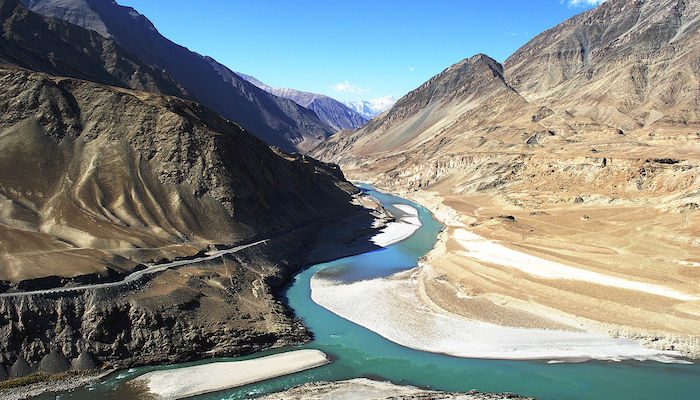
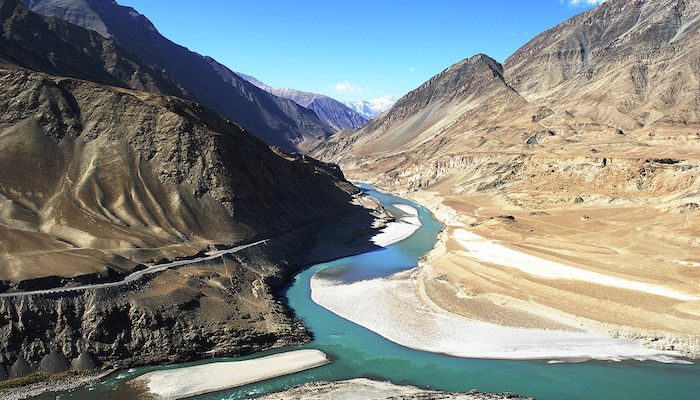
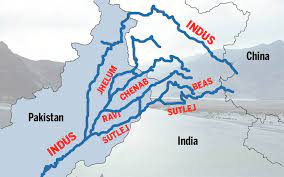
The river Indus as said about the Ganga is a transboundary river that flows Ladakh and Kashmir northwards, passes leftwards towards Nanga Parbat Massif, and Pakistan southwards and ends its journey in the Arabian sea by Karachi. The Indus is termed to be one among the world’s largest rivers in average annual flow, with an estimate of 243 cubic km, which is twice and thrice of the river Nile and the Tigris with the Euphrates combined respectively. The Indus originates from the Tibetan plateau near Lake Manasarovar and enters India in Ladakh. It cuts through the Himalayas in a deep gorge near Nanga Parbat to enter Pakistan. It has five main tributaries – the Sutlej, the Beas, the Ravi, the Chenab and the Jhelum. These rivers give Punjab its name, for the word ‘Punjab’ means ‘five rivers’. This Himalayan river is both snow-fed and rainfed, and therefore flow continuously throughout the year. The river Indus, also known as the Sindhu river, flows for 2897 km, mostly through Pakistan. Since the river moves slowly across the plain, it deposits accumulated silt on its bed. The river bed is thus higher than the sandy plain. When the river is in flood, this results in much destruction. The Indus finally branches into distributaries that join the sea at Karachi. The very river is also famous for the Indus river dolphin, a freshwater dolphin, and one of the world’s rarest mammals. It is, also the second most endangered freshwater river dolphin.
Regions through which the Indus flows
The Indus rises in southern Tibet at a height of about 5500 metres. It flows through a high plateau, then the ground falls away, and the river drops rapidly, and gathers momentum. It rushes northwest and collects the waters from innumerable glacier-fed streams. It flows between the greatest mountain ranges, the Karakoram and the Himalayas. generally, the river becomes slower and has a wider channel as it approaches its delta on the Arabian sea. Agriculture in Pakistan wouldn’t be even possible without this river. In addition, it supplies essential ingredients for human life for many urban areas. These include the Pakistani cities of Islamabad, Lahore, Peshawar and Karachi. Therefore the Sindhu is Pakistan’s longest river with a total length of 3180 km.
The Chenab
The Chenab rises in the upper Himalayas, in the district of Himachal Pradesh in India. Its waters begin from snowmelt from the Bara Lacha Pass. During the Vedic period, it was known as Chandra Bhaga, and it begins at the confluence of two rivers, the Chandra and the Bhaga in Himachal Pradesh. It flows through the Jammu, into the plains of Pakistan. It is first joined by the Jhelum, and then by the Ravi rivers. Later, it meets Sutlej, which has earlier been joined by the Beas.Altogether, these form the so-called ‘five rivers of Punjab’. After, 960 km, it flows into the Indus. The river is dear to the people of Punjab. Moreover, it forms an important part of the land’s history and culture.
Fact: The world’s highest railway bridge – the Chenab bridge – spans the Chenab. It crosses the river in Jammu and Kashmir.
map showing the path of the Indus river
The Jhelum
The Jhelum is the largest, and most western Punjab’s five rivers. It is an ancient river that has been mentioned both by the ancient Greeks as well as ancient Egyptians. It rises from a deep spring, the Verinag Spring in the southeastern part of the valley of Kashmir in India. the river wanders northwards through the valley of Kashmir to the Wular Lake. After emerging from the lake, it continues winding its way through a deep gorge into Punjab. It widens out into an alluvial plain and then goes south to join the Chenab at Trimmu after 813 km. its flow is controlled by snowmelt and the monsoon. In its lower course, the river is famous for its hydroelectric power generation. The Mangla dam and the reservoir on the Jhelum irrigate around 3 million acres of land.
The Ravi
The Ravi, one of the five rivers that create Punjab, crosses national boundaries. It rises in the majestic Himalayas in the state of Himachal Pradesh in India. It crosses Jammu and Kashmir and then flows into Pakistan. After 725 km, it empties itself into the Chenab. It is fed by glacier melt and is the smallest of all rivers of Punjab. In Vedic times, the Ravi was known as Iravati or Airavati river.It is a trans-border river of India and Pakistan. After partition, the river waters were divided between India and Pakistan.
Fact: It irrigates a large area in Punjab through a canal. This canal is known as the upper bari doab canal.
The Beas
The river Beas, one of the five rivers of Punjab, is famous in world history. It is one of the rivers that created problem’s in alexander the great’s conquest of India. His troops mutinied here in 326 BC, refusing to go any further, as they had been away from home for eight years. The Beas rises from the Rohtang Pass in the western Himalayas of Himachal Pradesh and flows south through the Kulu valley. It then enters Punjab and flows in a southerly direction. Thereafter, it finally meets the Sutlej after flowing for 470 km. the chief tributaries of the Beas are bain, Banganga, Luni and Uhal. The river was known in ancient India as the Vipasha, while the ancient Greeks called it the Hyphasis. In the 20th century, it was developed for irrigation and hydroelectric power generation.
The Sutlej
The Sutlej, the longest Punjab’s five rivers, has its source in the Rakshastal lake in Tibet. Sometimes called the red river, it is the easternmost of the Indus river’s tributaries. Further next, it rushes through the Himalayan gorges, and crosses Himachal Pradesh, before entering Punjab. It then joins the Chenab and they empty into the Indus. There are many irrigation projects along its 1400 km long course. They include the Bhakra- Nangal project, and the Sirhind canal. In addition, there is also the Sutlej valley project which benefits both India and Pakistan.
Fact: In the villages of the Sutlej valley you will find descendants of the yak traders of the olden times. These traders were known as Zhang Zhung.
The Indus: the cradle of civilization
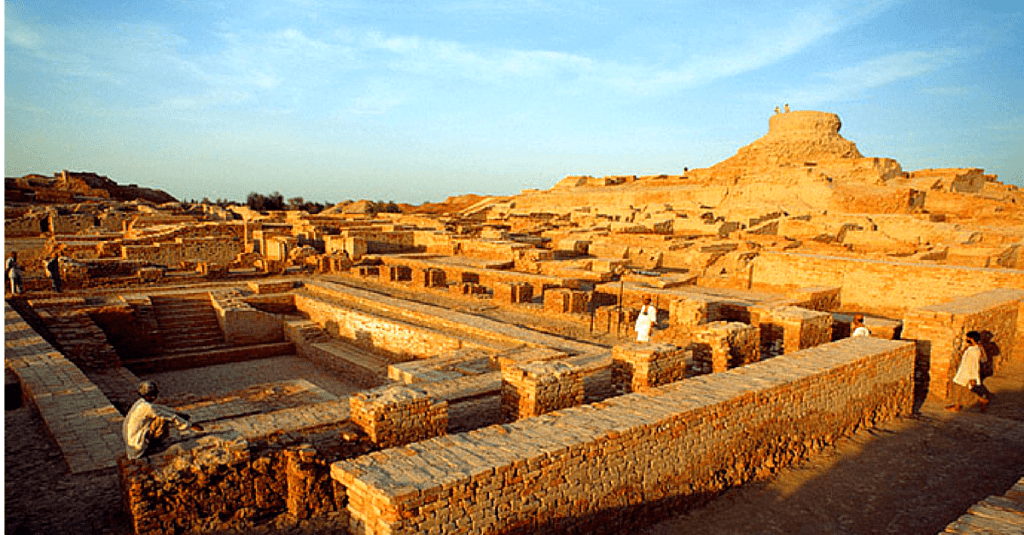
One of the greatest civilizations of ancient times flourished on the banks of the river Indus. Around 3300 BC, there were two great cities in the Indus valley, Harappa and Mohenjo Daro. They were very planned and had houses built with bricks, and even a proper drainage system. The town planning, water supply, sewage and drainage system were of very high quality – there were bathhouses and granaries in plenty, too. These cities prove to the world that the most sophisticated urban civilization of its time flourished in India, more than 5000 years ago! The wonders of engineering and architecture, the richness of the culture, and the quality of the life enjoyed by the people all prove that the valley stood to be the cradle of civilization.
The river basin covers an area of around one million square kilometres and extends to four countries. They are China, India, Afghanistan and Pakistan. Snow and glacier meltwater is the main source of water for this river system, as rainfall is low in the region. It ends in a delta, which includes numerous mangroves. The Indus basin stretches to the Karakoram and Haramosh ranges in the north, the Arabian Sea in the south, the Sulaiman and Kirthar ranges in the west, the Himalayas in the east. In India, the basin spreads over the states of Jammu and Kashmir, Himachal Pradesh, Punjab Rajasthan, Haryana and the union territory of Chandigarh.
Indus Water Treaty
India and Pakistan are two of the four countries through which the Indus river flows. The waters of the same and its tributaries support life in vast areas in these two countries. The Indus river system consists of three western tributaries of the Indus and three eastern rivers. The treaty was a result of Pakistani fears that since the sources of the rivers of the Indus basin were in India, India would have total control of the water. So, the world bank drew up a water-sharing treaty called the Indus water treaty. According to this treaty, the Ravi, the Beas and the Sutlej, which constitute the eastern rivers, are allocated for exclusive use by India, before they enter Pakistan. Similarly, Pakistan has exclusive use of the western rivers the Jhelum, the Chenab, and the Indus. The treaty was signed in Karachi on September 19th, 1960.
Major cities in the Indus basin
Industries in the Indus river basin are mainly based on agriculture and allied products. These include the textile, woollen, sugar, oil and paper Industries, as well as Industries manufacturing agricultural equipment. Other Industries in the region are cement, automobiles, machine and machine parts. These Industries have led to the growth of many towns and cities in the river basin. Important urban centres and towns in the basin are Chandigarh, Srinagar, Shimla, Ambala, Bikaner, Bathinda and Patiala. Chandigarh serves as the capital of Punjab and Haryana while Srinagar is the capital of Jammu and Kashmir. Shimla, a beautiful city on the forested hillside of the Himalayas, is the capital of Himachal Pradesh.
Problems faced by Indus rivers
Rapid population growth
As the Indus is one of the longest rivers in Asia, and many civilizations shaped near it, the rapid population growth has a serious hand on the pollution caused. As the number of people around it increases so does the manipulation and excessive use of river water. Thus it could be concluded that the human actions that affect the river pollution counter affect them.
Increased cultivation rate
As the population increases, so does the need for food. Thus for achieving this the cultivations as a whole should be raised to a certain level covering the need. Added to this the Indus basin highly supports cropping. The exploitation caused by chemical fertilizers and pesticides used had serious effects on the river. The
Issues related to reservoir
The inefficiency of the reservoir had been in great discussions among authorities over the years. the increased freshwater need has come to a greater problem. Added to the low capacity of reservoirs, is the issue of inefficient management of the same.
Sewage management
The untreated sewage disposal to the rivers had adversely affected their condition for too long. The urban sewage added to the industrial waste is strengthening the damage caused. Proper treatment of the sewage is the only possible way to counterattack this issue.
Excessive industrialization
The Indus is a cradle of civilization, many industries grew near it, making it a great industrial site from time immemorial. So is the industrial waste disposal to the water bodies. The extensive water manipulation on the industrial need and discharge of the harmful by-products to the rivers marks the need for sustainability over the industrial sector. It is said that it is one of the top rivers that end up polluting the oceans.
Regional climate change
The fast-paced climatic changes such as the overheated summers causing glacier melts in a higher level are the representations of unstable weather conditions. This then leads to a decrease in river water flow. Well, it isn’t a new fact that global warming the main enemy. When fossil fuels are burned which then increases the greenhouse effect leading towards glacier melts. The minute changes in water flow can even cause not so smaller but undesirable changes in crop production and the organisms.
Tajmahal is also treated as memorial of love .It was located in AGRA. It is also one of the seven wonders of the world.It was built by shah Jahan for his wife mumtaz. Therefore this wonder is also known as mumtaz Mahal. This most beautiful of mausoleums was begun upon her death in 1631 and took 20,000 working men until 1648 to complete .this implies it took over 17 years to build this beautiful moment
Incorporating many elements of ismalic design including arches,minarets, an onion shaped doom, and black calligraphy inlaid around the entrance, the tajmahal is largely constructed of white marble decorated with delicate inlaid floral patterns and precious and semi precious stones such as jade,lapis lazuli,diamonds and mother of pearl
The best time to visit is either at dawn or at dusk when the atmosphere is brilliantly altered by the change in lighting .If possible try to catch a view of tajmahal’s reflection far from the bank of the yamuna River it makes for a memorable selfie
2.THE HOLY CITY OF VARANASI
A major pilgrimage centre for Hindus, holy city of varanasi has long been associated with the mighty ganges. River,one of the faithes most important religious symbols. Dating back to 8th century’s BC ,varanasi is one of the most oldest still inhabited cities in the world
It offers many reasons to visit mnot least of them the chance to explore the old Quarter adjacent to the ganges where you will find kashi Vishwanath temple, built in 1780
Bathing in ganges is of great importance to Hindus, and numerous locations known as “ghats” feature stairways leading to the water where the faithful bathe before prayers
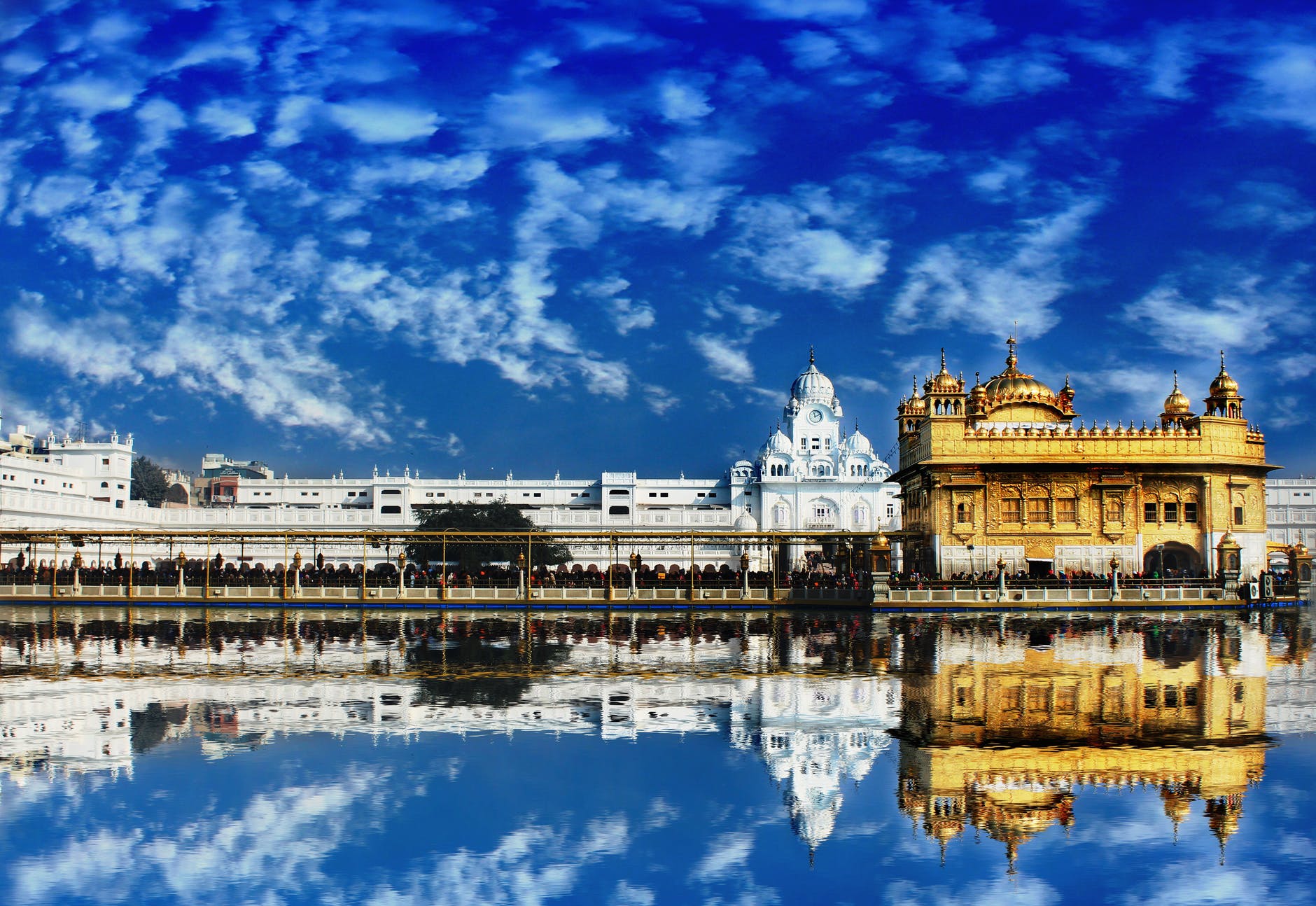
3.HARMANDIR SAHIB :THE GOLDEN TEMPLE
It was founded in 1577 by ram das, Amritsar is an important hub of sikh history and culture .The main attraction here is Harmandir Sahib ,opened in 1604 and stillmoften referred to as golden temple for its beautiful gold decoration. The holiest of India’s many Sikhs shrines,the temple was built in a blend of Hindu and ismalic styles, its lower marble section featuring such flourishes as ornate inlaid floral and animal motifs ,while the large golden dome represents a lotus flower ,a symbol of purity of Sikhs
In addition to it’s splendid design ,visitors are equally impressed with temple’s spiritual atmosphere, an effect enhanced by the prayers continuously chanted from the sikh holy book and broadcast throughout the complex.
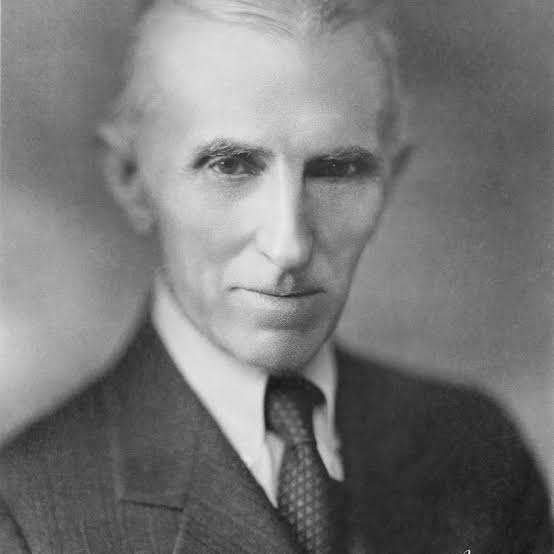
Serbian-American engineer and physicist Nikola Tesla (1856-1943) made dozens of breakthroughs in the production, transmission and application of electric power. He invented the first alternating current (AC) motor and developed AC generation and transmission technology. Though he was famous and respected, he was never able to translate his copious inventions into long-term financial success—unlike his early employer and chief rival, Thomas Edison.
Nikola Tesla’s Early Years:
Nikola Tesla was born in 1856 in Smiljan, Croatia, then part of the Austro-Hungarian Empire. His father was a priest in the Serbian Orthodox church and his mother managed the family’s farm. In 1863 Tesla’s brother Daniel was killed in a riding accident. The shock of the loss unsettled the 7-year-old Tesla, who reported seeing visions—the first signs of his lifelong mental illnesses.
Did you know? During the 1890s Mark Twain struck up a friendship with inventor Nikola Tesla. Twain often visited him in his lab, where in 1894 Tesla photographed the great American writer in one of the first pictures ever lit by phosphorescent light.
Tesla studied math and physics at the Technical University of Graz and philosophy at the University of Prague. In 1882, while on a walk, he came up with the idea for a brushless AC motor, making the first sketches of its rotating electromagnets in the sand of the path. Later that year he moved to Paris and got a job repairing direct current (DC) power plants with the Continental Edison Company. Two years later he immigrated to the United States.
Nikola Tesla and Thomas Edison:
Tesla arrived in new york in 1884 and was hired as an engineer at Thomas Edison’s Manhattan headquarters. He worked there for a year, impressing Edison with his diligence and ingenuity. At one point Edison told Tesla he would pay $50,000 for an improved design for his DC dynamos. After months of experimentation, Tesla presented a solution and asked for the money. Edison demurred, saying, “Tesla, you don’t understand our American humor.” Tesla quit soon after.
Nikola Tesla and Westinghouse:
After an unsuccessful attempt to start his own Tesla Electric Light Company and a stint digging ditches for $2 a day, Tesla found backers to support his research into alternating current. In 1887 and 1888 he was granted more than 30 patents for his inventions and invited to address the American Institute of Electrical Engineers on his work. His lecture caught the attention of George Westinghouse, the inventor who had launched the first AC power system near Boston and was Edison’s major competitor in the “Battle of the Currents.”
Westinghouse hired Tesla, licensed the patents for his AC motor and gave him his own lab. In 1890 Edison arranged for a convicted New York murderer to be put to death in an AC-powered electric chair—a stunt designed to show how dangerous the Westinghouse standard could be.
Buoyed by Westinghouse’s royalties, Tesla struck out on his own again. But Westinghouse was soon forced by his backers to renegotiate their contract, with Tesla relinquishing his royalty rights.
In the 1890s Tesla invented electric oscillators, meters, improved lights and the high-voltage transformer known as the Tesla coil. He also experimented with X-rays, gave short-range demonstrations of radio communication two years before guglielmo marconi and piloted a radio-controlled boat around a pool in Madison Square Garden. Together, Tesla and Westinghouse lit the 1891 World’s Columbian Exposition in chicago and partnered with General Electric to install AC generators at niagara falls, creating the first modern power station.
Nikola Tesla’s Failures, Death and Legacy:
In 1895 Tesla’s New York lab burned, destroying years’ worth of notes and equipment. Tesla relocated to colorado Springs for two years, returning to New York in 1900. He secured backing from financier J.P morgon and began building a global communications network centered on a giant tower at Wardenclyffe, on Long Island. But funds ran out and Morgan balked at Tesla’s grandiose schemes.
Tesla lived his last decades in a New York hotel, working on new inventions even as his energy and mental health faded. His obsession with the number three and fastidious washing were dismissed as the eccentricities of genius. He spent his final years feeding—and, he claimed, communicating with—the city’s pigeons.
Tesla died in his room on January 7, 1943. Later that year the U.S. supreme court voided four of Marconi’s key patents, belatedly acknowledging Tesla’s innovations in radio. The AC system he championed and improved remains the global standard for power transmission.
World population day is celebrated on 11th July every year.this day was initiated to spread awareness about issues related to population growth. This day was established by the governing council of United Nations development programme in 1989. This day was inspired by the population growth in 11th July in 1987 as the population became 5 billion . This day is used to spread awareness regarding population growth, poverty, unemployment ,health issues and discrimination.The day was suggested by Dr. K.C.Zachariah in which population reaches Five Billion when he worked as Sr Demographer at World Bank .As population has become more than 7 billion now .
This population growth has causing a lot health issues as there are not enough facilities for everyone . Hospital are not available and because of which people are having health issues which is having an impact on the economy of the country and the whole world. People are making babies without any family planning which leads to a lot of issues. They are not able to Fulfill all the needs of a their kids and they grow up to be illiterate. We should understand how important family planning is . We should only produce Bab es if we can provide them with all the facilities. People in rural areas give birth till they get a boy which is causing discrimination between boys and girls . Such girls are not given proper education and are been married off at early age . Thus population growth is also causing lack of employment which directly leads to poverty . Which affects the economy and the s not good for the country in any way .
This population growth leads to global warming and pollution which is causing lack in natural resources . Fossil fuels are decreasing day by day and cannot be renewed further .People should realise how dangerous this growth is for all humans and mother earth . It is our duty to control population growth and help nature and maintain the balance . We should use condoms to control population growth and have family planning which we can afford to give to the child
Mental health is all about behavioural and emotional well being. Mental health refers to how we feel, behave and think. Sometimes we feel low and sometimes we feel extreme rush of happiness. It’s not a big deal if you feel sad or happy or furious because we all are human beings afterall, we all have feelings and emotions. But what if those emotions take over our mind so harsh that it’s almost impossible to control them? What if you’re sad continuously for one weeks or months? This is something to worry about. This is what we call mental illness when a person himself can’t control his emotions and ultimately it ruins his life. Sometimes, the burden is so much that people often have suicidal thoughts and some even commit suicide because self killing seems easier than dealing with those emotions.
Most common mental illness:-
1) Anxiety:-
Anxiety is your body’s natural response to stress. It’s a feeling of fear or apprehension about what’s to come. The first day of school, going to a job interview, or giving a speech may cause most people to feel fearful and nervous.
But if your feelings of anxiety are extreme, last for longer than six months, and are interfering with your life, you may have an anxiety disorder.
Anxiety is your body’s natural response to stress. It’s a feeling of fear or apprehension about what’s to come. The first day of school, going to a job interview, or giving a speech may cause most people to feel fearful and nervous.
But if your feelings of anxiety are extreme, last for longer than six months, and are interfering with your life, you may have an anxiety disorder.
This type of anxiety may cause you to stop doing things you enjoy. In extreme cases, it may prevent you from entering an elevator, crossing the street, or even leaving your home. If left untreated, the anxiety will keep getting worse.
Anxiety disorders are the most common form of emotional disorder and can affect anyone at any age. According to the American Psychiatric Association, women are more likely than men to be diagnosed with an anxiety disorder.
Depression:-
Depression is classified as a mood disorder. It may be described as feelings of sadness, loss, or anger that interfere with a person’s everyday activities.
People experience depression in different ways. It may interfere with your daily work, resulting in lost time and lower productivity. It can also influence relationships and some chronic health conditions.
not eating enough or overeatinghaving insomnia or sleeping too much distancing yourself from other people and favorite activities feeling fatigue even with enough sleep feeling numbness or lacking empathy experiencing unexplainable body pains or achiness feeling hopeless, helpless or lost smoking, drinking, or using illicit drugs more than ever before feeling confusion, forgetfulness, irritability, anger, anxiety, sadness, or fright constantly fighting or arguing with friends and family having extreme mood swings that cause relationship problems having constant flashbacks or thoughts that you can’t get out of your head hearing voices in your head that you can’t stop having thoughts of hurting yourself or other people
being unable to carry out day-to-day activities and chores
How to overcome:-
Get plenty of sleep
Eat well
Avoid alcohol, smoking and drugs
Get plenty of sunlight
Manage stress
Activity and exercise
Do something you enjoy
Connect with others and be sociable
Do things for others
Ask for help
Conclusion:-
Mental illness is a bigger concern for today’s generation. It is a serious issue and no one should take it lightly. If you’re facing some sort of mental illness then please do cure as soon as possible. It’s not a myth, but a harsh reality that everyone needs to be understood.
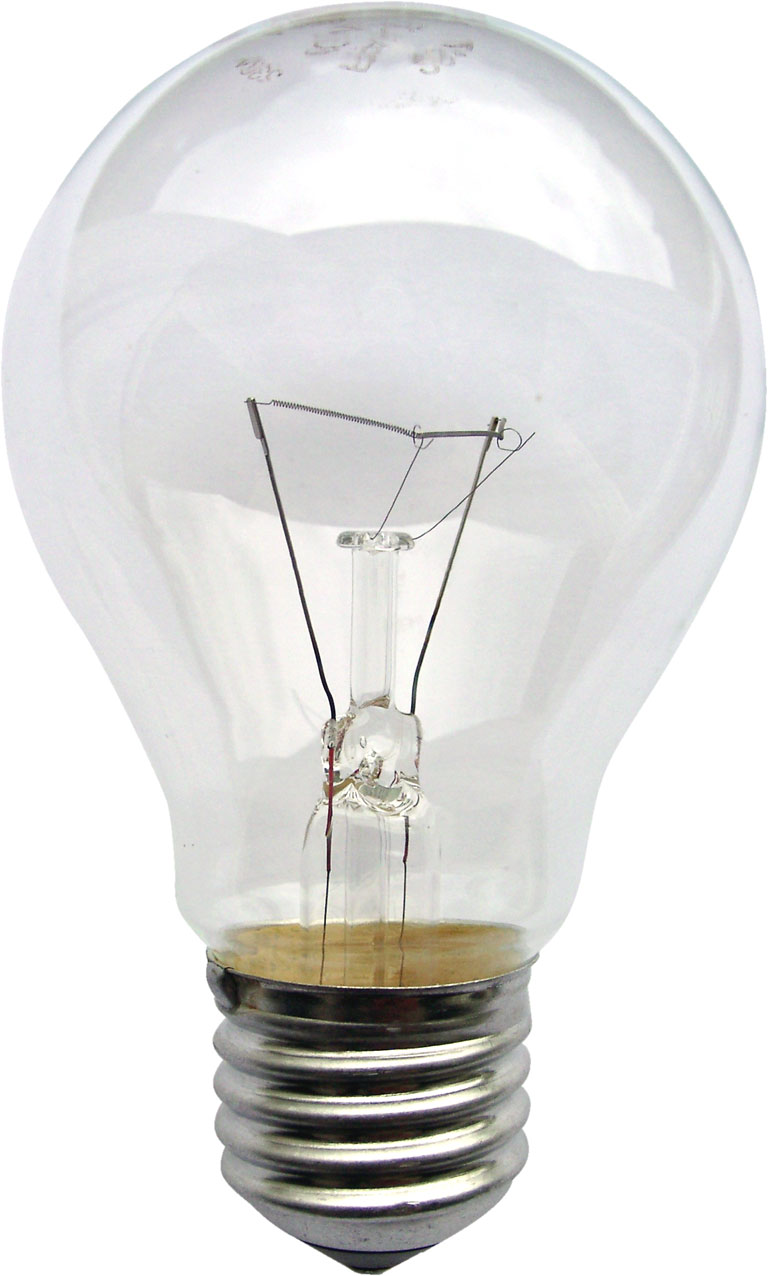
The electric light bulb has been known as the most important invention since man-made fire. The light bulb helped to establish social life after sunset, extended the workday well into the night, and allowed us to navigate and travel safely in the dark. Without the light bulb, there would be no nightlife.
The electric light, one of the everyday conveniences that most affects our lives, was not “invented” in the traditional sense in 1879 by Thomas Alva Edison, although he have created the first commercially practical incandescent light. He was neither the first nor the only person trying to invent an incandescent light bulb. However, Edison is often credited with the invention because his version was able to outstrip the earlier versions because of a combination of three factors: an effective incandescent material, a higher vacuum than others were able to achieve and a high resistance that made power distribution from a centralized source economically.
EARLY LIGHT BULBS AND HISTORY:
In 1802, Humphry Davy invented the first electric light. He experimented with electricity and invented an electric battery. When he connected wires to his battery and a piece of carbon, the carbon glowed, producing light. His invention was known as the Electric Arc lamp. And while it produced light, it didn’t produce it for long and was much too bright for practical use.
Over the next seven decades, other inventors also created “light bulbs” but no designs emerged for commerical application. In 1840, British scientist Warren de la Rue enclosed a coiled platinum filament in a vacuum tube and passed an electric current through it. The design was based on the concept that the high melting point of platinum would allow it to operate at high temperatures and that the evacuated chamber would contain fewer gas molecules to react with the platinum, improving its longevity. Although an efficient design, the cost of the platinum made it impractical for commercial production.
In 1850 an English physicist named Joseph Wilson Swan created a “light bulb” by enclosing carbonized paper filaments in an evacuated glass bulb. And by 1860 he had a working prototype, but the lack of a good vacuum and an adequate supply of electricity resulted in a bulb whose lifetime was much too short to be considered an effective producer of light. However, in the 1870’s better vacuum pumps became available and Swan continued experiments on light bulbs. In 1878, Swan developed a longer lasting light bulb using a treated cotton thread that also removed the problem of early bulb blackening.
THOMAS ALVA EDISON AND HIS FIRST ‘LIGHT BULB’ :
Thomas Alva Edison was born on February 11, 1847, in Milan. He was the seventh and last child born to Samuel Edison Jr. and Nancy Elliott Edison, and would be one of four to survive to adulthood. Thomas Edison received little formal education, and left school in 1859 to being working on the railroad .
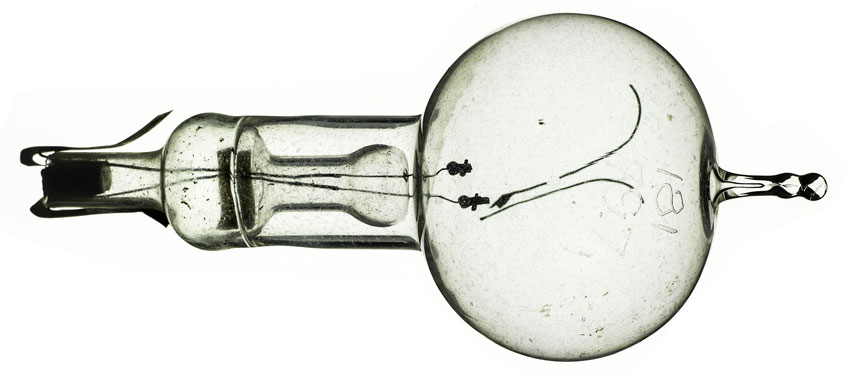
In 1878, Thomas Edison began serious research into developing a practical incandescent lamp and on October 14, 1878, Edison filed his first patent application for “Improvement In Electric Lights”. However, he continued to test several types of material for metal filaments to improve upon his original design and by Nov 4, 1879, he filed another U.S. patent for an electric lamp using “a carbon filament or strip coiled and connected to platina contact wires.”
Edison focused on inventing a safe, inexpensive electric light to replace the gaslight–a challenge that scientists had been grappling with for the last 50 years. Edison set up the Edison Electric Light Company and began research and development. He made a breakthrough in October 1879 with a bulb that used a platinum filament, and in the summer of 1880 hit on carbonized bamboo as a viable alternative for the filament, which proved to be the key to a long-lasting and affordable light bulb. In 1881, he set up an electric light company in New york.
Although the patent described several ways of creating the carbon filament including using “cotton and linen thread, wood splints, papers coiled in various ways,” it was not until several months after the patent was granted that Edison and his team discovered that a carbonized bamboo filament could last over 1200 hours.
Original carbon-filament bulb from Thomas Edison
THE FIRST INCANDESCENT LIGHT BULB :
Incandescent light bulb use electricity to heat a carbon or metal base filament inside a glass bulb until it becomes hot and emits a radiant glow. A vacuum keeps the filament from burning up too quickly and blackening the interior of the glass bulb. Many of the first incandescent light bulbs faced the same challenges – a poor vacuum design, inferior or expensive filaments, and bulb blackening. However, these early experiments were pivotal in the development of the first commercially viable incandescent light bulb.
Incandescent bulbs are manufactured in a wide range of sizes, light output, and voltage ratings, from 1.5 volts to about 300 volts. They require no external regulating equipment, have low manufacturing cost, and work equally well on either alternating current or direct current. As a result, the incandescent bulb became widely used in household and commercial lighting, for portable lighting such as table lamps, car headlamps, and flashlights, and for decorative and advertising lighting.
From March 2021 till today the life is going through this lockdown stuff, got bored with this pandemic situation but what to do, donot have any way to get rid of this. Anyhow, there are some ways I found to pass these pandemic situation. ‘Contribute yourself to the social activities’, just glance your sight towards the social life of this world there you could found many things which are unreal. It is our responsibility to change these unreal things to real things so move on to the social activities.
This book shows the way of living. What to do when? What not to do? How to counter the hurdles in our life and succeed? And has stunningly explained the insights into life.
Mark Manson, the writer, is a star blogger with more than 2 million readers. In this book, the writer initially discusses on ‘experiences’. We always desire to have positive experiences in our life. But the writer believes that the desire for a more positive experience is itself a negative experience. And paradoxically, the acceptance of one’s negative experience is itself a positive experience. This might sound tricky, but on reading the book it would become clearer. Explaining in simple words, the more you desperately want to be rich, the more poor and unworthy you feel, regardless of how much money you actually have. The more you desperately want a good figure, the uglier you come to see yourself regardless of your actual appearance. So, strive hard for a better future but do not always be very anxious and unsatisfied.
Further, the writer quotes, “Choose your battles”. In life, there so many things we can give a f*ck about. So we need to figure out which ones really matter. Next, the writer addresses the problem of ‘problems’. Evidently, each one of us has problems in our life. And very many of us get disappointed due to these. Disappointment, according to the writer, arises due to two things. 1) Denial- The writer adds, “Some people deny that their problems exist in the first place. And because they deny reality, they constantly delude or distract themselves from reality. This may make them feel good in the short term, but it leads to a life of insecurity, neuroticism, and emotional repression. Second is victim mentality – Some choose to believe that there is nothing they can do to solve their problems, even when they, in fact, could. Victims seek to blame others for their problems or blame outside circumstances. This may make them feel better in the short term, but it leads to a life of anger, helplessness, and despair. While the writer tells us to excel at whatever we do, paradoxically, also says, “Don not be special, do not be unique.” In simple words, he tries to say that the narrower and rarer the identity you choose for yourself, the more everything will seem to threaten you. I would suggest you to read the book in order to get insights into this sublime thought of the writer.
Further, the writer seems to have been motivating his readers where he exuberantly quotes, “Do not sit there, do something.” Instead of sitting and thinking about the problems you have, try to solve them. Initially, if you might not understand what exactly you are going to do, the simple act of working on it will eventually cause the right ideas to show up in your head.
The writer says that ‘suffering pain’ is inevitable, in one’s life. Eg. One might have the problem of obesity but might aspire to have a good physique. In order to solve this problem, one has to start working out, go to the gym, etc. So, while getting away with the mental pain of not having a good physique, you introduce yourself to the pain of going to the gym, abandoning junk food, etc. Hence suffering pain is inevitable. The writer is of the opinion that learn to sustain the pain you’ve chosen. When you choose a new value, you are choosing to introduce a new form of pain into your life. Relish it. Welcome it with your open arms. Lastly, the writer expresses his spellbinding views on relationships. He states that while serving relation one should not solve others’ problems to please them. Solve your own problems and let others solve theirs. This sounds difficult to understand, weird as well! But the writer has explained this in detail with significant and exceptional examples.
Thus, I would awfully suggest you to read this book and enlighten yourself.
In every business it is important to have an efficient marketing plan or strategy to promote their product, to engage more customers or to understand consumer behaviour, to upgrade their pricing strategy. For this in 1960s, an academic and marketer E. Jerome McCarthy proposed the idea of ‘marketing mix’.
Marketing mix is basically a mixture of 4Ps to enhance business model with Price, Product, Place and Promotion. These 4Ps can be used as marketing tools by any business for achieving their market goals and targets.
Components of Marketing Mix
Product
Product means anything which is for sale any physical product or any service rendered to customer. Product should the meet expectations and demand of customers in the market.Some of the marketing decision which every seller should think of such as branding, packaging, product range, product design, packaging and labelling, guarantees and warranties.
2. Place
In marketing mix, place refers that where seller choose to sell his product whether it is warehouse, street market, online platforms, supermarkets, etc. It depends upon the nature of the product i.e. if product is perishable, shops are preferable to sell that product and if product is non-perishable both shops and online platforms are suitable.Marketing decisions related to place includes: market coverage, inventory, transportation, location, distributors, warehousing and franchising.
3. Price
Price is the main aspect for the business and customer. Each and every customer gets affected from price of the product which consumer is selling. Price reflects the cost or value of the product. Seller should set the price as per the demand of customer and the actual cost of the product. Accurate price can change the customer’s preference form one product to another. Other important aspect of pricing is what price has been set by your competitors? This can help any business in setting their pricing strategy. Pricing strategy can make profits for the business or can cause loss to the business if it is not accurate.Price market decisions includes: payment method (card or cash), credit payment, pricing strategy, allowances for distributors and discounts for customers.
4. Promotion
Promotion means to tell or convey about the product to customers through advertising, marketing and sales promotion. It can be through offline mode such as T.V. magazines, newspapers, radio etc. and online mode like websites, ads on social media, etc. It depends upon the seller of the product which way or method he chooses to communicate about his product to customers and according to response from his customers, he should continue with that particular promotion method.Marketing decisions for promotion involves: advertising, sales promotion, public relation, direct marketing, what and how to communicate to customers.
In 1980s Booms and Bitner proposed a model of marketing mix which consist of 7Ps, generally he added 3 more Ps to marketing mix i.e. Process, People and Physical Evidence which is beneficial for Service Marketing.
5. Process
Process describes the chain of delivering the goods or services to the customer. Process examination involves the evaluation of each and every step like procedure of distribution, payment system and relationships with customer. Evaluating, modifying and improving different steps of process will help business to maintain their efforts and to check that methods are new and as per recent trend. Process related marketing decisions involves: blueprint service, process design, checking system failures, monitoring service performance, allocation of resources required.
6. People
In marketing mix, ‘people’ refer to those who all are involved in the process of delivering of goods; managing the process; handle customer relationship, etc. Employees, staff, workers or labour all are included in ‘people’, basically all those who are a part of business. For any business it is necessary to employ right people to manage all the business related process. Marketing decisions related to people includes: staff recruitment and training, attending customers, handling complaints and failures, handling social interactions.
7. Physical Evidence
Physical evidence means evidence of the product which has been purchased by the customer. It can be receipt, brochures, tracking information, invoices, etc. It is beneficial for both customer and seller to have a record or any document of transaction. It also relates to validation of the product, authenticity of the product check by the customer through their websites, logo etc. Here, marketing decisions includes: interior design like furniture and scheme, facilities like equipment access, brochures, stationery, surrounding conditions, and signage.
In kannur, kerala afra and his brother muhammed who are being treated for a rare disease, they receive a huge amount for their son’s treatment. Muhammed is a 1year old boy afra was disappointed about the treatment of his brother because for this treatment need 18 crore. Helped raise funds on social media.if one year old boy from kannur wants to come back to life,he can only get the most expensive medicine in the world.
18 crore medicine? What is the medicine for spinal muscular atrophy…
afra has the same situation. Afra,who has been confined to wheelchair for fourteen years. Experts say giving muhammed a dose of solzhensma before the age of two would cure the disease.the family explains that they do not even has 18 crore together..
Few minutes ago in their bank account 18 cr credited with help of all kindness.their family thanking to the all over the world who pray and help for them.
In this world we can confirmed one thing humanity exist from world……
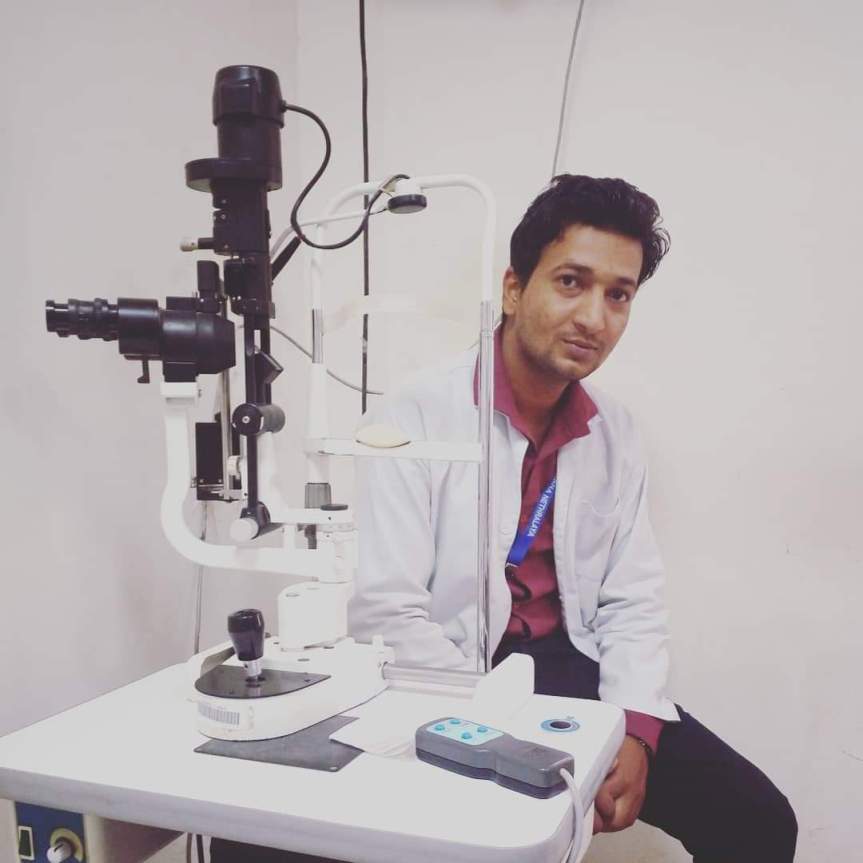
Dr. Rakesh Kumar Yadav, who was brought up in Nepal, has had every one of the makings of a virtuoso since he was a kid, and he has consistently been attracted to focus on new things. He was an individual from the Apollo Om HSEB school’s cricket crews. Dr. Rakesh Kumar Yadav, then again, was normally attracted to sports as a solid part in secondary school and as a cop since he needed to kill drug and wrongdoing mishandle and appreciate the feeling of achievement that comes from helping other people. In any case, out of the blue, he took a crack at Christian College Bangalore to seek after a four year certification in optometry.
In the underlying days of his school, it was so hard for him to change in Bangalore that he needed to flee from that point. He was unable to try and focus on his investigation. The outcome was he bombed his first semester. That was the point at which he figured he should get back. At that point his educator and companions were with him. Of late he fabricated his self-assurance. He even begun giving time for his energy ie. playing cricket. At long last he was on the roll. He tried sincerely and passed upto fourth semester. Then, at that point he got presumptuous about his examination and begun bunking classes in fifth semester. Because of this, he was confined to give test. It was the most noticeably terrible period of his life. He tried sincerely much more and passed fifth and sixth semester.
He began temporary position in Narayana Netralaya where he drew near with his senior specialists and optometrist. He fostered his expert inclination, reinforce individual person.
Presently he works in Nepal. He runs his own facility.
His battle shows how our presumptuousness belittle us and leads us towards dimness. There is continually morning after the evening. Try sincerely and never let your life be constrained by anybody.













 Eduindex
You must be logged in to post a comment.