7 Amazing Ways of Earning MONEY in 2021

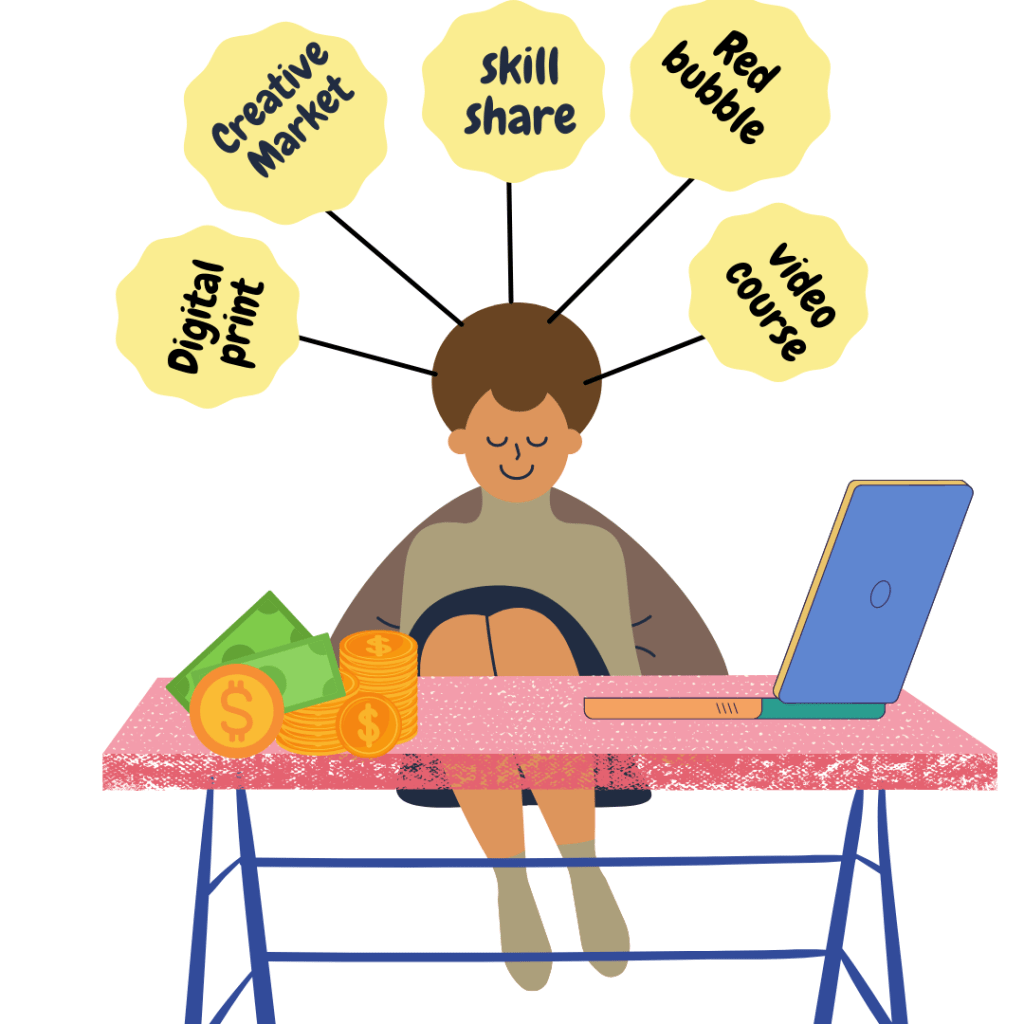
Earning is always important whether it is an adult or a teenage (in today’s scenario) want and need money to meet the day to day expenses. Financing your self by your own is the best thing you could do to your self. Due to the pandemic there are many people who gets unemployed and finding it difficult to meet their expenses , no one knows what is going to happened next so better find an accurate way of making money that will help to keep going during this hard time . Going out for a Job is difficult , but there are alot more ways you can make money without going out , yes by making money online you can easily meet your expenses . I know everybody now a days are well aware of work from home , but for that too you have to do alot of research to find the best for you , so for making it a little easier for you I had come up with some of the amazing ways of earning money in 2021 that too with zero investment .Here are the 7 Amazing you can make money online in 2021 .

1.Taking Surveys

You can earn money easily by taking surveys , there are many websites these days that pays you for taking survey . One of the best website I would suggest is “Rakuten” , this is really an amazing website where you can make money by taking surveys , this website is legit and its free you just have to get yourself register there with your email id and fill few details about you , make sure you fill the right details as on the basis of that you will be getting surveys ,this is it you just have to do this then you can get started with taking surveys and earning point on the basis of which you will be paid.

Rakuten :-https://member.insight.rakuten.co.in/

2. Selling Digital Products.

Yes you can make money by selling your digital products like Logos , Templates , Posters , fonts design , Digital Prints ,etc. If you are good in making these digital product than there is a good way for you to make money . There is a website “CREATIVE MARKET ” that provides you the space for your digital shop where you can sell your digital products . All you have to do is to register yourself on the website with your email id and need to get your digital shop approved by the website than it will be all yours you can put any digital product as per your will and get it sold at whatever price you want to is not it amazing.

Creative Market:-https://creativemarket.com/sell

3. Transcription.

You all are must aware of the work of Transcription , if you are not no worry I will tell in short well basically Transcription is converting the audio / video files into text , this is the work in which you will get paid for converting the files into text . For this work ,you need to be fluent in english both speaking and writing ,there are many websites that pays for converting the audio / video files into text , One that I would suggest is “Go Transcript” its is legit and one of the best website for transcription . For working here all you have to do is to get your self signed up in the website and had to pass a little test to get the work started .

Gotranscript:-https://gotranscript.com/transcription-jobs

4.Making Designs.

There is a great way of earning money by making designs, you can decide whatever design you want to make and just sell them . You must be wondering how you can earn money by making design and selling ,well there is way you can do so by getting yourself registered in the website called “Redbubble” . This is the website that gives you products to put your designs on then you will just get paid if your design got sold . You can decide whatever you want to design and put it on t-shirt , phone cases , bottles etc and when it get sold you will be paid .

Redbubble:-https://www.redbubble.com/about/selling

5.Making Video Course.

You all must have an idea about this ,with this pandemic every thing going digital , everybody is onto learning new skills online , which is a great opportunity for you all to earn money by making video courses on skills that is on demand and in which you are expertise at . There are so many platforms where you can make your video course and earn money , such as Youtube , Skill share , Udemy , wix etc . You can just make the video course and earn money online . I would suggest you to make video course on Skill share and Udemy , as you will get better result there.

Skill share:-https://www.skillshare.com/user/teachonskillshare

Udemy:-https://www.udemy.com/

6.Affilate Marketing .

This is something new and also has alot of money in it , let me first tell you what affilate marketing is if you are new to this word , well affilate marketing is selling the product of other brands , websites on your platform by recommending and giving them your link provided by the brand or website ,you will be getting paid on the basis of percentage which is pre decided by the brand itself on the sale made by you , the more people use your link to purchase the item the more money you will get as per the percentage on particular item , Well I would suggest you to do amazon affilate marketing .

Amazon affilate:-https://affiliate-program.amazon.in/

7. Online Tutor.

This pandemic had shifted the studies from academic to online platform , the work is the same obviously just the work jot changed . So if you want to make money by providing coaching and personal tutor the there is a great way you can do so by getting yourself registered on the websites like “Cambly “, “Scooli” , these website will provide you the platform to provide coaching online.

Cambly:-https://www.cambly.com/en/tutor/

Scooli:-https://www.skooli.com/register/tutor

Well I hope this will help , with these application you will be able to finance yourself for sure . Do comment down below which website you find interesting to work on among these.
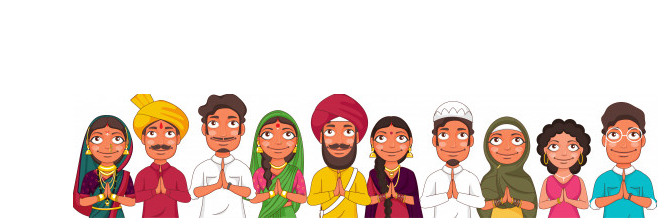
INDIAN CULTURE

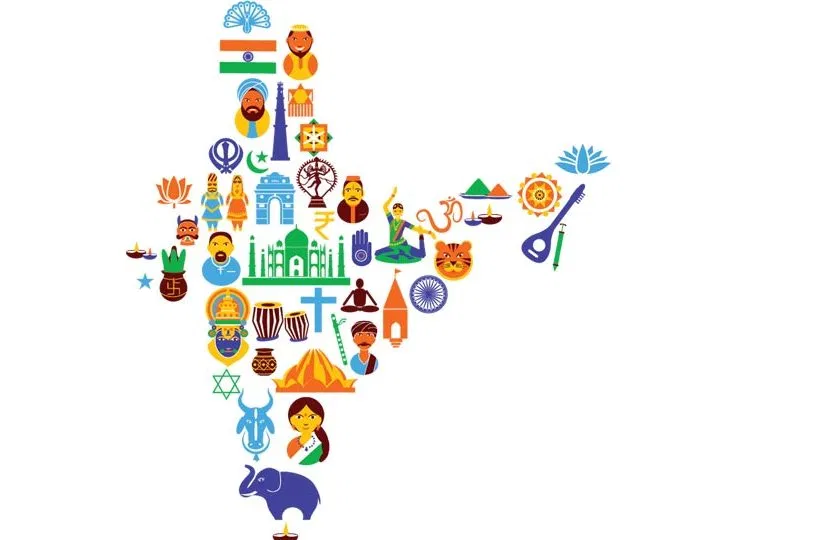
India is a country of rich culture where people of more than one religious culture live together. The culture of India is the oldest culture in the world around 5,000 years. Indian culture is considered the first and supreme culture of the world.


It is the country of the oldest civilizations in the world. The vital components of the Indian culture are good manners, etiquette, civilized communication, rituals, beliefs, values, etc. Even after the lifestyles of everyone have been modernized, Indian people have not changed their traditions and values. There is a common saying about India that “Unity in Diversity” means India is a diverse country where people of many religions live together peacefully with their own separate cultures. People of various religions differ in their language, food tradition, rituals, etc however they live with unity. 

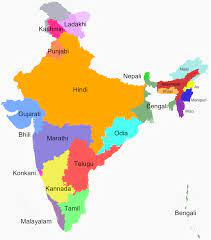
The national language of India is Hindi however there are almost 22 official languages and 400 other languages are spoken daily in India in its various states and territories. According to history, India has been recognized as the birthplace of the religions like Hinduism and Buddhism.

People follow a variety of food cultures such as beaten rice, bread ole, banana chips, poha, potato papad, puffed rice, upma, dosa, idli, sugar, etc. Indian food is wide and includes a lot of variety. Each state of India has its own unique cuisine that reflects the culture and its tradition. Indian food is cooking using various methods, most of which preserve the nutrients contained in the fresh vegetables used.

India today is unfolding a story of a billion-plus people, or more precisely, one sixth of the world’s population, on a big move as India’s large and complex systems rapidly moving top-down and the country emerge as one of the fastest-growing economies of the world, India is probably the only country in the world where people belonging to different religions, castes and creeds, speaking different languages, having different cultures, different modes of living, different clothing, different feeding habits, worshiping different gods and deity live together in harmony and believe to be the children of one mother-MOTHER INDIA,

THE HIMALAYAN RIVERS: PART 1

The three main Himalayan rivers are the Indus, the Ganga and the Brahmaputra. The river Ganga starts from the glacier called Gangothri Glacier, which is in Uttarakhand. At its birthplace, it is known as the Bhagirathi. the Brahmaputra also originates from a glacier, the Angsi glacier in Tibet. Indus originates from the Tibetan plateau near Lake Manasarovar and enters India in Ladakh.

THE GANGA

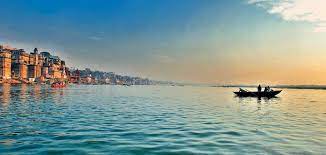
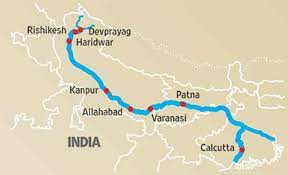
The mighty Ganga isn’t confined to one country. Its valleys stretch across India and Bangladesh. In fact its basin covers parts of China and Nepal too. Born in the lofty peaks of Himalayas, in the Gangotri glacier, it begins its journey as Bhagirathi. The Bhagirathi rushes down to meet the Mandakini, and then the Alaknanda at Dev Prayag. From then on, the river is known as Ganga. After cutting through the Himalayas, the Ganga breaks out of the foothills at Haridwar, and flows across the vast Gangetic plain. Midway in its course, near Allahabad, it is joined by one of its chief tributaries, the Yamuna river. The Ganga is one of the greatest rivers. The 2525 km long journey finally ends at Bay of Bengal. Thus it is called a river without boundaries.

Tributaries of the Ganga

Rivers have headstreams, tributaries and distributaries. A headstream is a stream that is a source of a river. The Ganga’s headstreams are the Alaknanda, DhauliGanga, Nandakini, Pindar, Mandakini, and Bhagirathi rivers. A tributary is a freshwater stream that joins a larger river. Most large rivers are formed from many tributaries and the Ganga has more than a dozen. Among them are the Ghagara, Yamuna, Koshi, Ramganga, Gomti, Gandaki, Burhi Gandak, Mahananda, Tamsa, Son, Punpun. the Ghaghara is the largest tributary of the river Ganga followed by Yamuna and Koshi. Though Yamuna is a separate river system in itself it is a tributary of the Ganga. A distributary is a branch of rivers that flows away from it. The Hooghly is a distributary of the Ganga that provides water for irrigation for west Bengal. It leaves Ganga just before the river enters the Bangladesh.

Rivers that join the Ganga

The river Ganga actually begins at Dev Prayag, the meeting place of two of its headstreams- the Bhagirathi and Alaknanda. After merging from the mountains of Rishikesh, the Ganga is joined by Ramganga. Later, it joins the Allahabad. The Hindus believe that the mythical river Saraswati too joins here. Hence the name Triveni Sangam, means the meeting place of three rivers. Next the Ganga flows east to meet the river Tamsa, later on, the river Gomti joins it. The next river to join the Ganga is the Ghaghara. Further downstream, the river Son joins the Ganga from the south, the river Koshi from the north. By the time the Ganga reaches the bay of Bengal, its waters have mingled with those of several other rivers, making it mystically representative of a soul of India itself.

Why is the Ganga important to Bangladesh?

The Ganga’s river basin is one of the most fertile and densely populated in the world. It covers an area of1000000 sq.km. For most 150 km, the Ganga forms the boundary between India and Bangladesh. When it enters Bangladesh, it is known as the Padma. The upper Padma flows southeastward to receive the mighty Brahmaputra river. The Brahmaputra is known as the Jamuna river in Bangladesh. The Padma joins the Meghna river, before it empties into the bay of Bengal. The Padma river is known for the frequent erosion of its banks, and sandbars that continually emerge in its course. The river is a busy waterway, and fishing is an important industry along its banks. A number of fast developing urban centres have also come up along its banks. 

Yamuna

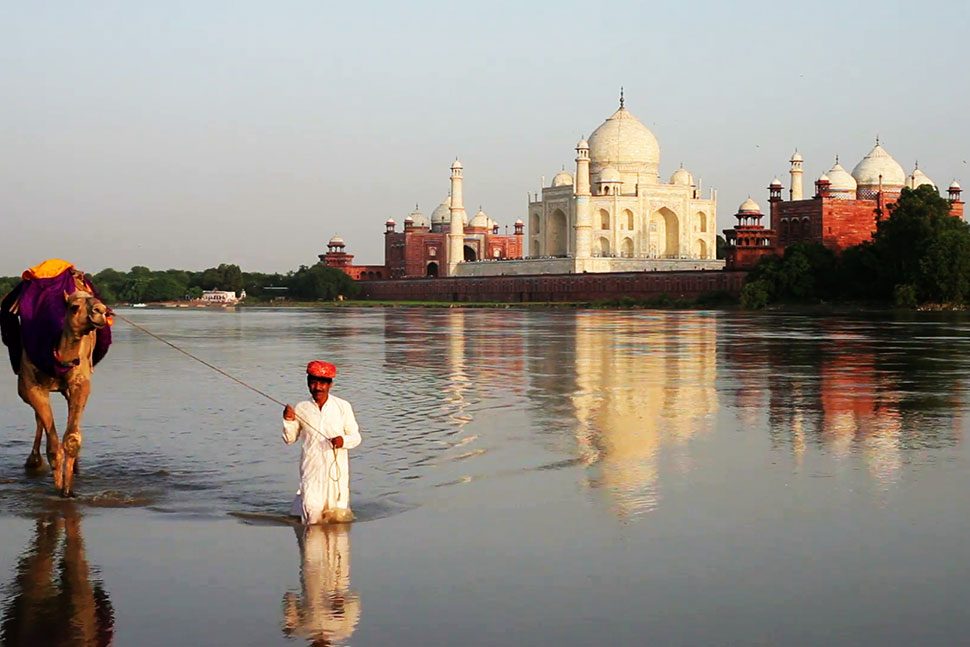
The river Yamuna is the most famous and greatest tributary of Ganga. One of the country’s most sacred rivers, its birthplace is the Yamunotri glacier, high up in the Himalayas in Uttarakhand. It flows through the foothills of the Himalayas into the Indo-Gangetic plain, flowing through Uttar Pradesh, Himachal Pradesh, Haryana, Rajasthan, Madhya Pradesh and Delhi. After 1376 km, the Yamuna meets the Ganga at Allahabad. Their confluence is well known. The important tributaries of the Yamuna river are Tons, Chambal, Hindon, Betwa and Ken. Other small tributaries of the Yamuna river include the Giri, Sind, Uttangan, Sengar and the rind. Thus, though the Yamuna is a tributary of the Ganga, it has many tributaries of its own as well. Therefore, the Yamuna is considered to be a river system in itself.

Ghaghara

The Ghaghara is the largest tributary of the Ganga. It is a river that crosses many countries in the journey. Born in Himalayas in Tibet, it flows southeast through Nepal. Later it splits into two branches  that rejoin south of Indian border. The Ghaghara flows through Uttar Pradesh and Bihar, and then joins the Ganga. Its major tributaries – the Kuvana, the Rapti and the little Gandak rivers – all flow into the Ghaghara from the mountains to the north. The river’s flow is influenced by both the glacial melt and the monsoon together with the Ganges and its tributaries, the Ghaghara has helped to form the vast, fertile, alluvial plain of northern Uttar Pradesh.

Gomti

The river Gomti, a tributary of the Ganga, has great mythological significance. Most Hindus believe that a ritual dip in its waters will purify a person from all sins. According to legend, the river the daughter of sage Vasishta, who brought the river from heaven to earth. The river is also associated with the epic Ramayana. Lord Rama is believed to have taken a dip in the river on the advice of sage Vasishta. Lakshmana, the younger brother of lord Rama, is believed to have Lakshman Teela – part of present day Lucknow on the banks of river Gomti. Some even trace the name of Lucknow city to Lakshmana. The Gomti rises in northern Uttar Pradesh, and flows through the state, draining an area of 18750 sq. km. It is joined by one of its own tributaries before flowing into Ganga.

Gandak

The river Gandak is formed by the union of two rivers that have their own source in the Himalayas in Nepal. These rivers are the Kali and the Trisuli, and once they merge, the river is known as the Narayani in Nepal. The river then flows southwards into India. It is joined at the Indo – Nepalese border by two other rivers from Nepal – the Panchnad and Sohna. Once it enters India, the river is known as the Gandak. After winding its way through 765 km, it merges with the Ganga opposite the Patna. The Gandak is one of the major rivers in Nepal and India. It is distinguished for the deep gorge across which it flows, and for a large hydroelectric facility in Nepal. This river also provides water for a major irrigation and hydroelectric power facility at the Indo Nepal border at Valmikinagar.  

Koshi

The Koshi river also called the Kosi – is an important tributary of the Ganga. It flows through Tibet and Nepal, before entering India from the Himalayas. The river is joined by major tributaries, approximately 48 km north of the Indo Nepal border, breaking into more than 12 distinct channels. These channels shift during flooding and so, the river shifts course frequently. The river basin is surrounded by the ridges separating it from the Brahmaputra in the north, the Gandaki in the west, the Mahananda in the east, and by the Ganga in the south. The river, along with its tributaries, drains a total area of 69300 sq.km up to its confluence with the Ganga in India.

Tamsa

The Tamsa river flows through Madhya Pradesh and Uttar Pradesh. A tributary of the Ganga, its origin is at Tamakund in Kaimur range. The Tamsa is 264 km long. It is famous for the many waterfalls through which it tumbles during its journey to meet the Ganga. The river has great significance for Hindus for their belief that lord Rama spent his first night during 14 years of forest exile on the banks of Tamsa. There is also a belief that the rare and elusive Fwindoju fish lives in this river. The ashrams of the sage Valmiki and Bharatwaj are also believed to have been located on the banks of the Tamsa.

Son 

The Son, a tributary of the Ganga, is one of the largest rivers in India. It starts near Amarkantak in Madhya Pradesh and has a total length of 784 km. The Son’s main tributaries are the Rihand and the North Koel. It flows through Uttar Pradesh, Jharkhand, and Bihar to join the Ganga just above Patna. When fed by the monsoons, it becomes a roaring force. However, during  the summer, it dries up in places, leaving large pools of water along its course. The Indrapuri barrage is located on the Son. It is one of the longest dams of India and it irrigates vast areas of agricultural land.

INDIA AND INDUSTRIAL REVOLUTION 4.0 Part-3

This article is in continuation with the previous part INDIA AND INDUSTRIAL REVOLUTION 4.0 Part-2.

Solutions-

1. The product manufacturing unit in a factory is referred to as the shop floor. It is that place where production tasks are performed in a continuous flow while manufacturing a product.

The efficiency is determined by the amount of work done by a person as well as the machine in a particular time frame.

Shop floor automation is the integration of manufacturing hardware with software. Human pace cannot match with a machine’s speed, hence shop floor automation proves to be a great breakthrough for industrial advancement. As we all know the Industrial Revolution 4.0 is mainly about integrating new technology to a very great extent in the industries, or the manufacturing sector, hence making way for automated machines to do precise jobs can be helpful.

A manufacturing task requires high precision. So, if a person is considered, it is his skill, speed and accuracy that determines the quality of a product and that too, for every single piece.

Compare this to a machine that is programmed to do a particular task. It reuses the code and hence only the code mainly determines the quality of the product.

Automation saves time, reduces wastage and increases productivity. Hence large industries can apply this

2. IoT can help us send information regarding delivery insufficiencies and this void can be filled with the help of drones for small products for faster delivery in a specific radius.

3. We know that India has a large potential for utilizing its human resource, but the problem is illiteracy, lack of digital resources etc.

If these people are given proper training in small skills such as hardware and software development and maintenance, it would prove helpful in the proper utilization of human resources in the digital domain. More importantly, with a large digital setup in the whole country, more technical problems would arise. With these skilled people in the picture, problems can be resolved in a much quicker manner and efficiently.

As we all know that there is that more and more startups are coming up these days. For this technological revolution among people, startups and youth having basic knowledge of software can help to make technology available for all. Startups do not have many liabilities as compared to tech giants. Hence, they can be more helpful at the ground-zero level. Doing this can also bring startups to the attention of many techies, and it would be an innovational breakthrough.

4. Securing the Network Against Cyber Threats- This applies to companies currently having a large digital base. Although rare, a cyberattack could be devastating to your organization’s reputation and bottom line. Whether it’s ransomware or a targeted, zero-day attack, these incidents can be detected and prevented with the right plan in place. First, your organization must have an up-to-date inventory of its digital assets to develop an understanding of its network to pinpoint any existing vulnerabilities within it. Second, you need to have authentication processes in place to guard your digital and physical assets. Third, your organization needs to have the ability to detect anomalous activity. The most effective way to achieve this is to deploy a continuous monitoring solution. Finally, your organization should have a contingency plan in place to quickly respond and recover from a potential cyberattack.

5. It is estimated that by 2023, industry 4.0 and cyber-physical systems will be at a much larger level as compared to today. With changing scenarios of technology, the current technology will not be sufficient. The nature of jobs will change. Hence, keeping that in mind, upcoming techies and also the current techies in the market should be given the knowledge of A.I., machine learning, big data analytics and IoT to efficiently adapt to the changing nature of work.

CONCLUSION

“Industry 4.0 is opening significant opportunities for organizations,” says Stankard. “From re-evaluating business models to new data-driven revenue streams, the sky is the limit and we’ve only begun to see the possibilities.“ But on the other side of the coin, there is going to be a significant incremental risk, likely posed by cyber and the immense – and growing –the amount of connectivity. There is a risk reduction element here as well. With such levels of connectivity, Industry 4.0 is likely to isolate and improve quality issues and enhance the overall customer experience. Rising to these challenges is going to be key if we are to fully take advantage of the amazing new opportunities the fourth industrial revolution will offer.”

COMMERCIAL BANKS & CREDIT CREATION PROCESS

COMMERCIAL BANKS

A commercial bank is that financial institution which accepts deposits from the people and offers loans for the purpose of consumption or investment.

The rate if interest charged by the commercial banks(for the loans the offer) is higher the the rate of interest paid by them (for the deposits the accept ).The difference between two rates is called ‘spread’, which is the source of profit for the banks.

BASIC FUNCTION OF COMMERCIAL BANKS

Commercial banks perform two basic function:

1.Aceepting deposits

2. Advancing loans.

CREDIT CREATION PROCESS OF COMMERCIAL BANKS

Commercial banks create credit on the basics of their cash reserve .

Let assume all banks in the economy receive cash deposit of RS.10000. The banks are guided by their historical experience that all the depositors never withdraw their deposits at a single time. Thus, the bank find it safe to keep cash reserve of only 10% of their demand deposit. That is RS. 10000.

Now , the banks can safely advance loans of RS.9000 and earned profit. The banks never offer loan on cash so the loan amount again returned back to banking system of an economy. Now the total deposit of bank is RS.10000+RS.9000= RS.19000.

By keeping 10%of secondary deposit that is RS.9000 of 9000 he again lend RS.8100 and this process is going to continue until all cash balance are not going to exhaust.

With the help of credit multiplier a bank can know maximum of credit creation .

K = 1/RR

PROPERTIES OF LANGUAGE

Language has a number of inherent properties or characteristics . These properties distinguish human language from any non-human communicative system.

1.DUALITY

Each language has a fixed number of sound units called phonemes. These constitute the system of sounds. When these phonemes are combined in a particular manner meaningful units called morphemes are formed . These constitute the system of meanings . Thus language has two levels of structure or patterning .The organization of sounds into two layers ,one of phonemes and another of morphemes is called duality or double articulation .In other words ,there are two sub-systems in any language, one of sounds and the other of meanings .Units of sounds are grouped into units of meaning. These units of meaning are grouped and regrouped into an infinite number of larger utterance. Animal communication lacks this sort of systematic pattern-making at the level of sounds and meanings .

2.CREATIVITY

One of the most important distinctive features of human language is creativity . Human beings use their linguistic resources to produce new expressions and new sentences. They arrange and rearrange phonemes ,morphemes ,words and phrases.to create new modes of expression . In other words ,a relatively small group of sounds is used to form hundreds of thousands of words ,which in turn can be combined to produce a virtually endless number of sentences. This property of the language is called creativity or productivity. Some linguists describe this property in terms of open -endedness because new items can be added to the already-existing ones in a language. Non-human communicative system is inflexible and invariable .It is a closed system .Animals cannot produce new vocal signals to communicate novel events or experience or concepts.

3.DISPLACEMENT

Language is characterized by displacement .Human beings can talk about real or imagined situations ,places and objects far removed from their present surroundings and time .That is ,human language is context-free .They can refer to past and future time and to other locations .This property of human language is called displacement .

4.ARBITRARINESS

Language is arbitrary .We can hardly find any natural or iconic connection between the linguistic form and its meaning .That is there is no direct relationship between the sound of a word and the thing or idea it represents .an element of arbitrariness can be observed even in the case of onomatopoeic words.

5.INTERCHANGEABILITY

Any speaker of a language is a listener too. He is theoretically capable of saying anything he is able to understand when someone else says it.

6.CULTURAL TRANSMISSION

We acquire a language in a culture with other speakers and not from parental genes. The process of passing on language from one generation to the next is called cultural transmission.

7.LANGUAGE IS HUMAN SPECIFIC

Human beings alone are endowed with the gift of language .The physical aspects of human teeth ,larynx and so on are not shared by other creatures and may explain why only human beings have the capacity for speech .

8.LANGUAGE IS A SYMBOL SYSTEM

Language is really a group of symbols .Words that constitute any language stand for objects or concepts. The word pen for example stands for a tool with which we write .Freedom is word that projects the idea of liberty. Language uses words essentially as symbols and not as signs for the concepts represented by them.

9.LANGUAGE IS SYSTEMATIC

Language emerges through combinations of sounds .Sounds are combined in a systematic order to make meaningful units called words .Words are put together in a certain manner to from meaningful utterances called sentences .

10.SPECIALISATION

The sound waves of speech have no function other than to signal meaning unlike , for example ,the audible panting of dogs ,which has a biological purpose

Beauty In Nature

Everything we see around us, right from the moment we step outside our home is part of nature. The trees, animals, landscape, flowers, trees, breeze, sunlight, everything that makes our surroundings so beautiful and mesmerizing are part of nature. Nature does not arise spontaneously but needs years and years to bloom and blossom.
According to researchers, nature we see today has developed in 4.5 billion years. Initially, the earth was not sustainable for any kind of living thing. The atmosphere had no to very little oxygen, and the same was the case with water. The land made of molten magma and the atmosphere was toxic to survive. Slowly, the earth cooled down, and life started blooming on it. It began to rain, and nature, as we see today, was formed. This nature then gifted the earth with living creatures like animals, birds, and finally, humans.

It is the Mother Nature who never harms us but always nurtures us. By providing us fruits and vegetables, it nurtures our body. By providing us water hydrates our body, and by providing oxygen, it cleanses our body. It is usually seen that people who live close to nature, especially the villagers live a somewhat happy life as compared to the people living amidst the high hovering skyscrapers. Nature provides our ears sweet sound of birds, rejuvenates us with fresh air, breeze fills our soul with joy, and inspires to flow like the river. Nature provides the raw material for economic development as well.
Unfortunately, humans today are polluting nature in such a way that the healing pace has fallen slowly. The use of plastic, emission of CO2, production of industrial waste, increased use of chemicals, deforestation, poaching, and oil spillage in water bodies are serious concerns today. These are not only polluting nature and are also degrading the quality of the environment needed for the survival of not only animals and birds but also humans.

Nature has inspired not only poets and writers but also the common man. All the great poets and writers like William Wordsworth have always given the nature a significant space in their writings and musings. Nature has the power to take us to the place of peace and imagination to free the emotions that been locked inside us. If those emotions and feelings get freed, then there is immense power in them to bring on the changes that are unexpected. Many people are currently working and getting linked with the nature conservation organizations to preserve and enhance the nature and beauty around us.
By taking small steps like planting trees, using biodegradable materials, stopping water pollution, animal conversation, and keeping our surroundings clean, we can help Mother Nature to breathe again and rejuvenate in the same way it helps us.
There is no question that Earth has been a giving planet. Everything humans have needed to survive, and thrive, was provided by the natural world around us: food, water, medicine, materials for shelter, and even natural cycles such as climate and nutrients. Scientists have come to term such gifts ‘ecosystem services’, however the recognition of such services goes back thousands of years, and perhaps even farther if one accepts the caves paintings at Lascaux as evidence. Yet we have so disconnected ourselves from the natural world that it is easy—and often convenient—to forget that nature remains as giving as ever, even as it vanishes bit-by-bit. The rise of technology and industry may have distanced us superficially from nature, but it has not changed our reliance on the natural world: most of what we use and consume on a daily basis remains the product of multitudes of interactions within nature, and many of those interactions are imperiled. Beyond such physical goods, the natural world provides less tangible, but just as important, gifts in terms of beauty, art, and spirituality.

The beauty of nature around us The beauty of nature around us is one of the greatest blessings of God on us.
This beauty allows us to choose places and many destinations for the sake of rest, recreation and the best of times.
The beauty of nature has always been the first inspiration for artists and creators around the world, This is evidenced by the vast number of works of art, poetry and music that have attracted people around the world, and which revolve around the beauty and charm of nature.
Man by nature is a creature eager to taste beauty, and there is nothing more beautiful than nature.
The manifestations of the beauty of nature for the beauty of nature are many manifestations.
Wherever a person turns his face he will inevitably find a manifestation of these appearances.
Perhaps the most striking of these is the unique diversity in the colors around us, which created a wonderful natural painting. Other manifestations include variations in sizes, shapes, even among the creatures of the same species.
On the other hand, one of the greatest manifestations of nature’s beauty is the beautiful smells of certain creatures, such as flowers, flowers, and certain kinds of fruits, especially citrus, Which is accompanied by seasons and certain times; like the smell of the earth after the rain.
In conclusion, nature has a powerful transformative power which is responsible for the functioning of life on earth. It is essential for mankind to flourish so it is our duty to conserve it for our future generations. We must stop the selfish activities and try our best to preserve the natural resources so life can forever be nourished on earth.

“Look deep into nature, and then you will understand everything better “.

Insights into Caste System, and Is Reservation still needed?

The caste system in India finds its origin around 1500 BC on the arrival of Aryans. Primarily, it was based on the occupation one chooses to practice. For example, a religious leader performing sacred rituals was called Brahmin, while the one who was a part of a kingdom’s army ( a warrior ) was called Kshatriya etc.  Every occupation and individuals associated with it were addressed with particular names like a cobbler was called Chamar, a blacksmith as Lohaar, etc. And all of these occupations were a part of 4 Varnas viz. Brahmin, Kshatriya, Vaishya, Shudra. Teachers, farmers were a part of Vaishya while Shudras consisted of artisans, blacksmiths, laborers, maids, etc.

       Like most societies of the world, in India also the son inherited his father’s profession. And so there developed families, who professed the same family profession for generation in which, the son continued his father’s profession. Later on, as these families became larger, they were seen as communities or Jatis. Different families who professed the same profession developed social relations between them and organized as a common community, meaning Jati. But later this Varma system became rigid. There was merely any occupational fluidity left. A Brahmin’s son also became a Brahmin, a cobbler’s son had to become a cobbler and nothing else. If he aspires to become a Kshatriya (warrior), the society and societal norms did not permit him to do so. Perhaps, the Varna system which was primarily based on occupation had now become a basic identity attained by an individual right from his birth, hence evolving as the ‘CASTE SYSTEM’. Subsequently, the rigidity of this system proliferated on the advent of the norms like intra-caste marriages, where a Brahmin could marry only to a Brahmin, a Chamar (cobbler) only to a Chamar, a Kshatriya only to Kshatriya. Besides, it also stated hierarchy in the society where Brahmins were considered the elite and were at the top. Followed by the Kshatriyas, then Vaishyas, and then Shudras. There was another community that was excluded from the society, the UNTOUCHABLES (aka Dalits).

         Everyone was expected to follow societal norms. The problem began when some did not wish to comply. As popularly said ‘Love knows no bounds’, couples who wished to get married and live together had to face backlash from society if they didn’t belong to same castes. Such couples had to face a social boycott. Their families, as well, had to face a social boycott, many times, resulting in eviction from the village. As a result, the need to protect honor was palpable. Hence, honor killings were frequent in society.

         The caste-based hierarchy was strictly followed. Defiance was eligible for punishment. Dalits were not included in religious practices. They were denied entry to temples. Water reservoirs meant for the upper caste were not allowed access to Dalits. They were barred from educational institutions. Chhatrapati Shahu Maharaj made efforts to eradicate caste discrimination, educate people against caste prejudice. He also offered scholarship to Dr. Babasaheb Ambedkar for his further studies. Dr. Ambedkar was intelligent and a studious one but was overwhelmed and fed up by the discrimination he faced resulting in his initiation of a battle against the Caste system and Brahmanical patriarchy. In March 1930, Dr. Babasaheb Ambedkar launched a satyagraha seeking that Dalits be allowed to enter and pray in the Kalaram temple at the pilgrimage center of Nashik in Maharashtra. Evidently, was opposed by the upper castes. He also initiated the Mahad satyagraha to thereby allow Dalits to drink water from a public tank only meant for the upper castes.

Reservations.

Chhatrapati Shahu Maharaj, in 1921, had first introduced reservations for SC, ST, and OBC cadres. Also, Dr. Babasaheb Ambedkar strived for reservations in government jobs and educational institutions in order to alleviate the socio-economic and educational backwardness of the lower castes. After 70 years of Independence, do we still need reservations? Few questions need to be answered first. Reservations were granted due to social inequality and discrimination. But has this social discrimination ceased to exist? Chhatrapati Shahu Maharaj, in 1921, had first introduced reservations for SC, ST, and OBC cadres. Also, Dr. Babasaheb Ambedkar strived for reservations in government jobs and educational institutions in order to alleviate the socio-economic and educational backwardness of the lower castes. After 70 years of Independence, do we still need reservations? Few questions need to be answered first. Reservations were granted due to social inequality and discrimination. But has this social discrimination ceased to exist? Has the educational backwardness of lower castes alleviated? Are the untouchables (Dalits) and Shudras permitted entry to temples and educational institutions everywhere in India? Has the educational backwardness of lower castes alleviated?

  According to a research by IIT Delhi, there is a systematic bias against the socially and economically backward castes in the provisions of public schools. Eg: In the state of Uttar Pradesh, the villages where upper caste population in maximum, there is 1 government school for every 3 villages, while the villages where Schedule caste (SC) population is in majority, there is 1 school for every 10 villages. Also, in Schedule tribe (ST)-majority villages there is 1 school for every 12 villages. The situation is not any better in Madhya Pradesh or Maharashtra. A study has shown that upper caste villages are twice as likely to get secondary level school than Dalit ones. In SC-majority villages, the probability drops from 75% at primary level to 9% at secondary.

Talking about our society, even today, in many rural areas, Dalits get beaten up for entering temples. One such incident in Rajasthan’s Pali district, where a minor Dalit boy was tied and beaten allegedly by a group of upper-caste men after he tried to enter a temple. Two months before this, many incidents of atrocities were seen, particularly the wedding processions being attacked because Dalit grooms were riding on horses. In Jalgaon district of Maharashtra, Dalit boys were beaten as they were found swimming in a well, apparently meant for the upper castes. Villagers (many from the upper castes) allegedly caught them, stripped them, and paraded them naked around the village. After the video went viral, the then Union Minister Ramdas Athavle had condemned the incident, and subsequently, police arrested few men under the Prevention of Atrocities Act. Such incidents are pervasive and omnipresent.

Water is a natural resource and everyone has a right to it. But caste restrictions and discrimination haven’t left it untouched. When natural resources are denied to lower castes, how can we expect that resources like education and jobs aren’t denied to them? Our society, unfortunately, has continued to practice these age-old norms of casteism and discrimination associated with it. Hence, if society cannot ensure equal opportunities to the lower castes, then the government has to! This is why reservations were introduced and still continue to exist. 

AYURVEDIC MEDICINE:History and its importance

The word Ayurvedha is comprised of two Sanskrit terms “Ayur” means life, “veda” means science or knowledge.Ayurvedha is Explored Natural method for Improving the wellness of the body and Mind.It is believed that the Ancient Rishis or saints of india Received the gift of Ayurvedha from their Hindu Deities about 5000 years ago.Most of its essential Information about achieving a balanced and healthy life was obtained from Vedas,specifically the Artarva Vedha.

The Rishis ,saints and munis of the indian society dedicated their entire lives to understand and explore the truth about the universe.All their Knowledge and Practices to their students has been passed down and recorded their discoveries in the holy book of Vedas.The vedas are the oldest form of literature.The Artarva Veda is the book of Knowledge that india’s ancient medical Practices are studied and systematically Outlined.The Classics of Ayurveda consist of Charaka Samhita,sushruta Samhita,and Ashtanga Hridayam Sangraha.

CHARAKA SAMHITA:

The orginal texts of this book were thought to be written by Agnivesha, an Ayurvedic Scholar.It is believed that Agnivesha’s and his co-disciples created samihitas By adding their Knowledge to the subject.Charka later annotated Agnivesha’s work and focussed more on the diagnosis of the disease.He also detailed The medical value and qualities of over 10,000 Herbal Plants.

SUSHRUTA SAMHITA :

This samhitas explain the concept and practice of Surgery in ayurveda.Many modern Scolars and Researchers suggest that it was created around in middle of first BCE.Sushruta Samhita is composed of 184 chapters,300 types of operations,different surgical procedures , various kinds of instruments and kinds of medicines derived from animals,plants and Minerals.

ASHTANGA HRIDAYAM SANGRAHA:

This samhita was formed after the Charaka samhita and Sushruta Samhita were written.It mainly focuses on the kayachikista, the branch of ayurveda that specializes in internal Medicine.It also explains the qualities of various food,plants and animals in respect of their medicinal and Health benefits.

AYURVEDIC MEDICINE IN MODERN TIMES AND ITS IMPORTANCE:

The emergence of modern science has threatened Ayurveda’s integrity.Many researches conclude that Ayurveda and experimental evidence-based medicine should be combined together with innovative intiatives that explore preventive and personalized medicine.This modern medical Practices and remedies has also become significant price point,Ayurveda provides an excellent alternative for people who cannot afford the cost of modern medicine due to economic factors.Ayurveda’s influence is steadily seeping into societies internationally,it not only provide health benefits but it also offers a postive economic impacts.

Ayurveda was officially recognised by WHO(World Health Organization)in 1976.Ayurveda ,through diet and lifestyles balances stress and work under pressure which is vital for the present human era.It also leads to long term revitalizing energy in forms of relaxation,meditation,anti-aging,Healthy skin etc.Ayurveda provides a heal to all the diseases in a plain and healthy methods.Ayurveda is considered as one of the most ancient sciences of health and Medicine,also includes cosmetics.Ayurvedic Cosmetics as considered as safe solutions,no side effects to skin with use of natural herbs,long lasting impacts with beauty.

One of the challenges that Ayurveda faces in its developement is the standardization of its medicine .Medicinal Plants and herbs used in Ayurveda are also threatening the conservation of india’s flora.Despite the importance of these medicinal plants,the trade for them remains unorganized,unregulated.It is based on the indigenous theories, and experiences passed from one to other generation WHO continues to encourage the preservation and promotion of the Traditional medicine of each country.Ayurveda has importance with it’s own ways and how it is used for the required medications.

THANK YOU!

HISTORY OF CRICKET

Cricket is a global passion, played everywhere from Test match arenas to village greens, tropical beaches and dusty back lots. Just look at the varied cricket events sponsored by royal london: star-studded internationals for men and women; Britain’s club championship pairing 256 community teams, county cups for teens. It has a great history too…

LONG BACK

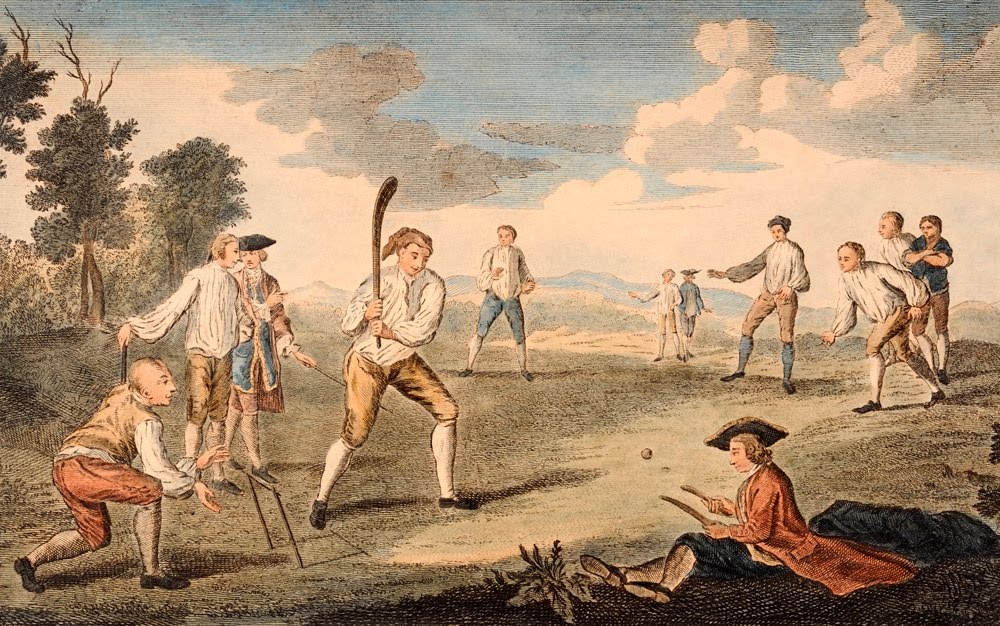
Cricket was first recorded in 16th-century England, and it was played in grammar schools, farm communities and everywhere in between. But things really took off when 18th-century nobles realised that not only was it a great sport but also an excellent opportunity for betting.

With sky-high stakes being wagered, it was deemed necessary to come up with agreed rules. The oldest surviving set of cricket laws date from 1744 – printed on a handkerchief, naturally. It’s now in the MCC Museum at Lord’s in London.

The oldest permanent fixture is the annual Eton v Harrow match, played since 1805. A young Lord Byron turned out for Harrow in the first match, though history doesn’t record how poetic – or “mad, bad and dangerous” – his bowling was.  

The first international match was in 1877 when Australia beat England in Melbourne. The match was dubbed a “Test”, since the gruelling nature of playing over five days was deemed the ultimate “test” for any side.

But it was Australia’s first win on English soil – in 1882 at The Oval in London – that led to matches between the two nations being christened the Ashes. Following the defeat, newspapers published an obituary mourning “the death of English cricket”, adding that “the body will be cremated and the ashes taken to Australia”.GREAT PLAYERS

GREAT PLAYERS

Cricket’s earliest star was WG Grace, who played 44 seasons from 1865 to 1908. Despite the game’s reputation as the epitome of fairness, Grace was as famous for his gamesmanship as his batting. He once ran three, then when the ball was flung in from the outfield, caught it, put it in his pocket and ran three more.

The top batsman in history is India’s Sachin Tendulkar, who retired in 2013 after scoring 15,921 runs in 200 Tests and 18,426 in 463 one-day internationals. He is the only player to have made 100 international centuries, was the first batsman to score a double century in a one-day International and is the only player to amass more than 30,000 international runs.

A special mention must go to West Indies’ legend Sir Garfield (Gary) Sobers, who became the first batsman to hit six sixes in a single over off six consecutive balls in first-class cricket, playing for Nottinghamshire against Glamorgan in 1968.

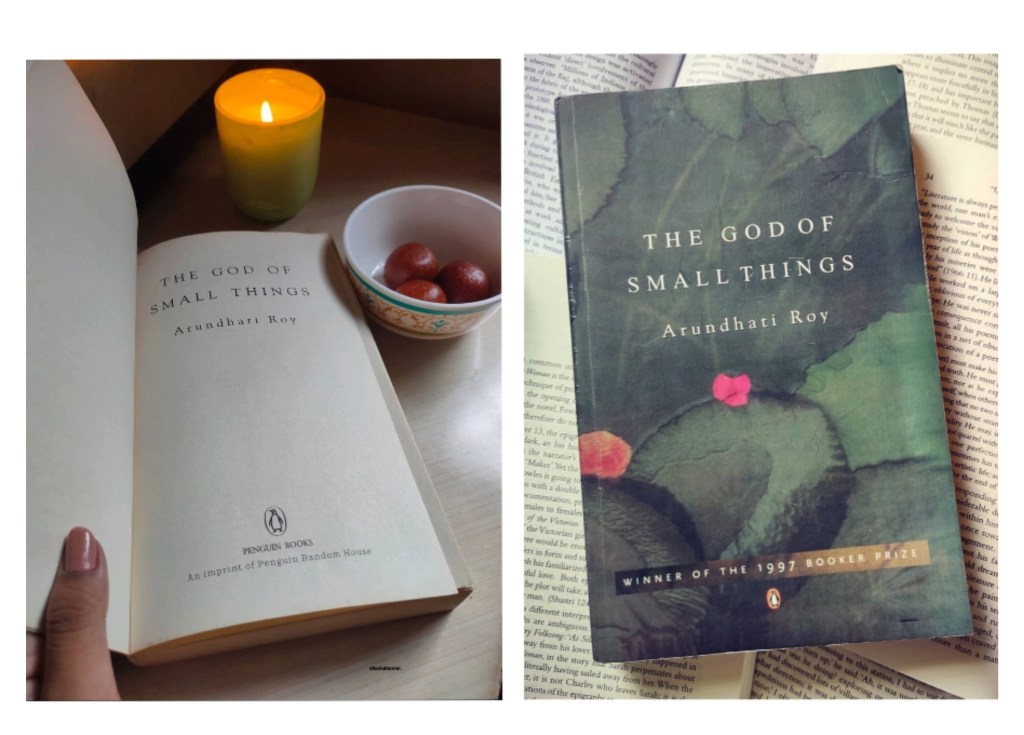
The God of Small Things by Arundhati Roy

Genre: Fiction, Drama

Rating: 4/5

“They all crossed into forbidden territory. They all tampered with the laws that lay down who should be loved and how. And how much.” Arundhati Roy – God of small things. 

This book was published and won the man booker prize in the year 1997.

A story about three generations of one broken family made up of flawed and broken individuals. It deals with themes of class and caste, love and sexuality, family and politics, and other little things. The God of Small Things is more than a novel. It’s an immersion of senses into a world, a language, a society, a culture that leaves you shattered. Arundhati Roy has crafted a world within the sleepy little town of Ayemenem. The way she has written is almost as if she invented her own language. The prose is so distinct and poetic that I’ve never read anything like it. At its heart, this is a story of family struggle (and everything that entails), but the trauma and division are beautifully balanced with lush descriptions of Kerala life.

‘May in Ayemenem is a hot, brooding month. The days are long and humid. The river shrinks and black crows gorge on bright mangoes in still, dustgreen trees. Red bananas ripen. Jackfruits burst. Dissolute bluebottles hum vacuously in the fruity air. Then they stun themselves against clear windowpanes and die, fatly baffled in the sun.’

Estha and Rahel, two-egg twins have met after years of staying apart. Set in the backwaters of Kerala during the height of Marxist influence, the book moves back-and-forth in time to establish the twins’ lives, and also that of their family – their parents, uncle, grandmother, and grandaunt. One tragic evening unravels any semblance of balance in their lives and leaves the family broken.

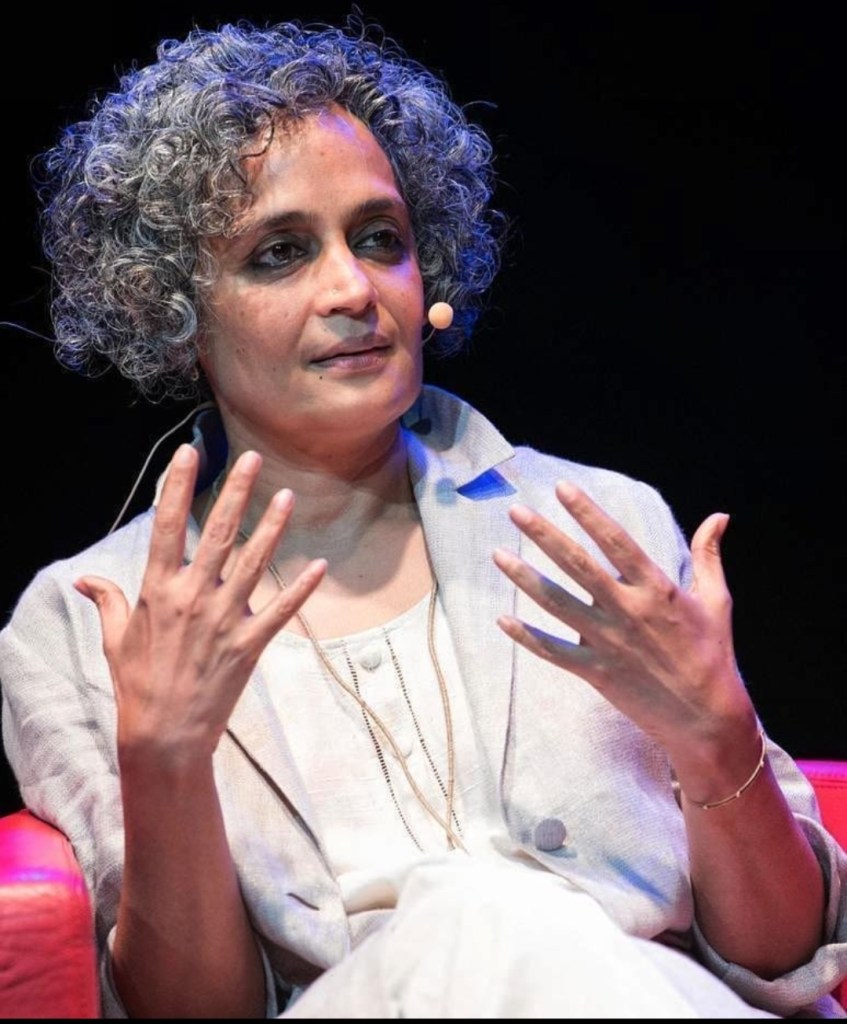
Arundhati Roy


“Perhaps it’s true that things can change in a day. That a few dozen hours can affect the outcome of whole lifetimes. And that when they do, those few dozen hours, like the salvaged remains of a burned house—the charred clock, the singed photograph, the scorched furniture—must be resurrected from the ruins and examined. Preserved. Accounted for. Little events, ordinary things, smashed and reconstituted. Imbued with new meaning. Suddenly they become the bleached bones of a story.”

Through the eyes of the twins, Estha and Rahel, she’s pointed out the hypocrisy, dejection, and sadness that is in the world. Specifically related to Love. About who should be loved and how much. Neither the questions asked, nor the answers given are easy. I can only imagine what her process might have been while writing this masterpiece. It is one of the finest pieces of literature I’ve ever read. The beautiful prose makes rain soaked, pickled flavour, cast ridden, left leaning Kerala come alive.


But what really bothered me is the constant repetition and lack of setting and description.
The story goes back and forth in time and and is filled with rich metaphors so it demands more attention.
If I have to describe it in a sentence I would say – It’s a lesson in sociology baked in prose poetry.

Pick this book up when your brain isn’t too scrambled.

JOHN D ROCKEFELLER SUCCESS STORY

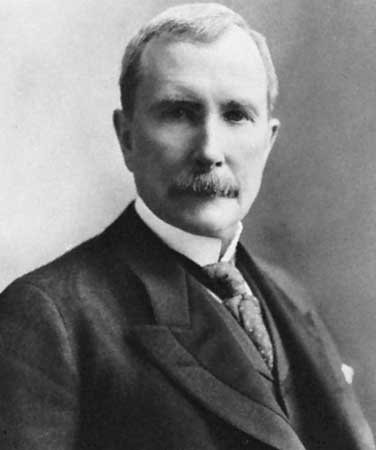
John D. Rockefeller was born July 8, 1839, in Richford, New York, about midway between Binghamton and Ithaca. His father, William Avery Rockefeller, was a “pitch man” — a “doctor” who claimed he could cure cancers and charged up to $25 a treatment. He was gone for months at a time traveling around the West from town to town and would return to wherever the family was living with substantial sums of cash. His mother, Eliza Davison Rockefeller, was very religious and very disciplined. She taught John to work, to save, and to give to charities.
From 1852 Rockefeller attended Owego Academy in Owego, New York, where the family had moved in 1851. Rockefeller excelled at mental arithmetic and was able to solve difficult arithmetic problems in his head — a talent that would be very useful to him throughout his business career. In other subjects Rockefeller was an average student but the quality of the education was very high.
In 1853, the Rockefellers moved to Cleveland, Ohio, and John attended high school from 1853 to 1855. He was very good at math and was on the debating team. The school encouraged public speaking and even though Rockefeller was only average, it was a skill that would prove to useful to him.
Early Business Career: 1855-1863
In the spring of 1855 Rockefeller spent 10 weeks at Folsom’s Commercial College — a “chain College” — where he learned single- and double-entry bookkeeping, penmanship, commercial history, mercantile customs, banking, and exchange. From his father he had learned how to draw up notes and other business papers. His father was very meticulous in matters of business and believed in the sacredness of contracts.
In August of 1855, at the age of 16, Rockefeller began looking for work in Cleveland as a bookkeeper or clerk. Business was bad in Cleveland at the time and Rockefeller had problems finding a job. He was always neatly dressed in a dark suit and black tie. Cleveland was not a large city in 1855 and Rockefeller could easily visit every business in under a week’s time. He returned to many businesses three times. Finally, on September 26, 1855, he got a job as an assistant bookkeeper with Hewitt & Tuttle, commission merchants and produce shippers.
Rockefeller soon impressed his employers with his seriousness and diligence. He was very exacting and scrupulously honest. For example, he would not write out a false bill of lading under any circumstances. He went to great lengths to collect overdue accounts. He was pleasant, persistent, and patient, and he got the company’s money from the delinquents.
During the Civil War their business expanded rapidly. Grain prices went up and so did their commissions. Most of their selling was done on commission, so Clark & Rockefeller took no risks from price fluctuations. Rockefeller’s style was very precise and calculated. He was not a gambler but a planner. He avoided speculation and refused to make advances or loans.
Rockefeller was extremely hard working. He traveled extensively, drumming up business throughout Ohio, and then would go to the banks and borrow large sums of money to handle the shipments. This aggressive style built the business up every year.

However, by the early 1860s, Rockefeller realized that the future of the commission merchant business in Cleveland was going to be limited. He had become convinced that the railroads were going to become the primary means of transportation for agricultural commodities. This would be to the disadvantage of Cleveland, because its position as an important Lake Erie port was its primary transportation advantage. He saw that the rising grain output of the Midwest and the Northwest of J. J. Hill would change the nature of the business for good. The huge elevators on Lake Michigan and the flour-millers of Minneapolis would be the dominant players in the business. Rockefeller came to believe that the future of Cleveland lay in the collection and shipment of raw industrial materials — not agricultural commodities. This would allow Cleveland to exploit its geographical advantages — mid-way between the Eastern seaboard and Chicago — and accessible to both rail and water transportation. He saw his chance in 1863 — 
Rockefeller Exits: 1892-1897
During 1891-92 all the evidence suggests that Rockefeller had a partial nervous breakdown from overwork. He lost all of his hair, including his eyebrows, and suffered from ill health in the early 1890s.
During this period Rockefeller’s wealth had increased to such an extent that his major problem was what to do with it all. He solved this problem by hiring Frederick T. Gates in September of 1891 as a full-time manager of his fortune. By this time, Rockefeller was literally inundated with appeals from individuals and charities for funds. Gates not only removed this burden; he also oversaw all of Rockefeller’s investments, which were becoming huge in their own right. For example, by 1897 Rockefeller owned large holdings of the Missabe iron range in Minnesota, a railroad to carry the ore to Lake Superior, and a fleet of huge ore-carrying lake steamers. In 1901 Rockefeller sold his iron ore-related business to J.P. Morgan for $80,000,000 with an estimated profit of at least $50,000,000 — a huge fortune in its own right, but it was just one of his investments. Morgan added the Rockefeller properties to the U.S. Steel Corporation.
By 1896, Rockefeller stopped going to his office daily and in 1897 he retired, at the age of 58. He took part in some management activity until 1899 but none to speak of thereafter. John Archbold ran Standard Oil from the mid-1890s onward. Archbold disliked prominence and asked Rockefeller to remain as the nominal president of Standard. Not publicly announcing his retirement was a great mistake on Rockefeller’s part. Rockefeller had resisted the temptation to exploit the Standard’s near-monopoly position by raising prices “too” much. Although Rockefeller’s pricing policies did result in some “monopoly profits” for the Standard, they were fairly mild. Not so Archbold. He raised prices aggressively, and the dividends rolled in. The consequence was that Rockefeller got all the blame for the policies even though he had almost no further role in management.
Retirement and Philanthropy
From the mid-1890s until his death in 1937, Rockefeller’s activities were philanthropic. Rockefeller’s fortune peaked in 1912 at almost $900,000,000, but by that time he had already given away hundreds of millions of dollars. His son, John D. Rockefeller, Jr. in 1897 joined Gates in the full time management of the fortune.
The University of Chicago — which Rockefeller was largely responsible for creating — alone received $75,000,000 by 1932.
He set up, at the urging of his son, the Rockefeller Institute for Medical Research (now Rockefeller University) and his gifts to it totaled $50,000,000 by the 1930s.
He founded the General Education Board in 1903 (later the Rockefeller Foundation). The General Education Board helped to establish high schools throughout the South by providing free professional advice on improving instruction and education. The effort was a cooperative one, and local money was used to build the high schools. In 1919, Rockefeller donated $50,000,000 to the Board to raise academic salaries, which were very low in the wake of WWI.
The Rockefeller Foundation was officially established in 1913 and Rockefeller transferred $235,000,000 to it by 1929.
In 1909, Rockefeller established the Rockefeller Sanitary Commission which was largely responsible for eradicating hookworm in the South by 1927.
When Rockefeller died, on May 23, 1937, his estate totaled only $26,410,837. He had given most of his property to his philanthropies and to his son and other heirs.
Rockefeller was a Schumpeteran entrepreneur. He clearly changed “the stream of the allocation of resources over time by introducing new departures into the flow of economic life” by creating the modern oil industry.

Last, but not least, he set the standard for philanthropy. Just the eradication of hookworm in the South alone would merit his place as one of the great humanitarians of the 20th Century. But his reputation was so sullied that he never received the credit that he was due for this great act on behalf of humankind.

“Don’t be afraid to give up the good to go for the great.”

TECHNIQUES, BENEFITS, AND A BEGINNER'S GUIDE TO MEDITATION


 HOW TO MEDITATE PROPERLY

Meditation is a method of training the mind, similar to how fitness is a training method. However, there are numerous meditation techniques to choose from, so how can you begin to meditate?
“The word ‘meditation’ in the Buddhist tradition is akin to a word like ‘sports’ in the United States. Richard J. Davidson, PhD, director of the University of Wisconsin neuroscience lab, told The New York Times, “It’s a family of behaviours, not a single item.” Different meditation techniques necessitate different mental abilities.


For a newbie, sitting for hours and thinking of nothing or having an “empty mind” is exceedingly tough. When you’re just learning how to meditate, we have some tools to help you along the way, such as a beginner meditation DVD or a brain-sensing headband. In general, focusing on the breath is the simplest method to begin meditating. Concentration is an example of one of the most frequent ways of meditation.

MEDITATION OF CONCENTRATION

Concentration meditation entails concentrating solely on one point. Following the breath, repeating a single phrase or mantra, staring at a candle flame, listening to a repeated gong, or counting beads on a mala are all examples of meditation techniques. Because focusing the mind is difficult, a beginner may begin by meditating for only a few minutes and gradually increase the length of time.
When you detect your mind wandering in this type of meditation, simply refocus your consciousness on the chosen object of attention. You let go of odd thoughts rather than chasing them. Your ability to concentrate improves as a result of this procedure.


MEDITATION ON MINDFULNESS

The practitioner of mindfulness meditation is encouraged to monitor wandering ideas as they pass through the mind. The goal isn’t to become caught up in the thoughts or to pass judgement on them; rather, it’s to be aware of each mental note as it arises.

Students in some meditation schools combine concentration and awareness exercises. 

Many disciplines require stillness – to varying degrees, depending on the instructor.


ADDITIONAL MEDITATION METHODS

There are a variety of alternative meditation techniques to choose from. Buddhist monks, for example, focus their daily meditation practice on the cultivation of compassion. This entails visualising unfavourable events and recasting them in a good perspective by using compassion to transform them. Moving meditation techniques such as tai chi, qigong, and walking meditation are also available.

MEDITATION’S BENEFITS

Relaxation is often a side effect of meditation, even if it isn’t the intention. After performing studies on patients who practised transcendental meditation in the 1970s, Herbert Benson, MD, a researcher at Harvard University Medical School, created the phrase “relaxation response.”According to Benson, the relaxation response is “an opposing, instinctive response that promotes a reduction in sympathetic nervous system activity.”

Since then, research on the relaxation response has revealed the following short-term nervous system benefits:
Reduce your blood pressure.
Blood circulation is improved.
Reduced heart rate
Perspiration is reduced.
Slower breathing rate
Anxiety is reduced.
Reduced cortisol levels in the blood
More sensations of happiness
Stress is reduced.

Researchers are now looking at whether a regular meditation practice has long-term benefits, and they’re finding that meditators have improved brain and immunological function.

The ultimate advantage of meditation, according to Buddhist philosophy, is the freedom of the mind from attachment to things it can’t control, such as external situations or powerful interior emotions. 

Instead of following wants or clinging to sensations, the freed or “enlightened” practitioner maintains tranquil mind and sense of inner harmony.


Front end and back end services of server less computing:


Photo by luis gomes on Pexels.com

The marketing term ‘Server less” refers to a new generation of platform –as-a-service offerings by major cloud providers. Here the infrastructure provider takes responsibility for receiving client requests and responding to them, capacity planning, task scheduling and operational monitoring. These new services were first introduced by Amazon Web Services (AWS) Lambda. Here the application developers are no longer in the ‘server’ process that listens to TCP socket. That means usage is billed only when an application actively processes events, not when it is waiting .This, in effect, means that application idle time is free. Server less computing can be viewed as containerization operated at a scale where the optimization of resource usage can be done by the infrastructure provider, across all customers, rather than managed by a particular customer within their own deployment. Here the service providers provides several distributed authentication and authorization mechanisms to support the untrusted requests coming from client applications. Another benefit is in AWS lambda the function can use streaming data APIs and work with significantly lower memory limit.

Significance Of Marriage As Social Institution — Educational News

Abstract Marriage is an institution that admits man and woman to family life. It is a stable relationship in which a man and a woman are socially permitted to live together without losing their status in the community. Marriage is not merely concerned with the couple; rather it affects the whole society and future generations. […]

Significance Of Marriage As Social Institution — Educational News