“Silence does not mean yes. No can be thought and felt but never said. It can be screamed silently on the inside. It can be in the wordless stone of a clenched fist, fingernails digging into palm. Her lips sealed. Her eyes closed. His body just taking, never asking, never taught to question silence”
Amy Reed
I came across a post on Feminist’s Instagram.
This post struck a nerve that no other post ever did. Mainly because whoever this person (thedarkchocolatedandy) is, didn’t insult anyone, nor did they try to persuade anyone to believe them. All they did was point out how humans are different than animals and also that women aren’t a piece of meat.
I decided to make a post on what crosses the line from being intimate to being considered rape. I am not sure how comfortable I am with men and most women not knowing or understanding what rape is and who the assailant is, and also that no reason is justifiable for rape, however, I wanted to make it clear and give no one who reads this an opportunity to claim they were unaware.
Take this post as a guide to know what is rape.
What is Consent?
The general definition of consent is to allow or permit for something to happen.
Consent in terms of sex or intimacy refers to agreeing to have sexual intercourse with someone and letting them know about it. It also includes finding out where the other person stands.
Consent is restricted and comes with thick boundaries. A person may consent to sexting, but not actually having sex, or vice versa.
Consent could also be restricted to just being physical and not actually having sex.
Take for instance the Netflix Original, “GUILTY”. A beautiful movie loudly stating that consent doesn’t give permission for anything and everything. Tanu (Akansha Ranjan), accuses VJ (Gurfateh Singh Pirzada) of raping her. Throughout the movie everyone had numerous reasons to tag her a fibster, they refused to believe her, they ridiculed her, said she was asking for it. The biggest reason was that she was very into VJ and that she threw herself on him quite a lot. In the end it was revealed that she wanted to have sex with VJ. She was consenting to the sex. What she wasn’t consenting to is being watched by VJ’s friends and being recorded. She didn’t consent to being sexually assaulted while the two bystanders ridiculed her and lead VJ on.
This movie is an eye-opener and covers many reasons rape culture still persists in our society.
When do you NOT have Consent?
When a person is sleeping or unconscious
When a person is drugged or intoxicated
When you are threatening them
You use a position of authority or trust
Consent is withdrawn
When you ignore their NO, cries and physically being pushed away
When you have consent for only one form of sexual act and not the other
When they are pressured
Verbal Consents:
Yes
I am sure
I want to
Don’t stop
Go on
I still want to
I want you to
I’m ready
Yes please
I am comfortable
I want to continue
Verbal Disagreements:
No
Stop
I don’t want to
I am not sure
I don’t think so
Please don’t
Please stop
This makes me uncomfortable
I want to stop
I don’t want to continue
This feels wrong
Maybe we should wait
Diverting the topic
I want to, BUT
Saying Yes fearfully
Non-Verbal Disagreement:
Pushing Away
Pulling Away
Crying
Avoiding Eye Contact
Silence
Shaking their head no
Standing/Lying motionlessly
Looking Scared
Not removing their own clothes
What is Rape?
Sexual Assault refers to any form of sexual contact or behaviours without explicit consent by the victim. Attempted Rape, Unwanted touching, forcing a victim to perform sexual favours, oral or penetrating penis or any other object.
The Medical definition of Rape is, “Forced sexual intercourse, and/or forced sexual assault between two or more people is considered rape. Rape may be heterosexual or homosexual. Rape involves insertion of penis or any inanimate object into a person’s vagina, anus, mouth. Rape also includes any other sexual acts.” Force here doesn’t just refer to physical force; blackmail, psychological manipulation to coerce someone into being sexually active is also considered rape.
Sexual intercourse between an adult and a minor is legally considered statutory rape. The adult is found guilty even if the minor was consenting.
Intimacy with a minor wife is considered rape in India.
Marriage is not a licence for either partner to force an unwilling partner to have sex. Marital/Spousal Rape is now recognized and is a criminal offence.
Date Rape, sexual assault followed by the victim being drugged or psychologically manipulated.
Intoxicated Rape is when the victim is drunk and unconscious, not in the state to make a sober choice.
Consent taken by threatening the victim or victims loved ones is also considered rape.
Gang Rape occurs when a group of people rape a person.
Rapes in prisons and jails by other inmates or prison officials is also an offence, often overlooked and unreported.
Serial Rape is the rape committed continuously over a relatively long time period.
Payback/Punishment Rape is when a person rapes another out of spite.
War Rapes are rapes committed by soldiers during war as a way to force prostitution and slavery to insult an entire country.
Deceptive Rape is the rape that occurs when the rapist rapes a victim by gaining consent by misleading them.
Corrective Rape is a hate crime where homosexuals, trans and queer individuals are raped hoping to “correct” them. To force them to “turn” heterosexual.
Custodial Rape is the rape occurred in custody of police, hospitals, old age homes, orphanages or any other employee of the state.
Prostitution Rapes are rapes where rapists force prostitutes to have sex without paying them for their services, to inflicting pain and torture (cigarette burns, slapping, choking).
Exchange Rape is the rape where sexual favours are exchanged for money, rent, food, drugs or any other resource.
Punitive Rape is when rape is used to punish or discipline someone. Usually by an abusive teacher, parent, Religious leader, or a peer.
Incest Rape is when a victim is raped by family member.
Consenting Rape is when a consenting partner withdraws consent, but the rapist doesn’t stop and continues to get sexually intimate. Consenting rape is also when the victim consents, but isn’t completely “into it.”
Rape Culture
Rape Culture refers to the sociological concept of normalizing rape, and blaming victims for dressing or acting provocatively. A few illustrations of Rape Culture include:
Blaming the victim
She dressed provocatively
She shouldn’t have been out so late
She is already sexually active, who says she didn’t want it?
Boys will be boys
Tolerating sexual harassment
Assuming only immoral women get raped
Making degrading jokes about women
Associating “manhood” as dominant and sexually aggressive
Associating “womanhood” as submissive and sexually passive
Offensive memes
Not believing people who speak out
“You haven’t been raped yet, so chill”
Slut-shaming and congratulating men on “scoring”
Calling young women gold diggers when they marry old and older woman, cougars
Objectifying Women
Associating Rape to Victims character and not the rapists
Rape Culture is the direct consequence of toxic masculinity. The heavily patriarchal world teaches and forces boys and men to be strong and exert “masculinity” in the form of dominance, arrogance and sexual and physical aggression.
The only solution is to fight patriarchy.
Support for Those in Distress
The National Commission for Women, provides a set of helpline numbers, legal aid, and counselling contacts.
Biomedical Waste Management & Handling Rules, 1998 (“1998 Rules”) in India govern the handling, disposal and management of bio-medical waste (“BM Waste”)in India have been notified by the Central Government in the exercise of the powers conferred by Section 6,8 & 25 of the Environmental Protection Act, 1986. These rules provide for the framework of the management and Handling of disposal and scientific management of BM Waste
In wake of the COVID-19 pandemic, the Centre Pollution Control Board (“CPCB”) recently issued guidelines dated March 27, 2020 for handling, treatment and safe disposal of BM Waste generated during treatment, diagnosis and quarantine of patients confirmed or suspected to have COVID-19 (“Guidelines”).
The Guidelines have been necessitated due to the super infectious nature of the Novel corona virus and provide for a mechanism for the segregation, packaging, transportation, storage and disposal of BM Waste in order to avoid further spread of the virus through BM Waste.
So what do you mean by the BM Waste and what are the categories of BM Waste that the hospitals generate?
The Bio-Medical Waste Management Rules 2016[1] (“2016 Rules”) define the BM Waste as any waste, which is generated during the diagnosis, treatment or immunisation of human beings or animals or research activities pertaining thereto or in the production or testing of biological or in health camps, including the categories mentioned in Schedule I the 2016 Rules.
The 2016 Rules apply to all persons who generate, collect, receive, store, transport, treat, dispose, or handle bio medical waste in any form. The next imminent question that comes to our minds is what are the categories of BM Waste that the hospitals generate?
BM Waste generated from a hospital could be human anatomical waste, animal waste- microbiology & biotechnology, waste sharps, discarded medicines and cytotoxic drugs, solid & liquid waste.
Now that we know what’s the meaning and various categories of BM Waste, the most pertinent question arises that how is it supposed to be treated and disposed of by the hospitals in India during the ongoing COVID-19 pandemic?
While the hospitals in their usual course deal with the segregation, management and storage of BM Waste, the situation in times of COVID-19 is extraordinary the reason being the highly contagious nature of the virus and also it’s transmission cycle and multiplicity rate.
As the hospitals are being flooded with the suspected and confirmed cases, the Ministry of Health and family welfare (“MoHFW”) and the CPCB have issued various guidelines for the handling and management of waste generated from the COVID-19 facilities.
Under the 2016 Rules, while the hospitals are required to ensure that there is a secured location within its premises for a spill/pilferage free storage of segregated BM Waste in labelled/coloured bags or containers, the duty to transport the stored BM Waste from the hospital premises onwards to the common BM Waste treatment and disposal facility is of an ‘operator’ as defined in the Rules.
Specifically, in wake of COVID-19, the CPCB has issued Revision 1 to the Guidelines dated March 25, 2020 for Handling, Treatment and Disposal of Waste Generated during Treatment/Diagnosis/ Quarantine of COVID-19 Patients (“CPCB Guidelines”).
[2] The said CPCB Guidelines inter-alia, state that hospitals are required to depute separate BM Waste sanitation workers to COVID-19 isolation wards and maintain records of all waste generated in such isolation wards and ensure that the BWM generated is collected and separately stored in separate leakproof color-coded double layered bags or bins /containers labelled as “COVID-19 waste” as per the 1998 Rules and the Guidelines.
In fact the Bombay High Court in a recent pending public interest litigation has, while issuing notices to local municipal corporations and the State Pollution Control Board, also directed the Maharashtra government to clarify whether it was ensuring that all COVID-19 related biomedical waste generated in the state was being disposed of in a safe manner[3].
Now that we have a thorough understanding of how the BM Waste is supposed to be treated and disposed of the most important and the widely discussed about topic is that what are the measures that a hospital is required to take for the safety of its employees doctors, nurses and other support staff who are known as the (“healthcare personnel”) from the dangerous diseases like COVID-19?
In order to answer this pertinent question which is often there in the limelight, one must keep in mind that the Healthcare personnel who are the Frontline workers have a high risk of contracting the COVID-19.
While the hospitals are taking precautions and measures to control any spread of infection within the premises, it is particularly difficult given the highly super-infectious nature and hyper-speed feature of the virus. Due to this feature it spreads widely and it becomes a bit difficult to contain it in an over-crowded environment but it’s not impossible to achieve that as we all have been deterrent enough to contain it’s spread but still there is always scope for improvement.
The first steps towards controlling the spread of a virus is personal protective equipment also known as PPE which should preferably be a two-layered fluid-resistant apron and basic items like N-95 masks, face shield, full cover gowns and sanitisers but the same are rendered ineffective against the COVID-19 if the quality of these equipments is not up to the standard as required.
Greater emphasis is also to be laid upon the proper training and awareness of healthcare personnel towards proper use and disposal of the equipment. The spread of the COVID-19 virus is also particularly fast due to the heavy load of asymptomatic patients coming into the hospital and hence a greater need for the formulation of national COVID-19 protocol.
The MoHFW has vide its revised guidelines for clinical management of COVID-19 dated March 31, 2020[4] (“Clinical Management Guidelines”) impressed upon strict compliance of Infection prevention control (IPC) protocol for Hospitals and a consequent effect of the same is prevention and management of COVID-19 in the hospital staff.
This protocol inter-alia, standard precautions such as hand hygiene, use of PPE to avoid direct contact with patients’ blood, body fluids, secretions (including respiratory secretions) and non-intact skin, prevention of needle-stick or sharps injury, safe waste management, cleaning and disinfection of equipment and cleaning of the environment around a COVID-19 patient.
The 2016 Rules also provide as follows that in order to and for ensuring the safety of the healthcare workers and others involved in the segregation and pre-treatment of BM Waste, the hospital is required to train to all its healthcare workers, immunise them for protection against diseases which likely to be transmitted by handling of BM Waste, in the manner as prescribed in the National Immunisation Policy[5].
Also, hospitals are required to ensure occupational safety of all its health care workers and others involved in handling of BM Waste by providing appropriate and adequate PPE and also they must conduct health check ups at the time of induction and at least once in a year maintain the records for the same.
Now due to the pandemic if one is an employee ie the Healthcare personnel of the hospital one must understand the Legal aspect and angle also and the most important aspect of all is that what is the Legal obligations of the hospital, if and when an employee of the hospital tests positive for COVID-19.
Let’s answer this as it’s the most crucial and critical aspect. The present COVID-19 pandemic is an unprecedented event and is unlike any other infectious disease known to mankind and the medical world which is yet to fully decipher its modus operandi of infecting humans.
In a hypothetical situation wherein a hospital employee contracts COVID-19, it will be imperative for the employee in such a situation to establish that his possible exposure to COVID-19 was in the Hospital itself not in the community after considering that the employee is spending time outside as well apart from the hospital premises.
While in an ideal case, if it is proved that a hospital staff has contracted it ,i.e., it shall amount to ‘a hospital acquired infection’, then the hospital would be ordinarily liable. However, in the case of COVID-19 since it is seemingly impossible to trace down the exact source of the infection, in absence of such evidence and in light of utmost safety measures and precautions taken by the hospitals as per the guidelines, fastening of any liability on the hospital would be peculiarly difficult.
The defence available to the hospital may be culpability and negligence of the employee and proving that the hospital itself took all possible measures to avoid any mass spread of the infection.
The next relevant point to be analysed and answered is that when a Non COVID-19 patient contracts the virus during his term of being admitted in the hospital what are the Legal obligations of the hospital when this happens?
The National Consumer Dispute Redressal Commission in the matter of Apollo Emergency Hospital vs Dr. Bommakanti Sai Krishna & Anr.[6] observed that “As already observed, the infection occurred during the stay of the Complainant at the hospital. On the other hand, there is nothing to show that the source of infection lay outside the hospital. Thus, there is preponderance of possibilities of the infection having been acquired in the hospital itself. We therefore, do not accept the contention that it was necessary for the Complainant to produce expert evidence to prove negligence on the part of the concerned doctors in the hospital.”
The afore-stated judgement implies a presumption of liability on the hospital that in cases where the probability of acquiring the infection is much higher inside the hospital than from other sources. However, the same may not apply in COVID cases in light of the peculiar difficulty of tracing the source of acquiring the COVID-19 infection. Therefore, the presumption rendered by the aforesaid judgement will not be ipso facto applicable to cases of COVID patients.
As we have discussed the various pertinent relevant questions another one is that what are the legal obligations of the hospital, if and when a patient is misdiagnosed positive or negative for COVID-19 by the hospital due to a fault in the COVID-19 rapid testing kit (“testing kits”)?
The liability of a hospital in cases of misdiagnosis depends on the methodology of procuring of testing kits. A hospital may procure testing kit either from third party manufacturer or may manufacture them internally i.e. by itself or its subsidiary.
In cases where the misdiagnosis is on account of faulty testing kit procured externally, the hospital cannot be held directly liable as the liability may be shifted upon the manufacturer.
In cases where the misdiagnosis is on account of faulty testing kit is due to testing kits produced internally the hospital may be liable subject to it being proved that the misdiagnosed patient was indeed positive. However, factors such as the success rate of any testing kit not being 100% may have an interplay in determining the liability.
We have to be aware of what are the Legal liability of a hospital in a situation where the hospital discharges a mild/very mild/pre-symptomatic COVID patient to ramp up the capacity for serious COVID-19 patients.
A hospital will not be held liable for a systematic discharge of a mild/very mild/pre-symptomatic/moderate COVID-19 patient as the same is directed by the Central Government. On May 8, 2020, the MoHFW released its revised policy for the discharge of COVID-19 patients.[7] This revised policy provides that hospitals can discharge mild/very mild/pre-symptomatic in accordance with the protocols given therein.
In the earlier advisory[8], COVID-19 patients could be discharged only after chest radiograph clearance, viral clearance in respiratory samples, and if two of the patient’s specimens were negative within a period of 24 hours. The discharged patient would then have to home quarantine themselves in accordance with the revised policy.
So what is the protocol to be followed by a Hospital while disposing of the dead bodies of the COVID-19 patients?
The corpses are a source of infection for healthcare personnel/ other patients and cannot be disposed of by usual methods of disposal and therefore, the MHFW issued guidelines dated March 15, 2020 on dead body management in COVID-19.[9] The guidelines provide inter-alia, the protocol to be followed at the time of removal from the isolation room or area, put in bio-hazard bag and disinfection. Further, all surfaces of the isolation area (floors, bed, railings, side tables, IV stand etc.) should be wiped with 1% Sodium Hypochlorite solution and then it should allow a contact time of 30 minutes, and allow it to air dry as well.
While treating patients infected with the COVID-19 virus, what is the protocol for the treatment?
The All India Institute of Medical Sciences (AIIMS) has issued clinical protocol dated April 21, 2020 for treatment of Covid-19 patients and states such as Madhya Pradesh and Delhi have directed Hospitals and health centres dedicated to treating COVID-19 patients to follow the said clinical protocol.[10]
Treatment must be affordable for all. One must know whether or not there is a standardisation of costs of treatment of a COVID-19 for private hospitals?
Government hospitals are reaching their intake capacities and for that reason COVID-19 patients have been resorting to treatment in private hospitals. While some private hospitals are charging exorbitant amounts as costs of treatment, the same is worrying not just for the patients but also to the insurers.[11]
In a first, the State government of Maharashtra has capped treatment costs in private hospitals for people without medical insurance and for other patients, the capped prices will come into effect once they exhaust their medical insurance cover.[12]
The Hon’ble Gujarat High Court has vide its order dated May 22, 2020 directed the state government to issue a notification making it mandatory for all multi-speciality hospitals private/ corporate hospitals in Ahmedabad and on its outskirts to reserve 50% of their beds (or such other capacity as maybe specified by the state government) for COVID-19 patients.
In view of the same, the Government of Gujarat may come up with similar caps on costs as Maharashtra.[13] The Hon’ble Gujarat High Court also observed that the certain private hospitals authorised by the government to treat COVID-19 patients in Ahmedabad are charging exorbitant fees which is unaffordable for a massive section of the society and directed the state government to ensure that private hospitals do not charge exorbitant fees. [14]
Also in light of the same The Hon’ble Bombay High Court recently directed a charitable hospital to make court deposit of monies in a case pertaining to levy of exorbitant charges for treatment of COVID-19 patients belonging to poor strata of the society despite reserving 20% of its beds for poor and the needy.[15]
The guidelines given by the University Grants Commission (UGC) have become challenge in the Supreme Court. Today 31 students from various universities in 13 states and one union territory moved the top court. Amongst them, one is a COVID-19 patient. The UGC’s decision of postponing final-year exams till the 30th September 2020 becuase of the Corona pandemic is one of the main points of problem. Using the social media, students across the country have been demanding for the revised guidelines.
The petition has talked about the cancellation of final-year examinations for universities across the country. Results should be declared on the basis of past performance and internal assessment of a student, it says. The petitioners have also demanded that the mark sheets should be awarded and the degrees to successful students by July 31, 2020. The 31 petitioners have also demanded adoption of CBSE mechanism and providing of another chance to those dissatisfied with their marks.
Earlier on Saturday, Maharashtra Cabinet Minister and Yuva Sena President Aaditya Thackeray filed a writ petition in the court seeking relief for lakhs of students throughout the country. “Today Yuva Sena has filed a written petition in the Supreme Court with prayers to save lives of crores students, teachers, non-teaching staff and their family members by asking the UGC not to be stubborn about enforcing examinations when India has crossed the 10 lakh cases mark,” Thackeray mentioned. He further said that the academic excellence couldn’t be judged by one examination. “For academic excellence, we must calculate the aggregate marks of the past semesters. Beyond which, if students still feel the need to appear for an examination, they voluntarily may do so post COVID. The petition is for each and every student across the country, being forced to appear for an examinaton in an absolutely bizarre judgement of the situation by UGC and non-flexibility when it comes to human safety,” he said.
Every now and then there will be a war, a war between right and wrong, a war between yes and no, a war between male and female. Chhapaak is an example of such a war. It’s a 2020 film directed by Meghna Gulzar, casted light on the harsh reality of the society, where you can see the difference between the life of a man and a woman, in the movie a man of 30, named Basheer Khan, tried to destroy the life of a 19 years old girl, named Maalti (role played by Deepika Padukone) by splashing acid on her face, just because Maalti refused his romantic overtures. There was a dialogue in the movie, “Acid attack unhi ladkiyon par hua jo ya toh padna chahtin thin ya phir badna chahtin thin,” it shows the male dominance in the society. Chhapaak is all about the pain and darkness faced by Maalti and her efforts to fight against all the odds of life. She fought a case against Basheer Khan & at the same time she also filed a PIL to ban the use of acid so that in further future no one else would have to face what she has faced. After a long and exhausting battle of 7 years she finally won her case. Although, Indian government has not banned the use of acid but it’s selling has been regulated.
Though chhapaak is now an outdated movie as it was released in the month of January and it’s been 5 months to its release. But this movie gave me goosebumps when I saw it, I’m posting this old piece of my work because it was one of those movies which sniffed me into tears and forced my mind to think about the harsh truths of life. To those who haven’t watched it yet, this film review can help you to understand the concept behind making this movie. After watching it a thought came to my mind and that was “Jo cheez dil par asar kar deti hai aksar wahi likhna par majboor bhi kar deti hai.
Sharing my piece of work which was published in the daily newspaper, ” The Message ” of JECRC University.
Everything is possible, if you’re determined to achieve it at any cost (not by bad means, by genuine means only) if you can change your habits, you can change your life.
Never give up, its very natural if you have big dreams then you can fail many times in the process of reaching it, but visualise that day when you’ll get it. It will help you to stay focused and will improve your patience level.
Patience is one of the most important skill in the journey of life, I was a very impatient person in my past life. Although I am not that much patient, but I am trying my best to be the one.
In this particular post I wanna share my journey. I want to share what I have learned in the month of May and June.
It’s all started with a wish of launching my own PODCAST.
I started searching how can I launch my podcast, but I wasn’t getting a correct information, and I had no clue about how to get started, but I didn’t give up, since our childhood we have listened never give up, but sometimes we lose hope and give up very easily, instead of trying another methods, quitting seems more easy. But as they say “what comes easy won’t lasts long, what lasts long won’t come easy”. Although I had faith in all these saying, but to be honest at one point I also wanted to give up, it was my first attempt, I was googling the term podcast and how can I start one. Initially the results I got were not that satisfying, as my heartily wish was to launch my podcast on the world’s leading podcasting platform “APPLE PODCASTS” and “SPOTIFY”. But it seemed nearly impossible to do that, but I decided not to give up, and after doing some little changes in my life, a kind of miracle happened.
Within 3 days I posted my podcast on Spotify, and in less than a week my PODCAST was uploaded on Apple podcasts and from here my life was changed. I realised that not giving up is very necessary, at one point you’ll definitely be succeed in your work, whether it’s as easy as twitting something or as tough as editing a film.
These are some of the things I have learned and experienced very recently, I learned about the power of habits ( not the book), these habits are as follows:-
1. Don’t care about the world around around you, focus on yourself only.
2. Limit your social media usage don’t watch it too much, it roasts your brain, watch and learn some valuable content.
3. Eat clean, and what it means, eat clean means eat natural food and try to avoid processed and packed food items.
4. Do meditation regularly, also practice some yoga and do workout daily.
5. Read good stuff.
6. Drink plenty of water. Try to drink 3 glasses of water right after waking up. (Of your suitable temperature.)
7. Embrace the happiness as you’re alive and if you will noticed every single thing, only then you’ll realise how blessed you’re. In simple words be grateful have some gratitude, gratitude is not for every now and then, it’s for every single day.
8. Love yourself, love your family, love your God, love your surroundings, love this entire “UNIVERSE”.
9. Never give up, (“It doesn’t matter how slowly you go unless you don’t stop.” – Confucius. )
10. Don’t get tensed by your failures, failures are the proves, that you’ve tried something. After every failure you learn a way from which it can’t be done, failures are the best teachers of our lives. Every failure teaches us something. What we should remember is never giving up and learn from them, they make us more wise. “Failure is not opposite of success, it’s a part of success.”
11. DGAF about others, don’t let anybody destroy your peace of mind, there should be only one voice inside you and that voice should be your own voice. Detach yourself from those who are not good for you, the ones who want to make you feel inferior and also the ones who always talk about crap, it’s your life, it’s completely your decision how you want to live it.
12. Get connected to the ones who are way more successful than you, learn valuable things from them. You will learn a lot. It’s good if somebody can make you learn something, so be around such people. If you can’t find them follow them on social media through their posts you can learn a lot. 13. No one is your competitor, you’re your only competition, what’s only matter is: Are you better than yesterday, are you a better version of yourself? That should be your everyday goal. Life is about progressing each day, it’s about learning something every single day, life is not about worrying are you better than him or her, it’s just about improving yourself.
14. Don’t think too much, just execute it. Give your best shot. The rest fall into place.
15. When you start out with something, perfection should not be your goal, execution should be your goal, in the pursuit of perfection you will never be able to execute it. There will always be something that will not be that perfect as you want it to be, but your main focus should be your content and execution not the perfection. Overtime you should also focus upon doing it better than before, so it will definitely help you to improve, and the important thing is that you’ll learn a lot along the way.
16. Always be positive, be optimistic, always think about the positive thoughts, practice some affirmations and visualize them.
17. Value yourself, your work and your dreams and always work hard to fulfil your every single dream. Take that leap of faith and just do it.
18. Have patience ” patience is the key ” as you can’t achieve it in a night, keep working towards it, no matter how fast or slow you’re going, keep going, never give up, it’s your dream and you’re living for it, you can’t give up on it. Just think what the meaning of your will left if you will surrender to your circumstances and stop trying. You have to learn to walk against the TAILWINDS of your circumstances. You can’t postpone it until everything will get better because nothing gets better unless you forget everything and get to work.
19. Learning is a very good thing, and I think it’s the most important thing, it’s as important as eating, drinking water and breathing, it’s a basic need of every single human. You can learn from anyone anytime if you have that learning will.
A tip :- We learn better by listening than reading, so along with reading, focus upon listening as well.
The main problem arises, when you’re determined enough and even you started doing things but later you lose interest or may be you start to face lack of motivation, and you think that you aren’t feeling good but it’s all a state of mind, if you’re determined enough, you’ll conquer your mind, and you’ll conquer your circumstances as well, tell your mind that you don’t care about anything and anybody, you don’t care about how you’re feeling you just care about your dreams and your schedule, stick to it, as you want to achieve your goals, you are going to play the long game not the short one.
Remember, if you will not take control of your mind then it will take control of your life.
Astrology is the study of the movements of the planets, sun, moon, and stars in the belief that these movements can have an influence on people’s lives. Astrology originated in Babylon far back in antiquity, with the Babylonians developing their own form of horoscopes around 2,400 years ago. Then around 2,100 years ago, astrology spread to the eastern Mediterranean, becoming popular in Egypt, which at the time was under the control of a dynasty of Greek kings.
Astrology is a very vast science. It is practiced in almost all the religions of world and each religion have different principles and methods for predicting future and revealing destiny. Many cultures have attached importance to astronomical events, and the Indians, Chinese, and Maya developed elaborate systems for predicting terrestrial events from celestial observations. In the West, astrology most often consists of a system of horoscopes purporting to explain aspects of a person’s personality and predict future events in their life based on the positions of the sun, moon, and other celestial objects at the time of their birth. The majority of professional astrologers rely on such systems.
They made the calendar, predicted the tides, estimated the harvest season, followed the stars in the sea, and so forth. It helped, so it became the science of the day.
Things moved in the sky, but they always came back. Always. And they came in patterns. Just like how humans are born and dead. The cycle – the cycle of life. Maybe, just maybe, the celestial alignment breathes the very same cycle of life? A few thought so anyways.
With a gripping delusion, they projected everything up high, to the sky; the joy, the suffering, the pain, the flood, the death, the birth, the entire human existence. And right there in the night, under the gazing stars and the moon, astrology was born. An ancient pattern matching scheme – a manual one. And, astrology thrived.
They started manually collecting the celestial alignment at birth data of all the kings, queens, royals, servants, saints, widows and witches. And, then they manually labelled it, and looked for patterns. They checked if all royals had some celestial alignment in common, and the same went for the poor and the misfortunate. Criss-cross. Cross-criss. Thus began the humongous scheme of pattern matching.Through years and years of data collection, pattern matching and model learning, they tuned their model and churned out the model that best fits their data.A chart was stuck to you upon birth. A lifeline that tells your destiny, your personality, your likes and your dislikes. The one that indicates everything; your everything, even your sex life.To be honest, it’s an ingenious idea, and great efforts too. Mind the time, this is thousands of years ago, when they didn’t even have a WiFi.
As years roll on, the scientific community rejects astrology as it has no explanatory power for describing the universe, and considers it a pseudoscience. Scientific testing of astrology has been conducted, and no evidence has been found to support any of the premises or purported effects outlined in astrological traditions. There is no proposed mechanism of action by which the positions and motions of stars and planets could affect people and events on Earth that does not contradict well understood, basic aspects of biology and physics. Those who continue to have faith in astrology have been characterised as doing so. In spite of the fact that there is no verified scientific basis for their beliefs, and indeed that there is strong evidence to the contrary.
Confirmation bias is a form of cognitive bias, a psychological factor that contributes to belief in astrology. Astrology believers tend to selectively remember predictions that turn out to be true, and do not remember those that turn out false. Another, separate, form of confirmation bias also plays a role, where believers often fail to distinguish between messages that demonstrate special ability and those that do not. Thus there are two distinct forms of confirmation bias that are under study with respect to astrological believe.
Across several centuries of testing, the predictions of astrology have never been more accurate than that expected by chance alone. One approach used in testing astrology quantitatively is through blind experiment.
The recent death of a father-son duo in Tamil Nadu has sparked anger amongst the people of the country. The country also saw people raising hands to how this set of news being particularly from the Southern part has been neglected without losing even a breath. The legal issue covered in the case is on Custodial Violence. Such a violence is what takes place in the judicial and police custody. It is where a person who is alleged to commit the crime is tortured mentally as well as physically. In certain cases, the torture crosses the limits of rape and death as well.
The father-son case has raised several legal concerns such as the poor regard of fundamental rights as the SC identified in the case of Rama Murthy v. State of Karnataka in 1996, as how while upholding fundamental rights of prisoners, the ‘Torture and ill treatment’ in prisons is an area that requires reform. However, no such follow up has been seen. The question on the methods of investigation involving torture are particularly also against the fundamental right to life and dignity as enshrined under Article 21 of the Constitution.
The case puts lights to how the misuse of power of arrest happens in the country. The 3rd report of the National Police Commission observed how 60 per cent of all arrests were completely “unnecessary”. Furthermore, how the unnecessary applications under various sections of the Indian Penal Code, 1860 orders to get non-bailable remand for the accused and is against Article 19 of the Constitution which enables freedom as a fundamental right under the blanket of some reasonable restrictions.
The arresting involves ignorance of rules and use of torture by Police which mostly happens not in respect to the procedure as laid under the Criminal Procedure Code where the police custody is up to 15 days or judicial custody up to 60-90 days, etc. Such acts fall under extra-legal behaviours.
A major concern lines from this incident. It is how the laws still cannot protect its citizens due to the lack of implementation in the process. But when the laid laws are seen, it also reflects how there is a lack of strong legislation against such tortures in India. It shows how the mere release of draconian rules for non-compliance has turned the sector unprogressively ineffective to be bound by law.
India, despite the variety of laws protecting residents, tourists, animals is still yet to criminalise custodial violence. The country had signed the UN Convention against Torture in 1997 but like the trail, the ratification is still on hold.
The country has seen days after days when the police officials have been criticised for such a behaviour. But one needs to understand that there is lack of independent functioning in the particular sector. The Police Act of 1861 is specifically silent on ‘superintendence’ and ‘general control directions’. Such silence is deceptive as it only enables the executives to reduce the police to mere tools but more often not, they are used fulfil mere political interests.
The same could also been minimised through tightening the officials as right now, there stands no second thought before attaining the position of power. The process will certainly fall under regulations if the law permits common citizens to sue a police officer directly without the approval of the Government.
The law as such as has various loop holes. Including the weak functioning of National Human Rights Commission which righteously empowers to summon any witness, order certain production of evidence and also to recommend that the government which can initiate prosecution of officials. Needless to mention, the implementation loses hands they have mostly been limited. Merely to provide compensations or any other immediate interim relief by calling on the Government.
The way forward, however, looks progressive as India has ratified the International Covenant on Civil and Political Rights. Though it has only signed the Convention against Torture and Other Cruel, Inhuman or Degrading Treatment but positively, both of it prohibits torture.
Along with it, there is a reformation under Section 197 of CrPC as distinct so that there need not be requirement of any government approval before pursuing charges against police where the alleged crime is torture, arbitrary detention and also other criminal acts.
There have also been strict implementations of the DK Basu judgment given in 1997 by the SC. In the case, the apex court had issued 11 directions with the objective to increase the transparency and also to fix responsibility while any police official is making an arrest.
The effective role of magistrate is encouraged throughout the process as they have a duty to prevent the overreaching of police powers and have a right to ensure the wellbeing of suspects in custody by directly questioning them. They also have to ensure that the right to counsel is available to suspects so that Article 22 of the Constitution is not violated at any stage.
Various other steps as such as to ensure the police accountability, getting technically uplifted by providing training in scientific methods of investigation, introducing different gadgets to help the process as Body cameras used in the U.S. and the U.K and importantly, CCTV cameras inside the police stations.
Death due to torture is purely a criminal act and no authority should have power positioned to do it. The steps have certainly been put but it all that matters is that the entire way forward is duly maintained.
Crime is both a social and economic phenomenon. Cyber Crime is not defined in Information Technology Act 2000 nor in the I.T. Amendment Act 2008 nor in any other legislation in India. In fact, it cannot be too. Hence, to define cyber crime, we can say, it is just a combination of crime and computer. To put it in simple terms ‘any offence or crime in which a computer is used is a cyber crime. The I.T. Act defines a computer, computer network, data, information and all other necessary ingredients that form part of a cyber crime. In a cyber crime, computer or the data itself the target or the object of offence or a tool in committing some other offence, providing the necessary inputs for that offence. All such acts of crime will come under the broader definition of cyber crime.
The computer-generated world of internet is known as cyberspace and the laws prevailing this area are known as Cyber laws and all the users of this space come under the ambit of these laws as it carries a kind of worldwide jurisdiction. Cyber law can also be described as that branch of law that deals with legal issues related to use of inter-networked information technology. In short, cyber law is the law governing computers and the internet.
Cyber law in India can be considered as a part of the overall legal system that deals with the Internet, E-commerce, digital contracts, electronic evidence, cyberspace, and their respective legal issues. Cyber law in India covers a fairly broad area, encompassing several subtopics including freedom of expression, data protection, data security, digital transactions, electronic communication, access to and usage of the Internet, and online privacy.
Advantages of Cyber Laws in India
The IT Act 2000 attempts to change outdated laws and provides ways to deal with cyber crimes. We need such laws so that people can perform purchase transactions over the Net through credit cards without fear of misuse. The Act offers the much-needed legal framework so that information thus not denied legal effect, validity or enforceability, solely on the ground that its in the form of electronic records.
Need of Cyber Laws in India
Information technology has spread throughout the world. Computer used in every sector wherein cyberspace provides equal opportunities to all for economic growth and human development. As the user of cyberspace grows increasingly diverse and the range of online interaction expands, there is expansion in the cyber crimes i.e. breach of online contracts, perpetration of online torts and crimes etc. Due to these consequences there was need to adopt a strict law by the cyber space authority to regulate criminal activities relating to cyber and to provide better administration of justice to the victim of cyber crime. In the modern cyber technology world its very much necessary to regulate cyber crimes and most importantly cyber law in India should thus made stricter in the case of cyber terrorism and hackers.
In today’s highly digitalized world, almost everyone is affected by cyber law. For example:
Almost all transactions in shares are in demat form.
Almost all companies extensively depend upon their computer networks and keep their valuable data in electronic form.
Government forms including income tax returns, company law forms etc. are now filled in electronic form.
Consumers are increasingly using credit/debit cards for shopping.
Most people are using email, phones and SMS messages for communication.
Even in “non-cyber crime” cases, important evidence is found in computers/cell phones eg: in cases of murder, divorce, kidnapping, tax evasion, organized crime, terrorist operations, counterfeit currency etc.
Cyber crime cases such as online banking frauds, online share trading fraud, source code theft, credit card fraud, tax evasion, virus attacks, cyber sabotage, phishing attacks, email hijacking, denial of service, hacking, pornography etc. are becoming common.
Digital signatures and e-contracts are fast replacing conventional method of transacting business.
Laws For Cyber Crimes In India
The Information and Technology Act, 2000 explicitly provides the legal framework for the electronic governance by giving identification to the electronic records and digital signatures, it also expressly defines penalties for culprits after commitment of the cyber crime. It statutorily had also established a Cyber Appellate Tribunal to resolve the disputes especially related to Cyber Crimes and Online Frauds.
Apart from it some of the statutory provisions of Indian Penal Code, 1860 especially in the crime of Fraud, Criminal Intimidation, Cheating, Breach of Trust, Abetment of Suicide via Blackmailing, etc. may be charged on accused having regard to the circumstances, and discretionary powers of the Court, however it must be noted that a person cannot be punished twice for the same offence, as it will violates his Fundamental Right ensured under Article 20 (2) of the Indian Constitution i.e. Double Jeopardy.
We go to schools, colleges, universities to complete our educated and start earning our livelihood. We take up jobs, practise professions or start our own businesses so that we can earn money to make our living. But which of these institutions make us capable of managing our own hard-earned money? Probably a very few of them. Our ability to effectively manage our money by drawing systematic budgets, paying off our debts, making buying and selling decisions and ultimately becoming financially self-sustainable is known as financial literacy.
Financial literacy is knowing the basic financial management principles and applying them in our day-to-day life.
Financial Literacy – What does it Involve?
From simple practices like keeping a track of our expenses and understanding the need to spend money if we like a product to striking a balance between the value of time saved and money lost, paying our taxes and filing of tax returns, finalizing the property deals, etc – everything becomes a part of financial literacy.
As human beings, we are not expected to know the nitty-gritty of financial management. But managing our own money in a way that it does not affect us and our family in a negative way is important. We certainly do not want to end up having a day with no money at hand and hunger in our stomach.
Why is Financial Literacy so Important?
Financial literacy can enable an individual to build up a budgetary guide to distinguish what he buys, what he spends, and what he owes. This subject additionally influences entrepreneurs, who incredibly add to financial development and strength of our economy.
Financial literacy helps people in becoming independent and self-sufficient. It empowers you with basic knowledge of investment options, financial markets, capital budgeting, etc.
Understanding your money mitigates the danger of facing a fraud-like situation. A few strategies are anything but difficult to accept, particularly when they’re originating from somebody who is by all accounts learned and planned. Basic knowledge of financial literacy will help people with foreseeing the risks and argue/justify with anyone learned and well-informed.
What should you read on / get informed about in Financial Literacy?
Budgeting and techniques of budgeting
Direct and indirect taxation system
Direct tax slabs
Income and expense tracking
Loans and debt – EMI management
Interest rate systems: fixed versus floating
Business and organisational transaction studies
Elementary Book-keeping and Accountancy
Cash in-flow and out-flow Statements
Investment & personal finance management
Asset management:
Business negotiation skills and techniques
Make or buy decision-making
Financial markets
Capital structure – owner’s funds and borrowed funds
Fundamentals of Risk Management
Microeconomics and Macroeconomics fundamentals
While there are various media to learn about financial literacy, we recommend that you join a short-term, weekend programme which helps you get financially literate.
Actor Sushant Singh Rajput’s death have brought a storm in hindi film industry. Rajput was found hanging inside his house on june 14th. Mumbai Police is investigating the matter, has termed his death a suicide. The post-mortem report of the actor had also mentioned the cause of the death as “asphyxia due to hanging”. But his fans are calling ‘nepotism’, ‘favoritism’ and false campaign of maligning his image, is the cause of his death. Fans of the late actor have launched a social media campaign and demanding for CBI inquiry. Meanwhile, Mumbai Police is trying to find out the reasons of his suicide. Police is also investigating the angle of abetment of suicide into the matter. Total 37 people including the actor’s family members, close friends, and industry counterparts have already been questioned. The first findings suggest that Sushant was taking psychiatrist help for the last one year.
What law says? Section 306 of Indian Penal Code 1860, describes, abetment of suicide. It says that, if any person commits suicide, whoever abets the commission of such suicide, shall be punished with imprisonment of either description for a term which may extend to ten years, and shall also be liable to fine. The offence of abetment shall conform to the definition of ‘abetment’ under Section 107 of IPC i.e. there must be instigation, or engaging in conspiracy or assistance in the commission of offence.
Earlier this year, Bombay High Court hearing a matter of offence punishable under Sections 498A (Husband or relative of husband of a woman subjecting her to cruelty) and Section 306 IPC, remarked that, “.. It is to be kept in mind that it is easy to accuse somebody of ill-treatment after someone dies, but it will not be wise to convict somebody based on such general statements.” Gurcharan Singh vs. State of Punjab– In this case, the Supreme Court observed that the basic ingredients of Section 306 of IPC are suicidal death and the abetment thereof. To constitute abetment, the intention and involvement of the accused to aid or instigate the commission of suicide is imperative. Any severance or absence of any of these constituents would militate against this indictment. In the case of Randhir Singh vs. State of Punjab, The Apex Court enunciated on the pith and purport of Section 306 IPC and opined: ‘Abetment involves a mental process of instigating a person or intentionally aiding that person in doing of a thing.’ ‘More active role which can be described as instigating or aiding the doing of a thing is required before a person can be said to be abetting the commission of offence under Section 306 of IPC.’
Instigation Supreme Court of India elaborated the term ‘instigation’ in the case of Ramesh kumar v state of Chhattisgarh. The court stated that, ‘Instigation is to goad, urge forward, to provoke, incite or encourage to do an act.’
Conclusion In order to prove abetment, it must be shown that the accused kept on inciting or annoying the deceased by words, taunts or wilful omission or conduct which may even be wilful silence until the deceased reacted. Secondly, the accused’s intention should be present there. Because mens rea is the necessary concomitant of instigation.
“The rights of every man are diminished when the rights of one man are threatened.”
John F. Kennedy
One week after World War II began, Herbert George Wells, wrote to the Times of London, with “What are we fighting for?” The science fiction writer answered his own questions with, “The Rights of Man.” On the February 5th publication of the Daily Herald in 1940, Wells published his own “Declaration of Rights.” This article was well received and was later turned into a book.
The United Nations (UN) was founded in 1945. The two main resolutions were; to prevent another world war and to attempt to make the world a better place for all the citizens of the world. The idea of the United Nations was suggested by the League of Nations, established in 1919 (post World War I). In 1878, Congress of Berlin was formed the same way the League of Nations was formed. Yet it wasn’t successful in avoiding World War I. UN was formed in hopes to rectify the shortcomings of the Congress of Berlin and the League of Nations.
On 10th December 1948, unanimously the General Assembly of the United Nations passed the Universal Declaration of Human Rights (UDHR). The 30 articles and sub-clauses of the UDHR promotes and the UN and Human Rights Commission (HRC), oversee that “everyone is entitled to all of the rights and freedoms set forth in this Declarations, without distinction of any kind such as race, colour, sex, language, religion, political or other opinion, national or social origin, property, birth or other status.”
The UDHR comprises the basic human rights every person deserves, like the civil and political right to life, free speech, privacy, seeking asylum, freedom from torture, right to education and so much more.
Below I list every Article of the UDHR and an explanation.
“Article 1:
All human beings are born free and equal in dignity and rights. They are endowed with reason and conscience and should act towards one another in a spirit of brotherhood.”
Every person born into this world has equal worth and rights. Everyone should be kind and respectful of others.
“Article 2:
Everyone is entitled to all the rights and freedoms set forth in this Declaration, without distinction of any kind, such as race, colour, sex, language, religion, political or other opinion, national or social origin, property, birth or other status. Furthermore, no distinction shall be made on the basis of the political, jurisdictional or international status of the country or territory to which a person belongs, whether it be independent, trust, non-self-governing or under any other limitation of sovereignty.”
No matter a person’s, race, colour, sex, or any other difference, everyone is entitled to all the rights listed in this Declaration.
“Article 3:
Everyone has the right to life, liberty and security of person.”
Everyone has a right to live, freely and securely.
“Article 4:
No one shall be held in slavery or servitude; slavery and the slave trade shall be prohibited in all their forms.”
No one can be enslaved or punished for being alive.
“Article 5:
No one shall be subjected to torture or to cruel, inhuman or degrading treatment or punishment.”
No one deserves or should be tortured or subjected to cruelty, inhumanity, or degrading behavior.
“Article 6:
Everyone has the right to recognition everywhere as a person before the law.”
Everyone in this world has the right to be recognized everywhere as a person.
“Article 7:
All are equal before the law and are entitled without any discrimination to equal protection of the law. All are entitled to equal protection….”
Everyone is equal before the law and is entitled to impartiality. And if anyone faces discrimination, they deserve equal protection.
“Article 8:
Everyone has the right to an effective remedy by the competent national tribunals for acts violating the fundamental rights granted him by the constitution or by law.”
Everyone has the right to legal support if and when needed/
“Article 9:
No one shall be subjected to arbitrary arrest, detention or exile.”
No one, unless proven guilty, can be arrested or exiled.
“Article 10:
Everyone is entitled in full equality to a fair and public hearing by an independent and impartial tribunal, in the determination of his rights and obligations and of any criminal charge against him.”
Everyone accused of a crime has a right to a fair and equal public trial. Subjective judgment is a violation of Human Rights.
“Article 11:
(1) Everyone charged with a penal offence has the right to be presumed innocent until proved guilty according to law in a….”
Everyone accused of a crime has the right to be considered innocent until proven guilty.
“Article 12:
No one shall be subjected to arbitrary interference with his privacy, family, home or correspondence, nor to attacks upon his honour and reputation. Everyone has the right to the protection of the law against such interference or attacks.”
No one has the right to enter another persons’ house, mail, or intrude without a good reason. We have a right to be protected if that happens.
“Article 13:
(1) Everyone has the right to freedom of movement and residence within the borders of each state.
(2) Everyone has the right to leave any country, including his own, and to return to his country.”
Everyone has the right to move around one’s home country and travel abroad with proper documents.
“Article 14:
(1) Everyone has the right to seek and to enjoy in other countries asylum from persecution.
(2) This right may not be invoked in the case of…..”
If a person is at risk of harm in one’s own country, one has the right to seek asylum in other nations.
“Article 15:
(1) Everyone has the right to a nationality.
(2) No one shall be arbitrarily deprived of his nationality nor denied the right to change his nationality.”
Everyone has a right to be a citizen of a country, and no one or government can deny that without a justifiable reason.
“Article 16:
(1) Men and women of full age, without any limitation due to race, nationality or religion, have the right to marry and to found a family. They are entitled to equal rights as to marriage, during….”
Every one of the legal age has the right to marry and start a family without any limitation of any race, nationality, religion, or any other reason.
“Article 17:
(1) Everyone has the right to own property alone as well as in association with others.
(2) No one shall be arbitrarily deprived of his property.”
Everyone has the right to own a property, and anyone deprived of this right is a violation of Human Rights.
“Article 18:
Everyone has the right to freedom of thought, conscience and religion; this right includes freedom to change his religion or belief, and freedom, either alone or in community with others and in public or private, to manifest his religion or belief in teaching, practice, worship and observance.”
Everyone has a right to their thoughts, beliefs, and religion. Anyone wishing to change their religion is entitled to do so.
“Article 19:
Everyone has the right to freedom of opinion and expression; this right includes freedom to hold opinions without interference and to seek, receive and impart information and ideas through any media and regardless of frontiers.”
Everyone has the right to express their thoughts and opinions freely with anyone.
“Article 20:
(1) Everyone has the right to freedom of peaceful assembly and association.
(2) No one may be compelled to belong to an association.”
Everyone has the right to form groups and organize peaceful protests. Anyone denying a person or group of protesting peacefully is violating Human Rights.
“Article 21:
(1) Everyone has the right to take part in the government of his country, directly or through freely chosen representatives……”
Everyone has the right to freely choose their political representative. Either by democracy or any other method. Any government or leader denying that right is violating Human Rights.
“Article 22:
Everyone, as a member of society, has the right to social security and is entitled to realization, through national effort and international…..”
“The society we live in should help every person develop to their best ability through access to work, involvement in cultural activity, and the right to social welfare. Every person in society should have the freedom to develop their personality with the support of the resources available in that country.”
“Article 23:
(1) Everyone has the right to work, to free choice of employment, to just and favourable conditions……”
Everyone has the right to work and freely choose any occupation. Unless the person is underqualified, no one can be denied the position.
“Article 24:
Everyone has the right to rest and leisure, including reasonable limitation of working hours and periodic holidays with pay.”
Everyone has the right to work reasonable hours. Everyone holds the right to enjoy leisure time each week. Any overtime spent working needs to be compensated with additional holiday/vacation pay.
“Article 25:
(1) Everyone has the right to a standard of living adequate for the health and well-being of himself and of his family, including food…..”
Everyone has the right to adequate food, clothing, housing, and healthcare. Everyone who is unable to work, or work adequately is entitled to benefits. Every disabled person is entitled to services and benefits to make life easier.
“Article 26:
(1) Everyone has the right to education. Education shall be free, at least in the elementary and fundamental stages. Elementary education shall be compulsory. Technical and professional education shall be made…….”
Everyone has the right to educations and elementary and primary education should be free for all. Education every child receives should include these rights and fundamental freedoms. Every parent has the right to choose the right kind of education for their children.
“Article 27:
(1) Everyone has the right freely to participate in the cultural life of the community, to enjoy the arts and to share in…..”
Everyone has the right to freely participate in the cultural activities of the community and also hold the right to reserve the copyright of one’s work.
“Article 28:
Everyone is entitled to a social and international order in which the rights and freedoms set forth in this Declaration can be fully realized.”
Everyone has the right to live peacefully at the local, national, and international order that this Declaration provides.
“Article 29:
(1) Everyone has duties to the community in which alone the free and full development of his personality is possible……”
“We have duties to the community we live in that should allow us to develop as fully as possible. The law should guarantee human rights and should allow everyone to enjoy the same mutual respect.”
“Article 30:
Nothing in this Declaration may be interpreted as implying for any State, group or person any right to engage in any activity or to perform any act aimed at the destruction of any of the rights and freedoms set forth herein.”
No person, group, or government holds the right to deny or destroy the rights and freedoms allocated by this Declaration.
Many countries, governments, and influenced groups are violating these basic Human Rights. A few examples of this are listed below:
Landlords forcibly evicting tenants who are unable to pay rent amidst the COVID-19 pandemic.
The Indian government detaining peaceful protestors during the anti-NRC and anti-CAA protests in 2019-20.
Police Brutality in the form of custodial rapes, custodial torture, no-knock searches, wrongful imprisonment, denial of medical attention, excessive force, and more.
Strap yourself in, we are going on a trip in our favorite rocket ship, steering through the clouds like little Einsteins. Climb aboard and get ready to explore, the Red Planet- Mars. From hostile deserts, to lonely islands and the highest mountains, wherever there is space to expand into, humans do so.
Hence it is hardly surprising that we are all ready to set foot into Mars and create the first permanent colony outside of Earth maybe even terraform another planet and turn it into a second blue home.
If you don’t know who is Elon Musk, then you better start googling his name and get to know him. Not only is he the billionaire founder of Tesla Motors, this a.k.a. Iron man superhero Tony Stark has ambitious plans to send humans to Mars by 2025.
If this is a trip then like any other, there is a need for a checklist with list of items to be taken to Mars and items we can conveniently leave back on Earth. Let’s get started fellow Martians.
A MARS COLONY CHECKLIST :
PORTABLE OXYGEN GENERATOR- You need to breathe. In case of emergency, a standby kit to generate oxygen is required. But considering humans, we might need a mask too because air is our favourite natural element to pollute.
PORTABLE SOLAR POWER KIT- Low battery and no charger sounds as scary as the trip itself. Whatever electronics you are bringing, as long as there is no electricity, forget about your entertainment. You don’t want to die of boredom.
PORTABLE WATER FILTER- We know there is frozen water on the planet. But we dont know if ita drinkable. All the ice deserves a drink, so bring a filter and soda-making machine if excess luggage permits (check with your airline)
PLANT SEEDS- Once you run out of your snacks you should look into farming. Be prepared, bring some seeds and check some tutorials on gardening (preferably in space).
LONELINESS- Self isolation might be needed to avoid radioactive exposure, well looks like the year 2020 is indeed a good practice for it. Also aren’t we all lonely from inside (No? just me? Okay…. *crawls back into my hole*)
NUCLEAR REACTORS- For creating a safe atmosphere and not the nuclear weapons that Nations own for “defense purposes” Let those weapons stay on Earth along with the people who threaten to use them because there isn’t much spice in their lives.
MULTIMILLION DOLLAR SPACESHIP – So large that it could fit the 150 Million homeless around the world, people who have been disappointed by the Politicians and their promises.
A HIGH TOLERENCE – A tolerance level higher than what we have to everything on social media and to the lifestyle of new generations.
MAA KE HAAT KA KHANA – A nice Tupperware tiffin box with food made by your Moms because, The M.O.M on Mars doesn’t cook or do ALL your work. (M.O.M –Mars Orbiter Mission also called Mangalyaan)
Lastly a desire to get away from it all. Elon Musk is not crazy, but a visionary, a modern adventurer who dares to dream. NASA is behind him by committing to send the first batch of astronauts on his mission. More than 200,000 people have signed up for the one-way ticket to Mars including Leonardo DiCaprio. Musk hopes to send 1 million people to the Red Planet and a ticket is estimated to cost around USD200,000 for each passenger (Hefty I know, but you get to travel with Leo as your travel buddy, hopefully this space- SHIP doesn’t sink).
Well as scary and uncertain as everything sounds it all comes down to one very important factor, Does Mars have Wi-Fi?
Body image has increasingly grown into a weapon that many youths can use against others in social media. People glamorize slim bodies of celebrities. Those who are seen to be fat are frequently embarrassed in the social media, which may lead to suicidal thoughts.
Obesity is a medical condition in which excess body fat is been accumulated to an extent that it may have a negative effect on health. On average, obese people have greater energy expenditure than their normal counterparts due to the energy required to maintain an increased body mass. Certain populations tend to have higher rates of obesity. Overweight and obesity are often accompanied by other chronic health conditions such as diabetes, heart disease, hypertension, certain cancers, and arthritis. Rural populations with a higher risk of obesity include those who are: Age 60 and above.
Discriminating against slim, overweight or obese, people does not help them to lose weight. In fact, the embarrassment, humiliation and stress they feel from such discrimination are likely to cause them to gain weight not to lose weight. Previous research has shown that people who are stigmatized for being overweight are more likely to engage in behaviours that promote obesity, including problematic eating, avoidance of physical activity and a refusal to restrict their food intake.
The analysis found that 5 per cent of the 2,944 participants reported weight-related discrimination. The people who said they had experienced such discrimination tended to be younger and to have lower incomes than those who said they had not. The more they weighed, the greater the likelihood of discrimination. Only 1 per cent of those with a “normal weight” body mass index (BMI) said they had encountered weight-related discrimination compared to 36 per cent of those with a BMI that put them in the “morbidly obese” category. Interestingly, men and women reported similar levels of discrimination.
“Removing prejudice and blame from weight loss advice might be a better route to promote weight control.”
Obesity is a social issue. An overweight person may worry about what others think. When people judge you unfairly, it can make you feel like it’s your fault. Well-meaning parents, siblings, or friends can sometimes make things worse by making “suggestions” about food or exercise. These good intentions may come across as criticism. Some teens that are overweight are teased or bullied. Teasing and bullying can make you feel sad or embarrassed. Fear of being judged or rejected might make you shy away from people. You may stop doing things you enjoy. But the best thing to do is to take your mind — and other people’s — off your weight and back onto you as a person. The most common way to determine if a person is overweight or obese is to calculate body mass index (BMI). BMI is an estimate of body fat based on comparing a person’s weight to his or her height.
So it clearly shows that weight discrimination is a part of the obesity problem and not the solution. So, everyone, including doctors, should stop blaming and shaming people for their weight and offer support, and where appropriate, treatment because when confidence fades and self-esteem takes a beating, it’s harder to stick with a weight loss program.
As a practice, businesses and organizations depend on three key resources: physical resources, such as materials and equipment; financial resources, including cash, credit, and debt; and people. There can be no doubt that people play a vital role in an organization or business as a resource.
Having a thorough strategy, a marketable product or service, and efficient processes are all important. But all of this depends on the ability of the people within the organization to execute strategies, plans, and processes to make a business successful.
Every part of the business boils down to people. And by managing people, organizations can be more profitable, lead more effectively, create brand loyalty and do better work.
The human resource function of every defines their success as an organization. An organisation’s HR function plays a major role in the growth of its bottom line and the success of its business strategy. The very nature of a company is in its people, and giving direction to people is what human resource management (HRM) is all about. HRM provides an organization with the best services and systems drive both profit and team synergy.
Let’s dig deep into this and understand – What is HRM?
What is HRM?
According to The Harvard Model of Human Resource Management, created by Michael Beer, Human Resource Management is a strategic approach to the employment, development and wellbeing of the people working in an organization. Human resources management involves all management decisions and actions that affect the relationship between the organization and its employees – in other words, its human resources.
HRM refers to the management of all decisions within an organization that are related to people.
It concentrates on making the most of the human resources that are at the disposal of the organization and enhances the performance of employees to achieve the organization’s objectives. HRM ensures the seamless and effective application of policies and processes in the business. HRM is there to keep the balance between employee needs and satisfaction and an organization’s profitability and capability to reach its objectives.
In practice, however, HRM is a tool used to try to make optimum use of human resources, to foster individual development, and to comply with government mandates. Larger organizations typically have an HRM department and its primary objective is making company goals compatible with employee goals. For a company to attain its goals, it must have employees who will help it attain them.
An efficiently functional HRM aids the workforce of an organization to contribute efficiently and effectively towards the overall achievement of an organization’s goals.
To understand HRM, the functions of HRM must be taken into consideration. The functions of HRM are managerial, operative and advisory.
Managerial functions include:
Planning: The planning function of HRM ensures the best fit between employees and jobs while avoiding manpower shortages or surpluses for the organization. There are four key steps of the HRP process: Analysing present human resource supply, forecasting human resource demand, balancing projected the human resource demand with supply, and aligning the first three steps to the organizational goals.
Organizing: Organizing is the function of HRM that involves developing an organizational structure to ensure the accomplishment of the organizational goals. The structure is usually represented by an organization chart, which provides a graphic representation of the chain of command within an organization.
Directing: This includes activating employees at different levels and making them contribute maximum towards organizational goal. Tapping maximum potentialities of an employee via constant motivation and command is a prime focus for this function of HRM.
Controlling: Post planning, organizing and directing, performance of an employee is to be evaluated, verified and compared with organizational goals. If performance is found to be deviating from the plan, control measures are to be taken.
Operative function Includes:
Recruitment and Selection: Recruitment and selection creates a pool of prospective candidates and selects the right candidates from that pool. According to a study 83% of organizations believe attracting and retaining talent is a growing challenge.
Job Analysis & Design: This HRM function includes describing nature of the job, including the requisite qualifications, skills, and work experience for a specific position within an organisation. This function is crucial in helping to combining tasks, duties and responsibilities into a single work unit to achieve organizational goals.
Performance management: Checking and analysing employee performance is another important function that HRM performs. According to Deloitte’s Global Human Capital Trends study, 79% of executives rate redesign of performance management system and practices to incorporate elements like continuous feedback, goal-setting, and employee-driven communication as a high priority.
Learning & Development (L&D): This HRM function allows employees to acquire new skills and knowledge to perform their job effectively. L&D also prepares employees for taking up higher level of responsibilities. According to the Association for Talent Development (ATD), organizations that offer comprehensive training programs have 218% higher income per employee than organizations without formalized training.
Compensation management: HRM also includes determining pays for different job types and compensations, incentives, bonuses and benefits related to a job function. According to jobvite ,most people (19%) left their jobs for compensation reasons.
Policies: HRM functions by drafting, revising, publishing and implementing the organizational policies, which are essential for the fair treatment for all the employees.
Employee Welfare: This function takes care of numerous services, benefits and facilities provided to an employee for their wellbeing. According to a study by MetLife, 51% of employers say, using health and wellness benefits to maintain employee loyalty and retain talent will become even more important in the next 3 to 5 years.
HRMS: This function involves recording, maintaining and retrieving employee related information including employment history, work hours, earning history etc.
Advisory function includes:
Top Management Advice: One of the critical HRM functions is to advise the top management in formulating policies and procedures. The advisory function of HRM also advise the top management on appraisal of manpower. This function also involves advice regarding maintaining high-quality human relations and improving employee morale.
Departmental Head advice: Under this HRM function, HRM advises the heads of various departments on policies related to job design, job description, recruitment, selection, appraisals.
What is the importance of HRM?
The following reasons highlight the importance of HRM.
Recognizing and valuing individuals: HRM acknowledges every employee’s worth within the organization, suggesting that the organization recognize and value individual contributions. The empathy monitor study by the Businessolver states that 93% of employees say they’re more likely to stay at an organization with an empathetic employer. Also, the study by Ultimate Software says that 75% of employees would stay longer at an organization that listens to and addresses their concerns.
People bring ideas: HRM manages people, and people bring new new skills and ideas into the organization and fuel the growth of business.
Quality of work life: Quality of work life is a legitimate concern, and that employees have a right to safe, clean, and pleasant surroundings, which is one of the responsibilities of HRM. According to ‘Global Productivity Hinges on Human Capital Development’, a study by Gallup, 85% of employees worldwide feel disengaged at work and only 15% derive fulfillment from their work.
Upskilling is a long-term interest: HRM recognizes the need for continuous learning; talents and skills must be continually refined in the long-term interests of the organization.
Facilitate continual worker adaptation: Opportunities are constantly changing. Organizations need methods to facilitate continual worker adaptation and HRM provides the organization with those methods.
Employee satisfaction: People have a right to be satisfied by their work, and organizations have a responsibility, and a profit motivation, to try to match their skills with their job. According to research, 64% of workers globally feel their job gives them a sense of meaning and purpose.
Beyond technical training: HRM has a much broader scope than technical training—employees need to know more than the requirements of a specific task in order to make their maximum contribution.
Benefits of HRM
HRM bridges the gap between the employees and the management of an organization. Operating a successful organization requires a good HRM which is dedicated to the progress and growth of the organization. A balanced HRM is critical to the productivity and synergy of the organization.
An effective HRM allows organizations to tackle human resource issues strategically. HRM supports in attracting and retaining competent employees, helps the organization’s leaders and employees in adapting to organizational change, and enables the adoption of technology. HRM play a critical role in managing employees, helping them to work effectively and creatively to help their organisation to attain a competitive advantage in their market.
The question ‘What is the importance of HRM?’ can be answered by considering all the ways that HRM helps organizations to meet their competitive challenges and create value. These facets of HRM include how an organization manages the human resource environment and acquires, trains, assesses, develops and compensates its employees.
The importance of HRM goes unnoticed in the organization with the routine hustle and bustle in the workplace, but without the effective HRM contributions, the organization might not be able to achieve its fullest potential and expand its horizons.
Here are the benefits of HRM:
Strategic Management: HRM enhances the company’s bottom-line by triggering positive output, leading to organizational success. Leaders with expertise in HRM participate in corporate decision-making that underlies human resource decisions.
Mission, vision, values, and goals: HRM when handled strategically contributes to an organization’s mission, vision, values, and goals. This, in turn, enables employees to see where they fit within the organization and helps to shape and define their roles.
Branding internally: Creating a positive brand about the organization for its employees and internal stakeholders is an important responsibility of HRM. According to a study. by CultureIQ, Building an employer brand and company culture helps companies increase qualified candidates (49%), increase diverse candidates (32%), increase employee referrals (41%), and hire the right people (55%).
Creating awareness for employees: HRM builds workplace awareness by providing complete information to employees of their functioning and governance.
Maintaining a conducive work environment: A favourable work environment within the organization where the employees can have both hygiene factors and motivators is taken care of by HRM. One of the top employer attributes that jobseekers value most is a pleasant working atmosphere, according to a study by Ranstand.
Talent management: This is one of the important responsibilities of HRM. HRM remains committed to recruitment and selection, on-boarding, training, management development, performance management, succession planning, career paths, and other aspects of talent management.
Organizational culture: HRM impacts the culture of the organization and has a key role to play in ensuring that an organization’s culture continues to be supportive and effective. The culture of an organization never solidifies — it changes with changing demographics, workplace norms, industry forces and other factors. HRM moulds the organization’s culture, and the organization’s culture is reflected in the HRM – so they are interlinked. According to another study by CultureIQ, 73% of employers believe a great corporate culture gives their organizations a competitive edge.
Conflict management: Conflicts are part of any healthy and robust organization. Not everyone always feels the same way, but they need to develop effective working relationships for contributions and productivity. HRM helps by knowing the personalities of each of the employees and taking on the necessary role of advocate, coach or mediator.
And sometimes in life the music playing in the background brings you back to the most beautiful days of your life, music is also known to bring the nostalgia, Some musical notes makes you feel a bit different, the closing credit (background music) of “Gortimer Gibbons Life On Normal Street” (a web series casts on Prime Amazon) is an example of such a of music, I’m in love with it, though this web series casted 12 or 13 years old children, but somehow I got so much connected to that series that it became my favourite series, at the end of the each episode they share a moral, and somewhere in this fast-paced world, we are losing our morals values and ethics, the show has casted the light on all aspects of life, it showed 3 friends, who are just young kids, but handles all the tough situations of life, the show has also showed the process of growing up and a tons of life lessons, I am very bad at watching web series and movies as well I don’t watch movies so often and when it comes to web series I never watch them, but somehow amidst this outbreak I got to see a web series called “Just Add Magic”, it was all about magic spell and cook book, it was the first web series which made me feel to watch the next episode and I completed this series within a very less amount of time, this web series awaked my interest in this magical illusion so I googled “web series like JUST ADD MAGIC” and just got this name “GORTIMER GIBBONS LIFE ON NORMAL STREET” on the top of the result so when I started watching it I liked it lesser than the first one but overtime this particular series somehow made me so attached to it, and especially the music which plays at the end of each episode. I’ve learnt a lot from this show, although I haven’t watched it all episodes yet but this song has gave me a lifetime memory.






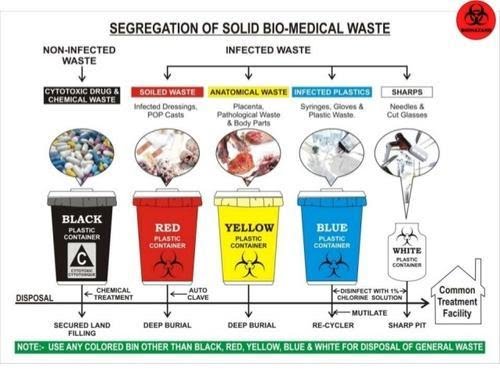
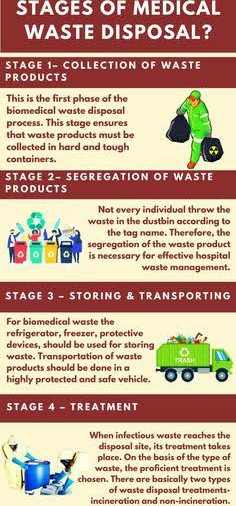




You must be logged in to post a comment.