So here in this blog I have mentioned the ways through which you can hack the 5 people rule which states that you’re the average of the 5 people you spend most of your time with. So to know more read ut till the end.
They say you’re an average of the 5 people you spend your most of the time with. It’s somewhere true that people have their influences on you, whether the wrong influences or the right ones and I have witnessed it through my eyes. I’ll take you to the time when I went to the University for the first time, I was highly motivated and very sincere, though I’m same today 😀 but I have seen that your friends or the people you spend your time with have impact on your mindset, and somehow they leave their prints on your subconscious, here the painting of the white wall rule comes into play, this particular rule states that, when you’re a kid your mind is as clean as a white wall, but overtime your experiences, the things people did to you and the things they’ve said to you paints your white wall with multiple colours and your mind or perhaps or subconscious mind start to put limits based upon your life experiences and the things done by the people, now to prevent your white wall or your clear mind to be painted by the wrong colours you have 2 options the one is to stay away from such negative people, but that’s not possible every time and the option 2 takes you to the spiritual concept and i.e. meditation, meditation can help you to get rid of all the unwanted collection of garbage you’ve collected overtime inside your head. Well I think, I got deviated from the topic I had to tell you about the 5 people rule, so let’s get back to the topic, it’s better to be alone than being with the wrong minded people, that means the ones who have different mindset, never be with them.
So what to do now?? You might be thinking this, to solve your mind puzzle I have some concepts, keep yourself busy in the stuffs you like and follow your dream path always keep working towards your goals and just Unfollow every single account on social media whether it instagram, whatsapp or facebook or any other platform which doesnt inspire you and follow the accounts which inspires you and pushes you to follow your dreams and the accounts which teaches you something or motivates you, and also be involved in some of the entertaining activities to keep your mind healthy and happy, it was the 1st hack, now listen to the podcasts, watch great and valuable content, read good stuff reading is the major factor in the path of success, learn new things through internet also do sometimes write your thoughts out, share your knowledge and experiences with the world. Talking to your parents and family members, spending time with your siblings, cooking and consuming the right food to keep your body and mind fit, do yoga and workout, just spend your whole time with yourself and do what you like to do, no matter what is is but never get influenced by the wrong things ( I hope you’ve got my point), there is a phase in our lives where we get attracted towards the wrong things, but deep down our heart knows what’s right or what’s wrong, the choice is always ours. The time we don’t value is the time we’ll crave to get back later, remember this, lil bud.
All these things can help you to hack the people rule where you cannot be physically connected to them but can be digitally connected thanks to this modern digital world.
Your work is your identity, your work is everything.
I want to tell you that, your work ethics, the way you work is everything, a person is only identified by his or her actions, the things he or she has done, the values he or she has given to the society.
Life is like an illusion, no one has discovered the real meaning of life yet. We don’t even know why the God has created this world, and what is the purpose of life, but one thing I have observed so far is that your words are imperishable even after life, people will remember you by your work ethics by the values you have given to them, by the words you’ve spoken out, and it’s explicit that no matter how intelligent you’re unless you haven’t done anything no one would value your sayings.
A person is not identified by the cast he or she has born in, not by the amount of money he or she earns, not by the brands he or she wears, not by the phone he or she uses, a person is identified by his or her karmas only. There is no scale to measure one’s intelligence, like you can’t judge somebody’s intelligence based upon his or her English speaking skills, language is just a medium of conveying feelings or nothing else.
Now, I am sharing 2 examples down below to convey my message:-
(I) A.P.J. Abdul Kalam :- We always remember him as Missile Man of India, for his work and development of ballistic missile, as a visionary, a hardworking, a pragmatist, a great leader and as a person who has influenced the life of many. We never remember him by his cast, by his face, by the car he used to drive, or by the brand he used to wear.
Let’s take another example of an extremely popular writer named Premchand, he was famous for his modern Hindi- Urdu literature. He is one of the most honoured writer of the Indian subcontinent, and regarded as one of the foremost Hindi writers of early 20th century. Premchand’s writing are very famous till date, as you have definitely read some of his stories in your textbooks, many of the directors filmed Premchand’s stories as series and aired them on television. For your ease let me tell you that he was a very simple man, he never had the most expensive clothes, and a writer named Harishankar Parsai wrote a story named “Premchand ke phate joote” / Premchand’s torn shoes” about him, that story was an irony on Premchand, in which Harishankar Parsai wrote that Premchand was a very grounded and simple man, in the story Harishankar Parsai highlighted Premchand’s personality in a way as he wanted to show that Premchand wasn’t an ostentatious person, in simple words he wasn’t a show off favourite person. Once he got clicked a picture with his wife and in that picture his shoes were torn out, and the writer used that incident as the story he plotted as PREMCHAND’S TORN SHOES, eventhough he didn’t supported him if you will read it in depth you would understand that it was an ironical story, anyway I don’t want to bother you much about Premchand and Harishankar Parsai but my motive of stating it here was to make you understand that your personality builds with your work not with your dressing sense or the things and the stuff you have.
The world will never remember you by the things and stuff you have, people will always remember you by the work you’ve done. – Vaishali Singh.
Section 58 of transfer of property act defines the terms mortgage, mortgagor, mortgagee, mortgage money and mortgage deed.
Section 58 of transfer of property act. Mortgage is the transfer of an interest in specific immovable property for the purpose of securing the payment of money advanced or to be advanced by way of loan, existing or future debt, performance of an engagement which may give rise to a pecuniary liability.
What is a Mortgage ?
A mortgage or charge is granted by a borrower in favour of a lender to secure repayment of a loan. If the borrower fails to pay back the debt, the mortgage gives the lender the right to take possession or to sell the property. The mortgage must be registered against the property at the appropriate registry. Each province has its own mortgage and registration rules.
What is a mortgage discharge ?
A mortgage discharge (also known as a “release”) is the removal of a mortgage from the registry in which it was listed. Once the mortgage has been discharged, the lender loses any rights it had against the property under the mortgage. The borrower must pay the legal fees for preparing and registering the mortgage, as well as any administrative fees charged by the lender.
Conclusion
Mortgage is a legal instrument which is used to create a security interest in real property held by a lender as a security for a debt it is the lenders security for a debt. In other words the mortgage is a security for the loan that the lender makes to the borrower.
The case of Kanti Ram vs Kutubuddin is perfect to answer this question. Sale of mortgage property or suit for sale of mortgaged property without redeeming prior mortgage form of decree sections 48,58,60,86,88,96 and 97 of transfer of property act. The plaintiff is not entitled to bring to sale the mortgaged property without first redeeming the prior mortgages. The lower court have proceeded upon a mistaken view of the law on the subject, and that they are entitled to bring to sale the mortgaged property subject to the lien of the prior mortgages and that would be acquired by th purchaser under the sale is the equity or redemption which existed in the hands of the mortgagor at the time of the second mortgage. The right of the mortgagor to redeem the prior mortgages. And on the other hand it has been contended on behalf of the respondents relying mainly upon the case of mata din kasodhan vs Kazim Hussain.
Srinivasa ramanujan (1887-1920) was born on 22nd Dec 1887, ThursdayKumbakonam city, Erode District atTamilnadu. Mother’s name was Komlattamal and father’s name was Srinivas Iyengar. He learnt bhajan, Ramayana and mahabharata stories from his parents. Srinivasa Ramanujan was an Indian mathematician who lived during the British Rule in India. He made great contributions in such areas as number theory, continued fractions, and infinite series, despite not having any formal education in math.
Ramanujan’s primary education was started on 1st Oct 1892 and day was Vijayadhashami. One day in maths class, teacher taught if you distribute 8 bananas into 8 children, each will get 1 banana. It means if you divide any number by same number then result comes out be 1.
Ramanujan :- What if we divide 0 from 0.
Teacher :- Obviously 1.
Ramanujan :- It’s not 1 sir, it’s undefined actually. If there is no banana and nobody then how it is possible to distribution of banana.
Teacher was baffled.
During school time, he had solved college level Mathematics. His estimated IQ was 185. Srinivasa was in such poverty that he often sustained on minimal foods and did not even have enough money to obtain paper for his studies. As a result, he used slates for his mathematics and cleaned them with his elbow, leading to bruises and marks. A child prodigy by age 11, he had exhausted the mathematical knowledge of two college students who were lodgers at his home. He was later lent a book written by S. L. Loney on advanced trigonometry. He mastered this by the age of 13 while discovering sophisticated theorems on his own. By 14, he received merit certificates and academic awards that continued throughout his school career, and he assisted the school in the logistics of assigning its 1,200 students (each with differing needs) to its approximately 35 teachers.
At the age of 15, Srinivasa Ramanujan obtained a copy of Synopsis on Elementary Results in Pure and Applied Mathematics, which contained 5,000 theorems, but had either brief proofs or did not have any. C Ramanujan then took to solving each of the theorems, eventually succeeding. Ramanujan had obtained a scholarship for the University of Madras, but he ended up losing it because he neglected his studies in other subjects in favor of mathematics.
On 14 July 1909, Ramanujan married Janaki ammal (1899 – 1994). After the marriage, Ramanujan developed a hydrocele testis. The condition could be treated with a routine surgical operation that would release the blocked fluid in the scrotal sac, but his family could not afford the operation. In January 1910, a doctor volunteered to do the surgery at no cost. After his successful surgery, Ramanujan searched for a job. He stayed at a friend’s house while he went from door to door around Madras looking for a clerical position. To make money, he tutored students at Presidency College who were preparing for their F.A. exam. In 1913, he sent a letter of 11 pages with 120 theorems to Cambridge University Professor G.H.Hardy. He invited him to England. Overcoming his religious objections, Ramanujan traveled to England in 1914, where Hardy tutored him and collaborated with him in some research.
some of his integration work
With the help of Hardy within 1 year he published 9 research papers. Just because of his research papers he got degree of B.A. and he was elected as Fellow of Royal Society. He was the youngest Indian to receive this honor.
Ramanujan’s knowledge of mathematics (most of which he had worked out for himself) was startling. Although he was almost completely unaware of modern developments in mathematics, his mastery of continued fractions was unequaled by any living mathematician. He worked out the Riemann series, the elliptic integrals, hyper geometric series, the functional equations of the zeta function, and his own theory of divergent series. On the other hand, he knew nothing of doubly periodic functions, the classical theory of quadratic forms, or Cauchy’s theorem, and he had only the most nebulous idea of what constitutes a mathematical proof. Though brilliant, many of his theorems on the theory of prime numbers were wrong.
In England Ramanujan made further advances, especially in the partition of numbers (the number of ways that a positive integer can be expressed as the sum of positive integers,for instance, (4 can be expressed as 4, 3 + 1, 2 + 2, 2 + 1 + 1, and 1 + 1 + 1 + 1). His papers were published in English and European journals, and in 1918 he was elected to the Royal Society of London. In 1917 Ramanujan had contracted tuberculosis, but his condition improved sufficiently for him to return to India in 1919.
Once a interesting incident took place. Ramanujan was ill and admitted at hospital. Prof. Hardy came to visited him. Then midst conversation Hardy said, i came from the cab and number of that cab was 1729.
“It is a very interesting number, it is the smallest number expressible as the sum of two cubes in two different ways.” He found a special property, and even tested that it was the smallest number with such a property, all in a few seconds.
1729 = (10)3 + (9)3 = (12)3 + (1)3.
After that this kind of numbers were known as Ramanujan Numbers.1729 is smallest Ramanujan number.
After contracting tuberculosis, eventhough the mathematician recovered enough in 1919 to return to India, but died the following year, without much recognition. However, the mathematics community recognized him as a genius without peer.The genius mathematician left as his legacy three notebooks and a huge bundle of pages, which contained unpublished result which were being verified by mathematicians many years after his death.
India was ruled by Muslims from 1206 to 1857. Their rule, however, was almost on the verge of end since Aurangzeb died in 1707. The British Empire in India was laid down by a company, the East India Company. The ultimate purpose of the company was to grow the British interests in the overseas countries. The representatives of the Company arrived first in the country in 1604.
By 1661, the Company had developed factories in Surat, Madras and Bombay in India. The Company started delivering justice arbitrarily which could be called as “traders’ justice” under the Charters. The Company’s officials, however, were all traders and had no legal background. Before 1726, judiciary developed in the three presidencies without any uniformity of laws. Then came in the Charter of 1726 which focused on this specific issue in all the three places. Importantly, this Charter derived authority of adjudication from just the Kings and not the Company officials.
Municipal institutions were established in the presidency towns which strictly followed the laws of England. Especially since the charter allowed disputes between natives to be heard by these institutions only on request by the Indians. This act of the Company gained the trust as it showed respect the sovereignty of local rulers. The main role of the company until 1757 was the facilitation of trade and commerce.
By 1717, the Company had secured the right to control and collect revenue of villages near Calcutta. After the battle of Plassey, the Company had installed Mir Jafar as the Nawab of Calcutta. He surrendered the Zamindari of the twenty-four Parganas to the Company which is around eight hundred square miles. It was called the “moffussil”. The Company then provided the adalat system for the administration in the moffussil.
In 1765, Shah Alam granted the Diwani also called revenue administration the three cities Bengal, Bihar and Orissa to the Company for an amount of twenty-six lacs of rupees per annum. Then came in the 1772 plan which provided for a Moffussil Diwani Adalat in each district. It comprised of a Collector as judge to decide civil cases. The court was to apply the Quran for the Muslims and for Hindus it applied the Shastras. The Regulations of 1793 later modified the same and referred them as “Hindu Law” and “Mohammedan Laws” instead of the Quran and the Shastra respectively. Similarly, the Collector took the advice of a Qazi for Muslim cases and in the case of Hindus, the advice of a Pundit.
The criminal justice system in 1790 was taken from the Muslim Qazis, Muftis and Maulvis and handed over to the Company’s English officials. The Muslim Law officers advise the courts. Subsequently, the Regulation of 1773 authorized the Calcutta Supreme Court to enroll English, Irish and Scottish advocates in law.
In 1793 Cornwallis created a regular profession by authorizing the Sadar Diwani Adalat to enroll pleaders or lawyers for all Company’s courts. It could be both Muslims and Hinds. The War of Mutiny also called the war of independence, 1857 changed the fate of India as the Bill of 1858 handed the entire possession of government of the Company of all the territories to the Crown. In 1833, the Privy Council was established. High Courts were established in 1861 in the presidency towns Calcutta, Madras and Bombay. Early Law reporting as a private enterprise was introduced for the evolution of the doctrine of precedent. Authentic law reporting began alongside the Indian Law Reports Act, 1875. Thus, Early Law reporting and Authentic Law reporting served as the two indispensable necessities for implementation of the doctrine of precedent. It also proved successful in drawing the hierarchy of courts and the emergence of authentic law reporting was positively executed in 1875.
In 1937, a Federal Court for India was established.
The Supreme Court of India was established on the same set of principles. An appeal from the federal court laid to the privy council which served as the ultimate court of request. But the system could not prevail for much time with the independence of India. The independence of India also made inescapable changes to the structure of the judiciary. The replacement of the Privy Council with the Supreme Court to serve as the ultimate court in India being the hugest of all changes. The Indian Legal System now, consists of various level of courts and one Supreme Court. The Supreme Court serving as the ultimate court of request.
The ghost of phone tapping in Indian Politics has returned, this time in Rajasthan. After releasing three audio clips by the congress, BJP has alleged the state government of doing illegal phone tapping. BJP spokesperson Sandeep Patra has asked for a CBI probe. Patra accused, chief minister Ashok Gehlot of “manufacturing lies” and undertaking “illegal measures like phone-tapping” to save his government. He said that, “The Congress has a history of phone-tapping.”
On the other hand Bahujan Samaj Party chief Mayawati named Ashok Gehlot, a serial offender and alleged him of acting illegally. Mayawati called for President’s rule in the state. While the Congress has refuted the claims of phone tapping and said that the audio clips were sourced from the social media.
Political History of Phone Tapping
Tapping of phones for political gain is illegal but not rare in Indian Politics. Be it in 2010 phone tapping case between then IPL Chief Lalit Modi and NCP supremo Sharad Pawar, in 2017 Kerala, in 2018 Karnataka or in 2019 Chhattisgarh. Even the phones of Rashtrapati Bhavan had also been bugged.
Last year hearing the matter of Chattisgarh Phone Tapping case, the Supreme court of India had remarked that, ‘No Privacy Left For Anybody’. The bench of justices Arun Mishra and Indira Banerjee, had sternly said that, ‘‘what is the need to do (things) like this? No privacy is left for anybody. What is happening in this country?”
Procedure for Phone Tapping:
Though the country has seen various infamous instances of phone tapping, but there are laws which allows phone tapping in certain circumstances legal. Under entry 31 of the Union List of the Constitution and Entry 7 of the Federal List of the Government of India Act, 1935, telephonic along with other communication devices is mentioned. And both the Central government and the State government has the right to tap phones of people under Section 5 (2) of the Indian Telegraphic Act, 1885.
Section 69 of the Information Technology Act, 2000, empowers the central government or a state government to intercept, monitor or decrypt or cause to be intercepted or monitored or decrypted, any information generated, transmitted, received or stored in any computer resource in the interest of the sovereignty or integrity of the country.
This power of interception is to be executed as per the provisions of law, rules and Standard Operating Procedures (SoPs), approved by the Union Home Secretary in case of central government and by the Home Secretary of the state concerned in case of the state government.
Only ten agencies are authorised for phone tapping: (i) Intelligence Bureau, (ii) Central Bureau of Investigation, (iii) Enforcement Directorate, (iv) Narcotics Control Bureau, (v) Central Board of Direct Taxes, (vi) Directorate of Revenue Intelligence, (vii) National Investigation Agency, (viii) R&AW, (ix) Directorate of Signal Intelligence and (x) Delhi Police Commissioner.
Such authorities must seek permission from the Home Ministry before they tap the calls of the person. In the application to the Ministry, the agency has to mention reasons and the needs for tapping the phone calls. In the case of State, the permission has to be taken from State Home secretary.
Remedies:
Unauthorized tapping or interception is a violation of the right to privacy, and the aggrieved party can file a complaint with the National Human Rights Commission.
The aggrieved party can also file an FIR against unauthorized tapping.
The aggrieved person can also move to the Court against the person doing any unauthorized act under Section 26 (b) of the Indian Telegraphic Act.
The population of a state is divided into two categories: citizens and non-citizens. A citizen of a state enjoys all civil and political rights. A non-citizen, on the other hand, doesn’t enjoy these rights.
Under the Indian constitution, certain fundamental rights are available only to the citizens, namely: Right against discrimination on the grounds of religion, race, caste, sex or place of birth (Article 15); right to equality of opportunity in matter of public employment (Article 16); freedom of speech and expression, assembly, association, movement, residence and profession (Article 19); cultural and educational rights (Article 29 and 30); and right to vote and become members of the union and state legislatures.
Several offices can also be occupied exclusively by citizens: president (Article 58(1)(a), vice-president (Article 66(2)), judges of the Supreme Court (Article 124(3)) and high court (Article 217(2)), governor of a state (Article 157), attorney general (Article 76(1)) and advocate general (Article 165).
Equality before the law or equal protection of the laws within the territory of India (Article 14 ) and protection of life or personal liberty (Article 21) are applicable to non-citizens as well.
Persons who were deemed to be citizens of India when the constitution was promulgated?
Citizenship by domicile (Article 5): A person who was born in India or either of the person’s parents was born in India or the person must have been an ordinarily resident in the territory of India for not less than five years immediately before the commencement of the constitution. Domicile of a person is in that country in which the person either has or is deemed by law to have his/her permanent house.
Citizenship of migrants to India from Pakistan (Article 6): Persons who have migrated from Pakistan to India have been classified into two categories: i) those who came to India before July 19, 1948, and ii) those who came on or after July 19, 1948.
Citizenship of migrants of Pakistan (Article 7): If a citizen of India has migrated to Pakistan after March 1, 1947, but returned to India on the basis of permit for resettlement in India, the person is entitled to become a citizen of India if he/she registers herself as a citizen of India, after residing for at least six months immediately before the date of applying for registration, by an officer appointed by the government of India.
Citizenship of persons of Indian origin residing outside India (Article 8): Indian nationals (whose parents or any grandparents were born in India as defined in the Government of India Act, 1935) residing abroad shall be conferred Indian citizenship, as if they have been registered by the diplomatic or consular representatives of India in the country where they are residing.
Provisions under the Citizenship Act, 1955
Citizenship by birth: Anyone born in India on or after January 1, 1950, would be deemed a citizen by birth. This limit was further amended to include those born between January 1, 1950 and July 1, 1987.
By the Citizenship Amendment Act, 2003, persons born after December 3, 2004, would be deemed to be citizens of India if either of the parents is Indian or one of the parents is a citizen of India and the other was not an illegal migrant at the time of the person’s birth.
Citizenship by descent: A person born outside India shall be deemed to be a citizen of India if either of the person’s parents was a citizen of India at the time of his/her birth provided that the birth is registered within one year of its occurrence or commencement of the Act, whichever is later, at the Indian consulate.
Citizenship by registration: A person may be registered as a citizen of India, if the person is married to a citizen of India or has been a resident of India for five years immediately before making an application for registration.
Citizenship by incorporation of territory: If any new territory becomes a part of India, the government of India shall specify the persons of the territory to be citizens of India.
Provisions in the Citizenship (Amendment) Act, 2019
The newly amended law provides for granting of Indian citizenship to Hindus, Sikhs, Jains, Buddhists, Parsis and Christians from Pakistan, Bangladesh and Afghanistan who came to India on or before December 31, 2014. The law will not be extended to Rohingya Muslims persecuted in Myanmar; Shia and Ahmadiyya Muslims in Pakistan; Hazaras, Tajiks and Uzbeks in Afghanistan; Tamils in Sri Lanka; and atheists in Bangladesh.
The COVID-19 pandemic is a major public health crisis which has affected the entire Economy and it’s stakeholders especially from the macro economy angle. Due to the novel coronavirus which spread widely the entire supply chain has been badly hit, not only has it disrupted and cut-off the Indian Economy but this has resulted in widespread economic losses across all the economies of the world.
It has caused widespread damages, hinderances and inconvenience especially in regards to the interruptions of people’s movement which has in turn halted and jolted the entire production line and activities which also poses as a serious risk to the macro economy.
Apart from having devastating and damaging effects on human lives, it has claimed over 543,605 lives and infected over 11 million people all around the world. The novel coronavirus (COVID- 19) has significantly knocked down not just the Chinese economy from where it emerged but also the global economy.
Kristalina Georgieva, Managing Director of the International Monetary Fund has officially confirmed that we have entered into a recession as bad as or even worse than that of 2009.
In order to revive the economy by 2021 we first must contain the virus at the earliest by hook or by crook. In Italy the number of confirmed cases are increasing and depicting a spiking up trend with over 1.8 million in the United States and also the number of deaths increasing in Italy and the UK which was under a 6 months long lockdown, this seems like a far blown possibility.
FACTORS REQUIRED TO DETERMINE THE EFFECTS OF COVID–19
There are 3 factors which is to be analysed and discussed in order to get a clear understanding about the plausible damages caused due to this pandemic, they are as follows:-
1) Demand
2) Supply
3) Finance.
On the demand side declining income, fear of contagion, reduced working hours, possible layoffs, absence of vaccine has detrimental effect especially in the service sector.
On the supply chain as the manufacturing line took a bad hit and almost came to a standstill, the manufacturing activities in the most affected regions were badly affected and this resulted in bottlenecks in the global value chain
China is reopening its factories but due to the COVID-19 pandemic the manufacturing companies abroad are finding it exceedingly difficult to purchase products in and ship them out of China.
The Covid-19 is posing an unprecedented Global Public Health Emergency and this has resulted in also creating financial distress in the form of drying up of liquidity, providing credit and meeting contractual obligations.
As a matter of fact, demand, supply or financial disruptions, might not directly affect but they do have a profound indirect effect on the legal field.
IMPLICATIONS OF COVID-19 PANDEMIC ON THE LEGAL FRATERNITY
The last two decades have seen an exponential growth in the legal field. As per the Bar Council of India( apex body of Indian Legal Professionals) the Indian legal profession consists of approximately 1.2 million registered advocates, around 950 law schools and approximately 400-500 thousand law students across the country and high numbers are seen across the world. This data is as per the Vision Statement of the year 2011-2013.
While the supply side of the legal education remains almost the same year after year, barring minor changes, this recession will surely contract the manufacturing and service sector. Thus, the demand for the new entrants in the legal industry might observe a sharp fall.
As the economy is in a recession due to COVID-19 pandemic, the legal industry will be affected by it, but How? In order to predict the future the past must be examined. In 2008 Global economic crises the event’s that took place need to be analysed and only then we will know how brave the 2020 recession shall be as the contours of legal landscape look more or less the same.
The impact of an economic recession on the legal profession has been disastrous as this has resulted in mass layoffs, hire freezing and salary decreases and this has in turn rendered an overwhelming amount of law graduates unemployed.
The legal field in the last decade witnessed methodical changes, remoulding and a tremendous shift of power from the hands of providers to the hands of consumers.
Also new skillsets have been developed, multi-disciplinary problem solving as well and technological adoption all of those has resulted in the rise of data and digital transformation.
The law firm dominance and an emerging global legal community in order to Analyze the industry trends it is easy to predict and also which category of lawyers will fare better or worse during this COVID-19 scenario is a must due to the consequent economic downturn.
VARIOUS NEW AVENUES AND AREAS OF OPPORTUNITIES OF LAW THE COVID-19 PANDEMIC HAS CREATED
People/Businesses will always require trained legal professionals in the long run. Certain areas of law will be in great demand in comparison to others.
With increasing health crisis all over the globe, there will be a great requirement for health care lawyers. High value mergers and acquisition areas of corporate law may dry up. A
Attention will turn towards restructuring, insolvency, bankruptcy and litigation work. Firms with varied practice areas are more likely to perform better during recession. Policy lawyers will be in favour as new companies will aggressively invest on policy lawyers to move far ahead from traditional industries.
With business downsizing, decline in job market and hire freezing there will be a lot of scope for Public Interest Litigation/Class Action, Labour and Employment lawyers. Global Environmental Catastrophe is not far away and Environment will be a highly litigated issue. Thereby creating a need for efficient Environmental and Animal Right Lawyers.
As part of Alternative Dispute Resolution, Conciliation, Mediation and Arbitration are effective ways of resolving a dispute. Parties to the dispute will lack the means viz., time and money to pursue litigation post the covid-19 pandemic and will prefer arbitration, mediation and negotiation.
International Arbitration is facing challenges during the COVID-19 pandemic due to the travel restrictions in place but, even with inhibiting factors of the currently available technology the post covid phase will see tremendous growth in usage of technological methods for dispute resolution i.e., online dispute resolution; video conferencing; chats; teleconferencing etc.
Lease disputes will burst at the seams, tenants are already serving notices invoking Force Majeure clause. Hence, Property Law will have scope for development.
SUPPLY CHAINS MOVING OUT OF CHINA
Due to existing trade war between USA and CHINA and thepending legal suit against China for the spread of COVID-19, hedging the risks of MNC’s corporations are mulling, moving their production out of China. The ongoing pandemic has only worked as a catalyst to this process.
Japanese, South Korean and Taiwanese multinational companies have already started moving their Chinese production facilities to countries with favourable business policy regime and friendlier International relations viz.Vietnam and other South East Asian Countries.
The warm ties between India and the USA pegs India as a potential production hub. In case of such an eventuality Asian transactional lawyers will benefit tremendously.
TECHNOLOGICAL ADVANCES
Providers that have embraced technological advances have a sure shot success through the recession period.
The Supreme Court of India has started hearing urgent matters via video conferencing. E-filings make the courts productive as it saves time from lengthy paperwork. Such circumstances will give young techno savvy lawyers an edge over the established lawyers.
JOBS
The Post Covid-19 phase will open the doors for a lot of young and aspiring lawyers as well as experienced lawyers who are open to the idea of juggling between different practice areas.
Senior Advocates who are otherwise experts in their respective fields but not adept at using technology will now be forced to employ younger and technologically savvy lawyers in their traditional offices.
The legal process analyst will have the job of analyzing a piece of legal work, subdividing the assignment into meaningful and manageable chunks, and identifying the most appropriate supplier of services for each. This task requires deep legal insight and experience. This individual will often be employed within an in-house legal department, rather than at a law firm.
Legal Risk Managers will emerge who will have to anticipate a problem and propose solutions.
AI/Algorithm/Blockchain Dispute Resolution will emerge to deal with matters related to Motor Accidents or Consumer Compensation etc.
Virtual law libraries will emerge and the experience of Senior Advocates or Lawyers will be necessary for writing monographs and book reviews.
Online Legal Services will throw open an array of a lot more new practice areas for lawyers, who were till now, practicing their skills using traditional methods.
CONCLUSION
We are living in an era of revolutionary changes and technological advancements and we must consider how vast and far stretched the paradigm shifts in information technology have taken place which is a boon for the entire legal fraternity.
Even biomedical research, genetic discoveries, biotechnological advances and nanotechnology have changed our world.
One must observe how deeply the LPG has influenced the exchanges of legal and other professional services. This has led to the homogenization of cultural trends and consumption patterns across the world.
What more, even the viruses of both biological as well as software kinds have become all pervasive. This has resulted in the reduction of the mortality rates across the country, as a by-product of which we are experiencing a massive population growth.
Due to the Global climate change and acute scarcity of resources which has resulted in mass migration of the humanity in search of better pastures, it has resulted in the shifts of each day which generates the fundamental questions and answers which shall alter the shape of the human experience.
It is certain that lawyers will play an indispensable role in tackling it with the help of these developments and harnessing the opportunities to secure an orderly change and which will in turn enhance the human welfare in the much larger context.
The period of Economic Downturn is critical for every field. It has a huge impact on global healthcare facilities and legal professionals around the world. Though, the legal profession is more resilient to the recession than many others but it hops in the economic downturn.
The law firms and individual practitioners who widen their horizons by welcoming the opportunities will adapt to and triumph the current situation.
The legal profession should take advantage of the ongoing paradigm shift to develop liberalized business structures that allow the firms to build and develop a sustainable and competitive practices so that it will result in the evolution of the market for legal services.
Till date no panacea exists for the situation at hand unless there is an immediate containment of the disease and invention of the vaccine, the world as we know it will never be the same again.
This will not only require targeted and active macroeconomic measures but a series of medical policies as well. Until a permanent solution is found, the legal fraternity has to proactively explore the fields of law for upcoming opportunities and sow seeds of progression, which will bear fruits for the generations to come. “
“Apathy. What’s hard to understand? They don’t care. Not until it affects them.”
Donna Lynn Hope
For the first few months as an amateur liberal feminist, I responded to offensive comments and sly remarks with, “Would you still feel the same way if it was someone you knew?”
I would gleam with pride as I see them contemplate for a second.
Now, months later I realize the problem in that. Why should something affect us or someone we know and love, to realize the adverse effects on any social, political, economic, ecological, psychological at stake? Why can’t we feel the same pain and understand a stranger? Why do we need it to get personal?
It sounds spiteful to say that we lack compassion, but it’s true.
Here are a few instances where I was put on the spot with pointless questions and remarks that the world will be a better place without. I live in a country, where my religion is the principal religion, where my voice matter, while my peers’ don’t. I choose to use my voice to scream louder than ever to bring about a change in every individual. As a result, I am questioned for choosing to use my privileged voice to advocate for equality, mental health, LGBTQ rights, and against systematic racism, corruption and just anything wrong.
None of my family members and close friends are Muslims. Every time I advocate for equality for Muslims, and their basic human rights. I am countered with “Do you have a Muslim boyfriend or something?” Why should I have a Muslim boyfriend, or a friend or even a relative? Why can’t I just fight for someone without having any personal agenda?
Another common question I always am asked is, “If you’re so openly advocating for Muslim rights, then why don’t you befriend any Muslims?” It’s simple, I am not an institution, nor do I follow a religion quota. I don’t make friends based on their religion or culture. I will not go and make a Muslim friend just to justify my fight.
When I advocate for LGBTQ rights, people question my sexuality. They think I’d be offended. I am offended, not by their question but by their audacity to still think being anything but heterosexual is a joke.
When I stand for Black Lives Matter, I am asked if I am not concerned about Dalits, Muslims and every other marginalized community in India. I ask, didn’t you ridicule me for that already?
Many more occurrences come to mind, but my point is made.
We lack empathy. We refuse to understand another without getting something in return. We can’t be so cruel to build a business on emotions and humanity, right?
In actuality, we have a huge fucking empire built on humanity, where they sell corruption and apathy. Where people are exploited and made political prisoners. Where people are killed ruthlessly with word and actions, and further with batons and nails.
We are more interested in who said and did what, and less about the sufferings of the person next door.
Why can’t we each work on ourselves to bring about a revolutionary change. Where we support one another and make this world a better, safer and happier place.
Recruitment is a process of finding and attracting the potential resources for filling up the vacant positions in an organization. It sources the candidates with the abilities and attitude, which are required for achieving the objectives of an organization.
Recruitment process is a process of identifying the jobs vacancy, analyzing the job requirements, reviewing applications, screening, shortlisting and selecting the right candidate.
To increase the efficiency of hiring, it is recommended that the HR team of an organization follows the five best practices (as shown in the following image). These five practices ensure successful recruitment without any interruptions. In addition, these practices also ensure consistency and compliance in the recruitment process.
Recruitment process is the first step in creating a powerful resource base. The process undergoes a systematic procedure starting from sourcing the resources to arranging and conducting interviews and finally selecting the right candidates.
Recruitment Planning
Recruitment planning is the first step of the recruitment process, where the vacant positions are analyzed and described. It includes job specifications and its nature, experience, qualifications and skills required for the job, etc.
A structured recruitment plan is mandatory to attract potential candidates from a pool of candidates. The potential candidates should be qualified, experienced with a capability to take the responsibilities required to achieve the objectives of the organization.
Identifying Vacancy
The first and foremost process of recruitment plan is identifying the vacancy. This process begins with receiving the requisition for recruitments from different department of the organization to the HR Department, which contains −
Number of posts to be filled
Number of positions
Duties and responsibilities to be performed
Qualification and experience required
When a vacancy is identified, it the responsibility of the sourcing manager to ascertain whether the position is required or not, permanent or temporary, full-time or part-time, etc. These parameters should be evaluated before commencing recruitment. Proper identifying, planning and evaluating leads to hiring of the right resource for the team and the organization.
Job Analysis
Job analysis is a process of identifying, analyzing, and determining the duties, responsibilities, skills, abilities, and work environment of a specific job. These factors help in identifying what a job demands and what an employee must possess in performing a job productively.
Job analysis helps in understanding what tasks are important and how to perform them. Its purpose is to establish and document the job relatedness of employment procedures such as selection, training, compensation, and performance appraisal.
The following steps are important in analyzing a job −
Recording and collecting job information
Accuracy in checking the job information
Generating job description based on the information
Determining the skills, knowledge and skills, which are required for the job
The immediate products of job analysis are job descriptions and job specifications.
Job Description
Job description is an important document, which is descriptive in nature and contains the final statement of the job analysis. This description is very important for a successful recruitment process.
Job description provides information about the scope of job roles, responsibilities and the positioning of the job in the organization. And this data gives the employer and the organization a clear idea of what an employee must do to meet the requirement of his job responsibilities.
Job description is generated for fulfilling the following processes −
Classification and ranking of jobs
Placing and orientation of new resources
Promotions and transfers
Describing the career path
Future development of work standards
A job description provides information on the following elements −
Job Title / Job Identification / Organization Position
Job Location
Summary of Job
Job Duties
Machines, Materials and Equipment
Process of Supervision
Working Conditions
Health Hazards
Job Specification
Job specification focuses on the specifications of the candidate, whom the HR team is going to hire. The first step in job specification is preparing the list of all jobs in the organization and its locations. The second step is to generate the information of each job.
This information about each job in an organization is as follows −
Physical specifications
Mental specifications
Physical features
Emotional specifications
Behavioral specifications
A job specification document provides information on the following elements −
Qualification
Experiences
Training and development
Skills requirements
Work responsibilities
Emotional characteristics
Planning of career
Job Evaluation
Job evaluation is a comparative process of analyzing, assessing, and determining the relative value/worth of a job in relation to the other jobs in an organization.
The main objective of job evaluation is to analyze and determine which job commands how much pay. There are several methods such as job grading, job classifications, job ranking, etc., which are involved in job evaluation. Job evaluation forms the basis for salary and wage negotiations.
Recruitment Strategy
Recruitment strategy is the second step of the recruitment process, where a strategy is prepared for hiring the resources. After completing the preparation of job descriptions and job specifications, the next step is to decide which strategy to adopt for recruiting the potential candidates for the organization.
While preparing a recruitment strategy, the HR team considers the following points −
Make or buy employees
Types of recruitment
Geographical area
Recruitment sources
The development of a recruitment strategy is a long process, but having a right strategy is mandatory to attract the right candidates. The steps involved in developing a recruitment strategy include −
Setting up a board team
Analyzing HR strategy
Collection of available data
Analyzing the collected data
Setting the recruitment strategy
Searching the Right Candidates
Searching is the process of recruitment where the resources are sourced depending upon the requirement of the job. After the recruitment strategy is done, the searching of candidates will be initialized. This process consists of two steps −
Source activation − Once the line manager verifies and permits the existence of the vacancy, the search for candidates starts.
Selling − Here, the organization selects the media through which the communication of vacancies reaches the prospective candidates.
Searching involves attracting the job seekers to the vacancies. The sources are broadly divided into two categories: Internal Sources and External Sources.
Internal Sources
Internal sources of recruitment refer to hiring employees within the organization through −
Promotions
Transfers
Former Employees
Internal Advertisements (Job Posting)
Employee Referrals
Previous Applicants
External Sources
External sources of recruitment refer to hiring employees outside the organization through −
Direct Recruitment
Employment Exchanges
Employment Agencies
Advertisements
Professional Associations
Campus Recruitment
Word of Mouth
Screening / Shortlisting
Screening starts after completion of the process of sourcing the candidates. Screening is the process of filtering the applications of the candidates for further selection process.
Screening is an integral part of recruitment process that helps in removing unqualified or irrelevant candidates, which were received through sourcing. The screening process of recruitment consists of three steps −
Reviewing of Resumes and Cover Letters
Reviewing is the first step of screening candidates. In this process, the resumes of the candidates are reviewed and checked for the candidates’ education, work experience, and overall background matching the requirement of the job
While reviewing the resumes, an HR executive must keep the following points in mind, to ensure better screening of the potential candidates −
Reason for change of job
Longevity with each organization
Long gaps in employment
Job-hopping
Lack of career progression
Conducting Telephonic or Video Interview
Conducting telephonic or video interviews is the second step of screening candidates. In this process, after the resumes are screened, the candidates are contacted through phone or video by the hiring manager. This screening process has two outcomes −
It helps in verifying the candidates, whether they are active and available.
It also helps in giving a quick insight about the candidate’s attitude, ability to answer interview questions, and communication skills.
Identifying the top candidates
Identifying the top candidates is the final step of screening the resumes/candidates. In this process, the cream/top layer of resumes are shortlisted, which makes it easy for the hiring manager to take a decision. This process has the following three outcomes −
Shortlisting 5 to 10 resumes for review by the hiring managers
Providing insights and recommendations to the hiring manager
Helps the hiring managers to take a decision in hiring the right candidate
Evaluation and Control
Evaluation and control is the last stage in the process of recruitment. In this process, the effectiveness and the validity of the process and methods are assessed. Recruitment is a costly process, hence it is important that the performance of the recruitment process is thoroughly evaluated.
The costs incurred in the recruitment process are to be evaluated and controlled effectively. These include the following −
Salaries to the Recruiters
Advertisements cost and other costs incurred in recruitment methods, i.e., agency fees.
Administrative expenses and Recruitment overheads
Overtime and Outstanding costs, while the vacancies remain unfilled
Cost incurred in recruiting suitable candidates for the final selection process
Time spent by the Management and the Professionals in preparing job description, job specifications, and conducting interviews.
Energy conservation refers to the efforts made to reduce the consumption of energy. The energy on Earth is not in unlimited supply. Furthermore, energy can take plenty of time to regenerate. This certainly makes it essential to conserve energy. Most noteworthy, energy conservation is achievable either by using energy more efficiently or by reducing the amount of service usage.
Importance of Energy Conservation
First of all, energy conservation plays an important role in saving non-renewable energy resources. Furthermore, non-renewable energy sources take many centuries to regenerate. Moreover, humans consume energy at a faster rate than it can be produced. Therefore, energy conservation would lead to the preservation of these precious non-renewable sources of energy. Energy conservation will reduce the expenses related to fossil fuels. Fossil fuels are very expensive to mine. Therefore, consumers are required to pay higher prices for goods and services. Energy conservation would certainly reduce the amount of fossil fuel being mined. This, in turn, would reduce the costs of consumers. Consequently, energy conservation would strengthen the economy as consumers will have more disposable income to spend on goods and services. Energy conservation is good for scientific research. This is because; energy conservation gives researchers plenty of time to conduct researches. Therefore, these researchers will have more time to come up with various energy solutions and alternatives. Humans must ensure to have fossil fuels as long as possible. This would give me enough time to finding practical solutions. Another important reason for energy conservation is environmental protection. This is because various energy sources are significantly harmful to the environment. Furthermore, the burning of fossil fuels considerably pollutes the atmosphere. Moreover, nuclear energy creates dangerous nuclear waste. Hence, energy conservation will lead to environmental protection.
Energy conservation would also result in the good health of humans. Furthermore, the pollution released due to energy sources is harmful to the human body. The air pollution due to fossil fuels can cause various respiratory problems. Energy sources can pollute water which could cause several harmful diseases in humans. Nuclear waste can cause cancer and other deadly problems in the human body.
Measures to Conserve Energy
Energy taxation is a good measure from the government to conserve energy. Furthermore, several countries apply energy or a carbon tax on energy users. This tax would certainly put pressure on energy users to reduce their energy consumption. Moreover, carbon tax forces energy users to shift to other energy sources that are less harmful.
Building design plays a big role in energy conservation. An excellent way to conserve energy is by performing an energy audit in buildings. Energy audit refers to inspection and analysis of energy use in a building. Most noteworthy, the aim of the energy audit is to appropriately reduce energy input.
Another important way of energy conservation is by using energy-efficient products. Energy-efficient products are those that use lesser energy than their normal counterparts. One prominent example can be using an energy-efficient bulb rather than an incandescent light bulb.
In conclusion, energy conservation must be among the utmost priorities of humanity. Mahatma Gandhi was absolutely right when he said, “the earth provides enough to satisfy every man’s needs but not every man’s greed”. This statement pretty much sums up the importance of energy conservation. Immediate implementation of energy conservation measures is certainly of paramount importance.
Time is of the essence. This phrase is used when something needs to be done promptly. Ironically, this perfectly fits my today’s article.
India first established time-zones in 1884, owing to the British. During the 1884 International Meridian Conference in Washington, D.C. India registered its two official time zones, Bombay Time and Calcutta Time. Madras Time, an unofficial time was used as well as the Railway Time.
Following the celebrations of India attaining its independence from the British Raj, lots of important decisions were made. One such decision was for India to follow a single time-zone, Indian Standard Time (+05:30:00 GMT), to manifest a unified front against the world. With Pakistan separating to form its own country, this time zone decision was more important than ever.
India is the 7th largest country in the world, with a width that runs approximately 2,933kms. On a usual day, such as today, the sun rises in the eastern Guwathi at 04:42 am IST and at 06:05 am on the western Ahmedabad. The difference is 1 hour and 23 minutes. While it may not seem like much of an issue to most of India, the north-eastern states, the Andaman and Nicobar Islands face a huge impact.
Here’s a table of the approximated sunrise and sunset times across different cities of India on 18th July 2020.
City
Sunrise
Sunset
Guwathi, Assam
04:42
18:17
Port Blair, Andaman
05:04
17:47
Bhubaneshwar, Odisha
05:17
18:29
Vijayawada, Andhra Pradesh
05:44
18:43
Bhopal, Madhya Pradesh
05:45
19:08
Solan, Himachal Pradesh
05:30
19:25
Bangalore, Karnataka
06:02
18:50
Ahmedabad, Gujarat
06:05
19:27
Source: Google Search
The affected North-Eastern states and the Andaman and Nicobar Islands detect sunrise very early and are forced to follow the usual 9 to 5 or 10 to 4 work hours. The work hours start almost 5-6 hours after the sunrise when the sun is at its peak and the days are much hotter. Winter months, bring along another issue with the sun setting much earlier, almost by 16:00 – 17:00 in the evenings. Their nights are much longer and it’s already dark by the time schools and offices shut. The tea plantations, local to North-Eastern India is most affected, farmers struggle to work through the heat and dark.
More so than the obvious issues faced by a portion of Indians, is the social, economic, ecological, and financial repercussions. With the loss of several day-light hours before the office and school timings, the electricity usage is higher in these areas. 2.7 billion units of electricity each year can be saved by advancing IST by ½ hour and establishing another time zone. With a time zone 1 hour ahead of IST, India alone could save 5.4 billion units of electricity and so much more money, manpower, and peace.
For years, politicians from the North-East have filed petitions to set 2 official time zones of India to benefit a whole set of population. Each time just to be faced with the same rejection, blaming the resources and expenditure of resetting clocks and syncing India as a whole.
Assam’s then-Chief Minister Tarun Gogoi, in 2014, frustrated with India’s adamance, decided for Assam to follow its unofficial time-zone, the ChaiBagaan/Bagaan Time. The Bagan time is 1hour ahead of IST.
India doesn’t make use of Daylight Savings either. Daylight Savings is the practice of advancing clocks during warmer months (with longer days) and retreating clocks during colder months (with shorter days). DST is another cheaper alternative to setting a 2nd official time zone in India but the central government is unswerving of change. The country has only used it a couple of times during war with China (1962), and twice with Pakistan (1962 and 1971).
Although it was set post-independence, as a symbol of unity, many leaders including B.R. Ambedkar was against the one time zone policy. They recognized the inconvenience and ecological impacts it would have on the people and the climate.
Time is of the essence, and so is money and manpower. It is important to let go of a symbol of unity and practice unity and support people of our country with a time-zone that saves lives and billions of units of electricity and consequently, money.
‘Intellect’ refers to the creations of the mind. Intellectual Property is a type of intangible property and includes inventions, literary and artistic works, symbols, names and paintings.
Intellectual Property Rights (IPRs) are the Rights granted to the creators of Intellectual Property (IP) by the Government. The nature of IPR is territorial. In any country an IP has to seek protection separately under the relevant laws.
Mechanisms which are Special in nature have been kept in place for various territories in order to provide protection to different types of IPRs. It confers an exclusive right to the inventor/ creator or assignee to fully utilize the invention/ creation for a given period of time.
It’s been established that the intellectual labor associated with the innovation should be given due importance so that public good emanates from it.
This is a strong tool, to protect investments, time, money, effort invested by the inventor/creator of an IP, since it grants the inventor/creator an exclusive right for a certain period of time for use of his invention/creation.
Hence it aids in the economic development of a country by promoting healthy competition and encouraging industrial development which shall also aid in the growth of the economy.
WHAT IS AN INTELLECTUAL PROPERTY?
Intellectual Property(IP) refers to creations of the mind; inventions; literary and artistic works; and symbols, names and images used in commerce.
IP is divided into two categories: 1) Industrial Property:- includes patents for inventions,trademarks, industrial designs and geographical indications. 2) Copyright:- covers literary works (such as novels,poems and plays), films, music, artistic works (e.g., drawings, paintings, photographs and sculptures) and architectural design.
In Intellectual property(IP), there are Rights which relates to the rights of performing artists in their performances, producers of phonograms in their recordings, and broadcasters in their radio and television programs are included.
WHAT ARE INTELLECTUAL PROPERTY RIGHTS?
So what do you mean by intellectual property rights? IP rights like any other property right allow creators, or owners, of patents, trademarks or copyrighted works to benefit from their own work or investment in a creation.
These rights are outlined in Article 27 of the UDHR which provides for the right to benefit from the protection of moral and material interests resulting from authorship of scientific, literary or artistic productions.
The importance of intellectual property was first recognized in the Paris Convention for the Protection of Industrial Property (1883) and the Berne Convention for the Protection of Literary and Artistic Works (1886). Both treaties are administered by the World Intellectual Property Organization (WIPO).
There are various pros which are more compelling than the cons.
1) The progress and well-being of humanity rest on its capacity to create and invent new works in the areas of technology and culture.
2) The legal protection of new creations and this encourages the commitment of additional resources for further innovation.
And Lastly the third pros is that the 3) Promotion and protection of intellectual property spurs economic growth, creates new jobs and industries, and enhances the quality and enjoyment of life.
An efficient and equitable intellectual property system can help all countries to realize intellectual property’s potential as a catalyst for economic development and social and cultural well-being. The intellectual property system helps strike a balance between the interests of innovators and the public interest, providing an environment in which creativity and invention can flourish.
INTELLECTUAL PROPERTY HOLDERS IN A QUANDARY DUE TO COVID-19 PANDEMIC
While experts are in a combat mode and the race is on to discover the cure for COVID-19, the claim of intellectual property rights for exclusive use of the cure poses a dilemma as it is not considered the most rational thing to do at the moment.
Carlos Correa addressed to organizations like WHO, WTO and WIPO via an open letter to seek support for WTO countries that invoke the ‘security exception’ contained in Article 73 of the Agreement on Trade Related Intellectual Property Rights (TRIPS) Agreement, to take ‘actions it considers necessary for the protection of its essential ‘security interests’ in the wake of COVID-19 threat.
It has been suggested that invocation of exception under Article 73 will be warranted to procure medical products and devices or to use the technologies to manufacture them as necessary to take cue of the present public health emergency.
By suspending the enforcement of any Intellectual Property right as given under Article 73(b) of TRIPS Agreement, an obstacle for the procurement or local manufacturing of the medical equipments shall be necessary in order to protect the population of the world will be outlasted.
The question which is raised due to the above is regarding IP rights which are aimed to aid the public by promoting technological advancement in return of providing the inventor an exclusive right over the invention, though for a limited time. Though the IP rights are at a standstill due to the outbreak the IP Registry offices all over have limited their functioning.
TYPES OF INTELLECTUAL PROPERTY
Trade Mark: –
A trademark is used in order to identify a business entity and it also differentiates the goods made or services offered by a company or an individual. Names, Words, Logos, Colors, Packaging, Sounds (audible), Signs (visual) or any combination thereof are considered and can be filed as trademarks.
A trademark must be Unique and Distinctive in nature and must also avoid adjectives for eg efficient and Names of person or places (E.g. India). Even Obscene words, Religious or Government words or symbols (E.g. OM) and Common Shapes (Square) should be avoided.
The Trade mark means a mark used in relation to goods for the purpose of indicating a connection in the course of trade between the goods and some person having the right as proprietor to use that mark.
The function of a trade mark is to give an indication to the purchaser or a possible purchaser as to the manufacture or quality of the goods, to give an indication to the trade source from which the goods come or the trade hands through which they pass on their way to the market.
The Trade Marks Act, 1999 is an act which provides for the registration and better protection of trademarks for goods and services and for the prevention of the use of fraudulent marks. A trade mark is valid for a period of 10 years.
Case Name: The Coca-Cola Company v. Bisleri International Pvt. Ltd Case Citation: Manu/DE/2698/2009
Copyright: –
Copyright is an exclusive legal right granted to the creators of an intellectual work. The owner of a Copyright has rights to reproduce, translate, adapt, perform, distribute and must be publicly allowed to display the work, etc.
Registration is not mandatory since copyright comes into existence as soon as the intellectual work is created but it is recommended to register a copyright for better enforceability, since registered copyrights have more evidentiary value in court.
(a) Types of Works covered under Copyright:-
(1) Literary including Software – Books, Essay, Compilations, Computer Programs.
(2) Artistic – Drawing, Painting, Logo, Map, Chart, Plan, Photographs, Work of Architecture.
(3) Dramatic – Screenplay, Drama.
(4) Musical – Musical Notations.
(5) Sound Recording – Compact Disc.
(6) Cinematograph Films – Visual Recording which includes sound recording.
(b) Duration of Copyright:-
(1) Literary, Dramatic, Musical or Artistic Works – Lifetime of the author + 60 years from the death of the author.
(2) Anonymous & Pseudonymous Works – 60 years from the year the work was first published.
(3) Works of Public Undertakings & Government Works – 60 years from the year the work was first published.
(4) Works of International Organizations – 60 years from the year the work was first published.
(5) Sound Recording – 60 years from the year in which the recording was published.
(6) Cinematograph Films – 60 years from the year in which the film was published.
Case Name:- Indian Performing Rights Society Ltd. v. Eastern India Motion Picture Association Case Citation: – 1977 SCR (3) 206
Designs: – The Design Act, 2000 states that it protects the aesthetic and ornamental features of an object. As per the Act a 2D or 3D pattern of a handicraft, a product, or even an industrial commodity.
The Unique Selling Point (USP), protects the looks and feels of the product and it prevents the duplication of the product. An industrial design helps in drawing a customer’s attention and helps in increasing the commercial value of an article.
Case Name:-Cello Household Products v. M/S Modware India and anr Case Citation:- Notice of Motion (L) No. 209/2017 in Suit (L) No. 48/2017
Patents On the 4th December, 2018, The Ministry of Commerce and Industry released the draft (rules amendment) for Patents Act 1970. These rules are mainly amended with respect to international applications, patent opposition and a few form related extensions. The Central Government proposes to make these amendments in exercise of the powers conferred by section 159 of the Patents Act, 1970.In order to align with TRIPS, inventions which are not patentable have been included even, wider rights of patentee is incorporated. Uniform period of protection is 20years. Case Name: Bajaj Auto Limited v.TVS Motor Company Limited. Case Citation: JT 2009 (12) SC 103
5. Integrated Circuits
Semiconductor Integrated Circuits Layout Design (SICLD) Act 2000 states the meaning of Semi conductor Integrated Circuit as, a product having transistors and other circuitry elements designed to perform an electronic circuitry function. There are 2 types of designs as per the act:-
(i) Layout Design – A layout of transistors and other circuitry elements including lead wires which connects semiconductor integrated circuits.
(ii) Layout-Design Registry (SICLDR) is the office where the applications on Layout-Designs of integrated circuits are filed for registration. The jurisdiction of this Registry is whole of India. The Registry, as per the guidelines laid down in the Semiconductor Integrated Circuits Layout Design (SICLD) Act 2000 and the Semiconductor Integrated Circuits Layout-Design (SICLD) Rules 2001, examines the layout-designs of the Integrated Circuits and issues the Registration Certificate to the original layout-designs of the Semiconductor Integrated Circuits.
Case Name: Sunil Alag v. Union of India and Others Case Citation: W.P. (C) 8152/2013
6. Biological Diversity
The Biological Diversity Act 2002 was enacted to realize the objectives enshrined in the United Nations Convention on Biological Diversity (CBD) 1992 which was passed by the Lok Sabha on 2nd December 2002 and by the Rajya Sabha on 11th December 2002.
It recognizes the sovereign rights of states to use their own Biological Resources due to the scarcity and also to conserve it. The Act provides for a mechanism for equal sharing of benefits arising out of the use of traditional biological resources and knowledge. It is a federal legislation enacted by the Parliament of India for preservation of biological diversity in India.
Case Name: Environment Support Group vs National Biodiversity Authority Case Citation: W.P. No.41532 / 2012
7. Plant Varieties and Farmers
Protection of Plant Varieties and Farmer’s Rights Act of 2001(PPV & FR Act, 2001) confers right to breeders, researchers and farmers over their plant varieties. Reaching legislation with regards to establishing rights for farmers to save, use, exchange and sell farm saved seed.
The Act establishes nine rights for farmers of which the most important in this regard are the right to “seed” and the right to “compensation” for crop failure (Art. 39). Not only does the 2001 Act protect the rights of framers to save, use, exchange and sell farm- saved seed, it also seeks to ensure that these seeds are of good quality, or at least that farmers are adequately informed about the quality of seed they buy.
In addition, safeguards are provided against innocent infringement by farmers. Farmers who unknowingly violate the rights of a breeder are not to be punished if they can prove that they were not aware of the existence of such a breeder’s right (Art 42).
Case Name:- Monsanto Technology LLC & Ors Vs. Nuziveedu Seeds Ltd & OrsHigh Court of Delhi Case Citation: CS (Comm) 132/2016
The Geographical Indication of Goods:- The Geographical Indications of Goods (Registration and Protection) Act, 1999 states Geographical Indication as it is primarily an agricultural or food product, natural or a manufactured product (handicrafts, Handloom textiles or industrial goods) originating from a definite geographical territory. A product is considered to be manufactured in a territory if any one of the activities of either the production or of processing or preparation of the goods takes place there. It promotes the producers prosperity of goods which have been produced in the geographical territory.
It helps the producer community to differentiate its products from other competing products that are present in the market and generate goodwill around its products. Hence, it acts as a signaling device by helping consumers to identify genuine quality products.
Case Name:- Tea Board Vs ITC Limited on 20 April, 2011 Case Citation:- GA No. 3137 of 2010 CS No. 250 of 2010
It has been suggested that invocation of exception under Article 73 will be warranted to procure medical products and devices or to use the technologies to manufacture them as necessary to take cue of the present public health emergency.
CONCUSION
The above overview clearly depicts that India has adopted and adhered to the latest IPR Regime and it has forayed into the global trade competition with a double edged sword.
– distortion of language, truth, meaning and reality
– sham killings
– begin repeatedly taken to the point of death or threatened with death
– being forced to witness abusive acts on others
– being forced to make impossible “choices”
– boundaries smashed i.e. by the use of forced nakedness, shame, embarrassment
– hoaxes, ‘set ups’, testing and tricks
– being forced to hurt others
Ritual abuse survivors often describe much the same things.”
Laurie Matthew
Bullying comes easily to us, we have each bullied and been bullied. When the bullying gets out of hand, we go to the authorities. What happens when the authorities start bullying us? What if our “democratic” government becomes our bully? What if they get annoyed and torment us when we stand up for ourselves?
Unfortunately, throughout history, democracy, or dictatorship, people who have had enough and who stood up against their government in power, were tortured. The government confuses free speech for hate speech and plasters the sedition law in bold letters. Perversely, neither the charge is accurate nor is the life sentence fair.
What is the Sedition Law in India?
Article 124A:
“Sedition.—Whoever by words, either spoken or written, or by signs, or by visible representation, or otherwise, brings or attempts to bring into hatred or contempt, or excites or attempts to excite disaffection towards, the Government established by law in India, shall be punished with [imprisonment for life], to which fine may be added, or with imprisonment which may extend to three years, to which fine may be added, or with fine.
Explanation 1. — The expression “disaffection” includes disloyalty and all feelings of enmity.
Explanation 2. — Comments expressing disapprobation of the measures of the Government with a view to obtain their alteration by lawful means, without exciting or attempting to excite hatred, contempt or disaffection, do not constitute an offence under this section.
Explanation 3. — Comments expressing disapprobation of the administrative or other action of the Government without exciting or attempting to excite hatred, contempt or disaffection, do not constitute an offence under this section.”
The above Article 124A is part of the Indian Penal Code and restrains citizens of India from spreading hatred or from urging others to show “disaffection” towards the Government of India.
In the explanations following the article, “disaffection” has been referred to as feelings of disloyalty or enmity. Comments that object the measures of the governments made lawfully are not considered an offence, neither is revealing disapproval of any action taken by the government peacefully.
Indian Citizen’s Rights:
India is a proudly democratic and secular country. It’s been taught to us that India is one of the few countries that celebrate various cultures, religions, languages democratically.
Article 19 of the Constitution:
“Protection of certain rights regarding freedom of speech, etc.,
(1) All citizens shall have the right:
(a) to freedom of speech and expression;
(b) to assemble peaceably and without arms;
(c) to form associations or unions [or co-operative societies];
(d) to move freely throughout the territory of India;
(e) to reside and settle in any part of the territory of India;
(f) Omitted
(g) to practise any profession, or to carry on any occupation, trade or business.”
Article 19 of the Constitution of India gives its citizens freedom of speech, expression and to assemble peacefully.
Assembling Peacefully, aka, Protesting, and showcasing disapproval (without spreading hatred) for any law the Government of India has passed is a citizen’s basic human right.
Using arms, hurting, killing, sexually assaulting, aka Rioting, however, isn’t lawful and is a punishable offense.
2020 North-East Delhi Riots:
Since the anti-CAA and anti-NRC protests started last December in India, thousands of peaceful protestors have been arrested and even more detained. Internet and Phone services were shut down, halting all forms of communication. Many were tortured to death. Journalists have been intimidated and threatened, news channels been suspended. Students have been expelled.
Peaceful protests are every citizen’s right. Rioting is not.
Yet on 23rd February 2020, angry Hindus led a 6-day riot killing 53 and wounding thousands. Most of those deceased and harmed were Muslims, the main targets of the rioters. The week-long riots were bloody, racist, and unnecessary. Students were trapped in universities without electricity, food, or water, fearing the armed haters separated by just a door. Mosques were attacked and set on fire. Saffron flags (a symbol of Hindutva) were hoisted every place the rioters destructed. Hospitals were filled with injured protestors and rioters. Shots were fired, batons were hit, buildings destroyed, lives destroyed, peace destroyed. All this destruction for religious hatred?
This is not just a violent act, but it was driven by religious hatred. Weeks after the riot ended, bodies were still being discovered beaten and tortured. Universities were raided, students were sexually, physically, emotionally assaulted and yet more innocent people are captive.
Fearing for their lives and their loved ones, many minorities left Delhi, soon after. Most of whom remained, have been linked to violent behavior and have been arrested.
Political Prisoners of India – Safoora Zargar, Meeran Haider, Shifa-Ur-Rehman, Asif Iqbal Tanha and more:
“At no time have governments been moralists. They never imprisoned people and executed them for having done something. They imprisoned and executed them to keep them from doing something.”
Aleksandr Solzhenitsyn
All the innocent people arrested with affiliation to the peaceful protests since December 2019 and the Delhi Riots are Political Prisoners of India.
The Encyclopedia of Human Rights quotes, “Many victims of human rights abuses are civilian casualties in the war against him rights abuse; political prisoners are usually the war’s frontline soldiers.”
Although most student protestors and others are charged under the Unlawful Activities (Prevention) Act (UAPA), it is clear that they are political prisoners. If Safoora Zargar was an actual criminal, she wouldn’t have been released following the protests and petitions signed to get her out. A criminal would never be set free as a result of protests.
This is not the secular, democratic India we were proudly taught about. This is not the India I want to be a part of. This is not the leadership, India and its citizens deserve. India should be the most populous democracy it claims to be. India is not a Hindu country, with only one language, Hindi. India is a country with multiple religions and cultures with over 470 languages. India is not an Anti-Muslim Country despite the way it is being portrayed. The only religion India is against is the religion of Terrorism. And Muslims are NOT terrorists!
I am speaking up. I am using my voice. I am not disrespecting my country, India. I am criticizing the way the government, honestly and respectfully! I am using my right to be vocal about what I think is problematic in my country!
Malnutrition is one of the world’s highly overlooked issues. Many still believe that malnutrition is restricted to the African continent, which is the biggest myth this article will bust. If the first image that pops into your mind when you think of malnutrition is a scrawny African kid, this is the article to educate you about our world.
Malnutrition, as the name suggests, is the deficiency of the required nutrients in one’s body. A properly balanced diet should constitute sufficient energy/calorie requirements and also meet our diverse nutritional requirements. Our biology tells us more about our ailments than our body weight and structure.
Another myth associated with malnutrition is that only those without timely meals are malnourished. Malnourishment exists in three main forms: under-nourished, over-nourished, and targeted nourishment.
Under-Nourished: A person who is not consuming a timely balanced diet
Over-Nourished: A person consuming more nutrients than needed, they are over-nourished, or obese
Targeted Under-Nourishment: A person consuming timely food, but lacking a balanced food intake
Malnourishment is less about how much you eat and more about what you eat. To further bust the myth, Africa might be the continent with the highest malnourished population, but the country with the highest malnourished population is, Yemen.
The Double-Burden of Malnourishment is a crisis that almost all countries are facing, trying to end under-nourishment while tackling an increasingly obese population.
Food Security is the availability of food and one’s access to it. Food insecurity is when there’s an infrequent availability and one’s eating habits are disrupted as a result of lack of money and other resources.
9.2% of the world was severely affected by food insecurity, and 1-in-4 are moderately affected by food insecurity in 2018.
As a result of this, many people fail to avail of the basic requirement, food.
Over 1 billion people were undernourished in 1990, 795 million as of 2014. The number soon reaching 821 million by 2017.
Contrary to popular belief, India is one of the highest-ranking countries in the world worst affected by malnutrition amongst children. About 30% of Indian children are underweight, almost twice than in Sub-Saharan Africa.
Over 5% of the Indian population is morbidly obese. Processed, sugar-free, and other un-healthy options have substituted our diets. Organic options have become a thing of luxury. The National capital surpasses every other state and union territory with 45.5% men and 49.8% women obese population (Transgender data not given). While Madhya Pradesh and Rajasthan exceed in the undernourished population.
Fad Diets promising quick weight shedding are part of the problem. While you may shed the “few extra pounds,” they leave you with a malnourished body. Omitting fats from our diets does us more harm than good. Take, for instance, potatoes and sugars, high in starch and carbohydrates, are still vital for our body.
Each year, enough food is produced to feed more than 12 billion people. The world population is 7 billion!
A country as a whole very rarely struggles with food insecurity. It is a group or even a marginalized community that struggles with finding proper access. Haddad in their article, “Lifting the Curse: Overcoming Persistent Undernutrition in India” wrote, “A poor capacity to deliver the right services at the right time to the right populations, an inability to respond to citizens’ needs and weak accountability are all features of weak nutrition governance.” While government officials claim that it is a challenge for every country to provide people with access to healthy food.
While it is debatable as to how much the government does or can do, many factors come into play. To name a few, the socio-economic status, region, religion, and relationships.
One strong link to malnutrition in India is domestic violence. Domestic violence brings with it emotional and physical abuse. The dual-abuse affects one’s oxidative stress, hemoglobin blood levels, and produce anemic malnutrition.
Another link is that of religion, scientific studies prove that in India, Hindus and Muslims tend to be more malnourished than those from Christian, Sikh or Jain backgrounds.
Each type of malnutrition brings with it many diseases and high mortality rates. Visible signs of malnutrition and dehydration are most common include, including moon face, dry eyes, periorbital edema, glossitis, enamel mottling, dull-sparse-brittle hair, alopecia, thin and soft nail plates, muscles wasting, calcium-vitamin D-vitamin C deficiencies, and more.
With the ongoing pandemic and the related lockdown, many families have lost their source of income. People are struggling to choose between food and rent. The malnutrition rates have been higher in the last few months than last year. UNICEF’s plan to achieve Zero Hunger by 2030 seems unlikely.


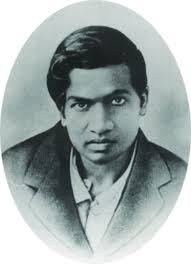


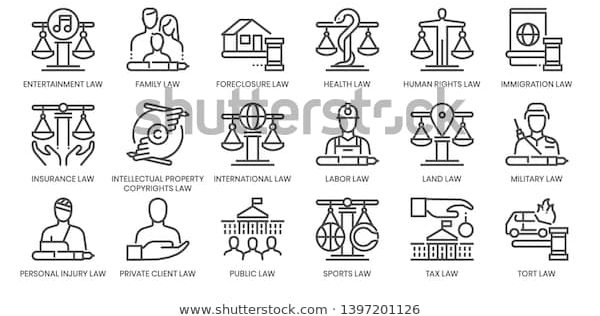


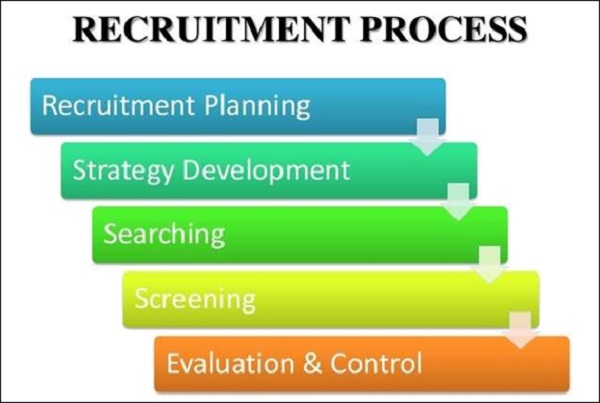




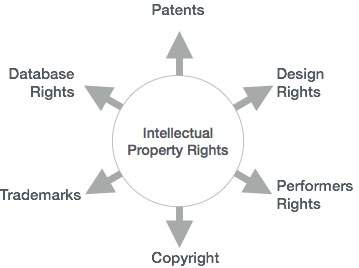







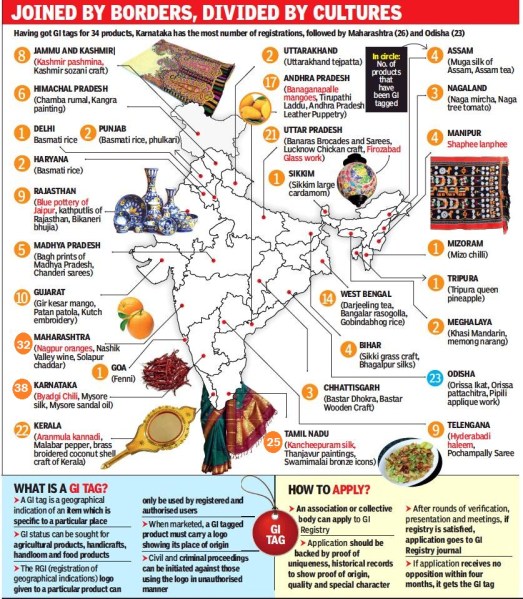


You must be logged in to post a comment.