Mob lynching: Politics, Law and Solution

A bare reading of the definition of lynching states,

“To punish (a person) without legal process or authority, especially by hanging, for a perceived offense or as an act of bigotry”

One clear understanding from the above-mentioned definition is that there is no place for Mob lynching in a civilized land and especially in the world’s largest democracy.

The drafters of the Indian Constitution knew that laws in the country could be twisted to challenge the Fundamental Rights which were assured to the citizens and that’s exactly why The Right to Constitutional Remedies, that is, a process to seek justice through courts, was included in it.

Also going to through the epics, it holds no substantial, memorable or any quoted reference to this stated vicious practice.

Thus, in today’s world, Lynching stands as an exception.

The biggest irony and misfortune of our country is that everything and anything is politicized for insignificant political interests and vote bank. The same is true with most inhuman and abominable activity of mob lynching.

Early political context has been witnessed in the Kherlanji massacre in 2006. It was when four people were lynched over a land dispute at Kherlanji in Maharashtra. A mob of at least 50 villagers captured Bhaiyyalal Bhotmange’s house, and lynched four members of his family. Bhotmange’s wife and their daughter were marched naked in the village and sexually abused before being brutally murdered. The attack was after these women filed a police complaint against 15 villages who thrashed a relative. And despite such chaos, there were efforts to normalise the lynching later saying it was a casteist outrage against Dalits by the politically dominant Kumbi caste.

The next lynching that shocked the nation happened in Dimapur in 2015. A mob of least 7,000 to 8,000 infuriated people broke into Dimapur Central Jail, dragged Syed Farid Khan accused in a rape case out, marched him naked, stoned him, thrashed him, dragged him for over seven kilometres. There were attempts of tying a rope to his waist from a motorcycle. Ultimately, killing him and displaying his body on a clock tower. The brutal punishment was for the rape on a superficial level but what the mob thought was that they were lynching a Bangladeshi migrant. Khan, originally from Assam, had been living in for over Dimapur eight years. What is conflicting in this case is that the medical reports about the rape initially said the woman, who filed the complaint, was raped and then denying the same. Khan’s family claimed he was framed and said that the woman invited Khan to a hotel, forced him to drink and demanded Rs 2,00,000 from him. Ironically, this horrific mob violence executed was quoted by many as an example of serving justice.

Not much time later, Dadri lynching was witnessed. A 52-year-old Muslim man, Mohammad Akhlaq and his son, were attacked by a village mob with sticks and bricks, accusing them of stealing and slaughtering a cow calf and storing and consuming beef. The son was severely injured in the attack. Akhlaq was beaten till he died. This incident in Uttar Pradesh’s Bisara village near Dadri, was the first case of a Muslim lynched by a Hindu mob in the name of cow and beef. A primary inquiry by the Uttar Pradesh Veterinary Department said the meat recovered from Akhlaq’s refrigerator was not beef but of “goat progeny”. After a year in Mathura’s forensic department, the report said that the meat was of a cow or its progeny. And not much to surprise, the report was said to be politically motivated to normalise the lynching saying the mob was “emotionally charged” since cow slaughter is an extremely emotional issue for Hindus.

India is a multi-religious, multi-cultural, multi-ethnic, multi-dimensional and diverse country where people belonging to various faiths and religious denominations live together in peace and tranquillity. In such a diverse country, mob lynching in the name of protecting cow has the potential of leading to communal disharmony which may lead to national disintegration when national integration is badly required for peace, economic development and societal upliftment of the country.

Even since, Government imposed a ban on the sale and purchase of cattle for slaughter at animal markets across India, under Prevention of Cruelty to Animals statutes in 2017, it flashed a new wave of cow vigilante throughout the country. Though the SC suspended the ban on the sale of cattle in its judgment in 2017, giving relief to the multi dollar beef and leather industries and several states where beef is one among the primary foods, there was a rise in attacks on Muslims accusing them as beef eaters. Several innocent Muslims were murdered in such mob attack.

Law and order is a state subject and therefore all State Governments should deal with this inhuman activity strictly to maintain the rule of law and its supremacy. No one should be allowed to tinker with the law and the law violators and unruly mobs that resort to mob lynching should be put behind bars and severe punishment should be given to them so that this issue will be curbed and the country is saved from disturbance and violence. The primitive mindset and mob lynching are alien to our culture and should as such be discouraged and the secular democracy saved for the welfare of its citizens without any distinction of caste, creed, color or sex. Otherwise we will stoop to the 18th century which will take us back to the days of ignorance and illiteracy.

The government, though, has taken initiatives as it has asked States to appoint a nodal officer in each district to prevent the incidents of mob lynching. It has also asked to set up a special task force to procure intelligence reports about the people who are likely to commit such crimes or who are involved in spreading hate speeches, provocative statements and fake news.

Two high-level committees have also been constituted by the Centre to suggest ways to deal with incidents of mob lynching. One of the committees is being headed by Union Home Minister and the other by Union Home Secretary. The move came a week after the SC asked the Centre to enact a law to deal with incidents of lynching and take action on mob violence. The government respecting the directions of the Apex Court on the issue of mob lynching has issued an advisory to the State governments urging them to take effective measures to prevent such incidents, and also take severe actions as per the law.

Mob lynching should be dealt with an iron hand as it has the ramification of disturbing communal amity and peace in the diverse society and as such should not be tolerated and no one should be allowed to take law into his or her hands. It cannot be associated with any particular religion as it is a criminal activity and the criminal mindset does not come into people of any specific community. Thus to associate it with majority community is unjustified. But the majority community has the moral responsibility to protect and safeguard the minorities and supplement the efforts of the Government in this regard otherwise we cannot claim to build a new India where everyone irrespective of religion and faith will be safe and sound. We can rebuild new India only when there will be peace and the sectarian and communal violence will be things of yesteryears.

Thus, mob lynching should be condemned, discouraged and curbed if we have to build a strong and new India as a big economic power.

Sushant suicide case

Sushant Suicide Case: Subramanian Swamy writes to Modi requesting for CBI Enquiry, Says big names of industry with links to a don from Dubai are trying to cover up
• Swamy wrote: My Lawyer Ishkaran Bhandhari investigated on the reasons of sushant’s suicide.
• Swamy is confident on his belief that following PM’s advice the Maharashtra CM will allow for the CBI Enquiry.
The Demands for CBI Enquiry in case of Sushant’s Suicide are increasing day by day. After commiting suicide on 14th June, many fans of Sushant, Bolywood celebrities and politicians from Bihar have demanded for a CBI Enquiry in this case. Former Union Minister and BJP Member of Parliament wrote a letter to PM Narendra Modi requesting to intervene in the matter.
In his letter, Swami wrote: Many big names from the industry are in contact with a Don from Dubai to put pressure on the matter.
In the letter- I believe you all might know about the sad demise of Sushant. My laywer Ishkaran Bhandhari investigated the reasons for sushant’s alleged suicide. However, the police is still investigsting the matter. I have come to know from my sources that many big names from the industry in contact with a don from Dubai are pressuring the police to cover up as suicide.
I request you to advice the CM of Maharashtra to agree for a CBI Enquiry to gain public confidence. I am sure that the CM would agree for the enquiry upon your advice.
Swamy Requested for enquiry five days ago
Swamy asked lawyer Ishkaran Bhandhari to see through the matter that if CBI Enquiry is required. Swamy spoke in this matter through several tweets. He said, in the starting it came up as a suicide and as the CBI investigation proceeds it will be mentioned as a murder in the chargesheet.

United Nations and the use of forces

Article 1

Aim of Untied Nations charter is to maintain international peace and security and to that end to take effective collective measures for the prevention and removal of threats to the peace and for the suppression of acts of aggression or other breaches of the peace and to bring about by peaceful means.

Purpose of the United Nations are:-

1. To maintain international peace and security, and to that end: to take effective collective measures for the prevention and removal of threats to the peace, and for the suppression of acts of aggression or other breaches of the peace, and to bring about by peaceful means, and in conformity with the principles of justice and international law, adjustment or settlement of international disputes or situations which might lead to a breach of the peace;

2. To develop friendly relations among nations based on respect for the principle of equal rights and self-determination of peoples, and to take other appropriate measures to strengthen universal peace;

3. To achieve international cooperation in solving international problems of an economic, social, cultural, or humanitarian character, and in promoting and encouraging respect for human rights and for fundamental freedoms for all without distinction as to race, sex, language, or religion,

4. To be a center for harmonizing the actions of nations in the attainment of these common ends.

5. To develop friendly relations among nation based on respect for the principle of equal rights and self determination of people’s.

Article 2

The Organization and its Members, in pursuit of the Purposes stated in Article 1, shall act in accordance with the following Principles.

1. The Organization is based on the principle of the sovereign equality of all its Members.

2. All Members, in order to ensure to all of them the rights and benefits resulting from membership, shall fulfil in good faith the obligations assumed by them in accordance with the present Charter.

3. All Members shall settle their international disputes by peaceful means in such a manner that international peace and security, and justice, are not endangered.

4. All Members shall refrain in their international relations from the threat or use of force against the territorial integrity or political independence of any state, or in any other manner inconsistent with the Purposes of the United Nations.

5. All Members shall give the United Nations every assistance in any action it takes in accordance with the present Charter, and shall refrain from giving assistance to any state against which the United Nations is taking preventive or enforcement action.

6. The Organization shall ensure that states which are not Members of the United Nations act in accordance with these Principles so far as may be necessary for the maintenance of international peace and security.

7. Nothing contained in the present Charter shall authorize the United Nations to intervene in matters which are essentially within the domestic jurisdiction of any state or shall require the Members to submit such matters to settlement under the present Charter; but this principle shall not prejudice the application of enforcement measures under Chapter VII.

The charter of the United Nations establishes a fundamental distinction between legal and illegal resort to force. By this it has in a way revived in international law the old distinction between just and unjust war.

The preamble of the charter of the United Nations starts with the determination of the people’s of the United Nations to save succeeding generations from the scourge of war and their willingness to practice tolerance and live together in peace with one another as good neighbors and not use armed force except in the common interest.

The prohibition of the threat or use of force in international relations against the territorial integrity or political independence of any state.

The use of force is necessary if it’s not possible to maintain peace by talks like things going on in Syria Iraq. But it’s not possible world or human being alwasys devide in two sides one is favour and one in against as positive negative or heads and tails this is impossible to fix everything and take stance at one side.

CONSUMER PROTECTION ACT, 2019

A good news for the buyers!! Ministry of Consumer Affairs has notified that most provisions of The Consumer Protection Act 2019, will come into force from July 20, 2020. The bill was introduced by the Minister of Consumer Affairs, Food and Public Distribution, Ram Vilas Paswan. It was passed by the Lok Sabha on July 30, 2019, and later cleared by the Rajya Sabha on August 6, 2019. The bill received assent from President Ram Nath Kovind on August 9. The act will replace the three decade old consumer law in the country. Though the decision related to the provisions of e-commerce as well as the constitution of an apex Central Consumer Protection Authority (CCPA) at the national level is yet to be taken in action by the central government.

KEY FEATURES OF THE BILL:

  • Consumer rights: (i) Right to Protection: the buyer has the right to be protected from the false marketing of goods and services which can be harmful to his life and property. (ii) Right to Information: the consumer has right to get the full information about the quality, quantity, purity, standard and price of goods or services. (iii) Right to Selection: this right ensures that the consumer has the right to access varieties of goods and services. (iv) Right to complain: the consumer has all the right to complain against the unfair trade practices by the seller, manufacturer or the trader. He can complain against them in district commission or state commission or the national commission, depends upon the pecuniary jurisdiction of the commissions.
  • Pecuniary Jurisdiction: The pecuniary jurisdiction has been increased in the new act compared to the older one.

District Commission: Rupees One Crore

State Commission: Rupees One Crore to Ten Crore

National Commission: Above Rupees ten Crore

  • E-Filing of Complaints: The consumer can now file complaints electronically. Hearing and examining of the parties can also be done through video-conferencing.
  • Prohibition and penalty for a misleading advertisement: The act mentions a strict punishment in case of false and misleading advertisement. Under the act the Central Consumer Protection Authority (CCPA) will have the power to suo-moto take cognizance in case of misleading advertisement. For the interest of consumers, imprisonment for a term which may extend to two years and with fine which may extend to ten lakh rupees can be imposed. And for every subsequent offence, imprisonment for a term which may extend to five years and with fine which may extend to fifty lakh rupees can be imposed.

5. Other Offences and Penalties:

Whoever, by himself or by any other person on his behalf, manufactures for sale or stores or sells or distributes or imports any product containing an adulterant shall be punished, if such act—

(a) Does not result in any injury to the consumer, with imprisonment for a term which may extend to six months and with fine which may extend to one lakh rupees;

(b) Causing injury not amounting to grievous hurt to the consumer, with imprisonment for a term which may extend to one year and with fine which may extend to three lakh rupees;

(c) causing injury resulting in grievous hurt to the consumer, with imprisonment for a term which may extend to seven years and with fine which may extend to five lakh rupees; and

(d) Results in the death of a consumer, with imprisonment for a term which shall not be less than seven years, but which may extend to imprisonment for life and with fine which shall not be less than ten lakh rupees. The act also mentions that, manufacturer, seller or traders license can be suspended for 2 years and in subsequent conviction, can be cancelled.

Climate Change

You have probably heard the terms climate change and global warming used interchangeably. That’s because both describe changes in earth’s climate. While global warming focuses on the rising average temperature of the planet, climate change usually refers to the shifts in things like precipitation, wind patterns, and temperatures over a given period. Measured changes in climate could last a few years, decades, or even millions of years. Climate change creates hunger, whether through too little water (drought) or too much (flooding), and its effect contribute to the cycle of poverty in several other ways including disproportionately. One World Bank estimates that climate change has the power to push more than 100 million people into poverty over the next decade.

Climate change has occurred for as long as the earth has existed. It happens anytime earth’s climate patterns change and remain in place for a measurable amount of time. This has notably manifested itself in natural cycles of cooling and warming. Before human causes started to shift the global climate, five main factors interacted with one another as climate changes occurred. These five factors include:

  1. Atmosphere (air)
  2. Biosphere (living things)
  3. Cryosphere (ice and permafrost)
  4. Hydrosphere (water)
  5. Lithosphere (earth’s crust and upper mantle)

Causes of Climate Change

The scientific evidence is clear: global climate change caused by human activities is occurring now, and it is a growing threat to society. A few ways humans are accelerating climate change include the burning of fossil fuels for electricity, heat, and transportation: these activities create greenhouse gases. Greenhouse gases in the atmosphere trap the sun’s energy contributing to global warming.

Its Impact

The long term impact of climate change could be absolutely devastating to the planet and everyone and everything living on it. If the world continues on its current trajectory, then we will likely continue to see increasing effects on everyday life.

Health

There are many ways in which climate change could impact people’s health. Depending on age, location, and economic status. Climate change-related health risks may include:

  • Heat-related illness
  • Injuries and fatalities from severe weather
  • Asthma & cardiovascular disease from air pollution
  • Respiratory problems from increased allergens
  • Diseases from poor water quality
  • Water & food supply insecurities

Negative Impact on Ecosystems

Ecosystems are interconnected webs of living organisms that help support all kinds of plant and biological life. Climate change is already changing seasonal weather patterns and disrupting food distribution for plants and animals throughout the world, potentially causing mass extinction events. Some studies estimate that nearly 30% of plant and animal species are at risk of extinction if global temperatures continue to rise.

Water And Food Resources

Climate change could have a significant impact on food and water supplies. Severe weather and increased temperatures will continue to limit crop productivity and increase the demand for water. With food demand expected to increase by nearly 70% by 2050, the problem will likely only get worse.

Sea Levels Rising

Rising sea levels could have far-reaching effects on coastal cities and habitats. Increasing ocean temperatures and melting ice sheets have steadily contributed to the rise of sea levels on a global scale. At current rates the National Oceanic and Atmospheric Administration estimate sea levels to rise by at least 8 inches by 2100, potentially causing increased flooding and decrease in ocean and wetland habitats.

Solutions For Climate Change

While the effects of climate change can seem bleak, there is still hope. By taking immediate action to curb climate change, we may never see the worst consequences. Below are some practical ways you can battle climate change, including:

  • Purchase Renewable Energy Certificate for your home power needs
  • Make your home energy efficient
  • Reduce food waste
  • Recycle
  • Stop using fossil fuels
  • Stop deforestation

Photography as a career

Vaishali Singh

Photography is one of the major things of everyone’s life today,

All of us want to freeze the moments we live day to day in a photograph, the new developing technology has made it very easier for people to document their lives easily through photographs and videos and the advancements in technology helps you to put your documented photographs or videos on the platforms like YouTube, Instagram etc. and build your career out of it but the question is how to get started? Now, basically if you want to get started with photography then you do not need a professional degree or course the only thing you need are skills and that’s it but if you’ll do a course or major in photography or cinematography then it will help your chances of getting jobs in the Multi national companies, but if you want to make a career out of blogging vlogging youtubing or photographer then a degree is not a compulsion, what important is teaching yourself about the principles of capturing an image and the lighting conditions and then just go out start practising in real world, now you can learn everything by yourself but it takes time to develop a skill, what’s more important in photography is light.

The word “Photography” itself depicts the meaning as drawing using light. The word photography is made of two words PHOTO and GRAPHEIN where Photo means light and Graphein means to draw.

So, light plays the major role in photography,  after learning the basic principles of photography and light the practising comes into play.

Now, the answer of the question how to get started is very simple just start practising right away, reach out to people, at the earlier stage do the unpaid shoots then build your profile, work as an intern and gain experiences overtime after building your name you can start to earn money through photography and can begin your own photography career. 

http://www.webyurt.com/images-o/images/photography-mountains.jpg

THE BEGINNING OF A NEW AGE: VIRTUAL COURT HEARINGS: THE INDIAN CONTEXT

INTRODUCTION

The Covid-19 pandemic has hit all the countries hard but as far as the legal system is concerned, it has shown us how the coming times and the future shall be and also how things in the ‘new normal’ would be.

But there is always a Silver lining in these tough times which is the Virtual Court Hearings which has ensured that Justice isn’t delayed for the one’s who seek it inspite of these tough times as Justice delayed is Justice denied.

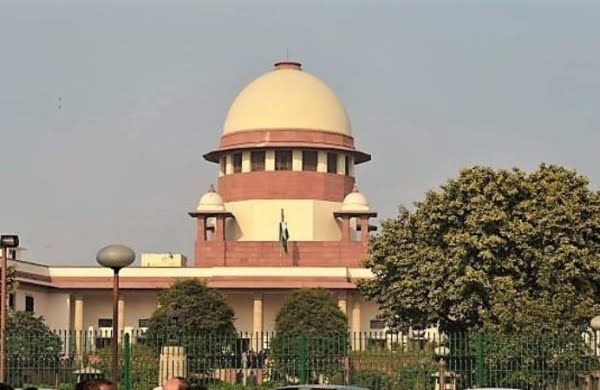
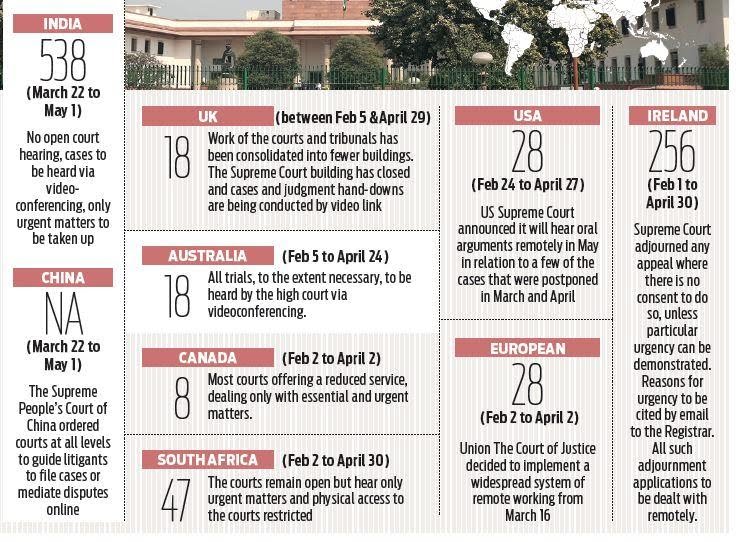
The lockdown has affected the functioning of courts across the globe, but the Hon’ble Supreme Court of India has done much better than the top courts in countries like the UK, the US, Singapore and Canada.

The Apex Court began the hearing of urgent matters virtually till May 1st and heard them for 22 days via video conferencing in March after the imposition of lockdown in order to curb the spread of COVID-19.

ABOUT VIRTUAL HEARINGS

Virtual hearings are court hearings conducted by audio-visual means, where cases are progressed without the need for participants to attend the Court in person. It also shows how the distance becomes immaterial when one has to appear before the court to argue the case.

FOR THE FIRST TIME

The Hon’ble Supreme Court of India held its first Constitutional bench sitting and this is the first time since March 5 that five judges sat together in a single court hall ever since the lockdown forced the apex court to stop physical court hearings and begin hearing cases through videoconferencing from March 25 this year.

It was for the first time on Tuesday, the 14th July, 2020 that a Constitutional Bench (comprising five judges) held a virtual hearing. A bench of justices Arun Mishra, Indira Banerjee, Vineet Saran, MR Shah and Aniruddha Bose appeared wearing masks and maintaining nearly two-feet distance between them on the bench.

The first case that was heard by the five-judge bench was a legal tussle on whether Centre or States have the power to provide reservation to in-service candidates in post-graduate medical degree courses. The plea was brought up by Tamil Nadu Medical Officers Association.

Opening the argument, Senior Advocate Arvind Datar exchanged the extensive compilation of his arguments including cases to be referred through Google drive with all Lawyers. One of the Lawyers, Senior Advocate Vikas Singh appearing for Medical Council of India (MCI) complained about being unable to access Google Drive.

He objected to Datar referring to the same, the first hiccup encountered by the Court in the virtual proceeding. The problem was sorted as Hon’ble court asked Senior Advocate Arvind Datar to give case law citations.

As the virtual hearing proceeded the Senior Advocate Arvind Datar was inaudible to the Hon’ble Court. Hon’ble Justice MR Shah commented in a lighter vein that, “Don’t keep social distancing with your mike.” Datar heard ‘mike’ as “wife”, leaving the bench in splits.

SUCCESS STORY: DATA THAT MATTERS

The Hon’ble Supreme Court of India shared the ‘success story’ of virtual court proceedings. At the beginning of June as many as 2,893 lawyers appeared in the hearings via video-conferencing, it said in the data release.

According to the data, 538 matters were taken up by the SC during the lockdown period, besides 297 connected cases. Judgment was delivered in 57 matters. Besides, 49 special leave petitions, 92 writ petitions, 138 review petitions and 58 pleas for interim relief were also taken up.

HOW THE COURTS FARED AND PERFORMED?

India has fared the best as per the above data as many other countries have been using the virtual system but their top courts that have lagged way behind in the hearing or disposal of cases.

It conducted proceedings via video-conferencing from March 25 as it has suspended the entry of lawyers and other staff into its premises and also the apex court decided to explore the feasibility of ‘physical appearance’ of advocates in real courtroom hearings after strictly adhering to the guidelines of the COVID-19 triggered lockdown and resorting to virtual hearings since March 25.

Data available on other judicial websites indicate that in the nations hit hard by the pandemic like the US, the UK, France, Italy, Germany, China, Canada, Australia etc., The organs of that state which carried out the administration of justice are mostly relying on the virtual court methodologies and online case management.

CONCLUSION

Hence after going through the above facts and circumstances it’s certainly a grand success yet there is always room and scope for improvement.

WEBSITES REFERRED:-

1)https://www.supremecourt.vic.gov.au/law-and-practice/virtual-hearings/virtual-hearings-glossary

2)https://www.google.com/amp/s/www.newindianexpress.com/nation/2020/may/04/virtual-hearing-indias-apex-court-way-ahead-than-many-counterparts-2138843.amp

3)https://scholarlykitchen.sspnet.org/2020/03/30/marketing-amidst-a-pandemic/

4)https://www.google.com/amp/s/m.hindustantimes.com/india-news/supreme-court-holds-first-virtual-constitution-bench-hearing/story-6OIJDbbzpliujLFjz1z3mI_amp.html

Republic day

India celebrates Republic Day on January 26 annually with a lot of pride and fervor. It is a day that is important to every Indian citizen. It marks the day when India became truly independent and embraced democracy. In other words, it celebrates the day on which our constitution came into effect. On 26 January 1950, almost 3 years post-independence, we became a sovereign, secular, socialist, democratic republic.

History of Republic Day

While we got independence from British rule on August 15, 1947, our country was still lacking a concrete constitution. Moreover, India also did not have any experts and political powers which would help in the functioning of the state affairs smoothly.  Up until then, the 1935 Government of India Act was basically modified in order to govern, however, that act was more bent towards the colonial rule. Therefore, there was a dire need to form an exclusive constitution that would reflect all that India stands for. Thus, Dr. B.R. Ambedkar led a constitutional drafting committee on August 28, 1947.  After drafting, it was presented to the Constituent Assembly by the same committee on November 4, 1947. This whole procedure was very elaborate and took up to 166 days to complete. Moreover, the committee organized sessions were kept open to the public. No matter the challenges and hardships, our constitutional committee left no stone unturned to include rights for all. It aimed to create the perfect balance so all citizens of the country could enjoy equal rights pertaining to their religions, culture, caste, sex, creed and more. At last, they presented the official Indian constitution to the country on January 26, 1950.

Moreover, the first session of the India Parliament was also conducted on this day. In addition to that, 26th January also witnessed the swearing-in of India’s first president, Dr. Rajendra Prasad. Thus, this day is very important as it marks the end of the British rule and birth of India as a Republic State.

Republic Day Celebrations

Indians celebrate January 26 each year with lots of enthusiasm and zeal. On this day, people forget their religion, caste, creed, sex, and more. It brings together the country as a whole. It truly shows the diversity of our country. The capital city of India, New Delhi, celebrates it with a Republic Day Parade that showcases the might of the Indian Military and the cultural diversity of our country.

These parades take place in other cities as well, where a lot of schools participate in. It is a delight to watch the children and professionals put in so much effort. The way they grace the parade makes one proud of their country.  We also do National Flag Hoisting on this day. In New Delhi, after the President of India hoists our National Flag, 21 guns salute follow it with the national anthem played by the military band.

Further, in schools, March Past takes place and it is mandatory for every student to attend the celebrations. In many schools, they distribute sweets on this day as well. While it is a very joyous day, we must not forget the struggle of freedom that our forefathers took part in. Moreover, it is a day to celebrate the spirit of freedom and make sure to help India reach greater heights in the future.

Organisational design/framework-basic Understanding

Let’s understand What is Organisation Design.?

“Organization design” involves the creation of roles, processes and structures to ensure that the organization’s goals can be realized.

Some people associate organization design with the mechanical arrangement of positions and reporting lines on the organization chart.

It is certainly true that organizational designers also need to define the vertical structure, including reporting lines.

However, organization design is much more than “boxology”.

Organization design problems are often some of the hardest problems that leaders face. Finding the right design often requires inventing a new solution to resolve a dilemma. And decisions made with regard to formal structure, roles and processes directly impact the jobs and careers of employees – and the ability of the firm to realize its strategic objectives.

In an organization re-design process one may consider elements at different levels:  

  • The overall organizational “architecture” (e.g., the corporate level, the role of the headquarters versus business areas in a large firm, etc.)
  • The design of business areas and business units within a larger firm
  • The design of departments and other sub-units within a business unit
  • The design of individual roles

The field of organization design sits at the intersection of strategy, operations, law and HR.

1. An important driver for organization design is the organization’s strategy – but the design of the organization may also to a great extent determine which strategies we may be able to form in the first place.

2.  We should, in general, attempt to align the organization with the work processes – so there is a close link between operations and organization design.

3. The design of the organization is also influenced by laws, regulations, and governance principles adopted by the industry sector.

4. Last but not least, organization design is fundamentally about people. People inhabit the roles that are defined in the organization design proces. People participate in design processes and also influence designs in many direct and indirect ways.

India among top ten nations in intellectual property filings

As per World Intellectual Property Indicators-2019 Report, India has emerged as the top tenth nation in the ranking of the total (resident and abroad) Intellectual Property (IP) filing activity.

With government push to schemes like ‘Make in India’, ‘Skill India’ and now ‘Atma-nirbhar Bharat’, IP Filing and grant activity is likely to increase. Industry 4.0 is witnessing new inventions and breakthroughs as it faces challenges in providing the right environment to stimulate innovation, especially in Artificial Intelligence and Machine Learning. IP-intensive industries have been identified as an important and integral part of a country’s economy and account for more jobs and a larger share of its GDP.

 Director General of Pushpa Gujral Science City, Dr. Neelima Jerath said, this in a webinar on intellectual property Rights today. It was jointly organised by Pushpa Gujral Science City, Kapurthala and Technology Information, Forecasting & Assessment Council, Department of Science &Technology, Government of India. More than 200 students and teachers from various Technolical colleges of Punjab participated in this webinar.

 Dr. Jerath said that innovation and creative endeavors are indispensable elements that drive economic growth and sustain the competitive edge of the economy of any country. The last century recorded unprecedented improvements in health, economic well-being, and overall quality of life worldwide. Developed countries relied on intellectual property as one of the leading tools with which such advances were realized and Patents, trademarks, and copyrights were the principal means for establishing ownership rights to the creations, inventions, and brands that were used to generate tangible economic benefits. 

Head of PFC-IPR Dr.Yashawant Dev Panwar said, the Government of India has taken concrete steps to establish favourable environment for creation and protection of Intellectual Property Rights and strengthening IP administration in the country. The National IPR Policy, launched in May 2016, to promote strong IP regime in the country encourages innovation to achieve Country’s industrial and economic development goals. This will provide efficient IP ecosystem and build up pace of industrial growth in the country.

HRD Minister launches NISHTHA programme for 1200 key resources persons of Andhra Pradesh

Human Resources and Development Minister Ramesh Pokhriyal Nishank today launched the first on-line NISHTHA programme for one thousand 200 Key Resources Persons of Andhra Pradesh.

Speaking on the occasion, Mr Pokhriyal said, NISHTHA is a national initiative for School Heads and Teachers Holistic Advancement at the elementary stage under Samagra Shiksha -a flagship programme of the Ministry to improve learning outcomes. The Minister added that NISHTHA in face-to-face mode was launched on 21st August last year.

He said, thereafter 33 states and Union Territories have launched this programme in collaboration under Samagra Shiksha. In 29 States and UTs, the NISHTHA training programme has been completed by the NCERT at the state level.

The Minister highlighted that around 23 thousand Key Resource Persons and more than 17 lakh teachers and school heads have been covered under NISHTHA face to face mode till date. He said, due to COVID-19 pandemic situation, sudden lockdown has affected the conduct of this programme in face-to-face mode. Mr Pokhriyal said, for providing training to remaining 24 lakh teachers and school heads, NISHTHA has been customized for online mode to be conducted through DIKSHA and NISHTHA portals by the NCERT.

Agriculture Minister stresses on need to reduce dependence on imports

Union Agriculture Minister Narendra Singh Tomar has stressed on the need to reduce dependence on imports, increase production of healthy foods, pulses and oilseeds.

Speaking at a function to celebrate 92nd foundation day of  Indian Council of Agricultural Research (ICAR), the Minister said, at present, India is surplus in foodgrains production due to the research contribution of the scientists and hard work of the farmers. He congratulated the farming community in the country for record production of crops even during the lockdown due to Covid-19 pandemic. The Minister said, Palm oil production needs to be increased by research and increased cultivation.

India,United States to work together to further strengthen trade and economic ties

India and the United States have expressed their resolve to work together to further strengthen the trade and economic ties.

Commerce Minister Piyush Goyal and US Commerce Secretary Wilbur Ross held an informal tele-conversation yesterday. The two leaders discussed the COVID-19 situation in both the countries and appreciated the cooperation between India and the US, in fighting the pandemic. They also conversed on the ongoing India-US trade discussions and appreciated the substantial progress made by the two sides on most of the outstanding issues. There was a desire expressed to conclude this initial limited trade package and recognise the complementarities of the India-US bilateral trade and discussed the possibility of an FTA.

In response to Mr Goyal’s concern on USA keeping 24 Indian items under Trafficking Victims Protection Reauthorization Act list and designating them as ‘child labour sectors’, thereby denying them the opportunity to participate in supply contracts of US government agencies, Secretary Ross offered to set up a meeting between the labour department officials of both sides.

Commerce Minister Piyush Goyal also flagged the pending ‘US-India Social Security Totalisation Agreement’, which had been also discussed during the visit of US President Trump to India in February this year. While appreciating India’s concern, Secretary Ross mentioned that the statutory requirements of the US have to be fulfilled by India in this regard. He offered to arrange a meeting between the U.S. Social Security Administrator and concerned Indian officials to discuss and find a possible solution.

Mr Goyal also raised a concern on the US ban on import of wild catch shrimp from India on the premise that fishing practices followed in India were non-compliant with US regulations to protect sea turtles. He mentioned the various conservation measures taken by Indian maritime states in protecting the sea turtles. Secretary Ross appreciated India’s concerns and agreed to facilitate a discussion between the officials of the US State Department and Office of Marine Conservation with the Indian Department of Fisheries and Ministry of Forest and Environment, in this regard.

Ministry of Finance releases Rs 15,187 crore as grants-in-aid to 2.63 lakh Rural Local Bodies

Ministry of Finance has released an amount of over 15 thousand and 187 crore rupees as grants-in-aid to 2.63 lakh Rural Local Bodies (RLBs) spread in 28 States of the country. The amount was released upon the recommendation of the Ministry of Panchayati Raj, Department of Drinking Water and Sanitation and Jal Shakti Ministry. This grants-in-aid forms part of the Tied Grant as recommended by the 15th  Finance Commission for the Financial Year 2020-21. It will be used by RLBs to facilitate taking up of various developmental work concerning supply of drinking water, rain water harvesting, water recycling, sanitation and maintenance of Open Defecation Free status which are national priorities.

Giving this information, Union Minister of Panchayati Raj, Narendra Singh Tomar said that the release of this fund to the Rural Local Bodies signifies the most appropriate timing when they are fighting the challenges posed by the COVID-19 pandemic situation. He said, availability of the fund with the RLBs will boost their effectiveness in delivery of basic services to the rural citizens. Mr Tomar said it would also empower them in providing gainful employment to migrant laborers who have returned to their native places owing to COVID-19 pandemic situation as well as in augmenting rural infrastructure in a constructive way.