

The Uttar Pradesh government has decided to impose fresh restrictions of 55 hours in the state from this evening amid spurt in Covid-19 cases. The restrictions will be in place from 10 PM today till 5 AM on 13th July.
AIR correspondent reports, as per the directions issued by Chief Secretary of State RK Tiwari, All offices, business institutions and markets in urban and rural areas across the state will be closed during the restriction period. Although All emergency services will continue as usual.
Apart from the continuous working units in urban areas and industrial units in rural areas all other industrial activities will be closed. These restrictions will not affect rail and air services along with movement on national highways and road transportation including goods services.
On these three days that is 10,11 and 12 july a massive sanitization and clean water supply campaign will be launched across the state. Through a public address system an awareness campaign will also be launched regarding covid-19 and other communicable diseases.
Author: Eduindex News
Visit us for more news at https://eduindex.org
PM Modi to dedicate to nation a 750 MW Solar project at MP’s Rewa today
Prime Minister Narendra Modi will today dedicate to the nation a 750 MW Solar project set up at Rewa in Madhya Pradesh. The Rewa project will reduce carbon emission equivalent to about 15 lakh ton of CO2 per year.
The project comprises three solar generating units of 250 megawatt each located on a 500 hectare plot of land situated inside a Solar Park. The Solar Park was developed by the Rewa Ultra Mega Solar Limited (RUMSL). It is a Joint Venture Company of Madhya Pradesh Urja Vikas Nigam Limited, and Solar Energy Corporation of India, a Central Public Sector Undertaking. Central Financial Assistance of 138 crore rupees has been provided to RUMSL for development of the Park.
The Rewa Solar Project was the first solar project in the country to break the grid parity barrier. Compared to prevailing solar project tariffs of approximately 4.50 rupees per unit in early 2017, the Rewa project achieved historic results. This means a tariff of 2.97 rupees per unit with a tariff escalation of 0.05 paise per unit over 15 years and a levelized rate of 3.30 rupees per unit over the term of 25 years.
The Rewa Project has been acknowledged in India and abroad for its robust project structuring and innovations. Its payment security mechanism for reducing risks to power developers has been recommended as a model to other States by the Ministry of New and Renewable Energy. It has also received the World Bank Group President’s Award for innovation and excellence and was included in the Prime Minister’s “A Book of Innovation: New Beginnings”.
The project is also the first renewable energy project to supply to an institutional customer outside the State. The Delhi Metro will get 24 percent of energy from the project with the remaining 76 percent being supplied to the State DISCOMs of Madhya Pradesh.
The Project also exemplifies India’s commitment to attain the target of 175 GW of installed renewable energy capacity by the year 2022, including 100 GW of Solar installed capacity.
A radio report on the event, produced by AIR Rewa, will be broadcast by AIR Delhi on its Indraprastha, FM Gold and AIR Live News 24×7 Youtube channels at 5:20 PM today.
Prime Minister Modi will dedicate the solar project to the nation virtually at 11 am.
Madhya Pradesh Governor Anandiben Patel and Chief Minister Shivraj Singh Chouhan will take part in the programme through video conference. Union Minister RK Singh will also take part in the programme.
AIR correspondent reports, the project comprises three solar generating units of 250 MW each located on a1590-hectare plot inside a solar park. According to the official release, this project will reduce carbon emission equivalent to approximately 15 lakh tonne of CO2 per year. It is the first renewable energy project to supply institutional customers outside the state, including Delhi Metro, which will get 24 per cent of energy from the project. The remaining 76 per cent is being supplied to the state distribution companies of Madhya Pradesh.
The Rewa project has been acknowledged in India and abroad for its robust structuring and innovations. Its payment security mechanism for reducing risks to power developers has been recommended as a model to other states by the Ministry of New and Renewable Energy.
The solar park was developed by the Rewa Ultra Mega Solar Ltd (RUMSL), a joint venture of Madhya Pradesh Urja Vikas Nigam Ltd and Solar Energy Corporation of India, a central undertaking.
Emotional intelligence- Aman Sharma

Emotional intelligence.
Trying to accomplish grand objectives is solid, as long as it doesn’t get devastating. There is a truism: “Don’t let flawlessness impede progress.”
I would say in programming advancement through different jobs and as CTO at Clearbridge Versatile, I’ve discovered that this expression resounds. Spry advancement places incredible accentuation on emphasis, or bombing quick so you can learn, adjust, and improve rapidly and consistently. Hairsplitting really blocks your capacity to turn out to be better.
Numerous parts of perfectionistic thinking, similar to the dread of committing errors and embracing a win or bust outlook, are not gainful learning devices, and looking for flawlessness in each undertaking won’t assist us with accomplishing item objectives.
Through the act of enthusiastic insight, we find out about our qualities – and maybe more critically, our cutoff points – and how to expand them by gaining from botches and conquering difficulties. By ascending to trouble and in any event, falling flat, we figure out how to accomplish our best work.
This article will investigate four aspects of passionate knowledge, how to use them to accomplish objectives, and how they can decrease the stickler conduct and thought designs that are hindering to nimble groups.
- Be interested
Genuinely clever people have a functioning feeling of interest. They investigate additional opportunities, pose inquiries, and are available to different arrangements. On the off chance that we submit to stickler thought designs, it’s anything but difficult to get over the top about getting a profoundly explicit or solitary presentation result. We put blinders on and shut out the learning procedure required at showing up at an objective.
At the point when we’re on an objective way, it’s fundamental to inquisitively investigate the procedure of objective achievement with the goal that we can course-address when we face obstructions. By being interested, we’re caused mindful of different alternatives and bearings to take to accomplish our objectives. Be that as it may, to do this, we have to oppose win big or bust reasoning and be available to changing our objective direction. In a dexterous situation, it’s fundamental to modify when the startling happens.
Is it true that you are defining execution objectives as it were? Learning objectives move our core interest.
We can’t totally overlook execution objectives. In our professions, we unavoidably face quantifiable execution results to get (increment time-to-showcase by 30 percent or lessen costs by 10 percent, for instance). Learning objectives, in any case, move our concentration from the final product to the way toward learning the best way to deal with objective fulfillment. Except if the presentation result has critical outcomes to a venture, I recommend moving toward objectives with a learning direction at whatever point conceivable.
Examination with new techniques, monitor progress, and continue emphasizing until you locate the most encouraging arrangement. Endeavoring to convey immaculate outcomes will just keep you away from learning better approaches for accomplishing objectives. You have to realize when to turn to the following arrangement, and comprehend that plans won’t run without shortcoming – which carries me to the following part of passionate knowledge to incorporate with your range of abilities: industriousness.
- Be tenacious despite disappointment
There are incalculable disappointments remaining among us and our objectives. A portion of these disappointments are unavoidable, while others are of our own creation: botches, mishaps, outer conditions, or tarrying, for instance. Regardless, we will confront disappointment on our approach to accomplishing objectives.
In any case, sincerely astute people and the best programming designers endure, paying little heed to any disappointment they experience. Genuinely shrewd individuals realize how to function through disappointment since they’re equipped for controlling their feelings, remaining positive under tension, and quieting themselves in the midst of vexation.
Disregarding that, on the off chance that we offer approach to compulsiveness, we will in general dread missteps. We’re additionally bound to alter objectives to make them simpler when we face misfortunes, just as draw out hesitation – in light of the fact that we can’t come up short at something we haven’t began. Utilizing enthusiastic knowledge to battle disappointment includes self-guideline as well as requires creating or fortifying resolve.
At the point when we have certainty that objectives are feasible, we can allow ourselves to be flawed.
Creating determination can help ease perfectionistic propensities and thought designs by developing self-assurance. Individuals who accept they can achieve something advantageous outflank the individuals who suspect something. At the point when we have certainty that specific objectives are feasible, we can allow ourselves to be flawed in light of the fact that we accept we’re fit for accomplishment paying little mind to hindrances en route.
Once more, in programming advancement, you have to acknowledge defect. While being available to disappointment is baffling, rehearsing the flop quick technique permits advancement groups to discover and address deserts sooner. That implies less bugs go into creation, which prompts excellent, creation prepared programming.
Proof as to verification of Digital Signature
What is an Digital Signature ?
It is evident that the cognizance of the concept of E-signature has sprouted in different modern state legislations, giving meaning & moulding its definition to be accustomed to its socio-political structural norms. Below are a few definitions devised by foreign legislative assemblies.
In order to ascertain whether a signature, writing or seal is that of the person by whom it purports to have been written or made, any signature, writing, or seal admitted or proved to the satisfaction of the Court to have been written or made by that person may be compared with the one which is to be proved, although that signature, writing, or seal has not been produced or proved for any other purpose.
Section 73A In order to ascertain whether a digital signature is that of the person by whom it purports to have been affixed, the court may direct-
that person or the Controller or the Certifying Authority to produce the Digital Signature Certificate,
any other person to apply the public key listed in the Digital Signature Certificate and verify the digital signature purported to have been affixed by the person.
Explanation.- For the purpose of this section “Controller” means the Controller appointed under sub-section (1) of section 17 of the Information Technology Act, 2000.] This section consists of two parts. First part provides for comparison of signature, writing, figure etc. purporting to have been written or made by a person with other admitted or proved signature, writing, figure etc. by the court to have been written signed or made by the same person. Second part empowers the court to direct the person to appear before it and to give his specimen signature or writing for the purpose of evaluating the disputed signature, writing, figure etc.
Indian law has recognised digital signatures, or e-signatures, under the Information Technology Act, 2000 (IT Act) for over 16 years. With its increased emphasis on improving the ease of doing business; streamlining the storage of records; and improving the safety, security, and cost- effectiveness of records, the Government of India has promoted the use of digital technologies by Indian citizens and corporations. As a result, there has been a recent increase in the use of e-signatures, with more and more services using them. This, in part, is due to the government’s focus on enabling electronic transactions using Aadhaar, the unique identification number issued by the Indian government to all Indian residents. Indian law treats electronic signatures as equivalent to physical signatures, subject to a few exceptions, and generally allows documents to be signed using e-signatures. However, the e-signature must satisfy a number of conditions, and certain checks must be done before it can be relied upon.
Section 73: Penalty for publishing electronic Signature Certificate false in certain particulars
(a) No person shall publish a Electronic Signature Certificate or otherwise make it available to any other person with the knowledge that the Certifying Authority listed in the certificate has not issued it,
(b) the subscriber listed in the certificate has not accepted it,
(c) the certificate has been revoked or suspended, unless such publication is for the purpose of verifying a digital signature created prior to such suspension or revocation
Any person who contravenes the provisions of sub-section (1) shall be punished with imprisonment for a term which may extend to two years, or with fine which may extend to one lakh rupees, or with both.
Background
The concepts of E-signatures and digital signatures are results of gaining eminence of revolution of information technology which embarked its journey from the late 18th century. Many states with evolving times have given due recognition to its applicability & operationality in their jurisdictions.
In the US, before the proclamation of the “American Civil War” in 1861, the usage of the Morse Code had been primarily for espionage purposes but was also intended for the enforceability of contracts. The first landmark judgment accepting the enforceability of telegraphic messages as electronic signatures was observed by the New Hampshire Supreme Court.
Thereafter there has been a flurry of modern legislation in western states such as in Canada, US, Russia, China, Australia, New Zealand, Japan, Singapore, UK & gradually all across the globe.
In 1996 the United Nations with a majority passing resolution enacted UNCITRAL Model Law on Electronic Commerce. In 2001, UNCITRAL Model Law on Electronic Signatures was passed which has been adopted by 30 states in their jurisdictions. The most recent step towards the international recognition of E-signature is the United Nations Convention on the Use of Electronic Communications in International Contracts, 2005, which gives the option to the contracting parties to give effect to the agreement by E-signature subject to the condition that a reliable method is used to identify & indicate the intention of the parties.
The first agreement signed electronically by two sovereign nations was a Joint Communique recognizing the growing importance of the promotion of electronic commerce, signed by the United States and Ireland in 1998.
Conclusion
While technically a Tiered E-Signature Legal Model Country, India has not created specific technical requirements, procedures and practices to implement a QES (Qualified Electronic Signature, or ‘Secure Electronic Signature’ in the Indian legal definition) system. Therefore, no practical application of QES in India exists. In practice, a hard requirement for a theoretical QES would only apply to the limited use case exceptions already discussed if such a signature type existed. The Government of India has introduced a new QES whereby the person who has an official identity card issued by the Government (Aadhar) is able to authenticate a document using the Aadhar eKYC services. Through the interface provided by the Application Service Provider (ASP), users can apply electronic signatures on any electronic content by authenticating themselves through biometric or OTP using Trusted Third Party (TTP) Aadhaar eKYC services through an eSign Service Provider. The interfaces are provided to users on a variety of devices such as computer, mobile phone etc. At the backend, the eSign service provider facilitates key pair generation and the Certifying Authority issues a Digital Signature Certificate. The eSign Service Provider facilitates creation of the Digital Signature of the user for the document which will be applied to the document on acceptance by the user.
MENTAL HEALTH EFFECTS OF COVID-19
Since the outbreak of Coronavirus, which has now reached the pandemic status, almost effected all first world, second world countries, the world is in the state of crisis, quite evidently. Millions of lives have been altered, on different levels. Concern, stress, fear all very natural and normal reactions to the uncertain situation unfolding so rapidly with different dimensions that we happen to find ourselves in.
Now, in the situation of the widespread disease with no cure people are fearing death and the government trying to intensify their efforts to manage the pandemic through collective public health intervention measures and common folks coming together to help, showing remarkable cooperation, one aspect is largely ignored, that of Mental Health.
Experts have advised us to ‘stay in’, making quarantine the most preventive measure, but staying in comes with a bonus, that of potentially long term detrimental impact on mental health.
Being a collectivistic culture highly dependent on socialization (social support and social connectedness) has been critical towards self-isolation and social-distancing and are reluctantly dealing with emotional, psychological, behavioral impacts. Confusion, frustration, stress, anxiety, PTSD all triggered by uncontrolled events of the ongoing crisis, moving from mainstream to largely ignored conditions like depression, self harm, unintentional or intentional harm to family members, helplessness, substance abuse, sleeping problems you name it!
We humans are social animals and we cannot stay in a confined area and communicate with just few people everyday we had a habit of meeting new people daily and engaging in new stuff every now and then and staying in homes has made a huge impact on all individuals. They are hoping for all of this to end soon so that they can move out of their houses and return to their normal lives. Some are scared that what if they will not be able to live the normal life again and this makes the minds uncertain of the near future. Apart from the lockdown for pandemic one must also believe that mental health is very important just to make sure one is happy not only from the outside but from the inside too and maintain peace.
People can manage mental peace and harmony through meditation, proper diet, healthy fruits and vegetables, learning new skills and exercising and most importantly following a proper routine. And also to check on one another if the other is doing fine or not. This will ensure that everyone is not just safe physically but are also having peaceful minds and if not communication can heal the gaps and make a person feel less burdened.
Acceptance
I’m gay. I’ve wanted to tell you for a long time. I thought doing it this way would be a piece of cake. I hope you still love me. I mean, it’s hard not to love someone who baked you a cake. All my friends know and still love me. Your acceptance would be the icing on the cake. I hope you, much like this cake, are not in tiers. I hope we can look back on this and say ‘boy, this one really takes the cake!’ It gets better. Love, Aman.(sorry for so many puns)”
This is a story of thousands of people who came out this way by sending text messages to their parents because they are afraid to face them in the fear of being disowned.
Coming out takes a lot of courage and finesse. Some people use humor. Some use emotion. And sometimes, their families react the “right” way. But not everyone can be so lucky.
And for those who aren’t ready to come out yet, that’s okay. Come out when you’re ready and when you’re in a safe position to do so.
Decriminalising homosexuality may have come as a huge relief to the LGBTQ community in India but things have not changed much yet. Coming out continues to be a challenge.
Both sides of coming out stories are important to share. Our society has come far but we also have a long way to go.
LEADERSHIP IN MANAGEMENT
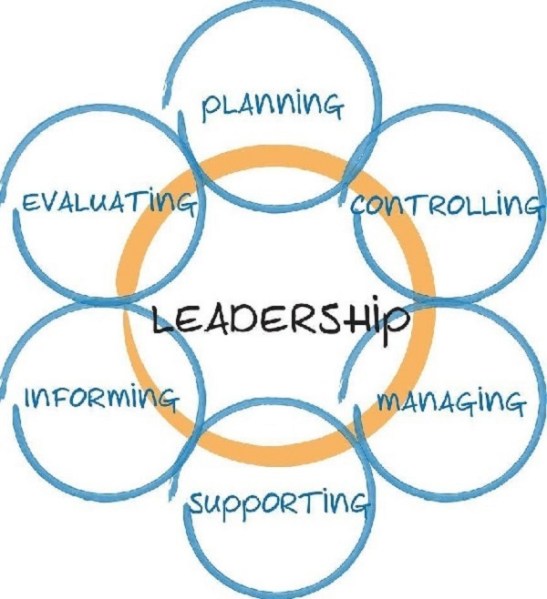
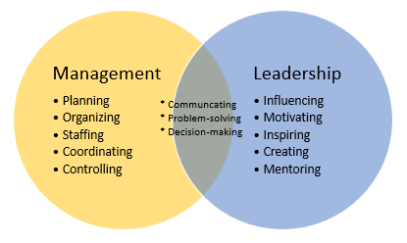
As you know, management involves getting work done through the people and by virtue of their positions, managers can issue orders and instructions to their subordinates to get the work done, but it is also necessary to ensure that subordinates put in their maximum effort in performing their tasks and hence managers have to regulate and influence the subordinates behaviour and conduct at work and it is through the leadership role of managers that employees may be induced to perform their duties properly and maintain harmony in group activities. A manager, having formal authority, can direct and guide his subordinates and command their obedience by virtue of his positional power but as a leader, a manager can influence work behaviour by means of his leadership ability to get the cooperation of all members of the group. Leadership may be defined as a process of influencing group activities towards the achievement of certain goals. Thus, the leader is a person in a group who is capable of influencing the group to work willingly and he guides and directs other people and provides purpose and direction to their efforts and according to eminent writers Hodge and Johnson Leadership is “ Leadership is the ability to shape the attitude and behaviour of others whether in formal or informal situations” and According to Livingston Leadership is “ Leadership is the ability to awaken in others the desires to follow a common objective”.
CHARACTERISTICS OF LEADERSHIP
Managerial leadership mainly possess the following characteristics:
- Leadership is needed in all walks of life, such as economical, social, political and industrial spheres.
- It is the duty of the leader to maintain proper discipline among his subordinates.
- It is a continuous process whereby the manager influences, guides and directs the behaviour of subordinates.
- A true leader is responsible for including encouragement and confidence among employees of any organization.
- The success of a manager as a leader depends on the acceptance of his leadership by the subordinates.
- The manager-leader is able to influence his subordinate’s behaviour at work due to the quality of his own behaviour as a leader.
- The leader leads his group with authority and confidence.
- The leader establishes the relationship between an individual and a group around some common interest.
- A true creates a bond of friendship between organization and subordinates.
- Leadership helps others in choosing and attaining specified goals to the maximum satisfaction of both the leader and the follower.
SOME IMPORTANT QUALITIES OF LEADERSHIP
1. Knowledge and intelligence
A leader, to be effective, must have knowledge of group behaviour, human nature and activities involving technical and professional competence. He must have an intelligent perception of human psychology and the ability to think clearly and argue cogently on points of dispute.
2. Integrity and Honesty
A leader should possess a high level of integrity and honesty and he should be a role model regarding ethics and values.
3. Motivation Skills
A leader should be an effective motivator and he should understand the needs of the people and motivate them through satisfying their needs.
4. Self-confidence
Confidence about one’s leadership ability makes it possible for a leader to analyse and face different situations and adopt a suitable style and Lack of self-confidence often prevents managers to adopt a participative style and repose trust in their subordinates.
Appraisal of employees based on his/her performance- The Importance
Every company wants hard working and goal oriented employees. Every Organisation desires success. What does an employee wants? What are his goals.? All an employee wants is appraisal for his/her hardwork and performance that he/she is producing.Further in this article you will be able to completely understand about appraisals, goals and legalities attached with it.
Lets understand about appraisal of employees and needs of appraisal.
An employee performance appraisal is a process—often combining both written and oral elements—whereby management evaluates and provides feedback on employee job performance, including steps to improve or redirect activities as needed. Documenting performance provides a basis for pay increases and promotions. Appraisals are also important to help staff members improve their performance and as an avenue by which they can be rewarded or recognized for a job well done. In addition, they can serve a host of other functions, providing a launching point from which companies can clarify and shape responsibilities in accordance with business trends, clear lines of management-employee communication, and spur re-examinations of potentially hoary business practices. Yet Joel Myers notes in Memphis Business Journal that “in many organizations, performance appraisals only occur when management is building a case to terminate someone. It’s no wonder that the result is a mutual dread of the performance evaluation session—something to be avoided, if at all possible. This is no way to manage and motivate people. Performance appraisal is supposed to be a developmental experience for the employee and a ‘teaching moment’ for the manager.”
Lets look at goals of appraisal system.
While the term performance appraisal has meaning for most small business owners, it might be helpful to consider the goals of an appraisal system. They are as follows:
- To improve the company’s productivity
- To make informed personnel decisions regarding promotion, job changes, and termination
- To identify what is required to perform a job (goals and responsibilities of the job)
- To assess an employee’s performance against these goals
- To work to improve the employee’s performance by naming specific areas for improvement, developing a plan aimed at improving these areas, supporting the employee’s efforts at improvement via feedback and assistance, and ensuring the employee’s involvement and commitment to improving his or her performance.
What are the types of appraisal and assesment terms.? Lets list them out
1.Traditional
2.Self Initiated reviews
3.Self appraisal
4.360⁰ feedback
In developing an appraisal system for a business, an entrepreneur needs to consider the following:
- Size of staff
- Employees on an alternative work schedule
- Goals of company and desired employee behaviors to help achieve goals
- Measuring performance/work
- Pay increases and promotions
- Communication of appraisal system and individual performance
- Performance planning
Lets understand legal issues related to appraisals.
Besides providing a written summary of the appraisal to the employee, a business owner would be well-advised to ensure the following with regards to the system at large:
- Job expectations as well as the appraisal system and its impact on employee’s work status are adequately communicated to all employees
- Performance measures are related to the job being performed
- Managers or co-workers providing input into the appraisal must be sufficiently trained as to be able to provide objective input
- Employees are given timely feedback on performance and a reasonable amount of time and support in improving their performance.
Internet
We live in the age of the internet. Also, it has become an important part of our life that we can’t live without it. Besides, the internet is an invention of high-end science and modern technology . Apart from that, we are connected to internet 24×7. Also, we can send big and small messages and information faster than ever. In this essay on the Internet, we are going to discuss various things related to the internet.
Reach of Internet
It is very difficult to estimate the area that the internet cover. Also, every second million people remain connected to it with any problem or issue. Apart from that, just like all the things the internet also has some good and bad effect on the life of people. So the first thing which we have to do is learn about the good and bad effect of the internet. Good effects of the internet mean all those things that the internet make possible. Also, these things make our life easier and safer. Bad effects of the internet mean all those things that we can no longer do because of the internet. Also, these things cause trouble for oneself and others too You can access in any corner of the world. Also, it is very easy to use and manage. In today’s world, we cannot imagine our life without it.
Uses Of Internet
From the time it first came into existence until now the internet has completed a long journey. Also, during this journey, the internet has adopted many things and became more user-friendly and interactive. Besides, every big and small things are available on internet and article or material that you require can be obtainable from internet.Tim Berners-Lee can be called one of the main father of internet as he invented/discovered the www(world wide web). which is used on every website. Also, there are millions of pages and website on the internet that it will take you years to go through all of them.
The Internet can be used to do different things like you can learn, teach, research, write, share, receive, e mail, explore, and surf the internet.
Convenience Due To Internet
Because of internet, our lives have become more convenient as compared to the times when we don’t have internet. Earlier, we have to stand in queues to send mails (letters), for withdrawing or depositing money, to book tickets, etc. but after the dawn of the internet, all these things become quite easy. Also, we do not have to waste our precious time standing in queues. Also, the internet has contributed a lot to the environment as much of the offices (government and private), school and colleges have become digital that saves countless paper.
Although, there is no doubt that the internet had made our life easier and convenient but we can’t leave the fact that it has caused many bigger problems in the past. And with the speed, we are becoming addict to it a day in will come when it will become our basic necessity..I would like to say that the internet is very important in todays modern world and nothing can be done without internet
Central Railway workshop manufactured a narrow gauge locomotive
Amid the Corona virus-enforced lockdown, the Central Railway’s workshop at Parel in Mumbai has manufactured a narrow gauge locomotive which will be utilized for hauling passengers and good trains on the Kangra Valley. In a statement, the Central Railways informed that the ‘ZDM3’ type locomotive was manufactured while adhering to social distancing norms and limited resources due to the prevalent lockdown conditions.
This was the third of the 12 locomotives for which the Central Railway has received order. These Locos are provided with dual cab to drive from either end with good visibility of track ahead. Most importantly, the locos are equipped with a cold start system to enable their working in severe winter conditions in Northern India. The locos are provided with safety features such as automatic emergency braking, vigilance control device and electronic speedometer with recorder.
Cut down in syllabus for academic session 2020-21 is a one-time measure, clarifies CBSE
The Central Board of Secondary Education (CBSE) has clarified that topics mentioned in certain media reports as dropped from the syllabus are either being covered by the rationalized syllabus or are in the Alternative Academic Calendar of NCERT. In a press statement, CBSE informed that the Alternative Academic Calendar of NCERT is already in force for all the affiliated schools of the board. It said, the rationalization of syllabus of up to 30 per cent has been undertaken for nearly 190 subjects. The Board further highlighted that the cut down in syllabus from class 9th to 12th for the academic session 2020-21 is a one-time measure.
The Board maintained that the objective of the current rationalization is to reduce the exam stress of students due to the prevailing health emergency situation and to prevent learning gaps. CBSE has clarified that no question will be asked from the truncated syllabus in the Board Exams of 2020-21. CBSE informed that the schools have also been directed to follow the Alternative Academic Calendar prepared by NCERT for transacting the curriculum.
Railway Minister Piyush Goyal refutes claims of privatisation of Indian Railways
Railway Minister Piyush Goyal has refuted claims of privatization of the Indian Railways. In a tweet, the Minister said, all the current services of the Indian Railways will continue to remain operational and the Railways is not being privatized in any way. Mr. Goyal informed that 151 additional modern trains will be operational on 109 routes with private participation. He asserted, these additional services will not affect the functioning of other trains but will only create more avenues of employment in the country.
The Ministry of Railways has said that 151 trains proposed to be run by Private operators once the selection process is over, would be in addition to the existing trains. The Ministry in a statement said that these proposed trains will run on the routes where the demand for trains is already higher than the existing capacity. The Ministry has invited Request for Qualifications (RFQ) for private participation for operation of passenger train services over 109 Origin Destination (OD) pairs of routes.
The project would entail private sector investment of about 30 thousand crore rupees. This is the first initiative of private investment for running Passenger Trains over Indian Railways network.
The objective of this initiative is to introduce modern technology rolling stock with reduced maintenance and transit time as well as to boost job creation, provide enhanced safety and world class travel experience to passengers. The Ministry said, the driver and guard of the trains will be Railway officials and the safety clearance of trains will be done by Railways only.
The 109 Origin Destination(OD) Pairs have been formed into 12 Clusters across the Indian Railway network and each train will have a minimum of 16 coaches. The Ministry said, majority of trains will be manufactured in the country under Make in India and the private entity will be responsible for financing, procuring, operation and maintenance of the trains. It said, these trains will be designed for a maximum speed of 160 kilometres per hour.
The Private Entity will pay to Indian Railways fixed haulage charges, energy charges as per actual consumption and a share in Gross Revenue determined through a transparent bidding process.
Union govt releases Rs 6,195.08 rupees to 14 states as fourth equated monthly installment of the PDRDG
Union Government has released 6,195.08 crore rupees to 14 states as the fourth equated monthly installment of the Post-Devolution Revenue Deficit Grant (PDRDG) as recommended by 15th Finance Commission. The Finance Ministry said in a tweet that this would provide them additional resources during the Corona crisis.
IIT Alumni Council and CSIR-IGIB sign MoU for joint research on COVID-19 and patient data analysis
The IIT Alumni Council has signed an agreement with the CSIR Institute of Genomics and Integrative Biology (CSIR-IGIB) to jointly conduct research on COVID-19 and patient data analysis. It may be noted that the council is setting up the world’s largest molecular diagnostic lab ‘MegaLab Mumbai’.
According to a statement issued yesterday, the council handed over imaging data of over 8,500 patients, who were admitted at the COVID Care Facility at Worli’s National Sports Club of India. IIT Alumni Council President Ravi Sharma has said that this partnership will not only create a world-leading testing and treatment ecosystem but also establish global data leadership. Late May, the Council had announced the launch of the world’s largest virology lab testing centre with a capacity of conducting one crore tests. The first phase, with a capacity to carry out 10 lakh tests, will be ready by the end of this month.
The IIT Alumni Council is the largest body of alumni, students and faculty from all the 23 Indian Institutes of Technology and partnering Technical Institutes of Excellence and was formed last year to carry out projects of social importance.
Specialist doctors from AIIMS to provide expert guidance on COVID-19 to state hospitals
Specialist doctors from AIIMS in New Delhi will provide expert guidance and knowledge support on COVID-19 to doctors manning Intensive Care Units in state hospitals. Ten hospitals have been selected, including nine from Mumbai and one from Goa. The first session of the expert tele-consultation was held last evening. A calendar of these expert-led tele-consultation sessions has been drawn up to cover the states till 31st of this month.
This tele-consultation exercise shall be extended to another 61 hospitals which have bed capacity ranging from 500-1,000 on twice a week basis. Our correspondent reports, a total of 17 such states shall be covered. These are Delhi, Gujarat, Telangana, Kerala, Andhra Pradesh, Karnataka, Bihar, West Bengal, Tamil Nadu, Haryana, Odisha, Rajasthan, Uttar Pradesh, Madhya Pradesh, Punjab, Jharkhand and Maharashtra. Up to two doctors handling ICU patients from each hospital along with the Director General of health Services (DGHS) of the concerned state will participate in the interaction.
Dr. Anant Mohan, Head of Pulmonary Medicine at AIIMS in Delhi, conducted the first session of the tele-consultation yesterday. Speaking exclusively to AIR News, Dr. Anant Mohan said that the main aim of these interactions is to further bring down the COVID-19 related fatality rate in the country. He said, such technological interventions will help doctors reach out to the maximum number of patients in the country.


You must be logged in to post a comment.