Author: Eduindex News
\’Betaal\’ review: These undead shouldn’t have come to life
Make In India and Self-Reliant
Make in India is a iniciative started by the Union Government of India.This iniciative was started in September of 2014. 25 sectors were considered under this iniciative to manufacture most of the products in India.
The sole motive of this iniciative is to make India a global manufacturing hub. To invite foreign investors, Our government has allowed 100% foreign direct investment in key sectors of the economy.
25 sectors are-
1. Automobiles
2. Auto components
4. Biotechnology
3. Aviation
5. Chemicals
6. Construction
7. Defense manufacturing
8. Electrical machinery
9. Electronic system design and manufacturing
10. Food processing
11. IT and BPM
12. Leather
13. Media and entertainment
14. Mining
15.Oil and gas
16. Pharmaceuticals
17. Ports
18.Railways
19.Renewable energy
20.Roads and highways
21. Space
22.Textiles
23.Thermal power
24.Tourism & Hospitality
25. Wellness
Manufacturing sector contributes 16% to the GDP in India which is aimed to make 25% by 2022.
It is worth mentioning here that chinese manufacturing sector contributes 34% to the china’s GDP.
And in this way there would also be produced millions of job opportunities.
Recently honourable PM Modi announced ‘Aatmnirbhar’ package. here, self-reliance and make in india are co-related to each other.
The dream of being self reliant can’t be made true without active participation of make in india iniciative.
recent clashes are creating situation to put chinese product aside and go with make in india.Now the iron is hot, and there only need is to hit it with mass support.
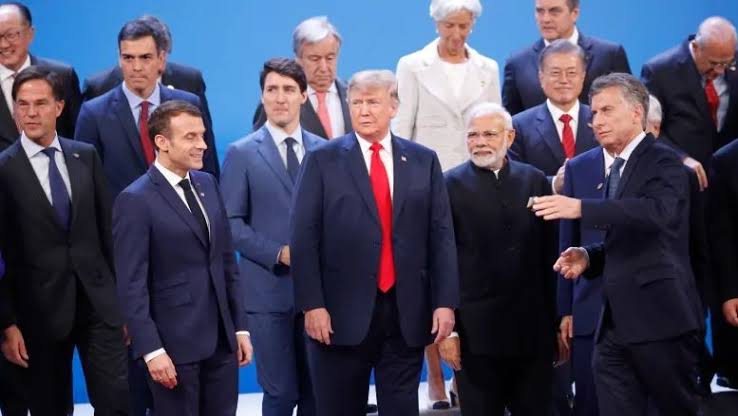
G-20 Grouping
G20 consists of 19 individual countries and the European Union. The EU is represented by the European Commission and by the European Central Bank.
the G20 economies account for around 90% of the gross world product (GWP), 80% of world trade (or, if excluding EU intra-trade, 75%), two-thirds of the world population and approximately half of the world land area.
The G-20’s primary mandate is to prevent future international financial crises and shape the global economic agenda.
The finance ministers and central bank governors of the G-20 countries meet twice a year.
The G-20 members include the G-7 nations-Canada, France, Germany, Italy, Japan, the United Kingdom, and the United States—and 11 emerging market and smaller industrialized countries—Argentina, Australia, Brazil, China, India, Indonesia, Mexico, Russia, Saudi Arabia, South Africa, South Korea, and Turkey. The EU is also a member of the G-20.
The growth of Brazil, Russia, India, and China (the BRIC countries) has driven the growth of the global economy. The G-7 countries grow slower. Therefore, the BRIC countries are critical for ensuring continued global economic prosperity.
In the past, the leaders of the G-7 could meet and decide on global economic issues without much interference from the BRIC countries, but those nations have become more critical in providing the needs of the G-7 nations. For example, Russia delivers most of the natural gas to Europe. China produces much of the manufacturing for the United States. India provides high-tech services.
How to Open Your Eyes and Make the Most of Life
“The real voyage of discovery consists not in seeking new landscapes, but in having new eyes.” ~Marcel Proust
How can we expand our own perception of reality and surrender to our path?
1. Stop blaming.
Every decision you have or have not made has led you exactly where you are. So often we play the blame game with accusations of “this is their fault” or “they made me feel this way.”
Though we may have been victims in the past, and we didn’t get to choose our circumstances as kids, as adults we are responsible for our own emotions and circumstances. When we choose to no longer hold a victim mindset, we are empowered to take the reins of our own life and make choices in line with our highest path.
2. Focus on the now.
When we put our energy into thoughts of past regrets or future fears, we often suffer anxiety or depression. When we shift our thoughts to the present moment, we tune into the blessings that are happening right now. Yoga and meditation are great tools for practicing presence. The more we remain present with each moment as it comes, the less fear and anxiety we experience.
3. Connect to nature.
Nature heals. It’s that simple. Go outside. Put your bare feet on the Earth. Dig your hands in the dirt. Climb a tree. Look at the star-filled sky. Learn from the reliability and consistency of nature. The sun always rises and sets each day. The seasons change without fail. These truths remind us of the divine timing of everything, and we too are a part of this universal tapestry.
4. Connect with a friend.
We are social creatures. We crave connection—whether it’s FaceTime or face to face. While it is often necessary to go inward, sometimes what we need is to get out of our own head and spend time connecting with a close friend. Practice complete presence. Laugh and be silly. Cry and be vulnerable. Be real. Engage in friendships where you can show up exactly as you are, without judgment. Choose interactions and connections that leave you feeling lighter.
5. Give to others.
Often when we feel sorry for ourselves, the best way to get out of our “woe is me” space is to do something kind for someone else. There are so many ways we can give back to others or to the community. Get involved in charitable work. Send a care package to a loved one. Send your energy into something that creates a shift from your own perceived problems to helping those around you.
6. Live with purpose.
Engage in work that lights you up. You may already have a career that’s driven by passion and purpose. Or perhaps you have a side gig or hobby that fills you up. It could be drawing or playing music, teaching, or coaching others. Say yes to things that bring you joy and a sense of purpose. Say no to things that drain your spirit, unless they’re responsibilities you can’t neglect, and it will be much easier to find time, even if only small windows.
7. Establish a daily gratitude practice.
Gratitude is a daily choice. We can focus on what is missing or we can choose to focus on the blessings right before us. Put pen to paper. It can be something small, like a morning cup of coffee, or something more grandiose, like the ability to love and be loved. Focus your energy on what you are grateful and shift from a mindset of lack to one of abundance.
—
Waking up is a process that unfolds the moment we decide to relinquish control and surrender to the flow of life.
The more we trust our own path, the more peacefully we can navigate our way through this world. In each moment we can choose gratitude over disappointment, love over hate, abundance over lack, and trust over fear. Through these daily choices our original painting will transform into a landscape more magnificent than we ever could have dreamed of.
What are you not seeing because you are seeing what you are seeing? Are you ready to awaken to the illuminated path that is unfolding right before you? All you have to do is open your eyes.
Digital Marketing has changed Today’s Business World : Big Exclusive >>>>>>>>>>>…

Digital marketing as you heard this word, you will certainly focus on online marketing or the non traditional marketing technique which can boost the market of important goods and things digitally. Basically digital marketing is the type of marketing which is delivered over the digital channels especially on the internet, smartphones and other digital mediums are technically included. Digital marketing can create a hyphen market space which can be utilized by both suppliers and customers.
Without facts and principles, data is useless.” –Bob Hoffman, Writer, Speaker and Type A Group Partner
Tweet
Anyone who is using digital media or mediums can take advantage of exclusive offers and deals which have been provided by suppliers. Digital marketing can boost the business turnover of the companies. Digital marketing offers a huge return on small investment. Nowaday Companies are hiring digital marketing experts for better promotion of their products.
“We need to stop interrupting what people are interested in and be what people are interested in.” –Craig Davis, former Chief Creative Officer at J. Walter Thompson
“Content is not king, but a president elected by the votes of those whom it aims to rule.” –Raheel Farooq, Teacher, Writer and Voiceover Artist
Tweet

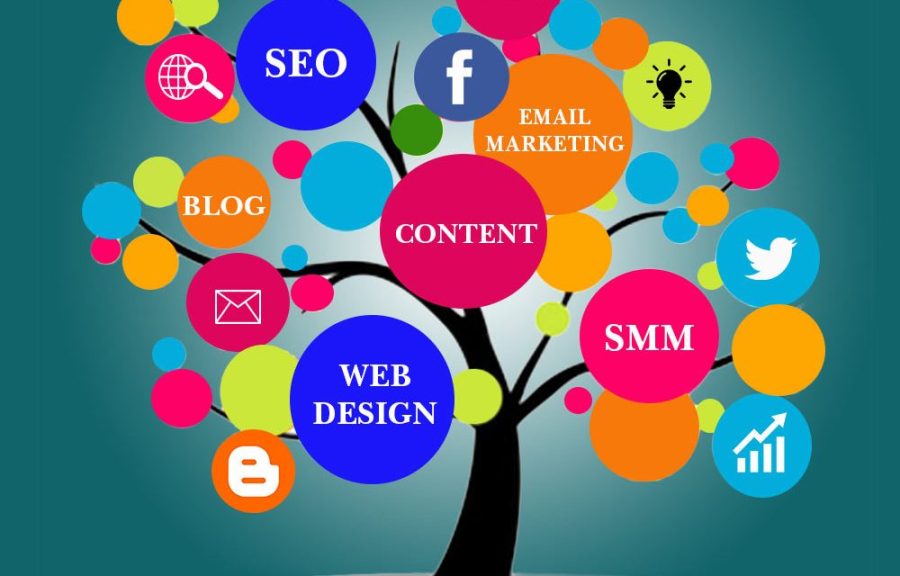
Digital marketing can be divided into several types which is given as follows-
- Search Engine Marketing (SEM).
- Social Media Marketing (SMM).
- Email Marketing (EM).
- Content Marketing (CM).
- Pay-Per-Click (PPC).
- Television Marketing (TM).
- Affiliate Marketing (AM).
- Radio Marketing (RM).
“Does your content lead readers on a journey, or does it merely stuff them as leads into a pipeline?” –Ann Handley, Chief Content Officer of MarketingProfs
Tweet
Digital marketing has consist several marketing benefits which is given as below-
- Low Cost: Marketing digitally offers more affordable alternatives than traditional methods. They create much impact yet cost less.
- Easy to Measure: Success of the digital campaign can be easily traced like email marketing software.
- Easy to Adjust: Digital marketing can be easily adjusted accordingly or stopped all through with ease over traditional marketing.
- Brand Development: A well developed website that is highly interactive in some of the ways by which business can build its brand,
- Ease to Share: Digital marketing channels, feature sharing capabilities which allows campaigns to be shared with various followers.
“The consumer is not a moron; she is your wife.” –David Ogilvy, the Father of Advertising, Founder of Ogilvy & Mather
“Authenticity, honesty, and personal voice underlie much of what’s successful on the Web.” –Rick Levine, Author of The Cluetrain Manifesto
Tweet
Hence, Digital marketing is the revolutionary step to increase the business capability and goals, promotes the goods and makes the business companies a big brand.
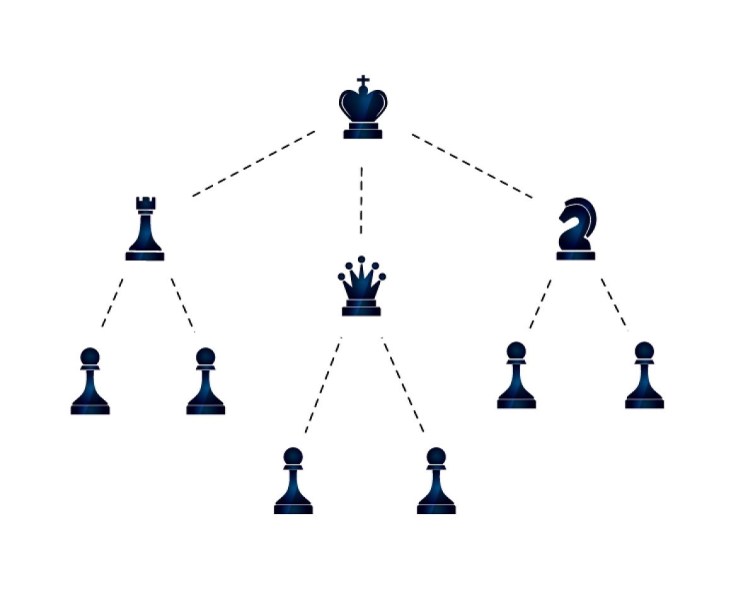
DECENTRALIZATION AND CENTRALISATION
DECENTRALIZATION
Decentralization is a systematic effort to delegate to the lowest levels of the authority except that which can be expected that can be exercised at central points. It is the pushing down of authority and power of the decision-making to the lower levels of the organization and the essence of decision making is dispersed throughout the organization. The essence of decentralization is the transference of authority from a higher level to a lower level. It is a fundamental principle of democratic management where each individual is respected for his inherent worth and constitution as Newman and Summer rightly said “Decentralization is simply a matter of dividing up the managerial work and assigning specific duties to the various executive skills”.
FEATURES OF DECENTALISATION
The following are the chief characteristics of decentralization:
- It is an extended form of delegation.
- It gives importance to the role of subordinates.
- It reduces the work-load of the managers in the top hierarchy.
- It is a process applied to the entire organization.
- Under it its decisions are taken by those employees who implement them; and
- Under it along with authority, responsibility is also transferred.

CENTRALIZATION
Centralization is the reservation or withholding of authority by individual managers within the organization and according to Henry Floyd “Everything that goes to increase the importance of the subordinate’s role in decentralization, everything which goes to reduce it is centralization”.
In centralization a little delegation of authority is the rule; power and discretion are concentrated in a few executives. Control and decision-making are in the hands of top-level management, however, absolute centralization is untenable because it would mean that the subordinates have no duties, power, or authority.
Centralization may be essential in a small organization to survive in a highly competitive world, but as an organization becomes more complex in terms of increasing size, the interdependence of work-flow, complexity of tasks and spatial physical barriers within and among groups, a requisite for efficiency is to move decision-making centres to the operating level. Thus, the larger the size of an organization, the more urgent is the need for decentralization and this does not mean that denaturalization is good and centralization is bad. According to Allen “ Centralization is the systematic and consistent reservation of authority at central points in the organization” and according to Fayol “Centralization is that organization where the role of subordinates is reduced”.

FEATURES OF CENTRALIZATION
On the basis of the properties, the following are the characteristics of centralization:
- Right of decision is centralized and withhold with the top level of the management.
- The lower level of management executives only follows the decisions and necessary actions taken by top-level management.
- There is the least use of the process of delegating rights as it brings down the taken for making a decision and reduces the number of people involved as there is the direct involvement of the top-level management.
- There is reduction in the role of subordinates.
- There are a great distance work site and the decision-making place.
History of Drawing…
Homo sapiens created the world’s first known drawing on this stone about 73,000 years ago in what is now South Africa. A small rock flake no larger than a house key is covered with a colossal surprise: the first known drawing ever made by a human. It is believed that drawing was used as a specialized form of communication before the invention of the written language, demonstrated by the production of cave and rock paintings around 30,000 years ago. These drawings, known as pictograms, depicted objects, and abstract concepts.

World’s oldest drawing is Stone Age crayon doodle. ‘Hashtag’ pattern drawn on a rock in the South African cave is 73,000 years old. There are many uses for drawing. Drawing is a form of communication that preceded writing and that continues to serve as another form of communication. “Drawings can do amazing things, They can tell stories, educate, inspire, reveal, entertain, and inform.” Drawing is a form of visual art in which a person uses various drawing instruments to mark paper or another two-dimensional medium. Instruments include graphite pencils, pen, and ink, various kinds of paints, inked brushes, colored pencils, crayons, charcoal, chalk, pastels, various kinds of erasers, markers, styluses, and various metals. Digital drawing is the act of using a computer to draw. Common methods of digital drawing include a stylus or finger on a touchscreen device, stylus- or finger-to-touchpad, or in some cases, a mouse. There are many digital art programs and devices.
Drawing is one of the oldest forms of human expression, with evidence for its existence preceding that of written communication. It is believed that drawing was used as a specialized form of communication before the invention of the written language, demonstrated by the production of cave and rock paintings around 30,000 years ago. These drawings, known as pictograms, depicted objects, and abstract concepts. The sketches and paintings produced by Neolithic times were eventually stylized and simplified into symbol systems and eventually into early writing systems. Before the widespread availability of paper, 12th-century monks in European monasteries used intricate drawings to prepare illustrated, illuminated manuscripts on vellum and parchment. Drawing has also been used extensively in the field of science, as a method of discovery, understanding, and explanation.
The medium is the means by which ink, pigment or color are delivered onto the drawing surface. Most drawing media are either dry (e.g. graphite, charcoal, pastels, Conté, silverpoint), or use a fluid solvent or carrier (marker, pen and ink). Watercolor pencils can be used dry like ordinary pencils, then moistened with a wet brush to get various painterly effects. Very rarely, artists have drawn with (usually decoded) invisible ink. Metalpoint drawing usually employs either of two metals: silver or lead. More rarely used are gold, platinum, copper, brass, bronze, and tinpoint.
Paper comes in a variety of different sizes and qualities, ranging from newspaper grade up to the high quality and relatively expensive paper sold as individual sheets. Papers vary in texture, hue, acidity, and strength when wet. Smooth paper is good for rendering fine detail, but a more “toothy” paper holds the drawing material better. Thus a coarser material is useful for producing deeper contrast.
Newsprint and typing paper may be useful for practice and rough sketches. Tracing paper is used to experiment over a half-finished drawing, and to transfer a design from one sheet to another. Cartridge paper is the basic type of drawing paper sold in pads. Bristol board and even heavier acid-free boards, frequently with smooth finishes, are used for drawing fine detail and do not distort when wet media (ink, washes) are applied. Vellum is extremely smooth and suitable for very fine detail. Coldpressed watercolor paper may be favored for ink drawing due to its texture.
Shading is the technique of varying the tonal values on the paper to represent the shade of the material as well as the placement of the shadows. Careful attention to reflected light, shadows and highlights can result in a very realistic rendition of the image.

Blending uses an implement to soften or spread the original drawing strokes. Blending is most easily done with a medium that does not immediately fix itself, such as graphite, chalk, or charcoal, although freshly applied ink can be smudged, wet or dry, for some effects. For shading and blending, the artist can use a blending stump, tissue, a kneaded eraser, a fingertip, or any combination of them. A piece of chamois is useful for creating smooth textures, and for removing material to lighten the tone. Continuous tone can be achieved with graphite on a smooth surface without blending, but the technique is laborious, involving small circular or oval strokes with a somewhat blunt point.
Shading techniques that also introduce texture to the drawing include hatching and stippling. Several other methods produce texture. In addition to the choice of paper, drawing material and technique affect the texture. Texture can be made to appear more realistic when it is drawn next to a contrasting texture; a coarse texture is more obvious when placed next to a smoothly blended area. A similar effect can be achieved by drawing different tones close together. A light edge next to a dark background stands out to the eye, and almost appears to float above the surface.
Here are some advantages of drawing, which you can get:
1. Develops Fine Motor Skills
Fine motor skills include any specialized movement of the hands, wrists, and fingers. As an adult, you rely on fine motor skills when you type, drive, or even text. It’s important for your child to develop strong fine motor skills at a young age.
2. Encourages Visual Analysis
Young children do not yet understand some concepts that you may take for granted, such as distance, size comparison, and textural differences. Drawing provides the perfect opportunity for your child to learn these concepts deliberately. Having a child draw specific items, especially concerning each other, can help him or her perform a fundamental visual analysis of everyday spaces. To support this kind of drawing at home, prompt your child to draw examples of big and small, rough and smooth, far and near, and so on.
3. Helps Establish Concentration
Because most children enjoy drawing, this activity provides time to establish the concepts of concentration and practice. These concepts will be essential to your child’s academic success, even in elementary school. Learning how to observe small details, concentrate on achieving a specific result, and practice tricky tasks helps your child mature.
4. Improves Hand-Eye Coordination
In addition to improving fine motor skills, drawing enables your child to draw connections between what he or she sees and what he or she does. This hand-eye coordination is important in athletic and recreational situations, as well as in academic scenarios such as penmanship lessons.
5. Increases Individual Confidence
As a parent or guardian, you probably love to hear the phrase, “Look what I made!” When your child has an opportunity to create physical representations of his or her imagination, thoughts, and experiences, he or she gains confidence. Drawing can help your child feel more intrinsic motivation, self-worth, and validity. This affirmation will make him or her more confident in other areas that may not come as naturally as drawing.
6. Teaches Creative Problem Solving
Along with visual analysis and concentration, drawing encourages your child to solve problems creatively. When he or she draws, your child must determine the best way to connect body parts, portray emotions, and depict specific textures. Providing specific drawing tasks, such as creating a family portrait, and talking about your child’s color, method, or special choices can help him or she develop stronger problem-solving skills over time.

Piyush Goyal asks NPC to work closely with all the stakeholders
The 49th Governing Council Meeting of National Productivity Council (NPC) was held under the Chairmanship of Commerce and Industry Minister Piyush Goyal through video- conferencing. Mr Goyal suggested that adoption of technology and digital economy is going to play a vital role in not only transforming the business enterprises in the future, but also in achieving the target of a five trillion dollar economy.
He said, productivity is always the result of commitment of excellence, intelligent planning and focused effort. Mr Goyal asked NPC to work closely with all the stakeholders and emphasised on the need to adopt the best practices from around the world. The participants endorsed the view that India can reposition itself only through productivity enhancement. Some of the suggestions that emerged were formulation of sector specific action plans by NPC especially in agriculture and logistics.
Reserve Bank of India extends enhanced borrowing limit to banks under MSF till Sept 30
Amid the economic woes created by the Coronavirus pandemic, the Reserve Bank of India (RBI) has decided to extend the enhanced borrowing facility provided to the banks to meet their liquidity shortages till September 30.
The RBI, as a temporary measure, had increased the borrowing limit of scheduled banks under the marginal standing facility (MSF) scheme from 2 per cent to 3 per cent of their Net Demand and Time Liabilities (NDTL) with effect from March 27, 2020.
Under the MSF, banks can borrow overnight funds at their discretion by dipping into the Statutory Liquidity Ratio (SLR). This relaxation, which was granted till June 30, 2020, has now been extended till September 30. RBI, in its circular said that banks may continue to access overnight funds under the MSF against their excess SLR holding.
The marginal standing facility rate currently stands at 4.25 per cent. The RBI has also extended the relaxation on the minimum daily maintenance of the Cash Reserve Ratio (CRR) at 80 per cent for a further period of three months till September 25, 2020. On March 27, the minimum daily maintenance of the CRR was reduced from 90 per cent of the prescribed CRR to 80 per cent till June 26, 2020. This was done in view of the continuing of hardships faced by banks in terms of social distancing of staff and consequent strains on reporting requirements.
The Power of ATTITUDE💪 – Lion & Eagle
There are only two animals on the planet that the creator identified himself with the first one is the eagle and the second animal is the lion and when we study these two animals because if he is the leader of the universe and we want to be a leader on earth we need to better find out the nature of these animals and also the up attitude of those animals.
If we discover that both of them are the kings of their domain the Eagle is the king of the bird Kingdom and the lion is the king of the animal kingdom but let’s talk a little bit about the lion, the lion has the spirit of leadership and this word spirit here is referring to attitude everybody’s attitude a leader has attitude that makes him or her different from followers now the lion is the king of the jungle but the lion to is a great source of encouragement to all of us. I want you to write down this down remember this as long as you reside favorite the lion isn’t the tallest animal within the jungle number two the lion is not the largest animal in the jungle number three the lion is not the heaviest animal in the jungle number four the alliant is not the smartest animal or the foremost intelligent animal within the jungle and yet when he shows up all of them run away.

It really brings home the purpose a military of sheep led by a lion will always defeat a military of lions led by a sheep and therefore the answers thereto dilemma is that this because leadership can transform cowards into violent warriors the proper quite leadership can transform a timid into bold people that are fellows leadership is that powerful leadership can walk into a camp of depressed people on in 20 minutes. They are turned on into unbelievable powerful armies because leadership determines everything the lion is that the king of the jungle due to one-word attitude.

Lion features a different attitude that creates every animal scared of him now we do not want to steer by fear but it does take respect for you to become a leader once I use the word fear within the jungle we’re talking about respect the elephant respects the lion the hyenas respect the lion they the giraffes they respect the life what makes these massive animals respect such a small cap the attitude is the difference for example, a lion will see an elephant and the thing that counts with mine one word lunch I could eat this thing and he acts the way he thinks now here’s another amazing mystery the elephant is larger, bigger, stronger, more powerful, heavier and more intelligent and yet when the elephant sees the lion one word involves mind eater attitude may be a product of belief you can’t have an attitude beyond your belief so your attitude comes from your belief system the lion is that the king due to what he believes about himself.
Flood affects 21 districts of Assam; 19,000 people shifted to relief camps
In Assam, flood situation remains grim as new areas have been inundated due to incessant rain. Two lakh 62 thousand people are reeling under the fury of flood in 21 districts. 18 persons lost their lives so far. The surging water caused massive damages to crop areas, roads and culverts.
Nearly 19 thousand people are taking shelter at temporary relief camps and administrations are disturbing food items to the flood hit people. Chief Minister Sarbananda Sonowal has instructed district administration to extend all helps to the flood affected people.
Govt intensifies Locust control operations in seven states
Government has intensified Locust control operations in seven states. These are Rajasthan, Madhya Pradesh, Uttar Pradesh, Punjab, Haryana, Gujarat and Maharashtra. In total 60 ground control teams of Locust Circle Offices and 12 Drones are being used for Locust Control operations. The Locust Warning Organization and 10 Locust Circle Offices in coordination with State governments undertake locust control operations in schedule desert areas of Rajasthan and Gujarat. The State Governments through their Agriculture Departments undertake locust control in cropped area. This year starting from 11th April, in this season 1,27,225 hectares have been controlled till 26th of this month.
One swarm of 2 km x 4 km size which was previously controlled in Jhunjhunu district of Rajasthan on 26th June moved to Rewari district in Haryana. This swarm in Rewari was controlled by the State Agriculture Department deploying 40 tractors and 4 fire brigade vehicles. Two Ground control teams and officers of Locust Circle office were also present and joined them. Control operations were carried out from midnight to early morning yesterday. The left over swarm initially moved towards Jhajjar district in the morning and thereafter turned towards east following the wind direction. This swarm split into 3 to 4 smaller swarms.
One moved towards Nuh in Haryana and two swarms moved over Gurugram, moving further towards U.P. Two teams deployed in Haryana are following these swarms. Five more ground control teams have been moved from Nagaur and Jaipur in Rajasthan to join the operations in U.P. Drones have also been moved from Jaisalmer to join operations. State Agriculture Departments of Haryana and U.P. have been continuously kept informed and they are making necessary arrangements for control wherever the swarm finally settles.
Yesterday morning, apart from control operations at Rewari, locust controls have been undertaken by ground control teams of Locust Circle offices in coordination with agriculture department officials of State Government in Jaisalmer, Barmer, Jodhpur, Bikaner, Nagaur, Jaipur and Sikar. The control operations have also been undertaken at one location in UP. Agriculture Ministry has said that India is the first country to control locust by using drones after finalizing the protocols and getting all statutory approvals. Major operations are concentrated in Rajasthan where maximum resources are committed. State governments have deployed tractor mounted sprayers and fire tender vehicles in large numbers to undertake locust control in cropped area. Ten ground spray equipments were imported from UK to strengthen locust control capabilities in the country.
Additional 45 ground spray equipments will reach next month and Locust Circle Offices have more than 100 ground control equipment by July. Presently 60 control teams and more than 200 Central Government personnel are engaged in locust control operations.For effective control of locusts on tall trees and in inaccessible areas, 5 companies with 12 drones are deployed for spraying of pesticides for locust control. 55 additional vehicles have been purchased to strengthen the control capabilities. Enough stock of pesticides is being maintained with the locust control organization and there is sufficient availability with State Governments also. Home Ministry has included admissibility of hiring of vehicles and tractors with spray equipments for spraying of plant protection chemicals for pest control.
Under Sub-Mission on Agriculture Mechanization, assistance for purchase of 800 tractors mounted spray equipments sanctioned for Rajasthan. Financial assistance of 14 Crore rupees sanctioned for the State for hiring of vehicles, tractors and for purchase of pesticides is under sanction. A total of 1.80 crore rupees sanctioned for Gujarat for purchase of vehicles, spray equipments, safety uniform, android application and training with regard to locust. Review meetings were organized at different levels, Video Conferences were organized for different State Governments and Locust control preparedness is being reviewed.
Local awareness literature, SOP of approved pesticides and awareness videos were also shared with all stakeholder States. The Ministry said no significant crop losses have been reported in Gujarat, Uttar Pradesh, Madhya Pradesh, Maharashtra, Chhattisgarh, Bihar and Haryana. However, some minor crop losses have been reported in some districts of Rajasthan.
Karnataka govt decides to impose lockdown across state every Sunday from 5th July
Karnataka Government has announced to impose state wide lockdown every Sunday to contain the pandemic. A decision to this effect was taken at the high level meeting chaired by Chief Minister BS Yediyurappa yesterday. This measure will start from July 5th.
In another decision taken, all the non essential Government offices will remain shut on every Saturdays and Sundays starting July 10th. In addition, night curfew has been extended from 8 pm to 5 am. It was also decided to increase ambulance services, and make public the information related to availability of beds and also the phone numbers of all nodal officers involved in containment of Covid-19.
Jharkhand govt extends lockdown till 31st July
Jharkhand government has decided to extend lockdown till July 31st across the state. The decision comes in the wake of increasing number of COVID19 cases in the state. 66 new cases were reported during the past 24 hours, taking the total tally to 2,360. The recovery rate in Jharkhand has improved to 73 percent. With the implementation of new directives issued by the Jharkhand government for enforcement of Lockdown, all movement except for essential services shall remain prohibited from 9 pm to 5 am in morning. Inter-state and intra-state bus services will also not be operational during this period.
All religious places, educational institutions, coaching classes, shopping malls, hotels, cinema halls, multiplexes, theatres, entertainment parks, bars, spa and saloons, gymnasiums and swimming pools will remain closed till July 31 across the state during the extended Lockdown orders. Relaxations provided earlier to those sectors and industries for economic activities outside the Containment Zones shall continue. Chief Minister Hemant Soren said that we have achieved success in prevention of spread of the COVID19 virus but more precautionary steps must be taken further for another period of a month to prevent the viral spread.


You must be logged in to post a comment.