Russia supports India’s bid for a permanent seat in UN Security Council

Russia has supported India’s bid for a permanent seat at the United Nations Security Council (UNSC). Russian Foreign Minister Sergei Lavrov said, a Russia, India and China (RIC) meeting discussed probable reforms of the United Nations and India is a strong nominee to become a permanent member of the UNSC. 

He said, Moscow supports India’s candidacy and believes India can become a full-fledged member of the Security Council. Foreign ministers of the RIC discussed reforms of the United Nations during the trilateral meet held through video conferencing. 

UNSC comprises five permanent members and 10 non-permanent members.India has been elected as non-permanent member of the UN Security Council for a two-year term recently. India’s two year term will begin on January 1, 2021. 

Indo Russia ties are based on special and privileged Strategic Partnership: Rajnath Singh

Defence Minister Rajnath Singh has said that India and Russia share relationships based on special and privileged Strategic Partnership. He said Russia has assured that the ongoing military contracts between the two countries will be maintained, and in a number of cases, will be taken forward in a shorter time. Mr Rajnath Singh was speaking to the media in Moscow yesterday after meeting Russian Deputy Prime Minister Yury Borisov. Mr. Singh, who is on a three-day visit to Russia to attend the 75th Anniversary of Victory Day Parade, said his visit to Moscow is the first foreign visit of an official delegation from India after the COVID pandemic.

Terming it as a sign of special friendship, Mr Singh said, despite all the difficulties of the pandemic, bilateral relations between Delhi and Moscow have been keeping good contacts at various levels. He said, during the meeting, Indo-Russian defence cooperation was reviewed and plans to further extend it was discussed. Affirming defence relationship as one the important pillars in the relationship between the two countries, Mr. Singh informed that Indian proposals have received positive responses from the Russian side. He asserted that the traditional friendship between India and Russia remains strong and both countries continue to cooperate on mutual and shared interests. The Defence Minister said, he is looking forward to participating in the 75th Victory Parade wherein an Indian Military contingent will be marching in the Red Square today. He conveyed greetings to the people of Russia and especially the veterans, who he said, have immensely contributed for the common security of both the nations.

He also remembered the Indian soldiers who sacrificed their lives in the second world war and said, many of these soldiers were part of the war efforts to provide assistance to the Soviet Army.

The meeting of Indian and Russian Defence Ministers holds high significance in terms of early procurement of S-400 Anti Missile system from Russia. Russian President Vladimir Putin is likely to visit India later this year.
 

TN: seven-day full lockdown comes into effect in Madurai

In Tamil Nadu, a 7-day full lockdown in Madurai came into effect at midnight last night. It will be in force till the end of this month. The move is aimed at containing the recent surge in fresh Covid-19 cases in the city and its suburbs.

Tamil Nadu witnessed 2516 new Covid-19 cases yesterday, taking the total to 64,603.

AIR correspondent reports, Madurai joins Chennai in the state in going for the complete lockdown, which many say is a lockdown within the lockdown, the reason being the soaring new cases of Covid-19. The measure is aimed at breaking the chain of the spread of the elusive virus. Along with Madurai, its suburbs and adjacent villages also come under the intensified lockdown as they form a contiguous area.

However, retail outlets of essentials can function upto 2 pm including fuel stations. Health facilities can function without any restrictions, though vehicular movement is permitted bare to the minimum.

Meanwhile, the state Chief Minister Edappadi Palaniswamy is slated to interact with all the district collectors today to review the current situation.

Testing labs for Corona goes up to 1,000 across country

Indian Council of Medical Research (ICMR) has said that it has now facilitated setting up one thousand laboratories across the country for testing Covid-19 samples.

In a tweet, ICMR termed it as a major milestone towards enhanced testing in the country. It added that there are 730 government labs and 270 private labs for the testing. The ICMR also said there was only one lab for testing on 23rd January this year, 160 labs on 23rd March and now the number has reached one thousand labs. It has advised all states, public and private institutions and hospitals to take required steps to scale-up testing for Covid-19.

20,000 beds to be added in National Capital by next week for COVID patients: Amit Shah

Union Home Minister Amit Shah has said that around 20 thousand beds including 250 ICU beds for COVID -19 infected persons will be added in the National Capital by next week. Mr Shah said that ten thousand bedded COVID Care Centre at Radha Swami Beas at Chhatarpur of Delhi will be operational by 26th of this month. He said, the work is in full swing and a large part of the facility will be operational by Friday. Mr Shah said this in a tweet while replying to a letter written by Delhi Chief Minister Arvind Kejriwal inviting Mr Shah  to inspect the COVID Care Centre  at Chhattarpur. Delhi Chief Minister had also requested for deployment of doctors and nurses from ITBP and Army at the Centre. Mr Shah said,  Home Ministry  has already assigned the work of operating the COVID Care Centre at Radha Swami Beas to ITBP.

The  Home Minister said  that one thousand  bed full-fledged hospitals with 250 ICU beds for COVID -19 infected persons will be ready by next week. He said,  DRDO and Tata Trust are building the facility with the support of the Central Government. He said, Armed forces personnel will man it and  this Covid Care Centre will be ready in the next 10 days. He said, Armed Forces personnel have been detailed for providing medical care and attention to the infected persons housed in the Railway Coaches in the national capital. He said, eight thousand additional beds have already been placed at Delhi government’s disposal for making COVID Care Centres, as per requirement.

15 Books Bill Gates recommend – Must Read!!!

An average person reads 1.5 books per year while your average top CEO reads over 50 books per year they do this so they can maintain a competitive edge in the game and find new ideas that could improve both their lifestyles and companies this  time we’re taking a look at the books multi billionaire Bill Gates thinks  everyone should read because they had such an incredible impact on his own journey.

Here is list of all 15 books that must be read by you to get a better life style:

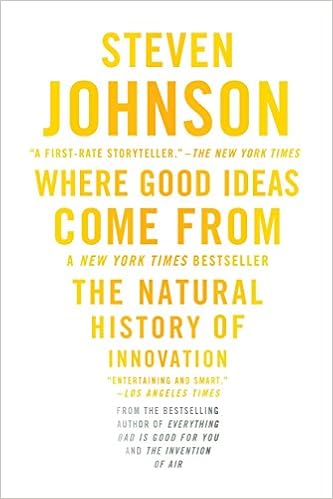
1, Where good Ideas come from :- Steven Johnson

 Click here to view the book


2, Life is what you make it :- Peter Buffet

click here buy the book


3, Tap dancing to work :- Carol Loomis

Tap Dancing to Work: Warren Buffett on Practically Everything, 1966-2013click here to buy the book


4, Moonwalking with Einstein :- Joshua Foer

Moonwalking with Einstein: The Art and Science of Remembering Everything click here to buy the book


5, The Man Who Fed the World :- Leon Hesser

The Man Who Fed the World

Click here to buy the book


6, “The Sixth Extinction” by Elizabeth Kolbert

The Sixth Extinction: An Unnatural History click here to buy the book


7, Making the Modern World :- Vaclav Smil

Making the Modern World: Materials and Dematerialization click here to buy the book


8, The Rosie Project :- Graeme Simsion

The Rosie Project (The Rosie Project Series)

click here to buy the book


9, Business Adventures: Twelve Classic Tales from the World of Wall Street :- John Brooks

Business Adventures

click here to buy the book


10, The Great Gatsby :- F. Scott Fitzgerald

The Great Gatsby

click here to buy the book


11, Outliers :- Malcolm Gladwell

Outliers: The Story of Success click here to buy the book


12, How to Lie With Statistics :- Darrell Huff

How To Lie With Statistics click here to buy the book


13, The Box :-  Marc Levinson

The Box – How the Shipping Container Made the World Smaller and the World Economy Bigger

click here to buy the book


14, How Not to Be Wrong :- Jordan Ellenberg

How Not to be Wrong: The Hidden Maths of Everyday Life

click here to buy the book


15, Sapiens: A Brief History of Humankind :- Yuval Noah Harari

Sapiens: A Brief History of Humankind

click here to buy the book


STRUCTURE OF ORGANISING

The structure is the pattern in which various parts or components are integrated or interconnected and this prescribes the relationships among various activities and positions, as these positions are held by various persons, a structure is called the relationships among people in the organization and thus organization structure refers to the differentiation and integration of activities and authority, role and relationships in the organization. Differentiation is the differences in cognitive and emotional orientations among managers in different functional departments and differences in formal structure among these departments. Integration refers to the quality of the state of collaboration that is required to achieve unity of effort by the organization. The structure of an organization thus regulates, coordinates, and reduces uncertainty in the behaviour of people. According to Peter F. Drucker, “Organisation structure is the most important means as a structure wrongly build cannot assist in the promotion of the business”. Thus, the organisational structure is the lifeline of an organisation and this determines the mutual relationship of different persons working within an institution and clarifies the position of each person in it.

TYPES OF ORGANISATION

Creation of an appropriate structure is indispensable for any organisation and Organisation structure represents the hierarchical arrangement of various positions in the enterprise and it helps in allocating authority and responsibility formally and it also lays down the pattern of communication and coordination in the enterprise and As Kimball write, “ The problem of an organisation is to select and combine the efforts of men of proper characteristics to produce the desired results”. Although character and type of organization would depend largely on the size and nature of the enterprise, yet, there are certain patterns of organising the personnel in an organisation and the need of clear-cut authority/responsibility relationships has led to different forms of administrative organisation as follows:

1. Line Organisation

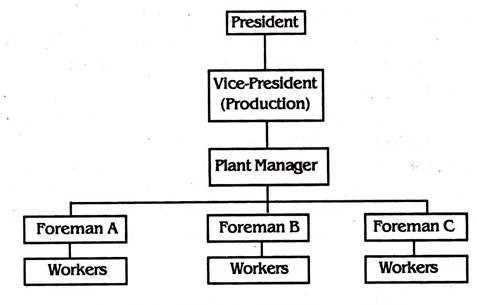
It represents a direct vertical relationship through which an activity flows from top to bottom throughout the organization and the quantum of authority is highest at the top and it reduces at each successive level down the hierarchy, every person in the organisation is in the direct chain of command. The line of authority not only becomes the avenue of command to operating personnel but also provides the channel of communication, coordination and accountability in the enterprise.

2. Line and Staff organization

Under the line and staff organization, the function of line is similar to its function under the line of organisation but some staff or experts are also appointed as advisors to the line officers. The functions of line officer are to take decisions, while the function of the staff officers is to advise them and these staff officers are experts in their respective fields and they offer their useful advice after analysing the problems presented by the line officers and in the way, the work of thinking and execution is done by different persons and this removes the chief defect of the line organisation and it can be adopted in case of large business enterprises. It is, however, important to make it clear that the line officers are not bound to accept the advice offered by the staff officers because the line officers alone are responsible for the outcome.

Best Construction Management Software for Small Businesses : Big Exclusive >>>>>>>>

A project is a series of related a task which when they are carried in the correct order will lead to the completion of the project. Projects are temporary, generally resulting in the creation of a tangible product or outcome. A construction project, sometimes just referred to as a ‘project’, is the organised process of constructing, renovating, refurbishing, etc. a building, structure or infrastructure. The project process typically starts with an overarching requirement which is developed through the creation of a brief, feasibility studies, option studies, design, financing and construction.

Construction projects are typically one offs. That is, a project team, brief and financing are put together to produce a unique design that delivers a single project. Once the project is complete the team is disbanded and sometimes will not work together again. This can make it difficult to develop ideas or relationships, and so lessons learned are often not carried forward to the next project. The exceptions to this are repeat developers such as supermarket chains, housebuilders, and so on.

Credit : Third Party Reference

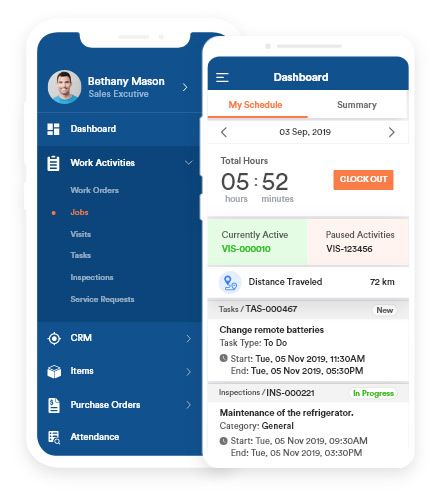
A construction software provides real time access to construction scheduling, documents, change orders, photos, warranty management etc. Construction is a task-driven business and construction project management software plans it accordingly. If you are into the construction business you should consider having one of the top construction software for better productivity. List of the top-rated construction management software’s currently authorised by United States government are given as below:

  1. ProcoreConstruction Project Management Suite:

 Procore has been one of the most talked about construction management software in the last few years. The reason is not just the quality rich features but the efficiency it provides to the project management team. Construction companies can manage multiple construction projects with ultimate visibility and without going remote. Procore ensures quality and safety by mitigating real-time risks and accessing data just a click away. Labour Management, Financial management, Time management are other important features that make Procore leading software.

Procore Construction Management Features: Accounting Integration, Budget Tracking/Job Costing, Change Orders, Commercial, Contract Management, Contractors, Residential, RFI & Submittals, Subcontractor Management.

  • Oracle AconexConstruction Project Management Software:

Oracle Aconex is cloud-based construction management software that connects major construction and engineering projects. Aconex is one of the best solutions to manage information and work process across your projects while handling multiple assignments. Aconex deals with document management, project controls, workflow management, BIM management, quality, and safety of projects, providing insights into projects and analysing data, bidding and estimating quotes.

Credit : Third Party Reference

Oracle Aconex Construction Management Features: Budget Tracking/Job Costing, Change Orders, Commercial, Contract Management, Contractors, Incident Reporting, Residential, RFI & Submittals, Subcontractor Management.

Now that you have fully understood the construction management software, you can start scheduling a call with a number of vendors to discuss your project management needs. You can and should weigh those vendors in terms of their software capability, vendor reputation and flexible price offerings in order to select the one that can promise you quick profit on your investment.

India, China reach consensus to disengage in Eastern Ladakh sector

India and China have reached a consensus to disengage in the Eastern Ladakh sector.

In the Corps Commander level talks between India and China at Moldo, both sides agreed to disengage from all frition areas.

Army sources say,  the Corps Commander level talks between India and China on Monday were held at Moldo in a cordial, positive and constructive atmosphere.

AIR correspondent reports, Modalities for disengagement from all friction areas in Eastern Ladakh were discussed and will be taken forward by both sides.

The marathon meeting lasted nearly twelve hours in Moldo on the Chinese side of Line of Actual Control (LAC) to defuse tensions at the Eastern Ladakh sector.

This was the second meeting between the two sides.

They had earlier met on June 6th and agreed to disengage at multiple locations.

But on June 15th, violent clashes took place and casualties were reported from both sides. India termed the clash as a premeditated action by the Chinese troops.  

Reacting to the development, Prime Minister Narendra Modi assured the countrymen that Indian armed forces are leaving no stone unturned in protecting the country.  

Mr Modi asserted that country today has such capability that no one can dare even look towards an inch of our land.

People are spontaneously boycotting and burning Chinese products in different parts of the country.

India stresses on need to respect principles of international relations at RIC trilateral FM’s meet

India has said that respecting the international law, recognizing  legitimate interests of partners, supporting multilateralism and promoting common good are the only ways of building a durable world order.

In his opening remarks at the Russia-India-China- RIC trilateral  Foreign Minister’s Video Conference  today, External Affairs Minister Dr S Jaishankar said that this  Special Meeting reiterates our belief in the time-tested principles of international relations.

He said,the challenge today is not just one of concepts and norms, but equally of their practice. He said, the leading voices of the world must be exemplars in every way.

Dr Jaishankar said the United Nations began with 50 members and today it has 193.

He said UN’s decision making surely cannot continue to be in denial of this fact.

He said Russia, India and China have been active participants in shaping the global agenda and it is India’s hope that RIC will also now converge on the value of reformed multilateralism.

Dr Jaishankar said the victory over Nazism and Fascism in the second world war was achieved through sacrifices across many theatres by many countries.

India made a significant contribution, with 2.3 million of its citizens under arms and 14 million more participating in war production.

The Minister pointed out that when the victors met to fashion the ensuing global order, the political circumstances of that era did not give India due recognition.

He said this historical injustice has stood uncorrected for the last 75 years, even as the world has changed.

He said that therefore, it is important for the world to realize both the contribution that India made and the need to rectify the past.

Probe Probare Aerospace Strength : Big Breaking >>>>>>>>>>>

Which is the motto of the Aeroplane & Armament Experimental Establishment at Boscombe Down in Wiltshire, where the Ministry of Defence test new military aircraft and where the Empire Test Pilots’ School is located – “To test properly”.

The BBC Radio 4 afternoon current affairs programme PM has started a new thread this past week, “Will your job be replaced by a robot?”. (Their definition of ‘robot’ is quite wide; what they actually mean is ‘Artificial Intelligence’, which can come in a number of different packages, very few of them – currently – robot-shaped.) Their overall thrust is that within twenty years, very many professional and middle-management jobs will be replaced by AI systems.

We’ve been here before. In the 1960s, the watchword was “automation”. Automated systems were not in any way ‘intelligent’, but they were beginning to replace a number of manual and skilled jobs. Big teams of workers with shovels were replaced by excavators; farm workers were replaced by specialised attachments to tractors; skilled machine workers were replaced by numerically-controlled lathes and drilling machines.

In engineering terms, this was about the advance of miniaturisation, from mechanical or electromechanical automation systems, to transistorisation, then integrated circuits (ICs), large-scale integration (LSI), very large scale integration (VLSI) and then the microprocessor revolution. In each case, the devices got smaller, faster and cheaper; and humans got ever more ingenious at identifying new situations where these devices could be applied to both systems and machines.

At some point in the late 1970s, this effect crossed over from physical activities and started to appear in knowledge and information systems. Libraries began to see the arrival of computer systems, first for complex technical searching, then for cataloguing, and finally the knowledge itself was no longer confined to the pages of books and journals.

Credit : Third Party Reference

Thinkers in what was then called ‘library science’ talked of the ‘information explosion’ and how librarians would be essential in almost every kind of organisation to help guide professionals through the jungle of printed information sources to drill down to the information they needed to run their organisations or plan their products.

So to me, a software tester is someone whose primary role is to improve software products before they go out of the door by doing a number of different things:

  • Participating in the design process by casting an experienced eye over proposed products, challenging assumptions made about users and their behaviour, and thinking about how the product should be tested;
  • Collaborating with developers and product owners during the build process in an on-going challenge process;
  • Arranging for the quality assurance of the product at various stages in its development by helping to make sure that the application works as expected; and
  • Test-driving early prototypes to see if the application does what it is supposed to, to find out the best way of using it, to critically appraise the end result, and to help those who have to write user instructions to understand what the application does, how it works and (sometimes more importantly) why it works.
  • In this last function, the tester is standing in for the end user, reviewing the product with a view to seeing if it can be improved in any way. This in turn feeds back into the design process; software goes through different versions, (hopefully) ‘upgrades’, through user feedback and the process of fixing bugs and implementing new features. At least with computer software, the old corporate mantra of “we are continually striving to improve our products” is more likely to actually be true…

Meanwhile, as the impact of computers grew in the daily life of more and more people, pundits began to debate the issue. There was a joke in the late 1980s which suggested that there was a new sort of party game. When any group of computer scientists or employment experts or economists got together, one of them would name a number – say five million – and the rest would take it in turns to explain why the new generation of microprocessor-driven computers would cause either the loss or creation of that many jobs. Oh how we laughed (or forecast doom, depending on where we were standing at the time).

At the time, of course, it was easier to see how many jobs were being destroyed by any given change – say, in mining or manufacturing. My father left his job designing and implementing signalling schemes on the railways because he was being asked to design schemes that put people

Reference- https://divyanshspacetech.wordpress.com

History of Internet…

internet is a global computer network providing a variety of information and communication facilities, consisting of interconnected networks using standardized communication protocols. It connects millions of computers together globally, forming a network in which any computer can communicate with any other computer as long as they are both connected to the Internet. the full form of the internet is  Interconnected Network, firstly the Internet has its origin in the efforts to build and interconnect computer networks that arose from research and development in the United States and involved international collaboration, particularly with researchers in the United Kingdom and France.

Fundamental theoretical work in data transmission and information theory was developed by Claude Shannon, Harry Nyquist, and Ralph Hartley in the early 20th century. Information theory, as enunciated by Shannon in 1948, provided a firm theoretical underpinning to understand the trade-offs between signal-to-noise ratio, bandwidth, and error-free transmission in the presence of noise, in telecommunications technology. With so many different network methods, something was needed to unify them. Robert E. Kahn of DARPA and ARPANET recruited Vinton Cerf of Stanford University to work with him on the problem. By 1973, they had worked out a fundamental reformulation, where the differences between network protocols were hidden by using a common internetwork protocol, and instead of the network being responsible for the reliability, as in the ARPANET, the hosts became responsible. Cerf credits Hubert Zimmermann and Louis Pouzin designer of the CYCLADES network and his graduate students Judy Estrin, Richard Karp, Yogen Dalal, and Carl Sunshine with important work on this design.

800px-Internet_map_in_February_82

During the first decade or so of the public Internet, the immense changes it would eventually enable in the 2000s were still nascent. In terms of providing context for this period, mobile cellular devices like smartphones and other cellular devices, which today provide near-universal access, were used for business and not a routine household item owned by parents and children worldwide. Social media in the modern sense had yet to come into existence, laptops were bulky and most households did not have computers. Data rates were slow and most people lacked means to video or digitize video; media storage was transitioning slowly from analog tape to digital optical discs (DVD and to an extent still, floppy disc to CD). Enabling technologies used from the early 2000s such as PHP, modern JavaScript, and Java, technologies such as AJAX, HTML 4, and various software frameworks, which enabled and simplified speed of web development, largely awaited invention and their eventual widespread adoption.

The Internet was widely used for mailing lists, emails, e-commerce and early popular online shopping (Amazon and eBay for example), online forums and bulletin boards, and personal websites and blogs, and use was growing rapidly, but by more modern standards the systems used were static and lacked widespread social engagement. It awaited a number of events in the early 2000s to change from a communications technology to gradually develop into a key part of global society’s infrastructure.

The first Internet link into low earth orbit was established on January 22, 2010, when astronaut T. J. Creamer posted the first unassisted update to his Twitter account from the International Space Station, marking the extension of the Internet into space..) This personal Web access, which NASA calls the Crew Support LAN, uses the space station’s high-speed Ku band microwave link. To surf the Web, astronauts can use a station laptop computer to control a desktop computer on Earth, and they can talk to their families and friends on Earth using Voice over IP equipment.

Communication with spacecraft beyond earth orbit has traditionally been over point-to-point links through the Deep Space Network. Each such data link must be manually scheduled and configured. In the late 1990s, NASA and Google began working on a new network protocol, Delay-tolerant networking which automates this process, allows networking of spaceborne transmission nodes, and takes the fact into account that spacecraft can temporarily lose contact because they move behind the Moon or planets, or because space weather disrupts the connection. Under such conditions, DTN retransmits data packages instead of dropping them, as the standard TCP/IP Internet Protocol does. NASA conducted the first field test of what it calls the “deep space internet” in November 2008. Testing of DTN-based communications between the International Space Station and Earth has been ongoing since March 2009 and is scheduled to continue until March 2014.

As the Internet grew through the 1980s and early 1990s, many people realized the increasing need to be able to find and organize files and information. Projects such as Archie, Gopher, WAIS, and the FTP Archive list attempted to create ways to organize distributed data. In the early 1990s, Gopher, invented by Mark P. McCahill offered a viable alternative to the World Wide Web. However, in 1993 the World Wide Web saw many advances to indexing and ease of access through search engines, which often neglected Gopher and Gopherspace. As popularity increased through the ease of use, investment incentives also grew until in the middle of 1994 the WWW’s popularity gained the upper hand. Then it became clear that Gopher and the other projects were doomed to fall short.

In recent years, it’s become very clear that the internet is key to living in the modern age. Basically, everyone is expected to have an internet connection and everyone is expected to use that internet on a daily basis. The idea of doing something as simple as finding work without the internet is alien to most Europeans. I remember entering a job center in Norway and seeing the staff completely baffled and out of ideas when I informed them I was temporarily out of the internet. I also found it near impossible to manage here without some form of daily internet access, I think everyone who has been without it for more than a day will realize how much they rely on it, not just ‘want’ it.

However, when people think, “free internet” I don’t think they mean “we should have free WiFi hotspots everywhere.” I think they instead mean that you should not have to pay for WiFi to be wired to your house, and you should not be charged by a company to provide you the internet. I agree with this fully, the internet should not be a paid commodity like it’s simply something you can go without, it simply is too important. Like water and electricity, most developed countries monitor these services consistently and try to ensure they’re as cheap as possible, otherwise, the cost of surviving is simply too high, that’s why you can often find electricity and water for rather cheap prices. Internet, however, can be damned expensive, and the packages and contracts that must be signed are sometimes akin to signing a contract with the devil. Sometimes the companies won’t even deliver your modem, or they will purposely throttle you in order to ensure you upgrade your package. Internet providers can be, and often are, thieves, it’s almost completely unchecked.

In 2015, Google started the ‘Station’ program to bring free public Wi-Fi to 400 busiest railway stations in New Delhi, India, Google has decided to gradually wind down the service globally as it believes that better data plans and improving mobile connectivity have made it “simpler and cheaper” for users to get online. Google explained that it took the decision to end the program because it was becoming difficult to scale up and to make a sustainable business. The company had worked with various partners in each market where it offered the Station service, but each had different technical and infrastructure requirements. In India, it worked with RailTel, Indian Railways, and Pune Smart City, for example, while in South Africa it worked with Think WiFi. However, Google isn’t the only company to have tried to make it easier for users in developing markets to get online. Facebook founded the Internet.org project in 2013, and in 2016 it launched Express Wi-Fi In India after its previous internet service was banned in the country.


ORGANISING


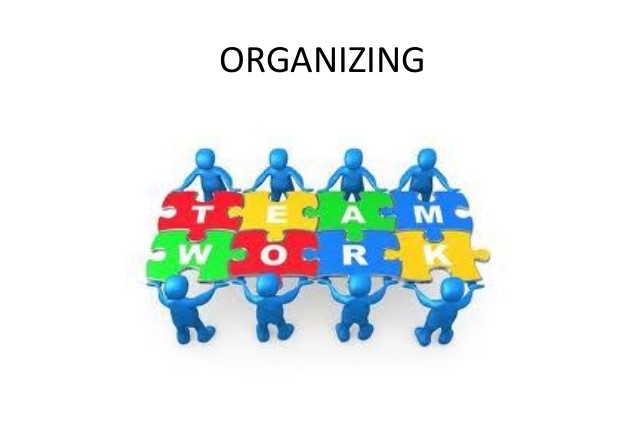
The organisation provides a framework where duties are identified, define tasks are allotted to suitable persons, and interrelationships of personal are made certain and the joint efforts made by different persons become more productive, effective and economical if a well-knit organization is provided by the management and the purpose of establishing an organization, this is to enable its personnel to work more effectively as a unit and no wonder organisation serves as the backbone of management and it is very foundation of most of the steps of operating management.

Organising can be defined as “Organisation is a harmonious adjustment of specialised parts or the accomplishment of common purpose or purposes” by Haney. The organisation is the process of identifying and grouping the work performed, defining and delegating responsibility and authority and establishing a relationship to enable people to work together in accomplishing common objectives.

NATURE OF ORGANISING

1. Division of work

The setting of an organisation involves division of the total work into various activities and functions and assigning the tasks to different persons according to their skill, ability and experience.

2. Chain of command

The superior-subordinate relationship established in an organisation is based on the authority which flows from the higher levels of management to the immediately lower of management and thereby forming a hierarchical chain and is known as the chain of command.

3. Plurality of Persons

The organisation is a group of many persons who assemble to fulfil a common purpose and a single individual cannot create an organisation.

4. Common Objectives

There are various parts of an organisation with different functions to perform but all move in the direction of achieving a general objective.

5. Group of people

An organisation comes into existence when a group of people combine their efforts for some common purpose and willingly contribute towards their common endeavour.

6. Common Purpose

Every organisation comes into existence based on goals of the enterprise which are separate from the personal goals of the people employed and it is the common purpose of the organisation which provides the basis of cooperation among its members.

7. Vertical and Horizontal Relationships

An Organisation creates cooperative relationships between different departments and divisions as well as between superiors and subordinates. The duties and responsibility of superiors and subordinates in each department or division are also unified to serve the purpose of their joint efforts.

8. Organising is a universal process

Organising is needed both in business and also in non-business organisations and nor only this, an organisation will be needed where two or more than two people work jointly. Therefore, an organisation has the quality of universality.

9. Dynamics of organisation

Besides the structural relationships among people which are based on their activities and functions, there exists an organising interaction based on sentiments, attitudes and behaviour of individuals and groups and they are subject to change from time to time.

According to Chester Bernard, Communication, Cooperation and Spirit of service and common objectives are the main elements of the organisation.

Can Life Have Too Much Meaning?

I’m suspicious of those things where more is always supposed to be better. Nature prefers moderation, so good things can harm you when you get too much of them. Drinking more water is good. Too much and you’ll drown.

I think “meaning” is one of those things that is usually good, but that can cause you problems when there is too much of it.

What Meaning Means

Meaning is a slippery word, so it’s hard to be clear we’re using it the same way. However, we all know when a person, thing, goal or idea feels significant to us, and when those same things feel ordinary. The difference is meaning.

In addition to being a feeling, meaning is also an idea. When someone asks you what something means, they’re asking for you to explain it in words. They want its definition, cause or likely implications. Meanings are words and ideas you weave together in your head.

More meaning tends to be better. A complete absence of meaning usually (although perhaps not always) feels awful. Similarly, a lack of meaning in the conceptual sense is confusion and ignorance. We’d prefer to say what things mean and believe it, than to simply shrug our shoulders and say, “I don’t know.”

How Can You Have Too Much Meaning?

I think there’s two ways you can have too much meaning.

First, you could feel too strongly about the significance of something. We’ve all had anxiety and fears when something is so important to us that we’re unable to function. That relationship that you wanted to hold onto even though the other person wasn’t in love with you. That job which meant everything to you—until you got fired. That conviction you held to desperately, until it started to unravel.

Feelings are mental tools. They put our minds into a state that allows certain ideas, actions and thoughts to flow more easily than others. However, to allow some ideas to flow more easily, that must necessarily mean you’re blocking others. The feeling of significance therefore will be useful in some contexts and harmful in others, just like anger, fear, optimism, joy, love, sadness and everything else you feel.

The second way you can have too much meaning is related to the intellectual idea of meaning. If you have a strong set of ideas about what something means, either in terms of its definition, explanation or implied effects, that can “lock” you into a certain way of seeing things. Too much meaning can prevent you from seeing something in another way, and other perspectives may be necessary to solve certain problems.

How to Tell if You Have Too Much Meaning


I suspect that the anxiety and fear we often feel in our daily lives is a result of too much meaning, rather than too little. It’s a combination of a strong feeling of significance, along with a perceived lack of control.

If you follow politics, you may feel like the world is going mad, and that the battles over who leads the country and what policies they implement is extremely significant. Yet, at the same time, you may feel nearly powerless to control the results.

Similarly, in your personal life, there may be situations where there isn’t much more you can do to overcome a problem, but you can’t stop thinking about it. Although people don’t often see their anxieties and fears as resulting from an excess in meaning, it follows that this is the case because if you genuinely didn’t feel the situation was significant you wouldn’t worry about it.

Intellectually an excess of meaning can result in an overly rigid and fixed way of viewing the world. Your ideas, explanations and reasoning about the world is so tight, that you get stuck when you encounter situations that fail to make sense for you.

Is Mindfulness the Relaxation of Meaning?


I have an explanation of meditation and mindfulness and why it seems to be so popular.

Mindfulness, particularly the body-scanning methods popular among Vipassana retreats, are effectively, a way of reducing the emotional and intellectual excesses of meaning.

A common experience when you’re practicing, for instance, is to have a pain somewhere in your body. At first this feels very significant and something that you ought to do something about. After twenty minutes though, the pain starts to turn into something more abstract, perhaps an odd pulsation or throbbing that has changing characteristics.

At one level, I think what has happened is similar to how if you repeat the same word over and over again (say the word “meaning” a few dozen times out loud to get what I mean). By repetitive attention something that would be processed at a level of meaning dissolves into parts that lack that meaning and you start experiencing something that seems to lack connection to the meanings you had previously.

I hesitate to say this is entirely what’s going on with meditation. Many meditators will note the opposite experience: that suddenly the world feels filled with a hidden specialness that was invisible before.

However, I also suspect that this may be a consequence of the thorough de-meaning-ization of your regular experience. Dehabituate your normal filters for processing meaning and new ones will start forming again in the vacuum. Those new ones may not have the same obstacles as the old ones and the fresh perspective may be more enjoyable.

Should You Take Time to “Relax” Your Meaning of Life?


I think meanings, especially intense ones, are an important part of living life well. Don’t confuse what I’m saying for arguing we should all live nihilistically.

Rather, I think what’s necessary is that, from time to time, you are able to temporarily “relax” your meanings in life. This relaxation may be necessary to get out of ruts where your current way of viewing the situation is frustrated and can’t allow you to live your best life.

These meaningness relaxations may be related to specific situations (i.e. how you think about your future career) or it could be more global (i.e. should you find meaning in ambition at all?).

I also suspect that there is no perfect state of meanings, no eternal viewpoint that will be good for all things. Therefore, relaxation of meaning is probably a necessary adjustment that needs to be done every once in awhile. The new meanings you get to may not be any better (in an absolute sense) than the ones you went in with, but they may help you see around obstacles that keep you from living a good life.


Global COVID-19 cases exceed 90 lakhs

At the global level, the number of confirmed COVID-19 cases have exceeded 90 lakhs, with nearly four lakh 70 thousand fatalities.

According to data compiled by Johns Hopkins University, 90 lakhs six thousand 757 cases of Novel Coronavirus have been reported across the world.

The United States continues to remain the worst-hit with 22 lakh 91 thousand 353 cases and one lakh 20 thousand 106 deaths, followed by Brazil 10 lakh 83 thousand 341 cases and over 50 thousand deaths and Russia reported five lakh 84 thousand 680 cases and over eight thousand deaths. Other countries with over two lakh cases include India, Britain, Spain, Peru, Italy, Chile and Iran.