Talking to AIR News, Dr. Uma Kumar, Head of Rheumatology Department, AIIMS suggested to the people to follow social distancing, hand hygiene and cough etiquettes.
President of Public Health Foundation of India, Dr K Srinath Reddy said, India is in a much better position as compared to rest of the world as far as the COVID-19 cases are concerned and the measures taken are yielding results.
In our series ‘Expert Speak’ on All India Radio, we bring you the views of the leading medical experts on COVID-19.
Talking to AIR News, Dr. Uma Kumar, Head of Rheumatology Department, AIIMS suggested to the people to follow social distancing, hand hygiene and cough etiquettes.
President of Public Health Foundation of India, Dr K Srinath Reddy said, India is in a much better position as compared to rest of the world as far as the COVID-19 cases are concerned and the measures taken are yielding results.
Thanks to the application of the wonder material graphene, the quest for producing durable, affordable, and mass-produced “smart textiles” has been given a new push.
Headed by Professor Monica Craciun from the University of Exeter Engineering department, an international group of researchers has developed a novel method for producing fully electronic fibers that can be integrated into the production of day-to-day clothing.
The development of the current generation of wearable electronics involves fixing devices to fabrics, which could make them extremely rigid and prone to malfunctioning. However, in the latest study, the electronic devices are embedded in the material’s fabric, and this is done by coating electronic fibers with durable and lightweight components that will enable showing images directly on the fabric.
Credit: Third Party Reference
According to the scientists, the discovery could transform the development of wearable electronic devices for applications in many different day-to-day applications, and also medical diagnostics and health monitoring, like blood pressure and heart rates. The international collaborative study has been reported in the scientific journal Flexible Electronics. Experts from the Centre for Graphene Science at the University of Exeter, CenTexBel in Belgium, and the Universities of Aveiro and Lisbon in Portugal took part in the study.
For truly wearable electronic devices to be achieved, it is vital that the components are able to be incorporated within the material, and not simply added to it.
Monica Craciun, Professor and Study Co-Author, Engineering Department, University of Exeter. & “Dr Elias Torres Alonso, former PhD student in Professor Craciun’s team at Exeter and now Research Scientist at Graphenea.”
“This new research opens up the gateway for smart textiles to play a pivotal role in so many fields in the not-too-distant future. By weaving the graphene fibres into the fabric, we have created a new technique to all the full integration of electronics into textiles. The only limits from now are really within our own imagination.”
Credit: Third Party Reference
Graphene is only one-atom thick, which makes it the thinnest substance with the ability to conduct electricity. It is also one of the strongest known materials and quite flexible. In recent years, the race has been on for engineers and scientists to adapt graphene for applications in wearable electronic devices.
The latest study applied existing polypropylene fibers—often employed in an array of commercial applications in the textile sector—to fix the novel, graphene-based electronic fibers to develop light-emitting and touch-sensor devices. The innovative method means that the fabrics will be capable of integrating truly wearable displays but without the requirement for electrodes—wires of extra materials.
The incorporation of electronic devices on fabrics is something that scientists have tried to produce for a number of years, and is a truly game-changing advancement for modern technology.“Saverio Russo, Professor and Study Co-Author, Physics Department, University of Exeter.”
The key to this new technique is that the textile fibres are flexible, comfortable and light, while being durable enough to cope with the demands of modern life.“Dr Ana Neves, Study Co-Author, Engineering Department, University of Exeter.”
Earlier in 2015, an international group of researchers, including Dr Ana Neves, Professor Russo, and Professor Craciun from the University of Exeter, had developed a novel method to integrate flexible, transparent graphene electrodes into fibers often associated with the textile sector.
In Gujarat, the Asiatic lions which once faced imminent extinction has shown a population recovery. In the recent exercise called Poonam Avalokan which was carried out in the last week exclusively by the forest department, the population of Asiatic lions has shown a steady increase by 28.87 percent. The recent exercise shows that the population of lions has gone up to 674 against the 523 which was reported in 2015.
AIR correspondent reports that the 15th lion census which was scheduled to take place this month was not carried out due to Coronavirus pandemic.
The Poonam avalokan exercise was conducted on 5th and 6th of this month in 9 districts of Saurashtra in which the Forest department used the block count method. Around 1400 forest personnel were involved in the exercise. Apart from the direct count, various additional tools such as GPS location, individual identification marks, radio collars have also been used. The exercise shows that the lion distribution area has increased by 36 percent.
In 2015, the lion population was seen in 22,000 sq km of Gir forest which has increased to 30,000 sq km in 2020. Talking to AIR, Chief Conservator of Gir Forest of Junagadh division Dushyant Vasavda said multiple strategies and interventions have been implemented to conserve the population of Asiatic lions which include people’s participation, use of modern technology, wildlife health care such as import of CDV vaccine and human-lion conflict mitigation. The Gir forest in Gujarat is the last abode of Asiatic lions
The blood donation happens when a person voluntarily ready to transform their blood into communities without any charges, however, Donation may be of whole blood, or of specific components directly. Blood banks often participate in the collection process as well as the procedures that follow it.
The blood donation process discovered by English physician William Harvey in 1628 but after 36 years thy successfully done blood donation camp in England, the first blood transform done on a dog and Physician Richard Lower keeps dogs alive by transfusion of blood from other dogs people think it is funny incident but it is very seriously a successful transformation.
Today in the developed world, most blood donors are unpaid volunteers who donate blood for a community supply. In some countries, established supplies are limited and donors usually give blood, when family or friends need a transfusion. Many donors donate as an act of charity, but in countries that allow paid donation some people are paid, and in some cases there are incentives other than money such as paid time off from work. Donating is relatively safe, but some donors have to bruise where the needle is inserted or may feel faint. Potential donors are evaluated for anything that might make their blood unsafe to use. The screening includes testing for diseases that can be transmitted by a blood transfusion, including HIV and viral hepatitis. The donor must also answer questions about medical history and take a short physical examination to make sure the donation is not hazardous to his or her health. How often a donor can donate varies from days to months based on what component they donate and the laws of the country where the donation takes place. Ex. in many countries the doner have to wait for two to three weeks to rebuild their blood counts and proper growth of their blood portion. A typical donation is 450 milliliters of whole blood, though 500-milliliter donations are also common. Historically, blood donors in India would donate only 250 or 350 milliliters.
There are two main methods of obtaining blood from a donor. The most frequent is to simply take the blood from a vein as whole blood. This blood is typically separated into parts, usually red blood cells and plasma since most recipients need only a specific component for transfusions. The other method is to draw blood from the donor, separate it using a centrifuge or a filter, store the desired part, and return the rest to the donor. This process is called apheresis, and it is often done with a machine specifically designed for this purpose.
What precautions have to take donor after blood donation, they have to lay down for 10 to 15 minutes at the bead, then take light refreshments, such as orange juice and cookies, or a lunch allowance to recover speedy, The needle site wound is covered with a bandage and the donor is directed to keep the bandage on for several hours. And in last avoid strenuous exercise and games, alcohol and other kinds of physical exercise.
People from non-science backgrounds have questions that how doctors store blood for a long time?, here is the answer, Red blood cells, the most frequently used component, have a shelf life of 35–42 days at refrigerated temperatures. For long-term storage applications, this can be extended by freezing the blood with a mixture of glycerol, but this process is expensive and requires an extremely cold freezer for storage. Plasma can be stored frozen for an extended period of time and is typically given an expiration date of one year and maintaining supply is less of a problem.
Here is the table display that, which blood group person can donate to whom.
The National capital Delhi will have generally cloudy sky with Light Rain or Drizzle. Minimum temperature recorded was 28 and maximum will remain around 39 degrees Celsius.
Mumbai will have generally cloudy sky with heavy rain. The minimum temperature recorded was 25 degrees Celsius and maximum will be around 32 degrees Celsius.
Chennai will have generally cloudy sky today. The minimum temperature recorded was 27 degrees Celsius and maximum is expected to go upto 39 degree Celsius.
Kolkata will have generally cloudy sky with few spells of rain or thundershowers. The minimum temperature in the metropolis was 26 degrees Celsius while maximum will be around 30 degrees. Chandigarh will witness mainly clear sky becoming partly cloudy towards afternoon or evening. The minimum temperature in the city was 29 degrees Celsius while maximum will be around 40 degrees.
In Dehradun, there will be partly cloudy sky with possibility of rain or thunderstorm or duststorm. Minimum temperature was 25 degrees Celsius and maximum is expected at 33.
Hyderabad is expecting generally cloudy sky with intermittent rain. The minimum temperature recorded was 24 degrees Celsius while maximum will be around 29 degrees. Bengaluru witnessed minimum temperature of 20 degrees Celsius and maximum is expected at 28 degrees. The city will have generally cloudy sky with light rain.
Ahmedabad received heavy rain this morning. Day forecast for the city says overcast sky with light rain. The minimum temperature was 23 degrees Celsius while maximum will be around 36 degrees.
In Bhopal, there will be partly cloudy sky with possibility of rain or thunderstorm or duststorm. The minimum temperature in the city was 24 degrees Celsius while maximum will be around 39 degrees.
Patna will witness thunderstorm and rain. The minimum temperature in the city was recorded 26 degrees Celsius while maximum will be around 32 degrees.
Guwahati is likely to witness generally cloudy sky with one or two spells of rain or thundershower. The minimum temperature in the city was 25 degrees Celsius while maximum will be around 33 degrees.
In the Union Territory of Jammu and Kashmir, the minimum temperature was 24 degrees Celsius in Jammu while maximum will be around 38 degrees Celsius. The city is likely to have mainly clear sky becoming partly cloudy towards afternoon or evening.
In Srinagar, the minimum temperature was 14 degrees Celsius while maximum will be around 28 degrees. There is a forecast of partly cloudy sky with possibility of rain or thunderstorm or dust storm.
In Gilgit, the minimum temperature was 18 and maximum will be around 31 degrees Celsius. There will be partly cloudy sky with possibility of rain or thunderstorm or dust storm.
Muzzafarabad is likely to have mainly clear sky becoming partly cloudy towards afternoon or evening. The city recorded minimum temperatures of 16 degrees Celsius while maximum temperature will be around 34 degrees Celsius.
India’s foreign exchange reserves have surged by a massive 8.22 billion dollars to cross the half-a-trillion mark for the first time. The reserves rose to 501.70 billion dollars for the week ended 5th of June, helped by a whopping rise in foreign currency assets. A RBI press release informed that foreign currency assets, a major part of the overall reserves, rose by 8.42 billion dollars to 463.63 billion dollars.
In the previous week, the reserves had advanced by 3.44 billion dollars to end at 493.48 billion dollars. Total value of the gold reserves, however, continued to decline. Gold reserves declined by 329 million dollars to end at 32.352 billion dollars. India’s special drawing rights with the International Monetary Fund went up by 10 million dollars to 1.44 billion dollars, while the country’s reserve position also rose by 120 million dollars to 4.28 billion dollars.
Maharashtra yesterday witnessed yet another spike in coronavirus infections, reporting 3,427 new cases and 113 deaths, taking the total number of cases to 1,04,568 and death toll to 3,830. 49,346 patients have recovered. 51,392 are active cases and around more 6,41,441 people have been tested in the state.
Of the total cases, 78,134 cases are concentrated in the Mumbai Metropolitan Region (MMR) which has reported 2,650 deaths. Total 1,550 patients were discharged yesterday. The COVID-19 recovery rate now stands at 47.2 per cent and fatality rate at 3.7 per cent.
A total of 79,074 beds are available in 1,580 institutional quarantine facilities. 5,83,302 people are in home quarantine and 28,200 in institutional quarantine.
Pune has reported 9,945 cases and 428 deaths. Solapur’s tally stood at 1,610 cases and 120 deaths while the number of cases in Jalgaon stands at 1,283 and 105 fatalities.
International Cricket Council, ICC on Tuesday has approved substitution in case a player shows symptoms of COVID-19 during a Test match besides ratifying the interim ban on using saliva to shine the ball. ICC has also re-introduced non-neutral umpires for bilateral series as part of its interim playing regulations to tackle the threat posed by the COVID-19 pandemic.
In the five new regulations, recommended by the Anil Kumble-chaired Cricket Committee, and ratified by the Chief Executives Committee (CEC), the teams will also be allowed an additional DRS call as home umpires will now be officiating in bilateral Test series. The ICC in a press release said that a 32-inch additional logo would also be permitted on the players’ jerseys, for Boards to make up for financial losses due to pandemic. However, the regulation for COVID-19 replacements will not be applicable in ODIs and T20Is, it added.
The ICC said, ban on use of saliva was taken as it is considered to be a transmitter of novel coronavirus unlike sweat which will still be allowed to shine the ball. Repeated violation of the ban would at first invite a warning before a five-run penalty is imposed. It added, A team can be issued up to two warnings per innings but repeated use of saliva on the ball will result in a 5-run penalty to the batting side. Whenever saliva is applied to the ball, the umpires will be instructed to clean the ball before play recommences.
The introduction of two home team umpires for bilateral after nearly two decades is purely due to the logistical challenges of travelling given the flight restrictions in place globally. The requirement to appoint neutral match officials will be temporarily removed from the playing conditions for all international formats owing to the current logistical challenges with international travel.
Worldwide, more than 77 lakh cases of the novel coronavirus have been reported so far and at least 4.27 lakh deaths were confirmed. According to Johns Hopkins University, US is reporting the highest number of cases at 20 lakh 61 thousand 315, followed by Brazil 8 lakh 28 thousand 810 and Russia 5 lakh 19 thousand 458.
United States has also reported the highest number of deaths 1 lakh 15 thousand 59, followed by Brazil 41,828, the United Kingdom 41,662 and Italy 34,301.
International Day of Yoga will be celebrated on 21st of June. AYUSH Minister Shripad Yesso Naik has urged everyone to participate in the Yoga Day from their home as this year no public congregation has been planned due to COVID-19 pandemic. He has also urged everyone to participate in My Life, My Yoga, the international video blogging contest, announced by Prime Minister Narendra Modi.
Speaking exclusively to AIR News, Director of Morarji Desai National Institute of Yoga, Dr. Ishwar Basavaraddi said, Yoga can provide great relief from both physical and mental stress.
Mr. Basavaraddi advocated that every parent should practice Yoga regularly at home to inculcate healthy habit in growing kids. He suggested Yoga-Asanas for students appearing for the Board examinations, which he said can help them handle exam related stress.
Name of Conference: National Conference on Interdisciplinary Research and Innovative Technologies Date of Conference: 25-26 Jine 2020 Venue: SAGE University, SIRT Indore Online Mode Organized by: SAGE University, SIRT Indore URL of the Conference: https://sageuniversity.in/ncirit/ Brief of Conference: The National Conference on Interdisciplinary Research and Innovative Technologies (NCIRIT â\” 2020) provides a common platform for deliberating and sharing research work on, interdisciplinary areas which include Science, Technology, Social science, Humanities, legal studies and Engineering. This multi-disciplinary conference will be a very good forum for academia, researchers, industry practitioners and technologists from all over the world to discuss and present recent advances and research outcomes in their respective fields. Theme and Sub-Themes: Multidisciplinary(Science, Engineering,Humanities,Law) Email: sagemubeen@gmail.com
Dear Indian Education System… I have decided to take a huge step, But, before that, you guys need to know a lot of things about me. I used to score amazing till std 10th when I scored well, leave alone my parents, all my friends, neighbors, shopkeepers… Even the watchman of my building started to say ” You are going to take Science. You will be an engineer” no. Don’t get me wrong. I don’t dislike Science. Science is beautiful science is the ultimate truth but when I came in Std 10th the half-interested teachers in my school and coaching institute didn’t teach Science at all! All they taught was how to solve maximum number of MCQs in a given time, like a robot that killed the beauty of Science sir. And that Physic’s topper of my class He didn’t believe that evolution actually happened He just wanted to solve maximum number of MCQs So much obsession with Science.
India hasn’t won a single Nobel Prize in Science Since Independence Nobel Prizes are just “awards” , you’ll say India produces the maximum number of engineers per year Yet, India ranks 60th in the Global Innovation Index that means no major innovation has happened since Independence, all we keep saying is “Aryabhatta invented Zero” to be honest, after 10th, I wanted to study Physics, Graphic Designing, Coding, History, Music and English Literature Why couldn’t the evaluation of my intelligence and calibers be on the basis of these subjects? Why should’ve I wasted my time studying subjects I didn’t want to study? So, I left the damn coaching institute, used to get out of my home during coaching hours and used to read novels in the park, see new places to be honest, I felt free It felt good not to be a zombie I learnt graphic designing on my own I listened to some beautiful music by Mozart and Rahman I read Poetry, I taught myself Python, and I read some amazing write-ups on various topics of Physics I am taking a huge step. I am dropping out no not because Steve Jobs, Bill Gates and Mark Zuckerberg are drop-outs, not because being a “dropout” is cool, and neither it is because of the frustration of failing.
Dear Indian Education System I am dropping out simply because you do not make any sense and now, you’ll ask me, who will give me a job? Who will feed me? I believe somewhere somebody is there who’ll see my skills. Will value my creativity. Who will value my intelligence, not my CGPA Yes, I failed. but I know there is a lot to do, observe, and learn only my marksheet says that I can’t do anything but I know I will do something good.
The Girl Who Lives In Silence Remember when she told you that talking to people is hard for her sometimes, so she opted not to speak? She wanted you to look at her and tell her that it’s okay, but then you told her that she shouldn’t be like that. It saddened her, but she uttered nothing. If she had told you, then you’d be hurt. And whenever you are hurt, you get angry, and only results in another cycle of tears, of hurt pride and misunderstandings.
There are so many things that she wanted to try, so many things that she wished she could do. She hasn’t shared any of her dreams because you won’t think they’re worth doing. She’s not letting you brush them all off. She had seen you do it, and she doesn’t want to hear that tone you use to make her feel like what she wants is unattainable.
She wanted to tell you that something might be wrong. No. She knows something is wrong, but words won’t come out and scenes come flashing back. You think that these kinds of shadows can be easily fought. In your mind, you believe that help is not necessary, and someone will be fine if they decided that they are fine. She doesn’t want to be a burden, and she knows you won’t understand.
At a young age, she learned how to be silent, how to endure by herself. And now that you want her to talk, now that you want her to tell you things, she can’t say anything. She gets so afraid. Afraid that you’ll use her fears against her. Afraid that you’ll say things that would create more cracks — unfixable cracks. You can’t force her to change, in the same way that she can’t force you to. But she only wishes it were different.
Maybe one day she’ll get better. Maybe one day she would finally be able to talk freely, without words being filtered. Maybe she’ll finally find that long-forgotten comfort when she looks at you. Maybe time won’t be so cruel.
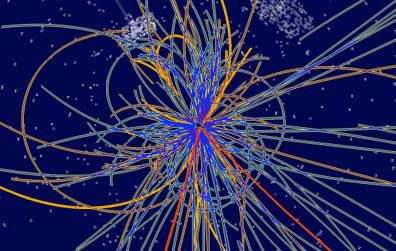
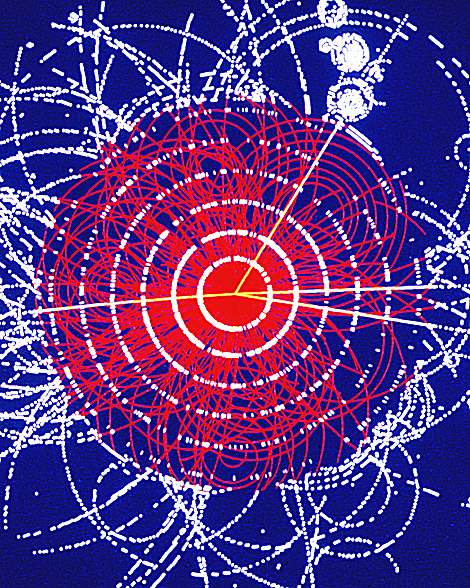
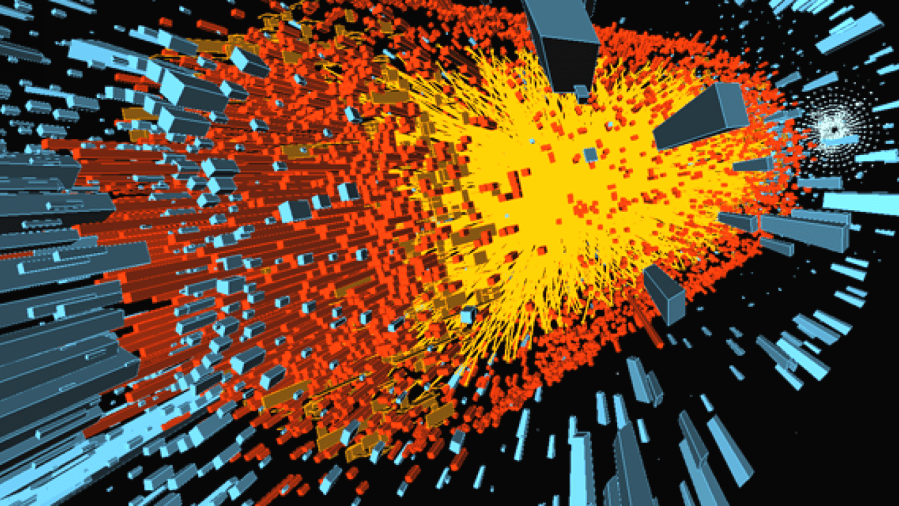
The two largest experiments at the Large Hadron Collider (LHC), ATLAS and CMS, have observed a previously undetected way that the Higgs boson can decay — into an elementary particle called the bottom quark, and its antiparticle.
The same experiments, based at CERN, the European particle-physics laboratory outside Geneva, Switzerland, first discovered the Higgs in 2012. The boson, which is a key part of the mechanism that gives other particles their masses, put in place the final piece of the standard model of particle physics.
LHC researchers have accumulated evidence of the particle decaying into a variety of products, following theoretical predictions, including into two photons and an electron–antielectron pair.
Credit: Third Party Reference
In June, researchers revealed that they had also seen the Higgs interact with the top quarks, the most massive known elementary particle. The bottom-quark decay, announced on 28 August is expected by theory but the signal had been hiding in the data, because the interaction is difficult to single out from the many other processes that can also produce those particles.
Geneva, 28 August. Six years after its discovery, the Higgs boson has at last been observed decaying to fundamental particles known as bottom quarks. The finding, presented today at CERN by the ATLAS and CMS collaborations at the Large Hadron Collider (LHC), is consistent with the hypothesis that the all-pervading quantum field behind the Higgs boson also gives mass to the bottom quark. Both teams have submitted their results for publication today.
The Standard model of particle physics predicts that about 60% of the time a Higgs boson will decay to a pair of bottom quarks, the second-heaviest of the six flavours of quarks. Testing this prediction is crucial because the result would either lend support to the Standard Model – which is built upon the idea that the Higgs field endows quarks and other fundamental particles with mass – or rock its foundations and point to new physics.
Credit: Third Party Reference
Spotting this common Higgs-boson decay channel is anything but easy, as the six-year period since the discovery of the boson has shown. The reason for the difficulty is that there are many other ways of producing bottom quarks in proton–proton collisions. This makes it hard to isolate the Higgs-boson decay signal from the background “noise” associated with such processes. By contrast, the less-common Higgs-boson decay channels that were observed at the time of discovery of the particle, such as the decay to a pair of photons, are much easier to extract from the background.
To extract the signal, the ATLAS and CMS collaborations each combined data from the first and second runs of the LHC, which involved collisions at energies of 7, 8 and 13 TeV. They then applied complex analysis methods to the data. The upshot, for both ATLAS and CMS, was the detection of the decay of the Higgs boson to a pair of bottom quarks with a significance that exceeds 5 standard deviations. Furthermore, both teams measured a rate for the decay that is consistent with the Standard Model prediction, within the current precision of the measurement.
“This observation is a milestone in the exploration of the Higgs boson. It shows that the ATLAS and CMS experiments have achieved deep understanding of their data and a control of backgrounds that surpasses expectations. ATLAS has now observed all couplings of the Higgs boson to
“Since the first single-experiment observation of the Higgs boson decay to tau-leptons one year ago, CMS, along with our colleagues in ATLAS, has observed the coupling of the Higgs boson to the heaviest fermions: the tau, the top quark, and now the bottom quark. The superb LHC performance and modern machine-learning techniques allowed us to achieve this result earlier than expected,” said Joel Butler, spokesperson of the CMS collaboration.
Credit: Third Party Reference
With more data, the collaborations will improve the precision of these and other measurements and probe the decay of the Higgs boson into a pair of much-less-massive fermions called muons, always watching for deviations in the data that could point to physics beyond the Standard Model.
“The experiments continue to home in on the Higgs particle, which is often considered a portal to new physics. These beautiful and early achievements also underscore our plans for upgrading the LHC to substantially increase the statistics. The analysis methods have now been shown“









You must be logged in to post a comment.