Consumer Rights and Responsibilities

 In the highly competitive and profit-driven business world, Consumer Rights play a key role to protect them from any kind of unfair trade practices. It also protects the consumers from the unsafe or dangerous products that can harm their health and well-being. The Consumer Protection Act of 1986 aims to give consumers rights to fight any injustice. The Act has gone through some changes over the years, the latest change took place in 2019. 

The Consumer Protection act aims to provide easy compensation to those affected by any injustice, and encourages the consumers to speak up and take action against it. It covers all the goods and services by all the public, private and cooperatives, except some exempted by the government. The Act promotes settlement of consumer disputes. 

What are Consumer Rights ?

Right to safety: It provides the consumers safety against goods that are hazardous and have the potential to affect life and property. Consumers should emphasize on the quality and safety factors of the product before buying it. Quality marked products such as ISI, AGMARK, etc. should be prefered. 

Right to be Informed: It consists of the right of the consumers to be informed about the quality, purity, standard, and price of the goods properly. Before deciding to buy, the consumers must consider knowing all of this information related to the product. 

Right to Choose: This includes the rights to access the variety of goods and services at competitive prices, wherever it is possible. With the case of monopoly markets, it refers to the right to be assured of good quality at a fair price. 

Rights to Consumer Education: It includes the rights of the consumer to gain the knowledge and become an informed consumer. It is extremely important to be informed, because most of the exploitation takes place with the advantage of lack of awareness and ignorance among the consumers. 

Right to be Heard: This means that consumers have the right to raise or represent their concern and interests at various consumer forums to ensure their welfare. The consumer’s interests will be given due consideration under this right. 

Right to seek Redressal: It is one of the most important rights of a consumer to seek redressal against any unfair trade practice experienced by them. It can help them to have a fair settlement or get the required compensation. They can also take the help of the consumer organisations in the process of seeking redressal. 

In case of any trouble or injustice, the consumers can file a complaint within two years of buying the product. The details of the problem should be mentioned in the complaint along with relevant bills and receipts attached to it. The written complaint should be submitted to the consumer forum for further action. 

As a consumer, it is our duty to be aware about the rights and responsibilities before buying a product or service, in order to avoid any injustice or exploitation.


LOCAL SELF-GOVERNMENT

                                                               (Photo: ClearIAS)

According to D. Lockard, local government may be loosely defined as a public organization, authorized to decide and administer a limited range of public policies within relatively small territory which is a subdivision of a regional or national government.

A nation develops from its roots and for a nation to develop we need a strong base and in a country like India, the base is the local self-government like municipalities and panchayats, etc. These are the grassroots of a democracy in our country. It gives a good amount of exposure to the people who participate in the governance and running of these institutions, in both political and social aspects, making our democracy more participative as well as substantive. In rural areas, the self-governing bodies are the Panchayats and in urban it is the municipal corporations, etc. Local self-government consists of rural local self-government and urban area local self-government.

In India, villages are always considered as strength of this country. It is said that the soul of India lives in villages and a majority of 60% of the total population currently lives in rural areas. The exponents of the local self-government institutions hold the view that such local self-governments are the basis of democracy and the best way to develop political consciousness among the people. Through the local self-government, the regional and local interests convert into national interest. The Rural Local self-governments are the result of most landmark year 1992, when the 73rd amendment was incorporated in the constitution. Necessary related provisions were added in 1992 by the way of the 74th amendment act, 1992. It bifurcated the urban local self-government system.

Gandhi Ji also emphasized local self-government. To him, development meant a fuller participation of people in the achievement of essential goals. Village is the primary unit of government and from the village upwards, units of government with residuary powers, are to be established. And at each level, complete democracy and freedom are to be guaranteed.

Thus, the local self-government holds a vital role when it comes to the strengthening of democracy. It encourages local, political, and social leadership, thus making people more participative. It makes democracy substantive with its very own existence. These have to shoulder manifold and complex responsibilities. Hence, they are the grassroots of our democracy.

CO-OPERATIVE AND COMPETITIVE FEDERALISM


                                                              (Photo: YouTube)

India opted for quasi-federal structure after Independence. After Independence from 1947 to 1967, India experienced the centralized federalism. From 1967 to 1990, India witnessed confrontational federalism due to the emergence of other party governments at the state level. Since 1990, Co-operative federalism has been developed. The present NDA government has been focusing on the new concept of competitive federalism along with co-operative federalism for higher growth of the country.

In competitive federalism, states would compete with each other over a broad-range issues to provide citizens various services in a hassle-free manner. The policy of one-size-fit-all is replaced with different policies of various states based on their own priorities within the state. This spirit of competition has led to lack of inter-state mutual assistance. The NITI Aayog was formed to empower and strengthen the state governments. It also appointed regional councils to create cooperation among two or more states facing a common set of problems or amicably settle disputes.

While the competition between states, reflected in the World Bank’s Ease of Doing Business index, has generated a lot of enthusiasm, this must be a continuing exercise. There are only few well-off states like Maharashtra, Gujarat, and Tamil Nadu which are competing. The proposed GST law may help some of the less productive states to raise the revenue. But the opposition of few well-off states with respect to revenue loss in implementation of GST system points that there is lack of will in participating in the process of competitive federalism.

We’ve seen various inter-state water disputes such as Krishna water disputes involving Maharashtra, Karnataka and Andhra Pradesh, Narmada water disputes involving Rajasthan, Gujarat, M.P, and Maharashtra, Cauvery water disputes involving Karnataka, Kerala, Tamil Nadu, Puducherry, and various others. For this, under Article 263, an inter-state council was established. The Sarkaria Commission on center-state relations (1983-87) made a strong case for the establishment of a permanent inter-state council. Article 301 to 307 in Part 13 deals with the trade, commerce and intercourse within the territory of India, breaking all the border barrier between the states. Zonal councils have also been established in 1956 to narrow the gap between the states. Cases such as Cauvery water dispute and Sutlej Yamuna link canal issue have seen non-mutual assistance between the states to a wider extent.

Thus, it can be said that co-operative and competitive federalism are two sides of the same coin. This spirit of competition has led to the lack of mutual assistance between and among the states. It is competition with co-operation that will drive the real change.


Covid-19 and Global Food Security

 The unprecedented pandemic has impacted the world in multiple ways. It has affected the years of development done in terms of food security in the countries. The Covid pandemic has increased the global food insecurity, and its impact is expected to be seen in 2021 and 2022. Initially, as the pandemic broke out, sudden closure of borders, trade restrictions and lockdown measures had disrupted the food supply and distribution pattern completely. 

It reduced the access to inputs and services, as labour movement and transports were blocked. The farmers struggled to access the market to sell and buy products properly during the lockdown in different countries. The locust outbreak that happened in 2020, also destroyed the food and other crops in the agricultural lands. Farmers were the worst hit by this locust crisis. 

Higher pricing of food and reduced income in the households is another prime reason that has impacted the accessibility of food. Due to financial shortage caused by lower income or loss of livelihood, more and more households have been forced to reduce their quality and quantity of food consumed. A number of countries reported food inflation during the pandemic. 

Climate change has led to adverse climatic conditions all over the globe. Extreme weather conditions seen in different places such as temperature rise, heat waves, extreme rainfall and drought have impacted agriculture and food production. This has further disrupted the food supply chain system, leading towards food insecurity.

A survey done by the World Bank in 48 countries reveals that people were either running out of food or were lowering their consumption. This reduced calorie intake can affect the health of the people, due to lack of essential nutrients. The UN’s report on “State of food security and nutrition in the world” states that between 720 to 811 million people worldwide, went hungry in 2020. Lower consumption of food is a major health concern. It can lead to problems like malnutrition, especially among children. The pandemic has led 1.6 million children out of their schools, depriving them from the nutritious meals provided. 

The World Food Programme‘s (WFP) annual review of 2020, shows that the pandemic pushed 124 million people into poverty, leading to an increase in hunger and the threats of famine in some areas. But WFP states that the goal of achieving zero hunger by 2030, is still possible with worldwide efforts and cooperation to plan out a better future. 

Such difficult times call for global solidarity and support. The government and the international organizations should cooperate in order to help those affected by food insecurity. Monetary help as well as access to adequate food resources can be provided to them.

This food insecurity in the times of pandemic has highlighted the importance of developing long-term sustainable strategies to deal with the challenges in agriculture and food supply.


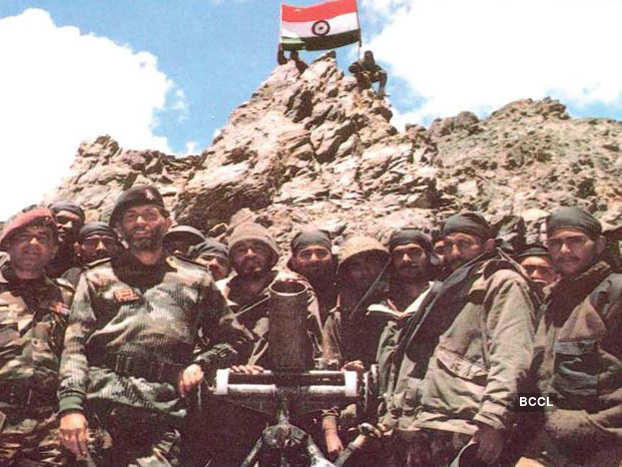
Kargil War: What did Pakistan gain from this war?

Many books have been written on the Kargil war between India and Pakistan, in which those aspects are mentioned, which are not known to the common people.

Pakistani journalist Naseem Zahra’s book “From Kargil to the Cop: Events that Shook Pakistan” is one of them. On 20 years of the war, BBC correspondent Shumaila Jaffrey spoke to Naseem Zahra about his book and some of the developments mentioned in it. Today, 22 years of Kargil war have been completed.

Naseem Zahra said that initially Pakistan’s plan was to capture some mountain peaks in Indian-administered Kashmir and then close the Srinagar-Leh highway. Closing this road was one of Pakistan’s major strategies as it was the only way India used to send military weapons to the soldiers stationed in Kashmir.

According to Naseem, Pakistani generals planning the Kargil attack believed that the situation would worsen and India would be forced to negotiate on the Kashmir dispute, but the way Pakistani soldiers were fighting, they were no less than the eighth wonder of the world.

She says that “the interesting thing about Kargil is that Pakistanis can be proud of it and sad too. The way the young soldiers were sent there (Kargil), the cold winter they reached there and The circumstances in which he fought valiantly is a reason for pride, but the question also arises that why was he sent there?”

Naseem Zahra says that “Pakistan Army initially inflicted heavy losses on Indian forces. Indian Army didn’t even know what happened. And Indian generals were saying that they would give them (Pakistani soldiers) a few hours or something.” Will throw you out of your area in days.”

According to Naseem Zahra, initially the Pakistani army and fighters had the advantage that they were sitting on the tops of the mountains and it was very easy to attack the Indian soldiers from above, but later the situation changed. However, there has been no response from Pakistani military officials on these claims of Naseem Zahra.

Big Mistake : 

Naseem Zahra says that when the Indian Army gradually realized what had happened, it called for Bofors artillery, which are not usually used in such operations. “If you ask what changed the Kargil war, it is the Bofors guns. Indian soldiers stationed them on the same Srinagar-Leh highway that Pakistan wanted to block. Broken into pieces and the Indian Air Force was continuously bombarding from above. This fact has been confirmed by both the countries.

Naseem Zahra said that even after coming down from the Kargil hills, Pakistan had to suffer heavy losses. “There were no roads or vehicular routes for them to return, nor were they returning in a friendly environment. It was very difficult to return from the altitude of 16 to 18 thousand feet of mountains. Many trenches had to be crossed and up It was very cold. When Indians got an opportunity, they took advantage of it and retaliated fiercely. The war was for a very short time but it was fought in a fierce manner.”

Naseem Zahra says that India used its air force well in Kargil, but Pakistani delayed it. She says that it is not yet clear how many people were killed in Kargil. “Some people say that three hundred were killed, some call it two thousand, but the number of soldiers in the number of two thousand probably did not go there. When I talked to the army people about this they said that such a big Not many people were killed. It was a big mistake.” 

Kargil – Siachen issue :

Naseem Zahra also says that the plan of Kargil was under consideration for many years, but it was completed in 1999. “This plan was presented by General Pervez Musharraf to Benazir Bhutto. He refused it. It was discussed earlier also during the time of General Ziaul Haq.” According to Naseem Zahra, the Kashmir issue was the main reason for the Kargil operation. Apart from this, the issue of Siachen was also one of the main reasons. 

Four generals executed the war :

Naseem Zahra says that the Kargil war was carried out by four generals of Pakistan. According to him, the four generals included the then Army Chief General Pervez Musharraf, Major General Javed Hasan, General Aziz Khan and General Mahmood Ahmed. The top leadership of the army was unaware of this operation.

According to Naseem Zahra, the four generals were stationed on the Line of Control. He was passionate about the Kashmir issue. They believe that for the Kargil war, these four generals had executed it without formal permission from the elected government. It was a kind of violation of the rules. In February 1999, an agreement was signed between Nawaz Sharif and Atal Bihari Vajpayee in Lahore, according to which both the countries had shown commitment to start a new relationship through talks.

‘Be the winner of Kashmir’ : 

According to Naseem Zahra, the then Prime Minister Nawaz Sharif learned about the Kargil operation during a briefing held on May 17, 1999, weeks after the troops crossed the Line of Control. Naseem Zahra says, “The then Foreign Minister Sartaj Aziz understood the situation that some soldiers of our army had crossed the Line of Control. He told the PM about this and said that Prime Minister we are talking to India. Were.”

She says, “These things were happening after the Lahore summit.” But according to Naseem Zahra, initially Nawaz Sharif really believed that the army could be successful in resolving the Kashmir issue with this operation. “Sartaj Aziz explained that international forces, especially the United Nations will not accept this and America will always support India. To which Nawaz Sharif said that no Sartaj sir, we can never achieve Kashmir by meeting and exchanging files. can do.”

“Then General Aziz Khan told Nawaz Sharif that Quaid-Azam Muhammad Ali Jinnah created Pakistan, now is your chance, you become the conqueror of Kashmir.”

Relations between the countries were getting better but….

Naseem Zahra says that relations between India and Pakistan were getting better, but at the same time General Pervez Musharraf carried out the Kargil war. “Vajpayee had come to Pakistan and Pakistan had given a warm welcome to the Prime Minister of India, he had come to hold talks and it was going on. Later, General Musharraf requested India several times for talks. To bring India to the negotiating table. For that he had to go to India on his knees.

Naseem considers them wrong, those who say that this war has benefited Pakistan in the matter of Kashmir.” Facts do not support this. According to the facts, it was such a wrong move that Pakistan had to go through the process of talks for years. Had to try to start again. Even though India did 1971 and Siachen but Pakistan’s decision of Kargil war was very irresponsible. It damaged the image of Pakistan.

However, Naseem Zahra believes that no loss or gain is permanent. Countries get an opportunity to review their policies. 

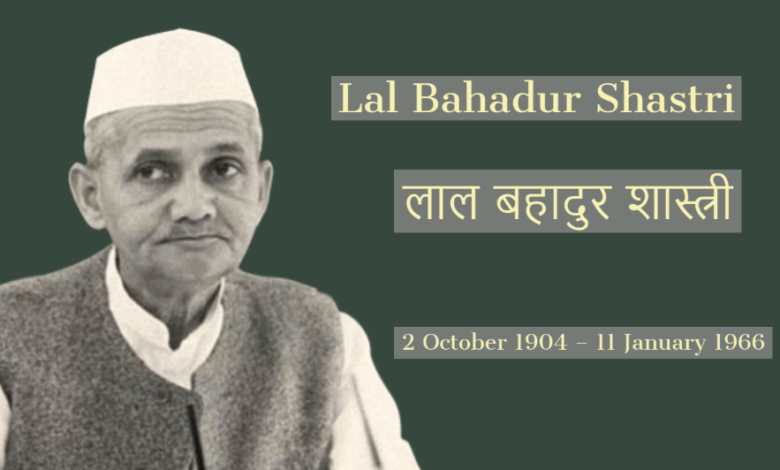
Lal Bahadur Shastri : Little things to know about the Big Personality

Shri Lal Bahadur Shastri was born on 2 October 1904 in Mughalsarai, a small railway town seven miles from Varanasi, Uttar Pradesh. His father was a school teacher. His father died when Lal Bahadur Shastri was only one and a half years old. His mother settled down with his three children at his father’s house. Lal Bahadur’s schooling in that small town was not very special, but despite being hit by poverty, he had a fairly happy childhood.

He was sent to live with his uncle in Varanasi so that he could pursue his high school education. Everyone at home used to call him by the name of Nanhe. He used to walk many miles barefoot to school, even in the scorching heat when the roads used to be extremely hot. As he grew up, Lal Bahadur Shastri became more interested in the country’s struggle for freedom from foreign slavery. He was deeply impressed by Mahatma Gandhi’s condemnation of Indian kings who were supporting British rule in India. When Lal Bahadur Shastri was only eleven years old, he had made up his mind to do something at the national level.

When Gandhiji called upon his countrymen to join the non-cooperation movement, Lal Bahadur Shastri was only sixteen years old at this time. He had decided to give up his studies on this call of Mahatma Gandhi. His decision broke his mother’s hopes. His family tried hard to stop him, calling his decision wrong but they failed in it. Lal Bahadur had made up his mind. All those close to him knew that once he had made up his mind, he would never change his decision as Lal Bahadur, who looked humble from outside, is as firm as a rock from inside.
Lal Bahadur Shastri joined the Kashi Vidya Peeth in Varanasi, one of several national institutions established in defiance of British rule. Here he came under the influence of great scholars and nationalists of the country. The name of the bachelor’s degree conferred on him by Vidya Peeth was ‘Shastri’ but in the minds of the people it settled as a part of his name.
They got married in 1927. His wife Lalita Devi was from Mirzapur which was close to his own town. Their marriage was traditional in all respects. In the name of dowry, there was a spinning wheel and a few meters of hand-woven cloth. They did not want anything more than this in the form of dowry. In 1930, Mahatma Gandhi broke the salt law and traveled to Dandi. This symbolic message brought a kind of revolution in the whole country. Lal Bahadur Shastri joined this struggle for freedom with great energy. He led several rebel campaigns and spent a total of seven years in British prisons. This struggle for independence made him fully mature.
Even before the Congress came to power after independence, the leaders of the national struggle had understood the importance of the humble and humble Lal Bahadur Shastri. When the Congress government was formed in 1946, this ‘small dynamo’ was asked to play a constructive role in the governance of the country. He was appointed Parliamentary Secretary of his home state of Uttar Pradesh and soon rose to the rank of Home Minister. His ability to work hard and his efficiency became a legend in Uttar Pradesh.
He moved to New Delhi in 1951 and took charge of several departments of the Union Cabinet – Minister of Railways; Minister of Transport and Communications; Minister of Commerce and Industry; Home minister and minister without portfolio during Nehru ji’s illness. His reputation continued to grow. Holding himself responsible for a train accident in which several people were killed, he resigned from the post of Railway Minister. The country and Parliament greatly appreciated his unprecedented initiative. The then Prime Minister Pandit Nehru, while speaking in Parliament on this incident, praised Lal Bahadur Shastri’s honesty and high ideals. He said that he accepted Lal Bahadur Shastri’s resignation not because he was responsible for what happened, but because it would set an example in constitutional dignity.
Responding to the long debate on the train accident, Lal Bahadur Shastri said; “Maybe because of my being short in height and meek, people think that I am not strong enough. Although I am not strong physically but I feel that I am not that weak internally either.”

Even during the working of his ministry, he looked after the affairs of the Congress Party and contributed immensely to it. His organizational brilliance and his amazing ability to examine things closely were the major contributors to the party’s decisive and resounding success in the general elections of 1952, 1957 and 1962.

During his dedicated service for more than thirty years, Lal Bahadur Shastri became famous among the people for his sublime devotion and ability. Humble, firm, tolerant and with tremendous inner strength, Shastri ji emerged as a person among the people who understood the feelings of the people. He was a visionary who brought the country on the path of progress. Lal Bahadur Shastri was deeply influenced by the political teachings of Mahatma Gandhi. In the same tone of his mentor Mahatma Gandhi, he once said – “Hard work is like praying”. Lal Bahadur Shastri, who had thoughts like Mahatma Gandhi, is the best identity of Indian culture.

Artficial Intelligence

 Artificial Intelligence(AI)


What Is Artificial Intelligence (AI)?

Artificial intelligence (AI) refers to the simulation of human intelligence in machines that are programmed to think like humans and mimic their actions. The term may also be applied to any machine that exhibits traits associated with a human mind such as learning and problem-solving.

The ideal characteristic of artificial intelligence is its ability to rationalize and take actions that have the best chance of achieving a specific goal. A subset of artificial intelligence is machine learning, which refers to the concept that computer programs can automatically learn from and adapt to new data without being assisted by humans. Deep learning techniques enable this automatic learning through the absorption of huge amounts of unstructured data such as text, images, or video.

Understanding Artificial Intelligence (AI):


When most people hear the term artificial intelligence, the first thing they usually think of is robots. That’s because big-budget films and novels weave stories about human-like machines that wreak havoc on Earth. But nothing could be further from the truth.

Artificial intelligence is based on the principle that human intelligence can be defined in a way that a machine can easily mimic it and execute tasks, from the most simple to those that are even more complex. The goals of artificial intelligence include mimicking human cognitive activity. Researchers and developers in the field are making surprisingly rapid strides in mimicking activities such as learning, reasoning, and perception, to the extent that these can be concretely defined. Some believe that innovators may soon be able to develop systems that exceed the capacity of humans to learn or reason out any subject. But others remain skeptical because all cognitive activity is laced with value judgments that are subject to human experience.

Applications of Artificial Intelligence:


The applications for artificial intelligence are endless. The technology can be applied to many different sectors and industries. AI is being tested and used in the healthcare industry for dosing drugs and different treatment in patients, and for surgical procedures in the operating room.

Other examples of machines with artificial intelligence include computers that play chess and self-driving cars. Each of these machines must weigh the consequences of any action they take, as each action will impact the end result. In chess, the end result is winning the game. For self-driving cars, the computer system must account for all external data and compute it to act in a way that prevents a collision.

Artificial intelligence also has applications in the financial industry, where it is used to detect and flag activity in banking and finance such as unusual debit card usage and large account deposits—all of which help a bank’s fraud department. Applications for AI are also being used to help streamline and make trading easier. This is done by making supply, demand, and pricing of securities easier to estimate.

Categorization of Artificial Intelligence:


Artificial intelligence can be divided into two different categories: weak and strong. Weak artificial intelligence embodies a system designed to carry out one particular job. Weak AI systems include video games such as the chess example from above and personal assistants such as Amazon’s Alexa and Apple’s Siri. You ask the assistant a question, it answers it for you.

Strong artificial intelligence systems are systems that carry on the tasks considered to be human-like. These tend to be more complex and complicated systems. They are programmed to handle situations in which they may be required to problem solve without having a person intervene. These kinds of systems can be found in applications like self-driving cars or in hospital operating rooms.

Ban on Single Use Plastic from July 2022

 The Environment Ministry released a notification on 12th August,2021, about ban on single-use plastic items. The Ministry’s notification on waste management amendment, 2021, states that “The manufacture, import, stocking, distribution, sale, and use of single use plastic, including polystyrene, and expanded polystyrene commodities shall be prohibited with effect from 1st July, 2022.”

What will be banned?

The amendment prohibits the plastic items which have “low utility and high littering potential”. It also aims to ban Polythene bags with lower levels of thickness, in a phased manner. Polythene bags with less than 50 micron thickness are already banned. Bags with thickness less than 70 micron will be banned by September. By 31st December, next year, Polythene with less than 120 micron thickness will also be banned. 

The main items that will be banned from next year includes;  plastic sticks found in earbuds, balloons, flags, ice creams, candies, etc. It also includes thermocol used for decoration and single use plastic cutlery items such as fork, knife, spoon, plates, cups, glasses, straw, trays, wrapping film around the sweet boxes. PVC banners with less than 100 micron will also be banned.  The ban is not applicable to any compostable plastic. 

According to the statements by the officials, the main objective of these changes is to protect the environment from harmful plastics. The major reason is that the plastic waste is neither collected nor recycled properly. Thicker plastic is easier to be recycled, as compared to the thinner or single-use plastic items. Officials have said that the alternatives for the banned plastic items such as single use cutlery will be ensured and promoted. 

As per the data of The Environment Ministry and The Energy Resources Institute (TERI) in 2018, 43% of the plastic manufactured is mostly for single use, and are used for the purpose of packaging. 9.7kg plastic is used by each person annually in India, most of which is used for packaging related activities. According to the experts, the consumption and waste management pattern has to be shifted with a more eco-friendly approach. Single use plastic contaminates the water as well as soil. It also chokes the waterways and blocks the sewage system. 

The reforms will be monitored by the Central Pollution Control Board and the State Pollution Control Boards. They will ensure to take into consideration the violations and impose penalties as per the Environmental Protection Act. The states and Union Territories have been requested to coordinate with a special task force to ensure the elimination of single use plastic. Previously, India had addressed the issue of single use plastic in the 4th UN environment assembly held in 2019. 

With the cooperation of the policy makers, manufacturers and the citizens, plastic waste can be reduced to a great extent.


Wrong Number


                                                                       (Photo: Pexels)

Love is perennially elusive – but not impossible to find. And I was lucky enough to find him.

This is my story, my real true love story, and it also happens to be my life’s most beautiful story.

I fell in love with his voice. I didn’t know that my life was going to change. And that momentous evening changed my entire life!!

‘Trin – Trin’

‘Hello! Who’s it?’ my voice demanded.

‘Hey! It’s me, Arpit. Hello Puja. Don’t you recognize my voice?’

‘Sorry, wrong number.’ I cut him in short. I was in class 8 at that time and about him, we will know it soon. The next day, the phone rang again and it was him again.  From there, our conversation began. I have never heard such a sweet voice, plus it was my first time talking with a random guy like this. I felt magic in his voice. Every time I hear his voice, I can feel Euphoric bliss.

His name was Arpit Sehgal and he belonged to Bhubhaneshwar. He was doing engineering. We belonged from two different worlds plus such an age gap, so I decided to lie and I said that my name is Preeti Singhania, doing B.com Hons. Our talks continued and we beautifully got used to each other’s voices. We were each other’s crushes until he finally said that he loves me. I replied, “I LOVE YOU MORE”.

The moon flickered, vaporized. I was in love with him. I felt an eccentrically wonderful pull towards him. It seems like I have been waiting agelessly for him to come and refill my empty soul. Our late-night talks, secret messages, hiding from our parents, all these became part of our lives.

Years passed, seasons passed. I recalled our telephonic conversations. I felt at moments the entire wealth of the world had fallen into my lap but at others it made me feel so insecure. The time had come when I was about to leave for my higher studies. A shiver of cold ran down my spine. Arpit was already in my heart!

I longed to be his.

I dialed his number to confess. I was not feeling well. It was raining down heavily at his side.

“Hi, baby!” “Hello, Shona!”

He has already sensed from my voice that I was not well. He said, “I wish I could make you feel the warmth of my body.” I didn’t have the guts. I called him again at night and I lied again.

“I’m having cancer and I will die possibly again.” He started crying. He asked me to not worry and that he will leave everything and come to me to take care of me. I couldn’t hold it more and gave him my promise.

“If ever you have truly loved me even for once, then you won’t call or text me from now.” The next voice I could hear was him asking, “Will you marry me?”

And the call got disconnected.

WOODEN CHESS BOARD


                                                                        (Photo: Wikipedia)

One of the india’s enterprises is amongst the world’s largest chess manufacturing company. originated in india by the name ashtapad, this ancient game has historical references in india where chess was used as a tool to teach military strategy to indian princes. chessboards have been made from numerous materials over the years, such as ebony, ivory, marble, metal, glass, and plastic.

 let’s discuss in detail about the states and the leading companies in wooden chess board manufacturing in india. THE WOODEN CHESSBOARD MANUFACTURING IS EXTENSIVELY DISTRIBUTED IN INDIA. HOWEVER, THE TOP MANUFACTURING CITIES ARE:

  •    AMRITSAR
  •      GUJARAT
  •      MOHALI
  •      DELHI
  •      MUMBAI

WE WILL DEAL WITH THE FOLLOWING CITIES ONE BY ONE IN AN ILLUSTRATIVE WAY.

1.   AMRITSAR

AMRITSAR IS THE LARGEST MANUFACTURER OF CHESSBOARD IN INIDA. INFACT, THE WORLD’S LARGEST CHESS COMPANY IS BASED IN AMRITSAR, PUNJAB. IT MANUFACTURES CHESSBOARDS IN VARYING SIZES USING DIFFERENT MATERIALS. IT ALSO EXPORTS WORLDWIDE.

THE TOP THREE MANUFACTURING CHESS COMPANIES IN AMRITSAR ARE:

  •   CHESS BY INDIA (VIJAYA ENTERPRISES)
  •       SHRI GANESH
  •       THE CHESS EMPIRE

 CHESS BY INDIA (VIJAYA ENTERPRISES)

IT IS THE WORLD’S LARGEST CHESS COMPANY, BASED IN AMRITSAR, PUNJAB. THEY PRODUCE WOODEN CHESSBOARDS, CHESS PIECES, MAGNETIC CHESS SETS, FOLDING CHESS SETS, ANTIQUE CHESS SETS, TRAVEL CHESS SETS AND ALL TYPE OF PUZZLE GAMES. THEY EXPORT WORLDWIDE FROM NEW ZEALAND TO USA, ITALY, FRANCE, RUSSIA, GERMANY, NETHERLANDS IS THEIR BEST-SELLING MARKET.

A.     SHRI GANESH

IT IS THE SECOND LARGEST MANUFACTURER OF WOODEN CHESS BOARD IN AMRITSAR. THEY EXPERTISE IN MANUFACTURING WOODEN, STAUNTON, BONE, MAGNETIC AND TRAVEL CHESS SETS. THEY MANUFACTURE AND EXPORT THE MOST EXOTIC CHESS SETS ACROSS THE WORLD. THEY CURRENTLY EXPORT TO COUNTRIES LIKE UK, JAPAN, RUSSIA, SINGAPORE, NEW ZEALAND, USA, AUSTRALIA AND MOST OF EUROPE.

 THE CHESS EMPIRE

IT IS THE THIRD LARGEST MANUFACTURER OF WOODEN CHESS BOARD. IT GUARANTEES WORLD’S BEST QUALITY. THEY HAVE EXQUISITE CRAFTSMANSHIP AND THEY PROVIDE WORLDWIDE SHIPPING.

2. GUJARAT

GUJARAT IS THE SECOND LARGEST MANUFACTURER OF WOODEN CHESS BOARD IN INDIA. THERE MIGHT BE FEW SMALL-SCALE MANUFACTURING COMPANIES IN GUJARAT, BUT THE MOST FAMOUS MANUFACTURER IS ONLY ONE WHICH OPERATES ON A LARGE SCALE.

·       PARAMOUNT DEALZ

PARAMOUNT DEALZ

THEY MAKE WOODEN SETS FROM EXOTIC AND LUXURIOUS WOODS LIKE SHEESHAM, EBONY, BUD ROSEWOOD TO GIVE ROYAL FEEL TO THE CHESS SET AND MAKE IT LOOK A DISTINCTIVE ONE.

3. DELHI

DELHI IS THE THIRD LARGEST CITY WHEN IT COMES TO THE WOODEN CHESS BOARD MANUFACTURING. DELHI IS THE LARGEST COMMERCIAL CENTRE IN THE NORTHERN INDIA. STILL WHEN IT COMES TO CHESS BOARD MANUFACTURING, THERE IS ONLY A HANDFUL OF MANUFACTURERS IN THE CITY. AMONGST THEM, THERE’S ONLY ONE THAT HAS BEEN MANUFACTURING AND EXPORTING SUPERIOR QUALITY CHESS SETS FOR LAST 3-4 DECADES.

·       CHESSNCRAFTS

   CHESSNCRAFTS

THEY MANUFACTURE AND EXPORT SUPERIOR QUALITY CHESS SETS OF VARYING MATERIALS AND SIZES. THEY OFFER THE DISTINCTIVE AND EXCELLENT CHESS BOARDS.

4.  MUMBAI

IF YOU WANT TO FIND THE CHESS BOARD MANUFACTURER IN MUMBAI, THEN YOU DON’T HAVE TO STRUGGLE A LOT. JUST HEAD STRAIGHT FORWARD TO DOMBIVLI, BECAUSE THAT IS THE MAIN AREA OF IT’S MANUFACTURING. THERE ARE TWO CHESS BOARD MANUFACTURERS IN MUMBAI WHICH ARE WELL KNOWN.

·       INDIAN CHESS MANUFACTURERS

·       BRAVECHESS

 INDIAN CHESS MANUFACTURERS

IT IS INDIA’S WELL- KNOWN MANUFACTURER OF CHESS EQUIPMENTS AND GIANT BOARD GAMES. THEY SUPPLY IT WORLDWIDE. THEY CATER TO THE NEEDS OF THE PEOPLE.

A.     BRAVECHESS

THE BRAVECHESS IS THE SECOND KNOWN CHESS BOARD MANUFACTURER IN MUMBAI. THEY DESIGN PRODUCTS WITH THE AIM OF MAKING IT LAST A LIFETIME. THEY ALSO MANUFACTURE A SPECIAL CHESS SET FOR BLIND PEOPLE WHICH IS UNIQUE IN ITS OWN WAY.

 HENCE, A DETAILED ANALYSIS HAS BEEN MADE OF THE INDIA’S BEST CHESS BOARD MANUFACTURERS. EACH ONE OF THESE IS DISTINCT IN ITS OWN WAY. THE CRAFTSMANSHIP IS HIGHLY EXQUISITE. THE AMOUNT OF HARDWORK THEY PUT IN SHOWS THEIR DEDICATION TOWARDS FULFILLING THE WANTS OF CHESS LOVERS. INDIA IS NO WAY BEHIND IN TERMS OF CHESS BOARD MANUFACTURING. ALTHOUGH THERE ARE MANY COUNTRIES AHEAD OF INDIA, STILL INDIA STANDS AT A GOOD POSITION IN TERMS OF EXPORT.

Mental Illnesses doubled among youth : Latest Study

 Latest study by JAMA Pediatrics, a medical journal, reveals that Anxiety and Depression has doubled among the youth globally, as compared to the pre-Covid period. The analysis was published on 9th August, 2021 after collecting empirical clinical data on depression and anxiety in East Asia, Europe, North America, Middle East, Central and South America.

As per the data given in the study, one in four adolescents worldwide, have shown symptoms of depression. While one in five youth suffer from symptoms of anxiety. The data has sparked concern among the mental health experts and psychologists. “Results from this analysis suggest that the pandemic has likely instigated a global mental health crisis in Youth” said Sheri Madigan, professor of psychology at University of Calgary. 

The mental health of youngsters was already deteriorating before the pandemic. Experts said that the mental health of children and youngsters have gotten worse with the passage of time in the pandemic. Some reasons that have made the situation worse include persistent isolation, disruption in education, and financial problems in the family. The pandemic has created conditions in which the youth feels hopeless and have accumulated a negative feeling inside them.

The closure of schools and online learning from home has adversely impacted the children. Loss of interaction with the peers, lack of support from the teachers along with chronic stress and instability in daily routine are also major contributors to mental illnesses. It has led to an increase in symptoms of depression like sadness, loss of interest in activities, difficulty in sleeping, loss of appetite etc. 

An uncontrollable fear and constant worry about the health of family and friends have also affected the children and youngsters, leading to an increase in the symptoms of anxiety. According to the data, these symptoms of depression and anxiety are more prevalent in young females as compared to males. Number of females affected by mental health issues was higher than males even prior to the pandemic. 

These symptoms have affected the older children more than the younger ones. Factors like loss of interaction, along with puberty related hormonal changes have affected the elder children.  Adolescents and youngsters are the most affected age group. This can be a constraint in their personal growth as well as for the society as a whole. Mental wellbeing should be promoted among the youth before they step into adulthood. Issues related to mental health can have long lasting consequences if that persists without being properly addressed. 

Children and youngsters are finding it difficult to cope up with the disruptions in their routine in these difficult and unprecedented times of pandemic. It is important to monitor and keep a check on the mental health status of children globally with the help of data, research, and studies. The collective support from parents, teachers, researchers, medical facilities and policy makers can surely develop a better future in terms of mental health for the children and youth worldwide. 


Know About ITR-1

ITR-1 can be filed by Resident Individual who has:-

1.Total income less than 50lakh rupees during the financial year. 
2. Income from salary.
3.Income from one house property.
4.Family pension scheme.
5.Agriculture income upto 5000 rupees.
6.Income from other sources that is:-
           – Interest from Saving Accounts
           – Interest from deposit (Bank/Cooperative Society/ Post Office)
           – Interest from income tax refund
           – Interest received enhanced compensation.
           – Any other interest income   
           – Family Pension 
 7.Income of Spouse (other than those covered under Portuguese Civil Code) or Minor is clubbed (only if the source of income is within the specified limits as mentioned above).
ITR-1 cannot be filed by any individual who:-
1.Is a Resident Not Ordinarily Resident (RNOR), and Non-Resident Indian (NRI).
2.has total income exceeding 50 lakh rupees.
3.has agricultural income exceeding 5000/- rupees.
4.has income from lottery, racehorses, legal gambling etc.
5.has taxable capital gains (short term and long term).
6.has invested in unlisted equity shares.
7.has income from business or profession.
8.is a Director in a company.
9.has tax deduction under section 194N of Income Tax Act.Section 194N is applicable in case of cash withdrawals of more than Rs. 1 crore during a financial year. This 
section will apply to all the sums of money or an aggregate of sums withdrawn from a particular customer in a 
financial year. Further, while calculating the limit of Rs 1 crore, cash withdrawals from all accounts maintained 
by a person with one bank are to be considered. 
8.has deferred income tax on ESOP received from employer being an eligible start-ups.
9.owns and has income from more than one house property.
10.is not covered under the eligibility conditions for ITR-1.
The precautions to be taken while filing return of income are:-
1.Download Form 26AS (Annual Information Statement) and check the actual TDS / TCS / tax paid. If you see any discrepancy, you should reconcile it with the Employer / Tax Deductor / Bank.
2.Compile and carefully study the documents to be referred to when filing your ITR, like bank statement / passbook, interest certificates, receipts to claim exemptions or deductions, Form 16, Form 26AS (Annual Information Statement), investment proofs, etc.
3.Ensure details like PAN, permanent address, contact details, bank account details, etc. are correct in the pre-filled data.
4.Identify the correct return for you (from ITR-1 to ITR-7). Provide all the details in the return such as total income, deductions (if any), interest (if any), taxes paid / collected (if any), etc. No documents are to be attached along with ITR-1. However, you need to keep these documents for situations where they need to be produced before tax authorities such as assessment, inquiry, etc.
5.e-File the return of income on or before the due date. The consequences of delay in filing returns include late filing fees, losses not getting carried forward, deductions and exemptions not being available.
6.After e-Filing the return, e-Verify it. If you want to manually verify your return, send the signed physical copy of ITR-V Acknowledgement (by ordinary post or speed post) within 120 days of filing the return to Centralized Processing Center, Income Tax Department, Bengaluru 560500 (Karnataka).
Changes in itr 1:-
In ITR-1 for AY 2021-22, there is an addition of section 115BAC. If you wish to opt for the new tax regime under section 115BAC, select Yes in the new ITR form, else select No. Please note that option for new tax regime u/s 115BAC will be available only till due date of filing of return u/s 139(1).
Documents needed to file ITR-1 are:-
1.Form 16
2.House Rent Receipt (if applicable)
3.Investment payment premium receipt (if applicable).
  • In case you miss filing the ITR within the due date u/s 139(1), you can still file your Income Tax Return but you maybe required to pay a late filing fee of up to 5000/- rupees. Additionally, you will also be required to pay interest on the tax liability (if any).
  • Different tax returns are prescribed for filing by individual taxpayers depending on their source of income and residential status. To determine the correct ITR to file, you can use the Help me decide which ITR Form to file option. You can then proceed based on questions displayed to determine the correct ITR to file.

SPIRITUAL CIRCUIT: BIHAR

GURU CIRCUIT 

TAKHAT SRI HARMANDIR SAHIB 

Maharaja Ranjit Singh Ji, the first king of the Sikh Empire, took up the reconstructions of this sacred birthplace of the great Guru in 1839. The present gorgeous edifice of Harmandir Takhat was reconstructed in 1954 as the earthquake of 1934 destroyed some part of it.

GURDWARA PAHILA BARI AKA GURUDWARA GAE GHAT 

Popularly known as Gurudwara Gae Ghat, it is dedicated to Guru Nanak Dev Ji, who stayed here during his visit to Patna in the early 1500’s

GURDWARA BAL LILA MAINI SANGAT 

Situated close to Takhat Sri Harmandir Sahib ji, this shrine stands at the former home of Raja Faateh Chand Maim. His wife or the Rani treated young Gobind Rai as her own son. When Gobind Rai left Patna, the Rani had a Gurdwara built in her home. 

GURDWARA SHRI GURU GOBIND SINGH GHAT

This Gurdwara commemorates the arrival of Guru Tegh Bahadur to Patna. After four years of touring Eastern India, the na Guru returned to Patna to join his family. 

GURDWARA HANDI SAHIB DANAPUR 

The Gurdwara was built in the memory of Shri Guru Gobind Singh Ji. An old lady whose name was Mata Jasni cooked khichdi in a handi and for Guru Ji offered it to Satguru Ji. So this place is known as Handi Sahib. 


GURDWARA BARI SANGAT SHRI GURU TEGH BAHADUR JI CHAUKI 

Gurdwara Bari Sangat Shri Guru Tegh Bahadur Ji Chauki – Bhagalpur has two Sikh Sangats where Guru Tegh Bahadur visited it in 1667. An old hand-written copy of Guru Granth Sahib acquired from the former Udasi priest of the Shrine is preserved in Gurudwara Singh Sabha.


SHRI GURU TEGH BAHADUR AITIHASIK GURDWARA, KATIHAR 

This historical gurdwara is situated at Lakshmipur Panchayat of Barari Block of Katihar District. It is approx 40km from the district headquarters. Many people visit this village as it is associated with Guru Tegh Bahadur Sahib. An ild volume of Guru Granth Sahib is also preserved here.

ALSO VISIT: Gurdwara Chacha Phaggu Mal- Sasaram, Gurdwara Pakki Sangat and Gurdwara Shri Guru Tegh Bhashur Ji- Gaya.

JAIN CIRCUIT 

KAMALDAH, PATNA 

In the area called Kamaldah (Gulzarbagh, Patna) is a high mound of brick ruins on which two Jain temples stand. There is mausoleum of Jain saint Sthoolhdbhadra and the temple of Sudarshan Swami.

KUND GRAM, MUZAFFARPUR 

As per Jain scriptures, Lord Mahavira, the 24th Tirthankar, was born at Kundagrama and his residence was at Vaniyagrama. Both the places were part of or near Vaishali. The modern Village of Bania is at the site of ancient Vaniagrama and Kund Gram is identified with the modern Village of Vasokund, about 2km northeast of the gadh mound. 

KUNDALPUR, NALANDA

A beautiful Jaisalmer stone temple is situated close to the ruins of ancient Nalanda University at Kundalpur. This houses statues of Lord Mahavira, Adinath Swami and Gautam Gandharva. This place is believed to be birthplace of Gautam Gandharva, the first disciple of Lord Mahavira. An ancient Jain temple is also here.

JALMANDIR, PAWAPURI 

Also known as Apapapuri, the sinless town, is a very sacred Jain pilgrimage center. As per Jainism belief, Lord Mahavira, the greatest propounder of Jainism, attained Nirvana at Pawapuri. Hundreds of thousands of his disciples and devotees took away the ashes after his cremation here. The rush was so great even the soils of the area were taken away and it became a tank. Later on, a beautiful temple known as Jalmandir with white marble was constructed at the center of the tank to commemorate the Lord’s Nirvana.


SAMOSARAN

This beautiful temple honors the place where Lord Mahavira sat to teach his disciples. The temple is constructed with white marble, rising by low steps into several concentric terraces with a beehive shaped shrine on the top containing the footprints of Lord Mahavira.


GONAVA JEE, NAWADA 

Gonava village is situated at around 1km north of Nawada on Patna-Ranchi road. This is a pilgrimage site for the Jains of both sections. The Digambar Jain temple is just by the side of the main road while the Shwetambar Jain temple is behind it. The temple is famous and known as a place of Nirvana of Lord Mahavira’s first disciple Gautam Gandharva. 

BISRAM, BHOJPUR

This place in the town called Arrah houses 45 Jain temples. Lord Mahavira, the 24th Jain Tirthankara, took rest here for some time during his wanderings and hence this place is called Bisram (rest).

MANDAR HILLS, BANKA 

The Mandar hills is about 700ft high that consists of a huge mass of granite overgrown near the summit with low jungle. The Sakand Purana associates Mandar or Sumeru with the old story of Amrita Manthana or churning of the ocean. Due to this religious association, the hills has assumed considerable sacred significance and is a place of pilgrimage. Two Jain Temples are situated on the summit of the hill where the Jain pilgrims worship Lord Vasupujyanatha. 
ALSO EXPLORE: Champanagar, Kundghat, Maniyar Math, Sone Bhandar, Lachhaur and Masadh. 

BUDDHIST CIRCUIT 

VAISHALI 

Vaishali was made immortal by numerous visits of Lord Buddha who came here to give sermons and lectures.He also delivered his last sermon and announced his Parinirvana (attainment of enlightment) on this holy soil. Buddha Stupa is present in this city. 

NALANDA 

Nalanda came into prominence when Lord Buddha visited here to deliver sermons and speeches. Here is Nalanda Archaeological Museum, which houses Hindu and Buddhist bronze statues, some of which are undamaged. The main attraction in the museum is the two huge terracotta jars of the first century. One can also visit Nava Nalanda Mahavira, which is an institute  completely dedicated to study and research in Pali Literature and Buddhism. 

BODH GAYA 

Bodh Gaya is the place where Prince Siddhartha attained enlightenment under a Bodhi Tree and became Lord Buddha, and gave rise to a new religion called Buddhism. Bodh Gaya is scattered with numerous stupas carved with statues of Lord Buddha in different postures. There are many international monasteries and temples here that belong to different countries. The most beautiful and grand one is the Thai Temple situate on the western side of Mahabhodi Temple. 

KESARIA, EAST CHAMPARAN 

Kesaria has a lofty brick mound capped by a solid brick tower of considerable size, which is the remains of Buddhist Stupa. Kesariya stupa is believed to be built to honour the place where Lord Buddha has spent last days of his journey, before attaining Nirvana. It is said that Lord Buddha handed over his begging bowl to the Lichhivis, people of Vaishali and requested them to go back to Vaishali after his death. To venerate the end of the life of Lord Buddha the Lichhivis are said to have build this Stupa. While formerly, it was only a mud stupa, it gain its present structure in the Maurya, Sunga and Kushana period. 

LAURIA NANDANGARH 

Lauria Nandangarh is a rural community in the region of Champaran. An attractive skeleton of an enormous stupa is present here. It is a 26m elevated ancient block reflected to be the stupa where the remains of Lord Buddha were preserved. 

RAMAYAN CIRCUIT 


JANKI TEMPLE (SITAMARHI)

This more than 100 years old Hindu temple, situated near Sitamarhi, is related to Goddess Sita’s life. The temple is believed to be the birth place of Goddess Sita.

PANTH PAKAR (SITAMARHI)

An age old banyan tree still stands here about 8km north east of Sitamarhi. It is said that when Sita left Janakpur in a planquin for Ayodhya after the marriage with Shri Ram, she was given rest for a while under this very Banyan tree. 


CHANKI GARH (WEST CHAMPARAN)

It is also known as Janaki Garh. There is a large mound in the eastern part of the village. It is a mass of solid brickwork and is 90 feet high. It was probably originally a fort and the remains of fortification can still be seen. The local tradition asserts that it was a fort of King Janak. 

VALMIKI NAGAR (WEST CHAMPARAN)

It is a place where Maharishi Valmiki lived. On the ocassion of Makar Sankranti every year a fair is held on the bank of River Gandak. There is also ancient temples of Nara Devi and Gauri Shankar at Valmiki Nagar. 

PHULLAHAR (MADHUBANI) 

It is believed that Sita, the daughter of King Janak, used to come here everyday to worship the Goddess. Lord Rama saw her first time at this place. 


KAKO (JEHANABAD) 

It is believed that Lord Ramchandra’s stepmother, Rani Kaikeyi of Ayodhya lived here for some time and the village took its name after her. 


RAINCHURA (VAISHALI)

Ram Chandra had stopped at Rainchur for a bath on his way to Janakpur. There are some marks on stone, which are said to be his footprints. 


AHIRAULI (BUXUR)

Ahirauli has a temple of Devi Ahilya. According to the legend, Rishi Gautam cursed his wife and she turned into a stone. When Lord Ram’s feet touched the stone, Ahilya became alive out of it.


TAR (BHOJPUR)

The village derives its name from Tarka, a demon killed by Lord Rama. There is a old tank in a village that is said to be the wrestling ground of Tarka. 


GIDDHESHWAR (JAMUI)

According to local legends, on Ravan’s way back to Lanka after abducting Sita, the epic fight between the vulture Jatayu and Ravan took place here on the hill tat is situated about 13km south of Jamui. 
ALSO VISIT: Sita Kund (Munger), Pretshila Hills (Gaya), Haleshwarsthan (Sitamarhi), Ahilyasthan (Darbhanga).


SUFI CIRCUIT 


MANER SHARIF (MANER, PATNA)

In the early ages, Maner was a centre of learning and it is said that grammarian Panini, and also Bararuchi, live and studied here. Maner contains two well-known Sufi tombs, that of Shah Daulat or Makhdum Daulat, known as Chhoti Dargah and the other that of Sheikh Yahia Maneri or Makhdum Yahia, called the Bari Dargah.


KHANQUAH MUJIBIA (PHULWARI SHARIF, PATNA)

Khankah Muzibia is founded by Hazrat Pir Muzibullah. An old Madrasa here has been the most important center for teaching of Islamic philosophy since its establishment. Sacred hairs of the beard of Paigamber Hazrat Muhammad Saheb are preserved here that attracts throngs of his followers. 


DARGAH SHARIF, MITHAN GHAT (PATNA CITY, PATNA)

The beautiful double storied mosque was built by Mughal Prince Azim for his teacher Mulla Mittan. It was the place where the great Sufi Saint Hazrat Makhdum Munnem used to preach his disciples during the 18th century. The ancient mosque still exist and is popularly known as Dargah Sharif. 

BIBI KAMAL SAHIBS (KAKO, JEHANABAD)

This village has the tomb of Hazrat Bibi Kamal Sahiba, a great Muslim lady saint. It is said that this lady was the aunt of Hazrat Makhdum Saheb of Bihar Sharif and possessed divine powers.
ALSO VISIT:Khanquah Emadia, Hajipur Karbala, Hasanpura, Baddi Dargah and Chhoti Dargah.