Changing towards change

I am about to quit from one of the online course but something made me stick to it. May be its due to the pressure I feel by doing nothing or may be its due to influence of some other mates who quitted from the course. I never had a courage neither to quit nor to admit the fact of dropping. I do nothing and thing of everything. The only thing I last is feeling pressurised by doing nothing.

My scores are low and I stand in last position . Only thing I undergo is scoldings from mentor. Intially I submitted my code by pasting from some other external source and had been in safe zone. One thing my mentor made me realise is that I gain nothing by doing so. So I stopped copying and started nothing which makes me stand in again same position. One of the thing that hit me hard on my face is by seeing the confidence and courage of other mates who are doing problems on their own. I know that confidence is more than enough to live under any circumstances. I was one of them long back and now I feel ashamed of myself to think in a position where I stand.

Some gut feeling inside me is trying to eat me from inside. I want to change but that change is constant. I have to work because I can work. I must work because there is no other alternative. One of the review meeting made me to introspect me. I should work hard for myself. I keep on escaping from everything else. I can withstand in it once I get out of this feeling. I am one of the kind who tries to motivate others but lacking behind in self motivation. I can and I will.

The greatest battle that I am having right now is fighting with myself. I should come out it and face it. I will start working from now because I should never regret for doing so. I never had a feel of feeling regret in future but now the only time my gut feeling is making me so something. If I fail doing so I will definitely regret it later. Something inside me is trying to warn me. Hope I could make it possible because it’s possible.

The good and The bad

We often judge or categorise people on the basis of there caste, colour, creed, gender and nowadays even on the basis of their region. Since the ancient times people have categorised the society into multiple categories and worked according to it, it’s 2020 and people are still not able to identify who are the good and the bad people. Let me be specific with this thing, I am talking about religion or caste, for instance: These days half of the society is against Muslims, because of some facts that I cannot mention, but why can’t they understand that a coin has two faces, and war always takes place between two people so this means that you cannot blame only one group, you can also be wrong, at least look at yourself before blaming someone else. Let me tell you some unknown facts in which Muslims have also set an example of humanity.

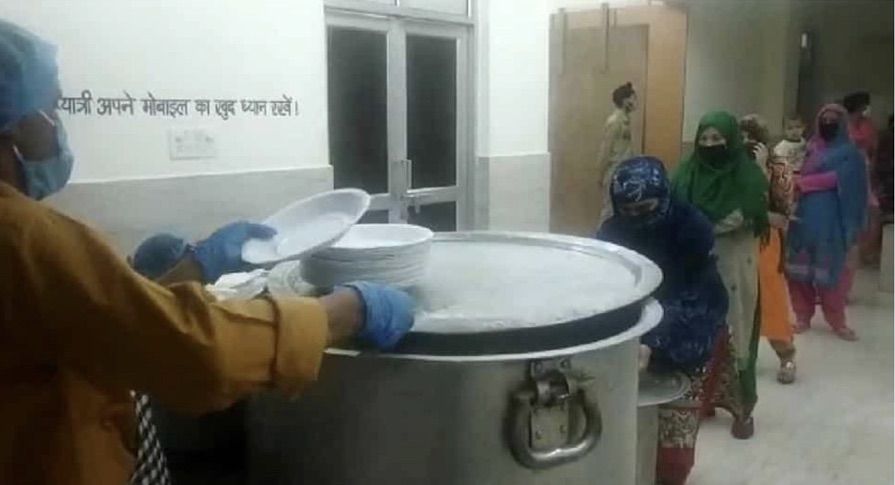
In Mumbai “Food- ek choti si asha” is a community led by Nikhat Mohamedy, who took an initiative to help the needy people in this pandemic and several others from different religion joined hands and came forward to help each other. Today the kitchen is serving 15,000 meals per day.

“This is about recognising the fact that we are all children of Adam and Eve, and feeding those brothers and sisters who are hungry and deprived is fundamental to expressing our humanity”, says Mohamedy.

Facebook.com

Another example of this is when Vaishno Devi Shrine Board served recipes to Muslims housed in quarantine centres on the occasion of Eid, March 25th. The Shrine Board said that they have been providing Sehri and Iftari meals to the Muslims after changing their schedule to meet the requirement of food for those fasting early morning and in the evening.

Hindustan times

Instances like these help me to understand that we should never judge people specially on the basis of religion or caste, we should always look upon them either as a good person or a bad person. If the world is good with you, be good to the world, if it is bad just turn your back, learn a lesson and focus on yourself, just don’t be like them. It is 2020 stop judging people, stop discriminating them, stop calling them with unwanted names, God has created people but it us who have separated ourselves into various divisions and factors. Just treat everyone equally and respect everyone. Smile and greet them be it a sweeper or a rich man. Play your part and leave the rest upon them. Change your sight of looking at the world, world will change itself automatically.

Domestic violence in India

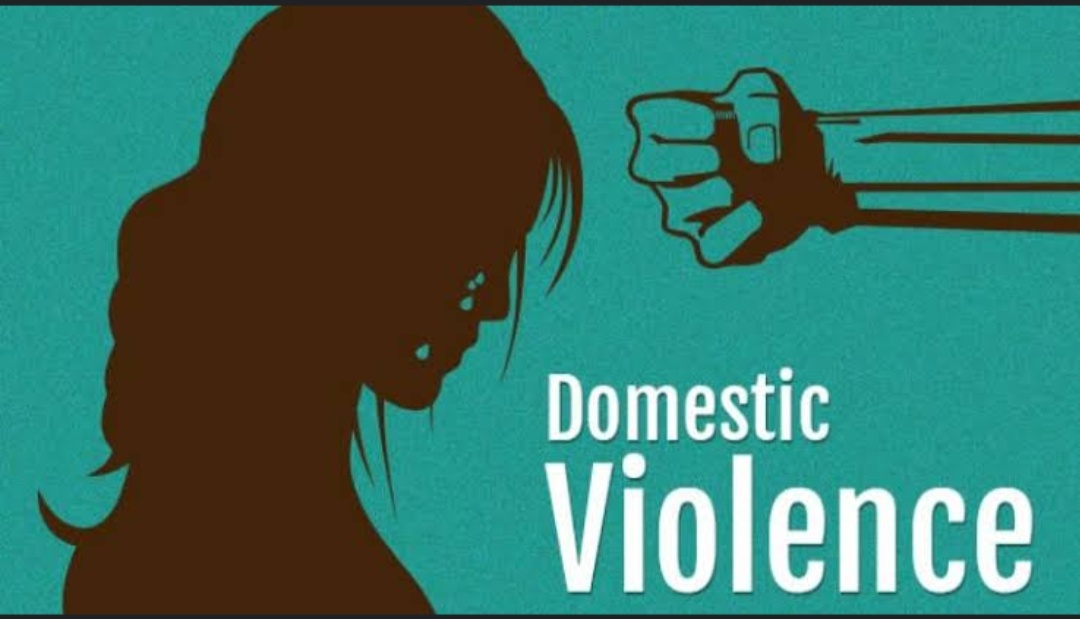
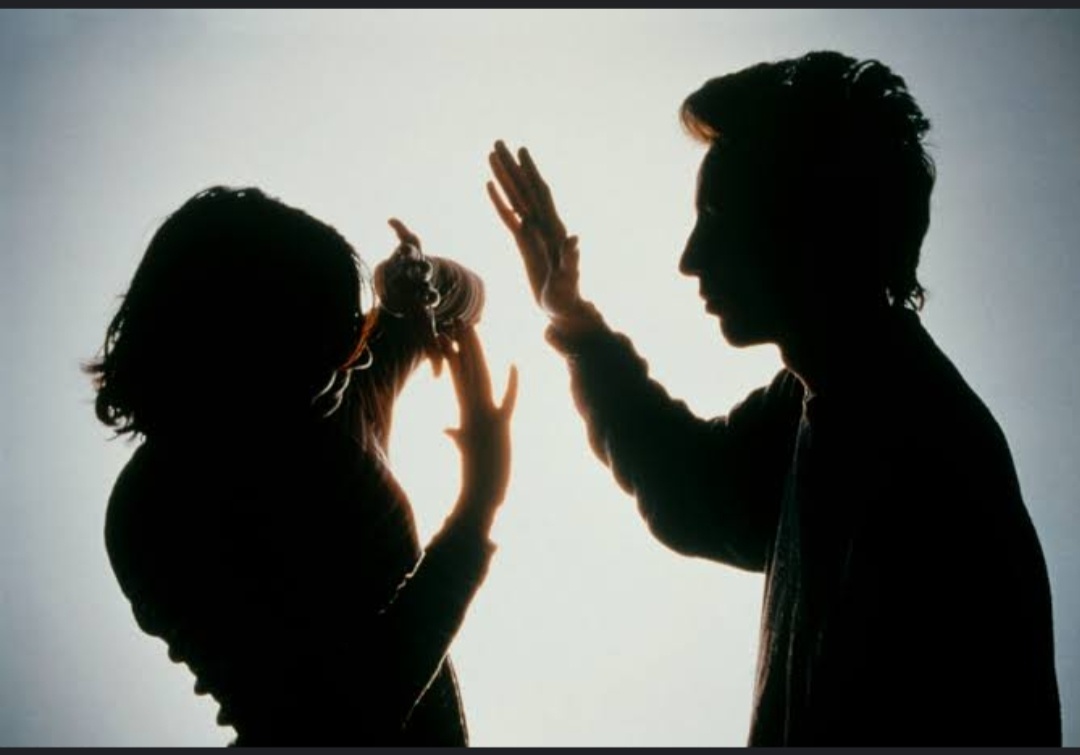
Domestic violence in India includes any form of violence suffered by a person from a biological relative, but typically is the violence suffered by a woman by male members of her family or relatives.

Domestic violence, or intimate partner violence (IPV) as it is sometimes called, is a worldwide problem.[10] Domestic abuse includes physical, emotional and sexual violence of any form. In India, the PWDVA also includes economic abuse under the definition of domestic violence.

Definition and law

Domestic violence is currently defined in India by the Protection of Women from Domestic Violence Act of 2005. According to Section 3 of the Act, “any act, omission or commission or conduct of the respondent shall constitute domestic violence in case it:

1: harms or injures or endangers the health, safety, life, limb or well-being, whether mental or physical, of the aggrieved person or tends to do so and includes causing physical abuse, sexual abuse, verbal and emotional abuse and economic abuse; or
2: harms, injures or endangers the aggrieved person with a view to coerce her or any other person related to her to meet any unlawful demand for any dowry or other property or valuable security; or
3: has the effect of threatening aggrieved person or any person related to her by any conduct mentioned in clause (a) or clause (b); or
4:otherwise injures or causes harm, whether physical or mental, to the aggrieved person.”
2005 it was made illegal Jammu and Kashmir, which has its own laws, has enacted in 2010 the Jammu and Kashmir Protection of Women from Domestic Violence Act, 2010.

Victims of domestic violence:


Women make up the largest group of victims. However, men, children, and elderly people may also be victims of domestic violence. Domestic violence occurs at all levels of society and in all population groups.

Abuse is usually intentional, but not always. For example, often people can no longer cope with family care. The situation can then escalate and lead to abuse.

Facts of domestic violence in India

The issue of gender-based violence in India has been on the political agenda for many years. And with substantial data, one thing is clear: rampant domestic violence against women in India is a reality. Every third woman, since she was 15 years of age, has been confronted with domestic violence of various forms in the country, according to the National Family Health Survey (NHFS-4) released by the Union Ministry of Health. Thus, the incubation of a new round of debate on the cultural underpinnings of domestic violence.

According to the survey, 27 percent of women have experienced physical violence in India since the age of 15. This experience of physical violence between women is more common in rural areas than among women in urban areas. Domestic violence cases, where women reported physical abuse in rural and urban areas, were 29 percent and 23 percent respectively.

The Protection of Women from Domestic Violence Act 2005 (PWDVA) sets out a comprehensive definition of domestic violence that encompasses all forms of physical, emotional, verbal, sexual, and economic violence and covers both actual acts of violence and threats of violence. Also, the PWDVA recognizes marital rape and treats harassment in the form of unlawful dowry claims as a form of abuse.

Domestic violence cases in India on the rise during CoVid-19

Recent data released by the National Legal Services Authority (NALSA) suggest that the nationwide lockdown has led to a rapid increase in cases of domestic violence. The data, which is categorized according to cases in different states suggest that Uttarakhand recorded the highest number of domestic violence cases in the last two months of lockdown. Haryana ranks on number two and the national capital Delhi on number three.

The report by NALSA documents cases from the start of the lockdown till May 15 and was collected through 28 State Legal Services (SLAs). Some shocking numbers were revealed in the report which mentioned that a total of 144 cases of domestic violence were reported in Uttarakhand. From Haryana, the number of cases were 79 and a total of 69 cases surfaced from Delhi.

The situation of increase in cases of domestic violence is not restricted to only India. The lockdown has brought the world to a standstill. The lives of women across the globe, who are in an abusive relationship have also come to a halt. The same violence is repeated and perpetrated frequently, and on a regular basis during the lockdown. Various domestic violence helplines and organizations all over the world are working constantly to deal with this global issue.

The COVID-19 lockdown has brought simmering tensions to the fore with many couples struggling to find a common ground and retain their sanity. From division of household chores, a partner binge eating or drinking or spending too much time on social media, all of these situations are giving rise to increased animosity among couples. Here’s how you can address each of them.

Steps That Survivors Of Domestic Violence Should Take:

1: Call the cops. If you are physically or sexually assaulted by your spouse, partner, or anyone else, call the police and ask for help immediately.
2: Take videos of the injuries. It’s important to keep some evidence of that attack, 3: Create a safety. Survivors of domestic violence should set up a safety plan for themselves and their children. A safety plan may involve stashing some money, clothing, phones, extra car keys, passports, I.D.s, and other essential documents in a safe place outside the house.

Conclusion

Domestic violence is one of the most egregious types of harassment suffered by women in our culture today. Statistics show that 85% of victims of domestic violence are female. Only 15% of the victims are men. Domestic violence can happen to anyone, regardless of race, creed, religion, or standing in the victim’s society. If the issue of domestic violence is not dealt with adequately, this type of abuse will continue to exist in all classes of society without an end. For us, as a society, to eradicate this horrible type of abuse, we need to stand together and make tougher laws to protect the victims of this abuse.

‘Glee’ Actress Naya Rivera Found dead while Saving Her Son, Body Found in California Lake

Naya Rivera, a singer and actor who played a gay cheerleader on the hit TV musical comedy Glee, was found dead on Monday in a Southern California Lake. She was 33.

Rivera’s body was discovered six days after she disappeared on Lake Piru, where her son, Josey, was found on July 8, alone on a boat the two had rented, the Ventura Country Sheriff’s office said. The Sheriff’s office confirmed that the body was Rivera’s.

According to the police working on Rivera’s case, the actor died trying to save her son.

Rivera’s son, Josey Hollis Dorsey told the police that after the two went swimming. Rivera pushed him into the boat but when he turned around to see her, she had disappeared underwater.

The sheriff, Bill Ayub said during a conference that Rivera gathered enough energy to help her son, but not to save herself. The cops believe that the actor had been trapped by vegetation beneath the surface of the lake, which is why it took six days to find her.

Family members chatted with Rivera via FaceTime when she was on the boat, and search crews watched those videos for clues to where she might have gone down, Ayub said ” It has been an extremely difficult time for her family throughout this ordeal.” “We share their grief” he added.

Rivera’s untimely and tragic demise has sent shock waves around the world. The fact that the actor had died while trying to save her son was what broke her fans’ heart.

HOW TO KEEP YOURSELF HAPPY AND FIT IN THIS LOCKDOWN?

As many of us are being told to hunker down in our residences and houses, and limit trips outside and social contact, matters are feeling pretty “real” at this point. Aside from the overall worry, people might also have about their bodily fitness as they digest the information from around the sector and here at home.

Here are some of the mental health practices to make sure to hold doing—or start doing, for a number of us—during the lockdown period.

Have a routine

We realize how vital habitual is, especially for children, under regular conditions. And when schools are closed and lots of humans are running from home or informed to live at domestic. But it’s simply a whole lot higher for anybody’s mental fitness to strive to maintain a routine going, as tons as possible.

Start at-domestic exercise recurring

Working out at home in those instances is glaringly a desirable way to live healthy and kill indoor time. There are plenty of options, from the 21st-century ones to the old fashioned ones. Many online workout assets are offering loose get right of entry to or longer free trial periods at some point of this time, which is probably worth searching into. 

Get out of doors—in nature—if you could

This is tons easier in the united states of America or suburbs, but if you’re inside the city and it’s feasible, shimmy beyond your constructing neighbors and go for a walk within the park. 

study

And there are some superb motives to do so. Lots of new studies reveals that spending time in nature is a boon to both intellectual and bodily fitness. For instance, multiple studies have determined that time in inexperienced and blue areas is related to reduced anxiety and melancholy, and the connection may be a causal one.

But what’s captivating is that it doesn’t seem to need to do with simply the more pastime, the sunshine, or the air quality (even though these sincerely play a role). Forest bathing may in reality help the immune system: One mechanism is a concept to be through the chemical substances that trees release, phytoncides—some research has discovered that folks who spent more time in nature had a greater hobby of immune cells called natural killer cells.

Decorate your home

Working on your house if you have time can be a precise manner to feel efficient and in control. “Take the possibility of the extra time by using decluttering, cleansing, or organizing your home,” says Serani, referencing the book Trauma-Informed Care. “Studies say the predictability of cleaning not most effective gives an experience of control within the face of uncertainty, but also gives your thoughts frame and soul a respite from traumatic stress.”

Meditate, or just breathe?

Meditation has lots of studies at the back of it, as most people with the aid of now know—it’s been shown to reduce signs of depression and anxiety, and even grow the extent of positive areas of the brain. 

But if meditation isn’t for you, just breathing slowly might be. Controlled breathing has been used for millennia to calm the thoughts—and a look at some years in the past showed the mechanism that would provide an explanation for it. 

Maintain community and social connection

As mentioned, we’re fundamentally social creatures, and at some point of crises, it’s herbal to want to gather. Social connectivity is the possibly the finest determinant of health there is, as this landmark 80-year-lengthy examine from Harvard reported, and one in every of our most simple mental needs. 

Be of provider, from a distance

Being of provider is one of the quality matters we will do for society—and on a more egocentric note, for ourselves. Studies have repeatedly found that serving others, even thru small acts of kindness, has strong and on the spot intellectual fitness benefits. And feeling a experience of purpose has additionally been proven to help humans get over negative events and build resilience.

Practice gratitude

This isn’t always the easiest aspect to do in these instances, mainly if you’ve felt the more brutal results of the pandemic, like activity or enterprise loss, or illness. But practicing gratitude for the things we do have has been shown over and over to be hugely useful to intellectual health. 

.

Let yourself off the hook

This might be the most vital factor to keep in thoughts—don’t beat yourself up when things aren’t going perfectly on your household. On the pinnacle of the whole thing else, being disillusioned with yourself is definitely counterproductive. If the children watch too much 

Delhi: Man stabbed to death by teens for objecting to bike stunts

New Delhi: A 25 year old man was allegedly stabbed to death by a juvenile and his two friends after the victim warned them to not to do bike stunts in West Delhi’s Raghubir Nagar, police said on Monday.

The victim has been identified as Manish, a resident of Raghubir Nagar. He worked as a private car driver.

Police said that the three people involved in the murder are teenagers (aged 17), they have been arrested in connection with the incident. They said that the incident took place on July 8.

The entire incident was captured in CCTV cameras. In one footage, the main accused appeared to be stabbing the victim several times on the busy streets of Raghubir Nagar with his friends. “Even when one of his friends tried to take him away, he again ran to stab the man” said the police officer. Deputy commissioner of Police (west) Deepak Purohit said that a case of murder has been registered at Khyala police station.

The three teenagers who escaped were identified with the help of CCTV footage and local intelligence and later apprehended. Police said that the weapon used in the crime has also been recovered.

” On 8 July, we received information from DDU Hospital about the admission of an unknown person, who was declared dead. our staff rushed to the hospital and found that the person was suffering from multiple stab wounds. Later, he was identified as Manish.” The officer said.

The victim sustained 28 stab wounds including severe injuries to his chest and torso, other minor wounds on his arms and legs, the police added.

While doing the investigation, it was revealed that the main accused engaged in bike racing and stunts. He rode his bike at high speed and often passed through the streets of Raghubir Nagar, where the victim lived.

The victim objected to the bike stunts and racing. He also warned the accused against riding on the streets of Raghubir Nagar again, the DCP said,

Even after that, the victim rode through the same street again following which the duo got into a fight.

In order the teach the victim a lesson, the juvenile arranged for two knives on July 8, came along with his two friends, and when they found Manish roaming on the streets alone, executed the assault.

Sachin Tendulkar

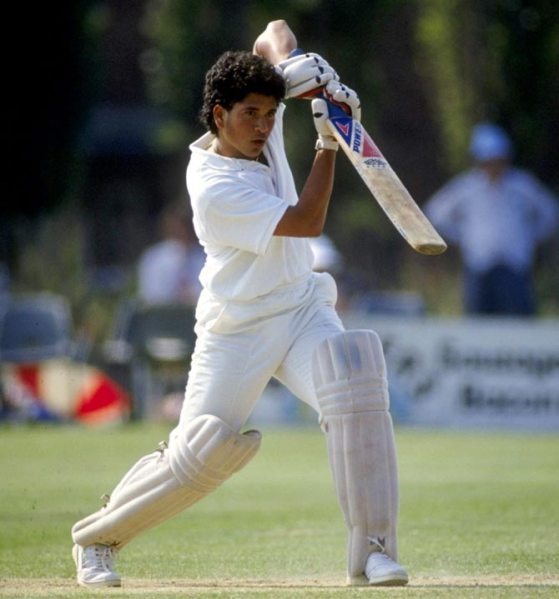
Sachin Ramesh Tendulkar, popularly referred to as the God of cricket is a former international cricketer from India and former captain of the Indian national team. He is considered as the greatest batsman in the history of cricket. The famous batsman had set many records in his 24 years long and illustrious career. He is the only player to have scored one hundred international centuries, the first batsman to score a double century in a One Day International (ODI), the holder of the record for the most runs in both Test and ODI cricket, and the only player to complete more than 30,000 runs in international cricket.

Early life

Tendulkar was born at Nirmal Nursing Home in DadarBombay on 24 April 1973 to a Maharashtrian family. His father, Ramesh Tendulkar, was a well-known Marathi novelist & poet and his mother, Rajni, worked in the insurance industry. Ramesh named Tendulkar after his favourite music director, Sachin Dev Burman. Tendulkar has three elder siblings: two half-brothers Nitin and Ajit, and a half-sister Savita.

 Ajit introduced the young Sachin to cricket in 1984. He introduced him to Ramakant Achrekar, a famous cricket coach and a club cricketer of repute, at Shivaji Park, Dadar. Achrekar was impressed with Tendulkar’s talent and advised him to shift his schooling to Sharadashram Vidyamandir High School, a school at Dadar which had a dominant cricket team and had produced many notable cricketers. Achrekar was the man who helped him to shape his career as a cricketer.

Career

Sachin made his International debut at the age of 16 in the year 1989 against arch rivals Pakistan, scoring 15 runs before being bowled by Waqar Younis. In his ODI debut, he was dismissed for a duck by Waqar against Pakistan in Gujranwala in 1989.

Tendulkar’s performance through the years 1994–1999 coincided with his physical peak, in his early twenties. He opened the batting at Auckland against New Zealand in 1994, making 82 runs off 49 balls. He scored his first ODI century on 9 September 1994 against Australia in Sri Lanka at Colombo. Tendulkar’s rise continued when he was the leading run scorer at the 1996 World Cup, scoring two centuries. He was the only Indian batsman to perform well in the semi-final against Sri Lanka. 

In the 2003 World Cup, Tendulkar helped his team advance as far as the finals. Though India was defeated by Australia, Tendulkar, who averaged 60.2, was named the man of the tournament. A tennis elbow injury then took its toll on Tendulkar, leaving him out of the side for most of the year, coming back only for the last two Tests when Australia toured India in 2004. This was a major low point in his career.

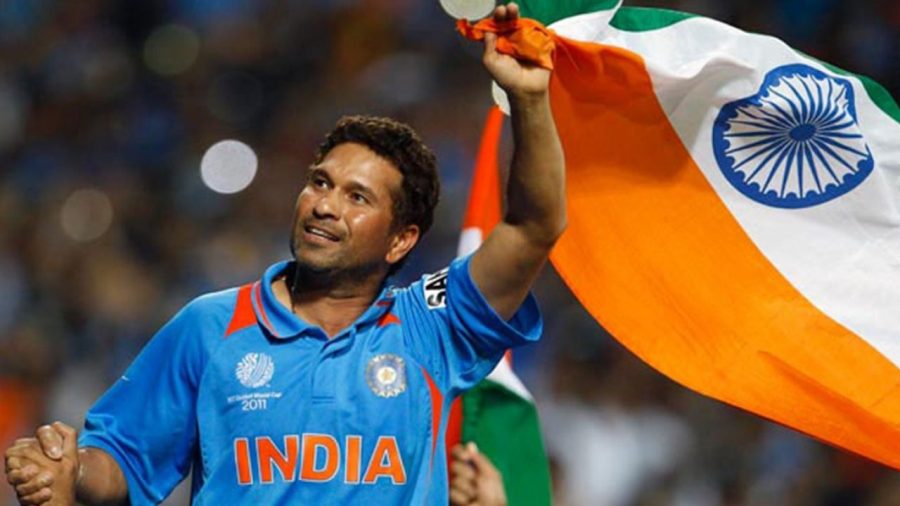
Later in his career, Tendulkar was a part of the Indian team that won the 2011 World Cup, his first win in six World Cup appearances for India.

Records and achievements

Sachin Tendulkar is the leading run scorer in Tests, with 15,921 runs, as well as in One-Day Internationals, with 18,426 runs. He is the only player to score more than 30,000 runs in all forms of international cricket (Tests, ODIs and Twenty20 Internationals). He also holds the record of the highest number of centuries in both Tests (51) and ODIs (49) as well as in Tests and ODIs combined (100). On 16 March 2012, Tendulkar scored his 100th international hundred. It came against Bangladesh in the league matches of Asia Cup 2012. He is also the only player to score fifty centuries in Test cricket, and the first to score fifty centuries in all international cricket combined. He also holds the world record for playing the highest number of Test matches (200) and ODI matches (463). In November 2011, he scored a historic “double century” in a contest against South Africa, becoming the first man in history to record 200 runs in a single innings of ODI play.

Tendulkar recieved the Rajiv Gandhi Khel Ratna award in 1997, India’s highest sporting honour, and the Padma Shri and Padma Vibhushan awards in 1999 and 2008, respectively. In 2012 Tendulkar became a member of the Rajya Sabha, the upper chamber of the Indian parliament—the first active athlete to join that body; he was nominated to the post. In 2014, he became the first sportsman to receive India’s highest civilian honour, the Bharat Ratna.

Retirement

In December 2012, Tendulkar announced his retirement from ODIs. He retired from Twenty20 cricket in October 2013 and subsequently retired from all forms of cricket on 16 November 2013 after playing his 200th Test match, against the West Indies in Mumbai’s Wankhede Stadium.

Are Parents able to do Work From Home?

Consider a 35 year old woman staying with her husband, 37 and her two children – aged 3 and 6 in Bangalore. She works as Project Manager in a top multinational corporation. Her husband is also working as a Project Manager, though of another firm. One of their child, aged 3, is starting with his kindergarten and demands for the utmost attention of his parents. And the other, aged 6, is starting her primary school. She has seen her parents working for most of the times and hence she is bit aware of managing herself.

Things were just going on as expected, until on 24th March, our Prime Minister called for a nation-wide lockdown. And then things just changed.

Should Work-from-Home Parents Hire Help with Child Care? | FlexJobs

Let me now give you a tour of how this woman spends her day. She wakes up to her alarm at 5:30 in the morning. Starting her day with 15 minutes meditation and yoga, she completely immerse herself in doing the household chores. Since the lockdown she has cancelled the maid, cook and nanny services. After her domestic work, she gets ready for the morning meeting with her team members and thus kick starts her 9 to 5 or rather whole day of work. But then wait, she has two children who also needs to get ready for their school. After attending a couple of meetings, she gets up, prepares her children, set up the desktops and login to their school webinar sessions. This continues till the work-chain is intervened by the lunch time. During the lunch hours, she needs to feed her younger one and at the same time, caters to the needs of her elder one. After that, they both go off to sleep and she resumes her work. Some days this workflow gets interrupted by unprecedented events such as poor internet connection, household emergencies and so on and so forth. Apparently as she described, the best time for her to work is about 2 hours in the afternoon and about 2-3 hours at night, when her children go to their beds.

Now this is just one instance. Apparently, this is what most parents are facing while they are working from home. Since the lockdown, they are not just a mom and an employee. Being a maid, a nanny, a mom, a cook, an advisor, a nurse, a repair-woman and a mediator, her life is not just only about being an employee. She is trying to manage everything, trying to subdue all the resistance and challenging all the obstacles on her path. While for others, Work From Home might be a boon or a blessing in disguise but for the parents, especially for a mother, it is a challenge, an everyday obstacle or rather, a bane. Managing her husband, her children, the household as well as her work has never been easy. For her, especially now, there is no distinct boundary between home and work. But the hardest fact of all is that, she was not prepared for this life-changing instrument.

Working from home and juggling family? Tips for WFH parents, from ...

It is of utmost importance that the employers should take this scenario into consideration and by partnering up with Human Resource Team, they should implement policies which can elevate the motivation level of mothers. A few suggestions from my end would be to give them few extra hours each day, especially during the afternoon to attend to her children. To allow them to complete their work by 6 in the evening, so that they can spend the night-time with their children. Parents should be allowed to attend the business meetings with their children and they should not be embarrassed if something comes up in between work which needs their utmost attention. Parents are having a very hard time, juggling in between work and home and employers should be empathetic while dealing with their situations.

Employers should be all big ears while listening to the issues of the parents. They should have high emotional intelligence and should be empathetic enough to not judge them, but to provide them with empathetic solutions. If a parent says that today she will not be able to work for the entire team because her child is facing some issues, the employer should give her the benefit of doubt, trust her and cooperate with her. It is very important for the employer to keep an open mind and be receptive to the problems. They should understand it takes a lot of courage, especially for the female employees to express their problem, fearing that she will be seen as weak and might be displaced. At this moment, the employer should not despise her, but to communicate with her and provide her with the necessary arrangements.

One things is very important which should always be kept in mind – Parents, especially mothers, can sacrifice for their children and hence the employers must give the required amount of importance to them. Especially the importance that the hard-working parents deserve.

Source: https://hbr.org/2020/03/a-guide-for-working-from-home-parents

ANALYSIS OF INTER- COUNTRY ADOPTION

INTRODUCTION

Adoption signifies a socio- legal practice of taking another child into own family. More specifically, in adoption child belonging to one family acquire ties with a new family i.e. adoptive parents, leading to the termination of relationship with biological or natural parents.

International adoption or transnational adoption or Inter-country adoption is a form of adoption in which an individual or couple becomes the lawful and perpetual parents of a child who is a domestic citizen of another nation. In general, potential adoptive parents must fulfil the essential requirements for legal adoption of their country of residence and of the country of nationality of the child. The laws of countries differ in their inclination to permit international adoptions. Some countries, such as China and South Korea, have comparatively well-settled rules and procedures for international adoptions, while some other countries explicitly prohibit it. African nations, have prolonged residency requirements for adoptive parents that in result rule out most international adoptions.

BIRTH OF INTER- COUNTRY ADOPTION

The statutory process of inter-country adoption gained momentum around the mid-1940s and came into force as a human response to the dilemma of war orphans and the abandoned kids and off- springs of servicemen in World War II, the Korean War and the Vietnam War. However, in the countries who give their children for adoption; lack of contraception, society’s attitudes to birth of illegitimate children and extreme poverty are the key elements leading to the dereliction of children to organisations. The concept of “male” child which is an unfortunate reality in our own country also leads to the abandonment of the girl child.

In the case of Lakshmi Kant Pandey v. UOI[1]

The Supreme Court in its judgement, pronounced that, “every child has a right to love and be loved. Only if a child is brought up in a family will he grow in an atmosphere of love, and secure ethical and material security. But if it is not potential of the biological parents or anyone about looking after the child, or if the child is abandoned by his/her family, then adoption of the child will be best for the security of the child.”

The rise in the number of children adopted by families from other nations has also resulted in a significant rise in public policy issues, leading to The Hague Convention and the International Adoption Treaty, with a range of nations changing their internal legislation, guidelines and policies to govern inter-country adoption practices. This has also contributed to a significant reduction in the prospects for hundreds and thousands of kids who need families to have this opportunity or to take advantage of this opportunity early enough in their lives to avoid the depredations, institutionalization, poverty and lack of educational opportunities.

THE LEGAL FRAMEWORK

On the international level, the Convention on the Rights of the Child (CRC) deals with inter-country adoption issues. This is also governed by the Hague Convention on the Protection of Children and Cooperation in the area of Inter-Country Adoption, 1993 (HC) and has been ratified by around 90 countries.

CRC Article 21 includes the obligation to “ensure that the child concerned in inter-country adoption enjoys safeguards and standards equivalent to those existing in the case of national adoption.”

As regards violation of the inter-country adoption criteria, in several countries the Committee on Children’s Rights, which ensures that CRC is complied with, expressed concern and recommended to certain countries that the Hague Convention should be ratified by them as means of addressing the matters.

The Hague Convention on the Protection of Children and Cooperation in Respect of Inter-Country Adoption, 1993 proposes two core principles, both specifically aimed at protecting the child from unethical activities related to inter-country adoption and not at encouraging the practice as such:

  • Establishing of safeguards to ensure that transnational adoption is in the best interest of the child.
  • To establish a system of cooperation between the contacting states to ensure that the safeguards are respected.[2]

ADOPTION LAWS IN INDIA

India is a signatory of both the CRC and the Hague Conventions. The Hindu Adoption and Maintenance Act, 1956 (HAMA) is the primary law which concerns the issue of adoption under the Hindu system.

The Juvenile Justice (Care and Protection of Children) Act, 2000 and all Amending Acts guarantee the rights of an adopted child recognized in the Hague Convention. However, the 2000 Act did not describe adoption and the concept was applied to the 2006 amendment. It has been a significant development, as the Guardians and the Wards Act of 1890 directed the introduction of a non-Hindu.

Central Adoption Resource Authority (CARA) is an autonomous body established under the Ministry of Women and Child Development and is responsible for intra-country and inter-country adoption. The CARA Guidelines state that any foreign couple wishing to adopt an Indian child must be funded by a child welfare organization, or by a social institution, approved for its residence by the government. According to the CARA Guidelines and the Juvenile Justice (Care and Protection) Amendment Act 2006, only three kinds of children are eligible for adoption:

Those children who were given up.

Those abandoned.  

Those orphaned and cared for by a professional adoption agency.

CASE LAWS

In the case of Re Rasiklal Chhaganlal Mehta[3]

 The court ruled that inter-country adoptions under Section 9(4) of the Hindu Adoptions and Maintenance Act, 1956 should be legally enforceable under the laws of both states. Adoptive family must comply with the requirements of the law on adoptions in their country and must have the requisite authorisation to be adopted by the appropriate authority, thereby ensuring that the child does not suffer from immigration and obtain nationality in the country of the adoptive parent.

In the case of Mr. Craig Allen Coates v. State [4]

Through the Indian Council for Child Welfare and Welfare Home for Children, the court ruled that, in the event that the adoptive parents fail to provide clear reasons for the adoption of a child from another country, the adoption process would be prohibited and declared to be unfaithful and that CARA should provide for stricter guidance in this regard.

ISSUES ARISING DUE TO INTER-COUNTRY ADOPTION

Child trafficking: child being sold, once taken out of the native state.

Post adoption negligence in taking care of the child.

Post adoption identity problem: child is not found with the actual adoptive guardians rather with some other person(s).

CONCLUSION

Inter-country adoption or international adoption means the adoption by parents of some other nation of the Child of one nation, also referred to as cross-border adoption. Inter-country adoption is an alternative for those children who do not have or cannot have a parent in between countries, so that these children can be chosen to give under inter- country adoption.

Agencies may be complicit in abuse if they systematically refuse to function within the framework of systems, which clearly violate international rules. In order to address transnational adoption, India also needs better guidance and legislation. It is important that child safety is ensured not only within the country but when he or she is taken out of the country.


[1]1984 AIR 469, 1984 SCR (2) 795

[2] Hague Convention, Preamble and Article 1

[3] AIR 1982 Gujrat. 193

[4] 162(2009) DLT 605

Does Pandemics Reset Humanity?

Outbreak of novel corona virus toward the year’s end 2019 have halted the entire world on the wheels, the infection is in discriminatory to such an extent that it did not separate any nation whether created like China, Europeans, Canada and creating like India. It Would never look whether you are rich, a clergyman, a spouse of a president , a poor a matured or a kid. its pace is spreading to such an extent that inside two or multi month it became pandemic started from a city in china.

A virus, which is catastrophic too, has arrive at all over the world however something important called to be HUMANITY is absent and escaped the reach of masses. a contamination of a virus could enter , go starting with one individual then onto the next however Humanity which can be spread , learn develop , rehearsed is elusive and battling for worldwide effort. like the notorious COVID-19. we have seen mayhem everywhere throughout the world , the major on are talked about however list are perpetual in the decade.

To settle on reset humankind, we should comprehend the significance of the term pandemic uninvolved of different terms episode, plague. A flare-up is spreading a malady in a specific region, plague is spreading for huge scope in a nation and pandemic is a worldwide scale occasion of spreading the sickness. for example Covid 19 began as flare-up in Wuhan area, China and turned as pestilence when complete China is affected, at last WHO declared it as Pandemic when rest of the world like Spain, USA, India, Korea are affected and nonstop spreading.

Out of enduring have risen the most grounded souls; the most monstrous characters are burned with scars As statement expressed, pandemic like covid 19 brought sufferings financially( workforce deficiencies, low gracefully) socially( self separation) assemble quality towards greater condition cordial. With pandemics diminishing carbon dioxide outflows into air because of low transportation and gracefully, expanded force slices because of increment request on the way towards sustainable power source, expanded disengagement towards developing of greens at homes is only resetting needs of people.

These difference in needs are not constrained to condition just, yet in addition monetarily, low interest prompts builds quality and diminishing costs, political objective of social prosperity with most noteworthy need, Individually, expanded communication with family, diminished relocation and upgraded asset usage, broadly, expanded social reconnaissance for containing the pandemics, low loan fees for money related help, universally, common exchange on social circle than financial circle.

Does pandemics reset humanity and priorities in the end always

With serious outcomes, danger of national security, loss of jobs, day pay misfortune for normal .laborers, increment clinical expenses on isolation, increase everyday costs by social removing are on one hand, where worldwide reaction of protectionism by restricting air travel from specific nations, lock down of vacationer puts because of pandemic impacts the nations severely.  After the Spanish influenza in 1918, with huge loss of populace, the recharged intrigue has given to wellbeing segment with expanded innovative work for immunizations, observing for tainted. Be that as it may, it doesn’t halted the expanded industrialization with helpless sanitation urban bunches. Be that as it may, in contemporary world, the nations like India, endemic with pandemic like intestinal sickness which is significant reason for high number of passing’s, government has started different plans like Mission Indradhanush for immunization, swachh bharat for sanitation has demonstrated outcome by decreasing the quantity of cases and force of spread. Despite the fact that the changed needs like intestinal sickness free India ought to go with increment wellbeing spending plans, framework, specialist persistent proportion where India must core interest.

As Hegel said in his persuasive strategy, each proposal have absolute opposite and join produce blend, Pandemics like Covid 19 resets the needs, resetting mankind required long haul endeavors from political and individual on equivalent balance. Worldwide settlements, for example, International Treaty on Climate, Refugees, Epidemics ought to be followed in letter and soul, innovative work ought to keep the worldwide norms, customary qualities, for example, Korean welcome of welcome, Indian Namaste ought to be advanced.

Is Media a fourth pillar of democracy?

16 December 2012: A severe assault and murder, prevalently known as “NIRBHAYA GANG-RAPE CASE”, shocked the country. A student, in Delhi, was coming back to home, late night, with a companion. Shockingly, when they couldn’t discover a vehicle late night, they took a transport, which had just six individuals other than them. She was severely assaulted by these six who were tanked, including one who was under 18 years and was generally ruthless among all. Her companion was additionally beaten and left oblivious. Them two were tossed out of the transport, stripped, after the episode. This case offended individuals and entire country saw numerous fights and rallies. Introductory numbness of the individuals passing by and organization intensified the circumstance. Media assumed an essential job for this situation. This weight made by individuals and media got a critical change Indian enactment on Rape cases. It corrected Justice Juvenile Act, and decreased the age bar from 18 to 16, to be considered as a grown-up. Government in association spending plan 2013, given to setting up a Nirbhaya budget. Comparative cases are the ongoing Unnao assault case, Kathua assault case. These cases made a great deal of revisions in different acts like JJ act, POCSO act.

KM NANAVATI versus Province of Maharashtra is another milestone choice, which got a ton of media inclusion and the jury was supposed to be impacted by it. KM NANAVATI was a maritime official. At the point when he came back from a task, he finds about his wife affair with  Prem ahuja, who expected to wed her. He leaves his wife, Sylvia and their child at a theater and went to go up against Prem Ahuja. He asks Prem if he accepts Sylvia and take care of their child, which Prem refuses. In this heated moment, Nanavati shot him dead.

Nanavati was at first announced “not guilty” by a jury however later Bombay high court condemned him to life detainment. In any case, later, vijayalaxmi pandit, recently selected senator absolved Nanavati. This case obviously shows how media’s essence can impact the free organ of Indian democracy- judiciary.

At the point when we consider characterizing democracy , a crucial definition that comes in our psyche is the one which was given by Abraham Lincoln at his popular Gettysburg address. He portrayed democracy as “of the individuals, for the individuals and by the individuals”. The essential thought behind popular government is individuals practicing power. They are the preeminent position.  Associating individuals gets significant at this stage. With increment being used of innovation, individuals are having better associations. Online networking is perhaps the best stage for it. From discussions to offering thoughts and perspectives, different instructive, wellbeing and different applications, media is exceptionally critical. Digitalization and innovation has reached to pretty much every edge of the world. This utilization has carried individuals to a typical foundation of correspondence. They can either interface in local or worldwide dialects. Media isn’t just about reporting.

In any case, in ongoing decades, media is viewed as a lessened organ of majority rules system. It has lost its believability. News channels order themselves as per either ideological group. They, rather than introducing reality, continue charging each other for either issues. More often than not, these channels show insignificant and strange stuff. At the point when they speak to the national TV, they have more noteworthy desires. The method of introduction now and then befuddles the crowd about the phoniness, the suppositions and reality.  Horde lynching cases in news, due to whatsapp counterfeit news is another issue to be centred around. This is upsetting that individuals are moved by these phony news, harming guiltless lives. This is darker side of web-based social networking. Media probably won’t be exclusively answerable for it, yet absence of mindfulness is. Viable utilization of this stage to make mindfulness can maintain a strategic distance from such occurrences.  Now and again political nearness enormously influences the self-governance of press. Media is intended to contact individuals without biasness. At the point when limitations forced, it may adversely influence the working of this body.It keeps a check and parity on government choices. Its self-governance is its quality, giving, it too, requirements to possibly be kept an eye on its activities.

It is as yet as amazing as it was before. Limitations have consistently been forced in past. It generally had a few downsides. Be that as it may, it ought to consistently serve the individuals, the individuals who really oversee. Media has consistently assumed dynamic job in covering numerous issues in past. It has secured touchy issues yet in addition brought and still carries our thoughtfulness regarding issues that we are either unconscious about or oblivious towards them. It has consistently been persuasive. In the event that it presents phoniness, that as well, is acknowledged by individuals. This is the place it has lost its actual sense and believably. It should adhere to its basic standards. Right off the bat, it should consistently table reality without outside impact. Also, it ought to abstain from advancing irrational stuff. It ought not overlook the intensity of pen. It is consistently the fourth mainstay of vote based system keeping a hold on working of other three columns the official, the enactment and the legal executive. We have seen in nirbhaya case how revisions occurred after the occurrences and in Nanavati case, how it, for some time, affected the legal executive. These cases would have gone unnoticed without media-support. Incredible elites have dreaded the intensity of media. Kailash sengar, primary charged BJP MLA in Unnao assault case, was removed out of the gathering after individuals shock and media pressure. This weight on influential individuals and political offices mirrors the quality of media. Yet, there exists nothing without defects. With such an impact and quality, it is still significant mainstay of our vote based system. We can see the critical change that it brought till date.

10 best places to visit in Mcleodganj

If you are planning to have a plan on visiting Mcleodganj then we are ready to be your guide and help you choose the best way to have a pleasant spend. There are many places you could definitely miss beside visiting many. You should be clever enough to make a wise choice among the tough calls.

Start your day by visiting Triund hill. Starting your day with a hill station gives you a kick start. Spending at the cool place never make you leave too early. So starting a day in a cool place makes your day cool and you can have a great start. The have a visit to Bhagsu waterfall and have a bath. Spend a pleasant time and have a fresh day by refreshing yourself in waterfall. After becoming wet it’s time to go and enjoy the view point and become warm. In Naddi view point you can have hot tea and breakfast and can view the entire place in a glance. In the mid afternoon you can have a visit to museums and temples. You can start with Tibetan Museum where you could know more about their culture and ancient history. Kalachakra temple has its own importance in its existence. I don’t reveal it, it’s your job to find out its importance in the history. Guna devi temple and Bhagsunath temple will take you to peace island. You can have a pleasant and calm time there. Tsechokling Gompa will make you stay there for a while. Don’t be hurry because it’s a place you never feel to leave. Spend some additional time there and you can have a short nap if you wish or you can meditate for a while. Dal lake is a place where you can spend your late afternoons by having lunch. Small tides and music of waves take you to trauma. But it’s better to start from there before sunset. Quick is too late there. No one feels to leave the lake. But missing sunset point will not complete your trip.

Have a great trip and never plan to have a plan to miss something. Everything is something there. But IIf you plan your visit 3-4 days, you can have a complete visit. But don’t forget to visit the mentioned. Visit the best places to make your trip the very best.

Trespass : A civil wrong

Trespass is one of the ancient forms of action that arose under the common law of England as early as the 13th
century. It was considered a breach of the king’s peace for which the wrong doer might be summoned before the king`s court to respond to a civil proceeding from the harmed caused. The courts were concerned with punishing the trespasser rather than compensating the landowners and from the beginning a defendant convicted of trespass was fined; a defendant who could not pay was imprisonment. The fine in these criminal proceedings developed into an award of damages to the plaintiff and this change marked the beginning of tort action under the common law which has eventually become operative in Nigeria by virtue of Section 45 of the Interpretation Act. Today, the law of trespass has developed to become an aspect of tort with several branches of its own.

TYPES OF TRESPASS :

TRESPASS AGAINST IMMOVABLE PROPERTY LIKE LAND

Legal maxim ‘Quare clausum fregit’ defines land as, “Land includes not only the surface and any buildings on it but also the airspace and subsoil, in so far as these are vested on the plaintiff. The action of trespass to land penalizing direct interference with other people’s land.”
Trespass is mainly a wrong against possession and is available at times against the owner himself. Court in the case opined that “The correct position in law may, in our opinion, be slated thus in order to establish that the entry on the property was with the intent to annoy, intimate or insult, it is necessary for the Court to be satisfied that causing such annoyance, intimidation or insult was the aim of the entry; that it is not sufficient for that purpose to show merely that the natural consequence of the entry was likely to be annoyance, intimidation or insult, and that this likely consequence was known to the persons entering: that in deciding whether the aim of the entry was the causing of such annoyance, intimidation or insult, the Court has to consider all the relevant circumstances including the presence of knowledge that its natural consequences would be such annoyance, intimidation or insult and including also the probability or something else than the causing of such intimidation, insult or annoyance, being the dominant intention which prompted the entry”.
No one has the right to dispossess the trespasser if he is in a settled possession of a property and he can’t be evicted unless due process of law is followed. The possession, which a trespasser is entitled to defend against the rightful owner must be a settled possession extending over a sufficiently long period and acquiesced in by the true owner. A casual act of possession would not have the effect of interrupting the possession of the rightful owner. Under the doctrine of prescriptive easements, for example, a property owner loses the absolute right to exclude (all other persons from taking possession of his land) when a nonowner has used that land openly, peaceably, continuously, and under a claim of right ad- verse to the owner for a period set forth by a particular state (known as the prescription period). It was held by the High Court of Bombay in case that a rightful owner who dispossesses another cannot be treated as a trespasser except as provided by Section 9 of the Specific Relief Act, 187.
Trespass may also arise upon the easement of one person upon the land of another. For example, if A grants B a right to pass freely across A’s land, then A would trespass upon B’s easement by erecting a locked gate or otherwise blocking B’s rightful access. In some jurisdictions trespass while in possession of a firearm, which may include a low-power air weapon without ammunition, constitutes a more grave crime of armed trespass.
The maxim “cuius est solum, eius est usque ad coelum et ad infernos” (whoever owns the land owns it all the way to the heavens and to hell) is said to apply, however that has been limited by practical considerations. For example, aerial trespass is limited to airspace which might be used (therefore aeroplanes cannot be sued). Landowners may not put up structures to prevent this. The courts have been more lenient with underground trespass.

There may be regulations that hold a trespasser to a higher duty of care, such as strict liability for timber trespass (removing trees beyond a permitted boundary), which is a type of trespass to chattels as a result of a trespass to land.
Some cases also provide remedies for trespass not amounting to personal presence, as where an object is intentionally deposited, or farm animals are permitted to wander upon the land of another. Furthermore, if a new use of nearby land interferes with a land owner’s quiet enjoyment of his rights, there may be an action for nuisance, as where a disagreeable aroma or noise from A drifts across the land of B.

Trespass ab initio is when a person is granted access to land but then abuses that access. The entry to the land is considered to have been a trespass from the beginning. This only applies to access given by law, not to access given by a person.


TRESPASS TO A PERSON

TRESPASS TO PERSON IS A TORT WHICH IS FREQUENTLY
COMMITTED IN EVERYDAY LIFE. IT IS BASICALLY
UNREASONABLE INTERFERENCE WITH BODY OF A PERSON
WHICH CAN BE COMMITTED EITHER BY CAUSING ACTUAL HARM OR BY JUST CAUSING AN APPREHENSION OF FORCE.

Critical Analysis on The Concept of Trespass To Person

Trespass to person is a tort which is frequently committed in everyday life. It is basically unreasonable interference with body of a person which can be committed either by causing actual harm or by just causing an apprehension of force.

The tort of trespass to person has developed as it is today is a result of many changes and modifications. In early English law, a physical interference with the person was given special protection, partly to avoid the unhappy consequences of people taking the law into their own hands by revenge attacks. Untill the abolition of the old forms of action in the 19th century; direct attacks upon the person were protected by the action of trespass, which required no proof of damage. Indirect interference with the person was protected by the action on the case, which did require proof of damage.

Today, the basic position is that direct and intentional acts of interference are still dealt with by the tort of trespass, while indirect and unintentional acts fall under the tort of negligence. However, the situation is more complex than this suggests and some authorities suggest that even in trespass the claimant must now establish intention or negligence in addition to the act of interference.

This appears to suggest that there is a form of negligent trespass, which is almost a contradiction in terms.

Trespass To Person:
Definition:
Interference, however slight with a person’s elementary civil right to security of person, and self-determination in relation to his own body, constitutes trespass to person. Trespass may be done intentionally, deliberately or negligently. The fundamental principle plain and incontestable law is that every person’s body is inviolate.

TRESPASS TO PERSON MAY BE CATEGORISED AS:

  1. Assault, which is “any act of such a nature as to excite an apprehension of battery”;
  2. Battery, ” intentional and unpermitted contact with the plaintiff’s person or anything attached to it and practically identified with it”.
  3. False imprisonment, the “unlawful obstruction or deprivation of freedom from restraint of movement.”

Assault
• In everyday parlance assault is taken to mean physical contact. In tort, however, an assault occurs when a person apprehends immediate and unlawful physical contact due to the intentional actions of another. Fearing you are about to be physically attacked, therefore, makes you the victim of an assault.
• It is also necessary that an attack can actually take place. If an attack is impossible, then despite a person’s apprehension of physical contact, there can be no assault – for example, a person waving a stick and chasing another person who is driving away in a car would not be an assault. It is also generally thought that words alone cannot constitute an assault, but if accompanied by threatening behaviour the tort may have been committed.
Battery
• If the physical contact that is apprehended in an assault actually takes place, the tort of battery has been committed. It is not necessary for the physical contact to cause any injury or permanent damage to the victim, or even be intended to do so. The only intention required is that of making physical contact.
• It is also not necessary for the wrongdoer to actually touch the victim, so battery may be committed by throwing stones at someone or spitting on them.
False imprisonment
• False imprisonment is the unlawful restraint of a person which restricts that person’s freedom of movement. The victim need not be physically restrained from moving. It is sufficient if they are prevented from choosing to go where they please, even for a short time. This includes being intimidated or ordered to stay somewhere. A person can also be falsely imprisoned even if they have a means of escape but it is unreasonable for them to take it; for example, if they are in a first floor room with only a window as a way out.
• False imprisonment can also be committed if the victim is unaware they are being restrained, but it must be a fact that they are being restrained.

TRESPASS TO GOODS

Trespass de bonis asportatis, affords a remedy where there has been a direct interference with goods in the claimant’s possession at the time of the trespass, whether that be by taking the goods from him or damaging the goods without removing them.Trespass and conversion deal with intentional interference with goods. Where goods are lost or damaged as a result of the defendant’s breach of a duty of care, an action may lie in negligence.


TRESPASS TO GOODS:


Trespass to goods is an infringement of the right of possession not of ownership. There are three types of torts relating to goods
• Trespass to goods
• Conversion
• Detinue
Prof. Salmond: “Trespass to goods consists in committing without lawful justification any act of direct physical interference with a chattel in the possession of another person.”
Pollock: “Trespass to goods may be committed by taking possession of them or by any other act in itself immediately injurious to the goods in respect of the possessor’s interest as by killing, beating or chasing animals, or defacing a work of art.”
Two forms – it may assume:
a. Taking the thing away from the plaintiffs possession, when it is termed aspiration (removal, seizure etc.)
i. this would amount a crime of theft ii. To robbery if it was also forcible.
b. Different application of force- damage
i. killing or injuring of an animal ii. Defacing a work of art.
Damage is not always essential. Even the slightest application of force like touching is wrongful.
Essentials of trespass to goods:

  1. Possession (Servant and master; trustee; administrator)
  2. A person in possession, though not the owner can sue.
  3. Jus tertii (Title of third person).
    Self defences:
    • Rightful claim
    • Authority of law
    • Consent
    • Negligence of the plaintiff
    • Reception of goods.

Trespass can be faced by people innumerable times in a day, but what is important is to truly understand the nature of trespassed act, property, loss and impact of it on the plaintiff. If the nature of the act is itself suggestive of a wrongful incident, voluntarily undertaken to constrain the enjoyment of the right to exclude from the private property, then evaluation of all possible recourses to recoup the damage should be identified. The four tests, when deciding trespass disputes, courts should evaluate the following factors: the nature and character of the trespass; the nature of the protected property; the amount and substantiality of the trespass; and the impact of the trespass on the owner’s property interest.
It would help to uncover various facets and understand the dimensions that trespass law is clutching in its circuitous surrounding so as to loosen the screws and solve cases and situations in an efficacious manner. The true meaning of each term needs to be understood to evaluate trespass and resolve the cases by applying the relevant doctrines.

SURYA NAMASKAR- THE PERFECT WORKOUT

“SURYA NAMASKAR” name is self-explanatory as it means              

   ” namaskar(salutation) to sun” sun, the most mighty thing around the earth. Hindu people worship the sun and treat is as god as the sun recognizes the source and soul of life.

Surya Namaskar is one of the most powerful yoga practices.

This is a practice in yoga as exercise including a sequence of some twelve elegantly combined asanas.

The set of 12 asanas is committed to the Vedic-Hindu solar deity Surya. In some Indian traditions, the positions are each associated with a separate mantra.

It is recommended that you do Surya Namaskar early in the morning.

However, if you are pressed for time, then you can do it in the evening as well. But before starting your yoga routine, ensure that your belly is empty. Many of us experience a hectic lifestyle.

 As a result, we suffer from depression, stress, and other mental illnesses. Surya Namaskar is a yoga technique that provides relief from such difficulties and calms your mind. And in today’s life, everyone is so much busy that they don’t have much time for all these and life also matters they should remember that.

This morning practice is intended to work on all body parts, every organ, every system, and every chakra. It is also thought to be the most efficient way to unite with our core inner strength.

The basic order in which asanas are perform is  Urdhva Hastasana, Tadasana,Uttanasana, Uttanasana with head up, Adho Mukha Svanasana, Urdhva Mukha Svanasana, Chaturanga Dandasana, and then reversing the sequence to return to Tadasana.

Surya Namaskar A consists of the following asanas:

  • Samasthiti (Tadasana or Mountain Pose)
  • Urdhva Hastasana (Upward Salute)
  • Uttanasana (Standing Forward Fold)
  • Ardha Uttanasana (Half Standing Forward Fold)
  • Chaturanga Dandasana (Plank Pose)
  • Urdhva Mukha Svanasana (Upward-facing Dog Pose)
  • Adho Mukha Svanasana (Downward-facing Dog Pose)
  • Transition – feet to hands
  • Ardha Uttanasana
  • Uttanasana
  • Urdhva Hastasana
  • Samasthiti

Surya Namaskar B consists of the following asanas:

  • Utkatasana (Chair Pose)
  • Uttanasana
  • Ardha Uttanasana
  • Chaturanga Dandasana
  • Urdhva Mukha Svanasana
  • Adho Mukha Svanasana
  • Virabhadrasana A (Right foot forward)
  • Chaturanga Dandasana
  • Urdhva Mukha Svanasana
  • Adho Mukha Svanasana
  • Virabhadrasana A (Left foot forward)
  • Chaturanga Dandasana
  • Urdhva Mukha Svanasana
  • Adho Mukha Svanasana
  • Transition – feet to hands
  • Ardha Uttanasana
  • Utkatasana
  • Urdhva Hastasana
  • Samasthiti

BENEFITS

The body is provided with the innate intelligence to produce energy from the sun directly. The mind, through the solar plexus; the body, through movement; and the spirit, through the chants, all get a hike from the practice of Surya Namaskar. Therefore, it is a perfect workout for the mind, body, and soul.

To help you bring awareness to your chakras and to identify which of your chakras are creating your issues. After all, you understand yourself better than anyone else

One series of Surya Namaskar (which consists of 12 poses) is known to burn 13 calories.

You can count the number of rounds that you need to practice depending on your prevailing weight.

Practicing 12 rounds (12 poses of Surya Namaskar) is usually recommended to get the best health benefits with weight loss being a major advantage.

For your skin to become normally healthy and clear, proper blood flow is required.

Surya Namaskar challenges you to stretch and relax deeply which allows the flow of blood to every organ of your body.

In 10 studies involving analyses conducted on candidates, changes were seen in weight loss and flexibility of the body.

It is much more valuable to know that flexibility is the secret to success and without self-discipline, one cannot expect the results.

Surprisingly, it is the heart disease that has been considering for the greatest number of deaths each year.

Surya Namaskar can keep your heartbeat normal and can also improve the working efficiency of the organ. There is an increased flow of blood from the heart to different organs of your body and vice-versa.

It is much suggested to practice Yoga at the area that is close to nature so that it relaxes your mind and calms your soul.

Studies conducted among a group of students have proved that Surya Namaskar can calm the mind, provide peace, and help people get rid of intense emotions.

Being subjected to disordered sleep patterns for more than three weeks is evidence of insomnia which requires you to ask the doctor.

Doctors usually come with the approach to practice Yoga to cure sleep obstacles apart from the medication that the procedure involves.

To feel good all the time, irrespective of outside factors, you need to do a lot of basis.

Involving yourself more into life-enriching activities will never let your spirits go down even when there is something undesirable happening in your life.

Practicing Surya Namaskar regularly helps in improving your cardiovascular health, enhancing your skin health, makes your body flexible, boosts your self-confidence levels, keeps up your digestive health, regularizes your menstrual cycle, helps y’all sleep better and decreases your stress levels.

MARWAD : HEART OF HINDUSTAN

The Marwari or Marwadi are an Indian ethnic group that originate from the Rajasthan region of India. Their language, also called Marwari, comes under the umbrella of Rajasthani languages, which is part of the Western Zone of Indo-Aryan languages.
Marwari’ is an umbrella term to classify both Hindus and Jains. The Marwaris originate from Eastern Rajasthan and the term was used as an ethnographic classification in the 1901 census. It described a trader from Rajputana and included primary groups like Agarwals, Maheswaris, Oswals, and Seraogis. It later included other Rajasthani trading castes like Khandelwals and Porwals. Most Marwaris do not come from the district of Marwar but the generic use of Marwar could be a reference to the older Marwar kingdom.

It was during the colonial period that the heterogeneous Marwaris came to form a community under the colonial state. Anne Hardgrove’s study, Community and Public Culture, credits their rise as a trading class as facilitated by the changing nature of the colonial economy, commercialisation of agriculture, changing land policies, and the payment of regular tax. The Marwaris as a caste group were able to build a credit and trading network across a large part of colonial India through marriage and kinship ties.
But the history of migration of this trading community from Rajasthan is dated back to the end of the 17th century and Marwaris served as bankers and financiers to the Mughals. The name of Jagat Seth, infamous for his role in the British victory over Siraj-ud-dawla at the Battle of Plassey in 1757, was actually a Mughal title which meant banker of the world.

‘Marwari’, the ethnic label is subjective and often used as a slur that defines the businessmen as the ‘outsider’, the ‘other’ who is swindling you, as they do not share community ties of language and local identity. Many Marwaris themselves consider the term a pejorative and instead, choose to identify themselves by their sub-caste. The criticisms of Marwaris and their economic activities are comparable to what minority trading groups historically have faced elsewhere in the world.

We all have our own experience of ‘knowing’ Marwaris. The essential/stereotypical features are their association with commerce, a network of relatives and cousins on all important trading routes to the metropolis, fluently speaking the local language as well as their native tongue, despite the ‘exile’ from home and regular visits to the home. The Marwaris do not integrate and are perceived to have maintained their distinctiveness and links to ‘home’ despite living in different parts of India for a long period.
Marwari traders have historically been migratory in habit. The possible causes of this trait include the proximity of their homeland to the major Ganges – Yamuna trade route; movement to escape famine; and the encouragement given to them by various rulers of northern India who saw advantages in having their skills in banking and finance.

The pattern of Marwari migration became increasingly divergent following the decline in wars between Rajput kingdoms, which the Marwaris had helped to finance, and the decreasing influence of the community over the North Indian caravan trading routes that resulted from the British establishing themselves in the region. The changed focus of migration was also encouraged by the British establishment of new trading routes and centres, as well as by the declining political significance of the Rajput courts whose famed conspicuous consumption had been supported by Marwari money.
The community welcomed the relative safety that the British presence offered, as well as the commercial and legal frameworks that they provided and which were more favourable to Marwari activities than the systems prevalent during the earlier period of Mughal and Rajput rule.
In 1956, the All-India Marwari Federation opposed a linguistic organisation of states whilst buying up regional language newspapers in Maharashtra, Tamil Nadu and Andhra Pradesh.Today, they control many of the country’s largest media groups.

The community’s control of the Indian economy declined following the country’s 1991 economic reforms. From a peak of controlling 24 per cent in 1990, it had fallen to less than 2 per cent in 2000. This reflects the growth of new industries outside of commodities trading and primary production. The figure for year “2000” is considered to be lower than the position in 1939, when the community first began its resurgence.

LANGUAGE:
Marwari, or Marrubhasha, as it is referred to by Marwaris, is the traditional, historical, language of the Marwari ethnicity. The Marwari language is closely related to the Rajasthani language. The latter evolved from the Old Gujarati (also called Old Western Rajasthani, Gujjar Bhakha or Maru-Gurjar), language spoken by the people in Gujarat and Rajasthan.

CULTURE:
Marwaris have been known for a tightly-knit social solidarity, described by Selig Harrison in 1960 as “indissoluble under the impact of the strongest regional solvents”.The perception held of their culture by other communities is ambivalent at best. Hardgrove notes that they are “known across India for their success in business and industry , and often despised and severely criticised by other Indians for their alleged corruption and social conservatism”.