Dr. Death (2021)|Review| A completely chilling series

Who is Dr. Death? How did he come to be? How did he continue practicing medicine despite hurting a terrifying number of patients? This series unfolded politics with an operating room, hospitals, and law.

A real-life story about a doctor who maimed and killed his patient relentlessly and without guilt.
Plot:

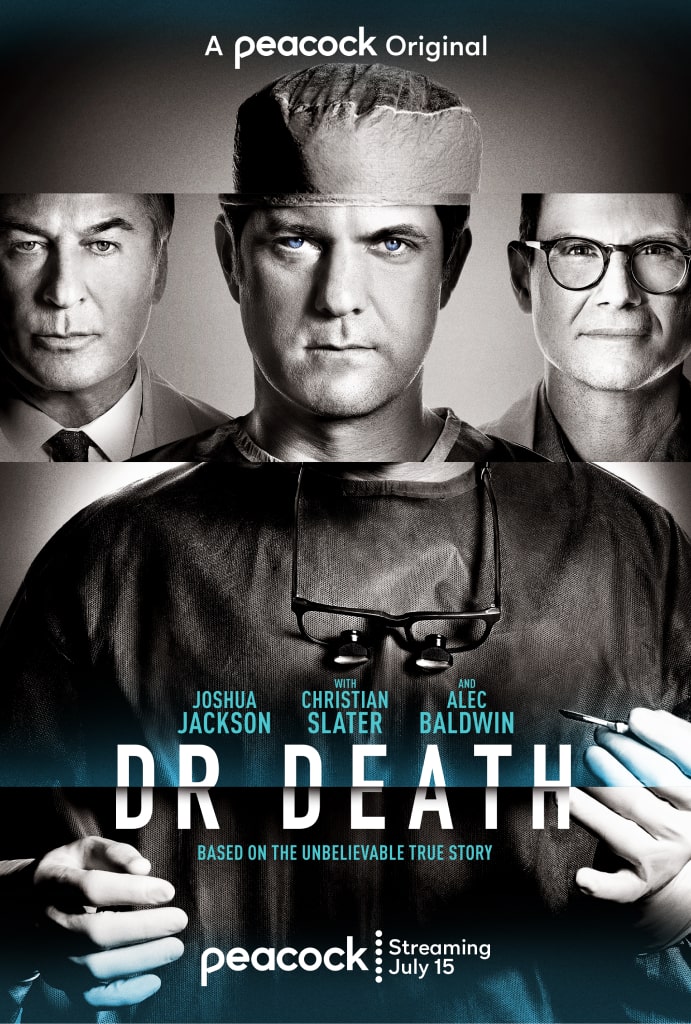
The story revolves around Christopher Duntsch, a former neurosurgeon who “Intentionally” maimed and even killed his patients. His two fellow colleagues and a prosecutor Michelle Shughart’s journey to stop him and bring justice. The drama miniseries is based on the podcast(by Wondery), with the same name, which covered his heinous crime.

Release date: 15 July 2021

No. of episodes: 8

Network: Peacock

Genre: True Crime

Writer(s): Patrick Macmanus

Executive producers: Jason Blumthal, Marshall Lewy, Steve tisch and more.

Running time: 43-60 minutes.

Let’s start with introduction of characters and their stories!

Christopher Duntsch aka DR. Death or Dr. D.

From the start, it is very obvious that he is a very obnoxious, extremely narcissist with God complex ( someone who thinks they has been divinely blessed or has an exceptional talent compared to everyone else, that they can perform risks to save someone’s life because they can’t make mistakes. Even if they do make mistakes they can either miraculously correct them or it is the fault of people around them which they then discard to take action upon) and who is in denial of his abilities.

“I don’t have complications”, “The attending interrupted which distracted me”, “I can leave kindness and become a stone-cold killer, and the way he slammed every doctor’s procedure to prove his way of surgery screams an insane amount of sociopath vibes and terrifying negligence. These were some of the red flags

He has said to have performed 37 surgeries, out of which 33 have intense complications and some dead. A neurosurgeon who brags about educational accomplishment all the time, doesn’t accept the existence of human error

Roles Portrayed:

Each and every actor portrayed their roles excellently. You could feel their irritation and anger radiating through the screens. Patient’s nervousness, excitement, desperation makes you imagine yourself to be in their or their loved one’s situation. The nonchalance of Duntsch ( By Joshua Jackson), his ability to use charm and threats to remain a doctor and get selected in other hospitals infuriates you to the bone. Dr. Robert Henderson’s (Alex Baldwin) immeasurable patience and Dr. Randall Kirby’s (Christian Slater)relatable impatience and anger take you on a rollercoaster ride.

Review:

The show starts with his patients at Dallas Medical. 3 days, 3 patients. One dead, one woken with extreme pain and no mobility in legs, and one is said to be recovering.  Dr. Robert Henderson had to perform a revision surgery on Madeleine Beyer, who woke up with extreme pain. During surgery he found out that there were many holes which were from the attempted attachment of screws, her fragments of bone dispersed and piercing main nerves. He wonders what did Duntsch do to her since her bones were completely shattered.

Through his course in Dallas, his circulating nurse, Josh Baker(Hobert Point-Du) consults and preps his OR. He is concerned about Duntsch as well as his patients. He questions and tries to protect patients. You get to see how nurses and everyone else except the doctor is treated with so little respect. Their voice of concern went not only unheard but also was looked upon as an interruption. Although one can understand that surgery is complex and doubts by people around us is effective, but in this scenario, the patients lost around 1700-2000 CC’s of blood and the nurses decided to voice their opinion. How can this be disregarded and the voices getting unheard? How can continuing to operate while a patient is hemorrhaging be ignored when these issues were brought to the Texas Medical Board? How is aggressively asking for a procedure like a craniotomy in a hospital where craniotomy is not performed (SO, they won’t have any instruments to do that and to counteract if it goes wrong isn’t there) okay when the situation could have been handled by simply transferring the patient to another hospital? It clearly shows that his intent was either to cover up his harm and to show doctorly care by performing a procedure

While writing the plot, I preferred to choose “Intentionally” since trained doesn’t just mean only that a superior/ attending is responsible for imparting knowledge. The learner/ resident has the equal responsibility to learn and practice what they have been taught. It also means that an attending, as well as a resident themselves, recognize what are they capable of and what are their limitations since it is someone’s life we are talking about. Just like Kayla Gibson said, he should have stuck to research.

Intentionally, because it is no wonder he knew he doesn’t know how to operate and yet he went on to shut everyone off and to continue operating the way he thought was right, i.e. recklessly treating his patients as mere Guinea pigs with little to no regard to human anatomy.

The series had me completely hooked till the end. Waiting for someone to listen to them, wanting to help them even it took place long back, feeling for each character since they seemed so genuine. I hated Duntsch and how calmly he dealt with everything. I hated how he easily went up the food chain and be unscathed. Joshua’s acting got me for real.

Well, let’s look at it objectively. Before, During and After. ( Spoilers ahead, if you haven’t seen the series completely)

He “compassionately” tells his patient about how not getting done a surgery could lead to what-nots, boats about degrees to nervous family members, wears the same scrubs with holes to operations. Then, during surgery, he erratically operates, slices through a vertebral artery takes a piece out of the esophagus, damaged vocal cords, intends to remove a disc but in the end, doesn’t even go near it, and perform surgery around the disc. Keeps asking for more follow-up to perform surgeries. But, would never check up on a patient, ignore their calls, and completely abandon them. He even operates on his best friend leaving him quadriplegia, blames others, and abandons him.

Dr. Kirby and his childlike behavior gets me since that’s how most of us would feel in the moment. The face of disbelief he carried all the way is remarkable.

To imagine that he would be still practicing medicine if his colleagues hadn’t reported and taken every measure to stop him, it is truly horrifying to imagine how many more lives he would have destroyed.

Note:

I applaud each and everyone who took a step against him and try to mend the system which is so broken. This series was so well made. The storyline was continuous, his behavioral relation between present and past, coldness, and the lives he affected out of surgery world; everything was so well thought and executed.

Seeing the series, might help you understand the world of surgery.

Although, the negativity of Dr. D is the main focus, we can always believe that there good doctors out there and we can ourselves support good ones and protect ourselves from Dr. D by asking questions regarding procedures and not being afraid to listen to our hesitation. Don’t let people like Duntsch affect other doctors whose only intention to save lives and help people. Do not get discouraged to reach out to medical care and do everything in our power to treat ourselves and our loved ones. Just remember to ask, have an open mind to all kinds of people, and be mentally prepped to go for treatments.

LESSONS TO LEARN FROM THE BOOK : IMPOSSIBLE TO FAIL

1. MAXIMISE YOUR POTENTIAL.

Maximizing our potential is not something we can learn at school. You can’t read it from a book, and you can’t learn something like this at a seminar. It is something you develop, in the form of resilience in the face of controversy and criticism.

2. EXPLORE YOUR PASSION.

Numerous studies of highly successful people indicate a high correlation between passion, believing in a calling, enjoying a job and performing at a high level.

So ask yourself what would you do with your time if you were living your ideal life? Make a list of at least ten things.

3. THE BIGGEST SUCCESS KILLER IS

identifying with being average and accepting mediocrity as your way of life.

Mediocrity is a personal choice. Without understanding the difference between success and mediocrity, we all risk accepting things that are way below our potential and leading a very average life.

4. THE SECRET OF SUSTAINABLE PERFORMANCE

Is positive attitude towards struggle.

Its not so much the struggle that cause the burnout, but the perception of struggle as a failure rather than a setback

Developing a new skill takes effort and its okay to fail productively. But don’t ask for help or give up early – allow yourself to grapple with the task so you get the maximum growth.

4 MUST READ BOOKS TO START YOUR OWN STARTUP

1. ZERO TO ONE

Zero to One presents at once an optimistic view of the future of progress in American and a new way of thinking about innovation. It starts by learning to ask the question that lead you to find value in unexpected places.

2. THE LEAN STARTUP

Rather than wasting time creating elaborate  business plans, the lean startup offers entrepreneurs- in companies of all sizes – a way to test their vision continuously, to adopt and adjust before its too late. The author provides scientific approach to creating and managing successful startups in a age when companies need to innovate more than ever.

3. THE FOUNDERS DILEMMAS

The founder dilemmas draws on the inside stories of founders like EVAN WILLIAMS of twitter and TIM WESTERGREN of Pandora, while mining quantitative data on almost ten thousand founders.

People problems are the leading cause of failure in startups. This book offers solutions.

4. HOOKED

The author of this book provides practical insights to create user habits that stick , actionable steps for building products people love, fascinating examples from the iPhone to Twitter, Pinterest to Bible app, and many other habit forming products.

LEARNING LESSONS FROM THE BOOK : THE PSYCHOLOGY OF MONEY

1. Use money to gain control over time, because the ability to do what you want, when you want, with whom you want , for as long as you want to, pays the highest dividend that exists in finance.

2. Wealth is what you don’t see, its hidden, it is the oncome that you have not spent and that is the fastest way to be wealthy, not spending the money you have and doing its opposite will never make you wealthy.

3. Wealth is just the accumulated leftovers after you spend what you take in. And since you can build wealth without a high income, but have no chance of building wealth without a high savings rate, its clear which one matters more.

4. Do not aim to be coldly rational( by looking at the spreadsheet) when making financial decisions. Aim to just be pretty reasonable. Reasonable is more realistic and you have a better chance of sticking with it for the long run.

5. Like everything else worthwhile, successful investing demands a price. But its currency is volatility, fear, doubt, uncertainity, and regret and you have to view them as fees( a price worth paying to get something nice in exchange).

Must Read Books:

I am beginner in reading books, and since I have not read thousand I can give you some recommendations from my prospective and from my reading style which is very really simple.

For begginers i would suggest read books that generate your interest in reading and you can read it without getting bore.

TIPS TO CHOOSE BOOKS/NOVEL :

  • Don’t judge any book by it’s cover, believe me guys I was same, just to buy books which look really attractive and caught my eye but that’s not really worth it, as you are judging a book by it’s cover but not by story, so please don’t do it
  • Find your interest, find what’s the one thing you are really interested in reading, it can be a romantic story, fictional books, non fictional , crime thriller etc.
  • Select book by reading about it’s multiple reviews, so that you dont regretit later.
  • For people, whop think investing in buying paperbacks books is costly, just go for Audiobooks, Audiobooks are easily available option for it and you dont have to carry it anywhere.

Some Recommended books –

  1. World’s Best Boyfriend by Durjoy Datta (the language of book is really simple and storyline is interesting).
  2. A Touch of Eternity by Durjoy Datta (this is latest books by him which is totally different from all stories written by Durjoy, I think you should give it a try).
  3. We were lairs by E.Lockhart (story of cousin’s and their bonding’s, believe me it’s one such a read).
  4. Fault in our stars by John Green(most loved story of all time).
  5. Books by Robin Sharma are also very good.

HAPPY READING 🙂

THE GOTHIC NOVEL

During the later half of the 18th century, there was a revival of interest in the life and art of medieval times. The gothic novel arose out of this new zeal for medieval life and fashions.

Gothic Novel:

The Gothic novels of the period sought to satisfy the reader’s craving for mystery and violent emotion and for stories set in remote times and places, depicting ghosts, portents, and demonic forces at work.

Themes of the Gothic Novel:

  • Generally, the central theme of the Gothic novel is romantic love. A somber, restless villain is the central figure.
  • The innocent, beautiful heroine probably imprisoned in a castle wants to be rescued by her lover.
  • The scene is placed in a castle or the dark cloisters of a ruined Abbey equipped with frightening secret passages and private chambers.

Structure of the Gothic novel:

Supernatural events, physical violence, and mental anguish are part of the thematic structure of the Gothic novel. Wild and desolate nature provides the background. The central sentiment of the Gothic novel is melancholy. The Gothic novel was, thus, a conscious protest against the rational and realistic creed of the earlier period.

The father of Gothic novel:

Horace Walpole is called the father of the Gothic novel. His “The Castle Of Otranto” published in 1764, set the trend. He used a medieval setting for this novel. There is death murder, intrigue, and villainy in the novel. The Castle looms large as a sinister symbol until a ghost throws it down.

Ann Radcliffe

Ann Radcliffe continued the gothic tradition in several novels. Her best work is ‘The Mysterious Of Udolpho’ published in 1794. It shows an extravagant spectacle of Gothic elements like the somber castle of Udolpho with its sliding panels, secret passages, and supernatural sounds. Her other important novel is “The Italian.” Her method way to arouse terror and curiosity by apparently supernatural events which are finally explained as natural events.

Some other Gothic novels:

  • Dracula by Bram Stoker
  • The strange case of Dr. Jekyll and Mr. Hyde by Robert Louis Stevenson
  • The Turn of the Screw by Henry James
  • The Fall of the House of Usher and Other Tales by Edgar Allan Poe
  • Wuthering Heights by Emily Brontë
  • Frankenstein by Mary Shelley
  • The Picture of Dorian Gray by Oscar Wilde

Why they are famous:

The plot and content of the gothic novels will be Scary and mysterious. The book contains several allusions and assumptions. The plot always seems creepy to the readers. And during that era, people needed some drama and unrealistic elements in their life to boost up the experience of reading time. When some novels started to fire up the process of Gothic literary forms, more authors started to write on this theme. Even, some well know authors who are famous for their humorous works and romance works started to write Gothic to follow the trend and current affairs.

However, People love unrealistic dramas and fiction, especially Gothic elements. Thus, Gothic novels will always entertain their readers with the plots and beautiful narration of dark aesthetics.

Environmental laws in india

Either Stable burning in various states accrued the air pollution in Delhi and created a gas chamber around NCR ; SC came upon a committee to observe scenario , Or 4 industries inflicting stream pollution were shut down by Maharashtra pollution board . Everybody has responsive to environmental problems as higher than . The key solution for resilience to environmental issues are provided by government in various legislations , enactments and provisions on environment laws .


In republic of India environmental law is concern with the policy and law for protection of the environment . It aims for achieving carbon free economy through taking measures for reducing climate change. All the acts under this laws are safeguards in ensuring effective management of the environment and its multiple ecosystems . It provides for preventing environmental damage .


Natural resources in the earth were unscathed from millions of years. It were remain pure until the industrialized started . After the industrialization this resources have been exploited in Spain of 100 years only . From 19th century, the environment (air , water and land ) is directly exploited by rapidly growing population at alarming-rates.


environment includes water, air and land and the inter-relationship which exists among and between water, air and land, and human beings, other living creatures, plants, microorganisms and property , as mentioned in section 2 of environmental protection Act of 1986 . Environment is a wide sphere , it consists of social, economically , political , religious dimensions .


Addressed area of environmental laws in India :

1. Quality of water : For the prevention and control of water pollution and to maintain or restore wholesomeness of water in the country the water act of 1974 was enacted. It further provides for the establishment of Boards ( CPCB and SPCB ) for the prevention and control of water pollution with a view to carry out the aforesaid purposes. This act prohibits the discharge of pollutants into water bodies beyond a given standard, it also lays down fine and penalties for non-compliance.

2. Reduction of air pollution and maintaining air quality : The Air (Prevention and Control of Pollution) Act, 1981 (the “Air Act”) is an act to provide for the prevention , protection and abatement of air pollution .It provides for establishment of Boards at the Central and State levels with a view to carrying out the aforesaid purposes.

3. Hazardous Waste management : legislations that directly or indirectly deal with hazardous waste management are the Factories Act, 1948, the Public Liability Insurance Act, 1991, the National Environment Tribunal Act, 1995 and rules and notifications under the Environmental Act.

4. Containment cleanup, damage mitigation : preventing future damage to the environment is undeniably the primary objective of environmental law, mitigating and reducing existing damage is also important. This area most often deals with issues like toxic leaks and oil spills. The central objective of this branch of environmental law is deciding liability, planning an appropriate response, and also determining the best process of investigation and monitoring in the overall clean up process. This area also concerns itself with the study and assessment of risk in the long term, to better mitigate any future accidents and risks.

5. Sustainability of resources : United Nations has put great emphasis on ensuring the sustainability of resources. For this vision , it has advocated the formation of various legal principles and legislation. In this regards concept of environmental impact assessment introduced .

Noble legislations and enactments on environment law in India :


Laws on Forest and wild life protection:
• The Indian Forest Act, 1927 ; The Wildlife Protection Act, 1972; The Forest (Conservation) Act, 1980 ; The Environment (Protection) Act, 1986; The National Green Tribunal Act, 2010.


Laws on Water pollution :
• The Water (Prevention and Control of Pollution) Act, 1974.


Laws on air pollution :
• The Air (Prevention and Control of Pollution) Act, 1981 (the “Air Act”)


Laws on hazardous waste management :
• Biomedical Waste (Management and Handling) Rules, 1998 ; Municipal Solid Wastes (Management and Handling) Rules, 2000 ; Batteries (Management & Handling) Rules, 2001 ; Hazardous Wastes (Management, Handling and Transboundary) Rules, 2008 ; E – Waste (Management and Handling) Rules, 2011 .
Laws on wetlands


Ramsar convention (1971) : This convention was initiated to push for greater conservation and sustainable use of wetlands ; Wetlands (Conservation and Management) Rules, 2017.
Constitutional provisions on environment laws


Part IVA (Art 51A-Fundamental Duties) of the constitution casts a duty on every citizen of India to protect and improve the natural environment including forests, lakes, rivers and wildlife, and to have compassion for living creatures.


• the Constitution of India under Part IV (Art 48A-Directive Principles of State Policies) stipulates that the State shall endeavour to protect and improve the environment and to safeguard the forests and wildlife of the country.

environment makes human life possible, and our cultural environment helps define who we are. It is therefore essential that our population and economic growth are environmentally sustainable.

Hemmingway’s ‘Old Man and the Sea’

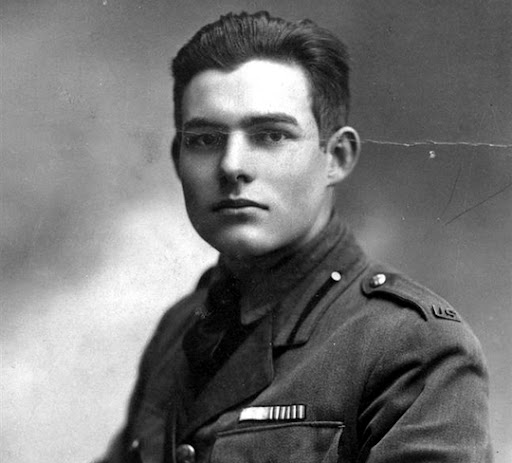
Ernest Hemmingway was an American novelist, short-story writer and journalist. He has written several best-seller classics and has also received the Nobel prize for literature in the year 1954. He was noted and admired both for the intense masculinity of his writing and for his adventurous and widely publicized life. His powerful prose writing style made an impact on the world in 20th Century. He served as an ambulance driver for American Red Cross during World War 1. His novel, The Sun Also Rises published in the year 1926 earned his first solid success. His other famous books include A Farewell to Arms, For Whom the Bell Tolls, A Moveable Feast etc.  

Old Man and the Sea is one of Hemmingway’s most famous books and the last major work of fiction that he published. Published in the year 1952, it received the Pulitzer Prize and is said to be one of the main reasons for gaining favour while being considered for the Nobel Prize. Set in the coastal regions of Cuba, it contains most of the themes that preoccupied Hemmingway as a writer and a man. It is a short heroic novel that entails the voyage of an old fisherman who ventures out into the vast sea for one last adventure. The old man is named Santiago and he sails across the sea, engaging in an epic battle to catch a large Marlin.

“But man is not made for defeat. A man can be destroyed but not defeated.”

The novel begins with Santiago mulling over his continues streak of misfortunes. Once a splendidly talented fisherman, he used to be considered the luckiest in catching fishes and selling them. But as old age started to haunt him, he was slowly overtaken by the younger folks who made fun of him for being out of luck lately. So much so that the parents of the young boy Manolin who assists him have forced him to desert the old man in favour of a more prosperous boat. In an attempt to regain his younger glory, on the eighty-fifth day of his unlucky streak, Santiago follows a large Marlin across the sea for more than forty-eight hours.

“Every day is a new day. It is better to be lucky. But I would rather be exact. Then when luck comes you are ready.”

Compared to the weakening old man, the Marlin tows Santiago’s boat into the ocean until it gets tired. Despite wanting to kill the Marlin, over the course of the journey, Santiago feels connected to the fish. He suffers hunger, sleeplessness and fatigue but feels that the Marlin has kept him company throughout. With great difficulty, he manages to kill the Marlin in a long-drawn-out duel. But as he proceeds to back home with the dead Marlin, it leaves a trail of blood into the sea attracting all sorts of sharks along the way. They attack him one after the other and he is finally left with nothing but a large skeleton of his prized fish. “The essential physicality of the story—the smells of tar and salt and fish blood, the cramp and nausea and blind exhaustion of the old man, the terrifying death spasms of the great fish—is set against the ethereal qualities of dazzling light and water, isolation, and the swelling motion of the sea.” (Britannica) Filled with symbols, allusions and strong poetic verses, the Old Man and the Sea is definitely worth the read.

Reference Links:

THE DETECTIVE NOVELS

The Detective novel is one in which the story and plot are woven around an initial crime or murder the secret of which is solved by an investigator or detective. He does it by logical assembling and evidence as known as clues.

The Major themes of the Detective novels are:

  • The plot will always begin with a murder or a mysterious case.
  • The case will be superior and unfamiliar to the police
  • So that, they seek the knowledge of detectives to solve the mystery behind the case.
  • The detective will be curious and different from the rest of the characters portrayed in the novel
  • The wrongly accused suspect at whom circumstantial evidence points
  • The villain will be the mysterious element of the novel
  • The startling and unexpected denouement

It was Edgar Allen Poe who launched this literary form with his story “The Murder in the Rue Morgue” in 1841. In the later 19th century, in England, Wilkie Collins preferred the art of the Detective novel with the publication of his “Moonstone” the first full-length detective novel in English. The first full-length detective novel in America was Anna Katherine Green’s “The Leavenworth Case” published in 1878.

In 1887 Sherlock Holmes series by Conan Doyle began to appear and continued up to 1927. His creation of Sherlock Holmes was, however, is the greatest achievement.
The exploits of this sharp sleuth and his companion in adventure and chronicler, Dr. Watson, soon catapulted Doyle to international status. A prolific writer, he has written 4 novels and 56 short stories. Sherlock Holmes series ruled detective novels from all over the world. And which is still cherished by the readers, movie lovers. Many authors adapted the Sherlock Holmes series and created some different versions taken this as a root base.

Detective novels in different ages:

After 1920 a series of novels known for their haunting suspense and artistic structure by Agatha Christie appeared. Hercule Poirot is the detective in her Novels. Agatha Christie is known throughout the world as the queen of crime. She is the author of 80 crime novels and short story collections, 19 plays, and 6 novels written under the name of Mary Westmacott.

Initial causes of it’s wide spread:

The spread of paperbacks and the establishment of book clubs helped the growth and development of the detective novel after the fifties.

Why Detective Novels are so popular:

It satisfies the “puzzle-solving” element of traditional puzzles.
It allows us to invoke our imagination
Be gripped by the suspense of a who done it.
Making the puzzle even more fascinating and the desire to reach the “goal” stronger.

What we learn from them:

Mysteries Often Make Children Central Characters and they can relate to the characters better than they can with other stories. By choosing to read mystery books that are youth-focused, you are helping them become more engaged and interested in the story. Detective novels also help adults to look forward to the mysteries of life inside the books. The stories will be mind-blowing and adults and elder people also will fall into them.

Detective fiction will continue to attract the readers as long as man’s fascination for mystery and suspense does not disappear.

MAJOR LEANINGS FROM THE BOOK : THE 5 AM CLUB

1. The first hour of the day is the golden hour and thus in the first hour from 5 am to 6 am applying  the 20/20/20 formula can truly change your performance of the whole day.

2. It states that the first 20 minutes are for exercising, the next 20 minutes are for growing i.e. reading or listening podcast or audiobooks.

3. By performing these activities you awaken the 4 interior empires( mindset, heart set, soul set, and health set) because if you want to experience empires in your outer life you need to develop your inner ones first.

4. Waking up at 5 am can enhance peoples productivity and happiness and as a result people can achieve an epic height of success in their professional as well as personal life.

I recommend everyone reading this blog to please read this book once.

HAPPY READING ; )

Thank you!

The Fault in our Stars- The ending we all deserve

A young boy was in the cemetery with his mother, the boy’s mother pulling her oxygen tank behind her stopped at a grave and gently replaced the wilted flowers with fresh ones and kept a new pack of cigarettes next to it. As a tear rolled down her eyes, the boy came up to her and tugged on her sleeve. She was wearing the same old black dress she wore 5 years ago this day, at the very same spot.

“Mom, when is going to wake up, I really want to play with him”, he asked his mother.

“What can I say, he just loves to nap like a cat, all day long. I’m kind of getting sick oh him too “, she wiped her eyes,

“Come on Peter, its time to go, we’ll let this sloth rest some more, Okay?”

“Okay.”, he replied, clutched on her hands and galloped his way back to the car.

Isaac was waiting in his car, with his typical sunglasses on. He had been offered his most awaited robot eyes, but he refused because he didn’t want to look at a world where there was no Augustus. He helped Peter climb up on the front seat, closed the door and put his seat belt on.

“Car picnic?”, he asked Peter who was always excited every time they came to visit Augustus, as he got to meet his favorite pal Isaac. Afterwards they would visit Funky Bones and have his mother’s special Tomato and Dutch Cheese sandwich. He wondered where she learned to make it from, they were really saggy because of the excess tomatoes she put in, but he loved them. Later they would go to Isaac’s place and play Counter Insurgence. He had gotten better at it than Isaac, but Isaac would say “Augustus is still better than you” to get back at him. This was what made Peter so eager to meet Augustus so he could finally show how good he was at his this game.

“Hey, do you want me to go with you tomorrow? I can get mom to look after Peter”, Hazel asked Isaac.

“No I’ll be fine, I actually want to do this alone”, said Issac.

He didn’t. The only person he would rather have gone with was Augustus. He was getting his eye surgery done finally, because how could he not? He didn’t want to not look at Augustus’s son anymore. He wanted to know how blue his eyes were, how crooked his smile, just like his father. He wanted him to grow up and go “egging at ex-girlfriends’ houses” with him, only this time he wanted to be sure where he was throwing the egg. He wasn’t getting his eyes back to look at an Augustus-less world, he was getting them because he couldn’t live without seeing the last piece of Augustus. The only person he wanted to share this day with was Augustus and Hazel understood.

“Okay. Give me a call when you are done. Peter and I will go pick you up.”

Isaac was waiting for his turn at the doctor’s chamber. He was nervous, scared but full of hope. The hope of seeing the unexpected. He heard his name called, and the nurse helped him inside.

“Hello”, he said. “My name is Isaac Lahey. I have a 2:30 appointment”

Sitting behind her desk was Monica in a white coat.

She had broken up with Isaac because she was in love with him. And if they were together and he died, then she wasn’t sure she’d be able to love anyone anymore. After she broke up. she had gone into her room, cried for a few days, and moved to New York City, because staying would’ve reminded her of Isaac too much. But there was one problem. When she tried to leave, her car was egged. She spent a few hours cleaning it up, and quickly left after that. After making it to NYC, she stayed with a friend, went to medical school, specialized in Ophthalmology, in memory of Isaac , whom she hadn’t spoken to in 6 years, hoping that one day a tall, lanky, dark haired guy would walk into her office with a pair of dark shades, and she would be the one giving his eyes back and the one first one he sees when he finally can.

Monica did a double take, ran towards him and kissed him, then jabbed surgical weapons down Isaac’s eye sockets but lets skip that part.

Agatha Christie’s Hercule Poirot

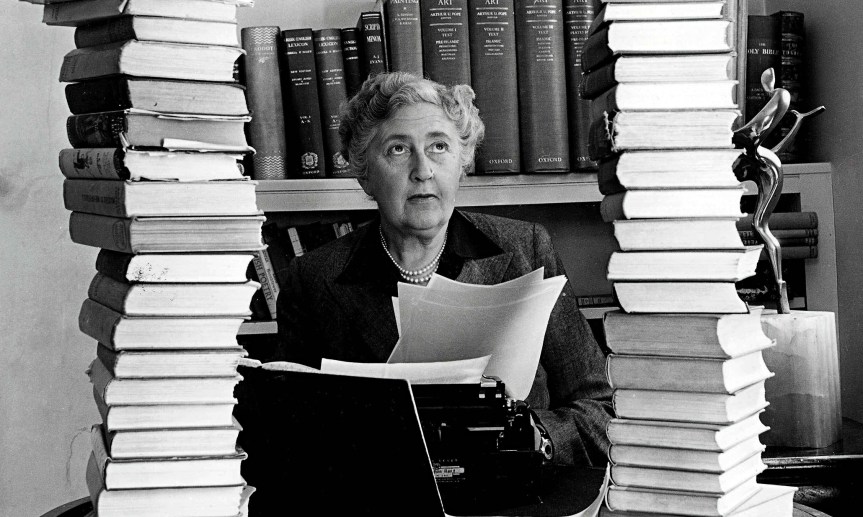
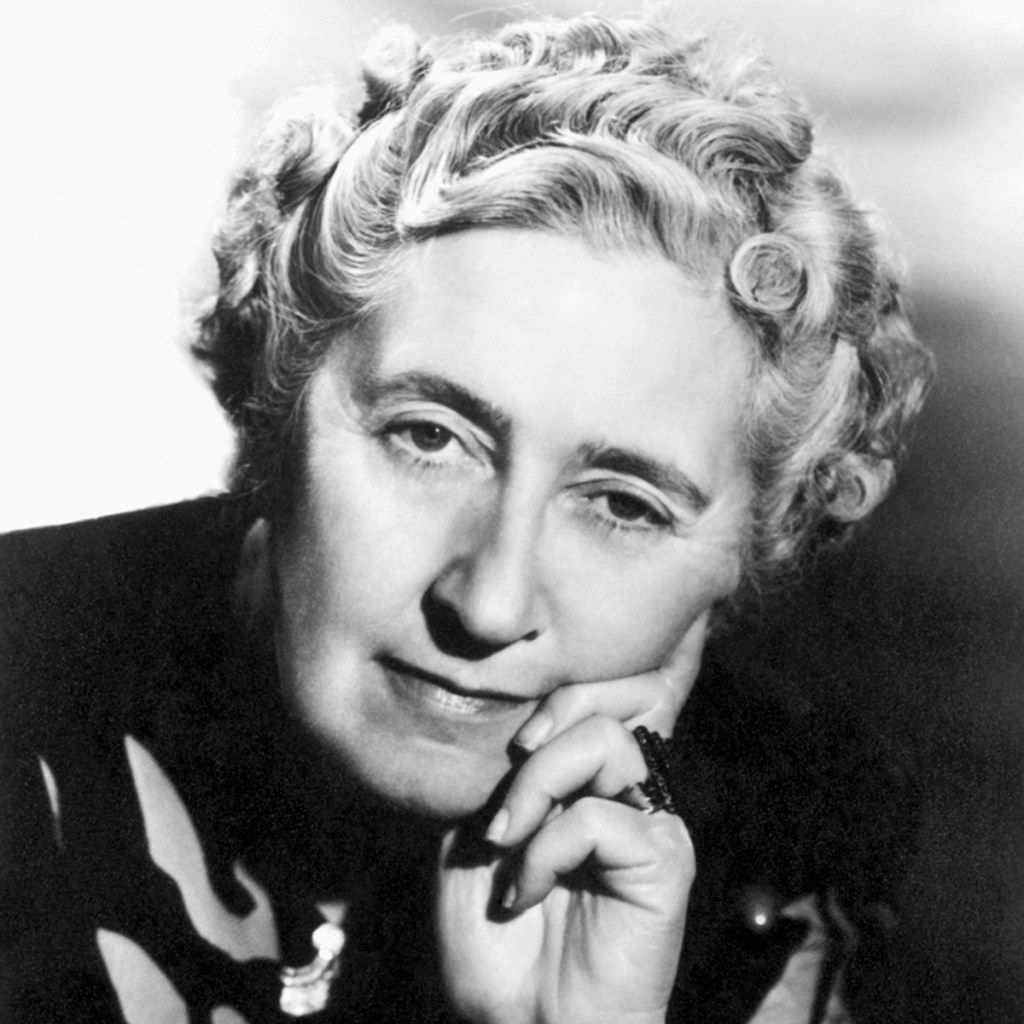
Agatha Christie is an English writer who is famous for her murder mysteries. Dubbed as the ‘Queen of crime’, she is the most widely published author of all time and in any language, outsold only by the Bible and Shakespeare. She is the author of 80 crime novels and short story collections, 19 plays and six novels written under the name of Mary Westmacott. Her play ‘Mousetrap’ is considered to be the longest running play. She has sold over a billion copies in English and another billion in 100 foreign countries. Her first novel ‘The Mysterious Affairs at Styles’, was written towards the end of First World War. In it she created Hercule Poirot, the little Belgian detective who was destined to become the most popular detective in crime fiction since Sherlock Holmes. Agatha Christie was made a Dame in 1971. She died in 1976, since then, a number of books have been published posthumously.

Here are the top 3 Hercule Poirot Books and their blurbs:

3. Death on the Nile

“It often seems to me that’s all detective work is, wiping out your false starts and beginning again.”

“Yes, it is very true, that. And it is just what some people will not do. They conceive a certain theory, and everything has to fit into that theory. If one little fact will not fit it, they throw it aside. But it is always the facts that will not fit in that are significant.”

Agatha Christie’s most daring travel mystery. The tranquillity of a cruise along the Nile is shattered by the discovery that Linnet Ridgeway has been shot through the head. She was young, stylish and beautiful, a girl who had everything – until she lost her life. Hercule Poirot recalls an earlier outburst by a fellow passenger: ‘I’d like to put my dear little pistol against her head and just press the trigger.’ Yet in this exotic setting’ nothing is ever quite what it seems…

2. Murder on the Orient Express

“The impossible could not have happened, therefore the impossible must be possible in spite of appearances.”

Murder on the Orient Express is undoubtedly one of Agatha Christie’s greatest mystery novels. Just after midnight, a snowdrift stops the Orient Express in its tracks. The luxurious train is surprisingly full for the time of the year, but by the morning it is one passenger fewer. An American tycoon lies dead in his compartment, stabbed a dozen times, his door locked from the inside. Isolated and with a killer in their midst, detective Hercule Poirot must identify the murderer – in case he or she decides to strike again.

1. The Murder of Roger Ackroyd

“The truth, however ugly in itself, is always curious and beautiful to seekers after it.”

Known for its startling reveal, this is the book that changed Agatha Christie’s career. Roger Ackroyd was a man who knew too much. He knew the woman he loved had poisoned her first husband. He knew someone was blackmailing her – and now he knew she had taken her own life with a drug overdose. Soon the evening post would let him know who the mystery blackmailer was. But Ackroyd was dead before he’d finished reading it – stabbed through the neck where he sat in the study.

Reference Link:

Thousand Splendid Suns

If you are looking for heart breaking , yet fulfilling novel to read, then its the right time to pick up “Thousand Splendid Suns”.It is heart wrenching story of Mariam written by Khaled Hosseini. The book was published in 2007 and many loved it.

This book follows a story of a girl from Herat village , who was forced to marry a shoe maker at very young age. As the time passes , she learns many things, she grows accustomed to her husband’s behaviors and learns to compromise in life but her life completely alters when her husband marries for the 2nd time to a young, brave and educated girl , Laila

Here you will see unimaginable bond of two girls, both coming from different background, having different personalities , yet they have so many similarities to relate with. This book also gives details of Taliban rule in Afghanistan. The way women were treated and tortured. The hardships women had to suffer and the pain they endured. It shows the devastated life of civilians when the war outbreaks. It shows how this war intertwined the fate of two unfortunate girls.

This is a story of bravery, love , happiness and Mariam. If you are ready to cry your eyes out, then this it .

SOME OF THE BEST QUOTES FROM THE BOOK: THE QUICK AND EASY WAY TO EFFECTIVE SPEAKING

1. “ Successful communication depends upon how well the speaker can make his talk a part of the listeners and the listeners a part of the talk”

2. “The chief cause of your fears of public speaking is simply that you are unaccustomed to speak in public”

3. “ If you want to interest your listeners then don’t begin with an introduction. Begin by leaping right into the heart of your story.”

4. “The best way for a speaker to endear himself to an audience is to play himself down.”

5. “ The audience must feel that there is a message being delivered straight from the mind and heart of the speaker to their minds and their hearts.”

6. “The ability to speak clearly precedes the ability to move others to action.”

7. “ You cant project your personality in a talk to others by using reasons alone; you have to release to them how deeply you yourself believe on what you say.”

8. “ You will never know what progress you can make unless you speak, and speak and speak again.”

See the World through books!

As the current pandemic has got us all confined in our house, a lot of dreams of travelling around the world has been crushed. So instead, how about I take you on a world tour via books!

However, this book tour will happen over a series of 7-8 days, so pack up your luggage accordingly. 

This tour begins with the largest continent – Asia. 

( PLEASE NOTE THAT THESE ARE SOME OF THE MANY COUNTRIES IN ASIA, THOSE THAT ARE MISSING WILL HAVE THEIR OWN PART IN THE NEXT BLOG OR SO AND THIS BLOG HAS NO PREJUDICE AGAINST ANY COUNTRY OR COUNTRIES.) 

Afghanistan

  • 1) Born under a million shadow – Andrea Busfield.
  • 2) A Thousand Splendid Suns – Khaled Hosseini.
  • 3) The places in between – Rory Stewart.
  • 4) A Thousand Rooms of Dreams and Fear – Atiq Rahimi.
  • 5) The Patience Stone – Atiq Rahimi.

Armenia 

  • 1) Passage to Ararat – Michael J. Arlen.
  • 2) The Sandcastle Girls – Chris Bohjalian.
  • 3) Armenian Golgotha – Grigoris Balakian.

Azerbaijan 

  • 1) Mirror of the Invisible World: Tales from the Khamseh of Nizami.

Bahrain  

  • 1) City of Strangers – Andrew Gardner.

Bangladesh

  •  1) A Golden Age – Tahmima Anam
  • 2) The Black Coat- Neamat Imam
  • 3) Banished! – Han Dong

Bhutan

  • 1) Buttertea at sunrise – Britta Das
  • 2) The Kingdom at the centre of the world: Journeys into Bhutan – Omair Ahmad
  • 3) The Circle of Karma – Kunzang Choden.

China

  • 1) Soul mountain – Gao Xingjian.
  • 2) The April 3rd Incident – Yu Hua.
  • 3) The Art of War – Sun Tzu.

India

  •  1) The God of Small things – Arundhati Roy.
  • 2) The White Tiger – Aravind Adiga.
  • 3) The Inheritance of Loss – Kiran Desai.
  • 4) A Suitable boy – Vikram Seth.
  • 5) Midnight’s Children – Salman Rushdie.
  • 6) A Fine Balance – Rohinton Mistry.
  • 7) Sea of Poppies – Amitav Ghosh.

Indonesia

  • 1) This Earth of Mankind – Pramoedya Ananta Toer.
  • 2) Man Tiger: A Novel – Eka Kurniawan.
  • 3) Durga/Umayi -Yusuf Bliyarta Mangunwijaya.

Japan

  • 1) Norwegian wood – Haruki Murakami.
  • 2) Convenience store women – Sayaka Murata. 
  • 3)Kafka on the shore – Haruki Murakami. 
  • 4) Strange Weather in Tokyo – Hirami Kawakami. 
  • 5) The Memory Police – Yöko Ogawa.
  • 6) Killing Commendatore – Haruki Murakami.
  • 7) Manazuru – Hiromi Kawakami.

South Korea

  • 1) Kim Ji-young, Born 1982 – Cho Nam-ju.
  • 2) The Vegetarian – Han Kang.
  • 3) Human Acts: A Novel – Han Kang.
  • 4) The White book – Han Kang.
  • 5) The Hen Who Dreamed She Could Fly – Sun-mi Hwang.
  • 6) If I Had Your Face – Frances Cha.
  • 7)Pachinko – Min Jin Lee.

Thailand

  • 1) Sightseeing – Rattawut Lapcharoensap.
  • 2) Four Reigns – Kukrit Pramoj.
  • 3) Bangkok wakes to Rain – Pitchaya Sudbanthad.

Pakistan

  • 1) Train to Pakistan – Khushwant Singh.
  • 2) The Wandering Falcon – Jamil Ahmad.

Saudi Arabia

  • 1) Girls of Riyadh – Rajaa Alsanea.

Myanmar

  • 1) The Glass Palace – Amitav Ghosh.

Iran

  • 1) The Man who snapped his fingers: Fariba Hachtroudi.

(PLEASE NOTE, THAT ABOVE MENTIONED BOOKS ARE JUST SOME OF THE MANY BOOKS THAT ARE EITHER PUBLISHED BY OR WRITTEN ABOUT THAT COUNTRY.)