E-Commerce and it’s Impacts on Market and Retailers in India…

The internet is quite crucial in our everyday lives. We utilise the internet practically every day for almost every task. Before e-commerce, purchase and sale were done physically in marketplaces, but with the introduction of e-commerce in India, our lives have become more comfortable due to a variety of benefits. Online shopping is a subset of ecommerce that is primarily done by users thanks to e-commerce websites in India that allow us to purchase and sell items of our choosing at reasonable prices. E-commerce websites have a wide range of effects on various marketplaces and merchants. In this article, we will explore the various marketplaces and merchants, as well as the effects of ecommerce on them.

INTRODUCTION:-

E-commerce is the purchase and sale of products and services through the internet.  Earlier e-commerce, buying and selling were done physically in marketplaces, but with the introduction of e-commerce in India, our lives have become more comfortable due to a variety of benefits. The benefits of e-commerce include online purchasing of anything at any time and from any location; buyers may find items on e-commerce websites that are not accessible in physical marketplaces; it saves money and time; and we can obtain our product without leaving our homes. Along with e-commerce, there is also a common word known as e-business, which refers to how businesses have expanded electronically with the assistance of the internet, allowing them to reach a larger number of consumers and so improve their sales. The phrases E-commerce and E-business are used interchangeably and have no precise definition. In reality, E-commerce is a subset of E-business that focuses on external operations, whereas E-business focuses on a company’s internal and external activities. Ecommerce has a variety of positive and negative effects in many sectors. The key to establishing a successful e-commerce is to limit the negative consequences while increasing the advantages.

DIFFERENT MARKETS AND RETAILERS IN INDIA:-

[A] Markets

  1. Physical Markets:- A physical market is one in which clients come to the market and engage with the vendor face to face before purchasing a product or service in return for money. Shopping malls, department stores, and other physical markets are examples.
  2. Non-Physical Markets/Virtual Markets:- Non-Physical Market is a market in which clients do not go to the vendor physically and do not engage face-to-face. The customer purchases the merchandise via the internet and exchanges money electronically. These markets include Flipkart, Amazon, and eBay, among others.
  3. Knowledge Market:- In this market Information and knowledge based products are sold.
  4. Market for Intermediate Goods:- In these markets, raw materials are offered, while final products are created by combining them.
  5. Auction Market:- The auction market is one in which items are auctioned to the highest bidder while lower bids are disregarded.
  6. Black Market:- Unauthorized items like as narcotics, guns, and alcohol are sold at these markets, which are controlled by illegal vendors.
  7. Financial Market:- This market exchanges liquid assets or money. Financial markets are classified into three types: Stock exchange, where equities are traded; Bond market, in which debt securities in the form of bonds are exchanged; The foreign exchange market, often known as the currency market, is where currencies are exchanged.

[B] Retailer

  1. Department Store–A department business is a store that combines several small stores under one corporation and offers a large range of items. It offers value for clients by providing a diverse range of items at one location.
  2. Supermarkets–Supermarkets traditionally sell food and drinks, but owing to client demand, they increasingly now sell fashion and electronic products. It has strong purchasing power, which explains why it sells at low prices.
  3. Warehouse Retailers–Warehouse retailers are located in areas where the premises rent is relatively inexpensive, allowing them to store, display, and sell a huge number of items.
  4. Convenience Store–These stores can be found in residential areas. sells a restricted number of items at a premium price because they bring value in the form of convenience
  5. Discount Retailer–Discount retailers are those that give discounts on less trendy goods by purchasing them from suppliers, reselling them till the end of the line, and then returning the remaining products at the discounted price to the source.
  6. Specialty Retailers–Specialty retailers provide a unique service or product and give consumers with professional expertise and excellent service. They offer value by selling accessories and related items at the same location.
  7. E-tailer–E-tailers are vendors who allow clients to buy products via the internet and offer home delivery, allowing them to reach customers in a large geographic region and supply items to them. Because they have little rent and overhead, they can provide reasonable pricing.

IMPACT OF E-COMMERCE ON MARKETS AND RETAILERS:-

Impact on Markets

  1. Product Promotion-Through Ecommerce, products can be promoted in an interesting way and with lots of information directly to customers, lowering the cost of offline promotion because the internet can interact with a large number of customers and save money on advertisements that can be used in other areas of business.
  2. Customer Service-Customer service may be improved since customers can look for specific information about a product or marketplace that sells the product and compare pricing from other market places.
  3. Brand Image– New business owners may develop their brands on the internet by employing beautiful pictures at a low cost.
  4. Advertisement– Traditionally, advertisements were one-way to attract customers and inform them about a new product or market place; however, with the advent of e-commerce, advertisements are now two-way, allowing customers to browse the market place and products, compare prices, and ask questions to online retailers.
  5. Customization-Customized items can be made accessible to consumers based on their specific requirements. It will be an excellent site to do business in the market, and new consumers will be drawn in.
  6. Ordering Process-Traditionally, intermediaries are employed to take orders from consumers, which takes a lot of time and money, but with ecommerce, order taking is so simple that it saves a lot of time and money, and they can generate more sales.
  7. Customer Value-Traditionally, obtaining a high value from consumers was the primary goal. Consumers were the only ones who were drawn, and they were the most important goal, but now sellers cultivate long-term connections with customers in order to achieve long-term value by providing them with unique discounts.

Impact on Retailers

  1. Customer Service– Offline businesses provide a variety of services that internet stores do not. Repair and items of services, home delivery, and after sales services, as well as online stores, are examples of such services.
  2. Window Shopping– Due to the low costs given by internet retailers, people visit physical locations to window shop before purchasing a product online. As a result, they have more prospective consumers than actual customers.
  3. Advertisement– Offline shops concentrate only on ads in order to attract customers and improve sales. They don’t miss a single opportunity to market.
  4. Discount– Offline merchants sell their items at reduced prices since online stores provide substantial discounts to customers, and in order to remain competitive and attract customers, they must sell their products at reduced prices.
  5. Variety of Stocks– Online stores provide a wide range of items that offline merchants cannot compete with since excess stock at the end of the year might result in a significant loss for the retailer.
  6. Turnover– As a result of e-commerce, the turnover of offline shops has decreased, which is a warning indicator for the business.
  7. Profit Margin– With the introduction of internet stores into the market, traditional businesses have suffered from price issues. To stay in business, businesses must offer their products at legal rates that cover only their operating expenses, with no profit margin.

CONCLUSION:-

This paper concludes that e-commerce is highly beneficial to us since it offers us with a broad range of items and services, as well as a wealth of information and appealing images, at a cheap price, right at our doorstep. It is convenient for clients and helps businesses to extend their operations over the internet. Ecommerce has a positive impact on markets because it reduces the cost of advertising because many customers can be attracted through the internet, it allows for the development of new brands, it allows for the maintenance of good relationships with customers, and it allows for the creation of customized products based on the needs of the customers. However, e-commerce has a negative influence on offline retailers since people buy at low prices from online shops, forcing them to cut their prices as well, resulting in no profit. Retailers cannot maintain a vast stock like online shops have stores because it would cost them a tremendous loss. To entice customers, they must spend more money on offline marketing. Along with the benefits, e-commerce has some limitations in terms of markets and retailers. These limitations include website cost, which is required to create and maintain a website; infrastructure cost, which is required to fulfil orders online retailers must maintain a large stock in a large warehouse, which is costly; security and fraud, which is due to the popularity of online shops. Criminal elements are also drawn to them, since they may hack personal information and exploit it; consumer trust, it is difficult for customers to trust a new brand without viewing, touching, and face-to-face connection.

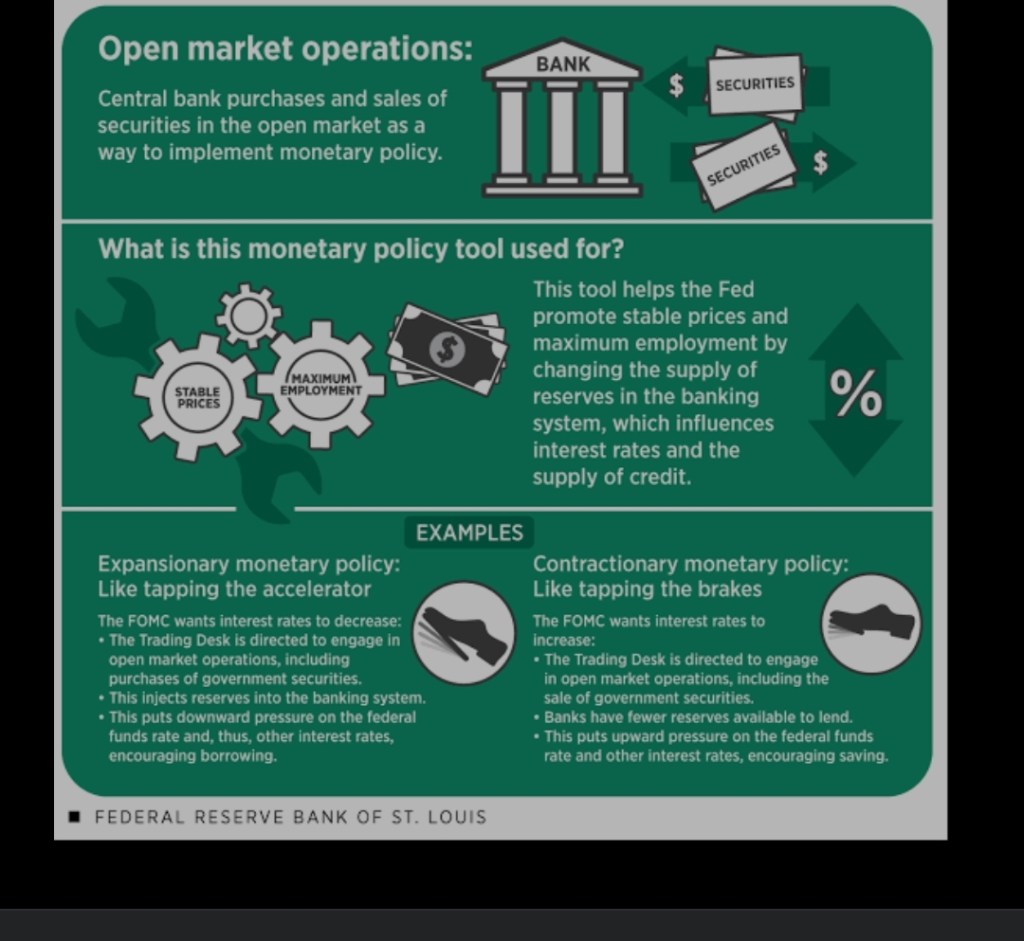
What is Open Market Operations ( OMO ) ?

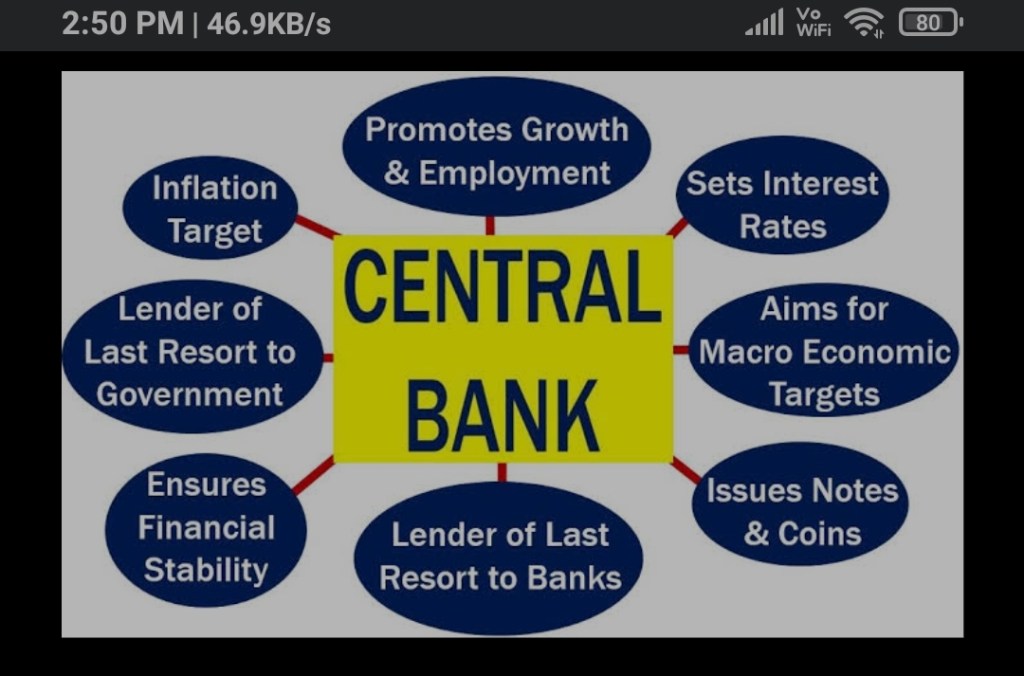
A central bank is the apex institution of the monetary and banking structure of the country.

It performs several important monetary  functions in the banking system.

According to A.C.L. Day a central bank ” helps and controls and stabilizes the monetary and banking system .

Along with several other essential functions, the central bank ‘s most important function is to control the credit creation power of commercial banks .

“Central Bank also known as Controller of Credit “

Credit control is the means to control the lending policy of commercial banks by the Central Bank .

The central bank controls credits in accordance with the needs of business and with a view to carrying out the broad monetary policy adopted by the state.

It adopted two methods of credit control :-

Quantitative Credit Control Methods

Qualitative Credit Control Methods

Open market is one of the methods of quantitative credit control used by the central bank .

What is open market Operations ( OMO ) ?

Open market Operations in general terms means dealing with government securities and bonds.

To elaborate more, Open Market Operations  refers to the sale and purchase of securities , bills and bonds of government as well as private financial institutions by the Central Bank . 

OMO is an activity by a central bank to give or take  liquidity in its currency to or from a bank or a group of banks.

There are two principle motives of open market Operations

• to influence the reserves of commercial bank in order to control power of credit creation 

• to affect the market rates of interest and supply of base money

In order to manipulate the short-term interest rate and the supply of base money in an economy, i.e to  indirectly control the total money supply, the central bank  buys and sells government securities, or other financial instruments.

 Monetary targets, such as inflation, interest rates, or exchange rates, are used to guide this implementation.

In the given figure , S is the supply curve of bank money which shifts to the left as S¹ showing a decrease in the supply of bank money from B to A , given the level of interest rate r .

When the central bank aims at an expansionary policy during a recessionary period , it purchases government securities from the commercial banks and institutions dealing with such securities .

The supply curve of bank money shifts from S¹ to S², showing an increase in the supply of bank money from B to C .

The bank will now lend more at the given rate of interest r.

As the result of change in supply of bank money in market through the open market operations

The market rates of interest also change .

A decrease in the supply of bank money through sale of securities will raise the interest market  rates and an increase in supply of bank money will reduce the market rate interest. ___________________________________________

Open Market Operation policy in India 

The  fact that India  is a developing country its  capital flows are very different from those in developed countries which influence   the Open Market Operation policy .

 India’s central bank, the Reserve Bank of India (RBI), has to make policies and use instruments accordingly.  RBI’s major source of funding and control over credit and interest rates was the cash reserve ratio (CRR) and the SLR (Statutory Liquidity Ratio). But after the reforms, the use of CRR as an effective tool was deemphasized and the use of open market operations increased. OMOs are more effective in adjusting. 

RBI use two types of OMOs :- 

Outright purchase (PEMO):

 It is  outright buying or selling of government securities. 

Repurchase agreement (REPO):

It  is short term, and is subject to repurchase.

OMOs are the most effective credit control instrument with the central bank and are preferred over other methods.

__________________________________________

Limitations of Open Market Operations

Although being an effective method OMO has certain limitations such as :-

Lack of Securities Market :-. It is important to have an organised security market system for central banks to buy or purchase securities on a large scale.

Unstable Cash Reserve Ratio:-  The buying and selling of securities and bonds by central banks highly influence the cash reserve ratio which is to be maintained at a fixed rate .

Penal Bank Rate  : – According to Profs Aschheim penal rate is one the necessary conditions for success of open market operations. If the penal bank Rate of discount is higher than the market rates of interest , the commercial bank can not increase their borrowings.

Pessimistic and Optimistic Attitude :- The pessimistic and optimistic attitude of the business community also limits the operations of open market policy. A business may be unwilling to take the risk of taking out a loan during a depression . 

Velocity of Credit and Money not Constant :- The velocity of credit increases during periods of brisk business activities and decreases in periods of falling prices. Hence ,the unstableness of velocity of credit and money constantly affects open market operations. 

Despite the given limitations , the central banks find the Open Market Operations instrument the most successful for controlling credit in developed as well as developing countries.

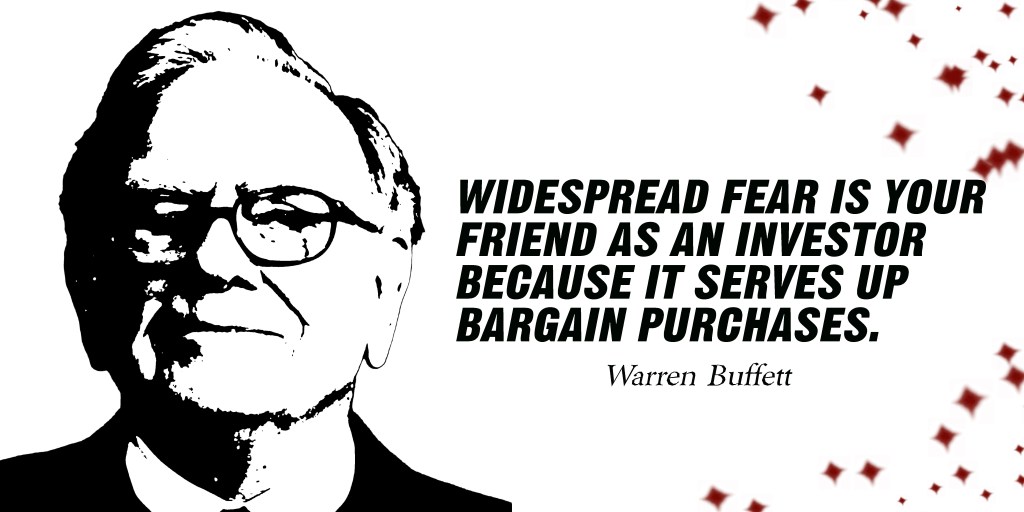
Warren Buffett

Warren Buffett is often treated as god of investors. He is one of the most successful investors in the world. Warren Buffett is a American business magnate, and a investor. As of now April, 2020 his net worth is $100.6 Billion making him world’s seventh wealthiest person in the world. Currently, he is the CEO and chairman of Berkshire Hathaway. In this blog, we are going to see the success story of Warren Buffett.

Early life

Warren Edward Buffett was born on August 30, 1930 in Omaha, Nebraska. He is the second oldest child to his father Howard, a stock broker and his mother Leila. He has two sisters. At a very young age he developed a interest in business and stock market. While other children of his age were playing, he was making money. At eleven years old, he purchased three shares of Cities Service at $38 per each. Soon after buying it, it price fell down to $27. Then after, he waited for the stock to made $40 and sold it. He said that it was a mistake because the stock went unto $200. This taught him the principles of investing.

Education

He began his career at Rose Hill elementary school. In 1942, he finished his elementary school and joined Deal junior high school. In 1947, when he was 17 years old, he graduated from Woodrow Wilson high school. After that, he got admitted into Wharton school of the University of Pennsylvania, after two years he transferred to University of Nebraska, complaining that he known better than his professors. Then he graduated from University of Nebraska with Bachelor of Science degree in business administration. Then, he applied to Harvard business school and was rejected because he was too young. Then he admitted to Columbia Business school of University of Columbia. In 1951, he graduated with Master of Science degree in economics.

Investment career

In 1947, when he was 17 years old, he started a company Wilson coin operated machines with his friend Donald. The business was to buy a pinball machine at $25. The business makes $50 per week for Buffett and Donald. After a year they sold it for $1200. From 1951 to 1954, he worked as a investment salesman for Buffet-Falk. In 1954, Buffett got a job at Benjamin Graham’s partnership and his starting salary was $12,000 per year(around $116,000 today). In 1956 Benjamin Graham retired and closed his partnership. At that time Buffett’s saving reached to $176,000(around $1.66 million today). Then he started Buffett Partnership Limited. By 1960, He operated six partnership. In 1962, he became a millionaire because of his partnership of total 7,178,500 in which 1,025,000 belongs to him. In 1965, he started purchasing the stock of Berkshire Hathaway. By 1967, Buffett Partnership owns 59.5 shares of Berkshire Hathaway. By May 1990, he had became a Billionaire when Berkshire Hathaway started selling there shares of class A. Apart of Berkshire Hathaway, he had also have shares in Apple, Bank of America, Coco cola, American Express, and etc.

Additional Information

Being a Billionaire, he still lives in the same house, which he bought in 1957 for $31,500. In 2006, He announced that he will donate majority of his wealth to Bill and Melinda Gates foundation. In 2010, Warren Buffett and Bill Gates started giving pledge campaign to encourage extremely wealthy people to contribute majority of wealth for philanthropic causes. In that, Buffett donated 99 percent of wealth to philanthropic causes.

Horticulture

Horticulture, the branch of plant agriculture dealing with garden crops, generally fruits,vegetables, and ornamental plants. The Horticulture falls between domestic gardening and field agriculture, through all forms of cultivation naturally have close links.


It is divided into the cultivation of plants for food and plants for ornament. Pomology deals with fruit and nut crops. Oliericuture deals with herbaceous plants for the kitchen, including, for example carrots, cauliflower. Floriculture deals with the production of flowers and ornamental plants; generally, cut flowers, pot plants, and greenery. Landscape Horticulture is a broad category that includes plants for the landscape, including lawn turf but particularly nursery crops such as shrubs, trees, and vines.
The specialisation of the horticulture and the success of the crop are influenced by many factors. Among these are climate, terrain, and other regional variations.


HORTICULTURAL REGIONS :

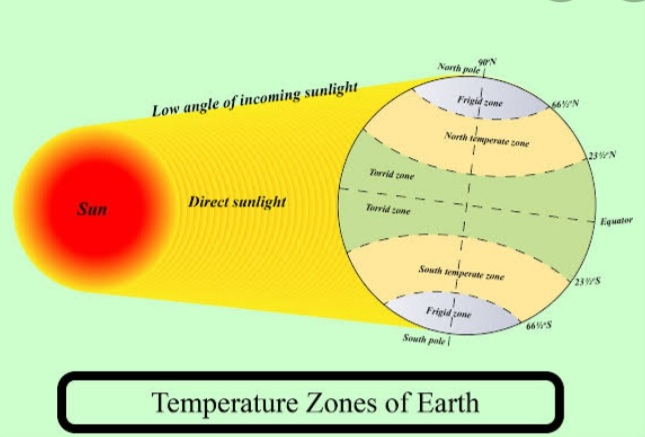
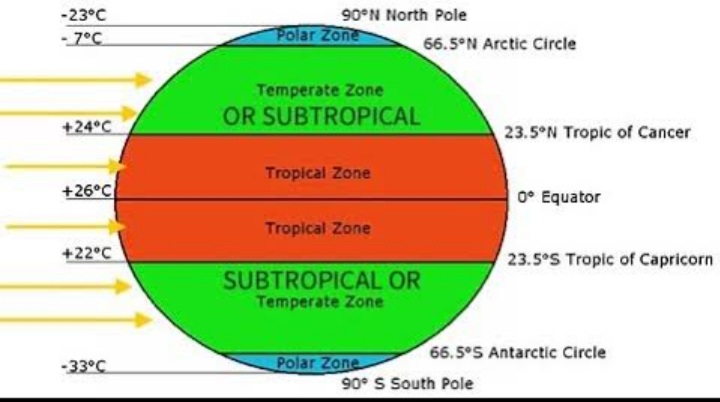
TEMPERATURE ZONES :


Temperature zones for horticulture cannot be defined exactly by lines of latitude or longitude but are usually regarded as including those areas where frost in winter occurs, even though rarely. Thus, most parts of Europe, North America and Northern Asia
are included, though some parts of the United States, such as southern Florida, are considered subtropical.
The temperature zones are also the areas of the grasses – the finest lawns particularly are in the regions of moderate or high rainfall- and of the great cereal crops. Rice is excluded as being tropical, but wheat, barley, corn and Rye grow well in the temperature zones.
Plants in the temperature zones benefit from a winter resting season, which clearly differentiates them from tropical plants which tend to grow continuously. Most of the great gardens of the world have been developed in temperature zones. Particular features such as rose gardens, herbaceous borders, annual borders, woodland gardens, and rock gardens are also those of temperature zone gardens. Nearly all depends for their success on the winter resting period.


TROPICAL ZONES :


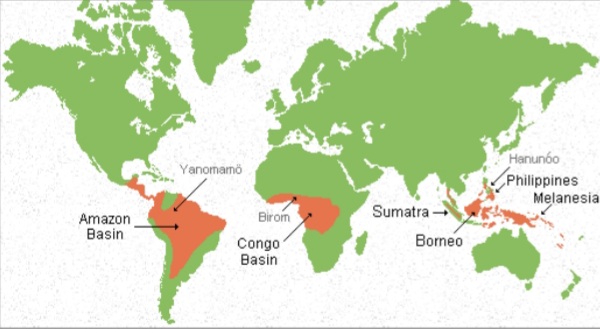
There is no sharp line of demarcation between the topics and the subtropics. Just as many tropical plants can be cultivated in the subtropics, so also many subtropical and even temperature plants can be grown satisfactorily in the tropics. Elevation is a determining factor. In addition to Elevation, another determinant is the annual distribution of rainfall. Plants that grow and flower in the monsoon areas, as in India, will not succeed where the climate is uniformly wet. Another factor is the length of day, the number of hours the sun is above the horizon;some plants flower only if the day is long, but others make their growth during the long days and flower when the day is short.
In the tropics of Asia and parts of central and south America, the dominant features of the gardens are flowering trees, shrubs, and climbers. Herbaceous plants are relatively few, but many kinds of orchids can be grown.


PROPAGATION :


propagation is the controlled perpetuation of plants,is the most basic of Horticulture practices . It’s two objectives are to achieve an increase in numbers and to preserve the essential characteristics of the plant. Propagation can be achieved sexually by seed or asexually by utilising specialised vegetative structures of the plant or by employing such techniques are cutting, layering, grafting and tissue culture

SEED PROPAGATION :


The most common method of propagation for self- pollinated plants is by seed. In self-pollinated plants,the sperm nuclei in pollen produced by a flower fertilize egg cells of a flower on the same plant. Propagation by seed is also used widely for many cross- pollinated plants pollen is carried from one plant to another.
The practice of saving seed to plant the following year has developed into a specialized part of horticulture. Seed technology involves all of the steps necessary ensure production of seed with high viability, freedom from disease, purity, and trueness to type. These processes may include specialized growing and harvesting techniques, cleaning, and distribution. Germination in such seed may be accomplished by treatment to remove these inhibitors. This may involve cold stratification, storing seed at high relative humidity and low temperatures, usually slightly above freezing. Cold stratification is a prerequisite to the uniform germination of many temperature-zone species such as apple, bear, and redbud.


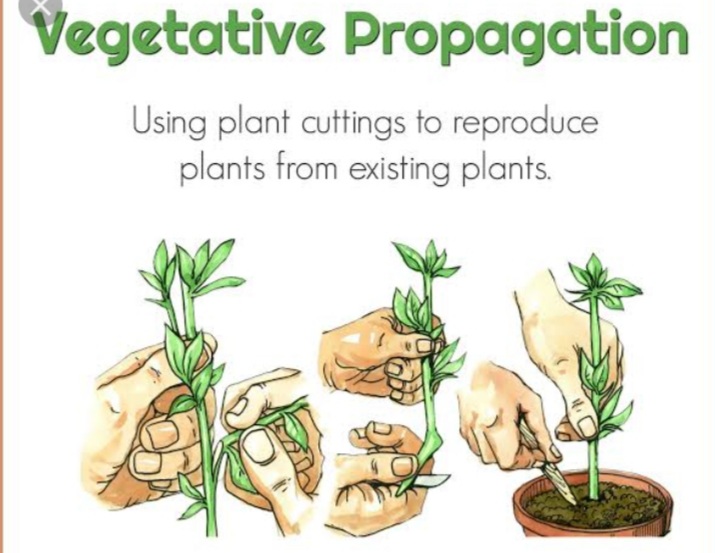
VEGETATIVE PROPAGATION :


Asexual or vegetative reproduction is based on the ability of plants to regenerate tissues and parts. In many plants vegetative propagation is a completely natural process; in others it is an artificial one. It has may advantages. These include the unchanged prepetuation of naturally cross pollimated palnts and the possibility of propagation seedless progeny.
Vegetative propagation is accomplished be use of

  1. Apomictic seed
    1. Specialized vegetatice structres such as runners, bulbs, corms, rhizomes, offshoot, tubers, stems and roots.
  2. Layers and cuttimgs
  3. Grafting and budding
    1. tissue culture.

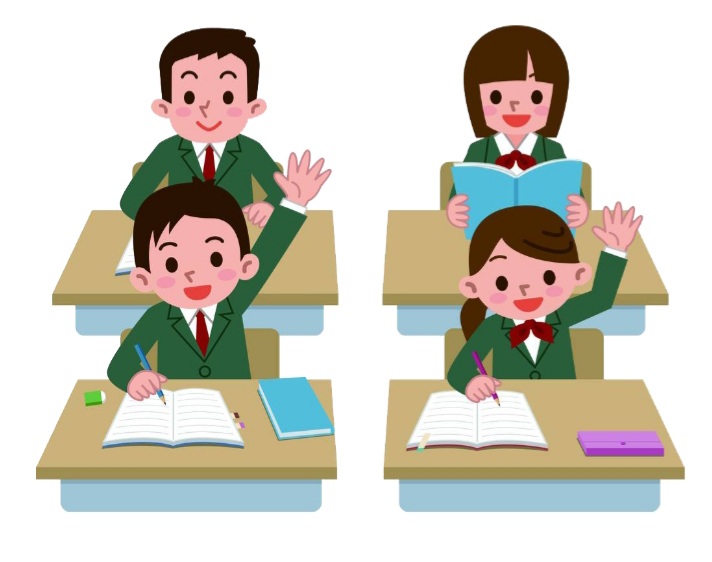
Ideal student

An ideal student is one who is good at skills and an motivation to everyone in the class. Schooling is one of the best blessings that a child can have. It is one of the best feelings which no others can have.

The ideal student is the one who respects others feelings and who will be obedient in many of the situations.

The student’s relation with the teacher is a great one. A student must maintain a healthy relationship with the teachers. Teachers play a very important role in making the student perfect and make them to understand the need of the situation. Teachers help the students to reach their desired goals and in any situation teacher motivates a student to get up and stand in all the ups and downs. Like that of the mother and the father, the teacher also feels equally happy when their student acheives high in their life and when they reach their desired goals.

An ideal student will never feel low at the failures. Instead, they will take their mistakes as an experience and will continue the hard work.

Some of the qualities that make an ideal student are :

  1. Hard work
  2. Discipline
  3. Taking responsibility
  4. Maintaining friendly relationships
  5. Respecting everyone
  6. Raising diubts without features.

SOME QUALITIES THAT MAKE AN IDEAL STUDENT FOR KIDS :

  1. • Ideal student traits make him uniqu, anong others.
    • It is believed that an ideal student will never waste his time and energy on non- productive things.
    • The ideal student has inborn winning qualities.
    • Ideal students will always goal- oriented. Thys, they play according to actions to reach their goals.
    • It is proven that ideal students will punctual in school and always on time regularly.
    • He respects everyone. He also obeys their instructions and others.
    • Ideal students are not bookwarms. They keenly observe and read wisely.
    • Ideal students take his studies with all seriousness. They dont’t allow any other activites to disturb them
    • Ideal students always seek the teacher’s guidance. Also, they believe in the knowledge of their teachers.
  2. SOME QUALITIES THAT MAKE AN IDEAL STUDENT FOR SCHOOL STUDENTS :
  1. • Ideal students are always thirsty to gain knowledge.
  2. • They always strive to reach their goals
    • Ideal students always dedicated to their education and work.
    • Ideal students behave well and very attentive in classes. They always listen to their teachers while classes are going on
    • They never hesitate to raise their doubts about studies if they feel some difficulty in understanding.
    • one of the best things about ideal students is that they are very friendly. Also, they help yo his friends regarding studies.
    • Ideal students are creative and think out of the box for any completion of tasks.
    • He always inspire eveyone and attracts the teachers and elders easily.
    • Ideal students are very responsible and underdtand the value of every wird from their elders.
  3. SOME QUALITIES THAT MAKE IDEAL STUDENT FO HIGHER CLASS STUDENTS :

• Ideal students are always fit both physically and mentally.
• Ideal students can differentiate between what is right and what is wrong .
• Ideal students always keep friendly relations with othet students even though he has many competitors
• He always maintains his promise and never feels proud of his awards and achievements.
• Ideal students will nevet trust in superstitions, but believe beliefs. It is because they think very logically abd ratinally.
• An ideal students tries to improvr in all aspects of his life and to reach goals.
• Ideal students show affection and respect towards their elders and parents.
• Ideal students read a lot of books.
• The ideal students will take responsibility for their society and country.
• An ideal student will never look fir shortcuts. They believe that hard work is the only way to succeed in life.


In simple terms, an ideal students is science towards academics and maintains friendly relations with teachers and elders. Aldo, an ideal student will have leadership and communication skills.
The role of an ideal student is both attentibe and punctual in duties. He goes to his school, college or university in time. He attends the classes on regular basis .

Hobbies

Hobbies are very common. Everyone have their own priorities and likes regarding the hobbies. My hobby is listening to the music.

Listening to songs is such a nice thing. Every individual starts listening to the songs when he or she is addicted to them and really cannot come out of it. The music the songs will change the mood of the person. The songs in the musical interrelated with the human beings.

It is so important to prioritize the positive things in and around us in the life. One of the positive things is the music. Music makes Man convertible. Whatever the situation may be, it it helps the individual to come out of the situation and also to move one and into a new situation. The music you listen motivates life. The lyrics in this song will motivate the individual and help the individual at anytime.

It is very important for an individual to prioritize the music and the songs in the life. Because the songs or the music helps the individual to feel stress-free. It also helps the individual to relieve the tension and all the depression he or she had.

Music is described for every emotion. Every emotion is described in its own way in mmusic. Every emotion is clearly explained by the respected song.

Hobbies can often also be very expensive. Luckily, there are still lots of cheap and even free hobbies that are fun, educational and rewarding.


Here some of fun and low-cost hobbies


DIY :
Buy a book on DIY and start on anything that needs fixing around your house, make your own clothes or give your friends self-made presents.


WRITE A THEMED LIST, AND WORK THROUGH IT :
Make a list of things you want to do or see. It could be anything from films you want to watch to local places you want to visit. Try to work through your list in a month.

WATCH ONLINE DOCUMENTARIES :


You can find lots of free documentaries on the websites of Tv channels, or even on youtube covering hundreds of subjects, such a history or the ocean. You could also finally watch your favourite actor’s ,author’s or musician’s biography.

LEARN NEW THINGS :
Educating yourself doesn’t have to be boring. What are you passionate about? It could be science , the oceams or even horror films. Google your interests and become a knowledgeable as you can about your passions.

GO CAMPING :


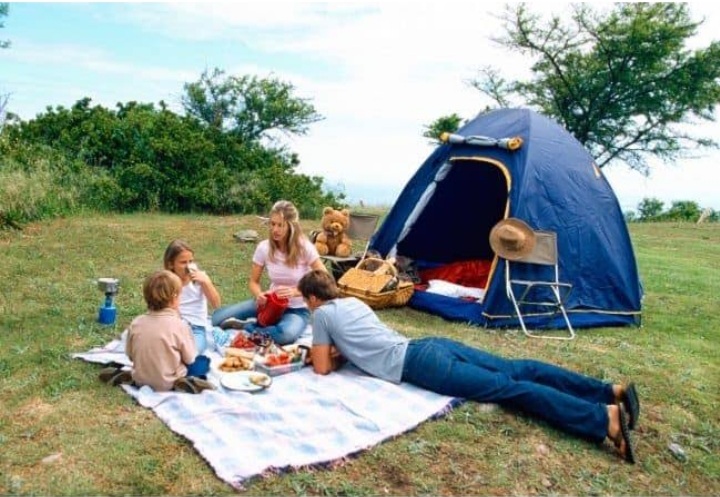
Try going caming with your friends during the weekend. All you need is a tent, some snacks, and drinks. If you dont live near woods or a forest, you can even try camping in your back garden.

DISCOVER NEW MUSIC :


Look for new music on music websites or youtube or spotify by searching for your favouirte genre. You could find a band you love.

LEARN HOW TO COOK :


cooking is a useful life skill as well as a fun way to spebd your time. Invest in cheap ingredients and learn how to cook all of your favourite meals.

TRY DRAWING :


Drwaing is a really enjoyable way of expressing yourself. There are lots of different ways to draw, from painting to sketchibg to doodling, so choose one you are comfortable with and give it a go!


START INVESTING :


Investing is a great way to earn some extra money, just make sure you do your research properly when you first start.you don’t have to invest large sums, but small ones will be just as rewaeding if you have a plan.

WRITING :

Writing is one of the chepest ways to have fun. From blogging to trying your hand on a book, there are lots of different ways to enjoy writing. All you need is a pencil and paper to get started.PLAYING CARDS :
Invite some friends over , and get a pack of cards. There are hundreds of different games. You can play with cards and a pack is fairly cheap.

LEARN TO DANCE :


This hobby is great for your body and enjoyable pastime. Use youtube vidros and tutorials to teach yourself new dance moves.


READING :


Reading is a great way to exercise your mind.you can choose to lose yourself in a fictional world, learn more about your own world, or read the autobiography of someone you adimre. If you decide to pick reading up as a hobby, consider getting a library card for your local library.


Remember , the secret of life, happiness and fulfillment is simple: ” Find three hobbies you love: one to make you money, one to keep you in shape, abd one to be creative” .

Discipline

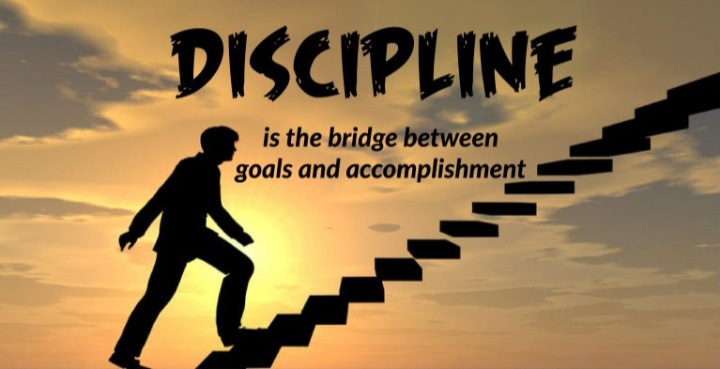
Discipline is very important in everyone’s life. It is so important to be disciplined in the life. Discipline is not acquired from a single day. It is a achieved by a continued process.parents are the important in every individual’s life. The are the main reason for the discipline of their children.

After the parents, teacher is the most important person in an individual’s life. Teacher is the one who moulds the individual from the initial stage of the life and makes the individual into and perfect one. Even though the teacher schools or beats sometimes it is all for the well-being of the student and for the bright future of the student.

The first teacher in everyone’s life is their mother. Beginning with the correct thing the first mistake of the child, mother plays a very important role in correcting many of the mistakes in an individual’s life. Also the father who corrects the mistakes and puts the children in a correct way. And the teacher, who is very important in our students life to achieve their desired goals.

Teachers play a very important role in making the student perfect and make them to understand the need of the situation. Teachers help the students to reach their desired goals and in any situation teacher motivates a student to get up and stand in all the ups and downs. Like that of the mother and the father, the teacher also feels equally happy when their student acheives high in their life and when they reach their desired goals.

IMPORTANCE OF DISCIPLINE IN LIFE :


TIME MANAGEMENT :


A disciplined person always has the time to complete all the tasks within given deadlines. This is because they are focused and they know how to schedule the time properly. They dont’t believe in wasting time on unnecessary things. They understand the value of time and they know that time once has gone never comes back.


LEADERSHIP :


All great leaders are not born. Most of them follow a very tight schedule and maintain discipline in their life to become good leaders. Good discipline generates a positive attitude towards society. It creates confidence and eagerness to do something great. It helps people to build an attitude that becomes the key to becoming successful. They are able to set a great examples for others in society.

DECISION MAKING :


It is because everything gets finished within the given deadlines, disciplined people always have time to revise their work and improve their decisions.
People who are disciplined are more focused both mentally and physically. They are better able to gain their body and mind with their ideas and goals. Finally, everything is regulated in order and increases their productivity in all the activites they undergo.


ACHIEVEMENTS :


Disciplined people are more motivated and concentrated. Therefore, they achieve more when compared to a person who is not disciplinef with the activites he/she undertakes. As per study, 92% of people are able to achieve their goals in life because of the reason of being disciplined.

STABILITY AND STRUCTURE :


With discipline, comes stability in all the tasks. It helps to schedule and organize the activites and tasks in a proper structure. If a person is focused and regularly follows this particular structure, he/she is sure to succeed in their life.

RESPONSIBILITY AND CONTROL :


With great discipline comes great responsibility. Only by making schedules and timetables a person cannot become successful. It is very important regularly follow and fulfill the responsibilites which are mentioned in the schedule. This will help them to develop self- control and also build good relations with others.

RESPECT :


A disciplined person always respected by society. He/she is lookef upon as role models and mentors. Through discipline, they worked hard and achieved their goals which made them a respectful figure in the eyes of others.

IMPROVES MENTAL HEALTH :


Modern society suffers alot from anxiety and depression. We cannot blame them for their condition. Just by maintaining a little discipline in their life, they can easily improve it. Discipline will help them to reduces stress and take control of their tasks. They would be able to overcome their fears and also control their emotions.

MAINTAIN PEACE IN SOCIETY :


Disciplined people are lie assets to society. If there is no law and order, there would bee too many activites. Discipline is required to prevent such things in society. By setting the requiref rules and regulationa, it becomes easier to live in a society that is full of peace and harmony.


STAY ACTIVE :


Disciplined people have time to do every activity in the schedule. They plan their schedule in such a way that improves both their academic/ instituational performance and also their physical health. They know what is good and bad for them and thereby have good eating habits, exercising habits, sleeping and waking up paterns, etc.


SELF DISCIPLINE self discipline means self control, the ability to avoid unhealthy excess of anything that could lead to negative consequenes.


• It is the ability to reject instant grafication and pleasure, in favor of some great grain, which requires spending effort and time to get it.
• It means perservetance and not giving up.
• It is the strength not to give in to negative feelings.
• It means overcoming one’s weakness.
• It is the ability to pursue one plan despite temptations to abandom them.
• Delayed gratification in favour of accomplishing long term goals.
Discipline is very important. It helps people to showcase their attitude and represent their character and thinking. Both the body and mind are honed by discipline. Descipline helps to address individual problems and develop a society that is both peaceful and respectful. Therefore, it would be right to say that without disciplinr there is no life at all.

SPACE RACE

On July 11 British billionaire Richard Branson and crewmembers (which also included Indian origin Sirisha Bandla making her third Indian origin woman in space) from his space tourism company Virgin Galactic, reached an altitude of 88 km from the deserts of New Mexico from where it took off. Reports pointed up they experienced three to four minutes of weightlessness and safely returned and the total time taken by them was approximately fifteen minutes. Although few doubted if it was space as it did not pass over the Karman line(100 km above the earth), the business community celebrated his feat and his competitors congratulated him. Virgin Galactic has already started receiving requests for reservations from the rich.

Former Amazon CEO Jeff Bezos stepped down and one of the areas he wanted to focus on post-retirement from the CEO job was space exploration. Talking of space who would not know Elon Musk’s SpaceX which persistently is working in this domain and who’s out of the space ideas and heavy experiments and trails is always making news.

But what is common in Elon Musk’s SpaceX, Jeff Bezos’s Blue Origins, and Richard Branson’s Virgin Galactic is that their main motive is the commercialization of space route. Unlike previous many space travel who’s main aim was expanding scientific knowledge through research, observation, and exploration this time the entrepreneurs are more or less involved in the “space race”, and their main motive- dominating the space tourism industry and or achieving the feat first. Anyways whatever the motive(unless not far extremely on the wrong side) given the leverage they have exploring the unknown, and the less-traveled road is not completely a bad idea and might bring us something exciting in the future. It would be exciting only when it does not as a result end up slowly poisoning and degrading the space like the other capitalist industries are degrading Earth.

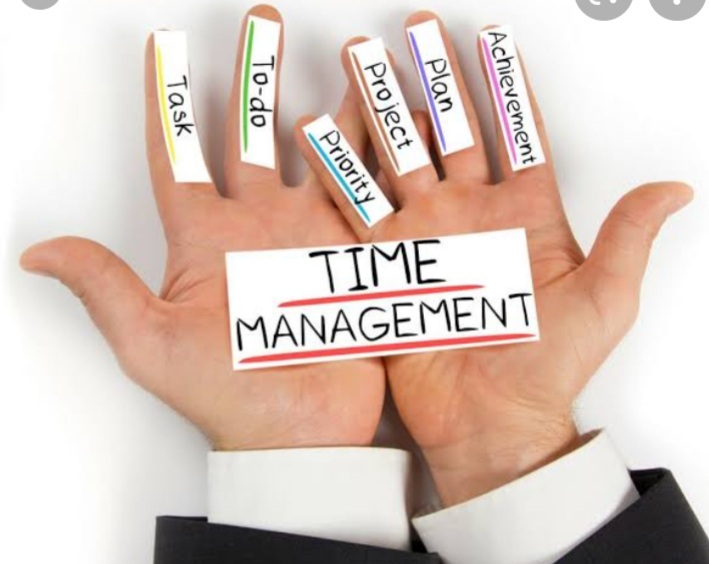
Time management

Time is nothing but the count of the life. It is measured in Hours, minutes and seconds. It is very important to manage the time as it is very precious and cannot come back once it is lost. It is also very important to utilize the time properly.

Managing the time is very important. Many of the people don’t know how to manage the time. Let us now know some of the time management techniques and how to use them.

•Make schedules:-

Making schedules is one of the best methods to manage the time. All you have to do is, think of the things what you have to do on a particular day and allot some particular time for each activity. Complete particular activity in the allotted time. When the work takes too much time, then leave it aside and go for another work. Whenever all the work is finished, go for the work which is unanswered in the beginning and complete it. This is how schedules helps for time management and makes the proper use of the time.

•Don’t spend much time on one thing:-

Spending much time on a particular thing disturbe the individual and disturbs the concentration. So, to focus on the work, an individual must go for some another work whenever they get bored on a particular work. So, it helps to focus on the work and for not wasting the time.

Time management is the process of planning and controlling how much time to spend on specific activities.
BENEFITS OF TIME MANAGEMENT :


The ability to manage your time effectively is important. Good time management leads to improved EFFICIENCY and productivity, less stress, and more success in life. Here are some benefits of managing time effectively:

  1. STRESS RELIEF :
    Making and following a task schedule reduces anxiety. As you check off items on your ” to- do” list, you can see that you are avoid feeling stressed out with worry about whether you’re getting things done.

  2. 2.MORE TIME :
    Good time management gives you extra time to spend in your daily life. People who can time- manage effectively enjoy having more time to spend on hobbies or other personal pursuits.
  3. MORE OPPORTUNITIES:
    Managing time well leads to more opportunities and less time wasted on trivial activities. Good time management skills are key qualities that employes look for. The ability to prioritize and schedule work is extremely desirable for any organisation.

  4. 4.ABILITY TO REALIZE GOALS :
    Individuals who practice good time management are able to better achieve goals and objectives, and do so in a shorter length of time.

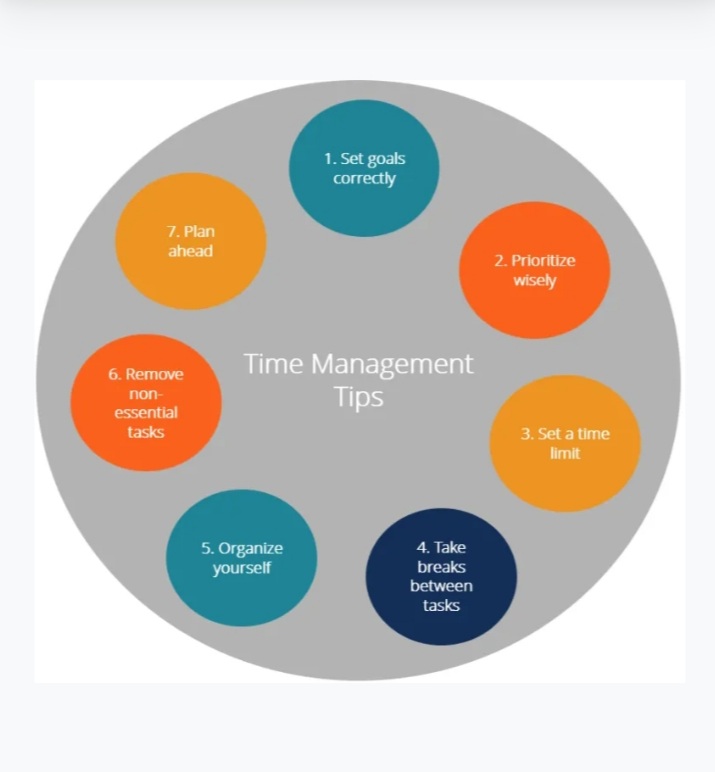
  5. LIST OF TIPS FOR EFFECTIVE TIME MANAGEMENT:


  1. 1.SET GOALS CORRECTLY:
    Set goals that are achievable and measurable. Use the SMART method when setting goals. In essence, make sure the goals you set are specific, Measurable, Attainable, Relevant, and Timely.

  2. 2.PRIORITIZE WISELY :
    Prioritize tasks based on importance and urgency. For example, look at your daily tasks and determine which are :
  • Important and urgent : Do these tasks right away.
  • Important but not urgent : Decide when to do these tasks.
  • Urgent but not important: Delegate these tasks if possible.
  • Not urgent and not important : set these aside to do later.

  • 3.SET A TIME LIMIT TO COMPLETE A TASK :
    Setting time constraints for completing tasks helps you be more focused and efficient. Making the small extra effort to decide on how much time you need to allot for each task can also help you recognise potential problems before theyv arise. That way you can make plans for dealing with them.

  • 4.TAKE A BREAK BETWEEN TASKS:
    When doing alot of tasks without a break, it is harder to stay focused and motivated. Allow some downtime between tasks to clear your head and refresh yourself. Consider grabbing a brief nap, going for a short walk, or meditating.

  • 5.ORGANISE YOURSELF :
    Utilise your calendar for more long term time management. Write down the deadlines for projects, or for tasks that are part of completing the overall project. Think about which days might be best to dedicate to specific tasks. For example, you might need to plan a meeting to discuss cash flow on a day when you know the company CFO is available.

  • 6.REMOVE NON- ESSENTIAL TASKS :
    It is important to remove excess activities or tasks. Determine what is significant and what deserves your time. Removing non- essential tasks frees up more of your time to be spent on genuinely important things
  • IMPLICATIONS OF POOR TIME MANAGEMENT :
  • Let us consider the consequences of poor time management ;
  1. PLAN AHEAD :
    Make sure you start everyday with a clear idea of what you need to do- what needs to get done THAT DAY. consider making it a habit to, at the end of each workday, go ahead and write out your ” to- do” list for the next workday. That way you can hit the ground running the next morning.
  2. POOR WORKFLOW :
    The inability to plan ahead and stick to goals means poor efficiency. For example, if there are several important tasks to complete, an effective plan would be to complete related tasks together or sequentially. That translates to reduced efficiency and lower productivity.
  3. WASTED TIME :
    Poor time management results in wasted time. For example, by talking to friends on social media while doing an assignment, you are distracting yourself and wasting time.

  4. 3.LOSS OF CONTROL :
    By not knowing what the next task is, you suffer from loss of control of your life. That can contribute to higher stress levels and anxiety.

  5. 4.POOR QUALITY OF WORK :
    Poor time management typically makes the quality of your work suffer. For example, having to rush to complete tasks at the last minute usually compromises quality

  6. 5.POOT REPUTATION :
    If clients or your employer cannot rely on you to complete tasks in a timely manner, their expectations and perceptions of you rely adversely affected. If a client cannot rely on you to get something done on time, they will likely take their business elsewhere.

Ways to Manage Stress

Stress is part of being human, and it can help motivate you to get things done. Even high stress from serious illness, job loss, a death in the family, or a painful life event can be a natural part of life. You may feel down or anxious, and that’s normal too for a while. Talk to your doctor if you feel down or anxious for more than several weeks or if it starts to interfere with your home or work life. Therapy, medication, and other stategies help. In the meantime, there are things you can learn to manage stress before it gets to be too much. Consider these suggestions:

Exercise

To start with, physical activity can help improve your sleep. And better sleep means better stress management. Doctors don’t yet know exactly why, but people who exercise more tend to get better deep “slow wave” sleep that helps renew the brain and body. Just take care not to exercise too close to bedtime, which disrupts sleep for some people. Exercise also seems to help mood. Part of the reason may be that it stimulates your body to release a number of hormones like endorphins and endocannabinoids that help block pain, improve sleep, and sedate you. Some of them (endocannabinoids) may be responsible for the euphoric feeling, or “runner’s high,” that some people report after long runs.

People who exercise also tend to feel less anxious and more positive about themselves. When your body feels good, your mind often follows. Get a dose of stress relief with these exercises:

Applications

Animals

Since the time Earth developed the quality of sustaining life, life has always gone under the process of evolution. Life started from single celled organisms and developed stage by stage. One organism extinct to develop into its better developed species or even at times it happens that some animals get erased from the surface of the earth due to extreme environmental condition.

EXTINCT ANIMALS: Species of animals which existed in the surface of the earth once upon a time but has no current existence, this may have been a result of extreme environmental condition or some other condition for existence. For example, we have dinosaurs, Dodo.

ENDANGERED ANIMALS: The species of animals which have only a few animals left on the surface of the earth and are in the mouth of being extinct are known as endangered, currently this is a result of poaching i.e., unethical killing of wild animals with purpose or change in the climate due to pollution and other factors. For example, we have the Royal Bengal Tiger.

We cannot do anything for the species which are extinct but we can definitely take steps and save our endangered species. Poaching laws should be made stricter and it should be taken care that people follow them.

Different types of animals :

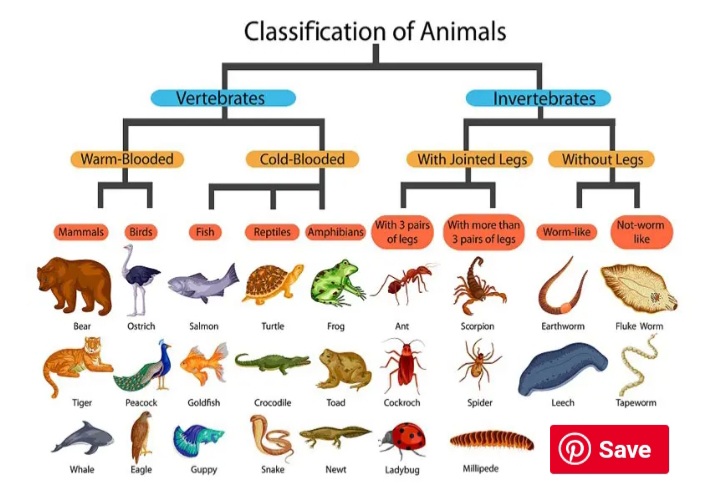
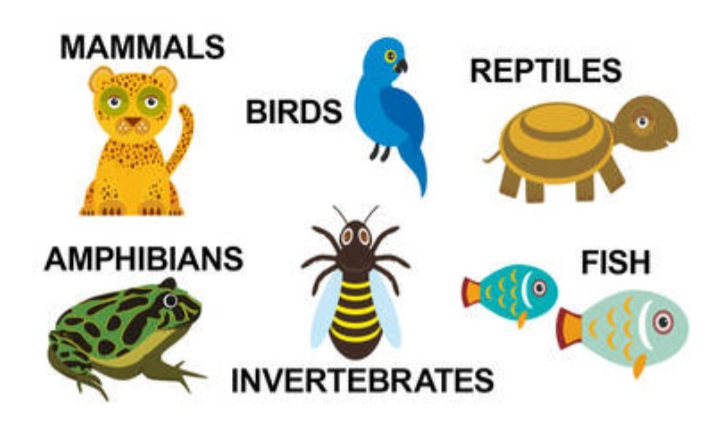
Scientists sort the different types of animals in the world into categories based on certain characteristics. Animals are generally grouped into six types of aninals. The system for animal classifications is called taxonomy.

The Animal Kingdom :

All animals belong to a biological kingdom called kingdom Animalia. This kingdom is then broken down into over 30 groups. About 75% of all species on earth are aninals. Animals are then broken down into two types : vertebrates and invertebrates.

* Animals with a backbone are vertebrates.

* vertebrates belong to the phylum called phylum chordata.

* vertebrates are classified into five classes. They are amphibians, birds, fish,mammals, and reptiles.

* Animals without a backbone are invertebrates.

* Most invertebrates are in the phylum Arthropoda.

1. Amphibians :

All amphibians are vertebrates, and they need moist environment or water to survive.

* They are cold- blooded.

* They absorb water and breathe through their thin skin

* They have at least one special king gland used for defense.

* Most follow the life cycle of egg-larva- adult.

* examples : frog , newts, salamanders, toads.

2. Birds

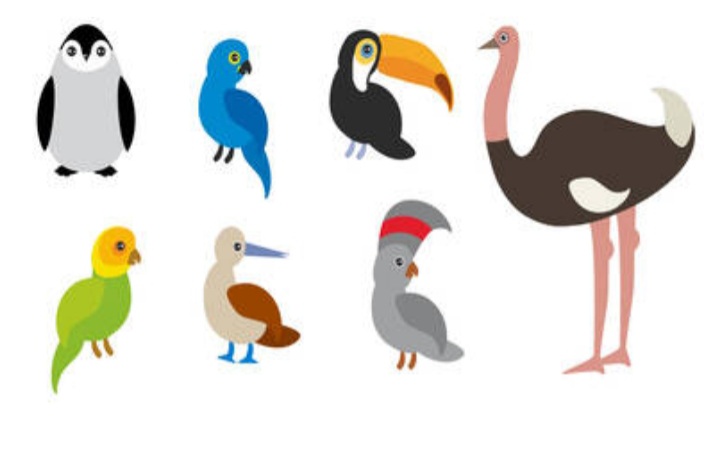
Birds are a type of warm- blooded vertebrate that are adapted to fly.

* Not all birds can fly, but they do all have wings.

* Birds have beaks that help them catch and swallow food.

* The digestive system of a bird allows it to eat whenever it can and digest that food later.

* Birds lay egg to reproduce.

* They are endothermic, mening they maintain their own constant body temperature.

* They are bipedal, which means they have two legs.

* They have hollow bones and their bodies are covered in feathers.

* Birds belong to the class called Aves.

* Examples : albatrosses, chickens, hummin birds, falcons, falmingoes, ostriches, owls, parrot, penguins, pigeons.

3. Fish :

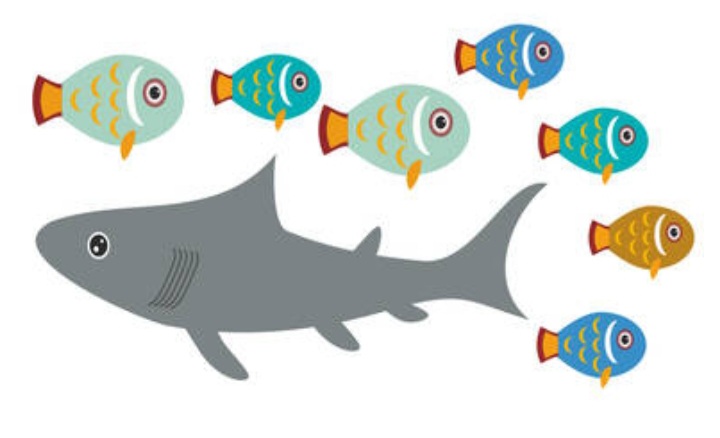
Fish are also vertebrates, and they are considered the oldest-known vertebrates.

* They are ectothermic, or cold- blooded, which means they rely on their surroundings to regulate their body temperature.

* Fish have funs.

* Most, but not all, fish have bodies covered in scales and breathe through gills.

* Fish live under water.

* Examples : eels, hangfish, lampreys, minnows, rays, salmon, seahorses, sharks.

4. Mammals :

Mammals are another type of vertebrate that belongs to the class Mammalia.

* young mammals get nourishment from milk produced by their mothers.

* Most mammals have hair.

* Their jaw is hinged directly to their skull unlike all other vertebrates.

* Almost aĺl mammals give birth to live bsbies.

* They are endothermic, or warm- blooded.

* Examples : there are over 5500 living species of mammals all over the world. Aardvarks, bats, elephants, hamsters, human, rabbits, rhinoceroses, whales.

5. Reptiles :

Reptiles are thought to be the first vertebrates to live completely on land. But, not all reptiles live only on land today.

* They are cold- blodded, or ectothermic

* They lay eggs to reproduce.

* They have four legs or descended from animals with four legs.

* They breathe through lungs

* Their bodies are covered in scales or scutes.

* Examples : crocodiles, geckos, lizards, sea turtles, snakes, tortoises.

Invertebrates :

Approximately 95% of all animals are invertebrates. Invertebrates do not have a backbone. There are different types of invertebrates, but they all share a few characteristics.

• They are made up of many cells that work together, or multicellular.

• Most, but not all have tissues, cells that work together in a more complex way.

• Most, but not all, can move.

• There are over 35 phyla of invertebrates.

• They generally have soft babies.

Types of Invertebrates :

There are eight phyla of invertebrayes that are alive today.

* Annelida – have a segmented body and primitive brain

* Arthropoda – have jointed appendages and an exoskeleton.

* Cnidaria – have tissues and an incomplete digestive system

* echinodermata – have some type of spiny structure on their bodies

* Mollusca – generally have sofy bodies and a hard exoskeleton.

* Nematoda – unsegmented with worm- shaped bodies

* platyhelminthes – have soft, ribbon- like worms with no respiratory system.

* porifera – multicellular organisms living in water with no organs or tissues.

Examples : anemone( cnidaria) , clams ( mollusca), coral,

Property Rights

What Are Property Rights?

Property rights define the theoretical and legal ownership of resources and how they can be used. These resources can be both tangible or intangible and can be owned by individuals, businesses, and governments. In many countries, including the United States, individuals generally exercise private property rights or the rights of private persons to accumulate, hold, delegate, rent, or sell their property. In economics property rights form the basis for all market exchange, and the allocation of property rights in a society affects the efficiency of resource use.

Understanding Property Rights

Property is secured by laws that are clearly defined and enforced by the state. These laws define ownership and any associated benefits that come with holding the property. The term property is very expansive, though the legal protection for certain kinds of property varies between jurisdictions.Property is generally owned by individuals or a small group of people. The rights of property ownership can be extended by using patents and copyrights to protect:

  • Scarce physical resources such as houses, cars, books, and cellphones
  • Non-human creatures like dogs, cats, horses or birds
  • Intellectual property such as inventions, ideas, or words

Other types of property, such as communal or government property, are legally owned by well-defined groups. These are typically deemed public property. Ownership is enforced by individuals in positions of political or cultural power. Property rights give the owner or right holder the ability to do with the property what they choose. That includes holding on to it, selling or renting it out for profit, or transferring it to another party.

Acquiring Rights to a Property

Individuals in a private property rights regime acquire and transfer in mutually agreed-upon transfers, or else through homesteading. Mutual transfers include rents, sales, voluntary sharing, inheritances, gambling, and charity. Homesteading is the unique case; an individual may acquire a previously unowned resource by mixing his labor with the resource over a period of time. Examples of homesteading acts include plowing a field, carving stone, and domesticating a wild animal. In areas where property rights don’t exist, the ownership and use of resources are allocated by force, normally by the government. That means these resources are allocated by political ends rather than economic ones. Such governments determine who may interact with, can be excluded from, or may benefit from the use of the property.

Private Property Rights

Private property rights are one of the pillars of capitalist economies, as well as many legal systems, and moral philosophies. Within a private property rights regime, individuals need the ability to exclude others from the uses and benefits of their property. All privately owned resources are rivalrous, meaning only a single user may possess the title and legal claim to the property. Private property owners also have the exclusive right to use and benefit from the services or products. Private property owners may exchange the resource on a voluntary basis.

Private Property Rights and Market Prices

Every market price in a voluntary, capitalist society originates through transfers of private property. Each transaction takes place between one property owner and someone interested in acquiring the property. The value at which the property exchanges depends on how valuable it is to each party. Suppose an investor purchases $1,000 in shares of stock in Apple. In this case, Apple values owning the $1,000 more than the stock. The investor has the opposite preference, and values ownership of Apple stock more than $1,000.

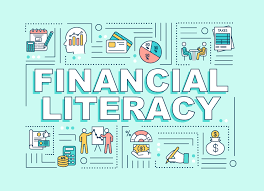
Financial Literacy

What Is Financial Literacy?

Financial literacy is the ability to understand and effectively use various financial skills, including personal financial management, budgeting, and investing. Financial literacy is the foundation of your relationship with money, and it is a lifelong journey of learning. The earlier you start, the better off you will be, because education is the key to success when it comes to money.

Read on to discover how you can become financially literate and able to navigate the challenging but critical waters of personal finance. And when you have educated yourself, try to pass your knowledge on to your family and friends. Many people find money matters intimidating, but they don’t have to be, so spread the news by example.

Understanding Financial Literacy

In recent decades financial products and services have become increasingly widespread throughout society. Whereas earlier generations of Americans may have purchased goods primarily in cash, today various credit products are popular, such as credit and debit cards and electronic transfers. Indeed, a 2019 survey from the Federal Reserve Bank of San Francisco showed that consumers preferred cash payments in only 22% of transactions, favoring debit cards for 42% and credit cards for 29%.

Other products, such as mortgages, student loans, health insurance, and self-directed accounts, have also grown in importance. This has made it even more imperative for individuals to understand how to use them responsibly. Although there are many skills that might fall under the umbrella of financial literacy, popular examples include household budgeting, learning how to manage and pay off debts, and evaluating the tradeoffs between different credit and investment products. These skills often require at least a working knowledge of key financial concepts, such as compound interest and the time value of money. Given the importance of finance in modern society, lacking financial literacy can be very damaging to an individual’s long-term financial success.

Being financially illiterate can lead to a number of pitfalls, such as being more likely to accumulate unsustainable debt burdens, either through poor spending decisions or a lack of long-term preparation. This in turn can lead to poor credit, bankruptcy, housing foreclosure, and other negative consequences. Thankfully, there are now more resources than ever for those wishing to educate themselves about the world of finance. One such example is the government-sponsored Financial Literacy and Education Commission, which offers a range of free learning resources.

Strategies to Improve Your Financial Literacy Skills

Developing financial literacy to improve your personal finances involves learning and practicing a variety of skills related to budgeting, managing and paying off debts, and understanding credit and investment products. Here are several practical strategies to consider.

Create a Budget—Track how much money you receive each month against how much you spend in an Excel sheet, on paper, or with a budgeting app. Your budget should include income (paychecks, investments, alimony), fixed expenses (rent/mortgage payments, utilities, loan payments), discretionary spending (nonessentials such as eating out, shopping, and travel), and savings.

Pay Yourself First—To build savings, this reverse budgeting strategy involves choosing a savings goal (say, a down payment for a home), deciding how much you want to contribute toward it each month, and setting that amount aside before you divvy up the rest of your expenses.

Pay Bills Promptly—Stay on top of monthly bills, making sure that payments consistently arrive on time. Consider taking advantage of automatic debits from a checking account or bill-pay apps and sign up for payment reminders (by email, phone, or text).

Celebrity Endorsements

Impact of Celebrity Endorsement on Consumer Buying Behavior
Image Source: google.com

Celebrities can influence the taste, preference and beliefs of the public. They can make powerful Influence in the minds of consumers about the product and services which they endorse. A popular face can communicate more than any advertisement using a model. It will lead to mass brand sale. Companies use stars to endorse any products and services like food, soft drinks, soaps, perfumes, hair oil, cosmetics, home appliances, mobile networks, mobile phones, electronic equipment, health products, automobile etc. Even political parties are influenced by the charisma of stars because of the magnetism of stars in the country. In the recent parliament election major political parties fielded a record number of stars from different constituencies around the country. South Indian star Nagma, Innocent and Suresh Gopi from Malayalam industry, Anitha Prathap from media competed in election.

Factors of successful celebrity branding

1)            Consistency and long-term Commitment

As with branding, companies should try to maintain consistency between the endorser and the brand to establish a strong personality and identity. More importantly, companies should view celebrity endorsements as long-term strategic decisions affecting the brand. A global must respect local needs, wants, and tastes while endorsing.

2)            Prerequisites to Selecting Celebrities

Before signing on celebrities to endorse their brands, companies need to ensure that they meet three basic prerequisites, namely the endorser should be attractive, have a positive image in society, and be perceived as having the necessary knowledge (although it might be difficult for a celebrity to meet all three prerequisites.

3)            Celebrity-Brand match

Companies should ensure a match between the brand being endorsed and the endorser so that the endorsements are able to strongly influence the thought process of consumers and create a positive perception of the brand. Tiger Woods endorsing the Buick brand makes no sense at all. There is just no believability that Tiger is dying to drive a Buick. And without believability celebrity endorsement is worthless.

4)            Constant monitoring

Companies should monitor the behavior, conduct and public image of the endorser continuously to minimize any potential negative publicity.

5)            Selecting Unique Endorsers

Great brands represent great ideas. These brands express the uniqueness of position to all internal and external audiences. Companies should try to bring on board those celebrities who do not endorse competitors’ products or other quite different products, so that there is a clear transfer of personality and identity between the endorser and the brand. The controversy related to the endorser’s personal or professional life must hamper the associated brand image. Kobe Bryant’s family-friendly endorsement deals with Nutella and McDonald’s came to a quick end after he was accused of rape.

6)            Timing

As celebrities command a high price tag, companies should be on the constant lookout for emerging celebrities who show some promise and potential and sign them on in their formative years.

The benefits of celebrity branding

  • Attracts the attention: Celebrity ensures attention by breaking the clutter of ads and makes the brand more noticeable.
  • Establishes credibility: celebrities create a sense of trust for the brand among target audience. It will be more helpful to new products.
  • Associative benefit: When the celebrity prefers the product it helps to create a persuasion to the target audience. It creates a feeling that as the celebrity benefits from the brand the consumer will also benefit.
  • Psychographic connect: Stars are loved and respected by the public, so the advertisers use stars to capitalize the feeling to turn the fans towards their brand.
  • Demographic connect: Stars represent different demographic segments like age, gender, class, geography etc.
  • Mass Appeal: Stars have universal appeal can make interest among these masses.

How To Choose Dinnerware

Dinnerware is the allure of the dining table. It settles the right tone of the dinner. Whether it is an informal dinner with your friends or a formal with your boss and colleagues or maybe even your regular dinner at home with your family. Different types of dinnerware are used for different purposes of dinner gatherings. If you have doubts about how to choose dinnerware, you have come to the right place. This right here is the proper guide for choosing dinnerware for the perfect setting.

Dinnerware is not just for style, it should be useful as well. It is a daily use item and should be durable for a long time. Now, how do you choose the right type of dinnerware for all different purposes? Don’t know? Well, let us help you with that. Come on, let’s dive into the world of dinnerwares.

Photo by Polina Tankilevitch on Pexels.com

Types of Materials Used for Dinnerware

Before searching for anything else like the style, design, and colors, of the dinnerware set, look for something that will be durable and will not embarrass you in front of your guests. Some of the famous materials used for dinnerware sets are Bone China, Porcelain, Earthenware, Ceramic, and many more. Read on to have a detailed look at the types of materials.

Bone China

Bone China is the perfect type of dinnerware for both daily use and formal dinners. It is durable, stylish, comes in many designs and colors. It is generally thin,  lightweight, and chip-resistant. In addition to its qualities, it is microwave safe and can be easily washed in a dishwasher. It has an elegant appearance and is better than fine china.

Earthenware

One of the oldest types of dinnerware sets that gives a casual appeal. Earthenware gives slight durability and adds value to the dinner set. It also provides a significant weight to the dishes. But make sure you avoid high temperature changes that may damage the look of the material. Keep the microwave at low temperature settings while using earthenware. It is affordable but not as suitable for daily use as others.

Porcelain

Porcelain is the most common type of dinnerware material and the best for daily use purposes. This amazing type of material is dishwasher, microwave, and oven safe. It provides wonderful durability and appealing designs. Porcelain has a non-porous surface that gives an amazing texture. It is difficult to manufacture. But it is less expensive than Bone China and is easily affordable.

Ceramic

Ceramic is specifically not a type of material but it is considered as a class containing different types of china and porcelain. It is generally white in appearance but ranges in color from white to blue. White also has many different shades in ceramic, like off-white and others.


Photo by cottonbro on Pexels.com

Stoneware

Stoneware is made from the same materials as porcelain but in different ratios. This makes it more heavy weight and sometimes it has a texture. This material may have speckles on it which gives a beautiful look to the plates and dishes. It generally comes with an off-white body. It is durable and user friendly. It is good for regular use as well as dinner parties. But they need to be kept at normal temperatures and away from both freezing or very high temperatures.

Melamine

Melamine is used for outdoor purposes as it is unbreakable. It is hard to break or chip. It is dishwasher safe but unfortunately not microwave or oven safe.

Sizes of Dinnerware sets

Now after getting to know about the materials of dinnerwares, next important point is to decide what size you have in mind. Is it a proper dinner set or just some plates for regular use? Let’s have a look.

Formal Dinnerware

Formal dinnerware sets mostly contain all the required dishes for a person to have a great dinner easily. It may also contain soup bowls. It contains full plates, quarter plates with serving spoons, and small spoons for eating.

Open stock

Open stock is a piece by piece sold dinnerware set. It can include dishes of your own choice. You are free to add items of your requirement like plates, spoons, or some dishes. You can mix and match with your collection at home if you need some white plates to go with your set, you can easily find them. If you don’t want the whole dinner set with things you don’t require, then you can go for open stock and select the items as per your requirements.

You can collect single pieces of different sizes or designs and colors according to what you have in mind. Choose whether you want soup bowls or not. Which color will go with your existing collection at home? Which design matches the tone for your dinner party? With open stock, you can customize your cabinet of dinnerware set with beautiful designs, shapes, and colors of the dishes and bowls. If you don’t want the unnecessary saucers, you can remove them, or maybe you just need one serving bowl, it’s your wish. Pick your item and that’s it.

Other Points to Keep in Mind While Buying Dinnerware

  • Choose plates and bowls according to the size of your cupboards and dishwasher. It will cause a problem for you if the plates are too wide or big.
  • Dinnerware makes the dining table look presentable if it is glazed or white with a beautifully designed plate set. So choose your set of designs and colors according to your choice.
  • Don’t shy away when buying a good dinnerware set. It will be useful in the long run. Don’t hold back if the set is a bit expensive. Make sure to buy enough for hosting a huge gathering. You don’t know when you might have to celebrate!
  • Look for thinner rim plates as they offer a larger plate area for use as compared to the ones with broad rims. Or maybe you want plates with flat surfaces.
  • You can decide whether to buy large cereal bowls, that can be used for many purposes, or you want shallow soup bowls. Commonly round bottom bowls are preferred over flat ones.
  •  If you are planning for a formal meal, you may want cups and saucers. They give an old and classic look to the setting.

These were all the required things you need to keep in mind while choosing your set of dinnerware. Enjoy shopping! We have made sure you have the answer to your query that is, ‘how to choose dinnerware?’ Remember these things and you are ready to start your collection of perfect dinnerware sets.