‘Leadership’ in the times of epidemic

Let’s take up any project in an organization, especially Multinational Corporations, and try to understand the hierarchy levels in a team. Usually at the top, there is the delivery manager followed by project manager and then there is the team lead with all the assistant team members at the base of the hierarchy. On any normal day, the delivery manager is the one who is answerable to the client during the time of project going live or at the times of crisis. The project manager is answerable to the clients on a weekly basis with the team lead reporting to the project manager with all the milestones and progress reports. So to sum up, the work was usually into two fonts, managers who manages the entire group and is answerable to the client and the team lead who lead the team and reports to the managers. So this traditional way of doing business was going on until the pandemic hit the business.

For the past four months, we are working from home. We have forgotten what the boundary exactly looks like between office and home, with a little concern for privacy and social life. We are always trying to do ‘more’ and in a ‘better’ way and there are times, when we feel helpless, if and when we do not get the same amount of cooperation and assistance from our team lead or managers. Numerous articles are being published everywhere on how to improve effective communication in remote work but there is always a bit of communication gap, especially when we are unable to apprehend the non-verbal cues. It is at this time, when the managers should step down from being a manager to being a leader.

A leader is someone who acts a ring-bearer to a team member. He does not just say what to do, rather he works with him, side by side, to sail through the problem. Whenever a team member expresses a concern or some problem, instead of just providing a solution, he listens to it and deals with the situation with empathy. In fact, a team leader gives a solution by being a part of the solution. Having done a part time internship in such a culture, I have observed that the managers, even in remote scenario, tend to be stoic and still behaves in a very formal way. It is high time that the managers step down into the shoes of the leaders and lead the team through such a mind-wrecking situation, instead of just managing it.

As per my observation, a few ways by which the managers can put on a leadership cap are:

  1. A team huddle in the morning, discussing about the team progress and also providing a platform open for suggestions.
  2. Listen to pertinent problems of team members and deal with empathy, thus going over the notion of manager.
  3. Arrange for coffee break, once every half-month, and the discussions should be on the recent advancements and not just on news.
  4. Managers should be bit more personal rather than being formal.

Remote work calls for different measures and from the organizational perspective, managers putting on leadership cap will go a long way in building a sustainable and resilient organizational culture. If we take this as a parameter and compute the cost-benefit analysis, this approach will definitely improve the productivity and thus will create multi-fold productivity.

Be a leader.

Source: Self

RDDBI, SARFAESI AND IBC

RDDBI 1993

Banks and financial institutions have been experiencing considerable difficulties in recovering loans and enforcement of securities charge with them. The procedure for recovery of debts due to the banks and financial institutions, which is being followed, has resulted in a significant portion of the funds being blocked.

The Committee on the Financial System has considered the setting up of the Special Tribunals with special powers for adjudication of such matters and speedy recovery as critical to the successful implementation of the financial sector reforms. An urgent need was, therefore, felt to work out a suitable mechanism through which the dues, to the banks and financial institutions could be realised. In 1981 a committee had examined the legal and other difficulties, faced by banks and financial institutions and suggested remedial measures including changes in law. This committee also suggested setting up of Special Tribunals for recovery of dues of the banks and financial institutions by following a summary procedure. Keeping in view the recommendations of the above Committees, the Recovery of Debts due to Bank and Financial Institutions Bill, 1993 was introduced in the Parliament.

THE RECOVERY OF DEBTS DUE TO BANKS AND FINANCIAL INSTITUTIONS ACT, 1993

An Act to provide for the establishment of Tribunals for expeditious adjudication and recovery of debts due to banks and financial institutions and for matters connected therewith or incidental thereto.

After a decade or working of the (RDDBI ACT) it was felt that RDDBI act was unable to achieve the desired result of efficiently recovering money from the borrower’s. This led to the enactment of the Securitization and reconstruction of final assets and enforcement of security interest act 2002.

SARFAESI 2002

The SARFAESI Act was passed on December 17, 2002, in order to lay down processes to help Indian lenders recover their dues quickly. The SARFAESI Act essentially empowers banks and other financial institutions to directly auction residential or commercial properties that have been pledged with them to recover loans from borrowers. Before this Act took effect, financial institutions had to take recourse to civil suits in the courts to recover their dues, which is a lengthy and time-consuming process.

As per the SARFAESI Act, if a borrower defaults on a loan financed by a bank against collateral, then the bank gets sweeping powers to recover its dues from the borrower. After giving a notice period of 60 days, the lender can take possession of the pledged assets of the borrower, take over the management of such assets, appoint any person to manage them or ask debtors of the borrower to pay their dues too, with respect to the asset. This recovery procedure saves banks and financial institutions a lot of time which otherwise would be long drawn out due to the intervention of courts.

With an attempt to revamp the slow pace of recovery of defaulting loans and mounting levels or non performing assets of banks and financial institutions. The SARFAESI act provides the secured creditor the right to enforce the security without the intervention of either court or tribunal by following procedure prescribed under section 13 of SARFEASI act. Thereafter the constitutional validity of SARFAESI act was challenged in Mardia chemicals Ltd V Union of India.

In the landmark judgement delivered in Mardia chemicals V Union of India the hon’ble supreme court held that provision of the securitization and reconstruction of financial assets and enforcement of security interest act 2002, SARFAESI ACT 2002, are valid except section 17 (2). Which is ultra vires of article 14 of the constitution of India.

It’s a new weapon to strengthen the hands of co-operative banks, but a small one still.

IBC 2016

The Insolvency and Bankruptcy Code 2016 offers a uniform comprehensive insolvency legislation to Corporations, Firms and Individuals (other than financial firms).

One of the fundamental features of the Code is that it allows creditors to assess the viability of a debtor as a business decision, and agree upon a plan for its revival or a speedy liquidation.

The IBC creates a new institutional framework, consisting of a regulator, insolvency professionals, information utilities and adjudicatory mechanisms, that will facilitate a formal and time bound insolvency resolution process and liquidation.

Insolvency and Bankruptcy code is a sound legal framework of bankruptcy law is required for achieving the following objectives:-

Improved handling of conflicts between creditors and the debtor It can provide procedural certainty about the process of negotiation, in such a way as to reduce problems of common property and reduce information asymmetry for all economic participants.

To consolidate and amend the laws relating to re-organization and insolvency resolution of corporate persons, partnership firms, and individuals. To fix time periods for execution of the law in a time-bound settlement of insolvency (i.e. 180 days).To maximize the value of assets of interested persons.

To establish higher levels of debt financing across a wide variety of debt instruments. To deal with cross-border insolvency .To resolve India’s bad debt problem by creating a database of defaulter list.

In short we can say that SARFAESI is upgraded version of RDDBI, and IBC is upgraded version of SARFAESI.

Unconscious Bias

Have you ever been in a situation where you were blamed even for doing nothing? I am sure most of you have been in that situation. I have been there too. I was working in a multinational organization, about four years back. In the beginning I was a good performer and I delivered on all my deliverable, and that too following the SMART strategy, barring a few. There were times when I could not deliver but I always tried my best, depending on the situation. Now one day, my manager got promoted and she was replaced by another another lady from our team. And then things began to go south. Problems crept up, she began to find faults in everything I do, and she always had this intention to reprimand me in the team meetings.

Things just got worsened one day. A priority 2 issue came up at about 9 PM at night, just at the moment when we were about to leave. I informed her, despite all the differences but to my utter surprise, she remarked, “It is your fault. You are responsible for this. Don’t expect anything from me and I expect this to be solved latest by tomorrow morning.” I knew something like this would happen but I never imagined the utter intensity of the remark. Moreover, when I analysed the situation, I found out that I was never responsible for the issue in the first place. One of my team mate, in fact a senior team member missed to pay attention to the issue a month back, due to which the client had to send it as a priority 2 issue. That was it. The next morning, when my manager came, I explained everything to her, but she was clouded in her own judgement to even listen to me and understand.

That was simply the case of unconscious bias. Because of past incidents and events, her judgement was clouded to let her think straight and logically. Unconscious bias was the main reason which affected her thinking and making the rightful decision. But what she failed to understand is that this little judgement of her can have profound effect on the hiring, motivation and retention decisions. In our day to day interaction, we might not be even aware of when such kind of bias creeps into our decisions and plays havoc in our mind. As per recent news, such unconscious bias can create a turnover impact of INR 22000 per associate. Surprising, isn’t it?

Unconscious Bias

Now when we talk about unconscious bias, there are multiple instances and multiple effects of such bias and each of it has its own term. A few of them are:

  1. Affinity Bias – When we come across a person who is similar to us, we tend to give positive response to him. It seems like we tend to identify ourselves with that person.
  2. Halo Bias – Because of some praiseworthy and commendable actions of the past, we tend to see that person in the positive light and admire all of his actions even though he might not have quite lived up to expectations in the present.
  3. Perception Bias – It is the tendency to form stereotypes and assumptions about certain groups which makes it difficult to form an objective opinion about individual members of that group.
  4. Horn Bias – Because of a negative incident in the past, all the present judgement gets clouded by that feeling.
  5. Confirmation Bias – Tendency to seek out evidence that confirms our initial perceptions and ignoring contradictory information.

These are some of the biases which creeps into our decisions without even our knowledge. Managers should always be neutral which looking at the present situation and not to base the eventuality of the decision based on some past incident. One way to do this is to critically evaluate all the options, put forward by everyone and also to engage a third-party to challenge those options. In this way, our decisions will not be clouded and will be a blessing for everyone.

Referring to the situation which I faced, it was Horn Bias and it could have been easily avoided if she had taken the high road to listen and to communicate with me. But nevertheless, there is always a scope for one to learn in one’s life.

Source: https://builtin.com/diversity-inclusion/unconscious-bias-examples

Are Parents able to do Work From Home?

Consider a 35 year old woman staying with her husband, 37 and her two children – aged 3 and 6 in Bangalore. She works as Project Manager in a top multinational corporation. Her husband is also working as a Project Manager, though of another firm. One of their child, aged 3, is starting with his kindergarten and demands for the utmost attention of his parents. And the other, aged 6, is starting her primary school. She has seen her parents working for most of the times and hence she is bit aware of managing herself.

Things were just going on as expected, until on 24th March, our Prime Minister called for a nation-wide lockdown. And then things just changed.

Should Work-from-Home Parents Hire Help with Child Care? | FlexJobs

Let me now give you a tour of how this woman spends her day. She wakes up to her alarm at 5:30 in the morning. Starting her day with 15 minutes meditation and yoga, she completely immerse herself in doing the household chores. Since the lockdown she has cancelled the maid, cook and nanny services. After her domestic work, she gets ready for the morning meeting with her team members and thus kick starts her 9 to 5 or rather whole day of work. But then wait, she has two children who also needs to get ready for their school. After attending a couple of meetings, she gets up, prepares her children, set up the desktops and login to their school webinar sessions. This continues till the work-chain is intervened by the lunch time. During the lunch hours, she needs to feed her younger one and at the same time, caters to the needs of her elder one. After that, they both go off to sleep and she resumes her work. Some days this workflow gets interrupted by unprecedented events such as poor internet connection, household emergencies and so on and so forth. Apparently as she described, the best time for her to work is about 2 hours in the afternoon and about 2-3 hours at night, when her children go to their beds.

Now this is just one instance. Apparently, this is what most parents are facing while they are working from home. Since the lockdown, they are not just a mom and an employee. Being a maid, a nanny, a mom, a cook, an advisor, a nurse, a repair-woman and a mediator, her life is not just only about being an employee. She is trying to manage everything, trying to subdue all the resistance and challenging all the obstacles on her path. While for others, Work From Home might be a boon or a blessing in disguise but for the parents, especially for a mother, it is a challenge, an everyday obstacle or rather, a bane. Managing her husband, her children, the household as well as her work has never been easy. For her, especially now, there is no distinct boundary between home and work. But the hardest fact of all is that, she was not prepared for this life-changing instrument.

Working from home and juggling family? Tips for WFH parents, from ...

It is of utmost importance that the employers should take this scenario into consideration and by partnering up with Human Resource Team, they should implement policies which can elevate the motivation level of mothers. A few suggestions from my end would be to give them few extra hours each day, especially during the afternoon to attend to her children. To allow them to complete their work by 6 in the evening, so that they can spend the night-time with their children. Parents should be allowed to attend the business meetings with their children and they should not be embarrassed if something comes up in between work which needs their utmost attention. Parents are having a very hard time, juggling in between work and home and employers should be empathetic while dealing with their situations.

Employers should be all big ears while listening to the issues of the parents. They should have high emotional intelligence and should be empathetic enough to not judge them, but to provide them with empathetic solutions. If a parent says that today she will not be able to work for the entire team because her child is facing some issues, the employer should give her the benefit of doubt, trust her and cooperate with her. It is very important for the employer to keep an open mind and be receptive to the problems. They should understand it takes a lot of courage, especially for the female employees to express their problem, fearing that she will be seen as weak and might be displaced. At this moment, the employer should not despise her, but to communicate with her and provide her with the necessary arrangements.

One things is very important which should always be kept in mind – Parents, especially mothers, can sacrifice for their children and hence the employers must give the required amount of importance to them. Especially the importance that the hard-working parents deserve.

Source: https://hbr.org/2020/03/a-guide-for-working-from-home-parents

Employee Onboarding – Make it or Break it?

Consider two scenarios:

Scenario 1: Debbie was pursuing her post-graduation from one of the Ivy League schools and she was interested to pursue her career as a Talent and Acquisition Specialist in one of the top finance-based company. Luckily the company decided to come to her campus for placements and as luck would favor it, she got the opportunity for the interviews. After series of group discussions and interviews, she finally gets selected as Talent and Acquisition Management Trainee. She received her offer letter and was scheduled to join after 6 months. But those 6 months fell short of her expectations. Apart from a couple of mails which were mostly about documents submission and verification, there was zero-communication. On her first day, there were no office tours, no dedicated workspace and moreover, there loomed a non-welcoming attitude. Months passed by, even her training and performance appraisal was very irregular. Feeling insulted and demotivated, she left the job in about 7 months and decided to go for another organization.

Scenario 2: Debbie joined a new organization which might not be one of the top financial organization, but it was a medium sized thriving organization. She was scheduled to join after a couple of months aftergetting selected. Surprisingly, during those 2 months, she received a congratulatory mail, company goodies and an employee handbook. Apart from that, her HR also completed all the required paperwork. Her first day went by in a blink of her eye. Starting with orientation, followed by leadership team introduction, office tour and a special lunch with her new team, her day went by exceedingly well. Even after 6 months, she went through a methodical training program and a transparent performance appraisal process. Satisfied, she overstayed in that company for almost 9 years.

Onboarding: Building a first-time experience that makes users ...
BAD EMPLOYEE ONBOARDING EXPERIENCE

So now let me ask you a question – Given a chance, which company would you choose?

Among the two scenarios, the first company lacked a major employee experience – Employee Onboarding, which was apparently instituted by the second company. Onboarding is the process of integrating a new hire with the company and with the company culture, values as well as providing all the necessary tools, software and information, so that the new hire becomes a productive member of the team. Believe it or not, employee onboarding experience plays a very crucial role in the employee engagement and is considered to be potential investment in the employee retention.

But some people might ask, what is the necessity of such a program. The sole reason is to allow the new hires to be familiarized with the company culture, to determine the fit and most importantly, to remove the confusion and the anxiety that usually haunts the hire on the first day. Research says that our new generation, that is Gen Z is very much dependent on the manager’s approval and they expect themselves to be highly productive from the very first day of hire. New hires have immense expectations from his new company in terms of engagement, career development and growth and similarly, the employer also has expectations from the new hire in terms of performance and contribution. And the very first step to build that relationship is this EMPLOYEE ONBOARDING EXPERIENCE.

Employee Onboarding consists of 5 major steps:

  1. Pre-hire – This is the period between the selection of the candidate and his first day. Operations HR plays a very important role in the pre-hire stage. During this time, the company sends the offer letter which is to be signed and sent back. The company also sends a company guide (mission, vision and values), an employee handbook (compensation and benefits policies) and company goodies (paper weight, coffee mug, coaster etc). During this time, background and documents verification is the most crucial part.
  2. First day – On this day, the HR Team plays a crucial role by welcoming the new hire. Usually the day starts with orientation in the form of webinars and videos, but mostly done face to face. An employment contract is also signed on this day. This is followed by meeting with the leadership team who delivers information about the company’s culture, an office tour, a lunch with the dedicated team and most importantly, assignment of the workspace.
  3. New Employee Orientation – During these days, the team lead introduces the entire team with the new hire and assigns a buddy and a mentor for guidance. Also, some important contact lists in terms of work and safety are also provided. Access and account creation is also done. It is very important for the new hire to get acquainted with all the team members and try to acclimatize in the new workplace.
  4. New Employee Training – After the orientation is complete, the hew hire should understand who are the major stakeholders of his work. A training program should be developed with quantifiable objectives to make the new hire productive and the training should be result oriented. Post that, small achievable goals will be set with milestones and deadlines. The new hire will be observed and then the ground is set for performance evaluation. This is usually done for the first 90 days.
  5. Performance Evaluation – Usually after 90 days, the new hire will be evaluated on the basis of training objectives and they will receive the performance ratings. The evaluation is done based on observation or interview. The result of the evaluation is either more training or normalization to the daily schedule, depending on the rating.
7 Problems With Your Onboarding Program
GOOD ONBOARDING EXPERIENCE

These are the major steps which should be followed by a company, with some modifications according to company’s culture. What an organization must remember is that the cost of new hiring is 3 times the cost of retaining the existing employee. So if a company has taken the pain to hire someone, it should bear the extra burden by providing an onboarding platform to make this entire journey a bit easier for the new employee.

“Be thankful to your employees, who are ultimately the face of your company.”

https://www.shrm.org/resourcesandtools/hr-topics/talent-acquisition/pages/new-employee-onboarding-guide.aspx

https://www.insperity.com/blog/employee-onboarding-vs-orientation-need/

E-commerce

Information Technology has been playing a vital role in the future development of financial sectors and the way of doing business in an emerging economy like India, Bangladesh etc. Increased use of smart mobile services and internet as a new distribution channel for business transactions and international trading requires more attention towards e-commerce security for reducing the fraudulent activities. The advancement of Information and Communication technology has brought a lot of changes in all spheres of daily life of human being. E-commerce has a lot of benefits and many acts which hurts the small businesses or business aspects. This study predicts some challenges in an emerging economy.

What is E-Commerce ?

E-commerce means buying and selling of goods over electronic and digital platforms. Thete have been many allegations that big e-commerce are responsible to harm healthy competition in the market. Economies of scale and advancement of logistical companies has helped e-commerce companies to ship goods to anywhere.

Why E-commerce?

With the increasing diffusion of ICTs, more specifically the Internet, the global business community is rapidly moving towards Business-to Business (B2B) e-Commerce. The buyers gain a clear advantage when the Internet gives them access to the global market, by which they can compare prices across regions, find out whether prices vary by order fragmentation and get awareness about substitute products. Due to transparency of the market, customer can compare the services of various e-commerce sites easily. For instant, in case of e-commerce the competitors are one click away from customer. If clients are not happy with the products, prices or services offered by a particular e-commerce site, they are able to change much more easily than in the physical. From the Sellers’ point of view, they don’t need to have physical existence of shop.

E-commerce Hegemony ?

Recently The competition commission of India ordered a probe into alleged competition law violations by Flipkart Amazon over allegations that the e-commerce major promoted and gave discounts to preferred sellers, entered into exclusive partnerships with smartphone brands and abused their dominant position.

Flipkart Amazon is good provider by online marketplace for selling goods in India. Flipkart and Amazon is a wholesaler which is in the business of seeking the good to reseller.

Section 4 of the competition act 2002 is very important as we know completion act is not against possessing dominant position in the market but is objects abusing such dominant position. Section 4 of this act deals with abuse of dominant position.

Dominant position in a market means positions of strength enjoyed by any enterprise in relevant market. Like any enterprise operate independently of competitive forces prevailing in the relevant market Affects it’s competitors or consumers or relevant market in its favor. Recent example of abuse of power should be Amazon Flipkart how they give heavy discounts to customer directly pick-up the good from company that hits the shopkeeper or small enterprises.

Conclusion

As e-commerce industry is emerging sector with high potential of growth govt has to introduce some policies to promote healthy competition in this industry. Govt has to anticipate current loophole in regulations and amend it is such a way that instead of harming msme sector. The e-commerce industry will be a leader with popularity in electronic business world in the upcoming years. The e-commerce revolution has fundamentally changed the business of transaction by giving new opportunities and breaking borders easily. In India, it has strongly impacted the traditional business system and changing the life of people by making it easier. While it gives benefits to customer and seller, e-commerce gives challenges to traditional business for competitive position. Developing countries face many obstacles that affect the successful implementation of e-commerce with the help of comparing with developed country. When the internet cost will be low then the e-commerce will flourish easily and will make many of traditional business to run out of their business. Convenience is one of the benefits that customer gets from the e-commerce and thus increasing customer satisfaction. This is due to customer can place a purchase an order from anywhere with internet connection. E-commerce business provider should give importance on every customer by giving smooth service and many options for payment and have more functions available online. Other benefits are expanded product offerings and expanded geographic reach. But e-commerce business faces a lot of challenges in flourishing their business.

SHOR IN THE CEREBRAL CORTEX

The Krakatoa volcanic eruption in Indonesia created the loudest sound ever reported at 180 dB in the year 1883. Do you know what’s louder than that? My mind thinking, producing thoughts faster than the blink of an eye. ‘Writer must be some mad scientist solving scientific equations in her brain’, one might think. On the contrary, the equations my brain analyses are the thousand possibilities of one single situation.

Everyone is looking at me. They are talking about me. Is it my hair? Is it the shirt I’m wearing? I think the world knows about that one time when I mispronounced the word ‘laminate’ as ‘lemonade’ in 6th grade. This is it. Life gave me lemons and the lemonade I made is SOUR.

An organ made of soft tissues and approximately two clenched fists in size has the power to make and break one’s life is a big accusation on our Brains. But who is to be blamed then?

I would like to someday adopt a Fish and a Cat and a Dog. But what if the cat eats the fish and the dog chases the cat and then they all flee my house and I’m left alone with my thoughts again. You would call it unnecessary paranoia and you would be right. I don’t really reside in my body; I’m simply paying rent to it. This rented house of mine has two windows, I call them my eyes. I guess my mind is the prison and I’m never going to get out of it.

I’m a visitor inside my brain and now my thoughts have chained me to my bed and I’m stuck. Hello, is anybody there, you got keys to my cell?

Wait a minute there is nobody here miles and miles away then who really locked the cell from outside? I give it one small push and it opens with a creak. The door to my prison was never locked? I was staying there voluntarily!

The Brain is powerful. How many doors in your life, you think are locked but aren’t? How many times have you been stuck in the mental prison of overthinking? Something that really had a simple solution. There is an old African line that says, ‘When there is no enemy within, the enemy outside can do us no harm.’ Cerebral Cortex is that part of the brain which produces thoughts, the capability of imagining things beyond reality. It is the strongest force in your life. It will force its opinions on you – ‘you are not good enough’, ‘you cannot do it’, ‘what will they say about you?’,’ stop, you are not made for this.’

Dear Mind of mine, thank you for your opinions but every overthinking thought you produce is equivalent to nothing. We bring it to life with the attention we give it. Stressful thoughts knock on our doors and we tell them ‘STAY OUT’. But that makes them knock louder.

BUT HOW DO I CONTROL AND DESTROY THOSE THOUGHTS?

The secret is – don’t mind the mind. This is the natural state of existence. This is the law of universe. In Science, the first law of Thermodynamics states that, ‘You cannot create or destroy energy but you can transfer it from one thing to another.’ Thoughts will arise and yes you will fill them but you don’t have to fight, control or defeat you mind. Just stay neutral in between those thoughts and it will dissolve into silence. A peaceful state of mind.

Or we can order a pizza and transfer the energy we spend on overthinking into the process of eating this slice of cheesy heaven. But why does the circle pizza come in a square box? And why is a slice of pizza triangle? Did mathematicians invent the pizza? Is pizza the SYMBOL OF ILLUMINATI?! WHAT IF…..and just like that the writer fell into her rabbit hole of overthinking and the Shor (noise) in her Cerebral Cortex was louder than the Shor in her city.

Is Film Industry in SHAMBLES?

Friday morning. First day, first show. After waiting for months, the movie finally got released. I called up Udit to ask him when he will reach. I stood in the queue for two large tubs of popcorn and 2 large drinks. After all, it’s just unthinkable to watch a movie without some munchies to ruminate. He arrived exactly 3 minutes late. Infuriated, we took our seats and watched the entire movie in silence. At the end, I just said to him, “I will never ever watch a movie with you.”

Four months has passed by since then. I still regret to utter those words to him. Will we ever be able to enjoy going to the cinema halls? Maybe yes, but it won’t be the same again.

Coronavirus: India film industry could take two years to recover ...

One of the most lucrative and labor intensive industry, the film industry had to suffer a huge blow due to this pandemic. Big releases such as Sooryavansham, Pahwa, 83 and other such big banner movies got postponed owing to the commencement of lockdown. Shootings have been halted since Modi declared the lockdown and is still in process. Shutters are still down for cinema halls, malls and other small theatres, at least in India. Movies which were progressing at the time the lockdown was declared had to be stopped in the middle. Film industry is just a cost effective and cost intensive business that such a blow like this have seriously crippled not only the major stakeholders but also the daily wagers, contractual workers and the shift workers. And considering the fact that Indian economy is in shambles now, it is least likely that consumers will show high interest in visiting theater, let alone trying to meet ends.

India is a highly populated country where according to Malthusian theory, our food production follows arithmetic progression and our population follows geometric progression. No doubt, the only factor that has forever been booming in India is the population and today that is creating chaos. Our film industry employs actor, directors, producers, screen-writers and various major stakeholders but the majority of people in the set are the daily wagers, contractual workers and the shift workers. This lockdown had taken away their jobs and they are trying to thrive on their savings which is also dwindling. Major concern is faced by the small banners because they feel that let alone big banners, small banner movies have very less chance to appear in the multiplexes owing to such large investments in location, travel, casting, sets and so on and so forth. Recent study says that the film industry is going to be reopened at the last because the last thing most consumers would want is to go to halls, surpassing all the barriers of hygiene and sit and watch movies.

Media one of the most adversely affected sectors due to COVID-19 ...

But whatever be the situation, I personally feel that the lockdown will be a great chance to reform the current scenario of our film industry. Firstly, due to major cash crunch and dwindling economy, producers will actually give a lot of thought before producing those B-rated, mindless, long and illogical movies. They will actually need to sit, write down a script keeping in mind the consumers’ current economic and needs scenario. Secondly, this is a great opportunity for the complete digitization of the industry. OTT platforms such as Amazon Prime video, Hotstar+Disney and Netflix should take the front seat in driving this lucrative business. Consumers have already switched to this relaxing mode of entertainment and they have adapted to this new normal. There has been a huge spike in the monthly and annual subscriptions for these platforms. This is particularly a great news for the small banner films because they can focus on producing movies having very strong, powerful and meaningful content and if the total investment is less than 5 crores, OTT platforms can buy those movie to create hype among the consumers. Lockdown will surely be the best thing for consumers who are particularly interested in watching meaningful movies devoid of any nepotistic characters. And thirdly, and this especially go out for the those cohorts who spend huge amounts in this sector, it is a great opportunity for them to curb on their spending costs and shift towards the more safe and indoor means of entertainment.

But whatever be the situation, the film industry will suffer a huge blow and there are no sign of restoration of releases or shooting till the end of 2020 or the beginning of 2021. A lot of modifications needs to be done both in the films sets as well as multiplexes. A few suggestions for multiplexes include limiting the sell of tickets, monitoring the queues at washrooms and food counters, sitting while still maintaining the social distancing and especially modification needs to be made to allow 4 entry and exit points. There are movie-buffs and who will definitely go to watch movies on screens and the film industry should try to target such cohorts.

After all we all know that human beings are social animals and they will definitely return, today or tomorrow.

Source: https://indianexpress.com/article/explained/explained-how-will-coronavirus-impact-entertainment-industry-6370412/

lhttps://www.hindustantimes.com/bollywood/yami-gautam-on-covid-19-impact-on-film-industry-budgets-are-going-to-be-curtailed/story-Twuo68so44hg5ipiqHYF7J.html

Graduates of WhatsApp University


My phone chimes with a notification sound, while the birds from the trees and skies chirp outside, my phone twitters me awake at 5:30 in the morning. My alarm is yet to wake me up but I turn it off nevertheless and reach for my device or ‘WhatsApp’ to be specific. It is now 5:45am, the Sun is not out yet but my mobile screen is brighter than ever. The world has entered my room bombarding me with wisdom and a flower wishing me good morning. It is demanding my attention, comments, jokes, wits, opinions and some fun emojis.

Continue reading “Graduates of WhatsApp University”

Dematerialisation

Dematerialisation offers flexibility along with security and convenience. Holding share certificates in physical format carried risks like certificate forgeries, loss of important share certificates, and consequent delays in certificate transfers. Dematerialisation eliminates these hassles by allowing customers to convert their physical certificates into electronic format. Dematerialisation is a process through which physical securities such as share certificates and other documents are converted into electronic format and held in a Demat Account.

An investor intending to dematerialise its securities needs to open a Demat Account with a Depository Participant (DP). A depository is responsible for holding the securities of a shareholder in electronic form, these securities could be in the form of Share Certificates, bonds, government securities, and mutual fund units, which are held by a registered Depository Participant (DP).

As a share or debenture holder it is important to be aware of the procedures to manage the investment in securities collective name for equity shares, debenture, bonds, mutual fund units etc. Managing investment in securities is simple and easy in electronic form (dematerialised form) and it has many advantages over managing is in physical form like in past there is certificate issued in favour of shareholder if he/she buy stocks or any debenture bonds.

Section 5 of the Depositories act 1996 beneficial owner enter into an agreement with the depository for availing it’s service.

Investment in shares and debentures can be held in electronic or dematerialised can be held in electronic or dematerialised form in a depository. Depository is an entity which holds securities i.e Shares, bond’s, debentures, mutual fund units etc. of investors in electronic form at the request of the investor.

National securities depository Ltd (NSDL) and Central depository services Ltd (CDSL) are the depositories that are licensed to operate in India and are registered with SEBI.

Dematerialisation is comparable to keeping your money in a bank account. In demat form the physical share certificates are replaced by e-form buying of shares are reflected as credits in your demat account and sale are reflected as debits.

It is advisable to hold the securities in demat form as it offers many advantages like in Primary market as many public issue are taking place in demat mode. To apply in publice issue you need to have a demat account. Allotment of shares in IPO(Initial Public offer) is credited to the demat account.

In secondary market if you buy any shares thn after T+2 share credit on your demat account and you don’t have any need to visit anywhere to collect your certificate. Same in selling you can sell your shares anytime in working market. Unlike in physical shares you’ve to visit exchange office and in Ring you’ve to buy or sell your stocks. (Ring is a place where in past the buyer seller bid or ask for their shares).

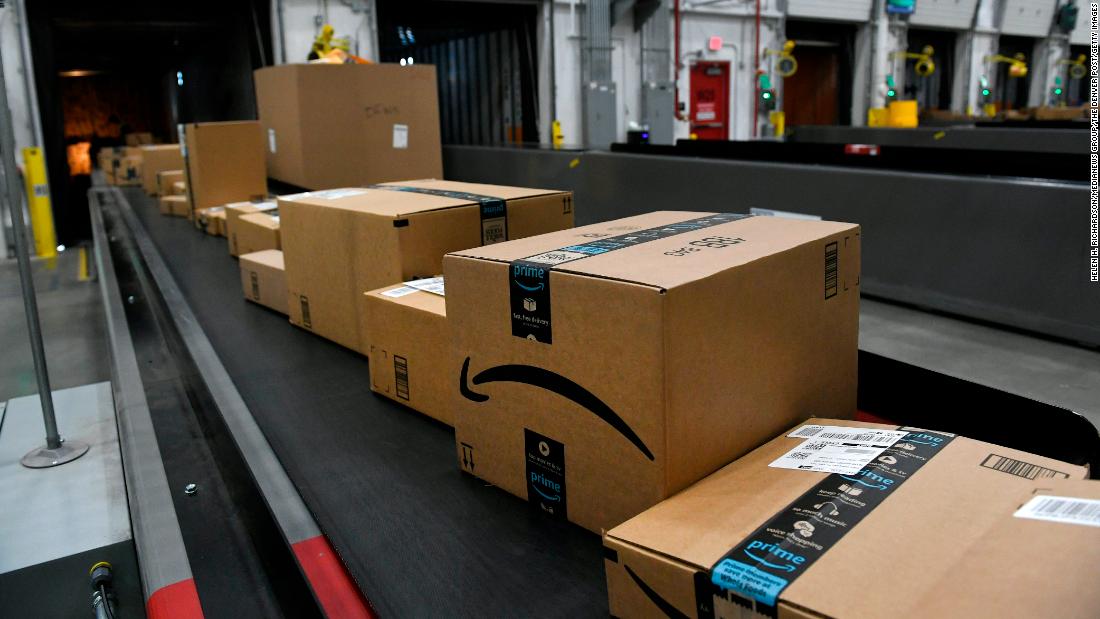
Who delivers the Amazon cardboard boxes???

Cardboard boxes that have been used for generations and thrived in the age of e-commerce continue to flourish or could the cardboard box be facing a new challenger? Cardboard boxes are a very big deal within the U.S. The United States is the Saudi Arabia of trees. Someone’s going to make the first box and that’s almost inevitably a mill generally in the Southeast United States. China certainly doesn’t have trees and India the extent they do have trees they’re not necessarily the right types of trees and shouldn’t be dedicated towards making boxes for us. The box business grew rapidly up through 1999 when the U.S. coordinated box market had its peak shipment. Starting in the early 2000s the U.S. corrugated box market faced multiple economic obstacles.

The great recession dragged on box demand and even after the recession demand continued to slow for commodity like soda and for the boxes that transport them. The move to digital devices also coincided with a drop in demand for copy paper and newsprint. But box makers found a grace in e-commerce sales and Amazon sale specifically which were growing at mostly integer rates within the recession and post-recession years. Those e-commerce sales have become a significant market for the containerboard industry. In 2018 told a U.S. e-commerce sales were estimated to be $512 billion almost 50 percent higher than in 2015. Amazon captured 48 percent of those sales. Most estimates are that e-commerce accounts for about 10 percent of the U.S. box market. Amazon accounts for close to 5 percent of U.S. box demand. By our estimates they are clearly the single largest box user in the US. International Paper with a third of the market I think does closer to 50 percent of all the amazon boxes evidently they got a bit more share than perhaps some of the smaller players.

Amazon's incredible, vanishing cardboard box - CNN

Amazon said they deal with most of the big box makers across the U.S. according to analysts. Those manufacturers include International Paper, WestRock, Packaging Corporation of America and Georgia-Pacific. Some investors were turning to these companies as a way to invest in the e-commerce giant without having to purchase Amazon’s pricey stock. People didn’t really start talking about buying International Paper or WestRock as a secondary investment in Amazon till about the last five years. Despite the boost from e-commerce sales the box business still isn’t growing all that much. And since 2018 their stocks have mostly underperformed the S&P 500. In 2018, 69 percent of International Papers total revenue came from the box business and that sales volume has been mostly flat for the past five years. Although the big producers sold less boxes in 2018 than in 2000, industry consolidation has dramatically narrowed the fields.

The handful of big players remaining are based in Memphis, Tennessee, Atlanta, Georgia and Lake Forest, Illinois. Analysts have told CNBC that substantial industry mergers have made it easier to collectively hike prices and those price increases have helped drive revenue. There are portions of the business that are in indisputable secular decline but if you’re in the brown part of the business, making these boxes, that’s been some very welcome growth. But those extra boxes piling up on people’s doorsteps have led to a backlash from disgruntled customers who are sick of receiving golf ball sized products in supersized boxes. It used to be that you’d order a toothbrush and it would come in three giant boxes and you’d say to yourself, what is this? Well, Amazon is trying to rectify that by using fewer boxes and using other types of packaging where appropriate. With e-commerce packaging underfire Amazon decided to change the way they do shipping. In 2008, Amazon introduced the Frustration Free Packaging program. It aims to reduce the extra packaging created when retail packaged products are placed inside Amazon boxes to be shipped. Instead, products certified in the program that are roughly the size of a blender or larger need to be packaged in their own ready to ship boxes. And those boxes also need to be made of 100 percent recyclable materials. For customers that means that the packaging is easy to recycle and the box is easy to open without all the excess packaging materials.

Use That Pile of Empty Amazon Boxes to Do Something Wonderful ...

Amazon offered vendors an incentive of a dollar per shipment to modify their packaging. And starting August 1st 2019 Amazon is charging a $1.99 penalty for each product shipped that needs to be reboxed. And basically the point of this deadline is for Amazon to get out of the business of packaging. They want their vendors to send them boxes that Amazon doesn’t have to touch or rebox. Over the last two years we have invented two different kinds of flexible mailers. One is the blue and white all plastic mailer. We’ve recently launched in the last six, eight months a paper padded mailer that’s actually fully recyclable with the paper stream. Amazon said they made about 10 million shipments using the paper padded mailer and depending on the month the plastic mailer is used about 20 to 30 percent of the time. So really when we come down to deciding if the product is of the size it can go on a mailer, it’s not likely to be damaged by going in the mailer, the mailer is always the better fitting option and frankly is easier for the customer to choose to recycle than breaking down a corrugate box. We’re driving in that direction for many different reasons. But those plastic mailers generally are not accepted in municipal recycling programs and you’ll need to bring them to a store that accepts plastic bags. The latest stats from the EPA show that corrugated boxes were recycled at a rate of 92 percent in 2015 while plastic bags, sacks and wraps were recycled at a rate of 13 percent in 2015.

AMAZON E-COMMERCE SELLERS, IT'S TIME TO REVIEW YOUR ADVERTISING ...

When you think about what is the greatest pain point for the consumer after having it get there safely arrive on time people are concerned about receiving something that is plastic or made a poly because of the environmental concerns. Some waste management companies say plastic packaging also causes problems for the recycling systems. Plastic mailers get caught in the recycling machinery slowing down the process and raising the costs for recyclers and sometimes contaminating entire bundles. Until Scotty on the Enterprise can beam the products from the warehouse to your living room I think Amazon’s going to be good for the corrugated business. I think there’s going to be noise I think you’re going to have challenges from time to time where people say, “Should we try and the plastic pouch?”, in the long run plastic is going to be on the wrong side of history. Because Amazon is a market leader in the U.S. e-commerce sector any move away from cardboard to plastic mailers could signal a shift for the entire industry. The corrugated box could be about to undergo a major facelift. We’re seeing some major trends among consumers and what they’re expecting from e-commerce and the first one is actually this desire for increased engagement with the package. In 2015, Amazon partnered with Universal Pictures and Illumination Entertainment to ship orders in bright yellow delivery boxes featuring cartoon characters from the movie Minions. The boxes promoting the movie and a special Amazon U.R.L. dedicated to shopping for merchandise from the film.

Un-Fair and Un-Lovely.

How empowering was it to watch Indians hold the “BLACK LIVES MATTER” placard in one hand supporting the protests in the United States and with the other hand applying a cream of poisonous chemicals to their naturally gifted skin. In this black and white world why do we hate brown? From the soil that gives birth to plants to the earthen pots which store our precious waters to the wood that burns into the flames of tomorrow’s ashes -brown is everywhere.

Beta dhoop me mat khelo, tan ho jaaoge!”, yells the Indian parent while some family in the Europe takes their sons and daughters to play on the beach and get some tan. A land that prays Lord Krishna who is described to be as dark as the thunderous rain clouds and yet portrays him blue because anything is better than black anything is better than brown anything is better than dark.

Etymologically speaking, the Sanskrit word ‘Krishna’ means black or dark. At times, it is also translated as “all attractive”. According to Vedas, Lord Krishna is a dark-skinned God. Even in traditional patta chitras (cloth art) in Odisha, Lord Krishna and Vishnu are always shown having black skin. 

50,000 years ago when our ancestors migrated from the North to the African and Asian continents, they were exposed to the UV rays of the Sun which is saturated at the equator and the tropic of Capricorn. Those days’ sunscreens were not invented hence due to evolution and the wonderful science of human body’s biology it produced melanin under the skin which acted as a natural sun screen. Skin creating its own protective layers, how cool is that?

But we as Indians would rather prefer skin burns and skin cancers than having a healthy skin. When my mother read the matrimony classified newspapers for my elder sibling’s marriage, her face falls down as she looks at those advertisements. No no-hold your horses, it’s not what you are thinking, everybody is progressive nowadays, nobody is asking for dowry. All they ask is – “seeking a fair bride for my son”, “fair and handsome boy with a fit body”, “girl should be white toned and open minded”, “boy should not be dark and not restrict our daughter from wearing her choice of clothing.” (no dowry).

To parents who are afraid because log kya kahenge? Maa lets not look for brides or grooms who are fair, let’s look for individuals who treat people fairly. Let’s not buy besan (gram flour) for face masks rather let’s lather some potatoes in them and fry it in oil as we watch the fair besan turn into a beautiful crispy brown tasty pakodas (fritters). Fairness creams or home remedies for instant glow neither teach us to be a human with a clean heart, a heart free from the ignorance. Instead of handing a tube of glow and lovely to your loved one’s let’s make them stand in front of the mirror holding their head high because any shade is beautiful any shape is beautiful any scar is beautiful. Before teaching to love others let’s start by loving ourselves. It’s time we realise love comes in all shapes and shades, it’s time we loved all shapes and shades.

Forget snow white, I’m chocolate brown, I will write my own fairy-tale. A tale of every brown Indian girl and boy who is torn apart by the expectations of society and yet stands proud with a personality and smile beautiful than any white skinned magazine covers. To every Bollywood song that calls the actress “Gori” I would like to say – “Gore Rang Pe Na itna Gumaan kar. Gora Rang Do Din mein Dhal Jaayega” – don’t show such pride of your fair skin, the fairness will fade in time. What will remain is the virtues, beliefs, kindness and opinions .

Changing the name from fair to glow will not enlighten the young minds but it will give light to the years of colourism and discrimination to continue its course in every generation to come. Brown is beautiful and so is every colour ever discovered.

The conflict of Kashmir…

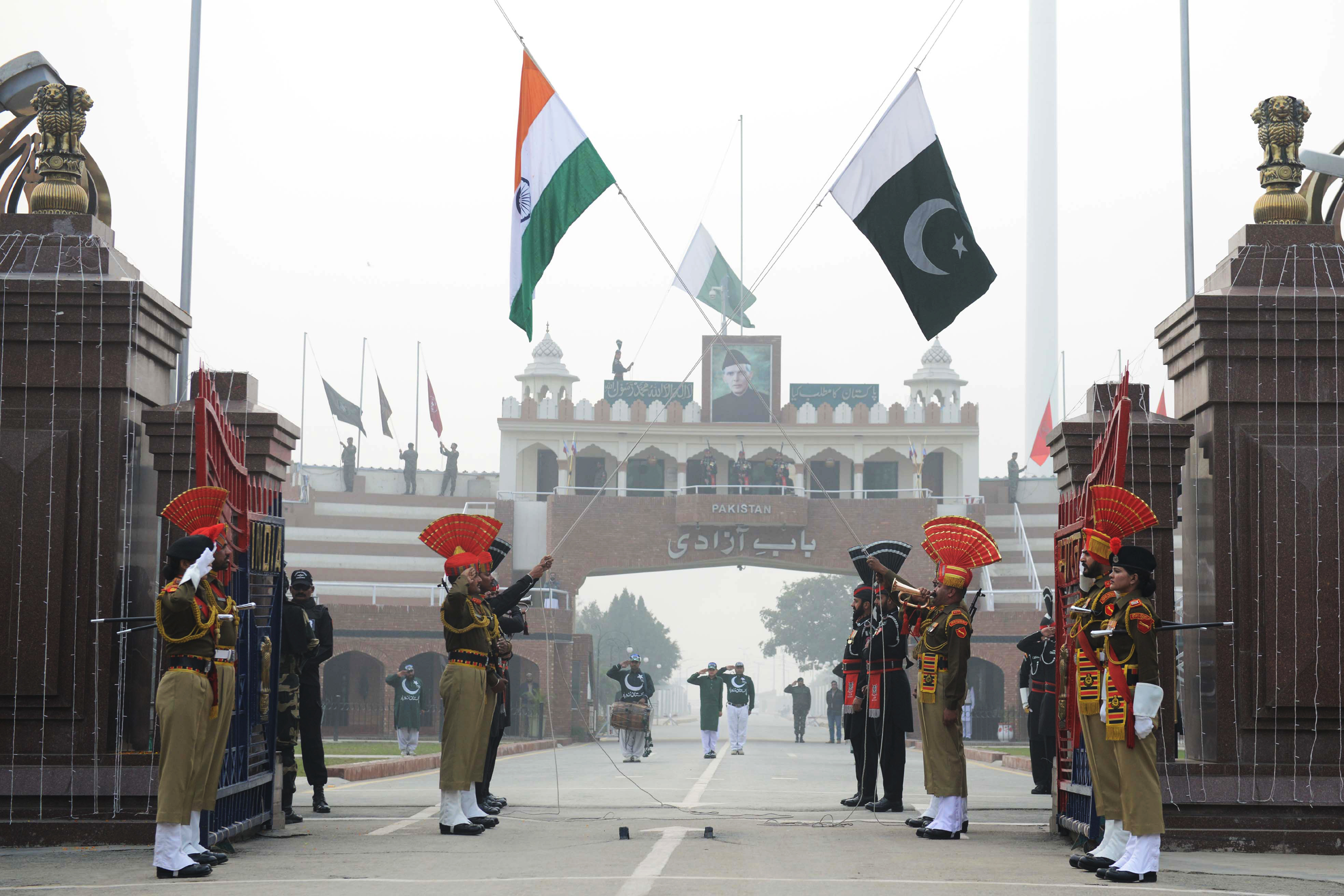
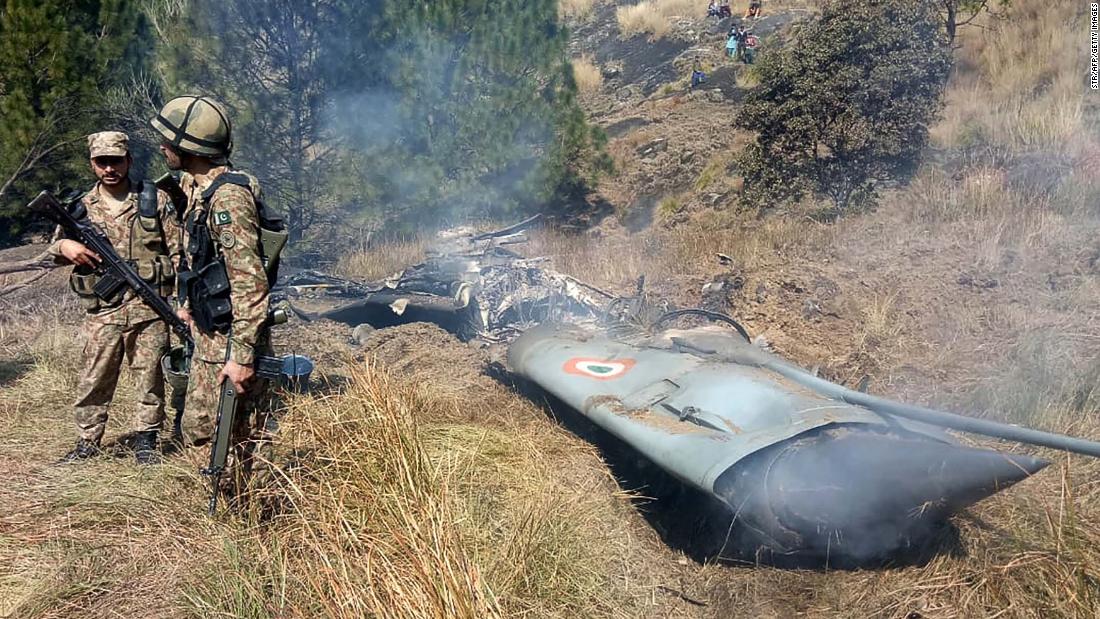
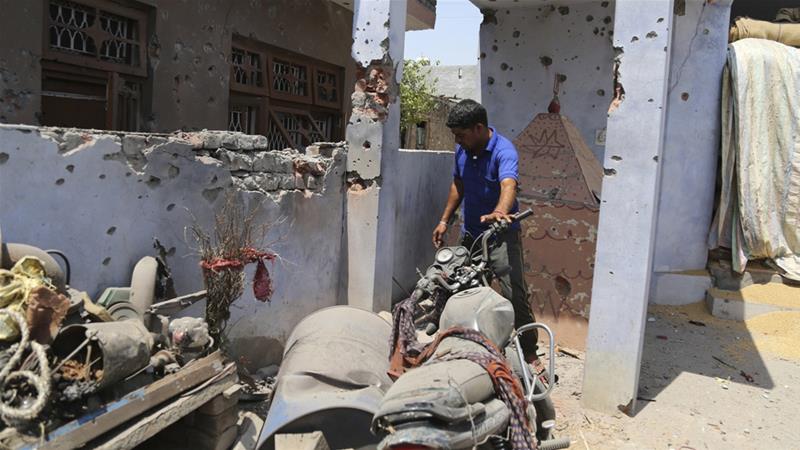
On February 14th 2019, a suicide bomber attacked a convoy of Indian security forces. “We’re getting reports of multiple casualties in a roadside…” He killed at least 40 Indian soldiers here in Kashmir. “The deadliest attack the region has seen this century.” The bomber was part of an Islamic militant group based in Pakistan. “Jaish-e-Mohammed claimed responsibility for that attack.” 12 days later, India carried out airstrikes in Northwestern Pakistan. Then Pakistan shot down at least one Indian aircraft around here. “The most serious escalation in years.” Kashmir is one of the most disputed places on Earth. Over the course of 70 years, it’s been at the center of three wars fought between two massive armies. It’s heavily occupied by more than half a million Indian troops and a deadly collection of militias and terrorist groups.

How Memory of Indian Partition Is Preserved Across Borders | Time
Kashmir is the stage for the relentless conflict between India and Pakistan. But focusing on the two countries can obscure what’s really at stake: The voice of Kashmiris who are caught in a vicious cycle of violence. Kashmir is one of the most strategic places in the world, where 3 powerful countries collide: India, Pakistan, and China. China invaded and took this slice of Kashmir from India. And was given this one by Pakistan. India and Pakistan control these parts, but lay claim to more. This region is at the center of a brutal conflict over these disputed borders. So it’s important to start when they were being drawn. In the mid-1800s, India was a patchwork of several hundred provinces and princely states under British rule. A century later, when British India won independence, the British left and hastily decided to split the region into two. These areas would be a new Muslim-majority country, Pakistan. And this would be the mostly Hindu, but secular, India. The partition was bloody. “Communal hatred flares up within the Punjab.” “1 million people become refugees overnight.” “They flee from savagery and butchery that has never been exceeded, even in India’s stormy history.” Amid the chaos, some princely states were given the choice to join either country. In most cases, the ruling monarchs followed the will of their people. But this state, called “Jammu & Kashmir” was different. It was right along this new border and had a Muslim-majority population, but was ruled by a Hindu monarch. When asked to pick a side, the ruler chose to stay neutral Fearing that the monarch would join India, the Kashmiri population rebelled here in 1947 Armed tribesmen from Pakistan soon joined the fight.

India and Pakistan in Kashmir border skirmish - BBC News
The monarch turned to India for military help and in exchange agreed to join them, which sparked the first Indo-Pakistan war in Kashmir. “Continuing thus increased the threat to world peace and brought the dispute to the eye of the United Nations . The UN Security Council brokered a ceasefire in 1949, which established this line with Pakistan controlling this side and India this one. It also asked Pakistani tribesmen to withdraw and Indian troops to follow, so that Kashmir could hold a direct vote to decide its own future. But neither held up their end of the deal. Pakistan argued that Kashmir’s Muslim-majority population rightfully belonged with them. While India insisted that Kashmir was handed over to them by the Hindu monarch. So they doubled down and added Kashmir to their constution. Both countries continued to tighten their grip around it for many years . “Kashmir. Fighting is going on and heavy casualties in men and equipment have been inflicted on the aggressor.”

India-Pakistan: Latest news on Kashmir crisis
In 1965, the second India-Pakistan war broke out in Kashmir. Thousands of people were killed between the huge armies on both sides. A ceasefire ended the war, but didn’t change this line. Kashmir was kept divided and occupied. And another war broke out in 1971. This time the focus wasn’t in Kashmir — it was in East Pakistan. Here, India helped rebels fight for independence and dealt Pakistan a devastating defeat. This region became a new country, Bangladesh, and Pakistan lost its eastern half. This made Kashmir more important than ever: It became one of the most militarized places on Earth, as India and Pakistan deployed planes, tanks, artillery, and soldiers along the Line of Control. On the political front, in ’87, India reportedly rigged an election, declaring a pro-India party as the winner. Now this was a big turning point for many Kashmiris, who felt they were again denied the chance to vote. Thousands took to the streets in Indian-controlled Kashmir to protest the occupation. But India met the movement for independence with harsh resistance. Which quickly escalated to more violence.
“In January security forces opened fire on demonstrating separatists, turning a two-year old struggling movement into a full-blown popular uprising.” “More than 600 people are killed in clashes between troops and separatists.” Kashmiri militias, just like the Jammu and Kashmir Liberation Front, started recruiting Muslim youth to fight for independence. And increasingly attacked the Indian military. Pakistan saw an opportunity in this insurgency. They helped introduce a new kind of militant group: Radical Islamic fighters who fought for a more pro-Pakistan Kashmir. By the mid ’90s, these groups dominated the insurgency. India responded with incredible military force, deploying 500,000 troops to Kashmir. And they cracked down on militants and protestors. Unarmed civilians were killed and many more were forced to flee the violence. And in ’98 the stakes were raised yet again. “Today India conducted three underground nuclear tests.” “Pakistan today successfully conducted five nuclear tests.” Kashmir became a battleground between two nuclear-armed nations and another war broke out in 1999. “More evidence of the attacks being launched on the Indian-controlled area of Kargil.” “The past two days have seen a number of the fiercest fighting thus far .” “Militant Muslim fighters have also crossed over into some parts of Indian-ruled Kashmir.” The 1999 war ended with another ceasefire, but that did not stop either country.

India-Pakistan cross-border shelling hits Kashmir | News | Al Jazeera

Over the years, Pakistan’s militant groups got bolder and launched terror attacks in Kashmir and outside of Kashmir. In 2001, members of Lashkar-e-Taiba bombed India’s parliament building in New Delhi killing 14 people. And in 2008, 10 militants from the same group killed 174 people and wounded 300 in Mumbai. Meanwhile, Indian military cracked down in Kashmir, firing bullets and pellets on unarmed protesters. Leaving hundreds wounded and blind. This is the vicious cycle of violence. The Indian Army’s crackdown drives some Kashmiris to join Pakistani-backed militant groups, who carry out violence against the Indian forces. It’s a cycle that Kashmiri civilians are stuck in the middle of. Which brings us back to 2019. The suicide bomber was 19-year old Adil Ahmed Dar from Pulwama, Kashmir. According to his parents, in 2016, Indian police officers stopped him and humiliated him by forcing his face into the ground. The same year he was shot in the leg at a protest. The next year, Dar left home with his brothers, to join Jaish-e-Mohammed, a Pakistani-supported militia that radicalized him and trained him to be a suicide bomber. A year later, he drove explosives into an Indian military convoy. For more than 70 years India and Pakistan have driven a cycle of violence, retaliation, and exploitation in Kashmir. But beneath it all is the Kashmiri’s wish to make a choice. A wish that continues to be suppressed, again and again, by violence.

Role of Youth in Eradicating Corruption.

Once, Dr. A.P.J Abdul Kalam has rightly said, ” If a country is to be corruption free and become a nation of beautiful minds, I strongly feel there are three key societal members who can make a difference. They are – Father , Mother and the teachers.”

The truth is, corruption is now a worldwide phenomenon. But according to me the fourth and the most important societal member who can eradicate corruption is the YOUTH of our country. The real war has to be fought against these social evils and as the leaders of tomorrow it is our prime responsibility and duty. Why should we create awareness in small children about such vicious crimes ? Because – Things sowed in the minds of young take deep roots.

In reality, it is very difficult to root out the infectious disease known as corruption which has become rampant in every field of life. However instead of bearing it we must challenge it. Some years ago when social activist Anna Hazare started the anti-corruption moment, the maximum crowd was of schhool and college students. Their support is what made the purpose of the protest a succesful one. But was that enough?

Mahatma Gandhi- the father of our nation has quoted ,” A small act of good deed can cause endless ripples.” Youth of our country should remain vigilant and never allow themselves to be exploited by this social evil. Many people say that nothing can be done, but I believe things can change. Of course individual efforts can bring excellence but only collective efforts can be delivered effectively.

In the modern era, our Government is slowly accepting the opinions of young minds and their needs have been put forth as priority.I truly believe that the modernisation and dinamic attitude in the Indian parliament will slowly yet steadily change the phase of our nation. According to me it is not only the duty of politicians and government officials to boycott curroption but also the duty of each and every individual to war against it.

Whenever the circumstances may come, public should not bribe school or college managements to accomodate seat and admissions. We should not bribe traffic police for violating the traffic rules. Corruption has made our country lawless. Muscle and money power has come the law. Our freedom fighters fought all their lives to give us freedom from physical slavery. However we as a educated generation are not free from financial slavery.

Gandhi led the non-violent fight against the british but the currency note which bears his photo is the medium of corruption. What an irony ! Corruption is a virus which can be eradicated if the youth of our country decides to do so. No matter how much the delay we must not pay the bribe at any cost.

Albert Einstein has rightfully said that, ” Evils in the world exist not only because of those who do them but also because of the one’s who just see them annd do nothing to prevent it.” Corruption is like cancer which starts at one part of the system and spreads to every part if not treated or cured at an early stage.

Many years ago we had tryst with destiny and now the time has come when we shall redeem our pledge as the responsible citzens of this nation. Let us wake the Anna Hazare in us and stand for ” India against Corruption”. Only when the last tree has died and the last river has been poisoned and the last fish has been caught will we realise we cannot eat money.

Even if the older generations saw corruption as an immortal enemy, we millenials think of it as a mortal one. So my dear youngsters, ask not what your country can do for you. Ask what you can do for your Country and World at large as one family.

U.S. Defense Economy…

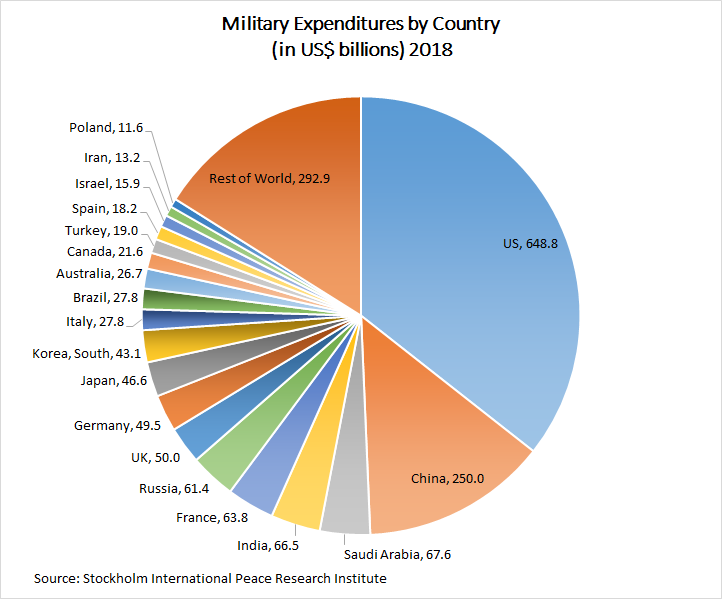
The police, obviously, they’re not in the business of of profiting from private acquisitions. We’ve seen extensive lobbying from defense industries who produce educational videos for police who were spending hundreds of millions of dollars to directly lobby Congress for defense spending, but also for these police programs. The police also have their own lobbying organizations that work toward security budgets and equipment for local law enforcement. The National Fraternal Order of Police is one of them and has lobbied in favor of federal grants that are responsible for the militarization of police. It’s really a variety of Homeland Security grants administered by the cops office, the home, the Department of Homeland Security, etc., that have allowed departments to directly purchase military grade equipment. And this has been essential to stimulating a domestic law enforcement market for military contractors. In some cases, the folks who provide the equipment actually directly assist police departments in making these grants. There’s even a Web site that is sponsored by these defense contractors and other providers of police equipment to aid departments in the production of these grant proposals. This whole industry grew significantly during the War on Drugs campaign in the 1970s.

Iranian threats 'put on hold', says US defence chief - BBC News
Congress passed a law that focused on incorporating cooperation between the military and the local law enforcement, particularly related to countering drug crimes and the war on drugs. Right. That was sort of the first connection between the military and domestic law enforcement. In 1989, Congress passed the National Defense Authorization Act, temporarily allowing the Department of Defense to transfer excess military equipment to federal and state agencies. The program continued until the 1997 National Defense Authorization Act expanded it to include local law enforcement and made it permanent under a new name. The 1033 program that began a massive transfer of military equipment to local police departments free of charge as long as they paid for shipping and maintenance. That 1033 program was the congressional authorization that allowed police departments to basically go online. There were catalogs of of weapons and vehicles and aircraft and watercraft and any kind of military surplus military equipment was available for the asking. And it was at no cost to law enforcement agencies.

Military budget - Wikipedia
Departments may purchase shotguns that are placed in police vehicles as a routine matter, and some departments are purchasing a variety of less lethal weaponry with their own resources. But when we see sniper equipment, armored vehicles, large amounts of body armor, this is often the result of federal spending. Since its inception, over 11,500 domestic law enforcement agencies have taken part in the ten thirty three program, receiving more than 7.4 billion dollars in military equipment. What you end up seeing is as a result of the 1033 program, local law enforcements continue to ramp up what we call special task force, like SWAT teams, gang task force, drug task force. Right. That all utilize this excess military material. In July 2014, Congressman Alan Grayson proposed that legislation to limit the transfer of certain weapons through the 1033 program. The amendment was met with immense opposition failing on a bipartisan vote of 62 to 355.
The people who voted not to change the 1033 program received 70 percent more money in campaign contributions from the defense sector than those who wanted restrictions. One of the really troubling developments about the involvement of the federal within the direct subsidy of purchases of militarized equipment is that this is often really about creating a new marketplace for defense contractors instead of really putting questions of public safety first. Besides providing free military equipment, the federal government also allows the police to purchase new equipment using their own funds. Under the 1122 program, it also gives local police departments the same discounts enjoyed by the federal government. We’ve seen instances across the country where local governing bodies, like boards of selectmen and mayors and city councilors are often unaware that tax dollars have been expended to acquire these kinds of military weapons and military vehicles. What makes both 1033 and 1122 programs so powerful is the lack of clear oversight and accountability.

Trump says 'revved up' economy will fund $54bn rise in military ...
The 1122 program, as an example , isn’t a grant or transfer program and thus isn’t required to be monitored by the federal . Meanwhile, the 1033 program has put lethal weapons within the hands of officers who haven’t any justifiable need for such equipment. We’ve seen instances reported of some small towns, even some college and university police departments that were acquiring military grade weapons with none demonstrable need for the utilization of these or the acquisition of these weapons. After the events in Ferguson, the Obama administration sought to tighten the 1033 program with additional requirements and restrictions after months of confrontations on America’s streets. President Obama today banned the federal government from giving some types of military equipment to local police. We’ve seen how militarized gear can sometimes give people a sense like there’s an occupying force as against a force that’s a part of the community that’s protecting them and serving them. And this led to calls in Congress to eliminate 1033 and eventually measure an executive order by the Obama administration to place some limits on the type of equipment that could be used, things like bayonets and turreted armored vehicles.
The Obama administration also required police agencies to justify purchases of equipment considered potentially lethal. President Trump, however, rescinded all of those measures within two years in office. Obama administration made some efforts to increase accountability in auditing of this. But even then, the restrictions and oversight were quite limited. Under the Trump administration, there’s even less evidence of any oversight. Any sense that we know how this equipment is being used or whether or not officers are being properly trained and how to use it. In some cases, equipment transfer through these programs has simply vanished due to a lack of oversight and poor bookkeeping.

Maximising the economic benefit of Australia's defence projects ...

There’ve been a number of situations where there have been audits of local police departments to try to figure out what they’ve done with this equipment. And these departments have been unable to provide adequate records. We don’t know if this is a local sheriff taking home camping supplies or if this is about, you know, stuff that’s really gone missing, has been resold or has just simply been lost. Oftentimes, the militarization of the police force might be what’s distracting them from their original purpose, protecting our communities.