Information technology is the use of computer to create, process, store, and exchange all kinds of electronic data and information. IT is typically used within the context of business operation as opposed to personal or entertainment technologies. Here I came with top five most-valuable information technology in India
1) TATA CONSULTANCY SERVICES
Tata Consultancy Services is a global leader in IT services, consulting & business solutions with a large network of innovation & delivery centers. https://www.tcs.com/home TCS is the largest IT services company in the world by market capitalisation ($200 billion). It was founded in 1968 by TATA Sons. It has headquarters in Mumbai, Maharashtra, India. The main service of the company is consultancy, services, outsourcing. TCS is the second largest Indian company by market capitalisation and is among the most valuable IT services brands worldwide.Tata Consultancy Services has around 380,000 offices across 46 countries and 147 delivery centres in 21 countries. There are 378,210 offices in India alone. The revenue of TCS is Rs1.62 trillion in 2020.https://en.wikipedia.org/wiki/Tata_Consultancy_Services
2) WIPRO
Global company delivering innovation-led strategy, technology, and business consulting services. https://www.wipro.com/ Mohamed Premji was founded WIPRO in 1945. It was founded to trade refined oil and manufacturing vegetables. After the death of Mohammad Premji https://en.wikipedia.org/wiki/Azim_Premjihis son Azim Premji took over wipro as chairman in age of 21. During the 1970s and 1980s, the company shifted its focus to new opportunities in the IT and computing industry, which was at a nascent stage in India at the time.In February 2002, Wipro became the first software technology and services company in India to be certified. The revenue of wipro is ₹61,943 crore in 2021. https://en.wikipedia.org/wiki/Wipro
3) INFOSYS
Infosys is a global leader in next-generation digital services and consulting.https://www.infosys.com/ Infosys was founded by seven engineers in Pune, Maharashtra, India with an initial capital of $250 in 1981. Infosys provides software development, maintenance and independent validation services to companies in finance, insurance, manufacturing and other domains.Infosys had a total of 259,619 employees as of 2021, out of which 38.6% were women. Out of its total workforce, 229,658 are software professionals and remaining 13,796 work for support and sales.https://en.wikipedia.org/wiki/Infosys In 2016, 89% of its employees were based in India. The revenue of this company is ₹102,673 crore in 2021. Website is https://www.infosys.com/
Infosys Pyramid in Bengaluru
4) TECH MAHINDRA
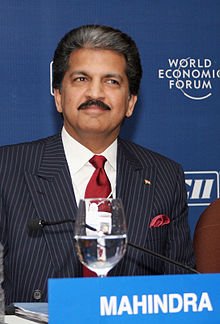
Tech Mahindra is an Indian multinational company that provides information technology and business process outsourcing services. A subsidiary of the Mahindra Group, the company is headquartered in Pune and has its registered office in Mumbai. It was founded by Anand Mahindra. https://en.m.wikipedia.org/wiki/Anand_Mahindra in 1986. This company has services in worldwide.
ANAND MAHINDRA
Tech Mahindra have 125,236 (2020) . The revenue of this company is ₹38,642 crore in 2021. Website is http://www.techmahindra.com/
5) HCL
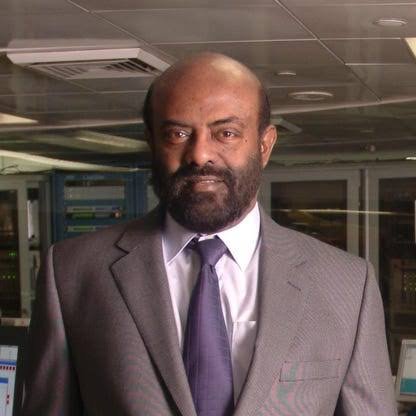
HCL was founded in 1976, HCL is one of India’s original IT garage startups. HCL stands for Hindustan Computers Limited. The company has offices in 50 countries. It was founded by Shiv Nadar https://en.wikipedia.org/wiki/Shiv_Nadar in 11 August 1976. It operates across sectors including aerospace and defense, automotive, banking, capital markets, chemical and process industries, energy and utilities, healthcare, hi-tech, industrial manufacturing, consumer goods, insurance, life sciences, manufacturing, media and entertainment, mining and natural resources, oil and gas, retail, telecom, and travel, transportation, logistics & hospitality. It aslo have services in consulting, outsourcing and software development. The revenue of this company is ₹76,306 crore in 2021. The website for this company is https://www.hcltech.com/.
All organisms are interdependent and interrelated with one another and with their environment. This concept applies at all levels from a small pond to the world. Implicit in ecological organization is the idea that plants and animals do not occur randomly, but rather that particular kinds are especially adapted to a certain complex of environmental conditions and therefore coexist with others of similar requirements and tolerance in communities.
All individuals of a particular species constitute a population. A community, therefore, is an aggregation of populations. Maintenance of a community is dependent upon flow of energy through functional strata of populations. One stratum is com posed of producers, the plant species which, through photosynthesis, convert solar energy to chemical energy contained in plant tissues. the second stratum consists of consumers, the animals which ingest plants or other animals that have fed upon plants. the third stratum is the de-composers, mainly bacteria and fungi but also including many kinds of small animals which decompose dead organisms and organic debris to release basic chemical substances to the environment to be taken up by living plants. These strata, their activities, and energy transfer through the community constitute an ecosystem. Ultimately, the total ecological organization is recognized as the world ecosystem, or ecosphere (also called biosphere).
In the context of ecological organization and the ecosystem are embodied a number of basic ideas which give meaning to the inter relatedness of life. One of the most important of these is environment, and although the term has been used freely up to this point, it bears defining. Environment comprises the sum of all the external factors, processes, and conditions that affect a living system. These may be other living systems (the biotic environment) or nonliving factors (the abiotic environment). Thus inside an animal a single nerve cell may be embedded in a biotic environment of muscle cells and other nerve cells and subjected to abiotic states such as oxygen and salt concentration in the tissue The biotic environment of a hickory tree in a deciduous forest commonly includes other hickory trees, along with beech, maple, poplar, and birch, a rich understory of shrubs, and animals such as deer, squirrels, tree-nesting birds, numerous insects, and many others. Abiotic conditions and processes, including rainfall, ice, wind, evaporation, light, temperature, and soil type, together with biotic constituents, all affect the hickory tree.
Of greatest significance in ecological organization is the concept of dynamism in ecosystems. Organisms do not simply live side by side in the abiotic environment. Rather, there are constant, often complex, action systems in which all living systems exert some effect on one another and on the nonliving surroundings, which in turn influence the living mechanisms of the organisms present. Furthermore, there is great variation among ecosystems from tropical to polar regions, from sea level to oceanic depths and mountain tops, through geological time, and through changing climates and land-water distribution, through seasons, and night and day. Abiotic factors, such as oxygen, carbon dioxide, nitrogen, and water, are constantly being cycled in various ways throughout the world community. Water, for example, covers 70 percent of the earth’s surface, and is the primary environment in which life exists since every living cell must be moist. Distribution of this important liquid is de pendent upon a world hydro-logical cycle.
Solar energy must be transformed into chemical energy and passed to all organisms for maintenance of their life and growth. Autotrophic organisms serve as the basis or core of ecosystem food webs that are actually energy-transfer systems. Unlike chemical nutrients that are cycled, energy must be supplied constantly, for it is used and transformed to heat. Thus through photosynthesis and eating and being eaten, organisms are intensely interdependent and interrelated. They are further bound through requirements and contributions relative to breeding sites, cover, shading, predation, competition, and numerous other aspects of living.
Why change your IP address Changing your IP address can be useful if you want to avoid being attacked by other users who are targeting your IP address, or if you simply want a new online identity from an IP standpoint. You can change your IP address on a Mac at any time through System.
Don’t worry. Changing your IP address is easy, even if you’ve never done it before. It’s also perfectly safe and — as long as you’re not using it to break other laws — it’s legal. Your computer and phone have several types of IP addresses (short for internet protocol, a unique series of numbers that identify your specific device with your online browsing), but we’ll focus on the type normally changed to protect your privacy as you browse, and those which make you appear like you’re in a different country.
If you just want to change your IP address without the additional privacy boost, you can either enter your preferred IP manually, or you can just force your device to retrieve a new one automatically.
Is it even legal to change your IP address?
Yes, it’s legal to change your IP address in the US. People change their IP addresses routinely when facing direct attacks on their online security, when testing a website before it goes live, or when they simply prefer to protect their privacy. Obviously, this FAQ is in no way offering legal advice and you should consult a licensed attorney for specific questions, but the legal boundaries on IP address changes usually start with what you change your IP to, and what you do with that new IP address.
If you’ve changed your IP to impresonate individual or a business — often called IP spoofing — you could be running afoul of the US Computer Fraud and Abuse Act. You might also run into trouble if you’re changing your IP address to access a website you’ve been banned from. IP spoofing is also a tool used by some cybercriminals to perform a handful of well-known attacks, most commonly those related to identity theft and those aimed at crippling websites with organized distributed denial of service bombardment.
Dance wether zumba, hip-hop, Kathak, bhangra, garba, dandiya, shuffle, house, chicago or freestyle is a way to express our thoughts and feelings without the need of words or expression.
It’s an art that let’s your creativity being expressed through the medium of your hands, legs and body. It does not have any specific way to do it, it is unique to everyone’s own creativity. It is just expressing your heart out. It need not be in front of everyone to show-off your skills in dance, it is actually to free yourself and dance the way you want, maybe in a closed room in front of a camera of mirror.
The actually essence of dance is being what you are, doing what you like, just for yourself and nobody else. It is like a stress buster, which helps you to take all your worries, frustration, anger, happiness out and makes you feel a relaxed. And if you dance happily it even have positive effect on your body, helps you to stay fit. It helps to develop your personality.
If you are really want to dance you can join a dance club or group, which helps you to interact with new people, expand you world from just home to school, college or office. You find like minded people it motivates you to be more expressive in your life.
And ultimately I want to say, you want to join a club or not it’s your decision, it actually doesn’t matter, the thing matter is just ‘Dance Your Heart Out’ that’s it, no matter in club, stage or just in a room.
A group of cognitive psychologists, curriculum theorists and instructional researchers, and testing and assessment specialists published in 2001 a revision of Bloom’s Taxonomy with the title A Taxonomy for Teaching, Learning, and Assessment. This title draws attention away from the somewhat static notion of “educational objectives” (in Bloom’s original title) and points to a more dynamic conception of classification.
The authors of the revised taxonomy underscore this dynamism, using verbs and gerunds to label their categories and subcategories (rather than the nouns of the original taxonomy). These “action words” describe the cognitive processes by which thinkers encounter and work with knowledge.
A statement of a learning objective contains a verb (an action) and an object (usually a noun).
The verb generally refers to [actions associated with] the intended cognitive process.
The object generally describes the knowledge students are expected to acquire or construct. (Anderson and Krathwohl, 2001, pp. 4–5)
The cognitive process dimension represents a continuum of increasing cognitive complexity—from remember to create. Anderson and Krathwohl identify 19 specific cognitive processes that further clarify the bounds of the six categories.
The Cognitive Process Dimension – categories, cognitive processes (and alternative names)
The knowledge dimension represents a range from concrete (factual) to abstract (metacognitive) (Table 2). Representation of the knowledge dimension as a number of discrete steps can be a bit misleading. For example, all procedural knowledge may not be more abstract than all conceptual knowledge. And metacognitive knowledge is a special case. In this model, “metacognitive knowledge is knowledge of [one’s own] cognition and about oneself in relation to various subject matters . . . ” (Anderson and Krathwohl)
The Knowledge Dimension
Factual
knowledge of terminology
knowledge of specific details and elements
Conceptual
knowledge of classifications and categories
knowledge of principles and generalizations
knowledge of theories, models, and structures
Procedural
knowledge of subject-specific skills and algorithms
knowledge of subject-specific techniques and methods
knowledge of criteria for determining when to use appropriate procedures
Metacognitive
strategic knowledge
knowledge about cognitive tasks, including appropriate contextual and conditional knowledge
self-knowledge
Bloom’s Revised Taxonomy Model
Note: These are learning objectives – not learning activities. It may be useful to think of preceding each objective with something like, “students will be able to…:
The Knowledge Dimension
Factual
The basic elements a student must know to be acquainted with a discipline or solve problems in it.
The Knowledge Dimension
Conceptual
The interrelationships among the basic elements within a larger structure that enable them to function together.
The Knowledge Dimension
Procedural
How to do something, methods of inquiry, and criteria for using skills, algorithms, techniques, and methods.
The Knowledge Dimension
Metacognitive
Knowledge of cognition in general as well as awareness and knowledge of one’s own cognition
The Cognitive Process Dimension
Remember
Retrieve relevant knowledge from long-term memory.
Remember + Factual
List primary and secondary colors.
Remember + Conceptual
Recognize symptoms of exhaustion.
Remember + Procedural
Recall how to perform CPR.
Remember + Metacognitive
Identify strategies for retaining information.
The Cognitive Process Dimension
Understand
Construct meaning from instructional messages, including oral, written and graphic communication.
Understand + Factual
Summarize features of a new product.
Understand + Conceptual
Classify adhesives by toxicity.
Understand + Procedural
Clarify assembly instructions.
Understand + Metacognitive
Predict one’s response to culture shock.
The Cognitive Process Dimension
Apply
Carry out or use a procedure in a given situation.
Apply + Factual
Respond to frequently asked questions.
Apply + Conceptual
Provide advice to novices.
Apply + Procedural
Carry out pH tests of water samples.
Apply + Metacognitive
Use techniques that match one’s strengths.
The Cognitive Process Dimension
Analyze
Carry out or use a procedure in a given situation.
Analyze + Factual
Select the most complete list of activities.
Analyze + Conceptual
Differentiate high and low culture.
Analyze + Procedural
Integrate compliance with regulations.
Analyze + Metacognitive
Deconstruct one’s biases.
The Cognitive Process Dimension
Evaluate
Make judgments based on criteria and standards.
Evaluate + Factual
Select the most complete list of activities.
Evaluate + Conceptual
Determine relevance of results.
Evaluate + Procedural
Judge efficiency of sampling techniques.
Evaluate + Metacognitive
Reflect on one’s progress.
The Cognitive Process Dimension
Create
Put elements together to form a coherent whole; reorganize into a new pattern or structure.
Whenever I ask readers what the number one thing holding them back from traveling is I almost always get the same answer: Money.
Travelling the world with no money sounds like an impossible dream. But it is possible, and you can do it responsibly without breaking the bank. It should be said that there are some expenses you shouldn’t compromise on (like travel insurance) but there are tons of ways you can travel the world on a budget — including plenty of ways you can travel for free.
Travelling for free entails taking advantage of free accommodation, transportation, and activities that are already out there, thereby reducing your cost to zero. Here, you sacrifice comfort and convenience to extend your travels as long as possible.
And yeah don’t even worry about your food budget the restaurant often has eating challenges just take an insane challenge and fill your paunch
W HEN Gustavus Swift, a youngster in knee breeches, dressed and sold his first calf to the fisherfolk of Cape Cod, he laid the foundation of the largest meatpacking business in the world. The desire to make money—to have a business of his own—was a driving force in the make-up of young Swift. In Barnstable, he was known as a chap with a lot of “get up and go” to him. So it was not surprising that when he felt the desire to make money, he didn’t waste his time wishing, but took his courage in his two hands and started in the dressed beef business in his dad’s backyard.
No doubt there were other young men in Barnstable who wanted to make money too. But while they were wondering how they could make it, Gus Swift cut the Gordian knot. It meant work for him. It was not a pleasant way to make money. There was the possibility of his not being able to sell his calf after he had dressed it. He had to walk miles in order to market his veal, for Cape Cod in those days was a “spread out” sort of place.
But Swift didn’t care.
He wanted money
The work, the walking and the adventure were fun. And because he regarded making money as fun instead of work, he later was able to come to Chicago and start the great Swift packing business. How different from the average young men of today! They are usually more interested in having a good time than they are establishing themselves in a business of their own. Being in business is so confining! So they concentrate on enjoying themselves, serene in their philosophy that tomorrow is another day. If these people, and they are not all young people either, worked half as hard at making money as they do at having a good time, they would be rich.
Then there are people who are willing to work and do work hard at making money, but they are not successful because they lack a target. They are like the chap who hunts big game with a shotgun. They do a lot of shooting, but they bag very little game. Next to being willing to pay the price of success in hard work, the most important thing is to have a definite, clear-cut objective. Since it is necessary to crawl before you walk, it is suggested that you make that objective $1,000.
What you about this story of hard work and dedication
In business, many examples of the 80/20 Principle have been validated. 20 per cent of products usually account for about 80 per cent of dollar sales value; so do 20 per cent of customers. 20 per cent of products or customers usually also account for about 80 per cent of an organization’s profits.
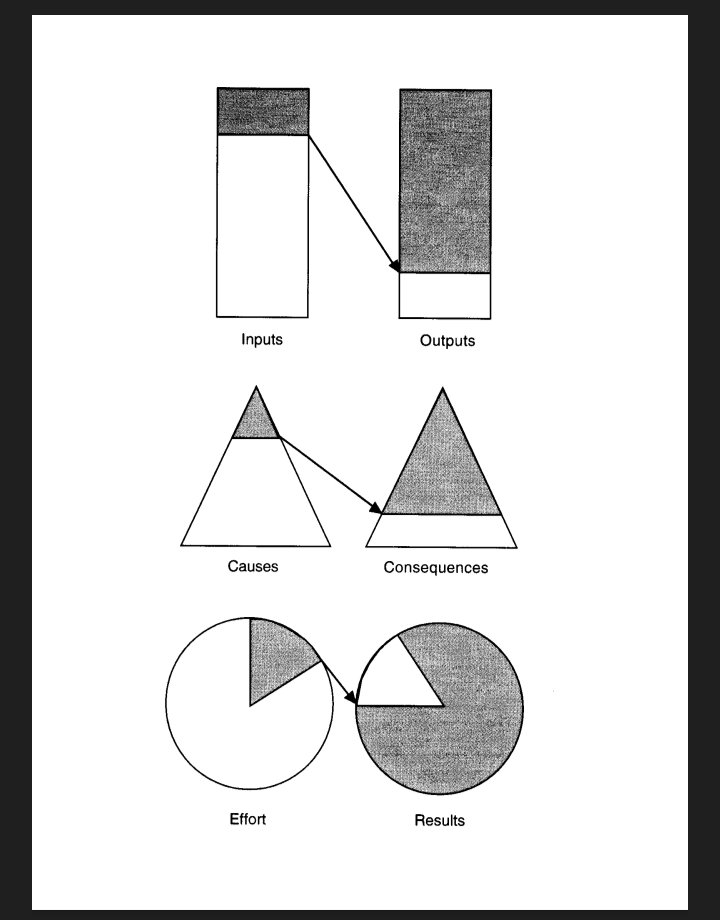
The 80/20 Principle asserts that a minority of causes, inputs or effort usually lead to a majority of the results, outputs or rewards. Taken literally, this means that, for example, 80 per cent of what you achieve in your job comes from 20 per cent of the time spent. Thus for all practical purposes, four- fifths of the effort—a dominant part of it—is largely irrelevant. This is contrary to what people normally expect. So the 80/20 Principle states that there is an inbuilt imbalance between causes and results, inputs and outputs, and effort and reward.
The pattern underlying the 80/20 Principle was discovered in 1897, exactly 100 years ago, by Italian economist Vilfredo Pareto (1848–1923). His discovery has since been called many names, including the Pareto Principle, the Pareto Law, the 80/20 Rule, the Principle of Least Effort and the Principle of Imbalance; throughout this book we will call it the 80/20 Principle.
By a subterranean process of influence on many important achievers, especially business people, computer enthusiasts and quality engineers, the 80/20 Principle has helped to shape the modern world. Yet it has remained one of the great secrets of our time—and even the select band of cognoscenti who know and use the 80/20 Principle only exploit a tiny proportion of its power.
So what did Vilfredo Pareto discover? He happened to be looking at patterns of wealth and income in nineteenth-century England. He found that most income and wealth went to a minority of the people in his samples. Perhaps there was nothing very surprising in this. But he also discovered two other facts that he thought highly significant. One was that there was a consistent mathematical relationship between the proportion of people (as a percentage of the total relevant population) and the amount of income or wealth that this group enjoyed.4 To simplify, if 20 per cent of the population enjoyed 80 per cent of the wealth,5 then you could reliably predict that 10 per cent would have, say, 65 per cent of the wealth, and 5 per cent would have 50 per cent. The key point is not the percentages, but the fact that the distribution of wealth across the population was predictably unbalanced.
There is no definition of beauty, but when you can see someone’s spirit coming through, something unexplainable, that’s beautiful to me. …
Let us live for the beauty of our own reality.
One difficulty for understanding beauty is due to the fact that it has both objective and subjective aspects: it is seen as a property of things but also as depending on the emotional response of observers. Because of its subjective side, beauty is said to be “in the eye of the beholder”.
It has been argued that the ability on the side of the subject needed to perceive and judge beauty, sometimes referred to as the “sense of taste”, can be trained and that the verdicts of experts coincide in the long run.
This would suggest that the standards of validity of judgments of beauty are intersubjective, i.e. dependent on a group of judges, rather than fully subjective or fully objective.
Conceptions of beauty aim to capture what is essential to all beautiful things. Classical conceptions define beauty in terms of the relation between the beautiful object as a whole and its parts: the parts should stand in the right proportion to each other and thus compose an integrated harmonious whole. Hedonist conceptions see a necessary connection between pleasure and beauty, e.g. that for an object to be beautiful is for it to cause disinterested pleasure. Other conceptions include defining beautiful objects in terms of their value, of a loving attitude towards them or of their function.
An honor killing or shame killing is the murder of an individual, either an outsider or a member of a family, by someone seeking to protect what they see as the dignity and honour of their family.
Honor killings are often connected to religion, caste and other forms of hierarchical social stratification, or to sexuality, and those killed will often be more liberal than the murderer rather than genuinely “dishonourable”. Most often, it involves the murder of a woman or girl by male family members, due to the perpetrators’ belief that the victim has brought dishonor or shame upon the family name, reputation or prestige.
Honor killings are often associated with rural and tribal areas, but they occur in urban areas too.
Though both men and women commit and are victims of honor killings, in many communities conformity to moral standards implies different behavior for men and women, including stricter standards for chastity for women. In many families, the honor motive is used by men as a pretext to restrict the rights of women.
Although such crimes are widely suspected to be underreported, the United Nations Population Fund estimates that as many as 5,000 women are killed annually for reasons of honor. These crimes take place throughout the world and are not limited to one specific religion or faith. However, they have rather significantly and consistently occurred in various parts of the Middle East and South Asia, with nearly half of all honor killings occurring in India and Pakistan.
Although such crimes are widely suspected to be underreported, the United Nations Population Fund estimates that as many as 5,000 women are killed annually for reasons of honor. These crimes take place throughout the world and are not limited to one specific religion or faith. However, they have rather significantly and consistently occurred in various parts of the Middle East and South Asia, with nearly half of all honor killings occurring in India and Pakistan.null
In the 21st century, there was an increased international awareness of honor killing, however, some countries remained reluctant to take the necessary steps to effectively criminalize it. In the relatively uncommon event that a man was prosecuted for the killing, the subsequent trial would often focus on the woman’s alleged behaviour, rather than the violence committed against her. When a man was found guilty, the defendant could claim that the crime had been committed to restore sullied family honor and petition the court for a reduced sentence. In India, for example, the government enacted strict penalties for violence against women during the 1980s. However, honor killings based on intercaste and interreligious marriages continued to take place in rural areas, where they were largely unreported to police because of direct or indirect support among village residents. Such murders were often ruled as accidents when reported. A woman beaten, burned, strangled, shot, or stabbed to death could be ruled a suicide, even if there were multiple wounds and there was no possibility the woman could have killed herself.
It’s will amuse you to know that you can sell your body parts and People will pay hundreds, and sometimes thousands, of dollars for certain body parts.
Note that “selling” a body part isn’t the same as putting your futon up for sale on Craigslist. Except for selling ad space on your skin, most forms of giving body parts are technically donations, but it’s common practice to be compensated in cash.
Being compensated for all of the parts listed below is legal, but we don’t necessarily recommend it. There are other — more conventional — ways to supplement your income.
1. Hair up to $1,000
Like blood, hair is easy enough to donate to a good cause (like Locks of Love). But it’s also entirely possible to sell it at a pretty sweet price point.
The trick is to keep it as long and “virginal” as possible. That means no harmful hair dyes or other chemical treatments that could damage the quality. Buyers are likely looking to make wigs, and they’re not going to be interested in your split ends.
According to Wisebread, one woman made as much as $1,000 on her locks in just a week by posting an ad on TheHairTrader.org.
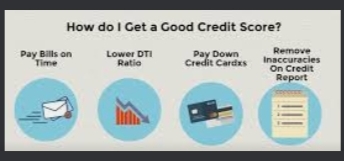
You can survive with bad credit, but it’s not always easy and not cheap. Establishing a good credit score will help you save money and make your financial life much easier. If you’re looking for reasons to maintain your good credit, here are some great benefits to having a good credit score.
Low Interest Rates on Credit Cards and Loans
The interest rate is one of the costs you pay for borrowing money and, often, the interest rate you get is directly tied to your credit score. If you have a good credit score, you’ll almost always qualify for the best interest rates, and you’ll pay lower finance charges on credit card balances and loans. The less money you pay in interest, the faster you’ll pay off the debt and the more money you have for other expenses.
From our childhood we are speaking daily with your family, friends, relatives but we can’t speak a good communication skills we the people who are strange to us. But few people have brilliant skill in communication. So, here are some steps to improve the communication skills.
1)BUILT A COMMUNICATION WITH EYE CONTACT
First and main steps to build the communication is eye contact. This plays a important role in the communication. Many of us do mistake while we are speaking like we don’t look at them, we use cellphone during the communication. So, first of all we should correct them and practice eye contact. Many business people use eye contact as the advantage in the negotiation for their purpose. So practice eye contact.
2) Be patience for their speech
Always be patience to the speaking partner. Patience is one of the most valuable skill in the world which may enables us to help in improve decision making, communication and power solving situation. Listen and explore them with your mind what they are taking.
PEOPLE WHO ARE GOOD COMMUNICATOR ARE THE GOOD LISTERS.
Here are some tips practising patience
Be a good listener
Be in present moment
Make smile
3)Look them with smile
When you are starting the conversation starts with smile which may boost your confidence and ensure that you will be kind. Many people things smiling may unwelcome to others but smiling will help you to better communications. Smile is the way to tell the feedback to your partner and also boost our mood.
THE GREATEST SELF IS A PEACEFUL SMILE, THAT ALWAYS SEES THE WORLD SMILING BAD
*Why are internships important?*Your might have certain questions about why one should do an internship. Well, here are some points 👇👇
◼️ *Work ex matters*– Many Job recruiters value relevant work experience more than any other qualifications while recruiting. Also, getting experience will do wonders for your confidence during any job interview.
◼️ *It allows you to apply classroom knowledge in real-life situations –* Internships give you a way to utilize your knowledge base, and expand it, by applying it in situations where the outcome is not the number of marks you score in an exam but something that could affect a whole company.
◼️ *It opens many doors –* Students get to know more opportunities to grow and make some professional connections which could open many doors for them. They can even get a recommendation letter to boost up their CV.
◼️ *Networking*- Networking is an exchange of information between people, with the ultimate goal of establishing acquaintances and relationships to advance your professional career. Networking can certainly help you find your dream career and also about not-so-common careers which can interest you!
◼️ *Earn stipend –* All the opportunities at Internshala comes with a stipend.
◼️ *Win-Win situation -* Internship opportunities not only provide you industry exposure to a particular field but also help you discover your interests and learn more about yourself. So one should never miss out on such opportunities to grow.
*Internships let you flirt with careers before you marry one*
*ATTENTION *! *Part-Time Pocket Money Internships*🥳🥳🥳🥳 campaign, where you can choose and apply to *8,000+* work from homè internships with a chance of earning a stipend upto *Rs 1.2 Lacs*. *The best part*? You can work for only *2-3 hours a day* and that is also in your favorite profile, and the registration is completely free!






























 Eduindex
You must be logged in to post a comment.