Lotus Herbal Tea & Tree Anti Acne Face Wash

Lotus Herbals Tea Tree And Cinnamon Anti Acne Oil Control Face Wash, 80g https://www.amazon.in/dp/B0079Z7N3G/ref=cm_sw_r_apan_glt_fabc_D8N53Y620HHW1X1KDEBG

Lotus Herbals Tea Tree And CinnamonAnti-Acne Oil-control face Wash controls skin break out and lessens plenitude canvas without deserting any cleft- clogging buildup. It further controls sebum creation, lessens dry patches, and hydrates your skin. The cinnamon in it goes about as a natural constituent that evacuates dead skin cells and enhances blood income to make you look replenished and immature.

Clean & Clear Foaming Face Wash

Clean & Clear Foaming Face Wash For Oily Skin, 150ml https://www.amazon.in/dp/B00CI3HDMU/ref=cm_sw_r_apan_glt_fabc_HKAP31DH2V0G6FYKDJP1

A pomade-free facial cleanser that removes extra slick to help heal and avert boils. Formulated specially for gushy and combination skin types, this detergent flushes supererogatory canvas and contaminations. It helps combat papules and prevents them from returning. The detergent has a gentle formula suitable for everyday use.

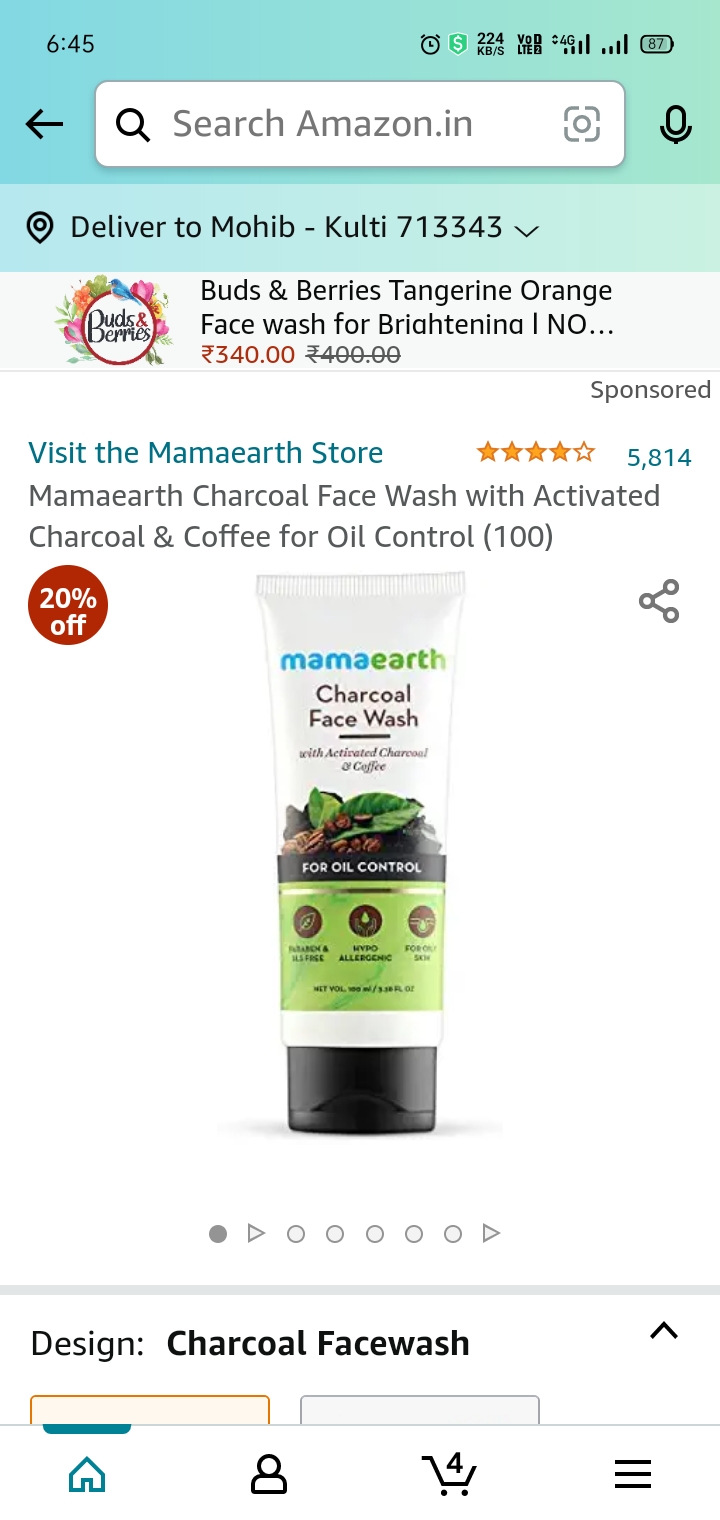
Mama Earth Charcoal Face Wash

Mamaearth Charcoal Face Wash with Activated Charcoal & Coffee for Oil Control (100) https://www.amazon.in/dp/B07FPNW916/ref=cm_sw_r_apan_glt_fabc_dl_YSBZ7WZ30HTZNWR5C6K8?_encoding=UTF8&psc=1

Tired of the day-to-day struggle with gushing skin, choked pores, and dull skin? Bring back immaculate skin that looks immature and canvas-free with the power of Cranked Charcoal &Coffee.Crafted with the integrity of nature, Mamaearth Charcoal Face Wash pulls out poisons and contaminants from deep within the pores. The integrity of Coffee tightens skin pores and promotes yea skin tone to give you an canvas-free glowing complexion.

Neutrogena Deep Clean face wash

Neutrogena Deep Clean Facial Cleanser For Normal To Oily Skin, 200ml https://www.amazon.in/dp/B006LXDQRY/ref=cm_sw_r_apan_glt_fabc_dl_0F1YKXWWE1NGE0KQYS20

 Neutrogena is notable for making face fens for fulsome, acne-prone skin. This is your most solid option in the event that you have fulsome, and acne-prone skin. Delicate on your skin yet extreme on skin inflammation, the specific canvas-free equation tenderly purifies your skin from deep out. This face fen for fulsome skin contains Salicylic acid which is known to dispose of skin break out and reduces coming bunks.

Himalaya Neem Face Wash

Himalaya Herbals Purifying Neem Face Wash, 100ml https://www.amazon.in/dp/B002Q5JE2C/ref=cm_sw_r_apan_glt_fabc_1D670NAQADQ4RFK07F0X

Himalaya Herbals Purifying Neem Face Wash reduces skin inflammation and hickeys for all skin types. It has the combination of neem and turmeric for deep purification the skin from out without drying it out. It battles bacterial complications and forestalls there-occurrence of facial irregularities and calms your skin. It likewise improves the adaptability of the skin and positions out its tone.

Oily Skin

Soapy skin is more prone to acne, whelks, and pustules and hence you need an painting-free face swampland to remove supernumerary sebum and painting. So, to get relieve of the towering painting on your skin, you need to start using an painting- control face swampland.

Hagiographic skin is the main reason behind theover-creation of sebum in your skin. It makes your skin inclined to skin break out, pocks and operatives. It effectively catches other skin pollution which will in general obstruct pores and do your skin to appear dull and glutinous. But fret not as canvas control face mire is there for your deliverance. Use a face mire that suits your skin and mitigates you from your over the top creation of sebum. The worst part is soapy skin looks slippy and sticky which in turn results in occasion of whelks, pustules, and warts.

your vote matter?

What is voting? Why is it important?The very first thought which comes to our mind when we think about voting is ‘democracy’. So before understanding voting and its importance, we first need to know about the supportive pillar that provides the right to vote which is democracy. So, Democracy is a form of government in which the people have the authority to deliberate and decide legislation or to choose governing official.

The notion of democracy has evolved over time considerably. The original form of democracy was a direct democracy. The most common form of democracy today is a representative democracy, where the people elect government officials to govern on their behalf such as in a parliamentary or presidential democracy.Democratic principles are reflected in all eligible citizens being equal before the law and having equal access to legislative processes.The term “democracy” is sometimes used as shorthand for liberal democracy, which is a variant of representative democracy that may include elements such as political pluralism; equality before the law; the right to petition elected officials for redress of grievances; due process; civil liberties; human rights; and elements of civil society outside the government.

The present form of democracy is mostly representative democracy , where people elect the government on their behalf to govern the country. So the question arises that how the people select their representatives ?There lies a very simple answer to it e.g. Through voting. The very fundamental principle of democracy is that everyone is equal before the law and has equal rights. So, every vote has equal weight in a democracy. The vote of an ordinary citizen is as important as a vote of the prime minister or the president of the country. The term “democracy” is sometimes used as shorthand for liberal democracy, which is a variant of representative democracy that may include elements such as political pluralism; equality before the law; the right to petition elected officials for redress of grievances; due process; civil liberties; human rights; and elements of civil society outside the government.

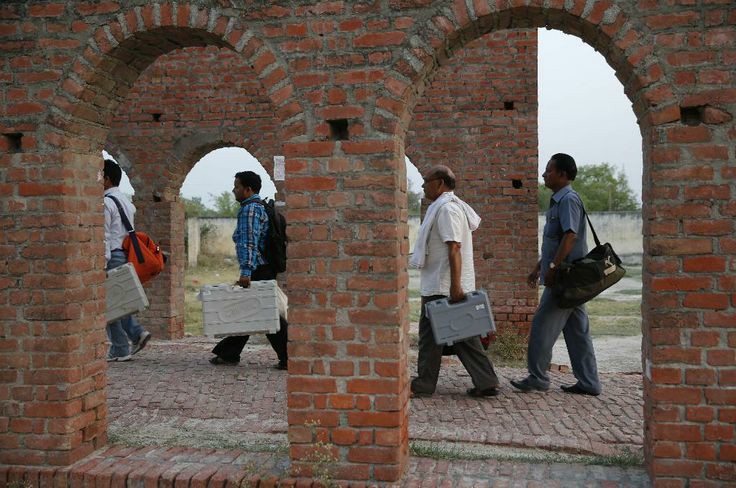
Elections aren’t just about who’s in office. They’re about which policies are put in place and where money is spent. Decisions are made every day around issues such as healthcare, education, fair wages, the environment, taxes, housing, and public safety. When people choose not to vote, they’re giving their voice and power to someone else. A majority vote is a formal expression of an individual’s choice for or against some motion (for example, a proposed resolution); for or against some ballot question; or for a certain candidate, selection of candidates, or political party. A preferential vote may allow the voter and/or elected representative to cast one, some or many preferences. In elections, many countries use a secret ballot, a practice to prevent voters from being intimidated and to protect their political privacy.

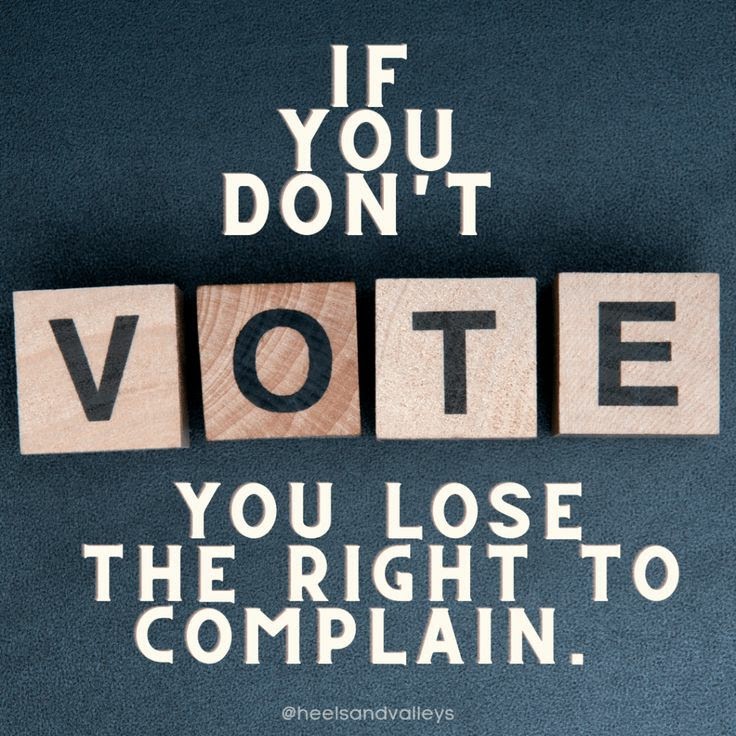
There has always been a dilemma in society about voting and the most frequent one is that “Does voting matter?”. Voting is the fundamental basis of democracy. Instead of taking it as a burden , rather we should seek it as our responsibility because the purest truth of democracy is that ” every vote matters”. Everyone’s vote is counted and there have been several instances in the past where a single vote became a game changer. Besides, there also lies several dimensions of voting processes. In a democracy the voting system not only gives us the right to vote but it can also act as a weapon of protest. So , voting is a highly effective method to have the change that we want in the government. you have the power to decide on the quality of life you want for yourself and future generations. We may be happy with our present situation but there are several things that require the support from the society and the people. Voting is the way to express commitment to ourselves ,one another and to the whole country. For a well developed society we have to choose those people who want to work for the development of society and people. So for a smart society we need smart people and for those smart people we need to vote first so that they can be selected. We are the ones who define our present and future through our votes by choosing the right candidate.

One should take pride in the right to vote and make proper use of the most coveted right, which is the right to vote. Voting is not something that affects the lives of one or two persons, rather it has a huge impact on millions of people and even the entire country. So voting is the duty of every citizen as it matters to us and it is also a way of showing patriotism and respect towards the country.

READING IN THREE KEYS: How to Write a READING RESPONSE

Active reading involves looking at the text in more than one way.  For your reading responses write using these three “keys,” or methods, of analyzing what you have read: 

Reading responses in this class generally vary from 250 – 400 words. The length required will be specified on the assignment.


 Sometimes you will be asked to post your reading response to the Discussion Board and then follow-up with a response to one of your classmate’s postings. You may respond in any of the three “keys.”  A sample response building on a previous posting might start off with a sentence like this: “I agree with David that advertising objectifies women by portraying them as dehumanized objects, but I wonder whether women benefit from that objectification in any way?”  You can build your ideas on comments others have made.  And feel free to keep chatting with each other.

How Should You Write Your READING RESPONSE?


Why Do It?

The reading response gives you an avenue to invite yourself into the written text and to make a connection with it. In many college courses you will be assigned to write papers about subjects with which you have no personal interest. Reading responses help to generate connections between the reader and text.


How?

The key to writing a compelling academic paper for any college course is being able to forge a personal connection on some level with your subject. You must care in some way about your subject, or else your writing will be lifeless, and your instructor, a human being, will have read a re-hashing of the facts of his/her course a million times before. Or, forget about writing for a college course. What about writing a report in the workplace?  What about proposing a new idea to your boss?  Such careful awareness of audience and tailoring your writing to a specific audience is an aspect of successful writing we’ll work on in this course.  However, you can’t even get to the point of getting someone else to care about what you are writing if you don’t care yourself.


That doesn’t mean you should only write about subjects that interest you.  On the contrary, half of the battle in writing a successful paper is coming up with an idea on a topic which is usually of little interest to you—finding an angle or connection through which you can approach or examine the text. What does it remind you of? Why do you respond emotionally? Or why do you not respond? Ask questions to find avenues into a piece of writing.  The creativity involved in continually forging such difficult connections will help you develop into a writer who can grab a reader’s attention by approaching a topic or subject through your own unique personal lens, that is, by looking at something through an angle no one else can see. 


Through active responding to reading, and examining your responses, you can learn to practice new approaches of interpretation to common themes.  Many of the ideas you generate in the reading responses will prove useful when you sit down to write the short essays (or maybe even your research paper).

KodiSoftware Download For Free | Top sites


Let’s start with knowing that what is Kodi software and why one should have it.

What is Kodi software?

Initially released in 2002 [as Xbox media play], in 2003 [as Xbox media centre]. Kodi software application is developed by the XBMC Foundation, Kodi is a free and open-source media player software application, it’s a non-profit technology consortium. It’s a 10-foot user interface with television and remote controls.

With a view of most streaming media such as podcasts, music, videos and views from the internet, one can access all Common digital media. These are some of its platform PowerPC, IA-36, ARM and x64(x84-64). Available in 12[75 including incomplete translations] language. HTPC it’s is a multi-platform home-theater PC application. Kodi is highly customizable so allow it’s users to stream media content via online services such as Crackle, Amazon Prime Internet Videos, Pandora Internet Radio, Spotify and Youtube.

The later version of kodi has a (PVR) graphic front and end. All these available advantages make Kodi a great software to be utilized.

 Let’s now dive into how to download Kodi for free.

Already millions of people are enjoying this great software for free. Kodi is running on the most common processer architectures, iOS, Android, MOS X and Windows operating systems.

How to download : select your platform

As Kodi supports a large range of devices and operating systems, it is multi flavour. Simply select your platform in which you want to install Kodi on and enjoy Kodi.


9 best vegan Omega-3 Supplements (2021) per Dietitians.

If you don’t have fish on your meal menu doesn’t mean you can’t get all the benefits of omega-3.

Omega-3 is also found in many plant foods, like chia and hemp seeds, in algal oil too. But mostly it is found in fish oil in significant levels.

For your vegan friends, there are plenty of options who wants to intake omega-3 and all of EPA, ALA L AND DHA.

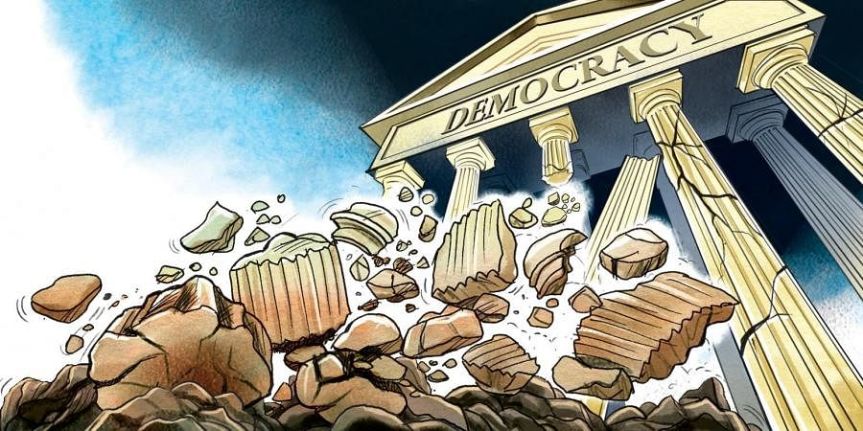
Has Democracy Expired?

Democracy, or rule by the people, has always been a complex concept. There have been freedom struggles, revolutions, and even wars to protect it. But nothing is permanent. Humankind has often taken democracy for granted and overestimated its permanence. As J.S Mill put it, “The fatal tendency of mankind to leave off thinking about a thing when it is no longer doubtful, is the cause of half their errors”. It wouldn’t be the first time an ostensibly powerful institution ended after years of dominance. When thinking about the end of a monarchy, guillotines and cake are few images that come to mind. 

Critiques of democracy note that voter ignorance and slow decision making often cause problems in a democracy. Furthermore, A democratically elected government earns its legitimacy because a majority of people, not all people, vote for it. Thus, it reflects the will of the majority and not everybody. This creates the possibility of the “tyranny of the majority”. Plato went so far as to assert that democracy is the science of manipulating people and it leads to the rule of tyrants. 

India’s “democratic experiment”, which began after we gained independence, has been anything but a smooth journey. Nevertheless, despite attacks on our democracy, such as the National Emergency of 1975, democracy has always protected our people. But now, democracy itself is in danger. 

We often make the mistake of ennobling free and fair elections as the only necessary criteria for a successful democracy. This is far from the truth. This article is not an attempt to undermine the fact that the current government was democratically elected, instead, it intends to showcase the harm a government elected by 38% of the population and a rising resentment of democracy amongst the people can cause. As we shall see, India’s democratic nature has been conspicuously declining for a while. 

Freedom House, an American Think Tank, gave India a score of 67/100 in its 2021 report and characterized India as a “partly free” country. A score of 34/40 in the political rights section confirms the purity 0f our elections. However, a score of 33/60 in the civil liberties section emblazons the potency of this government’s attack on democracy. According to the report, events such as the violence during the CAA protests, the misuse of sedition laws, the significant hardships that migrant workers had to endure during the lockdown, the baseless scapegoating of Muslims as super-spreaders of Covid-19, and the Babri Masjid Verdict contributed to this score. India was considered a “free” country as recently as 2020, with a score of 71/100. The 2021 score is also lower than those of 2019 (75/100) and 2018 (77/100), showing that the strength of our democracy is depleting. The last time the Freedom House considered India as partly free was in 1997, possibly because of the instability in Parliament at that time. 

Another report by the V-Dem Institute in Sweden described India as an “electoral autocracy”. According to the report, India belonged to the “EA+” category, signifying that it could also belong to the “closed autocracy” category. The reasons for this score include the curtailment of freedom of media, academia, and civil society; an increase in censorship; the misuse of sedition, defamation, and counter-terrorism laws, especially the Unlawful Activities Prevention Act (UAPA) to harass, intimidate, and imprison critics and opponents; the Citizenship Amendment Act (CAA); and the use the Foreign Contributions Regulation Act (FCRA) to restrict the entry, exit and functioning of Civil Society Organisations (CSO) and constrain the use of foreign contributions to NGOs within India. The V-Dem Institute reports have described India as an “electoral democracy” in the 2020, 2019, and 2018 reports. 

Sadly, the government’s response to these reports has been vituperative. They decided to deny the validity of these reports instead of countering their assertions. This approach to criticism and dissidence is not limited to foreign entities. Indian dissenters, whether they are farmers, students, members of opposition parties, or even ordinary citizens, are punitively called “anti-nationals” and even terrorists for criticizing the government. In an increasingly globalized world, it is accepted that opinions may be formed on issues beyond one’s national borders. The government’s disrespect and disregard for reputable news agencies, such as The New York Times and The Australian, is appalling. The government prefers listening to fraudulent news agencies, such as The Daily Guardian and The Australia Today, that were made by staunch sycophants. The government must remember that “You measure a democracy by the freedom it gives its dissidents, not the freedom it gives its assimilated conformists.” (Abbie Hoffman)

The symbol of our democracy, the parliament, has also witnessed numerous attempts to undermine our democracy. The Question Hour, which is a tool used to hold the ruling party accountable, was removed for the Monsoon session of Parliament. Considering that this was the first session of parliament since the pandemic began, the removal of this accountability mechanism is untenable. The ruling party used this session to push through the contentious farm bills. If these bills were truly what the entire nation needed, the government should have adhered to the democratic process and allowed a division vote when members of the opposition repeatedly requested for one. A voice vote may be quicker, but it undermines the voice of the opposition, which is a pillar of democracy. 

These farm bills join a larger list of controversial bills, including the bill that abrogated Jammu and Kashmir’s special status, the Citizenship Amendment Bill, and amendments to the Unlawful Activities (Prevention) Act, that did not pass motions to be sent to select committees for further parliamentary scrutiny. These committees provide a forum for feedback from various stakeholders and act as a consensus-building platform across political parties. In the 16th Lok Sabha (2014-19), 25% of the Bills were referred to these committees, which was much lower than the 71% and 60% during the UPA II and UPA I regimes respectively. Since 2020 began, out of the 44 bills introduced in parliament, no bill has been referred to the select committee. Unlike the GST Council, these standing committees weren’t allowed to meet virtually during the pandemic, despite numerous requests from opposition parties. 

From the exploitation of anti-defection laws; the misuse of ordinances; the creation of the opaque PM-CARES Fund; the oligarchical capture of democratic institutions such as the Central Information Commission, Reserve Bank of India, and even the Election Commission and finally to the recent Information Technology (Intermediary Guidelines and Digital Media Ethics Code) Rules, 2021 that could undermine free expression and privacy for internet users in India, the recent attacks to our democracy have been terrifying. Criticism, accountability, and independent institutions have all been seriously diminished. The Covid-19 pandemic appears to have derailed all democratic processes, except elections. 

At this time we must ask ourselves, do we still value our democracy? And most importantly, are we willing to fight for it together? I fear that the answer to both these questions is no and it has been for a long time. 

In 2017, two well-reputed political science scholars, Roberto Foa and Yascha Mounk published a paper titled “The Signs of Deconsolidation” that showed that over 70% of Indian respondents wished for a “strong leader who does not have to bother with elections”. This is a higher percentage than that of the USA (30%), Nigeria (45%), Turkey (58%), and even Pakistan (62%). This indicates that Indians are more willing to express support for authoritarian alternatives to democracy. 

This preference for the undemocratisation of India is further highlighted by recent studies conducted by the Pew Research Centre. Their 2017 report on democracy showed that 55% of Indian respondents felt that “a system in which a strong leader can make decisions without interference from parliament or the courts” would be a “totally good” way of governing this country. Conversely, only 17% of respondents felt that this would be “very bad” and 28% of them felt that this would be “totally bad”. Moreover, their 2020 report showed that 70% of Indian respondents were satisfied with the way that democracy worked in India. This is a significant rise compared to the 54% of respondents that were satisfied with it as per the 2019 report. The 2020 report also showed that 26% were dissatisfied with it, which is lower than the 33% in 2019. 

Undoubtedly, concluding that democracy has no place in our future would be incongruously prescient, but a growing intolerance for democracy is indubitable. People prefer quick decision making over the slow democratic process that requires consensus and deliberation. People would rather see tangible changes made by decree than wait for the democratic process. While the subversion of the democratic process may seem harmless to the current ruling party and those who espouse their ideology, permanent harm to our democracy ought to be denounced. The ubiquity of democracy should not depend on any political party’s ideology. The end of democracy would bring about the epoch of a procrustean India and end the plurality, secularism, and diversity that we have considered primordial for decades. At the rate our democracy is eroding, impassivity could mean that we’re the last generation of Indians to live in a true liberal democracy. 

The next opportunity for voters to actively resist this attack on our democracy may seem too far away. However, the 2024 general elections are preceded by elections in 16 states. My hope is that the control, division, and hatred promulgated by our current leaders, will ultimately consume them. Any reduction in their mandate will benefit our democracy. And if there is one thing that authoritarians cannot handle, it is the feeling of losing control. 

Democracy is not a plant that grows everywhere but hopefully, it can re-grow in our great nation. 

Top Non-Fiction Books of 2021 far till now

“Think Again: The Power of Knowing What You Don’t Know” by Adam Grant

Adam Grant is an organizational psychologist who studies how people find motivation and meaning. In this book, Grant encourages people to not only learn from being wrong, but explore how it makes us feel. He examines why we’re uncomfortable “thinking again,” how we can develop greater introspection, and how we can teach others to think again in a way that is often more productive than getting everything right the first time. This book encourages readers to overcome overconfidence and embrace not knowing everything.

“How To Avoid A Climate Disaster: The Solutions We Have and the Breakthroughs We Need” by Bill Gates

Backed by ten years of research, Bill Gates uses this book to explain why and how we must work towards a goal of zero greenhouse gas emissions. Split into three main parts, Gates describes the environmental fate we currently face, the ways in which technology can function to help us reduce or eliminate our greenhouse gas emissions, and an accessible, well-defined plan by which all individuals, corporations, and governments can abide to reach this goal. This read is urgent and practical, an ambitious plan but one that is optimistic about the future of our environment. 

“Between Two Kingdoms: A Memoir of a Life Interrupted” by Suleika Jaquad

In a trans formative story that grips readers from the first pages, we meet Suleika Jaquad in the summer after graduating from college with a world of opportunities ahead of her. After a swarm of strange itches, inescapable exhaustion, and a flurry of tests, Suleika is diagnosed with leukemia just before her 23rd birthday. After four years in a hospital bed, Suleika finally beats cancer to find a new set of challenges ahead of her: How to live rather than survive. Full of emotional truths, this is a story of heartbreak and triumph from a survivor with a chance to begin again. 

“Broken (in the best possible way)” by Jenny Lawson

Jenny Lawson is a popular blogger known for her sarcasm and unique outlook on life. She’s been open about her struggles with depression and her mental health journey and, with this book, encourages readers to humanize and destigmatize mental health in her own notoriously hilarious ways. With a series of funny anecdotes, Jenny hopes readers feel less alone in their own experiences with depression and anxiety, especially in a time where more people are struggling with their mental health than ever before. 

“Crying in H Mart: A Memoir” by Michelle Zauner

Michelle Zauner explores growing up Korean American, feeling the high expectations of her mother, and bonding with her grandmother over late-night food in Seoul. As she grows into adulthood, she feels more and more distant from her Korean heritage — until her mother is diagnosed with terminal pancreatic cancer. Forced to reconnect with her identity, Zauner offers the truest look at her most difficult days, portraying every bit of grief and conflict mixed with stunning food descriptions.

“Four Hundred Souls: A Community History of African America, 1619-2019” edited by Ibram X. Kendi and Keisha N. Blain

This is a chronological account of 400 years of previously silenced Black history in America. Curated by two historians, this book begins with the arrival of 20 enslaved Ndongo people in 1619 and continues to tell stories of slavery, segregation, and oppression over 80 chapters. There are also celebrations of African art and music, a life-changing collection that concludes with an essay from Alicia Garza on the Black Lives Matter movement.

“A Swim in a Pond in the Rain” by George Saunders

George Saunders teaches Russian short stories to MFA students at Syracuse University, focusing on what makes stories great, what fiction can tell us about ourselves, and the ways in which literature reflects our world today. This book is a version of his class, using Russian short stories across seven essays to demonstrate how relevant great writing still is. This book is highly accessible, abandoning complex literary concepts in the search for more straightforward answers, making it a perfect new publication for those who loved Stephen King’s “On Writing”. 

“The Light of Days: The Untold Story of Women Resistance Fighters in Hitler’s Ghettos” by Judy Batalion

This is a nonfiction book that reads like a thrilling historical fiction novel, a previously forgotten story of Jewish women who became resistance fighters in World War II after watching the Nazi destruction of their communities and the murders of their family members. The author is the granddaughter of Polish Holocaust survivors, transporting readers to 1939 where Jewish women bribed German soldiers, paid off guards, hid revolvers, and bombed train lines to fight for the freedom of their people.

“The Sum of Us: What Racism Costs Everyone and How We Can Prosper Together” by Heather McGhee

Heather McGhee is an economist who explains how racism and white supremacy have negative social and economic effects on white people, too. She uses the concept of “zero-sum” (the idea that progress for some comes at the expense of others) to introduce her own new concept: The Solidarity Dividend, an idea that progress is felt amongst all when people come together across race and achieve what cannot be done alone. Heather uses historical examples and individual stories to explain how racism against minorities has had negative consequences for everyone, and to offer real solutions for a better future.

“Aftershocks: A Memoir” by Nadia Owusu

“Aftershocks” is a memoir from a woman who was raised all around the world, struggling to understand all the pieces of herself. Nadia Owusu’s memoir is a beautifully written story about a complicated earthquake of a young life and understanding the aftershocks of trauma and vulnerability. When Owusu’s mother abandoned her at two years old and her father died when she was 13, she was raised by her stepmother, unable to shake the feelings of loneliness. Her story is a weave of memoir and generational history, a journey of understanding the compilation of experiences and cultures that comprise an identity. 

“You’ll Never Believe What Happened to Lacey: Crazy Stories About Racism” by Amber Ruffin and Lacey Lamar

Amber Ruffin and Lacey Lamar are sisters who collaborated to create a compilation of what seem like absurdly unreal stories of racism, yet are all true and sometimes regular experiences for Black people. Told with hilarious sibling banter, the sisters swap stories of people mistaking them for Harriet Tubman, putting their whole hand in their hair, and their interaction with a racist donut store owner. Amber and Lacey shed light on these ridiculous moments of racism with which Black people can commiserate and others can learn from.

“Last Call: A True Story of Love, Lust, and Murder in Queer New York” by Elon Green

This is a true crime book about the Last Call Killer, a serial killer who targeted gay men in New York in the 1980s and ’90s. Because of the high murder rates, the AIDS epidemic, and the sexuality of the victims, the Last Call Killer had been mostly forgotten despite the graphic and horrifying nature of the murders. This book traces the decades-long search for the murderer while also sharing the stories of the victims and the resilience of the gay community. 

Why change your IP address

Why change your IP address
Changing your IP address can be useful if you want to avoid being attacked by other users who
are targeting your IP address, or if you simply want a new online identity from an IP standpoint.
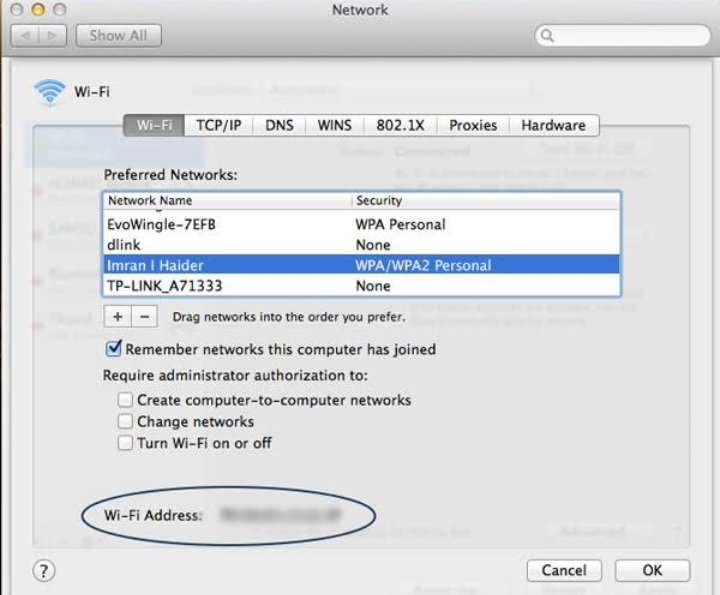
You can change your IP address on a Mac at any time through System.

Don’t worry. Changing your IP address is easy, even if you’ve never done it before.
It’s also perfectly safe and — as long as you’re not using it to break other laws — it’s
legal. Your computer and phone have several types of IP addresses (short for
internet protocol, a unique series of numbers that identify your specific device with
your online browsing), but we’ll focus on the type normally changed to protect your
privacy as you browse, and those which make you appear like you’re in a different
country.

If you just want to change your IP address without the additional privacy boost,
you can either enter your preferred IP manually, or you can just force your
device to retrieve a new one automatically.

Is it even legal to change your IP
address?

Yes, it’s legal to change your IP address in the US. People change their IP
addresses routinely when facing direct attacks on their online security, when
testing a website before it goes live, or when they simply prefer to protect their
privacy. Obviously, this FAQ is in no way offering legal advice and you should
consult a licensed attorney for specific questions, but the legal boundaries on
IP address changes usually start with what you change your IP to, and what
you do with that new IP address.

If you’ve changed your IP to impresonate individual or a business — often
called IP spoofing — you could be running afoul of the US Computer Fraud and
Abuse Act. You might also run into trouble if you’re changing your IP address
to access a website you’ve been banned from. IP spoofing is also a tool used
by some cybercriminals to perform a handful of well-known attacks, most
commonly those related to identity theft and those aimed at crippling websites
with organized distributed denial of service bombardment.

How to travel the world for free

Whenever I ask readers what the number one thing holding them back from traveling is I almost always get the same answer: Money.

Travelling the world with no money sounds like an impossible dream. But it is possible, and you can do it responsibly without breaking the bank. It should be said that there are some expenses you shouldn’t compromise on (like travel insurance) but there are tons of ways you can travel the world on a budget — including plenty of ways you can travel for free.

Travelling for free entails taking advantage of free accommodation, transportation, and activities that are already out there, thereby reducing your cost to zero. Here, you sacrifice comfort and convenience to extend your travels as long as possible.

And yeah don’t even worry about your food budget the restaurant often has eating challenges just take an insane challenge and fill your paunch

Hope you liked it