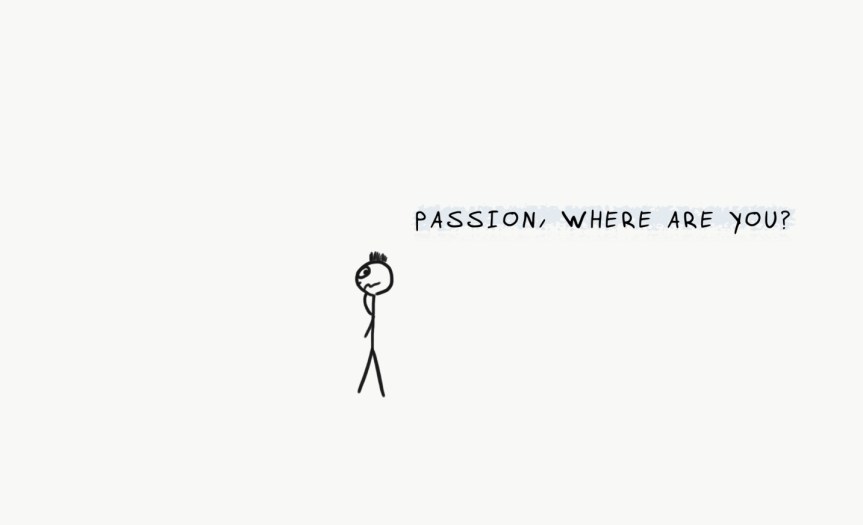
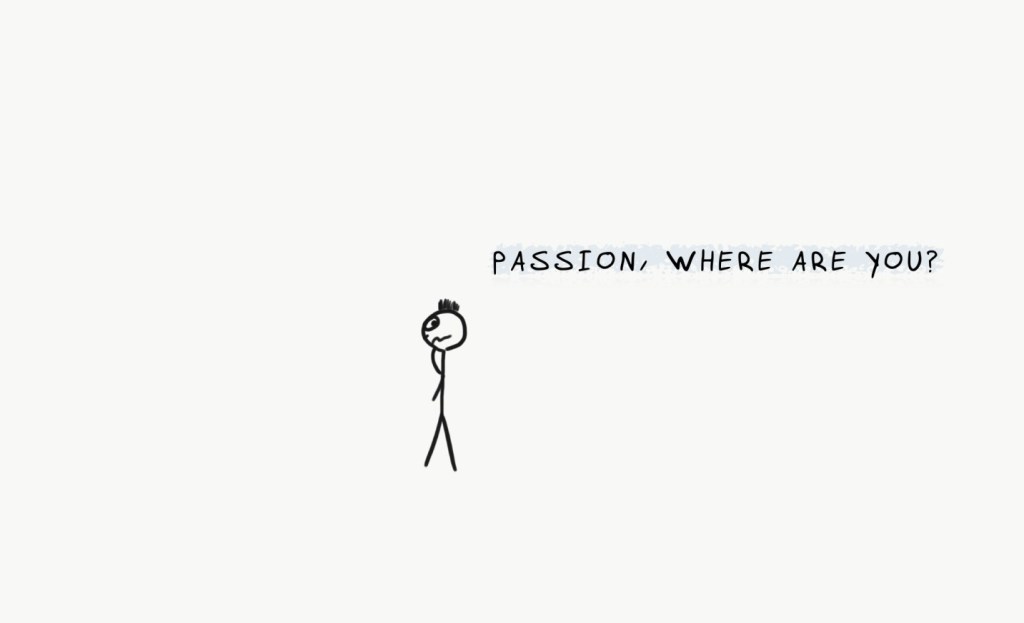
Instead Of Trying To Find Your Passion, Let Your Passion Find You

We collectively believe in a lot of myths. One of them is that your life only makes sense if you do what you love. That might be true, but the pursuit of your passion can be equally satisfying, which is something we often overlook.

Casey Neistat is an awesome YouTuber and entrepreneur. In his vlogs, he often talks about how much he loves his work (most recently here). And he advocates the belief of “find a job that you love and you don’t have to work for a day in your life.”

He’s not the only one who believes that. Many artists, athletes, entrepreneurs believe the same.

Steve Jobs even said:

“You’ve got to find what you love. And that is as true for your work as it is for your lovers. Your work is going to fill a large part of your life, and the only way to be truly satisfied is to do what you believe is great work. And the only way to do great work is to love what you do. If you haven’t found it yet, keep looking.”

I agree. However, it seems like many of us put too much pressure on ourselves to find our passion.

  • Without passion, we are not complete.
  • Without passion, our life has no meaning.

Really? It sounds like we’re giving ‘passion’ too much attention these days. It’s important, yes, but it’s not a magical solution that will make all your problems disappear.

Some people say: “If only I would find my passion.”

And I think: Then what? Let’s say you find your passion.

But if you’re an idiot, you will be an idiot with a passion. And if you’re a miserable complainer, you’ll be a miserable complainer with a passion.

Don’t expect that your life will be 10X better when you love what you’re doing. Life is still LIFE. You have to wake up, make money, struggle, and deal with all the other things that life brings with it.

People ask me: How did you find your passion?

I’m one of those people who didn’t exactly know what they wanted to do when they grew up. There were many things I thought about doing.

But was I miserable before I started doing what I do now? Fuck no.

I have to admit, I’ve been an idiot and I’ve made stupid decisions in the past, but I’ve also been a hard worker, got two degrees from college, read tons of books, traveled, started and failed a few businesses, and always made the best out of bad situations.

And then one moment in 2015, I thought: Why not write about the stuff that I’ve learned along the way? My mentors and people who were close to me told me I should do this stuff a few years ago. I didn’t think about it at the time. But last year it just happened. Like a eureka moment.

Don’t get me wrong: It’s awesome to wake up every day and look forward to working on the stuff you love to do. But it’s not the ultimate key to happiness.

“So how is that information useful for me?”

For the past year, I’ve been researching how others can stimulate the process of ‘finding your passion.’ But I’ve never found any research that has a sound answer to that question.

No research says ‘do XYZ’ and that will result in YOUR PASSION.

The only research that comes close is from neuroscience and eureka moments. You know super awesome insights that appear out of nowhere. And finding your passion is often the same: It’s just an insight.

In The Eureka Factor, John Kounios and Mark Beeman explain how insights arise and what scientific research says about stimulating them. They write:

“Though insights often come as a surprise, sometimes we can sense that an idea is present, lurking just below the threshold of awareness, ready to emerge. This puzzling phenomenon has a strange subjective quality. It feels like an idea is about to burst into your consciousness, almost as though you’re about to sneeze.”

Instead of putting pressure on yourself, you need something else that will trigger that final step of getting a eureka moment. Kounious and Beeman continue:

“Cognitive psychologists call this experience “intuition,” meaning an awareness of the presence of information in the unconscious mind — a new idea, solution, or perspective — without awareness of the information itself, at least until it pops into consciousness.”

You don’t know your passion because you’re not aware of it. That’s all. Don’t make things more complicated than they are. And don’t try to force it to come out of you. It’s not a pimple that you HAVE to pop.

“But how can I stimulate my brain to get more insights?”

  1. Expose yourself to different things. Read about stuff you’ve never considered. Travel. Hang out with different people. The more you broaden your mind, the more information you get. Kounious and Beeman show that eureka moments are often a blend of different ideas that you’re exposed to.
  2. Manage stress and anxiety. Chronic stress and anxiety prevent your mind to think clearly, focus, and relax. Those are key ingredients of getting new insights. So before you think about finding your passion, deal with stress and anxiety first if you’re having a lot of it.

I think those two things are critical steps that most of us skip. We dive into the practical things like keeping a notebook next to your bed.

But the thing is: You need input if you want to output.

Instead of consciously thinking about your passion, let your passion come to you. It’s somewhere inside of you, hiding because it’s afraid to expose itself.

You just have to trust that someday it will seemingly appear out of nowhere. When that day comes, make a happy dance, celebrate, whatever, but the next day, wake up and start working.

Just like you’re doing now.
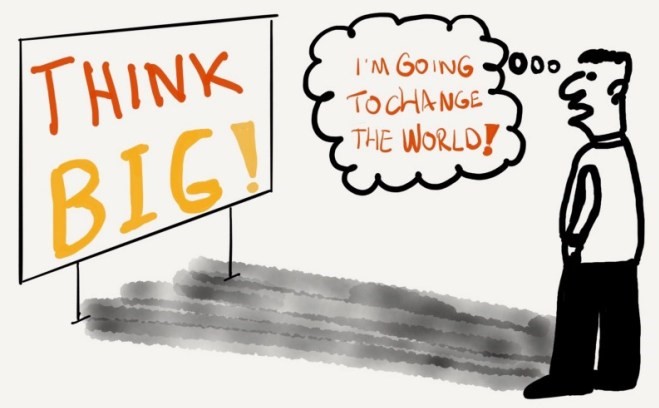
The Danger Of Thinking Big

We live in interesting times. Technology has made a lot of things possible that we couldn’t think of, just a few years ago.

We all crave innovation, change, and improvement. That’s why ideas, creativity, and knowledge are one of the most important resources in the world.

New apps and services pop up every single day. And it seems like every single one of them is a success.

I often hear people, with big ideas, say: “How difficult is it to come up with a new app? You just need to think big and have a great idea.”

And then they continue: “You hire a freelance developer. Release it. Sell it. And BOOM. Relax on a beach.”

But let’s be real, it’s hard to achieve success. And yet, people think that as long as they have a great idea, they can achieve anything they want.

And it’s not just talking. We genuinely believe that we can become anything we want. We look up to people like Mark Zuckerberg, and we say: “You know he started Facebook from his dorm room, right? And now he’s a billionaire.”

“Or how about the founder of Snapchat, Evan Spiegel? He became a billionaire at age 24. Must be easy.”

A Big Idea Does Not Guarantee Success

I’m not going to tell you that you can’t do something—we already have enough people who do that.

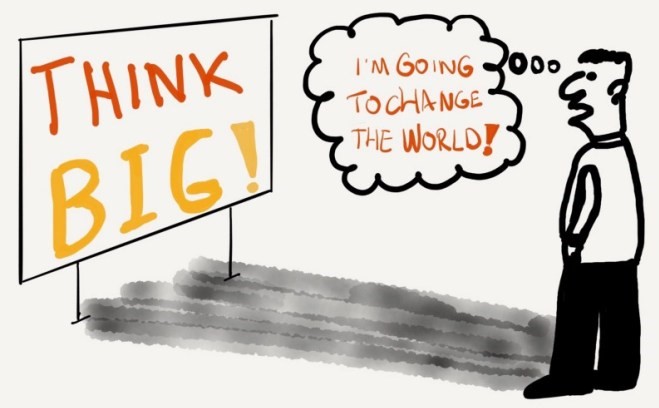
But on the other side of that, we have “thinking big.” However, thinking big can turn around and bite you in the ass. It’s delusional to believe that you can change the world before you’ve worked yourself into a place that makes it possible for you to do so.

We often set out to achieve big things that are unique. Things like, “I want to be the first person who did X.” Or, “I want to be the youngest person who did Y.”

Are we a “genius” now because we have these big ideas?

In his new book, Ego Is The Enemy, Ryan Holiday writes about the dangers of thinking big:

“There is a real danger in believing it when people use the word “genius” — and it’s even more dangerous when we let hubris tell ourselves we are one. The same goes for any label that comes along with a career: are we suddenly a “filmmaker,” “writer,” “investor,” “entrepreneur,” or “executive” because we’ve accomplished one thing? These labels put you at odds not just with reality, but with the real strategy that made you successful in the first place. From that place, we might think that success in the future is just the natural next part of the story — when really it’s rooted in work, creativity, persistence and luck.”

  • Are you an entrepreneur if you have one good idea?
  • Are you a writer if you published two articles?
  • Are you a filmmaker when you create a YouTube video?

When you start thinking like that, you might feel like you’ve already achieved success. The biggest reward for most people is that they can call themselves a “founder,” “owner,” “writer,” or any other title that looks good.

But you’re not your Twitter or LinkedIn bio. No one cares about that stuff — but why do we pursue appearances? It’s often our ego speaking for us.

Look, I’m all about thinking big, but I’m also about being practical.

Because there’s still a difference between doing and dreaming. It doesn’t matter how big your dreams are — if you lose sight of what matters, you might never achieve those big dreams in the end.

Start With Tiny Steps

We live in a sum-sum world, not a zero-sum world. So it’s in everyone’s interest that we have people who set out to change the world. And sure, why can’t you change the world? It doesn’t require any special talent to change the world. It requires hard work and determination.

Thomas Edison put it best:

“There is no substitute for hard work.”

But success is not about a glorious vision. It’s about you, working on your goal—even when no one’s watching. With an emphasis on working because dreaming alone won’t get you anywhere.

In Ego Is The Enemy, Ryan Holiday writes about how we are often our own worst enemy when we think big. He draws lessons from different successful people who have made it big now but didn’t think big before they reached a level of success.

Ryan Holiday writes:

“A few years ago, one of the founders of Google gave a talk in which he said that the way he judges prospective companies and entrepreneurs is by asking them “if they’re going to change the world.” Which is fine, except that’s not how Google started. (Larry Page and Sergey Brin were two Stanford PhDs working on their dissertations.) It’s not how YouTube started. (Its founders weren’t trying to reinvent TV; they were trying to share funny video clips.) It’s not how most true wealth was created, in fact.”

Investor Paul Graham (who funded Airbnb, Reddit, Dropbox, and others), even says:

“The way to do really big things seems to be to start with deceptively small things.”

So, if thinking big isn’t a great strategy, what is?

When I study people who are called “successful”, I don’t see hubris. I see hard work. It’s always about doing the work — not about dreaming big.

People who say that dreaming big, visualization, and hoping for big things to happen is a good strategy, always have something to sell. If that stuff worked, everyone was a millionaire, philanthropist, or a world leader.

Unfortunately, you can’t build anything on your good intentions.

As Henry Ford once said:

“You can’t build a reputation on what you’re going to do.”

Similarly, you can’t get any results by dreaming big and not putting in the work on a daily basis. Because at the end of the day, results matter the most, not words.

Tales of younger inspiration leads the roads to newer innovation

Modern world has opened the doors for newer technologies. Every day, people bring new ideas to transform the way of thinking and doing things. Stories from all over the world from different fields influence many to pursue with their field of interest. There are several successful women in many fields in India also; they become true inspiration to all the young dreamers. Moreover, this pandemic have also taught us to be more skillful to achieve success and continuous growth in our lives.

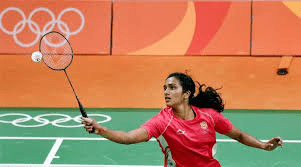
One of the inspiring stories that have made young girls believe in their dreams is that of P.V. Sindhu. She started playing Badminton at the age of 8 and made her international debut when she was 17 yrs old. After tremendous hard work and with constant learning she became the World’s 6th Ranking Women in Single Badminton. This dedication and her constant efforts are real inspiration for the women out there who believe on themselves.

Image: Sports24

Likewise, Sharanya a 24 yr old young junior doctor who treated the victims of the Kozhikode Plan Crash. After working for 1 year at Kozhikode General Hospital,she quits to start preparing for her NEET exams. On one of the fateful night, when the hospital needed all hands on deck, she jumped into help without a second thought.

12 year old Haaziq from Pune came up with ingenious innovation- Ervis – which is a prototype ocean cleaner ship that can suck out plastic from the surface of the ocean. The picture of a young whale that died of intestinal blockage after consuming huge amount of plastic is what made this 12 year old to wage war against plastic. His novel idea received global attention and he got a chance to present this idea before audience through TED-X club.

India is one of the countries having most number of youths; the need is to give them a proper direction to think and to bring a change. Engagement of young people at local, national and global levels is impacting lives. The more they explore the more idea they collect. At this stage of confusion and uncertainty youths from different part of India are setting examples for others. No talent should be wasted, because they are capable of much more. But due to societal pressure and constant discouragements they often confused to choose their field of interests.

Image: Rightful Owner

The 22 year old a Haimanti founder of the NGO Junoon, is the inspiration for people who want to bring a change in the field of education especially for underprivileged children. Since May 2018, she has been on a mission to equip them with necessary skills along with education that will enable her to enroll them in a regular school under the Right to Education Act.

There are several more tales of young minds whose acts inspire us to work towards innovative methodologies. A young regular college student from Palakkad district, Shahinsa belongs to an agrarian family from the Panamanna village have deep passion for farming and finds the time to grow crops using modern technology in the fields.

Sriya Donepudi (15), a school going girl from Khajaguda started an initiative to recycle used flowers after social functions. She collected discarded flowers from various events and with the help of women from economically weaker sections they made soaps, paper-weights and other items from floral waste. According to The New Indian Express, this initiative made her bag The Diana Awards of 2020.

In the year 2017, Malhar and his friends collected the garbage thrown by visitors at Dadar Beach. Earlier, they started it as a weekend activity that gradually turned into a fully fledged cleanup movement engaging over 20,000 Mumbaikers. Collectively they have gathered 1000 tonnes of waste including plastics, stale food and religious offerings that had been cleared from the beach side. His efforts for this cleaning drive recognized globally when United Nations felicitated him on the International Volunteer Day.

Most of Indian startup and innovation landscape provide opportunity to young inventors to bloom. Their keen observations combined with deep sense of strategic ideas helps them in dealing with various problematic situations in the field of technology. These tales not only made us proud but also inspire us to build a new India with innovative thoughts.

Image : Shutterstock

Each of us is great in our own fashion. Even a tiny story of inspiration can influence thousands of youngsters to pursue their dream; each act can impact the world.  Every one of us has that hidden power, the requirement is to have faith and continue our work with relentless efforts. These tiny tales of youths inspires many to pursue their dream . This pandemic is really tough and a challenging time for all the innovators but if you’re passionate enough to achieve your goal, you should continue with perseverance and patience.

Sexually transmitted diseases

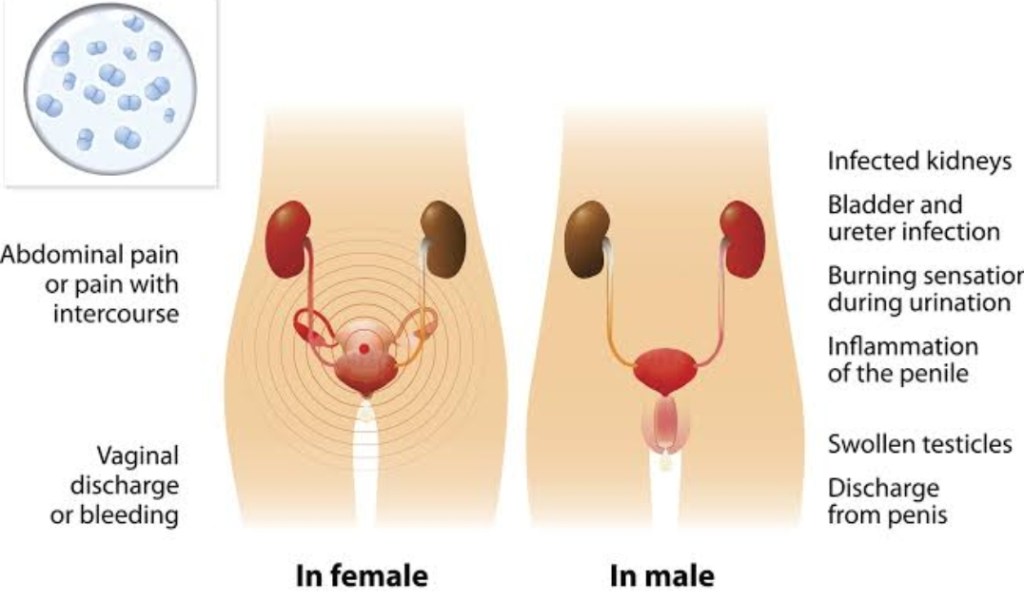
Diseases or infections which are transmitted through sexual intercourse are collectively called sexually transmitted diseases (STDs) or venereal diseases (VD) or reproductive tract infections (RTI).

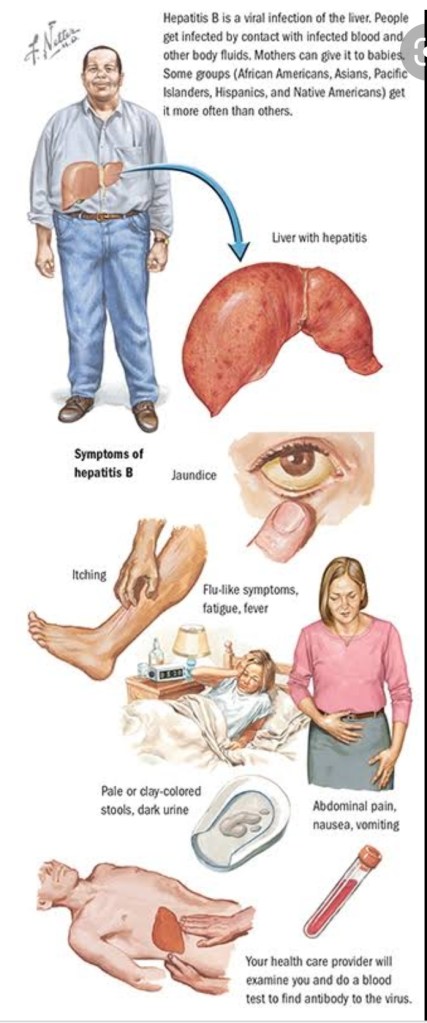
Gonorrhoea, syphilis, genital herpes, chlamydiasis, genital warts, trichomoniasis, hepatitis-B and HIV leading to AIDS are some of the common STDs.

Some of these infections like hepatitis-B and HIV can also be transmitted by sharing of injection needles, surgical instruments, etc., with infected persons, transfusion of blood, or from an infected mother to the foetus too. Except for hepatitis-B , genital herpes and HIV infections, other diseases are completely curable if detected early and treated properly.

” Early symptoms of most of these are minor and include itching, fluid discharge, slight pain, swellings etc., in the genital region.”

Infected females may often be asymptomatic and hence, may remain undetected for long. Absence or less significant symptoms in the early stages of infection and the social stigma attached to the STDs, deter the infected persons from going for timely detection ne proper treatment.

Syphilis

This could lead to complications later, which include pelvic inflammatory diseases(PID), abortions, still births, ectopic pregnancies, infertility or even cancer of the reproductive tract.

” STDs are a major threat to the society. Therefore, prevention or early detection and cure of these diseases are given prime consideration under the reproductive health-care programmes.”

Though all persons are vulnerable to these infections, their incidences are reported to be very high among persons in the age group of 15-24 years.

Gonorrhoea

Prevention

  • Avoid sex with unknown partners/multiple partners
  • Always use condom during coitus
  • In case of doubt, go to a qualified doctor for early detection and get complete treatment if diagnosed with disease.

Sexually transmitted infection https://g.co/kgs/YhaXJ7

https://www.healthline.com/health/sexually-transmitted-diseases

Water

Water is the basic needs of the individual for the Survival. Some of the things like oxygen, water, food are very essential for the individual to live. After the oxygen, water is very much important for the individual survival and for the whole environment as well. Water is used in the daily basis for many of the activities like drinking, cleaning, watering, and also for some of the electric purposes etc.

There are plenty of water in the seas but there is no use of them. Because, all the seawater are salty and not food for drinking purpose. They can be made for drinking by some of the beautification methods which takes lots of processes and also the time. Scarcity of the water is not only the India’s problem but also the global problem.

If the wasteage of water is continued in the same way, there will be a day where no water can be found for drinking purposes and for some of the utility purposes. Most of the people waste water without any need. Using water for the purposes are all good but Wasting the water without any reason is a bad habit that an individual must not develop. It is very easy to waste water rather than saving the drop.

The main sources of water are surface water, ground water and rain water.

Importance of water :

Water is very important to the human body. Every one of your cells,organs and tissues use water to help with temperature regulation, keeping hydrated and maintaining bodily functions. In addition, water acts as a lubricant and cushions your joints. Driniking water is great for your overall health. Because your body loses water through breathing, sweating, and digestion, it’s important to rehydrate by drinking fluids and eating foods that contain water.

Water delivers important nutrients to all of our cells,especially muscle cells, postponing muscle fatigue. Water helps weight loss. Water helps you feel full longer,without adding any additional calories.

Benefits of Drinking water :

* Increases Energy & Relieves Fatigue. Since your brain is mostly water, drinking it helps you think, focus and concentrate better and be more alert.

* promotes weight loss.

* Flushes out Toxins.

* Improves skin complexion

* Maintains Regularity.

Best source of water :

1. Watermelon – water content : 92%

2. Strawberries – water content : 91%

3.cantaloupe – water content : 90%

4.peaches – water content : 89%

5.oranges – water content : 88%

6. Skim Milk – water content : 91%

7. Cucumber – water content : 95%

8. Lettuce – water content : 96%

9. Broths and soups – water content : 92%

10. Zucchini – water content : 94%

11. Celery – water content : 95%

12. Plain yogurt – water content: 88%

13. Tomatoes – water content : 94%

14. Bell peppers – water content : 92%

15.cauliflower – water content : 92%

16. Cabbage – water content : 92%

17. Grape fruit – water content : 88%

18. Coconut water- water content : 95%

19. Cottage cheese – water content: 80%

Disadvantages of water :

It is said that too much consumption of water can lead to fluid overload in the body and imbalance in the body. Excess water can lead it lower sodium levels in the body, which may further lead to nause, vomthing, cramps, fatigue. This condition is known as hyponatremia.

The best method to save water is to use in limited amounts. That is, to limit the water without wasting much water.

Principles of India’s Foreign Policy

The foreign policy of India regulates  India’s relations with other states of the world in promoting its national  interests.

Principles of foreign policy:

Promotion of world peace- India’s foreign policy aims at the promotion of international peace and security. Article 51 of the constitution directs the Indian state to promote international peace and security, maintain just and honourable relations between nations, foster respect for international law and treaty obligations and encourage settlement of international disputes by arbitration.

Anti colonialism- The foreign policy of India opposes colonialism and imperialism. India views that colonialism and imperialism leads to exploitation of the weaker sections by the Imperialist powers  and affect the promotion of international peace. India advocated the liquidation of colonialism in all forms and supported the Liberation Movement in Afro Asian countries like Indonesia Malaya Tunisia and so on.

Anti racialism- Opposition to racialism in all its forms is an important aspect of Indian foreign policy. India strongly criticized the policy of racial discrimination being followed by the white minority racist regime of South Africa.

Non alignment- This policy was initiated in the the cold war era when India refused to join any of the two blocks that is USA and USSR and chose to adopt a policy of non alignment. Under this India has no military alliances with countries of either blocs or indeed with any nation. India has an independent approach to foreign policy and she attempts to maintain friendly relations with all countries.

Panchsheel- This policy implies the five principles of conduct in international relations, it was embodied in the Preamble of The Indo China Treaty on Tibet signed in 1954 by Jawaharlal Nehru and Chou En-Lai the Chinese premier. The principles are mutual respect for each other’s territorial integrity and sovereignty, non aggression, equality and mutual benefit, peaceful coexistence and non interference in each others internal affairs.

Support to the UN- India became a member of the UN in 1945 itself since then it has been supporting the activities and programs of the UN. It has expressed full faith in the objectives and principles of the UN. India has actively participated in UN peacekeeping missions in Korea, Congo, Cambodia, Angola and so on.

Disarmament- The foreign policy of India is opposed to arms race and advocates this armament both conventional and nuclear. This is aimed at promoting world peace and security by reducing or ending tensions between power blocs and to accelerate economic development of the country by preventing the unproductive expenditure on the manufacture of arms.

Mental Health- still a taboo?

Just because no one else can heal or do your inner work for you, doesn’t mean you can, should or need to do it alone.

Lisa Olivero

Have you ever felt the stark desire to inevitably scream in a room full of people, hoping they just care enough to notice the signs you have been leaving regarding your deteriorating mental state and how desperately you need help? But instead, you just accept your solitude in an empty chair and try to repress your bottled-up emotions deep within the realms of your consciousness.

A lot of us might have gone through the same situation at a certain point in our lives. The primary reason behind this subconscious aversion to the expression of thoughts is the mere fact that humans have been conditioned to do so throughout their lives. Men are typically the most vulnerable victims of this detrimental mindset. From an early age, they are frequently instructed to not cry like a girl. According to a survey, a significant percentage of men in the nation are currently depressed, and they themselves admitted that they lack a support system.

Mental health is still a deeply rooted stigma that people aren’t ready to accept. In order to understand the concept one needs to broaden the perspective of understanding humans and follow certain ways like-

  1. Instead of asking,”How are you?” ask,” How are you, really?”
  2. Look for obvious signs in a person- whether they feeling low from abnormal no. of days.
  3. Asking your closed ones to describe their day in detail and be a good listener.
  4. Do not mistreat someone who is already going through some sort of trauma.
  5. Treat people with kindness, you never know what someone is going through.

Additionally, in India, therapists continue to be overlooked as a useful resource for treating a person’s mental health. A person is called a “lunatic” if they see a therapist. In light of the increased public awareness during the pandemic’s lockdown time, these issues are being explored on social media, and many people now see psychology as a crucial component of the educational system. People have now started considering mental health as being equally essential as physical health as because of an alarming spike in suicide incidents during this period.
Still, awareness needs to be assured at ground level and there is still a long way to go to see the day when all of us are not reluctant to lend a helping hand to our fellow humans.

A fundamental aspect of any society should be understanding, accepting, and embracing each and every emotion one feels which makes them human.

CAN WE BUY EVERYTHING WITH MONEY?

In todays world we all are in a race to earn more money to get everything but we never think about the things that we can’t buy with money because we all think that those things are very easy to get. In trying several methods to earn money we all miss the small and precious pleasures that life offers to us. We people sometimes behave too greedy in earning money and at some stage of our life we feel that money can itself give us all things we want. Yes, of course money can give us a good stature in the society but we can’t buy our health, satisfaction, happiness and many more things with money.

The most important thing in every body’s life is having a lovable and supportable family with us. Many of us think that we can buy those relationships with money or some of us may also think that every relation is made for the sake of money only. Guys we can buy the relations with money but we should always remember that we can’t buy the true love and effection of our dear ones with money. There is also a saying that the people who enters in our life because of our money will leave us easily when we loose all our assets.

It is important for all of us having an efficient money to enjoy the luxurious life style and it is also important for us to look after our parents who crossed all the barriers to see their children in heights but most of us neglect them when we reach our desired position and we forget about the responsibilities on us but I’m sure guys we can never get back our parents love and care once after losing them in our life though we are ready to pay a large amount of money for them. Guys , Money has it’s own signature in every moment of our life that may be positive or negative.

It is necessary for everyone to understand about the adverse effects of the money in order to know about the reality of our society. Guys always be conscious before losing anything that is available in nature that may be your parents or your health or your time and most importantly your life because you can not bring them back with your money if you lose them once.

To be clear, I’m not against of earning money or improving assets but I’m trying to convey that spend your money wisely and know the reality of the society to lead your life in a perfect way. Money can arrange all the necessary things in your life to survive but it is not only the thing which helps you to live your life happily. The only aim of this article is, one should give equal priority to their values and responsibilities in this running world apart from earning money and should understand that money is something that we need but not every thing in life and never forget that time is more precious than money.

LARGE SOLAR STORM APPROACHING EARTH – BLACKOUT

Huge charged particles ejected from the sun is called solar storm.

According to website Spaceweather.com, the storm that originated from the Sun’s atmosphere and can have a significant impact on a region of space dominated by Earth’s magnetic field.

A powerful solar storm is approaching the Earth at a speed of 1.6 million kilometers and this storm will hit the Earth either on Sunday or Monday.

According to the US space agency NASA, the solar storm is moving towards the Earth at a speed of about 1.6 million kilometers per hour and maybe its speed will increase further. NASA said that satellite signals can be interrupted by solar storms.

Scientists have feared that this great solar storm may hit our Earth in two days pic.twitter.com/MlWUeZ56aw

Effect of solar storm

The outer atmosphere of the Earth can be heated which can have a direct effect on satellites.

This can cause interference with GPS navigation, mobile phone signal and satellite TV. The current in power lines can be high, which can also blow transformers

Power lines can carry a lot of currents, which can blow transformers

There is also a possibility of blackout of HF (high frequency) radio communication that is dependent upon current X-ray Flux intensity. According to the latest prediction, the flare can cause a wide area blackout of HF (high frequency) radio communication for about an hour.

Due to the solar storm, there will be a view of beautiful celestial lighting for the people living at the North or South Pole. The people living closer to these areas can expect to see beautiful aurora at night.

Some common english words important for GRE

Alacrity The GRE has a predilection for words that don’t really sound like what they mean. Alacrity is no exception. Many think the word has a negative connotation. Alacrity, however, means an eager willingness to do something. So imagine the first day at a job that you’ve worked really hard to get. How are you going to complete the tasks assigned to you? With alacrity, of course. An interesting correlation: the more alacritous (adjective form) you are when you’re learning GRE vocabulary, the better you will do.

Prosaic Prosaic conjures up a beautiful mosaic for some. For others, the pro- is clearly positive. So if somebody or something is prosaic, it must surely be good. Once again the GRE confounds expectations. Prosaic means dull and lacking imagination. It can be used to describe plans, life, language, or just about anything inanimate that has become dull (it is not used to describe people).

A good mnemonic: prose is the opposite of poetry. And where poetry, ideally, bursts force with imagination, prose (think of text-book writing), lacks imagination. Hence, prose-aic.

Veracity:- Veracity sounds a lot like voracity. Whereas many know voracity means full of hunger (the adjective form voracious is more common), few know veracity. Unfortunately, many confuse the two on the test. Veracity means truthful. The adjective form, veracious, sounds a lot like voracious. So be careful. Paucity Paucity is a lack of something. In honor of paucity, this entry will have a paucity of words.

Maintain The second definition of this word – and one the new GRE favors – is to assert. One can maintain their innocence. A scientist can maintain that a recent finding support her theory. The latter context is the one you’ll encounter on the GRE. Contrite Word roots are often misleading. This word does not mean with triteness (con- meaning with). To be contrite is to feel remorse.

Laconic Another word that sounds different from what it means. A person is described as laconic when he/she says very few words. I’m usually reminded of John Wayne, the quintessential cowboy, who, with a gravely intonation, muttered few words. As this allusion betrays may age more than anything else, think of Christian Bale in Batman.

Pugnacious Much like a pug dog, which aggressively yaps at things near it, a person who is pugnacious likes to aggressively argue about everything. Verbally combative is another good way to describe pugnacious. Disparate If two things are fundamentally different, they are disparate. For instance, verbal skills and math skills are disparate, and as such are usually tested separately, the GRE being no exception.

https://www.google.com/url?sa=t&source=web&rct=j&url=https://translate.google.co.in/&ved=2ahUKEwjRsZym0N3xAhUYILcAHXjXASwQFjABegQIDhAC&usg=AOvVaw3PxxM8sVv2-Z8mgIzSGywh

http://magoosh.com/gre/2012/grevocabularyebook

Viruses and its Classification

A computer virus is a piece of software that can “infect” other programs by modifying them; The modification includes injecting the original program with routine to make copies of the virus program, which can then go on to infect other programs. A virus can be prepended or postpended to an executable program, or it can be embedded in some other fashion. The key to its operation is that the infected program, when invoked, will first execute the virus code and then execute the original code of the program.

Viruses classified along two orthogonal axes: the type of target the virus tries to infect and the method the virus uses to conceal itself from detection by users and antivirus software.

A virus classification by target includes the following categories:

  1. Boot sector infector:
     Infects a master boot record or boot record and spreads when a system is booted from the disk containing the virus.
  2. File infector:
     Infects files that the operating system or shell consider to be executable.
  3. Macro virus:
     Infects files with macro code that is interpreted by an application.

A virus classification by concealment strategy includes the following categories:

  1. Encrypted virus:
     A portion of the virus creates a random encryption key and encrypts the remainder of the virus. The key is stored with the virus. When an infected program is invoked, the virus uses the stored random key to decrypt the virus.
     When the virus replicates, a different random key is selected..
  2. Stealth virus:
     A form of virus explicitly designed to hide itself from detection by antivirus software. Thus, the entire virus, not just a payload is hidden.
  3. Polymorphic virus:
     A virus that mutates with every infection, making detection by the “signature” of the virus impossible.
  4. Metamorphic virus:
     As with a polymorphic virus, a metamorphic virus mutates with every infection.

Virus countermeasures

  • The ideal solution to the threat of viruses is prevention: Do not allow a virus to get into the system in the first place, or block the ability of a virus to modify any files containing executable code or macros.
  • This goal is, in general, impossible to achieve, although prevention
    can reduce the number of successful viral attacks.
  • The next best approach is to be able to do the following :
  • Detection : Once the infection has occurred, determine that it has occurred and locate the virus.
  • Identification : Once detection has been achieved, identify the specific virus that has infected a program.
  • Removal : Once the specific virus has been identified, remove all traces of the virus from the infected program and restore it to its original state. Remove the virus from all infected systems so that the virus cannot spread further.

Green Lives Matter

We always get a positive vibe when we see plants around us. Growing plants on the balcony is a dream for many of us. We all love growing plants in our house, balcony, office, etc but very few of us know how to take care of it. It is very essential to give them proper time and care. Like humans even they need proper nutrition to go. Sunlight, water, soil, proper temperature are essential for them to live. Lack of nutrition may result in withering, yellowing of the leaves, stunted growth, etc.
To avoid these conditions in our plants one must provide them nutrition.

Things to keep in mind while growing a plant in your surrounding.

 • Research about the plant
Before growing a plant, one should study the plant and its needs. The need for sunlight, water, etc may differ from plant to plant. Provide them everything accordingly.

 •  Proper size of the pot
The size of the pot matters a lot in the growth of plants. Plants need an area to grow. Make sure the roots are not crowded and have proper space to spread and grow.

 • Perfect amount of sunlight
Sunlight is very essential for them to grow but all plants don’t need a lot of sunlight. The need for sunlight differs from plant to plant. For example, a snake plant can grow with very little sunlight whereas, a marigold plant needs a lot of sunlight.


• Providing water from time to time
The right amount of water should be provided to plants. Don’t water them a little or don’t water them too much. Study the need for water according to the plant you’re growing.

These are some most basic things to keep in mind before you grow any plant. Plants have life to and it is our responsibility to keep them healthy because we need them more than they need us.

Covid-19 impact on education, health, business sectors.

Covid-19 has effected all sectors like education, business, health care and daily wage workers In this blog, we are going to discuss the impacts on education, health care, business and daily wage workers. Due to the covid-19 pandemic.

COVID-19 IMPACT ON EDUCATION

The covid-19 has impacted all countries all over the world. It has majorly impacted education the most. Due to the out spread of the covid-19 government decided to shut down the schools, which was a big decision. Due to this all teachers and students shifted to online education.

Since all schools have been shut down, all schools shifted to online mode of education. Students and teacher find it hard because it was a new environment. Now, teachers have teach there students in online also, students have to submit there assignment and projects online. Teachers found very hard to teach in online because they has to teach students using online gadgets. Students have to scan there assignments and convert it to a PDF then they have to submit there assignments. In India, many students didn’t attend online classes because they don’t have the access to internet. In an online survey, up to 50 percent of the students in India don’t have the access to internet. In all online classes, only 40 percent of the students used attend a class. Due to covid-19 all exams were conducted in online mode. Teachers has to evaluate answer sheets in online using some gadgets. Due to lack of resources like phone, laptop and internet students cannot write online exams, submit assignments. Some schools didn’t conduct online classes for there students.

COVID-19 IMPACT ON BUSINESS

Because of national wide lock down all companies were shut down. All there business and profits were collapsed. All small business companies were collapsed due Covid-19 pandemic. Only few companies could sustain but there was huge loss for them. Only IT companies survived in this covid pandemic. There was huge loss for all companies in India. Due to the shut down of many companies, many people lost there job, creating a financial crisis for many families. The share values of many companies dropped. According to a survey, nearly 60 percent of businesses were fully closed. Many people started doing work from home.

COVID-19 IMPACT ON DAILY WAGE WORKERS

Daily wage worker are the most effected people in the covid pandemic. They have to work everyday to eat. They are paid very low wage. They even didn’t get the minimum wage. Each and single rupee is important for them to survive. Due to national wide lock down, all constructions were closed making no job for them. Even though government helped them, but it was not enough. They have no shelter, no people were giving them shelter due to the wide spreading of covid-19. They are sleeping on streets and roads. There was no food for them. Many workers died due to hunger.

COVID-19 IMPACT ON HEALTH CARE SECTORS

There was also lot of impact on health care sector. There were many patients in every hospital. Daily thousand’s of people are dying due to covid-19. Doctors were working day and night to save patient’s life. Doctors are risking there life to treat a covid patient. There were lack of doctors in hospitals. Government hospitals are full of patients. There were shortage of medicines.

That’s all from my side. I hope you like it, thank you.

Importance of internship

internship sound daunting, don’t they?

It may be your first real job, the pay is low, the hours long, and you are at the bottom of whichever career ladder you seek to climb.

But— 

Though these points are true in most cases, there are many benefits of internships, as well. In fact, taking that internship now may just help you skip a few rungs on your way up that career ladder in the future.

Application of education and career exploration.

Internships are a great way to apply the knowledge from the classroom to real world experience. Learning is one thing, but taking those skills into the workforce and applying them is a great way to explore different career paths and specializations that suit individual interests.

Actual Work Experience

When you’re in college or a fresh grad, your resume probably looks as if it was printed in invisible ink—there’s not much on there, right?

The number one reason for taking an internship is for gaining actual work experience.

Sure, you may have worked as a barista or SAT tutor part-time, and you can definitely add those items to your resume. However, if your dream is to be a web developer at Facebook or practice environmental law to help fighting climate change, those high school jobs or college gigs are nothing more than filler on your job resume or cover letter.

On the other hand, internships are where you get to obtain experience in the field you’ll pursue on your career path. It’s a job, and likely the first one on your resume and cover letter that’ll make a future hiring manager sit up and take notice.

Gain experience and increase marketability

Having an internship gives you work experience in the career field you want to pursue. Not only does this give individuals an edge over other candidates when applying for jobs, it also prepares them for what to expect in their field and increases confidence in their work.

A Paycheck

For most intern programs that don’t offer college credits, and even for some that do, a regular paycheck is one of the most desired benefits of internships.

While interns’ paychecks are usually considered peanuts when compared to the “real” employees at the company, were you to compare, it’s still money in the bank. Rather than bartending to help you pay for college expenses (unless that’s where your heart lies), a paid internship in your chosen field will put some cash in your wallet while earning invaluable industry experience—a win-win, right?

Professionalism

Internships can provide students with the soft skills needed in the workplace and in leadership positions. In a  (2018), 57% of people rated soft skills as being more important than technical skills. Skills, such as communication, leadership, problem-solving, and teamwork can all be learned through an internship and utilized beyond that experience.

Build your resume

 Most organizations and jobs that you apply to following graduation want employees to have some sort of professional experience, even for entry level job. In the event that you are a finalist for a position and haven’t had an internship experience but the other finalist has, you may lose out on a job opportunity, so make sure you at least have one internship on your resume before leaving college to give you a leg up on the competition.

Malala Day-12th July

Through education, we can fight terrorism,
not through guns, not through weapons.” -Malala Yousafzai

On 12th July, 2013, Malala day was declare in the honor of the young activist Malala Yousafzai by United Nations (UN), which is also her birthday. On 12th July a sixteen-year-old girl delivered declamatory speech at the United Nations headquarters on the need for gender equality in education, engaged in promotion of women’s education. Malala Day is commemorated to honour women and children’s rights around the world.

Who is Malala Yousafzai?

Malala was born on 12th july,1997, in Mangora Swat district in North-West Pakistan into a Sunni Muslim family. She born and raised in a country where only boys were allowed an education and Taliban dominated the law. But she had her father and family on her side. Her father is also an activist who believed that the lack of education was the root of all problems in Pakistan. She studied in public school which was funded by his father. Her father always encouraged her to fight against wrong and pursue politics.

The Taliban took over the city in which she lived and banned girls for attending schools in 2007 but Malala refused to renounce her right to an education. Her father noticed her passion to fight for her and others against the Taliban’s oppressive campaign. He took to Peshawar to speak to local press club and at the age of 11 she gave her first speech at Peshawar, where she asked “How dare Taliban take away my basic right to education?”. Malala started to write a blog about life under Taliban rule under pseudonym of “Gul Mkai” in 2009 and also expressed her desire to go to school for the BBC. However she was revealed in December of the year. But with growing platform, malala continued to speak out about her right and the right of all women to education. All these her actions resulted in her nomination for the International Children’s peace prize in 2011 and same year she was awarded Pakistani’s National Youth Peace Prize.

The Taliban attempted to silence her with violence but Malala demonstrated fierce bravery by standing up to the Taliban. Because she knew that if she joined everyone with silence, nothing would change. Malala and her family came to know that the Taliban had issued a death threat against her because of her activism. Her family initially felt that they will not harm a child.

A ruthless attempt to silence her

On 9th October, 2012, Malala was riding a bus to return home with her friends, a masken gunman boarded the bus and demanded to know which girl is Malala and as her friends fearfully turned to look at her, he fired three shots. One bullet hit her in the left side of her head and the bullet travelled down her neck then she collapsed and the gunman made his escape. The shooting left Malala in critical condition so she was airlifted to a military hospital in Peshawar. Despite the bullet was removed she was far from stable. She was in an induced coma. Considering her critical condition offer to treat Malala, were poured from around the world, and she was transferred to Germany and then United Kingdom for further treatment.

She fights back again

In January 2013, she was finally released from hospital. After the shooting her life was very different, she had two choices i.e, retreat to safe or continue to fight. And she choose to fight for human rights. “Malala, you have already faced death. This is your second life. Don’t be afraid — if you are afraid, you can’t move forward”, she told herself.

The murder attempt inflamed worldwide outrage and protest across Pakistan. For the first time in her country a Right-to-Eduaction bill was passed and she gained global support to promote her cause. And on her 16th birthday, 12 July, 2013 she went to new York an delivered a speech. where she urged the world to challenge extremism with education. In the year 2014 she was nominated and awarded the Nobel Peace Prize and became the youngest person ever to win the Nobel Prize. She was also chosen as the ‘Woman of the Year 201 3’ by Glamour Magazine and was in the time’s list of “100 Most Influential People in the World” the same year.

Since then, she has continued her activism with renewed courage. With over 40 honorary awards to her name, she has become a messenger of peace and a leading spokeperson for the girls’ right to education. Through her own non-profit Malala Fund, the devoted activist has funded education projects in six countries and keeps raising her voice to empower girls and become agents of change in their communities.

At a very young age she understood the importance of change and take actions to make change for good, for herself and for others like her. She was fearless and she always stood against terrorism and she said, “With guns you can kill terrorists, with education you can kill terrorism.” Her voice has inspired millions and brought education to many. She is a super hero to many girls and women. She proved that if you fight for right nothing could stop you. She also wrote an autobiography, “I Am Malala: The Story of the Girl Who Stood Up for Education and was Shot by the Taliban.”