If You Can Believe It, You Can Achieve It

Belief creates the actual fact.

I know what you’re thinking. “This guy probably read a motivational quote on social media and now he’s telling us that nothing is impossible. Yeah right.”

I think the world has no shortage of motivational articles, books, videos, or Facebook posts.

You don’t need a bigger dose of #mondaymotivation. You know why? That type of motivation is not practical. It doesn’t do anything. It’s not useful. It’s the same as drinking Red Bull. It fades quickly.

Belief, on the other hand, is a tool that’s extremely useful. And it’s underutilized by many.

The problem is that most of us lack belief. And when I talk about belief, I talk about it from a practical point of view.

I’m not talking about hope or faith. I don’t believe that you can “hope” for the best, sit back and wait until good things happen to you.

Hope is not a strategy for life. I prefer to look at facts and make conclusions like a pragmatist.

Like it or not, but everything that’s floating in that head of yours is there because you believe it.

  • “Life sucks.”
  • “I’m not good at my job.”
  • “I can never find my dream job.”
  • “No one loves me.”
  • “I will never become successful.”

See? It’s all there because you believe those things. William James, one of the primary figures associated with pragmatism, put it best:

“Belief will help create the fact.”

Belief is a practical instrument that you can use to shape reality.

Have you ever considered that you decide what you believe? Not your friends, colleagues, family, or even the media.

You observe things, and then decide what you believe. That’s why belief creates facts.

No, life is not an R. Kelly song. You can’t fly, no matter how hard you believe it.

A pragmatist always keeps it real.

  • You will never become a respectable leader without putting in the work.
  • Your life will never change unless you take action.

But that’s not the point. You know this. There’s no outcome without action.

It comes down to one thing: Do you believe that you can, or can’t live the life you want?

It’s as simple as that. But it’s something that you truly have to believe.

It’s one thing to say that you believe something. It’s a whole different thing to actually believe.

Let me highlight that by sharing a personal story. For most of my life, I lived in fear. It all started at school. People told me:

“If you don’t get good grades, you will not be accepted to a good university, and without a good degree, you will never get a job, and you will become a bum who dies alone.”

After hearing that, my seventeen-year-old brain went into a full-fledged panic mode. I started believing that stupid story.

Who wants to become a bum and die alone?

That’s a metaphor for not believing in yourself. Because somehow, that’s always the alternative.

If you do something that’s uncommon, or maybe a little risky, the common argument is that you become homeless.

I meet a lot of people who say they’ve made important life decisions based on fear.

  • Do you hate your job, but are you afraid to look for something else because you might lose your house?
  • Do you want to leave your spouse, but are you afraid you’ll die alone?
  • Do you study yourself to death because you’re afraid of what your parents will say when you quit?
  • Do you never expose your work to the world because you’re afraid people will throw rocks at you because you suck?

Will that really happen? Or is that just your mind acting up? Probably the latter.

I always wanted to become a writer. Back in school, I wrote poems for my girlfriend. It was kind of pathetic, but hey, she enjoyed my weird poems. But all jokes aside, I loved to read and enjoyed putting my thoughts on paper.

But no, every adult in my life was trying to scare me to death. “You can’t make a living as a writer.” They were probably right. It’s not easy to make a living by writing.

So what? Everything that’s worth it is hard. I didn’t realize that back then.

So I gave up my goal. I decided to pick the safe road and pursue a degree in business. I don’t regret that decision because I’ve learned many useful things.

But the whole experience turned me into a fearful creature. Because after that whole scare-fest in school, I eventually stopped believing in myself.

I stopped writing and reading. And that’s a pure waste of time that I could’ve used for practicing my skills.

You can achieve anything (as long as you believe in it).

What’s something you once believed in but stopped believing because of fear? I think we’ve all been there. If you’re not careful, you’ll always stay there.

For me, it wasn’t until two or three years ago that I figured out belief is an instrument that can help you to achieve your goals.

Somehow I started reading about pragmatism (which is a way of thinking).

And it completely changed my own way of thinking. I realized that not believing in yourself is useless. So I decided to believe that I could live the life I wanted.

Granted, I’m not fully paying the bills by writing yet. I run a business and do consult. But I do make some money with my blog. And that’s pretty good to know for the seventeen-year-old version of me.

Believing in yourself is very simple. You can do it too. Just understand that belief is an instrument. That idea is not new or anything. It’s been around for hundreds of years. People just have different names for it.

I don’t care how you call it. But guess what happened since I’ve been using belief as an instrument? Most things I believed are facts now. And the other stuff I believe will one day become a fact.

How am I so certain?

Because my mind can conceive it. And if your mind can conceive it, you can achieve it.

That’s not a motivational quote. That’s a fact.

Do you believe it?

Why You Don’t Need To Sacrifice Anything To Be Successful

success

What does it take to be successful? No matter what your definition of success is, you know that it’s not easy to achieve it.

Even a simple definition of success like “I want to live life on my own terms” requires hard work. Every sane person who aspires to live a good life understands that.

But when people start talking about the things you have to give up for success, I think they are going down a dark path. No matter what you’re trying to achieve in life; under no circumstances should you “sacrifice” anything.

“But what about all the hard work you’re talking about? I need to sacrifice all the other things I want to do.”

The answer to that question is simple. No one said it better than Tony Robbins:

“If you think it’s a sacrifice, you shouldn’t do it.”

Whether you like Tony Robbins or not, you can’t deny he successfully achieved his goals. He communicates his goals all the time. He talks about how he wants to feed millions of people. And then he does it.

When I started on this whole self-improvement journey, I thought I had to sacrifice things.

  • “I can’t go out every weekend anymore.”
  • “I can’t spend my money on useless things.”
  • “I can’t go on holiday this year.”
  • “I need to read every day.”
  • “I need to stay positive.”

When you put it like that to yourself, it looks like you’re sacrificing many things in your life. But that’s the wrong way to look at it.

When you think you have to sacrifice something in your life in order to be successful, what do you think will happen?

You will build frustration and resentment towards yourself. And guess what happens then? That lofty goal that should have made you happy ends up making you miserable.

Don’t Sacrifice—Prioritize

I live by a simple rule: If I think something is a sacrifice, I’m not going to do it.

I look at everything I do as a choice. No one forced me to work hard. Similarly:

  • You’re not sacrificing your free time. You’re spending your time getting better at what you do.
  • You’re not sacrificing fun. You’re getting smarter by reading a book.
  • You’re not sacrificing a holiday and rest. You’re loving the grind.

Sure, everyone needs time off. In fact, I believe resting increases our productivity. I’m not talking about that here. It’s about the way we look at our lives.

If you change your mindset from” I’m sacrificing something” to “I’m choosing something,” you’re prioritizing your life. You are no longer looking at what you’re missing out on; instead, you look at what you’re getting out of your life.

You know, this idea of sacrificing things to become successful comes from our nature to compare our lives to others. Why do you think you look at things as a sacrifice? Compared to what? Exactly, you compare it to what others do.

“Well, so and so is having an avocado salad at a rooftop bar in SoHo.” Who gives a shit.

Work-life Balance Doesn’t Exist

Another challenge is that we still believe in the work-life balance. Let’s just settle that whole conversation right here. The dialogue always goes as follows:

  • We work to pay the bills.
  • And our work takes up 8-9 hours of our days.
  • That means we spend the majority of our time working or going to work.
  • In other words: Your work IS your life.

I’m always amazed when people talk about life and work as separate entities. You are your work. And your work is you. There’s nothing good or bad about that. It’s merely a fact.

Look, the solution to having a successful life is picking a career that fits your goals, lifestyle, and strengths. You want a job that doesn’t feel like a job.

“But how can I get a job I love so I don’t have to worry about work-life balance?”

You probably won’t like this, but here’s my honest answer: Prioritize learning over pleasure.

Get better at what you do. Find out what your strengths are, and work in a field where you can be part of the important minority (Price’s Law).

That means you always choose to improve your skills over going for drinks. That’s not a sacrifice. It’s a well-considered choice.

Dreamy Colorful Auroras

In the northern and southern pole, beautiful lights show in the sky, best seen at night. They are colorful and mesmerizing to watch. They are called aurora or polar lights. Auroras were first seen in 1791 in New England. The word Aurora is the name of a Roman goddess of dawn. These are mostly seen in high altitude regions that is around Arctic and Antarctic regions.

There are auroral zones between 10o to 20o from the geomagnetic poles. “Auroral oval” is the name given to the region which displays the aurora. The Aurora that appears in the region near to northern pole are called Aurora Borealis and the Aurora that appears in the region near to southern pole are called Aurora Australis.

how this colorful auroras are formed?

You may wonder to know that the reason behind this beautiful event, which mostly appears at night, is our very own star, The Sun. He is boiling and burning continuously since formation. The temperature of the sun at his surface is 5,505o C. But inside in the core of the sun, the temperature is 15 million degree Celsius. As the temperature fluctuates, some charged particles are thrown out of his outermost surface and travel outwards. The technical term for this is “The Solar Wind”. This wind reaches the earth and the charged particles strike with the atoms in the atmosphere. Because of this, excitation in the energy of the electrons occur and when they are returning to the original energy level, release photons which is the light we see. The earth`s magnetic field diverts these charged particles towards the poles. Hence these phenomena can only be seen in these areas.

How the light is of differnt colors?

Aurora of different colors are seen. Sometime they are green, blue and sometimes they are yellow or violet. The reason for the different colors are the atoms with which the charged particles colloid. Collision with Oxygen molecules caused yellow and green light. Collision with nitrogen caused blue, red and violet colors. the molecular nitrogen gives purple color but the atomic nitrogen gives blue.

Altitude also affects the colors produced. At a height of 150 miles green light will appear and above that red will appear. Blue lights appear up to 60 miles and above that purple and violet colors appear.

These auroras can be seen in other planets also. But the planet must be having its atmosphere and active magnetic field. In our solar system Jupiter, Saturn, Uranus and Neptune experience auroras.

The Aurora borealis is always present. But they can be seen when the sky and air are clear. September-October and March-April are the best time to watch these phenomena. NASA says after 2 days of sun spot activity these lights are brighter.

best places to watch aurora:

Darker the place better you can view the aurora. Choose a place away from light pollution and air pollution. Get a place with a larger view of open sky free of clouds. The places near to the Arctic circle are best. This may include Alaska, Iceland, Greenland Norway, Finland etc.

To capture this beauty you don’t need any expensive camera. A normal camera with a tripod will be more than enough for you. The Aurora Borealis appears and disappears very fast, hence you must be patient and quick enough to take a good picture of this beautiful event.

How To Work Hard Without Burning Out

Do you ever feel that the demands of your job are too much? If so, that’s not a surprise. Modern-day life demands much of us as human beings.

That has been the case for decades. And often, those high demands result in burnout. Researchers have studied the phenomenon of burnout from the 70s. The results? It’s not good.

Research shows that high levels of burnout are associated with the following issues:

  • Anxiety.
  • Depression.
  • Sleep disturbance.
  • Memory impairment.
  • Neck pain.

And there’s more. Burnout increases the risk of cardiovascular diseases.
And there’s even more. But I think you get the point.

So it’s safe to say that working hard has a price. Personally, I’m very well aware of these risks. I’ve experienced stress because of high job demands in the past.

It doesn’t matter whether your manager has high demands, or whether you have high demands of yourself.

Both result in the same thing: You can’t deal with the daily demands, and that’s what will exhaust you.

How do you prevent that? Unfortunately, that answer is not straightforward. Scientific research only investigates cause and effect.

We know that high job demands increase the risk of burnout. But how can you keep up with the high demands of modern-day work, and not burnout?

I’ve found that there’s not a single answer to that question. No one can say: Do XYZ and you will never burnout.

It’s much better to know yourself, know your job, and understand one thing: Hard work is great, but not at all least.

I can’t give you a blueprint. But what I can do is share with you how I personally prevent burning out.

Over the last 1,5 years, I’ve been working 6 or 7 days a week. And in that period, I just went on one 10-day holiday. I also don’t feel like I need a holiday — a feeling that I had every six months in the past.

I’ve worked hard. Almost every day. But I’ve also managed to stay sane (most of the time). Here’s how I did it.

1. Love What You Do

Let’s get the cliché out of the way first. Work is a lot easier when you enjoy it. We all know what. But did you know that you can also learn to enjoy your current job?

You have two choices:

  1. Complain and say that you hate your crappy job.
  2. Make the best of it.

Sometimes we forget that we always have the ability to decide. If you hate your job, that’s your decision. Marcus Aurelius put it best:

“You have power over your mind — not outside events. Realize this, and you will find strength.”

But you can also choose to get better at what you do. And if that’s not possible, see it as a temporary place.

We’ve all had jobs that we didn’t like. Just deal with it and find something else. But in the meantime, you better enjoy what you do. If you search hard enough, you can always see the bright side of everything.

2. Don’t Overestimate Yourself

Some of us think we can handle everything that comes on our way.

“Do you want to take on this project?”
“I think you should go for this promotion.”
“Do you want to speak at our event?”

Yes, Yes, YES!

But here’s the thing: You’re not superman or superwoman.

Sometimes it’s time to say: No, no, NO.

3. Ask For Help

Hello there, your proud person, who never asks for help!

“I can do it on my own,” is probably your mantra.

Sure, you’re awesome and all. But no one can do it on their own. You need help. You need a support system. Don’t even think you can do it by yourself.

Reach out to colleagues, friends, managers, family, or any person you know. People will understand. And if they don’t, they are not your friends.

4. Don’t Feel Guilty

Do you feel the weight of the world on your shoulders? Do you feel like you’re responsible for your family, friends, employees, or other people? It’s time to lighten up.

First of all, people can take care of themselves — they don’t need you to be their hero. And second, what kind of leader, friend, spouse, are you if you burnout? Exactly.

5. What’s The Point?

Sometimes we do shit that doesn’t make any sense at all. So ask yourself that question. No good answer? Don’t do it.

I’m all about practicality. What does that mean? Here’s the definition:

“Mindful of the results, usefulness, advantages or disadvantages, etc., of action or procedure.”

The result is the only thing that matters.

6. You Can’t Have It All

I’ve come to terms with the fact that I can’t have everything I want. I can’t spend time with friends, family, work hard, go to the gym, travel, at the same time. Realistically, I have to pick one or two things to focus on.

Life is about making decisions. If you want to do things well, with all your attention, you have to make some sacrifices.

You only have limited time. You can’t buy more of it. So you have to spend it wisely. How will you spend it? Decide and stick with it. FOMO is for the delusional.

7. Exercise Every Day

Daily exercise reduces stress, anxiety, and improves your focus. “I know it.” Well, why don’t you do it then?

Since I’ve been running every day, I’ve gotten a lot better with dealing with stress. Daily exercise is a must. It’s simple: Just do it every day. No excuses.

8. CHILL

Honestly, it’s okay to do nothing sometimes. It’s only life. Who cares? It’s easy to take everything way too seriously.

  • “I need to make more money.”
  • “I need to get this promotion.”
  • “I need to buy a new car.”

Says who?

Also, do you get annoyed by everything? That’s not a good sign. In that case, you definitely should relax.

And realize that everyone is facing the same challenges. Life is not easy, you know. So don’t make it even harder by being such a serious person.

There you go. That’s my recipe for working hard and enjoying myself. I always remember that everything in life is only temporary. And if I don’t like my life, I change it.

What do I have to lose? Money? Reputation? Screw that. I don’t need it. You can always start over. What was that again? The journey is the reward? Yes.

Leave The Office On Time and Don’t Take Your Work Home

These two lessons are true for every person who wants a long, happy, and satisfying career.

But it’s very hard to put that advice into practice. It took me the first six years of my career to figure that out. And I still have to remind myself that life is bigger than work.

Almost everywhere that I’ve worked in the past, there was a “perception is reality” culture.

That means looks are more important than reality. In other words: The person who’s in the office the longest appears to be the hardest worker. Now, that may be true.

But that’s not what matters. We all know that the only thing that counts is results. However, we collectively insist on looking at vanity factors like participation in meetings, hours spent at the office, and how fast people respond to emails.

It’s pathetic. At our family business, we encourage everyone to leave when they are done for the day. We’ve learned that focusing on priorities is a much better metric than only looking at the hour’s someone works.

And still, people find it uncomfortable to say, “I’ve finished my top priorities, I’m going home.” I get it. When you work in a group, you don’t want to make others feel bad or that things are unfair.

But think about why you’re working in the first place. You’re there to contribute. To your own company, or the company you work for.

Working Too Long Is Unproductive

Now, I’m sure people love to be in your presence for 10 hours a day, but that doesn’t mean you have to stick around so long that you become unproductive. Because that’s one of the main reasons we’ve stopped working standard 9 or 10 hour days. It’s useless.

There’s a large body of research that proves working long hours is counterproductive.

Working too much and the stress that goes along with it can lead to depression, sleep problems, impaired memory, and even heart disease.

You get the idea. That’s why my first rule of work is this:

Leave On Time

The other day I was talking to my mentor about how great it is to love your job. He said: “I’ve never had a job in my life that I didn’t love. It’s one of the most gratifying things in life.”

But like my mother always says, “too much of a good thing becomes bad.” I believe that’s the same with work. Now, I’m not talking about intensity.

Don’t get me wrong, I work my ass off. Always have done. But just don’t go on for too long.

The art of working hard is knowing when to quit. But like my mentor told me, that’s very hard: “My biggest problem was that I worked too much. I left the house at 7 AM and came back at 11 PM. That’s too much.”

You must protect yourself against too much work.

And it’s straightforward. Just leave the office on time.

Whether you love your job or not — it doesn’t matter. When it’s time to go home, GO!

No one needs you to be at the office 24/7. Only your ego does. Honestly, the office will be here tomorrow. Your co-workers will still be alive. Your company will not go bust.

Work is about achieving results. If you can’t do that in 6–8 hours a day, you’re not effective. So instead of working overtime, read a book on personal effectiveness or get productivity training.

Leave Your Work At Work

But don’t just go home and bring your work with you. That defeats the whole purpose.

No one thinks it’s cool when you’re closing deals on the phone at dinner. You’re also not doing yourself a service by continually thinking about work when you’re at home.

Relax a bit. Play some Call of Duty. Cook dinner for your spouse. Take the kids for a walk. Whatever.

Look, living a happy life is very simple. It’s all within our control. We can decide what makes us happy. I have printed this Marcus Aurelius quote on my journal to remind me of that:

“Very little is needed to make a happy life; it is all within yourself, in your way of thinking.”

We all know that money, success, fame, or recognition, by themselves, don’t make us happy. And yet, we work too much to obtain those things that don’t even make us happy in the first place.

So why do we keep working too much that it hurts us?

It could be our ego. Maybe we just can’t help ourselves. It’s different for every person. Personally, I don’t care about the reason. All I know is that too much work has a negative impact on the quality of your life and work.

What matters is that we protect ourselves from our own stupidity. We’re just like kids. We need rules to live happily and safely.

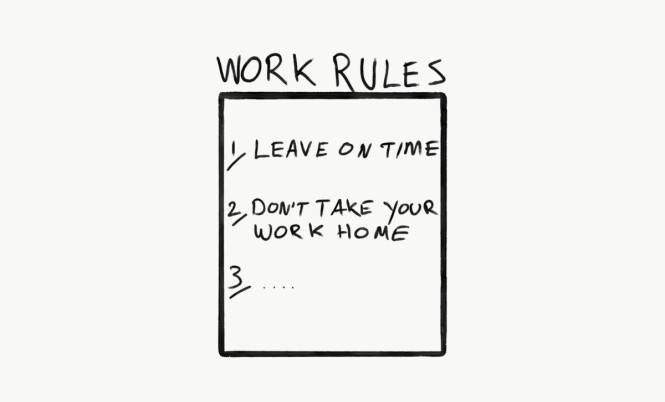
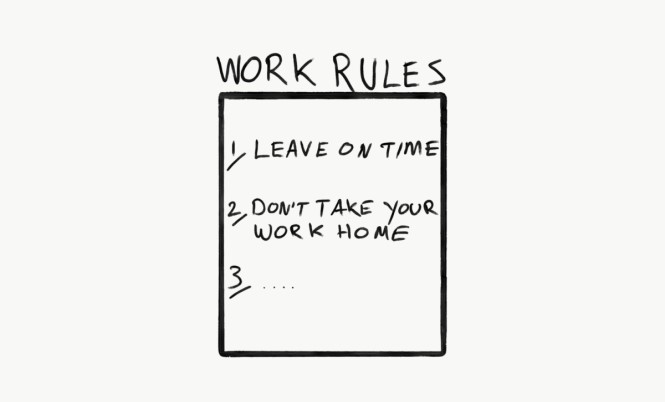
That’s why the first rule of work is that we leave the office on time. The second rule is that we don’t take our work home.

And the third rule? Let’s not worry about that for now. We’ll get to that another time. It’s time for me to go home.

How To Get A Job Without Prior Experience

Here’s the challenge everyone who starts their career faces: You can’t get a job because you don’t have prior experience, but you can’t get experience without getting a job.

It’s called the experience paradox or Catch-22 of getting a job. It’s a real challenge. And if you can’t overcome it, you can easily set your career 3 to 5 years back.

Worse, I’ve seen young folks and people who switch careers destroy their potential by making the wrong decisions early on.

I don’t want to scare you. You can still overcome the Catch-22; but not with conventional career advice. Because what’s the standard advice for people who want to build a career?

“Create a resume, browse job boards, and respond to job applications.” Sorry to disappoint you. If you take that route, you will end up like most people: Frustrated and underpaid.

Don’t worry, there’s a different way. With the right strategy, you can break into any industry and earn what you’re worth.

But I have to warn you. It takes at least twice as much work. However, that shouldn’t be a surprise to you. If you want to have a better career than most folks, guess what; you have to BE better than most folks.

When you do the following 2 things, you will become better—that will significantly increase your odds of getting a job without prior experience.

1. Be The Person You Would Hire

Why is it that companies prefer to hire experienced people for a role? When I started my career, I didn’t understand it.

The reality is that there’s a massive difference between someone who doesn’t have experience at a particular job and someone who has two years under their belt.

Even though two years might not sound like a lot of time, it’s actually a lot of time to learn the ins and outs of a job. And especially when you recently got out of college; because your first two to three years are all about learning to be a professional.

Some people never become serious about their careers. They wake up at a time so they can come to the office just in time. They prefer to sleep in. And they are the first to leave at 5 pm. They don’t ask questions, don’t seek out mentors, LOVE their lunch break, and chit-chat with their co-workers every chance they get.

Imagine you would be the CEO of a company. Would you want a person like that on your team? Of course not.

I must be honest; I used to be like that too. But I realized that attitude will not bring you far. If you want career success, you need to take it seriously. You only get rewarded for results. And what brings results? Skills.

Now, the good news is that increasingly more companies are putting emphasis on the skills of the people they want to hire—not their experience.

In his book, The Virgin Way, I read that Richard Branson, the famous founder of Virgin (that employs approximately 71,000 people), hires for character and skills. He prefers to actually get to know applicants instead of asking them a bunch of boring questions.

If you seek out companies who hire for experience and skills, you have a good chance of getting hired—even if you don’t have experience.

There’s only one condition: You must be a person YOU would hire. Someone who’s not only a professional but also has the skills to do a good job. If you feel like your skills are not that good yet, spend more time on your craft.

So how do you find a company that hires for skills and character? You ask.

Look, getting a job is NOT easy. It requires a lot of manual labor. Sometimes you need to reach out to hundreds of people to even get an interview. So that’s what you do. Be ready to do whatever it takes.

You reach out to people in HR of companies you’d like to work for. And you ask them about their interview process. How does the application process work? What are the characteristics you’re looking for in candidates?

You can use that information to apply for jobs you’re interested in. But unlike people who blindly apply, you know what they are looking for.

2. Do Free Work

Often, being good at your job and having information about the application process won’t cut it.

I’m a big fan of demonstrating your skills instead of talking about it. During the interview, we only talk. But when you offer to do free work for a company, you actually demonstrate your skills in a real-life setting.

So how can you do free work? Larry Stybel, a clinical psychologist, wrote an article for HBR about his experience launching his career. He shares 3 great tips:

  1. Look for a company you’d love to work for and then be specific about what value you will provide—What will you exactly do for the company? No need to overpromise. It’s better, to be honest about what you can. Identify a person you want to work for, and reach out to them directly. Also, send your resume along (watch my video on how to create a graphic resume with Canva for tips).
  2. Be specific about what value you will receive—Start with the end in mind. What do you want to get out of it? A reference? A potential job? Experience?

  3. Be specific about the time frame—You don’t want to keep working for free forever. In Stybel’s example, he said: “I promised to work two days a week for two months.” Often, you can’t even work full-time for free. Nor is it something I recommend. Use your time to keep searching for a job.

One of the key lessons for everyone launching their career is to consider yourself as a learning machine. When you feel too proud to learn or work for free, you will be stuck sooner than later.

But when you keep improving yourself and reaching out to people in the industry you want to work in, it will ultimately lead to a real job.

MEANING OF FIRST AID

Safety First: Three Tips for Packing the Perfect First Aid Kit

Every individua ‘s life and work are closely related to his environment . Man has progressed in various fields of life such as industrialisation , mechanisation, transport and science, etc. Therefore, this age is called an electronic age or space age. But on the other hand, this development has created such conditions that a person may get injured anywhere and at anytime.

In spite of good measures aimed at industrial safety and the development of safety devices and techniques, the number of accidents is still high in industries and specially in day to day life. Indeed, there is no definite time of such injuries. These can happen to anyone, anywhere and at anytime. Injuries usually occur in industries and on the farm, during the repair, maintenance and operation of vehicles of various kinds, during games and sports and in various situations everyday. These often happen by accident, so it is impossible to anticipate the time and place of an accident. Someone may get fractured, another may be bitten by snake. So, it can be said that every individual is trapped in one way or the other by accidents. In fact, it is very difficult ton get medical aid to victims at the sport of the accident. At that moment, some immediate possible aid is required to the victim. So, first aid is the first help which is given to the wounded or accidental victims before the arrival of the doctor.

In other words, ” It is an immediate and temporary care given to a victim of an accident or sudden illness before the services of a physician is obtained.

In can also be said that first aid is that aid is that aid which is provided to the injured in case of an accident, injury or sudden illness. It enables the trained persons to render the help to preserve life, promote recovery of the injury until the arrival of the doctor.

In fact, the area of field of sports and games is such a field, where getting injured is very common. Any player can be injured at least once during his/her sports career. The facilities of a qualified doctor are available in national or international level competitions but usually such facilities or services of a doctor are not available during practice, training or competitions of normal levels. The teacher of health and physical education should also have enough knowledge of first aid so that he may provide first aid to the players at the time of training and competitions.

Elon Musk buys a ticket on Sir Richard Branson’s space flight – report

Sir Richard confirmed the purchase in an interview.

E

Elon Musk has bought a ticket on one of rival billionaire Sir Richard Branson’s spaceship flights, according to a newspaper report.

As Sir Richard prepares to fly on Virgin Galactic’s first fully crewed flight to the edge of space on Sunday from New Mexico, The Sunday Times says Mr Musk – who owns rival exploration company SpaceX – has paid for a seat on a future Virgin voyage.

Mr Musk paid a 10,000-dollar (£7,000) deposit to reserve a seat. No date for his flight has been specified.

Sir Richard confirmed the purchase in an interview with The Sunday Times, saying he might reciprocate by booking a ticket on a SpaceX flight in the future.

“Elon’s a friend and maybe I’ll travel on one of his ships one day,” he said.

Amid what has been dubbed the billionaires’ space race, SpaceX has launched dozens of rockets, including manned flights, but Mr Musk himself has not yet flown on any. The company is due to launch its first fully private spaceflight in the autumn.

Sir Richard will become the first owner-astronaut to take part in a mission, beating Amazon founder Jeff Bezos who plans to reach space in his own rocket – through his Blue Origin company – in nine days’ time.

Tourists are expected to pay some 250,000 dollars (£180,000) for a spaceflight on Virgin Galactic, which includes four minutes of zero gravity.

The Silent Patient – Going to break my silence over it

Silent patient written by Alex Michaelides is the first psychological thriller I have ever read. Hence I am going to be reviewing it like a thriller novice, as it’s my first encounter with psychological warfare that’s unleashed by this book. 

Plot Summary

This story essentially revolves around Alicia Berenson and her silence.  Alicia is an artist who fortes in painting photorealistic oil paintings, which becomes the reason for her popularity. But one day when the police are called to her house her reason for popularity alters when they find her husband, Gabriel dead.  Shot in the head five times by her and with a refusal to speak anything after that. 

Six years pass since her refusal to speak, no one has heard one word from her. Sitting in the Grove, a forensic institute, we still don’t know what was the reason she committed such a brutal crime. The only clue is the last painting she painted after killing her husband and her long long silence. 

Someone finally takes the dare to solve this mystery, this how our second primary protagonist is introduced. Theo Faber, a psychotherapist with a keen interest in Alicia Berenson. Through Theo we come face to face with many elements in Alicia’s life, that may have been instrumental in the murder. 

Review

The book is written in fairly simple language, there is not much medical jargon that might have made this book complex. The two protagonists are well developed. But other than that, secondary characters are not given much attention. As the story majorly revolves around the two primary characters. 

The story is an easy read, but it is slow progress. You get to know about Alicia and Theo little by little. The driving force behind the story is essentially the question WHY, why did she kill him. While it is a good motivator to continue the book, it lacks the drama and volume for a perfect ending. 

The part I liked the most was the ending because it was a well worthy twist to wait for, but I did get an inkling for the last twist. And hence it lacked the dramatics. 

This book also gave me an insight into the world of psychology, it brought forward the inner working of our brain and how it works under absurd circumstances. The importance of past and childhood can clearly be seen in this book.  Giving some compelling takeaways as psychology lessons. 

Should You Read This Book ?

As a novice, I would definitely suggest giving a one-time read to this book. It is a good book to enter the world of psychological thrillers. Its simple language is definitely suitable for everyone. But if you are looking for a book with adventure and excitement, then maybe this book is not for you. I would give this book  3.5/5 for its interesting plotline and easy to follow plot. 

UP Launches a New Policy on Population Control

On the occasion of World population day on 11th July, 2021, Chief Minister of Uttar Pradesh, Yogi Adityanath announces a new policy on population control for 2021-2030.  It aims to incentivize people to help in population control.

Population of Uttar Pradesh

India’s one-sixth population lives in Uttar Pradesh, which make it India’s most populous state in India. The population in Uttar Pradesh is grown 3.5 times from 46 million in 1901 to 166 million in 2001.The first census recorded was in the year 1901 with a population of 46,647,804 by British India. The population is constantly increasing its growth rate from 6.56 to 25.85% till 2001 and with decreasing growth rate from 25.85 to 20.23% in 2001 to 2011. The Uttar Pradesh population by 2021 will be 236 million and the report of census has been proven right as according to UID, Uttar Pradesh population in 2020 is estimated to be 237 million. And the current population of Uttar Pradesh is approximately 241 million. Which is more than the estimate.  

So here we see how rapidly the population of Uttar Pradesh is increasing and that is why it has become necessary to control the population of Uttar Pradesh.

In view of this, the Chief Minister of UP launching the new policy of population control. Chief minister Yogi Adityanath said that rising population is the root cause of major problems including inequality. “Increasing population can be a hurdle in way of development. Every community has been taken care of in Population Policy 2021-2030,” CM Yogi Adityanath said. Let us, on this ‘World Population Day’, take a pledge to make ourselves and the society aware of the problems arising from the increasing population,” Yogi Adityanath said in a statement.

Objectives of this policy

Under this policy, government will adopt five-pronged approach to control population.

  • The Policy will focus on comprehensive arrangements for the care of elderly and will also focus on improved management of education, health, and nutrition for adolescents between 11 and 19 years.
  • The policy will look at different strategies and work towards a convergence of existing schemes to streamline population control efforts and improvement in health.
  • Health clubs will be set up in schools and digital tracking will be done for newborns, adolescents and elderly people.
  • Efforts will be made to increase accessibility of contraceptive measures issued under the Family Planning Programme and provide a proper system for safe abortion.
  • Efforts will also be made to maintain demographic balance across different communities and ensure easy availability of advanced health facilities.

Also a population control bill has been prepared by Uttar Pradesh government’s law commission, which promises perks and incentives to government employees and general public who will follow population control measures. The commission has released the final draft of the ‘UP Population (Control, Stabilization and Welfare) Bill, 2021’ and invited suggestions by July 19. According to the draft bill, those people who have more than two children will be debarred from contesting local body polls, applying for government jobs or receiving any kind of subsidy. The draft says it is necessary to control and stabilize the population of the state for the promotion of sustainable development with more equitable distribution.

With this policy, Yogi Adityanath urged for community-centric approach to population control to provide better facilities. People should also take seriously the problem of rising population because without their awareness and help the problem is not possible to overcome.  Both on state level and central level should also adopt some measure to control population growth, keeping in mind rising population.

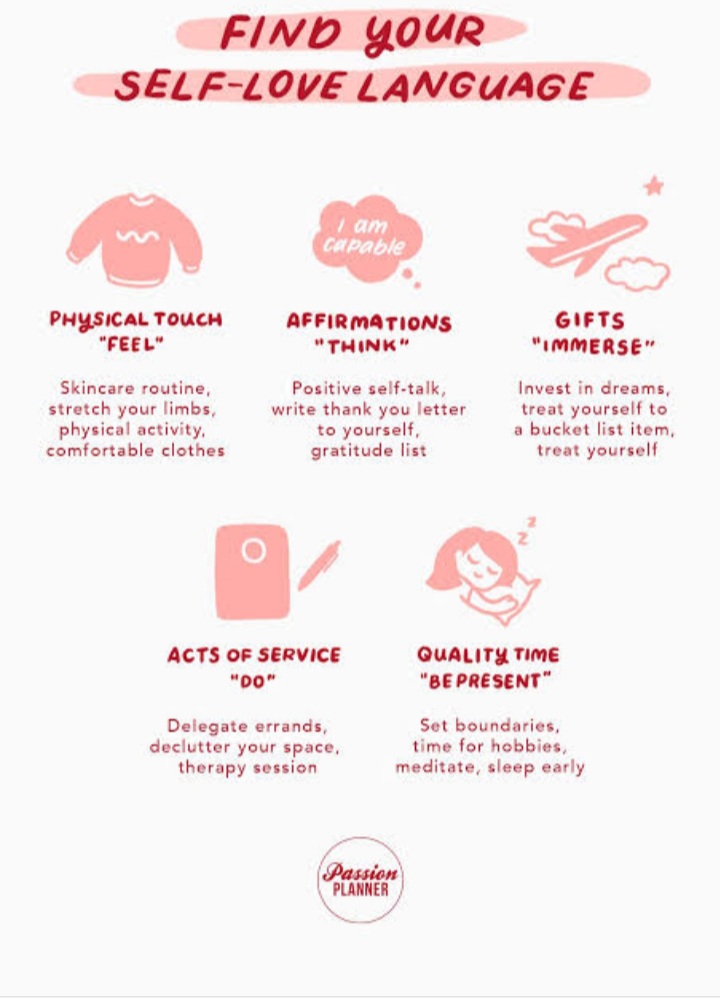
Find your self- love language

When you think of the term love languages, the first thing that may come to mind is relationships and romance. But finding your self- love language is actually an important factor in your self care routine. Here are some helpful tips .

Before delving into self- love languages,let’s know about where this concept from. In 1992, Dr. Gary champan wrote a book called The Five languages. In the book ,he discusses five different ways to express love with your partner. They include words of affirimation,acts of service, receiving gifts, quality time and physical touch.

Champan notes that discovering your love language can help you communicate and better connect. With your love! He also adds that everyone expresses and recieves love differently , so it’s important to understand your love language.

1. Quality Time :

If your love language is quality time, you adore just being together with the person you love .A perfect day would be hanging out with your loved ones and simply enjoying the moment. Why not apply this to your self care routine? Be mindful of how you spend time with yourself. Give yourself the undivided attention that you would want from someone else.

Self- love Ideas for Quality Time :

* practice mindfulness.

* spend a day at the coffee shop.

* Do a gudied meditation exercise.

* sign up for a yoga class.

* Enjoy the sunset.

* Go for a drive.

* start a garden.

*Go on a solo- trip to a dreamy destination.

* Read a chapter of a new book before bed.

* paint a picture.

* Treat yourself to dinner at your favorite restaurant.

* Listen to your favorite album on repeat.

* stargaze.

* watch a meaningful movie.

* sit on your porch.

* Go on a nature hike.

2. Words of Affirmation :

Sometimes, it’s nice to just hear the words,”I love you” or ” you did a great job”, If words of affirimation is your love language,you feel happiest when someone expresses their affection in words. Similarly ,you should speak loving to youself.At times, we can be our own worst critics. Replacing negative self- talk with kind words is a powerful way to show yourself love.

Self -love ideas for words of affirimation:

* Recite daily positive affirmations

* stick encouragingnotes on your fridge.

* write yourself a loving letter.

* keep a gratitude jar.

* Remind yourself of your dreams by making a vision board.

* Be aware of how people in your life speak to you.

* Talk about your passions with others.

* Forgive yourself for past mistakes.

*Give yourself a compliment.

* write a list of things you’ve accomplished this year.

3.Receiving Gifts:

When it comes to this love language,it’s the thought behind the gift that counts. You love the idea that someone bought or made a gift with just you in mind. If receiving gifts is your love language ,you truly appreciate when people listen to your interests and passions.

Let’s say that you adore all things music. You’d probably feel emotional if your loved ones suprised you with tickets to your favorite artist’s concert. Another thing that would mean the world to you is if they made you a personalized playlist! Overall, small gifts make you feel special because someone you love thought about you

Self-love Ideas for Receiving Gifts:

* Treat yourself to a small gift from yore fav shop.

* Buy a ticket to see a local show or movie.

* Invest in your hobbies and passions.

* Decorate your workspace with positive knickknacks.

* create a scrapbook of memories & mementos.

* Make yourself a self care kit.

* start a DIY project just for fun.

4. Physical Touch :

If physical touch is your love language,a hug from someone you care about can make your wholeday. Showing affection through physical touch calms you down and makes you happiest. When it comes to self care , take the steps you need to feel more in tune with your body. Doing so well bring you a sense of calm.

Self-love ideas for physical Touch:

* cook yourself a healthy dinner.

* Get some fresh air

* Light your favorite candle.

* work on your skincare routine.

* sign up for a fitness class.

* Enjoy a cup of tea.

* Drink a glass of water

* play with makeup.

* Go to the gym.

5. Acts of service :

On to the final self- love language _ acts of service! When I took Dr.chapman’s quiz,I was’nt too surprised that this was my personal love language.At the end of the day ,this love language is all about showing the people in your life you care.

Self-love Ideas for Acts of service:

* check off your to-do list.

* Donate to a local charity.

* Learn how to set boundaries and say no to things that drain your energy.

* Make your bed in the morning.

* Give yourself braeks throughout the workday.

* pick up your favorite snacks at the store.

Gandhi ji and Communal Liberty

Gandhi is an important figure in India’s national movement. A phase of our national movement is called the Gandhian Phase. Nation is defined as a people sharing a common language, history and culture and having a sense of belonging to their common identity. The idea of nation was combined with the nation of the state. It developed where the people of one nation were suppose to live in one state. Nationalism has 2 versions: Premordial and Modernist.

Premordial versions means is the the original versions of nationalism in which the nation has a common language, culture, ethics and history. The modernist version however they treat people like a particular territory and sharing its civic amenities despite loving different ethic on regular affinities.

Gandhi ji was one of the nationalist who was the leader of many movements. He helped us to get independence. He believed in non- violence. He lead many movements in his opposition to the British rule like Satyagraha, Dandi March, Khilafat Movement, the non-cooperation movement. For Mahatma Gandhi, nationalist was based on understanding what was required for people to be free. He was not a socialist but, in common with the socialists, he believed that capitalism could never solve the problem of unemployment and the mental dullness is produced. Gamdhi ji also fought against the practices of sati, child marriage, oppressions of widow, ‘pardah’ and fueled emancipation of women.

Gandhi ji on Communal Liberty

India is a land of diversity. Populated by heterogeneous people of multifarious languages, religion, castes and creeds. Inspite of such diversities of character, there is always an underlying unity among them since time immemorial. The fact also remains that there is always a threat to narrow communal feelings. In modern India, gandhi was one of the greatest champions and communal unity. He lived his whole lofe striving for it, ensuring it, stood firmly by itand finally sacrificed his life in the pursuit of his communal unity. For Gandhi the life of communal unity was even greater than swaraj. None of the political leaders or religious priests were as devotedly concerned about communal unity as Gandhi ji was. Gandhi ji saw truth, love, compassion and service enlisted in all religions, which led him to accord equal respects to all faiths. All religion insist on equality of human race and developing a harmonious relationship with the entirety of creation. Any violation of the principle of equality gives way to conflict and violation. Gnadhiji regarded Islam as a religion of peace in the same sense as Christanity, Buddhism and Hinduism. No doubt, there are differences in the degree. He said in this regard that he knew the passages that could be quoted from the holy Quran to the contrary. Hindu and Muslim has often raised a great challenge before India became secular. Without unity between Hindu and Muslim no certain progress can be made by the nation tenet that ‘unity is strength’ is not merely a copy book maxim but a rule of life. Hindu-Muslim unity means not only unity betwwen Hindus and Muslims but betwwen all these who believe India to be their home, no matter to what faith they belong. Gandhi ji did not fully succeed in Hindu-Muslim unity . Some writers felt that Gandhi ji locked a historocal perspective. He did not take into the account that held that religion with its dagma, tradition, customs, rituals and historical memories has on the minds of men and women in the pre modern society. Gandhi assigned only a derination role to the cultural factors. He did not grasp the deeper social and cultural roots of the hindu-muslims conflict. Gamdhi placed the entire blame for the communal problem on the British. He thought that hindu-muslim was essentially religious amd missed the social aspect of the problems. Gandhi always emphasized upon the necessity of openness of mind for the unity and harmony of the society. It was not a question of failure or success. Gandhi realised that the only alternative to violence coercion, retribution and chaos was restoration of society among the misguided individual to counter Frenzy and indictiveness, gandhi sought rehabilitation of balanced social interrogation among the masses to reslove to put the cause of nation above all denominated prejudices. Today, India is a secular nation. Democracy is mature, muslims have got equal rights and opportunities and are more secure in India than in any other country. The credit goes to the founding father of contribution and Mahatma Gandhi.

Structure of banking system in India

Introduction

Banking in India in the mdern sense originated in the last decades of the 18th century . The first banks were Bank of Hindustan (1770-1829) and the General Bank of India established 1786. The largest bank and the oldest still in existence, is tge State bank of India, which originated in the Bank of Calcutta in June 1806 , which almost immediately became the bank of Bengal. This was one of the three presidency banks , the other two being The Bank of Bombay and The bank of Madras , all three of which were established under charters from the British East India Company. The three banks merged in 1921 to form the Imperial Bank of India , which , upon India’s independence became the State Bank of India in 1955. For many years the presidency banks acted as quasi-central banks , as did their successors until the reserve Bank of India was established in 1935 .

Reserve bank of India (RBI)

The Reserve Bank of India is India’s central banking institution, which controls the monetary policy of the Indian rupee. It commenced its operations on 1 April 1935 during the British Rule in accordance with the provisions of the Reserve Bank of India Act,1934 and in 1949 it was nationalized.The central office of the Reserve Bank was initially established in Calcutta but was permanently moved to Mumbai in 1937. The central office is where the Governor sits and where policies are formulated. Sir CD Deshmukh is the first Governor of RBI. The RBI has four zonal offices at Chennai, Delhi, Kolkata, Mumbai and 20 regional offices mostly located in the state capitals and 11 sub-offices. Reserve Bank of India Act,1934 is the legislative act under which the Reserve Bank of India was formed. This act along with the Comapnies Act, which was amended in 1936, were meant to provide a framework for the supervision of banking firms in india.

Scheduled and non-scheduled banks

Scheduled banks in India refer to those banks which have been included in the second schedule of Reserve Bank of India Act, 1934. Banks not under this schedule are called non-scheduled banks. In other words, Banks with a reserve capital of less than 5 lakh rupees qualify as non-scheduled banks. Unlike scheduled Banks , they are not entitled to borrow from the RBI for normal banking purposes, except, in emergency or ‘abnormal circumstances’. Coastal local Area Bank Ltd. (Vijayawasa,AP), Capital Local Area Bank Ltd. (Phagwara, Punjab), Krishna Bhima Samrudhi Local Area Bank Ltd. (Mehbubnagar, Telangana), Subhadra Local Area Bank Ltd. (Kolhapur, Maharashtra) are the only non-scheduled banks in India.

Scheduled banks are further internally classified into commercial banks and cooperative banks.

Public Sector Banks

Public sector banks (PSBs) are banks where a majority state (ie., more than 50%) is held by a government . The shares of these banks are listed on stock exchange. There are a total of 21 PSBs in India and State Bank of India group.

  • In 1969, the Indira-Gandhi headed government nationalised 14 major commercial banks ( Allahabad Bank , Bank of Baroda , Bank of India , Bank of Maharashtra , Canara Bank , Central Bank of India , Dena Bank , Indian Bank , Indian Overseas Bank , Punjab and Sindh Bank , Punjab National Bank, Sindicate Bank , UCO Bank , United Bank of India)
  • In 1980 , a further 6 banks were nationalised (Andhra Bank , Cooperation Bank , New Bank of India , Oriental Bank of Commerce, Punjab and Sindh Bank , Vijay Bank )
  • IDBI Bank is an Indian government-owned financial service company, formarly known as industrial Development Bank of India , headquartered in Mumbai , India .It was established in 1964 and nationalised in year 2005 .

Private Sector Banks

The ‘Private- Sector’ banks are baks where greater parts of share or equity are not held by the government but by private shareholders . There are many Indian and Foreign Banks in India . HDFC Bank , ICICI Bank , Axis Bank , Kotak Mahindra Bank , Yes Bank , IDFC Bank , RBL Bank , Federal Bank , City Union Bank are the major private banks in India.

Regional Rural Banks

Regional Rural Banks were formed on October 2,1975 upon the recommendations of M. Narsimham working group during the tenure of Indira Gandhi’s government. The object behind the formation of RRBs was to serve large unserve population of rural areas and promoting financial inclusions . They have been created with a view to serve primarily the rural areas of India with basic banking and financial services. However, RRBs may have branches set up for urban operations and their area of operation may include urban areas too.

Cooperative Banks

The cooperative banks are furtger classified into:

  • State cooperative banks: These are small financial institutions which are governed by regulations like Banking Regulations Act , 1949 and Banking Laws Cooperative Socities Act ,1965 . At present there are about 33 state cooperative banks of which 19 are scheduled.
  • Urban/ Central cooperative banks: The term urban cooperative banks (UCB) refers to primary cooperative banks located in urban and semi-urban areas . These banks till 1996 , were allowed to lend money only for non-agricultural purposes. This distinction does not hold today . They essentially lent to small borrowers abd business . There are about 2,104 UCBs of which 56 were scheduled Banks. About 79 percent of these are located in 5states- Andhra Pradesh, Gujarat, Karnataka, Maharashtra and Tamil Nadu .
  • Primary credit Socities: Primary Credit Societies or primary agricultural credit society (PACs) is a basic unit and smallest cooperative credit institutions in India. It works on the grassroot level (Gram panchayat and village level ) . It virtually function like banks , but whose net worth is less than Rs. 1 lakh; who are not members of the payment system and to whom deposit insurance is not extended .

Historical background of the Constitution of India:

Here we are going to discuss the historical background of the Indian Constitution. The fact that the Constitution of the Indian Republic is not a political revolution but an outcome of the research and reflections of renowned exemplary people who were looking forward to enhancing the existing system of administration. Post-independence, India was spilled up into two units—

(1) The British India.

(2) Princely States ( under Subsidiary Rights).

Later, the two were combined all together to form The Indian Union.

There are several different coating behind the background of the Indian Constitution:

Regulation Act, of 1773

Pitt’s India Act, of 1784

• Charter Act, of 1833 and 1853

For our present intent, we do not need to go far off from the year 1858, when the British Crown concluded sovereignty over India by the East India Company.

Government of India Act, 1858:- The government of India Act, 1858 (21 & 22 Vict, c 106). By this act, the powers of the Crown were to be exercised by the Secretary of State for India, assisted by a Council (known as the Council of India). Essential features of the system, introduced by the act of 1858 we’re:-

(1) The administration of the country was rigidly centralized.

(2) Government of India had to function under the superintendence, direction, and control of the Governor-General in all matters.

(3) The entire machinery of administration was bureaucratic.

Indian Councils Act, 1861:- Indian Councils Act, 1861 introduced a grain of popular element insofar as it provided that the Governor-General’s Executive Council, which was so long composed limited to officials, should incorporate non-officials members. Elements of the act:

(1) This Legislature Council was neither representative nor contemplative.

(2) It could not by any means criticize the acts of administration or the procedure of the Parliament.

Indian Councils Act, 1892:- Two rectification was done as regards the Indian and Provincial Legislative Councils were introduced by the Indian Councils Act, 1892:

(1) The non-officials members of the Indian Legislative Council were henceforth to be nominated by the Bengal Chamber of Commerce and the Provincial Councils would be nominated by certain local bodies.

(2) The Councils vested with the powers of discussing the annual statement of revenue and expenditures.

Morley-Minto reforms and the Indian Councils Act, 1909:-The first effort for introducing a representative was made by Morley-Minto reforms known by the names of the then Secretary of State in India Lord Morley and the Viceroy Lord Minto, implemented by the Indian Councils Act,1909 elements of which are mentioned below:

(1) The size of Councils was enlarged by including elected non-official menbers.

(2) Election was also introduced in the Legislative Councils at the Centre.

(3) The deliberative functions of the Councils were also increased.

Montagu-Chelmsford Report and the Government of India Act, 1919:- The next landmark in the Constitutional development of India is the Montagu- Chelmsford Report which led to the enactment of the Government of India Act, 1919. The reforms did not aim at the establishment of a parliamentary system of government in the country but to provide for the reservation of the final decision on all inquiries in the hands of the inconsistent Executive.

Government of India Act, 1935:-Essential elements of the Government of India Act, 1935 are:

(1) Federation and Provincial Autonomy.

(2) Dyarchy at the Centre.

(3) The Central Legislature was bicameral, constitutes a Federal Assembly, and the Councils of State.

(4) Though the Indian States did not join the federation, the federal provisions of the government of India Act 1935, existed between the Central Government and the provinces.

Government of India Act 1935

Conclusion:-The changes introduced by the above-mentioned acts into the structure of government pending the outcome of a constitution for an independent India. In pursuance of the India Independence Act, the Government of India Act 1935, as amended by the Adoption Orders, both in India and Pakistan, in order to provide an interim Constitution to each of the two Dominions until the Constitution Assembly could draw up the future Constitution.

Color psychology

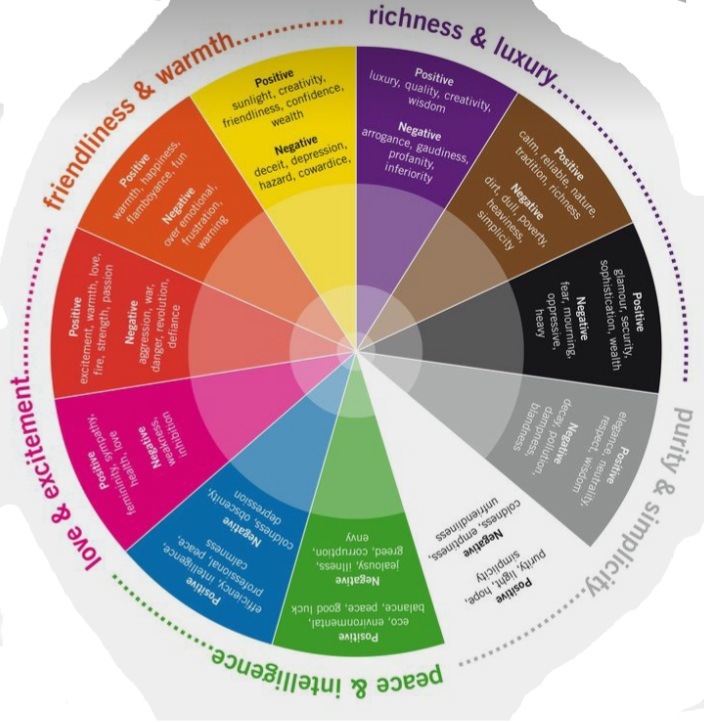
Color is a communicator. It has a language all its own that we utilize, and culturally participate with, on a daily basis. Color can inspire moods from outside in interior designers and decorators know this. To initiate color choices, color professionals.Mere color,unspoiled by meaning,and unallied with definite form, can speak to the soul in a thousand different ways.

It is used effectively color theory is one of the most powerful tools a designer can wield. Colors are a form of non verbal communication that can speak volumes in a fraction of second. They can instantly set a mood,convey an emotion,invoke a physiological reaction or inspire people to take action.when we harness the right color emotion to help tell a client’s story it can have a powerful effect. Below is a list of PMS colors and their associated moods.

Red :

Evokes strong emotions like passion or intensity, encourages appetite,symbolizes love and danger, Eyes look to red first, it draws attemtion,creates movement and exctiment, Too much red however,feels hostile. Use to stimulate quick decision making, shows to increase respiration rate ,raise blood pressure and enhance metabolism.

Yellow :

A spontaneous yet unstable color, associated with joy, intellect , energy, happiness, and food. Use to attract attention. When overused it can have a disturbing effects, studies have shown that babies cry more in yellow rooms. Cherrful, warm and symbolizes energy and increases metabolism. Yellow also causes the brain to seretonin, giving one a feeling of optismism . That is all well are good but if used wrongly on a brands graphics and especially on a website, and can strain eyes and cause eye fatigue.

Blue :

Number one color preferred by males. Symbolizes trust, loyality, wisdom, confidence, intelligence, faith, truth. Use to promote cleaniness, stability and hi tech products. Shown to supress ones appetite and stimulate productivity.

Orange :

Highly accepted among the younger generation. Associated with tascination, creativity, determination, attraction, encouragement and stimualtion. Effective in promoting food products by stimulating, appetite. Increases oxygen to the brain amd stimulates mental activity.

Green :

The color of nature that involves a healing power. Symbolizes grown relaxation, harmony, freshness and fertility. Use to promote saftey and tranqullity. Stimulates harmony in the brain promoting balance between body and mind.

White :

A depiction of faith and purity. Associated with safety and cleanliness. Use to suggest simplicity and sterlitity in products. Acts as a clean state and helps to promote creativity.

Purple :

The color of royality. Associated with luxury, ambition, wisdom, dignity, independence, creativity and magic. Use when marketing toys to children. Surveys taken have shown that 3/4 of childen prefer that color purple.

Black :

A mysterious yet authoritative color, associated with elegance, formality, fear, death and evil. Use behind bright colors to make them pop. Know to create a slimming effect when worn.

Gray :

Gray is the perfect neutral to work with in a graphics environments and has less reflection than white. Evokes a sense of professionalism and calm. Seen a sleek and high-end and gives one a sense of stability. Too much evokes a feeling of aging, depression and loss.

Pink :

A calming and warm color that evokes love and romance. Pink is a clean and feminine color. Recently however, there has been a backlash against is overuse in product packaging, giving rise to the term ” pink- washed”.

Color Harmony :

Color is similar to musical notes in many ways, and there are certain combinations of colors that are pleasing when put together, approximately called color chords or color Harmonies.

Complementary :

Colors that are opposite of each other on the color wheel are called complementary colors. The high contrast between complementary colors when seen together causes them to stand out more and has a very vibrant look, but can be tricky to use in large doses without being too intense.

Split- Complementary:

Split – complementary is a variation on complementary. It uses one color and the two adjacement colors to its complement to bring the same strong contrast as complementary color combinations,but with less tension.

Analogous :

Using colors next to each other on the color wheel tend to give designs a feeling of unity and serenity. Because these colors are similar in hue, having constrating values is important when using analogous combinations to keep colors distinct from each other.

Triadic :

Triadic combinations are made with three colors located equal distance from each other on the color wheel, such as red, yellow, and blue making a triangular pattern. This harmony has a tendency to be vibrant despite satuartion, and is often more impacting when one color is used more than the others.